Category: UNCATEGORIZED

26 Sep 2019

Honeycomb.io raises $11.4M to help developers observe and debug their apps

As companies continue to expand the number of cloud-based tools and apps that are used to run their businesses, DevOps continues to grow as a field of IT to help developers meet those demands. In one of the more recent moves, Honeycomb.io, which developers use to observe code on live apps, microservices and other processes in order to identify where something is not working, is today announcing that it has raised a Series A of $11.4 million to expand its sales and support efforts for existing customers.

The funding is being led by Scale Venture Partners, with Storm Ventures, eVentures, NextWorld Capital, and Merian Ventures also participating. Honeycomb has now raised $26.9 million.

Paul Graham, the co-founder of Y Combinator, once famously described how a startup (Stripe) grew in part by building a tool (in payments) that was useful and needed by other startups. Honeycomb itself is embodiment of that model, too: the story is one of engineers building tools that engineers need. Charity Majors and Christine Yen came to Facebook by way of Parse, where they were both engineers, and in the bigger environment, they found that the coexistence of apps and other services both built in-house and those interacting with Facebook’s platform created a minefield when it came to things working harmoniously.

“Things were just going down, or [even worse] looked like they were going down, all the time,” Majors said, noting that one of the big issues was that “you couldn’t look at things at a finer level” to figure out what was going wrong, and to identify issues behind why things were not working.

“Testing platforms can only cover the things you predict in advance, things you know might go wrong,” Yen noted. “Observability is about capturing what is going wrong,” a critical piece of data that will subsequently help an engineer figure out how to best fix it, rather than spending time trying to identify where the actual problem is.

Without a performance monitoring product on the market that was able to provide insight into real-time activity and interactivity between apps — and with a large part of the process requiring yet more code to be deployed to search for and fix problems — Majors (who is now the CTO of Honeycomb) mapped out a way to do this by observing the overall environment. When she decided to leave Facebook and work further on the idea, she teamed up with Yen (now the CEO) to build Honeycomb. (The internal tool that Majors built as an infrastructure engineer, she said, is also still being used, and you can see more on the structure behind how Honeycomb works here.)

Honeycomb has resonated with developers at both smaller and very giant tech companies (that prefer not to be named), with the high correlation between those who trial and those who end up buying the product speaking both to the demand for Honeycomb’s solution and its impact on developers’ work.

The company says that it has doubled ARR in the last six months, doubling the number of six-figure contracts, and is on track to triple ARR by the end of 2019.

“Honeycomb is enabling a long-overdue shift in the way developers interact with and operate the software they build,” said Ariel Tseitlin, Partner at Scale Venture Partners, who is also joining the board with this round. “As production systems become more complex and distributed, the company is taking advantage of the massive market opportunity and establishing itself as a leader in real-time observability. It’s no wonder developers say they can’t live without it after they try it.”

26 Sep 2019

Package Free picks up $4.5 million to scale sustainable CPG products

The climate crisis continues to be just that… a crisis. And it’s spurring people across the country (and globe) to take action, particularly when it comes to their own lifestyle.

Lauren Singer is one such person. After studying Environmental Science and Politics at NYU, she started a blog called Trash Is For Tossers to make a zero-waste lifestyle more accessible and comprehensible to everyone. But there’s still an issue. Even with a steep rise in sustainable CPG products, these brands rarely have the scale to compete with traditional CPG products in price, and lack the distribution to be accessible to everyone.

That’s where the Package Free Shop comes into play. Today, Package Free is announcing that it has raised its very first capital since launch in 2017, with a fresh $4.5 million in seed funding led by Primary Ventures. Scooter Braun’s TQ Ventures, Day One Ventures, Ryan Engel of Peleton, Brooke Wall of The Wall Group, and Casper founder Neil Parikh also participated in the round, alongside others.

Package Free started as a little pop-up shop for sustainable CPG brands to show off their wares in a brick-and-mortar environment. The brands themselves paid between $1000 and $3000 to participate, and were given 100 percent of the profit from the pop-up.

[gallery ids="1887151,1887152,1887153"]

By the end of month one, says Singer, every brand had been paid back for their investment. By the end of month three, Package Free had become the primary revenue driver for those brands. At that point, they switched over to a traditional retail model to generate revenue to launch an ecommerce site.

Today, Package Free is a full-fledged reseller. The pop-up shop now has a permanent status in the trendy neighborhood of Williamsburg in Brooklyn, NY, with its own warehouse in Greenpoint. The company buys their inventory wholesale and enforces incredibly strict guidelines for the vendors they work with, not least of which is a no-exceptions no-plastic policy.

Brands that sell through Package Free not only have to use all natural ingredients and be plastic-free, but must also ship to the Package Free warehouse without using any plastic. The company actually charges vendors a percentage of the shipment if the shipment arrives with plastic, and increases that percentage on the second infraction. Three strikes, and that vendor is out for good.

“We know it’s completely possible to do these things without plastic, it’s just not the norm now,” said Singer. “So we’re trying to change the foundational benchmarks of what it means to package sustainably. I truly believe that the burden of waste should never fall on the consumer. It should fall on the manufacturer first, and then the reseller.”

Once products are at the warehouse, Package Free reuses the dunnage (packaging materials) that the original shipment came with, meaning the company never uses ‘virgin dunnage’. The boxes that Package Free ships to consumers are 100 percent recycled, and shipping labels are also 100 percent recyclable. In fact, every Package Free box is printed with the words “I’m not trash” with further facts about trash.

With the funding, Package Free wants to expand to creating its own sustainable CPG products, first tackling the ‘white space’ of products that aren’t currently available via vendor partners. Singer declined to share any more details around what Package Free’s first products might be.

Package Free is also looking to hire, with a specific focus on the marketing vertical as the company has yet to do any formal marketing or paid marketing up until this point.

The ultimate goal is to put sustainable CPG on the same playing field as traditional CPG products simply by way of economies of scale. Price is the primary obstacle between everyday consumers and accessible sustainable products, and Singer’s goal is to scale up the sustainable CPG category as a whole to the point where it can reasonably compete with the Unilevers and P&Gs of the world.

26 Sep 2019

Airbus-owned Voom brings its on-demand helicopter service to the U.S. with SF Bay Area launch

Voom, the helicopter service with ride-sharing and one-hour advance booking that Airbus developed and launch first in Latin America, is getting its U.S. debut starting in San Francisco. The service will be available for travel between five Bay Area airpots, including SFO, San Jose, Napa, Oakland and Palo Alto.

Travellers wanting to make use of Voom can book their trips online, using either the dedicated Voom app for smartphones, or the Voom website. You can make bookings up to an hour before a scheduled flight departure, and on the day of travel, you only need to be at the helipad 15 minutes prior to boarding, which makes it a pretty attractive option for business travellers frequently making trips around the Bay Area, or as a traffic-skipping option to get to the airport faster for longer-haul trips.

Voom’s trip time from SFO to San Jose, for instance, is just 20 minutes – which is about 20 minutes better than driving times in the best possible traffic conditions, like in the middle of the night. During prime commuting hours, that same trip will be at least an hour, and more like an hour and a half, which is a considerable additional chunk of travel time.

Though this is the first time Voom is launching its services in the Bay Area, the company is no stranger to the region: Voom’s headquarters is in San Francisco, and it launched in 2016 as part of Airbus’ A^3 Silicon Valley-based innovation lab.

Voom enters a U.S. market that’s starting to see more activity in short-hop helicopter service, with streamlined booking through apps and online reservation platforms, and essentially on-demand options for short notice flights. Blade and Uber both offer similar service in NYC, for instance, connecting JFK with Manhattan in another popular business travel route that’s frequently mired in plenty of traffic.

VOOM PassengersInFlight

Voom’s model is a platform one, with third-party helicopter operators and helipads offering their services via its booking tools, though the Airbus company does stringently vet its ride providers. The young company is also launching a Voom for Business offering in the U.S., which is designed to provide easy employee travel management options for enterprises who want to make access to Voom available to its staff while simplifying and unifying billing.

Of course, a commuter helicopter option isn’t exactly within reach for everyone – but because of the ride-sharing model wherein you can book a seat on a helicopter alongside other passengers, costs are lower than full charters, with rides in the Bay Area starting at $215 depending on the route. It’s a lot more than an Uber ride between San Jose and SFO, definitely, but it’s also a massive time saver and not something that would appear out of place on some corporate expense policies – especially in the U.S. tech and innovation capital, home to the wealthiest companies on the planet.

Voom’s service in the Bay Area is available now, and you can also use the platform to book full plane charters to other small airports serving the region, including Half Moon Bay, Monterey, Livermore and Sacramento.

26 Sep 2019

Mercury banks $20M for its banking service aimed at startups

Online-only banks have become a viable option for many people who would have traditionally used a brick-and-mortar bank but are now looking for more flexible, potentially cheaper ways to handle their monthly incoming and outgoing finances, their savings and loans, and their payment cards. That maxim has also extended to the world of business, and today a startup that has built a business-focused challenger bank, specifically for startups like itself, is announcing a round of funding as starts its growth in earnest.

Mercury, which describes itself as a bank for startups, has banked $20 million of its own in funding, a Series A that is being led by CRV with support also from Andreessen Horowitz, the VC that led its investor-heavy $6 million seed round earlier this year. The company, I understand, has a post-money valuation now of $100 million.

And by investor-heavy, I mean that on two counts: it featured a lot of heavyweights, and there were nearly 40 individuals and firms chipping in. Others in this latest round include Kevin Hartz, CEO of Eventbrite; Scott Belsky, co-founder of Behance; Ryan Petersen, CEO of Flexport; Kevin Durant of the Brooklyn Nets; and Andre Iguodala of the Memphis Grizzlies. Its bigger list of backers now totals over 100 and also includes the founder of Silicon Valley Bank Roger Smith, Bill Clerico of WePay, and Naval Ravikant, among many others.

This latest funding comes on the heels of Mercury having launched only in April 2019, and is a result of what appears to be very strong demand for what it has to offer. In the first week of its launch it had 1,500 signups, and it has been growing at 40% each month since.

To be sure, there are already a number of options on the market for a startup looking for a bank. Aside from traditional institutions that all offer special accounts for small businesses (which essentially is what a startup is), there is Silicon Valley Bank), and other challengers like Revolut and N26 that started first with consumers but are now increasingly also targeting smaller SMBs.

That’s before you consider the wave of other fintech juggernauts out there, like Stripe, that are slowly building a suite of services that could be a natural complement (and, thus, potential precursors) to basic banking, too. (No plans from Stripe to build something like this at the moment, co-founder John Collison told me earlier this month when I asked about it.)

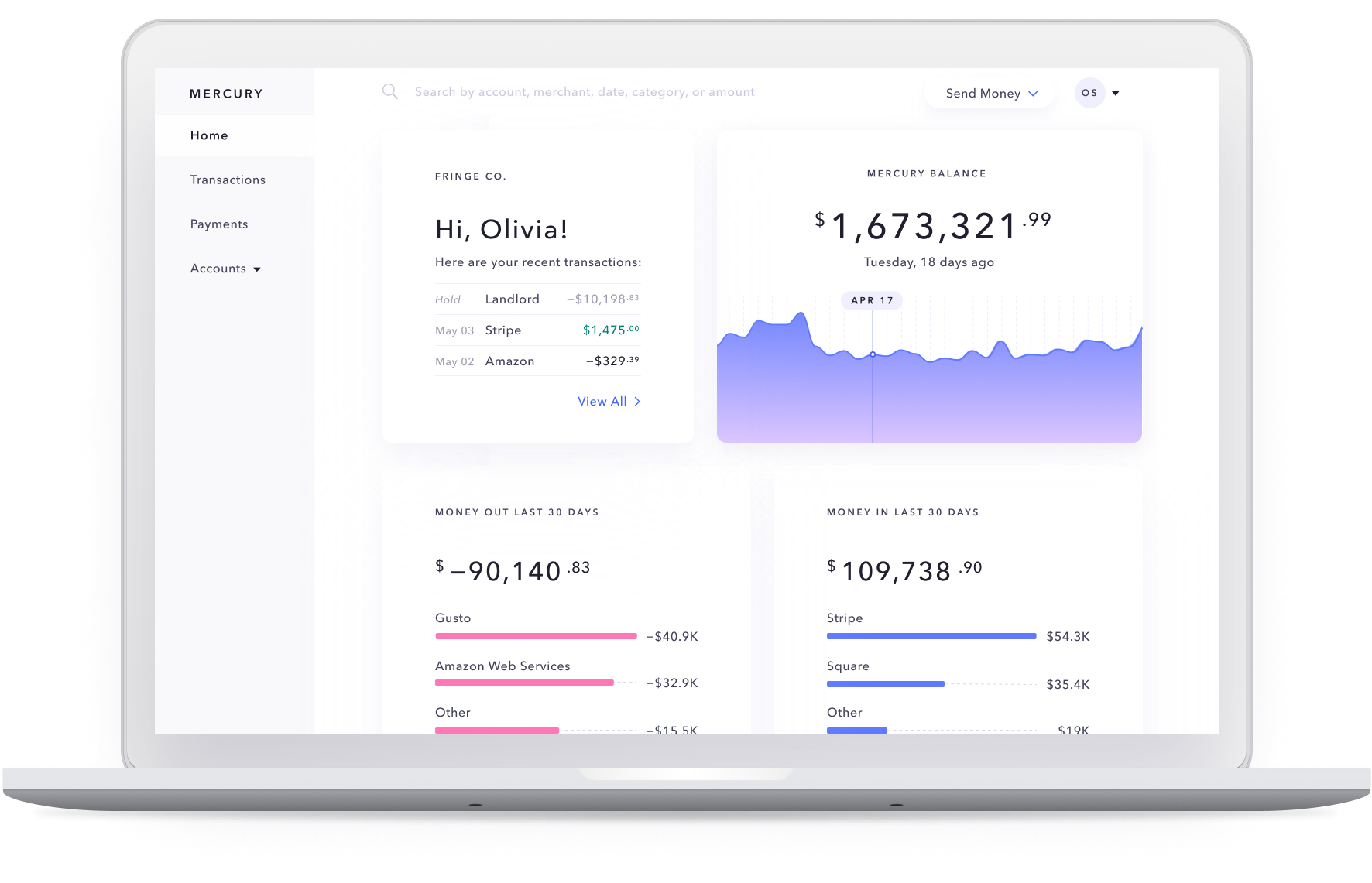
mercury

Immad Akhund, the CEO and co-founder of Mercury, is aware of what the shortcomings are today in the market from a couple of perspectives. His previous startup, mobile ad network Heyzap, regularly “was constrained by cashflow” that inhibited growth and operations and needed to do run of the paying out processes of the business (which included a programmatic ad network) manually.

After he and his co-founders sold Heyzap in 2016, Akhund used some of the proceeds to become an investor in early-stage startups (120 in all), he saw the same challenge continue to persist. “Nothing had really changed,” he said, “and I thought a bank could do a better job. With Mercury I saw that I had the opportunity to build something that was needed.”

Inspired by the proliferation of challenger banks that have sprung up across Europe that were mostly targeting consumers (and now potentially stand to be competitors with newer business services), he set out to build Mercury with a lot of services that are very specific to the kinds of things that a startup might need to be managing when it comes to its money.

In addition to checking and savings accounts (FDIC-insured, by way of Mercury’s white-label partnership with Evolve) that come with up to 1.75% interest, the service features clean, modern dashboards; easy interfaces for setting up payments; an online sign-up that Mercury says takes only 10 minutes to go through, with the account ready to use within 24 hours; and a facility to manage and monitor activities of different employees that have access to the account.

These are just the basics, however. The service integrates with a company’s existing accounting software or any software that already manages recurring payments. And on the horizon are a number of new features that Mercury is building, along with an API, that will let its clients manage the money in their accounts and all of the places where it might typically be getting paid in and paid out.

“We are talking to customers and building what they need,” Akhund said. 

This will including lending, but also a number of other features around payments, with an API that will let users access who paid the company, without logging into Mercury’s actual dashboard to do that. This could be useful, for example, for integrating this into another piece of accounting software. He also noted that in marketplace-style business, you are not only receiving money from many places but also needing to pay people out, so having a way of being able to do that more easily and immediately could be a big boost to a business.

The aim is to automate and speed up the way money moves, or “to pay out programmatically,” as Akhund describes it.  Much further down the line, you could imagine this to also include interesting insights and other services based on all the data Mercury amasses about a business.

This idea has resonated with founders — who are both signing up to the service and also coming in as backers. Despite the work that having a huge investor pool might entail for the business (many ideas, many voices to be heard) Akhund said that having a big pool of them involved financially was important to him, given his target market.

“Any founder that’s worked with a bank before knows the experience as it has been is fundamentally broken. Banking has been the crucial missing piece of the startup stack that hasn’t yet been modernized. I think entrepreneurs know something special is being built right now,” said Justin Kan, the repeat entrepreneur who is now the CEO of Atrium, said in a statement.

Mercury’s current customers include​ ​YC startup Tandem​, Remote​, and​ ​Linear​. “​Using Mercury was a no-brainer for me,” said Rajiv Ayyangar, CEO and co-founder of Tandem, in a statement. “After decades of dealing with terrible banking systems, it’s been amazing to use Mercury, where things just work. I’m never worried I did something wrong nor am I frustrated because I can’t find a piece of information I need. The delta is so large that I actually look forward to the odd finance task!​” Given what a headache working with banks can be, I’m not there could be a better endorsement, so the ball’s in Mercury’s court now to deliver and be more than a short-lived startup to these startups.

26 Sep 2019

Apple’s iOS and iPadOS 13 support multiple PS4 or Xbox One controllers, which could be huge for Arcade

Apple’s iOS 13 update (and the newly-renamed iPadOS for iPad hardware) both support multiple simultaneous Bluetooth game controller connections. Apple added Xbox One and PlayStation 4 controller support in the updates, and after doing some digging, I can confirm that you can use multiple of either type of controller on one iOS device running the update, with each controlling a different player character.

That’s the good news: The bad news is that not many games take advantage of this right now. I wasn’t able to find a game in Apple’s new Arcade subscription service to try this out, for instance – and even finding a non-Arcade iOS game took a bit of digging. I finally was able to try local multi-controller multiplayer with Horde, a free-to-play 2-player co-op brawler, and found that it worked exactly as you’d expect.

With Arcade, Apple has done more to re-invigorate the App Store, and gaming on iOS in particular, than it has since the original launch of the iPhone. The all-you can game subscription offering, which delivers extremely high-quality gaming experiences without ads or in-app purchases, has already impressed me immensely with the breadth and depth of its launch slate, which includes fantastic titles like Where Cards Fall, Skate, Sayonara: Wild Hearts and What the Golf, to name just a few.

Combine the quality and value of the library with cross-play on iOS, iPadOS, Apple TV and eventually Mac devices, and you have a killer combo that’s well-positioned to eat up a lot of the gaming market currently owned by Nintendo’s Switch and other home consoles.

Local multiplayer, especially on iPads, is another potential killer feature here. Already, iPad owners are likely to be using their tablets both at home and on the road, and providing quality local gaming experiences on that big display, with just the added requirement that you pack a couple of PS4 or Xbox controllers in your suitcase or carry-on, opens up a lot of potential value for device owners.

As I said above, there’s not much in the way of games that support this right now, but it’s refreshing to know that the features are there for when game developers want to take advantage.

26 Sep 2019

Verizon lights up 5G in (parts of) NYC

Verizon this week announced that it’s finally begun to flip the switch on its 5G network in parts of New York City, along with Panama City and Boise. That brings the wireless carrier’s (disclosure: also TechCrunch’s parent) totally number up to 13 cities with a taste of the next ten network.

Here in NYC, 5G will touch three of the five boroughs (my home base of Queens, sadly, is not among them). Manhattan and Downtown Brooklyn are, not surprisingly, the first focus of coverage. Here’s the specific breakdown per VZW,

  • Manhattan: Midtown, Financial District, Harlem, East Harlem, Hell’s Kitchen and Washington Heights.
  • Brooklyn: Downtown Brooklyn
  • The Bronx: Pelham Bay, Fordham Heights, and Hunt’s Point
  • Around Landmarks: Bryant Park, St. Patrick’s Cathedral, Madison Square Garden, Trinity Park (Brooklyn), the Lincoln Tunnel (Manhattan Entrance), Javits Center on 11th Ave between 36th and 37th and the Theatre District on Broadway between 49th and 52nd.

The network is similarly limited to specific neighborhoods in Panama City and Boise, as well. AT&T rolled out its own limited 5G coverage in the Big Apple back in August. I’ve been carrying around a 5G AT&T phone for a few days now and it brings to mind the early days of LTE. The 5G marker pops up on the phone for a fleeting bit in the most surprising places.

Until rollout is wider, however, it’s probably not worth the extra money for most folks. Verizon says it plans to have the service in (parts of) 30 cities by end of year.

26 Sep 2019

Tribe leads $12M Series A into Teampay to make managing employee expenses painless

The modern office worker is heavily engaged with expenses. From buying SaaS products and purchasing team lunches to securing freelancers for outsourced work, employees need access to purchasing power on behalf of their companies on a regular basis.

Unfortunately, offering that purchasing power is fraught with difficulty. Companies want to manage their cash carefully to ensure audit compliance and prevent fraud, which often means that rather than empowering employees to spend what they need, they force them to work with byzantine “p-card” rules to make anything happen.

Teampay wants to change that calculus by giving every employee a beautiful platform to buy the goods, tools, and services they need while keeping them within defined company policy.

The New York City-based startup announced today that it raised a $12 million series A round from Jonathan Hsu of Tribe Capital . Existing investors Crosscut, Silicon Valley Bank, and Charles Hudson of Precursor Ventures also participated.

When I chatted with the company last year, founder and CEO Andrew Hoag had just locked in a $4 million seed round and had recently launched the platform. Since then, “We brought in our first sales reps, brought in one marketing hire, and we’re growing by double digit percentages, month-over-month in 2018,” Hoag said.

He noted that Teampay has been carefully refining its pitch to customers. “Even comparing 2018 to 2019, I think we spend — no pun intended — a lot more time working with our customers on solutions, as opposed to talking now about the pain points, because they’re hyper aware of those pain points,” he said.

What Teampay discovered is that while the pain point for organizations is the actual purchase of a particular good or service, what companies are really looking for is better tools to manage expenses across the board, or what Hoag calls “distributed spend management.”

That includes the challenges of managing spend even outside of a company’s walls. With more and more businesses hiring freelancers these days, it can be challenging to offer contingent workers access to spending power without onerous bureaucratic systems that ultimately cost more in lost salary and productivity than savings in cost management.

0W2A8713

Teampay founder and CEO Andrew Hoag. Photo via Teampay.

In addition to hiring in sales and engineering, Teampay has also hired several senior executives over the past year. Peter Nesbitt joined as VP of Finance, and was formerly VP of Finance at Unified and director of finance at Bitly. Nicole Lindenbaum joined as VP of Marketing from PeopleDoc and Yodle, while Matt Petcoff joined as head of sales from Inturn and Movable Ink.

Spend management has heated up acutely in the past year, with Brex reaching unicorn status with its now ubiquitous cards targeting startups and Stripe announcing its Stripe Corporate Card along a similar vein.

Hoag emphasized that Teampay targets a different problem in several ways. First, “We don’t require a customer to switch their card program in order to be able to use Teampay,” he explained. Instead, Teampay acts as a sort of collaboration software layer on top of the existing card infrastructure that a company has to better manage spend across the organization.

Second, Teampay doesn’t focus on startups so much as larger enterprises where the needs around spend are different and more complicated. “Most of our customers are fairly large, and they have strong balance sheets,” Hoag said. “And so they’re not looking to optimize for working capital, they don’t have a problem of getting access to credit, they have a problem about controlling credit.”

The company noted that it has customers like Wistia, Chime, Mixpanel, and RiskIQ using the platform.

Hoag’s goal for the new round of capital is to continue to expand Teampay’s partnerships and integrations (for instance, expanding Teampay to work in concert with IT ticketing systems to make software and hardware procurement easier) as well as increasing sales and marketing. The company was founded in 2016.

26 Sep 2019

Nigeria’s CcHub acquires Kenya’s iHub to create mega Africa incubator

Two of Africa’s powerhouse tech incubators will join forces. Nigerian innovation center and seed-fund CcHub has acquired Nairobi based iHub — CcHub CEO Bosun Tijani confirmed to TechCrunch.

The purchase amount is undisclosed, but Tijani said CcHub will finance the deal out of its real-estate project to build a new 10 story innovation center to replace its Herbert Macaulay Way building in Lagos.

Details are emerging on how the two entities will operate together, but Tijani noted some degree of autonomy.

“The names will stay the same…iHub will remain iHub…it is a strong brand…but iHub will be supported from the central CcHub, which will help them strengthen what they do,” he said.

Per the acquisition, Tijani becomes CEO of both organizations, while Nekesa Were continues as iHub Managing Director. iHub’s existing programs will remain, according to Tijani, but CcHub will extend some of its existing activities in education, healthcare, and governance to Kenya.

CcHub will also use the iHub addition to expand its investment scope. “We’ll now have access to pipeline in Nigeria, Kenya, and Rwanda,” he said.

CcHub CEO Bosun Tijani

Tijani views the arrangement as a boost to the continent’s tech ecosystem. “It strengthens our ability to support innovation. iHub and CcHub…coming together makes us stronger; it gives us a chance to attract greater resources and talent,” he said.

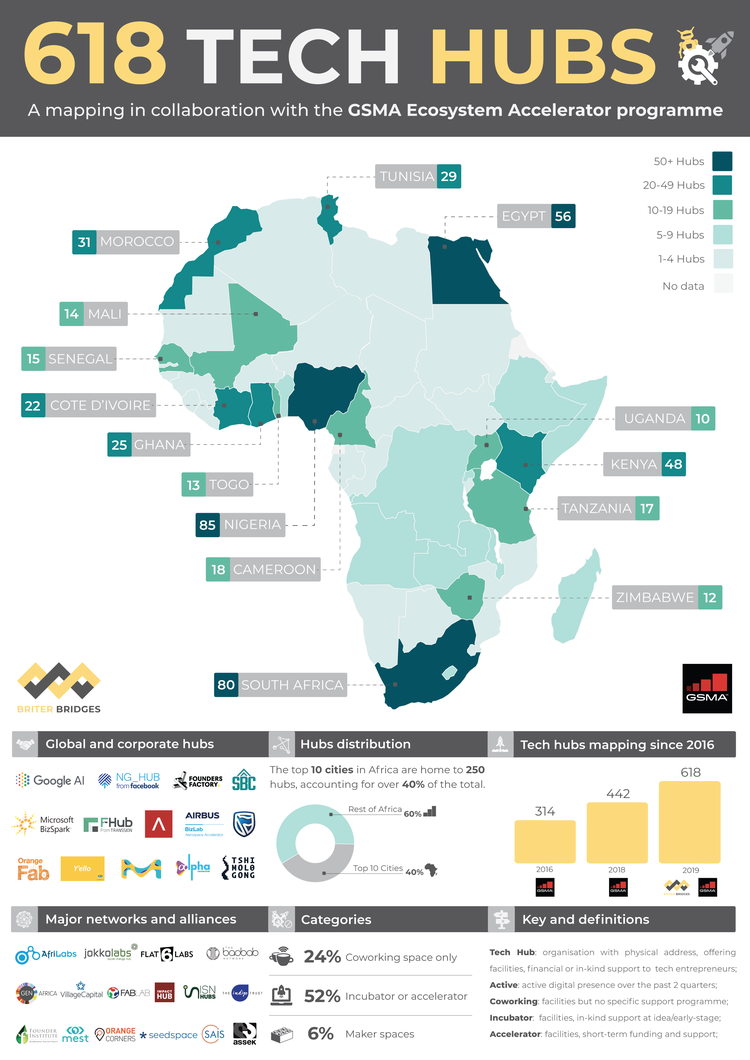
The acquisition joins two of the Africa’s most recognized tech hubs. These innovation spaces, accelerators, and incubators—which tally 618 per GSMA stats—have become focal points for startup formation, training, and IT activity on the continent.

TechHubsinAfricain2019 Briter Bridges

There aren’t official rankings for Africa’s most powerful tech hubs, but if there were, CcHub and iHub would arguably be up top. This would be based on the size of their membership networks, volume of tech related programs, startups incubated, partnerships, and global visibility.

Founded in 2011 in Lagos’ tech-synonymous Yaba suburb, the Co-Creation Hub has grown into a multi-faceted innovation center. The organization manages digital skills programs for entrepreneurs and school kids, startup incubation, and a portfolio of investments through its Growth Capital Fund.

CcHub is considered a go-to spot for any tech related visit to Nigeria. It was Mark Zuckerberg’s first public stop on his 2016 Africa trip. While leaving a CcHub event in 2018, I noticed the Vice President of Nigeria, Yemi Osinbajo, and his entourage packing into the elevator.

CcHub ZuckerbergTijani and team have mastered gaining partnerships with big global tech names. When Facebook launched its tech space in Nigeria—NG_Hub—CcHub was named lead partner. Google for Startups sponsored CcHub’s Pitch Drive, an African startup tour to Europe and Asia. CcHub also collaborated with the Government of Rwanda this year to open its Design Lab in Kigali, focused on innovating impact solutions in health, education, and governance.

The Design Lab launch extended CcHub’s West Africa reach further east and closer to iHub. The innovation center was co-founded by Erik Hersman in 2010 out of what he saw as a need in Africa’s emerging tech scene “for…creating community spaces…in major cities [for] young entrepreneurs. The nexus point for technologists, investors, [and] tech companies.”

iHub became that central spot in East Africa. Along with M-Pesa mobile-money and a vibrant startup scene, it is one of the pillars that inspired Kenya’s Silicon Savannah moniker.

iHub is also widely seen as giving rise to the Africa’s innovation center movement that inspired the upsurge in tech hubs across the continent.

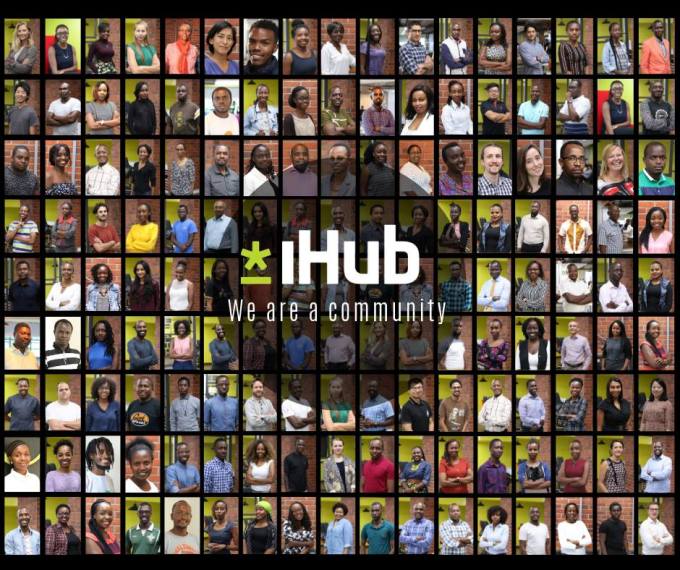
IHub Kenya PeopleSince 2010, 170  companies have formed out of iHub. It has 16,000 members and has played host to most major visitors to Kenya’s tech scene. After seeing CcHub in Nigeria in 2016, Zuck then headed to Kenya and toured iHub.

There’ll be plenty for continuing coverage on how these two prominent African incubators settle into becoming one big Africa mega-hub. That includes the sustainability question and what this all means to the continent’s tech scene.

At a high level, for now, the CcHub-iHub union creates a direct innovation link between two of Africa’s most active markets for VC and startup formation—Nigeria and Kenya.

In the past, both countries’ techies have shared a healthy rivalry. That could now turn to more  collaborations, as CcHub’s acquisition connects East and West in African tech.


26 Sep 2019

Voter manipulation on social media now a global problem, report finds

New research by the Oxford Internet Institute has found that social media manipulation is getting worse, with rising numbers of governments and political parties making cynical use of social media algorithms, automation and big data to manipulate public opinion at scale — with hugely worrying implications for democracy.

The report found that computational propaganda and social media manipulation have proliferated massively in recently years — now prevalent in more than double the number of countries (70) vs two years ago (28). An increase of 150%.

The research suggests that the spreading of fake news and toxic narratives has become the dysfunctional new ‘normal’ for political actors across the globe, thanks to social media’s global reach.

“Although propaganda has always been a part of political discourse, the deep and wide-ranging scope of these campaigns raise critical public interest concerns,” the report warns.

The researchers go on to dub the global uptake of computational propaganda tools and techniques a “critical threat” to democracies.

“The use of computational propaganda to shape public attitudes via social media has become mainstream, extending far beyond the actions of a few bad actors,” they add. “In an information environment characterized by high volumes of information and limited levels of user attention and trust, the tools and techniques of computational propaganda are becoming a common – and arguably essential – part of digital campaigning and public diplomacy.”

Techniques the researchers found being deployed by governments and political parties to spread political propaganda include the use of bots to amplify hate speech or other forms of manipulated content; the illegal harvesting of data or micro-targeting; and the use of armies of ‘trolls’ to bully or harass political dissidents or journalists online.

The researchers looked at computational propaganda activity in 70 countries around the world — including the US, the UK, Germany, China, Russia, India, Pakistan, Kenya, Rwanda, South Africa, Argentina, Brazil and Australia (see the end of this article for the full list) — finding organized social media manipulation in all of them.

So next time Facebook puts out another press release detailing a bit of “coordinated inauthentic behavior” it claims to have found and removed from its platform, it’s important to put it in context of the bigger picture. And the picture painted by this report suggests that such small-scale, selective discloses of propaganda-quashing successes sum to misleading Facebook PR vs the sheer scale of the problem.

The problem is massive, global and largely taking place through Facebook’s funnel, per the report.

Facebook remains the platform of choice for social media manipulation — with researchers finding evidence of formally organised political disops campaigns on its platform taking place in 56 countries.

We reached out to Facebook for a response to the report and the company sent us a laundry list of steps it says it’s been taking to combat election interference and coordinated inauthentic activity — including in areas such as voter suppression, political ad transparency and industry-civil society partnerships.

But it did not offer any explanation why all this apparent effort (just its summary of what it’s been doing exceeds 1,600 words) has so spectacularly failed to stem the rising tide of political fakes being amplified via Facebook.

Instead it sent us this statement: “Helping show people accurate information and protecting against harm is a major priority for us. We’ve developed smarter tools, greater transparency, and stronger partnerships to better identify emerging threats, stop bad actors, and reduce the spread of misinformation on Facebook, Instagram and WhatsApp. We also know that this work is never finished and we can’t do this alone. That’s why we are working with policymakers, academics, and outside experts to make sure we continue to improve.”

We followed up to ask why all its efforts have so far failed to reduce fake activity on its platform and will update this report with any response.

Returning to the report, the researchers say China has entered the global disinformation fray in a big way — using social media platforms to target international audiences with disinformation, something the country has long directed at its domestic population of course.

The report describes China as “a major player in the global disinformation order”.

It also warns that the use of computational propaganda techniques combined with tech-enabled surveillance is providing authoritarian regimes around the world with the means to extend their control of citizens’ lives.

“The co-option of social media technologies provides authoritarian regimes with a powerful tool to shape public discussions and spread propaganda online, while simultaneously surveilling, censoring, and restricting digital public spaces,” the researchers write.

Other key findings from the report include that both democracies and authoritarian states are making (il)liberal use of computational propaganda tools and techniques.

Per the report:

  • In 45 democracies, politicians and political parties “have used computational propaganda tools by amassing fake followers or spreading manipulated media to garner voter support”
  • In 26 authoritarian states, government entities “have used computational propaganda as a tool of information control to suppress public opinion and press freedom, discredit criticism and oppositional voices, and drown out political dissent”

The report also identifies seven “sophisticated state actors” — China, India, Iran, Pakistan, Russia, Saudi Arabia and Venezuela — using what it calls “cyber troops” (aka dedicated online workers whose job is to use computational propaganda tools to manipulate public opinion) to run foreign influence campaigns.

Foreign influence operations — which includes election interference — were found by the researchers to primarily be taking place on Facebook and Twitter.

We’ve reached out to Twitter for comment and will update this article with any response.

A year ago, when Twitter CEO Jack Dorsey was questioned by the Senate Intelligence Committee, he said it was considering labelling bot accounts on its platform — agreeing that “more context” around tweets and accounts would be a good thing, while also arguing that identifying automation that’s scripted to look like a human is difficult.

Instead of adding a ‘bot or not’ label, Twitter has just launched a ‘hide replies’ feature — which lets users screen individual replies to their tweets (requiring an affirmative action from viewers to unhide and be able to view any hidden replies). Twitter says this is intended at increasing civility on the platform. But there have been concerns the feature could be abused to help propaganda spreaders — i.e. by allowing them to suppress replies that debunk their junk.

The Oxford Internet Institute researchers found bot accounts are very widely used to spread political propaganda (80% of countries studied used them). However the use of human agents was even more prevalent (87% of countries).

Bot-human blended accounts, which combine automation with human curation in an attempt to fly under the BS detector radar, were much rarer: Identified in 11% of countries.

While hacked or stolen accounts were found being used in just 7% of countries.

In another key finding from the report, the researchers identified 25 countries working with private companies or strategic communications firms offering a computational propaganda as a service, noting that: “In some cases, like in Azerbaijan, Israel, Russia, Tajikistan, Uzbekistan, student or youth groups are hired by government agencies to use computational propaganda.”

Commenting on the report in a statement, professor Philip Howard, director of the Oxford Internet Institute, said: “The manipulation of public opinion over social media remains a critical threat to democracy, as computational propaganda becomes a pervasive part of everyday life. Government agencies and political parties around the world are using social media to spread disinformation and other forms of manipulated media. Although propaganda has always been a part of politics, the wide-ranging scope of these campaigns raises critical concerns for modern democracy.”

Samantha Bradshaw, researcher and lead author of the report, added: “The affordances of social networking technologies — algorithms, automation and big data — vastly changes the scale, scope, and precision of how information is transmitted in the digital age. Although social media was once heralded as a force for freedom and democracy, it has increasingly come under scrutiny for its role in amplifying disinformation, inciting violence, and lowering trust in the media and democratic institutions.”

Other findings from the report include that:

  • 52 countries used “disinformation and media manipulation” to mislead users
  • 47 countries used state sponsored trolls to attack political opponents or activists, up from 27 last year

Which backs up the widespread sense in some Western democracies that political discourse has been getting less truthful and more toxic for a number of years — given tactics that amplify disinformation and target harassment at political opponents are indeed thriving on social media, per the report.

Despite finding an alarming rise in the number of government actors across the globe who are misappropriating powerful social media platforms and other tech tools to influence public attitudes and try to disrupt elections, Howard said the researchers remain optimistic that social media can be “a force for good” — by “creating a space for public deliberation and democracy to flourish”.

“A strong democracy requires access to high quality information and an ability for citizens to come together to debate, discuss, deliberate, empathise and make concessions,” he said.

Clearly, though, there’s a stark risk of high quality information being drowned out by the tsunami of BS that’s being paid for by self-interested political actors. It’s also of course much cheaper to produce BS political propaganda than carry out investigative journalism.

Democracy needs a free press to function but the press itself is also under assault from online ad giants that have disrupted its business model by being able to spread and monetize any old junk content. If you want a perfect storm hammering democracy this most certainly is it.

It’s therefore imperative for democratic states to arm their citizens with education and awareness to enable them to think critically about the junk being pushed at them online. But as we’ve said before, there are no shortcuts to universal education.

Meanwhile regulation of social media platforms and/or the use of powerful computational tools and techniques for political purposes simply isn’t there. So there’s no hard check on voter manipulation.

Lawmakers have failed to keep up with the tech-fuelled times. Perhaps unsurprisingly, given how many political parties have their own hands in the data and ad-targeting cookie jar, as well as pushing fakes. (Concerned citizens are advised to practise good digital privacy hygiene to fight back against undemocratic attempts to hack public opinion. More privacy tips here.)

The researchers say their 2019 report, which is based on research work carried out between 2018 and 2019, draws upon a four-step methodology to identify evidence of globally organised manipulation campaigns — including a systematic content analysis of news articles on cyber troop activity and a secondary literature review of public archives and scientific reports, generating country specific case studies and expert consultations.

Here’s the full list of countries studied:

Angola, Argentina, Armenia, Australia, Austria, Azerbaijan, Bahrain, Bosnia & Herzegovina, Brazil, Cambodia, China, Colombia, Croatia, Cuba, Czech Republic, Ecuador, Egypt, Eritrea, Ethiopia, Georgia, Germany, Greece, Honduras, Guatemala, Hungary, India, Indonesia, Iran, Israel, Italy, Kazakhstan, Kenya, Kyrgyzstan, Macedonia, Malaysia, Malta, Mexico, Moldova, Myanmar, Netherlands, Nigeria, North Korea, Pakistan, Philippines, Poland, Qatar, Russia, Rwanda, Saudi Arabia, Serbia, South Africa, South Korea, Spain, Sri Lanka, Sweden, Syria, Taiwan, Tajikistan, Thailand, Tunisia, Turkey, Ukraine, United Arab Emirates, United Kingdom, United States, Uzbekistan, Venezuela, Vietnam, and Zimbabwe.


26 Sep 2019

Paro raises $10 million series B to offer corporate finance expertise on demand

As any CFO can attest, corporate finance is extraordinarily complicated. From tax preparation, to financial controls, to cash flow estimation and more, the finance department of any major company often has to turnaround sophisticated analyses with extreme attention to detail — and quick.

Most of the time, businesses outsource at least part of those financial functions to the big four accounting firms or to smaller firms, but as with all consulting firms, getting contracts signed and work underway can take significant time and effort.

That’s where Paro comes in. The Chicago-based expert marketplace wants to provide corporate clients with on-demand sophisticated expertise across a range of financial functions.

The company announced today that it has raised a $10 million series B venture capital round led by Mark Fernandes of Sierra Ventures. Existing investors Revolution Ventures, KGC Capital, and Tom Williams also participated.

When we last checked in with Paro 18 months ago, it had just raised a $5 million series A from Clara Sieg at Revolution. Since that time, the marketplace has continued to expand, and CEO and co-founder Michael Burdick says that the company is increasingly zero-ing in on the types of clients that best match the platform’s offerings.

“The cognitive load is huge,” Burdick explained for companies trying to find this talent on existing marketplaces. “You’re posting project descriptions, you’re wading through all these mountains of unfiltered proposals, you’re having to shortlist candidates.” That often leads CFOs right back to the incumbent accounting firms, since they are much more plug-and-play.

Paro has taken a different tact, focusing instead on recruiting and retaining the highest-quality financial talent on its marketplace. The company has built out and continues to improve tools to help the marketplace’s experts focus on the work that makes them unique rather than the drudgery that can come as part of their jobs. We’re “automating a lot of their back office functions [and] giving them workflow automation tools to make them more productive and efficient and earn more,” Burdick said. He dubbed this the “freelancer operating system.”

Sieg of Revolution also noted that the pursuit of quality has been beneficial for Paro’s bottom line. “Unlike a consulting gig, where it’s a one-time analysis and a sort of lumpy engagement, you need monthly financials, you need annual tax reporting, you need audit work, and so these are really ongoing relationships,” she said. That “gets us away from some of the informal problems that you’ve seen in labor marketplaces, which is really high customer acquisition costs, and relatively low take rates, and not very much recurring business.”

As Paro scales, Burdick sees an opportunity to leverage the firm’s data network effects to build a moat around its business. “There is inherently a wealth of data at our fingertips that we’re leveraging, giving back to the freelancers and the clients,” he said.

Online labor marketplaces targeting business functions have grown dramatically in popularity in recent years, with companies like Pilot raising large rounds of venture capital. Burdick says that Paro differentiates from bookkeeping services like Pilot by focusing on elite financial talent which ultimately leads to higher margins.

The company intends to use the capital to continue expanding its product and sales staffs.