Category: UNCATEGORIZED

26 Sep 2019

Peloton prices IPO at $29 per share

Exercise bike and treadmill company Peloton priced its initial public offering this evening at $29 per share. As part of the IPO, Peloton is offering 40 million Class A common stock to the public.

Peloton was expected to price its IPO between $26 to $29 per share, so this falls on the higher end. With Peloton selling 40 million Class A shares, it is looking to raise $1.16 billion with a valuation of more than $8 billion.

Peloton filed to go public back in August, reporting $915 million in total revenue for the year ending June 30, 2019. That was an increase of 110% from the fiscal year prior. Prior to this upcoming IPO, Peloton had raised $994 million at a private market valuation of $4.15 billion.

Shares of “PTON” will start trading tomorrow on the Nasdaq.

26 Sep 2019

Amazon Echo gets more family-friendly

Amazon is making its Echo line of devices more family-friendly. The company had already launched an Echo aimed at parents and kids by bundling in FreeTime and giving the device a colorful look-and-feel. Today, it launched more devices ideal for kids’ rooms, while shipping them with features and accessories that make them not just toys, but practical household communication tools.

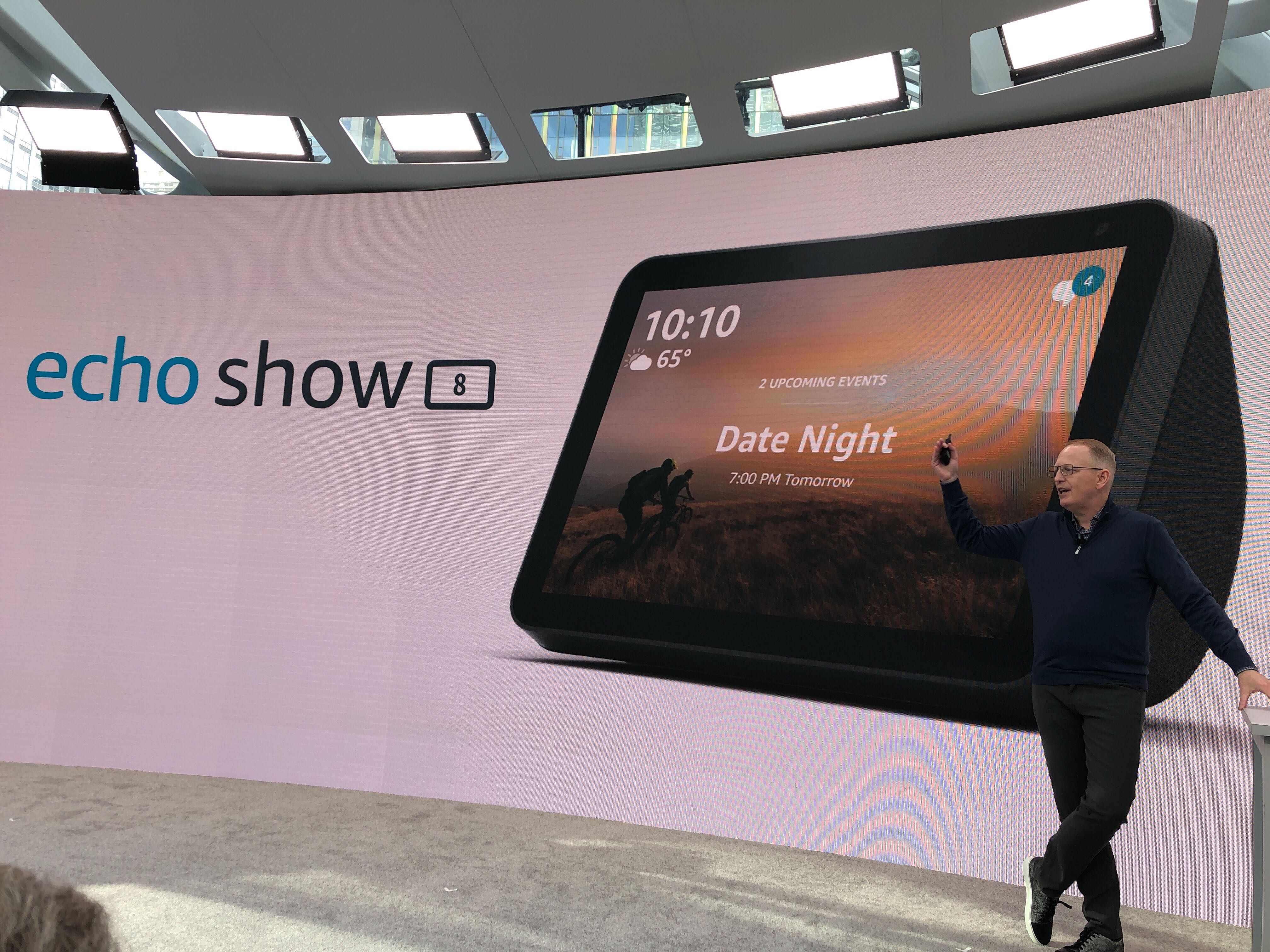
While the Echo Dot Kids Edition was designed to put an Alexa-powered speaker in the kids’ room, the newest Echo Show could be the next step for kids who want more than a Dot. The newly announced Echo Show 8 is the mid-sized missing piece to the Echo Show lineup, which now also includes the original 10″ device and the more recent, tinier and cheaper Echo Show 5.

Image from iOS 9

With the slightly bigger screen, but still affordably priced at $129, the Echo Show 8 makes sense for doing things like watching videos or chatting with friends and family on video calls, which are more appropriate for those beyond the preschool set.

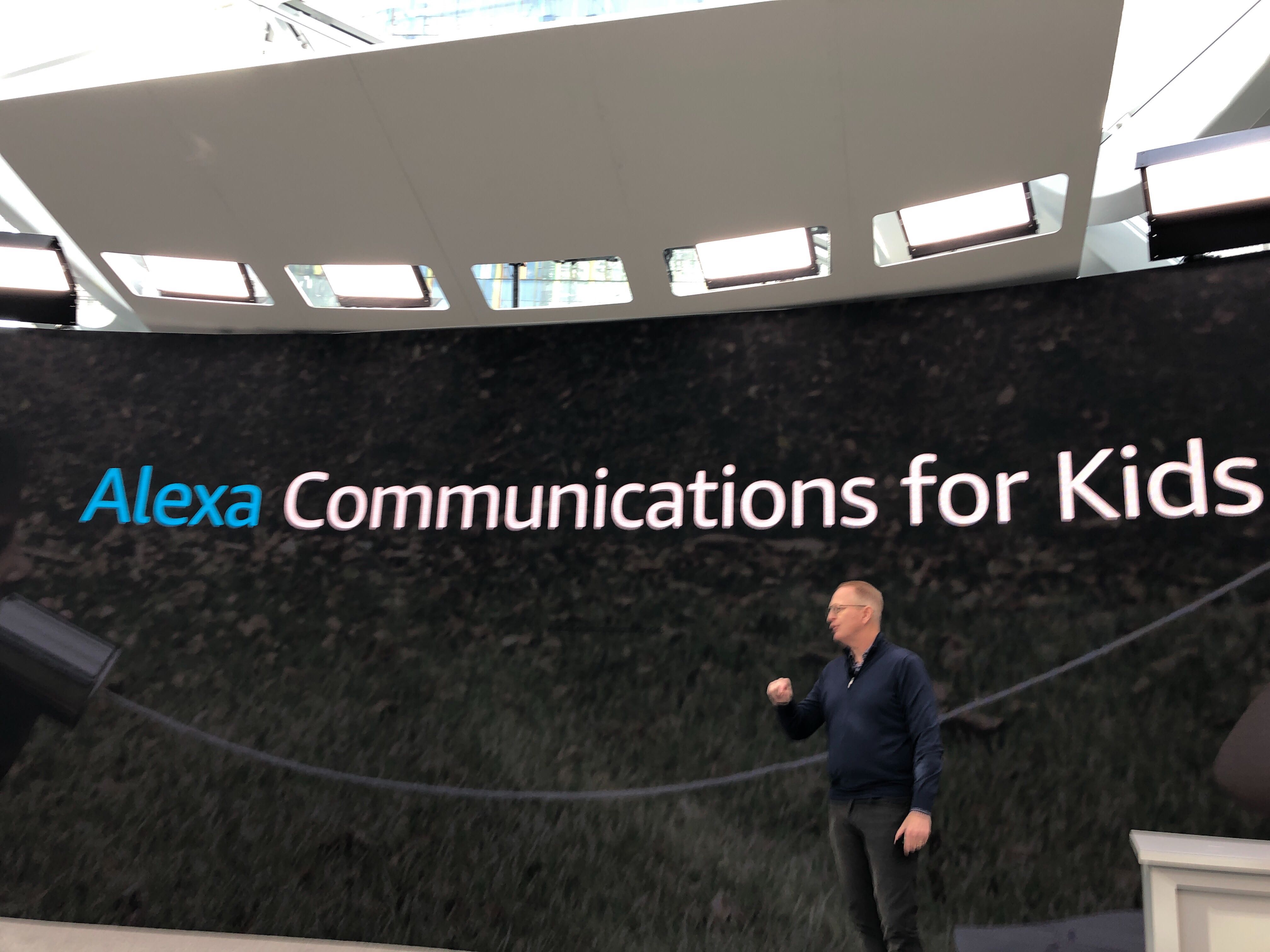
On that last point, Amazon has addressed one of parents’ concerns with Alexa’s calling capabilities: it’s introducing a new service called “Alexa Communications for Kids.” This allows parents to whitelist specific family members or friends the child can talk to — and the other party has to opt-in too.

Image from iOS 6 2

That means parents can approve the child to call or video chat with grandma and grandpa any time they choose — or vice versa — but not with strangers. For tweens and teens, it means a set of approved friends could also be allowed the same benefit. In other words, it offers similar functionality to Facebook Portal’s support of Messenger and WhatsApp….but it’s not, you know, from Facebook.

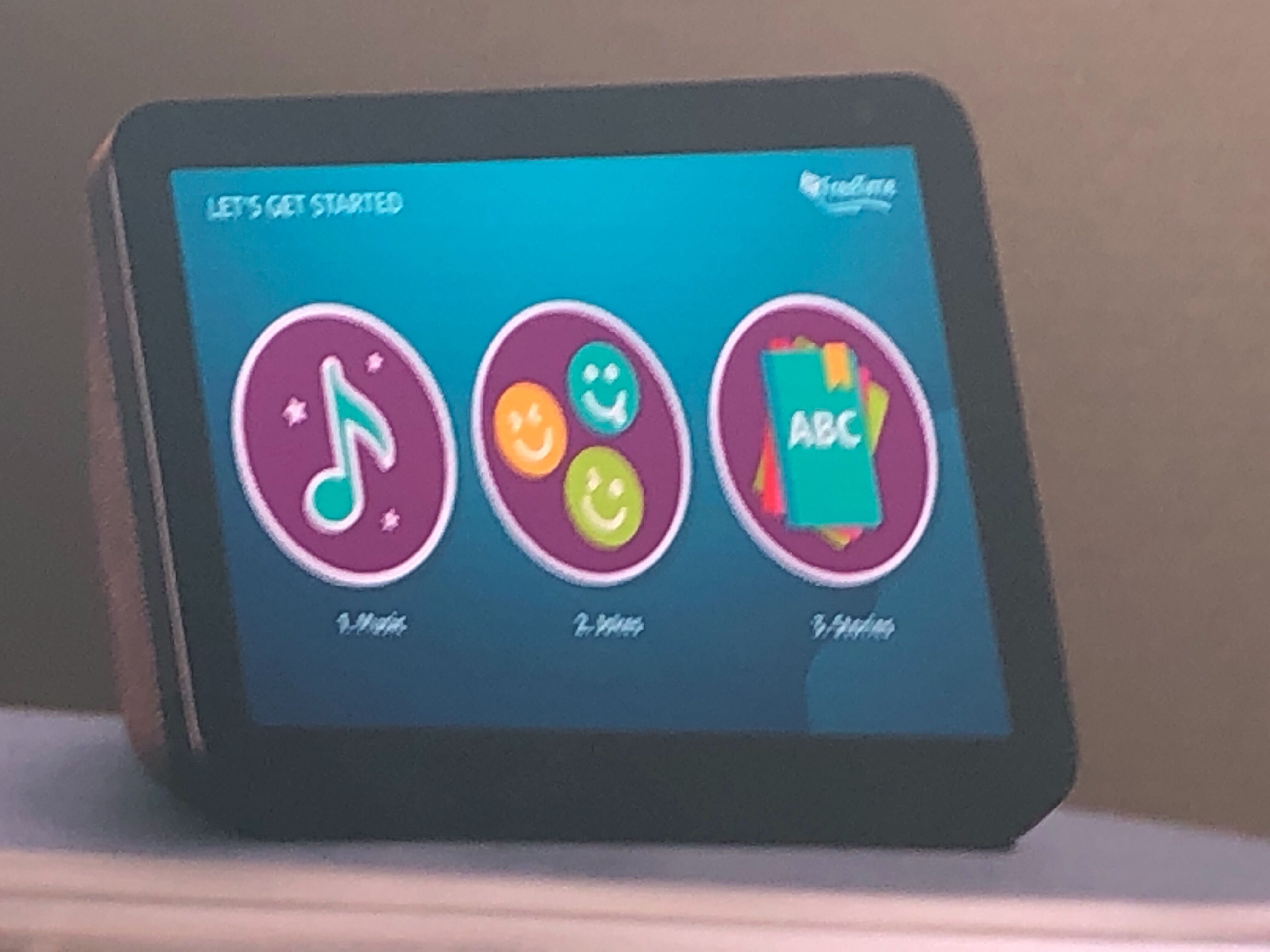
With a screen-based device, kids can also use the new Echo Show 8 to play games or watch videos.

Image from iOS 4 2

Alongside the launch of the Echo Show 8, Amazon is bringing its parental control system and kid-friendly subscription library FreeTime to all Echo Show devices. This will allow kids to watch only FreeTime-approved videos, decorate photos with stickers, sing along with the lyrics to their favorite music and more.

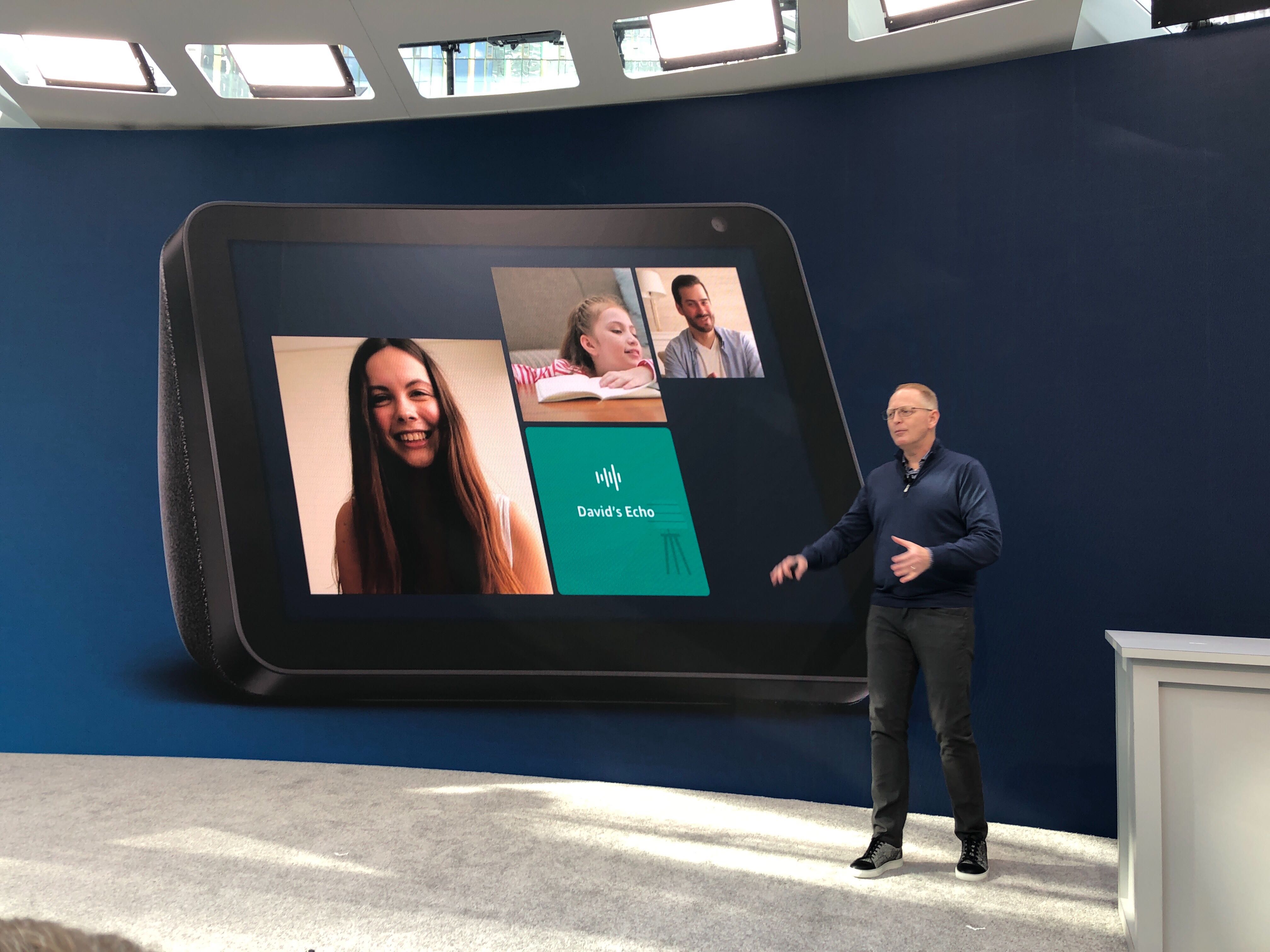
Meanwhile, the popular household feature drop-in is getting an upgrade, too. Parents often “drop-in” on kids to tell them to come to dinner or come downstairs, for example – the way intercom systems built into homes allowed for in the past.

Image from iOS 5 2

A new drop-in feature will let Echo owners drop-in on everyone in the family, and have them all appear in a mosaic on the screen, Brady Bunch-style, on Echo Shows with a screen.

Beyond the smart screen itself, Amazon is also angling its way into the education market with a new API that will connect its Alexa devices to ed-tech systems, including Learning Management Systems (LMS), Student Information Systems (SIS), Classroom Management providers, and massively open online course (MOOC) platforms.

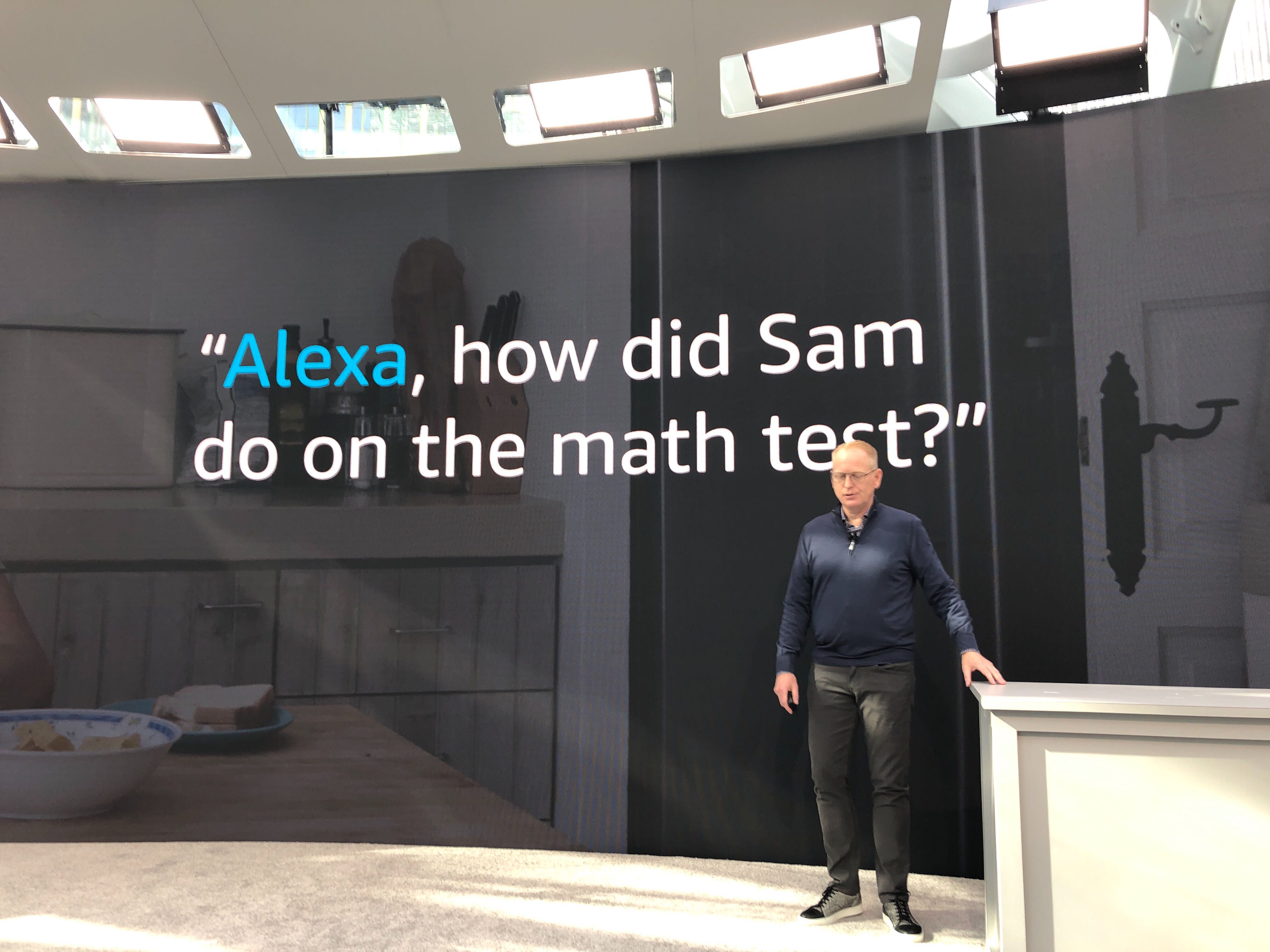
When the supported skills ship later this year, parents of children 13 and up will be able to ask things like “Alexa, what did Kaylee do in school today?” while kids could ask “Alexa, what is my homework tonight?”

Image from iOS 2 3

This feature will require participation from ed-tech software developers, but Amazon has lined up several partners on that front, including Kickboard, ParentSquare, Coursera, Canvas, and Blackboard.

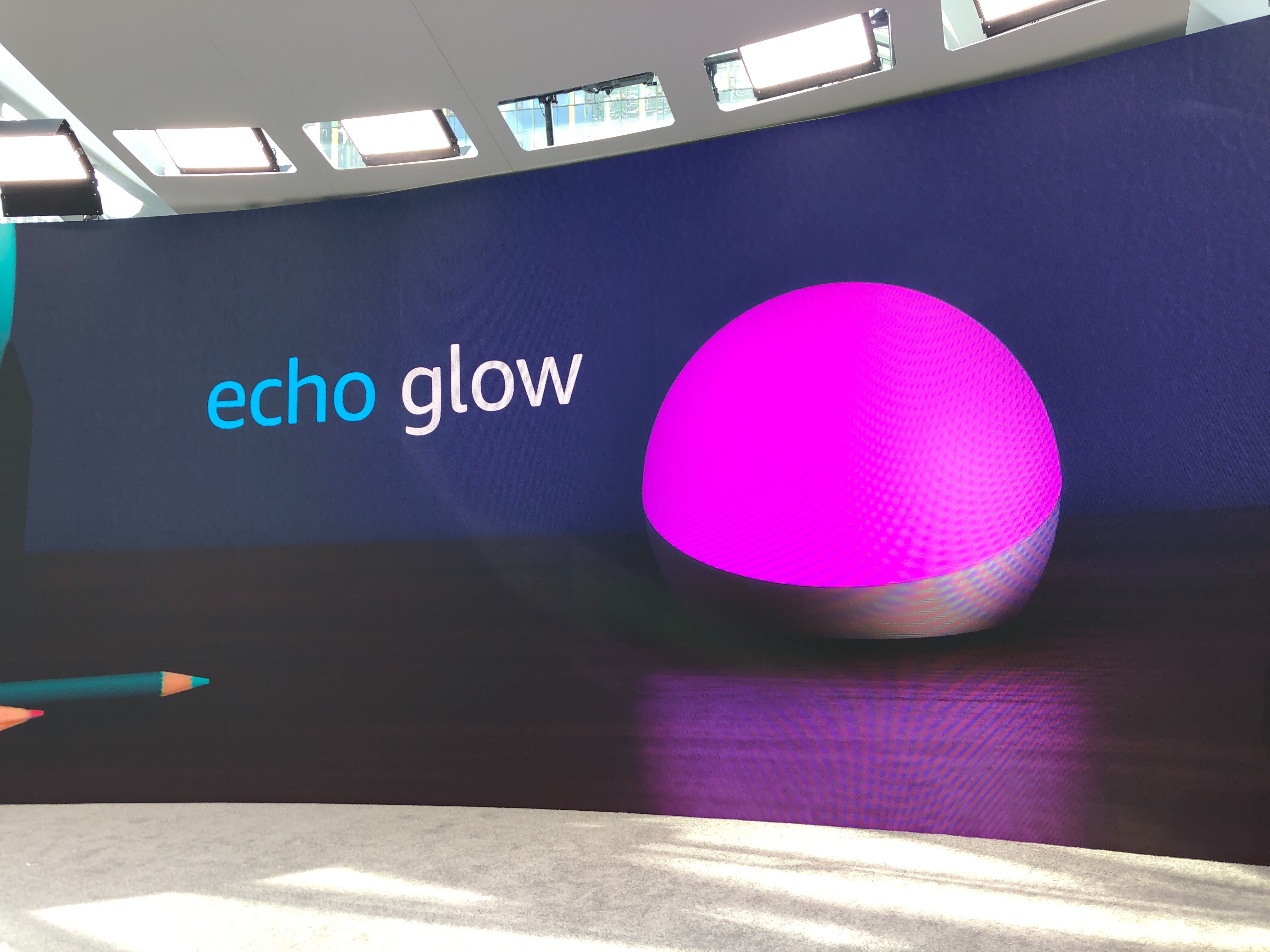
Finally, there’s a new device that’s just for fun — the Echo Glow. It doesn’t have a purpose, exactly, beyond the fact that little kids will think it’s cool. Essentially a night light, the glowing orb can play in sync to the music, change colors when tapped, or run special modes — like one that blinks through all the colors, or another “campfire” mode with colors similar to those of a campfire.

This would be a great accessory for kids’ rooms but it’s going to be limited by the price: $30. Given it doesn’t have much functionality — it’s a toy — parents will probably stick to cheaper nightlights instead.

Image from iOS 12

25 Sep 2019

Hands-on with Oculus Link: Rift who?

Four months after its release, the Rift S is looking pretty irrelevant.

My colleague Josh and I went hands-on with an early demo of Oculus Link, a feature launching in beta in November that lets Quest users connect their headset to a PC and play games that require a bit more horsepower than the Quest’s onboard compute can handle.

The differences between playing an upcoming title like Stormland on the $399 standalone Quest with Oculus Link versus playing it on the $399 PC Oculus Rift S are incredibly tiny and clearly not enough of a sell that anyone but the snobbiest of VR snobs should bother buying a Rift S.

The display resolution sounds like it is currently better than what’s possible on the original Rift but less than the full resolution of the Quest. The Quest will play the content at 72 frames per second as opposed to 80 frames that you’d get on the Rift S. You also will have one less onboard camera for inside-out tracking. A Facebook engineer at the booth detailed that latency on Oculus Link would be greater than on the made-for-PC headsets but that it should still be comfortable for most users, he wouldn’t get into specific numbers.

To use the feature you’ll need a USB-C 3 cable, the charging cable that came with your Quest won’t do. Oculus will be releasing its own cable after the beta ends that you’ll be able to buy separately.

EA244FCD 9778 4B9F B5FD 19FDDE899D1F 1331 000000BCEE6B97B0

Ultimately, playing is the true test, things weren’t as buttery smooth as they might be on a 90fps (or greater) headset but that isn’t something the Rift S can even handle so you’re still getting an experience that feels very very solid. You’re using your Quest — albeit tethered — and getting a PC experience. Textures were richer and environments were more complex but you’re using the same headset though you need a PC that meets Oculus’s recommended specifications.

Ultimately, I’m not quite sure what this very cool technology does for Oculus.

It 100% cannibalizes Rift S sales, but I can’t imagine too many Quest users will be going out to buy gaming PCs so they can utilize Link. Nevertheless, it’s a very cool platform and makes the Quest a better sell than it was for users that are deep into VR and already bought into the early generations.  All I know for certain is that I would be very pissed if I bought a Rift S instead of a Quest.

25 Sep 2019

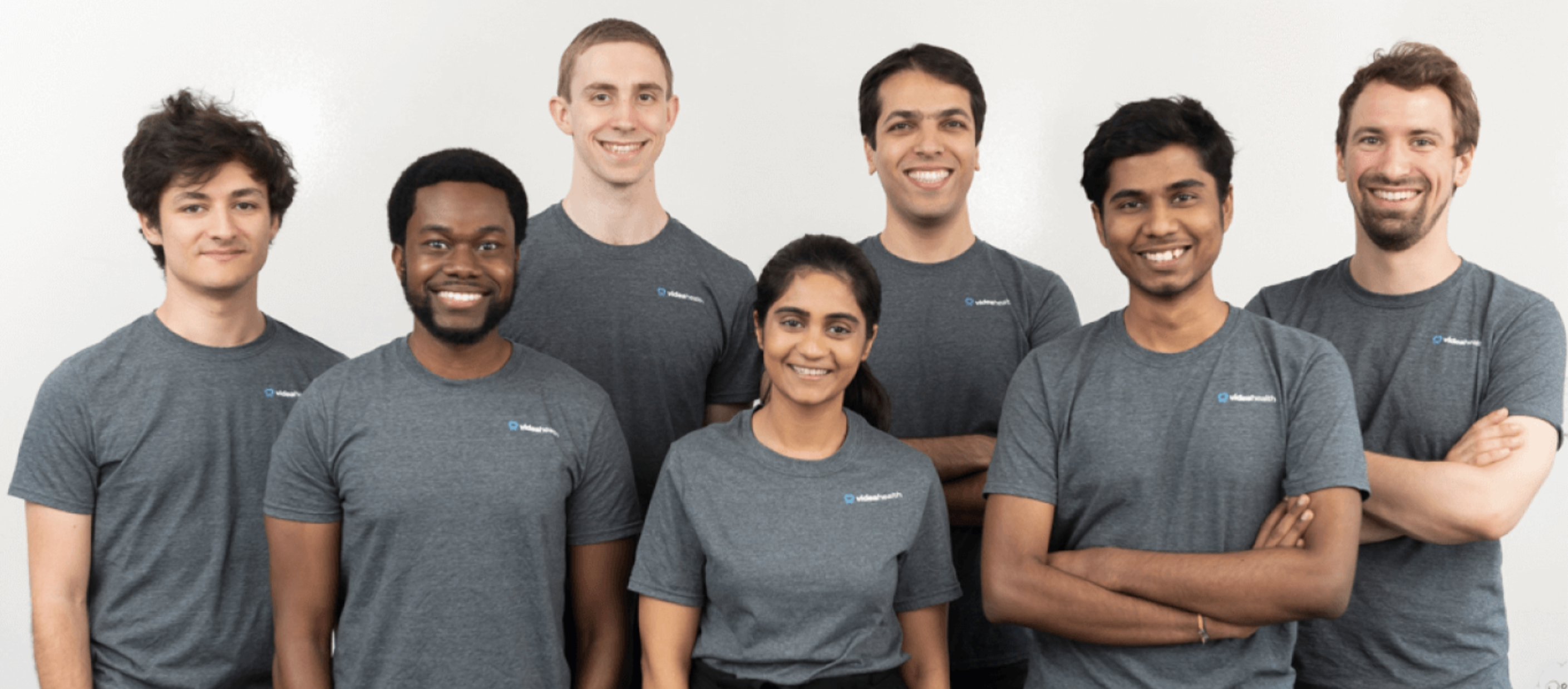
Using AI to improve dentistry, VideaHealth gets a $5.4 million polish

Florian Hillen, the chief executive officer of a new startup called VideaHealth, first started researching the problems with dentistry about three years ago.

The Massachusetts Institute of Technology and Harvard educated researcher had been doing research in machine learning and image recognition for years and wanted to apply that research in a field that desperately needed the technology.

Dentistry, while an unlikely initial target, proved to be a market that the young entrepreneur could really sink his teeth into.

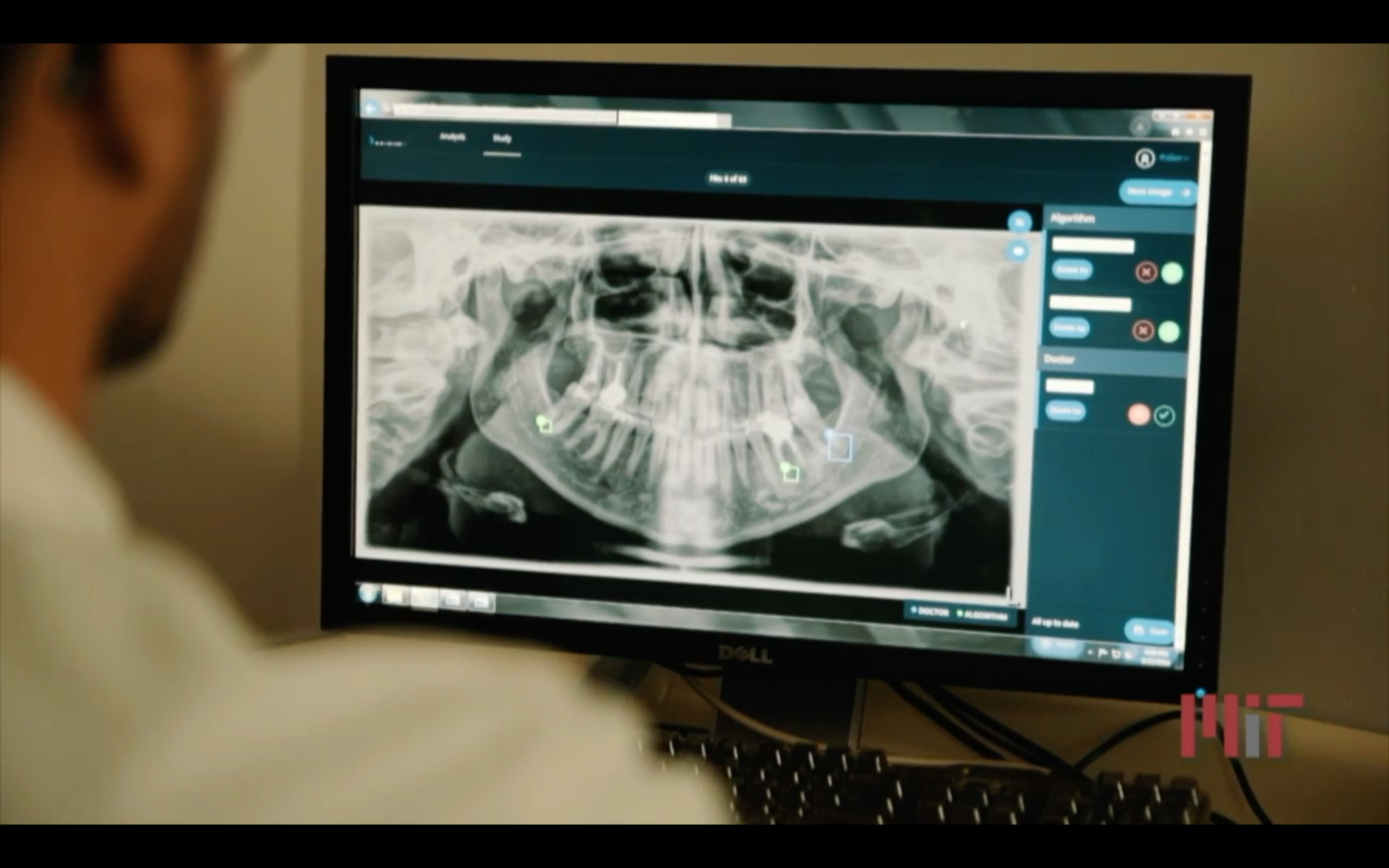
“Everyone goes to the dentist [and] in the dentist’s office, x-rays are the major diagnostic tool,” Hillen says. “But there is a lack of standard quality in dentistry. If you go to three different dentists you might get three different opinions.”

With VideaHealth (and competitors like Pearl) the machine learning technologies the company has developed can introduce a standard of care across dental practices, say Hillen. That’s especially attractive as dental businesses become rolled up into large service provider plays in much of the U.S.

Screen Shot 2019 09 16 at 16.33.16 1

Image courtesy of VideaHealth

Dental practitioners also present a more receptive audience to the benefits of automation than some other medical health professionals (ahem… radiologists). Because dentists have more than one role in the clinic they can see enabling technologies like image recognition as something that will help their practices operate more efficiently rather than potentially put people out of a job.

“AI in radiology competes with the radiologist,” says Hillen. “In dentistry we support the dentist to detect diseases more reliably, more accurately, and earlier.”

The ability to see more patients and catch problems earlier without the need for more time consuming and invasive procedures for a dentist actually presents a better outcome for both practitioners and patients, Hillen says.

It’s been a year since Hillen launched the company and he’s already attracted investors including Zetta Venture Partners, Pillar and MIT’s Delta V, who invested in the company’s most recent $5.4 million seed financing.

Already the company has collaborations with dental clinics across the U.S. through partnerships with organizations like Heartland Dental, which operates over 950 clinics in the Midwest. The company has seven employees currently and will use its cash to hire broadly and for further research and development.

Screen Shot 2019 09 25 at 2.53.42 PM

Photo courtesy of VideaHealth


25 Sep 2019

Spanish startup Elma gets $3.2M for a digital-first health insurance play

Insurtech startup Elma has closed a €3 million (~$3.2M) Series A funding round led by Mangrove Capital partners to build out a digital-first health insurance business starting with Spain, its domestic market.

Also investing in the Series A are a number of unnamed local investors focused on the healthcare space, along with Barcelona-based investor and company builder Antai Venture Builder (AVB), Arroba Capital, and US VC Joyance Capital Partners. 

Elma’s co-founders — Miguel Ángel Antón (CEO), Albert Malagarriga (CPO), and Miguel Vicente and Gerard Olivé (also co-founders of its investor, AVB) — have a background in digital industries and startups, building “user centric experiences”, as Antón puts it.

Healthcare experience in the founding team comes via the COO who we’re told spent 12 years at a C-level position at one of the largest health insurers in Spain (now owned by Bupa). Elma also has a chief medical officer — who Antón touts as bringing a wealth of experience in “digital care”.

Since 2017 the team has been building a number of digital healthcare tools that can be accessed via an app. The idea is to entice subscribers to Elma’s healthcare cover with the promise of tech-enabled convenience and a shorter wait time vs Spain’s (free) public healthcare service for remote chats with doctors.

It’s also hoping to disrupt legacy health insurance giants by offering slicker digital tools and services.

“Few companies or entities have had the opportunity to think about patient journeys and build and articulate a product that optimizes healthcare outcomes while controlling costs,” argues Antón. “We believe insurers have a privileged position to do that, yet they seem to have little incentive to innovate and adopt digital tools to make it happen given their legacy. We want to build a digital health subscription to better healthier, that includes insurance and is (finally) user centric.”

Among the tools Elma will offer subscribers initially is a telehealth service that lets members talk to a doctor via video call and chat, providing remote primary care and digital prescription (it has a team of seven doctors to serve that from launch) — and a doctor search engine for finding a medical professional to deal with a specific condition (it has a pool of 23,000 doctors in Spain for in-person healthcare).

“We are currently working on a booking feature and integration with test providers to make getting blood tests, scans and so on much easier and interconnected,” adds Antón.

“We are one of the few insurers that provide a full online, comprehensive quoting system for people to understand our products and buy entirely online. These are just a few features that we are releasing with, but our vision is to pursue the digitalization of the industry to fulfil our mission. Prevention, promotion of good habits, digital therapies, are coming up next.” 

On the prevention front, this being an insurtech startup, Elma’s roadmap includes linking insurance premiums to healthier lifestyles — via some form of behavior tracking.

“Healthier people should benefit from their good habits and we are already testing tools that identify people’s habits,” Antón confirms, adding: “Other features in our roadmap for next year are integration with wearables, care plans, skin prevention plans, etc.”

The team will be launching its first health insurance product in Spain next month.

Its website already lists pricing for a range of plans “con copago” (which means there’s a monthly fee to pay for the insurance cover plus an additional fee when you access healthcare services).

“We will have a full “sin copago” product in two weeks but we are believers of insurance with copayment,” Antón tells TechCrunch. “Being healthy makes you reduce visits to the doctor so you can keep your premium low and pay per use which will be best for our customers. We really love copayments…. Best way to pay less.”

The Series A will be put towards scaling in Spain, which is the firm focus for Elma for the foreseeable future given a large addressable local market.

Some 10M+ people (~23% of the population) pay for healthcare, according to Antón, who says this is on account of long wait time for the free public service. A majority of those (60%) pay for health insurance via their employer — so Elma is focusing on selling in to corporates to provide cover for their staff.

“We have an agreement with [insurance broker] Willis Towers Watson who will allow us to quote the most relevant companies in Spain,” he says, adding that it’s already signed agreements with listed companies  (such as Masmovil, Red Electrica Española); startups (eCooltra); and state owned companies (Ferrocarrils de la Generalitat).

“Healthcare is very country specific, that’s why its really hard to scale this type of company [to other markets]. So far we want to concentrate in Spain. The market here is huge, growing 5%-7% a year and needs a lot of digitalization,” he adds.

“We want to became leader in our market. In the future we will look for markets where our product fits the best, and it may be countries with or without a strong public health system. What we believe is true is if we make it here, where we are competing with an excellent service which is for free (Spanish public healthcare system), we can probably make it anywhere.”

In terms of app-focused competition, on Elma’s home turf there’s MediQuo, another Barcelona-based startup that promises to put a doctor in your pocket — via an app where users can chat to a medical “amigo”. While it’s not a fully fledged health insurance play pricing is low enough that users could combine it with legacy health insurance elsewhere — augmenting their usual cover with an up-to-date app supplement.

25 Sep 2019

Ears-on with Amazon’s new Echo earbuds, framebuds, and ringbud

Amazon announced more than a few devices today during an event at its headquarters in Seattle, and it was the smallest gadgets that made the biggest impression. The company built Alexa into earbuds, glasses, and a ring with the Echo Buds, Echo Frames, and Echo Loop. I’ve tried them all out.

The ones people are most likely to actually want are the earbuds, of course. With Bose noise reduction and Alexa functions built in, they’ll be a popular option for anyone for anyone who doesn’t want to take out their phone, but also doesn’t want to wear large over-hear headphones.

alexa echo amazon 9250103

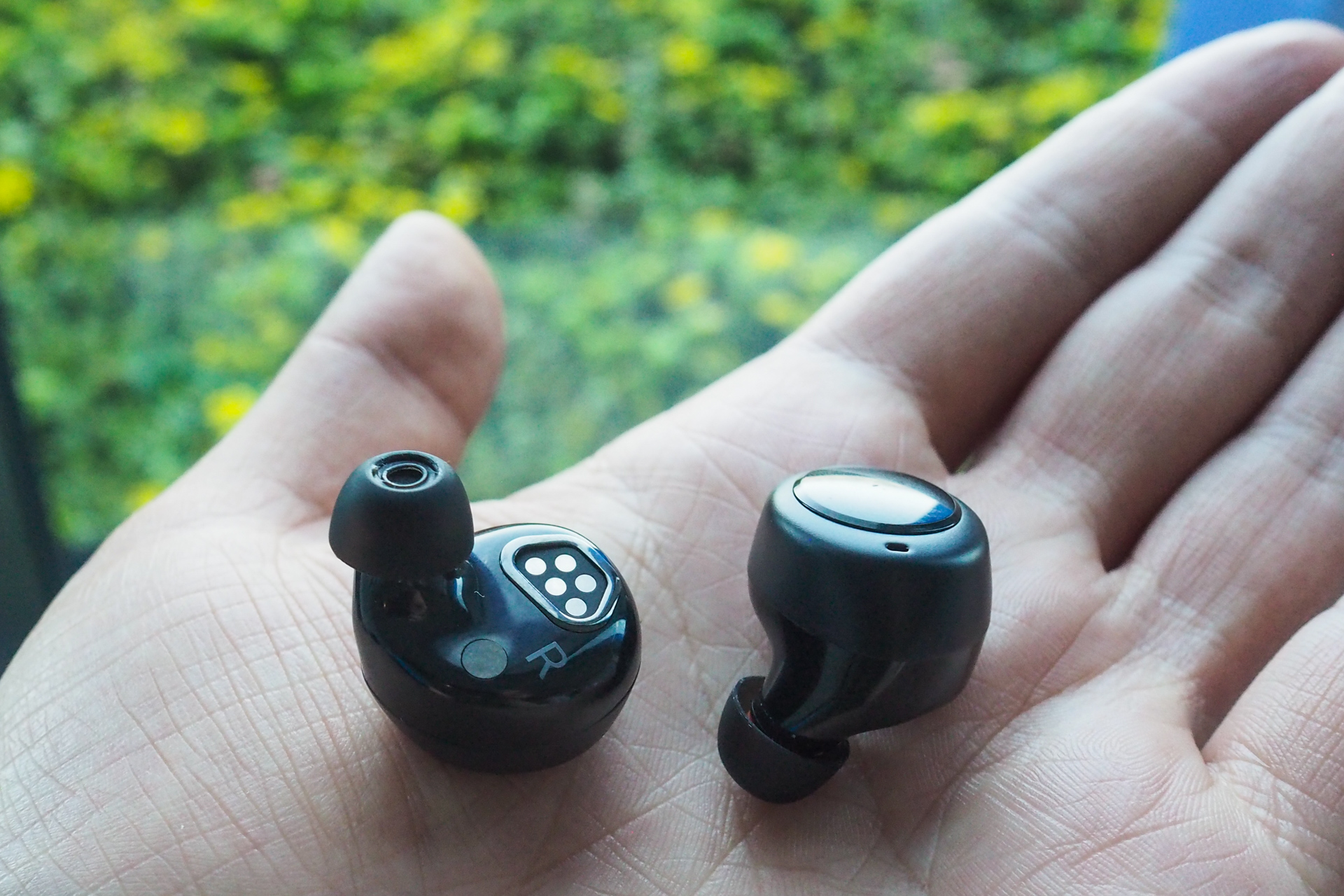
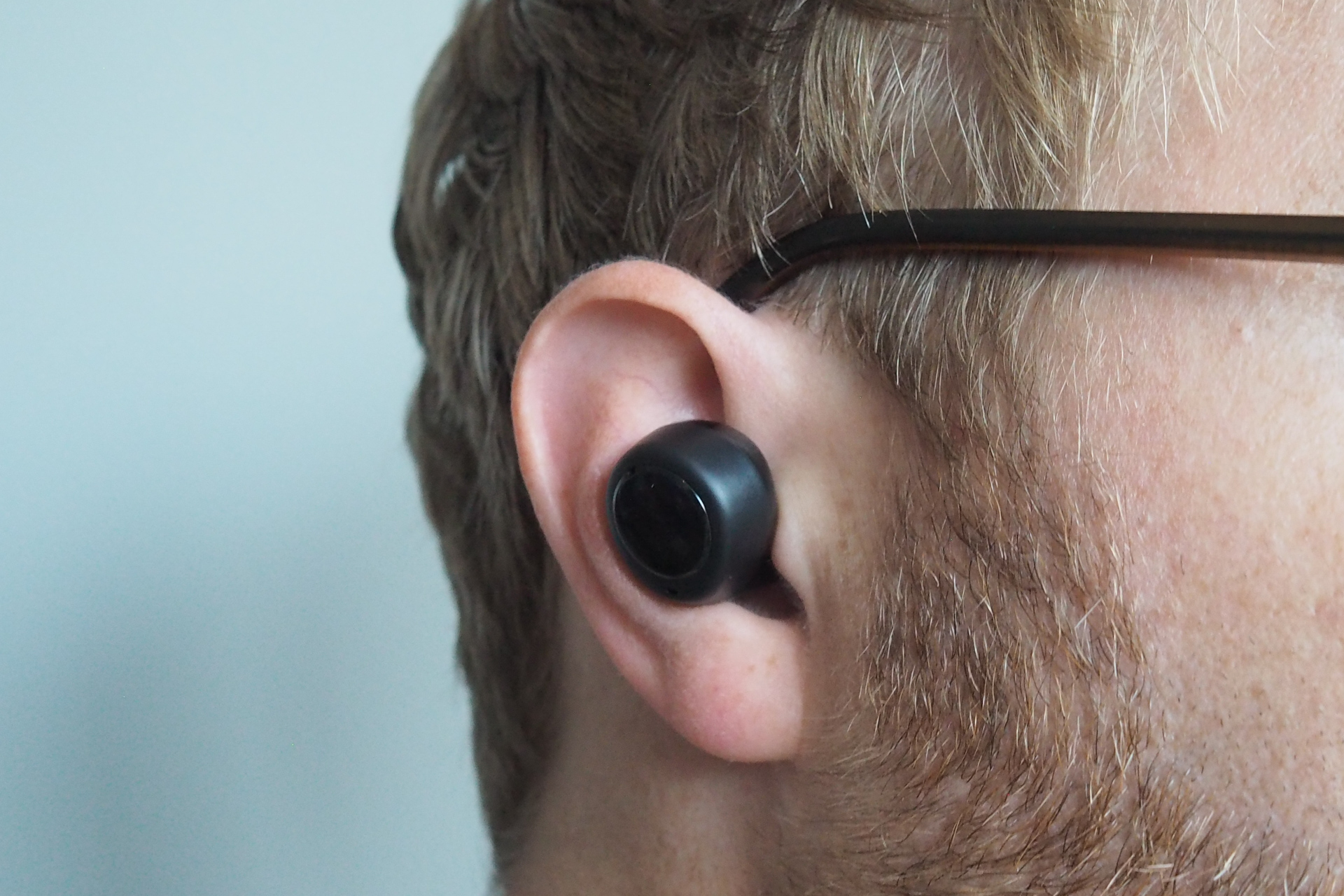
The Echo Buds are somewhat large — bigger than several sets of wireless headphones I’ve seen and tried, though they were comfortable after being corkscrewed into my ear.

They have two modes: noise reduction and passthrough, which you switch between with a double tap on either bud. The noise reduction was considerable but certainly not to the level you’d expect from a pair of over-ears. In-ear headphones already provide a physical barrier to sound getting in, but the addition of three microphones on each ear (two external and one internal) let it do the usual electronic reduction as well. I could still hear the crowd around me and people speaking to me, but it was easily drowned out by the Billie Eilish song they queued up.

alexa echo amazon 9250092

Passthrough provided a quick and clear version of surrounding audio with no noticeable delay. Music and other stuff can still be played in this mode and it blended pretty seamlessly in.

Of course the Echo Buds, like pretty much everything else at the event, have Alexa built in. You get at the service via wake word, a process that worked well for me.

Their little case looks more fiddly than it is. Magnets snap the contacts onto each other and it begins charging immediately. You should get some 4-5 hours with the buds, out to 20 hours if you drain the case too.

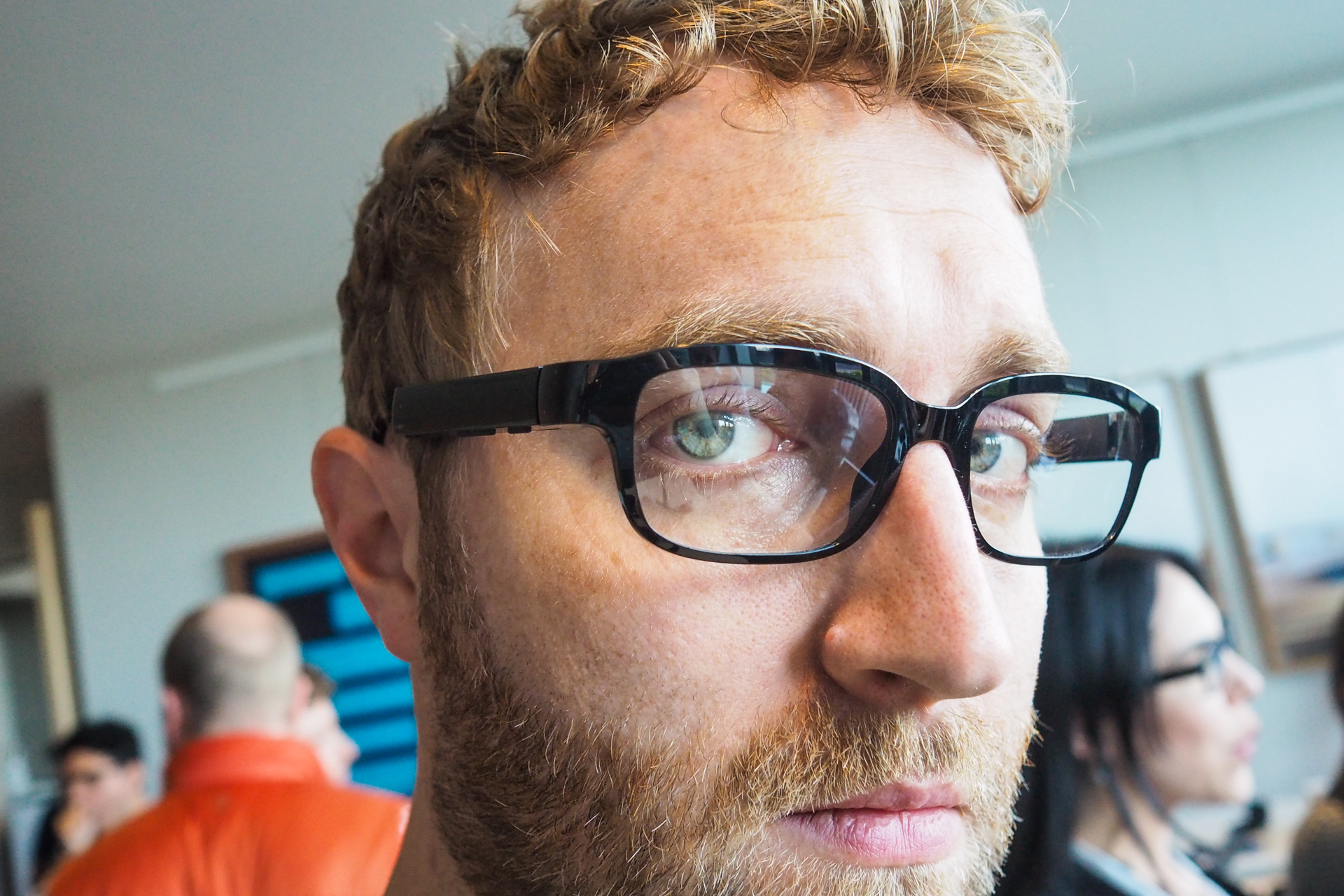
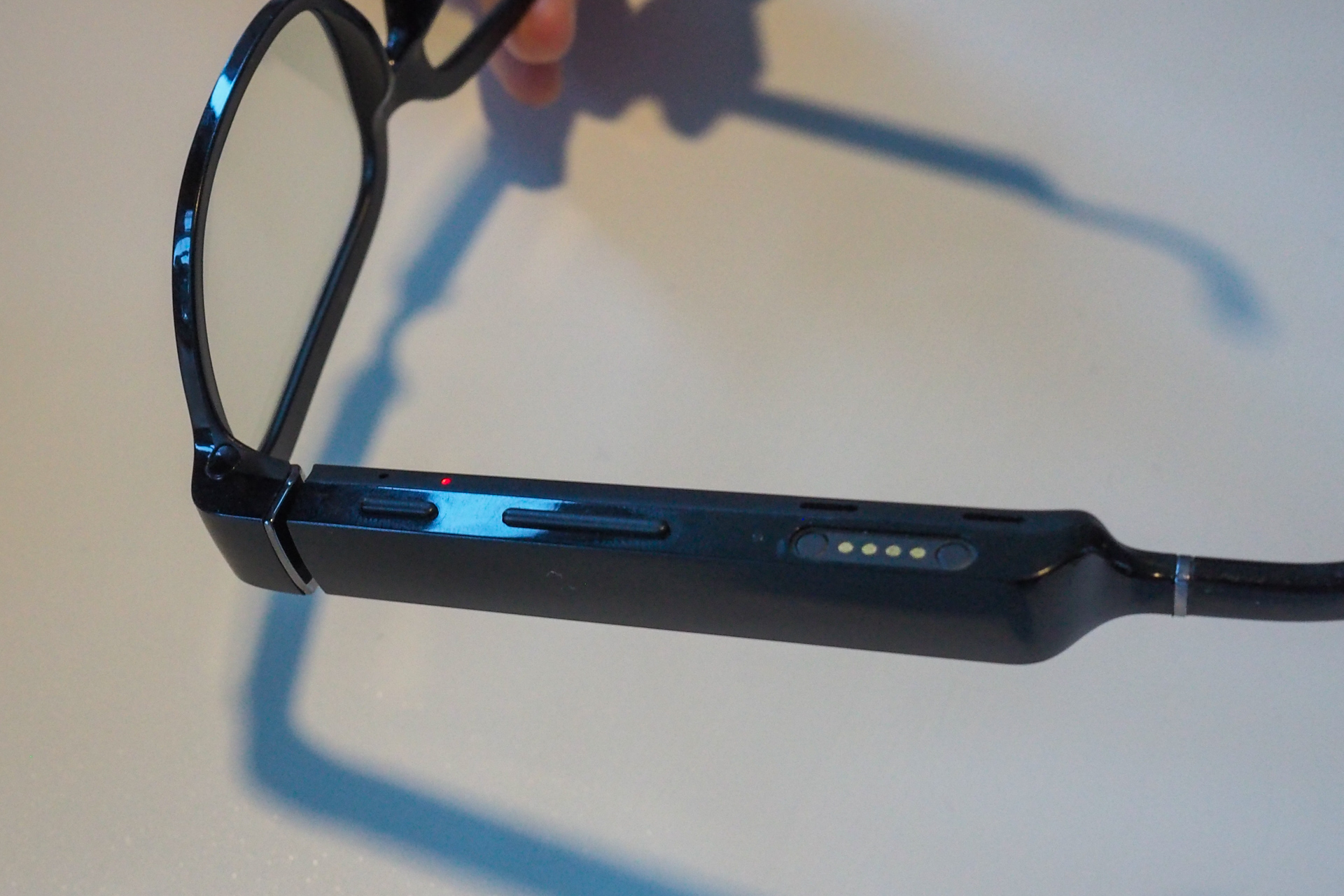
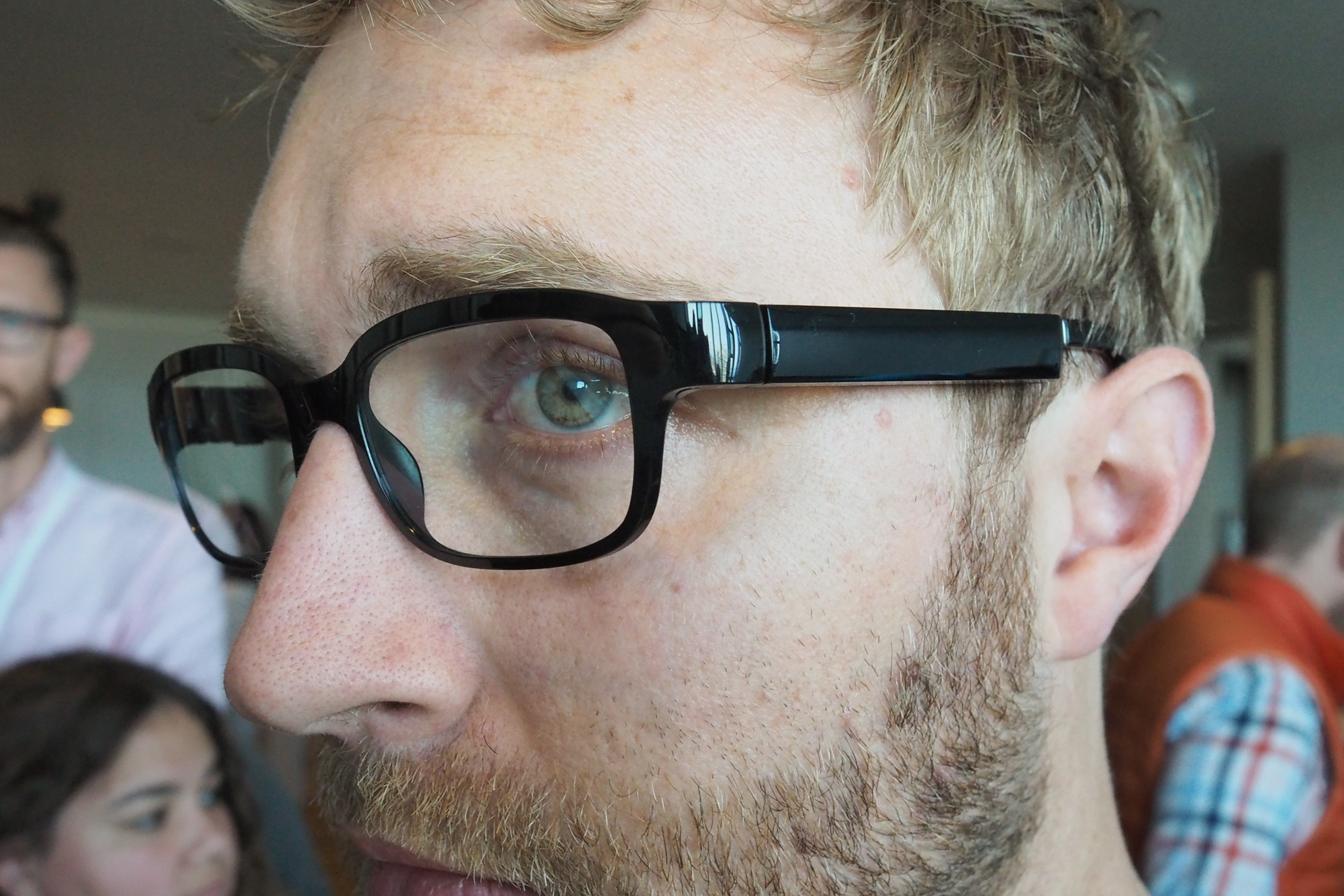
About five feet away from these headphones, and with a half hour wait to test out, were the new Echo Frames. These glasses can be customized with your prescription, though sadly the design and material are locked in.

alexa echo amazon 9250080

The oversized arms of the glasses house the Alexa hardware, and while the glasses themselves are pretty light, the thickness is definitely noticeable from any angle. The underside of the right arm has an activation button and a volume rocker, as well as the port for magnetic charging. The big shiny sides are touch sensitive; You swipe to accept a call, respond to Alexa offering more info, and so on.

The sound is a bit like someone whispering in your ear — you wouldn’t want to listen to music on these, the Amazon folks admitted. But speech was clear and Alexa commands were handled quickly.

The speakers aren’t exactly hidden: Each arm has two speakers inside, each of which has two “ports,” one on top and one on bottom. I asked the demonstrator probably five times why there are ports on the top if the sound needs to come out the bottom, but all she would say is that it’s how they made the directional audio work.

alexa echo amazon 9250086

Perhaps that’s also why I could hear the Alexa responses from a foot or two away in a crowded room. You can configure it so only certain things get played automatically, which is good, because if the person on the bus next to me heard some of the texts I get, they might be alarmed.

Honestly it’s not much worse, though a bit clearer, than if someone is using bad earbuds. Just be aware that if you use these things, others might be hearing that whispered text conversation too.

alexa echo amazon 9250068

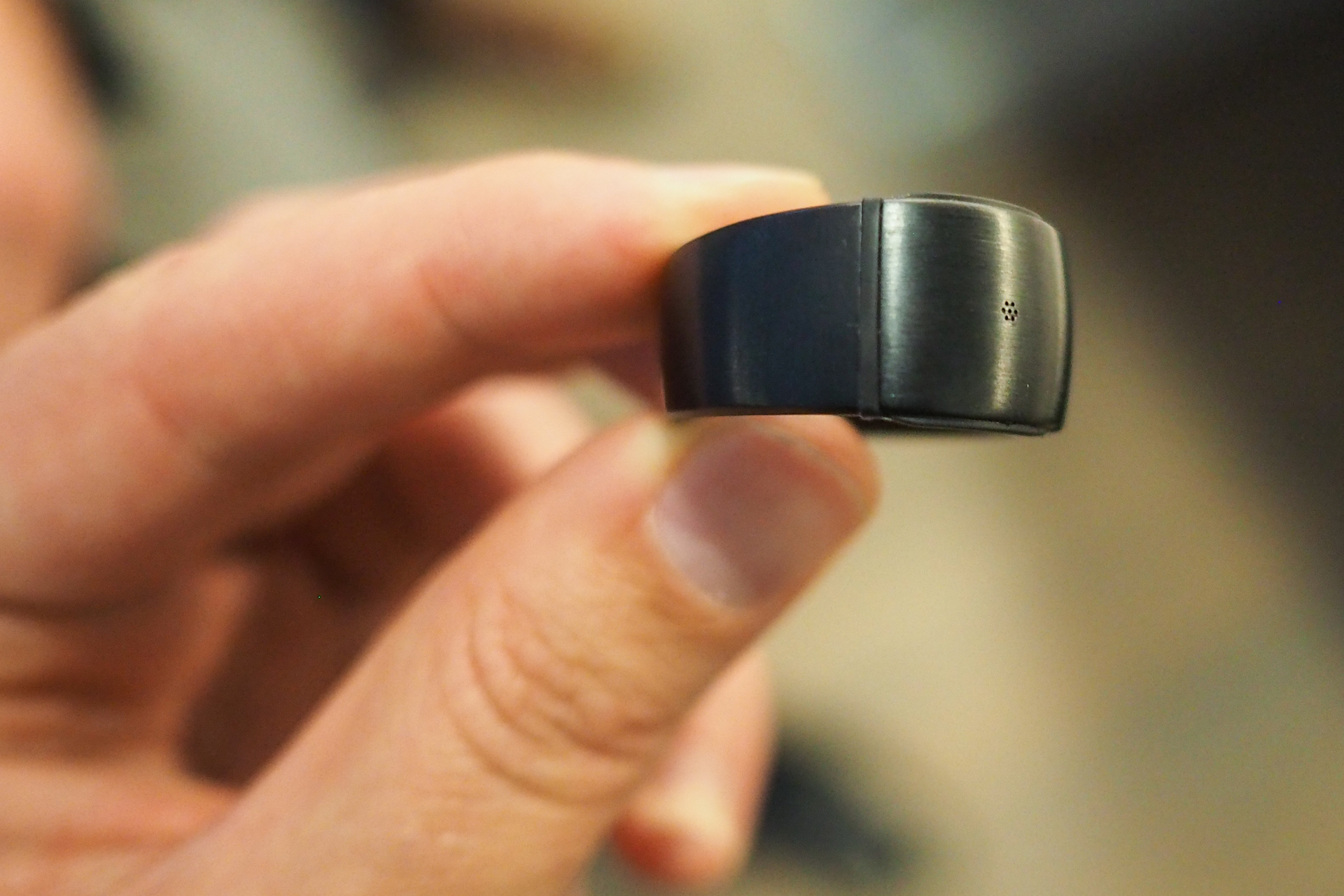
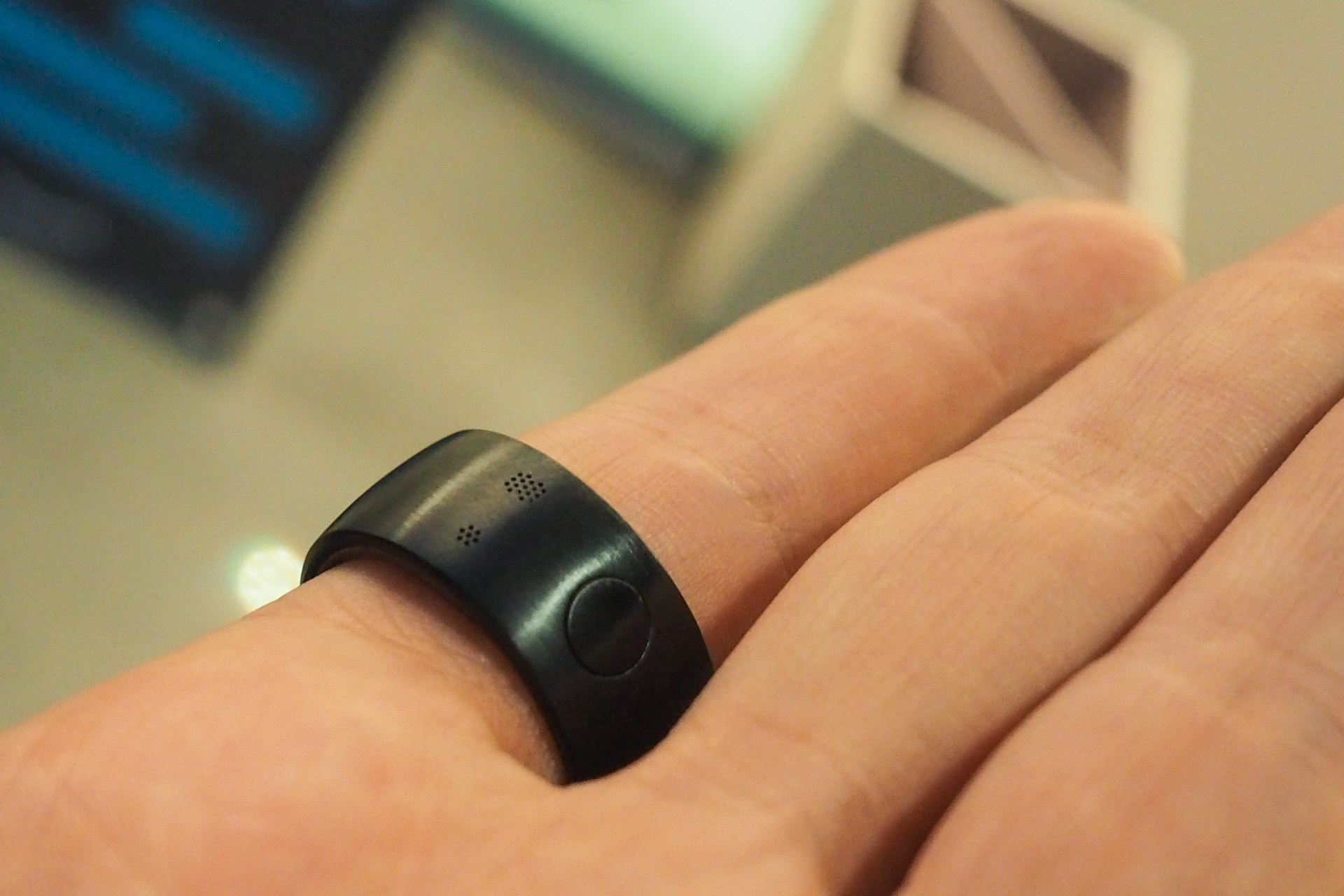
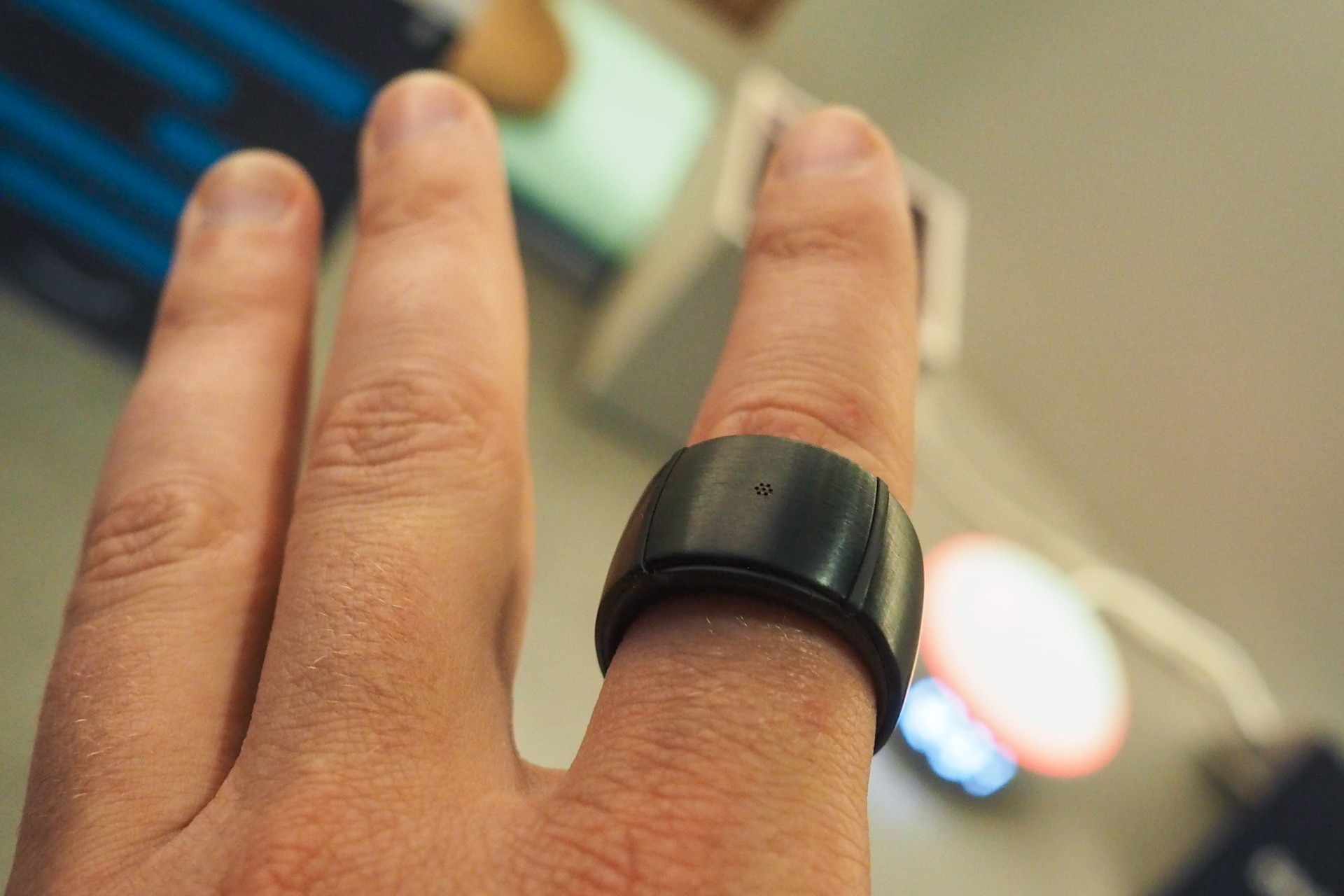
Last, and weirdest, is the Echo Loop. It’s a big fat ring that you can use to ask Alexa questions and hear the answers. The big part with the dots isn’t actually the speaker, but rather part of the microphone array — presumably for subtracting ambient noise so the speech recognition works better. The inside of the ring is where you’ll find the tiny speaker — the smallest of any Amazon device, it was said — and mic.

alexa echo amazon 9250075

You tap a button to activate Alexa, and the ring will vibrate to let you know it’s time to talk. You then ask your hand the question you have in mind, and afterwards cup the ring to your ear — right up to it, because this speaker is tiny. A second or two later, out comes Alexa’s voice, sounding like an old transistor radio, telling you the weather in Barcelona or whatever.

Does it work? Yes, it does. It’s a ring you can ask questions. The speaker is pretty quiet and you need to find the right position to hear it well (admittedly it was fairly loud in the room), but the ring speaks.

It’s not for everybody, which is why it, along with the glasses, are part of the new Day One Edition series of questionable devices. But if you can think of a way it might be useful, be assured: It works as advertised.

25 Sep 2019

Bodega, once dubbed ‘America’s most hated startup,’ has quietly raised millions

2What’s in a name?

More than two years ago, Fast Company published a story with the headline “Two Ex-Googlers Want To Make Bodegas And Mom-And-Pop Corner Stores Obsolete.” The focus of the story was a nascent startup by the name of Bodega .

The company had raised $2.5 million in funding from First Round Capital’s Josh Kopelman, Forerunner Ventures’ Kirsten Green and Homebrew’s Hunter Walk. To announce their funding and vision to create the unmanned store of the future, Bodega briefed a number of journalists on its big idea. Given the simplicity of its product — a tech-enabled vending machine, in essence — the team was blindsided by the uproarious response that followed. September 13, 2017 was supposed to be the most exciting day in the startup’s history, at least until that point; instead, it was a nightmarish lesson in poor branding and messaging.

Why do tech wizards keep thinking of new and more horrible ways to avoid dealing with people? -CityLab, September 13, 2017

The press storm and public lambasting catapulted Bodega into the limelight — for all the wrong reasons. Overnight, the company went from just another early-stage commerce business to the symbol of everything that is wrong with Silicon Valley. Many wondered if it would fall victim to criticism and crumble like Juicero, a well-financed startup that sold a $400 juicer — that is, until a Bloomberg story proved its juice packets could be squeezed by hand, no machine necessary. Or would it take the public condemnation in stride, hearing out the critics and amending its brand as necessary?

Two years after its ill-fated launch, the latter seems to be true. Today, the three-year-old Oakland-based company — now known as Stockwell — is said to be growing quickly thanks to more than $45 million in venture capital funding from a number of deep-pocketed investors, the company has confirmed to TechCrunch.
Bodega

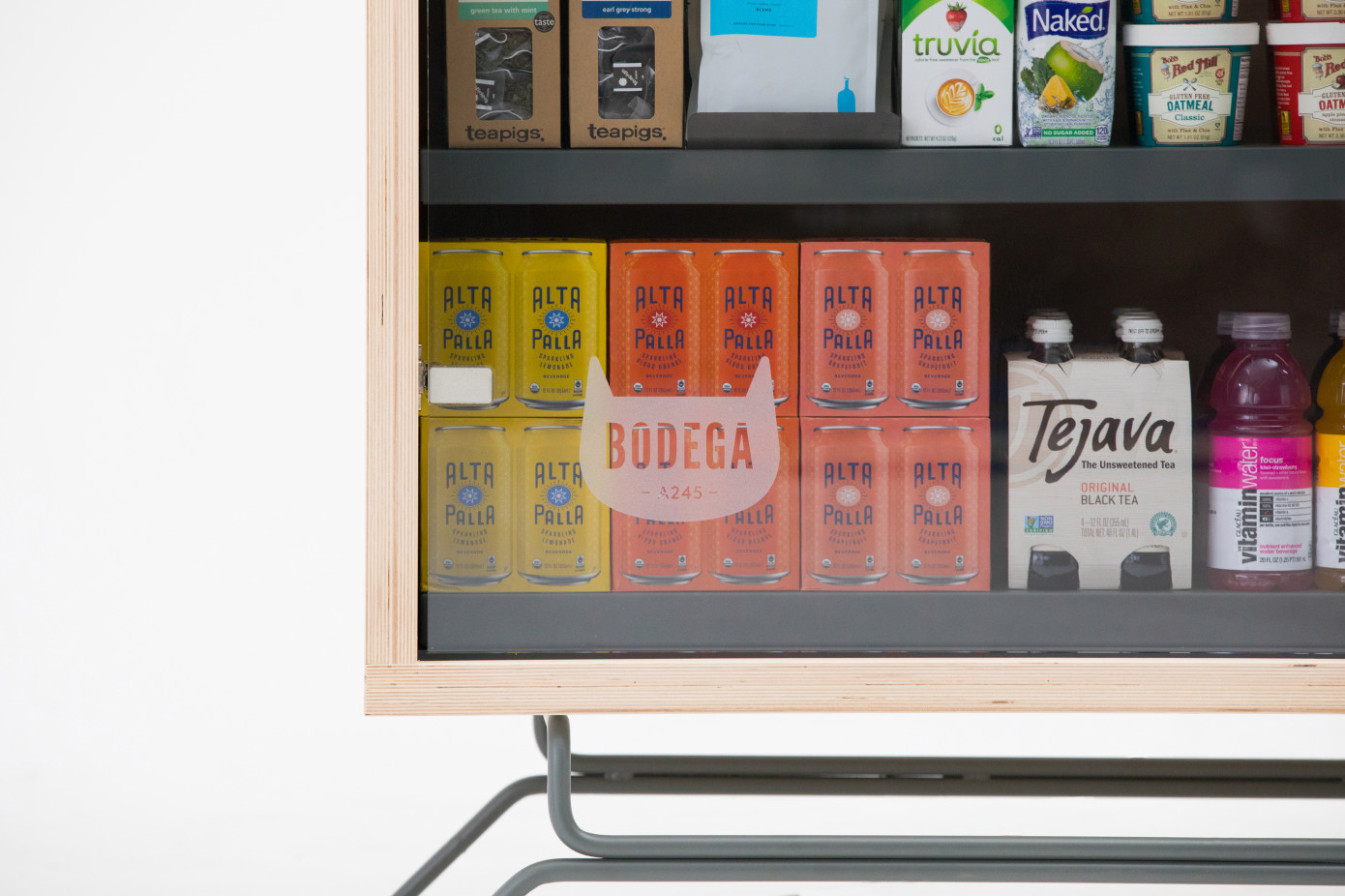
Bodega’s original branding included a cat logo. Cats are often features of small neighborhood stores, known as bodegas.

Public outcry

Bodega is either the worst named startup of the year, or the most devious,” wrote The Verge in the fall of 2017. “Tech firm markets glorified vending machines where users can buy groceries,” said The Guardian. The Washington Post dubbed the company “America’s most hated start-up.” CityLab, which writes about issues impacting cities, bluntly reported “Bodega, a Startup for Disrupting Bodegas, Is Terrible,” followed by 30 reasons why the startup sucks: “Maybe a Bodega can stock Soylent to appeal to people who also think that eating delicious food is a grim burden,” CityLab wrote. “Why do tech wizards keep thinking of new and more horrible ways to avoid dealing with people? How come they hate being human?”

It’s safe to say Bodega endured one of the most catastrophic company launches in the history of tech startups. But the press cycle surrounding Bodega was more than an attack on the startup alone. It represented a greater frustration with Silicon Valley culture and its reputation for funding “disruptive” products devoid of impact. Time and time again, VCs had proven their willingness to inject millions into standard concepts lacking originality. A juicer had raised more than $100 million, after all, scooters were beginning to attract private capital and Soylent, which sells a meal replacement drink fit for techies, was hot off the heels of a $50 million round.

A mini-fridge equipped with computer vision technology boasting a culturally insensitive name wasn’t going to change the world. Questioning why it had the support of VCs was only fair.

An innocent misunderstanding?

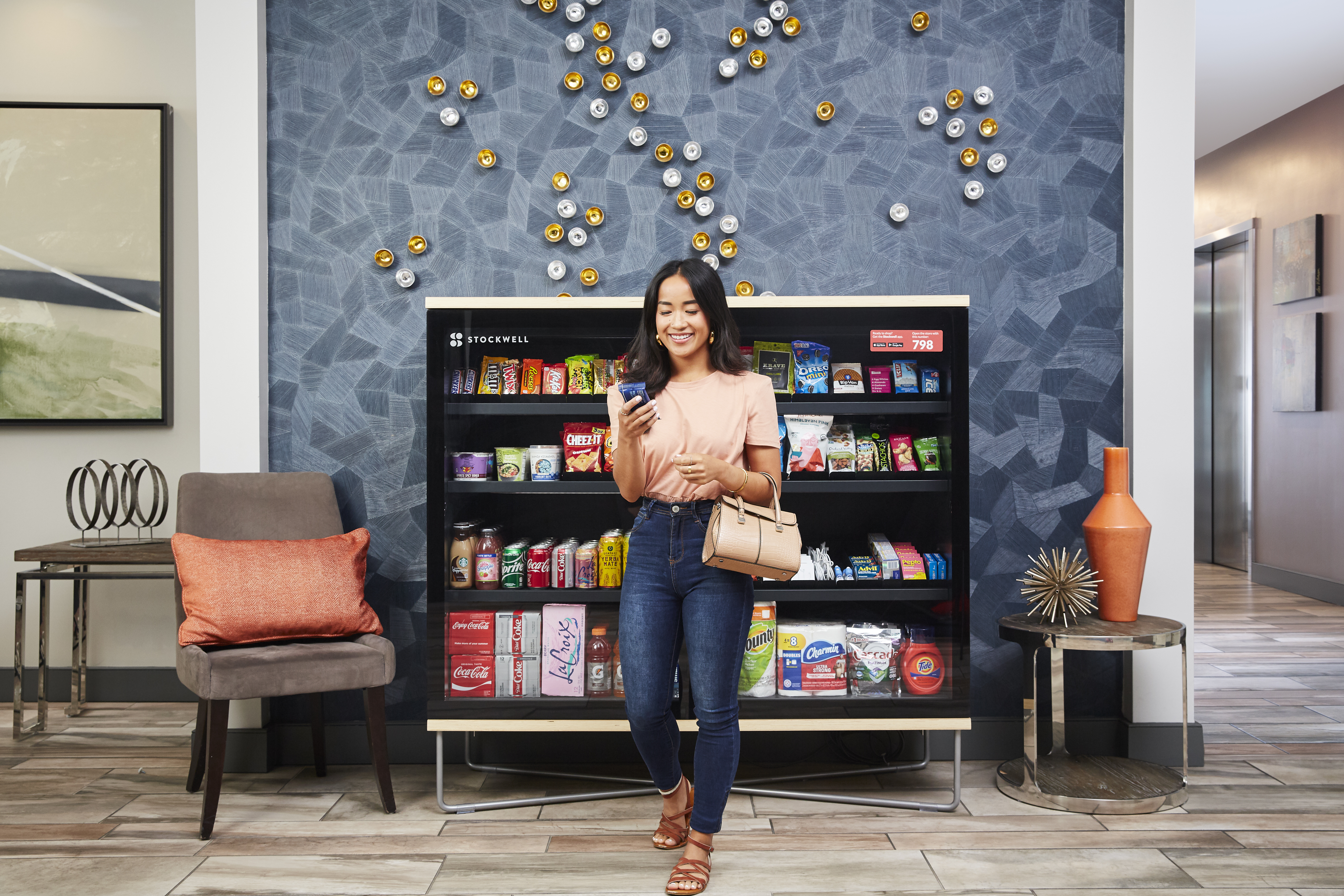
Behind the upsetting name was a business developing hundreds of five-foot-wide pantry boxes to be housed in luxury apartment lobbies, offices, college campuses, gyms and more. Similar to Amazon Go, the “smart stores” recognize what customers remove from the cases using computer vision and automatically charge the credit card associated with the account.

When you’re not in the room, the name of your company is what gets passed between people. -James Currier, NFX .

Bodega was founded by a pair of Google veterans, Paul McDonald and Ashwath Rajan. It had all the ingredients for a successful startup stew. Founders with years of experience in big tech: McDonald spent more than a decade at Google; Rajan had just finished up the search engine’s competitive associate product manager program. Both attended top universities: University of California -Berkeley and Columbia University, respectively. Still, neither of the two men nor their investors seemed to have predicted the controversy afoot.

“Bodega doesn’t want to disrupt the bodega,” Hunter Walk, a Bodega investor and co-founder of the seed fund Homebrew, wrote in a 2017 blog post. “Some instances of today’s press coverage suggested that element, a sound bite which, exacerbated by Bodega’s naming, pissed people off as another example of tech startups being at best tone-deaf, and at worst, predatory … It didn’t occur to me that some people would see the word and associate its use in this context with whitewashing or cultural appropriation.”

The company, too, quickly authored a blog post outlining their thought process behind the name: “Rather than disrespect to traditional corner stores — or worse yet, a threat — we intended only admiration,” McDonald wrote.

After penning blog posts, the founders continued working on the company under the provocative and upsetting name. Meanwhile, investors seemed unfazed by the negative press, evidenced by the company’s ability to continue raising venture capital funding. After all, many of the best businesses endure the wrath of bloggers, competing founders and the general public. As for VCs, high-risk bets are just part of the ball game.

DCM Ventures, a Chinese venture capital fund with offices in Beijing, Tokyo and Silicon Valley, was the first to agree to invest in Bodega following the PR disaster. The firm, an investor in Lime, Hims and SoFi, led a $7.5 million Series A financing in the business in early 2018, sources tell TechCrunch. DCM vice president David Cheng, named to the 2019 Forbes 30 Under 30 in Venture Capital, is actively involved with the company, according to his bio.

Finally, after pocketing nearly $10 million in total funding, Bodega announced a name change: “Did you buy something today from a Bodega?” Bodega’s McDonald wrote. “You may have noticed that we’ve changed our name to Stockwell . Our new name is one of the changes we’re making as we expand our offerings and open more stores around the country.”
Stockwell Founders

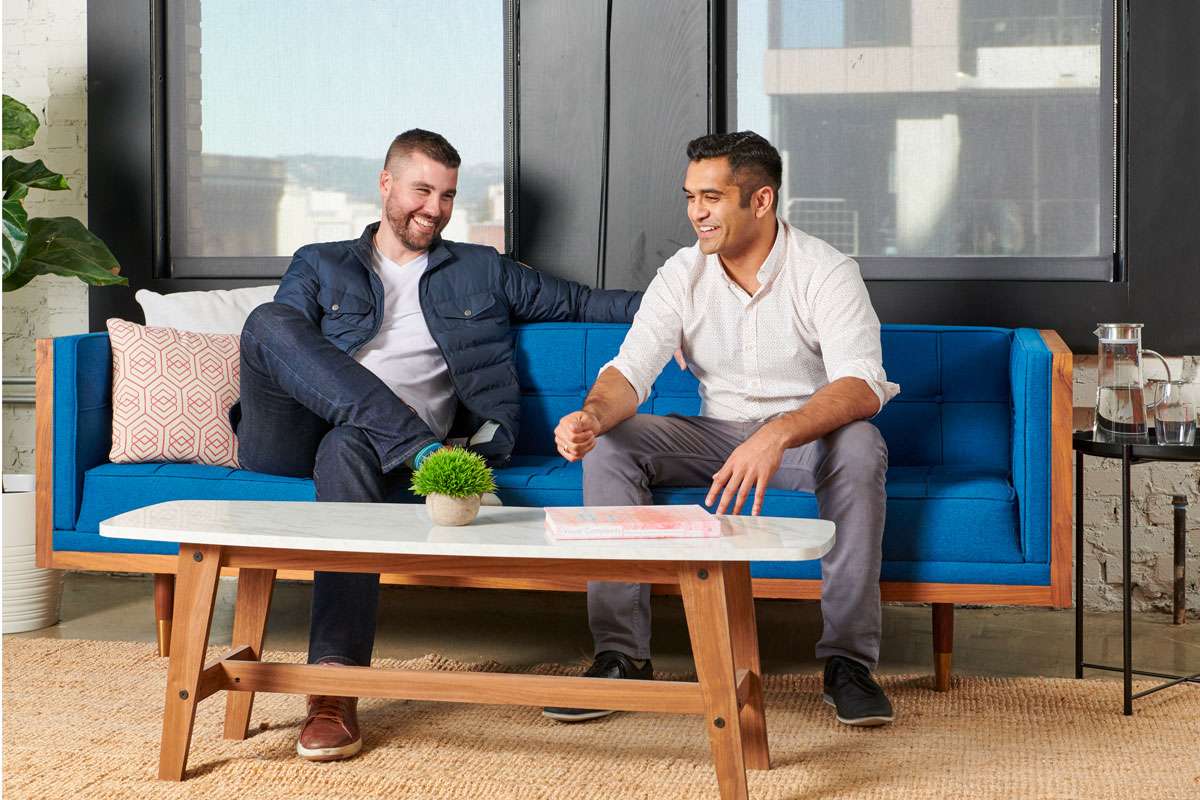
Stockwell, fka Bodega, founders Paul McDonald (left) and Ashwath Rajan (Courtesy of Stockwell).

A new era

With a new logo and a toned-down, somewhat bland identity, Stockwell had a fresh start and, soon, more attention from top VCs. In late 2018, the company raised a $35 million round of funding co-led by Uber and Slack-backer GV, formerly known as Google Ventures, and NEA, an investor known for bets in Coursera, MasterClass and OpenDoor, Stockwell has confirmed. NEA’s Amit Mukherjee and GV’s John Lyman joined Stockwell’s board as part of the deal, which is said to have valued the business at north of $100 million. Stockwell, however, declined to confirm the figure.
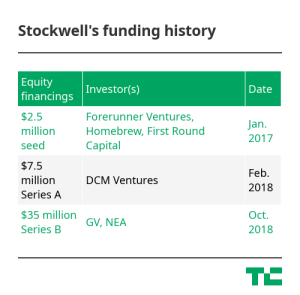
Stockwell's funding history

Instead of announcing the news via TechCrunch, Venture Beat, Forbes or another tech publication, as is the norm for fast-growing consumer-facing startups, Stockwell remained mum on financing events and scaling plans, assumedly burned by the press and the public’s scorn a year prior.

Rather than subject itself to continued scrutiny as it attempted to rewrite its narrative, Stockwell was heads down, iterating, expanding and quietly raising millions. Bad press can break a startup, and given the sheer number of negative reports on Stockwell so early on, the company had already defied the odds. Keeping a low profile was undoubtedly the best strategy moving forward, and it seems to have paid off.

“It was a difficult time and transition and we learned a lot from it,” a spokesperson for Stockwell said in an email to TechCrunch. “As a company, we put our heads down and focused on building our business. We kept a low profile and concentrated on our core product, the mission, and the people who work for us. We’re excited for the progress we’ve made but won’t forget the path that got us here.”

Today the company counts 1,000 “stores” in the San Francisco Bay Area, Los Angeles, Houston and Chicago. Stockwell has used its latest infusion of funding to explore shared ownership models, i.e. the opportunity for anyone to run their own Stockwell store. The company tells TechCrunch they are also working on building out their “unique curation model,” which allows customers to help determine what items are stocked in their local “store,” as well as their support for emerging brands, whose products they can stock in their next-generation vending machines.
Stockwell

Stockwell’s five-foot wide next-generation vending machine.

So what’s in a name?

Human beings make snap judgments, evaluate products quickly and can develop distaste for brands in a matter of seconds. A company’s moniker is their first opportunity to impress customers.

“When you’re not in the room, the name of your company is what gets passed between people,” writes NFX co-founder James Currier. “It speaks for you when you’re not there … It sets expectations of your company in the blink of an eye. And first impressions are hard to change. Both positive and negative.”

Most cases of poor startup naming are easily fixed. Most founders aren’t forced to bear the brunt of the internet’s fury. The case of Bodega is much more extreme and, as such, serves as the ultimate lesson for founders searching for the best way to tell their story. At the end of the day, avoiding a complete and total train-wreck is easy if you include a diverse group of people in the naming process and remember there’s a lot in a name — if that weren’t the case, Bodega would still be Bodega.


25 Sep 2019

JUMP, Lime, Scoot and Spin receive permits to operate scooters in SF

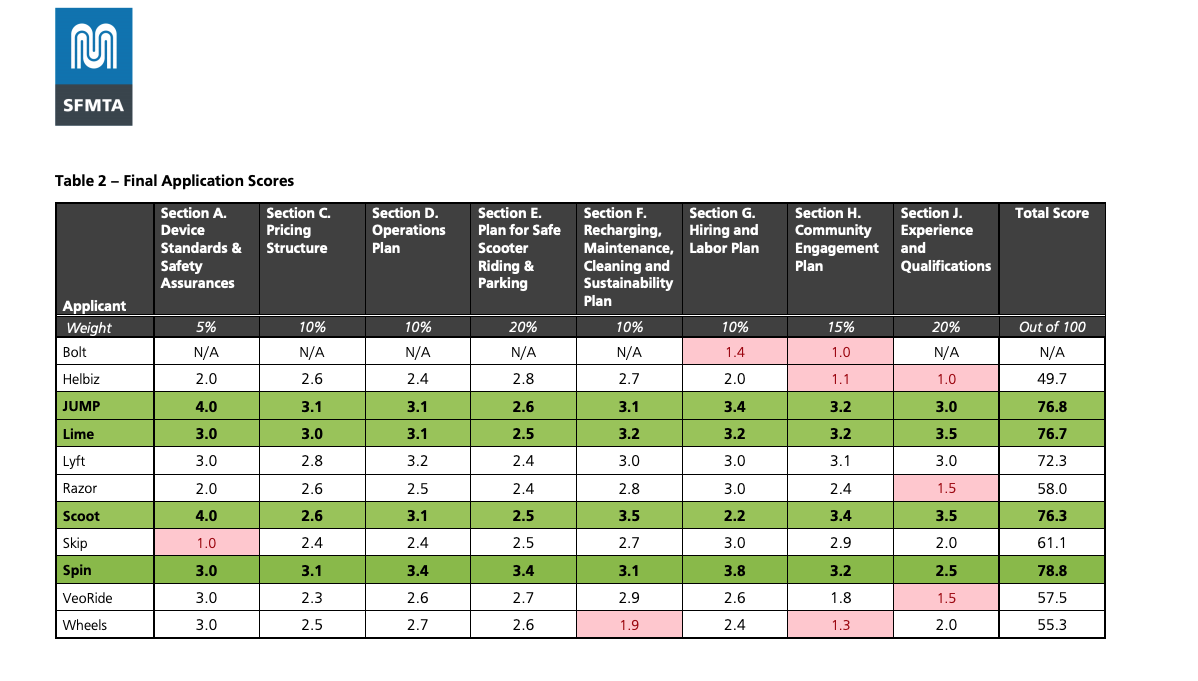
Electric scooter providers JUMP, Lime, Scoot and Spin have just been granted permits to operate their respective services in San Francisco beginning Oct. 15, 2020. This is part of the city’s longer-term permitting program for electric scooters.

Each scooter provider will initially be able to deploy 1,000 scooters, with the potential to deploy up to 2,500. The San Francisco Municipal Transportation Agency says this should double the number of service areas covered.

As part of the program, the SFMTA is requiring all scooters to be lock-to and each company said they will use W-2 workers, both full-time and part-time, for operations.

“We look forward to honoring the commitments we feel are imperative to creating a strong partnership, including hiring locally, investing in the community, and ensuring our transportation services are equitably spread throughout the city,” Spin wrote in a blog post.

In total, eleven operators applied for permits. The SFMTA scored them across device standards and safety, pricing, operations, plan for safe riding and parking, experience and qualifications and more.

Screen Shot 2019 09 25 at 1.50.10 PM

Skip, which was previously granted the rights to operate shared scooters in San Francisco, did not receive a permit this time around.

“As set forth in the permit application, Evaluation Scoresheet and Policy Directive, applicants were required to receive an average score of 2 or greater for each of the eight sections in the application, or would be disqualified from further evaluation,” the SFMTA wrote in its rejection letter to Skip. “Staff thoroughly reviewed all 11 applications received, including Skip Transport, Inc.’s. Skip Transport, Inc.’s permit application
is denied because it received an average score below the required threshold of 2 on Section A of the application, and therefore was disqualified from further evaluation.”

Notably, Lyft was also denied a permit to operate shared electric scooters. While Lyft scored quite well overall, the SFMTA said it determined four was the right number of operators.

25 Sep 2019

Is Amazon’s Alexa ready to leave home and become a wearable voice assistant?

Amazon’s device event today played host to a dizzying number of product announcements, of all stripes – but notably, there are three brand new ways to wear Alexa on your body. Amazon clearly wants to give you plenty of options to take Alexa with you when you leave the house, the only place it’s really held sway so far – but can Amazon actually convince people that it’s the voice interface for everywhere, and not just for home?

Among the products Amazon announced at its Seattle event, Echo Frames, Echo Loop and Echo Buds all provide ways to take Alexa with you wherever you go. What’s super interesting – and telling – about this is that Amazon went with three different vectors to try to convince people to wear Alexa, instead of focusing its efforts on just one. That indicates a stronger than ever desire to break Alexa out of its home environment.

alexa echo amazon 9250082

The company has tried to get this done in different ways before. Alexa has appeared in Bluetooth speakers and headphones, in some cars (including now GM, as of today) and via Amazon’s own car accessory – and though the timing didn’t line up, it would’ve been a lock for Amazon’s failed Fire Phone.

Notice that none of these existing examples have helped Amazon gain any apparent significant market share when it comes to Alexa use on the go. While we don’t have great stats on how well-adopted Alexa is in car, for instance, it stands to reason that we’d be hearing a lot more about its success if it was indeed massively successful – in the same way we hear often about Alexa’s prevalence in the home.

Amazon lacks a key vector that other voice assistants got for free: Being the default option on a smartphone. Google Assistant manages this through both Google’s own, and third-party Android phones. Apple’s Siri isn’t often celebrated for its skill and performance, but there’s no question that it benefits from just being the only really viable option on iOS when it comes to voice assistant software.

Amazon had to effectively invent a product category to get Alexa any traction at all – the Echo basically created the smart speaker category, at least in terms of significant mass market uptake. Its success with its existing Echo devices proves that this category served a market need, and Amazon has reaped significant reward as a result.

But for Amazon, a virtual assistant that only operates in the confines of the home covers only a tiny part of the picture when it comes to building more intelligent and nuanced customer profiles, which is the whole point of the endeavour to begin with.  While Americans seem to be spending more time at home than ever before, a big percentage of peoples’ days is still spent outside, and this is largely invisible to Alexa.

The thing is, the only reliable and proven way to ensure you’re with someone throughout their entire day is to be on their smartphone. Alexa is, via Amazon’s own app, but that’s a far cry from being a native feature of the device, and just a single tap or voice command away. Amazon’s own smartphone ambitions deflated pretty quickly, so now it’s casting around for alternatives – and Loop, Frames and Buds all represent its most aggressive attempts yet.

alexa echo amazon 9250074

A smart spread of bets, each with their own smaller pool of penetration among users vs. a general staple like a smartphone, might be Amazon’s best way to actually drive adoption – especially if they’re not concerned with the overall economics of the individual hardware businesses attached to each.

The big question will be whether A) these products can either offer enough value on their own to justify their continued use while Alexa catches up to out-of-home use cases from a software perspective, or B) Amazon’s Alexa team can interate the assistant’s feature set quick enough to make it as useful on the go as it is at home, which hasn’t seemed like something it’s been able to do to date (not having direct access to smartphone functions like texting and calling is probably a big part of that).

Specifically for these new products, I’d put the Buds at the top of the list as the most likely to make Alexa a boon companion for a much greater number of people. The buds themselves offer a very compelling price point for their feature set, and Alexa coming along for the ride is likely just bonus for a large percent of their addressable market. Both the Frames and the Loop seem a lot more experimental, but Amazon’s limited release go-to-market strategy suggest its planned for that as well.

In the end, these products are interesting and highly indicative of Amazon’s direction and ambition with Alexa overall, but I don’t think this is the watershed moment for the digital assistant beyond the home. Still, it’s probably among the most interesting spaces in tech to watch, because of how much is at stake for both winners and losers.

25 Sep 2019

Meal replacement company Soylent adds mint chocolate flavor

The meal replacement company Soylent Nutrition, Inc., has added mint chocolate flavor to its line of drinks and snacks.

“Our new Mint Chocolate Drink requested by our fans was engineered by Soylent’s hard-working team, with the complex tastes of humanity in mind,” said Andrew Thomas, Soylent’s VP of Brand Marketing, in a statement.

In concert with its new flavor launch, the company is also releasing an assessment of the environmental footprint of its products.

Without releasing the full life cycle analysis report, Soylent revealed that its packaging and logistics operations were the biggest contributor to its carbon emissions. The company also said that its decision to use soy protein rather than rice or another vegetable or grain for its main ingredient actually resulted in a lower environmental footprint for the company.

“It’s a crucial time in our existence, with an ever-increasing population and a need for more bioavailable, sustainable sources of nutrition,” said Julie Daoust, PhD, VP Product Development & Innovation, in a self-congratulatory statement. “Many companies talk about their sustainability impact, but very few actually make the investment to get the independent data to prove or disprove their assumptions.”

The company’s new mint chocolate favor is available through the company’s website now and will be sold through Amazon beginning in October.