Category: UNCATEGORIZED

20 Sep 2019

Walmart is reportedly pulling electronic cigarettes from store shelves

Walmart is planning to pull electronic cigarettes from stores, according to a report by CNBC citing internal company documents.

The move comes as federal regulators are putting mounting pressure on the industry in the face of illnesses that have swept across the country and have been tied to vaping (although the culprit seems to be grey-market products used for THC consumption — rather than tobacco).

However, regulators and private sector health advocates are both alarmed by the dramatic increase in teen vaping rates, and have made moves to ban flavored e-cigarettes. Some countries where smoking is rampant are taking a preliminary step of banning electronic cigarettes altogether.

“Given the growing federal, state and local regulatory complexity and uncertainty regarding e-cigarettes, we plan to discontinue the sale of electronic nicotine delivery products at all Walmart and Sam’s Club U.S. locations,” the company said in a memo, according to CNBC reporting.

Earlier this month the philanthropic organization affiliated with billionaire former mayor Mike Bloomberg said that it would commit $160 million to get kids to stop vaping.  Just a day later, the White House said that it would take steps to ban the sale of flavored e-cigarette cartridges.

Meanwhile, the health officials are scrambling to find a cause for the vaping-related lung illness that has sickened at least 530 people in the U.S., according to new reports. So far, seven people have died from the illness, according to a statement yesterday from the Centers for Disease Control and Prevention, and no single substance or product has been connected to the cases, yet.

So far, the illness has cropped up in 38 states.

Walmart has already taken steps to limit teens’ access to tobacco products. The company raised the buying age for tobacco goods to 21 earlier this year. It was a response to what regulators have called an “epidemic” of teen vaping with at least 25 percent of students claiming to use e-cigarettes.

This all spells bad news for Juul, the leading e-cigarette supplier, which raised $12.8 billion from the tobacco giant, Altria Group in a December 2018 investment.

As the dominant e-cigarette brand, with something like a 70% market share,  the company has become the focus of regulatory scrutiny. Earlier this month,  the FDA threatened the company with regulatory action as a result of its marketing practices.

So far, Juul has said it will comply with all regulations imposed by the government. When the latest suggestion of a federal ban on flavored products went out, the company said, “We strongly agree with the need for aggressive category-wide action on flavored products. We will fully comply with the final FDA policy when effective.”

Walmart did not respond to a request for comment at the time of publication.
20 Sep 2019

Amazon Prime adds free mobile game content to its perks, starting with PUBG Mobile

Amazon today is introducing a new perk for Prime members: free mobile game content. The company, which already offers Twitch Prime benefits through its subsidiary, will now give its Prime members various in-game items for PUBG Mobile, the popular battle royale title from Tencent.

The items launching today include an exclusive Infiltrator Mask, Infiltrator Jacket, Infiltrator Pants, and Infiltrator Shoes to complete a Prime-exclusive set, plus the brand-new Blood Oath – Karabiner 98K and Black Magma Parachute.

These exclusive game items aren’t just a one-off as part of a special deal between the retailer and Tencent, however.

Amazon says it will roll out new mobile gaming content on an ongoing basis, going forward, as part of the Prime membership program.

Upcoming partners will include the likes of EA, Moonton, Netmarble, Wargaming Mobile, and others, Amazon tells us.

“Now, no matter what platform you play on—whether console, PC, or mobile—there are Prime game benefits for you,” said Ethan Evans, VP, Twitch Prime, in a statement. “We’re starting with exclusive content for PUBG Mobile, one of the biggest mobile games in the world, and in the coming months, we’ll roll out benefits for some of the most popular mobile games across many favorite genres.”

Amazon’s Twitch already offers a Prime benefit called Twitch Prime which offers a range of perks, like bonuses like channel subscriptions, access to select games and in-game loot, exclusive emoticons, Prime chat badges and more. And as of yesterday, it now includes the option to share select Twitch Prime loot with other non-Prime members on Twitch. However, its focus is more on PC and console gaming, not mobile.

This isn’t the first time Amazon has pitched gaming perks to its Prime members. Several years ago, it ran a program called “Underground Actually Free” which offered customers free versions of Android apps that would typically cost money. That program, however, was more about luring Prime members to Amazon’s Fire tablets. It shut down in 2017.

Today’s mobile gaming perks instead seem to be just a better way for Amazon to leverage the relationships Twitch already has with PC and console game makers who have cross-platform titles that extend to mobile.

To claim the new perks, Prime members can visit www.amazon.com/pubgm.

20 Sep 2019

Facebook has suspended ‘tens of thousands’ of apps suspected of hoarding data

Facebook has suspended “tens of thousands” of apps connected to its platform which it suspects may be collecting large amounts of user profile data.

That’s a sharp rise from the 400 apps flagged a year ago by the company’s investigation in the wake of Cambridge Analytica, a scandal that saw tens of millions of Facebook profiles scraped to help swing undecided voters in favor of the Trump campaign during the U.S. presidential election in 2016.

Facebook did not provide a more specific number in its blog post but said the apps were built by 400 developers.

Many of the apps had been banned for a number of reasons, like siphoning off Facebook user profile data or making data public without protecting their identities, or other violations of the company’s policies.

Despite the bans, the social media giant said it has “not confirmed” other instances of misusing user data beyond those it has already notified the public about. Among those previously disclose include South Korean analytics firm Rankwave, accused of abusing the developer platform and refusing an audit; and myPersonality, a personality quiz that collected data on more than four million users.

The action comes in the wake of the since-defunct Cambridge Analytica and other serious privacy and security breaches. Federal authorities and lawmakers have launched investigations and issued fines from everything from its Libra cryptocurrency project to how the company handles users’ privacy.

Facebook said its investigation will continue.

20 Sep 2019

Fujifilm’s upcoming X-Pro3 camera has a unique design sure to appeal to film photographers

Fujifilm is teasing its forthcoming X-Pro3, the successor to its popular digital rangefinder mirrorless camera, ahead of its official full introduction on October 23. During its X Summit event going on today, the company showed off the X-Pro3 in detailed images (via Fujirumors), revealing for the first time its innovative new rear display design.

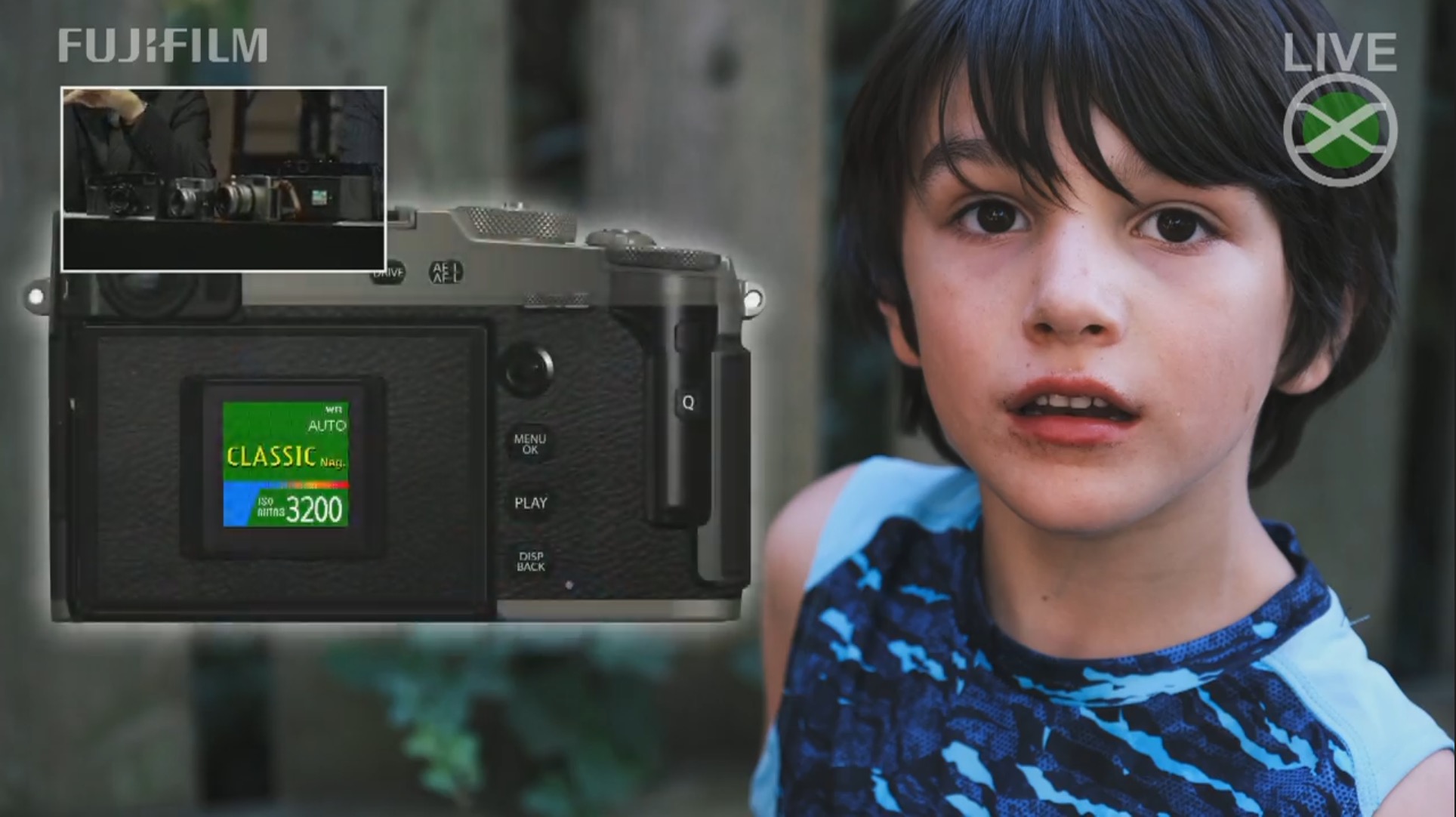
The X-Pro3 has an LCD on the back, as do most modern digital interchangeable lens cameras, but it’s definitely unique: The screen is hidden in normal use, facing inward towards the camera back while the outward side of the rear door instead offers the photographer a small OLED “mini screen” that contains only basic info about shooting settings.

The rear display will show details like shutter speed, f-stop, ISO and film simulation and file size settings, and if you want to actually see a preview of the virtual viewfinder image, you’ll need to flip down the screen to reveal the color LCD. The downward flipping display is therefore ideal for doing things like shooting from a low angle, with the photographer looking down to check framing – just like you could do on classic film cameras with waist-level viewfinders.

[gallery ids="1884507,1884508,1884509,1884510"]

The X-Pro3 still offers an electronic viewfinder, but that’s also more akin to film photography vs. digital, since photographers using the camera will be much more likely to either use the viewfinder or shoot waist-level with the flip down screen – while also being able to check their various settings at a glance by quickly pulling the camera way from their eye and looking at the back.

Fujifilm’s lineup of APS-C digital interchangeable lens cameras have already won many fans thanks to their film simulations, which mimic types of film the company offered previously. The X-Pro3 will focus even more on replicating a film-inspired experience backed by modern digital photographic technology, and will also include a new film simulation called “Classic Negative” as well.

Classic Negative

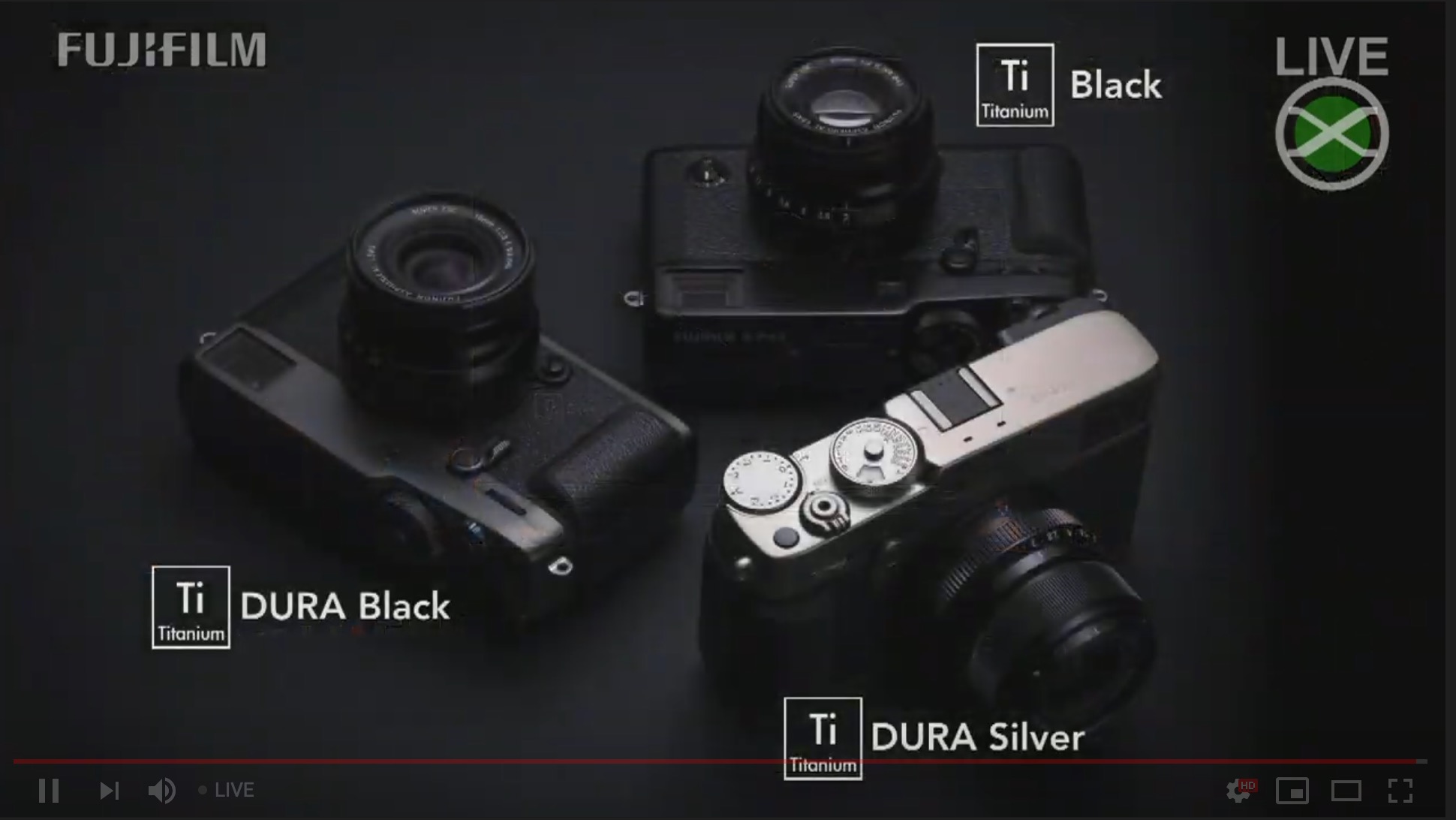
Other details about the camera include titanium construction, which is going to make it a super durable but lightweight camera, and three different color options to choose from.

New X Pro3 colorsNo pricing or availability info is out yet, but we’ll find that out along with full details on October 23.

20 Sep 2019

How Kobalt is betting on music’s middle class and DIY stars

Streaming services have made music ubiquitous, driving more exploration by consumers who don’t have to pay for each song or album individually. Musicians are correspondingly able to find their own niche of fans scattered around the world.

(This is the third installment of our EC-1 series on Kobalt Music Group and changes in the music industry. Read Part I and Part II.)

As Spotify gained rapid adoption in his native Sweden in 2006, class="crunchbase-link" href="https://crunchbase.com/organization/kobalt-music-group" target="_blank" data-type="organization" data-entity="kobalt-music-group">Kobalt’s founder & CEO Willard Ahdritz predicted music streaming and the rise of social media would increasingly undercut the gatekeeping power of the major label groups and realign the market to center more on a vast landscape of niche musicians than a handful of traditional superstars.

Both of these predictions have proven directionally true. The question is to what extent and how are industry players actually realigning as a result?

What musicians need in addition to the administrative collection of their royalties (explained in Part II) is a menu of creative services they can tap for support. Kobalt’s AWAL and Kobalt Music Publishing divisions provide such services to recording artists and songwriters, respectively, and do so on purely a services basis (getting paid a commission but not taking ownership of copyrights like traditional labels and publishers do).

Niche middle class vs. Global superstars

GettyImages 124360271

Image via Getty Images / rolfo eclaire

The whole music industry is growing substantially due to streaming music’s mainstream penetration in wealthier countries and increased penetration in emerging markets.

As the overall pie is growing, the non-superstar segment of the market is indeed growing faster than the superstar segment, taking over a larger portion of industry royalties.

According to data from BuzzAngle, the top 500 songs in the US in 2018 accounted for 10% of on-demand audio streams — a dramatic decline in market share compared to 2017 when the top 500 songs accounted for 14% of streams. Stepping back, the top 50,000 songs made up 73.2% of all US streams in 2017 but that declined to 70.5% in 2018.

20 Sep 2019

Tonic launches a personalized news reader that respects user privacy

Personalization technology can lead to better experiences as it allows apps to customize their content for each individual user. But it can also chip away at user privacy. A company called Canopy wants to change that. It has developed a personalization engine that works without requiring users to log in or even provide an email. Instead, it uses a combination of on-device machine learning and differential privacy to offer a personalized experience to an app’s users. Now it’s demonstrating how this works with the launch of the news reader app, Tonic.

The new app is designed to be completely private, while also learning what you like over time, in order to offer a customized experience. But unlike other personalization engines, all the raw interaction and behavioral data stays on your own device. That means the company itself never see it, nor does any content provider or partner it works with, it says.

As Canopy explains:

What we instead send over an encrypted connection to our server is a differentially private version of your personal interaction and behavior model. The local model of you that goes to Canopy never has a direct connection to the things you’ve interacted with, but instead represents an aggregate set of preferences of people like you. It’s a crucial difference for our approach: even in the worst case of the encryption failing, or our servers being hacked, no one could ever do anything with the private models because they do not represent any individual.

Another big differentiator is that Tonic puts you in control over your own personalization settings. This is not typical. If you’ve ever used an app powered by personalization technology, there’s probably been a point where you were recommended a song, video, or a news article, for example, that seemed to be entirely wrong and not representative of something you’d actually like. But you may have been at a loss as to why it was recommended, because most apps don’t detail this sort of information.

Tonic, on the other hand, lets you view, change and even reset your personalization settings whenever you want.

tonic app phones

While Tonic is mainly meant to demonstrate of its engine in action — Canopy’s larger goal is to license the technology — the app itself has several other features that make it worth a look.

The company employs a human editorial team to help select the app’s news content, to ensure that it’s not offering a bunch of noise, like clickbait or “hate-reads.” It also avoids breaking news and “hot takes,” it says, as it’s not designed to be an app you use to track the latest news with urgency.

Instead, Tonic pulls from a diversity of sources with its core focus on bringing you a curated, personalized selection of daily reads to inform and inspire. And in the spirit of digital well-being, it’s a finite list of articles — not an endless news feed.

“We made Tonic because we were tired of having to give up our digital selves to get great recommendations, and because we wanted to build an alternative to endless feeds optimized for maximum engagement, breaking news, and outrage,” the company explains in its announcement of the app’s launch.

The technology’s arrival comes at a time when big tech is being investigated for carelessness with user data, and there’s increased attention on user privacy in general. Apple, for example, has made its respect for user privacy a key selling point for its hardware and software.

The New York-based startup was founded by Brian Whitman, formerly the founder of The Echo Nest and a former principal scientist at Spotify. The team also includes several ex-Spotify, Instagram, Google and New York Times execs. It’s seed-funded by Matrix Partners, and other investors from Spotify, WeWork, Splice, MIT Media Lab, Keybase, and more to the tune of $4.5 million dollars.

20 Sep 2019

At TechCrunch Disrupt, insights into key trends in venture capital

At TechCrunch Disrupt, the original tech startup conference, venture capitalists remain amongst the premier guests.

VCs are responsible for helping startups — the focus of the three-day event — get off the ground and as such, they are often the most familiar with trends in the startup ecosystem, ready to deliver insights, anecdotes and advice to our audience of entrepreneurs, investors, operators, managers and more.

In the first half of 2019, VCs spent $66 billion purchasing equity in promising upstarts, according to the latest data from PitchBook. At that pace, VC spending could surpass $100 billion for the second year in a row. We plan to welcome a slew of investors to TechCrunch Disrupt to discuss this major feat and the investing trends that have paved the way for recording funding.

Mega-funds and the promise of unicorn initial public offerings continue to drive investment. SoftBank, of course, began raising its second Vision Fund this year, a vehicle expected to exceed $100 billion. Meanwhile, more traditional VC outfits revisited limited partners to stay competitive with the Japanese telecom giant. Andreessen Horowitz, for example, collected $2.75 billion for two new funds earlier this year. We’ll have a16z general partners Chris Dixon, Angela Strange and Andrew Chen at Disrupt for insight into the firm’s latest activity.

At the early-stage, the fight for seed deals continued, with larger funds moving downstream to muscle their way into seed and Series A financings. Pre-seed has risen to prominence, with new funds from Afore Capital and Bee Partners helping to legitimize the stage. Bolstering the early-stage further, Y Combinator admitted more than 400 companies across its two most recent batches,

We’ll welcome pre-seed and seed investor Charles Hudson of Precursor Ventures and Redpoint Ventures general partner Annie Kadavy to give founders tips on how to raise VC. Plus, Y Combinator CEO Michael Seibel and Ali Rowghani, the CEO of YC’s Continuity Fund, which invests in and advises growth-stage startups, will join us on the Disrupt Extra Crunch stage ready with tips on how to get accepted to the respected accelerator.

Moreover, activity in high-growth sectors, particularly enterprise SaaS, has permitted a series of outsized rounds across all stages of financing. Speaking on this trend, we’ll have AppDynamics founder and Unusual Ventures co-founder Jyoti Bansal and Battery Ventures general partner Neeraj Agrawal in conversation with TechCrunch’s enterprise reporter Ron Miller.

We would be remiss not to analyze activity on Wall Street in 2019, too. As top venture funds refueled with new capital, Silicon Valley’s favorite unicorns completed highly-anticipated IPOs, a critical step towards bringing a much needed bout of liquidity to their investors. Uber, Lyft, Pinterest, Zoom, PagerDuty, Slack and several others went public this year and other well-financed companies, including Peloton, Postmates and WeWork have completed paperwork for upcoming public listings. To detail this year’s venture activity and IPO extravaganza, David Krane, CEO and managing partner of Uber and Slack investor GV will be on deck, as will Sequoia general partner Jess Lee, Floodgate’s Ann Miura-Ko and Aspect Ventures’ Theresia Gouw.

There’s more where that came from. In addition to the VCs already named, Disrupt attendees can expect to hear from Bessemer Venture Partners’ Tess Hatch, who will provide her expertise on the growing “space economy.” Forerunner Ventures’ Eurie Kim will give the Extra Crunch Stage audience tips on building a subscription product, Mithril Capital’s Ajay Royan will explore opportunities in the medical robotics field, SOSV’s Arvind Gupta will dive deep into the cutting edge world of health tech and more.

Disrupt SF runs October 2 – 4 at the Moscone Center in the heart of San Francisco. Passes are available here.

20 Sep 2019

Beats headphones will get iOS 13 audio sharing next week

Audio sharing is among the more delightful features arriving as part of Apple’s iOS 13 update. With it, users will be able to share songs across nearby device — a sort of 2019 version of buying a headphone splitter or handing someone your earbud.

Beats pinged TechCrunch this morning to let us know that the new addition will be arriving on a number of its new headphones, in addition to AirPods. No surprise, really, given that the company was swallowed up by Apple some years ago, but a nice little bonus for those who H1 and W1-powered models, including Powerbeats Pro (my headphone of choice, of late), Studio3 Wireless, BeatsX, Powerbeats3 Wireless and Solo3 Wireless.

The feature works in one of two ways. Users can either put two iOS devices in close proximity and play music one one from a number of different sources. From there, a Share Audio dialogue box pops up, similar to the one you’ll see during the initial pairing process. Tapping Share Audio will do just that.

The other method involves pairing two pairs of headphones to a single device. It’s the better of the two options if you don’t have access to two devices, but even with Apple’s tech, it can still be a bit of a pain switching between products. Either way, it’s a fun option for sharing playlists on a long commute.

The feature arrives on September 23.

20 Sep 2019

Mitsubishi Heavy Industries resets ISS mission H-IIB rocket launch for September 24

After a setback last week due to a fire on the launch pad, Mitsubishi Heavy Industries (MHI) is ready to take another shot at its HTV-8 mission to deliver supplies and other payloads to the International Space Station. The launch was originally scheduled for September 11, but the fire caused a scrub and led to a subsequent investigation to determine the cause. The new window is an instantaneous one set for 1:30 AM JST on September 24 (12:30 PM/ 9:30 PM ET/PT on September 23).

The investigation has now revealed that the fire, which was extinguished and resulted in no lasting damage to the rocket or its cargo, was most likely caused by built-up static electricity created by oxygen dripping from the exhaust for tof the rocket engine during propellant feeling. MHI has taken the steps necessary to correct for this problem, and say that the rocket and launch facilities are now fully functional and ready to go for this renewed launch attempt.

The H-IIB rocket used for this launch (the configuration of MHI’s M-II series rocket that has the highest lift capacity) will carry supplies, as mentioned, as well as a cubesat launcher with a number of small satellite payloads for various academic and commercial customers. The H-IIB features one central booster and engine with liquid oxygen propellant, and four solid fuel boosters attached to the base of the rocket for additional lift. It can transfer up to 18,000 lbs to geostationary transfer orbit.

This is the second to last mission for the H-IIB, with its final mission planned for next year. After that, MHI has been hard at work on the H3, a fully expendable launch vehicle currently under development that’s specifically aimed at serving more commercial customers with total launch costs that are more or less on par with emerging competitors like SpaceX for medium heavy payloads.

20 Sep 2019

Lookiero closes $19M led by MMC Ventures to be the Stitch Fix for Europe

Lookiero, the online personal shopping service for clothes and accessories, has closed a $19 million funding round led by London-based VC MMC Ventures with support from existing investor All Iron Ventures, and new investors Bonsai Partners, 10x and Santander Smart. The company will use the backing to expand in its main markets of Spain, France and the UK. In June last year it closed a funding round of €4 million led by All Iron Ventures.

The startup applies algorithms to a database of personal stylists and customer profiles to thus provide a personalized online shopping experience to its customers. It then delivers a selection of five pieces of clothing or accessories curated by a personal shopper to fit the customer’s individual size, style, and preferences. Customers then decide which items to keep or return (at no additional cost), allowing Lookiero to learn more about the customer’s tase before starting the whole process again.

By generating look-a-like profiles and analyzing previous customer interactions with each item, Lookiero says it can predict how likely a user is going to keep a certain item from a range of more than 150 European brands from a warehousing system that will ship more than 3 million items of clothing this year to seven European countries.

It’s not unlike the well—worn Birchbox model. Lookiero’s main competitor is Stitch Fix (US), which has upwards of $1.5bn in annual revenues and IPO’d November 2017.

Founded in 2015 by Spanish entrepreneur Oier Urrutia, the company says it now has over 1 million registered users and has grown revenue by over 200% from 2017 to 2018.

In a statement Urrutia said: “This investment round provides us with the necessary capital to further increase the accuracy of our technology, which is really exciting. It will allow us to offer the best possible experience for our users and to continue expanding across Europe.”

Simon Menashy, Partner, MMC Ventures, said: “The migration of fashion brands online has improved consumers’ access to clothing, and there is now an almost overwhelming amount of choice. At the same time, it can still be really hard to find exactly what is right for you, especially with high street retail stores in decline. Lookiero provides the best of both worlds, giving every customer a hand-picked selection from their personal stylist.”

Ander Michelena, co-founding partner of All Iron Ventures, said: “Even if what Oier and his team have achieved to date is remarkable, we believe that Lookiero still has great potential to continue expanding internationally and to become a player of reference in a market segment where there is still a lot to do in terms of innovation and user satisfaction”.