Category: UNCATEGORIZED

05 Sep 2019

Flat, a Mexican property tech startup, raises $4.6M pre-seed led by ALLVP

Flat has raised one of Mexico’s largest pre-seed rounds to take the Opendoor real estate marketplace model across the Rio Grande. 

The company snagged a $4.5 million pre-seed round to expand its business helping homeowners quickly sell their properties in Mexico. The round was led by ALLVP, an active early stage fund in Mexico. California-based Liquid 2 Ventures (for which Hall of Fame Quarterback Joe Montana is a GP), NextBillion and a few angels supported the round as well. 

At the time of writing, Flat’s raise is the largest pre-seed funding round for a Mexican startup aside from the scooter company Grin, which was backed by Y Combinator and later went on to raise a $45M Series A and consolidate with Brazil’s bike sharing startup, Yellow. 

While this ‘i-buying’ business model was initially pioneered by Opendoor in the US, the same need to efficiently sell property exists for consumers in other growing markets around the world. That’s why co-founders Victor Noguera and Bernardo Cordero founded Flat. 

Bucking a trend that has seen many new Latin American founders hailing from Stanford University, Cordero and Noguera met at the University of California, Berkeley — just across the Bay.

The founders estimate the total value of the 40M homes in Mexico to be a $1.6 trillion total addressable market. They equate the value of homes sold per year to $25 billion. Let’s not forget the elephant in the room – SoftBank is undoubtedly eyeing Mexico with its $5 billion LatAm commitment. 

Flat says it’s solving a few problems in the local home-buying market in Mexico. Firstly, anyone interested in selling their property lacks information about how much there home is actually worth. In the U.S., sellers can reference Zillow – but no such centralized database of real estate pricing information for the market of Mexico exists. 

Screen Shot 2019 09 04 at 4.02.51 PM

Then there’s the operational piece of transferring ownership of the property, which Flat says can take up to eight months and a notarized process – making the overall experience incredibly illiquid. 

Flat’s actual product is a marketplace focused on helping the seller sell quickly. Flat visits your home, takes measurements, documents how many bath and bedrooms exist in the property, and determines how much your home is worth. From there, they manage renovations and transfer ownership of the property. The seller is paid within 72 hours. 

International expansion has been difficult for many startups operating in Latin America as every country has its own regulatory barriers. That’s why when it comes to growth, Flat says it’s more focused on growing out their product within other verticals of property management to only serve a Mexican market, rather than expand to other Spanish-language countries in the LatAm region.

05 Sep 2019

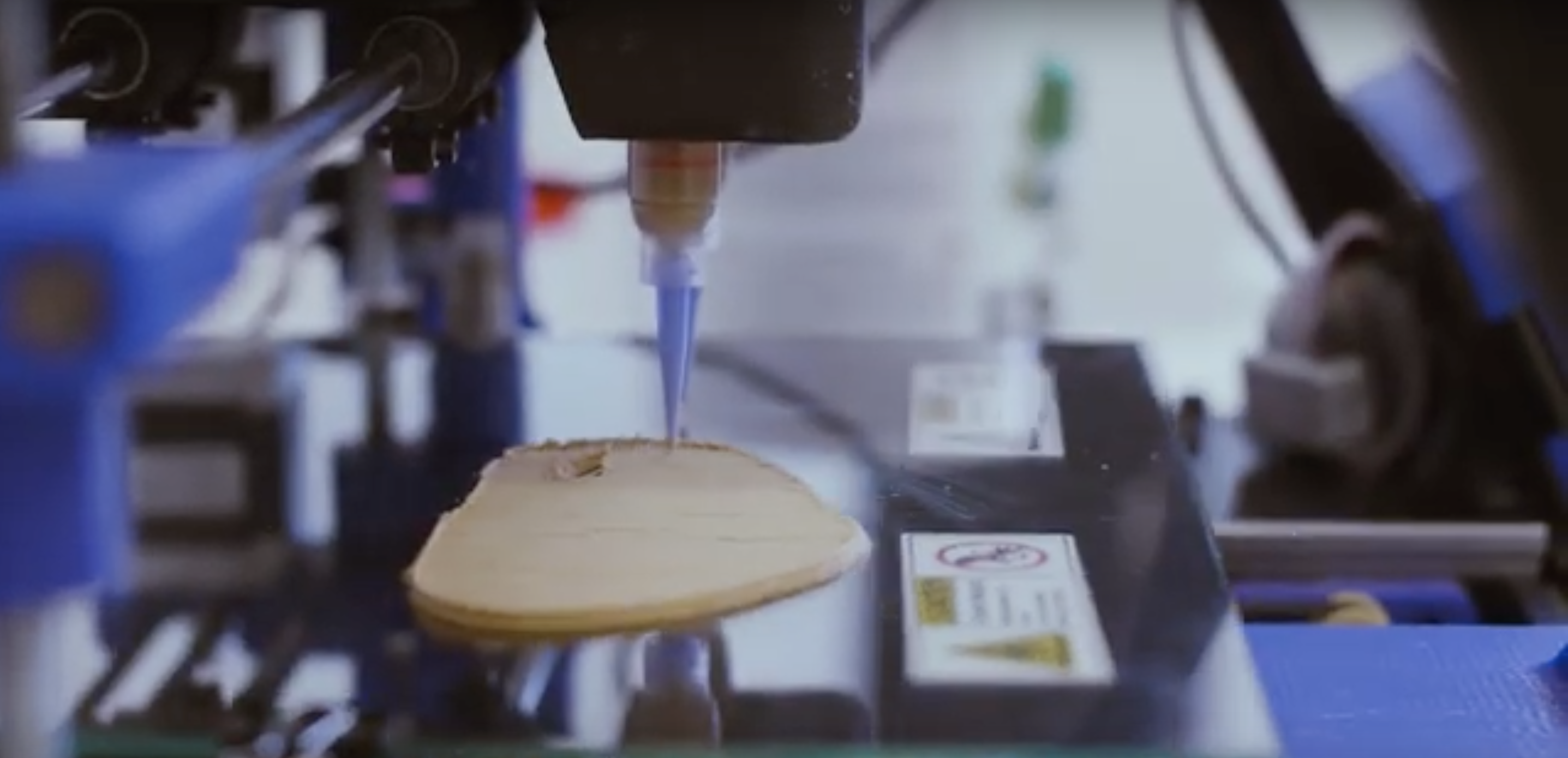
Novameat has a platform for 3D printing steaks and has new money to take it to market

Novameat, a Spanish startup looking to accelerate the development of alternative proteins across the meat aisle, has gotten a boost in the form of new investment capital from the leading foodtech investment firm, New Crop Capital.

Founded by biomedical engineering expert Giuseppe Scionti, Novameat builds on Scionti’s decade of research as an assistant professor in bioengineering at the Polytechnic University of Catalonia, the University College of London, Chalmers University and Polytechnic University of Milan.

The company first came to fame with the production of the world’s first 3D printed plant-based beefsteak in 2018 and will use the new funds from New Crop Capital to further develop its platform for accelerating the development of meats like steak, chicken breasts and other fibrous textured meat replacements.

The company has developed a new scaffolding technology that mimics the texture, appearance, nutritional and sensorial properties of fibrous meats like beefsteaks, chicken breasts, and fish filets.

Scionti sees the technology as the next step in the development of plant-based and lab-cultured alternatives to traditional proteins. While many clean meat and plant-based food companies have managed to take ground meat replacements to market with similar taste and textural qualities to the real thing, steaks and cuts of muscle meat have proven harder to replicate.

Novameat potentially solves that problem.

Screen Shot 2019 09 05 at 2.13.32 PM

“While I was researching on regenerating animal tissues through bioprinting technologies for biomedical and veterinary applications, I discovered a way to bio-hack the structure of the native 3D matrix of a variety of plant-based proteins to achieve a meaty texture,” said Scionti, in a statement.

The core of Novameat’s technology is a customized printer that enables companies to create the kinds of fibrous tissues needed to make a steak. “We are providing the equipment, the machinery, under a licensing agreement to these companies,” says Scionti. “Plant-based meat manufacturers have access to something that creates the texture and taste of a steak.”

Traditional extrusion technologies are not capable of using the ingredients from Beyond Meat or Impossible Foods and print a steak, but Novameat’s founder argues that his technology can.

The technology was promising enough to attract the attention of New Crop Capital, arguably one of the most seasoned investors in the expanding market of meat replacement. The venture firm’s portfolio includes Memphis Meat, Beyond Meat, Kite Hill, Geltor, Good Dot, Aleph Farms, Supermeat, Mosa Meat, New Wave and Zero Egg.

“We think the global food supply chain is broken and we are focused on fixing one of those challenges which is animal protein,” says New Crop Capital’s Dan Altschuler Malek. “We see that there is an opportunity to shift consumer behavior to reduce their consumption of animal protein products to products that are at the price point that people will pay.”

Novameat can help reduce costs, Malek thinks, because it speeds up the time to create meat substitutes.

Normally four weeks before you have enough material around the cells.. it’s important for the

Scionti says that the company’s micro-extrusion technology enables companies to get a three dimensional structure without having to go through an incubation period that can take a significant amount of time and increase costs.

“Novameat’s bioprinting-based technology provides a flexible and tunable method of producing plant-based meat, with the utility to create different textures from a wide variety of ingredients, all within a single piece of meat,” he said. “Low and high-moisture extruders are the primary method currently used to restructure plant proteins to create the texture of meat. While extrusion works well for some applications, this method may not be ideal for mimicking all types of animal meat. Alternative technologies like Novameat’s give plant-based meat manufacturers a wider array of tools to mimic all types of meat and seafood,” said Good Food Institute Director of Science and Technology David Welch, in a statement.

05 Sep 2019

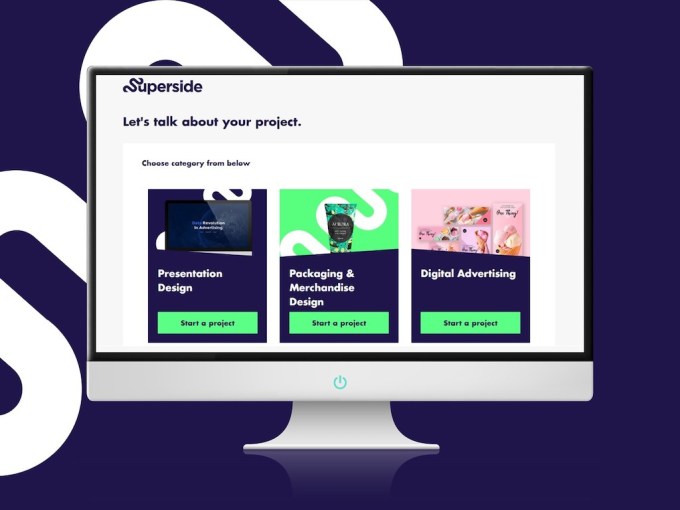
Newly renamed Superside raises $3.5M for its outsourced design platform

Superside, a startup aiming to create a premium alternative to the existing crowdsourced design platforms, is announcing that it has raised $3.5 million in new funding.

It’s also adding new features like the ability to work on user interfaces, interaction design and motion graphics. Co-founder and CEO Fredrik Thomassen said this allows the company to offer “a full-service design solution.”

You may have heard about Superside under its old name Konsus . In a blog post, Thomassen explained the recent change in name and branding, writing, “We changed our name and look to align with what we had become: The world’s top team of international designers and creatives.”

He told me Superside was created to address his own frustrations after trying to use marketplaces like 99designs and Fiverr. He argued that there’s a problem with “adverse selection on those platforms.” In other words, “The best people … don’t remain, because they don’t have a career path — they’re fighting with other freelancers to get the jobs.”

Superside, on the other hand, is picky about the designers it works with — it claims to select 100 designers from the more than 50,000 applications it receives each year. But if they are accepted, they’re guaranteed full-time work.

superside step1 orderwizard

Thomassen said the platform is built for large enterprises that have their own design and marketing teams but still need additional support. Customers include Amazon, BBDO, Publicis and Clear Channel.

In addition to choosing good designers, Superside has also built a broader project management platform.

“We’re basically automating everything: Finding people, screening people, on-boarding, on-the-job learning, invoicing of custoemrs project management, all of the nitty gritty,” Thomassen said. “The only thing not automated is design — that’s where the human element and the creativity come in.”

Plus, Thomassen said Superside can turn around a standard piece of artwork in 12 hours: “Nobody else can do what we’re doing in terms of speed.”

The new funding comes from Freestyle Capital, with participation from High Alpha Ventures, Y Combinator and Alliance Ventures.

“We’re very much a mission-driven company,” Thomassen added. “For me, the reason to go to work in the morning is to help build an online labor market and create equal economic opportunity for everyone in the world.”

05 Sep 2019

The new marketplaces connecting school and work

Evidence continues to roll in that American workers are out of position for the high-value jobs of today and tomorrow. Start with the fact that there are 7.3 million unfilled jobs, millions of which are high-skill positions in IT, professional services and healthcare. Then add that employment growth in IT is stagnant — a phenomenon that is entirely a supply-side problem.

What are America’s colleges and universities doing to solve the problem? Until recently, they’ve been a big part of the problem. Academic programs at colleges and universities are controlled by faculty members who typically aren’t incentivized to align curricula to employer needs. Few are interested in what employers are seeking, particularly for entry-level positions. Many have never worked in the private sector or have only outdated or tenuous connections to non-academic employers.

Most educators simply resist the idea that instruction should be aligned to employment opportunities. Colleges have always positioned themselves to help students gain the skills they need to get a good fifth job, not necessary a first job. Unfortunately, the labor market has changed: If you don’t get a good first job, you’re unlikely to get a good fifth job. And currently, around 45% of new college graduates are not getting good first jobs and find themselves underemployed.

In early August, EMSI, a provider of labor market analytics that is part of the Strada Education Network, released a study showing that our current system of post-secondary education is not providing linear paths to good first jobs, but rather a “crazy flow” or “swirl.” The report analyzed millions of graduates from six very different majors and found that graduates of all six are effectively going after the same jobs in sales, marketing, management, business and financial analysis.

Commenting on the study in Inside Higher Education, experts concluded that straightening the swirl might require integrating actual work into academic programs. “This really makes a strong case for work-based learning,” said Jane Oates, a former official in the U.S. Department of Labor during the Obama administration, now president of WorkingNation. “Colleges and universities need to provide students with practice in the context of the workplace,” agreed Lynn Pasquerella, president of the Association of American Colleges and Universities.

Creating clearer pathways to good first jobs by connecting school and work becomes even more critical considering that a recent survey found that 61% of all full-time jobs seeking entry-level employees at least on the surface ask for at least three years of experience, and that summer employment for students remains near an all-time low. With this backdrop, perhaps 45% underemployment for new graduates is as good as we can do.

New models are emerging to better connect school and work. New career services management platforms like Handshake offer much more functionality than legacy systems to connect students with employers recruiting on campus. Portfolium — a division of Instructure — allows students to create ePortfolios of their work and show their skills to employers.

Many colleges and universities have invested in experiential learning and work-study programs. Some schools do this better than others; Northeastern University offers the most comprehensive co-op program of any American institution. But few have been able to do it systematically, for the same reasons academic programs aren’t well-aligned to employer needs. That’s all changing with the rise of new marketplaces connecting students and faculty with real work from real employers.

If you don’t get a good first job, you’re unlikely to get a good fifth job.

One such marketplace is Parker Dewey. Named for progressive educator Francis Parker and philosopher John Dewey, Parker Dewey helps employers create “micro-internships”: real projects that employers need done but that can be outsourced to college students. In Parker Dewey’s micro-internship marketplace, the employer defines a project and sets a fixed fee for completing the work. Parker Dewey reaches students through career services postings and attracts applicants for the project. Then the employer selects one or more students to do the work. The marketplace makes it easy for employers to try out students who may have no work experience and therefore reduces “Hiring Friction,” i.e. the reduced propensity of employers to hire candidates who literally haven’t done the same job before, and the reason so many entry-level jobs seem to be asking for experience.

Another marketplace that’s gained even more traction is Riipen, a platform that got its start in Canada, connecting Canadian colleges and universities with employers, but now growing rapidly in the U.S. While Riipen works with employers in a manner similar to Parker Dewey, its approach to colleges and universities is very different. Rather than approaching career services, Riipen incorporates employer projects directly into college and university courses, thereby connecting employment and employability with the beating heart of colleges and universities: individual faculty.

Riipen’s three-sided marketplace of employers, educators and students appears to provide a more effective vehicle for gathering talent (and employers) on the platform; once faculty incorporate projects into their coursework — e.g. a professor of marketing adding a project reviewing and analyzing Google Ads data — the projects become mandatory and more students complete them. On Riipen, small and mid-size businesses tend to provide real-time projects, while larger companies have begun to re-use the same projects in a bid to test dozens or hundreds of students and recruit top performers. Over the past year, Riipen reports an order of magnitude increase in platform usage by employers, faculty and students.

New marketplaces like Riipen have the potential to be win-win-win-win. First, employers recruit better talent, and more reliably; content valid simulations are more than twice as accurate as any other talent screening mechanism or criteria. And it’s more cost-effective than attempting to recruit on campus. Second, universities augment career services and improve employability of graduates, which should allow them to attract more students. Third, for the first time, faculty can easily incorporate real work projects into their courses — projects that students will be energized to complete knowing there’s a real employer on the other end. And last but not least, students gain a way to stand out from the pack by exhibiting their abilities in a meaningful context, hopefully clearing a path to a good first job at the same employer, or if not, gaining valuable relevant work experience.

In a few years, as a result of marketplaces like Riipen, completing real work projects as part of an academic program should be commonplace. So there’s also a fifth winner from marketplaces that connect school and work: the overall economy. Millions of new college graduates will get relevant work experience, many more will find good first jobs and our workforce will be better positioned for the high-value jobs of today and tomorrow.


05 Sep 2019

Discover the Extra Crunch stage at Disrupt SF this October

Here at Extra Crunch, our mission is to help founders and builders create compelling products, learn best practices from Silicon Valley, and ultimately grow their creations into global-scale companies. Day-to-day, we do that through the member-exclusive articles we post on Extra Crunch, from using Amazon to build a DTC brand to raising revenue-based venture capital, to learning how the founders of rising startups like PatreonNianticRoblox, and Kobalt have built their businesses.
I am super excited that we are going to debut a whole new stage this year at TechCrunch Disrupt SF that focuses on exactly these sort of founder-centric issues. On the Extra Crunch stage, we want to go behind-the-scenes of how some of the most successful startups have grown, fundraised, recruited, and ultimately exited — what are the lessons learned? What would the founders, builders, and leaders of these organizations have done differently?
Clearly, there is huge interest from folks to give back their knowledge to founders, because we have a deeply talented and experienced slate of folks joining us this year. Here are just some of the great panels you can look forward to:
Building delightful products is the first critical test of a new startup, but finding product-market fit and then growing active users can often remain a huge challenge for founders. We will host an energizing panel featuring Ravi Mehta, chief product officer (CPO) of TinderManik Gupta, CPO of UberDiya Jolly, CPO of Okta, and Robby Stein, director of PM for consumer at Instagram discussing the dynamics of iterating a product at scale, as well as the differences between markets and B2C and B2B products.
Building a strong team culture is one of the most important but ambiguous challenges facing any founder looking to scale his or her team. We are delighted to have Ray Dalio, one of the leading financiers of his generation as founder and head of Bridgewater and the author of company culture bestseller Principles, discussing how to build an open and transparent culture within a startup in conversation with Extra Crunch fintech columnist Gregg Schoenberg. If you haven’t already read our interview with Dalio, definitely take a sneak peek.
As you build your product and your team, the time might come to start to think about venture capital and how to fundraise. So just how do you raise your first VC dollars? We have Russ Heddleston, CEO of DocSend and frequent guest writer on Extra Crunch, talking with EC managing editor Eric Eldon about what the data of thousands of pitch decks show about how VCs engage with decks. How should you order your slides? What captivates a VC? And ultimately, how can you go from deck to check?
SaaS as a model for startups has gone from a strange business model that no one really understood to the darling of Wall Street. But how do you go from zero to a billion dollar SaaS businessNeeraj Agrawal of Battery Ventures is one of the most successful enterprise investors out there, having backed such startups as AppDynamicsBazaarvoiceGuidewireMarketoNutanix, and Omniture. He joins us in conversation with our enterprise reporter Ron Miller to discuss what SaaS startups need to do today to earn that coveted unicorn status.
You can grab your pass to attend Disrupt SF for a front row seat to this amazing content!

05 Sep 2019

How early-stage startups can use data effectively

It is a commonly held belief that startups can measure their way to success. And while there are always exceptions, early-stage companies often can’t leverage data easily, at least not in the way that later stage companies can. It’s imperative that startups recognize this early on — it makes all the difference.

In this piece, I draw on my experiences using data to take Framer from seed round to Series B. More concretely, I’ll describe what to (not) focus on, and then, how to get real results.

There are good and bad ways for startups to use data. In my opinion, the bad way unfortunately is often preached on saas blogs, a/b test tool marketing pages, and especially growth hacker conferences: that by simply measuring and looking at data you’ll find simple things to do that will drive explosive growth. Silver bullets, if you will.

The good way is comparable to first principles thinking. Below the surface of your day to day results, your startup can be described by a set of numbers. It takes some work to discover these numbers, but once you have them you can use them to make predictions and spot underlying trends. If everyone in your company knows these numbers by heart, they will inevitably make better decisions.

But most importantly, using data the right way will help answer the single most important – but complex – question at any moment for a startup: how are we really doing?

Let’s start with looking at what not to do as a startup.

Table of Contents


Common pitfalls

Don’t measure too much

Technically, it’s easy to measure everything, so most startups start out that way. But when you measure everything, you learn nothing. Just the sheer noise makes it hard to discover anything useful and it can be demotivating to look at piles of numbers in general.

My advice is to carefully plan what you want to measure upfront, then implement and conclude. You should only expand your set of measurements once you’ve made the most important ones actionable. Later in this article, I provide a clear set of ways to plan what you measure.

A/B tests are anti-startup

To make decisions based on data you need volume. Without volume, the data itself is not statistically significant and is basically just noise. To detect a 3% difference with 95% confidence you would need a sample size of 12,000 visitors, signups, or sales. That sample size is generally too high for most early-stage startups and forces your product development into long cycles.

While on the subject of shipping fast and iterating later, let’s talk about A/B testing. To get reliable measurements, you should only be changing one variable at a time. During the early stages of Framer, we changed our homepage in the middle of a checkout A/B test, which skewed our results. But as a startup, it was the right decision to adjust the way we marketed our product. What you’ll find is that those two factors are often incompatible. In general, constant improvements should trump tests that block quick reactionary changes.

Understand your calculations

05 Sep 2019

Apple Music launches a public beta on the web

Apple Music is coming to the web. Apple today is launching a public beta of its popular music streaming service on the web, which will be available to all Apple Music subscribers worldwide. This the first time that Apple Music has been officially offered on the web, though an unofficial app over the past few months has gained attention after attracting hundreds of thousands of users.

Clearly, there was some pent-up demand for a web version of the service.

To use the new Apple Music web version, subscribers can visit the link: beta.music.apple.com and sign in with their Apple ID.

At launch, the service includes many core features, like searching and playing songs from the Apple Music catalog, searching and playing songs from your library (if Sync Library is enabled), accessing your playlists, and more.

All the main sections from the Apple Music app will also be available, including Library, Search, For You, Browse and Radio. Other features will roll out over time as the service is further developed.

During the beta testing period, Apple will be soliciting feedback from customers as it works on the product to help it streamline features and squash any bugs.

At a later date, new users will be able to sign up for Apple Music through the website. But for the time being, you’ll need to be an existing subscriber who signed up elsewhere.

The web version is now one of several ways Apple is making its music service more accessible across platforms.

The service is already available as an app for iPhone, iPad, Apple TV, Apple Watch, and Mac. And at this year’s WWDC 2019 event, Apple announced its plans to dismantle iTunes on the Mac, making Music a standalone app with access to both downloads, library content, and Apple Music’s streaming service.

Apple Music is also offered on non-Apple platforms, like Android, Windows, Sonos and Amazon Echo.

Cross-platform availability is essential in today’s streaming market, as Apple Music faces competition from Spotify, Pandora/SiriusXM, Amazon Music, YouTube Music, and other local players.

At last count, Spotify had 108 paying subscribers in the quarter ending in June and Apple Music topped 60 million subscribers in late June.

05 Sep 2019

Battlefield winner Forethought adds tool to automate support ticket routing

Last year at this time, Forethought won the TechCrunch Disrupt Battlefield competition. A  $9 million Series A investment followed last December. Today at TechCrunch Sessions: Enterprise in San Francisco, the company introduced the latest addition to its platform called Agatha Predictions.

Forethought CEO and co-founder, Deon Nicholas, said that after launching its original product, Agatha Answers to provide suggested answers to customer queries, customers were asking for help with the routing part of the process, as well. “We learned that there’s a there’s a whole front end of that problem before the ticket even gets to the agent,” he said. Forethought developed Agatha Predictions to help sort the tickets and get them to the most qualified agent to solve the problem.

“It’s effectively an entire tool that helps triage and route tickets. So when a ticket is coming in, it can predict whether it’s a high priority or low priority ticket and which agent is best qualified to handle this question. And this all happens before the agent even touches the ticket. This really helps drive efficiencies across the organization by helping to reduce triage time,” Nicholas explained.

The original product Agatha Answers is designed to help agents get answers more quickly and reduce the amount of time it takes to resolve an issue. “It’s a tool that integrates into your Help Desk software, indexes your past support tickets, knowledge base articles and other [related content]. Then we give agents suggested answers to help them close questions with reduced handle time,” Nicholas said.

He says that Agatha Predictions is based on the same underlying AI engine as Agatha Answers. Both use Natural Language Understanding (NLU) developed by the company. “We’ve been building out our product, and the Natural Language Understanding engine, the engine behind the system, works in a very similar manner [across our products]. So as a ticket comes in the AI reads it, understands what the customer is asking about, and understands the semantics, the words being used,” he explained. This enables them to automate the routing and supply a likely answer for the issue involved.

Nicholas maintains that winning Battlefield gave his company a jump start and a certain legitimacy it lacked as an early-stage startup. Lots of customers came knocking after the event, as did investors. The company has grown from 5 employees when it launched last year at TechCrunch Disrupt to 20 today.

05 Sep 2019

Google’s new feature will help you find something to watch

Google Search can now help you find your next binge. The company this morning announced a new feature which will make personalized recommendations of what to watch, including both TV shows and movies, and point you to services where the content is available.

The feature is an expansion of Google’s existing efforts in pointing web searchers to informative content about TV shows and films.

Already, a Google search for a TV show or movie title will include a “Knowledge Panel” box a the the top of the search results where you can read the overview, see the ratings and reviews, check out the cast, and as of spring 2017 find services where the show or movie can be streamed or purchased.

The new recommendations feature will instead appear to searchers who don’t have a particular title in mind, but are rather typing in queries like “what to watch” or “good shows to watch,” for example. From here, you can tap a Start button in the “Top picks for you” carousel to rate your favorite TV shows and movies in order to help Google better understand your tastes.

01 7.max 1000x1000

You can also select which subscriptions you have access to, in order to customize your recommendations further. This includes subscriptions services like Netflix, Hulu, HBO GO and HBO NOW, Prime Video, Showtime, and Showtime Anytime, CBS All Access, and Starz.

You can also indicate if you have a cable TV or satellite subscription. And it will list shows and movies available for rent, purchase or free streaming from online marketplaces like iTunes, Prime Video, Google Play Movies & TV, and Vudu, plus network apps like ABC, Freeform, Lifetime, CBS, Comedy Central, A&E, and History.

To get started, you’ll use a Tinder-like swiping mechanism to rate titles. Right swipes indicate a “like” and left swipes indicate a “dislike.” You can also “skip” titles you don’t know or have an opinion on.

After giving Google some starter data about your interests, future searches for things to watch will offer recommendations tailored to you.

02 7.max 1000x1000

The company notes that you can even get specific with your requests, by asking for things like “horror movies from the 80’s” or “adventure documentaries about climbing.” (This will help, too, when you can’t remember a movie’s title but do know what it’s about.)

Google’s search results will return a list of suggestions and when you pick one you want to watch, the service will — as before — let you know where it’s available.

The company already has a good understanding of consumer interest in movies and TV thanks to its data on popular searches. Now it aims to have a good understanding of what individual users may want to watch, as well.

The new recommendations feature is live today on mobile for users in the U.S.


05 Sep 2019

Daily Crunch: Facebook Dating comes to the U.S.

The Daily Crunch is TechCrunch’s roundup of our biggest and most important stories. If you’d like to get this delivered to your inbox every day at around 9am Pacific, you can subscribe here.

1. Facebook Dating launches in the US, adds Instagram integration

The integration means users will be able to add their Instagram accounts to their dating profiles and add Instagram followers to their “Secret Crush” lists.

If you’re wondering how this stacks up against other dating apps, the Secret Crush feature seems particularly interesting: While you won’t see your Facebook friends among your regular dating matches, you can list them as a crush that will only be revealed if the feeling is mutual.

2. Sonos gets portable

At six pounds, the Sonos Move is best positioned as augmenting a home setup. It’s a compelling device for barbecuing in the backyard, or taking out to the garage.

3. Federal judge rules that the ‘terrorist watchlist’ database violates US citizens’ rights

A federal judge appointed by President George W. Bush has ruled that the “terrorist watchlist” database compiled by federal agencies violates the rights of American citizens who are on it.

google search app ios

4. Google launches an open-source version of its differential privacy library

That means developers will be able to take this library and build their own tools that can work with aggregate data, without revealing personally identifiable information either inside or outside their companies.

5. A huge database of Facebook users’ phone numbers found online

The exposed server contained more than 419 million records over several databases on users across geographies, including 133 million records on users based in the United States.

6. Why Walmart’s Flipkart is betting heavily on Hindi

Flipkart’s major bet on Hindi — a language spoken by more than 500 million people in India — illustrates a growing push from local and international companies as they adapt their services and business models to go beyond India’s urban areas. (Extra Crunch membership required.)

7. Ashton Kutcher, Ann Miura-Ko and Mamoon Hamid are coming to Disrupt!

Specifically: They’re going to be judging the finals at the Startup Battlefield, hosted by yours truly.