
Category: UNCATEGORIZED

04 Sep 2019

IAB proposes a new tracking alternative to the cookie

The Interactive Advertising Bureau’s Tech Lab is calling for a new approach to online tracking, one that would replace the long-lived cookie.

In a lengthy post, the IAB Tech Lab’s Jordan Mitchell runs through the history of tracking, describing the cookie as “a boon to the internet” that allowed websites to tailor their ads and content to each visitor, while acknowledging that this approach has some shortfalls:

Proprietary HTTP cookies were (and remain) the core mechanism for distinguishing one consumer from another, and each cookie may only be read by the party that sets it. There is no standardized, centralized mechanism for consumers to convey their interests or privacy preferences, which can then travel with them and be reliably broadcast to the right parties as consumers surf the web or hop from app to app on their mobile devices.

He suggested that this “fragmented and privatized” approach to privacy has led to “the data and privacy crises that we see today.”

Those crises are probably why the IAB — a trade group of advertisers and media companies, which sets a number of digital advertising standards — is taking action on this now, as government scrutiny of online privacy practices is on the rise, while companies like Apple, Google and Mozilla are all strengthening their browser privacy controls in ways that will make cookies less effective.

In response, the IAB is calling for new “standardized privacy settings and consumer controls tied to a neutral, standardized identifier.”

In other words, instead of one-off cookies, consumers would be tracked by a single identifier across the web. In order to get access to that identifier, Mitchell said companies would have to “consistently demonstrate compliance to the privacy preferences attached.” And Mitchell said the IAB is also proposing that “these standards be set up as public utilities, subject to regulations promulgated by government entities, with the digital media and marketing industries jointly governing the standards with the browser providers.”

You might be leery of an ad industry trade group creating a new identifier that can track users so broadly, and you wouldn’t be the only one: In response to the proposal, Brendan Eich, CEO of ad-blocking browser company Brave, tweeted, “Who’re they kidding? A single ‘token’ will uniquely identify you & be linked to your name & personal data in a trice among sites sharing info w/ their 3rd parties.”

Mitchell acknowledged the likelihood of skepticism in an interview with CNET, where he said, “Who’s going to trust the industry come save the day? No one. We recognize we need to show accountability and reliability to the preferences set by consumer.”
04 Sep 2019

Here’s every angle of the Porsche Taycan Turbo S in pictures

Four years ago, Porsche showed off a concept that would mark a turning point — in investment, R&D and product trajectory — for the German automaker. The reaction to the Mission E, as it was called then, prompted Porsche AG to push forward with a plan to not only develop one electric car, but commit billions of dollars towards electrification.

On Wednesday, in a debut held in three countries simultaneously, the world finally got to see the first fruits of its strategy.

TechCrunch was in Niagara Falls for the splashy reveal. We have all the details of the two Taycan models introduced Wednesday including the pricing, power and performance stats. And of course, we have a side-by-side comparison of the Taycan versus a Tesla Model S. We even provided a timeline (along with photos) of Porsche’s development  of the Taycan.

Now here are more photos of the Taycan Turbo S on stage in Canada.

[gallery ids="1877459,1877460,1877467,1877481,1877461,1877480,1877477,1877462,1877463,1877464,1877466,1877468,1877469,1877470,1877471,1877473,1877476,1877478,1877479,1877485,1877488"]


04 Sep 2019

Lyft faces sexual assault lawsuit

Fourteen women today filed a lawsuit against Lyft alleging the company has not addressed complaints pertaining to sexual assault, including rape. The suit, filed today in the Superior Court of San Francisco, seeks special, general and punitive damages, among other types of relief.

In one case, a woman describes a Lyft driver who ended the ride more than one mile away from her house, locked the doors, told her, “I love you” and took her phone, the suit claims. It goes on to describe how he eventually pulled over the car so he could climb into the back seat, the suit alleges. That’s when he “grabbed her face to forcefully kiss her, at which time she slapped him, breaking a finger; then eventually driving her to a beach – where he raped her.”

Calling it a “sexual predator crisis,” the lawsuit claims Lyft has known of sexual assaults since 2015 and has had an “appallingly inadequate” response. Specifically, the lawsuit claims Lyft continues to let “culpable drivers who have complaints of rape and sexual assaults lodged against them” continue driving for Lyft.

The suit alleges Lyft also does not cooperate with the police when a driver sexual assaults a passenger nor does it require any sexual harassment training of its drivers. Additionally, Lyft allowed drivers accused of rape to continue driving for the service, the suit alleges.

To help address and ideally eliminate sexual assaults, the lawsuit recommends Lyft adopt a zero-tolerance policy for improper conduct, add a surveillance camera to the app that can record audio and video of all rides and require drivers to have it on at all times, adopt a policy for the mandatory reporting of sexual assault, as well as take other steps to increase safety.

Competitor Uber has also faced a number of sexual assault and abuse lawsuits. Between 2014 – 2018, CNN found 103 Uber drivers who had been accused of sexual assault or abuse of passengers.

Over the years, both companies have made steps to ramp up their respective safety procedures. In April, Uber launched a campus safety initiative while Lyft implemented continuous background checks and enhanced its identity verification process for drivers. Uber, however, implemented continuous background checks about a full year before Lyft. Unlike Uber, Lyft lacks an easy way for riders to call 911 within the app. In May 2018, Uber added an in-app 911 calling feature.

I’ve reached out to Lyft and will update this story if I hear back.

04 Sep 2019

Lyft faces sexual assault lawsuit

Fourteen women today filed a lawsuit against Lyft alleging the company has not addressed complaints pertaining to sexual assault, including rape. The suit, filed today in the Superior Court of San Francisco, seeks special, general and punitive damages, among other types of relief.

In one case, a woman describes a Lyft driver who ended the ride more than one mile away from her house, locked the doors, told her, “I love you” and took her phone, the suit claims. It goes on to describe how he eventually pulled over the car so he could climb into the back seat, the suit alleges. That’s when he “grabbed her face to forcefully kiss her, at which time she slapped him, breaking a finger; then eventually driving her to a beach – where he raped her.”

Calling it a “sexual predator crisis,” the lawsuit claims Lyft has known of sexual assaults since 2015 and has had an “appallingly inadequate” response. Specifically, the lawsuit claims Lyft continues to let “culpable drivers who have complaints of rape and sexual assaults lodged against them” continue driving for Lyft.

The suit alleges Lyft also does not cooperate with the police when a driver sexual assaults a passenger nor does it require any sexual harassment training of its drivers. Additionally, Lyft allowed drivers accused of rape to continue driving for the service, the suit alleges.

To help address and ideally eliminate sexual assaults, the lawsuit recommends Lyft adopt a zero-tolerance policy for improper conduct, add a surveillance camera to the app that can record audio and video of all rides and require drivers to have it on at all times, adopt a policy for the mandatory reporting of sexual assault, as well as take other steps to increase safety.

Competitor Uber has also faced a number of sexual assault and abuse lawsuits. Between 2014 – 2018, CNN found 103 Uber drivers who had been accused of sexual assault or abuse of passengers.

Over the years, both companies have made steps to ramp up their respective safety procedures. In April, Uber launched a campus safety initiative while Lyft implemented continuous background checks and enhanced its identity verification process for drivers. Uber, however, implemented continuous background checks about a full year before Lyft. Unlike Uber, Lyft lacks an easy way for riders to call 911 within the app. In May 2018, Uber added an in-app 911 calling feature.

I’ve reached out to Lyft and will update this story if I hear back.

04 Sep 2019

Hulu will adapt Margaret Atwood’s sequel to ‘The Handmaid’s Tale’

MGM and Hulu announced today that they will be adapting “The Testaments,” Margaret Atwood’s sequel to her novel “The Handmaid’s Tale.”

The series has been key in establishing Hulu’s reputation as a home for original content. It was the first streaming original to win an Emmy for Best Drama, and was recently renewed for a fourth season.

The novel, meanwhile, was published back in 1985. The show followed its blueprint during its first season, telling the story of a woman named June (played by Elisabeth Moss), trapped in a dystopian, patriarchal society called Gilead.

Then, without additional source material to draw on, the show’s creative team came up with their own plot for seasons two and three. It sounds like Atwood’s sequel (scheduled for publication on September 10) avoids covering the same ground by jumping 15 years into the future.

It’s not clear whether “The Testaments” will become a spinoff series on Hulu, or if story elements will simply be incorporated into later seasons of “The Handmaid’s Tale.” The official announcement simply says the studios are talking to series showrunner Bruce Miller about “how the upcoming novel can become an important extension to the immensely popular award-winning series ‘The Handmaid’s Tale.'”

“Margaret Atwood is one of the visionary storytellers of her generation,” said Hulu’s senior vice president of originals Craig Erwich in a statement. “From her award-winning poetry, short-stories and novels, Margaret has continually pushed boundaries and broken barriers to bring innovative stories to life.”

04 Sep 2019

A huge database of Facebook users’ phone numbers found online

Hundreds of millions of phone numbers linked to Facebook accounts have been found online.

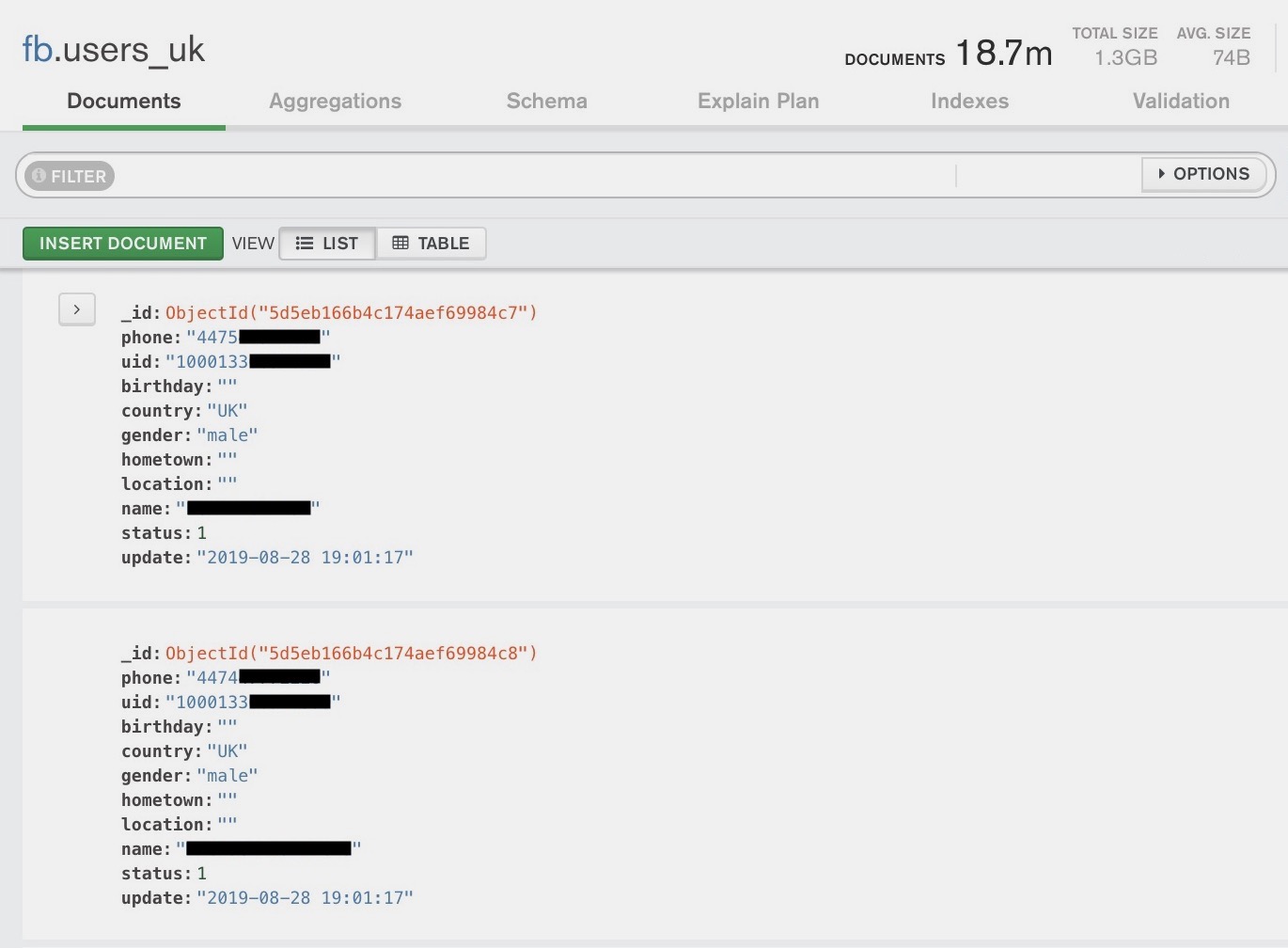
The exposed server contained over 419 million records over several databases on users across geographies, including 133 million records on U.S.-based Facebook users, 18 million records of users in the U.K., and another with more than 50 million records on users in Vietnam.

But because the server wasn’t protected with a password, anyone could find and access the database.

Each record contained a user’s unique Facebook ID and the phone number listed on the account. A user’s Facebook ID is typically a long, unique and public number associated with their account, which can be easily used to discern an account’s username.

But phone numbers have not been public in more than a year since Facebook restricted access to users’ phone numbers.

TechCrunch verified a number of records in the database by matching a known Facebook user’s phone number against their listed Facebook ID. We also checked other records by matching phone numbers against Facebook’s own password reset feature, which can be used to partially reveal a user’s phone number linked to their account.

Some of the records also had the user’s name, gender, and location by country.

fb 3 2

A redacted set of records from the U.K. database. The “44” indicates +44, the U.K.’s country code and the “7” indicates a cell phone number.

This is the latest security lapse involving Facebook data after a string of incidents since the Cambridge Analytica scandal, which saw more than 80 million profiles scraped to help identify swing voters in the 2016 U.S. presidential election.

Since then the company has seen several high-profile scraping incidents, including at Instagram, which recently admitted to having profile data scraped in bulk.

This latest incident exposed millions of users’ phone numbers just from their Facebook IDs, putting them at risk of spam calls and SIM-swapping attacks, which relies on tricking cell carriers into giving a person’s phone number to an attacker. With someone else’s phone number, an attacker can force-reset the password on any internet account associated with that number.

Security researcher Sanyam Jain found the database and contacted TechCrunch after he was unable to find the owner. After a review of the data, neither could we. But after we contacted the web host, the database was pulled offline.

Jain said he found profiles with phone numbers associated with several celebrities.

Facebook spokesperson Jay Nancarrow said the data had been scraped before Facebook cut off access to user phone numbers.

“This dataset is old and appears to have information obtained before we made changes last year to remove people’s ability to find others using their phone numbers,” the spokesperson said. “The dataset has been taken down and we have seen no evidence that Facebook accounts were compromised.”

But questions remain as to exactly who scraped the data, when it was scraped from Facebook, and why.

Facebook has long restricted developers access to user phone numbers. The company also made it more difficult to search for friends’ phone numbers. But the data appeared to be loaded into the exposed database at the end of last month — though that doesn’t necessarily mean the data is new.

This latest data exposure is the most recent example of data stored online and publicly without a password. Although often tied to human error rather than a malicious breach, data exposures nevertheless represent an emerging security problem.

In recent months, financial giant First American left data exposed, as did MoviePass and the Senate Democrats.


Got a tip? You can send tips securely over Signal and WhatsApp to +1 646-755–8849. You can also send PGP email with the fingerprint: 4D0E 92F2 E36A EC51 DAAE 5D97 CB8C 15FA EB6C EEA5.

04 Sep 2019

Ashton Kutcher, Ann Miura-Ko and Mamoon Hamid are coming to Disrupt!

The Disrupt Battlefield is one of the best parts of the conference. Twenty+ startups step on to the Disrupt Main Stage with a product, a pitch, and a dream. They have six minutes to convey how they’re going to fundamentally disrupt their industry, and six minutes of Q&A with world-renowned judges from the VC world.

Pride. Anxiety. Despair. Glory. Anything could happen on that stage, particularly with judges that are at the top of their game and can smell bull shit from a mile away.

This year, at Disrupt SF 2019, we’ll be joined by Ashton Kutcher, Ann Miura-Ko and Mamoon Hamid in the finals round of the Battlefield. And we couldn’t be more excited!

This won’t be Kutcher’s first time at Disrupt. He’s hung out with us a couple times before to discuss his investment strategy for Sound Ventures, and previously, A-Grade investments. This will be his first time as a Finals Judge for the Battlefield, however, and it’ll be fascinating to see the superstar investor work in real-time on the Main Stage.

Ann Miura-Ko, co-founding partner at Floodgate, will be returning as a Battlefield judge. Miura-Ko is a repeat member of the Forbes Midas List, the New York Times Top 20 Venture Capitalists Worldwide, and has been called the most powerful woman in startups. Her portfolio includes Lyft, which went public this year, as well as Refinery29, Xamarin and Thinkful.

Kleiner Perkins partner Mamoon Hamid will also be judging the Battlefield Finals. Hamid was a cofounder at Social Capital and a partner at US Venture Partners before joining Kleiner Perkins, and has invested in companies like Slack, Yammer, Box, and Figma.

We’re amped to have such amazing VCs join us for the final round of the Startup Battlefield competition. Join us at Disrupt SF, which runs October 2 to 4 at the Moscone Center. Tickets are still available at an early-bird rate, but that ends this week.

See you there!

04 Sep 2019

Why Walmart’s Flipkart is betting heavily on Hindi

Flipkart, the largest e-commerce platform in India, said Tuesday it has concluded the roll-out of a range of features to its shopping app in what is its biggest update in recent years.

Chief among these new features is access to Flipkart in Hindi language. Prior to the revamp of the app, Flipkart was available only in English, a language spoken by 10% of India’s 1.3 billion population.

Flipkart says it is hoping that the new features, which includes a video streaming service, would help it reach the next 200 million users in India.

The major bet on Hindi, a language spoken by more than 500 million people in India, illustrates a growing push from local and international companies operating in the country as they adapt their services and business models to go beyond the urban cities.

And that’s where much of the opportunity, which countless startups and companies have trumpeted to investors to successfully raise hundreds of millions of dollars in debt and venture capital in recent years, lies in the nation.

04 Sep 2019

Trump not interested in talking Huawei with China

During an Oval Office press conference this week, the President told reports that the United States is currently not interesting in broaching the subject of Huawei as part of increasingly heated trade conversations with China. The statement appears to run counter to pat suggestions that he was willing to discuss the U.S. government’s blacklist of the electronics giant during trade talks.

“It’s a national security concern,” Trump said. “Huawei is a big concern of our military, of our intelligence agencies, and we are not doing business with Huawei. And we’ll see what happens with respect to China, but Huawei has been not a player that we want to talk about right now.”

Huawei’s U.S. blacklisting stems from both concerns over potential links to security and spying, as well as alleged sanctions violations. Trump has, however, previously conflated those issues brewing trade war between the superpowers, suggesting that a ban could be lifted with a new U.S.-China deal.

Recent discussions with Chinese President Xi Jinping helped ease restrictions against the company, which could be faced with devastating consequences if a full ban on partnerships with U.S. companies like Google is enacted. Trump also used the question to once again suggest that the toll of tariffs could be avoided if U.S. companies no longer relied on Chinese components and manufacturing.

The new comments appear to find Trump temporarily closing the door to discussions about Huawei in future meetings with the Chinese President, though he did not elaborate further.

04 Sep 2019

Daily Crunch: Google reaches $170M settlement with FTC

The Daily Crunch is TechCrunch’s roundup of our biggest and most important stories. If you’d like to get this delivered to your inbox every day at around 9am Pacific, you can subscribe here.

1. Children’s privacy costs just $170 million for Google in settlement with the FTC

The complaint from the Federal Trade Commission and the New York Attorney General’s office focused on YouTube’s use of cookies to track viewers of kids’ channels without getting permission from parents. Under COPPA regulations, websites and online services targeting children need to disclose their data collection practices and receive consent from parents.

In addition to the payment — a relatively small sum for YouTube-owner Google — the settlement requires the company to develop a system that allows channel-owners to identify content aimed at children.

2. Amazon unveils a new Fire TV Cube, soundbar and over a dozen Fire TV Edition products

The new products include a next-generation Fire TV Cube, a Fire TV Edition soundbar from Anker — its first foray into Fire TV Edition audio products — and 15 other Fire TV Edition products, including the first OLED Fire TV Edition smart TVs.

3. Porsche unveils the $150,900 Taycan Turbo electric sedan

Porsche has poured more than $1 billion into the development of its first all-electric vehicle.

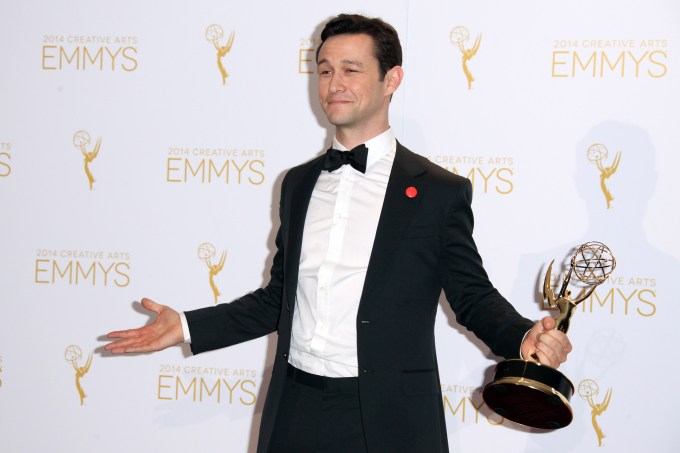
LOS ANGELES, CA – AUGUST 16: Actor Joseph Gordon-Levitt attends the 2014 Creative Arts Emmy Awards press room held at the Nokia Theatre L.A. Live on August 16, 2014 in Los Angeles, California. (Photo by Tommaso Boddi/WireImage)

4. Joseph Gordon-Levitt is coming to Disrupt SF 2019

Gordon-Levitt isn’t just the star of movies like “500 Days of Summer” — he’s also the founder of production company HitRecord, which he’s trying to turn into “GitHub for creativity.”

5. Ginger, an MIT spin-out providing app-based mental health coaching to workers, raises $35M

Ginger works with companies and their healthcare providers to provide employees with an app-based way to connect with coaches to talk through their issues and suggest ways forward.

6. Mental health websites in Europe found sharing user data for ads

Europeans going online to seek support for these issues are having sensitive health data tracked and passed to third parties, according to Privacy International’s findings.

7. Light Phone’s founders discuss life beyond the smartphone

The company has run two successful crowdfunding campaigns for a pair of minimalist phones designed to augment or replace the smartphone. Today the startup announced that it will be shipping its second version of the handset. (Extra Crunch membership required.)
