Category: UNCATEGORIZED

29 Aug 2019

Target’s Drive Up pickup service expands nationwide

Target’s same-day curbside pickup service, Drive Up, has now reached all 50 U.S. states, the retailer announced on Thursday. The service allows consumers to shop online then pull up to designated spaces at their local store to have their purchases ferried to their vehicle by Target staff.

Drive Up has rolled out to Target stores at a fairly fast pace, given the technology requirements, infrastructure and operational changes required to support these fast-to-fill online orders.

The company in April 2018 introduced Drive Up to its first locations outside of Target’s hometown market of Minneapolis-St. Paul, where it had been in piloting testing since October 2017. With the public launch, Drive Up was immediately available across nearly 270 stores in Florida, Texas and the Southeast. By summer 2018, it had reached over 800 stores, with plans to reach 1,000 by year-end.

Instead, it hit the 1,000-store milestone in October 2018.

And with the start of this year’s back-to-school shopping season, Drive Up became available at over 1,500 stores.

With the expansion announced today, Drive Up has now reached 1,750 stores, thanks to recent rollouts in Alaska, Hawaii, Washington, Oregon, Idaho, North Dakota, South Dakota, Montana, and Wyoming. As it launches in new locations, Target will often dole out free product samples as a perk for its first customers and to encourage repeat business.

Overall, Drive Up seems to be working to bring more consumers to its stores — even if they don’t come inside.

In less than two year’s time, Drive Up has become one of Target’s best-rated services. During its most recent earnings, Target noted that it had more than doubled the total number of Drive Up orders in 2018 by fulfilling nearly 5 million orders within the first part of this year alone.

The retailer also recently noted that roughly 1 in 5 customers placing a same-day order in Q2 were placing an order with Target for the first time.

The backend side of Drive Up has improved over time, as well, with improvements to optimize both order picking and delivery of curbside orders to customers.

At launch, Target was committing to fulfill Drive Up orders within 2 hours. Today, Target says it’s able to offer fulfillment by Drive Up in as soon as one hour.

By this holiday season, Target says that “most” of its 1,855 U.S. stores will offer Drive Up service.

“We’ve heard the message loud and clear from our guests: They absolutely love the ease and convenience of Drive Up, whether they’re shopping for household essentials, road trip snacks or baby gear,” said Dawn Block, senior vice president, digital, in a statement about the nationwide expansion. “So our team has worked hard to rapidly expand the service since its introduction less than two years ago to all 50 states. And the work’s not done. The team’s continuing to find ways to make the service even better.”

The service is not without competition, however.

Walmart Grocery offers curbside pickup at over 2,500 locations. Sam’s Club in July announced same-day pickup nationwide. Amazon, which has historically lacked a brick-and-mortar presence, has been quick to react to the threat of curbside pickup. Most recently, it announced a new partnership with Rite Aid, that will see the arrival of a “Counter” service — a free, in-store pickup option — at 1,500 Rite Aid locations by year-end. (Amazon also offers grocery pickup at select Whole Foods.)

However, in-store pickup isn’t quite as convenient as curbside service. And that’s especially true for curbside’s top demographic: parents — often those with young children. Among Target Drive Up’s best-sellers, for example, are things like diapers, wipes, and formula.

Drive Up is one of several ways Target is fighting back against Amazon. The company also now owns same-day delivery service Shipt, offers online order pickup, subscriptions to common household items, and runs a Prime Pantry competitor with next-day service, Target Restock. 

29 Aug 2019

Former Google X ecec Mo Gawdat wants to reinvent consumerism

Mo Gawdat, the former Google and Google X executive, is probably best known for his book Solve for Happy: Engineer Your Path to Joy. He left Google X last year. Quite a bit has been written about the events that led to him leaving Google, including the tragic death of his son. While happiness is still very much at the forefront of what he’s doing, he’s also now thinking about his next startup: T0day.

To talk about T0day, I sat down with the Egypt-born Gawdat at the Digital Frontrunners event in Copenhagen, where he gave one of the keynote presentations. Gawdat is currently based in London. He has adopted a minimalist lifestyle, with no more than a suitcase and a carry-on full of things. Unlike many of the Silicon Valley elite that have recently adopted a kind of performative aestheticism, Gawdat’s commitment to minimalism feels genuine — and it also informs his new startup.

07 28 19 Frontrunner 38“In my current business, I’m building a startup that is all about reinventing consumerism,” he told me. “The problem with retail and consumerism is it’s never been disrupted. E-commerce, even though we think is a massive revolution, it’s just an evolution and it’s still tiny as a fraction of all we buy. It was built for the Silicon Valley mentality of disruption, if you want, while actually, what you need is cooperation. There are so many successful players out there, so many efficient supply chains. We want the traditional retailers to be successful and continue to make money — even make more money.”

What T0day wants to be is a platform that integrates all of the players in the retail ecosystem. That kind of platform, Gawdat argues, never existed before, “because there was never a platform player.”

That sounds like an efficient marketplace for moving goods, but in Gawdat’s imagination, it is also a way to do good for the planet. Most of the fuel burned today isn’t for moving people, he argues, but goods. A lot of the food we buy goes to waste (together with all of the resources it took to grow and ship it) and single-use plastic remains a scourge.

How does T0day fix that? Gawdat argues that today’s e-commerce is nothing but a digital rendering of the same window shopping people have done for ages. “You have to reimagine what it’s like to consume,” he said.

The reimagined way to consume is essentially just-in-time shipping for food and other consumer goods, based on efficient supply chains that outsmart today’s hub and spoke distribution centers and can deliver anything to you in half an hour. If everything you need to cook a meal arrives 15 minutes before you want to start cooking, you only need to order the items you need at that given time and instead of a plastic container, it could come a paper bag. “If I have the right robotics and the right autonomous movements — not just self-driving cars, because self-driving cars are a bit far away — but the right autonomous movements within the enterprise space of the warehouse, I could literally give it to you with the predictability of five minutes within half an hour,” he explained. “If you get everything you need within half an hour, why would you need to buy seven apples? You would buy three.”

Some companies, including the likes of Uber, are obviously building some of the logistics networks that will enable this kind of immediate drop shipping, but Gawdat doesn’t think Uber is the right company for this. “This is going to sound a little spiritual. There is what you do and there is the intention behind why you do it,” he said. “You can do the exact same thing with a different intention and get a very different result.”

That’s an ambitious project, but Gawdat argues that it can be done without using massive amounts of resources. Indeed, he argues that one of the problems with Google X, and especially big moonshot projects like Loon and self-driving cars, was that they weren’t really resource-constrained. “Some things took longer than they should have,” he said. “But I don’t criticize what they did at all. Take the example of Loon and Facebook. Loon took longer than it should have. In my view, it was basically because of an abundance of resources and sometimes innovation requires a shoestring. That’s my only criticism.”

T0day, which Gawdat hasn’t really talked about publicly in the past, is currently self-funded. A lot of people are advising him to raise money for it. “We’re getting a lot of advice that we shouldn’t self-fund,” he said, but he also believes that the company will need some strategic powerhouses on its side, maybe retailers or companies that have already invested in other components of the overall platform.

T0day’s ambitions are massive, but Gawdat thinks that his team can get the basic elements right, be that the fulfillment center design or the routing algorithms and the optimization engines that power it all. He isn’t ready to talk about those, though. What he does think is that T0day won’t be the interface for these services. It’ll be the back end and allow others to build on top. And because his previous jobs have allowed him to live a comfortable life, he isn’t all that worried about margins either, and would actually be happy if others adopted his idea, thereby reducing waste.

29 Aug 2019

Daily Crunch: Apple changes audio review program

The Daily Crunch is TechCrunch’s roundup of our biggest and most important stories. If you’d like to get this delivered to your inbox every day at around 9am Pacific, you can subscribe here.

1. Apple is turning Siri audio clip review off by default and bringing it in house

Following reports that contractors were reviewing customers’ Siri audio samples for quality control, Apple says it has revamped the process. Moving forward, users have to opt-in to participate, and the audio samples will only be reviewed by Apple employees.

“As a result of our review, we realize we haven’t been fully living up to our high ideals, and for that we apologize,” the company said.

2. Mozilla CEO Chris Beard will step down at the end of the year

Mozilla is currently seeking a replacement for Beard, though he’s agreed to stay on through year’s end. Executive chairwoman Mitchell Baker announced in her own post that she’s agreed to step into an interim role if needed.

3. Federal grand jury indicts Paige Thompson on two counts related to the Capital One data breach

Thompson allegedly created software that allowed her to see which customers of a cloud computing company (although the indictment does not name the company, it has been identified as Amazon Web Services) had misconfigured their firewalls, and as a result accessed data from Capital One and more than 30 others.

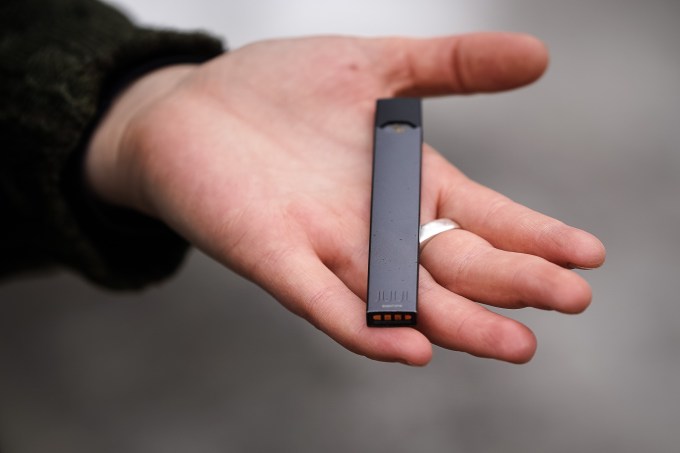
Woman holding Juul e-cig

A woman is holding a Juul e-cigarette, in Montreal. (Photo: Josie_Desmarais/Getty Images)

4. Juul introduces new POS standards to restrict sales to minors

The Retail Access Control Standards program, or RACS for short, automatically locks the point-of-sale system each time a Juul product is scanned until a valid, adult ID is scanned as well.

5. Apple expands access to official repair parts for third-party shops

Until today, if you were a non-authorized repair shop, you couldn’t get official parts. This could result in mixed experiences for customers.

6. Spotify aims to turn podcast fans into podcast creators with ‘Create podcast’ test

The streaming music service is testing a new ‘Create podcast’ feature that shows up above a user’s list of subscribed podcasts. It directs them to download Anchor, the podcast creation app that Spotify acquired in February.

7. How UK VCs are managing the risk of a ‘no deal’ Brexit

The prevailing view among investors about founders is that Brexit means uncertain business as usual. One response: “Resilience is the mother of entrepreneurship!” (Extra Crunch membership required.)

29 Aug 2019

Nike Huaraches get updated for the smartphone age

Ever since they went from Back to the Future fantasy to real world wearable tech, Nike has promised that the Adapt line was more than just a one-off gimmick. Slowly but surely, the company has made its self-lacing motor technology more accessible, most notably though its long awaited Adapt BB sneakers, which arrived earlier this year.

The company announced today that it will be bringing the tech to its Huarache line next month, with the release of the Adapt Huaraches. Introduced in 1991, the line was built around a neoprene bootie derived from water skits. The new shoes feature a similar structure updated for 2019 style and along with smartphone integration.

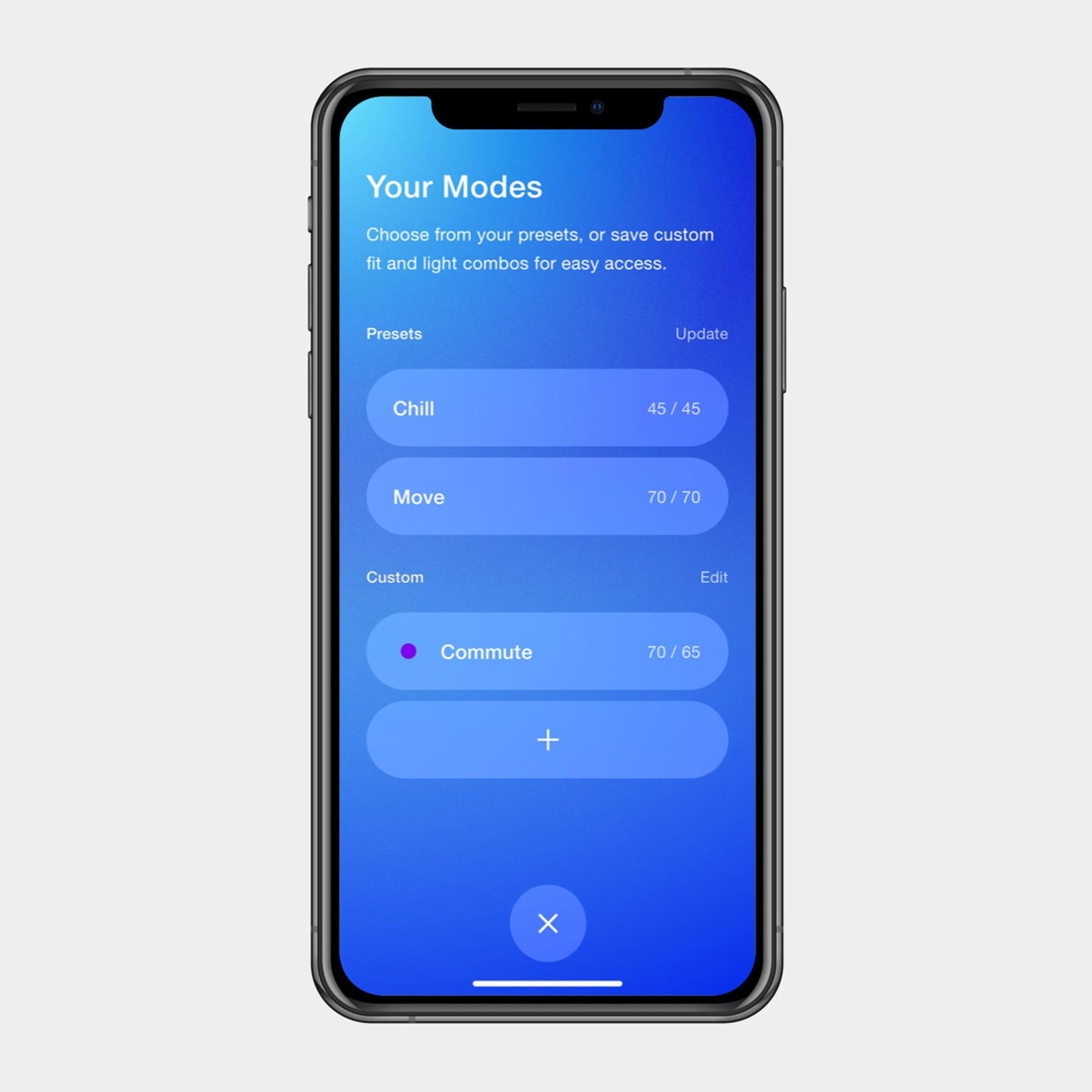
Like the Adapt BB, the new Huaraches feature a pair of LED lights in the sole that change color based on their connection to the device. The mobile app, meanwhile, is used to adjust the lacing fit. FitAdapt features a bunch of different tension levels, based on different situations. The shoes also, notably, can be used with Apple Watch and Siri, meaning you can ask Apple’s assistant to tighten up your laces.

NikeNews AdaptHuarache Interface 2 square 1600

“This makes the Nike Adapt Huarache a double-barreled revolution,” Nike writes in a release. “First, it brings a storied franchise into the future. Second, and most significant, it propels Nike FitAdapt into the fast-paced, quick-shifting world of the everyday athlete — offering the personalized comfort needed in, say, the sprint to catch the bus, before seamlessly shifting fit as you settle into an empty seat with a sigh of quiet relief.”

The shoes are due out September 13. No pricing yet, but it seems likely they’ll be in the same ballpark as the $350 BBs.

29 Aug 2019

48 hours left: Buy your early-bird passes to Disrupt SF 2019

We dedicate this post to all the busy, overworked startuppers — the last-minute mamas, procrastinating papas and everyone in between. We empathize and gently offer this swift boot in the booty. You have only 48 hours left to save a bundle on your pass to Disrupt San Francisco 2019.

Beat the deadline — 11:59 p.m. (PST) on August 30 — and you can save up to $1,300. Get moving and buy your tickets right here, right now.

Don’t miss out on our flagship Disrupt, which takes place October 2-4. It’s the quintessential tech conference for anyone focused on early-stage startups. Join more than 10,000 attendees — including over 1,200 exhibiting startups — for three jam-packed days of programming. We’re talking four different stages with interactive workshops, Q&A sessions and interviews with some of the industry’s top tech titans, founders, investors, movers and shakers. Check out our list of speakers and the Disrupt agenda.

Disrupt is a breeding ground of opportunity, networking and collaboration. It’s a place where ideas are born, and partnerships are made. Don’t take our (admittedly very biased) word for it. Your peers happen to agree. Here’s what Sage Wohns, co-founder of Agolo, an artificial intelligence startup, had to say about his Disrupt experience:

Disrupt helps you connect more with the startup community in very tangible ways. You can meet investors and bigger players in your industry to see if there’s an opportunity to work together. Disrupt is unique in how it brings everyone — all the industry touch points — together under one roof. It’s incredibly valuable.

We haven’t even mentioned the Startup Battlefield pitch competition, the TC Top Picks who will set up camp in Startup Alley or the TC Hackathon!

So much to see, hear and do at Disrupt San Francisco 2019. And yet, so little time left — 48 tiny little hours — to save money on your pass. What are you waiting for? Get your early-bird tickets now before the clock strikes 11:59 p.m. (PST) on August 30.

Is your company interested in sponsoring or exhibiting at Disrupt San Francisco 2019? Contact our sponsorship sales team by filling out this form.

29 Aug 2019

Google to pay security researchers who find Android apps and Chrome extensions misusing user data

Google said it will pay security researchers who find “verifiably and unambiguous evidence” of data abuse using its platforms.

It’s part of the company’s efforts to catch those who misuse user data collected through Android apps or Chrome extensions — and to avoid its own version of a scandal like Cambridge Analytica, which saw millions of Facebook profiles scraped and used to identify undecided voters during the U.S. presidential election in 2016.

Google said anyone who identifies “situations where user data is being used or sold unexpectedly, or repurposed in an illegitimate way without user consent” is eligible for its expanded data abuse bug bounty.

“If data abuse is identified related to an app or Chrome extension, that app or extension will accordingly be removed from Google Play or Google Chrome Web Store,” read a blog post. “In the case of an app developer abusing access to Gmail restricted scopes, their API access will be removed.” The company said abuse of its developer APIs would also fall under the scope of the bug bounty.

Google said it isn’t providing a reward table yet but a single report of data misuse could net $50,000 in bounties.

News of the expanded bounty comes in the wake of the DataSpii scandal, which saw browser extensions scrape and share data from millions of users. These Chrome extensions uploaded web addresses and webpage titles of every site a user visited, exposing sensitive data like tax returns, patient data, and travel itineraries.

Google was forced to step in and suspend the offending Chrome extensions.

Instagram recently expanded its own bug bounty to include misused user data following a spate of data incidents,

29 Aug 2019

Google to pay security researchers who find Android apps and Chrome extensions misusing user data

Google said it will pay security researchers who find “verifiably and unambiguous evidence” of data abuse using its platforms.

It’s part of the company’s efforts to catch those who misuse user data collected through Android apps or Chrome extensions — and to avoid its own version of a scandal like Cambridge Analytica, which saw millions of Facebook profiles scraped and used to identify undecided voters during the U.S. presidential election in 2016.

Google said anyone who identifies “situations where user data is being used or sold unexpectedly, or repurposed in an illegitimate way without user consent” is eligible for its expanded data abuse bug bounty.

“If data abuse is identified related to an app or Chrome extension, that app or extension will accordingly be removed from Google Play or Google Chrome Web Store,” read a blog post. “In the case of an app developer abusing access to Gmail restricted scopes, their API access will be removed.” The company said abuse of its developer APIs would also fall under the scope of the bug bounty.

Google said it isn’t providing a reward table yet but a single report of data misuse could net $50,000 in bounties.

News of the expanded bounty comes in the wake of the DataSpii scandal, which saw browser extensions scrape and share data from millions of users. These Chrome extensions uploaded web addresses and webpage titles of every site a user visited, exposing sensitive data like tax returns, patient data, and travel itineraries.

Google was forced to step in and suspend the offending Chrome extensions.

Instagram recently expanded its own bug bounty to include misused user data following a spate of data incidents,

29 Aug 2019

Instagram may allow creators to syndicate IGTV videos to Facebook

Following the departure of Instagram’s founders, Facebook is working to more closely integrate the photo-sharing app with its flagship social network. It’s already added its brand name next to Instagram’s, and is working to make both platforms’ messaging products interoperable. Now, Facebook is prototyping a means of syndicating Instagram’s IGTV video to Facebook’s video site, Facebook Watch.

In another find from noted reverse engineer, Jane Manchun Wong, Instagram was found to have under development a feature that would allow Instagram users to post their IGTV content to both Instagram as a preview, as well as to Facebook and Watch — the latter by toggling an additional switch labeled “make visible on Facebook.”

Wong says the feature is still in the prototype stage, as the buttons themselves aren’t functional.

This move, should it come to pass, could prompt more video creators to use IGTV, given that it would boost their videos’ distribution by also including Facebook as a destination for their content. The videos could also be part of an ongoing, episodic series, Wong had found.

This, in turn, could help IGTV — an app which hasn’t quite taken off as a standalone video platform. Today, IGTV takes inspiration from TikTok and Snapchat’s vertical video. It’s meant to engage Instagram users with longer-form, portrait mode video content but within Instagram and in a separate IGTV app. But IGTV has often been filled with poorly cropped and imported web video, rather than content designed specifically for the platform.

Meanwhile, the IGTV app has struggled to rise to the top of the App Store’s charts the way its parent, Instagram has. Today, it’s ranked No. 159 in the Photo & Video category on the App Store, and unranked in the Overall top charts.

To address some of the issues that creators have complained about, Instagram this week rolled out a few changes to the upload experience. This included the new ability to select the 1:1 crop of an IGTV thumbnail for the creator’s Profile Cover as well as the ability to edit which 5:4 section of the IGTV video shows in the Feed.

IGTV will also now auto-populate Instagram handles and tags on IGTV titles and descriptions, and will now support the ability to longer video from mobile. With the latter change, IGTV has increased the minimum threshold to upload on mobile to one minute, and is allowing mobile uploads up to 15 minutes.

Instagram declined to comment on the possible syndication of IGTV content to Facebook and Facebook Watch.

29 Aug 2019

Female founders: All Raise AMA applications @ Disrupt SF 2019 close tomorrow

The future is female and all you fierce female founders have one last shot at receiving 30 minutes of face time with some of the industry’s leading female funders. Say what now? We’re talking the All Raise “ask me anything” (AMA) sessions at Disrupt SF 2019 — and applications close tomorrow, August 30.

All Raise, a startup nonprofit focused on accelerating female founder success, will host a day-long AMA event on October 3 at Disrupt SF 2019. It’s a match-up of early-stage startup founders and top VCs — and more than 100 female founders will take part in at least 30 sessions scheduled throughout the day.

Each session lasts 30 minutes, and three founders will use that time to ask a their female funder well, anything. What business issues keep you up at night? How do you prep for your next round of funding? What do you need to consider when making key hires? This is not a pitching event — it’s a rare networking opportunity to connect with and learn from the very best.

You might be paired with one of these leading VCs.

  • Dayna Grayson, NEA
  • Susan Lyne, BBG
  • Shauntel Garvey, Reach Capital
  • Eurie Kim, Forerunner
  • Jess Lee, Sequoia
  • Kara Nortman, Upfront
  • Sarah Guo, Greylock,
  • Anarghya Vardhana, Maveron
  • Eva Ho, Fika Ventures
  • Sarah Smith, Bain Capital Ventures
  • Jess Lin, Work-Bench

Apply for an All Raise AMA session if you meet the following criteria:

  • You’re a U.S.-based woman founder
  • You’ve raised at least $250,000 in a seed, A or B round.

Note: All Raise gives special consideration to founders from underrepresented groups (e.g. Black, Latinx or LGBTQIA women).

All Raise will review the applications and notify the founders. Acceptance is based on availability for session spots, investor fit with industry sector and company stage, as well as demand for certain categories.

Bonus: After All Raise chooses the participants, we’ll randomly select 30 founders to receive a free Expo-only pass.

If you’re selected, you’ll need to buy any pass to Disrupt SF (unless you win one of the Expo Only passes). You’ll receive an email from All Raise with your session time.

Female funders helping female founders. Don’t squander this chance to learn from the women who know funding best. Apply for an All Raise AMA session by tomorrow, August 30, and get ready to move your business forward.

If you are interested in sponsoring this event or exhibiting at Disrupt San Francisco 2019, fill out this form to get in contact with our sales team.

29 Aug 2019

Apple will unveil the next iPhone September 10

Invites for the next big Apple event have just landed in press mailboxes everywhere, confirming the rumored September 10 date. Invites for the event, which is set for Steves Jobs Theater on the company’s shiny new Cupertino campus, note that the event is “by innovation only.” It is a small theater, after all.

The centerpiece of the event will, of course, be the iPhone 11, which is rumored to arrive in three different flavors: The standard 11 (replacing the budget XR) and two 11 Pro models, set to replace the XS and XS Max, respectively.


Developing…