Category: UNCATEGORIZED

22 Aug 2019

The fight for seed

When Mike Fitzsimmons went out to raise his seed round, he negotiated with all the usual suspects. The second-time founder needed a few million to get his cloud SaaS hiring tool, Crosschq, off the ground. And as a repeat CEO, he had options.

It was Slack and Airbnb investor Glenn Solomon of GGV Capital, a multi-stage firm with billions under management, that ultimately led the $4.1 million seed round announced earlier this month. Another mega-fund, Bessemer Venture Partners, also participated: “I did take a handful of meetings with pure seed funds and my conclusion was that there was more value in getting in bed with some, frankly, more established funds with more established track records and partners that could add real value,” Fitzsimmons tells TechCrunch.

Increasingly, the largest venture capital funds are leading seed deals in fledgling upstarts, offering larger checks, limited dilution and the opportunity to stamp a legacy brand name on a months-old project.

The institutional players are raising specialty funds to execute these deals. GGV, for example, raised a $460 million “Discovery Fund” last year, its second of the sort. Sequoia Capital operates a scout program in which its portfolio founders hunt for early-stage talent and invest out of a $180 million fund. Kleiner Perkins re-entered the early-stage market with a whopping $600 million effort announced in January. General Catalyst recently “re-committed” to seed with a new seed-stage program. Even Coatue Management, a hedge fund turned VC, has a newly formed $700 million fund dedicated to early bets.

Seed funds beware — today’s fight for equity in Bay Area startups requires muscle and a whole lot of cash.

The new normal

Nine U.S. venture funds larger than $500 million closed in the first half of 2019, according to PitchBook, with a total of $20.6 billion in new capital introduced to the startup market in that time frame across 103 funds.

The capital flood has caused deal sizes and pre-money valuations at all stages to swell. Seed deals today resemble Series A financings of yesterday as deep-pocketed investors are more willing to dole out larger sums of cash at valuations far above the norm.

“There is no way to compete with Bill Gurley if Bill Gurley puts down a $5 million term sheet,” Haystack founder and general partner Semil Shah tells TechCrunch, referring to Benchmark’s esteemed general partner. Haystack is currently investing out of a $50 million seed fund, with a portfolio that includes DoorDash, Envoy and Instacart. “The seed funds that need to be on guard and thinking about their strategy are the ones that in their model, need to own 10 to 20% of a company in the Bay Area. They have to adjust where they shop for these types of deals.”

Larger funds typically bypass the seed rounds and write sizeable checks to more mature businesses, meaty enough to warrant big returns. As a large fund, a small check won’t move the needle in terms of fund economics, but getting an early piece of the next Slack or Uber makes the small deals worth it. In today’s competitive environment, in which every firm in town campaigns for access to the hottest Series A, seed deals are critical to success.

Many of the large funds striking seed deals today have roots in the stage. Recent activity simply represents a push from the big dogs to reclaim territory in one the most valuable stages of equity financing.

General Catalyst, which employs a “stage-agnostic” strategy, closed on $1.4 billion for its ninth fund last year. Its funds, for the past decade, have grown subsequently larger. Earlier this year, however, the firm announced a new program and a $25 million pool of capital to double down on the seed level. The program is part of an effort to “recommit” to the seed, explained General Catalyst investors Katherine Boyle and Peter Boyce.

“We wanted to tell founders we have a clear process and the ability to move very fast,” Boyle tells TechCrunch.

Though General Catalyst collaborates with institutional seed and pre-seed funds in many instances, the team recognizes the advantages a startup has by forming an alliance with a larger fund at the beginning: “You get long-term capital access, which is especially important for companies that may have capital intensity or capital as a moat,” Boyce tells TechCrunch.

“As you see more and more companies raising subsequent rounds, it’s often great for both the founders and us to invest along the whole journey,” he added. “Being true life cycle investors, that’s an advantage. It saves founders time and allows us to further deepen our relationship.”

The new pedigree

GettyImages 912338074

Today’s Bay Area founders are savvy to the VC fundraising process and privy to valuation negotiations

Today’s talent pool, packed with alums of billion-dollar venture-backed companies, has lured late-stage funders to the early stage. These experienced founders often have their pick of term sheets from top VCs that are hoping to get a slice of The Next Big Thing. Some funds have even formed with the mission of backing unicorn spin-outs specifically. Wave Capital, for example, initially sought to invest only in members of the “Airbnb mafia.” They’ve since broadened their scope.

“If you worked five years at Stripe, it’s almost better than having an ivy league degree,” Haystack’s Shah said. “If you leave Airbnb and are seen as an emerging leader, you can probably raise $300,000 because your colleagues will support you.”

The new wave of talent in the Bay Area is savvy to the VC fundraising process, privy to valuation negotiations, aware of the advantages and disadvantages of working with different types of funds — not to mention they’re friendly with wealthy former colleagues amped on their vision. For them, raising capital comes as much less of a challenge.

For these founders in particular, there are more perks associated with choosing a big fund over a specialty seed firm. Larger funds can re-invest when the company begins its Series A fundraising process, facilitate introductions to its portfolio companies (often potential customers), provide instant credibility in the form of brand recognition (which can be priceless in the hiring process) and, perhaps most importantly, write less dilutive, larger checks.

For the less-seasoned founders, taking capital from a seed fund can be a much safer option. The best seed funds give companies access to those well-versed in the complexities of building a startup. They understand the specific plights of a first-time founder or an early-stage startup, like founder break-ups, the struggle of signing up your first customers or making early, key hires. Plus, seed funds tend to have smaller, more focused portfolios. As such, their partners may take a bigger stake in the game.

“All the funds say the same crap, but ultimately it’s about who actually does the work and it does become really clear who on the cap table has done the work and knows how to be a good investor at the stage,” Fika Ventures, a $76 million enterprise and B2B-focused seed fund, general partner Eva Ho tells TechCrunch. “When we put money in, we really care about the outcome of that deal. I think that gives us really good incentive alignment with the companies.”

In addition to a potential lack of attention from partners at larger funds, doing business with a big player comes with other risks. If, say, GGV decides it doesn’t want to participate in Crosschq’s Series A financing, it may lead other investors to believe the company hasn’t lived up to its expectations. This can make it very difficult for that company to successfully raise its next round. Working with a seed fund eliminates this risk. A seed fund can’t be expected to participate in a startup’s next round due to its limited fund size.

This is one reason startups decline offers from mega-funds. A recent Y Combinator standout, Glide, chose First Round Capital as its lead investor after reviewing multiple term sheets, sources tell TechCrunch. Sequoia offered the company, which helps users create apps from a Google Sheet, a $1.5 million investment on a $16 million pre-money valuation, a high price for a company of that stage. Glide declined the offer and went with the seed firm First Round instead. Glide did not respond to a request for comment. Sequoia declined to comment.

The steep and rising valuations characteristic of deals for Y Combinator’s latest graduates is representative of the overall trend. As hype climbs and investors swallow higher costs, more companies are rolling out the accelerator with valuations north of $30 million and little to show for it.

New strategies

Not all startups have multiple prospective lead investors vying for a position on their cap table, particularly those who haven’t just “graduated” from Stripe or Airbnb or completed the hot accelerator program Y Combinator. And not all funds have the ability to compete with the Sequoias of the world.

More activity from big funds challenges seed investors to get creative, deploy new tricks, work a little harder. “I don’t see it as a negative,” Haystack’s Shah said. “Founders should have choices. If they want to raise a round pre-launch at a $40 million valuation and take money from a big VC, he or she should accept the consequences of doing that if things get less rosy down the road.”

To navigate today’s dog-eat-dog environment, Fika’s Ho says the firm has looked to other geographies where deals are less competitive, valuations more reasonable and talent just as strong. Chris Farmer, the founder of a $165 million data-focused seed fund called SignalFire, says they’ve also doubled down on alternative strategies.

SignalFire makes 15 seed deals and an additional five to 10 pre-seed and “exploratory seed” deals per year. The latter, Farmer explains, allows them to be first in line when a seasoned entrepreneur is considering diving into a new project: “We will see people who are about to hit a vesting milestone and who will almost certainly start another company,” Farmer tells TechCrunch.

Innovative strategies, including pre-idea seed rounds and investing in second-tier markets, may rescue seed funds crushed under the weight of Sequoia, Coatue and others. Funds that fail to think differently may not survive the competition.

“There will be a lot of fallout in the market,” says Farmer.

Spotlight: GGV Capital
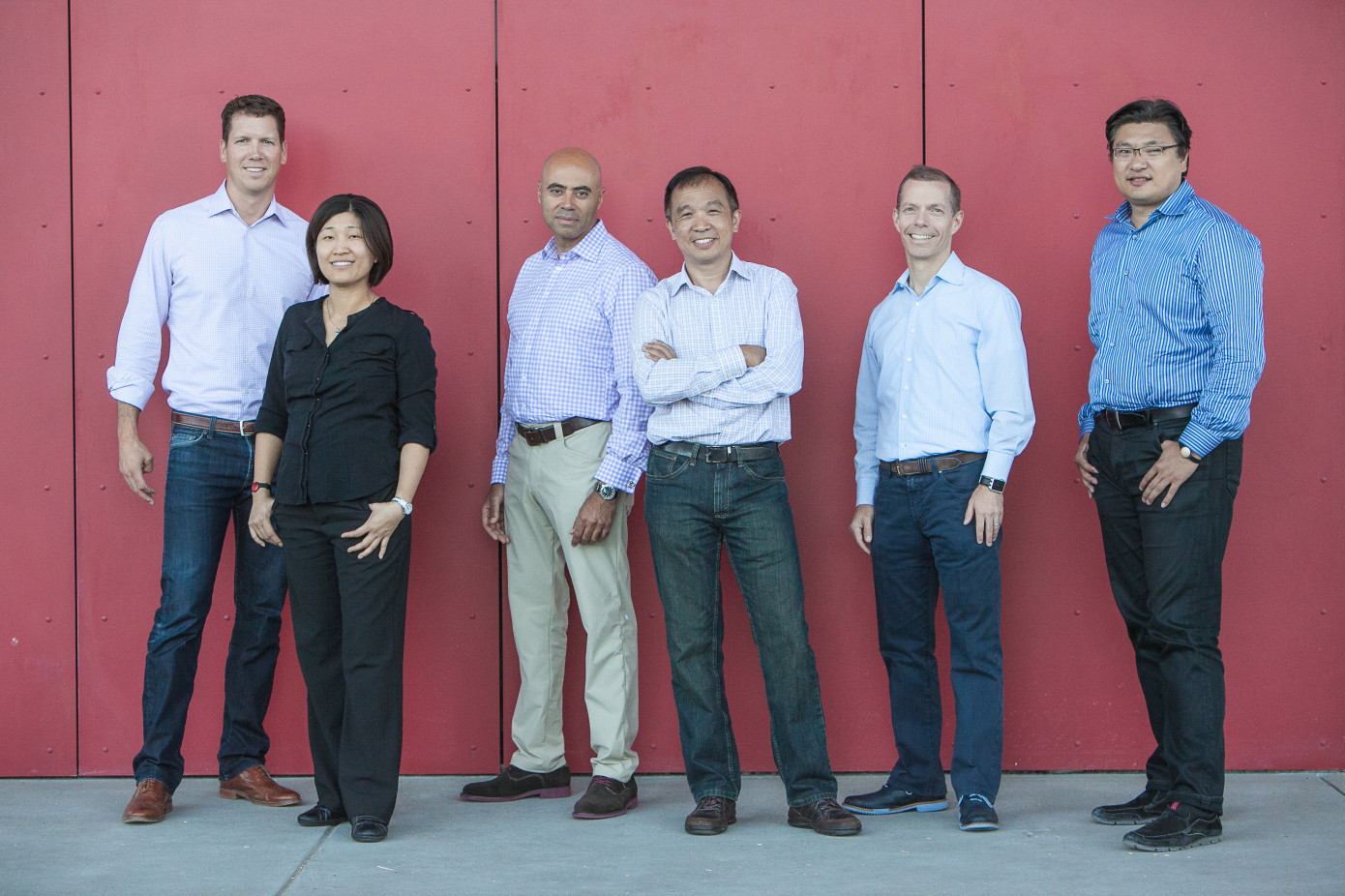
0121 img 1847

GGV managing partner Glenn Solomon (second from right)

Many of the large firms have for years been partnering with “idea stage” companies, but the pace of those investments has sped up. Accel, for example, made a seed bet in Slack years ago, a huge win for the fund, and now does more than 15 seed investments per year. Sequoia, another mega-fund with previous seed investments in Dropbox, Airbnb and Stripe, has invested in at least six seed-stage companies in the past year, including Re:Store and Veil.

GGV Capital implemented a seed strategy in late 2013, about 14 years after it was founded. Its first bet was on a Chinese AI company called Lingochamp, which raised $72 million in a U.S. IPO last year. GGV has since done 43 more seed deals, added a Sequoia-like scout program and launched a leadership development program for early-stage founders called “Founders + Leaders.”

Covertly, GGV and others are mimicking the seed approach to nurturing founders.

Still, GGV makes no promise to its seed companies to reinvest at the Series A. Of its 44 total seed deals, it went on to lead or co-lead 15 follow-on financings, the firm said. When asked about the prospect of signaling risk, or the risk generated when a startup accepts seed funding from a top-tier VC and that VC doesn’t go on to lead, GGV’s Solomon was unperturbed. It’s not like founders are expecting to fail, he explained.

“Most founders with whom we work are very savvy and know the pros and cons of working with one specific firm or type of firm,” Solomon said. “In the list of things that a founder needs to worry about, the ‘signal risk’ is very low on most founders’ lists.”

While not everyone across fund sizes and startups agrees about the triumphs and tribulations associated with teaming with a small, focused fund versus a billion-dollar giant, there was one consistent theme throughout each interview conducted for this story: It’s all about the partner.

It’s all about the partner
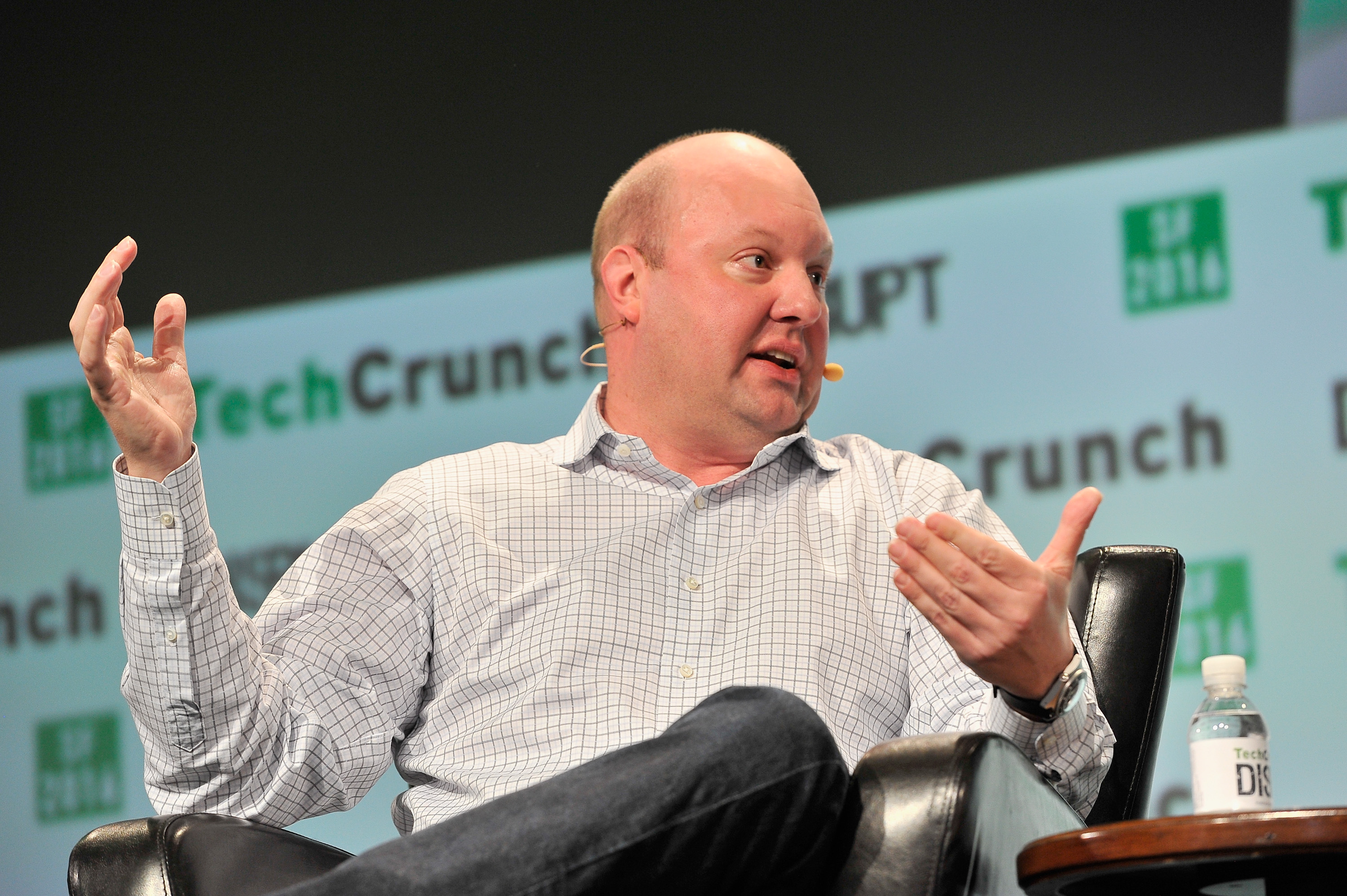
GettyImages 604311102

Marc Andreessen, co-founder and managing partner of the billion-dollar venture capital firm Andreessen Horowitz

At the end of the day, it’s the individual person at a fund that founders are attracted to and with whom they establish a long-lasting, collaborative relationship with, ideally.

Jude Gomila, the co-founder and CEO of Golden, an information platform akin to Wikipedia that recently raised a $5 million seed round led by Marc Andreessen of Andreessen Horowitz, with participation from Cyan Banister of Founders Fund, SV Angel and Gigafund, sums this up.

“The support from Marc has been phenomenal on an operational level and it didn’t matter what entity he was a part of,” Gomila tells TechCrunch. “And if you look at Founders Fund and Cyan, once again, it didn’t matter if she was an angel or part of a fund from my perspective.”

The primary value proposition a venture capital firm has is its partner. Its resources and services, while still important, are secondary. The real winners of the fight for seed will be the venture funds with the sharpest investors, able to win over founders through sheer commitment, experience or specific expertise.

“Does the partner share your vision? Can they help you get there faster? Asks GGV’s Solomon. “When there’s competition, the best founders are looking at that, they aren’t thinking about fund size.”


22 Aug 2019

AmazonFresh expands to three key markets: Houston, Minneapolis, and Phoenix.

AmazonFresh, one of two main grocery delivery services Amazon today operates, is expanding to new markets, the retailer announced this morning. The service will now be available to Prime members in Houston, Minneapolis, and Phoenix. Notably, this list includes a test market for Walmart’s new grocery subscription service, Delivery Unlimited; Target’s corporate headquarters; and an early test market for Walmart’s online grocery business, respectively.

Members in these cities will have access to tens of thousands of grocery items, including fresh fruits and produce, meat, seafood, and other everyday essentials, all of which can be delivered for free in two hours. Free delivery requires a $35 minimum order, or a $9.99 delivery fee will apply if the order totals less than $35.

Meanwhile, a faster, 1-hour delivery option is also available for an additional $7.99 fee.

With the launch, AmazonFresh is available in Las Vegas, Atlanta, Baltimore, Boston, Chicago, Dallas, Denver, Los Angeles, Miami, New York, Philadelphia, San Diego, San Francisco, Seattle, and Washington, D.C.

Amazon’s strategy with online grocery is a bit mixed. Today, Prime members can opt for deliveries through Prime Now, which delivers from Whole Foods markets as well as Amazon fulfillment centers, and in some areas, from local grocers. Prime Now is covered in the cost of an Amazon Prime subscription, while AmazonFresh requires an additional $14.99 per month additional fee.

It’s not clear why someone would choose AmazonFresh over Prime Now —  if both were available — given the cost. The only reason may be that AmazonFresh offers a better selection in some markets. But consumers aren’t only choosing between these two options. They can also shop from Walmart’s online grocery, Instacart, Shipt, and others.

Amazon recently pushed back against an industry report that claimed AmazonFresh was struggling. The retailer argued that it’s still investing in the service, expanding it to new markets, and pointed out that it never exited entire markets — it only pulled back in some zip codes. That said, AmazonFresh has grown far slower than Prime Now, with availability in 18 markets as of this news, versus Prime Now’s nearly 100.

In addition to the convenience of shopping online or in the app, AmazonFresh also works with Alexa. Customers can say things like “Alexa, order milk from Fresh,” and Alexa will add a choice for milk to their shopping cart.

22 Aug 2019

Enterprise software is hot — who would have thought?

Once considered the most boring of topics, enterprise software is now getting infused with such energy that it is arguably the hottest space in tech.

It’s been a long time coming. And it is the developers, software engineers and veteran technologists with deep experience building at-scale technologies who are energizing enterprise software. They have learned to build resilient and secure applications with open-source components through continuous delivery practices that align technical requirements with customer needs. And now they are developing application architectures and tools for at-scale development and management for enterprises to make the same transformation.

“Enterprise had become a dirty word, but there’s a resurgence going on and Enterprise doesn’t just mean big and slow anymore,” said JD Trask, co-founder of Raygun enterprise monitoring software. “I view the modern enterprise as one that expects their software to be as good as consumer software. Fast. Easy to use. Delivers value.”

The shift to scale out computing and the rise of the container ecosystem, driven largely by startups, is disrupting the entire stack, notes Andrew Randall, vice president of business development at Kinvolk.

In advance of TechCrunch’s first enterprise-focused event, TC Sessions: Enterprise, The New Stack examined the commonalities between the numerous enterprise-focused companies who sponsor us. Their experiences help illustrate the forces at play behind the creation of the modern enterprise tech stack. In every case, the founders and CTOs recognize the need for speed and agility, with the ultimate goal of producing software that’s uniquely in line with customer needs.

We’ll explore these topics in more depth at The New Stack pancake breakfast and podcast recording at TC Sessions: Enterprise. Starting at 7:45 a.m. on Sept. 5, we’ll be serving breakfast and hosting a panel discussion on “The People and Technology You Need to Build a Modern Enterprise,” with Sid Sijbrandij, founder and CEO, GitLab, and Frederic Lardinois, enterprise writer and editor, TechCrunch, among others. Questions from the audience are encouraged and rewarded, with a raffle prize awarded at the end.

Traditional virtual machine infrastructure was originally designed to help manage server sprawl for systems-of-record software — not to scale out across a fabric of distributed nodes. The disruptors transforming the historical technology stack view the application, not the hardware, as the main focus of attention. Companies in The New Stack’s sponsor network provide examples of the shift toward software that they aim to inspire in their enterprise customers. Portworx provides persistent state for containers; NS1 offers a DNS platform that orchestrates the delivery internet and enterprise applications; Lightbend combines the scalability and resilience of microservices architecture with the real-time value of streaming data.

“Application development and delivery have changed. Organizations across all industry verticals are looking to leverage new technologies, vendors and topologies in search of better performance, reliability and time to market,” said Kris Beevers, CEO of NS1. “For many, this means embracing the benefits of agile development in multicloud environments or building edge networks to drive maximum velocity.”

Enterprise software startups are delivering that value, while they embody the practices that help them deliver it.

The secrets to speed, agility and customer focus

Speed matters, but only if the end result aligns with customer needs. Faster time to market is often cited as the main driver behind digital transformation in the enterprise. But speed must also be matched by agility and the ability to adapt to customer needs. That means embracing continuous delivery, which Martin Fowler describes as the process that allows for the ability to put software into production at any time, with the workflows and the pipeline to support it.

Continuous delivery (CD) makes it possible to develop software that can adapt quickly, meet customer demands and provide a level of satisfaction with benefits that enhance the value of the business and the overall brand. CD has become a major category in cloud-native technologies, with companies such as CircleCI, CloudBees, Harness and Semaphore all finding their own ways to approach the problems enterprises face as they often struggle with the shift.

“The best-equipped enterprises are those [that] realize that the speed and quality of their software output are integral to their bottom line,” Rob Zuber, CTO of CircleCI, said.

Speed is also in large part why monitoring and observability have held their value and continue to be part of the larger dimension of at-scale application development, delivery and management. Better data collection and analysis, assisted by machine learning and artificial intelligence, allow companies to quickly troubleshoot and respond to customer needs with reduced downtime and tight DevOps feedback loops. Companies in our sponsor network that fit in this space include Raygun for error detection; Humio, which provides observability capabilities; InfluxData with its time-series data platform for monitoring; Epsagon, the monitoring platform for serverless architectures and Tricentis for software testing.

“Customer focus has always been a priority, but the ability to deliver an exceptional experience will now make or break a “modern enterprise,” said Wolfgang Platz, founder of Tricentis, which makes automated software testing tools. “It’s absolutely essential that you’re highly responsive to the user base, constantly engaging with them to add greater value. This close and constant collaboration has always been central to longevity, but now it’s a matter of survival.”

DevOps is a bit overplayed, but it still is the mainstay workflow for cloud-native technologies and critical to achieving engineering speed and agility in a decoupled, cloud-native architecture. However, DevOps is also undergoing its own transformation, buoyed by the increasing automation and transparency allowed through the rise of declarative infrastructure, microservices and serverless technologies. This is cloud-native DevOps. Not a tool or a new methodology, but an evolution of the longstanding practices that further align developers and operations teams — but now also expanding to include security teams (DevSecOps), business teams (BizDevOps) and networking (NetDevOps).

“We are in this constant feedback loop with our customers where, while helping them in their digital transformation journey, we learn a lot and we apply these learnings for our own digital transformation journey,” Francois Dechery, chief strategy officer and co-founder of CloudBees, said. “It includes finding the right balance between developer freedom and risk management. It requires the creation of what we call a continuous everything culture.”

Leveraging open-source components is also core in achieving speed for engineering. Open-source use allows engineering teams to focus on building code that creates or supports the core business value. Startups in this space include Tidelift and open-source security companies such as Capsule8. Organizations in our sponsor portfolio that play roles in the development of at-scale technologies include The Linux Foundation, the Cloud Native Computing Foundation and the Cloud Foundry Foundation.

“Modern enterprises … think critically about what they should be building themselves and what they should be sourcing from somewhere else,” said Chip Childers, CTO of Cloud Foundry Foundation . “Talented engineers are one of the most valuable assets a company can apply to being competitive, and ensuring they have the freedom to focus on differentiation is super important.”

You need great engineering talent, giving them the ability to build secure and reliable systems at scale while also the trust in providing direct access to hardware as a differentiator.

Is the enterprise really ready?

The bleeding edge can bleed too much for the likings of enterprise customers, said James Ford, an analyst and consultant.

“It’s tempting to live by mantras like ‘wow the customer,’ ‘never do what customers want (instead build innovative solutions that solve their need),’ ‘reduce to the max,’ … and many more,” said Bernd Greifeneder, CTO and co-founder of Dynatrace . “But at the end of the day, the point is that technology is here to help with smart answers … so it’s important to marry technical expertise with enterprise customer need, and vice versa.”

How the enterprise adopts new ways of working will affect how startups ultimately fare. The container hype has cooled a bit and technologists have more solid viewpoints about how to build out architecture.

One notable trend to watch: The role of cloud services through projects such as Firecracker. AWS Lambda is built on Firecracker, the open-source virtualization technology, built originally at Amazon Web Services . Firecracker serves as a way to get the speed and density that comes with containers and the hardware isolation and security capabilities that virtualization offers. Startups such as Weaveworks have developed a platform on Firecracker. OpenStack’s Kata containers also use Firecracker.

“Firecracker makes it easier for the enterprise to have secure code,” Ford said. It reduces the surface security issues. “With its minimal footprint, the user has control. It means less features that are misconfigured, which is a major security vulnerability.”

Enterprise startups are hot. How they succeed will determine how well they may provide a uniqueness in the face of the ever-consuming cloud services and at-scale startups that inevitably launch their own services. The answer may be in the middle with purpose-built architectures that use open-source components such as Firecracker to provide the capabilities of containers and the hardware isolation that comes with virtualization.

Hope to see you at TC Sessions: Enterprise. Get there early. We’ll be serving pancakes to start the day. As we like to say, “Come have a short stack with The New Stack!”

22 Aug 2019

Verizon is teaming with Boingo to bring 5G inside

We’ve long known that 5G rollout wouldn’t happen overnight. But now that carriers have gotten things started, they’ve been confronted with pushback against the next-gen wireless technology’s limitations. Among the bigger issues is spotty coverage indoors — you know that place where most of us spend most of our time?

Verizon’s looking to address the issue by partnering with Boingo — a name that ought to prove familiar for anyone who’s attempted to get on WiFi at an airport. The carrier (which is, incidentally, also our parent company) says it’s teaming with the wireless provider to expand coverage in hard to reach spots, including stadiums, offices, hotels and those aforementioned airports.

“Verizon and Boingo are working together to architect a hyper-dense network designed for large and small indoor spaces as part of Verizon’s ongoing 5G network expansions,” per the carrier.

There are still plenty of questions, including how quickly and when those rollouts will start. One assumes they begin in cities where Verizon has already begun to deliver 5G in places. That list now includes 10 cities, with greater Phoenix joining the others. The usual caveats of 5G apply here, with the tech still be limited to certain areas/neighborhoods. Those are as follows,

Initially, Verizon 5G Ultra Wideband service will be concentrated in Downtown Phoenix around several well-known landmarks, including: Phoenix Convention Center, Talking Stick Resort Arena, The Orpheum Theatre, CityScape, and Chase Field. It will also be available in Tempe, on the Arizona State University campus.

Tomorrow Verizon also adds another 5G device to its portfolio with its limited time exclusive on the Galaxy Note 10+ 5G.

22 Aug 2019

Densify update helps finance make more intelligent cloud buying decisions

Densify has been a company that helps engineers buy cloud resources in a cost-effective way, but the company wanted to show this this cloud spending data to finance as well. This week it announced a new product called Cloud Cost Intelligence (CCI), which has been designed to give finance teams greater visibility into a company’s cloud spend.

Densify CEO Gerry Smith says that the new product aims to bring the customer’s understanding of cloud spend to the part of the business that actually pays the bills. “What we’ve done is we’ve advanced our product, so that the same intelligence that the engineer uses [to select cloud resources], is now available on the finance side of the house,” Smith told TechCrunch.

He says they found that at many customers, there is a disconnect between the engineers who are buying the resources and the finance team, who is responsible for paying the bill. Ultimately, they need to understand what they are buying, so they can give engineering what they need without overpaying for the required resources.

11. Private Cloud Optimization Overview

Screenshot: Densify

Smith explained that often what happens is that finance is charged with negotiating with the cloud vendors without any real knowledge of the engineering requirements. For example, if an engineering team buys a certain type of configuration on a regular basis, the finance team can see this in CCI and maybe get a better price on that by promising to buy a certain amount of those configurations, or they could find that there is updated configuration available that provides a similar set of resources for a lower cost, something engineering may not be aware of.

“CCI allows the finance person to do a better job than just looking at a bill. He or she can now understand the choices and alternatives and why one is better than the other. So It allows the finance person to do more than just allocate costs. It allows them to add value to the engineer, so that they can buy [more cost-effective] reserved instances, for example,” Smith explained.

Densify is based near Toronto in Canada and has raised $38.2 million, according to Crunchbase. The company actually began life back in 1999 as Cirba. Originally, it provided data center analytics solutions for storage supply and demand “Their first optimization product was Densify. They ended up rebranding the company and focusing solely on optimization in 2017,” a company spokesperson explained.

22 Aug 2019

On-demand parking startup SpotHero raises $50 million

SpotHero, the Chicago-based company that has developed an on-demand parking app, has raised $50 million in a Series D round led by Macquarie Capital.

Union Grove Venture Partners participated in the round, along with existing investors including Insight Venture Partners, Global Founders Capital, OCA Ventures, AutoTech Ventures and others, according to the company. SpotHero has raised $118 million to date.

SpotHero said Thursday that this new capital will be used to grow into new markets and expand in its existing ones, build out its digital platform and strengthen partnerships with mobility companies.

SpotHero, which has operations in San Francisco, New York, Washington, D.C. and Seattle, initially set out to develop software that connects everyday drivers to parking spots in thousands of garages across North America.

SpotHero has expanded its focus in the eight years since its founding. The company has added other services as urban density has increased and on-street parking has become more jumbled and confused thanks to an increase in traffic, ride-hailing and on-demand delivery services that take up valuable curb space. It has locked in more than 900 distribution partnerships and integrations including Google Assistant, for voice-enabled parking and Waze in-app navigation to parking. Other partners include Hertz and car2go for fleet parking, WeWork, for commuter parking and Moovit, for multi-modal parking.

Most recently, SpotHero launched a new service dubbed “SpotHero for Fleets” that targets shared mobility and on-demand services.

The service aims to be a one-stop shop for car-sharing and commercial fleets to handle all that goes into ensuring there is access and the right number of designated parking areas on any given day within SpotHero’s large network of 6,500 garages across 300 cities. That means everything from managing the relationships between garage owners and the fleet companies to proper signage so car-sharing customers can find the vehicles, as well as flexible plans that account for seasonal demands on businesses.

Under the new service, customers are able to source and secure parking inventory in high-traffic areas across multiple cities and pay per use across multiple parking facilities on one invoice to streamline payments. 

The company has signed on car-sharing companies and other commercial fleets, although it’s not naming them yet.

22 Aug 2019

Bose’s new portable home speaker sports Alexa and Google Assistant

Bose’s portable speaker offerings have tended toward the cheaper end of the spectrum — bringing colorful competition for companies like JBL. With the dryly named Portable Home Speaker, however, the company looks to split the difference between portable and premium. And it’s certainly priced for the latter.

The $349 speaker looks to something of a high end take on the dearly departed Amazon Tap. It’s pretty small for the price, with a large handle up top so it can be moved from room to room, accordingly.

Bose continues to take the diplomatic approach, using built in mics for both Google Assistant and Amazon Alexa. There’s also AirPlay 2 and Spotify Connect functionality built in, covering pretty much all of its bases outside of Bixby — that means, sadly, that it might not be able to talk to your fridge.

There are a handful of physical buttons up top, as well, including the every important mic-off. The device has an IPX4 water rating, which means it will handle some splashing or light rain, but don’t dunk the thing. It’s also pretty clear from the press materials that the speaker’s not designed to live outdoors, though the occasional picnic table should be fine.

The Portable Home Speaker arrives in stores on September 19. It’s already got plenty of competition, of course, and Sonos is set to add to the list with its own bluetooth speaker rumored to be in the works.

22 Aug 2019

Spotify matches Apple Music’s 3-month trial

Spotify’s battle with Apple Music is continuing to heat up. On Monday, the company introduced upgrades to its Premium Family plan which now offers parental controls and other exclusive features, like a family playlist. Today, Spotify is going head-to-head with Apple on its free trial offer. Previously, new users to the Spotify Premium subscription could try the service free for a month. Now it’s 3 months — the same as Apple Music.

The company notes this is not a limited-time promotion, the way some of those Spotify-Hulu bundles have been in the past. Instead, this is the new standard for how Premium trials will operate, and is rolling out today worldwide.

The 3-month trial will be offered across all of Spotify’s Premium plans, including its Individual and Student plans, where available, and the Family and Duo plans — the latter which is still in testing, and not globally available.

The trials are offered directly on Spotify’s website, not through in-app purchases or carrier billing plans.

“This has been a huge week for Spotify Premium with two milestones — we’re rolling out an upgraded Family plan and we’re offering the first 3 months of Premium for free to customers that have not tried Premium before,” said Spotify Chief Premium Business Officer Alex Norström, in a statement. “These moments show our commitment to providing our Premium subscribers with the best experience and allowing more listeners around the world access to all that Premium has to offer,” he said.

Since launch, Apple has offered longer, three-month free trials to interested subscribers. Initially, this was a point of contention between the tech company and artists because artists weren’t being paid royalties during the trial period. Taylor Swift used her clout to change that back in 2015, pushing Apple to pay artists during trials, at rates that were similar to Spotify and others.

While trial length is not the only factor involved in increasing conversions, a longer trial does allow a customer to become familiar with the service’s features and make it a more of a habit. And in the case of Apple Music and Spotify, it gives the service’s algorithms more time to personalize playlists and recommendations based on the user’s listening history.

The change to Spotify’s free trials follows a subscriber miss on its latest earnings, when it added 8 million subscribers — below estimates of 8.5 million. This figure includes those on a free trial, so by extending the trial period Spotify can bump these numbers up. In total, Spotify said it had 232 million monthly active users and 108 million paying subscribers at the end of June.

Apple Music, by comparison, announced 60 million subscribers in June. An April report by The WSJ also put it ahead in the key U.S. market.

22 Aug 2019

How Oculus squeezed sophisticated tracking into pipsqueak hardware

Making the VR experience simple and portable was the main goal of the Oculus Quest, and it definitely accomplishes that. But going from things in the room tracking your headset to your headset tracking things in the room was a complex process. I talked with Facebook CTO Mike Schroepfer (“Schrep”) about the journey from “outside-in” to “inside-out.”

When you move your head and hands around with a VR headset and controllers, some part of the system has to track exactly where those things are at all times. There are two ways this is generally attempted.

One approach is to have sensors in the room you’re in, watching the devices and their embedded LEDs closely — looking from the outside in. The other is to have the sensors on the headset itself, which watches for signals in the room — looking from the inside out.

Both have their merits, but if you want a system to be wireless, your best bet is inside-out, since you don’t have to wirelessly send signals between the headset and the computer doing the actual position tracking, which can add hated latency to the experience.

Facebook and Oculus set a goal a few years back to achieve not just inside-out tracking, but make it as good or better than the wired systems that run on high-end PCs. And it would have to run anywhere, not just in a set scene with boundaries set by beacons or something, and do so within seconds of putting it on. The result is the impressive Quest headset, which succeeded with flying colors at this task (though it’s not much of a leap in others).

What’s impressive about it isn’t just that it can track objects around it and translate that to an accurate 3D position of itself, but that it can do so in real time on a chip with a fraction of the power of an ordinary computer.

“I’m unaware of any system that’s anywhere near this level of performance,” said Schroepfer. “In the early days there were a lot of debates about whether it would even work or not.”

Our hope is that for the long run, for most consumer applications, it’s going to all be inside-out tracking.
The term for what the headset does is simultaneous localization and mapping, or SLAM. It basically means building a map of your environment in 3D while also figuring out where you are in that map. Naturally robots have been doing this for some time, but they generally use specialized hardware like lidar, and have a more powerful processor at their disposal. All the new headsets would have are ordinary cameras.

“In a warehouse, I can make sure my lighting is right, I can put fiducials on the wall, which are markers that can help reset things if I get errors — that’s like a dramatic simplification of the problem, you know?” Schroepfer pointed out. “I’m not asking you to put fiducials up on your walls. We don’t make you put QR codes or precisely positioned GPS coordinates around your house.

“It’s never seen your living room before, and it just has to work. And in a relatively constrained computing environment — we’ve got a mobile CPU in this thing. And most of that mobile CPU is going to the content, too. The robot isn’t playing Beat Saber at the same time it’s cruising though the warehouse.”

It’s a difficult problem in multiple dimensions, then, which is why the team has been working on it for years. Ultimately several factors came together. One was simply that mobile chips became powerful enough that something like this is even possible. But Facebook can’t really take credit for that.

More important was the ongoing work in computer vision that Facebook’s AI division has been doing under the eye of Yann Lecun and others there. Machine learning models frontload a lot of the processing necessary for computer vision problems, and the resulting inference engines are lighter weight, if not necessarily well understood. Putting efficient, edge-oriented machine learning to work inched this problem closer to having a possible solution.

Most of the labor, however, went into the complex interactions of the multiple systems that interact in real time to do the SLAM work.

“I wish I could tell you it’s just this really clever formula, but there’s lots of bits to get this to work,” Schroepfer said. “For example, you have an IMU on the system, an inertial measurement unit, and that runs at a very high frequency, maybe 1000 Hz, much higher than the rest of the system [i.e. the sensors, not the processor]. But it has a lot of error. And then we run the tracker and mapper on separate threads. And actually we multi-threaded the mapper, because it’s the most expensive part [i.e. computationally]. Multi-threaded programming is a pain to begin with, but you do it across these three, and then they share data in interesting ways to make it quick.”

Schroepfer caught himself here; “I’d have to spend like three hours to take you through all the grungy bits.”

Part of the process was also extensive testing, for which they used a commercial motion tracking rig as ground truth. They’d track a user playing with the headset and controllers, and using the OptiTrack setup measure the precise motions made.

optitrack

Testing with the OptiTrack system.

To see how the algorithms and sensing system performed, they’d basically play back the data from that session to a simulated version of it: video of what the camera saw, data from the IMU, and any other relevant metrics. If the simulation was close to the ground truth they’d collected externally, good. If it wasn’t, the machine learning system would adjust its parameters and they’d run the simulation again. Over time the smaller, more efficient system drew closer and closer to producing the same tracking data the OptiTrack rig had recorded.

Ultimately it needed to be as good or better than the standard Rift headset. Years after the original, no one would buy a headset that was a step down in any way, no matter how much cheaper it was.

“It’s one thing to say, well my error rate compared to ground truth is whatever, but how does it actually manifest in terms of the whole experience?” said Schroepfer. “As we got towards the end of development, we actually had a couple passionate Beat Saber players on the team, and they would play on the Rift and on the Quest. And the goal was, the same person should be able to get the same high score or better. That was a good way to reset our micro-metrics and say, well this is what we actually need to achieve the end experience that people want.”

the computer vision team here, they’re pretty bullish on cameras with really powerful algorithms behind them being the solution to many problems.
It doesn’t hurt that it’s cheaper, too. Lidar is expensive enough that even auto manufacturers are careful how they implement it, and time-of-flight or structured-light approaches like Kinect also bring the cost up. Yet they massively simplify the problem, being 3D sensing tools to begin with.

“What we said was, can we get just as good without that? Because it will dramatically reduce the long term cost of this product,” he said. “When you’re talking to the computer vision team here, they’re pretty bullish on cameras with really powerful algorithms behind them being the solution to many problems. So our hope is that for the long run, for most consumer applications, it’s going to all be inside-out tracking.”

I pointed out that VR is not considered by all to be a healthy industry, and that technological solutions may not do much to solve a more multi-layered problem.

Schroepfer replied that there are basically three problems facing VR adoption: cost, friction, and content. Cost is self-explanatory, but it would be wrong to say it’s gotten a lot cheaper over the years. Playstation VR established a low-cost entry early on but “real” VR has remained expensive. Friction is how difficult it is to get from “open the box” to “play a game,” and historically has been a sticking point for VR. Oculus Quest addresses both these issues quite well, being at $400 and as our review noted very easy to just pick up and use. All that computer vision work wasn’t for nothing.

Content is still thin on the ground, though. There have been some hits, like Superhot and Beat Saber, but nothing to really draw crowds to the platform (if it can be called that).

“What we’re seeing is, as we get these headsets out, and in developers hands that people come up with all sorts of creative ideas. I think we’re in the early stages — these platforms take some time to marinate,” Schroepfer admitted. “I think everyone should be patient, it’s going to take a while. But this is the way we’re approaching it, we’re just going to keep plugging away, building better content, better experiences, better headsets as fast as we can.”

22 Aug 2019

Google ditches desserts as Q becomes Android 10

The dessert naming scheme was one of the best-loved legacies from Google past (though some were notably better than others). Every time the company got ready to release a new version of the mobile operating system, speculation would mount about which sweet foodstuff on which the company would ultimately settle. But while P offered confections a plenty, Q has been far less straightforward.

Quiche was questionable, at best — ditto for quesadillas and quinoa. With that giant question mark waiting for it with the next release, the company’s opted instead to abandon the beloved naming scheme. Of course, Google’s reasoning is far more diplomatic than, “we couldn’t think of anything that started with ‘Q.’”

HeroArticlePage 1500x850.max 1000x1000 1

Instead, it says that the desserts simply weren’t universal enough for the 2.5 billion active devices it has deployed around the world.

[W]e’ve heard feedback over the years that the names weren’t always understood by everyone in the global community. For example, L and R are not distinguishable when spoken in some languages.

So when some people heard us say Android Lollipop out loud, it wasn’t intuitively clear that it referred to the version after KitKat. It’s even harder for new Android users, who are unfamiliar with the naming convention, to understand if their phone is running the latest version. We also know that pies are not a dessert in some places, and that marshmallows, while delicious, are not a popular treat in many parts of the world.

Of course, universality is an unclear concept in the online age. And hey, look at Apple, which has gone far more regional with its California-themed desktop OSes. Honestly, however, it may be better to avoid the letter Q altogether in the a political climate that reads like the backdrop to a back spy novel. It’s just too bad the company had to take Raisinettes, Skittles and Twizzlers with it.

Also new is a slight rebrand of Android itself, with the text shifting from Android Green to black. “It’s a small change, but we found the green was hard to read, especially for people with visual impairments,” the company writes. “The logo is often paired with colors that can make it hard to see—so we came up with a new set of color combinations that improve contrast. “