Category: UNCATEGORIZED

14 Aug 2019

A new app can detect Bluetooth credit card skimmers on gas pumps

A team of computer scientists has built a new app that can wirelessly detect credit card skimmers, often found discreetly placed on gas pumps and bank ATMs.

Gone are the days where entire card skimmers would take over the front facade of an entire cash machine. Credit card skimmers are tiny, almost invisible — and many contain Bluetooth wireless capabilities, meaning skimming operators can install their credit card data-stealing skimmers just once and never have to take apart a gas pump again. Instead, criminals can just pull up in their car and wirelessly download the stolen card data.

Skimmers are also often connected to the magnetic stripe reader or the keypad, not only to steal your credit card number but also your PIN and ZIP codes.

This new app, dubbed Bluetana, developed by researchers at the University of California, San Diego and the University of Illinois Urbana-Champaign, can detect Bluetooth-enabled skimmers without having to dismantle vulnerable gas pumps.

By detecting Bluetooth signatures, the app aims to find more skimmers without flagging false positives, like speed-limit signs and fleet tracking systems, said Nishant Bhaskar, a PhD student and one of the researchers. Many skimmers use the same components, which when detected can indicate the presence of a skimmer. The prefix of the Bluetooth device’s unique MAC address is then compared to a hit list of prefixes known to be used by skimmers recovered by law enforcement. The app also uses signal strength is a “reliable way” to determine if a Bluetooth skimmer device is located near a gas pump.

The app was developed after field testers obtained scans of 1,185 Bluetooth gas pump skimmers in six U.S. states.

It’s a new technique aimed at improving on existing efforts designed to detect these tiny, inconspicuously installed skimming devices. Bluetooth skimmers are popular among scammers and fraudsters, not least because they offer a high return on investment. A single device can cost $20 to develop and can be used to steal thousands of dollars in a single data, depending on where the skimmer is located.

So far, the Bluetana app has detected 64 Bluetooth-based skimmers that had evaded other, existing scans, according to the researchers, and cuts down detection time to just a few seconds rather than minutes.

But don’t expect the app to come to consumers any time soon. The app is currently in use by U.S. law enforcement. Currently the app is in use in several U.S. states, the researchers said.

14 Aug 2019

Oru’s new foldable kayak weighs under 20 lbs and assembles in just 2 minutes

California-based kayak maker Oru has built a great brand on the strength of its origami-inspired folding kayaks, and now it’s launching its lightest and most portable model yet with a new Kickstarter project. The Oru Inlet miraculously packs up to the size of a suitcase, weights less than 20 lbs, and can unfold and be on the water in as little as two minutes.

Even if you’re trying it for the first time, or just aren’t particularly handy, the kayak still sets up in 5 minutes, at most, according to Oru – which, speaking from personal experience, is a lot faster than its other models. Which isn’t to say that those aren’t also impressive, since they still allow you to carry around what amounts to luggage and have a durable, fun watercraft in around 10 minutes. But the Inlet takes this concept to a whole new level, and looks like the ideal casual kayak for dipping out for a quick paddle in and around the city.

243ee7c707b6a6115a6fb8dd838ce3ba originalThe kayak itself is 10 feet long, which is definitely on the shorter side, but a very common size for recreational boats. It features a wide, open cockpit design with an integrated floorboard, an adjustable footrest and backrest, and bulkheads to keep the ship sturdier on the water. Like all the Oru boats, it’s built of a corrugated plastic that’s incredibly durable (my own Oru kayak has easily withstood the rigors of multiple years of use) and yeah super lightweight.

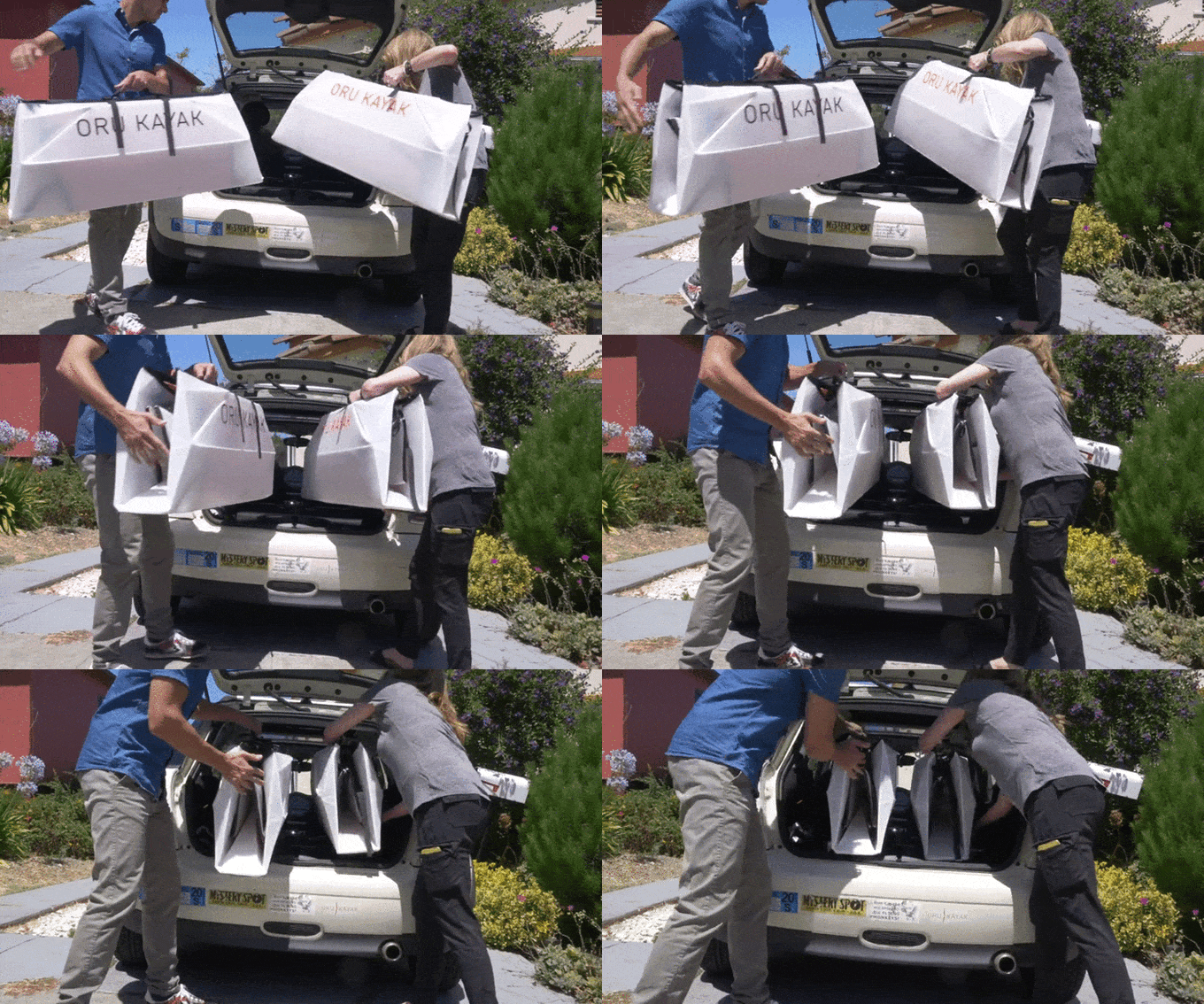
6fa465f2f9aed2949d5e0baac5cd907c originalWhen packed up, the Inlet is still only 19-inches tall, 42-inches long and 10-inches wide. That makes it around the size of a rather long duffle, but it’s still plenty small enough to tuck into the trunk of a car, or hide away in a condo closet or storage locker. Assembly is a three-step process, and there are no tools required, so it really is optimized for the minimalist city adventurer. Oru’s 4-piece portable paddle can also pack inside the folded Inlet for super easy transportation.

f6dd22b65f1fdc80e17c83d5026d203b originalOverall, the Inlet looks like it has all the ingredients that have made Oru successful as a startup and indie boat maker thus far, with plenty of added convenience features that make it even better suited to weekend warriors and people who just want to be able to explore the waterways that surround them without a lot of fuss and preparation.

The crowdfunding campaign has already passed its goal, and Oru has proven itself able to deliver consistently, so you can be confident that it will ship these boats. It’s currently listing a May 2020 timeframe fro delivery, and $749 is the entry-level price for backers to pick up an Inlet, with varying levels for adding accessories or more kayaks.

14 Aug 2019

Business management startup vCita acquires email marketing tool WiseStamp

Just a couple of months after disclosing a $15 million round of funding, vCita, the business management SaaS for SMEs, has made an acquisition: It’s acquiring WiseStamp, a veteran of the Israeli startup scene that launched its email marketing tool a decade ago.

Unsurprisingly, terms of the deal remain undisclosed. However, I understand that vCita has acquired WiseStamp as a company, including all assets, employees, customer base, technology and other IP. In addition, WiseStamp’s two remaining founders will join vCita along with the rest of the 20 person team.

WiseStamp hadn’t taken much capital in its relatively long history, having raised around $400,000 from angel investors.

Founded in 2009 by Orly Izhaki, Tom Piamenta, Tzvika Avnery and Sasha Gimelshtein, WiseStamp offers a email signature solution for self-employed professionals. The company claims over 50,000 paying customers, who it says use the platform to increase social media engagement, expand business reach, and generate more sales.

Meanwhile, the much younger vCita says it has over 100,000 paying users worldwide who use its SaaS to manage their schedule, track invoices, collect payments, and organize client data via the vCita app.

““We’re thrilled to have WiseStamp join our team. Both companies share the same vision: Empowering small business owners to deliver their services at a level comparable to that of a large company, at a fraction of the cost,” says says vCita co-founder and CEO Itzik Levy in a statement.

Adds Orly Izhaki, WiseStamp’s CEO and co-founder: “Over the years, WiseStamp created advanced solutions that enable hundreds of thousands of small enterprises to grow their business online. We are excited about the merger, which will establish us as one of the most dominant players in the SMB market”.

14 Aug 2019

WeWork reveals IPO filing

WeWork, now known as The We Company, released its IPO prospectus Wednesday morning months after filing confidentially to go public.

Backed by billions by SoftBank and its monstrous Vision Fund, the exit is expected as soon as next month.

This story is updating


14 Aug 2019

Apply to Startup Battlefield at Disrupt Berlin 2019

Audacious. Bold. Innovative. If those adjectives describe your early-stage startup, if you’re champing at the bit to launch your company to the world — we want you! Apply to compete in Startup Battlefield at Disrupt Berlin 2019.

Our premier pitch competition takes place on 11-12 December, and a select cohort of startups will compete for bragging rights, the Disrupt Cup and a $50,000 equity-free prize. And they’ll all bask in a bright spotlight of attention from influential global investors and worldwide media outlets. Apply to Startup Battlefield today.

You have nothing to lose — applying and participating in Startup Battlefield is free, and TechCrunch does not charge any fees or take any equity. Since 2007, more than 857 companies have launched at Startup Battlefield to great success. Collectively they’ve raised more than $8.9 billion in funding, with 112 successful exits (IPOs or acquisitions). If you’re selected, you’ll join the ranks of this alumni community that includes Dropbox, GetAround, SirenCare, Fitbit, Mint.com, Vurb and more.

Here’s how it all works. Early-stage startups from any country — and any tech category — can apply as long as they have a minimally viable product to demo. TechCrunch editors with years of Battlefield experience and a keen eye for potential success will vet the applications and choose 15-20 startups.

Now the work begins. TechCrunch provides free pitch coaching to the participants. It’s rigorous and thorough, so you’ll be ready to present your best possible pitch and demo. Each team has six minutes to pitch to a world-class panel of judges — followed by a six-minute Q&A session.

If you make it through to the final round, it’s lather, rinse and repeat that experience in front of a fresh set of judges. The judges confer and declare one outstanding startup the Battlefield champion — winner of a $50,000 bottom-line boost.

It’s a wild ride that takes place in front of thousands of eager investors, journalists and startup fans. TechCrunch also live-streams the entire Battlefield to a global audience of millions. Win or lose, that kind of exposure benefits all the participants, and it can change a startup’s trajectory in the best way possible.

Participating in the Battlefield carries a lot of perks beyond the actual competition. We’re talking free exhibition space in Startup Alley for both days of Disrupt, invitations to private events, backstage access, CrunchMatch — our free business-matching platform — free subscriptions to Extra Crunch and a ticket to all future TechCrunch events. That’s some major value right there.

With nothing to lose and so much to gain, it’s the perfect time for every audacious, bold and innovative early-stage startup founder to take their shot. Stop champing at the bit and apply to Startup Battlefield today. We want to see you in Berlin!

If you’re not ready to compete in the Battlefield, why not apply for our TC Top Picks program? If you make the cut, you’ll receive a free Startup Alley Exhibitor Package along with VIP treatment and plenty of media and investor exposure.

Is your company interested in sponsoring or exhibiting at Disrupt Berlin 2019? Contact our sponsorship sales team by filling out this form.

14 Aug 2019

Facebook’s human-AI blend for audio transcription is now facing privacy scrutiny in Europe

Facebook’s lead privacy regulator in Europe is now asking the company for detailed information about the operation of a voice-to-text feature in Facebook’s Messenger app and how it complies with EU law.

Yesterday Bloomberg reported that Facebook uses human contractors to transcribe app users’ audio messages — yet its privacy policy makes no clear mention of the fact that actual people might listen to your recordings.

A page on Facebook’s help center also includes a “note” saying “Voice to Text uses machine learning” — but does not say the feature is also powered by people working for Facebook listening in.

A spokesperson for Irish Data Protection Commission told us: “Further to our ongoing engagement with Google, Apple and Microsoft in relation to the processing of personal data in the context of the manual transcription of audio recordings, we are now seeking detailed information from Facebook on the processing in question and how Facebook believes that such processing of data is compliant with their GDPR obligations.”

Bloomberg’s report follows similar revelations about AI assistant technologies offered by other tech giants, including Apple, Amazon, Google and Microsoft — which have also attracted attention from European privacy regulators in recent weeks.

What this tells us is that the hype around AI voice assistants is still glossing over a far less high tech backend. Even as lashings of machine learning marketing guff have been used to cloak the ‘mechanical turk’ components (i.e. humans) required for the tech to live up to the claims.

This is a very old story indeed. To wit: A full decade ago, a UK startup called Spinvox, which had claimed to have advanced voice recognition technology for converting voicemails to text messages, was reported to be leaning very heavily on call centers in South Africa and the Philippines… staffed by, yep, actual humans.

Returning to present day ‘cutting-edge’ tech, following Bloomberg’s report Facebook said it suspended human transcriptions earlier this month — joining Apple and Google in halting manual reviews of audio snippets for their respective voice AIs. (Amazon has since added an opt out to the Alexa app’s settings.)

We asked Facebook where in the Messenger app it had been informing users that human contractors might be used to transcribe their voice chats/audio messages; and how it collected Messenger users’ consent to this form of data processing — prior to suspending human reviews.

The company did not respond to our questions. Instead a spokesperson provided us with the following statement: “Much like Apple and Google, we paused human review of audio more than a week ago.”

Facebook also described the audio snippets that it sent to contractors as masked and de-identified; said they were only collected when users had opted in to transcription on Messenger; and were only used for improving the transcription performance of the AI.

It also reiterated a long-standing rebuttal by the company to user concerns about general eavesdropping by Facebook, saying it never listens to people’s microphones without device permission nor without explicit activation by users.

How Facebook gathers permission to process data is a key question, though.

The company has recently, for example, used a manipulative consent flow in order to nudge users in Europe to switch on facial recognition technology — rolling back its previous stance, adopted in response to earlier regulatory intervention, of switching the tech off across the bloc.

So a lot rests on how exactly Facebook has described the data processing at any point it is asking users to consent to their voice messages being reviewed by humans (assuming it’s relying on consent as its legal basis for processing this data).

Bundling consent into general T&Cs for using the product is also unlikely to be compliant under EU privacy law, given that the bloc’s General Data Protection Regulation requires consent to be purpose limited, as well as fully informed and freely given.

If Facebook is relying on legitimate interests to process Messenger users’ audio snippets in order to enhance its AI’s performance it would need to balance its own interests against any risk to people’s privacy.

Voice AIs are especially problematic in this respect because audio recordings may capture the personal data of non-users too — given that people in the vicinity of a device (or indeed a person on the other end of the phone line who’s leaving you a message) could have their personal data captured without ever having had the chance to consent to Facebook contractors getting to hear it.

Leaks of Google Assistant snippets to the Belgian press recently highlighted both the sensitive nature of recordings and the risk of reidentification posed by such recordings — with journalists able to identify some of the people in the recordings.

Multiple press reports have also suggested contractors employed by tech giants are routinely overhearing intimate details captured via a range of products that include the ability to record audio and stream this personal data to the cloud for processing.

14 Aug 2019

TestCard founder: Attending Disrupt Berlin is a ‘no-brainer’

We love Berlin’s electric, evolving, early-startup ecosystem. Let’s be perfectly blunt: Whether you’re a startup founder, investor, hacker or tech leader, you can’t afford to miss Disrupt Berlin 2019, which takes place on 11-12 December. Get your super early-bird passes here.

TechCrunch honors its Silicon Valley roots, and we pack that ethic in our carry-on bags to Berlin. Disrupt showcases the very best of now and future tech, and startups from more than 50 countries come to Berlin to learn, share insights and build the kind of relationships that transform businesses.

The two-day conference offers measurable benefits, and that’s not just our (totally biased) opinion. Your startup peers tell us they come away with long-term benefits. Here’s what Luke Heron, CEO of TestCard Diagnostics, said about his Disrupt Berlin experience.

Based in the United Kingdom and founded in 2017 by Heron and Dr. Andrew Botham, TestCard, an at-home urine test company, combines smartphone technology and traditional mail to deliver a medical test experience in the privacy of the home.

The company embeds a urine test kit into a postcard and mails it out in a security envelope. The recipient takes the test, uses TestCard’s mobile app and the camera on their smartphone — as a clinical-grade scanner — to immediately determine the results.

TestCard exhibited in Startup Alley at Disrupt SF ’17 and again at Disrupt Berlin ’18 — as one of the select TC Top Pick startups. More on that in a minute. In San Francisco, Heron set a goal to make connections and gain exposure for the company.

“We got fantastic coverage in Engadget,” said Heron. “Cash at the beginning of the startup journey is difficult to come by, and an article from a credible organization can help push things in the right direction.”

In addition to generating media interest, Heron sought access to capital. He scheduled seven meetings with VCs using CrunchMatch. The free business-matchmaking platform makes it easy for startup founders and investors to connect and schedule meetings at Disrupt based on shared goals and criteria.

The company’s success in San Francisco made the decision to attend Disrupt Berlin 2018 a simple one. This time, Heron submitted TestCard for consideration as a TC Top Pick. It’s a competitive program where TechCrunch editors select up to five outstanding startups to represent a range of tech categories like AI, Fintech and, in Heron’s case, Healthtech & Biotech.

TestCard earned a Top Pick designation and received a free Startup Alley Exhibitor Package and plenty of VIP treatment at Disrupt Berlin — including an interview with a TechCrunch editor on the Showcase stage.

“TechCrunch uses a curation process regarding the companies it accepts,” he said. “So being a Top Pick at Disrupt — among all these other fantastic startups — has a hugely positive impact when you’re fundraising.”

How big an impact? The company recently closed on $1.7 million in funding, and Heron credits the TechCrunch Disrupt experience for making it possible.

“If you’re a startup founder or an entrepreneur,” said Heron, “attending Disrupt is a no-brainer.”

Disrupt Berlin 2019 takes place on 11-12 December. Come to Berlin, make some startup magic and keep your business moving in the right direction. Buy your super early-bird pass today.

Is your company interested in sponsoring or exhibiting at Disrupt Berlin 2019? Contact our sponsorship sales team by filling out this form.

14 Aug 2019

Nigerian logistics startup Kobo360 raises $30M backed by Goldman Sachs

Nigerian freight logistics startup Kobo360 has raised a $20 million Series A round led by Goldman Sachs and $10 million in working capital financing from Nigerian commercial banks.

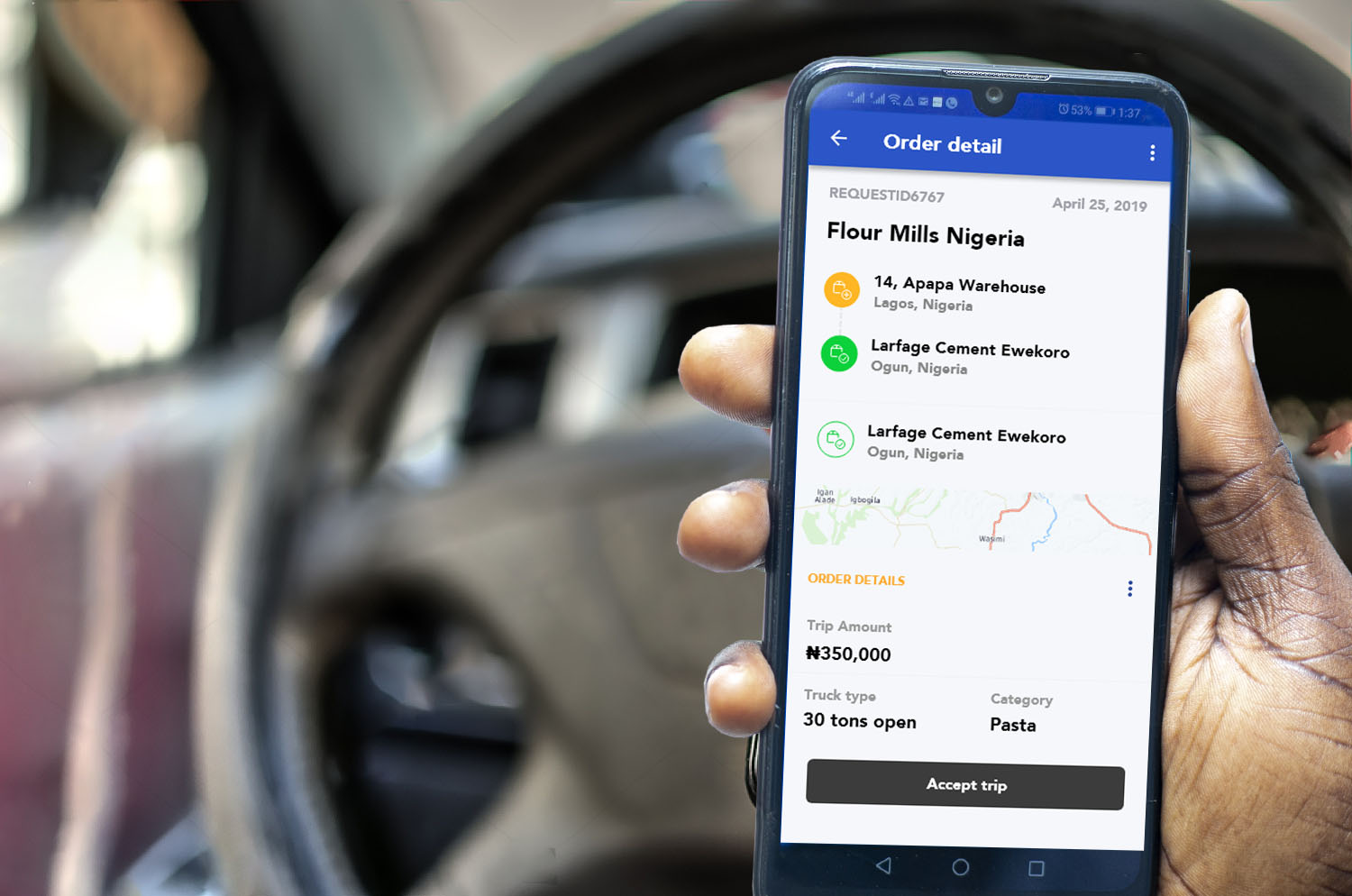
The company — with an Uber -like app that connects truckers and companies to delivery services — will use the funds to upgrade its platform and expand to 10 new countries beyond current operating markets of Nigeria, Togo, Ghana and Kenya.

Since its launch in Lagos in 2017, Kobo360 has continued to grow its product offerings, VC backing and  customer base. The startup claims a fleet of more than 10,000 drivers and trucks operating on its app. Top clients include Honeywell, Olam, Unilever, Dangote and DHL.

In addition to customer focus, founders Ife Oyodelo and Obi Azor have prioritized serving the startup’s drivers. They offer the company’s app in languages common to drivers, such as Hausa and Pidgin. 

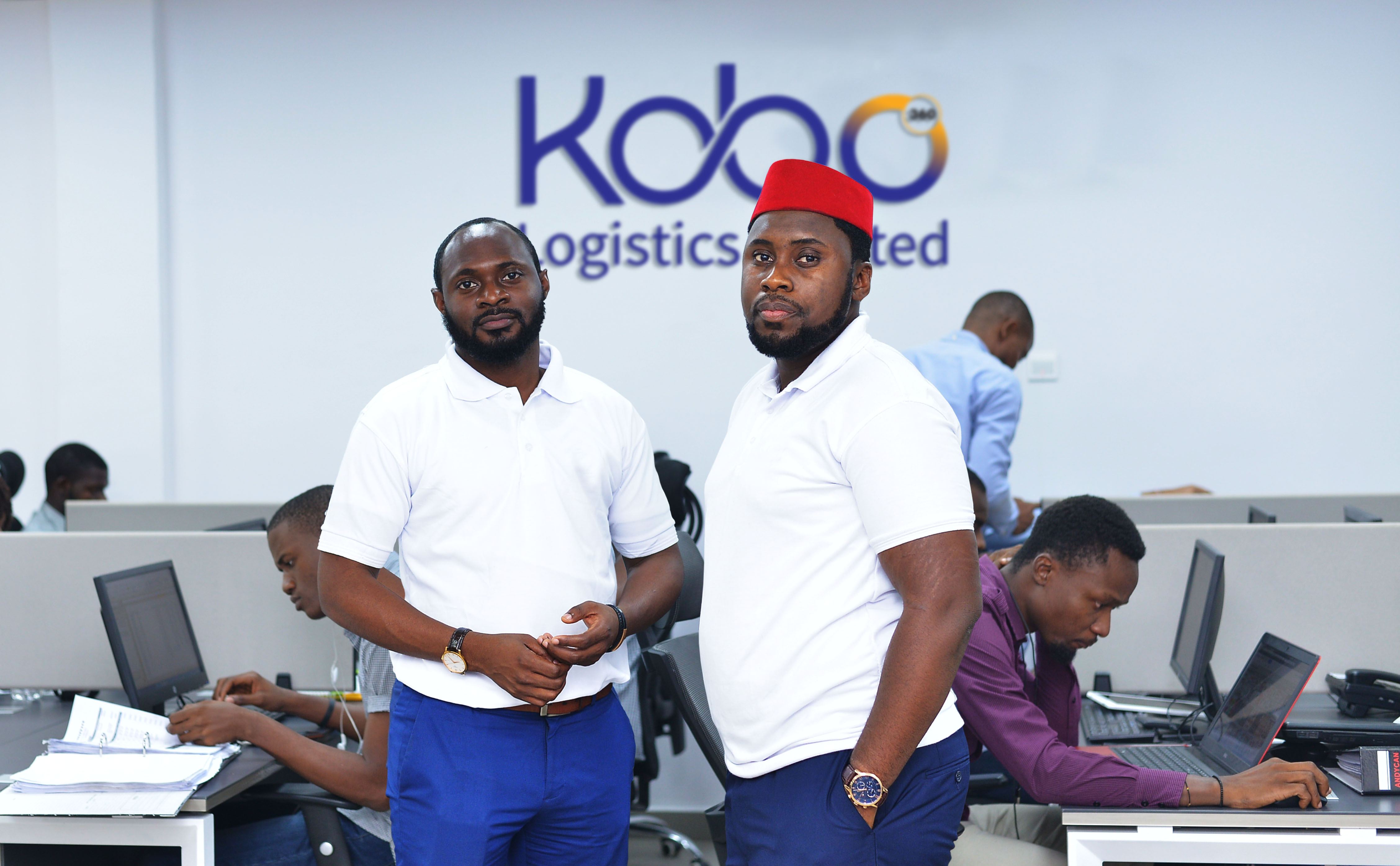
Obi Ozor Ife Oyedele II Kobo360 Co Founders Office Shot

Kobo360 also launched its own driver working capital finance program, KoPay, KoboSafe insurance product and KoboCare: a suite of driver services from HMO packages to family tuition assistance.

The startup is part of a growing e-logistics and transport space in Africa linking on-demand apps to mobile-based connectivity to move people and goods around the continent more effectively.

In the ride-hail space, global players such as Uber and Bolt are competing with each other and homegrown startups to digitize and capture revenues in the continent’s auto and motorcycle taxi markets.

In e-logistics freight delivery, two startups — Kobo360 and Lori Systems — have continued to compete tit for tat on investment, scale and expansion.

Kobo360 moved into Lori Systems’ HQ country Kenya last year. Lori Systems expanded into Nigeria in September of 2018.

Commercial research firm MarketLine estimated the value of Nigeria’s transportation sector in 2016 at $6 billion, with 99.4% comprising road freight.

Kobo360’s CEO Obi Azor told TechCrunch the startup would make final decisions on the 10 new  countries by first quarter 2020.

As a cross-border freight service, the company looks to benefit from Africa’s Continental Free Trade Area (AFCFTA), signed this year by all the continent’s 54 countries to reduce barriers and friction on Pan-African commercial activity.

In addition to lower costs for Kobo360’s country to country freight movement, the startup expects to have a voice in AFCTA’s final implementation.

“We’re going to do some policy work through the IFC so we can help shape AFCTA. The key to the deal is really logistics, so if the logistics component doesn’t work out the deal isn’t going to work,” Azor said.

Kobo360 will use part of its $30 million funding to build out its Global Logistics Operating System —  GLOS for short — a blockchain-enabled platform that will help the company transition to more supply-chain services.

Kobo360 Product Shot Accept Trips

By Digest Africa’s latest ranking, Kobo360’s $20 million Series A is the 5th largest investment in an African startup this year, after Egyptian ride-hail company Svwl’s $42 million raise in June. Kobo360’s existing investors IFC, TLCom Capital and Y Combinator joined the round.

Goldman Sachs confirmed to TechCrunch its lead on the Series A. Over the last several years the U.S. based finance firm’s Africa investments have included backing for e-commerce unicorn Jumia (which recently listed on the NYSE) and leading a $52 million investment in South African fintech startup Jumo in 2018.

Goldman Sachs’ Jules Frebault named Kobo360’s ability to scale quickly over a short period of time and use of tech to improve reliability and efficiency in Africa’s logistics ecosystem as a reason for leading the Series A.

“It’s also a business model that’s replicable across multiple geographies on the continent,” he told TechCrunch on a call.

Kobo360 has a mind toward international expansion but expects to remain focused on Nigeria and Africa for now. “We’re definitely thinking global, we just want to make sure we close out our home market first, then we’ll start looking outside,” Azor said.


14 Aug 2019

YC-backed startup Binks can ship custom-made clothing to Indian women in just three days

Binks is a custom clothing startup created after co-founder and CEO Aamna Khan realized how frustrating it is to find well-fitting women’s workwear in Indian cities. Currently participating in Y Combinator’s accelerator program, Binks solves the problem by using computer vision and machine learning to provide customers with clothing sewn to their measurements, shipped in just three days.

Khan says shopping online is often difficult because a standardized Indian sizing chart hasn’t been developed yet. Clothing companies use a mix of U.S. and European size charts, often resulting in inaccurate sizing (Khan tells TechCrunch that the return rate for apparel ordered online in India can be as high as 30% to 40%, mostly because of fit issues). In big cities like Bangalore, where the company is based, there are a lot of tailors, but getting clothing fitted and sewn is a time-consuming process.

“The tailoring market has not moved with the times, so the experience of getting something tailored is the same as it was 10 years ago. You have to buy fabric, give your measurements to the tailor, then there are usually a couple of fittings, and all of this means physically visiting the shop,” Khan says. “It’s very tedious for Indian women who are leading a busy life but still want well-fitting clothes.”

Many Indian customers buy readymade clothes and have them altered by a tailor or accept that if they order clothing online, a lot of it will need to be returned or exchanged. Companies that figure out a better way to sell clothing to women, however, stand to profit a lot. The women’s apparel market in India is worth $30 billion already and expected to grow quickly, becoming bigger than the men’s apparel market by 2025, according to research by Avendus Capital.

In a statement to TechCrunch, Adora Cheung, Binks’ Y Combinator partner, said “Indian fashion commerce looks very similar to the US today, with its high return rates and dead stock. Thanks to the inexpensive tailoring market in its backyard, India can look really different and we’re excited about that.”

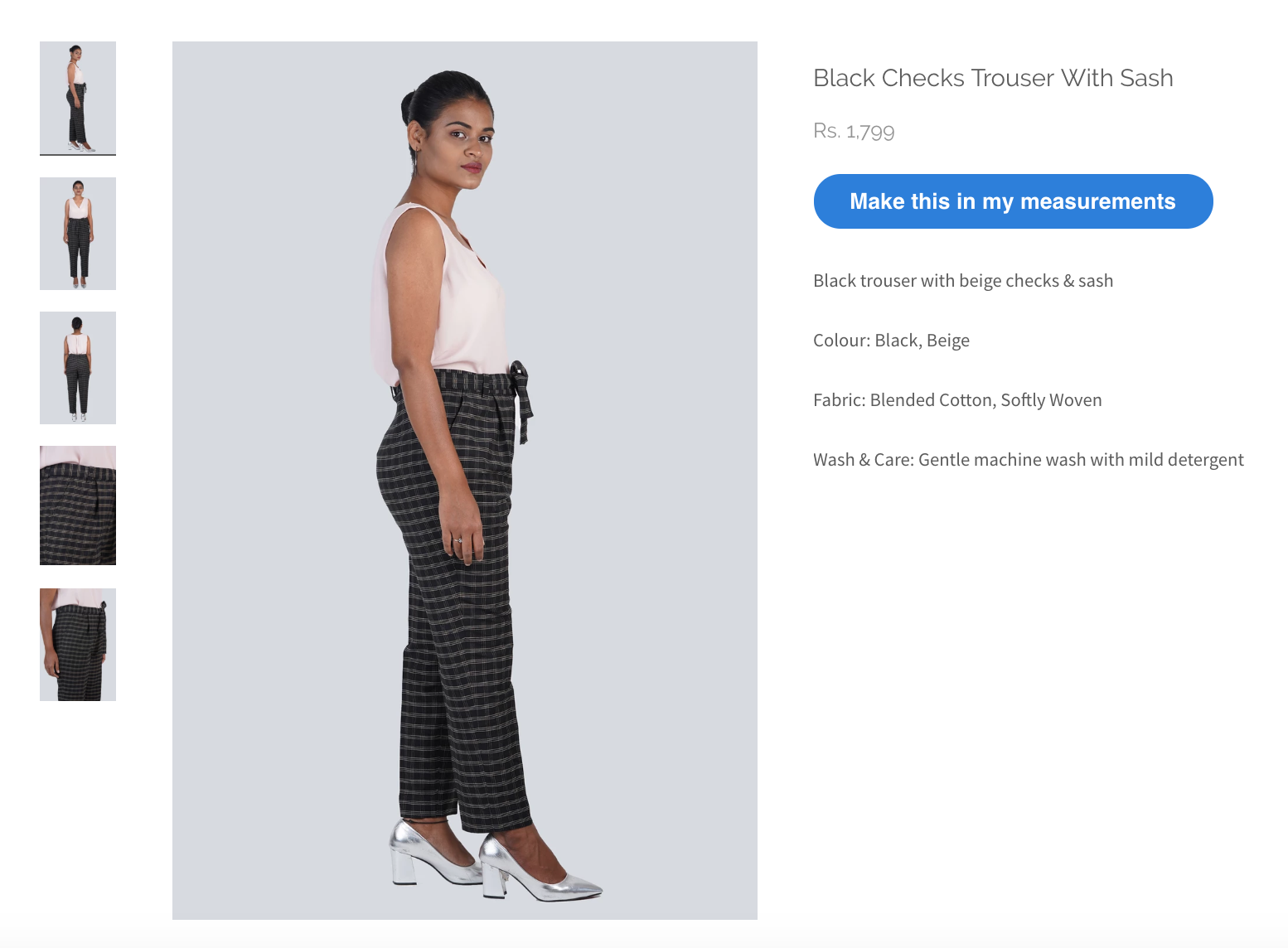
Binks' website

Binks’ website

To order custom clothes, customers pick a style on Binks’ site (the average price of a garment is about USD $30) and fill out a form that includes questions about their height and bra size, what brands of tops and pants fit them best and what sizes from those brands they usually wear. Customers are also prompted to upload a full-length photos of themselves taken from the front and side. Then a Binks consultant calls to discuss customizations before the order is finalized.

Binks uses computer vision to read body measurements, and combines them with the customer’s answers to customize clothing patterns. Orders are currently made by a single tailoring unit in Bangalore, but Binks’ plan is to automate patternmaking, since many tailors still draft patterns by hand, so the company can maintain a standardized process for sizing and quality control as it scales up.

Binks is run by Khan, an experienced product manager, and co-founder Raj Vardhan, a data scientist. The two spent three years working together at online payments company Simpl before leaving to found the startup. After hosting physical pop-up stores in Bangalore, the company started taking online orders in June and since then sales have doubled month over month, with 30% of customers placing a second order within the first month and a return rate of less than 1%, Khan says.

Binks takes a similar approach to RedThread, an American startup that also uses body scanning technology and algorithms to make customizing clothing more efficient. For the Indian market, Khan says Binks faces several specific challenges. For example, even though the National Institute of Fashion Technology is currently conducting a survey to create a standardized clothing chart for India, it won’t be ready for several years, so there isn’t an existing dataset of Indian women’s measurements to train Binks’ algorithms on. Brands use a mix of American and European standard sizing charts and many Indian women prefer looser clothing, making it even more difficult to accurately describe a garment’s fit online.

As more customers place order, that will help make Binks’ technology more accurate, Khan says. The next step is developing technology to streamline the tailoring process.

“We plan to make it super accurate and then at the next level scale it. We want to organize the dressmaking process in a way that has not been done using technology,” says Khan. “We want to automate it so that once a customer has selected a product, a pattern is produced and cutting is automated, so this reduces the turnaround time.”

14 Aug 2019

Only 24 hours left to apply to Hardware Battlefield at TC Shenzhen

Holy hardware, startup founders! You have only 24 hours left to apply to the Hardware Battlefield at TC Shenzhen on November 11-12. This hardware-only pitch competition, cousin to TechCrunch’s world-renown Startup Battlefield, is a real game-changer. Got hardware? Want to launch on a world stage? Do. Not. Delay. Apply to compete in TC Hardware Battlefield 2019 before 11:59pm on August 14th.

What’s in it for you? Excellent question. If you’re selected to compete, you’ll join a cadre of outstanding early-stage hardware startup to vie for a $25,000 prize along with global media and investor exposure. Come to Shenzhen, show the world your innovative hardware and take your startup to the next level.

We partnered with China’s TechNode, to produce this Hardware Battlefield during the larger TechCrunch Shenzhen show happening November 9-12. We’ll consider your startup if you meet these simple basic requirements.

  • Submit your application by on August 14
  • You must have a minimally viable product to demo onstage
  • Your product has received little if any, press coverage to date
  • Your product must be a hardware device or component

TechCrunch editors will closely vet qualified applications and select approximately 15 startups to compete. If you make the cut, get ready to roll up your sleeves and get to work. You’ll receive six weeks of free pitch coaching from our Battlefield editorial team. When it comes time to step onto the stage and deliver your pitch, you’ll be calm, cool and on point.

Every team gets six minutes to pitch in front of a panel of judges comprised of expert VCs, founders and technologists. They’ll hit you up with a tough Q&A and if you make the first cut, you’ll repeat the process all over again to a fresh set of judges.

Only one startup will be hailed the Hardware Battlefield champion, but the intense investor and media attention can change the lives of any or all competitors. Oh, and here’s another perk. All participants join the ranks of the Startup Battlefield elite. Our Battlefield alumni community currently numbers 857 companies that have accumulated $8.9 billion in funding and 110 exits. Just think of the potential networking opportunities.

Hardware Battlefield at TC Shenzhen takes place on November 11-12, but the application window closes at on August 14. Join us in China’s hardware heartland and launch your startup to the world. Apply to compete right now.

Is your company interested in sponsoring or exhibiting at Hardware Battlefield TC Shenzhen? Contact our sponsorship sales team by filling out this form.