
Category: UNCATEGORIZED

30 Jul 2019

Why this Nigerian fintech startup is volunteering audited financials

Nigerian fintech firm Carbon — an early stage financial services startup based in Lagos — has posted financials audited by KPMG on its website.

This comes four months after the company obtained a credit rating as a pre-IPO venture. Carbon — which recently rebranded its OneFi holding company and PayLater product titles into one name  — plans to continue releasing its financial results on an annual basis, co-Founder and CEO Chijioke Dozie told TechCrunch.

This may not be totally unheard of in other global tech markets, but for startups in Africa’s big tech hubs — such as Nigeria — it’s a rarity.

One of the first glimpses into startup financials in Nigeria came when Jumia shareholder, Rocket Internet, went public in 2014, which required it to include limited Jumia data in its annual report. The accompanying prospectus to Jumia’s listing this year on the New York Stock Exchange offered the most expansive financial data to date on a tech venture operating in Africa.

Prior to this — and still for the most part — companies in the continent’s (mostly) pre-public  (earlier stage) startup hubs — such as Nigeria — provide little to no financial performance info.

“Typically, in the local market, we have not seen a lot of voluntary transparency or the availability of data,” said Lexi Novitske — a Lagos based VC investor at Acuity Venture Partners.

“Most startups are concerned such disclosure could expose losses, give market intel to competitors, or attract unwanted attention from regulators. It could also lead to negative negotiation leverage if partners saw that they were making good returns.”

So why’d Carbon go to the trouble of putting its pre-public accounting out in the open for anyone to see?

Clients and recruiting were two reasons. “From a customer perspective, we are trying to get people to trust us with their financial services…so they can see this is the institution I’m dealing with and this is their financial position,” explained Carbon’s Dozie.

Carbon has evolved from its original focus as an online lender, to offer a broader array of mobile-based financial services — including payments, investment products, credit reports, and business banking services. In March, the company acquired Nigerian payment solutions company Amplify for an undisclosed amount.

By stats offered by Briter Bridges and a 2018 WeeTracker survey, fintech now receives the bulk of VC capital and deal-flow to African startups, many of which are attempting to reach the continent’s large unbanked and underbanked populations.

Carbon fits into that category and its CEO believes being up front about the startup’s financial position will attract top talent. “From a recruitment perspective, we want recruits to know we have good prospects — that this is a company that’s doing well and wants to keep doing well,” said Dozie.

That impression is buoyed by Carbon’s initial results, which were fairly positive for a Series A stage startup. The company had revenues in 2018 of $10 million, according to its online annual report, and turned a profit of around $500,000.

It’s helped with recruiting interest, according to Dozie, who said he’d marked an increase in candidates inquiring about open positions since the results were posted.
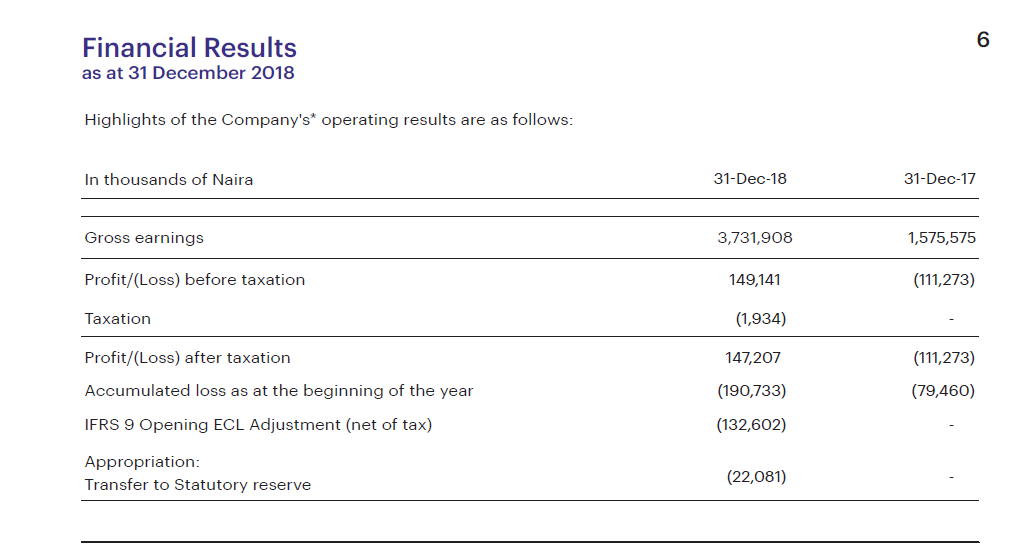
Carbon Financial Results 2018 Nigeria Fintech II

The other reasons to volunteer financial data is to reassure investors (current and potential), shake off stereotypes for Nigeria, and better position Carbon globally.

“When you look at some of these challenger banks in the West, and you look at their numbers and our numbers, we could easily fit in with Monzo, N26, or Atom,” said Dozie.
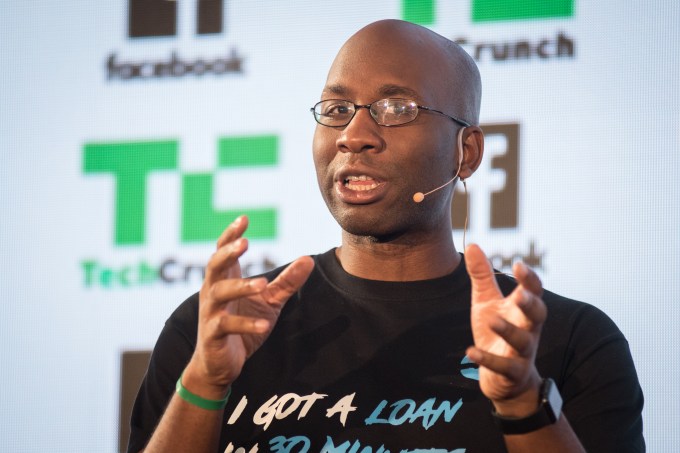
“But we don’t get considered because investors don’t really think that you can get the results or this performance in the markets that we’re in,” he added —  noting that Carbon has operations in Nigeria, Ghana and South Africa and is considering expansion in Senegal, Côte d’Ivoire, DRC, and Egypt.

Investor Lexi Novitske thinks Carbon offering financial performance data is a good thing for Africa’s tech ecosystem. “The move builds trust from clients, partners, or investors in a market where there is not a lot of openness,” she said. “I am encouraged to see how other companies will react. My hope is that more will openly report their own metrics…”

Carbon CEO Chijioke Dozie says the company will continue to post audited financials on an annual basis, even if they show losses. If the startup continues to expand, attract capital, talent, and grow revenues, other Nigerian fintech firms may follow suit.




30 Jul 2019

Mobile messaging financial advisory service, Stackin, adds banking features and raises cash

When Stackin initially pitched itself as part of Techstars Los Angeles accelerator program two years ago, the company was a video platform for financial advice targeting a millennial audience too savvy for traditional advisory services.

Now, nearly two years later, the company has pivoted from video to text-based financial advice for its millennial audience and is offering a new spin on lead generation for digital banks.

The company has launched a new, no-fee, checking and savings account feature in partnership with Radius Bank, which offers users a 1% annual percentage yield on deposits.

And Stackin has raised $4 million in new cash from Experian Ventures, Dig Ventures and Cherry Tree Investments, along with supplemental commitments from new and previous investors including Social Leverage, Wavemaker Partners, and Mucker Capital.

“Stackin’ has a unique and highly effective approach to connect and communicate with an entire generation of younger consumers around finance,” said Ty Taylor, Group President of Global Consumer Services at Experian, in a statement.

Founded two years ago by Scott Grimes, the former founder of Uproxx Media, and Kyle Arbaugh, who served as a senior vice president at Uproxx, Stackin initially billed itself as the Uproxx of personal finance.

It turns out that consumers didn’t want another video platform.

“Stackin’ is fundamentally changing the shape and context of what a financial relationship means by creating a fun, inclusive and judgement free environment that empowers our users to learn and take action through messaging,” said Scott Grimes, CEO and co-founder of Stackin’, in a statement. “This funding allows us to build out new features around banking and investing that will enhance the relationship with our customers.”

Later this fall the company said it would launch a new investment feature that will encourage Stackin users to participate in the stock market. It’s likely that this feature will look something like the Acorns model, which encourages users to invest in diversified financial vehicles to get them acquainted with the stock market before enabling individual trades on stocks.

According to Grimes, the company made the switch from video to text in March 2018 and built a custom messaging platform on Twilio to service the company’s 500,000 users.

“In a short time, we have built a large customer base with a demographic that is typically hard to reach. Having financial institutions like Experian come on board as an investor is a testament that this model is working,” Grimes wrote in an email.

30 Jul 2019

Capital One’s breach was inevitable, because we did nothing after Equifax

Another day, another massive data breach.

This time it’s the financial giant and credit card issuer Capital One, which revealed on Monday a credit file breach affecting 100 million Americans and 6 million Canadians. Consumers and small businesses affected are those who obtained one of the company’s credit cards dating back to 2005.

That includes names, addresses, phone numbers, dates of birth, self-reported income and more credit card application data — including over 140,000 Social Security numbers in the U.S., and more than a million in Canada.

The FBI already has a suspect in custody. Seattle resident and software developer Paige A. Thompson, 33, was arrested and detained pending trial. She’s been accused of stealing data by breaching a web application firewall, which was supposed to protect it.

Sound familiar? It should. Just last week, credit rating giant Equifax settled for more than $575 million over a date breach it had — and hid from the public for several months — two years prior.

Why should we be surprised? Equifax faced zero fallout until its eventual fine. All talk, much bluster, but otherwise little action.

Equifax’s chief executive Richard Smith “retired” before he was fired, allowing him to keep his substantial pension packet. Lawmakers grilled the company but nothing happened. An investigation launched by the former head of the Consumer Financial Protection Bureau, the governmental body responsible for protecting consumers from fraud, declined to pursue the company. The FTC took its sweet time to issue its fine — which amounted to about 20% of the company’s annual revenue for 2018. For one of the most damaging breaches to the U.S. population since the breach of classified vetting files at the Office of Personnel Management in 2015, Equifax got off lightly.

Legislatively, nothing has changed. Equifax remains as much of a “victim” in the eyes of the law as it was before — technically, but much to the ire of the millions affected who were forced to freeze their credit as a result.

Mark Warner, a Democratic senator serving Virginia, along with his colleague since turned presidential candidate Elizabeth Warren, was tough on the company, calling for it to do more to protect consumer data. With his colleagues, he called on the credit agencies to face penalties to the top brass and extortionate fines to hold the companies accountable — and to send a message to others that they can’t play fast and loose with our data again.

But Congress didn’t bite. Warner told TechCrunch at the time that there was “a failure of the company, but also of lawmakers” for not taking action.

Lo and behold, it happened again. Without a congressional intervention, Capital One is likely to face largely the same rigmarole as Equifax did.

Blame the lawmakers all you want. They had their part to play in this. But fool us twice, shame on the credit companies for not properly taking action in the first place.

The Equifax incident should have sparked a fire under the credit giants. The breach was the canary in the coal mine. We watched and waited to see what would happen as the canary’s lifeless body emerged — but, much to the American public’s chagrin, no action came of it. The companies continued on with the mentality that “it could happen to us, but probably won’t.” It was always going to happen again unless there was something to force the companies to act.

Companies continue to vacuum up our data — knowingly and otherwise — and don’t do enough to protect it. As much as we can have laws to protect consumers from this happening again, these breaches will continue so long as the companies continue to collect our data and not take their data security responsibilities seriously.

We had an opportunity to stop these kinds of breaches from happening again, yet in the two years passed we’ve barely grappled with the basic concepts of internet security. All we have to show for it is a meager fine.

Thompson faces five years in prison and a fine of up to $250,000.

Everyone else faces just another major intrusion into their personal lives. Not at the hands of the hacker per se, but the companies that collect our data — with our consent and often without — and take far too many liberties with it.

30 Jul 2019

Capital One hacked, over 100 million customers affected

Capital One was hacked earlier this month, the company has disclosed.

A notice about the data breach is currently being broadcast from the company’s home page.

Here’s what we know so far:

  • Capital One believes the breach exposed credit card application data for those who’d applied between 2005 and 2019.
  • The company says this works out to roughly 100 million individuals in the US, and 6 million in Canada.
  • The data leaked potentially includes “names, addresses, zip codes/postal codes, phone numbers, email addresses, dates of birth, and self-reported income” of those who’d applied, as well as information like “credit scores, credit limits, balances, payment history, contact information”
  • Capital One is estimating that roughly 140,000 social security numbers were potentially compromised in the US, as well as 80,000 linked bank account numbers. In Canada, roughly 1 million Social Insurance Numbers were compromised.
  • Transaction data for “a total of 23 days” spread across 2016/2017/2018 was obtained

A notice from the US Department of Justice says that Seattle engineer Paige A. Thompson was arrested in connection with the breach this morning.

Story developing..

29 Jul 2019

Tesla has a new energy product called Megapack

Tesla has launched a new utility-scale energy storage product called Megapack modeled after the giant battery system it deployed in South Australia as the company seeks to provide an alternative to natural gas “peaker” power plants.

Megapack is the third and largest energy storage system offered by Tesla. The company also sells the residential Powerwall and the commercial Powerpack systems.

Megapack, which Tesla announced Monday in a blog post, is the latest effort by the company to retool and grow its energy storage business, which is a smaller revenue driver than sales of its electric vehicles. Of the $6.4 billion in revenue posted in the second quarter, just $368 million was from Tesla’s solar and energy storage product business.

Tesla did deploy a record 415 megawatt-hours of energy storage products in the second quarter, a 81% increase from the previous quarter, according to Tesla’s second quarter earnings report that was released July 24. Powerwalls are now installed at more than 50,000 sites.

The Megapack offering could provide an even bigger boost if Tesla can convince utilities to opt for it instead of the more common natural gas peaker plants used today.

The so-called Megapack was specifically designed and engineered to be an easy-to-install utility-scale system. Each system comes fully assembled — that includes battery modules, bi-directional inverters, a thermal management system, an AC main breaker and controls —with up to 3 megawatt-hours of energy storage and 1.5 MW of inverter capacity.

The system includes software, developed by Tesla, to monitor, control and monetize the  installations, the company said in a blog post announcing Megapack.

All Megapacks connect to Powerhub, an advanced monitoring and control platform for large-scale utility projects and microgrids, and can also integrate with Autobidder, Tesla’s machine-learning platform for automated energy trading, the company said.

Megapack was inspired by Tesla’s Hornsdale project, which combined its 100 MW Powerpack system with Neoen’s wind farm near Jamestown in South Australia. The Tesla Powerpack system stored power generated by the wind farm and then delivered the electricity to the grid during peak hours. The facility saved nearly $40 million in its first year.

Today, the go-to option for utilities are natural gas “peaker” power plants. Peaker power plants are used when a local utility grid can’t provide enough power to meet peak demand, an occurrence that has become more common as temperatures and populations rise.

Tesla hopes to be the sustainable alternative. And in states like California, which have ambitious emissions targets, Tesla could gain some ground. Instead of using a natural gas peaker plant, utilities could use the Megapack to store excess solar or wind energy to support the grid’s peak loads.

29 Jul 2019

The Museum of Future Experiences offers a spooky, surreal take on VR

Here’s what I knew when I visited the Museum of Future Experiences: The startup is part of the current batch of companies at Y Combinator, and it’s doing work with virtual reality. Beyond that, I had no idea what to expect.

The MOFE is currently located in New York’s SoHo neighborhood. To reach it, I walked through unmarked door, up a dimly-lit flight of stairs and into a waiting room — where I was greeted by founder and CEO David Askarayan, and then by two men in shiny lab coats, who explained that they would be my guides.

Along with two other guests, I was led downstairs, where our guides quizzed us about our hopes and fears. We were told that our answers would reveal the current state of our subconscious, which in turn would shape the content that we were about to see.

So my MOFE experience probably won’t match yours, but I’ll try to describe it anyway: In the next room, after I put on a VR headset, I found myself flying around stark, beautiful, black-and-white lake while a voiceover discussed the meaning of death. When that segment ended, I was surrounded by the outlines of enormous, ghostly dancers. 

Then the headset came off, and I assumed my visit was over, but instead I was led into yet another room, where — after a brief pause — we were told that our next experience would be be more communal, based on the group’s collective answers. This one turned out to be slightly more explicable, with visions of a nuclear holocaust and post-apocalyptic landscape.

MOFE

David Askarayan

As you can tell, the experience isn’t easy to describe. Afterwards, as I walked back out onto the bright, muggy New York evening, I felt equal parts amused, excited and unsettled, and I knew this wasn’t like any other VR I’d seen.

A few days later, I met with MOFE founder and CEO David Askarayan to get more details about what, exactly, he’s trying to do. Askarayan has a background as a product manager at Bridgewater Associates, as well as an MBA from Harvard Business School, but he told me he’s also “been involved in the creative and art communities for the past eight years as an artist and friend of the community.”

Askarayan said that towards end of his time at Bridgewater, he was running an experimental virtual lab, where he became convinced that most VR startups were struggling with a fundamental problem — they’re “dependent on durable consumer infrastructure, which simply wasn’t there yet.” Put more simply, “People just don’t have VR headsets at home.”

So he became interested in creating an out-of-home VR experience, but wasn’t inspired by the existing VR arcades, which he said are “essentially commoditized — it’s shooting a zombie.” (I’d argue that some of these game-like experiences can be pretty fun, but it’s true that they’re a far cry from the more “story-driven, experiential” approach that Askarayan is going for.)

He explained that the VR on display at the MOFE was created by an artist named Flatsitter, and that the startup currently has enough content that you could visit “up to four times” without any repeats.

MOFE

But it’s not just about the VR — the design of the space and the interaction with the guides is part of what made my visit so memorable. Askarayan said he wanted to “incorporate elements of immersive theater,” while also creating a “white glove” experience, where staff members are helping you at every step: “I want it to be magical and really special … That’s separate from a cool technology demo.”

As for the quiz, Askarayan explained that it’s a “simple recommendation engine” that determines which VR content each visitor sees.

“You’re surrendering to an experience,” he said. “By employing the questionnaire device, I take optionality off the table. I get people to get introspective about themselves through these strange-but-deep questions that map to the different experiences in my inventory.”

If you want to check it out for yourself, the MOFE is currently operating as a pop-up until August 26, and for $49, you can reserve a one-hour slot online. Askarayan said consumer response to the pop-up will determine the startup’s next steps — whether it focuses on establishing “a permanent institution” in New York, or expanding to other cities with more pop-up locations.

29 Jul 2019

With Y Combinator’s seal of approval, MyPetrolPump raises $1.6 million for its car refueling business

Before even pitching on stage at Y Combinator, href="https://mypetrolpump.com/"> MyPetrolPump, the Indian startup with a car refueling business has managed to snag $1.6 million in its seed financing.

The business, which is similar to startups in the U.S. like Filld, Yoshi, and Booster Fuels, took ten months to design and receive approvals for its proprietary refueling trucks that can withstand the unique stresses of providing logistics services in India.

Together with co-founder Nabin Roy, a serial startup entrepreneur, MyPetrolPump co-founder and chief executive Ashish Gupta pooled together $150,000 to build the company’s first two refuelers and launch the business.

MyPetrolPump began operating out of Bangalore in 2017 working with a manufacturing partner to make the 20-30 refuelers that the company expects it will need to roll out its initial services. However, demand is far outstripping supply, according to Gupta.

“We would need hundreds of them to fulfill the demand,” Gupta says. In fact the company is already developing a licensing strategy that would see it franchise out the construction of the refueling vehicles and regional management of the business across multiple geographies. 

Bootstrapped until this $1.6 million financing, MyPetrolPump already has five refueling vehicles in its fleet and counts 2,000 customers already on its ledger.

These are companies like Amazon and Zoomcar, which both have massive fleets of vehicles that need refueling. Already the company has delivered 5 million liters of fuel with drivers working 12-hour-per-day shifts, Gupta says.

While services like MyPetrolPump have cropped up in the U.S. as a matter of convenience, in the Indian context, the company’s offering are more of a necessity, says Gupta.

“In the Indian context, there’s pilferage of fuel,” says Gupta. Bus drivers collude with gas station operators to skim money off the top of the order, charging for fifty liters of fuel but only getting 40 liters pumped in. Another problem that Gupta says is common is the adulteration of fuel with additives that can degrade the engine of a vehicle.

There’s also the environmental benefit of not having to go all over to refill a vehicle, saving fuel costs by filling up multiple vehicles with a .  single trip from a refueling vehicle out to a location with a fleet of existing vehicles.

The company estimates it can offset 1 million tons of carbon in a year — and provide over 300 billion liters of fuel. The model has taken off in other geographies as well. There’s Toplivo v Bak in Russia (which was acquired by Yandex), Gaston in Paris and Indonesia’s everything mobility company, Gojek, whose offerings also include refueling services.

And Gupta is preparing for the future as well. If the world moves to electrification and electric vehicles, the entrepreneur says his company can handle that transition as well.

We are delivering a last mile fuel delivery system,” says Gupta. “If tomorrow hydrogen becomes the dominant fuel we will do that… If there is electricity we will do that. What we are building is the convenience of last mile delivery to energy at the doorstep.”

29 Jul 2019

UK High Court rejects human rights challenge to bulk snooping powers

Civil liberties campaign group Liberty has lost its latest challenge to controversial UK surveillance powers that allow state agencies to intercept and retain data in bulk.

The challenge fixed on the presence of so-called ‘bulk’ powers in the 2016 Investigatory Powers Act (IPA): A controversial capability that allows intelligence agencies to legally collect and retain large amounts of data, instead of having to operate via targeted intercepts.

The law even allows for state agents to hack into devices en masse, without per-device grounds for individual suspicion.

Liberty, which was supported in the legal action by the National Union of Journalists, argued that bulk powers are incompatible with European human rights law on the grounds that the IPA contains insufficient safeguards against abuse of these powers.

Two months ago it published examples of what it described as shocking failures by UK state agencies — such as not observing the timely destruction of material; and data being discovered to have been copied and stored in “ungoverned spaces” without the necessary controls — which it said showed MI5 had failed to comply with safeguards requirements since the IPA came into effect.

However the judges disagreed that the examples of serious flaws in spy agency MI5’s “handling procedures” — which the documents also show triggering intervention by the Investigatory Powers Commissioner — sum to a conclusion that the Act itself is incompatible with human rights law.

Rejecting the argument in their July 29 ruling they found that oversight mechanisms the government baked into the legislation (such as the creation of the office of the Investigatory Powers Commissioner to conduct independent oversight of spy agencies’ use of the powers) provide sufficient checks on the risk of abuse, dubbing the regime as “a suite of inter-locking safeguards”.

Liberty expressed disappointment with the ruling — and has said it will appeal.

In a statement the group told the BBC: “This disappointing judgment allows the government to continue to spy on every one of us, violating our rights to privacy and free expression.

“We will challenge this judgment in the courts, and keep fighting for a targeted surveillance regime that respects our rights. These bulk surveillance powers allow the state to Hoover up the messages, calls and web history of hordes of ordinary people who are not suspected of any wrongdoing.”

This is just one of several challenges brought against the IPA.

A separate challenge to bulk collection was lodged by Liberty, Big Brother Watch and others with the European Court of Human Rights (ECHR).

A hearing took place two years ago and the court subsequently found that the UK’s historical regime of bulk interception had violated human rights law. However it did not rule against bulk surveillance powers in principle — which the UK judges note in their judgement, writing that consequently: “There is no requirement for there to be reasonable grounds for suspicion in the case of any individual.”

Earlier this year Liberty et al were granted leave to appeal their case to the ECHR’s highest court. That case is still pending before the Grand Chamber.

29 Jul 2019

Google teams up with VMware to bring more enterprise customers to its cloud

Google today announced a new partnership with VMware that will make it easier for enterprises to run their VMware workloads on Google Cloud.  Specifically, Google Cloud will now support VMware Cloud Foundation, the company’s system for deploying and running hybrid clouds. The solution was developed by CloudSimple, not VMware or Google, and Google will offer first-line support, working together with CloudSimple.

While Google would surely love for all enterprises to move to containers and utilize its Anthos hybrid cloud service, most large companies currently use VMware. They may want to move those workloads to a public cloud, but they aren’t ready to give up a tool that has long worked for them. With this new capability, Google isn’t offering anything that is especially new or innovative, but that’s not what this is about. Instead, Google is simply giving enterprises fewer reasons to opt for a competitor without even taking its offerings into account.

“Customers have asked us to provide broad support for VMware, and now with Google Cloud VMware Solution by CloudSimple, our customers will be able to run VMware vSphere-based workloads in GCP,” the company notes in the announcement, which we got an early copy of but which for reasons unknown to us will only go live on the company’s blog tomorrow. “This brings customers a wide breadth of choices for how to run their VMware workloads in a hybrid deployment, from modern containerized applications with Anthos to VM-based applications with VMware in GCP.”

The new solution will offer support for the full VMware stack, including the likes of vCenter, vSAN and NSX-T.

“Our partnership with Google Cloud has always been about addressing customers’ needs, and we’re excited to extend the partnership to enable our mutual customers to run VMware workloads on VMware Cloud Foundation in Google Cloud Platform,” said Sanjay Poonen, chief operating officer, customer operations at VMware. “With VMware on Google Cloud Platform, customers will be able to leverage all of the familiarity and investment protection of VMware tools and training as they execute on their cloud strategies, and rapidly bring new services to market and operate them seamlessly and more securely across a hybrid cloud environment.”

While Google’s announcement highlights that the company has a long history of working with VMware, it’s interesting to note that at least the technical aspects of this partnership are more about CloudSimple than VMware. It’s also worth noting that VMware has long had a close relationship with Google’s cloud competitor AWS and Microsoft Azure, too, offers tools for running VMware-based workloads on its cloud.

29 Jul 2019

Google teams up with VMware to bring more enterprise customers to its cloud

Google today announced a new partnership with VMware that will make it easier for enterprises to run their VMware workloads on Google Cloud.  Specifically, Google Cloud will now support VMware Cloud Foundation, the company’s system for deploying and running hybrid clouds. The solution was developed by CloudSimple, not VMware or Google, and Google will offer first-line support, working together with CloudSimple.

While Google would surely love for all enterprises to move to containers and utilize its Anthos hybrid cloud service, most large companies currently use VMware. They may want to move those workloads to a public cloud, but they aren’t ready to give up a tool that has long worked for them. With this new capability, Google isn’t offering anything that is especially new or innovative, but that’s not what this is about. Instead, Google is simply giving enterprises fewer reasons to opt for a competitor without even taking its offerings into account.

“Customers have asked us to provide broad support for VMware, and now with Google Cloud VMware Solution by CloudSimple, our customers will be able to run VMware vSphere-based workloads in GCP,” the company notes in the announcement, which we got an early copy of but which for reasons unknown to us will only go live on the company’s blog tomorrow. “This brings customers a wide breadth of choices for how to run their VMware workloads in a hybrid deployment, from modern containerized applications with Anthos to VM-based applications with VMware in GCP.”

The new solution will offer support for the full VMware stack, including the likes of vCenter, vSAN and NSX-T.

“Our partnership with Google Cloud has always been about addressing customers’ needs, and we’re excited to extend the partnership to enable our mutual customers to run VMware workloads on VMware Cloud Foundation in Google Cloud Platform,” said Sanjay Poonen, chief operating officer, customer operations at VMware. “With VMware on Google Cloud Platform, customers will be able to leverage all of the familiarity and investment protection of VMware tools and training as they execute on their cloud strategies, and rapidly bring new services to market and operate them seamlessly and more securely across a hybrid cloud environment.”

While Google’s announcement highlights that the company has a long history of working with VMware, it’s interesting to note that at least the technical aspects of this partnership are more about CloudSimple than VMware. It’s also worth noting that VMware has long had a close relationship with Google’s cloud competitor AWS and Microsoft Azure, too, offers tools for running VMware-based workloads on its cloud.