Category: UNCATEGORIZED

25 Jul 2019

Africa’s ride-hail markets are hot spots for startups and VC

When it comes to VC, vehicles, and startups, Africa’s ride-hail markets are becoming a multi-wheeled and global affair.

The big players such as Uber and Bolt are competing in Kampala and Nairobi—where in addition to car-service—they offer rickshaw taxis. On-demand motorcycle startups are multiplying and piloting EVs with funds from international partners. And many ride-hail companies in Africa are adapting unique product solutions to local transit needs.

In this analysis, I take a look at the leading startups in the mobility space and how the future of transportation on the continent will increasingly come from new entrants.

Africa’s in the midst of digital innovation boom

Africa’s in the midst of digital innovation boom, the components of which are intersecting rapidly across its 54 countries and 1.2 billion people.

Smartphone penetration is improving and in 2017, the continent saw the largest global increase in internet users—20 percent.

By Partech data, the continent surpassed the $1 billion VC mark in 2018. And greater connectivity and venture funding are fueling thousands of startups in every imaginable sector, including digital-transit.

While reliable markets stats for the size and potential of Africa’s ride-hail markets are sparse, there are some indicators of the sector’s potential.

Car ownership and cars per capita in Africa is among the lowest in the world. Parallel to that, any eyes and ears survey of the continent’s big cities reveals that shared transport by buses, cars, or motorcycles is big business that’s already ingrained in consumer culture. Millions of people daily pay fares to pack onto East and West Africa’s Mutatu and Danfo minibuses and Okada and Boda Boda motorbike taxis.

As Africa continues to urbanize, converts to smartphones, and discretionary consumer spending continues to rise—it all adds up to suggest strong potential for conversion to on-demand mobility services.

Unsurprisingly, the most active markets for ride-hail startups and investment in Africa align with the continent’s top spots for VC and tech activity: primarily Nigeria, Kenya, and South Africa.

25 Jul 2019

Bias in AI: A problem recognized but still unresolved

There are those who praise the technology as the solution to some of humankind’s gravest problems, and those who demonize AI as the world’s greatest existential threat. Of course, these are two ends of the spectrum, and AI, surely, presents exciting opportunities for the future, as well as challenging problems to be overcome.

One of the issues that’s attracted much media attention in recent years has been the prospect of bias in AI. It’s a topic I wrote about in TechCrunch (Tyrant in the Code) more than two years ago. The debate is raging on.

At the time, Google had come under fire when research showed that when a user searched online for “hands,” the image results were almost all white; but when searching for “black hands,” the images were far more derogatory depictions, including a white hand reaching out to offer help to a black one, or black hands working in the earth. It was a shocking discovery that led to claims that, rather than heal divisions in society, AI technology would perpetuate them.

As I asserted two years ago, it’s little wonder that such instances might occur. In 2017, at least, the vast majority of people designing AI algorithms in the U.S. were white males. And while there’s no implication that those people are prejudiced against minorities, it would make sense that they pass on their natural, unconscious bias in the AI they create.

And it’s not just Google algorithms at risk from biased AI. As the technology becomes increasingly ubiquitous across every industry, it will become more and more important to eliminate any bias in the technology.

Understanding the problem

AI was indeed important and integral in many industries and applications two years ago, but its importance has, predictably, increased since then. AI systems are now used to help recruiters identify viable candidates, loan underwriters when deciding whether to lend money to customers and even judges when deliberating whether a convicted criminal will re-offend.

Of course, data can certainly help humans make more informed decisions using AI and data, but if that AI technology is biased, the result will be as well. If we continue to entrust the future of AI technology to a non-diverse group, then the most vulnerable members of society could be at a disadvantage in finding work, securing loans and being fairly tried by the justice system, plus much more.

AI is a revolution that will continue whether it’s wanted or not.

Fortunately, the issue around bias in AI has come to the fore in recent years, and more and more influential figures, organizations and political bodies are taking a serious look at how to deal with the problem.

The AI Now Institute is one such organization researching the social implications of AI technology. Launched in 2017 by research scientists Kate Crawford and Meredith Whittaker, AI Now focuses on the effect AI will have on human rights and labor, as well as how to safely integrate AI and how to avoid bias in the technology.

In May last year, the European Union put in place the General Data Protection Regulation (GDPR) — a set of rules that gives EU citizens more control over how their data is used online. And while it won’t do anything to directly challenge bias in AI technology, it will force European organizations (or any organization with European customers) to be more transparent in their use of algorithms. This will put extra pressure on companies to ensure they’re confident in the origins of the AI they’re using.

And while the U.S. doesn’t yet have a similar set of regulations around data use and AI, in December 2017, New York’s city council and mayor passed a bill calling for more transparency in AI, prompted by reports the technology was causing racial bias in criminal sentencing.

Despite research groups and government bodies taking an interest in the potentially damaging role biased AI could play in society, the responsibility largely falls to the businesses creating the technology, and whether they’re prepared to tackle the problem at its core. Fortunately, some of the largest tech companies, including those that have been accused of overlooking the problem of AI bias in the past, are taking steps to tackle the problem.

Microsoft, for instance, is now hiring artists, philosophers and creative writers to train AI bots in the dos and don’ts of nuanced language, such as to not use inappropriate slang or inadvertently make racist or sexist remarks. IBM is attempting to mitigate bias in its AI machines by applying independent bias ratings to determine the fairness of its AI systems. And in June last year, Google CEO Sundar Pichai published a set of AI principles that aims to ensure the company’s work or research doesn’t create or reinforce bias in its algorithms.

Demographics working in AI

Tackling bias in AI does indeed require individuals, organizations and government bodies to take a serious look at the roots of the problem. But those roots are often the people creating the AI services in the first place. As I posited in “Tyrant in the Code” two years ago, any left-handed person who’s struggled with right-handed scissors, ledgers and can-openers will know that inventions often favor their creators. The same goes for AI systems.

New data from the Bureau of Labor Statistics shows that the professionals who write AI programs are still largely white males. And a study conducted last August by Wired and Element AI found that only 12% of leading machine learning researchers are women.

This isn’t a problem completely overlooked by the technology companies creating AI systems. Intel, for instance, is taking active steps in improving gender diversity in the company’s technical roles. Recent data indicates that women make up 24% of the technical roles at Intel — far higher than the industry average. And Google is funding AI4ALL, an AI summer camp aimed at the next generation of AI leaders, to expand its outreach to young women and minorities underrepresented in the technology sector.

However, the statistics show there is still a long way to go if AI is going to reach the levels of diversity required to stamp out bias in the technology. Despite the efforts of some companies and individuals, technology companies are still overwhelmingly white and male.

Solving the problem of bias in AI

Of course, improving diversity within the major AI companies would go a long way toward solving the problem of bias in the technology. Business leaders responsible for distributing the AI systems that impact society will need to offer public transparency so that bias can be monitored, incorporate ethical standards into the technology and have a better understanding of who the algorithm is supposed to be targeting.

Governments and business leaders alike have some serious questions to ponder.

But without regulations from government bodies, these types of solutions could come about too slowly, if at all. And while the European Union has put in place GDPR that in many ways tempers bias in AI, there are no strong signs that the U.S. will follow suit any time soon.

Government, with the help of private researchers and think tanks, is moving quickly in the direction and trying to grapple with how to regulate algorithms. Moreover, some companies like Facebook are also claiming regulation could be beneficial. Nevertheless, high regulatory requirements for user-generated content platforms could help companies like Facebook by making it nearly impossible to compete for new startups entering the market.

The question is, what is the ideal level of government intervention that won’t hinder innovation?

Entrepreneurs often claim that regulation is the enemy of innovation, and with such a potentially game-changing, relatively nascent technology, any roadblocks should be avoided at all cost. However, AI is a revolution that will continue whether it’s wanted or not. It will go on to change the lives of billions of people, and so it clearly needs to be heading in an ethical, unbiased direction.

Governments and business leaders alike have some serious questions to ponder, and not much time to do it. AI is a technology that’s developing fast, and it won’t wait for indecisiveness. If the innovation is allowed to go on unchecked, with few ethical guidelines and a non-diverse group of creators, the results may lead to a deepening of divisions in the U.S. and worldwide.


25 Jul 2019

Google says it doubled Pixel sales year-over-year

It looks like the mid-range Pixel 3a is the hit Google surely hoped it would be.

Alphabet reported some pretty good earnings today, but the company’s report tends to be pretty generic, given that it doesn’t provide details for its different business units inside of Google and its other segments. That’s not to say there isn’t good news there for Google. On today’s call, Google CEO Sundar Pichai shared some new stats for the company’s phone line.

“With the launch of Pixel 3a in May, overall Pixel unit sales in Q2 grew more than 2x year over year,” Pichai announced. Part of this growth, he noted, is due to Google greatly expanded its distribution network beyond its own store and Verizon to also include T Mobile, Sprint, US Cellular, Spectrum Mobile and others. He also stressed that the Pixel 3a received Google’s highest Net Promotor Score rating yet.

It surely helps that the Pixel 3a is relatively affordable and compares well to flagship phones without any major tradeoffs. When it launched, reviews were generally very positive, too, which surely helped as well. Unlike previous Pixel launches, the first batch Pixel 3a phones also didn’t face any major hardware problems, something that regularly plagued Google’s earlier efforts.

25 Jul 2019

An inside look at the startup behind Ashton Kutcher’s weird tweets

In 2017, Matthew Peltier walked barefoot into a pitch meeting with venture capitalists. Young, male, man bun intact, he certainly resembled the stereotypical successful entrepreneur, but it was his startup, an app designed to bring social media stars and their fans into conversation, that drew skepticism.

Shimmur, as it was called, ultimately succeeded in raising about $7 million from Greycroft, Arena Ventures, Right Side Capital Management and Techstars, according to PitchBook, but the business never took off. That is until a pivot to direct messaging in 2018 attracted the support of Hollywood talent manager Guy Oseary and his Sound Ventures investment partner Ashton Kutcher, who jumped on board to relaunch Shimmur, now known as Community.

The Santa Monica-based company has raised nearly $35 million in the form of two convertible notes following a recapitalization that occurred alongside its rebranding earlier this year, TechCrunch has learned. Investors, including the Sony Innovation Fund, have valued the text marketing platform at upwards of $200 million, sources tell TechCrunch. A spokesperson for Community, however, said there is currently “no valuation attached to the company” because of the nature of the recap and convertible notes, and declined to comment further on fundraising activity.

Community has yet to complete a public launch and is in the process of onboarding both companies and celebrities. We’re told efforts to generate attention for the business will increase in the next couple of weeks.

Shimmur was initially conceived of in 2014 as a Reddit-style mobile application that encouraged users to join “Tribes,” or groups, where they could create and upload content about their favorite YouTube or Instagram stars. Social media accounts affiliated with Shimmur went dark in 2017, and in early 2018 the site began redirecting to Digits.Chat, a service currently in private beta assumedly linked to Community. Now in their second act, Peltier and Community co-founder Josh Rosenheck are committed to building a platform for influencers and fans to interact at scale.

Questions of Community’s business began to surface in January 2019, when Ashton Kutcher took to Twitter to subtly promote the service with a phone number and a simple request to text him. Naturally, many assumed the tweet included the actor and investor’s personal cell number. In reality, he’d been working with Community to develop a better method of communication with his followers. This week, the actor resurfaced on Twitter to promote the service again. This time stating that the phone number included in the tweet would be “the only place [he] responds to public queries” because the “open web has just become too toxic.”


This reporter, of course, followed up Kutcher on his offer and sent a text to his now preferred contact. Instantaneously, I received this reply: “Ashton here. This is an auto-text to let you know I got your message, the rest will be from me. Click the link so I can respond to you. I likely can’t respond to everything but I’ll try to be in touch. Dream bigger.” The message was accompanied by a link to a Community sign-up page for Kutcher-specific updates. The fine print read that the personal messages and automated text alerts from Kutcher “may be marketing in nature,” but little other information was provided.

Community / Kutcher

While Kutcher has used his large Twitter following to spread awareness for Community, Guy Oseary has remained mum. Sources tell TechCrunch, however, that Oseary is a “co-founder” of Community, further evidence he’s put money in the business and perhaps adopted a co-founder title because of the nature of his investment. Oseary is not only a co-founder of Sound Ventures alongside Kutcher, but he’s also a longtime executive at Maverick, an entertainment and music management business behind the likes of Madonna and U2. His network would be much more valuable to Community than VC dollars.

Sound Ventures, Kutcher and Oseary’s venture capital fund, did not respond to a request for comment. Community declined to name its investors, but did say Oseary is “not a co-founder,” declining to provide additional details on his affiliation with the business.

On its website, Community describes itself as a tool that enables its clients, e.g. influencers, musicians, athletes, brands, actors, their agents and others, to have direct and meaningful communication with their “community members” using a 10-digit phone number provided by Community: “Imagine getting to know and interact with your audience as individuals—with names and faces, interests and opinions, hometowns and pronouns. Imagine reaching every single one of them,” the company writes.

Peltier, in the company’s first blog post published in June, emphasized the power of text messaging, citing an Adobe statistic that 90% of text messages are read within three seconds. Peltier also described Community’s business model, noting that they are not an ads business, rather, clients pay Community monthly or annual service fees “for 100% audience reach and limitless segmentation, in a climate free from bullying and toxicity.” Community’s terms of service agreement additionally states that once a subscription is initiated, clients can create and send text marketing campaigns to promote themselves or products with members of their community.

If Community sounds familiar — it should. Its efforts to leverage SMS to facilitate celebrity-fan relationships is akin to SuperPhone. Founded by musician Ryan Leslie in 2015, SuperPhone is a mobile messaging platform designed to meet the needs of entrepreneurs, entertainers and anyone else that juggles clients or sales contacts.

“SuperPhone is the first foray into personal relationship management,” Leslie told TechCrunch last year. The startup has raised a total of roughly $5 million at a $10 million valuation, according to PitchBook. In a blog post addressing Kutcher’s January tweet, Leslie welcomed the competition to the text marketing space.

“The game is changing, messaging is here to stay, and platforms are stepping up to help you leverage the power of this currently undervalued direct communication channel,” Leslie wrote. “This is my game. SuperPhone was conceived, developed, deployed, and battle-tested years before this week’s A-list endorsement of text over social.”

We reached out to SuperPhone for comment and in a very on-brand reply, a spokesperson for the business told me to submit my phone number to Leslie here and “unlike Ashton, Ry will text you right back once you introduce yourself.”

Commence the battle for text marketing dominance.
25 Jul 2019

How top VCs view the new future of micromobility

Earlier this month, TechCrunch held its annual Mobility Sessions event, where leading mobility-focused auto companies, startups, executives and thought leaders joined us to discuss all things autonomous vehicle technology, micromobility and electric vehicles.

Extra Crunch is offering members access to full transcripts key panels and conversations from the event, including our panel on micromobility where TechCrunch VC reporter Kate Clark was joined by investors Sarah Smith of Bain Capital Ventures, Michael Granoff of Maniv Mobility, and Ted Serbinski of TechStars Detroit.

The panelists walk through their mobility investment theses and how they’ve changed over the last few years. The group also compares the business models of scooters, e-bikes, e-motorcycles, rideshare and more, while discussing Uber and Lyft’s role in tomorrow’s mobility ecosystem.

Sarah Smith: It was very clear last summer, that there was essentially a near-vertical demand curve developing with consumer adoption of scooters. E-bikes had been around, but scooters, for Lime just to give you perspective, had only hit the road in February. So by the time we were really looking at things, they only had really six months of data. But we could look at the traction and the adoption, and really just what this was doing for consumers.

At the time, consumers had learned through Uber and Lyft and others that you can just grab your cell phone and press a button, and that equates to transportation. And then we see through the sharing economy like Airbnb, people don’t necessarily expect to own every single asset that they use throughout the day. So there’s this confluence of a lot of different consumer trends that suggested that this wasn’t just a fad. This wasn’t something that was going to go away.

For access to the full transcription below and for the opportunity to read through additional event transcripts and recaps, become a member of Extra Crunch. Learn more and try it for free. 

Kate Clark: One of the first panels of the day, I think we should take a moment to define mobility. As VCs in this space, how do you define this always-evolving sector?

Michael Granoff: Well, the way I like to put it is that there have been four eras in mobility. The first was walking and we did that for thousands of years. Then we harnessed animal power for thousands of years.

And then there was a date — and I saw Ken Washington from Ford here — September 1st, 1908, which was when the Model T came out. And through the next 100 years, mobility is really defined as the personally owned and operated individual operated internal combustion engine car.

And what’s interesting is to go exactly 100 years later, September 2008, the financial crisis that affects the auto industry tremendously, but also a time where we had the first third-party apps, and you had Waze and you had Uber, and then you had Lime and Bird, and so forth. And really, I think what we’re in now is the age of digital mobility and I think that’s what defines what this day is about.

Ted Serbinski: Yeah, I think just to add to that, I think mobility is the movement of people and goods. But that last part of digital mobility, I really look at the intersection of the physical and digital worlds. And it’s really that intersection, which is enabling all these new ways to move around.

GettyImages 1129827591

Image via Getty Images / Jackie Niam

Clark: So Ted you run TechStars Detroit, but it was once known as TechStars Mobility. So why did you decide to drop the mobility?

Serbinski: So I’m at a mobility conference, and we no longer call ourselves mobility. So five years ago, when we launched the mobility program at TechStars, we were working very closely with Ford’s group and at the time, five years ago, 2014, where it started with the connected car, auto and [people saying] “you should use the word mobility.”

And I was like “What does that mean?” And so when we launched TechStars Mobility, we got all this stuff but we were like “this isn’t what we’re looking for. What does this word mean?” And then Cruise gets acquired for a billion dollars. And everyone’s like “Mobility! This is the next big gold rush! Mobility, mobility, mobility!”

And because I invest early-stage companies anywhere in the world, what started to happen last year is we’d be going after a company and they’d say, “well, we’re not interested in your program. We’re not mobility.” And I’d be scratching my head like, “No, you are mobility. This is where the future is going. You’re this digital way of moving around. And no, we’re artificial intelligence, we’re robotics.”

And as we started talking to more and more entrepreneurs, and hundreds of startups around the world, it became pretty clear that the word mobility is actually becoming too limiting, depending on your vantage where you are in the world.

And so this year, we actually dropped the word mobility and we just call it TechStars Detroit, and it’s really just intersection of those physical and digital worlds. And so now we don’t have a word, but I think we found more mobility companies by dropping the word mobility.

25 Jul 2019

Apple acquiring most of Intel’s smartphone modem business $1B deal

Apple has entered into a deal to acquire a majority of Intel’s modem business, TechCrunch has learned. The deal, valued at around $1 billion includes Intel IP and employees, with Apple bringing over 2,200 new roles and bringing its modem portfolio up 17,000 patents. 

The deal confirms earlier rumors that Apple would acquire the business in order to permanently uncouple itself from Qualcomm, the source of much contention for both parties over the last several years.

25 Jul 2019

CrunchMatch simplifies networking at TC Sessions: Enterprise 2019

Get ready to experience world-class networking TechCrunch-style at TC Sessions: Enterprise 2019. On September 5, more than 1,000 of the top enterprise software minds and makers, movers and shakers will descend on San Francisco’s Yerba Buena Center for the Arts. It’s a day-long conference featuring distinguished speakers, panel discussions, demos and workshops.

It’s also a prime opportunity to connect and build relationships with enterprise software founders, technologists and investors. Make the most of that opportunity by using CrunchMatch, our free business match-making service.

The automated platform lets you find people based on specific mutual business criteria, goals and interests. It helps you sift through the noise and make the most of your valuable time. After all, connecting with the right people produces better results.

Here’s how CrunchMatch (powered by Brella) works. When CrunchMatch goes live — several weeks before the main event — we’ll email a sign-up link to all ticket holders. You’ll be able to access the platform and create a profile with your specific details — your role (technologist, founder, investor, etc.) and a description of the types of people you want to connect with at the event.

CrunchMatch works its algorithmic magic and suggests meetings, which you can then vet, approve and schedule or decline. It’s an efficient and productive way to network. Take a look at how CrunchMatch helped Yoolox increase distribution.

All that time-saving efficiency will free you up to enjoy more of the presentations and hear from speakers like the renowned founder, investor, AI expert and Stanford professor, Andrew Ng. You won’t want to miss his take on how AI will transform the enterprise world — like nothing else since the cloud and SaaS. And that’s just a taste of what you can expect.

If you haven’t already done so, buy your tickets now and save $100 before the prices go up on August 9. Early-bird tickets cost $249 and student tickets sell for $75. Buy 4+ tickets to get the group rate and save another 20%.

ROI tip: For every ticket you buy to TC Sessions: Enterprise, we’ll register you for a free Expo-only pass to TechCrunch Disrupt SF 2019.

We can’t wait to see you at TC Sessions: Enterprise 2019 in San Francisco on September 5. Join your community, explore the top enterprise trends and companies and make productive connections with the influential people who can help you reach your goals. Buy your ticket today.

Interested in sponsoring TC Sessions: Enterprise? Fill out this form and a member of our sales team will contact you.

25 Jul 2019

Apple could gradually switch to new laptop keyboard mechanism starting this fall

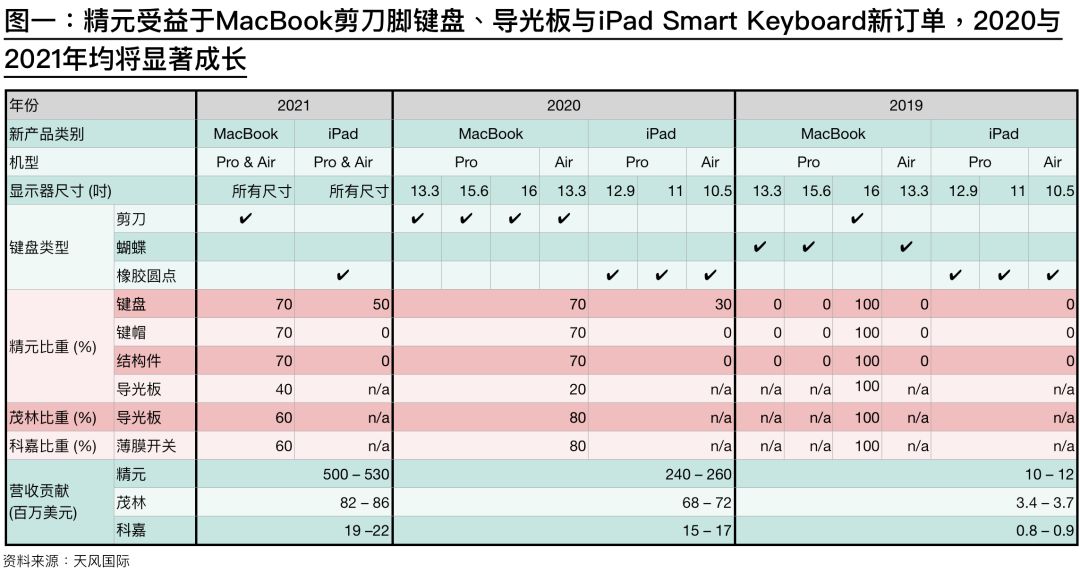
Reliable analyst Ming-Chi Kuo from TF International Securities has released a new report, as Apple Insider spotted. I’ve read the report and it focuses specifically on keyboard suppliers that would potentially work with Apple . And the company should potentially replace the unreliable butterfly mechanism with a new scissor mechanism.

The first laptop that should receive the update is the long-rumored 16-inch MacBook Pro. Kuo has updated the release timeline for the new device, and he now says that it should be available at some point during the last quarter of 2019 instead of 2020.

But Apple shouldn’t stop there as the company is already working on updates for all laptops. By the end of 2020, the entire lineup should have received an update with a new keyboard.

According to the timeline, Apple could keep both the 15-inch MacBook Pro and the 16-inch MacBook Pro in the lineup for now. Maybe the new model will be more premium than the normal 15-inch MacBook Pro. So the MacBook Air, 13-inch MacBook Pro and 15-inch MacBook Pro could all switch to the new keyboard next year.

640

Apple first introduced the butterfly mechanism for the 12-inch MacBook back in 2015. The company gradually rolled out the new keyboard design across the lineup.

But it has attracted a ton of criticism over the years as many people suffer from dropped keystrokes and repeated keystrokes. Debris can easily block keys, and the keyboard itself is hard to repair. That’s why Apple has been running a free replacement program for all laptops that have a butterfly-based keyboard.

With the new design, Apple is basically going back to a trustworthy design. You can find scissor switches in most Windows laptops and even in Apple’s external keyboard. The company was even using scissor switches in MacBook laptops before replacing them with butterfly switches.

If today’s rumor is accurate, you’ll have to wait a bit more to get a laptop with a more traditional keyboard design. But it’s on the way.

25 Jul 2019

Microsoft and the second Softbank Vision Fund as another play for corporate cloud dominance

It looks like the return of Softbank’s Vision Fund may be less reliant on murder money and more reliant on Microsoft’s money-making machine for its backing.

The rumored involvement of Microsoft in financing Softbank Vision Fund II (electric boogaloo?) is interesting for what it may indicate about how the relationship between venture investors, startups, and the large corporations that dominate the tech industry are changing.

If the name of the game is platform and services, then corporate behemoths like Microsoft, Alphabet, Amazon and Apple are in interesting positions to invest in startups as a flywheel for growth in some of their most profitable and strategic business units.

To some extent this has always been true, but it’s becoming more important now as web services become larger slices of the corporate balance sheet at these three companies (particularly — although IBM is also playing in this game). Basically, like corporate accelerators and venture arms, investing in SoftBank is another service that’s being potentially offered to lock in startups to corporate cloud ecosystems.

While there are no guarantees that a nudge from an investor to use one tech platform for web services over another would make any difference, it’s clear that big tech companies like Amazon, Alphabet and Microsoft are all over startups to use one web stack over another.

Amazon has tied itself ever more tightly to the Techstars ecosystem of incubators for new tech companies, Microsoft has its own corporate accelerator programs and investment arm and Alphabet does the same.

As technology continues to advance, the big companies have more services they can offer to tech companies, that will be increasingly more compelling and drive increasing revenue.

All three big companies mentioned above (and even IBM, bless its big blue non-existent heart) have machine learning tools that they’d love to provide as a service to startups as well. And even as IBM sunsets Watson as a balance sheet item (an event that was an elementary conclusion to anyone who’s tracked its long, slow spiral), machine learning services are going to become a larger slice of revenue for the providers who can effectively tie startups into those services.

Most entrepreneurs pay lip service to the fact that enhanced algorithms are going to become table stakes in new product offerings so observers can watch that become another engine of growth for the big companies that can get it right.

Also, startups are going to increasingly become a sales channel for big tech, even as big tech has traditionally been a sales channel for startups.

Software as a service businesses using a freemium business model have an easier time getting into a corporate environment than Microsoft or Google . And even as the productivity suites from these companies battle it out (Verizon, FWIW, is team Google for now), some of the money flowing to a SAAS company’s coffers from a big corporate entity will ultimately wind up in either Microsoft, Amazon, or Alphabet’s returns.

This model also helps venture investors who now have more assurance that there will be late stage capital to bolster their businesses (including really really bad ones) although most traditional firms have a love-hate relationship with Masayoshi Son’s gargantuan investment vehicle.

Finally, there’s the simple fact that divorcing Softbank from Saudi Arabia’s journalist killing murder money is a good thing for the firm and the larger technology industry, which has enough moral conundrums to consider without adding (still another) problematic geopolitical relationship to the mix.

25 Jul 2019

Ford-owned Spin is bringing a tougher electric scooter to dozens of cities

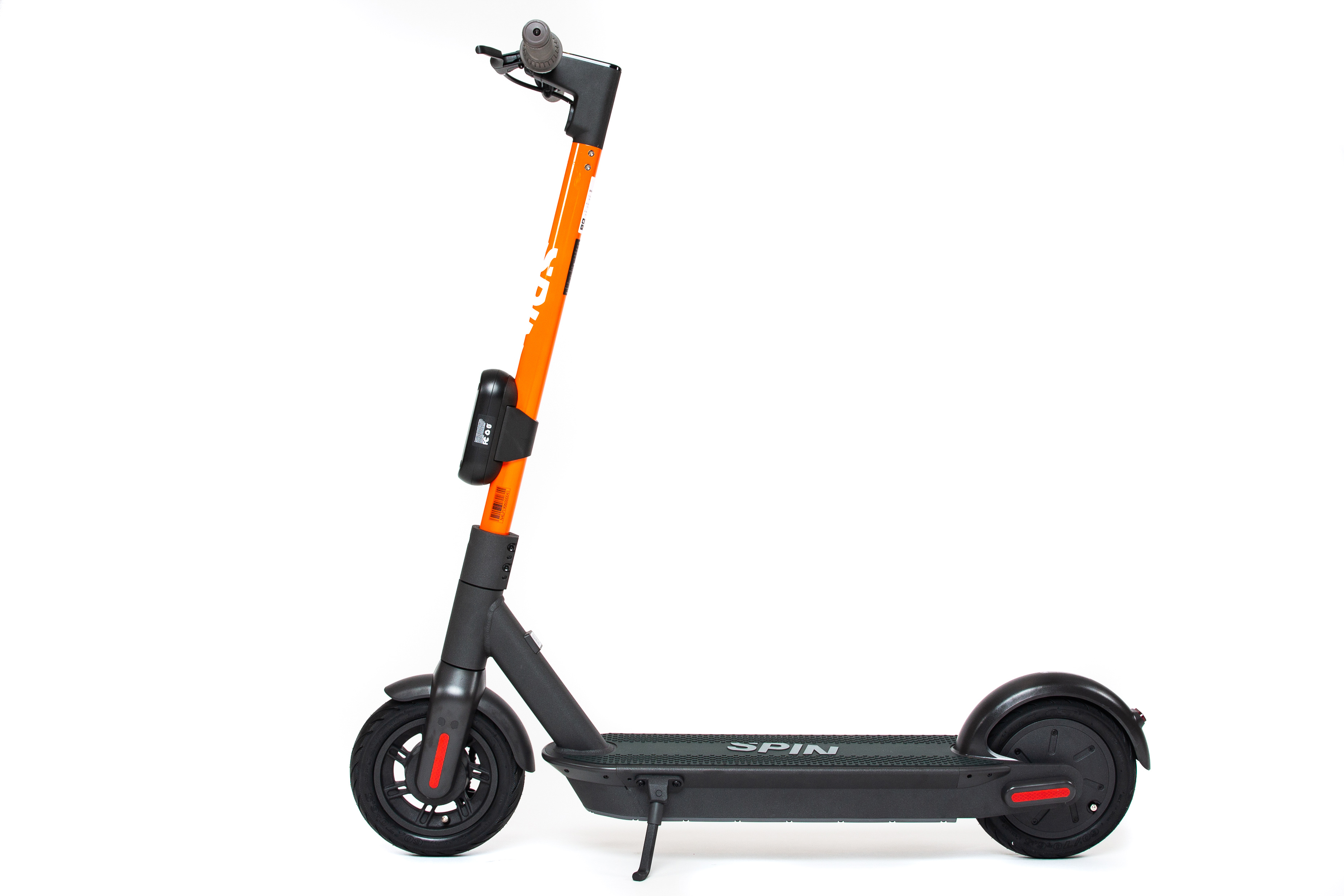
Spin, the electric scooter company acquired by a Ford subsidiary for around $100 million, is launching a new electric scooter with a sturdier frame, improved braking system, bigger tires and longer-range battery.

In short, this third-generation product is built to handle the kind of abuse that a shared dockless scooter is subjected to on a daily basis. It’s also designed to be more secure. The company has added custom security screws that were developed to thwart vandalism and tampering.

The design improvements should improve the riding experience and, in theory, attract more customers. However, more customers is only important piece of the scooter game. Gross profit margin is the other.

This third-generation is built to have a longer life, a key factor in improving the unit economics of the dockless scooter business.spin third gen side view

Spin launched a pilot program in June to test the new scooters in Baltimore. The pilot showed “promising results for increasing gross profit margin, while decreasing costs associated with theft and vandalism,” according to the company.

“In our testing of the next edition Spin scooter, we have seen a significant increase in utilization and our customers are taking more rides and traveling longer distances,” Co-founder and COO Zaizhuang Cheng said in a statement.

The third-edition Spin scooter has 10-inch tires, a feature meant to better absorb shock from potholes and other rough road conditions. Other features include a wider and longer platform, a battery with 37.5 miles of range, and and an upgraded authentication system. The company also revealed a new logo as part of a brand refresh across its scooters, app and website.

spin third gen brakes


Spin, which is housed under the automaker’s subsidiary Ford Smart Mobility LLC, will deploy the new scooter next month in Berkeley, Calif., Denver, Kansas City, Los Angeles, Memphis, Minneapolis and Washington D.C. Other U.S. cities will be added in the future.

Spin has been ramping up across the U.S. The company is the exclusive operator in 11 markets and has more than quadrupled the number of dockless scooter markets it operates to 47 cities and college campuses.

Its aim is to be in 100 cities and college campuses by the end of the year.