Category: UNCATEGORIZED

25 Jul 2019

Ethyca raises $4.2M to simplify GDPR compliance

GDPR, the European data privacy regulations, have been in effect for over a year, but it’s still a challenge for companies to comply. Ethyca, a New York City startup, has created a solution from the ground up to help customers adhere to the regulations, and today it announced a $4.2 million investment led by IA Ventures and Founder Collective.

Table Management, Sinai Ventures, Cheddar founder Jon Steinberg and Moat co-founder Jonah Goodhart also participated.

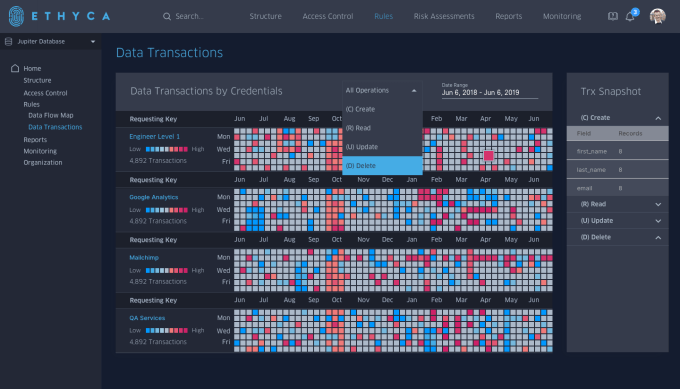
At its heart Ethyca is a data platform that helps companies discover sensitive data, then provides a mechanism for customers to see, edit or delete their data from the system. Finally, the solution enables companies to define who can see particular types of data across the organization to control access. All of these components are designed to help companies comply with GDPR regulations.

ethyca enterprise transaction log

Ethyca enterprise transaction log. Screenshot: Ethyca

Company co-founder Cillian Kieran says that the automation component is key and should greatly reduce the complexity and cost associated with complying with GDPR rules. From his perspective, current solutions which involve either expensive consultants or solutions that require some manual intervention, don’t get companies all the way there.

“These solutions don’t actually solve the issue from an infrastructure point of view. I think that’s the distinction. You can go and use the consultants, or you can use a control panel that tells you what you need to do. But ultimately, at some point you’re either going to have to build or deploy code that fixes some issues, or indeed manually manage or remediate those [issues]. Ethyca is designed for that and takes away those risks because it is managing privacy by design at the infrastructure level,” Kieran explained.

If you’re worried about the privacy of providing information like this to a third-party vendor, Kieran says that his company never actually sees the raw data. “We are a suite of tools that sits between business processes. We don’t capture raw data, We don’t see personal information. We find information based on unique identifiers,” he said.

The company has been around for over a year, but has been spending its first year, developing the solution. He sees this investment as validation of the problem his startup is trying to solve. “I think the investment represents the growing awareness fundamentally from both with the investor community, and also in the tech world, that data privacy as a regulatory constraint is real and will compound itself,” he said.

He also points out, GDPR is really just the tip of the privacy regulation iceberg with laws in Australia, Brazil, Japan, as well as California and other states in the US due to come online next year. He says his solution has been designed to deal with a variety of privacy frameworks beyond GDPR. If that’s so, his company could be in a good position moving forward.

25 Jul 2019

Sonos and Ikea’s Symfonisk wireless speakers are a symphony of sound and design

Sonos and Ikea’s Symfonisk collaboration took a lot of people by surprise when it was announced earlier this year, but the match up is less unlikely than it might appear at first glance. Ikea’s entire mission has been delivering practical, quality design concepts at price points that are more broadly accessible – and that’s exactly what it’s done with its collaboration with Sonos, albeit with sound instead of furniture. The new $99 Symfonisk WiFi bookshelf speaker, and the new $179 Symfonisk table lamp with WiFi speaker both deliver the excellent performance and sound quality that’s expected from the Sonos brand, in beguilingly practical everyday designs created by Ikea.

Symfonisk bookshelf speaker

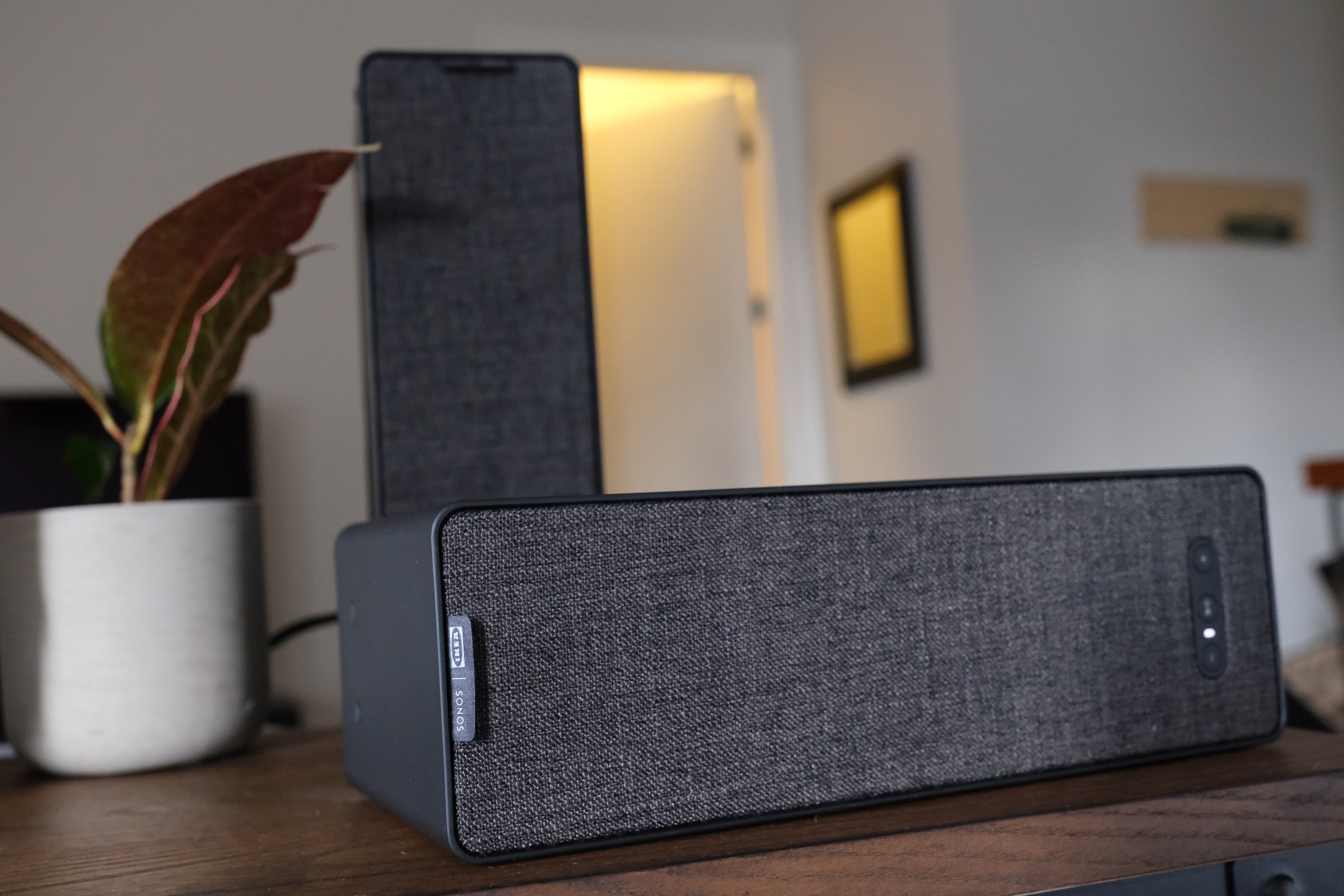
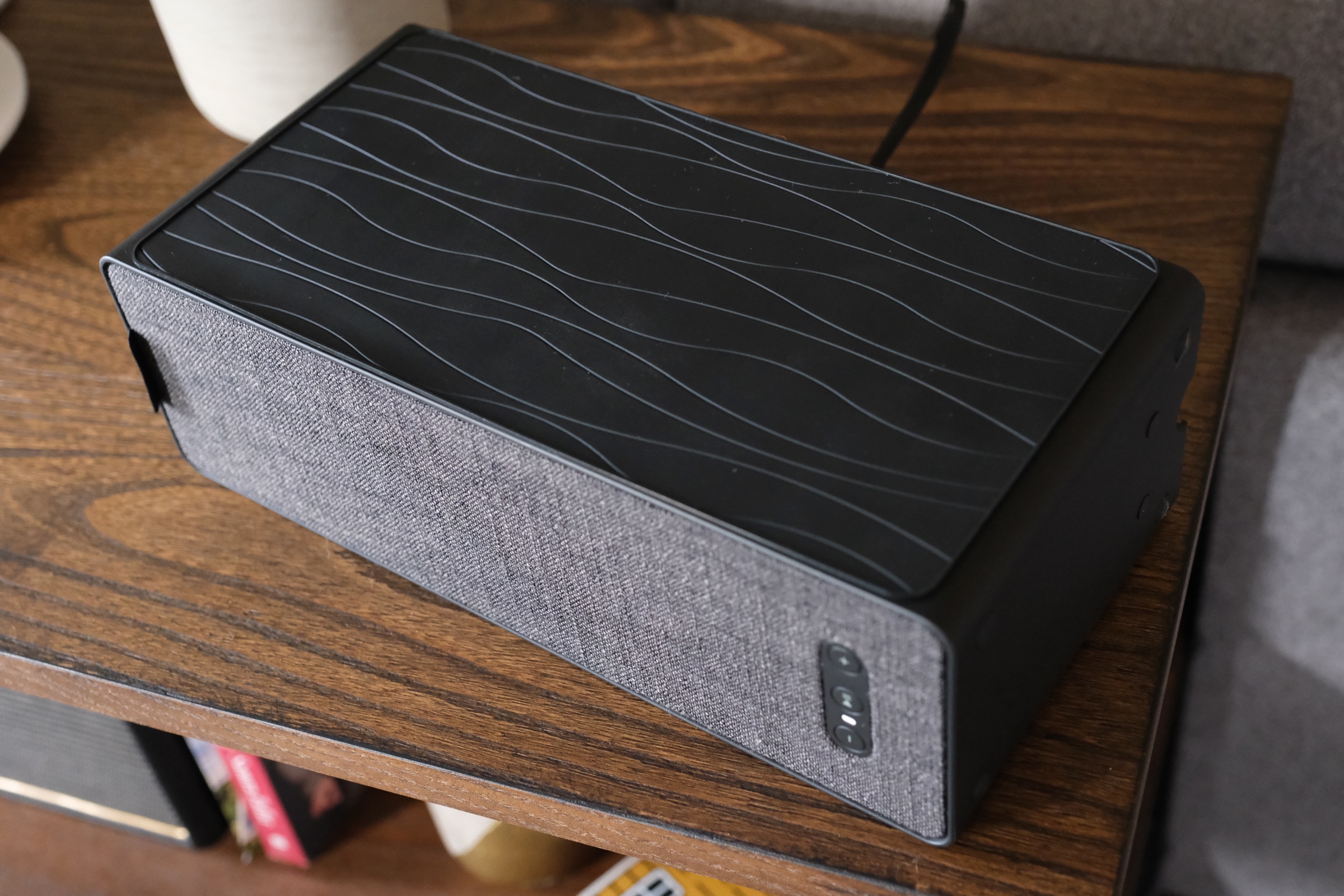
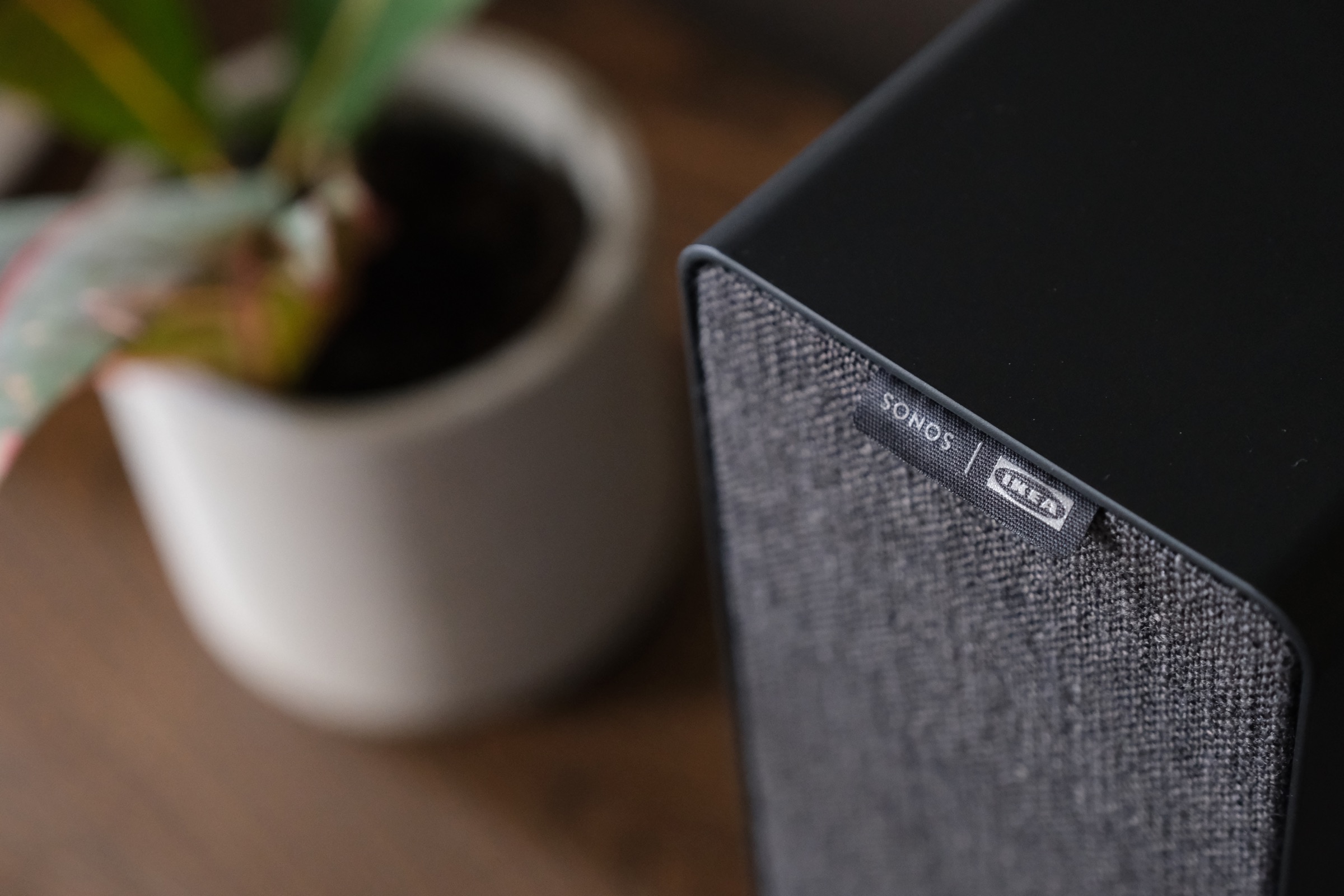
Ikea Sonos Symfonisk 10The descriptor “bookshelf speaker” in this case means more than it usually does – Ikea has designed these to either blend seamlessly in with hour actual book collection on existing shelf units, or to actually act as shelves themselves, using a simple add-on accessory kit that includes a flush wall mount and a rubber matt to protect its top surface while holding your gear (up to 6.6 lbs). They can also rail-mount on Ikea’s kitchen rail products for convenient kitchen installation, or they have rubberized pads on both the bottom and side surfaces for either horizontal or vertical surface mounting. Each speaker has two channels for cables to exit both vertically and horizontally for flush mounting, and there’s an Ethernet port on each and a cable in the box for hardwired connections to your home network.

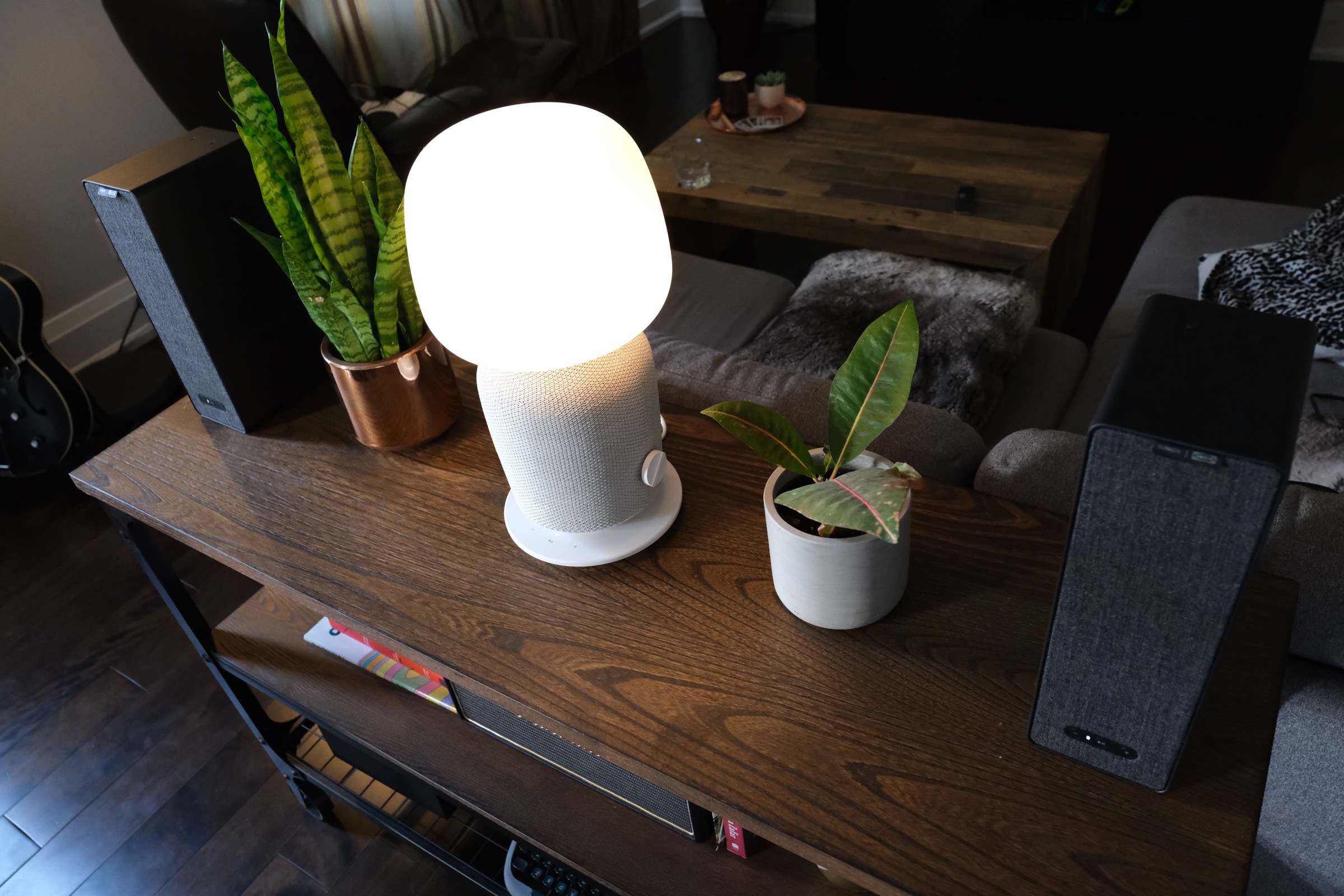
Ikea Sonos Symfonisk 12At $99, they’re the new most affordable way to get into the Sonos system, undercutting the Play:1 by $50. Leaving aside their utility as free-floating shelves (with a decent 12″ x 6″ surface area, likely suitable for bedside tables for many), they’re a perfect introduction to the Sonos ecosystem for anyone who’s felt that Sonos hardware is too expensive. And they’re almost tailor-made to act as rear speakers in a Sonos surround sound home theater configuration. I paired mine with my existing Sonos Beam sounder and Sonos Sub, and they delivered to the point where you’d be hard-pressed to tell the difference between the Symfonisk bookshelves and the Play:1 operating in that capacity.

That said, you do notice a difference between the Symfonisk bookshelf and the Play:1, or the Sonos One, when it comes to sound quality when they’re used on their own as individual or stereo-paired speakers. The bookshelf speakers contain entirely new internal speaker designs, since the form factor is nothing like any existing Sonos hardware on the market, and that means you end up with a different sound profile vs. the more squat, rotund Sonos One and Play:1.

Ikea Sonos Symfonisk 7To my ears, the Symfonisk bookshelf speaker sounds slightly worse when compared to the Sonos One and Play:1. This is not that surprising – those Sonos speakers are more expensive, for one, and they really out punch their weight class when it comes to overall sound quality. And even if the Symfonisk shelves are not quite up to par, they’re still excellent sounding wireless speakers for their price – without a doubt I would opt to pick these up in place of Play:1s for parts of my house where I don’t need the built-in Alexa or Google Assistant of the Sonos One, but want high-fidelity sound. In stereo pair configuration, the difference is even less noticeable.

The Symonisk shelf speaker design seems mostly focused on practicality, but it’s a good looking speaker (available in both black, as tested, and white). The rectangular box look is a bit harder to integrate as flexibly with your decor when compared to the Sonos One, in my opinion, but on the other hand there are some settings where the Symfonisk shelf fits far more seamlessly, like when wall mounted behind a couch to act as rears, or when acting as bookend on an existing bookshelf. The fabric speaker grill is removable, and you can expect Sonos to look at aesthetic updates to potentially change the look in future, too.

Because these are wireless speakers, there’s another aspect of performance that’s important: connectivity. Symfonisk’s speakers (both these and the table lamp, which I’ll talk more about later on) worked flawlessly during my multiple days of testing in this regard, with zero drop-outs that I noticed when it came to music playback, and flawless integration with my existing Sonos network of speakers. I’m also likely one of Sonos’ outlier customers in terms of the number of speakers I’m using – I have 14 active currently, including the Symfonisk speakers, all operating fully wireless and without the included Ethernet connection, and wireless playback has been rock solid during tests of this new Ikea line.

Ikea Sonos Symfonisk 8Set up is also a breeze, whether you’re new to Sonos or an existing user, and is handled via the Sonos app (Ikea will also eventually add it to its own smart home control software, the company tells me, and you’ll be able to control it from both). Once added to your app, you can also use them via Alexa or Google Assistant if you have those linked to your Sonos system, and they show up as AirPlay 2 speaker for iOS and macOS users, too.

Symfonisk table lamp speaker

Ikea Sonos Symfonisk 4Like the bookshelf speaker, the Symfonisk table lamp is incredibly easy to setup and manage using the Sonos app, and works with Alexa/Google Assistant and AirPlay 2. It was also outstanding in terms of performance with wireless connection and working with other speakers, and you can use Sonos’ TruePlay sound tuning feature to ensure that it provides the right sound profile for your space with a quick adjustment process using your phone’s microphone (this also works with the shelf speakers, by the way, and I recommend it for any Sonos equipment).

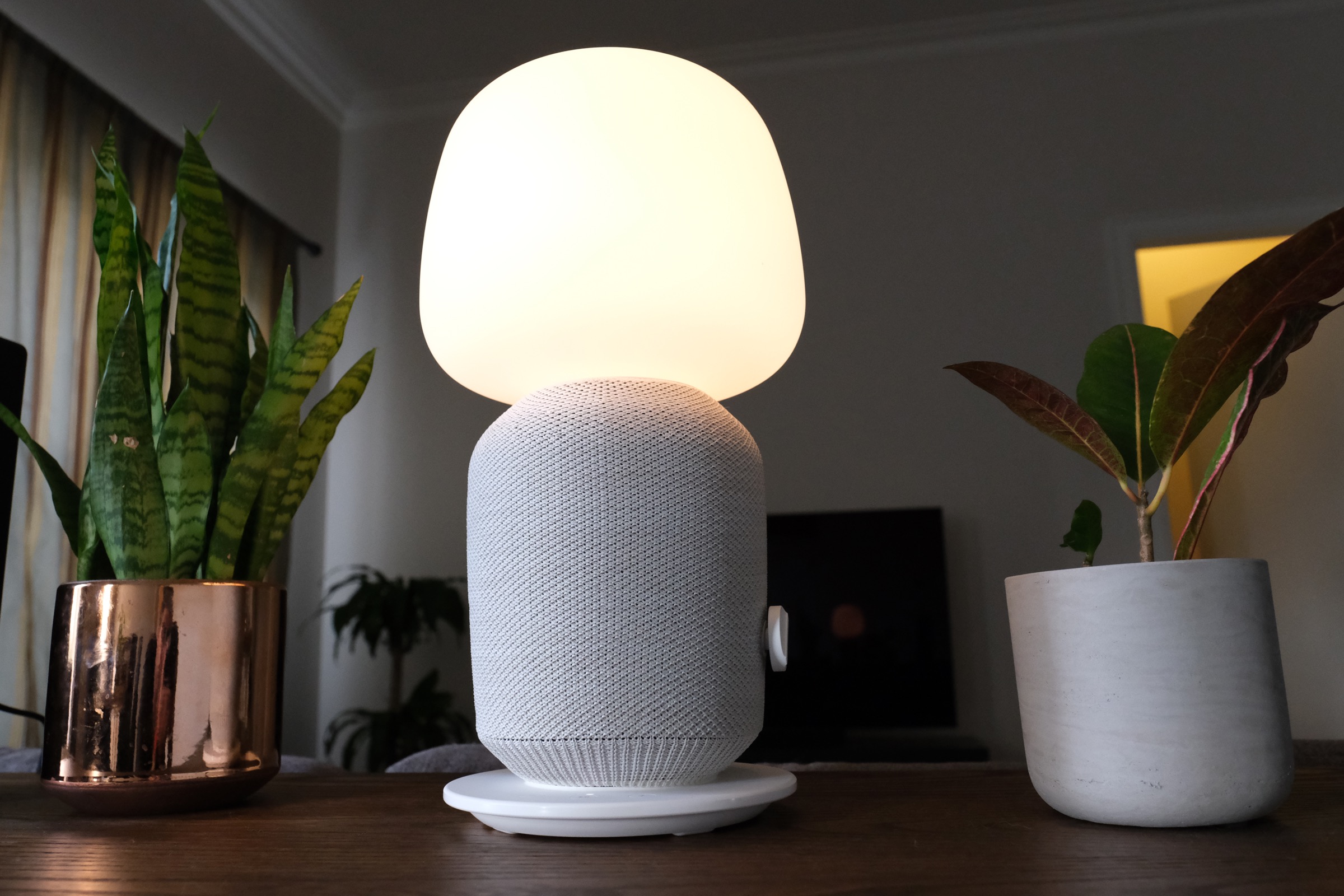
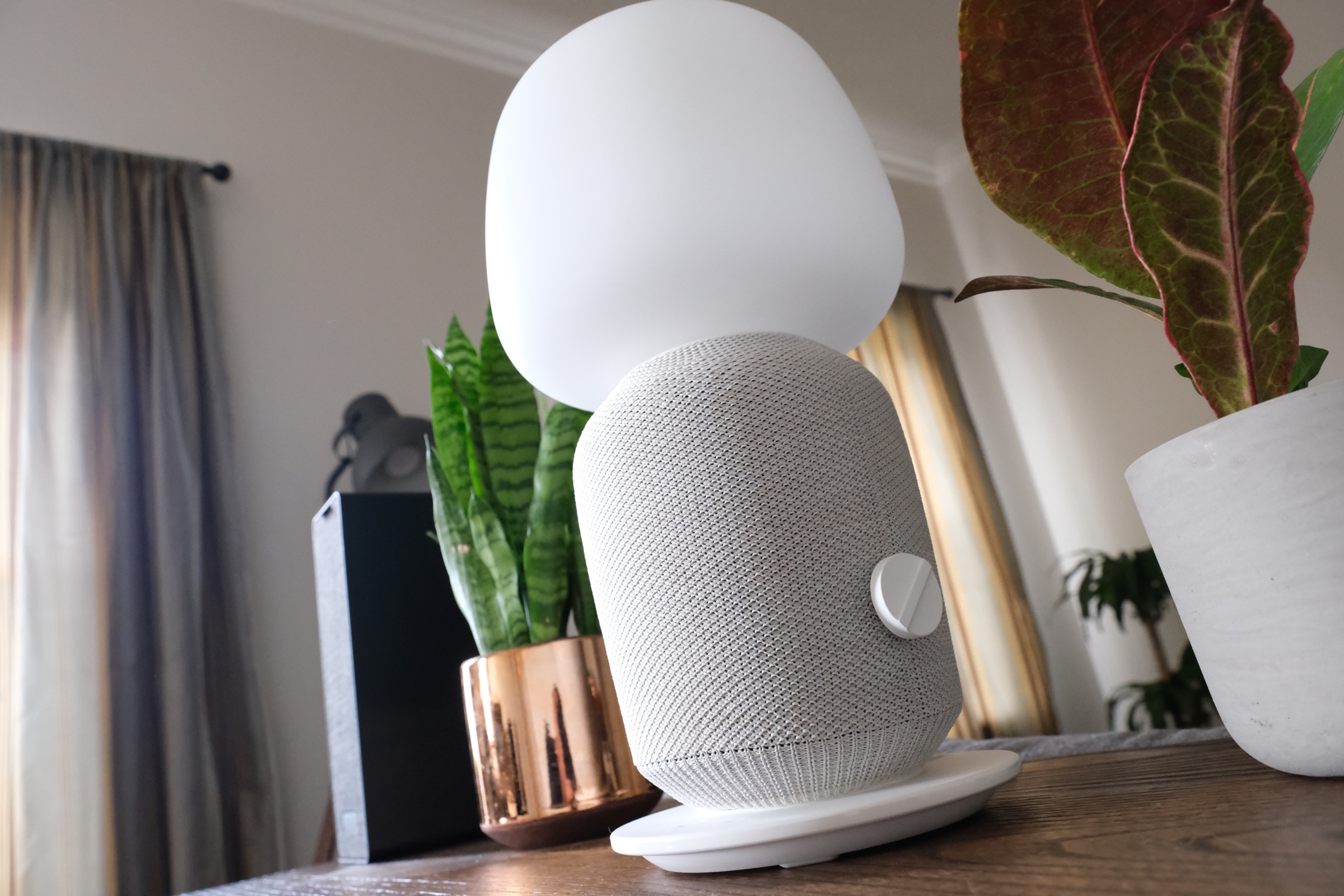
The table lamp really impresses in two ways, including sound quality and – this might seem obvious – by virtue of it also being a great lamp as well as a speaker. The base of the lamp is where the speaker resides, and it’s wrapped in a removable fabric cover that looks great from afar and up close. The shade is a single piece of handcrafted opaque glass, which provides a very pleasant glow when lit from within, and which uses a bayonet mount to lock into place.

Ikea Sonos Symfonisk 13This mount and shade choice are not just about looks – Sonos and Ikea evaluated different options and found that this was easily the best when it came to minimizing reverb and rattle for a lamp that’s also capable of outputting a lot of high-volume sound. The choice appears to have been the good one – in testing, I never noticed anything that suggested there was anything rattling or shaking around as a result of even loud music being played through the Symfonisk lamp speaker.

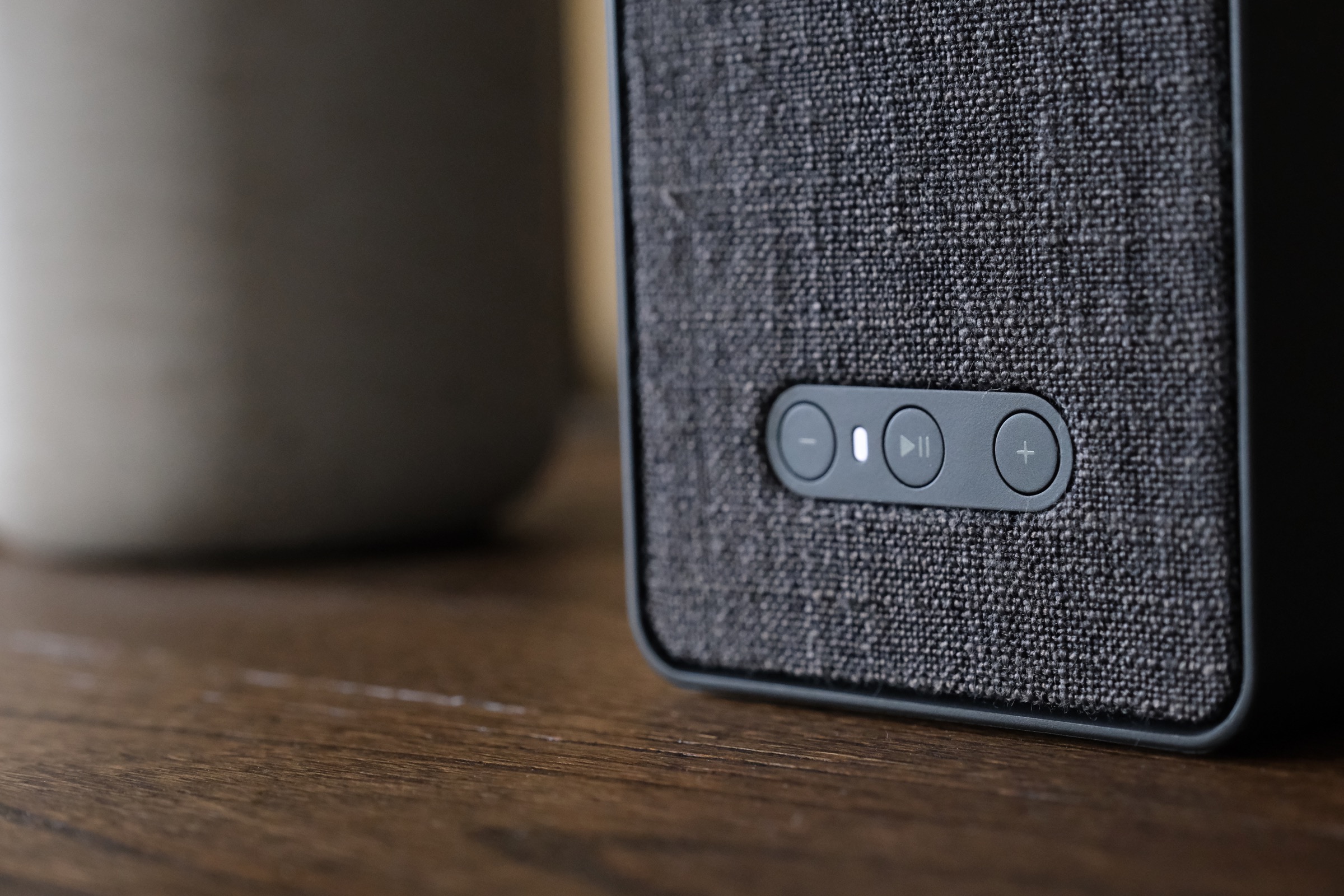
As mentioned, the looks benefit from this design decision, too. This table lamp at first struck me as maybe a bit too modern in photos, but in situ it looks great and is easily now a favorite item among my overall home decor. I do have a few small complaints, like that the large dial on the side is actually a simple on/off switch, rather than a dimmer or a volume knob like I assumed it would be. The controls are on the front of the saucer-like base instead, which is a clever way to make the lamp look less like a gadget and more like furniture.

Ikea Sonos Symfonisk 14The light itself supports bulbs with E12-style threaded connectors and a max of 7 watts of energy consumption, which are more commonly seen in chandeliers. Ikea sent over one of its Tradfri smart bulbs, with wireless connectivity and adjustable white spectrum temperature control. It’s the perfect complement to the lamp, and I was even able to quickly connect it to my existing Philips Hue hub for control without an Ikea smart bridge. With a smart bulb, the Symfonisk speaker lamp offers voice-control for both the lightning and the speaker component.

Where the Symfonisk shelf speaker differs from its Sonos brethren a bit in sound profile, the Symfonisk lamp speaker is surprisingly similar to the Play:1 ($149) and Sonos One ($199) and sits right in between both at $179. The internals are largely leveraged from those devices, according to Sonos, which makes sense given its industrial design is also basically a somewhat squat cylinder. Regardless of how, the result is terrific – it’s a lamp that’s actually a fantastic speaker, and you can definitely pull a trick at parties of asking guests to try to figure out the source of your high-quality, room filling sound if you pick one or more of these up. As rears, they blend away seamlessly with the decor, solving the age-old problem of having to choose between quality surround sound and having a living room that doesn’t look like a Hi-Fi audio shop.

The Symfonisk lamp is big, however – it’s about two inches taller than a Sonos One without the shade, and wider both in terms of the base and the saucer-like bottom. The look, while appealing to me, also isn’t necessarily for everyone (though there are black and white versions depending on your preference) so that might be another reason to opt for other offerings in the Sonos line vs. this one. But this particular light/Sonos speaker combo is unique in the market, and definitely a strong value proposition.

Bottom line

Ikea Sonos Symfonisk 3With the Symfonisk line, Ikea and Sonos have really pulled off something fairly amazing – creating practical, smart decor that’s also great audio equipment. It’s a blending of two worlds that results in very few compromises, and stands as a true example of what’s possible when two companies with a focus on human-centric design get together and really focus on establishing a partnership that’s much deeper than two names on a label.

Sonos and Ikea’s team-up isn’t just a limited collection, either – it’s a long-term partnership, so you can expect more from both down the road. For now, however, the Symfonisk bookshelf and Symfonisk table lamp speakers go on sale starting August 1 at Ikea.com and Ikea’s stores, and are very good options if you’re in the market for a smart speaker.

25 Jul 2019

Crowdfunded spacecraft LightSail 2 delivers amazing images of its deployed solar sail

We got word yesterday that the crowdfunded LightSail 2 spacecraft had successfully deployed its mylar solar sail, a large sheet of reflective material that will harness the minute power of photos bouncing off its surface to make an energy-efficient traversal through space. But that was based on data transmitted by the spacecraft, and now we have photographic proof thanks to new images sent by LightSail 2 the next time it was within communication range of a ground station.

These images, and the animated GIF created from a sequence of those captured by the spacecraft’s onboard fisheye cameras, show the boxing-ring-sized mylar sail unfurling – with the GIF sped up about 100 times vs. how long it actually took for the sail to fully deploy and spread out. This is a key milestone, and one the original LightSail never actually accomplished. Now, the mission will continue as LightSail 2 attempts to demonstrate that CubeSats can successfully propel themselves using solar sails, which will have big benefits in terms of cost of operation and accessibility of space research.

20190724 ls2 deploy cam2 esl ver02

The spacecraft launched aboard a Falcon Heavy mission in June, and was built by a team of Georgia Tech students. It underwent extensive pre-deployment testing leading up to this moment, and already, data returned shows that it’s being propelled by the force of the sun striking the sail, which is roughly equivalent to “the weight of a paperclip,” according to The Planetary Society. That small amount of force will accumulate over times and eventually, if all goes to plan, will raise LightSail 2’s current orbit and demonstrate viability of this propulsion method for small sat use.

25 Jul 2019

Facebook ignored staff warnings about “sketchy” Cambridge Analytica in September 2015

Facebook employees tried to alert the company about the activity of Cambridge Analytica as early as September 2015, per the SEC’s complaint against the company which was published yesterday.

This chimes with a court filing that emerged earlier this year — which also suggested Facebook knew of concerns about the controversial data company earlier than it had publicly said, including in repeat testimony to a UK parliamentary committee last year.

Facebook only finally kicked the controversial data firm off its ad platform in March 2018 when investigative journalists had blown the lid off the story.

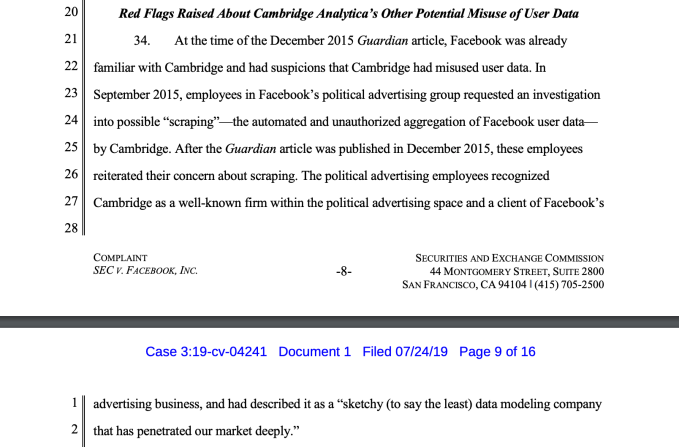
In a section of the SEC complaint on “red flags” raised about the scandal-hit company Cambridge Analytica’s potential misuse of Facebook user data, the SEC complaint reveals that it already knew of concerns raised by staffers in its political advertising unit — who described CA as a “sketchy (to say the least) data modeling company that has penetrated our market deeply”.
Screenshot 2019 07 25 at 11.43.17

Amid a flurry of major headlines for the company yesterday, including a $5BN FTC fine — all of which was selectively dumped on the same day media attention was focused on Mueller’s testimony before Congress — Facebook quietly disclosed it had also agreed to pay $100M to the SEC to settle a complaint over failures to properly disclose data abuse risks to its investors.

This tidbit was slipped out towards the end of a lengthy blog post by Facebook general counsel Colin Stretch which focused on responding to the FTC order with promises to turn over a new leaf on privacy.

CEO Mark Zuckerberg also made no mention of the SEC settlement in his own Facebook note about what he dubbed a “historic fine”.

As my TC colleague Devin Coldewey wrote yesterday, the FTC settlement amounts to a ‘get out of jail’ card for the company’s senior execs by granting them blanket immunity from known and unknown past data crimes.

‘Historic fine’ is therefore quite the spin to put on being rich enough and powerful enough to own the rule of law.

And by nesting its disclosure of the SEC settlement inside effusive privacy-washing discussion of the FTC’s “historic” action, Facebook looks to be hoping to detract attention from some really awkward details in its narrative about the Cambridge Analytica scandal which highlight ongoing inconsistencies and contradictions to put it politely.

The SEC complaint underlines that Facebook staff were aware of the dubious activity of Cambridge Analytica on its platform prior to the December 2015 Guardian story — which CEO Mark Zuckerberg has repeatedly claimed was when he personally became aware of the problem.

Asked about the details in the SEC document, a Facebook spokesman pointed us to comments it made earlier this year when court filings emerged that also suggested staff knew in September 2015. In this statement, from March, it says “employees heard speculation that Cambridge Analytica was scraping data, something that is unfortunately common for any internet service”, and further claims it was “not aware of the transfer of data from Kogan/GSR to Cambridge Analytica until December 2015”, adding: “When Facebook learned about Kogan’s breach of Facebook’s data use policies, we took action.”

Facebook staffers were also aware of concerns about Cambridge Analytica’s “sketchy” business when, around November 2015, Facebook employed psychology researcher Joseph Chancellor — aka the co-founder of app developer GSR — which, as Facebook has sought to pain it, is the ‘rogue’ developer that breached its platform policies by selling Facebook user data to Cambridge Analytica.

This means Facebook employed a man who had breached its own platform policies by selling user data to a data company which Facebook’s own staff had urged, months prior, be investigated for policy-violating scraping of Facebook data, per the SEC complaint.

Fast forward to March 2018 and press reports revealing the scale and intent of the Cambridge Analytica data heist blew up into a global data scandal for Facebook, wiping billions off its share price.

The really awkward question that Facebook has continued not to answer — and which every lawmaker, journalist and investor should therefore be putting to the company at every available opportunity — is why it employed GSR co-founder Chancellor in the first place?

Chancellor has never been made available by Facebook to the media for questions. He also quietly left Facebook last fall — we must assume with a generous exit package in exchange for his continued silence. (Assume because neither Facebook nor Chancellor have explained how he came to be hired.)

At the time of his departure, Facebook also made no comment on the reasons for Chancellor leaving — beyond confirming he had left.

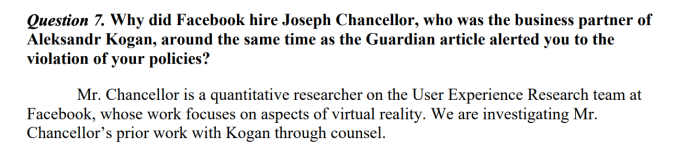
Facebook has never given a straight answer on why it hired Chancellor. See, for example, its written response to a Senate Commerce Committee’s question — which is pure, textbook misdirection, responding with irrelevant details that do not explain how Facebook came to identify him for a role at the company in the first place (“Mr. Chancellor is a quantitative researcher on the User Experience Research team at Facebook, whose work focuses on aspects of virtual reality. We are investigating Mr. Chancellor’s prior work with Kogan through counsel”).
Screenshot 2019 07 25 at 12.02.10

What was the outcome of Facebook’s internal investigation of Chancellor’s prior work? We don’t know because again Facebook isn’t saying anything.

More importantly, the company has continued to stonewall on why it hired someone intimately linked to a massive political data scandal that’s now just landed it an “historic fine”.

We asked Facebook to explain why it hired Chancellor — given what the SEC complaint shows it knew of Cambridge Analytica’s “sketchy” dealings — and got the same non-answer in response: “Mr Chancellor was a quantitative researcher on the User Experience Research team at Facebook, whose work focused on aspects of virtual reality. He is no longer employed by Facebook.”

We’ve asked Facebook to clarify why Chancellor was hired despite internal staff concerns linked to the company his company was set up to sell Facebook data to; and how of all possible professionals it could hire Facebook identified Chancellor in the first place — and will update this post with any response. (A search for ‘quantitative researcher’ on LinkedIn’s platform returns more than 177,000 results of professional who are using the descriptor in their profiles.)

Earlier this month a UK parliamentary committee accused the company of contradicting itself in separate testimonies on both sides of the Atlantic over knowledge of improper data access by third-party apps.

The committee grilled multiple Facebook and Cambridge Analytica employees (and/or former employees) last year as part of a wide-ranging enquiry into online disinformation and the use of social media data for political campaigning — calling in its final report for Facebook to face privacy and antitrust probes.

A spokeswoman for the DCMS committee told us it will be writing to Facebook next week to ask for further clarification of testimonies given last year in light of the timeline contained in the SEC complaint.

Under questioning in Congress last year, Facebook founder Zuckerberg also personally told congressman Mike Doyle that Facebook had first learned about Cambridge Analytica using Facebook data as a result of the December 2015 Guardian article.

Yet, as the SEC complaint underlines, Facebook staff had raised concerns months earlier. So, er, awkward.

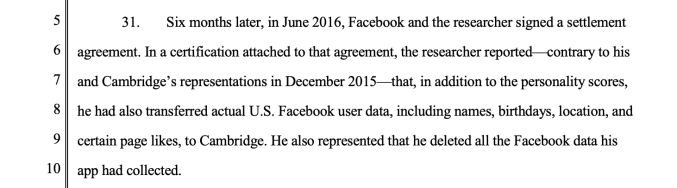
There are more awkward details in the SEC complaint that Facebook seems keen to bury too — including that as part of a signed settlement agreement, GSR’s other co-founder Aleksandr Kogan told it in June 2016 that he had, in addition to transferring modelled personality profile data on 30M Facebook users to Cambridge Analytica, sold the latter “a substantial quantity of the underlying Facebook data” on the same set of individuals he’d profiled.

This US Facebook user data included personal information such as names, location, birthdays, gender and a sub-set of page likes.

Raw Facebook data being grabbed and sold does add some rather colorful shading around the standard Facebook line — i.e. that its business is nothing to do with selling user data. Colorful because while Facebook itself might not sell user data — it just rents access to your data and thereby sells your attention — the company has built a platform that others have repurposed as a marketplace for exactly that, and done so right under its nose…
Screenshot 2019 07 25 at 12.40.29

The SEC complaint also reveals that more than 30 Facebook employees across different corporate groups learned of Kogan’s platform policy violations — including senior managers in its comms, legal, ops, policy and privacy divisions.

The UK’s data watchdog previously identified three senior managers at Facebook who it said were involved in email exchanges prior to December 2015 regarding the GSR/Cambridge Analytica breach of Facebook users data, though it has not made public the names of the staff in question.

The SEC complaint suggests a far larger number of Facebook staffers knew of concerns about Cambridge Analytica earlier than the company narrative has implied up to now. Although the exact timeline of when all the staffers knew is not clear from the document — with the discussed period being September 2015 to April 2017.

Despite 30+ Facebook employees being aware of GSR’s policy violation and misuse of Facebook data — by April 2017 at the latest — the company leaders had put no reporting structures in place for them to be able to pass the information to regulators.

“Facebook had no specific policies or procedures in place to assess or analyze this information for the purposes of making accurate disclosures in Facebook’s periodic filings,” the SEC notes.

The complaint goes on to document various additional “red flags” it says were raised to Facebook throughout 2016 suggesting Cambridge Analytica was misusing user data — including various press reports on the company’s use of personality profiles to target ads; and staff in Facebook’s own political ads unit being aware that the company was naming Facebook and Instagram ad audiences by personality trait to certain clients, including advocacy groups, a commercial enterprise and a political action committee.

“Despite Facebook’s suspicions about Cambridge and the red flags raised after the Guardian article, Facebook did not consider how this information should have informed the risk disclosures in its periodic filings about the possible misuse of user data,” the SEC adds.


25 Jul 2019

How skate legend Per Welinder finds an investing niche amid US-China trade tensions

Months of tit-for-tat trade negotiations between China and the United States have damaged cross-border investment interest between the superpowers, especially in areas that involve deep technology and intellectual property. But one sector has so far stayed relatively intact: lifestyle.

That’s what got Per Welinder, the legendary skateboarder-turned-entrepreneur who recently moved into venture investing, to look towards China for opportunities. In early 2018, Welinder teamed up with Chinese venture investor Curt Shi — a skateboard amateur himself — to launch early-stage angel fund Welinder & Shi Capital, focusing on bringing western lifestyle brands to China.

So far, Welinder & Shi has deployed all of its first fund into five consumer brands with the potential to capture China’s increasingly sophisticated middle-class, among whom Welinder observed a “growing individualism away from collectivism that is positive for lifestyle brands,” Welinder told TechCrunch in a phone interview.

Rather than taking the “spray and pray” approach, the fund picks a smaller number of companies compared to many other venture capital firms because it focuses on brands, which take time to build.

“There has been a headwind when you talk about cross-border opportunities with China in general. However, lifestyle is usually not a national security threat to either Chinese or to the U.S.,” Welinder observed. “Yes, there may be tariffs here and there, but it’s not a national threat to consume a pair of pants by a cool brand originating from the U.S.”

Per Welinder, a former skateboarding legend who is now hunting for western brands that can appeal to Chinese consumers / Photo: Per Welinder

That being said, Shi, in a separate interview with TechCrunch, admitted that trade tensions have in recent times generated doubts from limited partners on the fund’s methodology to help overseas portfolio companies “slingshot to China.”

“China and the U.S. can’t afford a real economic fight with each other… I believe once China and the U.S. reach a consensus, the investment between them will be booming again,” Shi noted.

Unlike a successful venture capital investment in tech that can generate a 200x type of exit, the return in brand investment is less lucrative. The appeal is that even if a portfolio company goes south, there remains some value in the brand, whether it’s the trademark itself or graphics.

“When you use branding as a differentiator, you may get pennies on the dollar even on the bad investment. But it will not go to zero like so many tech investments do, so we feel that is a somewhat less risky formula,” Welinder said.

The portfolio counts the likes of a Swedish electric off-road motorbike startup called Cake and premium gin manufacturer Wilde Irish Gin. Welinder makes a deliberate decision to back premium brands because even when tariffs are on the high side, the extra costs generally don’t have an obvious effect on consumers who like to treat themselves to the really good things in life.

When it comes to identifying potential investments, Welinder leans on spotting what he calls a “movement.” He cited his personal experience in the 80s and 90s when skateboarding became a movement. First, he started to see other people getting hooked on either participating or watching skateboarding. With the help of VCRs, DVD players and gaming consoles, skateboarding-culture blossomed into a global commerce phenomenon.

“And people got excited and then said, hey, mom and dad, can I have a skateboard? Can I have a T-shirt? Can I have a pair of shoes? That’s the kind of the way we like to look at things. Where do we see movements, what technology can be leveraged to really speed up that movement, and is that movement big enough for more than just one player.”

25 Jul 2019

What politicians are getting wrong about fixing higher education

From Capitol Hill to the Democratic Presidential debates, the drumbeat for new approaches to higher education is getting louder.

On the campaign trail, Bernie Sanders continues to advocate for free college and Sen. Elizabeth Warren recently proposed bigger plans to eliminate the $1.6 trillion in student debt nationwide. On the Hill, Republican senators Marco Rubio and Todd Young were joined by Democratic senators Mark Warner and Chris Coons in rolling out a bill to regulate income share agreements to make education more accessible.

Before anyone tries to solve what’s wrong with higher education, we need to first understand the value of a college degree. It’s a debate that truly began during the Recession, as students weren’t getting jobs upon graduation. And that lack of value is the reason we have a student loan crisis. So, why would we call for free college, if there is doubt about the value of what “free” gets someone?

While everyone should have an opportunity to pursue higher education after high school, any politico – from the Secretary of Education to the Democratic candidates, should first address the larger value crisis in today’s education system.

If Democratic candidates are going to call for free college, first, there needs to be more accountability from colleges about what a student – or future student – can expect upon graduation.

At a very young age, students are taking huge risks by spending their time and money going to college. And the majority are specifically because they want to get a job upon graduation. But tuition is non-negotiable and there is no outcome – i.e., a job – associated with graduating. The value at a coding bootcamp like Thinkful is that we have a jobs report that proves there’s a job waiting for you once you graduate. So, at a traditional college, wouldn’t the value of a college degree drop if there was no job attached to it? It’s why I think educators must be held to higher standards that are more consumer-friendly by providing transparency to students about what they can expect upon graduating with a certain major.

There such a demand around skills-based learning that even employers are recognizing you don’t need to go to college to be hireable.

From Blackrock to Google, big companies aren’t requiring college degrees for highly skilled tech positions, paving the way for employers to hire candidates from trusted education companies that they know are producing candidates with skill sets like data science, coding and design. In fact, adults in their 20s, 30 and even 50s who have college degrees are enrolling in coding bootcamps or career accelerators because they didn’t get job-ready skills when they were in school.

And it’s why coding bootcamps can offer a job guarantee or allow students to utilize Income Share Agreements to pay for their program. We are perfectly comfortable taking on that “free” risk because we know that you are very likely to get a high paying job upon graduation. Our yearly jobs data proves it.

So, calling for free college is missing the point about what really needs to happen if we want more people learning to get a job that will put them on a sustainable career trajectory. There needs to be much more accountability into what a “free degree” would get someone.

25 Jul 2019

Alibaba to help Salesforce localize and sell in China

Salesforce, the 20-year-old leader in customer relationship management (CRM) tools, is making a foray into Asia by working with one of the country’s largest tech firms, Alibaba.

Alibaba will be the exclusive provider of Salesforce to enterprise customers in mainland China, Hong Kong, Macau, and Taiwan, and Salesforce will become the exclusive enterprise CRM software suite sold by Alibaba, the companies announced on Thursday.

The Chinese internet has for years been dominated by consumer-facing services such as Tencent’s WeChat messenger and Alibaba’s Taobao marketplace, but enterprise software is starting to garner strong interest from businesses and investors. Workflow automation startup Laiye, for example, recently closed a $35 million funding round led by Cathay Innovation, a growth-stage fund that believes “enterprise software is about to grow rapidly” in China.

The partners have something to gain from each other. Alibaba does not have a Salesforce equivalent serving the raft of small-and-medium businesses selling through its e-commerce marketplaces or using its cloud computing services, so the alliance with the American cloud behemoth will fill that gap.

On the other hand, Salesforce will gain sales avenues in China through Alibaba, whose cloud infrastructure and data platform will help the American firm “offer localized solutions and better serve its multinational customers,” said Ken Shen, vice president of Alibaba Cloud Intelligence, in a statement.

“More and more of our multinational customers are asking us to support them wherever they do business around the world. That’s why today Salesforce announced a strategic partnership with Alibaba,” said Salesforce in a statement.

Overall, only about 10% of Salesforce revenues in the three months ended April 30 originated from Asia, compared to 20% from Europe and 70% from the Americas.

Besides gaining client acquisition channels, the tie-up also enables Salesforce to store its China-based data at Alibaba Cloud. China requires all overseas companies to work with a domestic firm in processing and storing data sourced from Chinese users.

“The partnership ensures that customers of Salesforce that have operations in the Greater China area will have exclusive access to a locally-hosted version of Salesforce from Alibaba Cloud, who understands local business, culture and regulations,” an Alibaba spokesperson told TechCrunch.

Cloud has been an important growth vertical at Alibaba and nabbing a heavyweight ally will only strengthen its foothold as China’s biggest cloud service provider. Salesforce made some headway in Asia last December when it set up a $100 million fund to invest in Japanese enterprise startups and the latest partnership with Alibaba will see the San Francisco-based firm actually go after customers in Asia.

25 Jul 2019

Toyota invests $600 million in Didi, with the two setting up a new joint venture for driver services

Didi Chuxing announced today that it has received new investment totaling $600 million from Toyota Motor Corporation. As part of the deal, the two companies will also set up a joint venture with GAC Toyota Motor to provide vehicle-related services to drivers on Didi’s ride-sharing platform. GAC Toyota itself is a joint venture between Toyota and GAC Group, one of China’s largest automakers.

Nikkei Asian Review first broke news of the deal at the end of May, reporting that Toyota was considering a $550 million investment in Didi and setting up a new mobility-services company in China.

Didi and Toyota announced last year 2018 that it would work together on services that use technology developed by Toyota for its mobility and vehicle-sharing platform, which includes autonomous driving software, a fully electric battery and the “e-Palette,” or modules that can be used to build autonomous vehicles of different sizes, ranging from small ones for deliveries to passenger buses.

Toyota has also backed other vehicle-sharing companies, including Uber and JapanTaxi.

DiDi’s partnership with Toyota is one of several partnerships it has made with car manufacturers and other vehicle-related companies as part of its D-Alliance, including Toyota, Volkswagen, Renault-Nissan-Mitsubishi, as well as major Chinese automakers like FAW, Dongfeng and GAC, with the intention of expanding its reach beyond its ride-hailing services by creating a platform that uses new energy, AI-based and mobility technology.

Didi recently announced that it will open its ride-hailing platform to third-party service providers as part of agreements with FAW, Dongfeng and GAC, three of China’s largest auto makers.

25 Jul 2019

Samsung readies Galaxy Fold for September launch

When it was unveiled on stage, the Galaxy Fold was heralded as the next big thing. Samsung seeded units to reviews and prepared for launch. And then a funny thing happened on the way to a smartphone paradigm shift: it started breaking. Multiple review units were sent back to Samsung with busted screens.

It was a small sample size, to be sure. First Samsung blamed reviews themselves. Ultimately, however, there was enough concern to cause the company to pump the breaks entirely. Now, nearly three months to the day after the device was set for release, Samsung’s finally got concrete information on the long delayed foldable. The company just announced a September launch date for the device. No concrete date just yet — but at least that’s better than the “coming weeks” line we’ve been hearing about timeframe for a few months now. 


25 Jul 2019

SpaceX untethered StarHopper ‘hop’ test flight aborted after engines briefly flare

SpaceX encountered a snag in an attempted test key to the development of its next-generation Starship spacecraft. Specifically, the StarHopper sub scale demonstration and testing craft it’s using to work on the Starthip’s propulsion system fails to undertake its first untethered test flight at a testing site in Boca Chica Beach in Texas,

The plan was to have the demonstration craft take off and fly to a height of 20 meters before returning to Earth, all under tis own power and directed by its own guidance system. Instead, It seemed to fire rockets and then was engulfed in smoke, before venting fire out of the top of the test craft for a few minutes prior to extinguishing, with StarHopper looking relatively unscathed. We’re still waiting on official confirmation of what happened from SpaceX, but they characterized this as an “abort” on a livestream of the test.

Last week during a static test fire, the StarHopper vehicle was engulfed in a large ball of flame. This wasn’t a planned event, but did not result in significant damage to the spacecraft, SpaceX later said.

StarHopper succeeded in flying its first tethered flight at the beginning of April, and has undergone further testing since then to prepare for its untethered trip. SpaceX CEO Elon Musk said earlier this month that a successful untethered test would pave the way for a full presentation of SpaceX’s Starship spacecraft plans at the end of July, but the test has encountered a few issues since then.

The reason SpaceX and other companies run tests like these is to identify potential issues early in the development process, so it’s good to see them making progress even if that doesn’t mean a “success” in the traditional sense of actually having achieved untethered flight.

SpaceX designed Starship will be fully reusable once complete, unlike Falcon 9 and Falcon Heavy, so it’ll reduce the cost of launches, and the company hopes to eventually use it to fly all its missions, though it’ll keep Falcon 9 and Falcon Heavy in service for its paying customers as long as there’s appetite.