Category: UNCATEGORIZED

17 Jul 2019

Apple gives a sneak peak of its new Peanuts series with ‘Snoopy in Space’ trailer

As the U.S. commemorates the 50th anniversary of the moon landing, Apple took to the internet to give audiences a peak into the first of its new Peanuts series, “Snoopy in Space”.

The series will follow Charles M. Schulz’s characters as they take afield trip to a NASA location where Snoopy and . Woodstock are selected for a space mission.

Charlie Brown and the rest of the characters will staff mission control, while Snoopy and Woodstock fly into the great beyond.

The series is set to launch on Apple TV+ in the Fall.

17 Jul 2019

Netflix reports first net subscriber loss in the U.S., misses global subscriber growth predictions

Netflix’s continued subscription price hikes might finally have reached the end of some customers’ patience in the U.S., judging from an overall paid subscriber decline the company reported in its quarterly earnings for its fiscal second quarter 2019 results. The company’s overall growth for paid subscribers climbed by 2.7 million worldwide, but it actually added 2.83 million new subscribers around the world – while losing around 130,000 net in the U.S. to account for the difference.

Netflix’s price for consumers went up from $10.99 to $12.99 during its fiscal Q2 reporting period, which definitely could account for some of the fall-off. The company doesn’t seem to have anticipated such a strong reaction, however, since it had anticipated a net 5.0 million subscriber growth number as of last quarter, based at least in part on the 5.5 million it added in paying customers during Q2 2018.

The company specifically says that it missed its subscriber growth adds more significantly in regions where it introduced a price hike, vs. those where it did not – though its growth was lower than expected in all regions where it operates. You might think that some of its shedding of users in the U.S. has to do with competition, but the company points out that most of its material competitors are actually just announced, not available in market, so it thinks this isn’t really a significant cause.

Instead, Netflix points at its content library, as well as those pricing changes in markets where they do apply. The Q2 content slate caused fewer new sign-ups than the company expected, it said in its earnings release. That’s despite strong four-week performance numbers from When They See Us (25 million households), Our Planet (33 million), Murder Mystery (73 million), The Perfect Date (48 million) and Always Be My Maybe (32 million).

Still, the company thinks it will add a whole heap of new subscribers in Q3 this year, with an expectation of 7 million paid membership adds, which is significantly up from the 6.1 million it added last year. One big reason for this optimism might be that it’s going to launch a new, mobile-only and more affordable tier for India, which will launch during the quarter.

Netflix’s stock price is down more than 10 percent after hours as of this writing based on these results. The full Q2 Netflix earnings are available here.

17 Jul 2019

Twitter officially launches its ‘Hide Replies’ feature, initially to users in Canada

Twitter today is beginning its test of a radical and controversial change to its service with the launch of a new “Hide Replies” feature. Effectively, this option gives users the ability to wrestle back control over a conversation they’ve started, by hiding any replies they feel aren’t worthy contributions — for example, replies that are irrelevant or outright offensive.

One of the problems with Twitter — and with many social networks, for that matter — is that an otherwise healthy conversation can easily be disrupted by a single individual or a small number of people who don’t contribute in a positive fashion. They come into a thread to start drama or they make inappropriate, rude or even hateful remarks.

Of course, users can choose for themselves to either Mute or Block people like this, which limits their ability to affect their own personal experience on Twitter. But this doesn’t remove their comments from others’ view. The “Hide Replies” feature, however, will.

But it’s not the equivalent of a delete button. In other words, hidden replies are not removed from Twitter entirely, they are just placed behind an icon. If people want to see the hidden replies, they can press this icon to view them.

author1 1

Twitter’s goal with the feature is to encourage more civil conversation its platform. It could work, as those who want their comments seen by a wide audience will have to find a way to express themselves in an appropriate fashion — without taking the conversation off course or resorting to insults or trolling. Otherwise, they know their replies could be hidden from the default view.

But this change is not without significant downsides.

For example, a user could choose to hide replies that simply (and even politely!) disagreed with their view. This would then create a “filter bubble” where only people who shared the original poster’s same opinion would have their comments prominently displayed. In this case, the feature would be silencing of other viewpoints — and that’s in direct opposition to Twitter’s larger goal of creating a public town square on the web, where every voice has a chance to be heard.

More worryingly, a user could choose to hide replies that attempt to correct misinformation or offer a fact check. That’s a significant concern at a time when social media platforms have turned into propaganda dissemination machines, and have been infiltrated by state-supported actors from foreign governments looking to manipulate public sentiment and influence elections.

Twitter claims the feature provides transparency because hidden replies are still available for viewing to anyone who wishes to see them. But this assumes that people will notice the small “hidden replies” icon and bother to click it.

The ability to hide replies is initially available only to users in Canda, but tweets with hidden replies will be accessible by all Twitter users worldwide.

In a statement posted as a series of tweets and replies to others, Twitter explained its goals around the new addition:

“We’re testing a feature to hide replies from conversations. This experience will be available for everyone around the world, but at this time, only people in Canada can hide replies to their Tweets…They’ll be hidden from the main conversation for everyone behind a new icon. As long as it hasn’t been deleted and/or is not from an account with protected Tweets, everyone can still interact with a hidden reply by clicking the icon to view. We want everyone on Twitter to have healthy conversations, and we’re working on features that will help people feel more comfortable. We’re testing a way for people to hide replies they feel are irrelevant or offensive.”

Twitter had previously confirmed its plans to test a “Hide Replies” feature, and had announced its plan to launch the feature sometime this week.

Social media is due for a course correction, and Twitter at least isn’t afraid to try significant changes to its platform. (It’s even trying a new prototype of its app, called twttr.) However, some would argue that permanent bans on rulebreakers and more attention to enforcing existing policies would negate the need for features like this.


17 Jul 2019

HBO Max is bringing back ‘Gossip Girl’

“Gossip Girl,” the soapy CW drama about wealthy teenagers behaving badly in New York City’s Upper East Side, is returning to TV thanks to HBO Max.

Specifically, the streaming service has placed a 10-episode, straight-to-series order for an updated version of the show. According to The Hollywood Reporter, Joshua Safran (a writer and executive producer on the original show) will be spearheading the new series, while Josh Schwartz and Stephanie Savage (the original creators) have signed on as executive producers.

It’s not clear yet whether any “Gossip Girl” stars will return, but Safran described this as an “extension” of the previous show, focusing on a new generation of teenagers.

To be clear, this won’t be on HBO, but instead on the yet-to-launch WarnerMedia streaming service now known as HBO Max, which will include HBO and other streaming content (including new shows and also “Friends”).

“Gossip Girl” initially aired from 2007 to 2012. It was never a huge ratings hit, but it had passionate fans, and particularly in its early seasons, it spurred plenty of adoring and/or scandalized headlines — maybe that’s what a new streaming service is looking for.

And this is where I acknowledge that I was, for a while, one of those fans. I tried to binge the entire first season in a single night, but my interest rapidly faded during season two, and I only returned for the ridiculous finale. Still, when the show was working, it was about as fun and addictive as television gets.

17 Jul 2019

Peloton’s new automated vehicle system gives one driver control of two trucks

The trucking world has been inundated in recent years by startups and large companies alike pitching an array of automated driving technology and business strategies, all aiming to solve the big three problems with freight: safety, fuel costs and driver shortages.

For Peloton Technology, a Silicon Valley company that launched in 2011, the answer doesn’t strip out the human driver. Instead, it wants to augment a human truck driver’s ability with automated vehicle technology. The company, which has raised $78 million from BP Ventures, Intel Capital, Volvo Group and a dozen other venture and strategic investors, wants to commercialize a partially automated vehicle platooning system that enables two trucks (and maybe a whole string of them) to operate at close following distances.

Peloton Technology already has a product called PlatoonPro that six customers are using in their freight operations. Now, the company has unveiled an advanced product called Level 4 Automated Following that it says will double the productivity of truck drivers. Peloton Technology revealed details on the new automated platooning system Wednesday at the Automated Vehicle Symposium 2019 in Orlando.

PlatoonPro is considered a “Level 1” driver assistance system that requires drivers in both the lead and follow trucks. In this system, the driver in the follow truck must steer the vehicle. The system controls the powertrain and brakes to allow a close following distance and immediately reacts to acceleration or braking by the lead truck. The system boosts fuel savings by an average of 7%, the company says.

The new Automated Following system, a human driver is in the lead truck. But this time, the follow truck won’t have a human driver.  The system combines vehicle-to-vehicle communication with radar-based active braking and software. Together, the human driver in the lead vehicle is able to guide the steering acceleration and braking of the follow truck and connects the safety systems between the trucks with minimal latency, according to Peloton Technology.

“We’ve taken a different approach to commercial introduction of automation in class 8 vehicles.” Peloton Technology CEO Josh Switkes said. “We see the drivers as the world’s best sensors, and we are leveraging this to enable today’s drivers to be more productive through automated following platoons.”

And Switkes isn’t kidding. The human driver is front and center to this technology. The lead truck relies completely on the skill set of the professional truck driver. The system works alongside any of the driver assistance features like collision warnings or automatic emergency braking that might come with the Class 8 truck. But it does not provide additional driver assistance features.

The L4 Automated Following product, which is being tested internally, will double the amount of freight a truck driver can haul in a single trip, according to the company.

17 Jul 2019

For World Emoji Day, the Unicode Consortium redesigns its site to be more user-friendly

Ahead of World Emoji Day on Wednesday, July 17, Apple and Google announced plans to bring an expanded set of emoji to their respective platforms. Today, the Unicode Consortium, the nonprofit organization responsible for determining which emoji get the greenlight, is relaunching its website with an updated, modern design that aims to make its information more accessible to the general public.

Before, its website design was very basic — just text and links to various pages about the Consortium itself, the standard, miscellaneous FAQs, projects in progress, and other information. It looked like a technical resource, and certainly one that hadn’t been updated in years.

With an outdated layout, ancient social share buttons and boring font choices, it really looked more like an ancient government website than a resource designed for public consumption.

Screen Shot 2019 07 17 at 2.05.49 PM

Above: the old site 

That changes with the redesign. Not only is the site more mainstream-friendly, it more actively encourages participation and involvement from the public.

Unicode is a global technology standard that is one of the core building blocks of the internet,” said Unicode board member Greg Welch, in an announcement about the changes to the site. “Unicode has helped facilitate the work of programmers and linguists from around the world since the 1990s. But with the rise of mobile devices and public enthusiasm for emoji, we knew it was time to redesign the Unicode website to make information more easily accessible, and increase community involvement,” he says.

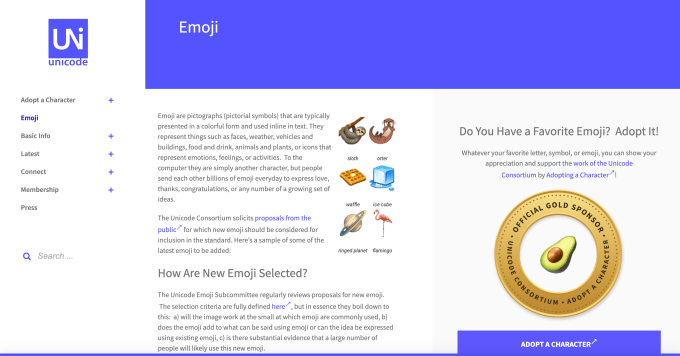
Screen Shot 2019 07 17 at 2.08.25 PM

Above: the Emoji section on the new site

Although the Consortium itself is focused more broadly on developing text standards, their work with emoji now gets the most attention. Today, emoji are used by 92% of the world’s online population, which has put the organization into the spotlight, it says.

The updated site was built with help from a team of designers from Adobe, and features a homepage covered in emoji. The main navigation directs visitors to information about emoji, including how to submit a proposal for a new emoji (which is still not a user-friendly a process), as well as information about “adopting” an emoji — that is, a way to offer a tax-deductible donation to the Unicode Consortium while gaining access to a custom badge you can show off on your own website or social media accounts.

There are currently 136,000 emoji available for “adoption,” the organization notes, including the newly announced additions like the sloth, sea otter, waffle and Saturn.

The new site is definitely more attractive and easier to use, following the redesign. But for those who miss the classic look, it’s still live at http://unicode.org/main.html. (Often, you’ll hit the old site when you click through links from the new one. The redesign only goes so deep, it seems.)

While the redesign is welcome, people in search of information about their favorite emoji — like, how it looks on different platforms, when it was officially added, or what the emoji means, for example — may find the website Emojipedia a better bet.


17 Jul 2019

Facebook’s regulation dodge: Let us, or China will

Facebook is leaning on fears of China exporting its authoritarian social values to counter arguments that it should be broken up or slowed down. Its top executives have each claimed that if the U.S. limits its size, blocks its acquisitions, or bans its cryptocurrency, Chinese company’s absent these restrictions will win abroad, bringing more power and data to their government. CEO Mark Zuckerberg, COO Sheryl Sandberg, and VP of communications Nick Clegg have all expressed this position.

The latest incarnation of this talking point came in today and yesterday’s congressional hearings over Libra, the Facebook-spearheaded digital currency it hopes to launch in the first half of 2020. Facebook’s head of its blockchain subsidiary Calibra David Marcus wrote in his prepared remarks to the House Financial Services Committee today that:

“I believe that if America does not lead innovation in the digital currency and payments area, others will. If we fail to act, we could soon see a digital currency controlled by others whose values are dramatically different”

Senate Banking Committee Holds Hearing On Facebook's Proposed Crypto Currency

WASHINGTON, DC – JULY 16: Head of Facebook’s Calibra David Marcus testifies during a hearing before Senate Banking, Housing and Urban Affairs Committee July 16, 2019 on Capitol Hill in Washington, DC. The committee held the hearing on “Examining Facebook’s Proposed Digital Currency and Data Privacy Considerations.” (Photo by Alex Wong/Getty Images)

Marcus also told the Senate Banking Subcommittee yesterday that “I believe if we stay put we’re going to be in a situation in 10, 15 years where half the world is on a blockchain technology that is out of reach of our national-security apparatus” .

This argument is designed to counter House-drafted “Keep Big Tech Out Of Finance” legislation that Reuters reports would declare that companies like Facebook that earn over $25 billion in annual revenue “may not establish, maintain, or operate a digital asset . . .  that is intended to be widely used as medium of exchange, unit of account, store of value, or any other similar function.”

The message Facebook is trying to deliver is that cryptocurrencies are inevitable. Blocking Libra would just open the door to even less scrupulous actors controlling the technology. Facebook’s position here isn’t limited to cryptocurrencies, though.

The concept crystallized exactly a year ago when Zuckerberg said “I think you have this question from a policy perspective, which is, do we want American companies to be exporting across the world?” in an interview with Recode’s Kara Swisher.

“We grew up here, I think we share a lot of values that I think people hold very dear here, and I think it’s generally very good that we’re doing this, both for security reasons and from a values perspective. Because I think that the alternative, frankly, is going to be the Chinese companies. If we adopt a stance which is that, ‘Okay, we’re gonna, as a country, decide that we wanna clip the wings of these companies and make it so that it’s harder for them to operate in different places, where they have to be smaller,’ then there are plenty of other companies out that are willing and able to take the place of the work that we’re doing.”

When asked if he specifically meant Chinese companies, Zuckerberg doubled down, saying:

“Yeah. And they do not share the values that we have. I think you can bet that if the government hears word that it’s election interference or terrorism, I don’t think Chinese companies are going to wanna cooperate as much and try to aid the national interest there.”
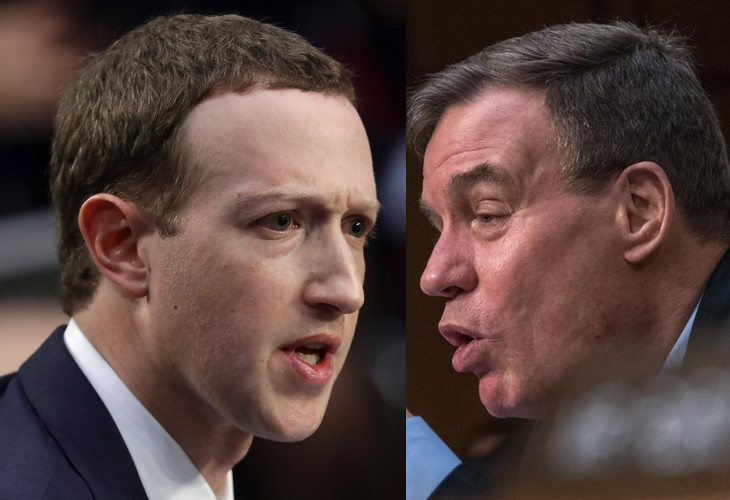
WASHINGTON, DC – APRIL 10: Facebook co-founder, Chairman and CEO Mark Zuckerberg testifies before a combined Senate Judiciary and Commerce committee hearing in the Hart Senate Office Building on Capitol Hill April 10, 2018 in Washington, DC. Zuckerberg, 33, was called to testify after it was reported that 87 million Facebook users had their personal information harvested by Cambridge Analytica, a British political consulting firm linked to the Trump campaign. (Photo by Chip Somodevilla/Getty Images)

This April, Zuckerberg went deeper when he described how Facebook would refuse to comply with data localization laws in countries with poor track records on human rights. The CEO explained the risk of data being stored in other countries, which is precisely might happen if regulators hamper Facebook and innovation happens elsewhere. Zuckerberg told philosopher Yuval Harari that:

“When I look towards the future, one of the things that I just get very worried about is the values that I just laid out [for the internet and data] are not values that all countries share. And when you get into some of the more authoritarian countries and their data policies, they’re very different from the kind of regulatory frameworks that across Europe and across a lot of other places, people are talking about or put into place . . . And the most likely alternative to each country adopting something that encodes the freedoms and rights of something like GDPR, in my mind, is the authoritarian model, which is currently being spread, which says every company needs to store everyone’s data locally in data centers and then, if I’m a government, I can send my military there and get access to whatever data I want and take that for surveillance or military.

I just think that that’s a really bad future. And that’s not the direction, as someone who’s building one of these internet services, or just as a citizen of the world, I want to see the world going. If a government can get access to your data, then it can identify who you are and go lock you up and hurt you and your family and cause real physical harm in ways that are just really deep.”

facebook logo down glitch

Facebook’s newly hired head of communications Nick Clegg told reporters back in January that:

“These are of course legitimate questions, but we don’t hear so much about China, which combines astonishing ingenuity with the ability to process data on a vast scale without the legal and regulatory constraints on privacy and data protection that we require on both sides of the Atlantic . . .  [and this data could be] put to more sinister surveillance ends, as we’ve seen with the Chinese government’s controversial social credit system.”

In response to Facebook co-founder Chris Hughes’ call that Facebook should be broken up, Clegg wrote in May that “Facebook shouldn’t be broken up — but it does need to be held to account. Anyone worried about the challenges we face in an online world should look at getting the rules of the internet right, not dismantling successful American companies.”

He hammered home the alternative the next month during a speech in Berlin:

“If we in Europe and America don’t turn off the white noise and begin to work together, we will sleepwalk into a new era where the internet is no longer a universal space but a series of silos where different countries set their own rules and authoritarian regimes soak up their citizens’ data while restricting their freedom . . . If the West doesn’t engage with this question quickly and emphatically, it may be that it isn’t ours to answer. The common rules created in our hemisphere can become the example the rest of the world follows.”

COO Sheryl Sandberg made the point most directly in an interview with CNBC in May:

“You could break us up, you could break other tech companies up, but you actually don’t address the underlying issues people are concerned about . . . While people are concerned with the size and power of tech companies, there’s also a concern in the United States about the size and power of Chinese tech companies and the … realization that those companies are not going to be broken up.

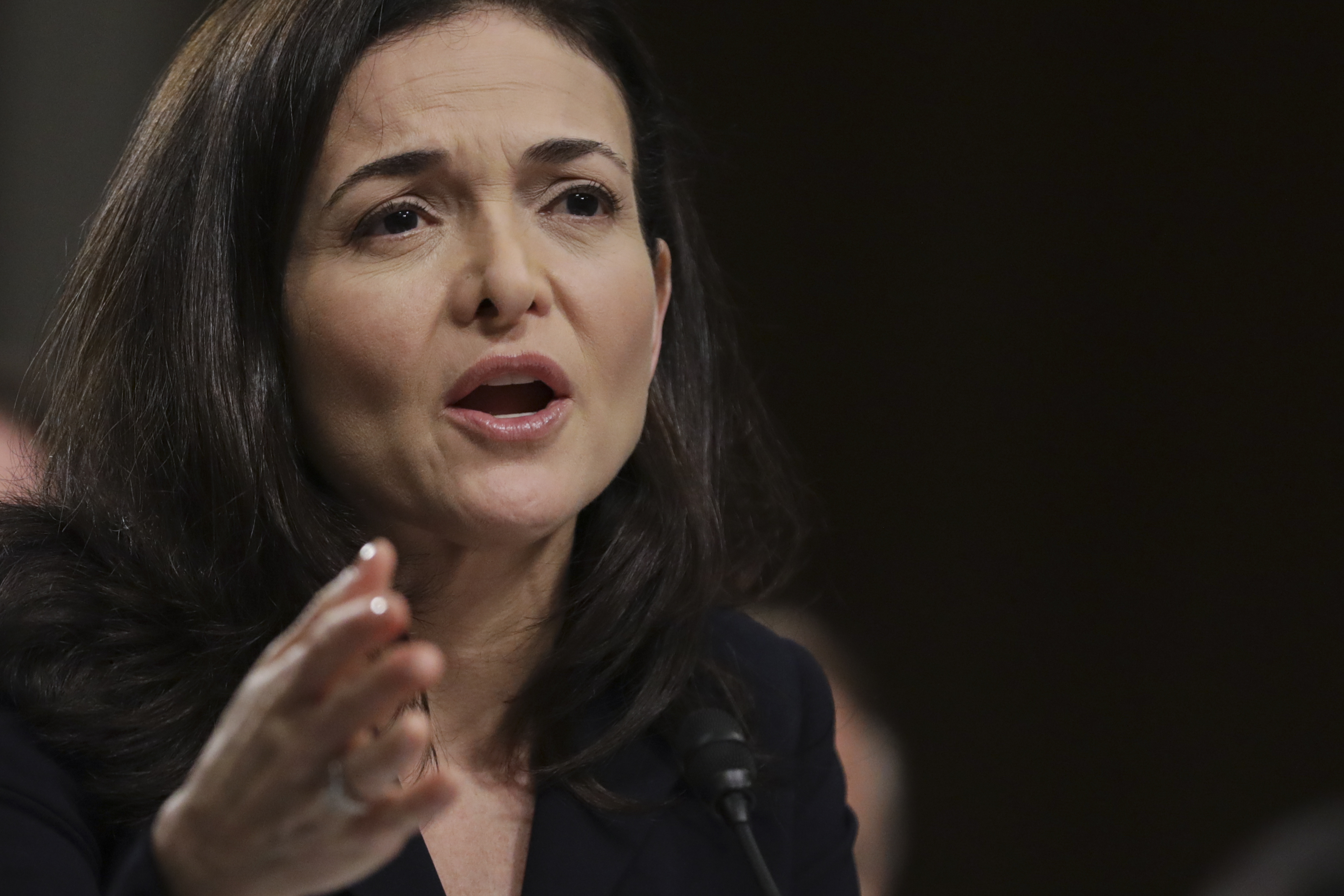
WASHINGTON, DC – SEPTEMBER 5: Facebook chief operating officer Sheryl Sandberg testifies during a Senate Intelligence Committee hearing concerning foreign influence operations’ use of social media platforms, on Capitol Hill, September 5, 2018 in Washington, DC. Twitter CEO Jack Dorsey and Facebook chief operating officer Sheryl Sandberg faced questions about how foreign operatives use their platforms in attempts to influence and manipulate public opinion. (Photo by Drew Angerer/Getty Images)

Scared Tactics

Indeed, China does not share the United States’ values on individual freedoms and privacy. And yes, breaking up Facebook could weaken its products like WhatsApp, providing more opportunities for apps like Chinese tech giant Tencent’s WeChat to proliferate.

But letting Facebook off the hook won’t solve the problems China’s influence poses to an open and just internet. If Framing the issue as ‘strong regulation lets China win’ creates a false dichotomy. There are more constructive approaches if Zuckerberg seriously wants to work with the government on exporting freedom via the web. And the distrust Facebook has accrued through the mistakes it’s made in the absence of proper regulation arguably do plenty to hurt the perception of how American ideals are spread through its tech companies.
Breaking up Facebook may not be the answer, especially if it’s done in retaliation for its wrong-doings instead of as a coherent way to prevent more in the future. To that end, a better approach might be stopping future acquisitions of large or rapidly growing social networks, forcing it to offer true data portability so existing users have the freedom to switch to competitors, applying proper oversight of its privacy policies, and requiring a slow rollout of Libra with testing in each phase to ensure it doesn’t screw consumers, enable terrorists, or jeopardize the world economy.

Resorting to scare tactics shows that it’s Facebook that’s scared. Years of growth over safety strategy might finally catch up with it. The $5 billion FTC fine is a slap on the wrist for a company that profits more than that per quarter, but a break-up would do real damage. Instead of fear-mongering, Facebook would be better served by working with regulators in good faith while focusing more on preempting abuse. Perhaps it’s politically savvy to invoke the threat of China to stoke the worries of government officials, and it might even be effective. That doesn’t make it right.


17 Jul 2019

Daily Crunch: Neuralink prepares for brain-computer testing

The Daily Crunch is TechCrunch’s roundup of our biggest and most important stories. If you’d like to get this delivered to your inbox every day at around 9am Pacific, you can subscribe here.

1. Elon Musk’s Neuralink looks to begin outfitting human brains with faster input and output starting next year

Musk said that in the long term, Neuralink really is about figuring out a way to “achieve a sort of symbiosis with artificial intelligence.”

For now, however, the plan is to use a robot that operates somewhat like a “sewing machine” to implant threads, which are incredibly thin, deep within a person’s brain tissue, where it will be capable of performing both read and write operations at very high data volume.

2. AI photo editor FaceApp goes viral again on iOS, raises questions about photo library access

In this current wave of virality, some new questions are floating around about FaceApp, like whether it uploads your camera roll in the background. We found no evidence of this, and neither did security researcher and Guardian App CEO Will Strafach or researcher Baptiste Robert.

3. Europe is now formally investigating Amazon’s use of merchant data

European regulators have announced a formal antitrust investigation of Amazon’s use of data from third parties selling on its e-commerce platform.

Lora DiCarlo’s debut product, Osé, set to release this fall. The company says the product is currently undergoing changes and will look different upon release.

4. CES will allow sex tech on a one-year trial basis, and finally bans booth babes

This comes after the CTA royally messed up with sex tech company Lora DiCarlo last year. The CTA revoked an innovation award from the company, only to later re-award it and apologize.

5. Amazon sells over 175M items during Prime Day 2019, more than Black Friday & Cyber Monday combined

While Prime Day 2018 became the biggest sales day in Amazon history, it’s getting harder to directly compare one Prime Day sale with another, because Amazon keeps stretching them out.

6. With help from ‘Game of Thrones,’ HBO conquers Netflix in Emmy nominations

When the Emmy nominations were announced last year, Netflix had a big win, overtaking HBO for the first time. But this year, HBO is back in the lead, with 137 nominations compared to Netflix’s 117.

7. The need-to-know takeaways from VidCon 2019

VidCon, the annual summit for social media stars and their fans to meet each other, drew more than 75,000 attendees over the past week. (Extra Crunch membership required.)

17 Jul 2019

Let CrunchMatch simplify your networking at Disrupt SF 2019

Set in the city where startup dreams began, TechCrunch’s flagship tech conference — Disrupt San Francisco 2019 — takes place October 2-4. And with more than 10,000 attendees converging on Moscone North Convention Center, the networking possibilities can seem downright daunting. More like a contact sport than a business opportunity, right?

Why waste your valuable time talking to the wrong people? Reap the benefits of simplified networking with CrunchMatch. This free business match-making platform — available to attendees with Innovator, Founder or Investor passes — helps you find and connect with the people who can move your business forward.

How does it all work? Qualified pass holders will be able to access the platform via the Disrupt app to fill out their CrunchMatch profile outlining their specific roles, goals and the type of people they want to meet. Founders, for example, would list category, stage, location, funding status, etc. Investor profiles might include investment categories, preferred funding stage, geographic preferences and the like.

It’s not just for founders and investors. Whether you’re a developer looking for founders, a technology service provider searching for new customers or a startup looking for marketers, CrunchMatch can help you zero in on the right people, too.

CrunchMatch gets to work matching people based on their mutual business interests. It suggests meetings and sends out invitations (which recipients can easily accept or decline). Here’s another real time-saver: CrunchMatch lets you reserve dedicated meeting spaces where you can network in comfort. No more shouting just to be heard.

At a conference this size, an efficient strategic planning tool like CrunchMatch comes in handy. You’ll gain access to the Disrupt app in September, which gives you plenty of time to view the CrunchMatch platform and vet meeting requests before you step foot inside the Moscone Center.

Here’s what Michael Kocan, managing partner at Trend Discovery, had to say about his experience with CrunchMatch:

I scheduled more than 35 meetings with startups that I pre-vetted using CrunchMatch, and we made a significant investment in one of them.

On the other side of the investor/founder coin, Caleb John, co-founder of Cedar Robotics, appreciated the platform’s time-saving efficiency:

CrunchMatch is a great way to pitch your ideas to investors quickly. Instead of approaching each one individually, just type up your pitch and send it to 50 people. Even if only 10 percent get back to you, you still have five investors. It’s one of the best benefits.

Make the most of your time at Disrupt San Francisco 2019. Buy an Innovator, Founder or Investor pass and take advantage of the many networking benefits CrunchMatch has to offer. We’ll see you in October!

Is your company interested in sponsoring or exhibiting at Disrupt San Francisco 2019? Contact our sponsorship sales team by filling out this form.

17 Jul 2019

AT&T signs $2 billion cloud deal with Microsoft

While AWS leads the cloud infrastructure market by wide margin, Microsoft isn’t doing too badly, ensconced firmly in second place, the only other company with double-digit share. Today, it announced a big deal with AT&T that encompasses both Azure cloud infrastructure services and Office 365.

A person with knowledge of the contract pegged the combined deal at a tidy $2 billion, a nice feather in Microsoft’s cloud cap. According to a Microsoft blog post announcing the deal, AT&T has a goal to move most of its non-networking workloads to the public cloud by 2024, and Microsoft just got itself a big slice of that pie, surely one that rivals AWS, Google and IBM (which closed the $34 billion Red Hat deal last week) would dearly have loved to get.

As you would expect, Microsoft CEO Satya Nadella spoke of the deal in lofty terms around transformation and innovation. “Together, we will apply the power of Azure and Microsoft 365 to transform the way AT&T’s workforce collaborates and to shape the future of media and communications for people everywhere,” he said in a statement in the blog post announcement.

To that end, they are looking to collaborate on emerging technologies like 5G and believe that by combining Azure with AT&T’s 5G network, the two companies can help customers create new kinds of applications and solutions. As an example cited in the blog post, they could see using the speed of the 5G network combined with Azure AI-powered live voice translation to help first responders communicate with someone who speaks a different language instantaneously.

It’s worth noting that while this deal to bring Office 365 to AT&T’s 250,000 employees is a nice win, that part of the deal falls on the under the SaaS umbrella, so it won’t help with Microsoft’s cloud infrastructure marketshare. Still, any way you slice it, this is a big deal.