Category: UNCATEGORIZED

14 Jul 2019

Don’t blame flawed Silicon Valley for the rot of Wall Street and Washington

The techlash is well underway. Blame Facebook! Blame Google! Blame Amazon! (Apple and Microsoft still seem relatively immune, for now.) And, I mean, there’s a lot of objectively blameworthy behavior there, especially in that first case. But I find myself wondering: why does the ire go beyond that, into irrational territory? What is it about the tech industry that makes it such a particular target?

There are a sizable number of people out there who think — no, who don’t just think, who take as a given, as something no right-thinking person would ever dispute — that the most recent US presidential election went the way it did purely because of Facebook. Russians! Cambridge Analytica! This is of course nonsense. (Hello, James Comey. Hello, Citizens United. Hello, mass media who trumped up Hillary Clinton’s email non-scandal for months.) Why is that?

I think it’s obvious that media treatment of Facebook and Google has grown much harsher since they have begun to realize that Facebook and Google are rapidly devouring the advertising money on which the media feed. I’m not suggesting that publishers are telling journalists to be critical; I’m suggesting that journalists are individually well aware of what’s going in their industry and are individually, but en masse, aligning against the threats to their collective livelihood.

But it’s not just that. There’s an odd tinge of betrayal, and also of hope, to the techlash. I say “odd” but it makes perfect sense. People are especially angry at the tech industry because they view it as the last engine of power which actually might change. It’s the old story about the drunk looking under the lamppost for his keys, writ large.

My theory is that people no longer believe that there is any hope of meaningfully changing the venal rentier systems of Wall Street or Washington. A learned helplessness has set in. It is understood that those titanic forces are beyond all hope; that the system which is meant to control them has been corrupted, by regulatory capture, gerrymandering, court-packing, and so forth.

No vitriol or protest will affect Goldman Sachs or Mitch McConnell. People vent fury, and come together to fight individual horrors like the border camps, but they don’t seriously think the overall system can meaningfully change.

Technology, though — we’re all about change. …Right? We’re the shapers of the future. We’re the hope for a meaningfully better world. …Right?

But as the tech industry has become more powerful, it has also grown more cautious, and more conservative. Over the last decade its influence has attracted an influx of the kind of people who in another era would have gone to Wall Street or Washington; establishment scions who may take on the mantle of subversion, because it’s fashionable in California, but don’t actually intend any.

(This is why I like the blockchain / cryptocurrency world; it’s full of people who want to change the established system, believe it’s possible, have a vision of a new and better order, and think they’re implementing it. Sure, this also means they attract all kinds of charlatans, cheats, and lunatic fringes — but whether they’re right or not, compared to the sclerotic mainstream, their approach is hugely appealing.)

I’m not saying mainstream change is impossible; just that the system has bred learned helplessness to that effect. I’m not saying tech is now a bastion of conservatism; just that it’s less quietly subversive than it used to be.

And I’m by no means saying that Silicon Valley doesn’t deserve criticism. I am, however, saying that raging at it for the absence of outcomes that only Wall Street and Washington can bring is pretty counterproductive. Better to remember that often the fault lies not in our social media, Horatio, but in our elected representatives; and if that system of representation itself has gone awry, there’s may not be a lot that technology itself can do about it.

14 Jul 2019

Week-in-Review: Google’s never-ending autonomous road trip

Hello, weekend readers. This is Week-in-Review where I give a heavy amount of analysis and/or rambling thoughts on one story while scouring the rest of the hundreds of stories that emerged on TechCrunch this week to surface my favorites for your reading pleasure.

Last week, I talked about how Alexa wasn’t forgetting what you requested because that data was more valuable than one might think.


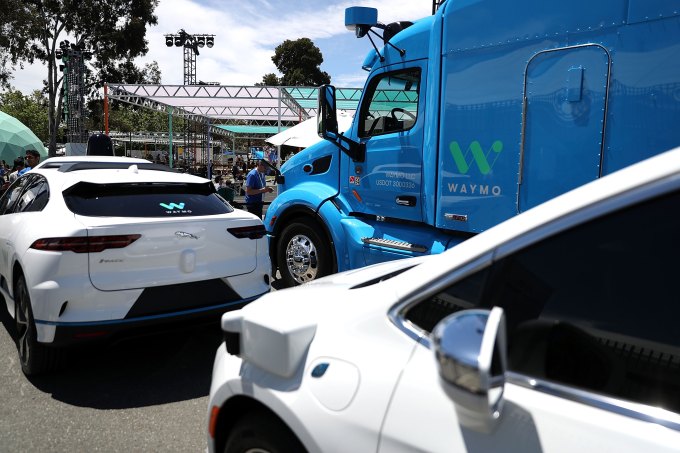
Photo by Justin Sullivan/Getty Images

The big story

In thinking about what to highlight in this week’s newsletter, I was tempted to talk about Zoom and Apple and Superhuman and the idea that secure communications can get screwed up when consent is bypassed, and I’m sure that’s something I’ll dig more into down the road, but what intrigued me most this week was single factoid from Google’s self-driving unit.

Waymo’s CTO told TechCrunch this week that the company has logged 10 billion miles of autonomous driving in simulation. That means that while you might have seen a physical Waymo vehicle driving past you, the real ground work has been laid in digital spaces that are governed by the laws of game engines.

The idea of simulation-training is hardly new, it’s how we’re building plenty of computer vision-navigated machines right now, hell, plenty of self-driving projects have been built leveraging systems like the traffic patterns in games like Grand Theft Auto. These billions of logged miles are just another type of training data but they’re also a pretty clear presentation of where self-supervised learning systems could theoretically move, creating the boundaries for a model while letting the system adjust its own rules of operation.

“I think what makes it a good simulator, and what makes it powerful is two things,” Waymo’s CTO Dmitri Dolgov told us. “One [is] fidelity. And by fidelity, I mean, not how good it looks. It’s how well it behaves, and how representative it is of what you will encounter in the real world. And then second is scale.”

Robotics and AV efforts are going to rely more and more on learning the rules of how the laws of the universe operate but those advances are going to be accompanied by other startups’ desires to build more high visual fidelity understanding of the world

There are plenty of pressures to create copies of Earth. Apple is building more detailed maps with sensor-laden vehicles, AR startups like are actively 3D-mapping cities using crowd-sourced data and game engine companies like Unity and Epic Games are building engines that replicate nature’s laws in digital spaces.

This is all to say that we’re racing to recreate our spatial world digitally, but we might just be scratching the surface of the relationship between AI and 3D worlds.

Send me feedback
on Twitter @lucasmtny or email
lucas@techcrunch.com

On to the rest of the week’s news.

(Photo: by Chip Somodevilla/Getty Images)

Trends of the week

Here are a few big news items from big companies, with green links to all the sweet, sweet added context.

  • Trump must unblock his Twitter critics
    Twitter is a consumer product, so politicians using it might feel like its their own personal account, but when they use it for political announcements it becomes an official communications channel and using features like blocking stifles national free speech. So says an NY-based appeals court this week of President Trump’s habit of blocking critics. It’s undoubtedly a ruling that’s going to have far-reaching implications for U.S. political figures that use social media. Read more here.
  • Nintendo switches up the Switch
    The Nintendo Switch arrived on the scene with the bizarre notoriety of being a handheld system that was also a home console, but it’s not enough for the Japanese game co to capture the hybrid market, it’s looking to revisit the success it had back in the peak Nintendo DS days. The company announced the Switch Lite this week, which strips away a number of features for the sake of making a smaller, simpler version of the Nintendo Switch which is handheld-only and sports a longer battery life. Read more here.
  • Google and Amazon bury the home-streaming hatchet
    At long last, one of the stranger passive aggressive fights in the smart home has come to a close. Amazon’s Prime Video is finally available on Google’s Chromecast and YouTube is now on Fire TV after a years-long turf war between the two platforms. Read more here.
  • AT&T maxes out its HBO ambitions
    When AT&T bought HBO, via its Time Warner acquisition, execs made clear that they had acquired a premium product and planned to shift its standing in the market. The company announced this week that it will be launching a new service called HBO Max next year that will bring in new content including “Friends.” Read more here.

GAFA Gaffes

How did the top tech companies screw up this week? This clearly needs its own section, in order of badness:

  1. Apple nips a security nightmare in the bud:
    [Apple disables Walkie Talkie app due to vulnerability]
  2. Amazon warehouse workers plan strike:
    [Amazon warehouse workers in Minnesota plan to strike on Prime Day over labor practices]

wannacry hero 2 image

Extra Crunch

Our premium subscription service had another great week of deep dives. My colleague Zack Whittaker revisited the WannaCry ransomware that hit in 2017 with a lengthy profile and interviews with the researchers that stopped the malware dead in its tracks. After you dig into that profile, you can check out his Extra Crunch piece that digs further into how security execs and startups can learn from the saga.

What CISOs need to learn from WannaCry

“…There is a good chance that your networks are infected with WannaCry — even if your systems haven’t yet been encrypted. Hankins told TechCrunch that there were 60 million attempted “detonations” of the WannaCry ransomware in June alone. So long as there’s a connection between the infected device and the kill switch domain, affected computers will not be encrypted….”

Here are some of our other top reads this week for premium subscribers. This week, we talked a bit about the future of car ownership and “innovation banking.”

Want more TechCrunch newsletters? Sign up here.

14 Jul 2019

Phuture Foods is creating a plant-based pork substitute for the Asian market

We met with a handful of Brinc’s top startups earlier this week, during a visit to the accelerator’s Hong Kong headquarters. The lion’s share of the demos involved hardware products, which has long been the organization’s core offering. Increasingly, however, food focused startups like Phuture Foods have become an important focus.

Whereas stateside companies like Beyond and Impossible largely work to approximate beef, the Malaysian startup has been pioneering on a plant-based pork substitute. The meat is in particularly high demand in the Asian market, where it’s targeting initial sales, beginning with Hong Kong in the next few months and then branching out into Singapore shortly after.

The foodstuff is designed to mimic the taste and texture of pork, using a variety of plants, including wheat, shiitake mushrooms and mung beans. The company has received support from Hong Kong-based angel investors, beginning with online sales, before rolling out to area super markets roughly five months from now.

Phuture’s primary value play is sustainability, and increasing important issue, particularly under the strain of population growth in areas like China. Price wise, it hopes to hit a target of at or lower than that of actual pork products, which could certainly add appeal among consumers for whom ethical and environmental concerns aren’t at top of mind.

The foodstuff is Halal, a key feature for markets like Malaysia and Singapore. The company is also exploring kosher certification, along with chicken and lamb substitutes.

13 Jul 2019

Roblox EC-1, immigration requirements doubling, grief in the workplace, and cannabis startups

The Roblox EC-1

Following in the wake of our deep profiles of Patreon and Niantic, we have our next EC-1 package, this time on children’s gaming platform Roblox . Extra Crunch writer Sherwood Morrison has covered gaming and startups for years, and he got an in-depth, behind-the-scenes look at the incredibly popular startup with interviews with many of the company’s principals. This is your weekend read.

How Roblox avoided the gaming graveyard and grew into a $2.5B company

In part one of this EC-1, Morrison looks at the origin story of Roblox, which has to be one of the most interesting I have read in some time. Founders Dave Baszucki and Erik Cassel first worked together on a physics simulation engine called Knowledge Revolution before founding Roblox in 2004 (then known as Dynablox).

Since those humble origins 15 years ago, Baszucki and his team have grown the company dramatically through a sequence of smart strategic moves that Morrison illuminates, eventually culminating in the company’s massive $150 million Series F venture capital round last year from Greylock and Tiger Global, valuing the company at a reported $2.5 billion. Roblox now has 90 million active users, tripling in just a few short years.

Digging into the Roblox growth strategy

Meanwhile, in part two of this EC-1, Morrison illuminates the challenges and opportunities facing Roblox in the years ahead as it looks to conquer a greater swath of the gaming market, or what Baszucki calls “human co-experience.”

First and foremost, Roblox has to expand internationally and capture a greater share of children’s entertainment. Then, the company wants to start to expand beyond its children’s gaming roots to reach other, older demographics. It has to do all this while also maintaining safety for its users and increasing the quality of its game engine against competitors like Unity and Unreal.

As Morrison writes:

If Roblox can continue to grow, it will serve as a guiding example for a whole new generation of companies. And if it continues to evolve, it may yet prove that human co-experience is more than a fever dream. A whole generation of companies failed to create immersive social environments — but in the space between games and chat, Roblox may yet prove that there’s a whole new social category waiting to be discovered.

Be sure to check out both parts, and if you haven’t already, be sure to read the Patreon EC-1 and the Niantic EC-1 as well for similar deep profiles of leading Silicon Valley startups.

Minimum investment for EB-5 investor green card expected to more than double

Immigrants make up a huge portion of Silicon Valley’s workers and investors. That’s why news that the Trump Administration is changing the eligibility for investor green cards is a huge story, particularly for immigrants from India.

13 Jul 2019

Personality of things

Humans are starting to get better acquainted with personal assistants such as Google Assistant, Siri, Cortana, and Bixby. But how would people feel about personalities translating to automobiles, laptops and other household items? Would we want a single seamless personality across all devices, or would we prefer to build new relationships with each of these things? Would we want these things to understand and empathize with us? Do we really need these things to “feel” what we feel or do we just need the experience that they “get” us.

Humans have an innate habit of anthropomorphizing objects around them, especially those that move, grow, or talk to them. As technological advances enable robotics and IoT devices with greater intelligence, humans are likely to assign personality to more devices that they interact with in their daily life.

The vacuum cleaner, which was once a simple tool, is now a Roomba with a cheerfully clueless personality as it makes happy chimes and bumps its way through the living room. And while replacing a standard vacuum cleaner is no big deal, many Roomba users demand that they get their exact same robot back from repairs and that it not be “killed” and scrapped for parts. They view it almost as a part of the family.

Tools on the other hand, are replaceable. And the more an intelligent system or piece of hardware feels like a tool, the more replaceable it becomes. In Star Trek, the crew doesn’t spare a second thought about replacing and upgrading the ship computer, which speaks to them in a monotonous disembodied voice because they view it as a tool. However upgrades or maintenance of Commander Data, an android crewmember, bring substantial concern because his human shape and personality make him feel alive and relatable. Further, studies have shown that humans are more likely to forgive mistakes if they are coming from a device that they view as “alive” whereas they have no such leniency for things they view as tools.

How does this apply to our future? Logically, a company concerned about improving retention and engagement, assigning a device a strong personality seems like an obvious way to capitalize on human anthropomorphization, and grant you leeway on bugs, while boosting retention and engagement. However, the real challenge is choosing how much personality to inject.

Personality Risk?

Going back to the cultural differences, having too much personality in a device can be a potential risk factor: some people may enjoy a new digital friend, but others may find the idea of a tool trying to be personable with them annoying.

An extreme example of this can be found in the book (and movie) The HitchHiker’s Guide to the Galaxy where doors with “real people personalities” that sigh happily as people walk through them, which can get extremely annoying over time. However, designers today are already thinking about when to “tone down” the personality of their devices.

Digital assistant designers today are cautious about how they use the assistant’s voice. For example, they are careful not to use the assistant’s voice for anything that could interrupt or otherwise irritate the end user, including alarms, timers, and even intercom broadcasts. Google Home lets users make outgoing phone calls, but not receive calls in (thus avoiding the assistant bothering you by ringing), and Amazon has been hesitant in its adoption of prompts or push notifications on Alexa. Major voice assistants have even started reducing how talkative they are. Google and Amazon have recently reduced the number of confirmation remarks for simple commands like “turn off the lights” to avoid users getting annoyed by hearing “okay, turning off the lights” when they just want to sleep.

Personality of Robotics

Robotics are an obvious place to inject artificial personalities, as humans already personify most robots. Researchers at Stanford are experimenting with methods of navigating human occupied spaces such as doorways and hallways with their Jackrabbot project. They use tones and gestures to display appeasement and frustration as it navigates in crowds of people. Other projects are even more direct in evoking emotion. Tombot robotics, for example, builds a golden retriever robot that acts as a support animal. Other companies are taking a horizontal approach: Embodied builds software designed to run on various robots to enable more lifelike and meaningful interactions.

Implications

Attaching personality to consumer products can create a greater sense of connection to the devices that we use. This attachment can make the use of these devices more “sticky,” increasing engagement over the long term, and potentially boosting the attach rate of services. However, this may be a delicate line to navigate: products that have too much personality can irk users and cause them to abandon the product entirely. Tamagotchi is a notable example of this phenomenon. Best practice may be to simply have a slider that allows users to adjust how much personality they want in their devices: from utilitarian tool to best friend. That way, humans have control over their things.

13 Jul 2019

Is blitzscaling killing early employee equity opportunities?

Silicon Valley has many dreams. One dream — the Hollywood version anyway — is for a down-and-out founder to begin tinkering and coding in their proverbial garage, eventually building a product that is loved by humans the world over and becoming a startup billionaire in the process.

The more prosaic and common version of that Valley dream though is to join an early-stage company right before its growth kicks into high gear. Sure, those early employees might only have a smidgen of equity, but that equity could be worth a whole heck of a lot if they join the right startup.

Every startup has a window of opportunity, a timeframe in which early employees can join while the stock option strike prices are low and the equity grants are high. Join before the big uptick in valuation, and suddenly what might have been an otherwise nice couple of hundred K dollars in the coming years becomes actually, well, in the Bay Area, a reasonably-sized domicile.

Yet, that opportune window seems to be shrinking in size, making it harder for potential startup employees to nail the timing necessary to garner their own best financial return.

For every Roblox, which as we profiled in-depth this week, took almost two decades to reach its current apotheosis, there is a Brex, which seems to reach unicorn status in no time at all. And such stories — while certainly anecdotal — seem to be more commonplace than ever.

Part of the reason for that fast early valuation growth is that Silicon Valley has simply learned how to grow even faster, even earlier. As venture capitalist Reid Hoffman and Chris Yeh discuss in their book Blitzscaling, there are now frameworks and tried-and-true techniques to not just grow a startup, but to grow it at a dizzying rate. Through better marketing channels, growth strategies, and product development, we have indeed made progress at cutting at least some of the time to better valuations.

That rapid transformation from nothing to everything though gives very little time for early employees to discover a startup through the grapevine when the financial conditions are still interesting.

Half a decade ago, I wrote about the plight of early employees in an article I entitled “The Problem with Founders.” I wrote then that:

The secret of Silicon Valley is that the benefits of working at a startup accrues almost entirely to the founders, and that’s why people repeat the advice to just go start a business. There is a reason it is hard to hire in Silicon Valley today, and it isn’t just that there are a lot of startups. It’s because engineers and other creators are realizing that the cards are stacked against them unless they are the ones in charge.

My reasoning then was simple: early employees take on pretty much just as much risk as their founders do, but for a fraction of the equity. Now, with startups jumping to unicorn status in sometimes as short as a handful of months, that risk-reward ratio seems to be even more off-kilter for those early employees.

And it doesn’t just have to be a Brex -scale transformation either. The rapid increase in the size and valuation of series A rounds of financing the past three years means that engineers and salespeople who might have an employee number in the low double digits are suddenly seeing their options struck at a couple of hundred million in valuation. Exits, meanwhile, aren’t suddenly getting richer to compensate.

I started to notice this pattern over the past few weeks in the course of several conversations with software engineering friends of mine who had gotten excited about very early-stage companies — say, just a handful of employees — but who walked away from their offer letters due to already sky-high company valuations.

Now, there is an argument to be made that joining these sorts of companies is precisely where the best opportunities lie. Sure, the valuations are already high, but these are startups with the financial resources and the backing that might allow them to compete effectively. So maybe the equity is smaller and more expensive, but ultimately, if the startup is more likely to be successful, the expected value function might actually be favorable.

Maybe. Yet it is also hard to see how these startups, which despite their rich valuations have barely laid any foundation for success, are a safer bet than a similarly-valued startup with years of experience under its belt and a growth strategy based upon dependable results. Even worse, early employees are perhaps taking even more financial risk, since the preference stack of the venture capital could mean that smaller exits are particularly unfavorable to them.

Plus, the shrinking opportunity window for leading startups means that the difference in financial outcome between two early employees — what could be millions of dollars upon an exit — could have been decided based on who joined the week before the other. That doesn’t seem fair or right, but is increasingly widespread in our industry.

As with most macroeconomic structural changes, there’s not much for anyone to do. Founders aren’t going to take lower valuations or less money just to make the lives of their early employees a bit more rosy, and certainly venture capitalists aren’t going to lowball their offers in a hyper-competitive investment environment. Indeed, the very excitement of a sudden unicorn may be the best attraction for candidates to hear a startup’s pitch and ultimately join.

But when it comes to that Silicon Valley dream of a nice house from a decent return on exit, it’s getting narrower and less widely-distributed. Blitzscaling is making a lot of people a lot of wealth, but early employees? Not so much.

13 Jul 2019

W(hy)TF are Japan and South Korea in a trade war?

Another week, another trade war. And unlike most trade wars these days, this one didn’t originate from the confines of the Rose Garden with the Marine One whirlybird in the background. No, like any Ice Bucket Challenge-worthy meme, others are getting in on the trade war bandwagon and making it their own.

Cue Japan and South Korea. The two countries have slipped into their own trade war over the past few weeks, a conflict that now threatens the foundations of Japan’s supplier industry, Samsung Electronics, and global smartphone and computer shipments.

But why a trade conflict? If the U.S./China trade war emanates from the dark recesses of President Trump’s brain, then this new trade war emanates from the dark chapters of Japan and South Korea’s collective and sad history.

One of the saddest of those chapters is the plight of Korean comfort women — women who were forced into sexual slavery by wartime Japan in the 1930s and 1940s to service soldiers throughout the Japanese empire. Given the dates of those atrocities, many of those women are now reaching the late stages of their lives, as are men who were impressed into wartime labor in Japanese factories to fight the Allies.

Late last year, Korea’s highest court ordered Mitsubishi to pay essentially reparations for the company’s use of slave labor throughout the Japanese occupation and World War II, a decision that mirrored the court’s earlier judgment against Nippon Steel & Sumitomo Metal a few weeks before.

As the Korean court system has attempted to claw back those reparations from Japanese companies, Japan has not sat still. The country’s prime minister Shinzo Abe and his government have responded by placing a broad trade embargo on South Korea of high-technology goods under “national security” grounds, arguing that Seoul has failed to find a path forward to mend the fences between the two countries.

This past week, the two countries met to try to resolve the tensions, but failed to agree on a solution. That leaves the export bans in place, jeopardizing the supply chains for many electronics products.

Take Samsung Electronics for instance. The Korean company is the number one manufacturer of memory DRAM chips, accounting for more than 40% of the nearly $100 billion market, and also the number one manufacturer of NAND flash chips, with 35% share. SK Hynix — another Korean company — was the second largest manufacturer of DRAM chips with a roughly 31% share. Samsung and other Korean manufacturers are also market leading in industries like semiconductors and LCD displays.

Korea’s electronics companies have deep supply chains in Japan, which produce everything from photoresist chemicals and materials for semiconductors to the actual manufacturing equipment and parts required to operate factories. Thus, Japan’s trade embargo was expected to compromise two of Korea’s leading manufacturers, a punch to Korea’s fragile economy and a wake-up call for President Moon to reach a compromise with Prime Minister Abe.

Except, as often happens in the wacky world of trade, the export ban had unexpectedly positive consequences.

An anticipated glut of DRAM memory chips this year had pushed prices to new lows, slashing profits at Samsung Electronics in the company’s worst drop in four years. The company’s stock has been battered: from August last year until January, the company lost a third of its value.

And then Japan interceded. Supplies of DRAM chips are suddenly dropping — and prices are rising in turn. As the Wall Street Journal noted Thursday, Japan’s curbs are actually shoring up the memory chip market and leading to better than expected results for Samsung and other Korean manufacturers. While it has had a topsy-turvy few weeks, the stock price for Samsung Electronics is now almost back to where it was this time last year.

In other words, Japan’s punch was more like a stimulus. Whoops.

Such short-term gains may be amusing for trade policy watchers, but any returns are likely to be short-lived of course. And the news is much worse for semiconductors. As the Nikkei Asian Review noted this week, “Any disruption in the supply of EUV photoresist — a coating product used in the extreme ultraviolet lithography vital to the most complex semiconductors — could set back Samsung’s plans to launch its 7-nanometer chips around the turn of the year.” The company has stockpiled some materials, but if the trade war extends from weeks to months, it will eventually have to succumb from the damage to its supply chain.

All of which is to say that what started as a trade spat might boil over into shrinking quantities of memory chips, displays, and next-generation semiconductors — in other words, pretty much everything you need to build a computer or smartphone today.

There are a couple of lessons for the tech industry here. First, while Silicon Valley and other tech regions enjoy a mostly ahistorical outlook, the antecedents of the world are always brimming just beneath the surface. The comfort women situation may seem tangential to the day-to-day challenges of building a hardware product, but politics — particularly visceral, human politics — has a way of interceding far from its remit.

Second, even in a globalized world where national politicians lust for economic growth (and certainly Prime Minister Abe and President Moon are heavily invested in growing their respective economies), networked and cross-border supply chains are increasingly fragile. Just as Huawei discovered the dangers of relying on American technology over the past year, now Korean companies are learning about the dangers of depending on Japan’s high technology industry for critical components.

Third, the development of 5G wireless technology standards and associated hardware devices just increasingly gets battered. The U.S. has specifically targeted Huawei over 5G, but Samsung also has 5G modems and network equipment underway, which are now threatened in Japan and South Korea’s trade war. As wireless technology has become essential to global commerce and entertainment the past few decades, the political importance of controlling this technology has increased dramatically.

Ultimately, what’s the resolution to this new trade war? Well, that’s part of the challenge. President Moon doesn’t want to agree to a quick truce, worrying that such a rapid negotiation would appear to be giving in to Japan’s demands — a symbolism that he is unlikely to accept. Meanwhile, Prime Minister Abe faces the opposite forces, with the Japanese government holding the line that all claims to reparations over the comfort women and wartime slavery were settled by the two countries’ bilateral trade agreement from the 1960s and other diplomatic agreements.

Yet, both politicians need economic growth to succeed, and compromising their leading companies from selling their leading exports is not a route to that outcome. Both are principled leaders, but both are ultimately pragmatic. And so as it happens, it may not be the State Department that gets a deal over the line. No, maybe it’s time Tim Cook gets on his iPhone and talks about, well, iPhones.

13 Jul 2019

Startups Weekly: Zoom, Superhuman and small reactions to big scandals

Hello and welcome back to Startups Weekly, a weekend newsletter that dives into the week’s noteworthy startups and venture capital news. Before I jump into today’s topic, let’s catch up a bit. Last week, I noted the big uptick in VC spending in 2019. Before that, I struggled to understand WeWork’s growth trajectory.

Remember, you can send me tips, suggestions and feedback to kate.clark@techcrunch.com or on Twitter @KateClarkTweets. If you don’t subscribe to Startups Weekly yet, do that here, now, please, thanks.

Anyways, onto today’s topic. Venture capitalist’s favorite company, Zoom, endured its first high-profile scandal this week.

After security researcher Jonathan Leitschuh published a Medium post detailing a major security vulnerability within Zoom’s technology platform, the company patched its Mac video conferencing client to remove a rogue web server that allowed any website to join a video call without permission. Users can now update their client or download the new version from Zoom’s website. Apple has also pushed a silent update for Mac users removing the vulnerable component, a move meant to protect users both past and present from the undocumented web server vulnerability without affecting or hindering the functionality of the Zoom app itself.

Zoom only made the call to remove the insecure web server after intense pushback. I’m not here to share my own opinions on Zoom’s security or lack thereof, what I’d like to point out is the company’s poor reaction to the PR nightmare. Yes, Zoom ultimately provided a fix, but initially, it failed to solve the underlying issue.

Zoom’s major hiccup comes shortly after users and onlookers attacked the exclusive email service Superhuman. Superhuman tracks email you send and receive and gives you tools to help manage it. They do this on your behalf, but without the permission of the recipient of your emails.

Superhuman was much faster than Zoom to offer an official response amid complaints. Just a couple of days after a blog post outlining security flaws within the service went viral, Superman announced it was going to remove location logging altogether, get rid of all existing location data, turn off read receipts by default and make them an opt-in feature for users. This is all nice and good and definitely shifted attention away from the key issue: Pixel-tracking (embedding the commonly used advertising tool of a “pixel” in emails to report back to senders info like whether an email’s been opened or not). Superhuman still has the exact same pixel-tracking capabilities, what’s changed is that users just need to turn on the feature.

Startups and public companies alike will do what they can to maintain features that benefit their businesses and will go to great lengths to shift consumer attention away from key issues, even when that means putting their own users at risk.

Anyways…

TC Sessions: Mobility

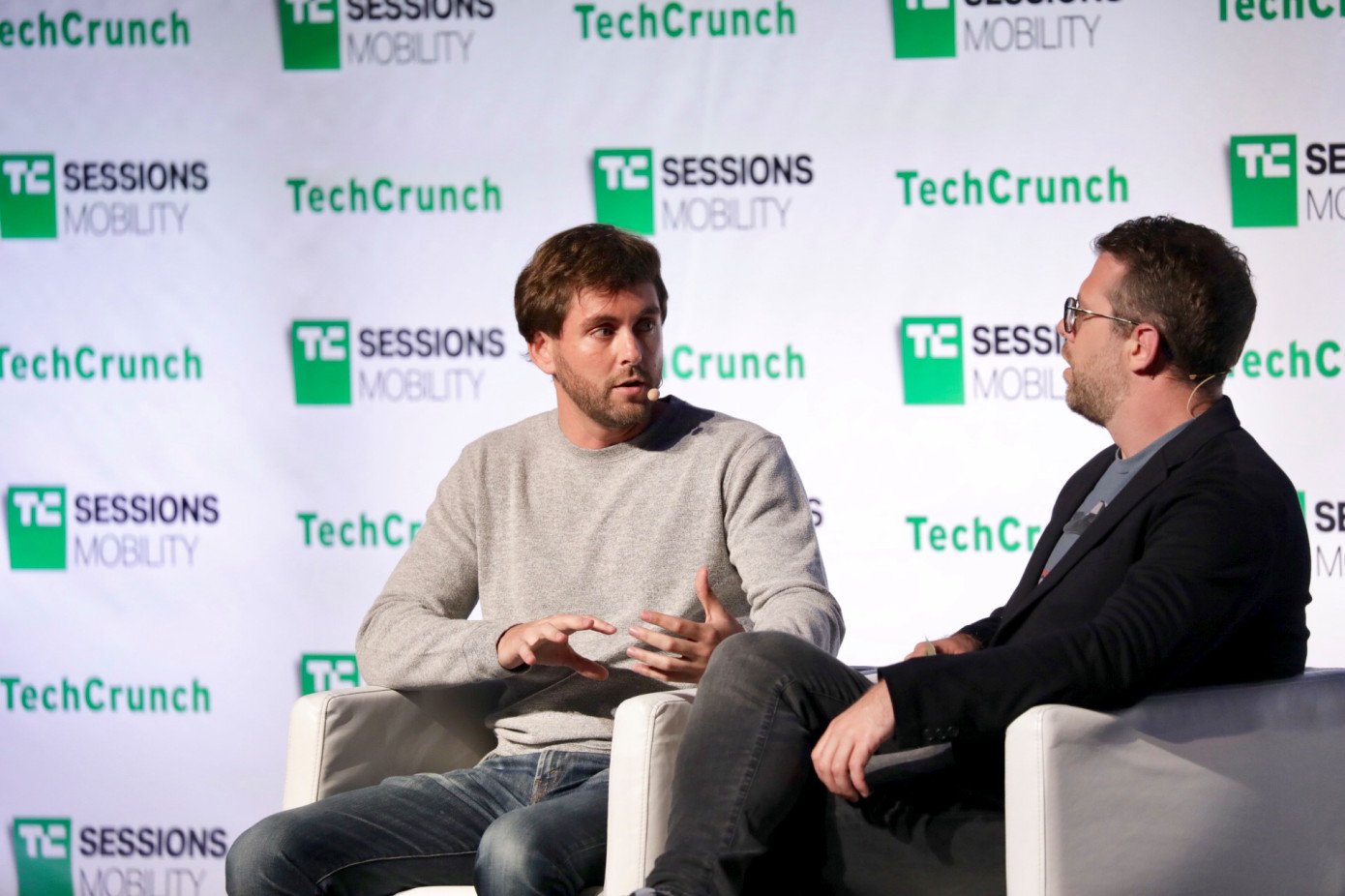
We hosted our first-ever mobility-focused conference this week in San Jose. In what was an incredibly successful, thought-provoking event, industry leaders gathered to discuss the issues plaguing startups, the future of micromobility, the scooter wars and more. A whole lot of mobility news corresponded with the event, including…

2D0A0089 1

Startup Capital

Who raised money this week?

New VC funds

Which VCs closed new funds this week?

Screen Shot 2019 07 10 at 11.44.14 AM

Snap’s startups

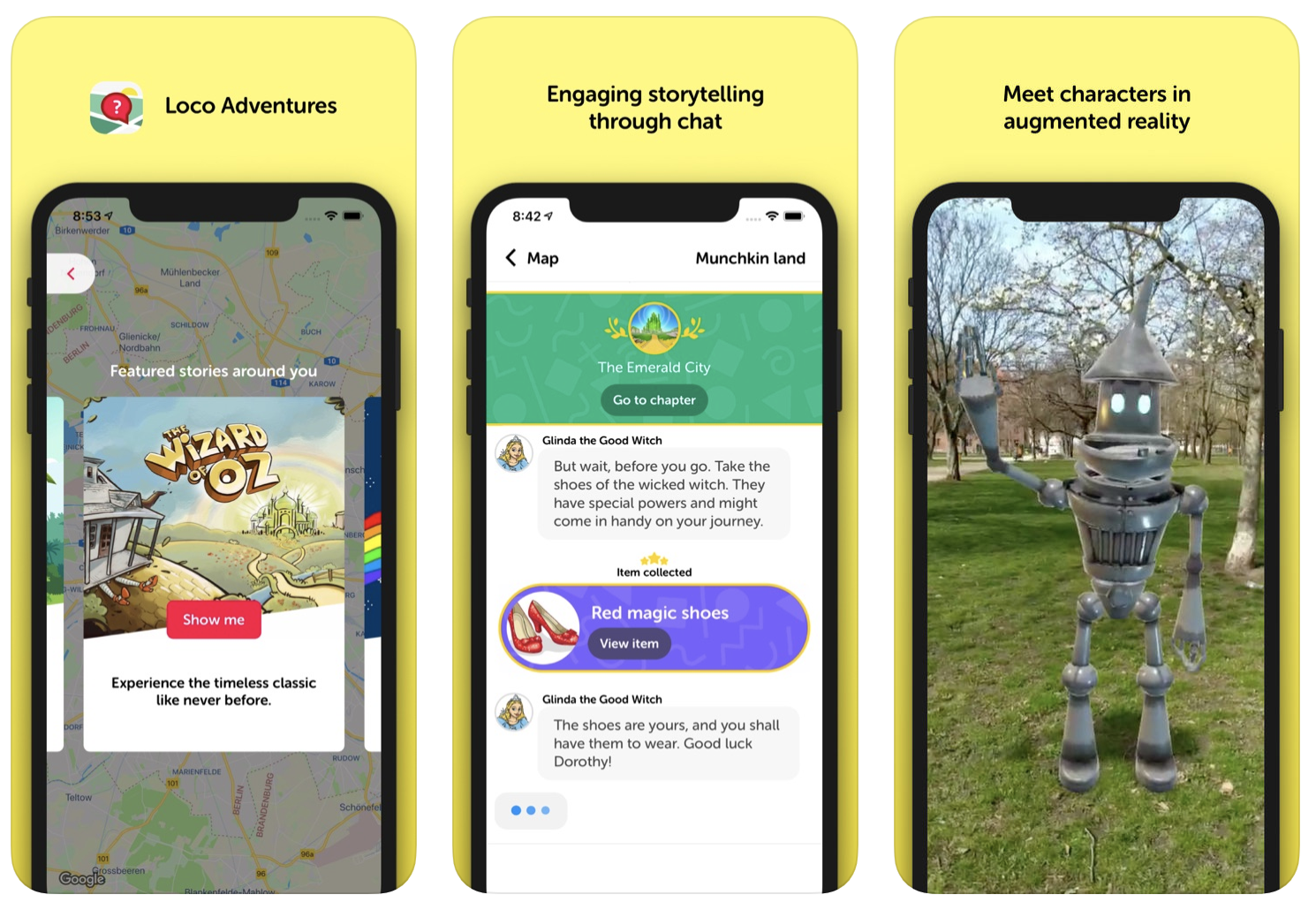
After generally being the butt of the public market’s jokes since its IPO, Snap is having a killer 2019, with its stock price nearly tripling in value. The successes are perhaps giving the company a moment to pause and think more about generating future value. Part of that equation is certainly the company’s Yellow accelerator that aims to invest in pre-seed startups that bring mobile users to shared experiences. We covered Yellow’s inaugural batch back in September; now TechCrunch’s Lucas Matney has the full rundown on Snap’s second class of bets.

Bumble and Badoo’s bad week

Following an extensive report in Forbes about Bumble’s parent company and its billionaire founder Andrey Andreev, the female-first dating app’s founder Whitney Wolfe Herd issued a statement on Tuesday. While Wolfe Herd says she was “mortified by the allegations” and “saddened and sickened to hear that anyone, of any gender, would ever be made to feel marginalized or mistreated in any capacity at their workplace,” the exec also detailed that “Badoo is currently conducting an investigation into the allegations, as well as compiling documentation to expose the factual inaccuracies that exist within the article.” We’ve got Wolfe Herd and Forbes’ statement in full here, as well as more on Forbes’ explosive investigation.

Extra Crunch

First of all, if you still haven’t signed up for Extra Crunch, I’m not sure what you’re doing. For a low price, you can learn more about the startups and venture capital ecosystem with exclusive deep dives, newsletters, resources and recommendations and fundamental startup how-to guides. Here are some of this week’s top-performing posts.

#EquityPod

If you enjoy this newsletter, be sure to check out TechCrunch’s venture-focused podcast, Equity. In this week’s episode, available here, Equity co-host Alex Wilhelm dives deep into this year’s IPOs.

Extra Crunch subscribers can read a transcript of each week’s episode every Saturday. Read last week’s episode here and learn more about Extra Crunch hereEquity drops every Friday at 6:00 am PT, so subscribe to us on Apple PodcastsOvercast, Pocket Casts, Downcast and all the casts.

13 Jul 2019

Valkyrie Industries is building a haptic VR suit for industrial training

Valkyrie Industries off-handedly refers to the current iteration of its VR suit as “Iron Man v. 1.” It’s a fitting reference. There’s a very “first half of the superhero film” vibe to the prototype. There are exposed wires everywhere and large, clunky 3D printed pieces that clip onto various body parts. In a more finalized version, it will probably look like something more akin to a wetsuit. For now, however, the wearable haptic product looks like a bit of steampunk cosplay.

We met with the London-based team at the Brinc accelerator in Hong Kong. I admit to being a bit wary at first mention of a haptic body suit for VR. We’ve seen a number of wearables throughout the years designed specifically to offer a more immersive gaming experience. Among the key places Valkyrie sets itself apart, however, is target market.

Rather than targeting the fairly limited world of VR gaming, however, the startup has its eyes on professional applications. This technology will almost certainly be cost prohibitive for the foreseeable future, making it something of a nonstarter for a majority of home users (the bill of materials for the current version is somewhere in the neighborhood of $1.5k). Big companies, on the other hand, would like be far more willing to invest in a technology that could simplify and streamline the training process, particularly for dangerous and otherwise complex positions.

The system utilizes electrical impulses to stimulate muscles, approximating resistance and touch. With the product still very much in the early stages (the three-person company is currently seed funded), we were unable to actually try out the product.

But Valkyrie has already demoed the product for a number of high profile companies and government industries, who are interested in the product for both training purposes and potential teleoperation, giving wearers the ability to control and manipulate objects at a safe distance.

13 Jul 2019

Valkyrie Industries is building a haptic VR suit for industrial training

Valkyrie Industries off-handedly refers to the current iteration of its VR suit as “Iron Man v. 1.” It’s a fitting reference. There’s a very “first half of the superhero film” vibe to the prototype. There are exposed wires everywhere and large, clunky 3D printed pieces that clip onto various body parts. In a more finalized version, it will probably look like something more akin to a wetsuit. For now, however, the wearable haptic product looks like a bit of steampunk cosplay.

We met with the London-based team at the Brinc accelerator in Hong Kong. I admit to being a bit wary at first mention of a haptic body suit for VR. We’ve seen a number of wearables throughout the years designed specifically to offer a more immersive gaming experience. Among the key places Valkyrie sets itself apart, however, is target market.

Rather than targeting the fairly limited world of VR gaming, however, the startup has its eyes on professional applications. This technology will almost certainly be cost prohibitive for the foreseeable future, making it something of a nonstarter for a majority of home users (the bill of materials for the current version is somewhere in the neighborhood of $1.5k). Big companies, on the other hand, would like be far more willing to invest in a technology that could simplify and streamline the training process, particularly for dangerous and otherwise complex positions.

The system utilizes electrical impulses to stimulate muscles, approximating resistance and touch. With the product still very much in the early stages (the three-person company is currently seed funded), we were unable to actually try out the product.

But Valkyrie has already demoed the product for a number of high profile companies and government industries, who are interested in the product for both training purposes and potential teleoperation, giving wearers the ability to control and manipulate objects at a safe distance.