Category: UNCATEGORIZED

10 Jul 2019

Opera founded startup OPay raises $50M for mobile finance in Nigeria

OPay, an Africa focused mobile payments startup founded by Norwegian browser company Opera, has raised $50 million in funding.

Lead investors include Sequoia China, IDG Capital, and Source Code Capital. Opera also joined the round in the payments venture it created.

OPay will use the capital (which wasn’t given a stage designation) primarily to grow its digital finance business in Nigeria—Africa’s most populous nation and largest economy.

OPay will also support Opera’s growing commercial network in Nigeria, which includes a motorcycle ride-hail app ORide and OFood delivery service.

Opera founded Opay in 2018 on the popularity of its internet search engine. Opera’s web-browser has ranked number two in usage in Africa, after Chrome, the last four years.
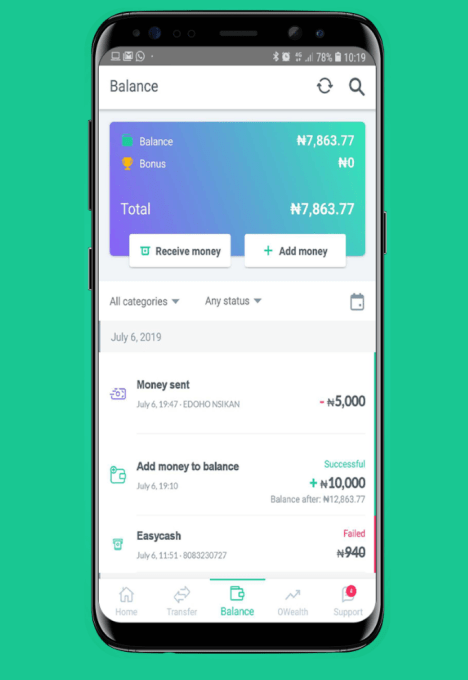
Opera Opay NigeriaOn the payments side, OPay in Nigeria has scaled to 40,000 active agents and $5 million in transaction volume in 10 months.

The $50 million investment in OPay is more than just another big round in Africa. It has significance for the continent’s tech-ecosystem on multiple levels.

To start, OPay’s raise tracks greater influence in African tech from China—whose engagement with African startups has been light compared to China’s deal-making on infrastructure and commodities. OPay founder Opera was acquired in 2016 for $600 million by a consortium of Chinese investors, led by current Opera CEO Yahui Zhou.

The majority of the investment for OPay’s raise comes from Chinese funds and sources, including Source Code Capital, Sequoia China, and GSR Ventures. There’s not a lot of statistical data on the value of Chinese VC investment in Africa, but a large portion of $50 million to a fintech venture stands out.

OPay’s VC haul also has significance vis-a-vis digital-finance in Nigeria. In tandem with other trends, it could support the shift of Nigeria surpassing Kenya as Africa’s digital payments leader. For years Kenya has outpaced Nigeria in P2P digital payments volumes and digital financial inclusion, largely due to the rapid adoption of mobile-money products, such as Safaricom’s M-Pesa.

Some of this is due in part to Nigeria’s Central Bank limiting the ability of non-banks (including telcos) to offer mobile payment services. The CBN eased many of those restrictions earlier this year. This opens the door for mobile-operators like MTN, with the largest phone network in Nigeria, to offer mobile-money products. In addition to fintech regulatory improvements, there’s been a gradual increase in VC flowing to Nigerian payment ventures.

The country’s leading digital payment company, Paga, raised $10 million in 2018 to further expand its customer base that now tallies 13 million. OPay’s $50 million backed commitment to grow mobile money in Nigeria should provide another big boost to digital-finance adoption across the country’s 190 million people.

And not to be overlooked is how OPay’s capital raise moves Opera toward becoming a multi-service commercial internet platform in Africa. Part of the $50 million investment includes diversifying country and product offerings. “Geographic expansion of OPay and other services is a key part of our plans,” Opera CEO Yahui Zhou told TechCrunch via email.

This could place OPay and its Opera supported suite of products on a competitive footing with other ride-hail, food-delivery, and payments startups across the continent. It could also mean competition between Opera and Africa’s largest multi-service internet company, e-commerce unicorn Jumia.   


10 Jul 2019

Remitly raises $220M to expand from money transfers to financial services, now at $900M+ valuation

When it comes to financial services in emerging markets, remittances — people sending money to each other across international borders, often not to established bank accounts — continues to be one of the biggest, with the World Bank estimating that $529 billion was sent in and out of lower-income countries in 2018, up 9% over 2017. And today, Remitly, one of the bigger startups providing these services, is announcing that it has raised $220 million in funding to ride that wave.

CEO and founder Matt Oppenheimer said in an interview that the startup will use the money both to help it continue to keep growing that money transfer business, and to catch new opportunities as they appear, in the form of new financial services for the immigrants and migrants that make up the majority of its customer base.

The money is coming in the form of equity and debt, specifically a $135 million Series E led by Generation Investment Management, and $85 million in debt from Barclays, Bridge Bank, Goldman Sachs, and Silicon Valley Bank. Owl Rock Capital, Princeville Global, Prudential Financial, Schroder & Co Bank AG, and Top Tier Capital Partners; and previous investors DN Capital, Naspers’ PayU, and Stripes Group all also participated in the equity round.

Oppenheimer said the equity will both be used to expand its remittance business but mainly to invest in that new wave of services it’s eyeing up. The debt, meanwhile, is to fuel the growth of its “express” fast-send option. “Today we can post funds, but we can also pre-fund for express transfers, and we wanted to have the capacity and the line of credit to be able to fund the pre-funding part, which is growing rapidly,” he said of the debt portion of the financing.

With the equity portion, Remitly’s valuation is now at around $900 million, sources close to the company say. As a point of comparison, that puts Remitly on par with World Remit, another big player in remittances for emerging markets that raised $175 million in June also at around a $900 million valuation. (Transferwise, which focuses on ‘banked’ accounts and mostly mature markets, earlier this year closed funding that valued it at $3.5 billion.)

It’s the biggest round of funding yet for the startup, and for some context, it was valued at just $230 million when it last disclosed the number. (Remitly did not disclose valuation in its most recent funding before this one, a $115 million round led by Naspers that finally closed in the beginning of 2018.)

Today, Remitly’s services cover 16 “send” (originating) and 44 “receive” countries, covering a total of some 700 “corridors” where the company specialises in providing an easy way — either online or by phone — for individuals to send money, with the service localised on the receiving end to come in formats that are most popular in each specific market.

The company said that average annual revenue growth has been at around 100% each year for the past three. Oppenheimer — who coincidentally used to be an executive for one of its new backers, Barclays — wouldn’t break out which markets were growing faster than the others, but that figure includes both Remitly’s more mature corridors as well as those that it’s added in recent years.

The plan for diversification is not surprising. The remittance market is extremely fragmented and — with the rise of smartphones that have untethered users from physical retail locations — getting even more so, with incumbents like Western Union accounting for less than 20 percent of the market today, bigger startups like TransferWise also looking like it’s also increasingly eyeing emerging markets as well, and completely new concepts like using the blockchain to transfer money also potentially disrupting the disruptors.

That means pricing on money transfers for a section of that market that is already price-sensitive — immigrants and migrants — is very competitive, which in turn means a hit on remittance companies’ margins. Remitly itself has varying rates for different markets based on demand: sending money for example to Kenya from the UK currently costs nothing if you’re using MPESA accounts (other corridors obviously have higher costs than this).

Oppenheimer wouldn’t specify what kinds of other financial services it’s considering until they are closer to getting launched.

“We’re still working on that, but you can imagine the immigrant or migrant journey and the challenges that they face as they move to a new country,” he said. “It can have a painful impact not having a credit history: how do you get a loan, or set up a bank account? That is the strategic angle… The idea is to transform the lives of immigrants and their families.”

That mindset has been what helped Remitly raise this recent round. Generation — the investment firm co-founded by Al Gore — has made it a mission to put its money into sustainability. In its case, this means not only planet health but people health, in the form of services that improving the lives. Financial services for emerging markets is an important area for it in that regard.

Lucia Rigo, a director in growth equity at Generation who is joining Remitly’s board with this round, said that Generation had been looking at the remittance market for a while and had honed in on Remitly as a key company within it that ticked all the right boxes in terms of its mission, its journey so far, its numbers, and most importantly its prospects.

“Foreign-born or foreign-resident populations in developed markets is a segment that is just not catered for well,” she said in an interview. “There are a lot of digital means for sending money today, which is definitely driving down the cost of doing so, but we also think that digital penetration is just at its early stages, and new markets will drive differentiation and that will expand the customer base, and Remitly’s services.”

10 Jul 2019

The Commerce Department will accept applications from companies that want to supply Huawei, but it remains blacklisted

About two months after Huawei was placed on the Commerce Department’s Entity List, the Chinese telecom equipment and smartphone giant will be able to do business with American suppliers again–but only if they get a license from the U.S. government. Commerce Secretary Wilbur Ross made the announcement during a department conference, adding that companies must first demonstrate that the technology they sell to Huawei will not put national security at risk.

Huawei will remain on the entity list, however, and license applications will be reviewed under a “presumption of denial,” making it likely that most will not be approved.

Last month while both presidents were in Japan for the G20 Summit, Donald Trump told Chinese leader Xi Jinping that he would allow U.S. companies to sell equipment to Huawei again, but the promise created confusion about how it would be carried out, with the Commerce Department instructing staff to continue acting as if the blacklist is still in place. Huawei, the world’s largest telecom equipment maker and second-largest smartphone vendor, is a major bargaining chip in the ongoing trade war between the U.S. and China.

The blacklist has had a major impact on Huawei, with important suppliers like Qualcomm, Intel and Google severing ties after it was placed on the entity list. Huawei, which has repeatedly denied being a threat to U.S. national security, said that being blacklisted would cost the company about $30 billion in revenue, though founder and CEO Ren Zhengfei later downplayed the impact in an interview with CNBC. It also means U.S. companies have lost an important customer. Out of the $70 billion Huawei spent buying components last year, $11 billion went to American companies like Qualcomm, Intel and Micron.

10 Jul 2019

Inrix expands its digital rule book beyond self-driving cars to help cities with scooters, bikes and delivery bots

Cities use paint and signs to communicate the rules of the road in a world where urban spaces must choreograph an infinite dance between pedestrians and personally owned cars, scooters and bicycles, ride-hailing services, delivery trucks, buses, rail, and someday autonomous vehicles.

It’s a crude method for increasingly modern cities that are trying to juggle all the ways people and packages get around. It also has limitations. Paint fades. Signs become obstructed. And companies deploying dockless scooters or autonomous vehicles have no easy way to access the rules of the road.

And that’s where Inrix, a global transportation analytics company, sees an opportunity. The company is taking a digital data platform that it developed for autonomous vehicles and expanded it to all forms of transportation.

The platform called Road Rules was designed to help cities create a digital record of their traffic rules and restrictions. Inrix said Wednesday that 11 cities, including Austin, Texas, Boston and Cambridge, Massachusetts, Calgary in Canada, Detroit, Miami-Dade County, and the Regional Transportation Commission of Southern Nevada, which includes Las Vegas have signed on to implement Road Rules and are digitizing their infrastructure and restrictions this year. Four companies  — Jaguar Land Rover, May Mobility, nuTonomy (an Aptiv company) and operators running Renovo’s Aware platform — have also agreed to use the data authored by the cities.

All of the cities that have signed on are thinking about or already have autonomous vehicle companies testing or running pilot programs on public roads. Tthe expanded version of the platform is designed to help these cities manage and communicate rules to companies deploying other forms of mobility whether it’s a delivery bot or dockless scooter.

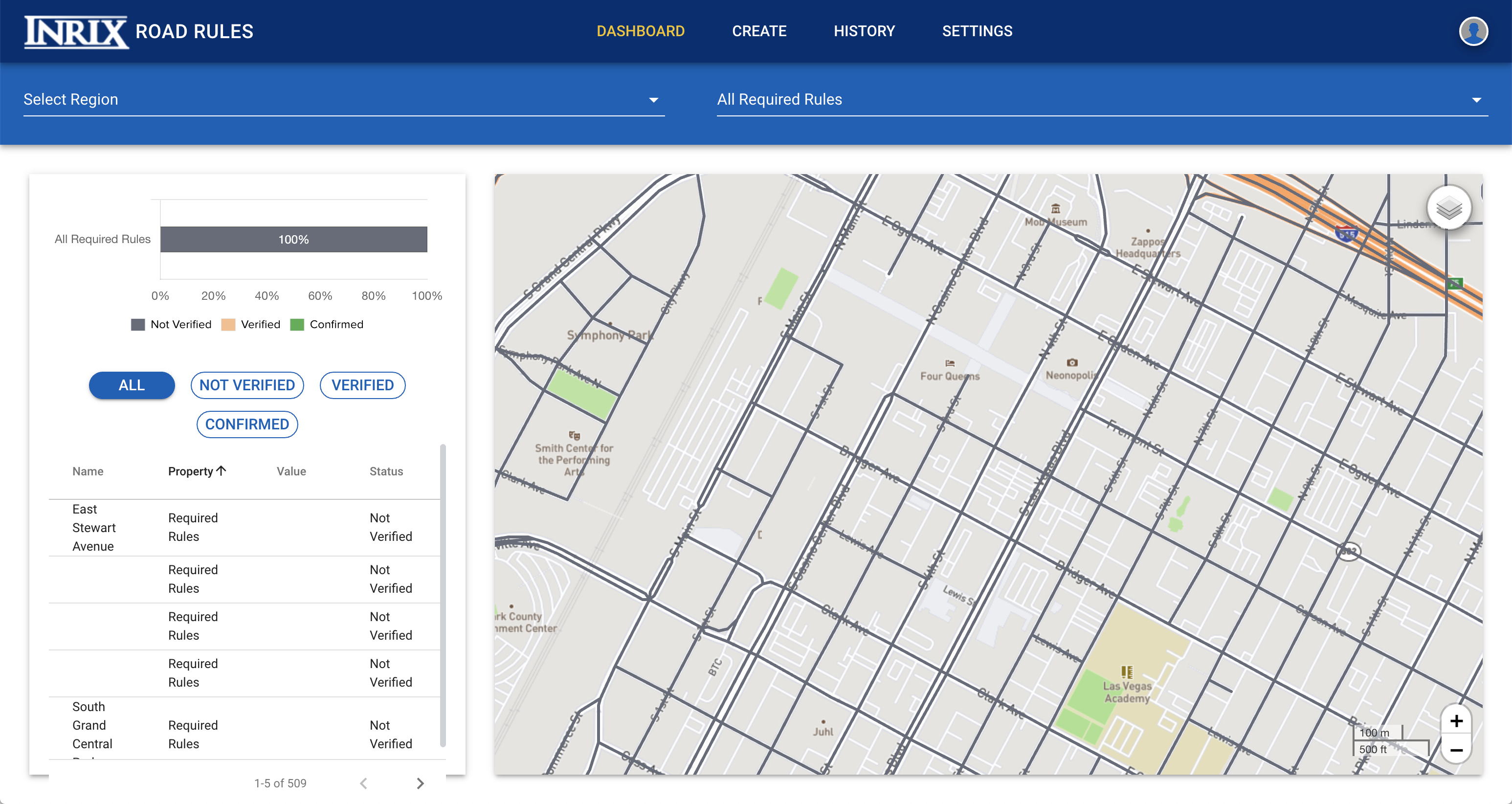
The tool is set up to make it easy for a city employee to enter roadway information such as traffic signals and pedestrian crossing signs as well as rules for curbs and sidewalks, including where loading zones, EV charging stations, dockless bike and scooter operational domains and shared vehicle drop zones are located.

Road Rules Dashboard Page

The platform initially launched as a pilot program in July 2018. This revamped and expanded version, which became public Wednesday ahead of the TC Sessions: Mobility event in San Jose, has a new user experience and clearer work-flows is supposed to make it easier for road authorities to digitize and manage transportation rules. And of course, there’s the expanded focus of the platform, which should make it far more useful for cities grappling with today’s mobility problems, not just the ones a decade from now. But the killer feature is the ability for cities to share that data across departments, with other agencies and even companies.

“Cities were looking for a platform that is actually open,” Avery Ash, head Inrix’s autonomous mobility division, told TechCrunch recently. “This keeps the control in the hands of the city to be able to manage, update and distribute the data that they are validating — and then it can be can be easily shareable.”

This shareable open component part is based on the National Association of City Transportation Official’s SharedStreets project, which has created a global referencing system. This means that city, agency or company who is getting information out of Road Rules can easily snap it to whatever map they’re using.

Inrix has grand ambitions for Road Rules. Ash told TechCrunch that the company is aiming to get 100 cities on the platform by the end of 2019. And here’s why cities might bite. There are companies that can provide cities with data. Inrix’s platform lets cities build this database on their own, control it and share it.

Building a database of road rules is still a massive undertaking by any city. Some of that process can be automated, although the information coming in would likely require validation from a city employee.

Ash also said that cities will likely target small sections of a city at first and slowly expand from there. For instance, a specific block where dockless scooters might be allowed to operate under a temporary permit, or a loop where autonomous vehicles might be tested and eventually deployed.

09 Jul 2019

Doctours offers packaged medical tourism for U.S. customers

Doctours, a Los Angeles-based online platform for booking trips and treatments for medical and dental care around the world, is expanding its services to 35 countries.

Founded by serial travel entrepreneur Katelyn O’Shaughnessy, whose last company TripScope was acquired by Travefy, Doctours aims to connect patients with doctors to receive access to quality, affordable healthcare around the world.

The cost of care in the U.S. continues to climb, leading patients with few options but to travel to the best facilities offering the lowest cost care. Some companies that provide insurance benefits to their employees, like Walmart, are opting to pay for better care upfront by transporting their workers to facilities to receive appropriate care, rather than pay later for shoddy treatment.

Doctours sort of expands that thesis in an international context.

“When it comes to medical and dental treatment, there is no longer any reason to limit ourselves based on where we live,” said O’Shaughnessy, in a statement. “There is an increasingly advantageous global marketplace available with highly trained practitioners offering quality healthcare solutions at affordable prices and, although medical and dental tourism is a safe and cost-efficient solution, the current market is extremely fragmented and challenging to navigate. Doctours eliminates this fragmentation and allows anyone to easily and affordably access international medical and dental treatments and procedures.”

Katelyn Headshot 2

Katelyn O’Shaughnessy, founder, Doctours

The company, which is backed by investors including investors in Doctours include the former CEO of Expedia, Erik Blachford, Texas billionaire and CEO of multi-strategy holding company, Cathexis, William Harrison, and Charles Cogliando of Mosaic Advisors, offers more than 330 different medical and dental procedures and has a global service area that includes Mexico, Colombia, the Caribbean, Thailand, Dubai, Brazil, Germany and Costa Rica. 

Currently working out of Quake Capital’s Austin incubator, the company helps patients search for and compare the cost of procedures, connect with doctors and book everything from in vitro fertilization to stem cell therapy, cosmetic and reparative plastic . surgery, weight loss surgery, dental work and Lasik. 

Once the procedure is booked, Doctours puts together itineraries that provide different options for flights and hotels based on the needs of the patient,  the company said.

The company also offers specialized medical tourism insurance to all of its customers, according to O’Shaughnessy. And the company vets its doctors by ensuring that they are Joint Commission International accredited physicians. Roughly 70% of the company’s doctors were trained at universities and medical schools in Europe or the U.S., O’Shaughnessy wrote in an email.

Doctours is certainly entering a lucrative market. Medical and dental tourism is a $439 billion global market growing at a rate of 25% per year, according to data provided by Doctours. In 2018 alone, 14 million patients traveled abroad to seek healthcare, according to the company.

09 Jul 2019

Digital health is growing fast — but at what cost?

Silicon Valley is obsessed with growth. And for digital health startups, that obsession is not only misguided, but dangerous.

The prevailing idea in the tech industry is that to succeed, you have to be ready to sell your idea, no matter how far along your idea really is. You’re encouraged to believe in your product even when there is no product to believe in.

And if you’re disrupting the mattress industry or the eyewear sector, maybe that’s okay.

But digital health startups must be held to a different and higher standard. We touch people’s lives, often when they are at their most vulnerable.

The healthcare startups in the news recently — Theranos, uBiome, Nurx, eClinicalWorks, Practice Fusion — seem to have lost sight of that crucial standard. We’ll never know every detail of what happened in these organizations, but one thing seems clear: In the pursuit of growth, they have put the patient second, and suffered as a result.

Where we went wrong

In the early days of digital health, I think we were much more focused on the patient than we are now. When I think of the early digital health companies — not just Propeller, but Omada Health, WellDoc, Ginger.io and Mango Health — all of their founders had an innate understanding of the importance of health outcomes. They craved proof that their product worked. They might have “faked it” a little bit when it came to their plans to scale — we all thought things would happen faster than they have — but when it came to research, they had answers, or a concrete plan to get answers.

My first conversation with Propeller’s co-founder and CEO, David Van Sickle, was illustrative of this. I met David at the geekiest of health conferences, Health Datapalooza. We talked about how sensors on medicines could improve people’s health. We talked about study designs and methods to generate data quickly in the real world, long before “real-world evidence” was all the buzz. We talked about a 500-person randomized controlled trial they were about to begin, immediately following FDA clearance of the system.

We talked — almost exclusively — about how Propeller could improve people’s lives, and how to prove that it worked.

So when did the digital health sector get away from that focus? And how do we get back to it?

I have a few theories on what went wrong.

First, it’s incredibly difficult to prioritize the patient as a digital health company when your investors are pushing for growth above all else. At Propeller, we were very lucky to have investors who understood our focus on making a product that worked, especially when growth was slow. Early digital health companies were funded like tech companies, with small amounts of money at a time and a need to show significant progress in 18-24 months to get the next round of funding. In contrast, life science companies are funded more heavily from the start, knowing there is a long road ahead of product development and clinical validation.

When I look at a company like uBiome, which may have rushed its tests through physician approval to meet aggressive growth targets, I see the effects of a culture and funding environment that pushes companies to deliver on growth first and foremost, no matter the tactics it takes to do so.

Product, then proof, then commercialization.

Second, we had a flood of founders and investors enter digital health from outside of healthcare.

I think digital health absolutely needs people, ideas and energy from outside the industry in order to change healthcare. But we also need everyone to learn the basics of how innovation occurs in a clinical setting: Product, then proof, then commercialization. Many of these new entrants were not just naive; they flaunted laws and “traditional healthcare” methods (and people) because they were deemed outdated and unnecessary.

They were aiming for disruption, not integration, and in doing so were ignoring the vast set of protections and people that have been put in place to ensure public safety.

The result is a glut of companies that have tried to scale growth before proving their product worked, which comes with tremendous risk. It can give patients and their physicians incorrect information leading to incorrect treatment. It can waste money on unneeded products. And it can impact the credibility of the entire digital health ecosystem.

Rebuilding a culture of outcomes

To fix this, we have to change the way we think about success in digital health, and that responsibility falls on many different parties.

The media has to be more critical of how it covers burgeoning digital health startups, prioritizing coverage of peer-reviewed research and proven outcomes over funding rounds and hiring numbers. The speaking circuit has to laud founders who can talk about how their products have changed people’s lives for the better, rather than giving the main speaking slot to the biggest exit of the year. And the investor community has to be patient with its investments, understanding that true growth in healthcare takes time.

And most of all, digital health startup founders have to be patient with themselves. I’ve been in the trenches of digital health; I know how hard it can be. But when things are tough and it’s easy to lose focus, you have to think to yourself, “Do I want to be in the headlines for astonishing growth now, and accusations of cutting corners in two years? Or am I okay with sacrificing temporary stardom for a product that actually helps people?”

This is not an easy choice to make. But if digital health is going to survive and scale, it’s one we have to make on a daily basis. Move slowly, and prove things: It’s the only way to create the kind of long-term change we’re seeking.

09 Jul 2019

Dockless bikes, except for JUMP’s, are still on hold in SF

In light of Lyft filing a lawsuit against the city of San Francisco regarding dockless, the city is holding off on its permitting process for additional dockless bike providers at least until later this week. Although Uber-owned JUMP’s pilot was set to expire today, it is now extended until 10 days after the court’s order, SFMTA spokesperson Benjamin Barnett told TechCrunch.

In June, Lyft sued the city, claiming San Francisco was in violation of its 10-year contract with Lyft that would give the company exclusive rights to operate bike-share programs. The lawsuit was in light of SF announcing it would take applications for operators seeking permits to deploy additional stationless bikes.

San Francisco, however, said the contract does not apply to dockless bike-share, but only station-based bike-share. In its lawsuit, Lyft is seeking a preliminary injunction or temporary restraining order to prevent the city from issuing permits to operators for stationless bike-share rentals.

“We opened up the stationless e-bikes permit process, but legal action by Lyft/Motivate has put that process on the hold,” Barnett said.

The court order could happen as early as July 11 and as late as October 11, Barnett said. Additionally, the SFMTA is not able to issue permits until at least five days after the order.

I’ve reached out to Lyft and will update this story if I hear back. Lyft previously told TechCrunch it did try to avoid litigation, but that the SFMTA refused to participate in its dispute process.

“We are eager to continue investing in the regional bikeshare system with the MTC and San Francisco,” a Lyft spokesperson said in a statement to TechCrunch back in June. “We need San Francisco to honor its contractual commitments to this regional program — not change the rules in the middle of the game. We are eager to quickly resolve this, so that we can deliver on our plans to bring bikes to every neighborhood in San Francisco.”

09 Jul 2019

Twitter updates hate speech rules to include dehumanizing speech around religion

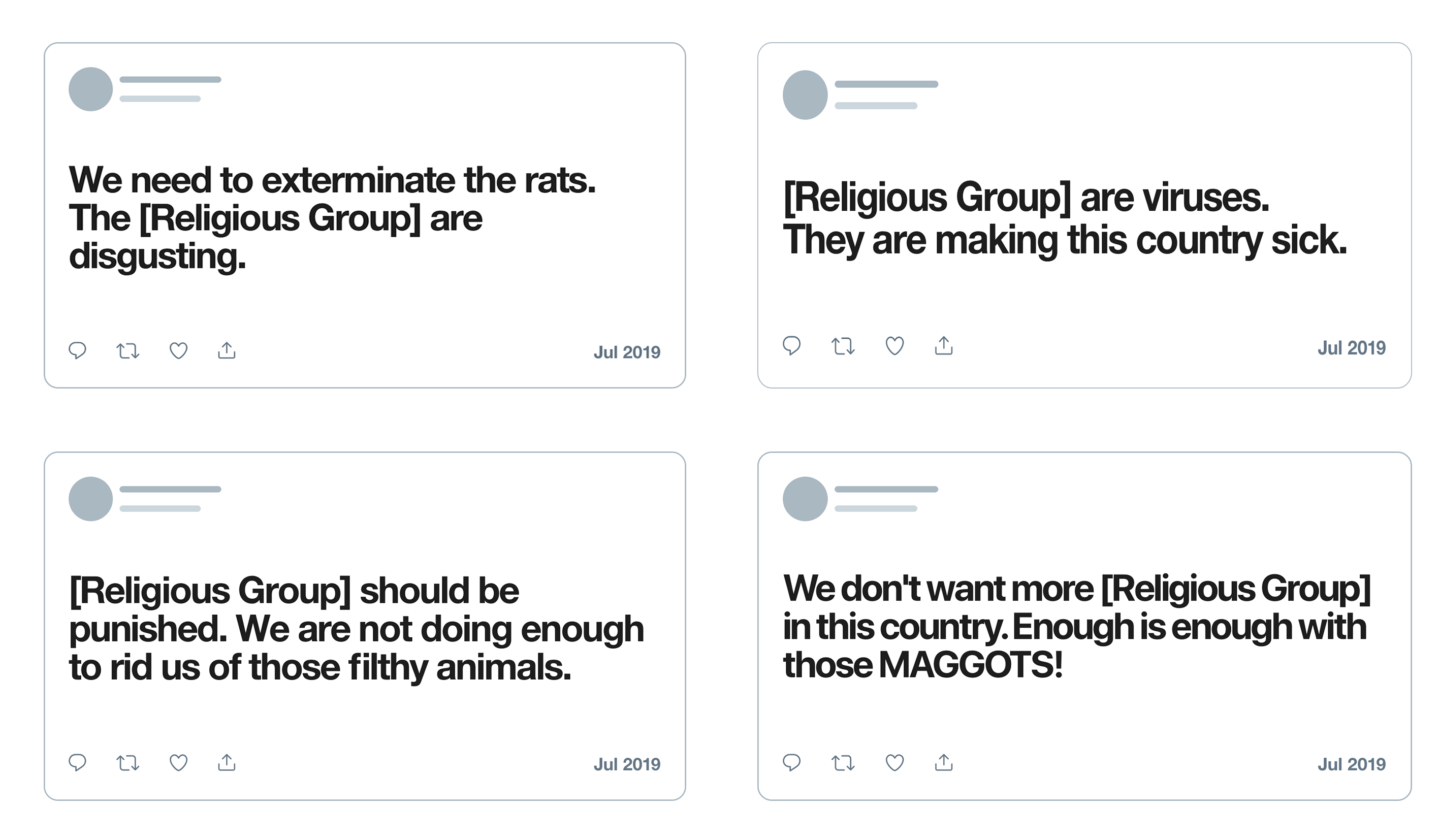
Against a backdrop of rising violence against religious minorities around the world, Twitter today said that it would update its hateful conduct rules to include dehumanizing speech against religious groups.

“After months of conversations and feedback from the public, external experts and our own teams, we’re expanding our rules against hateful conduct to include language that dehumanizes others on the basis of religion,” the company wrote on its Twitter Safety blog.

The company said it will require tweets that target specific religious groups to be removed as violations of the company’s code of conduct.

The company said that any previous tweets containing the offending language would need to be removed, but would not cause the suspension of a user’s account, because they were made before Twitter implemented and communicated the policy.

Around the world, religious minorities have been attacked in hate crimes that some organizations believe to be inspired (at least in part) by hate speech on social media. Whether it’s white supremacists responsible for the murders of Jewish congregants in Pittsburgh or Islamic worshippers in Christchurch, New Zealand — or attacks by Islamic militants like ISIS, which left over 100 people dead in attacks on Easter Sunday, social media has played a key role in disseminating hate speech and radicalizing untold numbers of users.

In the U.S. alone, the Anti Defamation League found that 37 percent of Americans had experienced severe online hate and harassment in 2018. According to the recent survey, roughly 35% of Muslims and 16% of Jews experienced harassment online because of their religious affiliation. The ADL also reported that 28% of Twitter users had experienced harassment.

Twitter said it started with religious groups after receiving more than 8,000 responses from people located in more than 30 countries around the world. 

When modifying its rules, Twitter said it focused on narrowing down what’s considered in the category for religious organizations, restricting it to just religions rather than political groups, hate groups, or other non-marginalized with this type of language. Twitter also said it had developed a longer, more in-depth training process with teams to ensure they were informed when reviewing reports.

“It’s good that Twitter is seeking public comment as they’re developing their policy decisions and seeking input from external experts on hate, but hate and harassment on Twitter is a serious, longstanding problem,” wrote a spokesperson with the Anti Defamation League in an email. “The fact that language dehumanizing others on the basis of religion only now violates Twitter’s rules shows how far they have to go to truly combat hate. We have urged Twitter to track and release the results of this and other policy changes to be transparent about the efficacy of their efforts.”

09 Jul 2019

Flaws in hospital anesthesia and respiratory devices allow remote tampering

Security researchers have found a vulnerability in a networking protocol used in popular hospital anesthesia and respiratory machines, which they say if exploited could be used to maliciously tamper with the devices.

Researchers at healthcare security firm CyberMDX said that the protocol used in the GE Aestiva and GE Aespire devices can be used to send commands if they are connected to a terminal server on the hospital network. Those commands can silence alarms, alter records — and can be abused to change the composition of aspirated gases used in both the respirator and the anesthesia devices, the researchers say.

Homeland Security is expected to release an advisory later on Tuesday.

“The devices use a proprietary protocol,” said Elad Luz, CyberMDX’s head of research. “It’s pretty straightforward to figure out the commands.”

One of those commands forces the device to use an older version of the protocol — which is still present in the devices to ensure backwards compatibility, said Luz. Worse, none of the commands requires any authentication, he said.

“On every version, you can first send a command to request to change the protocol version to the earliest one, and then send a request to change gas composition,” he said.

“As long the device is ported to the network through a terminal server, anyone familiar with the communication protocol can force a revert and send a variety of illegitimate commands to the machine,” he said.

In other words, the devices are far safer if they’re not connected to the network.

CyberMDX disclosed the vulnerabilities to GE in late October 2018. GE said versions 7100 and 7900 of the Aestiva and Aespire models are affected. Both models are deployed in hospitals and medical facilities across the U.S.

GE spokesperson Amy Sarosiek told TechCrunch: “After a formal risk investigation, we have determined that this potential implementation scenario does not introduce clinical hazard or direct patient risk, and there is no vulnerability with the anesthesia device itself.”

GE said it based its assessment of no risk to patient care on international healthcare safety standards and testing maximum variation in parameter modification from the disclosed concern. “Our assessment does not lead us to believe there are patient safety issues,” the spokesperson said.

But the company declined to say how many devices are affected but that the ability modify gas composition is no longer available on systems sold after 2009.

It’s the second set of vulnerabilities in as many months released by CyberMDX. In June the research firm found vulnerabilities in a widely used medical infusion pump.

09 Jul 2019

Bumble chief responds to reports of misconduct at parent company Badoo

Following an extensive report about Bumble’s parent company and its billionaire founder Andrey Andreev in Forbes, the female-first dating app’s founder Whitney Wolfe Herd has issued a statement.

While Wolfe Herd says she was “mortified by the allegations” and “saddened and sickened to hear that anyone, of any gender, would ever be made to feel marginalized or mistreated in any capacity at their workplace,” the exec also detailed that “Badoo is currently conducting an investigation into the allegations, as well as compiling documentation to expose the factual inaccuracies that exist within the article.”

Wolfe Herd’s statement is provided in full at the end of the article. We’ve reached out to Forbes for comment.

The Forbes report, titled “Exclusive Investigation: Sex, Drugs, Misogyny And Sleaze At The HQ Of Bumble’s Owner” focused largely on Badoo founder Andrey Andreev and the toxic culture at his company alleged by former employees. The report alleged an early culture at Badoo that ranged from “Ketamine infused afterparties” to engineering updates named after porn stars, and a video shared internally of an employee receiving oral sex.

The allegations went beyond portraying a sexist work environment and detailed racist attitudes of the Badoo founder.

While Badoo’s popularity grew in Europe and Latin America in the early 2010s, adoption was slow in the U.S. The American user base then was mostly Latino. Andreev would complain when he saw too many dark faces on the app—he believed it lowered the value of the brand and made it look cheap, says a former employee who worked on marketing campaigns. “Andrey was always making it clear that white was better,” says the former high-ranking executive. “If someone were to arrive a little bit late to the office and they were Latino or African, he would make comments like, ‘Well, what can you expect,’ as if people who were not white were not hardworking.”

Quoted on-record was the company’s former CMO Jessica Powell who said she was fired because she didn’t fit into the company’s “patriarchal” environment. The Forbes report further detailed:

“While serving as the company’s CMO, I was told to act pretty for investors and make job candidates ‘horny’ to work for Badoo,” Jessica Powell, Badoo’s chief marketing officer from 2011 to 2012 says in an email. “I was once even asked to give a designer candidate a massage.” She says she refused to do so, adding that “female employees were routinely discussed in terms of their appearance.”

“When female staff spoke up, their concerns were ignored or minimized,” she adds, decrying a “misogynistic atmosphere.”

Wolfe Herd’s comments showcases a broader effort to distance the Bumble brand, which is closely aligned with her own personal brand, from the allegations against Badoo and its founder. It is difficult to separate Badoo and Bumble from a business perspective, as both fall beneath Andreev’s recently-created MagicLab parent company and Andreev reportedly owns 79% of Bumble.

Though Wolfe Herd’s comment strikes a conciliatory tone “I would never challenge someone’s feelings or experiences,” regarding former employees that alleged negative experiences at Badoo, the company’s billionaire majority stakeholder Andrey Andreev was more direct in his response to those quoted on-record: “There are many ways to promote a fictional book in order to attract attention, and Jessica is a very talented marketing professional,” he said in a statement to Forbes, noting that Powell had recently released a satirical novel.

Responding to Andreev’s statement on Twitter, Powell said, “We’ve all seen the way people try to cut down women who come forward, the way companies craft false narratives of bad behavior and try to make it seem like we were bad at our jobs or troublemakers and should not be listened to.”

A statement from MagicLab given to Business Insider aimed to discredit Forbes reporter Angel Au-Yeung: “We are extremely disappointed in the reckless reporting of the Forbes reporter. Not a single current employee is quoted, our fact-check corrections were largely ignored, and the journalist refused to talk to dozens of former and current employees who came forward to counter the sensationalist narrative of only a few former disgruntled employees.”

The statements from Andreev, MagicLab and Wolfe Herd utilize language that simultaneously takes responsibility for “anything that could have taken place” and portrays a desire to hear from marginalized employees — while also seeking to introduce doubts about the story and its sources.

For Bumble, the association with the alleged toxic culture and Andreev’s alleged discriminatory attitudes in this report could be dangerous to the brand largely because of the reputation Bumble has publicly built for itself as being a platform that puts female safety at the forefront.

“…I would never challenge someone’s feelings or experiences. I offered to the reporter to extend my contact info to anyone who felt their experience was negative and said I would be an ally and open ear to them. That offer still stands,” Wolfe Herd said in the statement. “As a woman who has been through dark times, please know that I am deeply sorry for anything that could have taken place that made anyone feel uncomfortable before my time building Bumble. And know that I feel personally responsible by association for the well-being of each and every team member in the group, regardless of what company or what office around the world, from the past or the present.”

Wolfe Herd’s full statement:

All of us at Bumble are mortified by the allegations about Badoo (Bumble’s majority owner) from the years before Bumble was born, as chronicled in the Forbes story. I am saddened and sickened to hear that anyone, of any gender, would ever be made to feel marginalized or mistreated in any capacity at their workplace. From my time speaking with the reporter, I was only able to share my personal experiences, which have been nothing but positive and respectful, ranging from 2014, before Bumble existed, and during the 5 years since. To this day, we at Bumble have never seen or heard of any of this behavior from any team members, and if we had we would have never tolerated it. However, I would never challenge someone’s feelings or experiences. I offered to the reporter to extend my contact info to anyone who felt their experience was negative and said I would be an ally and open ear to them. That offer still stands. As a woman who has been through dark times, please know that I am deeply sorry for anything that could have taken place that made anyone feel uncomfortable before my time building Bumble. And know that I feel personally responsible by association for the well-being of each and every team member in the group, regardless of what company or what office around the world, from the past or the present. Badoo is currently conducting an investigation into the allegations, as well as compiling documentation to expose the factual inaccuracies that exist within the article. I’d like to take the opportunity to clarify that I was never copied on any email from these allegations, as Forbes suggested. I learned of the majority of these allegations at the same time as the public. We at Bumble remain fiercely committed to our mission, while being openly apologetic to anyone who feels our mission is compromised. We assure you that we would never conduct business in a manner contradictory to our values and would never tolerate the type of toxic behavior described by Forbes.