Category: UNCATEGORIZED

04 Jul 2019

Apple reportedly shifting to new keyboard design in 2019/2020 MacBooks

Apple is set to replace the technology underlying the keyboards found in its MacBook Air and MacBook Pro computers, according to a new report from Apple analyst Ming-Chi Kuo (via 9to5Mac). Kuo is frequently accurate in his predictions, which are sourced from within Apple’s supply chain and tend to provide an early indication of forthcoming hardware changes.

In his latest report, Kuo says that the new keyboard designs coming in brand new MacBook Air models set to come out later this year, and new MacBook Pro models which he says won’t be available until 2020, will drop the so-called ‘butterfly’ mechanism design that is used in current-generation versions of both MacBooks. Instead, the new versions will employ ‘scissor switch’-based keyboards, which is what Apple used prior to introducing the ‘butterfly’ mechanism in 2015. Apple’s current standalone Magic Keyboard also still uses scissor switches.

The butterfly switch-based keyboards Apple has used in recent MacBooks have received consistent criticism from users, who report dropped keystrokes and repeated keystrokes, among other issues (I’ve experienced this myself personally on multiple MacBook Pro models since 2015). These can often be resolved using compressed air to blow away any debris under the keyboard, but sometime they require an actual replacement keyboard component from Apple itself.

Apple’s most recent MacBook Pro, introduced earlier this year, features a redesigned butterfly keyboard that employs “new materials” to help mitigate these issues, and it also recently introduced a free keyboard replacement program for MacBook, MacBook Air and MacBook Pro which extends to all MacBook models with butterfly-based keyboards. Still, if this report proves accurate, it looks like the company is implementing a more permanent hardware fix that would obviate the need for these other measures entirely.

As always, take any rumors about unreleased products from a third-party with a hefty dose of skepticism, but Kuo’s accuracy and the well-documented issues with this keyboard design do lend credence to this specific report.

04 Jul 2019

Tesla shows off next-gen automated emergency breaking stopping for pedestrians and cyclists

Back in 2017, Tesla introduced an automated emergency breaking (AEB) system for all its vehicles that’s powered by its Autopilot technology, which is available even for vehicles with haven’t purchased the actual Autopilot cruise-assist upgrade. Now, the automaker is showing off some of the more advanced features coming in its next-generation AEB update.

These include automatically engaging the brakes on a vehicle when the Autopilot-based system detects a pedestrian crossing the car’s path, and doing the same for a cyclist. Below, you can see those features reportedly working in real-life situations, according to Tesls’a official Twitter account.

These kinds of features aren’t new, and in fact have been present in some form since inclusion in a version of Volvo’s automated braking system in 2009. Safety organizations and regulators like the Insurance Institute for Highway Safety (IIHS) and the National Highway Traffic Safety Administration (NHTSA) have been testing and advocating for these systems for years, as well.

Not all AEB and driver-assist features are built equally, however, and in theory the versions of these systems based on vehicles with more advanced sensors and on-board computation should be more effective at actually avoiding or preventing collisions in practice. Tesla has made bold claims about the capabilities of its own system, especially when paired with its in-house AI processor technology, which will serve as the ‘brain’ on its future autonomous driving technology in Tesla cars.

04 Jul 2019

The cassette player finally goes Bluetooth

This month marks the 40th anniversary of Sony’s first Walkman, the portable music player that would forever change the way we consume music. And while the audio cassette long ago fell out of favor for the CD and later digital music, the format’s certainly not forgotten. It may not have the same audiophile cache as the vinyl LP, but a a small and passionate contingent of music listeners are keeping the fire burning.

NINM Lab’s latest project occupies that same sort of fuzzy technological limbo as past products like the I’m Fine single use camera. It’s also got a name to match: It’s OK. In this age of political unrest and global disasters, maybe that’s exactly the message we need right now. As for a bluetooth cassette player, it’s probably true that nobody needs such a thing, hyper specific products are one of the nice byproducts of late capitalism.

The product bridges the seemingly insurmountable gap between state of the art 80s tech and AirPods with Bluetooth 5.0 functionality, with a fittingly retro design that’s a nod to the era’s Walkmen. There’s also a 3.5mm headphone jack on board, giving it a leg up on the latest generation of smartphones.

The device hits Kickstarter today, with pre-orders starting at $63, making it pricey for a cassette player, but cheap compared to other Bluetooth enabled devices. As is the nature of Kickstarter projects, prices only go up from there. Cassette tapes, on the other hand, can be found in bountiful quantities at your neighborhood Goodwill.

04 Jul 2019

Watch SpaceX catch a rocket fairing on a ship at sea after it returns from space

SpaceX managed another first for its reusable rocketry efforts during its most recent launch when it caught part of the fairing in a giant net mounted on a boat named ‘Ms. Tree.’ The nosecone component, used to protect the Falcon Heavy’s cargo during its June 25 launch, typically is either lost or falls into the ocean where it can sometimes be recovered, albeit at great cost.

Now, we have video of the fairing returning back through the atmosphere, and of the actual moment the fairing touches down on the barge, captured by onboard cameras set-up by SpaceX . The fairing return video, below, gives you a good sense of what it’s like when one of these components returns to Earth in terms of the stresses that are on the hardware from the extreme heat generated by friction from the Earth’s atmosphere.

Meanwhile, the video of the fairing touching down on Ms. Tree isn’t quite as dramatic – you basically only see the net change shape slightly as the parachute-guided hunk of metal shielding touches down.

Recovering it means not “throwing away $6 million” according to SpaceX CEO Elon Musk. SpaceX has already reduced its launch costs for Falcon 9 rockets from around $62 million to about $50 million by making use of “flight proven” (read: previously used) booster cores, and its Falcon Heavy rockets also save by reflying boosters, with total launch costs ranging from between $90 million and $150 million depending on whether it’s a reusable or expendable configuration. Saving another $6 million by being able to consistently recapture and re-fly fairings would be a significantly positive bump fo the bottom line.

That said, SpaceX still has to demonstrate its ability to actually refurbish and re-fly a fairing once recovered, and it’s also only managed to make this catch once so far, so it’ll need to show it can do it consistently to realize this part of its reusable rocket approach.

04 Jul 2019

BMW and Daimler partner on autonomous driving, first results of team-up in market by 2024

Global automakers BMW and Daimler will join forces in a new long-term partnership to co-develop automated driving technologies, including levels of automation all the way up to SAE Level 4, which is defined as full self-driving, no human intervention required, but only under exactly defined conditions or domains – steering wheel and brakes not necessarily even present I the car.

This BMW/Daimler partnership includes developing automated driving technologies that precede Level 4, too, including advanced driver assistance features like smart cruise control and automated parking. And while it isn’t in scope of this specific arrangement, the two car makers also say that talks continue about expanding their cooperation to cover highly-automated driving within denser urban areas and in city driving conditions.

It’s a non-exclusive arrangement, which is the new normal in autonomous vehicle technology development, where cross-manufacturer partnerships have been increasingly common, and where we’ve also seen legacy automakers turn with fair frequency to startups and younger technology companies to supplement their in-house development efforts.

Daimler and BMW aim to develop a “scalable platform for automated driving” through their combined efforts, which the companies say is open for participation form both other automakers and tech providers. The resulting platform will also be made available to other OEMs under license.

Independently, Daimler is currently working on deploying its first Level 4/Level 5 self-driving vehicle pilot program in an urban environment in partnership with Bosch, and aims to have that operational this year. BMW’s next big automated driving push will be alongside its iNEXT lines of vehicles, with Level 3 technologies targeted release along with the first of those models in 2021. Both partners expect to implement the results of this partnership specifically in their own respective model series vehicles beginning in 2024, however.

04 Jul 2019

Ola gets a taxi license in London and plans to launch services in September

London is one of the world’s biggest markets for consumers that travel using ride-hailing services. Is it now also becoming one of the most crowded when it comes to the companies offering the transportation, too? Today, India’s Ola confirmed that it is the latest of the wave of app-based ride-hailing providers to receive a license to operate in London. A spokesperson told TechCrunch that Ola expects to kick off its services two months from now, in September.

“Ola has been granted a PHV operator license by TFL,” an Ola spokesperson said in a statement provided to TechCrunch. “London is one of the world’s most iconic cities and hosts a progressive mobility environment.  We couldn’t be more excited to bring Ola to London in the time ahead! We are looking forward to building world-class mobility offerings for London, by collaborating with drivers, riders, the government and local authorities. Londoners will hear more from us closer to our launch in the city, as we get ready to serve them.”

Ola’s international push is an interesting shift for the company, which (like Lyft) was one of the early ride-hailing startups to commit to a strong focus as a regional leader at a time when its arch competitor Uber was burning hundreds of millions of dollars to expand internationally in multiple markets around the world.

And the news of Ola’s London license is not the only international news for the company this week: it comes at the same time that Ola Electric, the company’s spun-out electric vehicle business, is hinting that it will soon to be coming to Latin America.

Ola launched in the UK in 2018 and currently operates ride-hailing services in five regions that cover several of the UK’s bigger cities: South Wales (Cardiff, Newport and Vale of Glamorgan), the South West (Bath, Bristol, Exeter, North Somerset and South Gloucestershire), Merseyside (Knowsley, Liverpool, Sefton, St Helens and The Wirral), West Midlands (Birmingham, Dudley, Sandwell, Solihull, Walsall and Wolverhampton) and Reading.

London is a significant addition to that list for a couple of reasons. One is because of its size, against which the rest of that list is dwarfed; and two is because Transport for London (TfL), the city’s transportation regulator, has over the years proven to be a strict custodian when it comes to issuing licenses to taxi companies, and subsequently enforcing the operating rules that it sets for them — not least because of the lobbying of the city’s black cab drivers, who have staged numerous protests over Uber’s practices:

London’s black cab drivers block Whitehall during a demonstration over the regulation private hire cars using the Uber app in London on April 6, 2017. / AFP PHOTO / Adrian DENNIS (Photo credit should read ADRIAN DENNIS/AFP/Getty Images)

TfL’s actions have led to one provider, Bolt (née Taxify), shutting down its service for 22 months before starting up again last month. Prior to that, Uber found itself in legal hot water, too, when TfL refused to renew its license unless it drastically changed its practices. (Today, Uber operates under a provisional permit as TfL continues to monitor it in competition with other providers.)

The news of Ola getting a London operating license comes at a time when the company — backed by nearly $4 billion from investors that include Didi, Softbank, Accel, Sequoia, Kia and nearly 60 others — appears to be making a stronger international push after years of building its service in India, which accounts for the vast majority of the 125 million customers that have taken trips with Ola to date.

Going outside of India’s borders is not the only significant expansion Ola is making right now. The company’s spun-out electric vehicle business, Ola Electric, yesterday announced that it had raised $250 million from Softbank at a $1 billion valuation. While one reason for building Ola Electric is to help meet demand for lower emissions in India, a second track is to use that EV business to take Ola abroad — and specifically to Latin America, according to this exchange between Softbank International CEO and group COO Marcelo Claure and Ola’s founder and CEO Bhavish Aggarwal.

An Ola spokesperson said that for now, in London the focus will be on rolling out a more standard service akin to what Ola provides in the UK today, and also what you get today from other London ride-hailing providers like Uber, Bolt and many smaller mini-cab firms that build up networks of drivers who work as contractors on the service using their own vehicles.

In India, Ola is the dominant ride-hailing service provider. Other markets where it operates outside of its home country are Australia (where it has services in Sydney, Melbourne, Brisbane, Adelaide, Perth, Canberra and the Gold Coast), and New Zealand (Auckland, Wellington, and Christchurch).


04 Jul 2019

Q&A Sessions return to Disrupt Berlin 2019

Some of the world’s most fascinating names and leaders in tech startup and investing come to our Disrupt Main Stage to discuss big-picture topics. And that tradition continues at Disrupt Berlin 2019 on 11-12 December.

But what happens when you want to dig into a specific technology or emerging trend? You head for a Q&A Session. These sessions — featuring many of the same folks you’ll hear on the Main Stage and moderated by TechCrunch editors — take place in a smaller, more intimate setting.

Hold up a sec. Don’t have your Disrupt Berlin pass yet (insert vinyl record scratch here)? Buy your super early-bird ticket now and score super savings.

Q&A Sessions are a series of lively discussions where audience members get to ask panels of subject-matter experts their most pressing questions. They’ll cover a range of pivotal, thought-provoking topics related to Disrupt Berlin’s category tracks — Artificial Intelligence/Machine Learning, Biotech/Healthtech, Blockchain, Fintech, Gaming, Investor Topics, Media, Mobility, Privacy/Security, Retail/E-commerce, Robotics/IoT/Hardware, SaaS, Space and Social Impact & Education.

You’ll find all the Q&A Sessions happening on the Extra Crunch Stage, our new home for fireside chats, panel discussions and plenty of actionable, how-to content and tips from successful founders and investors. We’re talking stuff you can put into practice in your own startup. We named the stage after the subscription-based how-to content we create for our most engaged readers. It offers in-depth exclusive content on topics like startup-building fundamentals, resources and recommendations and unicorn deep dives. Curious? Learn more about our Extra Crunch content.

Pro Tips:

  • Unlike our Main Stage events, you must physically be in the room to attend a Q&A Session. We don’t record or live-stream these sessions.
  • Get to your Q&A Session early. Space is limited, and admission is strictly first come, first served.
  • Sign up to get the latest Disrupt Berlin news.

Disrupt Berlin 2019 takes place on 11-12 December. Buy your super early-bird tickets, unleash your curiosity — and your questions — and dig deep at our Q&A Sessions. We can’t wait to see you in Berlin!

Is your company interested in sponsoring or exhibiting at Disrupt Berlin 2019? Contact our sponsorship sales team by filling out this form.

04 Jul 2019

Stranger Things 3 is now available on Netflix

July 4 is American Independence Day, but it also marks the arrival of Stranger Things season three — a release that might just be the most-anticipated in the history of Netflix.

Season three dropped at 12:01 PDT which means, dear reader, that it is now online and ready for your viewing pleasure.

The series has been an enormous hit for Netflix. Beyond a litany of awards, it has proven to be a smash with Netflix subscribers. More than 15 million watched the season 2 opener within three days of its release, while every episode of the second season had racked up more than four million views within that early window.

Netflix has gone to town promoting season three — with teasers in popular Roblox and Fortnite and an international promotion campaign — so you can expect that the numbers will be even higher this time around. The only question is whether it can deliver on the hype?

04 Jul 2019

Dott raises $34 million to build a sustainable scooter startup

European micro-mobility startup Dott is about to raise a $34 million Series A round (€30 million). Compared to many scooter companies out there, the startup is taking a careful approach when it comes to growth in order to build a good reputation and a sustainable service.

EQT Ventures and Naspers are leading today’s found. Existing investors Axel Springer Digital Ventures, DN Capital, Felix Capital, FJ Labs and U-Start Club are also investing again.

Dott had previously raised a $23 million round (€20 million) from EQT Ventures, Naspers and others.

Some scooter startups are aggressively expanding in dozens of cities. They’re often buying a ton of scooters and putting them on the streets without thinking about a long term plan.

Dott has made many promises ticking all the right boxes to go against this “move fast, break things” motto. The company works with local governments to get approval.

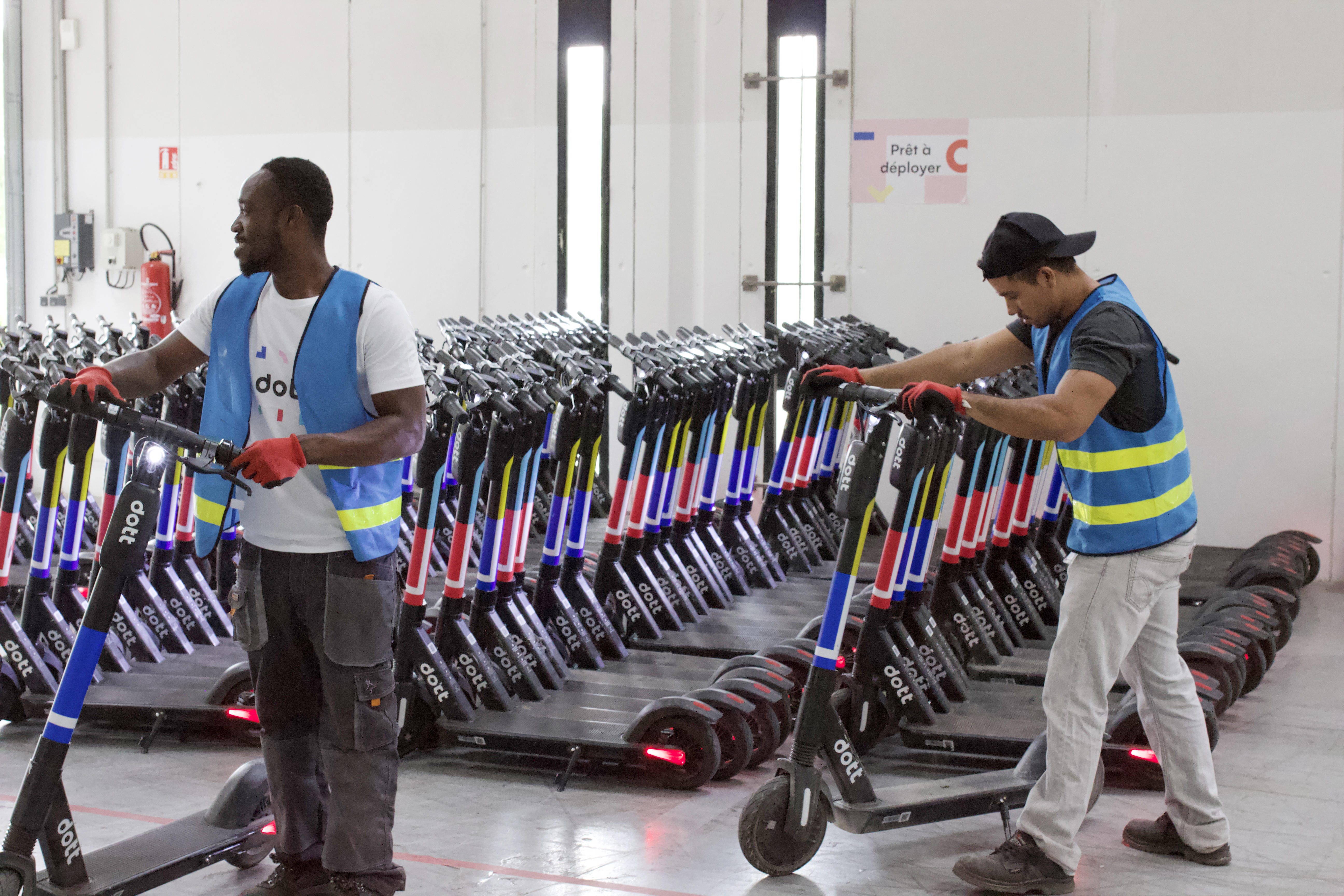
It then rolls out a reasonable fleet of scooters. Dott is currently live in Brussels, Paris, Lyon and Milan. The company has around 1,000 to 2,500 scooters per city.

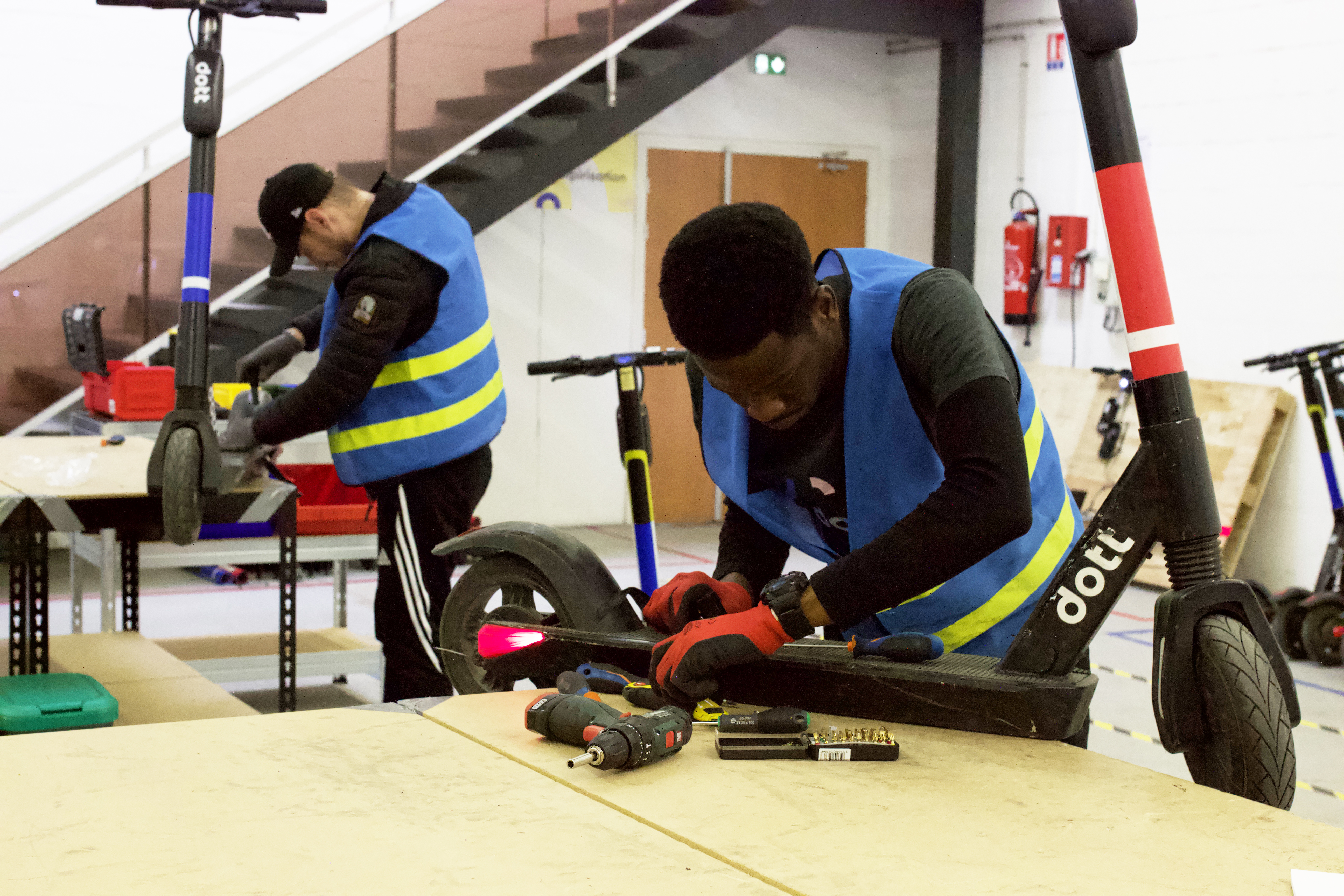
The company has its own warehouses to charge and repair vehicles. There’s no juicer who collect scooters at night and charge them at home. Dott hires full-time employees and works with third-party logistics providers.

Scooters are also supposed to be sturdier thanks to a dual brake system and bigger wheels. Every part is supposed to be replaceable.

And the company is now going one step further by including insurance coverage for no extra cost. Dott is partnering with Zego and La Parisienne Assurances to cover personal injuries and third-party liability in France, Belgium and soon Italy.

Dott 3

Up next, Dott plans to release a second generation of scooter with swappable batteries, which should make fleet management much easier. And the company is already working on a third generation of vehicles.

Dott also plans to launch a new type of vehicles, e-bikes. They aren’t ready for prime time yet — they will be produced in Europe and China, and assembled in France. And of course, the company plans to gradually expand to new cities in Germany, the U.K. and Netherlands.

Now let’s see if Dott can keep all its promises as it scales around Europe. Taking a sustainable approach will require a ton of capital. Dott is betting that other scooter companies will crash before Dott runs out of cash.

And it’s clear that many scooter companies didn’t realize how brutal the scooter market could be. Les Echos reported earlier this week that Bolt, Wind, Hive, Ufo, Voi and Tier had all halted their services in Paris.

Lime, Bird, Circ, Dott, Jump and B-Mobility are still around, but I’m sure there will be more consolidation over the next 12 months.

Dott 1

04 Jul 2019

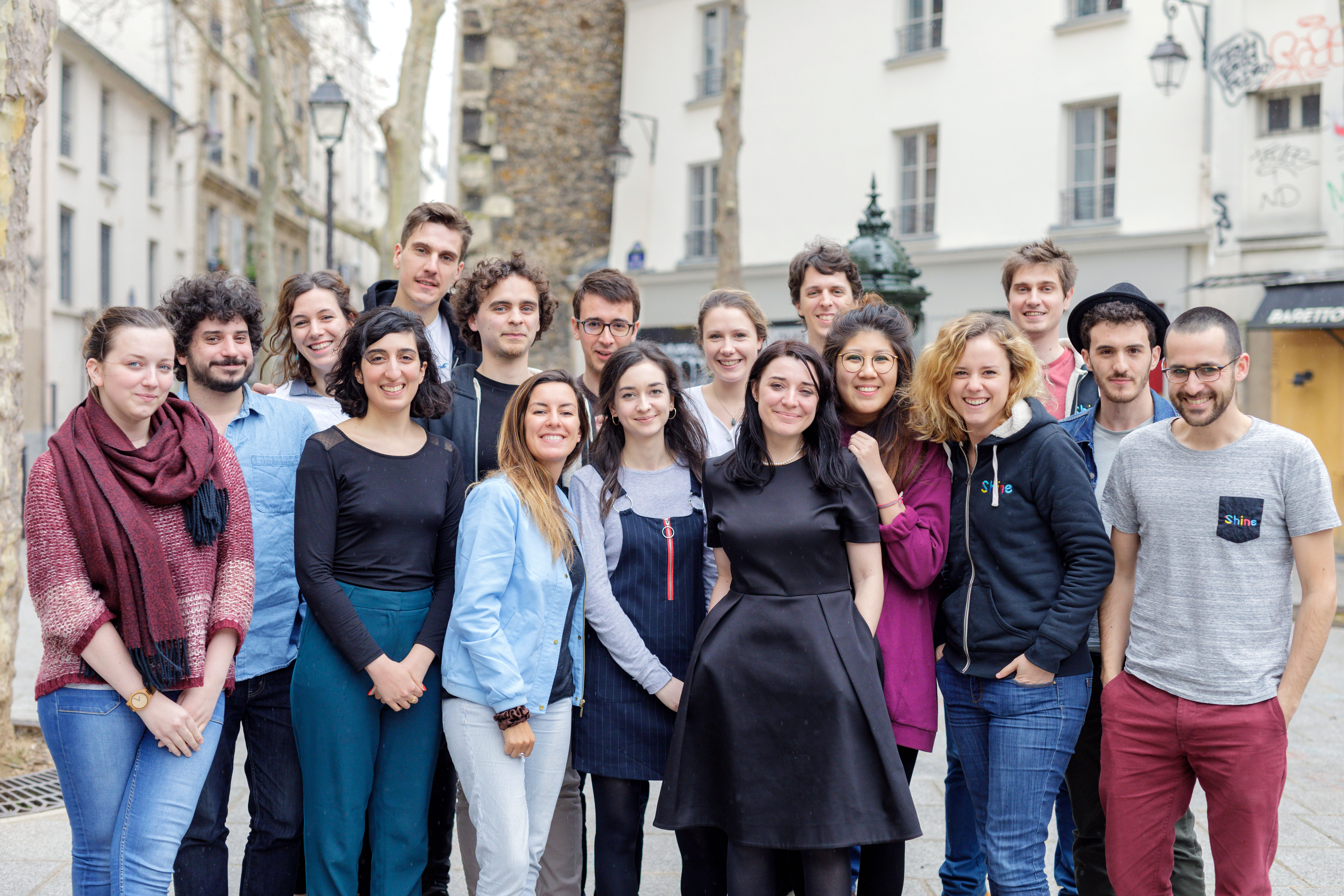
Shine adds premium accounts to its bank for freelancers

French startup Shine is launching two new features today — Shine Premium, a premium account with basic insurance coverage for freelancers, and support for more types of companies using Shine Start.

Shine is building an alternative to traditional bank accounts for freelancers. In addition to bank information and a payment card, users can register a “micro-company” to start accepting freelancing jobs, create invoices, export transactions for taxes, etc.

The startup thinks that it is an underserved market even though it can get complicated really quickly when you start freelancing. The app tries to remind you when you’re supposed to pay taxes for instance.

Basic accounts currently cost €4.90 to €7.90 per month depending on your incorporation. But the company is adding a new premium tier called Shine Premium.

In addition to everything you get in the basic plan, Shine offers you insurance coverage in case you end up in a hospital. You can claim up to €100 per day. Shine also covers your equipment, and particularly broken smartphone screens. As a premium user, you can also access better support and a better knowledge base.

This product could be particularly attractive for users who work for Deliveroo, Uber Eats and other food delivery companies. As Libération recently reported, many people riding bikes all day long to deliver food end up in a hospital. They simply don’t have time to be cautious.

If you’re not already a freelancer, Shine can help you register your company and get started. For €34.90, the company handles the paperwork for you and you get an “auto-entrepreneur” certificate. Shine is expanding that service to other types of companies.

After you reach the limit of the basic “auto-entrepreneur” company, you need to switch to a more sophisticated type of companies with initial capital, more legal constraints, etc.

In other words, you need a true accountant. For €119, you can register an EURL, SASU or EI and get a certificate of incorporation. Shine then recommends you accountants who can take care of the legal paperwork for you going forward.

As you can see, Shine is gradually adding more features to turn its service into a one-stop shop for all your freelancing admin needs.

IMG 4366