Category: UNCATEGORIZED

25 Jun 2019

Telegram adds location-flavored extras and full group ownership transfers

Messaging platform Telegram has added a new bunch of location-based features via an update.

Users of the latest version of the app will find an ‘Add People Nearby’ setting which they can use to quickly exchange contact details without the need to type in digits.

Coupled with a prior update, which lets Telegram users control who can see their phone number, it looks like it’ll make it possible to open a chat channel with a new contact without having to hand over your actual phone number.

Also via the ‘Add People Nearby’ contacts setting, the update lets users surface nearby public chat groups — by displaying any open chat channels in their proximity.

The setting also includes an option to ‘Create a Local Group’ — which does what it says on the tin, allowing users to set up a chat in their locality.

“This update opens up a new world of location-based group chats for anything from conferences, to festivals, to stadiums, to campuses, to chatting with people hanging out in the same cafe,” Telegram suggests, re-upping an idea that’s clocked up more than its fair share of startup tech cycles over the years. As a feature within a fully fledged messaging platform it’s more likely to find a niche groove, say for hosting ephemeral stuff like conference scuttlebutt or party chatter.

Other features added in the update include the ability to transfer admin rights of any group chat to another user with two taps.

“Telegram apps now support transferring ownership rights from any groups and channels to other users,” it writes. “Grant full admin rights to your Chosen One to see the Transfer Ownership button.”

It’s not quite a self-destruct button but the ‘pass the ownership baton’ feature could come in handy for users living in repressive states with restrictions on freedom of expression — if, for example, it allows group chat/channel admins to stay one step ahead of state forces which may target them in a bid to close conversations down.

In such a scenario, there’s the added risk that a channel admin could be personally targeted by police to extract data on group messages and other members. So enabler quicker transfers of ownership may enable comms to be maintained despite state attempts to disrupt and interfere — even if the original admin needs to temporarily delete their Telegram account to protect its data from being accessed via their device.

However, like any tech tool there’s also the opposite risk; i.e. that police could force a channel admin to transfer ownership to a group member of their choosing and then take it over and close it down.

Other features landing in the latest Telegram app update include more controls over notifications; Siri shortcuts for users of the iOS app; and tweaks to the theme picker and icon options, also on iOS.

More in Telegram’s blog.

25 Jun 2019

Showpad, a sales enablement platform for presentations and other collateral, raises $70M

Sales teams have long turned to tech solutions to help improve how they source leads, develop relationships and close deals. Now, one of the startups that helps out at a key point in that trajectory is announcing a round of growth funding to help fuel its own rapid growth. Showpad, a sales enablement platform that lets salespeople source and organise relevant content and other collateral that they use in their deals, has raised a Series D of $70 million.

The funding, which brings the total raised by Showpad to $160 million, is coming in the form of debt and equity. The equity part is co-led by Dawn Capital and Insight Partners, with existing investors Hummingbird Ventures, and Korelya Capital also participating. Silicon Valley Bank is providing debt financing. This is one of the first big investments out of Dawn’s Opportunities Fund that we wrote about last week.

The company is not disclosing its valuation but Pieterjan Bouten, the CEO who co-founded the company with Louis Jonckheere (currently CPO), confirmed that it has doubled since the $50 million Series C that it raised in 2016, with the company growing 90% year-on-year at the moment in terms of revenues.

And as a point of reference, another sales enablement player, Seismic, last December raised a Series E of $100 million at a $1 billion valuation.

Founded in Ghent, Belgium, Showpad today operates across two main headquarters, its original European base and Chicago. The latter was the homebase of LearnCore, a company that Showpad acquired last year that focuses on sales coaching and training, which has been used as a strategic acquisition to expand Showpad’s primary product, a platform that acts as a kind of content management system for sales collateral. (Today, while Chicago is where Showpad builds its go-to market efforts and professional services, Ghent focuses on engineering and product, he said.) As it happens, Chicago is also the headquarters of Seismic.

As Bouten sees it, Showpad is part of what he considers to be the fourth pillar of the technology marketing stack: storage (the cloud services where you keep all your data), CRM, marketing automation and sales enablement, where Showpad sits.

While the first three are key to helping to manage a salesperson’s activities and work, the fourth is a crucial one for helping to make sure a salesperson can do his or her job more effectively. Traditionally a lot of the content that salespeople used — presentations, white papers, other materials — to help make their cases and close their deals would be managed offline and directly by individual salespeople. Showpad has taken some of that process and made it digital, which means that now teams of salespeople can more effectively share materials amongst each other; and interestingly the material and its link to successful sales becomes part of how Showpad “learns” what works and what doesn’t.

That, in turn, helps build its own artificial intelligence algorithms, to help suggest the best materials for a particular sales effort either to someone else in that team, or to other salespeople using the platform.

“To date there has been enormous innovation in automating the marketing and sales workflow. However, in the end, sales comes down to one person selling to another,” said Norman Fiore, General Partner at Dawn Capital and member of the Showpad Board, in a statement. “Historically, this has been an offline process that has been wildly inconsistent and opaque. Showpad’s suite of products succeeds in bringing this process online for the first time with data-rich feedback loops on the effectiveness of teams, managers, salespeople and even individual pieces of sales content.”

This is a crowded area of the market with a number of standalone companies building sales enablement solutions, but also other companies within the sales stack also adding on enablement as a value-added service. For now, though, Bouten notes that these are more strategic partners than competitors. Salesforce is a partner, he says, and “We integrate with Salesloft to make sure sure emails that are sent out are using the right content. We become the single source of truth but also are being used for outreach.”

Today, the company has around 1,200 enterprise customers, including Johnson & Johnson, GE Healthcare, Bridgestone, Honeywell, and Merck, and the plan going forward will be to continue building out the services that it offers around its sales enablement software.

“You can equip sales people with the best content, but if they are not trained and coached in the right way, it goes nowhere,” he said.


25 Jun 2019

India’s Open ‘neo-bank’ raises $30 million to help businesses automate their finances

Open, a Bangalore-based startup that operates a “neo-bank” to help businesses automate and run their finances, has bagged $30 million in a new funding round as investors look to replicate a globally tried and tested business idea in emerging markets.

The Series B financing round for the two-year-old startup was led by Tiger Global with Tanglin Venture Partners Advisors and existing investors 3one4 Capital, Speedinvest, BetterCapital AngelList Syndicate also participating in it. The new round valued Open at $150 million, a person familiar with the matter said. The startup has raised about $37 million to date.

Open operates as a neo-bank that offers nearly all the features of the bank with additional tools to serve the needs of a business. Millions of small and medium sized businesses in India struggle with maintaining multiple bank accounts, bookkeeping of their daily spending, and bandying out payments to employees.

Open offers them a platform that automates much of this task. It lets them keep track of each transaction — who it came from, where it is going, and what sales it made across accounts.

“We have a small business owner from Ahmedabad on our platform. They see 59 transactions from their customers in its bank account every few hours. Prior to using our service, they were juggling all day to figure out where these transactions originated from or went to,” he explained. “Because on their bank statement, they only see one-line description of a transaction’s detail.”

Traditional banks have either not addressed these small needs, or charge huge amount for their own solutions that is not feasible for a small business, he added.

The startup says it already has over 100,000 customers, with as many as 20,000 coming onboard each month of late. It processes about $3.5 billion in transactions each year.

In an interview with TechCrunch, Anish Achuthan, founder and CEO of Open, said the startup saw an opportunity to serve the businesses and wanted to open a better bank. “But building a bank in India comes with its own set of regulatory challenges, so we looked at what fintech startups were doing in other parts of the world for inspiration,” he said.

And it found that inspiration quickly enough. One of its early investors is Speedinvest, which has funded Tide and N26 ‘neo-banks’ in European markets. In India, Open has partnered with ICICI Bank, one of the biggest banks in the nation, for creation of accounts. On ICICI Bank’s internet banking website, Open has integrated its tools including a payment gateway, Achuthan explained.

Achuthan said the startup will use the fresh capital to significantly expand its business — build more products, and sign up more customers. Open will soon also launch Open+ card, a business credit card with a 30-day interest-free credit line for venture backed startups, and Layer, a programmable bank account for developers.

Open raised its Series A of $5 million earlier this year. When asked if it’s a very capital intensive business, Achuthan said they needed the money to get a first-mover advantage. The startup was in talks with another investor to raise an additional $20 million, but Achuthan said they did not need that much money at this stage.

Open today competes with a handful of startups including InstantPay, but Achuthan said much of the market remains untapped.

25 Jun 2019

Indonesia’s KoinWorks raises $12 million to grow its P2P SME lending platform

KoinWorks, an Indonesian startup that helps small and medium-sized businesses secure financial services through its online peer-to-peer platform, has raised $16.5 million SGD ($12 million USD) in a new funding round as money continues to flow in what has become a hot space for investors.

The Series B round for the three-year-old startup was led by EV Growth and Quona Capital . Existing investors — Mandiri Capital Indonesia, Convergence Ventures, Gunung Sewu, Beeblebrox and Quona Capital — also participated in the round, the startup said in a statement. The new round means KoinWorks has raised more than $28.5 million to date.

SMEs have historically struggled with securing loan and other financial services from banks — creating a big opportunity for middlemen lending platforms. KoinWorks operates an online platform that uses machine learning to provide low interest loans to these small and medium sized enterprises. It identifies the businesses that are eligible to make the return eventually and connects them with lenders.

The platform has amassed more than 300,000 users, it claimed. More than 60% of the lenders are millennials and for 70%, it is their first time investment. Willy Arifin, a founder and CEO of KoinWorks said the startup aims to “democratize finance in Indonesia while fostering financial inclusion.”

Surprisingly, KoinWorks raised a bigger amount — $16.5 million (USD) in its Series A round in the second half of last year. Arifin insisted that the round was intentionally oversubscribed, suggesting that the existing shareholders of the startup were unwilling to overly dilute their stake. The new round “does not reflect the true appetite of investors in KoinWorks,” he added.

KoinWorks competes with a number of local startups including Akseleran, Investree, Reksadana, Amartha, and Modalku. It also fights with Funding Societies, which received $25 million last year to expand its business in several Southeast Asian markets. Soon, it will have a new competitor in Validus Capital, which raised $15 million earlier this year and announced its plan to enter Indonesia this quarter.

The new round comes at a time when Indonesia is pushing strict regulatory changes for peer-to-peer lending businesses in an attempt to ensure that the chaos in China does not seep into Indonesia.

25 Jun 2019

BMW says its running ahead of its electrification goals

At its NEXTGen event in Munich, BMW today announced that it is running ahead of schedule in its efforts to offer at least 25 electrified vehicles. Previously, the German luxury car manufacturer was shooting for 2025, but it now says that it will offer these 25 vehicles by 2023.

As BMW’s Klaus Fröhlich stressed at a press event ahead of today’s announcement, BMW will continue to offer a full range of vehicles that span from fully-electric to hybrids and standard combustion-engine powered cars for the foreseeable future. More than half of the 25 vehicles the company is talking about today, though, will be fully electric.

“We are moving up a gear in the transformation towards sustainable mobility, thereby making our company fit for the future: Over the past two years, we have consistently taken numerous decisions that we are now bringing to the roads,” said BMW CEO Harald Krüger. “By 2021, we will have doubled our sales of electrified vehicles compared with 2019.”

The company expects that its electrified car sales will continue to grow by more than 30 percent per year up to 2025. Indeed, it expects to have sold more than half a billion fully-electric or plug-in hybrids by the end of 2019. That’s a tough goal to achieve, Krüger admitted. He also noted that BMW plans to power all of its plants with renewable energy from next year onward.

Right now, that number is definitely driven by sales of the somewhat quirky i3, with 150,000 on the roads today. Then, over the course of the next few years, the i3 will be joined by a fully-electric Mini, iX3 and then the i4 and iNext.

By 2020, all of these plug-in hybrids will also feature a new tool that will make driving them in cities that ban combustion engines from their city centers: BMW eDrive Zones. This feature will automatically detect when you enter a zone where only electric vehicles are allowed and then switch to running on batteries until you leave.


25 Jun 2019

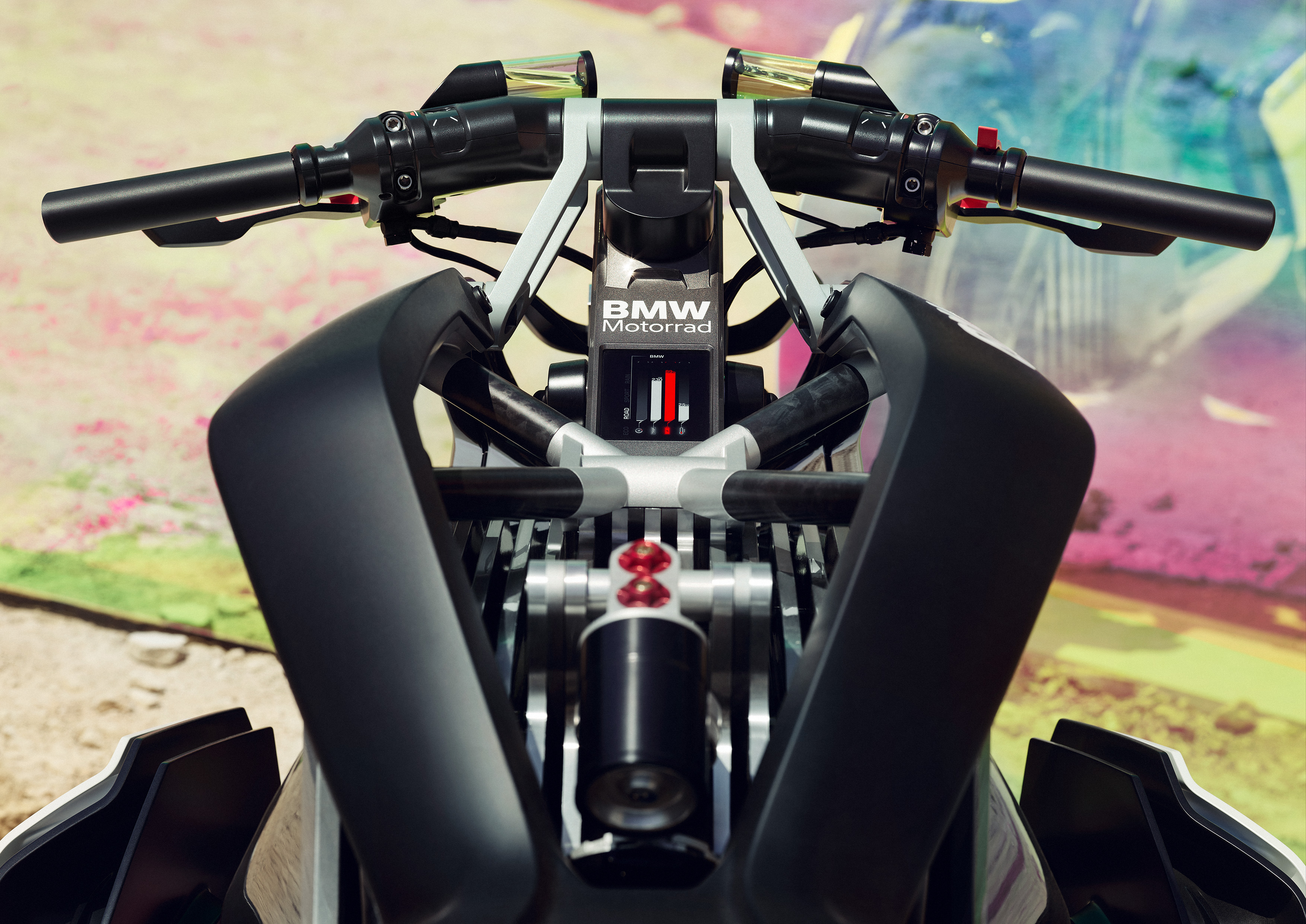
Here is BMW’s new electric motorcycle concept

BMW has a long history of building motorcycles, but it hasn’t done all that well in the electric motorcycle department. Clearly, though, this is something the company is thinking hard about and today, at its inaugural NextGen event, the company showed its newest electric concept bike, the BMW Motorrad Vision DC Roadster.

As usual, there’s no guarantee that this concept will ever come to market. Indeed, it’s likely that it won’t, but it will provide the inspiration for what will eventually go into production.

Going electric is a hard move to make for a company and that has been associated with its 2-cylinder boxer engine for ages. If it wants to produce a successful electric motorcycle, then it needs to be able to offer buyers not just performance (something they get by default with an electric engine and the torque it produces), but also something that retains the brand image buyers associate with BMW motorcycles.

Edgar Heinrich, the Head of Design for BMW Motorrad, argues that the Vision DC Roadster does just that. “The boxer engine is the heart of BMW Motorrad – an absolute stalwart of its character,” he said. “But BMW Motorrad stands for visionary zero-emissions vehicle concepts, too. In view of this, one question that arises is: what would happen if we were to replace the boxer engine with an electric motor and the required battery? The Vision Bike shows how we’re able to retain the identity and iconic appearance of BMW Motorrad in distinctive form while at the same time presenting an exciting new type of riding pleasure.”

Where a typical BMW motorbike would usually have its engine, the Vision roadster has a battery pack with coolers. Throughout the concept, the company’s designers used familiar design elements fro previous generations of the brand’s motorcycles.

In addition to the motorcycle, BMW also today showed off a new concept vehicle, the BMW Vision M Next, a new electrified sports car. The idea here is to provide a counterpart to the existing iNEXT concept that focuses more on performance than ease of use.

“Where the BMW Vision iNEXT illustrated how autonomous driving is set to transform life on board our vehicles, the BMW Vision M NEXT demonstrates how state-of-the-art technology can also make the experience of driving yourself purer and more emotionally engaging,” said Adrian van Hooydonk, Senior Vice President BMW Group Design. “In both models, the focus is firmly on the people inside. Design and technology make the ‘EASE’ and ‘BOOST’ experiences more natural and more intense.”

In line with this idea, the new concept vehicle promises to be able to go from 0 to 62 mph (100 km/h) in three seconds and offer a range of about 62 miles (which isn’t all that much). To get access to more power, drivers can also hit a BOOST+ button.

With the M Next, BMW is also showing off some new user interface designs. The interface now adapts to the speed you are driving at, for example, and will automatically give you less information as you drive faster, in order to let you focus as you head down the autobahn at 120 mph.

25 Jun 2019

Used car marketplace Motorway picks up £11M Series A

Motorway, the U.K. used car marketplace, has raised £11 million in Series A funding. Leading the round is Marchmont Ventures, the fund managed by Hugo Burge and Alan Martin (the former CEO and CFO of Momondo Group, respectively), along with participation from existing backer LocalGlobe.

Founded by the team behind Top10 — the mobile and broadband comparison site that exited to uSwitch in 2011 — Motorway has set out to make it easier to sell your used car online. The website lets car sellers instantly see live offers from multiple car buying services and specialist dealerships. You can compare headline offers, buyer reviews, and fees and collection options to find the best deal.

It competes with a number of other used car selling options including having to visit multiple car dealers to negotiate a sale, or list privately on websites like AutoTrader or eBay. The other option is to use one of a number of online car buyers, such as WeBuyAnyCar, that provide a quick disposal option but where prices paid are typically low. Motorway says that by comparing offers, consumers can get up to £1,000 more than going direct to one buyer.

The London and Brighton-based company has also launched a dedicated product for dealers, dubbed “Motorway Pro”. Sellers complete a detailed online profile of their car and if it is relatively new or higher priced they have the option to make it accessible to dealers on the Motorway Pro platform. Dealers then have 24 hours to bid for the vehicle, after which the winning dealer is connected to the seller to complete the transaction.

The Pro platform is built on mobile messaging: dealers get alerted about vehicles that fit their requirements via text message or WhatsApp. “The process removes middlemen from the sale process, making it much more efficient, resulting in a better deal for both the car seller and the dealer,” says Motorway.

Meanwhile, Motorway co-founder and CEO Tom Leathes tells me the startup is now driving over 100,000 sales enquiries per month — a sales enquiry every 30 seconds, apparently. A year ago that sat at 25,000 per month, representing 4x growth. “We’ve closed over £130 million in completed car sales,” he adds.

To help achieve this, Motorway on-boarded online buyers to the site, including Arnold Clark and Motor Depot. The startup also has partnerships with major car buying websites such as motors.co.uk and Parkers. Last month, Motorway’s first TV ad launched too.

25 Jun 2019

Learn ‘How-To’ at the Extra Crunch Stage at Disrupt Berlin 2019

Technology never stops evolving and neither do we. That’s why we’re excited to tell you about the new Extra Crunch Stage at Disrupt Berlin 2019. Our premiere tech conference dedicated to early-stage startups takes place 11-12 December. Now’s the time to book your super early-bird ticket, because the earlier you buy, the more you save.

Okay, it’s time to get extra crunchy. We named the Extra Crunch Stage after the eponymous how-to content we create for our most engaged readers. It offers in-depth exclusive content on topics like startup building fundamentals, resources and recommendations, unicorn deep dives, and much more.

The Extra Crunch Stage replaces last year’s Next Stage, but with more programming. You’ll still hear fireside chats and panel discussions focused on founder and investor success. You’ll also see and hear lots of how-to content and take away practical insights — the kind of advice you can actually use when the conference ends and the real work begins — from the folks who’ve done the hard work of getting things done.

If you want to glean every speck of startup knowledge from the Extra Crunch Stage programming, you’ll need to buy an Innovator, Founder or Investor pass. You’ll also have access to the speakers, panelists and founders on the Main Stage, the Showcase Stage in Startup Alley and the Q&A Stage.

Don’t miss all the action that Disrupt Berlin offers. Starting with our legendary pitch competition, the crown jewel of Disrupt — Startup Battlefield. Where else can you find bold, innovative, and dare we say unique, startups competing for $50,000 cash, glory and the Disrupt Cup? We’re not kidding about unique. A startup called Legacy won the Battlefield at Disrupt Berlin 2018, with its focus on addressing reduced sperm motility.

Join more than 3,000 attendees from more than 50 countries as they flow through Startup Alley, our exhibition floor. Hundreds of boundary-pushing, early-stage startups will display their talent, products, platforms and services.

Come ready to network, because you never know when or where you’ll meet that special someone who can change your business trajectory. And with a crowd that size, you’ll be relieved to have CrunchMatch, our free business networking platform, to help you connect with the specific people who share your business goals, criteria and interests.

Disrupt Berlin 2019 takes place on 11-12 December. Come check out the new Extra Crunch Stage and all the other opportunity just waiting for you. We have super early-bird tickets priced for every budget, and the sooner you buy your passes, the more you save.

Is your company interested in sponsoring or exhibiting at Disrupt Berlin 2019? Contact our sponsorship sales team by filling out this form.

25 Jun 2019

SpaceX successfully launches Falcon Heavy rocket with two flight-proven booster cores

SpaceX has succeeded in launching its third mission with the Falcon Heavy high-capacity rocket it first launched successfully last year. The rocket’s STP-2 mission took off from Kennedy Space Center in Florida towards the end of a four-hour launch window that opened at 11:30 PM EDT on Monday, with liftoff taking place at 2:30 AM EDT on Tuesday after the launch was pushed back so that the ground crew could complete “additional ground system checkouts.”

The launch was a first for SpaceX in a number of different ways – it’s the first night launch for Falcon Heavy, which treated observers to a unique light show. It’s also the first time SpaceX has launched the Falcon Heavy with flight-prove boosters, and it used two: The boosters on either side of Falcon Heavy’s central rocket were used on the Arabsat-6A mission that launched on April 11.

Finally, it’s the first time that Falcon Heavy has carried a payload for crucial SpaceX customers – including the U.S. Air Force, the Department of Defense, NASA and more. To accomplish its mission, it’ll continue carrying out a series of maneuvers over the next several hours to deploy its payload of 24 different spacecraft into their three separate target orbits. You can follow along as the stream updates the mission progress below, and we’ll update this post with the ultimate results.

Key missions include four separate NASA technology research missions, including JPL’s demonstration of an ultra precise and compact atomic clock designed for deep space use that could transform space navigation. Crowdfunded spacecraft LightSail 2 is also going up on this ride, launched by Bill Nye-led space exploration non-profit The Planetary Society.

SpaceX will now attempt to land and recover all three boosters, and it’ll also be trying to catch the fairing from the Falcon Heavy’s cargo capsule using a barge positioned at sea that will attempt to navigate a net under it as it falls back to Earth. All three boosters separated as planned from the Falcon Heavy second stage, and the second stages both landed at LZ-1 and LZ-2, the ground-based landing zones SpaceX maintains at Florida’s Cape Canaveral Air Force Base.

The third, centre booster was travelling so fast for this launch that it had to attempt the most challenging landing yet for a SpaceX booster, landing much further at sea and dealing with a lot more speed than ever before. This attempt was not successful, and you can see in the clip below that it missed off the side of the SpaceX drone landing ship and exploded on impact with the ocean.

The second stage did reach orbit, however, which is a successful launch in terms of Falcon Heavy’s primary mission. Check back later for updates on how each satellite payload deployment went.

Developing…

25 Jun 2019

FedEx sues the Department of Commerce after incident involving misrouted Huawei packages

FedEx is suing the United States Department of Commerce, claiming that it has been “essentially deputize[d]” to enforce its trade blacklist. The lawsuit comes a month after Huawei said it is reassessing its relationship with the delivery giant after several packages meant for shipment within Asia were instead diverted, or erroneously marked for delivery, to the U.S. FedEx claimed the packages (which Huawei said did not contain any technology covered by the trade ban imposed against it by the Trump administration) had been misrouted by accident.

In a statement today about the lawsuit, FedEx said that the current export ban “places an unreasonable burden on FedEx to police the millions of shipments that transit our network every day.” Filed on Monday, the lawsuit asks the U.S. District Court in the District of Columbia to stop the Department of Commerce from enforcing prohibitions in the Export Administration Regulations (EAR) against FedEx.

FedEx said in its court filing that it has “developed a sophisticated proprietary risk-based compliance system” to adhere to U.S. export laws by screening for senders or recipients on the list of entities believed to pose a national security risk. Huawei, which was not mentioned by name in either FedEx’s announcement or its complaint against the U.S. government, was added to that list last month. But FedEx says the U.S. government expects it to perform a “virtually impossible task, logistically, economically, and in many cases, legally” since it handles million of packages each day and most of them are sealed by customers before being given to the company. Therefore, the company argues that EAR violates its rights to due process under the Fifth Amendment.

China is an important growth market for FedEx, but earlier this month its future there was put in jeopardy when the Chinese government said it was under investigation for violating laws and regulations after the incident involving Huawei’s packages. Last year the company was forced to cut its 2019 earnings guidance. FedEx’s chairman and CEO Frederick Smith blamed “bad political choices” around the world, including Brexit, state-owned enterprises and China and U.S. tariffs, for hurting its business.