Category: UNCATEGORIZED

21 Jun 2019

Northzone’s Paul Murphy goes deep on the next era of gaming

As the gaming market continues to boom, billions of dollars are being invested in new games and new streaming platforms vying to own a piece of the action. Most of the value is accruing to the large incumbents in a space, however, and the entrance of Google and other big tech companies makes it difficult to identify where there are compelling opportunities for entrepreneurs to build new empires.

TechCrunch media analyst Eric Peckham recently sat down with Paul Murphy, Partner at European venture firm Northzone, to discuss Paul’s view of the market and where he is focusing his dollars. Below is the transcript of the conversation (edited for length and clarity):


Eric Peckham: You co-founded the hit mobile game Dots before moving to London and joining Northzone last year. Are you still bullish on investment opportunities in mobile gaming or do you think the market has changed?

Paul Murphy: I’m bullish on mobile gaming–the market is bigger than it has ever been. There’s a whole generation of people that have been trained to play games on mobile phones. So those are things that are very positive.

The challenge is you don’t really have a rising tide moment anymore. The winners have won. And so it’s very, very difficult for someone to enter with new content and build a business that’s as big as Supercell or King, regardless of how good their content is. So while the prize for winning in mobile gaming content big, the likelihood is smaller.

Where I’m spending most of my time is not on content, it’s on components within mobile gaming. We’re looking at infrastructure: different platforms that enable mobile gaming, like Bunch which we invested in.

Their product allows you to do live video and audio on top of mobile games. So we don’t have to take any content risk. We’re betting that this great product will fit into a large inventory ecosystem.

Peckham: New mobile game studios that are launching all seem to fall under the sphere of influence of these bigger companies. They get a strategic investment from Supercell or another company. To your point, it’s tough for a small startup to compete entirely on its own.

Murphy: It’s possible in mobile gaming still but it’s really, really hard now. At the same time, what you’ve seen is the odds of winning are lower. It is hard to reach the same scale when it costs you $5.00 to acquire a user today, whereas when Candy Crush launched, it was $0.05 per user. So it’s almost impossible to achieve King-like scale today.

Therefore, you’re looking at similar content risk with reduced upside, which makes that equation less attractive for venture capital. But it might be perfectly fine for an established company because they don’t need to do the marketing, they have the audience already.

The big gaming companies all struggle with the challenge of how to create the next hit IP. They have this machine that can bring any great game to market efficiently, with a large audience they can cross promote from and capital they can invest to build a big brand quickly. For them, the biggest challenge is getting the best content.

So it’s natural to me that the pendulum has swung towards strategic investors in mobile gaming content. Epic has a fund that they set up with Improbable, Supercell is making direct investments, Tencent has been making investments for years. Even from a content perspective, you’re probably going to see Apple, Google, and Amazon making more content investments in mobile gaming.

Image via Getty Images / aurielaki

Peckham: Does this same market dynamic apply to PC games and console games? Do you see a certain area within gaming where there’s still opportunity for independent startups to create the game itself and find success at a venture scale?

Murphy: The reason we made our investment in Klang Games, which is building an MMO called Seed that people will primarily play through PC, is that while there is content risk–you’re never going to get rid of the possibility that the IP doesn’t fly–if it works, it will be massive…an Earth-shattering level of success. If their vision comes to life, it will be very, very big.

So that one has all the risks that you’d have in any other game studio but the upside is exponentially larger, so the bet makes sense to us. And it so happens that it’s going to be on PC first, where there’s certainly a lot of competition but it’s not as saturated and the monetization methods are healthier than in mobile gaming. In PC, you don’t have to do free-to-play tactics that interfere with the gameplay.
21 Jun 2019

Northzone’s Paul Murphy goes deep on the next era of gaming

As the gaming market continues to boom, billions of dollars are being invested in new games and new streaming platforms vying to own a piece of the action. Most of the value is accruing to the large incumbents in a space, however, and the entrance of Google and other big tech companies makes it difficult to identify where there are compelling opportunities for entrepreneurs to build new empires.

TechCrunch media analyst Eric Peckham recently sat down with Paul Murphy, Partner at European venture firm Northzone, to discuss Paul’s view of the market and where he is focusing his dollars. Below is the transcript of the conversation (edited for length and clarity):


Eric Peckham: You co-founded the hit mobile game Dots before moving to London and joining Northzone last year. Are you still bullish on investment opportunities in mobile gaming or do you think the market has changed?

Paul Murphy: I’m bullish on mobile gaming–the market is bigger than it has ever been. There’s a whole generation of people that have been trained to play games on mobile phones. So those are things that are very positive.

The challenge is you don’t really have a rising tide moment anymore. The winners have won. And so it’s very, very difficult for someone to enter with new content and build a business that’s as big as Supercell or King, regardless of how good their content is. So while the prize for winning in mobile gaming content big, the likelihood is smaller.

Where I’m spending most of my time is not on content, it’s on components within mobile gaming. We’re looking at infrastructure: different platforms that enable mobile gaming, like Bunch which we invested in.

Their product allows you to do live video and audio on top of mobile games. So we don’t have to take any content risk. We’re betting that this great product will fit into a large inventory ecosystem.

Peckham: New mobile game studios that are launching all seem to fall under the sphere of influence of these bigger companies. They get a strategic investment from Supercell or another company. To your point, it’s tough for a small startup to compete entirely on its own.

Murphy: It’s possible in mobile gaming still but it’s really, really hard now. At the same time, what you’ve seen is the odds of winning are lower. It is hard to reach the same scale when it costs you $5.00 to acquire a user today, whereas when Candy Crush launched, it was $0.05 per user. So it’s almost impossible to achieve King-like scale today.

Therefore, you’re looking at similar content risk with reduced upside, which makes that equation less attractive for venture capital. But it might be perfectly fine for an established company because they don’t need to do the marketing, they have the audience already.

The big gaming companies all struggle with the challenge of how to create the next hit IP. They have this machine that can bring any great game to market efficiently, with a large audience they can cross promote from and capital they can invest to build a big brand quickly. For them, the biggest challenge is getting the best content.

So it’s natural to me that the pendulum has swung towards strategic investors in mobile gaming content. Epic has a fund that they set up with Improbable, Supercell is making direct investments, Tencent has been making investments for years. Even from a content perspective, you’re probably going to see Apple, Google, and Amazon making more content investments in mobile gaming.

Image via Getty Images / aurielaki

Peckham: Does this same market dynamic apply to PC games and console games? Do you see a certain area within gaming where there’s still opportunity for independent startups to create the game itself and find success at a venture scale?

Murphy: The reason we made our investment in Klang Games, which is building an MMO called Seed that people will primarily play through PC, is that while there is content risk–you’re never going to get rid of the possibility that the IP doesn’t fly–if it works, it will be massive…an Earth-shattering level of success. If their vision comes to life, it will be very, very big.

So that one has all the risks that you’d have in any other game studio but the upside is exponentially larger, so the bet makes sense to us. And it so happens that it’s going to be on PC first, where there’s certainly a lot of competition but it’s not as saturated and the monetization methods are healthier than in mobile gaming. In PC, you don’t have to do free-to-play tactics that interfere with the gameplay.

21 Jun 2019

PayPal COO Bill Ready to depart at end of 2019

PayPal Chief Operating Officer Bill Ready is leaving the company at the end of the year, PayPal announced via a statement issued on Thursday. The exec had first joined PayPal when it acquired his startup, the payments gateway Braintree back in 2013 for $800 million in cash. He became PayPal’s COO a few years later, in 2016. According to PayPal, Ready is interested in pursuing other entrepreneurial interests outside of the company.

At PayPal, Ready drives product, technology, and engineering, including the customer experiences for PayPal’s consumer and merchant businesses as well as Venmo, Braintree, Paydiant, and Xoom businesses. As COO, he was a senior member of the executive team responsible for helping drive revenue and profit goals for the company.

Prior to this role, he ran global product and engineering at PayPal, where he led the PayPal, Braintree, Venmo and Paydiant teams responsible for end-to-end customer experiences including PayPal One Touch; Pay with Venmo; the redesigned PayPal mobile app; PayPal Commerce; and the expansion of Braintree’s global reach and payment methods.

During his time as COO, PayPal looked beyond being just a checkout button on the web, and made a key decision to strike deals with the likes of with Visa, MasterCard, AppleGoogleSamsung, and Walmart, all of which had earlier been positioned as PayPal’s competitors at point-of-sale in-store and online.

PayPal also acquired iZettle, the Square of Europe; payments solution for marketplaces, Hyperwallet; small business lender Swift Financial; and TIO Networks with the goal of better serving the under-banked North Americans living paycheck-to-paycheck, among others. It invested in cross-border payments specialist PPRO, launched instant transfers to banks, expanded its small business lending, brought Venmo to more online platforms, took OneTouch international, and much more.

“Since joining PayPal six years ago, I have had the privilege of working alongside many incredibly talented people, and I am proud of what we as a leadership team have accomplished together,” said Bill Ready, in a statement. “The transformative work we are doing has positioned PayPal for success well into the future. I am excited for PayPal’s future and committed to using the coming months to ensure a smooth transition, and support the great team we have at PayPal.”

Ready will work through year-end, and then his duties will be split among other executives.

The announcement follows this week’s news of a cryptocurrency backed by Facebook called Libra, which counts PayPal as a founding member, among others.

“Bill will always be an important part of the PayPal story,” said Dan Schulman, President and CEO. “The Board and management team are grateful for his many contributions and for the customer focus, product excellence and culture of innovation he has helped to instill over the past six years,” said Schulman. “Bill will continue to work with key partners and our leadership team until the end of the year. I appreciate his commitment to PayPal and its future.”


21 Jun 2019

African fintech dominates Catalyst Fund’s 2019 startup cohort

African fintech has taken center stage for the Catalyst Fund, a JP Morgan Chase and Bill & Melinda Gates Foundation-backed accelerator that provides mentorship and non-equity funding to emerging markets startups.

The organization announced its 2019 startup cohort and three out of the four finance ventures — Chipper Cash, Salutat and Turaco — have an Africa focus (Brazil-based venture Diin, was the fourth).

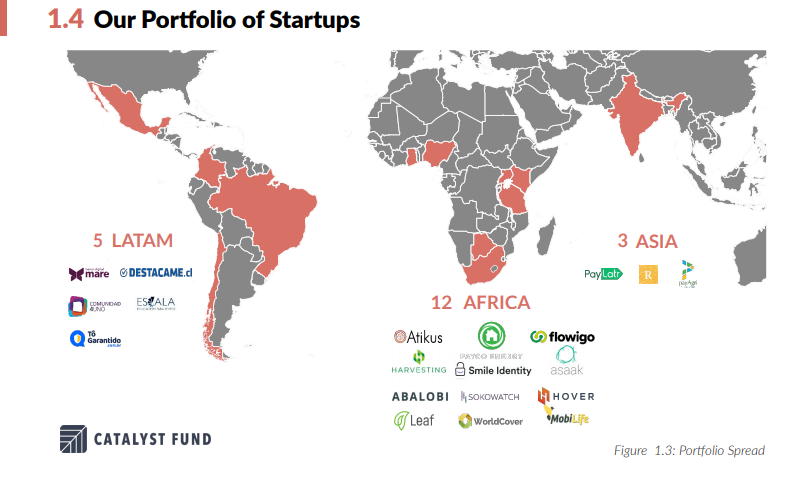
Catalyst Fund, which is managed by global tech consulting firm BFA,  also released its latest evaluation report, which showed 60% of the organization’s portfolio startups are located in Africa.

The new additions to the fund’s program will gain $50,000 to $60,000 in non-equity venture building support (as Catalyst Fund dubs it) and six months of technical assistance. The funds and support are aimed at moving the ventures to the next phase of catalyzing business models, generating revenue and connecting to global VCs.

“We really tailor the kind of help we give to companies so they can reach market fit and proof points that investors want to see to enable the next phase of growth,” BFA Deputy Director Maelis Carraro told TechCrunch.

Catalyst Fund’s 2019 startup cohort also gained exposure to the fund’s Circle of Investors — a network of impact and commercial backers who can make decisions on investing in and accelerating particular companies.
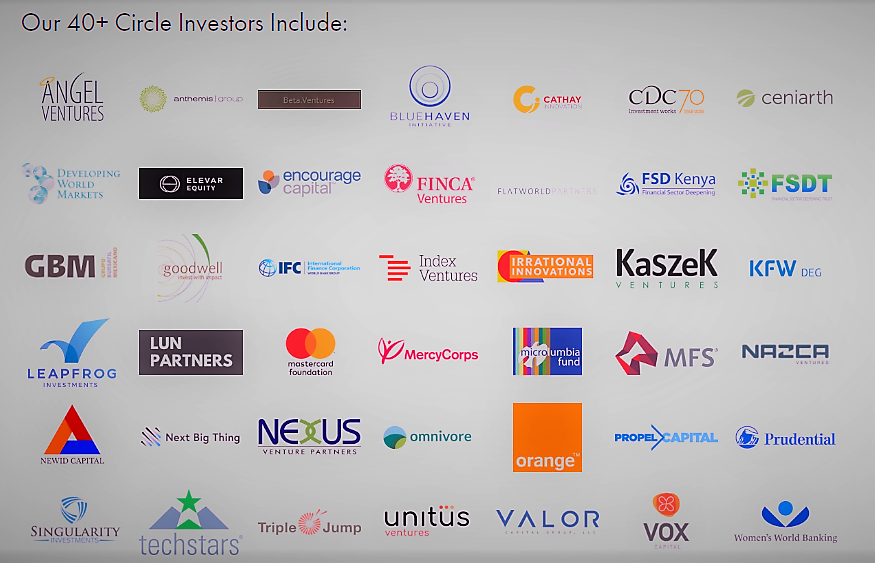

Next Big Thing and Deciens Capital recently joined the group of 40 investors that includes Techstars and the Mastercard Foundation.

The tenor for support for Catalyst Fund’s newest cohort of startups lasts through 2019. The ventures will also attend the big SOCAP 2019 tech conference in San Francisco, where Catalyst organizes workshops and meetings with its Circle of Investors.

Founded in 2016, the Catalyst Fund’s mandate includes supporting fintech startups that are developing solutions for low-income individuals in emerging markets. The organization has accelerated 20 ventures in Africa, Asia and Latin America that have raised $25.7 million in follow-on capital, according to its latest report.

With the Bill & Melinda Gates Foundation and JP Morgan Chase as the lead backers, Catalyst Fund partners also include Rockefeller Philanthropy Advisors and Accion.

JP Morgan Chase’s interest in supporting Catalyst Fund connects to a firm-wide commitment of the global bank to financial inclusion, according to JP Morgan’s Head of Community Innovation Colleen Briggs — who is also a day-to-day Catalyst Fund manager.

JP Morgan recently launched a $125 million, five-year commitment to improve global financial health, she explained. “For us there is a true market opportunity…we genuinely believe that financial inclusion is the foundation for the economy,” Briggs said.

“If we don’t get the social issues right it undermines the resiliency of the communities and the markets where we’re trying to operate.”

That Catalyst Fund’s cohorts have shifted toward Africa focused ventures speaks to the thesis for fintech on the continent.

By a number of estimates, Africa’s 1.2 billion people represent the largest share of the world’s unbanked and underbanked population.

An improving smartphone and mobile-connectivity profile for Africa (see GSMA) turns this scenario into an opportunity for mobile-based financial products.

Hundreds of startups are descending on Africa’s fintech space, looking to offer scalable solutions for the continent’s financial needs. By stats offered by Briter Bridges and a 2018 WeeTracker survey, fintech now receives the bulk of VC capital and deal-flow to African startups.

Ventures such as Catalyst Fund cohort member Chipper Cash — co-founded by Ugandan Ham Serunjogi and Ghanaian Maijid Moujaled — are looking to grow across Africa first before considering any global moves.

The company plans to introduce its no-fee, P2P, cross-border mobile-money payments products beyond current operations in Ghana and Kenya to Rwanda, Tanzania and Uganda within the next 12 months.

Ventures looking to join companies like Chipper Cash as a Catalyst Fund-supported startup can seek a referral from Catalyst’s Circle of Investors — who make a recommendations on new candidates. Catalyst Fund aims to choose 30 startups for its cohort over the next two years, according to program director David del Ser.

21 Jun 2019

The VCs behind Libra, Facebook’s new cryptocurrency

Hello and welcome back to Equity, TechCrunch’s venture capital-focused podcast, where we unpack the numbers behind the headlines.

Sadly, Equity co-host Alex Wilhelm is out this week, but for good reason: He’s getting married this weekend. Fortunately, we had the esteemed TechCrunch editor Danny Crichton step in to discuss Slack’s direct listing, Facebook’s new cryptocurrency, the scooter cash desert, startup founder salaries and more with Equity co-host Kate Clark.

We began this week’s episode with the latest Slack news. The enterprise communications business was said to price its shares at $26 apiece Wednesday afternoon, valuing the company at around $15.7 billion. We taped this episode on Wednesday, the day before Slack’s direct listing. It’s now Friday. We’ll be back next week to unpack Slack’s initial performance on the public markets.

Then, we turned to Facebook’s new cryptocurrency, Libra, which will let you buy things or send money to people with nearly zero fees using interoperable third-party wallet apps or Facebook’s own Calibra wallet that will be built into WhatsApp, Messenger and its own app. As Kate mentioned in the podcast, if you’re curious at all about Libra, read TechCrunch’s Josh Constine’s deep dive here. And, of course, listen to the latest episode to learn more about the role VCs have played in the development of the token and what it means for crypto startups.

Next up on the agenda was scooters because we can’t seem to tape a single episode of Equity without mentioning VCs favorite sector. The news wasn’t great this week, however. We’re hearing that Lime, a scooter startup that has raised hundreds of millions in venture capital funding, is having a tough time landing fresh funding. That’s a big problem because hardware is a tough and expensive business and if Lime — and Bird for that matter — aren’t able to secure additional capital, well, it’s goodbye scooters.

Finally, Danny and Kate chatted about startup founder salaries. There’s not much written on this topic and comprehensive founder salary data is hard to come by. Fortunately, TechCrunch’s Ron Miller did a little digging to find out just how much VC-backed entrepreneurs are being paid these days. The results are surprising.

As usual, we’ll be back next week. Thanks for listening!

Equity drops every Friday at 6:00 am PT, so subscribe to us on Apple PodcastsOvercast, Pocket Casts, Downcast and all the casts.

21 Jun 2019

Facebook adds new limits to address the spread of hate speech in Sri Lanka and Myanmar

As Facebook grapples with the spread of hate speech on its platform, it is introducing changes that limit the spread of messages in two countries where it has come under fire in recent years: Sri Lanka and Myanmar.

In a blog post on Thursday evening, Facebook said that it was “adding friction” to message forwarding for Messenger users in Sri Lanka so that people could only share a particular message a certain number of times. The limit is currently set to five people.

This is similar to a limit that Facebook introduced to WhatsApp last year. In India, a user can forward a message to only five other people on WhatsApp . In other markets, the limit kicks in at 20. Facebook said some users had also requested this feature because they are sick of receiving chain messages.

In early March, Sri Lanka grappled with mob violence directed at its Muslim minority. In the midst of it, hate speech and rumors started to spread like wildfire on social media services, including those operated by Facebook. The government in the country then briefly shut down citizen’s access to social media services.

In Myanmar, social media platforms have faced a similar, long-lasting challenge. Facebook, in particular, has been blamed for allowing hate speech to spread that stoked violence against the Rohingya ethnic group. Critics have claimed that the company’s efforts in the country, where did does not have a local office or employees, are simply not enough.

In its blog post, Facebook said it has started to reduce the distribution of content from people in Myanmar who have consistently violated its community standards with previous posts. Facebook said it will use learnings to explore expanding this approach to other markets in the future.

“By limiting visibility in this way, we hope to mitigate against the risk of offline harm and violence,” Facebook’s Samidh Chakrabarti, director of product management and civic integrity, and Rosa Birch, director of strategic response, wrote in the blog post.

In cases where it identifies individuals or organizations “more directly promote or engage violence”, the company said it would ban those accounts. Facebook is also extending the use of AI to recognize posts that may contain graphic violence and comments that are “potentially violent or dehumanizing.”

The social network has, in the past, banned armed groups and accounts run by the military in Myanmar, but it has been criticized for reacting slowly and, also, for promoting a false narrative that suggested its AI systems handle the work.

Last month, Facebook said it was able to detect 65% of the hate speech content that it proactively removed (relying on users’ reporting for the rest), up from 24% just over a year ago. In the quarter that ended in March this year, Facebook said it had taken down 4 million hate speech posts.

Facebook continues to face similar challenges in other markets, including India, the Philippines, and Indonesia. Following a riot last month, Indonesia restricted the usage of Facebook, Instagram, and WhatsApp in an attempt to contain the flow of false information.

21 Jun 2019

Terry Gou resigns as Foxconn’s chairman to run for president of Taiwan

Terry Gou said at Foxconn’s annual general meeting today that he is leaving the electronics manufacturing giant as he prepares to run for president of Taiwan. Gou, who founded Foxconn (also known as Hon Hai Precision Industry Co.) 45 years ago and is also its biggest shareholder, will remain on the company’s board. Young Liu, the head of Foxconn’s semiconductor business, will succeed him as chairman and the company will also transition to a committee-directed management structure.

Gou first officially announced in April that he plans to resign as chairman to focus on his campaign for the nomination of Taiwan’s opposition party, the Kuomintang. If he succeeds against other KMT candidates, including Kaohsiung mayor Han Kuo-Yu, Gou will be challenging President Tsai Ing-wen, a member of the Democratic Progressive Party, for the election next January.

Foxconn (one of Apple’s biggest suppliers) is China’s largest private employer and the Kuomintang supports a closer relationship with the Chinese government, despite its stance that Taiwan is a rogue province. Gou’s ties to the country will be scrutinized during the campaign as he opposes Tsai and the DPP, advocates of Taiwan’s sovereignty. The issue is especially fraught after the recent large-scale demonstrations in Hong Kong against a bill that would have allowed extradition to China.

Last month Gou, who has never held political office before, tried to assuage critics by saying he has no plans to meet with Chinese President Xi Jinping after the head of Taiwan’s Mainland Affairs Council of the Executive Yuan, Chen Ming-Tung, claimed Gou had said Taiwan was part of China. Gou also said that during a recent meeting with Donald Trump he had asked the president of the United States to work on improving the relationship between all three countries.

Gou’s campaign has also been marred by other controversies, such as when he said “the harem should not meddle in politics” after his wife, Delia Tseng, objected to his candidacy. Gou later apologized for the remark.

21 Jun 2019

Ethiopia’s bid to become an African startup hub hinges on connectivity

Ethiopia is flexing its ambitions to become Africa’s next startup hub.

The country of 105 million with the continent’s seventh largest economy is revamping government policies, firing up angel networks, and rallying digital entrepreneurs.

Ethiopia currently lags the continent’s tech standouts—like Nigeria, Kenya and South Africa—that have become focal points for startup formation, VC, and exits.

To join those ranks, the East African nation will need to improve its internet environment, largely controlled by one government owned telecom. Last last week Ethiopia’s government shut down the internet for the entire nation.

Startups, hubs, accelerators

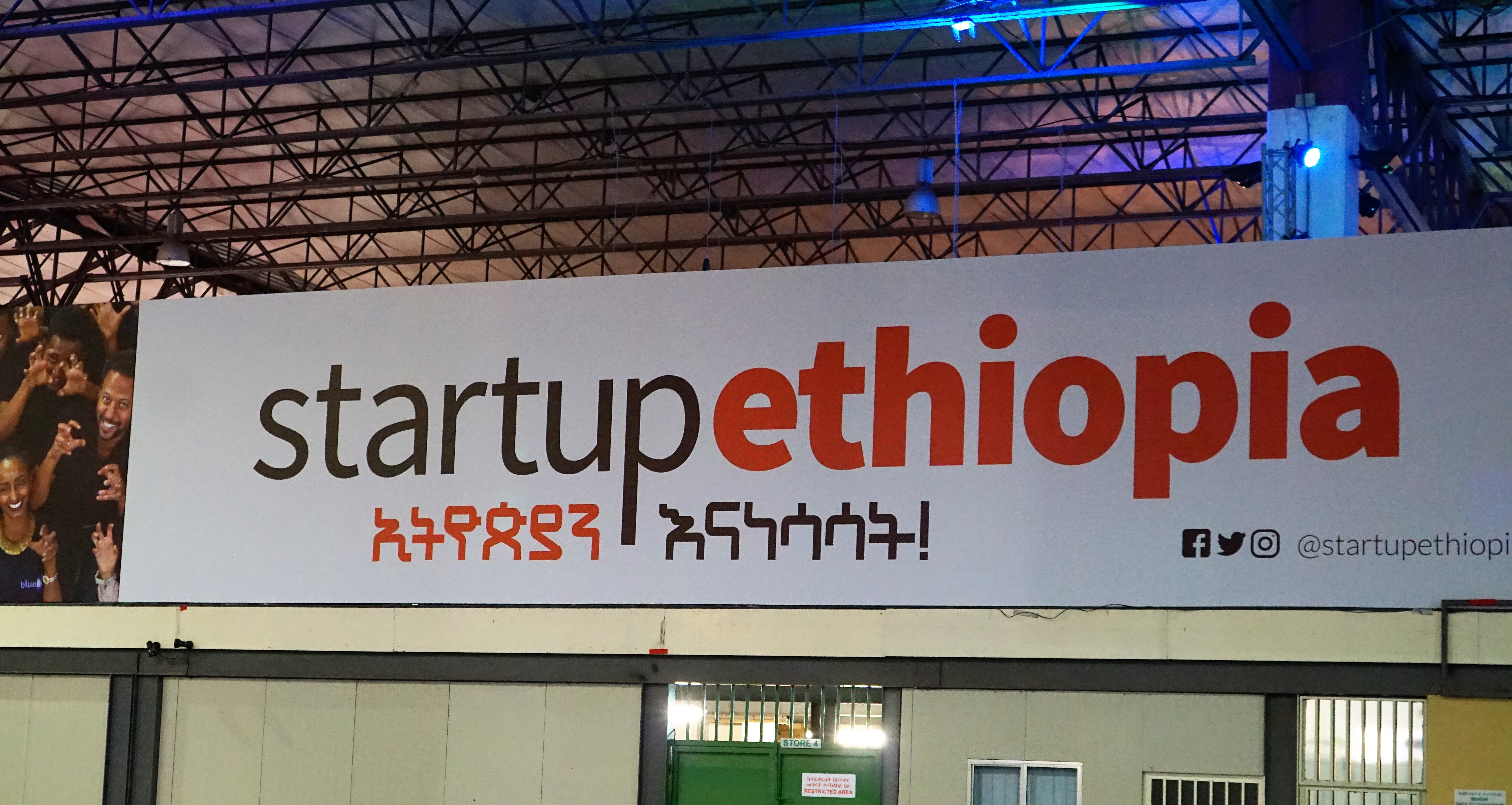
Ethiopia has the workings of a budding tech scene. Much of it was on display recently at the county’s first Startup Ethiopia event held in Addis Ababa.

On the startup front, ride-hail ventures Ride and ZayRide have begun to show traction (Uber has not yet entered Ethiopia). Their cars are visible buzzing throughout the capital and ZayRide will expand in Liberia in August, CEO Habtamu Tadesse confirmed to TechCrunch.

While in Addis, I downloaded and used Ride—founded by female entrepreneur Samrawit Fikru—which quickly flashed connections to nearby drivers on my phone and allowed for cash payment.
This month’s Startup Ethiopia also showcased high-potential early-stage ventures, such as payment company YenaPay and online food startup Deamat. YenaPay has worked to build a digital payments imprint in Ethiopia’s largely cash based economy. The startup has onboarded over 500 merchants, including ZayRide, according to co-founder Nur Mensur.

Deamat blends e-commerce and agtech. “We connect small-holder farmers with consumers. People can use their phone, pay with their phone, get any kind of agricultural products they want and we deliver,” co-founder Kisanet Haile told me after pitching to judges that included Nigerian angel investor Tomi Davies and Cellulant CEO Ken Njoroge.

Ethiopia has several organizing points for startup, VC, and developer activity. Tech talent and startup marketplace Gebeya is located in Addis Ababa (with offices globally) and offers programs and services for ventures and tech professionals to gain developer skills and scale their digital businesses.
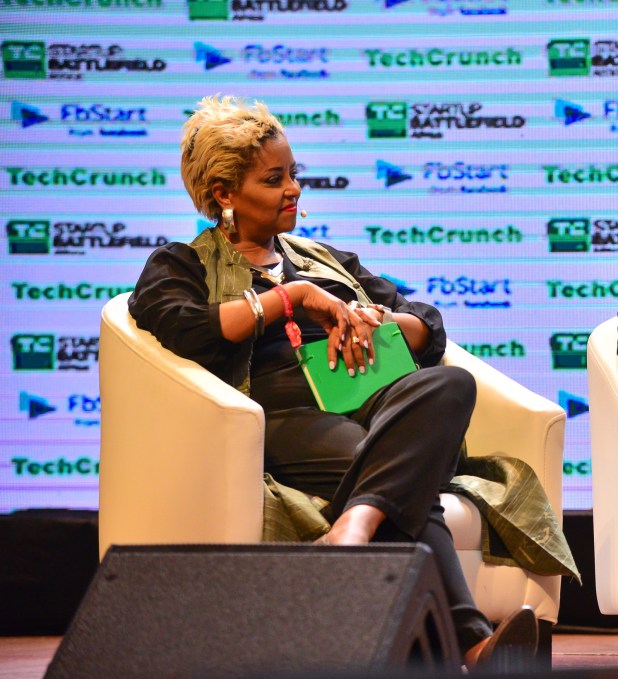
BlueMoon is an Ethiopian agtech incubator and seed fund. Its founder Eleni Gabre-Madhin has extensive experience working abroad and played a central convening role in the debut Startup Ethiopia event.

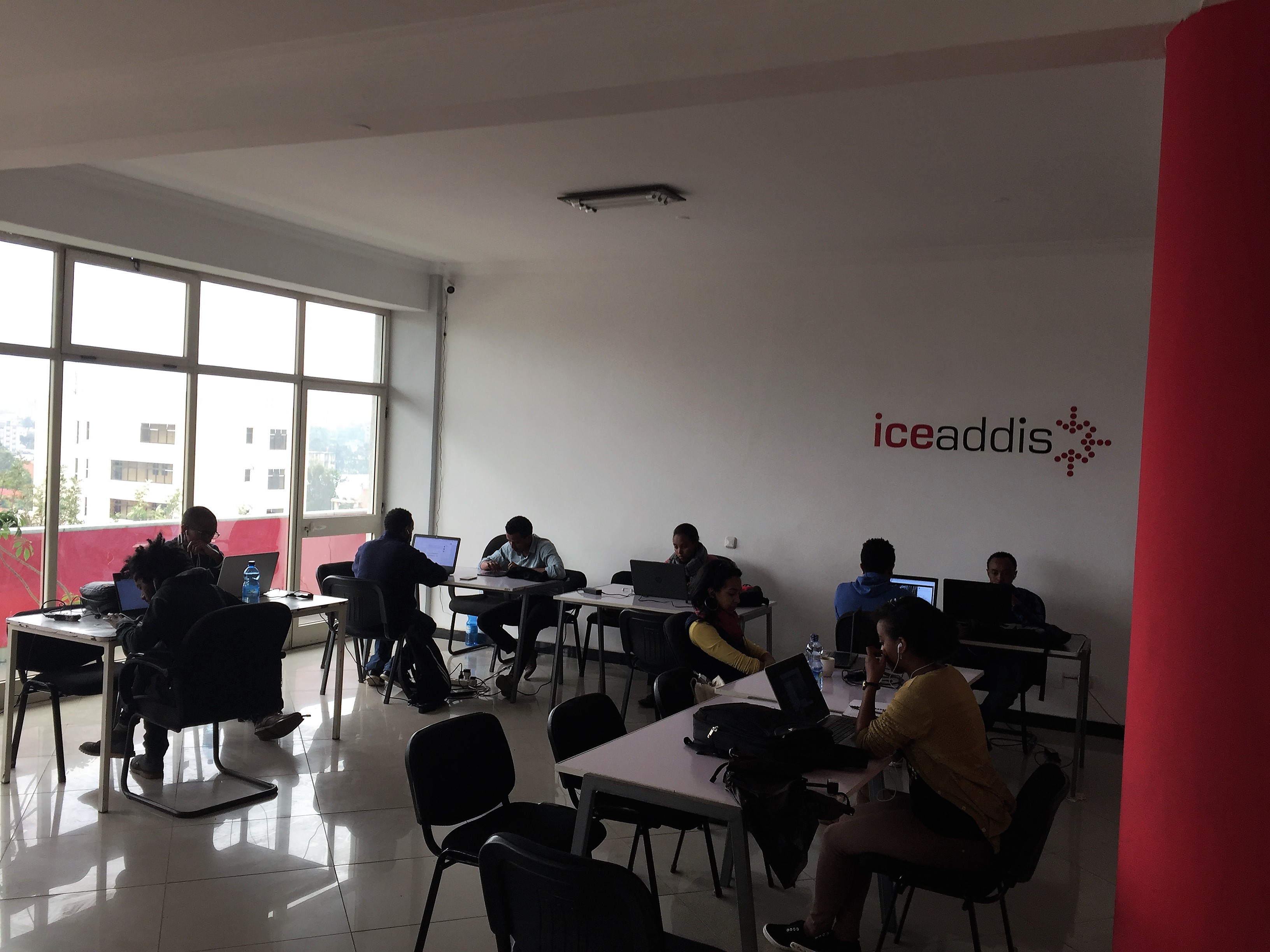
In terms of developer and co-working type spaces, Ethiopia has iCog Labs—an AI and robotics research company—and IceAddis, one of the country’s oldest tech hubs. Founded in 2011, IceAddis’s mission is to develop Ethiopia’s IT ecosystem, co-founder and CEO Markos Lemma told me during a tour. The hub runs programs such as Ice180, a six-month startup accelerator bootcamp that has graduated 40 ventures. IceAddis also offers a 24 hour co-working space for techies and startups who want to burn the midnight oil with internet access.

Angels and mentors

Startup Ethiopia featured two angel and support networks for Ethiopia’s startups. Tomi Davies and Ethiopian diaspora returnee Shem Asefaw announced the first Addis Ababa Angel Network, supported by African Business Angels Network, which is expected to accept startups this year.

Startup Ethiopia also showcased Ethiopians in Tech, an entrepreneur support group with Silicon Valley roots. SV based Bernard Laurendeau, a director at data analytics firm Zenysis and EiT founding member, made the trek from San Francisco to meet with local startups. So did Stackshare founder Yonas Beshawred.

Talk of leveraging Ethiopia’s diaspora, which is particularly strong and successful in the United States, for tech was mentioned several times at Startup Ethiopia, including on my panel.

Connectivity

The biggest hurdle for Ethiopia’s startup community (that I could identify) is the situation with local internet.

Mobile and IP connectivity in the country is managed by state-owned Ethio Telecom, though the government — led by newly elected Prime Minister Abiy Ahmed and President Sahle-Work Zewde — has committed to privatize it.

At Startup Ethiopia, I moderated and sat on panels with Ethiopian government representatives to discuss the country’s net situation. This was to the backdrop of the tech event’s WiFi not functioning properly over two days—something that was readily pointed out during Q&A by Ethiopian techies and Liquid Telecom CTO Ben Roberts, who flew in from Nairobi.

Several officials, such as State Minister of Innovation and Technology Jemal Beker, named specific commitments to improve the country’s internet quality, access and choice within the next year, with the Director General of Ethiopia’s Ministry of Innovation and Technology — Getahun Mekuria — seated in the front row.

Shortly after officials made these public pledges, the government shut down the country’s internet to coincide with national exams.

The government didn’t issue an official reason for the shutdown — and an official in charge of ICT policy did not respond to a TechCrunch inquiry — but press reports and a source speaking to TechCrunch on background said the stoppage was done to stop students from cheating.

Valid reason or not, I received several messages from local techies and startup heads (when the internet was intermittently switched back on) complaining about how the shutdown had totally crippled their businesses.

It appears the situation with internet in Ethiopia may be a bit of steps back before steps forward. After shutting things down, the government announced policy steps last week to break up the national telecom and IP monopoly and issue individual telco licences by the end of 2019.

Prospects

On the upside of Ethiopia’s bid to become a tech and startup hub, the country has a strong demographic and economic thesis—in its large population and economy—to support the scale up of problem-solving, digital businesses. Ethiopia’s large and entrepreneurial diaspora populations, with strong ties to Silicon Valley, could also become a bridge to capital and capacity for its early-stage ventures.

And another edge Ethiopia could have over other African tech hubs is country’s advances in developing a manufacturing industry (and higher-paid workforce) that’s now pulling some assembly from China. That includes a mobile assembly plant in Addis Ababa for Tenssion’s Tecno, Africa’s leading mobile phone brand.

Ethiopia’s startup scene will be stuck in the mud, however, without changes to the internet landscape. As we discussed on the Startup Ethiopia stage, the tech and startups of tomorrow—in Africa and globally—won’t just be IoT, or the Internet of Things driven.

Tech ventures and their end-users are shifting toward an IoEA future: the internet-of-everything-all-the-time. And it’s impossible for Ethiopia’s startups to move in that direction in a market with one state controlled mobile provider and IP that has the power to arbitrarily nix connectivity.

So on the policy side, the single most effective thing the government of Ethiopia can do to provide an enabling environment for startups is open up its internet market to improve penetration, choice, cost, and reliability.

Do that and it’s likely the other tech pieces assembling in and around the country—ventures, angels, hubs, and entrepreneurs—will sort the rest out.


21 Jun 2019

Google responds to a WSJ report that concluded there are millions of fake business listings on Maps

After a Wall Street Journal investigation concluded that there are millions of fake business listings on Google Maps, the company has issued a response detailing the measures it takes to combat the problem.

According to estimates from online advertising experts surveyed by the WSJ, there are “roughly 11 million falsely listed businesses on any given day,” with hundreds of thousands more fake listings appearing every month. Many are placed by businesses that specialized creating fake listings for clients that want to boost their information above competitors in search results.

According to a search expert interviewed by the WSJ, a 2017 academic study paid for by Google that found only 0.5% of local searches researchers examined were fake was skewed by limited data.

In the company’s response, Google Maps product director Ethan Russell wrote that of the more than 200 million listings added to Google Maps over the years, only a “small percentage” are fake. He said that last year Google took down more than 3 million fake business profiles, including more than 90% that were removed before users could see them. Google’s systems identified 85% of the listings removed, while 250,000 were reported by users. The company also disabled 150,000 user accounts found to be abusive, a 50% increase from 2017.

Russell wrote that the company is “continually working on new and better ways to fight these scams using a variety of ever-evolving manual and automated systems,” but can’t share more details about them because otherwise scammers might find a way to get around them.

The WSJ report comes as another Google-owned service, YouTube, is under scrutiny for how it fights abuse at scale. YouTube released its first anti-abuse report last year, but problematic content, including hate speech, continues to be a major problem and the platform’s critics say it haphazardly enforces its own policies.

Along with Apple, Amazon and Facebook, Google’s parent company Alphabet is currently facing antitrust investigations by the Federal Trade Commission and Justice Department, and its search business is expected to go under scrutiny.

20 Jun 2019

Meet your new chief of staff: An AI chatbot

Years ago, a mobile app for email launched to immediate fanfare. Simply called Mailbox, its life was woefully cut short — we’ll get to that. Today, its founders are back with their second act: An AI-enabled assistant called Navigator meant to help teams work and communicate more efficiently.

With the support of $12 million in Series A funding from CRV, #Angels, Designer Fund, SV Angel, Dropbox’s Drew Houston and other angel investors, Aspen, the San Francisco and Seattle-based startup behind Navigator, has quietly been beta testing its tool within 50 organizations across the U.S.

“We’ve had teams and research institutes and churches and academic institutions, places that aren’t businesses at all in addition to smaller startups and large four-figure-person organizations using it,” Mailbox and Navigator co-founder and chief executive officer Gentry Underwood tells TechCrunch. “Pretty much anywhere you have meetings, there is value for Navigator.”

The life and death of Mailbox

Mailbox, a mobile email management system, was responsible for many of the features both Apple Mail and Gmail use today, including swipe to archive or delete.

It launched in 2013, as mentioned, to quick success. At the time, Apple’s App Store was much newer and there were few available options for mobile email, especially ones that prioritized design and efficiency, as Mailbox did.

As a result, Mailbox, created by a venture-capital backed Palo Alto startup by the name of Orchestra, exploded. Mere weeks after its launch, it attracted 1.25 million people to its waitlist. Shortly after that, it hit another milestone: It was acquired.

Dropbox paid $100 million to bring Mailbox and its 13 employees on board, including Underwood and his co-founder Scott Cannon. Dropbox CEO Drew Houston, still years away from leading his company through a successful IPO, told The Wall Street Journal his plan was to “help Mailbox reach a much different audience much faster.”

“That was a very special time,” Underwood said. “There were still a lot of opportunities for improvements for how email was being used on these tiny little devices.”

Two years later, in 2015, the worst happened. Dropbox made the unpopular decision to shut down Mailbox, despite its cult following, in order to focus more on its own core product and the development of other new productivity tools.

“That was a hard time for us and Mailbox users,” Underwood said. “It was a tough decision for Dropbox as well … Ultimately, Mailbox didn’t meet the focus criteria for Dropbox and I understood the decision. It was in every sense their right to do with it what they thought was best.”

Act two

About a year later, in 2016, the Mailbox team had licked their wounds and begun work on an entirely new venture.
Much like Slack disrupted the frequency and efficiency of workplace communication, Navigator hopes to reimagine meetings, an essential element of business that’s often dreaded the most.

“What we saw with Mailbox was that really great processes were an effective way to help teams be creative; yet, lots of teams don’t make use of great processes,” Underwood explained. “After Mailbox, we really wanted to find a way to help teams be more effective and Navigator is a teamwork assistant whose job is really to help teams basically make the most of working together.”

According to Doodle’s 2019 state of the meeting report, 71% of working professionals lose time every week because of unnecessary meetings, most often because those meetings are ineffective or poorly organized. This is a cause of frustration and a loss of time and money; in fact, Doodle estimates nearly $400 billion is lost annually as a consequence of botched meetings.

Still, meetings aren’t going away. Workers in corporate America spend roughly five hours per week in meetings and another four hours per week preparing for meetings. Managers spend double that. There’s a big opportunity here to leverage technology to improve, even eliminate, this pain point.

The video conferencing business Zoom, for example, is hyperfocused on refining the video meeting, specifically for the remote worker. Its recent initial public offering and subsequent performance on the public markets has proven its value and the demand for technology that makes doing business easier. Slack’s direct listing today, which saw the business tripling in value at its debut, is further proof of the market opportunity for productivity tech.

Similar to Slack, which began as an artful online game, Aspen has prioritized design in building Navigator, the first of many products it plans to launch.

“We approached the problem of helping teams work together as a design problem,” Underwood said. “We tried over 200 different prototypes of different ways to encode and distribute best practices within a team. The concept of a virtual teammate was the one that finally began to show signs of working.”

Underwood says nothing was directly imported from Mailbox, aside from a dedication to human-centered design.

“We are solving a different problem but the way we are going about solving it, in trying to build something that resonates with people, is certainly consistent,” he said. “As a team, we seem to gravitate toward these ubiquitous, uncomfortable, painful problems, like teams and meetings, and try to build solutions that transform people’s experiences of them.”

Making meetings suck less

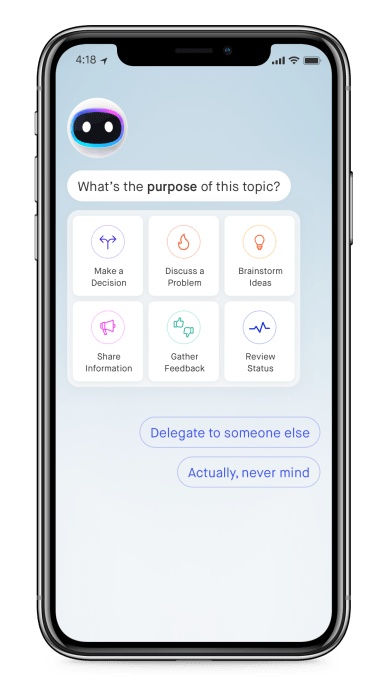
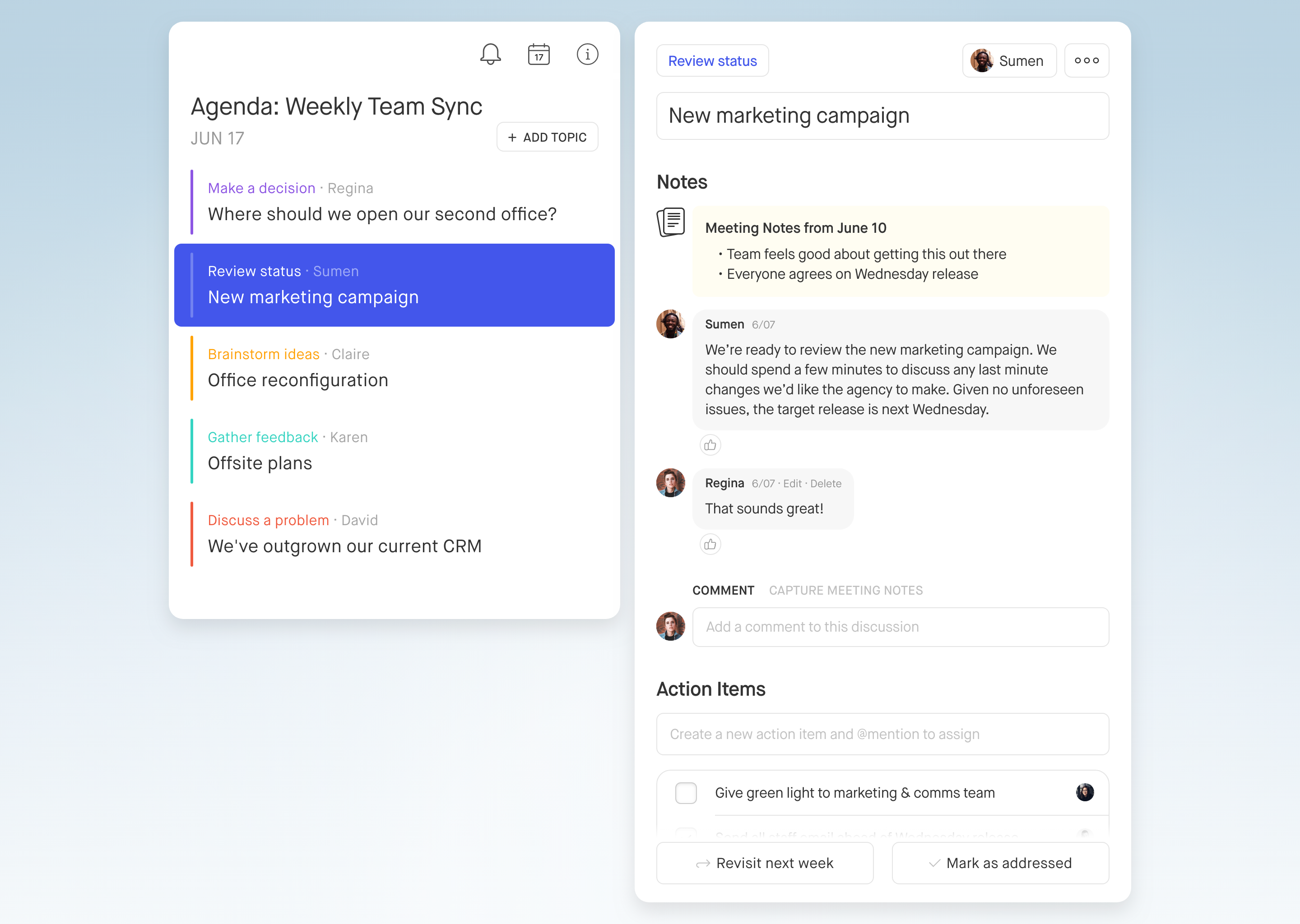
Navigator focuses on team meetings and one-on-ones, requesting information from meeting attendees before and after the meeting takes place.

First, it learns the topic of the meeting from participants and organizes them into a clear agenda complete with discussion topics. During the meeting, workers can use Navigator to quickly capture key takeaways that are later shared with every member of the meeting afterward. Later, the assistant checks in with attendees to learn whether they’ve completed their tasks.

It’s sort of like a chief of staff focused on helping meetings run effectively,” Underwood said. “It helps people show up. They feel invited and welcome and like their voice is valued, which changes how it feels for them to enter that room.”

Currently, Navigator works with Google’s G suite, Microsoft’s Office 365 and Slack. Soon, it will offer task integration with Asana, Jira, Trello and others. 

For now, it comes without a cost as the team continues to work out bugs with its first cohort of customers. Underwood says later this year they will begin to incorporate subscription-based feeds for the product.

“Navigator is another teammate, not another tool,” Underwood said. “It’s about turning meetings from painful, expensive wastes of time, to effective, meaningful moments of deep collaboration. They have that potential. When done well, they can be exceedingly powerful.”