Category: UNCATEGORIZED

09 Jun 2019

Apple puts accessibility features front and center

Although the meat of Apple’s accessibility news from WWDC has been covered, there still are other items announced that have relevancy to accessibility as well. Here, then, are some thoughts on Apple’s less-headlining announcements that I believe are most interesting from a disability point of view.

Accessibility goes above the fold

One of the tidbits I reported during the week was that Apple moved the Accessibility menu (on iOS 13 and iPadOS) to the top level of the Settings hierarchy. Instead of drilling down to Settings > General > Accessibility, the accessibility settings are now a “top level domain,” in the same list view as Notifications, Screen Time, and so on. Apple also told me this move applies to watchOS 6 as well.

Similarly, Apple said they’ve added accessibility to the first-run “setup buddy” experience. When someone sets up a new iPhone or other device for the first time, the system will prompt them to configure any desired accessibility features such as VoiceOver.

Both changes are long overdue and especially important symbolically. While it may not affect the average user much, if at all, the fact Apple is making this move speaks volumes about how much they care for the accessibility community. By moving Accessibility to the front page in Settings, it gives disabled users (and by extension, accessibility) just a bit more awareness.

As a disabled person myself, this is not insignificant. This change reinforces Apple’s position as the leader in the industry when it comes to making accessibility a first-class citizen; by elevating it to the top level, Apple is sending the message that accessibility is a critical aspect of the operating system, and a critical part of the user experience for so many, myself included.

Handoff for HomePod

I enjoy my HomePod for listening to music, podcasts, and controlling our HomeKit devices. Until now, however, one of the biggest annoyances with HomePod has been the inability to pick up where I left off. If I come home from the supermarket listening to music or a podcast and want to keep going, I have to stop and change the output source to my office’s HomePod. It’s not difficult to do, but from an accessibility perspective it’s a lot of extra taps. I definitely feel that bit of friction, and curse the dance every time I have to go through the rigamarole.

With iOS 13, that friction goes away. All I need to do is place my iPhone XR close to the HomePod (as if I were setting it up) and the iPhone will “hand off” whatever audio is playing to the speaker. Again, changing source is not a huge deal in the grand scheme of things, but as a disabled person I’m attuned to even the slightest inconveniences. Likewise with the ability to hear incoming iMessages read aloud to you on AirPods, these little refinements go a long way in not only having a more enjoyable, more seamless experience—it makes the experience more accessible, too. In this sense, this technology is magical in more ways than one.

The victory of Voice Control

The addition of Voice Control is definitely a headliner, but the backstory to it certainly isn’t.

Everyone I’ve spoken to during the week, whether it be fellow reporters, developers or Apple employees, shared the same sentiment: Voice Control is so great. In fact, the segment of John Gruber’s live episode of his podcast, The Talk Show, where he and special guests Craig Federighi and Greg Joswiak discussed the feature is a perfect example. It totally meshes with what I was told. Federighi explained how he had “friggin’ tears in my eyes” after watching an internal demo from somebody on Apple’s accessibility team.

Similarly, it was a hot topic of conversation at the accessibility get-together at the conference. So many of the engineers and other members of Apple’s accessibility group shared with me how proud they are that Voice Control exists. I’ve heard that its development was a considerable undertaking, and for everyone involved to see it released to the world—in beta for now, at least—is thrilling and affirming of the hard road the team took to get here.

At a high level, Voice Control strikes me as emblematic of Apple’s work in accessibility. Just watch the video:

It feels impossible, magical—but it’s entirely real. And the best part is this is a game-changing feature that will enhance the experience of so many, so immensely. Federighi was not wrong to cry; it’s amazing stuff.


09 Jun 2019

Watch Microsoft’s Xbox E3 press conference live

This year’s E3 is already off to an interesting start. Sony’s nowhere to be seen, and Nintendo, per usual, has opted to go online only. That leaves Microsoft as the only member of the big three with its own, honest to goodness press conference.

The company’s got a big opportunity here, and we’re hoping for some big things. On the gaming side, we expect some big news about Gears 5, Halo: Infinite and, perhaps, Age of Empires and a new Fable title.

News about the company’s Stadia competitor, Project xCloud, seems like a distinct possibility. We might even get a glimpse at the gaming giant’s next generation console. More info on all of the rumors from next week’s big show can be found here

The big show kicks off this afternoon at 1PM PT/4PM ET. It’s available on YouTube, Twitch, Facebook and Twitter

09 Jun 2019

Microsoft shares pricing details for Xbox Game Pass on PC

Ahead of the Xbox E3 keynote this afternoon, Microsoft has dropped the pricing for their Xbox Game Pass plan which gives PC users access to a library of top games. The Service will be launching at a very reasonable $4.99 per month (though they note that’s an “introductory price”).

The Windows 10 service operates much like the console variety, letting you get access to titles on a subscription basis. Users can play the titles in an unlimited capacity as a subscriber and can buy the games at a 20% discount if they decide they want to own it.

You can join for $1 per month ahead of its official launch though the library looks to have just around ten titles during this period. When the full service launches, the company says you’ll have access to 100 titles and there are some hits among them including Halo: The Master Chief Collection, Gears of War 5 and Forza Horizon.

We’re down at E3 in Los Angeles gearing up for Microsoft’s keynote in a few hours, where we’re expecting to hear a lot about new Xbox services products and a bit about some new hardware on the horizon.

It’s interesting that they are adopting the Xbox branding for this PC gaming-focused service. We’ll likely hear a lot more about the Xbox strategy beyond PC today.

09 Jun 2019

What happens if there’s no Vision Fund II?

While I’d like to recommend panicking as a general response to the world, a smaller or fully neutered Vision Fund II won’t crash everything in the sphere of giant private companies.

Recent headlines describe a world that might never see a Vision Fund II. The Wall Street Journal reported over the weekend, for example, that “SoftBank Faces Challenges Raising Latest $100 Billion Fund.” The Washington Post this morning noted that SoftBank’sMasa Finds Not Everyone Shares His Vision.” And so on.

What matters for tech shops, startups and unicorns alike is that instead of their being an eventual Brady Bunch of Vision Funds, vision-ing around the world like buzzy, cash-laden drones, the franchise might halt after its first installment.

The $100 billion-ish vehicle has caused disturbances of all sorts in the fabric of the private capital markets, deploying cash with hurricane speed. Checks into companies of all sorts have come from the epic capital pool, sourced in large part from theocratic monarchies. (As we learned from SoFi last week, this is de rigueur.)

But as the Vision Fund’s aggression has kept the media enthralled, and founders’ hopes alive, troubles have circled. According to the Journal, raising money from Vision Fund I backers has proved tough:

But several of these [prior] investors plan to make limited or no contributions, people familiar with the matter said. They include Canada Pension Plan Investment Board and Saudi Arabia’s Public Investment Fund, whose $45 billion check made it the largest backer of SoftBank’s first tech fund, known as the Vision Fund.

You can read this two ways. First, that quite a lot of private capital is going to sit out the late-stage market. Or, second, that that same capital is instead going to put itself to work. The Journal continues:

Many of the biggest funds already have established programs to invest directly in late-stage startups and aren’t interested in paying fees to another party, people close to them said.

This is why it’s bad news of sorts for founders that the second Vision Fund might never exist, or might be born small. But only bad news to a degree, as it seems a decent percentage of the money that might have gone into the second Vision Fund will still be invested, albeit by folks likely a bit more conservative than SoftBank’s Masayoshi Son.

The Vision Fund era overvalued Uberfunded its competitors, fired too much money into Wag (whose growth has been called into question) and more. Whether that fund is going to pay itself back and provide a sufficient return to make the entire project worthwhile is unclear. It might. But that may not be a good enough reason for investors to promise another $100 billion.

09 Jun 2019

Original Content podcast: Netflix’s ‘Always Be My Maybe’ is a surprisingly sweet romantic comedy

“Always Be My Maybe” — a new film starring and co-written by Ali Wong and Randall Park — continues Netflix’s streak of solid romantic comedies.

That said, anyone expecting it to match Wong’s delightfully dirty stand-up (showcased in the Netflix specials “Baby Cobra” and “Hard Knock Wife”) might be disappointed. Instead, “Always Be My Maybe” feels like a throwback to ’90s romantic comedies; after all, Park and Wong have cited “When Marry Met Sally” and “Boomerang” as inspirations.

On this week’s episode of the Original Content podcast, we’re joined by Catherine Shu to review the film, which tells the story of Marcus (Park) and Sasha (Wong), two childhood friends who grow up together in the Bay Area, lose their virginity to each other and then drift apart — until they cross paths again in their 30s.

We didn’t all love the movie: Anthony, in particular, found some of the jokes and the character arcs to be a little formulaic. But we all had a good time, thanks to the sharply-drawn characters, the rapid-fire humor and an excellent cameo.

Anthony and Catherine also discuss how the film resonates with their own personal experiences, and how it compares to “Crazy Rich Asians.”

You can listen in the player below, subscribe using Apple Podcasts or find us in your podcast player of choice. If you like the show, please let us know by leaving a review on Apple. You can also send us feedback directly. (Or suggest shows and movies for us to review!)

And if you want to skip ahead, here’s how the episode breaks down:

0:00 Introduction and discussion of upcoming TV shows
10:18 Spoiler-free review of “Always Be My Maybe”
26:14 Spoiler discussion

09 Jun 2019

Week-in-Review: Google makes a losing bet, Bezos plots his space take-over

Hey, weekend readers. This is Week-in-Review where I get hopped up on caffeine and give a heavy amount of analysis on one story while scouring the rest of the hundreds of stories that emerged on TechCrunch this week to surface my favorites for your reading pleasure.

Last week, I talked about the Apple device that was putting a kink in the company’s new pricing strategy. Of course, this week we saw that strategy reach new heights with the Mac Pro, but more on that in a bit.


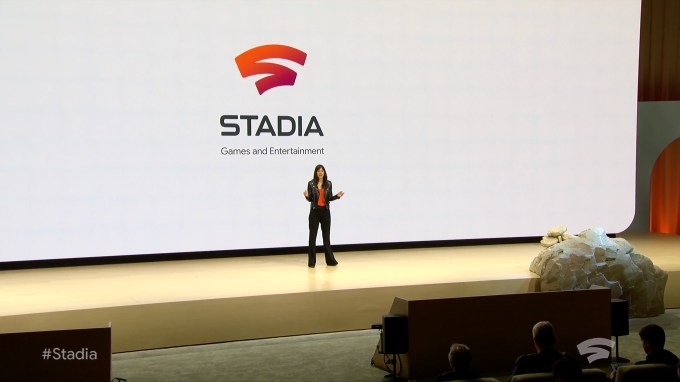
I’m a couple hours away from flying down to Los Angeles to check out the E3 gaming expo, but one of the biggest gaming announcements of the month already happened this past week when Google shared some more details on its Stadia cloud gaming platform.

Stadia’s approach is far from unprecedented, but Google’s solution might be one of the more thoughtful efforts we’ve seen. We got some more details this week, here’s my story, and here are the top-level details:

  • U.S. pricing for the pro-tier is $9.99 per month for unlimited 4K 60fps streaming and access to a library of titles, though you’ll still have to pay for most new games.
  • You’ll need a 35 mpbs connection to stream Stadia Pro when it launches in November.
  • There’s a 1080p free tier, launching later, that will allow gamers to play titles they buy from the Stadia store.

This is a pretty aggressive showing for Google.

Given the infrastructure costs, $9.99 is pretty cheap and adding a free tier is a bold call. Google’s strategy might be as formidable as they could make it, but that doesn’t mean that they’re going to win the cloud gaming market…

The first thing to acknowledge is that because of the incredibly stiff infrastructure/network demands of these plays, the only companies that can likely take on Google here are Amazon and Microsoft.

The AWS giant is already renting out some very expensive cloud GPUs but they haven’t made any indication of a foray into a gaming-focused subscription, though it may not be long if this market finds legs. Microsoft on the other hand is probably hours away from making its announcement. At 1pm PT Sunday, the company’s Xbox head is expected to share the company’s cloud-gaming plans, I’ll be there reporting on the news.

Google is acting plenty aggressive but Microsoft still has a huge upper hand. Becoming a gaming company is about far more than infrastructure and Google doesn’t have much history on its side when it comes to high-end gaming or… the games.

YouTube Gaming is probably Stadia’s best asset and integrations there can leverage that platform’s reach to encourage experimenting with the platform, but I still don’t trust the company to follow through with the resources to get enough developers to bring their titles to Stadia. The initial market that Stadia is grabbing for just feels so niche and Google hasn’t exactly been known to follow-through on consumer efforts that take longer than a few rounds of internal performance reviews to take off.

The Stadia team has already shown off a few games, but there are tens of millions of Xbox Ones out there filled with purchased titles and Google might just be probably overestimating the appeal of their cross-platform approach.

Google’s understated claim is that this is a limitless platform that can bring your desktop games to phones, tablets, laptops and TVs, but how many places do consumers really want desktop-class games? Can it truly claim to be a mobile-friendly platform when it only supports a few of its own phones at launch? More so, do people want to connect a game controller to their phone? It all seems like a fairly niche grab.

Google’s Stadia marketing seems to be looking to convert console users to ChromeCast users but given that YouTube Gaming is the company’s best discovery method, what’s likely going to end up happening is that Stadia drags in a very niche subset of aspiring PC gamers who don’t want to pay for high-end rigs. This will probably bring in some free Stadia Base 1080p users, but it’s going to be the latency — no matter how minimal Google can claim it to be — that shuts out a lot of PC die-hards from signing onto the Stadia Pro plan.

For single-player experiences, Stadia won’t have issues, but a lot of the top game publishers are focusing their full efforts on multi-player.

Google didn’t even touch on the topic of multi-player at it’s event, the fact is if developers enable cross-platform play with Stadia, those users are just going to be at a tactical disadvantage plain-and-simple. For a platform like Xbox One, Microsoft has enough existing reach that they can probably cordon off those streaming users into their own servers and keep the odds even, but Google may have some issues here fresh-out-the-gate.

There is still quite a bit we don’t know about Stadia, and I’m very anxious to see what Microsoft has up its sleeve, but Google just doesn’t feel like the right kind of company to pull this off… Let me know what your thoughts are though.

Send me feedback
on Twitter @lucasmtny or email
lucas@techcrunch.com

On to the rest of the week’s news.

Trends of the week

Here are a few big news items from big companies, with green links to all the sweet, sweet added context.

  • Apple’s hardware finally goes Pro
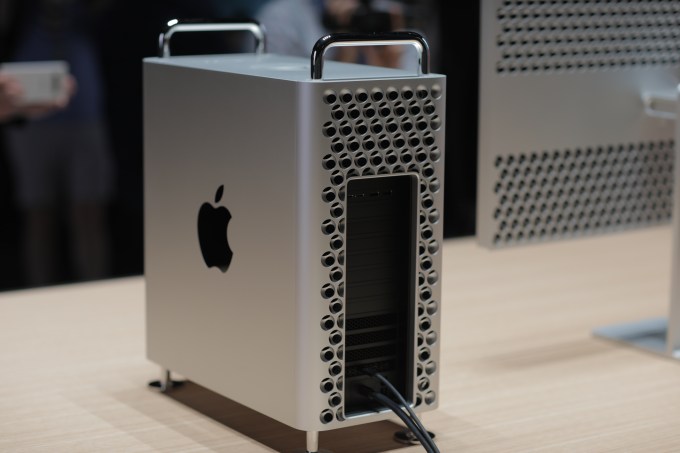
    You might have a MacBook Pro or an iPad Pro but chances are most of you aren’t much in the way of a professional. If you thought blowing $899 on a tablet made you a deep spender, try blowing $999 on the stand for your monitor. At its WWDC keynote this week, Apple went back to basics design-wise on its Mac Pro, but it cranked the pricing up to 11 with a $5,999 starting price for the tower and a $4,999 starting price for its 6K display. This falls in line with Apple’s latest trend towards pushing hardware prices higher, but, Jesus, this took things to a new level for Pros. Here’s our hands-on with the monster.
  • Looker catches Google’s eye
    $2.6 billion is a fair amount of cash but it’s pocket change in the war for the cloud. Google announced Thursday that it was acquiring analytics startup Looker to strengthen its Google Cloud offering in the face of competition from AWS and Azure. More here.
  • ZuckCoin
    Facebook is getting ready to show off its own cryptocurrency later this month. The coin, codenamed Libra, will be getting its own white paper on June 18th and will reportedly be pegged to a batch of current coins and will be managed by an external entity. Read more here.
  • Bezos takes over space
    Amazon CEO Jeff Bezos talked about his plans to create the infrastructure network for space startups at the company’s re:Mars conference. “You cannot start an interesting space company today from your dorm room. The price of admission is too high and the reason for that is that the infrastructure doesn’t exist,” Bezos noted. “So my mission with Blue Origin  is to help build that infrastructure, that heavy lifting infrastructure that future generations will be able to stand on top of the same way I stood on top of the U.S. Postal Service and so on.” Check our more of what he had to say in our story.

GAFA Gaffes

How did the top tech companies screw up this week? This clearly needs its own section, in order of awfulness:

  1. GAFA getting eyed by some three-letter agencies:
    [Apple, Alphabet, Amazon and Facebook are in the crosshairs of the FTC and DOJ ]
  2. YouTube pisses off gay creators:
    [YouTube says homophobic taunts don’t violate its policies]
  3. Google Play Store gets its antitrust moment-in-the-sun:
    [Aptoide, a Play Store rival, cries antitrust foul over Google hiding its app]
  4. Apple pricing gets egregious, earns keynote groans:
    [Meet Apple’s secret weapon for keeping Wall Street happy]

Extra Crunch

Our premium subscription service had another week of interesting deep dives. TechCrunch’s Frederic Lardinois wrote about the interesting rise of Kubernetes and chatted with some of the key players involved in its ascension.

How Kubernetes came to rule the world

“…To talk about how Kubernetes came to be, I sat down with Craig McLuckie, one of the co-founders of Kubernetes at Google (who then went on to his own startup, Heptio, which he sold to VMware);  Tim Hockin, another Googler who was an early member on the project and was also on Google’s  Borg team; and Gabe Monroy, who co-founded Deis, one of the first successful Kubernetes startups, and then sold it to Microsoft, where he is now the lead PM for Azure Container Compute (and often the public face of Microsoft’s  efforts in this area)..”

Here are some of our other top reads this week for premium subscribers. This week TechCrunch writers talked a bit about ROI, and how security startups are capturing M&A attention…

Want more TechCrunch newsletters? Sign up here.

08 Jun 2019

Equity transcribed: What happens to late-stage VC if the Vision Fund goes away?

Welcome back to the transcribed edition of the wildly popular TechCrunch podcast, Equity. This week Kate Clark and Alex Wilhelm convened in the new studio to discuss the biggest venture capital news of the week.

There was a lot of news to get to so they started with some quick hits about Thumbtack, Bird, Scoot, Mirror and Looker. Then they got down to business and went in-depth on SoftBank’s Vision Fund and whether the money has dried up.

And folks from Social Capital are back with a new firm called Tribe Capital that looks a lot like … Social Capital.

Kate: I think the TLDR here is, if the Vision Fund doesn’t raise a Vision Fund Two, we will feel changes in the market. I think we will see deal sizes come back to earth a little bit, and I think we may see at least not increasingly large valuations, because I think that people may, especially now that it’s been a couple of years, people may underestimate the force that is a Vision Fund. We don’t have the Vision Fund, you know that obvious force that dark cloud is gone.

Alex: You’ll feel the lack. Yes. Couple of quick notes about why this might be. It isn’t just that people like Kate and I think this way. I mean, there’s been structural problems with the Vision Fund. There’s been some discussions about opacity and how it operates. How its decisions are made, and I would throw in there, there’s probably some questions about the prices it has paid. Uber managed to claw back above it’s IPO price for a hot second, and is back under it today.

Kate: And didn’t last long.

Want more Extra Crunch? Need to read this entire transcript? Then become a member. You can learn more and try it for free. 

08 Jun 2019

A16Z interview, 5G, Peloton, handling Big Tech issues, and offering better benefits

Unraveling the “Secrets of Sand Hill Road” and the VC thought process, with Andreessen Horowitz’s Scott Kupor

Our Silicon Valley editor Connie Loizos hosted an Extra Crunch live conference call with Andreessen Horowitz GP Scott Kupor, who manages all ops for the firm and was formerly head of the National Venture Capital Association. He just published a new book entitled “Secrets of Sand Hill Road” which is a guide to the venture capital industry and how to attract the attention of VCs to your startup.

This was our most popular conference call so far, and it was great to see so many people coming out to chat with Scott. In case you missed it, we have published the full transcript for Extra Crunch members.

Connie: Talking about demystifying venture capital, you’ve been with Andreessen Horowitz for roughly 10 years, pretty much from the outset of the firm. Can you tell us, beyond a warm introduction, what does it take to get a meeting at Andreessen Horowitz? What do you start looking for on paper?

Scott: What we’re really looking for is a couple of things. First, we always think about market initially, because we know that we’re going to be wrong a lot of times and the way we have to invest is we have to believe at the time we make the investment that the market size is big enough to be able to support a standalone, hopefully, public company at some point in time.

So, that’s always the threshold question we’re trying to ask — is the opportunity that they’re going after is as big as it possibly can be? And then, most of the analysis, particularly the early stage, tends to be based on team, because, we don’t really have the benefit of the product yet.

We definitely don’t even know, quite frankly, how the markets going to evolve. And so, the real question is what is it about this team or set of individuals that makes them uniquely qualified to go after this opportunity? What do they know?

We use this term internally, called an “earned secret”, which is what have you learned that other people might not know that’s going to really enable you to go build something that we know is going to be tough and competitive, and a long slog? And, a lot of the evaluation really starts there.

This year’s Computex was a wild ride with dueling chip releases, new laptops and 467 startups

Our Taipei-based correspondent Catherine Shu attended the local Computex conference, which has long been a major hub in the semiconductor, next-generation silicon, AI and 5G circuits. She wrote up her observations of what’s on the cutting edge of these fields, and what the opportunities for startups are in these hot spaces.

08 Jun 2019

48 hours left to apply for Startup Battlefield at Disrupt SF and win $100,000

What’s on your to-do list in the next 48 hours? Move “launch my awesome early-stage startup to the world” to the top of the list and apply to compete in the Startup Battlefield at Disrupt San Francisco 2019 on October 2-4 in front of 10,000 live attendees and tens of thousands online.

Your opportunity to compete head-to-head against a handpicked cadre of the best early-stage startups expires in just 48 hours. It won’t cost you a dime to apply or to compete. Compare that to the price of a missed opportunity.

Judging by applications we’ve received so far, the Startup Battlefield at DSF ’19 promises to be an epic showdown. One winner will claim the storied Disrupt Cup and the $100,000 equity-free cash prize — but all participants benefit from a huge amount of potentially life-changing media and investor attention.

Case in point: All Startup Battlefield teams receive private pitch coaching with the TechCrunch team, access to CrunchMatch — TechCrunch’s investor startup matching program, access to private VIP receptions, the VIP treatment at Disrupt and exhibit space in Startup Alley for all three days.

And participating in the Battlefield provides benefits long after the competition ends, too. Consider the Startup Battlefield alumni community. Since 2007, 857 companies — including Vurb, Dropbox, Mint, Yammer and more — have competed in a Battlefield pitch-off and gone on to raise more than $8.9 billion in funding and generated 110 exits. You could be part of the next alumni wave.

Here’s how it all works. TechCrunch editors with a keen eye for successful startups will vet every application. They’ll narrow the field to 15-25 exceptional companies. Competing founders receive extensive pitch coaching from our editors — at no cost. You’ll be thoroughly prepared to step onto the Main Stage come game day.

Each team has six-minutes to pitch and present a live demo to a panel of judges — we’re talking experienced VCs and techies all. And that’s followed by a round of Q&A. If you make it through to the next round, you’ll do it all again in front of a new set of judges.

All this fast-paced, nerve-wracking action takes place in front of a live audience of thousands, and we live-stream the entire event on TechCrunch.com, YouTube, Facebook and Twitter. Plus, it’s available later on-demand.

One standout startup will emerge to claim the title, the Disrupt Cup and the $100,000. Will it be you? There’s only one way to know for sure. Apply to the Startup Battlefield at Disrupt San Francisco 2019. Your opportunity disappears in just 48 hours!

How’d you like double your chances of standing in a Disrupt spotlight? Simply apply for our TC Top Picks program, too. As a TC Top Pick, you’ll receive a free Startup Alley Exhibitor Package, VIP treatment and plenty of media and investor exposure.

08 Jun 2019

Former Unity Technology VP files lawsuit alleging CEO sexually harassed her

Unity Technologies, the multibillion-dollar gaming engine, is facing a lawsuit from its former VP of global talent acquisition, Anne Evans, who accuses CEO John Riccitiello of sexual harassment. The sexual harassment allegedly took many forms — ranging from making sexist jokes to propositioning her and other employees for sex, to making references to his erect penis and saying, “I want to fuck you. I want to throw you down on the bed and fuck you.”

Evans was eventually terminated and is now suing for retaliation, wrongful termination, failure to prevent discrimination, among other things. In a note to employees, obtained by TechCrunch, Unity Technologies General Counsel and Chief Legal Officer Ruth Ann Keene notified employees of the litigation and its plans to defend itself. Ann Keene says the allegations are false.

In a statement to TechCrunch, a Unity spokesperson said the allegations are not true and that it intends to “vigorously defend against the false allegations asserted by Anne Evans,” the company said in a statement to TechCrunch.

In the lawsuit, Evans says the workplace “was highly sexualized.” Evans says Riccitiello and other men in management positions “spoke openly about women in a sexual manner, made sexist jokes, and flirted with and pursued sexual relationships with female employees and contractors.”

She goes on to allege in the suit that Riccitiello would make comments about how “the way she walked was ‘sexy’ and how he could not believe she was lesbian.” On another occasion at the private club The Battery, the lawsuit alleges Riccitiello asked Evans to go to his hotel room with him. She said no but later found out Riccitiello had asked two of Evans’ direct reports to join him in his hotel room for a threesome, the lawsuit states.

“Throughout Evans’ tenure at Unity, Riccitiello regularly made comments about all of the women he slept with, their ages, and what sexual acts they liked to perform with him,” the lawsuit states. “Brown [Unity’s chief people officer], often would laugh approvingly about Riccitiello’s tales of sexual conquest and later when they started a relationship (as described below) would talk in explicit detail at work about her and Riccitiello’s sex life.”

There are numerous more details in the suit that describe instances of sexual harassment by Riccitiello. You can read the suit in full here. Throughout this time, however, Evans says Riccitiello warned her not to discuss anything that happened between the two of them.

Earlier this year, Unity released a company-wide survey about culture, the lawsuit states. Evans says Unity’s head of Americas recruiting, Natalie Mulay, wanted to share with her comments people had made about Evans. Evans, however, believed that the results were improperly accessed and reported it to Unity’s head of people.

The company began investigating the unauthorized access and talked with Mulay, the lawsuit alleges. Mulay then allegedly threatened to smear Evans in retaliation, saying said she would accuse Evans of sexual harassment since they “had a very brief consensual sexual relationship in early 2016). Mulay ended up following through and making an official allegation against Evans. Evans was cleared of the charges but investigators found she had accepted gifts in the past from Mulay, which the company said was against its policy. Evans, however, says otherwise and pointed to how Brown had accepted gifts from Riccitiello.

“Unity’s decision to terminate Evans was motivated at least in substantial part by her reporting Mulay and Kerr’s improper accessing of confidential personnel information and/or her rejecting the CEO’s sexual advances and defying his warnings to keep his conduct a secret,” the lawsuit states.

But Unity says that’s not what led to Evans’ termination. Instead, a Unity spokesperson said a third-party investigation found Evans “engaged in serious misconduct and established multiple instances in which she demonstrated a gross lapse in judgment.”

Unity says the company had been working with Evans on the details of her departure when she filed the lawsuit.

“Before and throughout the investigation, Evans had multiple opportunities to share her concerns about her experiences at the company through confidential and objective mechanisms, yet never did,” the Unity spokesperson said. “We take these issues seriously at Unity, just as we did when we learned about concerns involving Evans. We do not tolerate harassment, and we have policies in place to address relationships in the workplace.”

You can see the full email Unity sent to its employees earlier this week below:

I wanted to let you know about a legal case that was filed Wednesday in San Francisco against Unity. The case was filed by Anne Evans, our former Vice President of recruiting. The complaint is filled with false allegations, and we intend to defend against the lawsuit vigorously.

Importantly, several months ago, we conducted a third-party investigation involving Anne’s behavior during her employment. The investigation surfaced facts that she engaged in serious misconduct and established multiple instances in which she demonstrated a gross lapse in judgment and this led to her termination. This was an undesirable outcome for Anne, and we had been working with her on the details of her departure when she filed a public lawsuit that includes false and damaging claims against Unity, its employees and John, in particular.

Before and throughout the investigation, Anne had multiple opportunities to share her concerns about her experiences at the company. As with all of our employees, Anne also had access to a number of objective, confidential resources through which to voice her concerns, including an anonymous reporting mechanism. None of these allegations were brought forth until the filing of this complaint.

We are well prepared for the next steps in this legal matter and also expect it to become public, so I wanted you to know first.  If you have questions or concerns about any of this, please reach out to me.  If anyone from the press contacts you, please refer them to Marisa Graves in PR.

We take these issues seriously at Unity, just as we did when we learned about concerns involving Anne. We don’t tolerate harassment here, and we have policies in place to address relationships in the workplace. These are issues we discuss with all of you so that you know and trust the resources available to you, and we are committed to continuing to do so. As you know, you can also always come directly to me.

Thank you,

Ruth Ann Keene