Category: UNCATEGORIZED

05 Jun 2019

The Stanford connections behind Latin America’s multi-billion dollar startup renaissance

The houses along the tree-lined blocks of Josina Avenue in Palo Alto, with their big back yards, swimming pools and driveways are about as far removed from the snarls of traffic, sputtering diesel engines, and smoggy air of South America’s major metropolises as one can get.

But it was in one of those houses, about a twelve-minute bicycle ride from Stanford University, that the seed was planted for what has become a renaissance in technology entrepreneurship in Latin America.

Back in 2010, when Adeyemi Ajao, Carlo Dapuzzo, and Juan de Antonio were students at Stanford’s Graduate School of Business they could not predict that they would be counted among the vanguard of investors and entrepreneurs transforming Latin America’s startup economy.

At the time, Ajao was negotiating the sale of his first business, the Spanish social networking company, Tuenti, to Telefonica (in what would be a $100 million exit). Carlo Dapuzzo was in Palo Alto taking a break from his job at Monashees, which at that time was a small, early-stage investment fund based in Brazil focused on investing in Latin America. Juan de Antonio had left a job as a consultant at BCG to attend Stanford’s business school on a Fulbright scholarship.

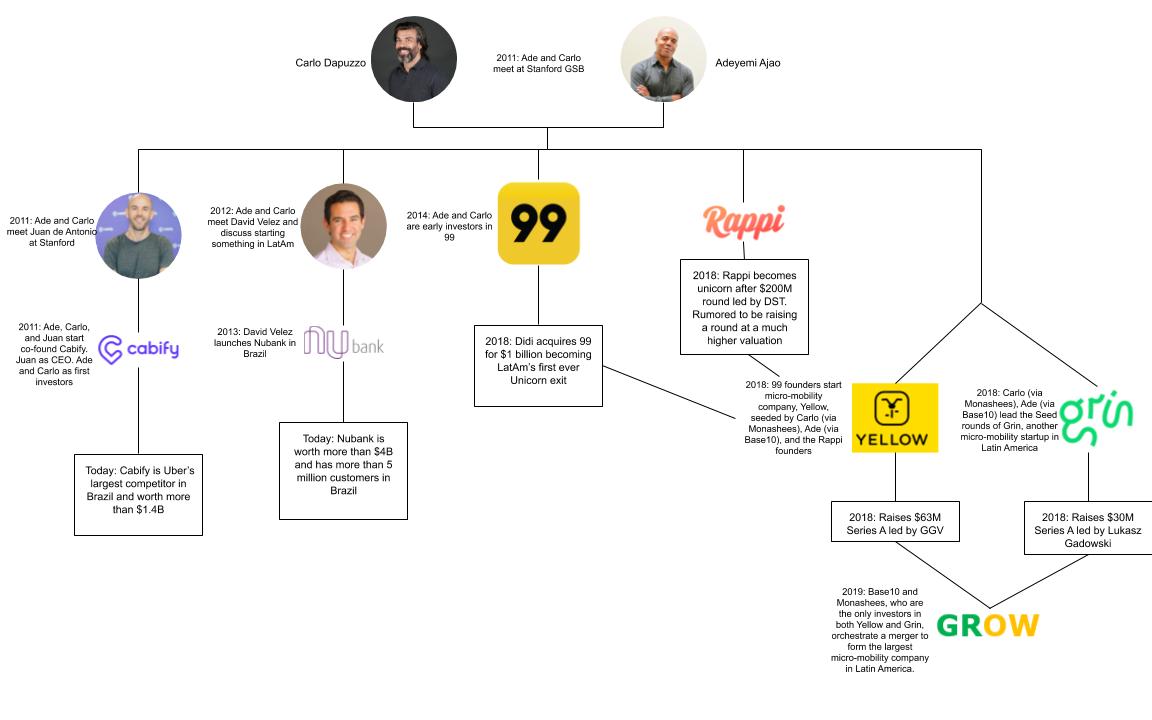
In just two years, Ajao would be a founding investor in de Antonio’s ride-hailing business, Cabify, focused on Latin America and Europe; and Dapuzzo would be seeding the ride-hailing service 99Taxis. Today, Cabify is worth over $1 billion and has focused its business primarily on Latin America while 99 was sold to the Chinese ride-hailing company Didi for $1 billion — making it one of the largest deals in Latin America’s young startup history.

The three men are now at the center of a vast web of startups whose intersection can, in many cases, be traced back to the house on Josina Avenue where Dapuzzo and de Antonio lived and where Ajao spent much of his free time.

“It’s the same dynamics as the PayPal Mafia,” says Ajao. “The new unicorn batches which started in Colombia, Mexico, and Brazil. Although they’re all trans-national, they all know each other and literally they are all friends and all co-investors in each other’s companies and they all have links to Silicon Valley… and… more importantly… to Stanford.”
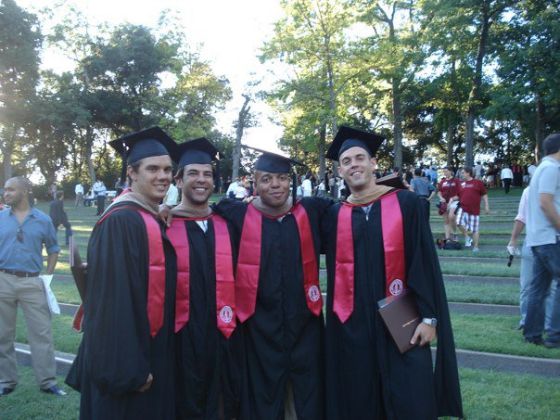
Carlo Dapuzzo, Adeyemi Ajao, and Juan de Antonio at Stanford University

Stalled Economic Engines

If Ajao’s enthusiasm sounds familiar, that’s because it is. There was another wave of interest in Latin America that started surging nearly a decade ago, but crashed nearly five years into what was supposed to be the time of the region’s explosive growth in the global scene.

Back in 2008, as the U.S. was sliding into recession, global economists cast about for countries whose economic might could potentially provide some antidote to the toxic assets that were poisoning the global financial system in America and Western Europe. It was then that the concept coined by a Goldman Sachs economist back in 2001 (in the aftermath of another financial shock) baked Brazil, Russia, India and China into a BRIC — a group of nations that, as a bloc, could create enough growth to keep the global economy moving upwards.

All of them were growing at a rapid clip, albeit at different speeds and from different starting trajectories. But they were still all humming. Investment — from large financial institutions, private equity and venture capital firms — all began flowing into the four countries.

In Brazil and across Latin America, companies from the U.S. began to cast their eyes South for growth. That’s when Groupon began to make inroads into the region. When Groupon acquired the Chilean company ClanDescuento, it served as a starting gun for activity across multiple geographies.

Two years after that acquisition by Groupon, Redpoint’s Brazilian investment vehicle, Redpoint eVentures was able to close on a $130 million fund for Brazilian and Latin American investments in just under four months. While Brazil held the bulk of the capital, many of the largest startup companies were being launched out of Buenos Aires in Argentina.

Globant, Despegar, MercadoLibre, and OLX were all lucrative deals for the investors who made them. Today, they remain solid companies, but they didn’t create the ecosystem that both local investors and entrepreneurs were hoping for. Brazil’s Peixe Urbano was also a rising star at the time, but it too wound up selling, in its case to Chinese internet Baidu. Indeed, the Peixe Urbano funding gave investors like Benchmark’s Matt Cohler their first exposure to the region.

A 2012 default on Argentinian debt derailed the economy and Brazil’s economy began seizing up at around the same time. Then, in 2014, Brazil was hit by both an economic and political collapse that shook the country’s stability and ushered in a two-year-long recession.

Ultimately, the Brazilian component of the BRIC miracle, that would have potentially ushered in a brighter future for the broader region, didn’t materialize.

The next starting gun

Ajao began investing in Latin America as an angel investor during the beginnings of the downturn in Brazil and when Argentina was also seizing up. It’s also when Dapuzzo made the initial bet on 99Taxis — bringing Ajao in as an investor — and Cabify launched, eventually bringing its service to Mexico and seeing huge growth in the Latin American market.

500 Startups expanded to Mexico around the same period, in what turned out to be a prescient move. Because even as the broader economies were slowing, technology adoption — fueled by rising smartphone sales and new internet-enabled mobile services — was speeding up.

Groupon’s push into the region taught a new consumer market about the pleasures of venture-backed e-commerce, but it was ride-hailing that truly paved the way for Latin America’s future success. Many factors played a role, from the rise of smartphones to the stabilization and growth of economies in the region outside of Argentina and Brazil and the return of a generation of founders who gained exposure and experience in Silicon Valley.

Here again, the house on Josina Street and the friends that were made over the course of the two-year grad school program at Stanford would play a critical role.

“99 was the second start and this new generation of founders,” said one investor with a deep knowledge of the region.

A taxi driver uses the 99 taxi app for smartphones in Sao Paulo, Brazil, on October 11, 2018. (Photo via Nelson Almeida/AFP/Getty Images)

A herd of unicorns

Ajao also sees 99 as ground zero for the network that has spawned a unicorn stampede in Latin America. It’s a group of companies that covers everything from financial services, mobility and logistics, food delivery and even pet care.

In some ways it’s an extension and culmination of the American on-demand thesis, with allowances for the unique characteristics of the region’s varied economies and cultural experience, investors and entrepreneurs said.

“In my mind 99 had a lot to do with what is happening right now with the current PayPal mafia [of Latin America] because they became the first big new exit on the continent,” Ajao says.

Entrepreneurs from 99 spun out to form Yellow, a dockless scooter and bike-sharing company that was initially backed by Monashees, Grishin Robotics and Base10 Ventures — the venture firm that Ajao co-founded and which closed a $137 million venture fund just nine months ago.

Monashees and Base10 also co-invested in Grin, a Mexico City-based dockless scooter company. Together the two companies managed to raise over $100 million before merging into one company earlier this. That deal ultimately provided a challenger to the automotive-based ride-sharing businesses that were beginning to encroach on the scooter business.

The growth of 99Taxis and the rise of startups in Latin America ultimately convinced David Velez, a former venture investor with Sequoia Capital to return to Brazil and try his hand at entrepreneurship as well. A year behind Ajao, de Antonio and Dapuzzo at Stanford, Velez was also friendly with the group.

Velez worked at Sequoia Capital and saw the opportunity that Latin America presented as an investment environment. After starting Sequoia Capital Latin America he transitioned into an entrepreneurial role and became the co-founder of Nubank, which would be Sequoia’s first Latin America investment. Now a $4 billion financial technology powerhouse, the Nubank deal was yet another proof point that the Latin American market had come of age — and another branch on a tree that has its roots in Stanford’s business school and the Silicon Valley venture community.

The final piece of this intersecting web of investments and relationships is Rappi — the Colombian delivery service business that was also backed by Monazhees and Base10. The first company from Latin America to enter YCombinator and the first investment from the new Silicon Valley power player, Andreessen Horowitz, Rappi epitomizes the new generation of Latin American startups.

“The way we think about this part of the world is as a massive market with 700 million people living on the continent and really dense cities,” says Rappi co-founder and president, Sebastian Mejia. “And it’s a region where the tech stack hasn’t been built, which gives you an opportunity to solve problems and create digital champions that look more similar to China than the U.S.”

Mejia epitomizes what Ajao calls a new breed of startup entrepreneur that doesn’t necessarily look to other markets for inspiration or business models, but solves local problems for a local customer, rather than a global one.

“Being local was more of a competitive advantage than a disadvantage and we can solve problems in a better way than a Silicon Valley company or a Chinese company could,” says Mejia. “What we’re starting to see now is that those changes in perspective allow us to build bigger companies.”

In all, Monashees and Base10 have invested in companies operating in Latin America that have a combined valuation of over $6 billion between them. Through the extended network of Stanford connections and the startups that Velez has brought to the table that number is higher than $10 billion.
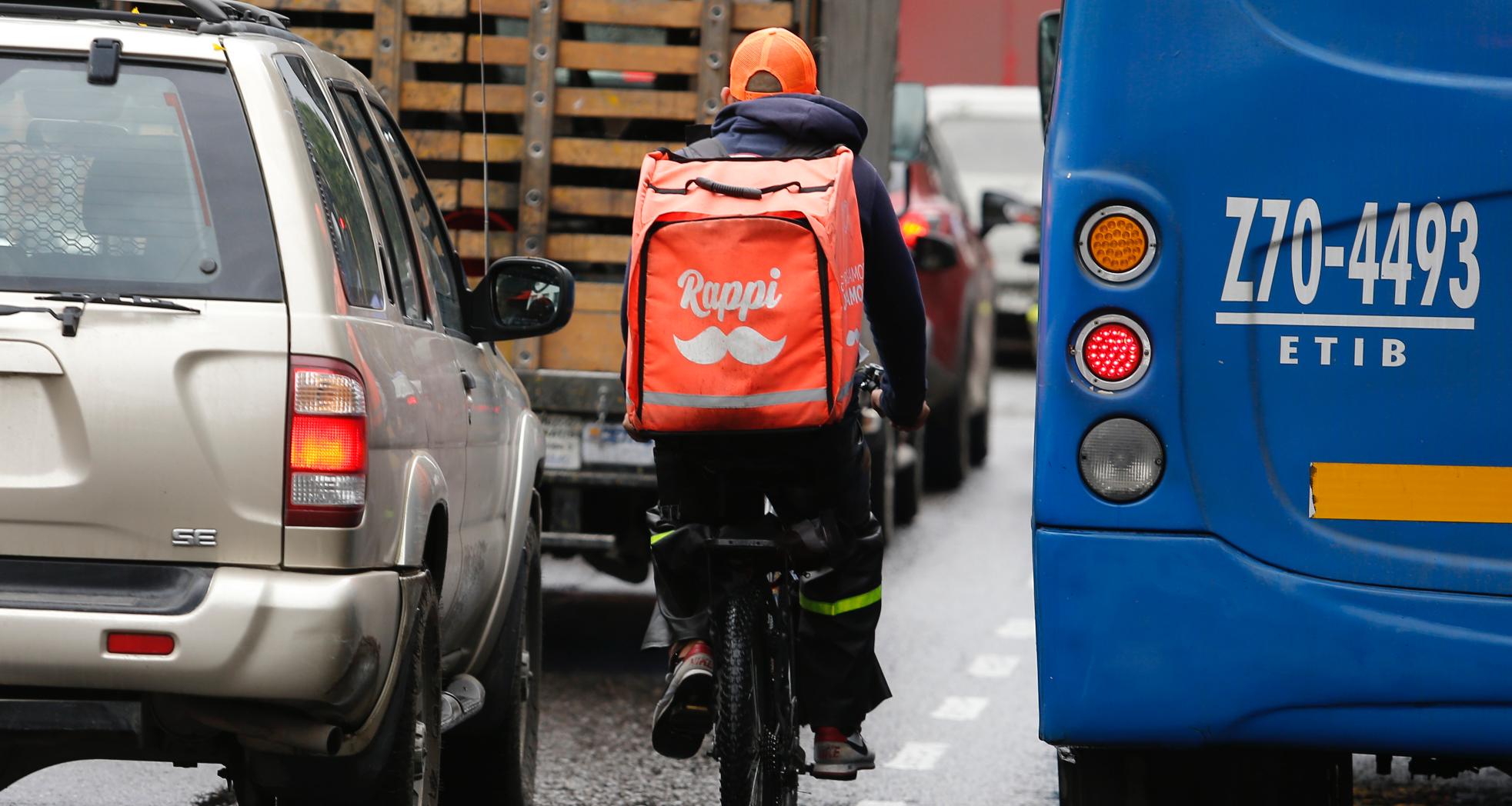
A bicycle courier working for Colombian online delivery company “Rappi”, rides his bike in Bogota, on October 11, 2018. (Photo via John Vizcaino/AFP/Getty Images)

The next $10 billion

If the Latin American market was once overlooked by venture investors like Sequoia Capital, Andreessen Horowitz, Benchmark or Accel, that’s certainly no longer the case.

Funds are pouring into the region at an unprecedented clip, driven by SoftBank and its interest on the continent following its commitment to launching a new $2 billion fund in the region and its subsequent $1 billion investment in Rappi.

“Latin America is on the cusp of becoming one of the most important economic regions in the world, and we anticipate significant growth in the decades ahead,” said Masayoshi Son, chairman and CEO of SBG, in a statement when SoftBank launched its fund.

“SBG plans to invest in entrepreneurs throughout Latin America and use technology to help address the challenges faced by many emerging economies with the goal of improving the lives of millions of Latin Americans,” he added.

Son is likely thinking about the 375 million internet users in Latin America and the 250 million smartphone users across the region. It’s also worth noting that retail e-commerce has been a huge driver of economic growth despite other economic obstacles. The region’s e-commerce has grown to $54 billion in 2018 up from $29.8 billion in 2015.

Even more critically, there are some key areas where innovation and new services are still sorely needed. Access to transportation isn’t great for the roughly 79% of the 700 million people across South America who live in cities. Then there are 400 million people across Latin America who are either unbanked or underbanked. Healthcare is another area where a lack of investment to date could create potential opportunities for new startups.

More generally, poor infrastructure remains a significant problem that companies like Rappi and another SoftBank investment, Loggi, are looking to make inroads into.

“Latin America was for many years, underinvested,” says de Antonio, whose Cabify business has managed to score a valuation of over $1 billion largely based on the opportunities ahead of it in the Latin American market. “You will see a bit more money to catch up. The market is big… and potentially huge… I’m a big believer that it’s a good moment now to invest.”

For de Antonio, Cabify, Rappi, and other startups are only now hitting their stride. In the future, they stand to enable a host of other opportunities, he believes.

“The entrepreneurial mindset is really ingrained in Latin America… the difference is maybe there wasn’t an ecosystem to help these ideas to scale.. .there are huge fortunes in the region but they typically… they have a lot of their assets invested in the region… but they need to diversify,” said de Antonio. “Until recently there hasn’t been an active funding market for all of these startups.”
For de Antonio and Ajao, one of the critical lessons that they learned from their time at Stanford and being exposed to the broader Silicon Valley ecosystem was the notion of collaboration.

“This is something we learned from San Francisco,” de Antonio said. “The way companies help each other is something that we haven’t seen people do before. And usually when you are a young company this can be the difference between being successful or a failure.

05 Jun 2019

Zynga launches battle royale game as a Snap Games exclusive

Zynga the casual games developer which once rode Facebook’s platform to popularity and riches is now turning its attention to Snap for growth.

Today, the gaming company is launching its new battle royale game, Tiny Royale, exclusively on Snap’s gaming platform, Snap Games.

A multiplayer shooting game first announced as part of the big unveiling of Snap Games in April, Tiny Royale’s likely aim is to bring the popular game format that has made Fortnite and PlayerUnknown’s Battlegrounds so successful to the Snap platform.

In the game, players can choose custom characters and form squads with friends or battle alone for quick two-minute rounds to gather loot and shoot their way to victory.

Up to 30 players can battle at a time in terms of up to four. The gameplay is much the same as the other battle royale games with maps shrinking in size until only one player, or team, remains, the company said.

“We are thrilled to be one of the first companies to launch a gaming experience on Snapchat,” said Bernard Kim, president of Publishing at Zynga, in a statement. “Game developers rarely get the opportunity to create an entirely new experience on an emerging platform so our team was excited to remix the battle royale genre into a fast-paced game designed to rock on Snap Games.”

Built on the PlayCanvas game engine, Snap Games features a selection of third party titles. Players can access Tiny Royale through the Snapchat messaging feature and use text and voice-based features during game play. Later the summer, Zynga will offer a ranked matchmaking feature called Tiny Royale Leagues, which will place competitors in groups of 100, broken out into 20 tiers. Players can battle to climb up in tier ranks earning trophies and rewards based on their performance.

Snap launched in April with six announced titles including Tiny Royale and:

  • Bitmoji Party, you can play as yourself in a series of quick, wacky mini-games.
  • Snake Squad from Game Closure, you and your squad work together to be the last ones standing!
  • C.A.T.S. Drift Race from ZeptoLab, you’ll drift around the track and speed past friends for the win!
  • Zombie Rescue Squad from PikPok, your squad will rescue survivors in a zombie-infested city.
  • Alphabear Hustle from Spry Fox, you’ll collaborate to form words — fast! — to build your village.

“Snap Games is all about exploring new ways for friends to play together and Tiny Royale™ is the perfect example of that,” said Will Wu, Snap’s Head of Snap Games. “We jumped at the chance to have a global leader in mobile games like Zynga develop for our platform, and we can’t wait to see what our community thinks about this new way to connect with each other.”


05 Jun 2019

Aaron Rodgers raises $50M for Rx3 Ventures, a consumer fund backed by influencers

Aaron Rodgers is an athlete, an influencer and now, a venture capitalist.

The football star, Super Bowl champion and long-time quarterback for the Green Bay Packers has teamed up with ROTH Capital Partners’ Nate Raabe and Byron Roth to launch Rx3 Ventures. Today, the trio are announcing a $50 million debut fund focused on the consumer market.

The fund is supported by influencers in the sports and entertainment market, with a goal of giving them a stake in the companies for which they are hired to be spokespeople. Influencer marketing continues to gain traction; Rx3 wants to ensure authentic, equitable relationships between brands and public figures.

“As professional athletes, we’re constantly approached with investment opportunities,” Rodgers said in a statement. “With more and more access to deal flow, it’s hard for any athlete or high-profile individual to adequately evaluate each opportunity. We are in a unique position to help drive positive outcomes for companies, particularly consumer brands, but the relationship needs to be authentic. With Rx3, I saw the opportunity to create an investment platform that brings together a group of like-minded influential investors and their respective networks with the backing of institutional resources.”

Rx3 has invested in a number of startups already, including VICIS, known for its $950 Zero1 football helmet designed for adult players. The startup raised a $28.5 million Series B in November, with participation from Rodgers, as well as other pro footballers, including Roger Staubach, Jerry Rice, Russell Wilson and Doug Baldwin.

Rx3, which invests alongside consumer private equity and growth capital funds, has also backed Hims, CorePower Yoga, glasses retailer Privé Revaux and Hydrow, a maker of indoor rowing machines.

05 Jun 2019

Amazon launches physical kiosks in UK train stations, a local extension of its Treasure Trucks

After announcing a year-long pilot of pop-up shops in the UK earlier this week to sell items from smaller marketplace merchants, Amazon has added another development to its brick-and-mortar efforts in the country. Starting today, the company is setting up physical kiosks, initially in train stations, to sell passers-by a rotating range of items at discounted prices.

The first of these will be in London, where Amazon is situating them in rail stations — Charing Cross, King’s Cross, Paddington, Liverpool Street and my local station London Bridge — and will start off by selling Boodles Mulberry Gin for £14.99 a bottle (a 40% discount on the normal price, Amazon notes).

The kiosks, Amazon says, are an extension of the company’s Treasure Truck concept, which sees a large vehicle doing the rounds across various towns — currently London, Manchester, Liverpool, Sheffield, Leeds, York, Birmingham, Coventry, Portsmouth, Southampton, Nottingham, Leicester, Windsor, Maidenhead, Reading and Slough (for US readers: the original site of The Office) — offering a rotating selection of items at discounted prices. These have been operating in the UK for a couple of years now.

With Treasure Truck in the UK, you sign up for the service (by texting “truck” to 87377) and Amazon texts you to let you know when the truck is coming your way. Users can pre-order and pay for items to collect them from the truck. It looks like the same format will apply to the kiosks, which will also become pick-up points. To incentivise more signups, Amazon said that new users will get an additional introductory discount of £5 per bottle.

Kiosks are a practical adaptation of the Treasure Truck concept for Amazon: as with other cities in Europe, the locations Amazon visits in the UK have narrow streets sometimes clogged with traffic and generally not designed for speedy arrivals of giant vehicles, and the population is more dense.

Also, situating kiosks in rail stations to catch people during their commutes means more may buy knowing they are on their way home or to an office so will not have to carry items around all day.

“Kiosks are a natural extension of the exciting shopping experience of Amazon’s Treasure Truck. Whether you’re on the way to work or heading home for the day, Amazon customers and passersby will have a fun and convenient way to shop for an amazing deal, get their hands on a trending product or take part in a fun event. Kiosks will help turn an ordinary day into something a bit more special,” said Suruchi Saxena Bansal, Country Leader, Amazon Treasure Truck, in a statement.

More generally, Amazon has been slowly increasing the different channels that it uses to connect with potential customers beyond its basic website and mobile app.

This is because “omnichannel” is the order of the day in commerce: in markets that are especially competitive and mature, we’ve seen a big shift among retailers to cater to a wider variety of audiences and sell to them in whichever channel where they are spending time and discovering things.

That’s included selling on social media (Instagram for one is making a big push with this), through email (see: Mailchimp’s efforts here), and of course doing things the old-fashioned way, by selling in person (something that efforts from the likes of Square and PayPal have also helped to grow).

That in-person experience is something that Amazon — born in the virtual world of cyberspace — has been doubling down on for years to reach a wider set of shoppers.

Its efforts have included bookstores near college campuses, cashier-free Amazon Go stores, the whopping acquisition of Whole Foods, and — as of earlier this week — setting up pop-up shops.

The latter are particularly ironic, given that the Amazon name is regularly invoked when people discuss how brick-and-mortar shops — and in the UK, “high street” shopping precincts — have died a death.

A year ago, there was a rumor that Amazon was negotiating in the UK to acquire a selection of large retail locations that were being vacated by the bankrupt hardware and DIY chain Homebase.

These sprawling locations, situated often in town outskirts among other large stores with huge parking lots, are a far cry from little kiosks in crowded train stations. And indeed, the Homebase deal, if it was every really on the cards, never came to pass.

But the report and Amazon’s wider track record are sure signs that the commerce is only going to get more physical, not less. It’s not a question of “if”, but rather of how and when.

05 Jun 2019

7.7 million LabCorp records stolen in same hack affecting Quest

LabCorp is the latest laboratory testing giant this week to confirm it’s affected by the same third-party data breach.

The Burlington, North Carolina-based medical giant said 7.7 million patients had their personal and financial data stolen by hackers, which hit the payment pages of the American Medical Collection Agency, a third-party vendor that processes payments for LabCorp and other companies.

The admission comes a day after Quest Diagnostics around 11.9 million patients had their data stolen.

In a filing with the Securities and Exchange Commission, LabCorp said the stolen data includes a patient’s name, date of birth, address, phone number, date of service, provider, and balance information.

“AMCA’s affected system also included credit card or bank account information that was provided by the consumer to AMCA,” said the filing. Some 200,000 patients will receive more detailed notices that their financial information was taken.

But LabCorp said no medical data or lab and diagnostic results data was taken.

Like the Quest breach, LabCorp’s data incident dated back to August 1, 2018 until March 30, 2019.

The total number of patients affected by the AMCA payments page breach stands at just shy of 20 million. Given the company provides payment and bill collection services to a broad range of businesses, we may see similar notices dropping in the near future.

05 Jun 2019

China launches a rocket to space from a ship at sea for the first time

China’s National Space Administration recorded a first today as it launched one of its Long March 11 rockets from a launch pad on board a ship in the Yellow Sea. This is the first time China has launched a space-bound rocket from a seaborne platform, and it carried on board a cargo of seven total rockets, including five designed for commercial use and two which will include experimental payloads for space-based research.

China joins the U.S. and Russia now as the three global powers with proven ability to launch rockets into space from sea, which is a competitive advantage when it comes to launch cots and potential incidental damage from misfires. China is the only country to have launched at sea from a platform and using launch technology that they solely and fully own and operate, since the previous Sea Launch platform used by the US and Russia was created in partnership with a number of nations, including Norway and the Ukraine, and ceased operating in 2014.

Today’s launch was also a joint effort with private industry, since the ship it was on was actually a civilian cargo vessel, and the launch rocket itself was sponsored by, and named after a relatively new Chinese luxury car brand called WEY.

05 Jun 2019

Getsafe, the German insurance app, scores $17M Series A

Getsafe, the German insurance startup targeting millennials, has raised $17 million (€15m) in a Series A funding.

The round is led by Earlybird, with CommerzVentures and other existing investors also participating, while the capital will be used for European expansion. Notably, the company plans to launch in the U.K. by the end of the year.

Founded in May 2015 by Christian Wiens (CEO) and Marius Blaesing (CTO), Getsafe initially launched as a digital insurance broker but has since pivoted to a direct to digital consumer insurance offering of its own (its brokerage business was sold to Verivox).

The startup claims it is the market leader in the digital-first 20 to 35-year-old segment, with 20,000 customers, although competitors such as Wefox’s One may disagree.

Getsafe customers can take out renters insurance and liability insurance. The latter includes bike and drone coverage, with additional products to be added soon.

More broadly, Getsafe says it is “reinventing insurance”. The insurtech startup, based in Heidelberg, says its tech uses AI to help customers identify the insurance protection they might need. “With a few clicks, customers can learn about, buy, and manage insurance on their smartphone,” says the company. Claims can be done entirely digitally, too, via the Getsafe app and chatbot.

As part of the investment, Getsafe plans to grow its from the current 50 employees to more than 100. The recruitment drive will span customer care, software development and data science. The startup also plans to raise further funds over next twelve months.

05 Jun 2019

AntiToxin sells safetytech to clean up poisoned platforms

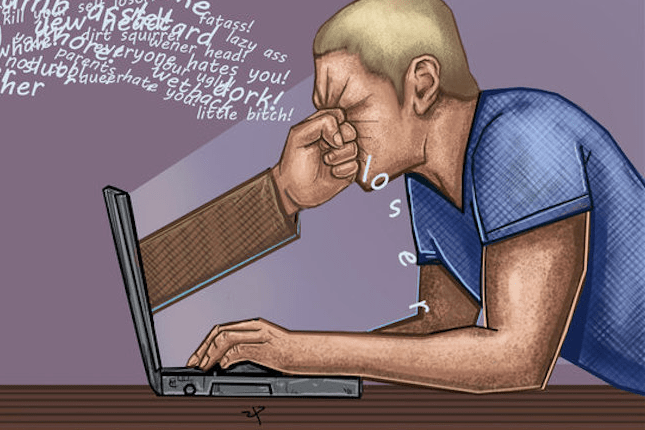
The big social networks and video games have failed to prioritize user well-being over their own growth. As a result, society is losing the battle against bullying, predators, hate speech, misinformation and scammers. Typically when a whole class of tech companies have a dire problem they can’t cost-effectively solve themselves, a software-as-a-service emerges to fill the gap in web hosting, payment processing, etc. So along comes AntiToxin Technologies, a new Israeli startup that wants to help web giants fix their abuse troubles with its safety-as-a-service.

It all started on Minecraft. AntiToxin co-founder Ron Porat is cybersecurity expert who’d started popular ad blocker Shine. Yet right under his nose, one of his kids was being mercilessly bullied on the hit children’s game. If even those most internet-savvy parents were being surprised by online abuse, Porat realized the issue was bigger than could be addressed by victims trying to protect themselves. The platforms had to do more, research confirmed.

A recent Ofcom study found almost 80% of children had a potentially harmful online experience in the past year. Indeed, 23% said they’d been cyberbullied, and 28% of 12 to 15-year-olds said they’d received unwelcome friend or follow requests from strangers. A Ditch The Label study found of 12 to 20-year-olds who’d been bullied online, 42% were bullied on Instagram.

Unfortunately, the massive scale of the threat combined with a late start on policing by top apps makes progress tough without tremendous spending. Facebook tripled the headcount of its content moderation and security team, taking a noticeable hit to its profits, yet toxicity persists. Other mainstays like YouTube and Twitter have yet to make concrete commitments to safety spending or staffing, and the result is non-stop scandals of child exploitation and targeted harassment. Smaller companies like Snap or Fortnite-maker Epic Games may not have the money to develop sufficient safeguards in-house.

“The tech giants have proven time and time again we can’t rely on them. They’ve abdicated their responsibility. Parents need to realize this problem won’t be solved by these companies” says AntiToxin CEO Zohar Levkovitz, who previously sold his mobile ad company Amobee to Singtel for $321 million. “You need new players, new thinking, new technology. A company where ‘Safety’ is the product, not an after-thought. And that’s where we come-in.” The startup recently raised a multimillion-dollar seed round from Mangrove Capital Partners and is allegedly prepping for a double-digit millions Series A.

AntiToxin’s technology plugs into the backends of apps with social communities that either broadcast or message with each other and are thereby exposed to abuse. AntiToxin’s systems privately and securely crunch all the available signals regarding user behavior and policy violation reports, from text to videos to blocking. It then can flag a wide range of toxic actions and let the client decide whether to delete the activity, suspend the user responsible or how else to proceed based on their terms and local laws.

Through the use of artificial intelligence, including natural language processing, machine learning and computer vision, AntiToxin can identify the intent of behavior to determine if it’s malicious. For example, the company tells me it can distinguish between a married couple consensually exchanging nude photos on a messaging app versus an adult sending inappropriate imagery to a child. It also can determine if two teens are swearing at each other playfully as they compete in a video game or if one is verbally harassing the other. The company says that beats using static dictionary blacklists of forbidden words.

AntiToxin is under NDA, so it can’t reveal its client list, but claims recent media attention and looming regulation regarding online abuse has ramped up inbound interest. Eventually the company hopes to build better predictive software to identify users who’ve shown signs of increasingly worrisome behavior so their activity can be more closely moderated before they lash out. And it’s trying to build a “safety graph” that will help it identify bad actors across services so they can be broadly deplatformed similar to the way Facebook uses data on Instagram abuse to police connected WhatsApp accounts.

“We’re approaching this very human problem like a cybersecurity company, that is, everything is a Zero-Day for us” says Levkowitz, discussing how AntiToxin indexes new patterns of abuse it can then search for across its clients. “We’ve got intelligence unit alums, PhDs and data scientists creating anti-toxicity detection algorithms that the world is yearning for.” AntiToxin is already having an impact. TechCrunch commissioned it to investigate a tip about child sexual imagery on Microsoft’s Bing search engine. We discovered Bing was actually recommending child abuse image results to people who’d conducted innocent searches, leading Bing to make changes to clean up its act.

AntiToxin identified publicly listed WhatsApp Groups where child sexual abuse imagery was exchanged

One major threat to AntiToxin’s business is what’s often seen as boosting online safety: end-to-end encryption. AntiToxin claims that when companies like Facebook expand encryption, they’re purposefully hiding problematic content from themselves so they don’t have to police it.

Facebook claims it still can use metadata about connections on its already encrypted WhatApp network to suspend those who violate its policy. But AntiToxin provided research to TechCrunch for an investigation that found child sexual abuse imagery sharing groups were openly accessible and discoverable on WhatsApp — in part because encryption made them hard to hunt down for WhatsApp’s automated systems.

AntiToxin believes abuse would proliferate if encryption becomes a wider trend, and it claims the harm that it  causes outweighs fears about companies or governments surveiling unencrypted transmissions. It’s a tough call. Political dissidents, whistleblowers and perhaps the whole concept of civil liberty rely on encryption. But parents may see sex offenders and bullies as a more dire concern that’s reinforced by platforms having no idea what people are saying inside chat threads.

What seems clear is that the status quo has got to go. Shaming, exclusion, sexism, grooming, impersonation and threats of violence have started to feel commonplace. A culture of cruelty breeds more cruelty. Tech’s success stories are being marred by horror stories from their users. Paying to pick up new weapons in the fight against toxicity seems like a reasonable investment to demand.

05 Jun 2019

Google appeals $1.7BN EU AdSense antitrust fine

Like clockwork, Google has filed a legal appeal against the €1.49 billion ($1.7BN) antitrust penalty the European Commission slapped on its search ad brokering business three months ago.

The Telegraph reported late yesterday that the appeal had been lodged in the General Court of the European Union in Brussels.

A Google spokesperson confirmed the appeal has been filed but declined to comment further.

Reached for comment, a Commission spokesperson told us: “The Commission will defend its decision in Court.”

The AdSense antitrust decision is the third fine for Google under the Commission’s current antitrust chief, Margrethe Vestager — who also issued a $5BN penalty for anti-competitive behaviors attached to Android last summer; following a $2.7BN fine for Google Shopping antitrust violations, in mid 2017.

Google is appealing both earlier penalties but has also made changes to how it operates Google Shopping and Android in Europe in the meanwhile, to avoid the risk of further punitive penalties.

In the case of AdSense, the Commission found that between 2006 and 2016 Google included restrictive clauses in its contracts with major sites that use its ad platform which Vestager said could only be seen as intending to keep rivals out of the market.

Restrictions had included exclusivity provisions and premium ad placement requirements that gave Google’s ads priority and plumb positioning on “the most visible and most profitable parts of the page”. Another illegal clause put controls on how partner websites could display rival search ads.

The restrictions were only removed by Google when the Commission issued its formal statement of objections in 2016 — signalling the start of serious scrutiny.

As well as going on to fine Google €1.49BN for AdSense antitrust breaches, the Commission’s enforcement decision requires that Google does not include any other restriction “with an equivalent effect” in its contracts, as well as stipulating that it must not reinstate the earlier abusive clauses.

05 Jun 2019

NoBroker raises $51M to help Indians buy and rent without real estate brokers

A startup that is attempting to significantly improve the way how Indians rent or buy an apartment just raised a substantially big amount to further pursue its mission. Bangalore-based real estate property operator NoBroker said today it has raised $51 million in a new round of funding.

The Series C financing round for the five-year-old startup was led by General Atlantic. Existing investors SAIF Partners and BEENEXT also participated in the round. NoBroker has raised about $71 million in capital to date, it said in a statement. 

NoBroker, which operates in Bengaluru, Chennai, Gurgaon, Mumbai and Pune, has quickly emerged as one of the largest players in the real estate business. It operates over 2.5 million properties on its website and has already served more than 6 million users to date — up from 1.5 million customers two years ago. The startup helps Indians looking for an apartment avoid the brokers  — hence the name NoBroker — and connects them directly to property owners.

Real estate brokers in India, as is true in other markets, help people find properties. But they can charge up to 10 months worth of rent (leasing) — or a percent of the apartment’s worth if someone is buying the property — in urban cities as their commission.

Amit Kumar, CEO and cofounder of NoBroker, told TechCrunch in an interview that the startup will use the fresh capital to expand its operations in the nation. “This current funding round will support us in our plans to expand our operations. Our objective is to accelerate customer and deal-closure growth and continue to deliver value to customers across the country. We will also invest in our home store and financial services products,” he said. 

Kumar said the startup, which makes money in two ways, is increasingly reaching profitability. It first lets non-paying users only get in touch with nine property owners. Those who wish to contact more property owners have to pay a fee. Second, property owners can opt to pay NoBroker to have its representatives deal with prospective buyers. (Which ironically makes it act like a broker.)

As noble as NoBroker’s mission sounds, its path to expansion is filled with challenges. The startup is competing with a number of players including heavily backed NestAway, which counts Goldman Sachs and Tiger Global among its investors. The startup, which operates in eight cities, has raised more than $100 million to date. Budget hotel startup Oyo, which now counts Airbnb as an investor, has also entered this space with Oyo Living. India’s real estate industry is estimated to grow to $1 trillion in worth by 2030.

Besides, there are some other local challenges. For one, brokers are unsurprisingly not happy with startups such as NoBroker. They continue to attack and harass NoBroker employees. So much so that the startup had to delist its address from Google Maps.

“We have been extremely impressed by the strength of the NoBroker team and their relentless focus on using technology to create an improved user experience in the large real estate market in India. We look forward to supporting them in their journey of making real estate transactions easier and convenient,” said Sharad Bhojnagarwala, VP of General Atlantic, in a statement.