Category: UNCATEGORIZED

29 Apr 2019

With Kata Containers and Zuul, OpenStack graduates its first infrastructure projects

Over the course of the last year and a half, the OpenStack Foundation made the switch from purely focusing on the core OpenStack project to opening itself up to other infrastructure-related projects as well. The first two of these projects, Kata Containers and the Zuul project gating system, have now exited their pilot phase and have become the first top-level Open Infrastructure Projects at the OpenStack Foundation.

The Foundation made the announcement at its first Open Infrastructure Summit (previously known as the OpenStack Summit) in Denver today after the organization’s board voted to graduate them ahead of this week’s conference. “It’s an awesome milestone for the projects themselves,” OpenStack Foundation executive direction Jonathan Bryce told me. “It’s a validation of the fact that in the last 18 months, they have created sustainable and productive communities.”

It’s also a milestone for the OpenStack Foundation itself, though, which is still in the process of reinventing itself in many ways. It can now point at two successful projects that are under its stewardship, which will surely help it as it goes out an tries to attract others who are looking to bring their open-source projects under the aegis of a foundation.

In addition to graduating these first two projects, Airship — a collection of open-source tools for provisioning private clouds that is currently a pilot project — hit version 1.0 today. “Airship originated within AT&T,” Bryce said. “They built it from their need to bring a bunch of open-source tools together to deliver on their use case. And that’s why, from the beginning, it’s been really well aligned with what we would love to see more of in the open source world and why we’ve been super excited to be able to support their efforts there.”

With Airship, developers use YAML documents to describe what the final environment should like like and the result of that is a production-ready Kubernetes cluster that was deployed by OpenStack’s Helm tool – though without any other dependencies on OpenStack.

AT&T’s assistant vice president, Network Cloud Software Engineering, Ryan van
Wyk, told me that a lot of enterprises want to use certain open-source components, but that the interplay between them is often difficult and that while it’s relatively easy to manage the lifecycle of a single tool, it’s hard to do so when you bring in multiple open-source tools, all with their own lifecycles. “What we found over the last five years working in this space is that you can go and get all the different open-source solutions that you need,” he said. “But then the operator has to invest a lot of engineering time and build extensions and wrappers and perhaps some orchestration to manage the lifecycle of the various pieces of software required to deliver the infrastructure.”

It’s worth noting that nothing about Airship is specific to the telco world, though it’s no secret that OpenStack is quite popular in the telco world and unsurprisingly, the Foundation is using this week’s event to highlight the OpenStack project’s role in the upcoming 5G rollouts of various carriers.

In addition, the event will also showcase OpenStack’s bare metal capabilities, an area the project has also focused on in recent releases. Indeed, the Foundation today announced that its bare metal tools now manage over a million cores of compute. To codify these efforts, the Foundation also today launched the OpenStack Ironic Bare Metal program, which brings together some of the project’s biggest users like Verizon Media (home of TechCrunch, though we don’t run on the Verizon cloud), 99Cloud, China Mobile, China Telecom, China Unicom, Mirantis, OVH, Red Hat, SUSE, Vexxhost and ZTE.

29 Apr 2019

Amazon Pay launches peer-to-peer payments in India

Continuing its investment in India, Amazon today announced the launch of person-to-person (p2p) payments via Amazon Pay for Android users in the country. Customers can now make instant bank-to-bank transactions through the UPI platform on the localized version of the Amazon app, allowing them to settle bills and other expenses with friends, lend or return money with family, pay for services, and more. Notably, the new p2p service will also allow customers to make payments from their bank account to local stores or to Amazon delivery associates at the doorstep, who will scan a UPI QR code within the Amazon app.

The service is built on the Indian government-backed UPI platform, which is regulated by the Reserve Bank of India, and is designed for instant transfer of funds between bank accounts using a mobile device. With the Amazon Pay service, customers can either send or receive p2p payments by choosing a contact from their phone’s address book or by entering in their UPI ID or the recipient’s bank account.

When a contact is selected, Amazon’s app will automatically detect if the person is a registered Amazon Pay UPI customer, and enables the bank transfer. If the contact is not registered for Amazon Pay UPI, the customer then has the option to pay through another BHIM (Bharat Interface for Money) UPI ID or the contact’s bank account, as an alternative.

Amazon Pay also allows customers to make repeat payments more easily by displaying their recent transactions. And all the payments are secured through multi-factor authentication involving the customer’s phone number, SIM details, and the UPI PIN, says Amazon.

When the money is transferred, both the customer and the recipient are notified through in-app notifications and SMS alerts.

“Our goal is to make Amazon Pay the most trusted, convenient and rewarding way to pay for our customers,” said Vikas Bansal, Director of Amazon Pay, in a statement. “The customers trust their Amazon app and we continue to expand payment use cases directly on the app. With this launch, we have the largest selection of shopping and payment use cases on the Amazon Android app which provides added convenience and control to our customers.”

The move will also aid Amazon in its impending battle with Reliance Industries Limited (RIL) in the region. Recently, Amazon launched a program to manage the B2B inventory supply and management of a number of neighborhood mom-and-pop stores (aka kirana stores), according to a report by the Business Standard. The program, which is live in three cities in Karnatsaka, allows retailers and store owners to order online and have products delivered to their doorstep the following day, the report claimed.

The plan is to expand this program across India, if the pilot succeeds.

There are some 12 million Kirana stores in India, and they still account for a majority (~90%) of retail business in the country. However, only 3 percent are tech-enabled. That represents a big opportunity for Amazon, as the stores themselves are beginning to embrace technology in order to compete with online grocers.

Amazon Pay’s P2P feature can help feed into the retailer’s larger plans to bring India’s cash-based customers and merchants into the digital age, at the same time it works to bring e-commerce to the region and cashless payments and other services to neighborhood stores.

Along these lines, Amazon confirmed in March it was rolling out the Amazon Smile code – a QR code that’s scanned to pay for items –  to physical stores like Shoppers Stop, and others.

Combined, Amazon’s various payment initiatives can help create customer loyalty to the Amazon brand and build new habits among consumers.

Amazon is getting a late start, however, when it comes to p2p payments in India. Its rivals, Paytm, Google Pay and PhonePe, already support p2p, with Google Pay in the lead.  

With the launch of p2p, Amazon is incentivizing customers to use its service by offering up to Rs 120 cashback by sending money through UPI.

The feature is available in the Amazon app for Android, through new “Send Money” and “Request Money” links.


29 Apr 2019

Beats’ AirPods alternative start shipping May 10

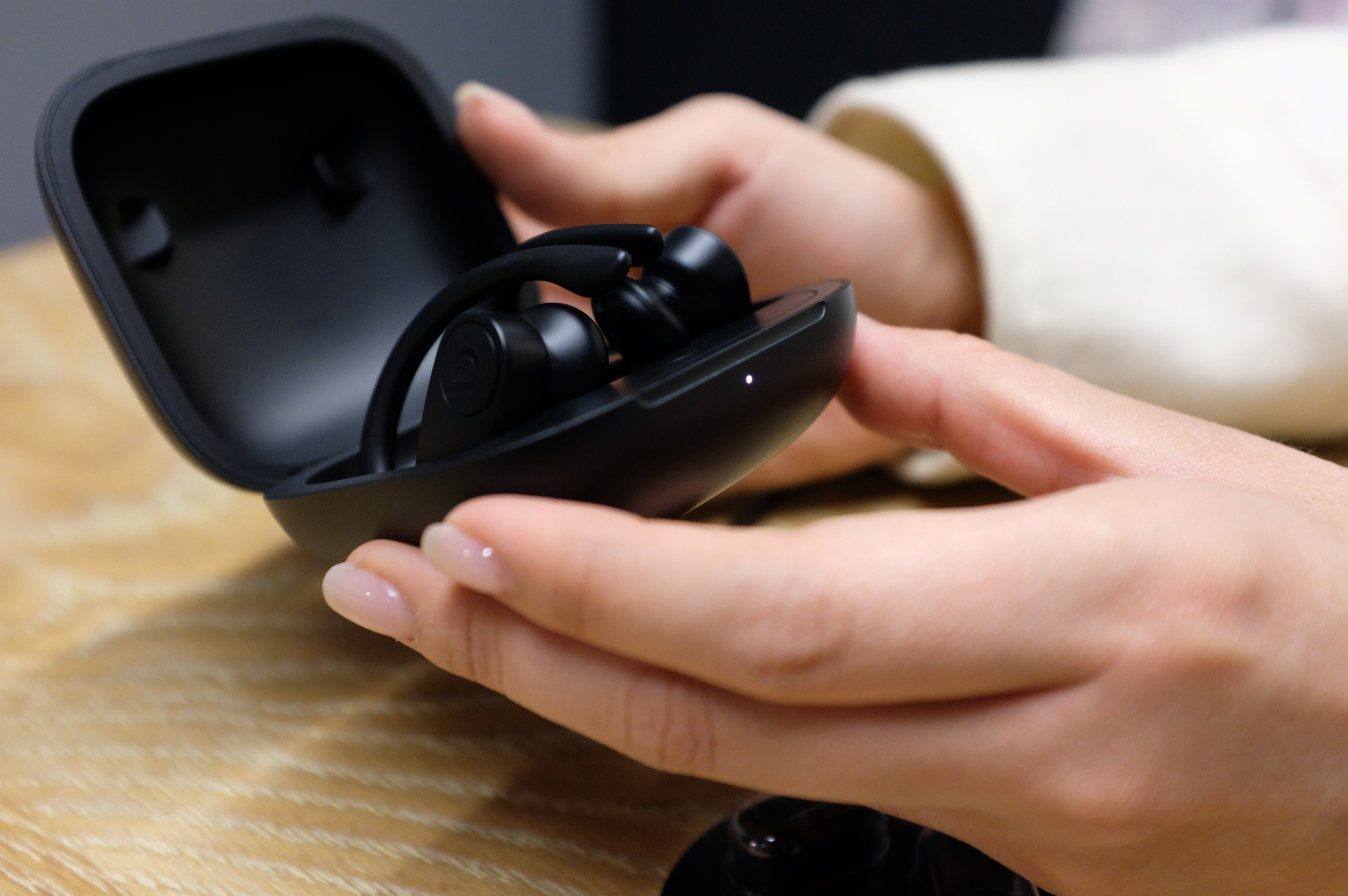
Earlier this month, Beats unveiled its long-awaited answer to AirPods. The Powerbeats Pro feature far longer battery life, better sound and an improved fit. The Apple subsidiary promised a May release, and now we’ve got something more concrete.

The fully wireless earbuds go up for pre-order in the U.S. and Canada the morning of May 3 and will be available to everyone May 10. Just a little while long to get your hands on what’s looking to be a pretty solid alternative.

I spent a bit of time with the headphones already and was mostly pleased with the experience. The comfort’s really the big thing here, especially given the fact AirPods’ hard plastic just doesn’t fit well in lots of ears. Couple that with the H1 one chip, and you get the same basic pairing functionality you get with the Apple branded earbuds. There’s also a lot to say for the stated nine hours of battery life — more on that in our inevitable review, of course.

Downsides include an extremely large charging case, which you’ll probably end up leaving at home when you go for a run. There’s also the pretty lofty $250 price tag, which put them $50 north of the AirPods 2. Either way, it’s a win-win for Apple. The Powerbeats Pro will be available in black at first, with white, but and brownish-green coming later in the summer.

29 Apr 2019

Samsung made a vertical TV for watching smartphone videos

So it’s come to this. After years of letter boxes and angry commenters, the electronics world is finally giving in and developing hardware designed to view vertical videos. Time to pack it in, the portrait mode shooters have won, and their prize is this ridiculous 43 inch TV from Samsung.

The Sero joins a handful of other strange new takes on the flat panel TV, but none speak to the current state of things more than this swiveling set. The design calls to mind Facebook’s high end portal, with a screen that does double duty. There’s landscape for standard viewing and portrait for, you guessed it, social media.

It’s a system targeted primarily at millennials, according to the company’s press material — specifically millennials with a money to burn, with a price north of $16,000. Seems like a lot to ask, but what do I know? I’ve been holding my phone sideways the whole time.

The quantum-dot QLED set features 4.1 channel audio, 60 watt speakers and your friend and mine, Bixby. It’s due out in Korea next month, but I wouldn’t hold my breath for a release here in the States.

29 Apr 2019

Is this the vertical-folding Motorola Razr?

This could be the upcoming Motorola Razr revival. The images purporting to be the upcoming smartphone appeared online on Weibo and show a foldable design. Unlike Galaxy Fold, though, Motorola’s implementation has the phone folding vertical — much like the original Razr.

This design offers a more compelling use case than other foldables. Instead of traditional smartphone unfolding to a tablet-like display, Motorola’s design has a smaller device unfolding to a smartphone display. The result is a smaller phone turning into a normal phone.

Pricing is still unclear but the WSJ previously stated it would carry a $1,500 cost when it’s eventually released. If it’s released.

Samsung was the first to market with the Galaxy Fold. Kind of. A few journalists were given Galaxy Fold units ahead of its launch, but a handful of units failed in the first days. Samsung quickly postponed the launch and recalled all the review units.

Despite this leak, Motorola has yet to confirm when this device will hit the market. Given Samsung’s troubles, it will likely be extra cautious before launching it to the general public.

29 Apr 2019

FutureLearn takes $65M from Seek Group for 50% stake in UK online degree platform

Edtech and recruitment continue to converge. London-based online degree platform, FutureLearn, is taking £50 million (~$64.6M) from Australian-based online job matching group, Seek, in exchange for a 50 per cent stake in the business — just days after the same group led a massive Series E in U.S. online learning giant Coursera.

U.K. distance learning veteran, the Open University — which had wholly owned the FutureLearn platform up til now — retains a 50 per cent stake in the business following the Seek Group investment.

In a press release announcing the news, FutureLearn said the investment values it at £100M ($129M) — some six years after the initiative was first announced, with the OU bringing together a consortium of U.K. universities to attack the MOOCs/online learning space which was then being rapidly expanded by U.S. edtech startups. 

“Our partnership with Seek and the investment in FutureLearn will take our unique mission to make education open for all into new parts of the world. Education improves lives, communities and economies and is a truly global product, with no tariffs on ideas,” said OU vice chancellor Mary Kellett in a statement on the investment.

The joint venture will have “contractual arrangements” to protect its academic independence, teaching methods and curriculum, the OU added — in an attempt to assuage concerns about an (overly) commercially minded takeover of its fledgling digital education platform.

The first FutureLearn courses launched in fall 2013. Since then a cumulative total of nine million+ people have signed up to learn via its platform — which now offers around 2,000 courses in all.

This includes short courses; postgraduate diplomas and certificates; all the way up to fully online degrees. (FutureLearn partners with six U.K. universities on the full degree courses at this stage.)

FutureLearn also has partnerships with management consultancy firm Accenture; the British Council; the Chartered Institute of Personnel and Development; learn-to-code foundation Raspberry Pi; and Health Education England (part of the UK’s National Health Service); and is involved in U.K. government-backed initiatives to address skills gaps — including The Institute of Coding and the National Centre for Computing Education.

Last fall the Financial Times reported that the OU was looking for a £40M capital injection for FutureLearn to fund more courses and better compete with the scale of U.S. edtech giants — like Coursera and Lynda.com.

It’s not clear how many more courses FutureLearn plans to add with its new partner on board; a spokesperson told us it is not able to provide a figure at this stage.

For a little comparative context, some 40M people have taken online classes via Coursera to date — with that platform currently offering some 3,200 courses, and partnering with the likes of Columbia University, Johns Hopkins and the University of Michigan. While Coursera’s $103M in Series E reportedly valued its business at well over a $1BN, with Seek coming on board as a strategic investor. 

The shared investor is an interesting but perhaps not surprising development given the different markets involved, and the challenging of monetizing free-to-access courses without massive scale — suggesting the Seek group, which is already well established across Australia, New Zealand, China, South East Asia, Brazil and Mexico — sees more opportunities from strengthening regional online learning platform plays in Europe and the U.S., to grow the overall online learning pipe and expand adjacent cross-marketing options in employment/job matching.

Last week, when its strategic investment in Coursera was announced, the Seek group talked effusively about how edtech platforms enabling up-skilling and re-skilling are “aligned” with its employment-focused business mission. (Or “our purpose of helping people live fulfilling working lives”, as it put it.)

The FutureLearn partnership provides Seek with access to another pool of potential job seekers — including  actively engaged learners in the UK/Europe — to further grow the geographical reach of its recruitment platform.

Commenting on the investment in a statement, Seek co-founder and CEO Andrew Bassat said: “Technology is increasing the accessibility of quality education and can help millions of people up-skill and re-skill to adapt to rapidly changing labour markets. We see FutureLearn as a key enabler for education at scale.”

“FutureLearn’s reputation is strong and it has attracted leading education providers onto its platform. We are excited to come on as a partner with The Open University,” he added.

FutureLearn’s CEO Simon Nelson said the joint venture will allow the learning platform to extend its global reach and impact.

“This investment allows us to focus on developing more great courses and qualifications that both learners and employers will value,” he said in a statement. “This includes building a portfolio of micro-credentials and broadening our range of flexible, fully online degrees and being able to enhance support for our growing number of international partners to empower them to build credible digital strategies, and in doing so, transform access to education.”

29 Apr 2019

2019 Audi RS 5 review: A bruising high-tech cruiser

The Audi RS 5 Sportback is an animal. Tamed, sure, but not domesticated. It’s important to remember as one day, maybe next week or next year or both, the RS 5 will revert to its natural state and become fervid, wild and unforgiving.

The RS 5 sedan shares a similar look to the everyday Audi A5 and S5. The RS 5 is a different animal altogether. At a moments notice it can go from a Home Depot hauler to a street brawler. Even in its most mild form, the RS 5 feels like a cat ready to pounce, but click few settings, and the cat turns feral.

This five-door sedan is raw and unhinged, and there’s an unnatural brutally under the numerous electronic systems. Its twin-turbo 2.9L power plant roars while the Audi all-wheel drive system keeps the rubber on the tarmac. It’s insane, and like most vacations, it’s lovely to visit, but I wouldn’t want to live with the RS 5.

Review

After a long, cold winter, it’s finally nice here in Michigan. Leaves are peaking out, and the grass is turning green. The severe winter left Michigan’s crumbling roads in a state of disrepair. There are potholes the size of bathtubs and this Audi is equipped with rubber bands for tires. This became problematic during my time with the vehicle.

The RS 5 is Audi’s ultimate version of a midsize sports sedan. The tester I’m driving costs $99,990 and is outfitted with every option available including ceramic front brakes, 174 mph limiter,

Like most modern sports cars, the RS 5 has a bevy of driver-selectable options. Everything is adjustable, from the seats to the throttle response to the exhaust note. The RS 5 is a track superstar, and the adjustable options reflect that pedigree. Options are adjustable from intense to hardcore. Clicking from the so-called comfort setting to dynamic is like going from a 10 to a 12. Want even more? Click the transmission to sport, and the car turns from feral to rabid.

Driving the RS 5 is an exercise in restraint. The car leaps off the line with intoxicating enthusiasm. The shifts drop into place with German precision, encouraging the driver to go faster and faster. The RS 5 isn’t a commuter car. This isn’t a car that should be relegated to a life of driving to and from an office park. The RS 5 is built for the weekend racer and never lets you forget it.

[gallery ids="1818540,1818538,1818536,1818535,1818541,1818539"]

The RS 5 offers impressive driving dynamics thanks mostly to the twin-turbo power and quick transmission. Engage the transmission’s sport mode and it seems to read the driver’s mind. It feels like there’s a camera looking at the road ahead telling the transmission that at any moment the driver will want to click down three gears to pass a meandering crossover. And then, when called upon, the RS 5 is ready to overtake, slamming the occupants into the quilted leather seats.

It doesn’t matter if the RS 5 is shooting off the line or going 70 down an expressway; when the driver mashes the accelerator to the floor, heads snap backward.

Driving the Audi RS 5 is like using a cheat code. The all-wheel drive system and instantaneous shifts can make anyone feel like a professional driver. To be clear, there are faster and quicker cars than the RS 5. I’ve been in those cars. The RS 5 is different in an old-fashioned way as few new cars feel as raw as the RS 5. The way it lays down its rather modest amount of power results in its nervous smile.

The RS 5 is a car with an old soul. Hidden under the modern German engineering is a vehicle wanting to break free of the electronic restraints. The RS 5 doesn’t want the advanced traction control or adjustable exhaust note. It wants to spend every Saturday morning at the track burning through another set of its low-profit tires. This car feels like a sports car from an era where it took skill to stay on the track.

The RS 5 feels as quick as the fastest electric sedans though by the numbers it’s slower. Audi pegs the RS 5 with a 0-60 time of 3.8 seconds. Some electric counterparts can best that time by more than a second. Audi’s use of a twin-turbo on an ingenious V6 engine enables the RS 5 to launch with the best of them though it will quickly fall behind as the speed climbs.

The ride quality is adjustable but always harsh. The RS 5 rides like a work truck in its comfort setting. In dynamic, it feels like a farm tractor. This stiff ride helps the RS 5 stay planted but it cannot ever be described as comfortable or enjoyable. Sure, the RS 5 can throw its occupants sideways while taking an expressway ramp at 70 mph. It also feels like it will shake itself apart while cruising down a side street.

The RS 5 shares the same proportions as Audi’s entry-level A5. It’s a midsize car that feels bigger than it should. The RS 5, like its A5 and S5 siblings, is comfortable and roomy for a vehicle of its size. There is plenty of room in the front while its a bit tight in the back for a couple of adults.

The one I’m driving is the Sportback trim. It features a sort of rear door that opens like a hatchback without sporting the trademark hump. It’s similar to that found on Audi’s fantastic A7/S7 series. The configuration gives the operator more convenient access to the rear storage while retaining the look of a sedan. I like it.

The infotainment system inside the 2019 RS 5 is of the same design as Audi’s used for years. It’s old but aging nicely. Everything is controlled by a large knob located by the shifter. It’s still one of the best user interface available though several 2019 Audi vehicles are equipped with a brand-new system that’s quicker and even easier to use thanks to a touchscreen with haptic feedback.

Besides a few choice details and carbon fiber trim, the inside of the RS 5 is unremarkable and rather pedestrian. That’s fine with me. Above all, the cabin is usable and comfortable. RS 5 buyers are not looking for luxury appointments. They’re here for the speed, and on that, the RS 5 delivers.

The RS 5 is proof we’re living in the golden age of internal combustion engines. The biturbo 2.9L engine is brilliant. While cruising around town, the power plant is easy going and agreeable. In stop and go traffic, the turbos are restrained and slow to spin up.

What I’m saying is the RS 5 is properly tuned and will only snap necks if instructed to do so.

I came for the performance but stayed for the noise.

The RS 5 is loud. I love it, and my kids love it. I’m sure my neighbors will be glad when this tester goes home. The RS 5 has the performance chops of the fastest electric sedan, but the exhaust is a constant loud reminder that it burns fossil fuel. The exhaust roars while the turbos scream. In comfort mode, the exhaust is mechanically subdued, and yet it still growls. In dynamic, it sounds like an angry dragon as it spits, grumbles and roars an explosive warning to everyone in a three block radius.

There are a few competitors to the RS 5, but only the BMW M5 matters. The M5 is the classic sports sedan with a pedigree that spans generations. Between the two sedans, the performance is similar though, by most accounts, the BMW is quicker to 60 mph by a half a second. The BMW uses a 600 horsepower 4.4L twin-turbo V8 while the Audi taps a twin-turbo V6 that outputs 444 horsepower. A BMW M5 starts around $100,000 and can easily reach well north of that. The $74,00 Audi RS 5 starts closer to the sticker of the smaller BMW M3. The fully-loaded example I’m driving costs $99,990.

The pricing between the Audi RS 5 and M5 only tells part of the story and shoppers should spend time in both vehicles to understand the differences. Some might get drunk on the RS 5’s raw power while others could be sold on the M5’s refined performance and superior ride quality. If it were me, I would opt for the RS 5 and dump the difference in cost into a savings account to pay for speeding tickets.

[gallery ids="1818534,1818533,1818539,1818537,1818535,1818540,1818538,1818536,1818532,1818531,1818541"]

There are countless examples of people expecting wild animals to behave like domesticated animals. But there’s a line between a tamed animal and a domesticated animal. One is still wild and shouldn’t be trusted. At a moment’s notice, the tamed animal can attack. That brings us to the Audi RS 5 Sportback.

To be clear, the RS 5 is not a grand tourer or a grocery getter. It’s an intense performance vehicle. For the right person, it will give countless thrills and endless smiles. During my time with the RS 5, I found myself continually egging the vehicle a bit faster and louder. The noise is addicting but the ride is back breaking.

The ride quality is intense and could be a deal breaker for some people. It’s rough and unforgiving and tuned for performance. The RS 5 is not for people with back problems or those that need a zippy commuter. For those, look at the much-less-expensive but still impressive Audi S5.

The RS 5 deserves a life on a track or open road. This sedan is a bottomless pit of power and thrills. The RS 5 is invigorating, a bit backbreaking but ultimately unforgettable.


29 Apr 2019

Spotify Q1 hits 100m paying users, 217M overall, beats on sales but loss widens to $47M

As Amazon reportedly gears up to offer its own hi-fi music streaming service, Spotify has posted its Q1 figures. One significant milestone: the world’s currently biggest music streaming service reported that it now has 100 million paying users (up 32 percent on a year ago) and 217 million subscribers overall in 79 markets, picking up 2 million users in India since launching there in February.

In financial terms, however, the picture is more mixed. Its €1.511 billion ($1.68 billion) in sales just beat analysts’ estimates for revenues of $1.64 billion. But earnings per share seems to have taken a big hit. The company, which is still unprofitable, posted negative EPS of €0.79 (or negative $0.88), while analysts on average were expecting only negative EPS of $0.39.

Still its net loss is now €142 million, down from €169 million in the same quarter a year ago.

Spotify as investor also provided an update. It noted that the value of its investment in Tencent Music is now €2.3 billion, going up €652 million in the quarter, and it also confirmed that it paid a total of €358 million for three podcasting acquisitions in the period: €308 million for Gimlet Media and Anchor FM, and €50 million for Parcast. To downplay the size of that deal, or at least provide some more context, it noted that the combined purchase consideration “is roughly equivalent” to Spotify’s cumulative free cash flow over the last three quarters.

This, plus decent guidance for the quarter and year ahead, has made the market relatively happy: Spotify’s shares are up nearly five percent in pre-market trading.

Spotify noted that “most metrics” exceeded the company’s own expectations, although the 217 million monthly active user figure — while up 26 percent — was lower than midpoint of its 215-22- million expectation.

Premium (paid) revenues represent the bulk of Spotify’s revenues at the moment — €1,385 million versus just €126 million from advertising, and still growing at a higher rate than its advertising business (34 percent vs. 24 percent).

Because of that, partnerships, which help to bring in more paid subscriptions, continue to be a huge part of Spotify’s business model. This quarter, it noted that promotions with Google Home Mini and Samsung, and a reduced price of $9.99 for a bundle sold with Hulu, all contributed to its strong revenue performance (however that reduced price provides one clue to why margins are not great). Its group subscriptions — specifically the Family plan — also had a strong impact, it noted.

Guidance for the next quarter and year, meanwhile show continued growth for the company at a relatively similar rate. The thinking is that this should help Spotify eventually even out its losses, although that won’t happen in the year ahead:

For next quarter, Q2, Spotify expects MAUs of between 222-228 million, up 23-27 percent Y/Y; Premium subs of 107-110 million, up 29-34 percent Y/Y; revenues of €1.51-€1.71 billion, up 18-35 percent; gross margin of 23.5-25.5 percent; and an operating loss of €15-€95 million.

For the full-year, Spotify expects MAUs of 245-265 million, up 18-28 percent Y/Y; Premium subs of 117-127 million, up 21-32 percent Y/Y; revenues of €6.35-€6.8 billion, up 21-29 percent Y/Y; gross margins of 22.0-25.0 percent; and an operating loss of €180-€340 million.

29 Apr 2019

Tray.io hauls in $37 million Series B to keep expanding enterprise automation tool

Tray.io, the startup that wants to put automated workflows within reach of line of business users, announced a $37 million Series B investment today.

Spark Capital led the round with help from Meritech Capital, along with existing investors GGV Capital, True Ventures and Mosaic Ventures. Under the terms of the deal Spark’s Alex Clayton will be joining the Tray’s board of directors. The company has now raised over $59 million.

Rich Waldron, CEO at Tray, says the company looked around at the automation space and saw tools designed for engineers and IT pros and wanted to build something for less technical business users.

“We set about building a visual platform that would enable folks to essentially become programmers without needing to have an engineering background, and enabling them to be able to build out automation for their day-to-day role.”

He added, “As a result, we now have a service that can be used in departments across an organization, including IT, whereby they can build extremely powerful and flexible workflows that gather data from all these disparate sources, and carry out automation as per their desire.”

Alex Clayton from lead investor Spark Capital sees Tray filling in a big need in the automation space in a spot between high end tools like Mulesoft, which Salesforce bought last year for $6.5 billion, and simpler tools like Zapier. The problem, he says, is that there’s a huge shortage of time and resources to manage and really integrate all these different SaaS applications companies are using today to work together.

“So you really need something like Tray because the problem with the current Status Quo [particularly] in marketing sales operations, is that they don’t have the time or the resources to staff engineering for building integrations on disparate or bespoke applications or workflows,” he said.

Tray is a seven year old company, but started slowly taking the first 4 years to build out the product. They got $14 million Series A 12 months ago and have been taking off ever since. The company’s annual recurring revenue (ARR) is growing over 450 percent year over year with customers growing by 400 percent, according to data from the company. It already has over 200 customers including Lyft, Intercom, IBM and SAP.

The company’s R&D operation is in London, with headquarters in San Francisco. It currently has 85 employees, but expects to have 100 by the end of the quarter as it begins to put the investment to work.

29 Apr 2019

Starbucks CEO says Chinese rival Luckin’s ‘heavy discount’ strategy isn’t sustainable

A war of words in the coffee world is brewing after the CEO of Starbucks claimed Chinese upstart Luckin can’t last just days after it filed for a U.S IPO.

Kevin Johnson, who leads the American coffee giant, told CNBC that competitors in China including Luckin have adopted a strategy of building market share using “heavy, heavy discounts” that he believes is not sustainable.

“We’re deploying capital and building 600 new stores per year,” he said. We’re “generating the return on invested capital that we believe is sustainable to continue to build new stores at this rate for many years to come.”

Starbucks claims 30,000 stores worldwide. It has been in China for 20 years and it is aiming to reach 6,000 stores in the country by 2022. Luckin, fuelled by over $550 million in VC money, has quickly scaled to reach 2,370 locations in under two years with plans to add a further 2,500 this year. That would see it overtake Starbucks — which has 3,600 stores across 150 Chinese cities — although that a metric gives a distorted view since Luckin specializes in digital orders and on-demand delivery. That’s in contrast to the retail model operated by Starbucks.

Still, Starbucks has moved to close any perceived gap on service. The U.S. firm struck a partnership with Alibaba last year to tap its Ele.me service for coffee delivery and it is integrating with Alibaba’s e-commerce services.

Despite the competition, Starbuck said in its a quarterly report last week that same-store comparable sales — revenue from existing stores — rose by three percent year-on-year while it grew its new store base by 17 percent. In a further boost, it said its rewards membership program reached 8.3 million with the addition of one million additional customers.

“We’ve set a very good strategic foundation and we’ll continue to drive on the things that differentiate in China,” Johnson added.

Despite that promising progress, the competition is sure to reach boiling point when Luckin does go public.

Valued at $2.9 billion by a set of investors that include Starbucks-backer Blackrock, Luckin’s filing has a placeholder raise of $100 million which could increase as the listing process progresses. The company posted a $475 million loss in 2018, its only full year of business to date, with $125 million in revenue. For the first quarter of 2019, it carded an $85 million loss with total sales of $71 million.

Starbucks doesn’t break out figures for China, but across ‘China/Asia Pacific’ in Q1, it recorded $232 million in operating income on total revenue of $1.29 billion from nearly 9,000 stores.

With a strategy of growth at all cost, Luckin’s numbers are mind-boggling for a listing, let alone for an 18-month-old business.

To quote Alex Wilhelm, former TechCrunch reporter and current editor of our sister publication Crunchbase: “What an amazing F-1 [filing]. I have no idea what this company is worth, how big it will get, or what it’s current health is.”

Starbucks, though, is betting the fad won’t last and that its own business will continue to stand the test of time in China.

Interestingly enough, other companies are already emerging to undercut Luckin — our China-based partner Technode reported that Coffee Box raised $30 million last week — while the model is being replicated in Southeast Asia. For example, in Indonesia, a startup called Fore Coffee has already raised close to $10 million for a digital-first service that uses on-demand partners for delivery.