Category: UNCATEGORIZED

18 Apr 2019

Instagram hides Like counts in leaked design prototype

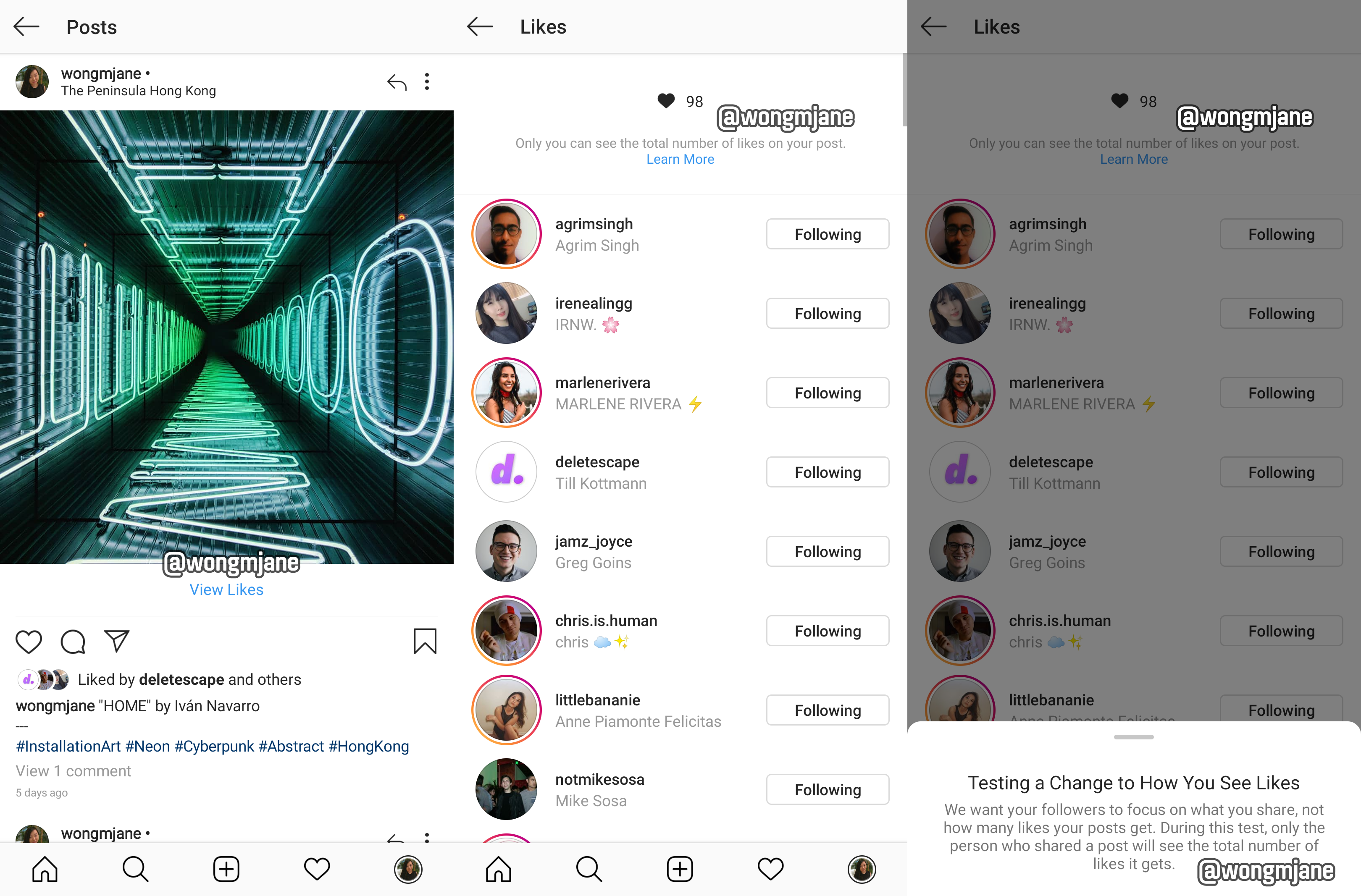
“We want your followers to focus on what you share, not how many likes your posts get. During this test, only the person who share a post will see the total number of likes it gets.” That’s how Instagram describes a seemingly small design change test with massive potential impact on users’ well-being.

Hiding Like counts could reduce herd mentality, where people just Like what’s already got tons of Likes. It could reduce the sense of competition on Instagram, since users won’t compare their own counts with those of more popular friends or superstar creators. And it could encourage creators to post what feels most authentic rather than trying to rack of Likes for everyone to see.

The design change test was spotted by Jane Manchun Wong, the prolific reverse engineering expert and frequent TechCrunch tipster whose spotted tons of Instagram features before they’re officially confirmed or launched. Wong discovered the design change test in Instagram’s Android code and was able to generate the screenshots above.

You can see on the left that the Instagram feed post lacks a Like count, but still shows a few faces and a name of other people who’ve Liked it. Users are alerted that only they’ll see their post’s Like counts, and anyone else won’t. It appears that there’s no plan to hide follower counts on user profiles, which are the true measure of popularity but also serve a purpose of distinguising great content creators and assessing their worth to marketers.

An Instagram confirmed to TechCrunch that this design is an an internal prototype that’s not visible to the public yet. A spokesperson told us: “We’re not testing this at the moment, but exploring ways to reduce pressure on Instagram is something we’re always thinking about.” Other features we’ve reported on in the same phase, such as video calling, soundtracks for Stories, and the app’s time well spent dashboard all went on to receive official launches.

The change matches a growing belief that Like counts can be counter-productive or even harmful to users’ psyches. Instagram co-founder Kevin Systrom told me back in 2016 that getting away from the pressure of Like counts was one impetus for Instagram launching Stories. Last month, Twitter began testing a design which hides retweet counts behind an extra tap to similarly discourage inauthentic competition and herd mentality.

Narcissism, envy spiraling, and low self-image can all stem from staring at Like counts. They’re a constant reminder of the status hiererarchies that have emerged from social networks. For many users, at some point it stopped being fun and started to feel more like working in the heart mines. If Instagram rolls the feature out, it could put the emphasis back on sharing art and self-expression, not trying to win some popularity contest.

18 Apr 2019

Mueller says encrypted messaging stalled some lines of inquiry

A single paragraph in the Mueller report out Thursday offers an interesting look into how the Special Counsel’s investigation came head-to-head with associates of President Trump who used encrypted and ephemeral messaging to hide their activities.

From the report:

Further, the Office learned that some of the individuals we interviewed or whose conduct we investigated-including some associated with the Trump Campaign — deleted relevant communications or communicated during the relevant period using applications that feature encryption or that do not provide for long-term retention of data or communications records. In such cases, the Office was not able to corroborate witness statements through comparison to contemporaneous communications or fully question witnesses about statements that appeared inconsistent with other known facts.

The report didn’t spell out specifics of whom or why, but clearly Mueller wasn’t happy. He was talking about encrypted messaging apps that also delete conversation histories over a period of time. Apps like Signal and WhatsApp are popular for this exact reason — you can communicate securely and wipe any trace after the fact.

Clearly, some of Trump’s associates knew better.

For years, police and law enforcement have lobbied against encryption because they say it hinders investigations. More and more, apps are using end-to-end encryption — where the data is scrambled from one device to another — so that even the tech companies can’t read their users’ messages. But just as criminals use encrypted messaging for bad, ordinary people use encrypted messaging to keep their conversations private.

According to the report, it wasn’t just those on the campaign trail. The hackers associated with the Russian government and WikiLeaks, both of which were in contact following the breaches on Hillary Clinton’s campaign and the Democratic National Committee, took efforts to “hide their communications.”

But not all of Trump’s associates have fared so well over the years.

Michael Cohen, Trump’s former personal attorney, learned the hard way that encrypted messaging apps are all good and well — unless someone has your phone. Federal agents seized Cohen’s BlackBerry, allowing prosecutors to recover streams of WhatsApp and Telegram chats with Trump’s former campaign chief Paul Manafort.

Manafort, the only person jailed as part of the Mueller investigation, also tripped up after his “opsec fail” after prosecutors obtained a warrant to access his backed-up messages stored in iCloud.

18 Apr 2019

How Squishy Robotics created an robot that can be safely dropped out of a helicopter

If you want to build a robot that can fall hundreds of feet and be no worse the wear, legs are pretty much out of the question. The obvious answer, then, is a complex web of cable-actuated rods. Obvious to Squishy Robotics, anyway, whose robots look delicate but are in fact among the most durable out there.

The startup has been operating more or less in stealth mode, emerging publicly today on stage at our Robotics/AI Sessions event in Berkeley, CA. It began, co-founder and CEO Alice Agogino told me, as a project connected to NASA Ames a few years back.

“The original idea was to have a robot that could be dropped from a spacecraft and survive the fall,” said Agogino. “But I could tell this tech had earthly applications.”

Her reason for thinking so was learning that first responders were losing their lives due to poor situational awareness in areas they were being deployed to. It’s hard to tell without actually being right there that a toxic gas is lying close to the ground, or that there is a downed electrical line hidden under a fallen tree, and so on.

Robots are well-suited to this type of reconnaissance, but it’s a bit of a Catch-22: You have to get close to deploy a robot, but you need the robot there to get close enough in the first place. Unless, of course, you can somehow deploy the robot from the air. This is already done but it’s rather clumsy: picture a wheeled bot floating down under a parachute, missing its mark by a hundred feet due to high winds or getting tangled in its own cords.
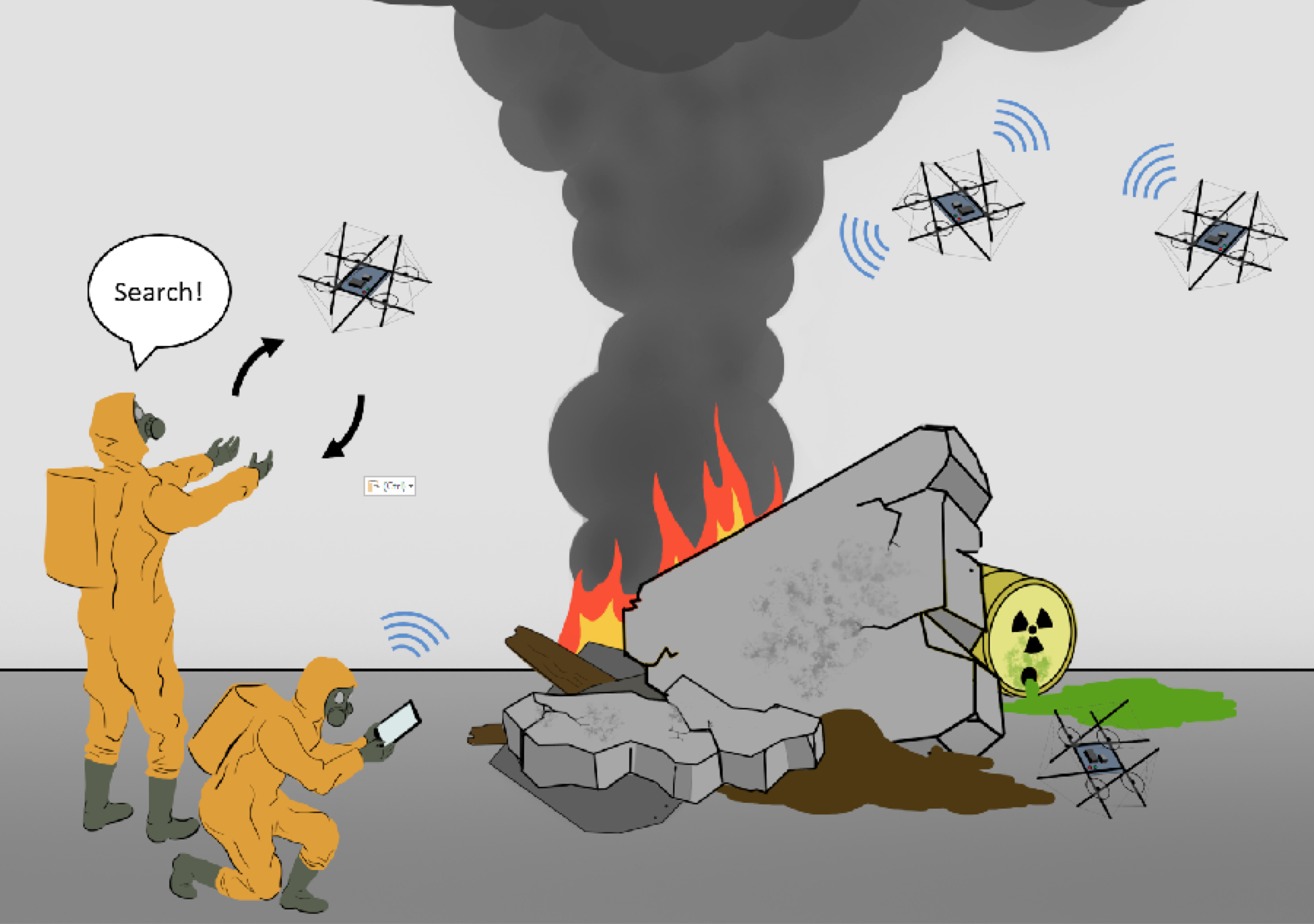
“We interviewed a number of first responders,” said Agogino. “They told us they want us to deploy ground sensors before they get there, to know what they’re getting into; Then when they get there they want something to walk in front of them.”

Squishy’s solution can’t quite be dropped from orbit, as the original plan was for exploring Saturn’s moon Titan, but they can fall from 400 feet, and likely much more than that, and function perfectly well afterwards. It’s all because of the unique “tensegrity structure,” which looks like a game of pick-up-sticks crossed with cat’s cradle. (Only use the freshest references for you, reader.)

If it looks familiar, you’re probably thinking of the structures famously studied by Buckminster Fuller, and they’re related but quite different. This one had to be engineered not just to withstand great force from dropping, but to shift in such a way that it can walk or crawl along the ground and even climb low obstacles. That’s a nontrivial shift away from the buckyball and other geodesic types.

“We looked at lots of different tensegrity structures — there are an infinite number,” Agogino said. “It has six compressive elements, which are the bars, and twelve other elements, which are the cables or wires. But they could be shot out of a cannon and still protect the payload. And they’re so compliant, you could throw them at children, basically.” (That’s not the mission, obviously. But there are in fact children’s toys with tensegrity-type designs.)

Inside the bars are wires that can be pulled or slackened to cause the various points of contact with the ground to move, changing the center of gravity and causing the robot to roll or spin in the desired direction. A big part of the engineering work was making the tiny motors to control the cables, and then essentially inventing a method of locomotion for this strange shape.

“On the one hand it’s a relatively simple structure, but it’s complicated to control,” said Agogino. “To get from A to B there are any number of solutions, so you can just play around — we even had kids do it. But to do it quickly and accurately, we used machine learning and AI techniques to come up with an optimum technique. First we just created lots of motions and observed them. And from those we found patterns, different gaits. For instance if it has to squeeze between rocks, it has to change its shape to be able to do that.”

The mobile version would be semi-autonomous, meaning it would be controlled more or less directly but figure out the best way to accomplish “go forward” or “go around this wall” on its own. The payload can be customized to have various sensors and cameras, depending on the needs of the client — one being deployed at a chemical spill needs a different loadout than one dropping into a radioactive area, for instance.

To be clear, these things aren’t going to win in an all-out race against a Spot or a wheeled robot on unbroken pavement. But for one thing, those are built specifically for certain environments and there’s room for more all-purpose, adaptable types. And for another, neither one of those can be dropped from a helicopter and survive. In fact, almost no robots at all can.

“No one can do what we do,” Agogino preened. At a recent industry demo day where robot makers showed off air-drop models, “we were the only vendor that was able to do a successful drop.”

And although the tests only went up to a few hundred feet, there’s no reason that Squishy’s bots shouldn’t be able to be dropped from 1,000, or for that matter 50,000 feet up. They hit terminal velocity after a relatively short distance, meaning they’re hitting the ground as hard as they ever will, and working just fine afterwards. That has plenty of parties interested in what Squishy is selling.

The company is still extremely small and has very little funding: mainly a $500K grant from NASA and $225K from the National Science Foundation’s SBIR fund. But they’re also working from UC Berkeley’s Skydeck accelerator, which has already put them in touch with a variety of resources and entrepreneurs, and the upcoming May 14 demo day will put their unique robotics in front of hundreds of VCs eager to back the latest academic spinoffs.

You can keep up with the latest from the company at its website, or of course this one.

18 Apr 2019

Amazon launches ad-supported music service to Echo owners

Amazon today announced the launch of a free, ad-supported music service in the U.S. that will be available to anyone who wants to play free music on their Echo speaker.

Until today, Echo owners who wanted to stream music from Amazon could either pay for an annual Prime membership for access to Prime Music, or they could pay $3.99 per month to stream from Amazon Music Unlimited (or $9.99/month to stream on non-Echo devices, as well.)

The new service has the same catalog as Prime Music, which today has just over two million songs. Amazon Music Unlimited, meanwhile, has 50 million songs.

The new service gives Echo owners a way to enjoy free music from Amazon on their Echo, instead of having having to turn to a third-party free provider, like Spotify or Pandora. It will also offer a way to push Echo owners to upgrade to the paid subscription services Amazon offers, including its Amazon Music Unlimited service and even Prime itself.

Amazon’s plans to wade into the free streaming market and more directly compete with Spotify had been previously leaked by Bloomberg. The report noted that Amazon had been in discussions with the labels in order to obtain the licenses to stream the free music — something it agreed to pay for, regardless of how much advertising it sells.

In addition to being a differentiating and attractive feature for potential smart speaker buyers — something that could have them opt for an Echo over a Google Home device or Apple HomePod, for example — the service also offers Amazon a new way to monetize its large and growing installed base of Echo speakers.

Amazon’s ad revenue was $10.1 billion in 2018, or 4.3 percent of its total revenues, and now it’s looking for new ways to grow that number.

The news also comes on the heels of a 2018 forecast from eMarketer that had predicted Amazon’s share of the smart speaker market would decline in 2020, as competition from rivals — including Google Home, Sonos One and Apple HomePod — would heat up. But there’s still plenty of time for that to change.

The market for smart speakers hit critical mass in 2018, with around 41 percent of U.S. consumers now owning a voice-activated speaker. Amazon also said at the beginning of the year that more than 100 million Alexa-powered devices have been sold to date — but this number includes non-Echo devices, including those from third-party manufacturers.

The launch of a free music service will be a significant blow to Spotify which, before now, was the only subscription music streaming service with a free tier. The free customers often then convert to paid subscribers as they use the service over time, something that has helped Spotify grow to reach 96 million paid users and 116 million free users. Apple Music has 56 million paying subscribers, but no free funnel.

18 Apr 2019

Amazon launches ad-supported music service to Echo owners

Amazon today announced the launch of a free, ad-supported music service in the U.S. that will be available to anyone who wants to play free music on their Echo speaker.

Until today, Echo owners who wanted to stream music from Amazon could either pay for an annual Prime membership for access to Prime Music, or they could pay $3.99 per month to stream from Amazon Music Unlimited (or $9.99/month to stream on non-Echo devices, as well.)

The new service has the same catalog as Prime Music, which today has just over two million songs. Amazon Music Unlimited, meanwhile, has 50 million songs.

The new service gives Echo owners a way to enjoy free music from Amazon on their Echo, instead of having having to turn to a third-party free provider, like Spotify or Pandora. It will also offer a way to push Echo owners to upgrade to the paid subscription services Amazon offers, including its Amazon Music Unlimited service and even Prime itself.

Amazon’s plans to wade into the free streaming market and more directly compete with Spotify had been previously leaked by Bloomberg. The report noted that Amazon had been in discussions with the labels in order to obtain the licenses to stream the free music — something it agreed to pay for, regardless of how much advertising it sells.

In addition to being a differentiating and attractive feature for potential smart speaker buyers — something that could have them opt for an Echo over a Google Home device or Apple HomePod, for example — the service also offers Amazon a new way to monetize its large and growing installed base of Echo speakers.

Amazon’s ad revenue was $10.1 billion in 2018, or 4.3 percent of its total revenues, and now it’s looking for new ways to grow that number.

The news also comes on the heels of a 2018 forecast from eMarketer that had predicted Amazon’s share of the smart speaker market would decline in 2020, as competition from rivals — including Google Home, Sonos One and Apple HomePod — would heat up. But there’s still plenty of time for that to change.

The market for smart speakers hit critical mass in 2018, with around 41 percent of U.S. consumers now owning a voice-activated speaker. Amazon also said at the beginning of the year that more than 100 million Alexa-powered devices have been sold to date — but this number includes non-Echo devices, including those from third-party manufacturers.

The launch of a free music service will be a significant blow to Spotify which, before now, was the only subscription music streaming service with a free tier. The free customers often then convert to paid subscribers as they use the service over time, something that has helped Spotify grow to reach 96 million paid users and 116 million free users. Apple Music has 56 million paying subscribers, but no free funnel.

18 Apr 2019

Sift’s ‘news therapy’ app aims to promote understanding, not anxiety

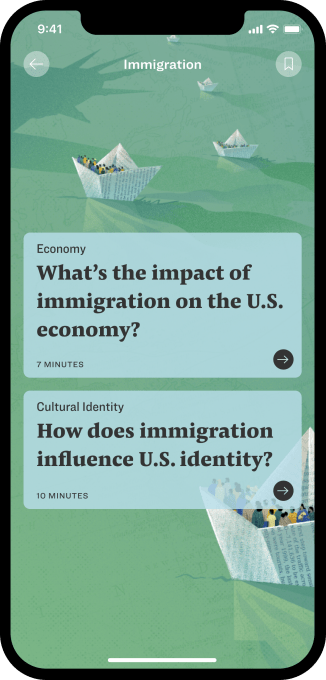
Is reading the news feeling a little stressful today? Can’t imagine why. Don’t worry: you’re not alone. A Pew Research study found that seven of 10 Americans today suffer from “news fatigue” — meaning they feel worn out and like they can’t keep up. Meanwhile, an APA survey found that 56 percent of Americans want to stay informed, but it stresses them out. A new app called Sift, launching today, wants to help. Instead of trying to overwhelm news consumers with breaking news and incremental updates, it aims to thoughtfully approach tough topics in order to encourage a deeper understanding of the issues.

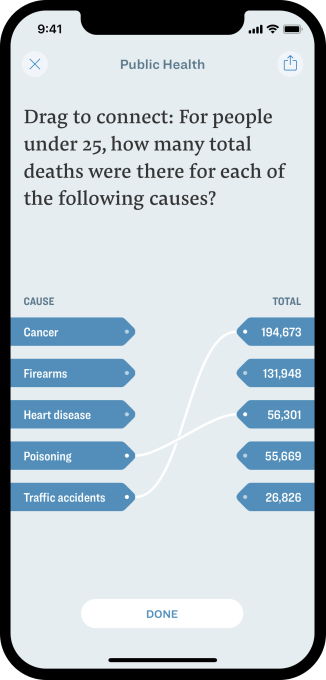
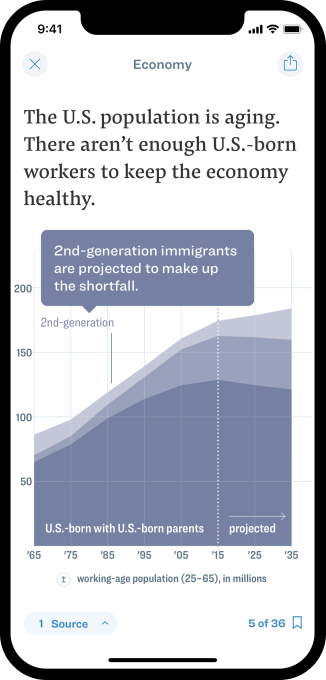
The app will tackle the big issues du jour — like immigration, healthcare and climate change, for example — which are released in a series on a subscription basis. For each topic, Sift will examine the backstory and history of the issue. And each section will include interactive features — like polls, sliders and other data visualizations — that promote critical thinking skills and keep users engaged while they learn.

The app also avoids inflammatory language in presenting the facts, allowing users time to reflect rather than react. And all the sources are linked so users can dig into the supporting material.

According to Sift co-founder Gabe Campodonico, the goal was to come up with a concept for an app that would allow people to stay informed while reducing anxiety and stress.

“We built Sift to be an active learning experience that engages more of your brain — a tool for people to interact with, trust, and learn from. And one that doesn’t have to live within a distracted ecosystem of noisy newsfeeds and headlines competing for attention,” he explained.

The original concept began over two years ago, and has gone through several iterations.

The team earlier tested a reference product — but it ended up feeling too much like Wikipedia. They also tried a digital news magazine, but didn’t feel it offered anything new. And they tested a gamified education product, but felt it lacked substance.

Eventually they landed on the idea for Sift, which they call an “experiment in news therapy.”

In October 2018, Sift launched its first topic: the U.S. immigration policy and its impact on the economy and cultural identity. The company tested the topic with a group of users over a couple of months. At the end, 33 percent said they felt less overwhelmed, and 30 percent felt less anxious. Twenty-two percent said they felt more informed.

These numbers, of course, could be better — but they’re potentially an improvement over how it feels today to get the news from other media sources. (Not that they quantify how their coverage impacts readers’ emotions.)

Today, Sift is launching its first, full series for the price of $19.99 for a six-month subscription. The business model was chosen so the app won’t have to include ads or other distractions, nor will it use data targeting. Each week, the app will release a new topic, beginning with immigration, then guns, healthcare, education, climate change and media literacy.

Part one of each topic will look to the past to set the foundation, and part two will look at potential solutions and ways to move forward.

The app is produced by former Evernote CEO Phil Libin’s AI-focused startup studio All Turtles, but it doesn’t use AI as it had originally planned. In fact, the team found that AI was part of the problem. As the Sift website explains, its user research showed that “users value human curation, not based on algorithms that clutter news consumption.”

It’s interesting that Sift is positioning itself almost as a self-care app, but for news consumption. The idea that we should take time for ourselves, reduce our stress, meditate and prioritize our mental health and wellness is a more modern concept — one attributed to the millennial and Gen Z demographic, who have grown up in the always-on digital age. These concepts have led to a booming self-care market, where the top apps are raking in multi-millions annually. 

News organizations, by comparison, often struggle. Over the course of 2018, media businesses saw numerous layoffs, hiring freezes and shutdowns. But subscription-based publications can be a bright spot — as with The NYT hitting a 13-year high, or Apple rounding up all-you-can-eat news into a subscription add-on for Apple News.

Sift aims to appeal to both markets: those who want quality news by subscription, and those focused on self-care.

Whether either of these demographics at all overlap with the crowd of news consumers who actually need more education and time to reflect, however, remains to be seen.

Sift was co-founded by Chris Ploeg, and includes engineer Steve White and Kelly Chen on editorial. It also works with contributors Nithin Coca, Laura Dorwart, Hilary Fung, MJ Gimenez, Tekendra Parmar, Casey O’Brien, Lewis Wallace and Rowan Walrath.

The app is a free download on the App Store.

18 Apr 2019

Mueller report details the evolution of Russia’s troll farm as it began targeting US politics

BRENDAN SMIALOWSKI/AFP/Getty Images

On Thursday, Attorney General William Barr released the long-anticipated Mueller report. With it comes a useful overview of how Russia leveraged U.S.-based social media platforms to achieve its political ends.

While we’ve yet to find too much in the heavily redacted text that we didn’t already know, Mueller does recap efforts undertaken by Russia’s mysterious Internet Research Agency or “IRA” to influence the outcome of the 2016 presidential election. The IRA attained infamy prior to the 2016 election after it was profiled in depth by the New York Times in 2015. (That piece is still well worth a read.)

Considering the success the shadowy group managed to achieve in infiltrating U.S. political discourse — and the degree to which those efforts have reshaped how we talk about the world’s biggest tech platforms — the events that led us here are worth revisiting.

IRA activity begins in 2014

In Spring of 2014, the special counsel reports that the IRA started to “consolidate U.S. operations within a single general department” with the internal nickname the “translator.” The report indicates that this is the time the group began to “ramp up” its operations in the U.S. with its sights on the 2016 presidential election.

At this time, the IRA was already running operations across various social media platforms, including Facebook, Twitter and YouTube. Later it would expand its operations to Instagram and Tumblr as well.

Stated anti-Clinton agenda

As the report details, in the early stages of its U.S.-focused political operations, the IRA mostly impersonated U.S. citizens but into 2015 it shifted its strategy to create larger pages and groups that pretended to represent U.S.-based interests and causes, including “anti-immigration groups, Tea Party activists, Black Lives Matter [activists]” among others.

The IRA offered internal guidance to its specialists to “use any opportunity to criticize Hillary [Clinton] and the rest (except Sanders and Trump – we support them” in early 2016.

While much of the IRA activity that we’ve reported on directly sowed political discord on divisive domestic issues, the group also had a clearly stated agenda to aid the Trump campaign. When the mission strayed, one IRA operative was criticized for a “lower number of posts dedicated to criticizing Hillary Clinton” and called the goal of intensify criticism of Clinton “imperative.”

That message continued to ramp up on Facebook into late 2016, even as the group also continued its efforts in issued-based activist groups that, as we’ve learned, sometimes inspired or intersected with real life events. The IRA bought a total of 3,500 ads on Facebook for $100,000 — a little less than $30 per ad. Some of the most successful IRA groups had hundreds of thousands of followers. As we know, Facebook shut down many of these operations in August 2017.

IRA operations on Twitter

The IRA used Twitter as well, though its strategy there produced some notably different results. The group’s biggest wins came when it managed to successfully interact with many members of the Trump campaign, as was the case with @TEN_GOP which posed as the “Unofficial Twitter of Tennessee Republicans.” That account earned mentions from a number of people linked to the Trump campaign, including Donald Trump Jr., Brad Parscale and Kellyanne Conway.

As the report describes, and has been previously reported, that account managed to get the attention of Trump himself:

“On September 19, 2017, President Trump’s personal account @realDonaldTrump responded to a tweet from the IRA-controlled account @ l0_gop (the backup account of @TEN_ GOP, which had already been deactivated by Twitter). The tweet read: “We love you, Mr. President!”

The special counsel also notes that “Separately, the IRA operated a network of automated Twitter accounts (commonly referred to as a bot network) that enabled the IRA to amplify existing content on Twitter.”

Real life events

The IRA leveraged both Twitter and Facebook to organize real life events, including three events in New York in 2016 and a series of pro-Trump rallies across both Florida and Pennsylvania in the months leading up the election. The IRA activity includes one event in Miami that the then-candidate Trump’s campaign promoted on his Facebook page.

While we’ve been following revelations around the IRA’s activity for years now, Mueller’s report offers a useful birds-eye overview of how the group’s operations wrought havoc on social networks, achieving mass influence at very little cost. The entire operation exemplified the greatest weaknesses of our social networks — weaknesses that up until companies like Facebook and Twitter began to reckon with their role in facilitating Russian election interference, were widely regarded as their greatest strengths.

18 Apr 2019

Working backwards to uncover key success factors

If you’re a SaaS business — you’re likely overwhelmed with data and an ever-growing list of acronyms that purport to unlock secret keys to your success. But like most things — tracking with you do has very little impact on what you actually do.

It’s really important to find one, or a very small number, of key indicators to track and then base your activities against those. It’s arguable that SaaS businesses are becoming TOO data driven — at the expense of focussing on the core business and the reason they exist.

In this article, we’ll look at focusing on metrics that matter, metrics that help form activities, not just measure them in retrospect.

Most of the metrics we track, such as revenue growth, are lagging indicators. But growth is a result, not an activity you can drive. Just saying you want to grow an extra 10% doesn’t mean anything towards actually achieving it.

Since growth funnels are generally looked at from top to bottom, and in a historical context — a good exercise can be the other way around — go bottom-up, starting with the end result (the growth goal) and figure out what each stage needs to contribute to achieve it.

You can do this by looking at leading indicators. These are metrics that you can influence — and that as you act, and see them increase or decrease, you can be relatively certain of the knock-on effects on the rest of the business. For example — if you run a project management product, the number of tasks created is likely to be a good leading indicator for the growth of the business — more tasks created on the platform equals more revenue.

18 Apr 2019

Add Craigslist to the tech platforms Russians used to manipulate the 2016 election

In one of the weirder revelations to come out of the Mueller report released this morning, it seems that Craigslist was yet another tech platform used in Russia’s election influence campaign.

Facebook? Sure. Instagram? Yup, that too. YouTube? Twitter? Oh my, yes. Even Tumblr makes an appearance (LOL. Tumblr).

But Craigslist?

Apparently the Russians used the platform (alongside Facebook and the rest) to facilitate their real-life trolling campaigns.

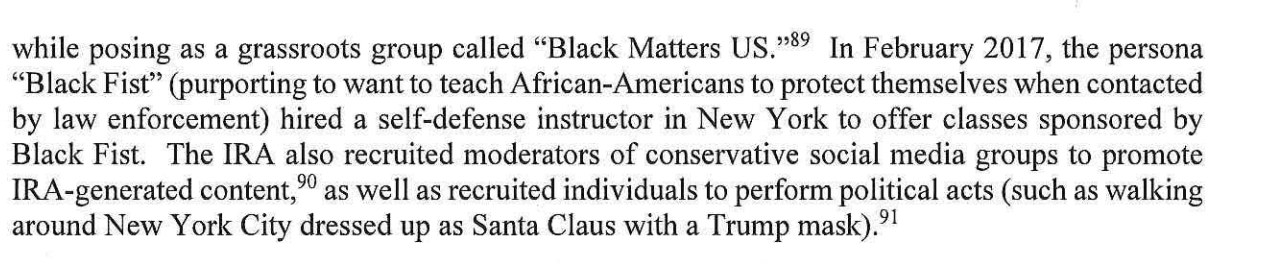
The Russian influence operations included things like recruiting individuals to walk around New York City “dressed up as Santa Claus with a Trump mask” (the relevant section is on page 32 of the Mueller report). Craigslist may have also been used in other schemes — like hiring a self-defense instructor to offer classes sponsored by a Russian operative working under the persona “Black Fist” to teach African-Americans how to protect themselves in encounters with law enforcement.

The fact that Russians affiliated with the Internet Research Agency were using Craigslist in addition to all of the other tech tools at their disposal is interesting and comes from a footnote in the Mueller report.

We don’t know the full extent of contacts between Russian operatives and Craigslist and have reached out to them for comment.

18 Apr 2019

Uber, Lyft implement new safety measures

Uber and Lyft instituted new safety features and policies this week.

The move follows the death of Samantha Josephson, a student at the University of South Carolina, who was kidnapped and murdered in late March. She was found dead after getting into a vehicle that she believed to be her Uber ride. The murder, which has garnered nationwide media attention, seems to have spurred action by the ride sharing behemoths.

In response, Uber is launching the Campus Safety Initiative, which includes new features in the app. Currently, the features are in testing, and they remind riders to check the license plate, make, and model of the car, as well as the driver’s name and picture, before ever entering into a vehicle. The test is running in South Carolina, in partnership with the University of South Carolina, with plans to roll out nationwide.

Lyft, which went public on March 29, has implemented continuous background checks for drivers this week. (Uber has had in place since last year.) Lyft also enhanced its identify verification process for drivers, which combines driver’s license verification and photographic identity verification to prevent driver identify fraud on the platform.

Uber, prepping to debut on the public market, is taking the safety precautions seriously. The new system reminds riders about checking their ride three separate times: the first is a banner at the bottom of the app once the ride has been ordered, the second is a warning to check license plate, car details and photo, and the third is an actual push notification before the driver arrives reminding riders to check once more.

Alongside the reminder system, Uber told is also working to build out dedicated pickup zones in the Five Points district of Columbia, with plans to roll out dedicated pick-up zones at other U.S. universities.

That said, Uber has also warned investors ahead of its IPO about a forthcoming safety report on the company, which could be damaging to the brand. The report is supposed to be released sometime this year, and will give the public its first comprehensive look at the scale of safety incidents and issues that occur on the platform.

“The public responses to this transparency report or similar public reporting of safety incidents claimed to have occurred on our platform … may result in negative media coverage and increased regulatory scrutiny and could adversely affect our reputation with platform users,” said Uber in its April 14 IPO paperwork.

Indeed, the issue of safety on platforms like Uber and Lyft, or really any app that asks you to be alone with total strangers, goes well beyond any single incident. A CNN investigation found that 103 Uber drivers had been accused of sexual assault or abuse in the last four years.