Category: UNCATEGORIZED

11 Apr 2019

Twin astronaut study suggests interplanetary travel may not be a health risk

The human body “remains robust and resilient” after almost a year in space, according to a long-term, multi-institutional study of twins, one of whom lived aboard the International Space Station for 340 days while the other remained on Earth. These heartening results remove a potential barrier to crewed interplanetary missions — and just in time for us to start planning them.

The study, conducted by NASA and its partners on the American astronauts Scott and Mark Kelly, minutely monitored the twins vitals to see what if any changes occurred to the twin in orbit (Scott) that didn’t to the twin below (Mark). And changes there were, but nothing worrying enough that souls brave enough to go to space will second-guess their profession.

“We have only scratched the surface of knowledge about the body in space,” explained Jennifer Fogarty, chief scientist of NASA’s Human Research Program. “The Twins Study gave us the first integrated molecular view into genetic changes, and demonstrated how a human body adapts and remains robust and resilient even after spending nearly a year aboard the International Space Station. The data captured from integrated investigations like the NASA Twins Study will be explored for years to come.”

There have been previous studies that showed how microgravity and other factors lead to, for example, lower bone density, and consequently the need to address those specific trends with changes to diet or habits. But this is by far the longest anyone has had their health monitored in space, and having a twin on the ground to use as a control body makes for incredibly powerful — yet still limited — results. (Here it seems only fair to note that Mark Kelly is also an accomplished veteran astronaut, not just a “control body.”)

Some expected occurrences included weight loss, lower blood pressure, and eyesight problems due to the lack of gravity. But the length and nature of the study also allowed for several interesting new phenomena in the immunological and molecular domains to be considered. There’s good news and bad news.

Telomeres are parts of our chromosomes that help with, among other things, maintaining our genes. They were immediately affected by presence in space and genetic variation six times that of the control was observed. They lengthened considerably, then upon return to Earth were much shorter than normal. What causes this and what effects it could have are unknown.

That genetic variation also returned to normal when returning to the surface — for the most part. But about 7 percent, many relating to immune response and DNA repair, didn’t. Is there a reason for those genes being affected? It’s impossible to say with a sample size of one. It’s also important to note that these genes weren’t necessarily “damaged” or anything, but that their expression levels had changed. The DNA itself remained intact.

Fortunately, the immune system itself functioned perfectly during and after Scott’s time in space. That’s hugely important, as a weakened immune system could be hugely troublesome on a long, isolated trip to another planet where no additional medical aid can be provided.

The genetic damage may be slightly worrying, but honestly if that’s the biggest issue emerging out of someone spending a year in a can floating through space, it’s seriously good news. The brain (the most critical part of an astronaut) worked great — the circulatory system adapted well — muscles and bones stayed in great shape. Potential telomeric damage and genetic variation aren’t fun, but they aren’t showstoppers either and may very well be preventable.

Considering expeditions to the planned lunar base would almost certainly be longer in duration than those to the ISS, this is great news for the blooming extra-orbital space community. And missions to Mars, as difficult as they may be otherwise, will not have to contend with immune systems shutting down or brain damage from blood pressure changes. That kind of confidence goes a long way.

This study is only the first of many, to be sure, and in fact the teams warn that, because they only had the one person in space as an experimental group, “it is impossible to attribute causality to spaceflight versus a coincidental event. Therefore, our study should be considered as hypothesis-generating and framework-defining and must be complemented in the future by studies of additional astronauts.”

Expect more studies both of this data and whatever gets gathered from future missions to test and verify the results published today. You can read the full paper in the journal Science, and hear much more about the setup and the twins themselves at NASA’s Twins Study page.

11 Apr 2019

Trifecta adds Beyond Meat’s products to its organic prepared food delivery service

Organic meal delivery service Trifecta is partnering with Beyond Meat to bring the company’s plant-based meat replacements to its prepared meal and a la carte delivery service, the companies said today.

Unlike its biggest competitor, Impossible Foods  (which chose to go a business-to-business route supplying its meat replacement to restaurants), Beyond Meat primarily went through the grocery store aisle to reach consumers. This marks the first time that prepared Beyond Meat foods will be available through a delivery service.

The provision of plant-based proteins will compliment Trifecta’s prepared food offerings for consumers looking for keto, vegan, vegetarian, paleo or other diets, the company said.

“With Trifecta fast becoming a household name within the health and fitness community, we did not have a high protein, low carb, low saturated fat option for our plant-based product lines, so Beyond Meat was a perfect fit for us,” said Greg Connolly, Trifecta’s chief executive, in a statement.

Trifecta meals only use USDA Organic ingredients that are never frozen and are either wild caught or grass fed, the company said. It also offers an option for customers to choose their own meals based on macronutrient needs. The company said its food items arrive in a refrigerated case, fully cooked and are ready to eat. Its direct to consumer meals are available in all 50 states.


11 Apr 2019

Original Content podcast: Director Theo Love explains ‘The Legend of Cocaine Island’

Most documentary filmmakers want to convince you that the story they’re telling is important. But Theo Love, director of the new Netflix documentary “The Legend of Cocaine Island,” said he was attracted to his subject matter for the opposite reason.

“A lot of the documentary subject matter that we had been considering and that we saw out there was pretty dark and very, very painfully important,” Love told me. “I wanted to make something that wasn’t important at all. I wanted to make something that was kind of just a silly story and that was just for entertainment.”

As Love explains in the latest episode of the Original Content podcast, “Cocaine Island” tells the story of Rodney Hyden, a middle-aged man with no drug-trafficking experience who learns about millions of dollars worth of cocaine that is supposedly buried on a Caribbean island.

Hyden actually plays himself in the film — not just as an interview subject, but in reenactments of key moments in the story. Love explained that choice as “a combination of necessity meets inspiration.”

“Look, this is an indie film, and we didn’t have a huge budget to get Jack Black or John Goodman to do the recreations,” he said. “But when we met Rodney, it was pretty clear from the get-go that he could do [them]. He just had that type of charisma, that you wanted to watch him.”

And while the film was made independently before being picked up by Netflix (which also gave the documentary its current name), Love said he was thinking about the streaming service from the start.

“I mean, documentaries really changed because of Netflix,” he said. “And the audience that documentaries are getting has changed drastically over the last decade because of Netflix. They’ve brought documentaries to the masses.”

You can listen in the player below, subscribe using Apple Podcasts or find us in your podcast player of choice. If you like the show, please let us know by leaving a review on Apple. You can also send us feedback directly. (Or suggest shows and movies for us to review!)

11 Apr 2019

Uber is dishing out ‘appreciation awards’ up to $10,000 to let prolific drivers buy stock

As Uber gears up for its highly-anticipated public debut, the company is setting aside some dough for drivers that have logged some serious rides on the platform as a reward for sticking with the service. The company follows Lyft which also rewarded drivers with one-time cash bonuses during its public offering.

The company is setting aside shares of common stock at the initial IPO price that drivers who earn this “appreciation award” will be able to purchase.

Drivers will get $100, $500, $1,000 or $10,000 for completing 2,500, 5,000, 10,000, or 20,000 lifetime trips respectively. The caveat being that drivers will need to have also completed at least one ride in 2019 as of April 7 and be “in good standing.” We’ve reached out to Uber about what exactly that means.

Uber’s “driver appreciation awards” are pretty identical to what Lyft did for its public offering, which awarded drivers with 10,000 and 20,000 rides with $1,000 and $10,000 respectively. The key difference being Uber has some nice smaller cash bonuses for less prolific drivers. Uber detailed that for drivers outside of the United States, the appreciation award “may be adjusted on a region-by-region basis to account for differences in average hourly earnings by region.”

11 Apr 2019

Travis Kalanick stands to make billions from Uber’s IPO

Uber co-founder Travis Kalanick, who resigned from the company in 2017, still stands to make billions in the company’s intial public offering, expected in May.

The ride-hailing giant dropped its S-1 this afternoon, confirming plans to trade on the New York Stock Exchange under the ticker symbol “Uber.” The company did not disclose the valuation it’s seeking, but is said to be planning to sell around $10 billion in stock.

The filing highlights Uber’s key stockholders, including Kalanick, who owns 8.3 percent of the company’s pre-IPO shares valued at roughly $9 billion, assuming an initial market cap of $100 billion.

Uber has raised nearly $20 billion in a combination of debt and equity funding, making it the most well-capitalized pre-IPO business ever. Its IPO will make history as the eighth largest debut in U.S. history, Axios reports.

According to the filing, the SoftBank Vision Fund owns 16.3 percent of pre-IPO shares. Its remaining largest shareholders include Benchmark (11 percent), Uber co-founder Garrett Camp’s startup studio Expa (6 percent), Saudi Arabia’s Public Investment Fund (5.3 percent), and Alphabet (5.2 percent).

Uber’s early stakeholders, though not mentioned in the filing, will undoubtedly make a lot of money on the IPO, too. That includes Menlo Ventures, Lowercase Capital and First Round Capital, as well as a bunch of individual investors.

11 Apr 2019

CEO Jennifer Tejada just took PagerDuty public; we talked now about the roadshow, the IPO, and what comes next

PagerDuty debuted on the New York Stock Exchange today, and as we type, shares of the nine-year-old, San Francisco-based incident response software company are trading at nearly $39.

That’s up more than 60 percent above their IPO range of $24 per share, which was itself adjusted from the range of $21 to $23 that had been expected earlier and gives the company a valuation of close to $3 billion. That’s an awful lot for a company whose software helps technical teams at 11,000 companies spot problems with applications and respond to incidents. Though it’s growing quickly — revenue was up 48 percent last year  — it still pulled in just $117.8 million in 2018. Meanwhile, its net loss widened last year to $40.7 million from $38.1 million in 2017.

It has to make the company’s investors —  who last assigned the company a valuation of $1.3 billion back in September — very happy. Some of the VCs poised to win big if PagerDuty’s shares continue flying high include Andreessen Horowitz, which owned 18.4 percent of PagerDuty’s shares sailing into the IPO; Accel, which owned 12.3 recent; and Bessemer, which owned 12.2 percent. Other winners include Baseline Ventures (6.7 percent) and Harrison Metal (5.3 percent).

It’s also exciting for CEO Jennifer Tejada, a proven operator who was brought in to lead PagerDuty in 2016 and now becomes part of a small — but growing — club of women CEOs to take their tech companies public, including Katrina Lake of Stitch Fix and Julia Hartz of Eventbrite.

We talked with Tejada earlier today about the company’s big day. In addition to crediting company cofounders (and shareholders) Andrew Miklas and Baskar Puvanathasan, both of whom have since left the company, Tejada thanked PagerDuty cofounder Alex Solomon, who remains the company’s CTO. She also told us a little bit about what today has been like and how the IPO changes things — and doesn’t. Our chat has been edited for length.

TC: First and foremost, how are you feeling?

JT: It’s been an incredible day. It’s been an incredible several months. You have to enjoy it when it’s going well.

TC: How does the vision for the company change now that it’s public? Have you been thinking ahead to possible acquisitions?

JT:  The vision doesn’t change. We intend to do exactly what we’ve been doing, which is to provide the best real-time operations platform available to companies as they undergo digital transformation to meet the growing demands of their customers. We think we’re [facing] an early and very large opportunity that will be available to us for a long time. So our job continues to be to build great products, stay close to our customers, expand regionally, and continue doing what has allowed us to be a successful private company.

TC: You and I had talked about the challenges of retaining employees in San Francisco when we sat down together in November. It’s a battle for every local company. How do you keep employees beyond the lock-up period?  How do you ensure they stay focused on performance and not your share price?

JT: I think that mindset of, ‘It’s all over when you go public,’ is kind of a Silicon Valley fable. If you look at the most successful SaaS companies on the planet, they’ve gained 10x, 20x, 30x their value post their IPO. I also think what employees look for ahead of their financial success is career success. Am I being developed and recognized and can I build my career at this company? And we’ve worked really hard to create those career opportunities for our employees who [I think see, as I do] the IPO like a racing boat pushing off the dock, across the starting line, and into the open ocean, where the next adventure awaits.

In the meantime, we’ve already lessened our reliance on [overheated job markets] by opening offices in Toronto and Atlanta and Seattle and London and Sydney, even while we’re still hiring in San Francisco and Seattle.

TC: Obviously, Lyft’s shares have been up and down, owing to short sellers. Have you been monitoring short interest? Are you at all concerned about investors driving the price sky high, then selling it on the way down?

JT: I haven’t even looked at the stock price in the last several hours .  .  . There are a lot of things outside of my control, and the free market is one of them.

TC: PagerDuty is rare in that is doesn’t have a dual-class structure, when can greatly empower leaders over everyone else associated with a company. Presumably, this is a great relief to your investors;  I just wonder whether it was ever a consideration.

JT: I’m a little bit of a traditionalist. I’ve been around long enough to know how checks and balances work, and a single-class structure made sense for PagerDuty. Also, dual-class structures tend to emerge more when you have deeply involved founders, and though Alex is still very much a part of the business, PagerDuty’s other two founders have worked outside of the business for some time.

TC: You have plenty of operating experience, including previously running Keynote Systems, but you’ve never taken a company public. Were there ways in which you found the roadshow experience surprising?

JT: I was surprised by how fun it was! [Laughs.] When you have a great story, and a great partner helping you tell it —  in my case that’s [PagerDuty CFO] Howard Wilson, who I’ve worked with for 10 years- – it’s great. We had a great reception from investors. I loved our IPO team;  our [top bank underwriting teams] were both led by women and whenever I had a question, they [had the answer]. I also had this cocoon of experience surrounding me thanks to our board.  If anyone tells you that [in this position] they are super comfortable, they’re either lying or [clueless] but I was very lucky. I also have a whole bunch of buddies who are CEOs [and other executives] in SaaS and I’ve been shaking them down for advice for months so I felt well-prepared.

TC: What was some of the advice you received from those friends about how your life is about to change?

JT:  Some of it was about the need to keep people focused and not get distracted, to remind everyone that this is a milestone, not the goal. [Some centered on] surrounding yourself with a great team and the importance of great investor relations, a function you don’t have as a private company but that can create huge value and provide support and understanding of the market.

One CEO said to just make sure you keep having fun, to try and stay “you,” to find joy in the same things as before.  There will be stressful moments and tough questions — that’s true of any company that scaling —  but I heard a lot of advice about just taking care of myself, including on the roadshow. In fact, there were a lot of really supportive notes and private tweets that, in a job that can feel lonely, made me feel not alone, and I’m very appreciative of that.

TC: People calls IPOs just another funding event, but that’s kind of baloney, isn’t it?  If you had to list the most meaningful moments in your life on a scale from 1 to 10,  1 being the most important, where might today fall? Would today be up there on that list?

JT: When I think of most meaningful moments, I think of the day my daughter was born, and my wedding. Another day that was very meaningful to me was when I approved our pledge to donate one percent [of PagerDuty’s equity, one percent of its product, and one percent of employees’ time] to social impact.  We did it a lot later in the game than some companies; our equity was already valuable. But we knew that it was going to create meaningful impact over time.

But yes, it is a gratifying day, especially for the cofounders who were pulling the idea together for PagerDuty a couple of years before they even launched it, and for employees who’ve been with the company for nearly as long and who turned down safer and higher-paying jobs along the way. Seeing their joy today — that is a memory that will be in my top 10 for sure.

11 Apr 2019

Founders meet with Salesforce Ventures at TechCrunch Include’s April Office Hours

TechCrunch Include is partnering with Salesforce Ventures to host this month’s Include Office Hours on April 30th. From 2:00pm – 4:00pm, Salesforce Ventures investors Matt Garratt, Phoebe Peronto, Spencer Chavez, and Claudine Emeott will meet with founders one on one, for 20 minutes, to offer guidance, advice and product feedback. You can apply here.

TechCrunch launched the Include program in 2014 to connect underserved and underrepresented founders in tech to our vast network and facilitate opportunities. The Include Office Hours program is one such initiative. TechCrunch partners with a VC firm a few times a year to give diverse founders a unique opportunity to meet privately with investors to get advice on building and developing their startups.

Underserved and underrepresented founders are invited to apply. Diverse founders include, but are not limited to, female founders, veterans, Latino/a, Black, LGBTQ and founders with disabilities.

Salesforce Ventures will be hosting office hours on April 30th from 2:00pm – 4:00pm. Salesforce Ventures is interested in meeting with founders from the following categories: B2B SaaS & Enterprise Technology Startups across multiple sectors including retail, fintech, digital health, manufacturing, impact (education, sustainability, diversity & inclusion) in addition to AI/ML, developer tools and blockchain. Founded in 2009, the firm’s portfolio consists of 300+ investments in more than 20 countries. Companies in the Salesforce Ventures portfolio typically receive funding, access to one of the world’s largest cloud systems and guidance from the company’s execs. Connect with Salesforce Ventures here.

Let’s meet the investors:

Matt Garratt, Managing Partner, Salesforce Ventures

Matt Garratt is the managing partner of Salesforce Ventures. Matt has completed investments in leading enterprise SaaS companies, including companies such as DocuSign, MuleSoft and Twilio. Prior to joining Salesforce Ventures, he was a vice president at Battery Ventures, where he invested in early-stage enterprise software and GreenIT companies. Matt was also a vice president of Plymouth Ventures, a late-stage investment fund based in Ann Arbor, Michigan. He has also worked for GE in their corporate strategy group and has spent time in Africa monitoring energy and infrastructure investments for E+Co, a public-purpose investment.
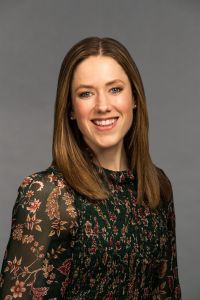

Phoebe Peronto, Principal, Salesforce Ventures

Phoebe Peronto is a principal at Salesforce Ventures, where she focuses on investing in enterprise SaaS companies in various industry sectors, including retail/commerce, developer tools and emerging technologies (AI/ML, blockchain). She joined Salesforce by way of the investing team at GV, and operational roles at both Google Inc. and Rocket Internet. Phoebe holds a dual degree from UC Berkeley in Political Science and Business Administration and graduated with high distinction as a George Baker Scholar from Harvard Business School. Based in San Francisco, Phoebe has become one of those crazy obsessed coffee people.


Spencer Chavez, Principal, Salesforce Ventures

Spencer Chavez is a principal at Salesforce Ventures, where he is responsible for both sourcing and executing investments in enterprise software companies, with a recent focus on companies in the fintech, AI/ML and digital health spaces. Prior to joining Salesforce Ventures, Spencer was on the investment team at JMI Equity, where he focused on making growth equity investments in enterprise software companies. Earlier in his career, Spencer worked in the investment banking divisions at both Citigroup and Needham & Company, where he helped advise the firms’ technology clients on M&A and capital-raising initiatives. Spencer graduated from Santa Clara University with a B.S. in Commerce, majoring in finance and minoring in economics.


Claudine Emeott, Senior Director of Impact Investing, Salesforce

Claudine Emeott leads the Salesforce Impact Fund and is looking to invest in mission-driven enterprise technology companies in education, sustainability, diversity + inclusion, and enabling technology for the social sector. Prior to Salesforce, Claudine led impact investing at Kiva, developing a new funding model for social enterprises and spearheading a new impact framework. Before moving to the Bay Area, Claudine spent the first half of her career in economic development consulting and has lived in Beijing, Chicago and Kathmandu. Claudine holds a B.A. from Harvard and a master’s from MIT.


If you are a partner/managing director of a firm and are interested in supporting underserved and underrepresented founders, email neesha@techcrunch.com.


11 Apr 2019

Uber files for IPO

Uber has filed its S-1, setting the stage for the transportation company to go public next month. This comes less than one month after competitor Lyft’s debut on the public market.

Uber is listing under the New York Stock Exchange under the symbol “UBER,” but has yet to disclose the anticipated initial public offering price.

In the filing, Uber reported 2018 revenues of $11.27 billion. Though, we knew this thanks to Uber’s previous disclosures of its financials. From ridesharing specifically, Uber’s revenues increased from $3.5 billion in 2016 to $9.2 billion in 2018, with gross bookings hitting $41.5 billion last year from ridesharing products.

Competitor Lyft filed its S-1 documents in March, showing nearly $1 billion in 2018 losses and revenues of $2.1 billion. It reported $8.1 billion in booking, coverings 30.7 million riders and 1.9 million drivers. About a week later, Lyft set a range of $62 to $68 for its IPO, seeking to raise up to $2.1 billion. Since its debut on the NASDAQ, Lyft’s stock has suffered after skyrocketing nearly 10 percent on day one.

This is not the first time we’ve seen Uber’s financials. Over the last couple of years, Uber has willingly disclosed many of these numbers.

Its last report as a private company came in February when Uber disclosed $3 billion in Q4 2018 revenue with rising operating losses. Year over year, Uber’s gross bookings increased 37 percent and revenue increased 24 percent. But as a percentage of gross bookings, revenue declined to 21.3 percent. 

Compared to the entire fiscal year of 2017, Uber’s gross bookings increased 45 percent, to $50 billion in 2018. That resulted in a GAAP revenue increase of 43 percent, from 2017 to $11.3 billion. Losses also improved (decreased) from $2.2 billion in adjusted EBITDA losses in 2017 to $1.8 billion in 2018.

Developing…

11 Apr 2019

Claire Delaunay will be speaking at TC Sessions: Robotics + AI next week at UC Berkeley

We’re a week out from our third-annual TC Sessions: Robotics event, and we still have some surprises left to announce. I know, we’re just as surprised as you are. We’ve already announced that Marc Raibert, Colin Angle, Melonee Wise and Anthony Levandowski will be joining us in Berkeley next week, and today we’re adding Claire Delaunay to the list of distinguished names.

Delaunay is VP of engineering at NVIDIA. Prior to NVIDIA, she worked as the Director of Engineering at Uber, after the ride-sharing service acquired her startup, Otto. She has also worked as the robotics program lead at Google.

She is currently the head of NVIDIA Isaac. The company’s robotics platform is designed to make it easier for companies of various experience levels and means to develop robots. Delaunay will discuss the platform and showcase some of NVIDIA’s in-house robotics reference devices, including Kaya and Carter.

Speaking of NVIDIA, TechCrunch is partnering with them on April 17 (the day before the conference) to host a Deep Learning for Robotics workshop at UC Berkeley. This in-person workshop will teach you how to implement and deploy an end-to-end project through hands-on training in eight hours led by an instructor. Click here to learn more about the workshop.

Hear from Delaunay and other awesome speakers next week at TC Sessions: Robotics+AI. Purchase your $349 tickets now before prices go up $100 at the door. Student tickets are just $45 – book yours now.

11 Apr 2019

Israel’s Beresheet spacecraft is lost during historic lunar landing attempt

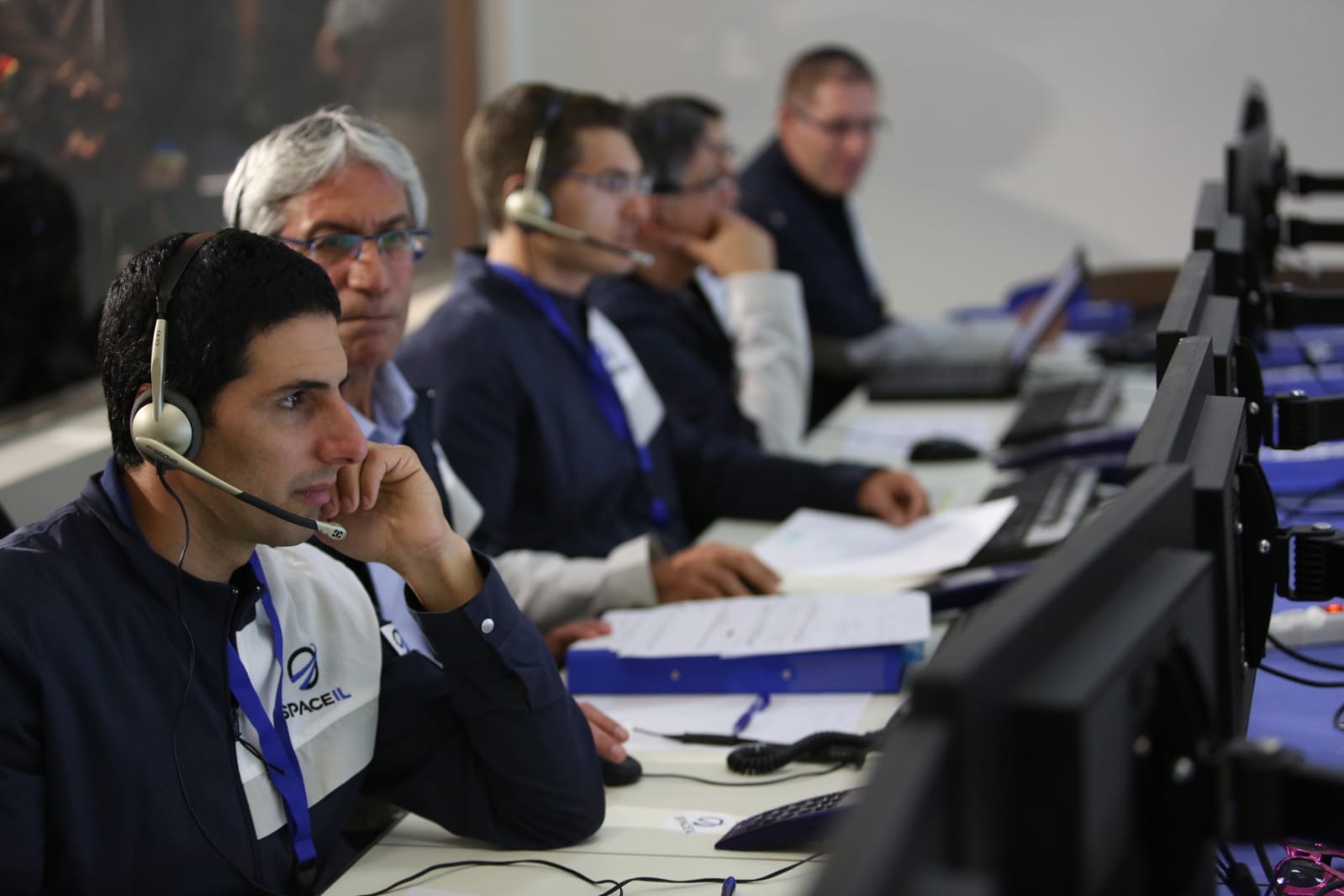
Israel’s SpaceIL almost made history today as its Beresheet spacecraft came within an ace of landing on the surface of the Moon, but suffered a last minute failure during descent. Israel missed out on the chance to be the fourth country to make a controlled lunar landing, but getting 99 percent of the way there is still an extraordinary achievement for private spaceflight.

Beresheet (“Genesis”) launched in February as secondary payload aboard a SpaceX Falcon 9 rocket, and after a month and a half spiraling outward, entered lunar orbit a week ago. Today’s final maneuver was an engine burn meant to bring down its relative velocity to the Moon, then brake to a soft landing in the Mare Serenitatis, or Sea of Serenity.

Everything was working fine up until the final moments, as is often the case in space. The craft, having made it perfectly to its intended point of descent, determined that all systems were ready and the landing process would go ahead as planned.

They lost telemetry for a bit, and had to reset the craft to get the main engine back online… and then communication dropped while only a handful of kilometers from the surface. The “selfie” image above was taken from 22 km above the surface, just a few minutes that. The spacecraft was announced as lost shortly afterwards.

Clearly disappointed but also exhilarated, the team quickly recovered its composure, saying “the achievement of getting to where we got is tremendous and we can be proud,” and of course, “if at first you don’t succeed… try, try again.”

The project began as an attempt to claim the Google Lunar Xprize, announced more than a decade ago, but which proved too difficult for teams to attempt in the timeframe specified. Although the challenge and its prize money lapsed, Israel’s SpaceIL team continued its work, bolstered by the support of Israel Aerospace Industries, the state-owned aviation concern there.

It’s worth noting that Beresheet did enjoy considerable government support in this way, it’s a far cry from any other large-scale government-run mission, and can safely be considered “private” for all intents and purposes. The ~50-person team and $200 million budget are laughably small compared to practically any serious mission, let alone a lunar landing.

I spoke with Xprize’s Founder and CEO, Peter Diamandis and Anousheh Ansari respectively, just before the landing attempt. Both were extremely excited and made it clear that the mission was already considered a huge success.

“What I’m seeing here is an incredible who’s who from science, education, and government who have gathered to watch this miracle take place,” Diamandis said. “We launched this competition now 11 years ago to inspire and educate engineers, and despite the fact that it ran out of time it has achieved 100 percent of its goal. Even if it doesn’t make it onto the ground fully intact it has ignited a level of electricity and excitement that reminds me of the Ansari Xprize 15 years ago.”

He’s not the only one. Ansari, who funded the famous spaceflight Xprize that bore her name, and who has herself visited space as one of the first tourist-astronauts above the International Space Station, felt a similar vibe.

“It’s an amazing moment, bringing so many great memories up,” she told me. “It reminds me of when we were all out in the Mojave waiting for the launch of Spaceship One.”

Ansari emphasized the feeling the landing evoked of moving forward as a people.

“Imagine, over the last 50 years only 500 people out of seven billion have been to space — that number will be thousands soon,” she said. “We believe there’s so much more that can be done in this area of technology, a lot of real business opportunities that benefit civilization but also humanity.”

Congratulations to the SpaceIL team for their achievement, and here’s hoping the next attempt makes it all the way down.