Category: UNCATEGORIZED

09 Apr 2019

Customers in Australian capital can get food and coffee delivered via drone

Google X graduate Wing has begun making drone deliveries in a trio of suburbs just outside of Canberra, Australia’s capital city. The Alphabet owned company says it’s tested the service 3,000 times over the past 18 months and is set to start the roll out to “a limited set of eligible homes.”

The service will be open to the suburbs of Crace, Palmerston and Franklin, adding customers in nearby neighborhoods “in the coming weeks and months.” Deliveries are currently open for a limited range of objects, including food (including, one assumes, burritos), coffee and over the counter items.

To start, the company’s partnering with several key partners, including Kickstart Expresso, Capital Chemist, Pure Gelato, Jasper + Myrtle, Bakers Delight, Guzman Y Gomez and Drummond Golf, promising delivery “in a handful of minutes.”

The company appears to be taking a very anti-Amazon approach to deliveries for the time being, looking to partner primarily with local businesses. There’s even a form for local merchants looking to take part in the early deliveries. Of course, given the small footprint of the program at the moment, it looks to be more of a publicity push for small businesses than anything else.

Wing says it’s also communicating with locals to make sure the thing goes as smoothly as possible. “Wing strongly believes that by working together with local policymakers, regulators, and communities, we can improve access to services, open up new economic opportunities, and better connect our cities,” the company writes. “We look forward to continuing this dialogue with the Canberra community as we expand Wing’s service.”

09 Apr 2019

Meow Wolf, the George R.R. Martin-backed immersive experience designer, pushes into XR

It’s been a long time since the original ten members of Meow Wolf’s art collective had to scrounge in dumpsters for the raw materials to bring their galaxy spanning visions to life.

Now, with well over $18 million in financing behind them, the story of a troupe of misunderstood, hardscrabble artists trying to create something unique in an unlikely corner of the U.S. has morphed into a vision of corporate aspirations that span the nation — and potentially the globe — with help from some of the largest technology companies in the world, like Microsoft .

As part of its move beyond immersive experiential content into two dimensional and three-dimensional virtual storytelling, Meow Wolf is now harnessing Microsoft’s volumetric capture technologies to record characters and aspects of its performances and make them digital.

That’ll be important as the company looks to take its show on the road. The company has plans to launch new versions of its shows in Las Vegas, Denver, and Washington.

“In terms for this collaboration it’s R&D to be distributed across our network,” says Meow Wolf information technology and infrastructure developer, Chris Clavio.

For Microsoft, the installation of its volumetric capture technology is the first time that the Seattle company has brought its technology out of its own studios. In the Meow Wolf space at the converted bowling alley George R.R. Martin’s capital helped acquire, Microsoft’s capture technology will be situated in “an area thematically tied in to the Meow Wolf experience,” says Mixed Reality Capture Studios general manager Steve Sullivan.

“Whenever we interact with audiences — whether through location-based entertainment, television shows, feature films, podcasts or any other medium we employ — we treat them as participants within our stories and provide them with agency,” wrote Nicolas Gonda, EVP of Entertainment at Meow Wolf, in an email.

Through the volumetric capture tech that Microsoft is bringing to the table, Meow Wolf will be looking to capture its characters and performers and bring them into other media. “Volumetric technology gives us the tools to have more characters in the space, and blend physical and digital worlds more seamlessly, in ways that are novel and unexpected. Imagine interacting with a digital character and having the same performer physically step into the space,” Gonda wrote.

“Volumetric video allows us to create extendable layers of experience and performance, with the physical space acting as an anchor for digital content.Volumetric capture sidesteps the uncanny valley and makes it possible to have realistic human characters in XR.”

That means an easy pipeline for bringing Meow Wolf characters into extended reality, mobile devices, digital screens for short form video content, and holograms in spaces that aren’t purpose-built by Meow Wolf to be immersive, according to Gonda.

The volumetric tech can also be used for merch — the lifeblood of any artistic endeavor these days (whether you’re selling a painting or a t-shirt at a concert, that’s where the money gets made).

“Our Digital Storytelling initiative involves adding a layer of digital characters and experiences throughout our physical exhibition spaces,” according to Gonda. “We are researching and developing new vehicles for delivering personalized, playful experiences that invite visitors to dive even deeper into the Meow Wolf Multiverse by becoming active participants.” That means distribution through a digital app as digital avatars or 3D printed souvenirs after a show, according to Gonda.

“Meow Wolf is a one-off weekend attraction, and then you go back to your real life,” chief executive officer Vince Kadlubek told Rolling Stone earlier this year. “I want someone to — if they want to — live in a continuous stream of Meow Wolf, and build an infrastructure to allow for that.”


What Microsoft is bringing to Meow Wolf is a version of its 106 camera, four microphone, green-screened setup to capture audio and video in a space that’s roughly 25 by 25 feet. The cameras, split between infrared and RGB units capture color, shape and texture at 30 to 60 frames per second and require 10 gigabits per second of processing power.

Once the images are captured a series of computer vision algorithms and geometric meshing algorithms convert roughly ten seconds of video into a final, volumetric three dimensional hologram compressed to 10 megabytes per second for playback.

Microsoft has been working on volumetric capture since 2010, when the company launched the Kinect . The recently revitalized brand was resuscitated last year for business uses, but the tech also lives on in Microsoft’s experiments with holograms for virtual and augmented reality as it looks to bring more functionality to the HoloLens product — and beyond.

“We are seeing us as trying to support mixed reality in general,” Sullivan told Variety last year.

Who’s afraid of a big bad Meow Wolf?

Meow Wolf is definitely mixed reality — in general.

The evolution of the art collective into a burgeoning corporate enterprise with national ambitions is mirrored in a general commodification of their kind of pop installation art aesthetic into pop up shops and experiential entertainment.

What began as an attempt at creating a weird, slightly wacky forum for artistic expression managed to gain popularity at just the right moment when the broader culture was shifting to more “experience-based” diversions that are less focused on naked consumption.

That’s one reason why Meow Wolf has managed to capture several millions of dollars in venture capital funding from real estate developers like Fisher Brothers and the startup investment firm Louis Alsop — along with its initial cash infusion from George R.R. Martin, arguably New Mexico’s most famous living celebrity (with apologies to The Shins).

Meow Wolf also makes money (another attractive quality in a venture investment). The company’s stew of pseudo avant-garde futurism and bric a brac, DIY amusement park on acid brand of immersive entertainment raked in $7 million in 2017, according to a May 2018 filing with the Securities and Exchange Commission.

In some ways, the company is perfectly positioned to ride the cresting wave of interest in the intersection of digital worlds, virtual avatars, immersive entertainment and augmented reality.

But is it still art?

For some critics maybe it never was, and for some it’s the future face of art. But, no matter its standing in the traditional art gallery circles, it is popular, and there’s a definite aesthetic to what Meow Wolf is trying to do.

Some local artists in the communities that Meow Wolf is trying to colonize are pushing back against the company’s forays into their communities. Denver’s local scene has criticized the company’s move as another brick in the gentrifying walling off of formerly inexpensive areas now being overrun with developers as America’s second cities get their renaissance.

And in some ways Meow Wolf is extending that renaissance to the creative communities that exist in these spaces. The company does pay artists to work — and making a living wage as an artist in America is hard in normal times, let alone when what little public funding there is for the arts is under siege.

“We’d like Meow Wolf to be the largest employer of artists in the world,” VP of experience design Corvas Brinkerhoff, told Rolling Stone.

In Denver, that means 40% of the art in Meow Wolf’s local project there would come from local artists — a commitment that the company told Rolling Stone it would try to replicate at its other locations in the cities it’s hoping to operate in.

The company has also set up a fund to give money to DIY arts spaces in other cities where such communities exist.

“We’d like Meow Wolf to be the largest employer of artists in the world,” Brinkerhoff said to the magazine.

09 Apr 2019

Mozilla adds fingerprinting and cryptocurrency mining protection to Firefox

Mozilla is adding a new feature to protect you against web annoyances in future releases of Firefox. The new feature is currently available in the beta version of Firefox 67, and the nightly version of Firefox 68. They will be available in the stable release of Firefox in a few weeks.

The cryptomining and fingerprinting blocks work pretty much like anti-tracking blocks in current version of Firefox. The company has partnered with Disconnect to include scripts that prevent your browser from loading disingenuous content.

Cryptomining and fingerprinting blocks will be disabled by default — at least for now. But you can activate them in a couple of clicks in the browser settings under “Privacy & Security”.

Mozilla already says that these settings will be turned on by default in future nightly versions of Firefox 68. So you can expect cryptomining and fingerprinting blocking by default in a few months.

You can check if those features are activated by clicking on the shield in the address bar. It tells you if scripts are blocked on the current site. You can also whitelist a site from this menu.

Fingerprinting is a creepy method used by adtech companies to identify a user based on multiple factors, such as the browser you’re using, the fonts you have on your computer, your operating system, etc.

Some websites also use cryptocurrency mining scripts to leverage your unused computer ressources to mine Bitcoin, Monero and other cryptocurrencies. Those scripts are automatically enabled by default when you visit a website.

09 Apr 2019

Dote raises $12M and introduces livestreamed Shopping Parties

Mobile shopping startup Dote is announcing $12 million in new funding, as well as a new feature called Shopping Party.

Founder and CEO Lauren Farleigh said her initial goal was to create “a truly native mobile experience” that made it “easy to check out across a lot of different stores.”

Over time, recommendations from social media influencers have become a big part of the app. With Shopping Party, they’re taking center stage — the feature allows them to share live video while browsing different products on Dote and chatting with fans.

Farleigh said the idea came from a trip she took with Dote influencers to Fiji last fall. She described watching them shop and talk together at the airport, and in what she said was an “ah-ha moment,” she realized that there’s an experience that was “lost when we stopped going to the mall with our friends.”

She added that influencers embraced the idea, with some telling her, “We love going live on Instagram [but] it’s challenging because there’s no shared experience for us to have that meaningful interaction over. It usually turns into the same Q&A over and over again.”

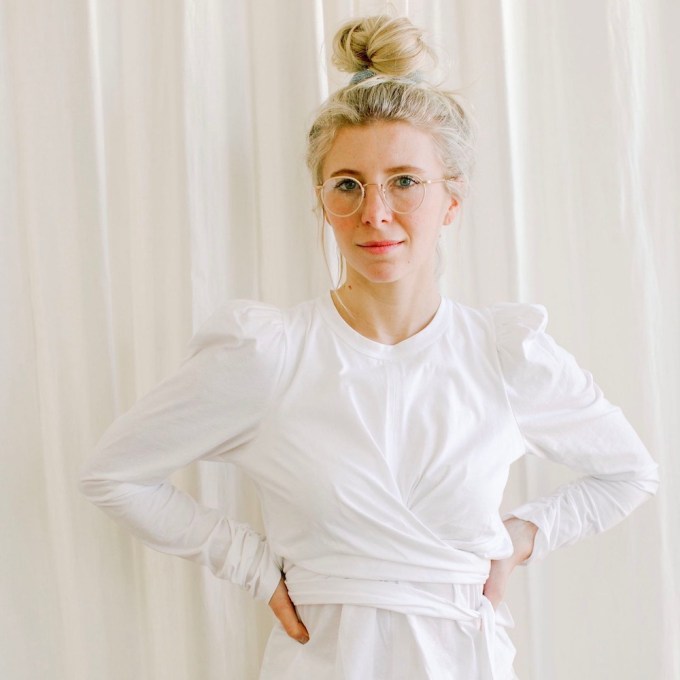
Lauren Farleigh

Dote CEO Lauren Farleigh

Shopping Party offers one solution to that issue, because you’re actually browsing and talking about specific products in the a Dote app. Apparently this was a real technical challenge — Shopping Party is leveraging Apple’s ReplayKit 2 framework to deliver two livestreams (one from the phone camera, one from the Dote app) while also incorporating live chats.

Farleigh, who previously worked as a product manager at mobile gaming company Product Gems, also compared this to game streaming on Twitch, except for shopping.

To kick things off, Dote plans to host two Shopping Parties every hour from 6am to 10am Pacific time for the next two weeks. (The company says the average Shopping Party lasts about 15 minutes.) There will also be Shopping Parties sponsored by specific brands.

As for the funding, it was led by Goodwater Capital, with participation from Lightspeed Venture Partners and Harrison Metal. Dote has now raised a total of $23 million.

“[Dote’s] customer-centric shopping platform uniquely blends innovative technologies such as live-streaming with relevant and fun social features, setting the standard for how all major brands and retailers will connect with Gen Z,” said Goodwater Managing Partner Eric Kim in a statement. “We’re thrilled to partner with them to accelerate this transformation.”

09 Apr 2019

Facebook’s AI team maps the whole population of Africa

A new map of nearly all of Africa shows exactly where the continent’s 1.3 billion people live down to the meter, which could help everyone from local governments to aid organizations. The map joins others like it from Facebook created by running satellite imagery through a machine learning model.

It’s not exactly that there was some mystery about where people live, but the degree of precision matters. You may know that a million people live in a given region, and that about half are in the bigger city and another quarter in assorted towns. But that leaves hundreds of thousands only accounted for in the vaguest way.

Fortunately you can always inspect satellite imagery and pick out the spots where small villages and isolated houses and communities are. The only problem is that Africa is big. Really big. Manually labeling the satellite imagery even from a single mid-sized country like Gabon or Malawi would take a huge amount of time and effort. And for many applications of the data, such as coordinating the response to a natural disaster or distributing vaccinations, time lost is lives lost.

Better to get it all done at once then, right? That’s the idea behind Facebook’s Population Density Maps project, which had already mapped several countries over the last couple years before the decision was made to take on the entire African continent.

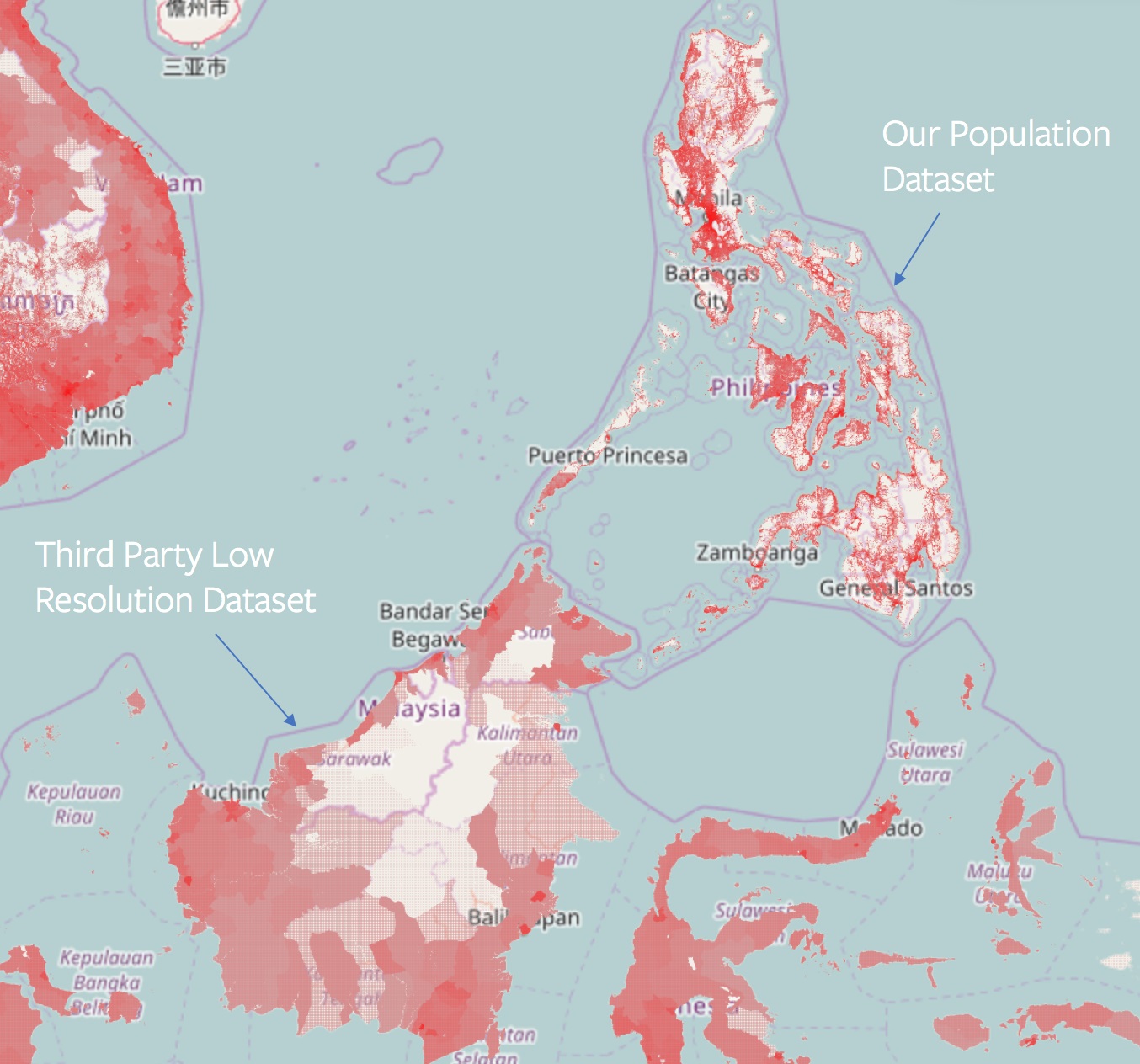
Zoom in and you can see the difference between the new and old maps. It’s pretty significant.

“The maps from Facebook ensure we focus our volunteers’ time and resources on the places they’re most needed, improving the efficacy of our programs,” said Tyler Radford, executive director of the Humanitarian OpenStreetMap Team, one of the project’s partners.

The core idea is straightforward: Match census data (how many people live in a region) with structure data derived from satellite imagery to get a much better idea of where those people are.

“With just the census data, the best you can do is assume that people live everywhere in the district – buildings, fields, and forests alike,” said Facebook engineer James Gill. ““But once you know the building locations, you can skip the fields and forests and only allocate the population to the buildings. This gives you very detailed 30 meter by 30 meter population maps.”

That’s several times more accurate than any extant population map of this size. The analysis is done by a machine learning agent trained on OpenStreetMap data from all over the world where people have labeled and outlined buildings and other features.

First the huge amount of Africa’s surface that obviously has no structure had to be removed from consideration, reducing the amount of space the team had to evaluate by a factor of a thousand or more. Then, using a region-specific algorithm (because things look a lot different in coastal Morocco than they do in central Chad), the model identifies patches that contain a building.

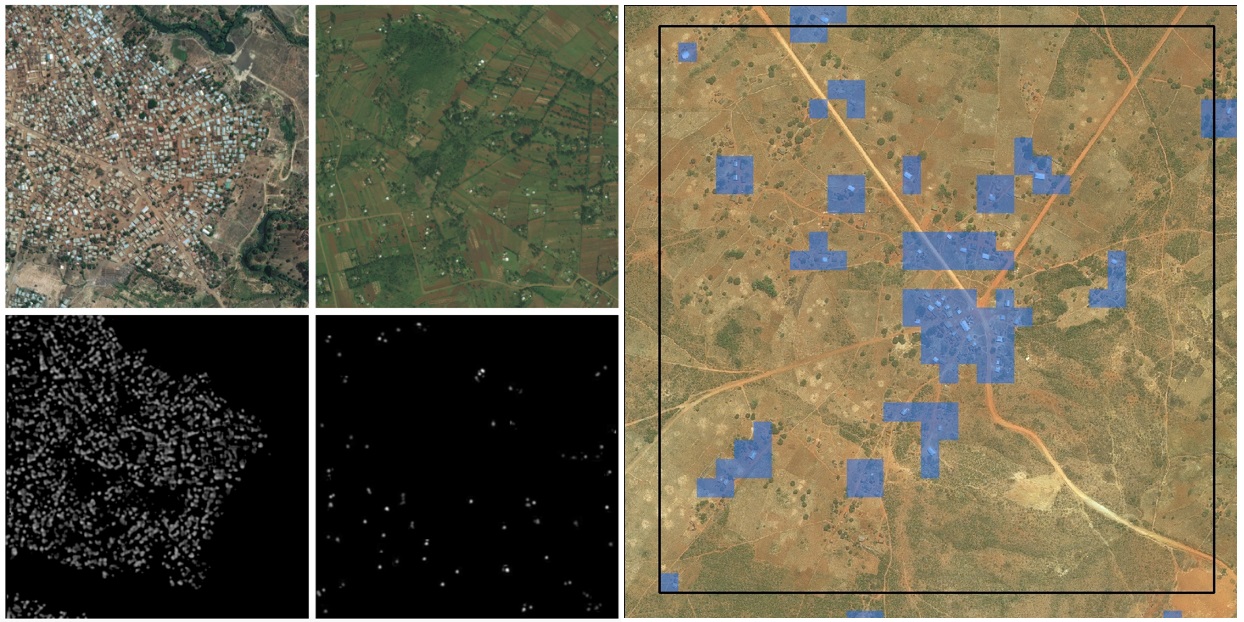
The map data, top left two images, is processed to find buildings, bottom left two; ultimately large tracts of land can be labeled as populated or not, as seen at right.

Throughout this process there’s a lot of double-checking by humans to make sure there are no regional biases or tendencies to mislabel in some way or another. The team has been doing it for some time, so it’s not their first rodeo, but the scale of “one country” vs. “all of Africa” is a bit different. Fortunately there have been some advances, the company’s AI team wrote in an explanatory blog post:

We’ve been able to simplify the problem to a straightforward binary classification task… Now, given an input image, a single neural net predicts whether the given image contains a building. This approach to classification is also significantly less computationally expensive than a segmentation-based approach because it allows us to use smaller neural nets and produce outputs with a smaller memory footprint.

With greater efficiency, in this case, also comes greater accuracy, since the algorithms will have learned from their previous attempts and more data is included to prevent false positives and negatives. The team found that of 1,000 patches labeled as containing buildings, 996 of them were correct. That kind of error rate sounds pretty acceptable to me, and is certainly better than the existing tools, which only gave you a vague “out there somewhere” when you asked about a small community or off-grid village.

If you’re wondering why Facebook is doing this in the first place, it has to do with their efforts over past years to identify populations with poor connectivity, so they can then beam internet down to them with lasers or the like. That’s all rather low priority right now, what with the company’s many problems right now, but the tools it was building clearly had humanitarian applications and it’s nice to see that the baby was not thrown out with the bathwater.

09 Apr 2019

PubNub nabs $23M as its IaaS network hits 1.3T messages sent each month

There’s been a huge boom in the last decade of applications and services that rely on on real-time notifications and other alerts as a core part of how they operate, and today one of the companies that powers those notifications is announcing a growth round. PubNub, an infrastructure-as-a-service provider that provides a real-time network to send and manage messaging traffic between companies, companies and apps, and betweeninternet-of-things devices — has raised $23 million in a Series D round of funding to ramp up its business internationally, with an emphasis on emerging markets.

The round adds another strategic investor to PubNub’s cap table: Hewlett Packard Enterprise is coming on as an investor, joining previous backers Sapphire Ventures (backed by SAP), Relay Ventures, Scale Venture Partners, Cisco Investments, Bosch and Ericsson in this round.

Todd Greene, the CEO of PubNub (who co-founded it with Stephen Blum), said the startup is not disclosing its valuation with this round except to say that “we are happy with it, and it’s a solid increase on where we were the last time.” That, according to PitchBook, was just under $155 million back in 2016 in a small extension to its Series C round. The company has raised around $70 million to date.

PubNub’s growth — along with that of competing companies and technologies, which includes the likes of Pusher, RabbitMQ, Google’s Firebase and others — has come alongside the emergence of a number of use cases built on the premise of real-time notifications. These include a multitude of apps, for example, for on-demand commerce (eg, ride hailing and online food ordering), medical services, entertainment services, IoT systems and more.

That’s pushed PubNub to a new milestone of enabling some 1.3 trillion messages per month for customers that include the likes of Peloton, Atlassian, athenahealth, JustEat, Swiggy, Yelp, the Sacramento Kings and Gett, who choose from some 70 SDKs to tailor what kinds of notifications and actions are triggered around their specific services.

Greene said that while some of the bigger services in the world have largely built their own messaging platforms to manage their notifications — Uber, for example, has taken this route — that process can result in “death by 1,000 paper cuts,” in Greene’s words. Others will opt for a PubNub-style alternative from the start.

“About 50 percent of our customers started by building themselves and then got to scale, and then decided to turn to PubNub,” Greene said.

It’s analogous to the same kind of decision businesses make regarding public cloud infrastructure: whether it makes sense to build and operate their own servers, or turn to a third-party provider — a decision that PubNub itself ironically is also in the process of contemplating.

Today the company runs its own business as an overlay on the public cloud, using a mixture of AWS and others, Greene said — the company has partnerships with Microsoft Azure, AWS, and IBM Watson — but “every year we evaluate the benefits of going into different kinds of data centres and interesting opportunities there. We are evaluating a cost and performance calculation,” he added.

And while he didn’t add it, that could potentially become an exit opportunity for PubNub down the line, too, aligning with a cloud provider that wanted to offer messaging infrastructure-as-a-service as an additional feature to customers.

The strategic relationship with its partners, in fact, is one of the engines for this latest investment. “Edge computing and realtime technologies will be at the heart of the next wave of technology innovation,” commented Vishal Lall, COO of Aruba, a Hewlett Packard Enterprise company, said in a statement. “PubNub’s global Data Stream Network has demonstrated extensive accomplishments powering both enterprise and consumer solutions. HPE is thrilled to be investing in PubNub’s fast-growing success, and to accelerate the commercial and industrial applications of PubNub’s real time platform.”

09 Apr 2019

Facebook agrees to clearer T&Cs in Europe

Facebook has agreed to amend its terms and conditions under pressure from EU lawmakers.

The new terms will make it plain that free access to its service is contingent on users’ data being used to profile them to target with ads, the European Commission said today.

“The new terms detail what services, Facebook sells to third parties that are based on the use of their user’s data, how consumers can close their accounts and under what reasons accounts can be disabled,” it writes.

Although the exact wording of the new terms has not yet been published, and the company has until the end of June 2019 to comply — so it remains to be seen how clear is ‘clear’.

Nonetheless the Commission is couching the concession as a win for consumers, trumpeting the forthcoming changes to Facebook’s T&C in a press release in which Vera Jourová, commissioner for justice, consumers and gender equality, writes:

Today Facebook finally shows commitment to more transparency and straight forward language in its terms of use. A company that wants to restore consumers trust after the Facebook/ Cambridge Analytica scandal should not hide behind complicated, legalistic jargon on how it is making billions on people’s data. Now, users will clearly understand that their data is used by the social network to sell targeted ads. By joining forces, the consumer authorities and the European Commission, stand up for the rights of EU consumers.

The change to Facebook’s T&Cs follows pressure applied to it in the wake of the Cambridge Analytica data misuse scandal, according to the Commission.

Along with national consumer protection authorities it says it asked Facebook to clearly inform consumers how the service gets financed and what revenues are derived from the use of consumer data as part of its response to the data-for-political-ads scandal.

“Facebook will introduce new text in its Terms and Services explaining that it does not charge users for its services in return for users’ agreement to share their data and to be exposed to commercial advertisements,” it writes. “Facebook’s terms will now clearly explain that their business model relies on selling targeted advertising services to traders by using the data from the profiles of its users.”

We reached out to Facebook with questions — including asking to see the wording of the new terms — but at the time of writing the company had declined to provide any response.

It’s also not clear whether the amended T&Cs will apply universally or only for Facebook users in Europe.

European commissioners have been squeezing social media platforms including Facebook over consumer rights issues since 2017 — when Facebook, Twitter and Google were warned the Commission was losing patience with their failure to comply with various consumer protection standards.

Aside from unclear language in their T&Cs, specific issues of concern for the Commission include terms that deprive consumers of their right to take a company to court in their own country or require consumers to waive mandatory rights (such as their right to withdraw from an online purchase).

Facebook has now agreed to several other T&Cs changes under pressure from the Commission, i.e. in addition to making it plainer that ‘if it’s free, you’re the product’.

Namely, the Commission says Facebook has agreed to: 1) amend its policy on limitation of liability — saying Facebook’s new T&Cs “acknowledges its responsibility in case of negligence, for instance in case data has been mishandled by third parties”; 2) amend its power to unilaterally change terms and conditions by “limiting it to cases where the changes are reasonable also taking into account the interest of the consumer”; 3) amend the rules concerning the temporary retention of content which has been deleted by consumers  — with content only able to be retained in “specific cases” (such as to comply with an enforcement request by an authority), and only for a maximum of 90 days when retained for “technical reasons”; and 4) amend the language clarifying the right to appeal of users when their content has been removed.

The Commission says it expects Facebook to make all the changes by the end of June at the latest — warning that the implementation will be closely monitored.

“If Facebook does not fulfil its commitments, national consumer authorities could decide to resort to enforcement measures, including sanctions,” it adds.

09 Apr 2019

Scaling a nonprofit, startup style

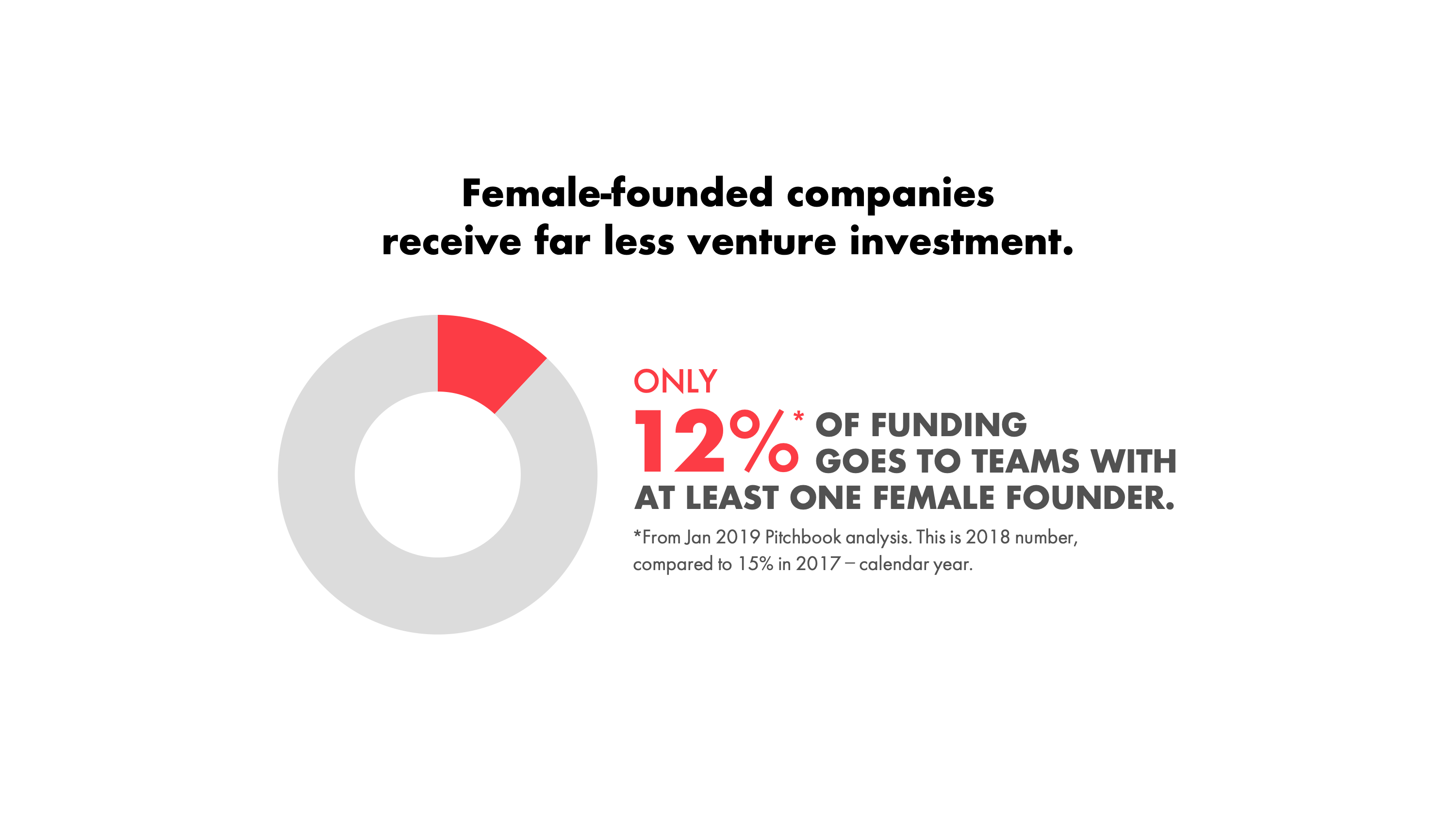
It’s been a year since All Raise emerged with the support of dozens of venture capital’s most powerful women. The 34 founding members had a lofty goal: Double the capital going to female founders in five years and double the representation of female VCs in 10 years.

After a few experiments, some trial and error and the first-of-its-kind Women Who Venture Summit, All Raise cemented its reputation as a force for change in Silicon Valley. In the last 12 months, the organization has connected high-profile VCs with female founders through its Female Founder Office Hours, lifted up founders who value diversity with the Founders for Change campaign and connected male general partners with nascent female investors with its VC Champions program.
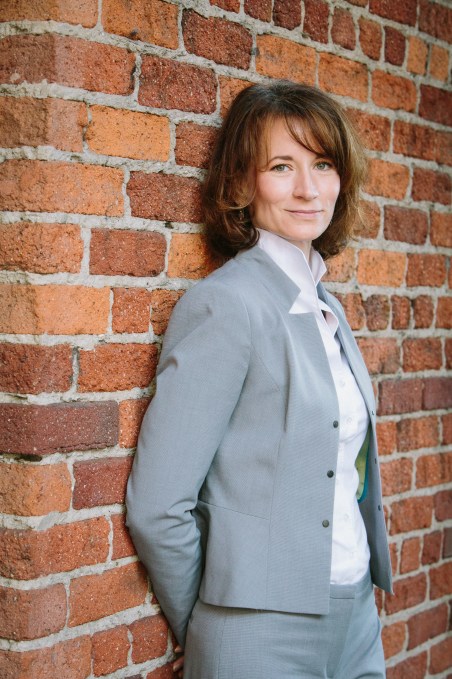
Now, the 501(c)(3) is ready for its next act. As part of a push to formalize the organization and garner more support in the form of cash, All Raise has hired its first chief executive officer, seasoned Silicon Valley operator Pam Kostka (pictured). Kostka — the former CEO of Loop, a now-defunct social media app for college students, and of the Andreessen Horowitz-backed startup Bluebox Security — joins just one other full-time All Raise employee, director of communications Steffi Wu, who joined at the beginning of March after six years at Gusto.

They are hunting for office space in San Francisco large enough to fit their growing team — All Raise plans to hire five to six people imminently — and to host events that can accommodate all their members. For now, they are establishing temporary offices at various partner VC firms. When I met with Kostka and Wu last week, they were operating out of a conference room inside Reach Capital’s San Francisco office.

Kostka and Wu are working a lot of nights and weekends, too, they said, because that’s when the rest of the All Raise community, a group of busy, full-time investors, are able to draft feedback to initiatives and otherwise offer direction: “We are two people, and yet we have these amazingly connected, capable resources who amplify the organization. It’s amazing,” Kostka told TechCrunch during a sweeping conversation on All Raise’s future plans, edited below for brevity and clarity.

All Raise appears lean, but its founders, including Cowboy Venture’s Aileen Lee, Sequoia Capital’s Jess Lee and Forerunner Venture’s Kirsten Green, are passionate and committed. Aileen Lee tells TechCrunch Kostka was the person they were waiting for after a lengthy, nine-month CEO search. “She’s product-oriented, with business savvy and a history of scaling with a small team. She can take All Raise to the next level,” Lee said.

“What we are trying to do is quite different than other nonprofit models,” Lee explained. “If we are lucky, it might have some similarities to TED. TED has a big conference where they bring together a lot of people and share lots of ideas, and you can go to TED.com and watch a talk. We want to make All Raise accessible like that so people can learn from us and be inspired, or they can host a workshop or a book club regardless of where they are.”

Lee says part of All Raise’s maturation and expansion efforts include a heightened focus on diversity, something she admits the organization hasn’t spent enough time on. Backstage Capital’s Lolita Taub and Zume Pizza co-founder Julia Collins are leading this effort through an All Raise intersectionality task force. Meanwhile, as All Raise ruminates on national and, eventually, international expansion plans, it’s looking to its members to offer their expertise where appropriate. Dream Machine founder and former TechCrunch editor-in-chief Alexia Bonatsos, for example, is donating her journalism chops to help All Raise hone its content strategy.
The VC and startup ecosystem is bound to see a lot more unfold this year, as Kostka puts All Raise’s growth efforts into overdrive. Here’s more from TechCrunch’s chat with All Raise’s first-ever CEO.

Kate Clark: All Raise is a nonprofit organization, but it walks and talks like a startup…

Pam Kostka: Yes, we run it like a startup, which is how it ties into my background. It feels very startup-oriented. We have key objectives, we have OKRs that we’re implementing, we’re using a lean process methodology of testing, refine, pilot, test, refine, pilot, test, refine before we roll things out. There’s probably way more going on under the covers right now than is actually visible. We’ll be rolling a lot out in 2019.

KC: Sounds like you’re at the right place then. Still, All Raise is a 501(c)(3), not a for-profit business. What made you decide to leave the startup world behind?

PK: I hit a milestone birthday a while ago and I thought, what is it that I want to do with my next 10 to 15 years in Silicon Valley? What is the most important work that I could do? I really wanted to do something that was personally meaningful to me and I had been following All Raise since their launch. I don’t think you can be a woman in Silicon Valley without being tied to this cause. For me, there’s no more meaningful thing I could be dedicating my time to and it kind of pays back some of the success and support I’ve had throughout my career, and I hope to amplify that for generations to come. I have a nine-year-old daughter. She’s interested in STEM. Should she elect to come in this direction, I want it to be different for her.

KC: When did you come to Silicon Valley?

PK: I started my career here over 20 years ago, in 1995 — the dot-com era — and I did a series of roles at different startups, from product management to marketing to sales, usually on the enterprise side, but really focusing on companies that were doing something disruptive. [All Raise] is probably one of the biggest challenges that I’ve taken on because it’s not about changing a company or changing an industry but changing an ecosystem.

KC: Now that All Raise has its first CEO, does it have big hiring plans?

PK: We are absolutely going to hire more people. So there’s one open position right now that’s actively being recruited, which is for a data strategist. We think data is core to what we do. We need to report on the numbers and how we are doing and how we’re impacting and moving the needle for women in VC and female funding.
KC: I know All Raise brought in $4 million in donations last year from Melinda Gates via Pivotal Ventures, Silicon Valley Bank, EY and some others, but are there any plans to raise additional capital?

PK: Yes, the intent is in a couple of months, once I have my sea legs underneath me, to go back out and raise. I’ve been a fundraiser and I think part of my appeal was that I could understand what it means to sit in the operator chair, as well as to be able to interact with the venture community. I have empathy for both sides of the equation and I’ve also personally experienced the struggles of being a woman in tech trying to raise money.

KC: What can we expect from All Raise in 2019?

PK: So right now we’re focused on both the funders and the founders, and providing all kinds of programs, initiatives, education and outreach that really helps women in these two communities rise, but that also brings these two communities together in more meaningful ways. That’s what the short-term focus is and there are lots of things that we’re considering for the long term. This year, you’ll see a lot of the work that was invested in 2018 come to fruition and be exposed.

KC: Last year, All Raise hosted its inaugural Women Who Venture Summit, which I’ve been told was an incredibly magical and historical moment that put more female VCs in the same room than ever before. Will that return in 2019?

PK: Yes, we’re planning to bring that event back and amplify it even more. It was great and I call it a great Year One. We’re now going through all of our lessons learned from that and trying to widen it. I think there were 400 people who were able to attend that event. We want to make a bigger event and invite more and more people and be that kind of inclusive tent under which everybody can come. We’re also going to be doing a parallel one for founders and then trying to weave those two groups together, again, to create this empathy between these two entities. It’s an absolutely seminal event and you’ll see us doing it on an annual basis going forward.
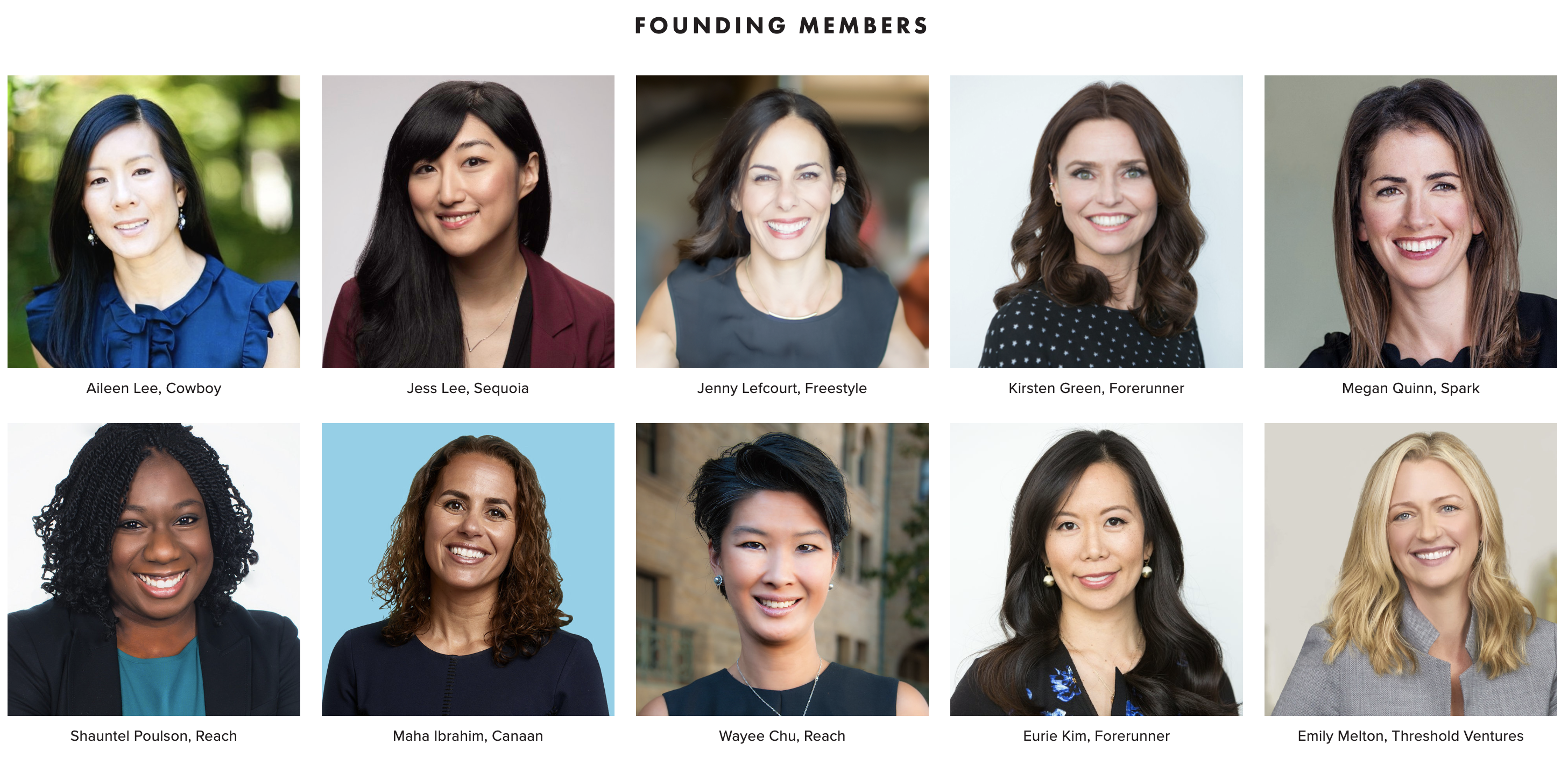
10 of All Raise’s 32 founding members

KC: How do you feel about the state of funding for women entrepreneurs and the number of women in venture?

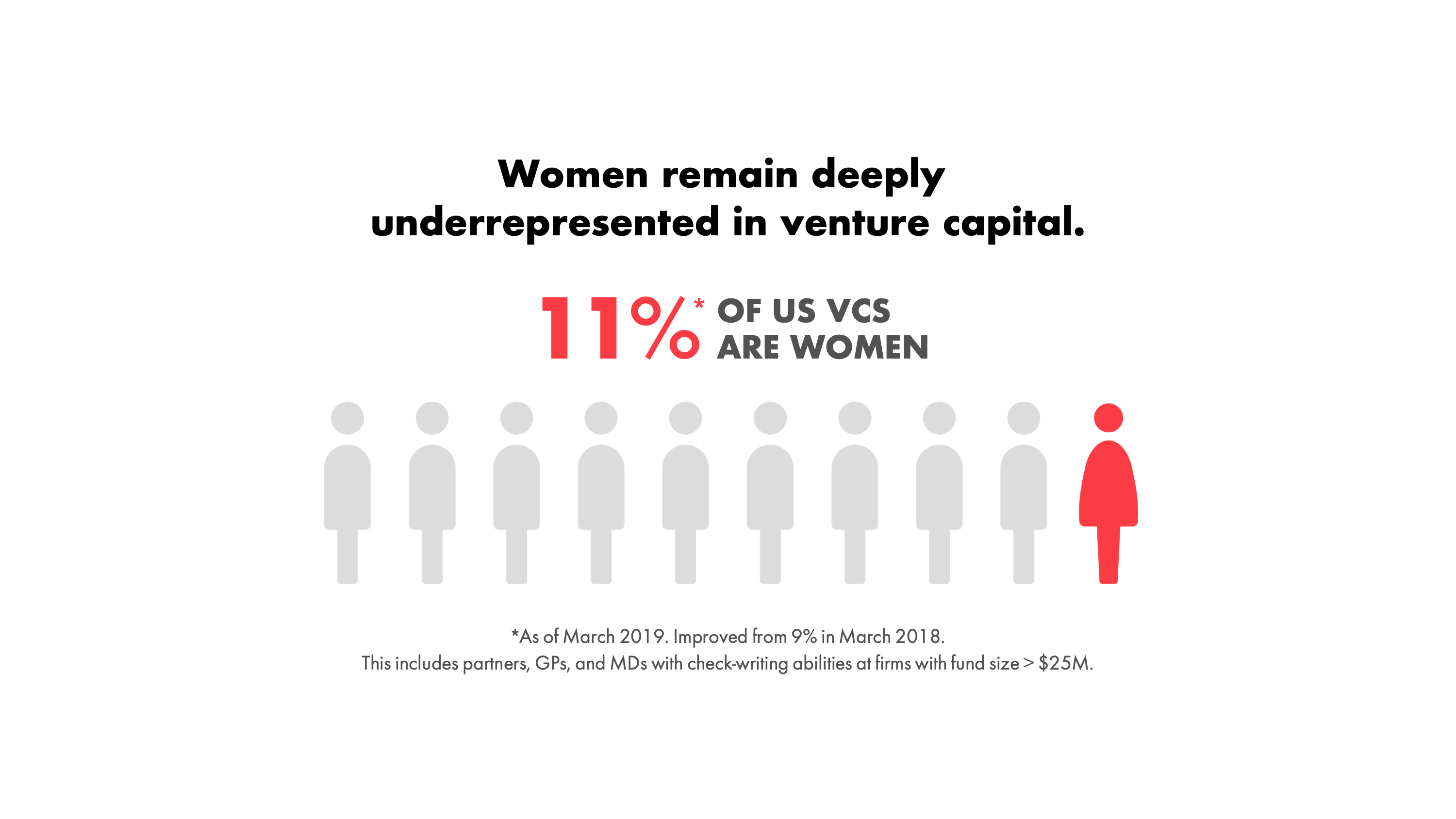
PK: I think it’s no coincidence that All Raise started a year ago and we’ve since moved the needle, but we’re not done, not by a long shot. In 2018, we moved from 9 percent representation of female investing partners to 11 percent. That being said, of the 720 venture firms in the United States, 70 percent still don’t have a single female partner around the table.

KC: Let’s talk about diversity. All Raise has supported hundreds of women, but the majority of VCs are white and Asian. Can All Raise do more to promote other underrepresented groups? 

PK: We need to have more diversity around the table. By doing that, we’re going to uncover opportunities we just don’t have right now because we’re not reflective of the population. Intersectionality is one of our initiatives moving forward in 2019 and it’s a big one. It’s one that’s important to me; I’ve enjoyed privileges that just aren’t accessible to women of color. So we’ve actually started an intersectionality working group within our organization with Julia Collins [co-founder of] Zoom Pizza and Lolita Taub from Backstage Capital. Those two are helping us determine a whole series of programs and initiatives, events and partnerships that can bring intersectionality into our conversation.

One of the things we are thinking about right now is how do we eliminate the need for a warm intro for people who don’t even begin to have access to the network? How can we introduce those people to the venture community, no matter what gender or race? How can we get those introductions for Latinx and people of color to the venture community?
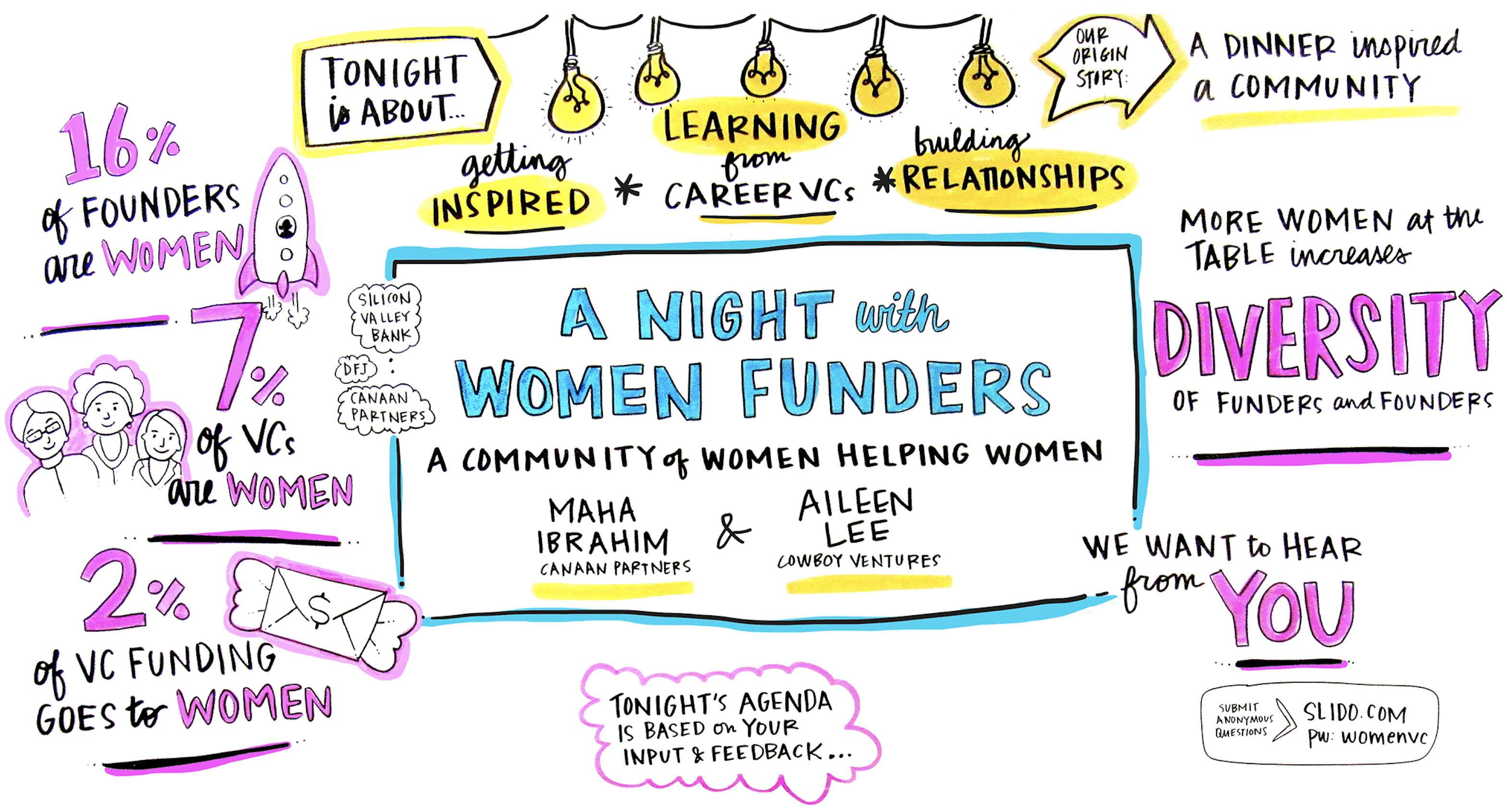
 

Promotional materials for an All Raise event in 2018

KC: What’s your goal for 2019?

PK: To bottle up and amplify this community. I think there’s a stereotype out there that women don’t help women. There is some of that that does happen in pockets, and understandably so. But there was something so special every time I interviewed and came in for the job at All Raise. I just felt this kind of warm embrace that left me thinking, where have you all been my entire life. I would attend all these meetings and just walk away with this feeling like if you had been in my career, I would have felt way less lonely, way less alone. And I would have had this network of people to go ask questions, get advice from and who could have helped me in my career.

KC: Where would you like to see All Raise in five years?

PK: I’d like to see us hitting our metrics and our goals. We have these two key initiatives, which is to double the representation of female VCs around the table in 10 years and to double the funding that’s going to woman in five years. We’ve got to keep on driving towards those goals and we’re measuring ourselves every day.

KC: Where did All Raise get all this momentum? Why now?

PK: There was a group of women who were tired of the status quo, who were looking around and seeing the headlines and said, it’s time to do something. I’ve seen the email streams, it was instantaneous, the response [Aileen Lee] got from her female peers. It’s so night and day from when I came to Silicon Valley in 1995 to now. I don’t think we’re in a moment. I think we’ve created a movement.


09 Apr 2019

Ousted Nissan chief Carlos Ghosn says ‘this is a conspiracy’ in video message

While the former CEO of Nissan and Renault Carlos Ghosn is currently in jail, his lawyer and communication team released a new video statement. The seven-minute video was shot hours before his latest arrest. Ghosn claims that there’s a conspiracy against him. “This is about back-stabbing,” he said.

“If you are listening to me through this video today, it means that I was not able to make the press conference that I planned for April, 11,” Ghosn said.

Ghosn took advantage of every minute he had before his latest arrests. He created a Twitter account, was interviewed by multiple journalists, wrote a statement and recorded this video message.

“I'm innocent of all the charges that have been brought against me,” Ghosn said. “And I'm also innocent of all the accusations that came around the charges, that are all biased, taken out of context, twisted in a way to paint a personnage of greed and a personnage of dictatorship.”

The prosecutors currently suspect Ghosn of misappropriating company funds for personal use — according to the allegations, he used Nissan funds to buy a yacht and invest in a San Francisco-based startup founded by his son.

Ghosn didn’t say anything about the latest allegations against him. Most of the video focuses on his relationship with Nissan.

“The third point that I want to tell you is that this is a conspiracy. This is not about specific events. This is not about — again — greed. This is not about dictatorship. This is about a plot. this is about conspiracy. This is about back-stabbing. That's what we're talking about,” Ghosn said.

According to him, Nissan executives wants more autonomy for the car manufacturer. Ghosn thinks they feared Nissan would be deeply integrated with Renault. He also claims that he’s always been defending the autonomy of Nissan.

“Finally, what I would like to say is that my big hope, my biggest wish is to have a fair trial,” Ghosn said.

This video message has been released days after his arrests. It feels like Ghosn’s team is running a campaign to improve his chances for his trial. Carlos Ghosn’s wife Carole Ghosn has also given interviews over the last few days, pleading with the French government to intervene.

09 Apr 2019

India’s Cashfree raises $5.5M from Korea’s Smilegate, Y Combinator and others

Cashfree, an India-based startup that specializes in making corporate banking services more accessible and easier to use, has closed a $5.5 million Series A round.

The deal is led by Korea’s Smilegate Investment with participation from Y Combinator, the U.S. accelerator program that Cashfree graduated from in 2017. The startup previously raised an undisclosed seed round from investors that include former UK Finance Minister George Osborne, and Vellayan Subbiah, who was previously managing director of Cholamandalam Investment, both of whom joined this new round.

Founded in 2015 by Reeju Datta and Akash Sinha, Cashfree started out as a payment gateway before it pivoted to tackle the more pertinent issue of moving money in India. Today, its service is used by more than 12,000 businesses to disperse bulk transfers for things like vendor payments, wages, reimbursements, refunds, and more. Those customers include recognizable names like Xiaomi, Tencent, Zomato, Cred, Club Factory, ExxonMobil and Dunzo, the concierge service backed by Google.

“While developing the payment gateway, we realized there are a lot of problems operating corporate bank accounts in India, especially when you have to handle a lot of transfers on a daily basis,” Datta told TechCrunch in an interview.

Cashfree helps its customers to connect their corporate banking services via a single interface. Aside from enabling disbursements to bank accounts, via India’s UPI system or to wallet accounts like Paytm, the system allows analysis, such as calculating top vendors, aggregate payouts and other business intelligence that would take hours of manual work using corporate bank services.

Datta said the company currently processes $4.5 billion annual recurring volume. That’s not take-home revenue — Cashfree makes its money on a per transaction basis — but he said it is profitable and has been since it graduated YC 18 months ago.

The current thesis is to work with banks rather than against them, Datta explained, but there’s always the potential that Cashfree itself might offer banking services. Right now, that isn’t possible — Datta said Cashfree will need to “wait for the regulatory climate to clear up” — but it isn’t beyond the scope of possibility that it could emerge as a challenger bank in the future. Beyond clearer regulation, “a couple more fundraises” might be necessary for that evolution, the Cashfree co-founder added.

Still, Cashfree will use this new money to double down on its banking services — those that attached to banks, that is — with a new solution with increased integrations set to ship to customers soon. It is also building up its presence in Delhi and Bombay, where it has begun hiring business development teams to expand its work.