Category: UNCATEGORIZED

29 Mar 2019

Apple cancels AirPower product, citing inability to meet its high standards for hardware

Apple has canceled the AirPower product completely, citing difficulty meeting its own standards.

“After much effort, we’ve concluded AirPower will not achieve our high standards and we have cancelled the project. We apologize to those customers who were looking forward to this launch. We continue to believe that the future is wireless and are committed to push the wireless experience forward,” said Dan Riccio, Apple’s senior vice president of Hardware Engineering in an emailed statement today.

After a delay of over a year since it was first announced in September of 2017, the AirPower charging mat has become something of a focal point for Apple’s recent habit of announcing envelope tickling products and not actually shipping them on time. The AirPods, famously, had a bit of a delay before becoming widely available, and were shipped in limited quantities before finally hitting their stride and becoming a genuine cultural moment.

AirPower, however, has had far more time to marinate in the soup of public opinion since it was announced. Along with recent MacBook keyboard troubles, this has functioned as a sort of flash point over discussion that something isn’t right with Apple’s hardware processes.

Everything I’ve personally heard (Apple is saying nothing officially) about the AirPower delay has been related to tough engineering problems related to the laws of physics. Specifically, I’ve heard that they ran too hot because the 3D charging coils in close proximity to one another required very, very cautious power management.

Obviously, it would do Apple very little good to release a charging mat that caused devices to overheat, perhaps even to the point of damage. So, it has canceled the project. If you know more about this, feel free to reach out, I’m fascinated.

There have been other scenarios where Apple has pushed the hardware envelope hard and managed to pull it off and ship them, the iPhone 7 Plus, its first with a twin-lens system, being one that jumps to mind. Apple had a fallback plan in a single-lens version but at some point had to commit and step off a ledge to get it done in time to ship — even though knowing they still had problems to solve. Apple has done this many times over the years, but has managed to ship a lot of them.

AirPower, however, was the other kind of case. The project was apparently canceled so recently that boxes of the new AirPod cases even have pictures of AirPower on them and the new AirPod sets have mentions of AirPower.

This is a very, very rare public mis-step for Apple. Never, throughout the discussion about when AirPower might be released, did the overall trend of the discussion lean toward “never.” That’s a testament to the ability of its hardware engineering teams to consistently pull of what seems to be nearly impossible over the years. In this case, it appears that the engineering issues have proven, at least at this point, insurmountable.

The fact of the matter is that hardware is, well, hard. The basic concepts of wireless charging are well known and established, but by promising the ability to place multiple devices anywhere on a pad, allowing them to charge simultaneously while communicating charge levels and rates Apple set its bar incredibly high for AirPower. Too high, in this case.
29 Mar 2019

20 years for swatter who got a man killed

Tyler Barriss, a prolific and seemingly unremorseful repeat swatter and bomb hoaxer whose fakery got a man killed in 2017, has been sentenced to 20 years in prison. This hopefully closes the book on a long and disturbing career of random and mercenary harassment and threats.

Not to linger on the crimes committed by Barriss, but to refresh your memory: Barriss accumulated dozens of charges generally relating to calling in fake threats in order to get police or SWAT called to a location or shut it down. Among his bomb threat targets was the FCC, which had to clear the room during a major net neutrality vote because of a call Barriss had made.

Nearly at the same time, as part of a conflict relating to a $1.50 Call of Duty bet, he had called the police claiming he was armed and had shot his father, and was at an address in Kansas, where he thought his target lived. Unfortunately the target had moved well before, and when the police showed up, they shot and killed the current resident, Andrew Finch.

Barriss was arrested in early 2018 and pleaded guilty to 51 various charges, facing up to 25 years in prison. The sentencing today reflects the defense’s plea that he get 20 instead, no doubt in return for cooperation and the guilty plea.

It should not go unnoted here that Finch was unarmed and on his own doorstep when police killed him — with an assault rifle — reportedly because “he was reaching for his waistband.” Apparently the officer also “believed he saw a gun come up in Mr Finch’s hands.” Well, which was it, up or down? Was he reaching for the gun or raising it? Is it common for Wichita police to shoot someone within seconds of them answering the door, without assessing the situation — for instance, where the children are? As is sadly often the case in such shootings, the police are entirely without credibility here, and the officer involved seems to have faced no consequences. Justice seems out of the question, but the family has filed a lawsuit over the matter.

If the police weren’t already considered a serious danger to others, swatting wouldn’t be a thing. The chance that police will escalate is highly unpredictable, though of course being a person of color adds considerably to that risk, as a fraudulent gun in the call will cause the police to hallucinate weapons with even greater frequency than usual.

The whole case is sad and depressing, from the astonishing pettiness of Barriss and his associates to the total lack of concern over the consequences of his actions — extending, it seems, even to his prison term: he has been in before and attempted to get online and continue his hoax habit even while incarcerated.

Barriss, it seems, is a symptom of internet culture less extreme but as inevitable as the Christchurch killer. All the worst parts about being online rolled into one and given form — and means to kill. Here’s hoping we find a way to reverse the trend.

29 Mar 2019

Viacom-owned kids streaming service Noggin acquires educational app Sparkler

Viacom’s Nickelodeon is doubling down on the educational aspects of its preschooler-focused streaming service, Noggin, with the acquisition of the early childhood learning platform Sparkler. Announced on Friday, the deal will see Sparkler’s technology integrated into Noggin over the next year, and makes Sparkler’s co-founder and CEO Kristen Kane the new head of the Noggin streaming service.

Deal terms were not disclosed.

Kane founded Sparkler after previously working as the founding COO of educational technology company Amplify. Prior to that, she also served as COO of the New York City Department of Education during the Bloomberg administration, and spent time working at the FCC where she led development of strategies for applying broadband technologies in the education, healthcare and energy sectors.

With Sparkler, the company had been developing a different type of early learning platform that measured a child’s progress in order to offer personalized content and coaching for parents, along with other tools that allowed parents, teachers, or caregivers to help engage the child through learning activities both on and off-screen.

As a part of its efforts, Sparkler was working with schools, healthcare providers, and social service providers. Those relationships will continue through a new non-profit called Sparkler Learning.

Meanwhile, Sparkler’s core technology will be integrated into Noggin, offering a similar ability to personalize Noggin’s content and allow parents to track and support their child’s progress through “playable content and experiences,” both in the app and in the real world.

The acquisition represents a further expansion of Noggin’s educational aspects beyond its original focus on offering subscription-based streaming of kids’ TV.

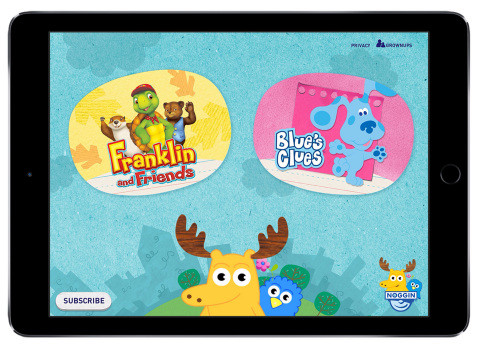
First launched in 2015, the idea was to allow Viacom to capitalize on some of its less popular kids’ programming – like Allegra’s Window, Blue’s Room, Franklin and Friends, Gullah Gullah Island, Miss Spider’s Sunny Patch Friends, Oswald, Pocoyo, Robot and Monster and The Upside Down Show by using a few of its more well-known series – like Blue’s Clues, Little Bear and Ni Hao, Kai-lan – as the draw.

Over the years since, Noggin expanded to include Nickelodeon’s current programming, like PAW Patrol, Peppa Pig, Bubble Guppies and others, and added classics like Dora the Explorer, Umizoomi, and Yo Gabba Gabba! The expansion made it a more well-rounded service.

Today, Noggin features over 1,500 full-length episodes, short form videos, Spanish-language videos, and music videos.

A couple of years ago, Noggin took its first steps into offering more educational content with the addition of curriculum-based “play along” videos. These new, interactive videos asked kids to touch, tap, swipe or speak to move through the storylines.

The concept was based on the work originated by the Children’s Television Workshop, which found that when kids participated by singing or talking, they retained more of what they learned. That work had also previously led to Nickelodeon’s development of TV shows like Blue’s Clues and Dora the Explorer, among others, which further standardized the practice of interactive television, by having the show’s characters speak directly to the viewing audience and ask the children questions.

Noggin’s focus on its educational aspects – instead of just competing as a “Netflix for kids” –  helped it succeed. The app now regularly ranks highly in the Kids and Family categories on the App Store, and is a Top 10 Kids app on the free charts. It’s also the number one grossing app for Music and Video in the Family Category on Google Play.

As a result of the deal, Kane will serve in the new role of Noggin’s Executive Vice President, and will oversee the integration of Sparkler’s technology into the app. She will also drive Noggin’s strategy and next phase of development as an educational digital platform, Nickelodeon says.

Kane will be based in New York and report to Nickelodeon President Brian Robbins.

“Pairing Sparkler’s capabilities with our curriculum-driven content will fully transform Noggin into a premier interactive learning destination for preschoolers and their families,” said Robbins, in a statement. “Kristen brings extensive experience in the education and technology space, and she will help drive Noggin’s growth with an increased focus on delivering even greater value to our direct-to-consumer service,” he added.

Sparkler’s website has already shut down, but you can read its archives here.

The startup had previously received a small grant by winning the NewSchools Ignite Early Learning (PreK-2nd Grade) Challenge as part of its accelerator program.

29 Mar 2019

1stdibs, the high-end online marketplace, just nabbed $76 million Series D financing

1stdibs began pushing the antiques business into the 21st century long ago. Apparently, investors think it can it can push further and faster with $76 million in new funding. That’s how much the now-18-year-old, New York-based company says it just closed on for its Series D round, led by T. Rowe Price Associates,  with participation from earlier backers Index Ventures, Benchmark and Spark Capital.

The company now boasts a valuation of well over $500 million, it tells the WSJ.

1stdibs has always been an interesting startup, one that’s both loved by the antiques dealers who use it, and, apparently, feared. When in 2016, 1stdibs became heavier-handed about enforcing the commissions from each sale on its platform and on which it relies for revenue, more than 30 dealers reportedly met at a design store in lower Manhattan to grouse about the development, complaining that the company had begun prizing revenue growth over its relationships.

Of course, with venture-capital funding — and the company has now collected $170 million altogether — comes expectations. And despite pushback from dealers, they’ve apparently stuck with the platform, which says an average of 50 items that sell for more than $5,000 take place on its platform daily, and that 15 of these are items that sell for more than $10,000. (A quick scan suggests a very wide range, with many items priced at $5,000 or less, but plenty with far richer price tags, like a three-carat ruby and diamond ring available right now on the site for a cool $200,000,  and a chandelier dating back to roughly 1870 and available right now on the site for more than $300,000.)

With venture funding comes competition, too. Indeed, though 1stdibs may be the doyen of the online antiques market, other, newer companies have since emerged on the scene, many of which have also since raised venture funding and are also growing fast, including The RealReal, which was founded in 2011 and sells antique jewelry, home furnishings, and clothing, and is reportedly weighing a public offering; and Chairish, founded in 2013, which sells vintage and used decor. Chairish has raised just $16.7 million from investors to date. The RealReal has raised $288 million.

Indeed, a fight for brand recognition may ultimately lead 1stdibs to follow in the footsteps of a growing number of formerly online-only marketplaces that are now extending their reach into the offline world.

Though the company already has a New York location, in the Terminal Stores building in New York, block-long, late-19th-century warehouse, CEO David Rosenblatt tells the WSJ that using its new funding, more brick-and-mortar showrooms may be in its future.

29 Mar 2019

How a Google side project evolved into a $4B company

How did Niantic happen? How did the company behind Pokémon GO and (soon) Harry Potter: Wizards Unite come to be?

When anyone talks about Niantic, they generally mention that it’s “a Google spinout” and move on. As if that’s something that just happens every day. That dozens of people within a massive company come together, build something… and then just leave and take their work with them to form a new, independent company that goes on to have a valuation of nearly 4 billion dollars.

So… how?

Over the last few weeks, I’ve interviewed dozens of people involved with Niantic’s story so far, including investors, executives, and employees past and present. I wanted to figure out the hows and whys of Niantic’s origins, what others might be able to learn from the company’s story so far, and where the company is going in the future.

The reading time for this article is 18 minutes (4,400 words)

The Keyhole into Google

“I started at Google with this idea that I’d be there for six months,” Niantic CEO John Hanke tells me.

We’re in a conference room at Niantic’s office, which takes up much of the second story of San Francisco’s Ferry Building. John’s wearing what I’ve come to realize is something of a daily signature for him: a T-shirt (often Niantic branded) beneath an unbuttoned blue dress shirt. His hair swoops forward and hangs just above his eyes. He’s laid back, but his words are very deliberate and still ring with the slightest hint of his Central Texas hometown.

“The whole time I was there,” he continues, “it felt like I’d be there for another six months. It just turned into 10 years.”

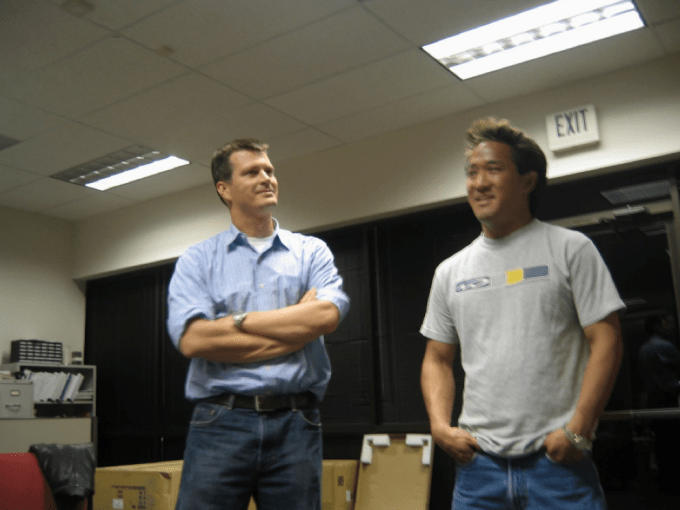
Keyhole’s John Hanke (left) and Chikai Ohazama (right) the day the Google acquisition closed in 2004. Photo by Brian McClendon

John started at Google in 2004 when it acquired his startup, Keyhole. Keyhole was a spin-out of sorts, too, growing its way out of a company called Intrinsic Graphics.

Intrinsic had set out to build a cross-platform video game engine – think Unity, but a decade and change too early. Along the way, the team at Intrinsic had built a demo that allowed users to zoom in and out of a wildly detailed view of the Earth. Like an interactive version of Powers of Ten, the user could parachute from a sprawling view of the entire globe all the way down to a bird’s eye view of their home with the flick of a mouse wheel. It was just a demo, but it was a very, very good one. Everyone seemed to care more about that demo than anything else Intrinsic was building.

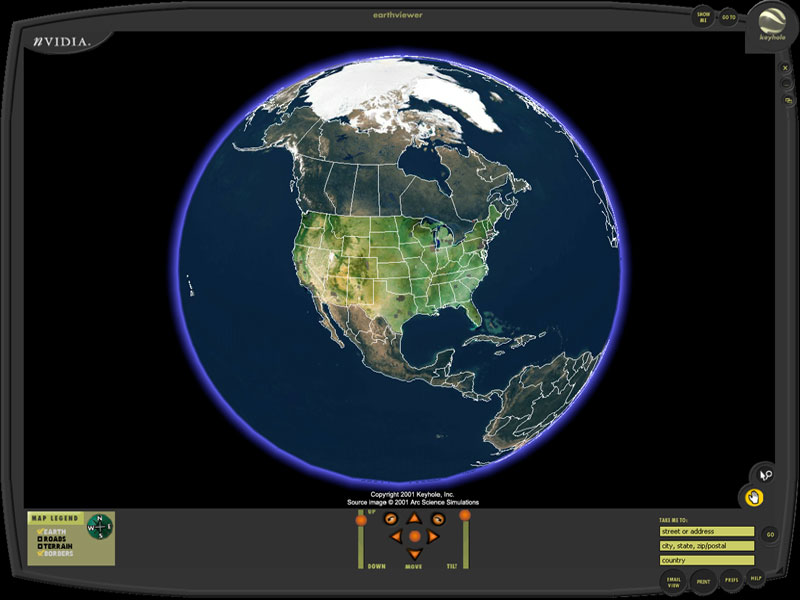
Keyhole’s Earth Viewer, circa 2002

Intrinsic hired John to build this demo into something more. When Intrinsic shut down operations in 2003, John and a handful of employees kept charging forward under the Keyhole name.

Keyhole never made a ton of money. A deal with CNN and an investment from In-Q-Tel (a venture capital firm backed by the CIA) kept it moving, but the ex-Keyhole folks I’ve talked to are pretty open about the company having danced on the edge of broke more than once before Google swooped in and bought it in 2004.

Keyhole’s earth viewer lives on to this day, of course. It’s just called Google Earth now.

John Hanke being lifted up by his colleagues at a Google party a few months post-acquisition. Photo by the late Andria Ruben McCool, used with permission from her family.

Quitting Google to join … Google?

Flash forward to October of 2010, just a few months before the team that would become Niantic started to form. John’s intended “six months” at Google had just clicked over to its sixth year. He had spent that time leading Google’s Geo division — that’s Google Earth, Google Maps, and just about anything else that had to do with location. If you were typing a street address into something Google-branded, it was probably in a product John oversaw.

29 Mar 2019

The Niantic EC-1

Few software companies have transformed the way we think about moving through physical space like Niantic . The creators of Pokémon GO and soon Harry Potter: Wizards Unite, Niantic has become an incredible unicorn success story, with a reported valuation of nearly $4 billion. One part AR, one part gaming, one part location, and many parts fun, the company has been brilliant in executing on an original product vision for what the future of our devices — and us — will be.

But the company didn’t start that way of course. Rather, the path to its present day success began almost two decades ago when a couple of engineers and product types came together to build the technology that would eventually power Google Earth. From those humble beginnings — and many learnings in between — did a might company grow.

Last month, we launched our first ever EC-1 focused on Patreon. The goal with each EC-1 is to provide a multi-angle lens to understand why certain startups have been successful. How do they think about product? What was their business strategy? How did they learn early on to build a durable and rapidly growing company?

Through extensive interviews and research, an EC-1 acts as a case study for entrepreneurs and startup executives to learn from a company’s journey as well as a thorough analysis for industry observers and public market investors eager to understand the next big companies.

TechCrunch editor Greg Kumparak wrote this EC-1. He has covered Niantic for years, and conducted many hours of interviews with Niantic’s executive team exclusively for this report.

Niantic had no say in the content of this analysis and did not get advanced access to it. Kumparak has no financial ties to Niantic or other conflicts of interest to disclose.

The Niantic EC-1 is comprised of four main articles and a bonus reading guide. Unlike with Patreon, we are going to experiment with a staggered release schedule, with part one released today and parts 2-4 and the reading guide coming over the next two weeks.

  • Part 1: How a Google side project evolved into a $4 billion company (4,400 words / 18 minutes) — The long and at times turbulent founding story of one of the most successful spinouts in software history.
  • Part 2: Pokémon GO and the April Fools’ joke that made billions (coming soon)
  • Part 3: Harry Potter and the future of Niantic (coming soon)
  • Part 4: What has Niantic learned from Pokémon GO and everything else it has built so far? (coming soon)

Niantic is a startup, and so are we here at Extra Crunch. Let us know your feedback! Let us know what you liked, what you didn’t, and what companies you think we should look at next. You can reach the author Greg Kumparak at greg@techcrunch.com and Extra Crunch Executive Editor Danny Crichton at danny@techcrunch.com.

29 Mar 2019

Daily Crunch: Lyft debuts on Nasdaq

The Daily Crunch is TechCrunch’s roundup of our biggest and most important stories. If you’d like to get this delivered to your inbox every day at around 9am Pacific, you can subscribe here.

1. Lyft prices IPO at top of range

Lyft raised more than $2 billion Thursday afternoon after pricing its shares at $72 apiece, the top of the expected range of $70 to $72 per share. This gives Lyft a fully diluted market value of $24 billion.

The company is debuting on the Nasdaq stock exchange today, trading under the ticker symbol “LYFT.”

2. How Apple Card works

Overall, the Apple Card has some relatively unique and interesting takes on data transparency for users, who are getting what appears to be an information-rich — but easy to interpret — interface, along with a solid set of security features.

3. Huawei books $8.8B profit for 2018 as consumer devices become top moneymaker

Despite an ongoing tussle with the U.S. government, signs look positive for Huawei. The Chinese firm just released its end of year report for 2018 and profit is up 25 percent to 59.3 billion CNY, or $8.84 billion, thanks to its fast-growing smartphone and devices business.

4. Daimler Trucks buys a majority stake in self-driving tech company Torc Robotics

The companies said that the partnership will see Torc working with Daimler Trucks’ developers to move into the trucking market, while maintaining the Torc name, team and facilities.

5. Facebook launches searchable transparency library of all active ads

Facebook’s Ads Archive that launched in May 2018 previously only included ads related to politics or policy issues, but now shows all active ads about anything.

6. Sinemia says canceled accounts are defense against subscriber misuse

A new statement says the company conducted “a detailed fraud and misuse detection analysis earlier this month,” and has removed around 3 percent of accounts due to “misuse or fraudulent activity” since the beginning of March.

7. Snap CEO’s sister Caroline Spiegel starts a no-visuals porn site

The 22-year-old college senior tells TechCrunch that on April 13th she’ll launch Quinn, which she describes as “a much less gross, more fun Pornhub for women.”

29 Mar 2019

Lyft pops 21% on its first day of trading on Nasdaq, after raising $2.2B in its IPO at a $24B valuation

Ride-hailing startup Lyft may bear the distinction bearing highest net loss of any maiden public company ever going public, but despite that, it made its debut in a high gear this morning in. Trading as LYFT on Nasdaq, the company’s shares opened at nearly noon today at $87.24, a pop of 21 percent on the $72/share figure the company set last night, when it raised $2.34 billion from investors, valuing the company at $24 billion.

Expectations for how Lyft would do had already been high, after the company priced at the high end of its range of $70-72, which itself was an increase on the range it had set the prior week, a sign of strong demand from investors during its roadshow.

Lyft’s performance so far is a significant next chapter for the company and sets the stage for what to expect from other “gig economy” businesses when they go public — and notably, what we might expect from Uber, Lyft’s larger direct competitor.

(Indeed, Lyft’s strong showing is the first big tech IPO of the year, although many expect that it won’t be the last. In addition to Uber, among the tech startups expected to go public this year, Pinterest has also filed paperwork in recent weeks, and others like Slack and potentially Airbnb are also expected to be coming down the pike.)

The bigger question will be how Lyft handles the markets longer term, whether it continues to rise or faces the “Snap” effect.

Lyft is riding into Nasdaq fuelled by some very strong metrics. As a private startup, Lyft had raised $5.1 billion from a wide range of investors that include the likes of VCs like Andreessen Horowitz, as well as many strategics like Google, Rakuten and Didi, with its valuation climbing as high as $15 billion (note significant up-valuation with IPO).

Its 2018 revenues of nearly $2.2 billion are some of the highest-ever of any company ever going public (Google and Facebook have had  the two highest ever). The company took $8.1 billion in bookings last year on strong growth, and its network covers 30.7 million riders and 1.9 million drivers.

All encouraging numbers, except for some minor details. The first is that Lyft has yet to actually make a profit. It lost $911 million in 2018, the highest net loss for any company ever going public. With the company still in high-growth mode, it will continue spending to woo more riders and drivers and pick up more market share, and investing in new services and technology to augment its business in the future. In other words, on its current course, profits won’t come soon.

The second minor detail might also throw a spanner into Lyft’s engine: there are still many question marks hanging over how these services will grow relative to other macroeconomic forces, and specifically how government regulation will impact that. As one pre-emptive move to appeal (or appease) on that front, Lyft today also announced a new initiative it calls City Works, where Lyft will donate $50 million, or one percent of profits — whichever is larger — towards city transportation initiatives, beginning with Los Angeles.

In any event, this IPO is a way for the company to continue raising even more capital to fill up the tank to ride out and overtake all those challenges, while giving existing investors a chance to cash out on the growth so far — banking on the premise that there will be more investors willing to buy into the long-term promise that all of this will come good, and into the black, in the end.

There’s a lot riding on that pink moustache.

29 Mar 2019

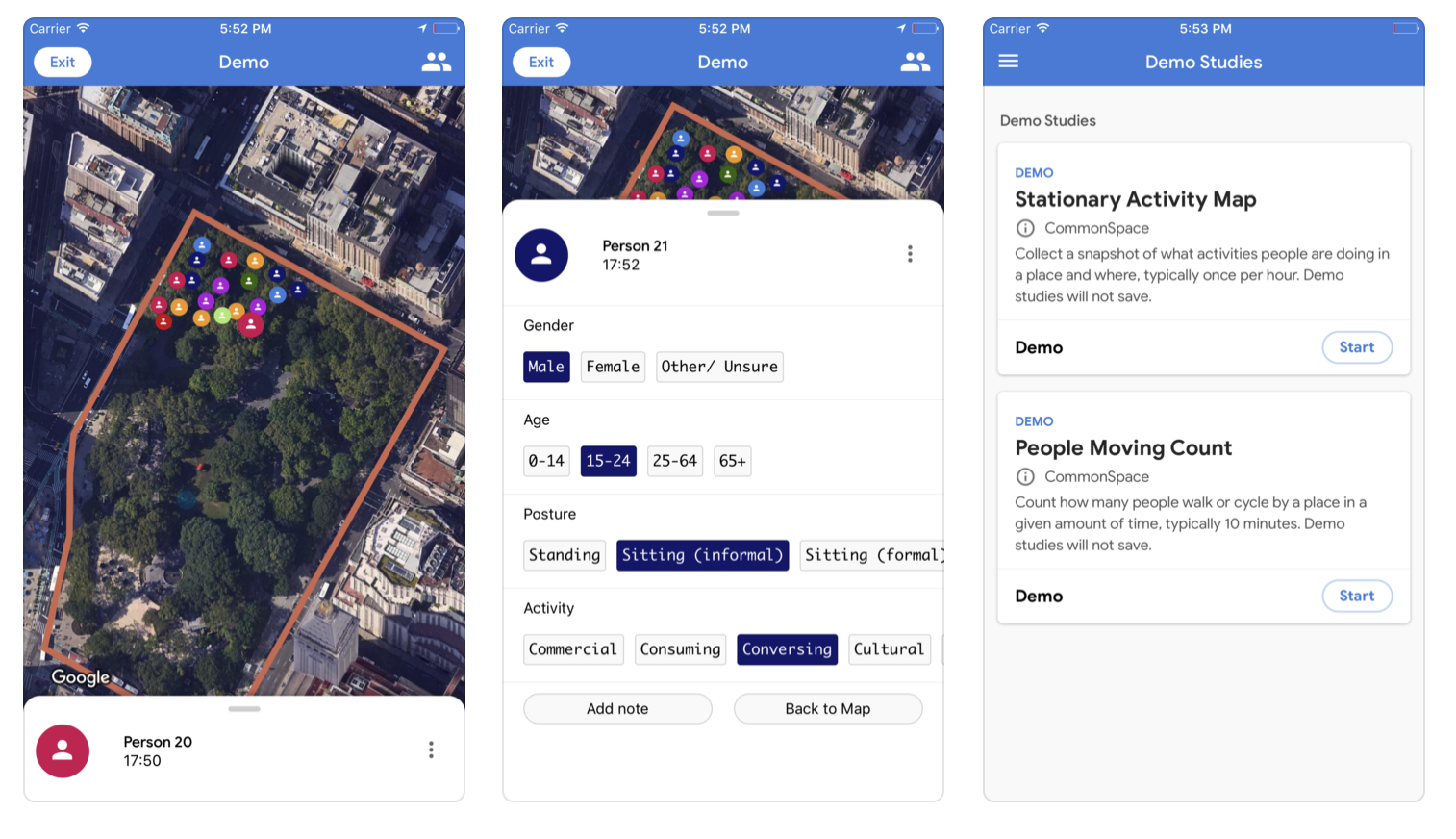
Sidewalk Labs launches an app to crowdsource public space surveys

Alphabet’s urban planning subsidiary announced today the launch of CommonSpaces. The new app was created to give park operators and community members a place to enter and organize observations about parks and other publics spaces.

Interested parties can create a web portal for a space. The organizer defines the parameters of a study, outlining what sort of data they’re looking to collect, and users are then given shifts to go about recording data. The goal is discover how people utilize various public spaces, information that can be used to determine future changes.

“The app records data in accordance with the Public Life Data Protocol, an open data standard (published by the Gehl Institute and founding municipal and private partners) that makes it possible to compare data from public spaces,” Sidewalk senior engineer Ananta Pandey says in a blog post. “The data collected with CommonSpace can be easily exported into visualization and analysis tools that communities and space managers alike can use to see patterns, generate insights, and develop evidence-based approaches to advocating for change.”

For obvious reasons, Sidewalk is quick to note the privacy parameters it set up for the app. The company says it’s adhering to Privacy by Design, and won’t be collecting any personal information about bystanders who are observed for CommonSpaces.

After being piloted at a Toronto park in Fall of last year, the app is now available for both Android and iOS.

29 Mar 2019

Focaldata thinks it has some answers for campaigners in the age of Trump and Brexit

Political parties, campaigns, and brands can’t get an accurate and cost-effective understanding of opinion in small geographic areas, like the constituencies of lawmakers. This is a big problem in political campaigning. And all political campaigning now has a huge online element, as we know. We also know political turbulence is one of the defining themes of our age.

But one thing is clear. All the players want faster, cheaper, more accurate and a more granular understanding of consumers and voters. In the age of AI, survey predictions are influenced as much as so many other machine-learning technology products.

Focaldata is a UK-startup that thinks it has some of the answers to these quandaries. Their integrated consumer analytics and survey workflow application claims to give customers a more accurate and granular picture of consumers than traditional polling using machine learning. At the same time, they say their workflow software cuts down on the cost and time market research takes.

The idea is that they employ a new machine learning based technique (MRP) to generate survey ‘results’. This new methodology can use more information (such as old survey data or public statistics) than conventional methods, which lets them get accurate predictions in small geographic areas from the same sample sizes.

Founder Justin Ibbett had done MRP manually on his laptop a few times for some existing market research firms and realized how fiddly it was. “I felt a dedicated software application would reduce the complexity whilst making the results more accessible and useful- our early incarnations just delivered a spreadsheet!” he told me.

Much of Focaldata’s business has been in politics. They have worked with the pro-Remain group Best for Britain and the anti-Racism charity Hope not Hate on combating Far Right sentiment. However, most demand is now from large brand owners, such as ABInBev, a recent client.
They now have over 10 paying clients including big brands like M&C Saatchi.

Competitors include YouGov, Survation, Dalia Research (a Balderton-backed company), and standard market research agencies like Kantar, Ipsos Mori.

But against traditional agencies, Ibbett says their ML-based data processing engine sets them apart, allowing them to go very granular and get more accurate over time.

The market research market is £5bn in the UK alone (PwC report, 2016) and global market research is a $40bn market.

The startup has raised a £1.1m seed round from notable UK angels including Alex Chesterman, founder of Zoopla and Martin Bolland, founder of Alchemy Partners. Previously they had raised a small pre-seed round from 3 other angels, including Xen Lategan (backer of Magic Pony and ex-Google, former CTO of News International)

CTO and co-founder Calvin Dudek was at Google for 5 years as a product manager, and ran Data Science Innovation at the DWP. Chief Data Scientist Takao Noguchi is a cognitive scientist.