Category: UNCATEGORIZED

27 Mar 2019

Before breaking up with Shopify, Mailchimp quietly acqui-hired LemonStand, a Shopify competitor

Here’s an interesting twist on the story from last week about the break-up between Shopify and Mailchimp, after the two said they were at odds over how customer data was shared between the two companies. It turns out that before it parted ways with Shopify, Mailchimp had quietly made an acquisition of LemonStand, one of the e-commerce platform’s smaller competitors, to bring more integrated e-commerce features into its platform.

After news broke of the rift between Mailchimp and Shopify, rumors started to circulate among people in the world of e-commerce about Mailchimp buying Vancouver-based LemonStand, which had announced on March 5 that it was shutting down its service in 90 days, on June 5, without much of an explanation why.

We were tipped off on those rumors, so we contacted Ross Paul, LemonStand’s VP of growth and an investor in the startup, who suggested we contact Mailchimp. (Paul now lists Mailchimp as his employer on his LinkedIn profile.) Mailchimp confirmed the deal, describing it as an acqui-hire, with the team now woking on light e-commerce functionality.

“Mailchimp acqui-hired the team behind LemonStand at the end of February,” Mailchimp said in a statement provided to TechCrunch. It did not provide any financial terms for the deal.

Mailchimp — which is privately held and based in Atlanta — said it made the acquisition to provide more features to its customers, specifically those in e-commerce.

“Mailchimp helps small businesses grow, and our e-commerce customers have been asking us to add more functionality to our platform to help them market more effectively,” the company said in a statement. “The LemonStand team is helping us build out our e-commerce light functionality.”

But Mailchimp is clear to say that its acqui-hire was not related to ending its relationship with Shopify.

“Our decision to discontinue our partnership with Shopify last week is unrelated to LemonStand,” Mailchimp said. “Shopify knew we were working on e-commerce features long before we hired the LemonStand team. In fact, we launched Shoppable Landing Pages last fall in partnership with Square, and Shopify chose not to partner with us on the launch.”

But even if the LemonStand deal is not related to its rift with Shopify, the acquisition of one and the breakup with the other both point to the same thing: the growing role of Mailchimp’s e-commerce business.

The company — which provides email marketing and other marketing services to business — has been slowly building a revenue stream in e-commerce by integrating a number of features into its platform to let its customers, for example, sell items as part of the marketing process. These are less about building full check-out experiences or commerce backends, but for offering, say, one-off sale items as part of a particular promotion or campaign.

Last year, when Mailchimp launched those new shoppable landing pages with Square, it said that 50 percent of its revenues were now coming from e-commerce, with its customers selling more than $22 billion worth of products in the first half of 2018. Mailchimp made some $600 million in revenue in 2018, which — if its 50 percent e-commerce figure remained consistent — meant that it made $300 million last year just from e-commerce-related services.

The Square partnership is instructive in light of this acquisition. While Mailchimp is indeed building some native e-commerce features for its platform, it will continue to work with third parties (if not Shopify, the biggest of them all) to provide other functionality.

“We believe small businesses are best served when they can choose which technology they use to run their businesses, which is why we integrate with more than 150 different apps and platforms including e-commerce platforms,” Mailchimp said in its statement to TechCrunch.

“We’re not trying to become an e-commerce platform or compete directly with companies like Shopify,” it added, “and we think that adding e-commerce features in Mailchimp will help our e-commerce partners. Companies will be able to start their businesses with Mailchimp and have a seamless experience, and eventually use Mailchimp along with one of our e-commerce partners.”

27 Mar 2019

Lyft increases IPO price

Lyft, expected to hit to public markets in a landmark initial public offering Friday, has increased its share price range. In a new filing published Wednesday afternoon, the company outlined plans to charge between $70 and $72 per share.

In an amended IPO prospectus filed last week, the company said it would sell 30.7 million shares at between $62 and $68 a piece. Following high demand from Wall Street — its IPO was said to be oversubscribed on the second day of its roadshow — Lyft has opted to ask for more from its public market investors.

If Lyft sells 30.7 million shares at $72 apiece, it will bring in more than $2.2 billion at an initial valuation north of $20 billion. Lyft was previously valued at $15.1 billion by private market investors with a $600 million Series I round in 2018.

Lyft plans to trade on the Nasdaq under the ticker symbol “LYFT.”

Updating.

27 Mar 2019

FTC smacks down robocallers, but the penalties don’t match their heinous crimes

The fight against robocallers is just getting started, and the wheel of justice turns slowly, but the FTC just took down a handful of major operations responsible for billions of unwanted calls, some of them adding additional fraud to the mix. The money coming out of the cases is surprisingly small, however — but there’s a reason for that.

In an announcement yesterday, the FTC said it had taken down four operations: NetDotSolutions, which did all kinds of marketing with a custom mass dialing platform; Higher Goals Marketing, which promised fake debt relief; Pointbreak Media, which threatened to delist companies from Google unless they paid; Veterans of America, AKA Saving Our Soldiers, AKA Act of Valor, whose creator Travis Deloy Peterson deserves a special place in hell for scamming people trying to donate vehicles to vets.

Together they accounted for some two billion calls, which in the context of the five billion made every month may seem to be a drop in the bucket, but at this point even a slight reduction is welcome.

What is less heartening is the scale of the penalties. Although the cases resulted in judgments totaling some 24 million dollars, the actual amount the scammers will end up paying will end up closer to $3-4 million. One scammer whose judgments totaled more than $5 million will be suspended when he pays just $18,332 — and whatever comes from the sale of his shiny new Mercedes.

I talked with an FTC spokesperson about why this is the case. They explained that the judgment amount is essentially a ceiling defined by how much consumer harm was done, but most times the defendants have nowhere near that much available as money or assets. You can only get as much as they have, and sometimes that’s not a lot.

Especially in Florida, they went on, where the Homestead rule means that houses can’t be seized in these proceedings — meaning a robocall scammer based in the state could make 10 million bucks, drop it all on a house, and then declare they have no assets when the FTC or whoever comes knocking. This seems likely to be the case with Mr “I only have 18 grand and a 2017 Mercedes CLS” above, who is indeed a Floridian.

The FTC goes to great lengths to investigate and enumerate a defendant’s assets, but they can’t seize what isn’t there. In the case of a large company like Dish, a massive judgment like last year’s $180 million one may end up being paid in full — but individuals and small, fly-by-night businesses are considerably harder to pin down.

Even so, the agency collects quite a bit of cash to return to affected consumers, which should happen with the money here as well. You won’t see a dime just for getting annoyed by calls, though — you’d need to show that it was one of these companies and that they defrauded you, or attempted to.

More importantly, the people and companies in question are immediately shut down and the people involved forbidden from doing anything like this again. Consumer relief is the FTC’s goal, and if they chose to litigate, the case could be drawn out for years, all while the company and call network continues to operate or develops layers of insulation against the law.

You can read the full release and order documents at the FTC’s site — but be warned it may make you angry to hear about these slimeballs living the high life.

27 Mar 2019

Mattress startup Casper said to be valued at $1.1B with new funding

Direct-to-consumer mattress business Casper has secured a $100 million Series D investment from existing investors Target, NEA and Norwest Venture Partners.

The fresh infusion of capital values Casper at $1.1 billion, Bloomberg reports. We’ve reached out to Casper to confirm the numbers.

Casper posted $373 million in net revenue in 2018, according to leaked financials published by The Information this week. The company, of course, isn’t profitable, with losses reaching $64 million last year. According to its projections, Casper will become profitable on an EBITDA basis in 2019 and is expecting revenues of $556 million this year.

Casper has previously raised $240 million in equity funding from celebrity investors Leonardo DiCaprio and 50 Cent, as well as institutional investors Lerer Hippeau and IVP.

Founded in 2014, the New York business will use the latest investment to expand overseas and open additional brick-and-mortar stores. Competing with other well-funded startups in the business of sleep, like the publicly traded Purple and the VC-backed Leesa Sleep, Casper has taken to physical retail to augment its following. The company opened its first store in New York City in 2018 and has detailed additional plans to open another 200 stores.

An initial public offering is likely the next step for the sleep products retailer, which sells pillows and an $89 sleep-friendly light, in addition to mattresses. Per a recent Reuters report, Casper is in the process of hiring underwriters for its IPO.

27 Mar 2019

How to make sure that your product is accessible to all users

Every founder wants an eye-catching website or app, but it’s easy to overlook a basic fact: not all your potential visitors will experience your content with their eyes. If you haven’t considered whether a user with differing visual, motor or hearing abilities can easily navigate your software, it’s time to get serious about digital accessibility.

As tempting as it might be to prioritize a stunning visual and mobile experience over an accessible design, accessibility is a legal requirement—not an option—for many businesses.

Just ask high-profile founder Beyoncé Knowles. In January, Beyoncé’s Parkwood Entertainment was hit with a class-action lawsuit that includes “all legally blind individuals in the United States who have attempted to access Beyonce.com.” The lawsuit claims that the site’s lack of visual alternatives make the site inaccessible to blind users like the plaintiff and therefore illegal.

Failing to accommodate people with disabilities not only limits your market (blind people buy concert tickets and merchandise too), it can also bring legal and reputational consequences.

The Americans with Disabilities Act (ADA) requires US businesses that serve the public to provide equal access and accommodations to everyone, whether through a physical building or a digital experience. Just as stores provide ramps as well as stairs, websites need to accommodate people with varying abilities, from movement disorders to visual and auditory impairments. The number of website accessibility lawsuits raised against private companies more than doubled last year. A single plaintiff won $100K in a similar ADA lawsuit in 2017.

While ADA is the enforcing legislation in the United States for the private sector, the Web Content Accessibility Guidelines (WCAG) provide de facto global standards web designers should follow. The guidelines are based on four principles: content must be perceivable, operable, understandable and robust.

If you’re not sure whether your digital content (websites, apps, e-books, etc) is WCAG-compliant, have a certified accessibility consultant conduct an assessment immediately, and contact your legal team should you identify any risks.

However, simple compliance is only the first step. Understanding how accessibility is defined will broaden your understanding of the overall user experience, so you can create better content for all users.

This article is part of Extra Crunch’s exclusive “Startup Law A to Z” series, following previous articles on employment law, customer contracts, intellectual property (IP) and corporate matters. This series is designed to provide founders the information needed to assess legal risks in the areas common to most startups.

Should you identify legal risks facing your startup after reading this or other articles in the series, Extra Crunch resources can help. You can reach out to the Verified Experts of Extra Crunch, who focus on serving companies at your stage, for further guidance in the particular issues at hand.

The Web Content Accessibility Checklist:

  • Perceivable
    • Time-based media
    • Text alternatives
    • Adaptable
    • Distinguishable (Use of color)
  • Operable
    • Keyboard accessible
    • Navigable
    • Input modalities
    • Enough time
    • Seizures and physical reactions
  • Understandable
    • Readable
    • Predictable
    • Input assistance
  • Robust
    • Compatible for various assistive technologies (Links can be programmatically determined)

Perceivable

A website must present content so that users of different abilities can perceive it. That means providing alternatives for any non-text content, like images or music.

For time-based media (audio and video), captions, content descriptions and sign language are acceptable options. 

27 Mar 2019

Digging into Apple’s media transformation

Extra Crunch offers members the opportunity to tune into conference calls led and moderated by the TechCrunch writers you read every day. This week, TechCrunch Editor-in-Chief, Matthew Panzarino, offered his analysis on the major announcements that came out of Apple’s keynote event this past Monday.

Behind a series of new subscription and media products, Apple has set the stage for one of the largest transformations in the company’s history. Matthew touches on all of Apple’s major product initiatives including Apple’s new credit card, its push into original content, its subscription gaming platform, and its subscription news service, which features Extra Crunch as one of the debut publications.

“I don’t think many of the things that Apple announced here, on an individual basis, are earth-shattering. I think it shapes up to be a really solid, nice offering for people with some distinct advantages but at the same time it’s not breaking huge molds here. I think the same thing applies across all of the offerings that they put out there.

I just felt that together, it’s solid but not scintillating and we need to see how they develop, how they launch, and then what they do with these platforms…

…Seems relatively straightforward. However, some of the stuff people have glossed over is very intriguing.”

Matthew goes into more detail on why he didn’t view the announcements as individually earth-shattering, and why he sees compelling opportunities for Apple to position its offerings as a symbiotic ecosystem. He also goes under the hood to discuss some of Apple’s overlooked competitive advantages in media and to paint a picture of how Apple’s new product lines might evolve in the long-term.

For access to the full transcription and the call audio, and for the opportunity to participate in future conference calls, become a member of Extra Crunch. Learn more and try it for free. 

27 Mar 2019

Nuro CEO Dave Ferguson at TC Sessions: Mobility on July 10 in San Jose

Autonomous delivery startup Nuro, fresh with nearly $1 billion in capital from SoftBank, is bursting with ideas — as some recent patent filings (and our recent deep dive into the company) suggest. And we can’t wait to learn more about what Nuro has planned.

It’s only fitting that Nuro co-founder and CEO Dave Ferguson is our first announced guest for TechCrunch’s inaugural TC Sessions: Mobility, a one-day event on July 10, 2019 in San Jose, Calif., that’s centered around the future of mobility and transportation.

Ferguson has been working on robotics and machine learning for nearly two decades and is an early pioneer of self-driving vehicle technology. He led the planning group for Carnegie Mellon University’s team that won the DARPA Urban Grand Challenge in 2007.

Ferguson holds an MS and PhD in robotics from Carnegie Mellon and a bachelor’s in computer science and mathematics from the University of Otago. He went on to become a senior research scientist at Intel and then developed machine learning trading strategies at Two Sigma, an investment firm.

Ferguson, who has been awarded more than 100 patents, eventually headed to Google’s self-driving program, now known as Waymo, serving as the machine learning and computer vision team lead.

TC Sessions: Mobility will present a day of programming with the best and brightest founders, investors and technologists who are determined to inventing a future Henry Ford might never have imagined. TC Sessions: Mobility aims to do more than highlight the next new thing. We’ll dig into the how and why, the cost and impact to cities, people and companies, as well as the numerous challenges that lie along the way, from technological and regulatory to capital and consumer pressures.

Nuro was founded in June 2016 by Ferguson and another former Google engineer, Jiajun Zhu. Nuro completed its first Series A funding round in China just three months later, in a previously unreported deal that gave NetEase founder Ding Lei (aka William Ding) a seat on Nuro’s board.

In February, Nuro hit the big leagues with a whopping $940 million in financing from the SoftBank Vision Fund, capital that will be used to expand its delivery service, add new partners, hire employees and scale up its fleet of self-driving bots. The startup has raised more than $1 billion from partners, including SoftBank, Greylock Partners  and Gaorong Capital.

Nuro’s focus has been developing a self-driving stack and combining it with a custom unmanned vehicle designed for last-mile delivery of local goods and services. The vehicle has two compartments that can fit up to six grocery bags each. Nuro’s aspirations don’t stop there.

A recent patent application details how its R1 self-driving vehicle could carry smaller robots to cross lawns or climb stairs to drop off packages. The company has even taken the step of trademarking the name “Fido” for delivery services.


Early-Bird tickets are now on sale — save $100 on tickets before prices go up.

Students, you can grab your tickets for just $45.

27 Mar 2019

Asus was warned of hacking risks months ago, thanks to leaky passwords

A security researcher warned Asus two months ago that employees were improperly publishing passwords in their GitHub repositories that could be used to access the company’s corporate network.

One password, found in an employee repo on the code sharing, allowed the researcher to access an email account used by internal developers and engineers to share nightly builds of apps, drivers and tools to computer owners. The repo in question was owned by an Asus engineer, who left the email account’s passwords publicly exposed for at least a year. The repo has since been wiped clean, though the GitHub account still exists.

“It was a daily release mailbox where automated builds were sent,” said the researcher, who goes by the online handle SchizoDuckie, in a message to TechCrunch. Emails in the mailbox contained the exact internal network path where drivers and files were stored.

The researcher shared several screenshots to validate his findings.

The researcher didn’t test how far the account access could have given him, but warned it could have been easy to pivot onto the network. “All you’d need is send one of those emails with an attachment to any of the recipients for a real nice spearphishing attack,” he said.

The researcher’s findings would not have stopped the hackers who targeted Asus’ software update tool with a backdoor, revealed this week, but reveals a glaring security lapse that could have put the company at risk from similar or other attacks. Security firm Kaspersky warned Asus on January 31 — just a day before the researcher’s own disclosure on February 1 — that hackers had installed a backdoor in the company’s Asus Live Update app. The app was signed with an Asus-issued certificate and hosted on the company’s download servers. More than a million users were pushed the backdoored code, researchers have estimated. Asus confirmed  the attack in a statement and released a patched version.

Through the company’s dedicated security email, the researcher warned Asus of the exposed credentials. Six days later, he could no longer login to the mailbox and assumed the matter was resolved.

But he found at least two other cases of Asus engineers exposing company passwords on their GitHub pages.

One Asus software architect based in Taiwan — where the company has its headquarters — left a username and password in code on his GitHub page. Another Taiwan-based data engineer also had credentials in his code.

“Companies have no clue what their programmers do with their code on GitHub,” said the researcher.

A day after we alerted Asus to the researcher’s email, the repos containing the credentials were pulled offline and wiped clean. Yet when reached, Asus spokesperson Randall Grilli told TechCrunch that the computer maker was “unable to verify the validity” of the claims in the researcher’s emails. “Asus is actively investigating all systems to remove all known risks from our servers and supporting software, as well as to ensure there are no data leaks,” he added.

Granted, this isn’t an issue limited to Asus. Other companies have been put at risk by exposed and leaked credentials or hardcoded secret keys. Last week, academics found more than 100,000 public repos storing cryptographic keys and other secrets.

Among the most famous examples of exposed credentials was Uber, in which an engineer mistakenly left cloud keys in a GitHub repository, which when discovered and exploited by hackers, was used to pilfer data on 57 million users. Uber was later ordered to pay $148 million in a data breach settlement.

But given Asus knew of the issues months ago amid a backdoor threat that affected over a million users, you would have hoped for a better, more active response.

27 Mar 2019

Ocean drone startup merger spawns SoFar, the DJI of the sea

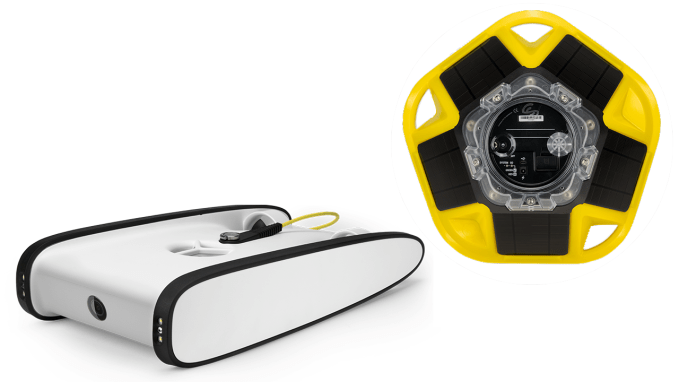
What lies beneath the murky depths? SolarCity co-founder Peter Rive wants to help you and the scientific community find out. He’s just led a $7 million Series A for SoFar Ocean Technologies, a new startup formed from a merger he orchestrated between underwater drone maker OpenROV and sea sensor developer Spoondrift. Together, they’re teaming up their 1080p Trident drone and solar-powered Spotter sensor to let you collect data above and below the surface. They can help you shoot awesome video footage, track waves and weather, spot fishing and diving spots, inspect boats or infrastructure for damage, monitor acquaculture sites, or catch smugglers.

SoFar’s Trident drone (left) and Spotter sensor (right)

“Aerial drones give us a different perspective of something we know pretty well. Ocean drones give us a view at something we don’t really know at all” former Spoondrift and now SoFar CEO Tim Janssen tells me. “The Trident drone was created for field usage by scientists and is now usable by anyone. This is pushing the barrier towards the unknown.”

But while Rive has a soft-spot for the ecological potential of DIY ocean exploration, the sea is crowded with competing drones. There are more expensive professional research-focused devices like the Saildrone, DeepTrekker, and SeaOtter-2 as well as plenty of consumer-level devices like the $800 Robosea Biki, $1000 Fathom ONE, and $5000 iBubble. The $1700 SoFar Trident, which requires a cord to a surface buoy to power its 3 hours of dive time and 2 meters per second speed, sits in the middle of the pack, but SoFar co-founder David Lang things Trident can win with simplicity, robustness, and durability. The question is whether SoFar can become the DJI of the water, leading the space, or if it will become just another commoditized hardware maker drowning in knock-offs.

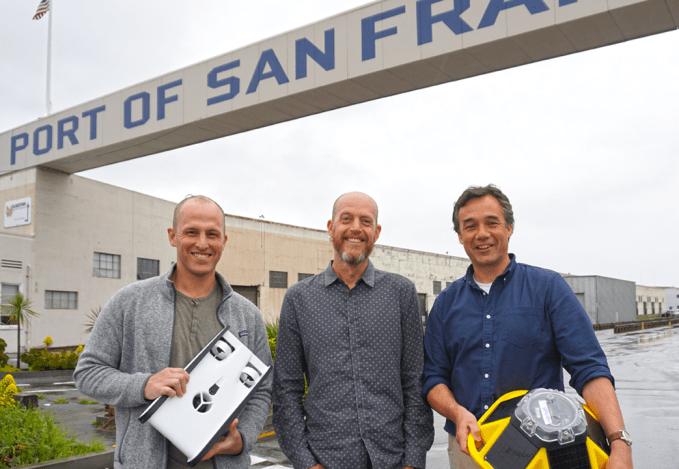
From left: Peter Rive (Chairman of Sofar), David Lang (Co-founder of OpenRov), and Tim Janssen (Co-founder & CEO of Sofar)

Spoondrift had launched in 2016 and raised $350,000 to build affordable ocean sensors that can produce climate tracking data. “These buoys (Spotters) are surprisingly easy to deploy, very light and easy to handle, and can be lowered in the water by hand using a line. As a result, you can deploy them in almost any kind of conditions” says Dr. Aitana Forcén-Vázquez of MetOcean Solutions.

OpenROV (it stands for Remotely Operated Vehicle) started seven years ago and had raised $1.3 million in funding from True Ventures and National Geographic, which was also one of its biggest Trident buyers. “Everyone who has a boat should have an underwater drone for hull inspection. Any dock should have its own weather station with wind and weather sensors” SoFar’s new chairman Rive declares.

Spotter could unlock data about the ocean at scale

SoFar will need scale to accomplish Rive’s mission to get enough sensors in the sea to give us more data on the progress of climate change and other ecological issues. “We know very little about our oceans since we have so little data because putting systems in the ocean is extremely expensive. It can cost millions for sensors and for boats” he tells me. We gave everyone GPS sensors and cameras and got better maps. The ability to put low-cost sensors on citizens’ rooftops unlocked tons of weather forecasting data. That’s more feasible with Spotter, which costs $4900 compared to $100,000 for some sea sensors.

SoFar hardware owners do not have to share data back to the startup, but Rive say many customers are eager to. They’ve requested better data portability so they can share with fellow researchers. The startup believes it can find ways to monetize that data in the future, which is partly what attracted the funding from Rive plus fellow investors True Ventures and David Sacks’ Craft Ventures. The funding will build up that data business and also help SoFar develop safeguards to make sure its Trident drones don’t go where they shouldn’t. That obviously important given London’s airport shutdown due to a trespassing drone.

Spotter can relay weather conditions and other climate data to your phone

“The ultimate mission of the company is to connect humanity to the ocean as we’re mostly conservationists at heart” Rive concludes. “As more commercialization and business opportunities arise, we’ll have to have conversations about whether those are directly benefiting the ocean. It will be important to have our moral compass facing in the right direction to protect the earth.”

27 Mar 2019

Lightspeed cofounder Chris Schaepe is over over college admissions scandal, after being exposed by sports blogger

Silicon Valley venture capitalist Chris Schaepe is out at Lightspeed Venture Partners, after telling his partners about having hired Rick Singer, the Newport Beach, Ca., businessman in the middle of the college bribery scandal.

According to Axios, which broke the news of Schaepe’s departure, Schaepe insists he didn’t knowingly participate in any bribery schemes, but that he had hired Singer to help with his son’s college admissions process, paying a hefty $176,000 for his services.

Specifically, Schaepe’s son, who’d been the manager for his high school’s basketball and football teams, aspired to attend the University of Texas and to play basketball there. In an effort to guarantee a slot, Singer made an introduction to the school’s men’s tennis coach, Michael Center, who helped secure a letter of intent for Schaepe’s son to attend the school.

The idea, suggests Axios, was to make it look like Schaepe’s son would manage the tennis team and later, as a student, manage the university’s college basketball team — which happened.

Schaepe had apparently remained quiet, but a sports blogger named Brooks Melchior seems to have forced his hand — or else Lightspeed’s. According to Axios, Schaepe hired a lawyer after reading about Rick Singer’s arrest, then informed his partners at Lightspeed about the situation and was asked to leave the firm.

As Melchior noted in a post a couple of days ago, Center was heard on a FBI wiretap confirming to Singer that he had received nearly $100,000 “in exchange for which Center would designate a student as a recruit to the (UT) tennis team, thereby facilitating his admission to (UT).”

While Center has since been fired, Melchior noted that the parent in the case involving Center was neither named nor indicted, so Melchior did some digging, obtaining a screen shot of Singer’s now-deleted website that happened to feature Schaepe son, front and center, alongside Kevin Durant and a testimonial, reading:

Hey Rick,

I wanted to thank you personally for all your help in getting me into the University of Texas in Austin, and for helping me secure a managers position with the UT basketball team. And, can you believe it, here is a picture of me with basketball star, Kevin Durrant at the UT Summer Basketball Camp.

Schaepe’s son, who began attending the school in 2015, is set to graduate next year, according to his LinkedIn profile. It further states that he is currently working at an automotive marketing company in Austin, where the school is based.

Asked for comment, Lightspeed sent us the following statement.

Lightspeed Partner Chris Schaepe recently made the firm aware of a personal matter. We determined to separate from Chris to ensure this matter does not interfere with firm operations. The matter does not involve the firm, its personnel or its portfolio companies.

Courtesy of Axios, Schaepe’s spokesperson has also released a statement, though some will presumably question it, given the sum of money paid by Schaepe to Singer.

“We are deeply disturbed that the person we had trusted to guide us through the college application process was engaged in inappropriate acts. Like countless other families, we believed that his services and his foundation were all above board, and we are shocked by his deception.”

Schaepe, who cofounded Lightspeed 19 years ago, has already been removed from the firm’s website. He’s spent the previous nine years as an investor with Weiss, Peck & Greer Venture Partners

He has  has long operated in the background, winning the

This story is developing….