Blog

04 May 2020

Formlabs gets FDA emergency use authorization for a 3D-printed ventilator conversion part

The U.S. Food and Drug Administration has awarded Formlabs an emergency use authorization (EUA) for a 3D-printed part designed to convert BiPAP machines designed for sleep apnea into much-needed ventilators. The offering was one of dozens of ventilators and accessories granted such authorization over the weekend.

The company plans to devote 150 3D printers at its Somerville, Mass. plant to producing the part, which it says it will then distribute to hospitals and local governments throughout the U.S.

“Prior to the COVID-19 pandemic, the FDA had only authorized a handful of  EUAs over a 30-year period,” CEO Max Lobovsky said in a release. “Hospitals around the country can also use Formlabs’ printers to create these adapters locally under their own practice of medicine, meaning printing the adapters at scale in the hardest-hit areas is as easy as uploading a design and pressing print.”

Formlabs is one of a number of different 3D-printing companies springing into action amid the COVID-19 pandemic. The unprecedented situation has created a number of distinct challenges for which the technology is uniquely suited. Formlabs has specifically been working on a number of solutions in recent months, including a swab designed for COVID-19 test kits. Other projects include mask shields and adapters for converting snorkel masks to PPE. 

04 May 2020

SEC loosens crowdfunding regs so small businesses can raise alternative financing in pandemic

Just like American workers are turning to crowdfunding to pay for the medical procedures that can keep them alive, the Securities and Exchange Commission is telling small businesses that everyday citizens may provide them with the lifeline that the U.S. government won’t.

After two multi-billion dollar stimulus packages which have largely failed to reach the small businesses they were ostensibly intended to support, the SEC said that it will lift restrictions related to reporting requirements and accelerate the approval of crowdfunding listings so that main street businesses and small startups can try to raise funds from speculative investors who may have cash on hand.

To be eligible for crowdfunding a company needs to provide clear disclosure to investors about the fact that it’s using the money to support itself and pay COVID-related expenses, according to the SEC’s statement.

“In the current environment, many established small businesses are facing challenges accessing urgently needed capital in a timely and cost-effective manner,” said SEC Chairman Jay Clayton, in a statement. “Today’s action responds to feedback we have received from our Small Business Capital Formation Advisory Committee and others about the difficulties these companies may face in conducting an offering within a time frame that meets pressing capital needs, while continuing to provide appropriate protections for investors.”

According to the statement, the temporary rules provide flexibility for would-be fundraisers to determine whether they’re interested in pursuing crowdfunding and exempts issuers seeking between $107,000 and $250,000 from financial statement review requirements. The temporary relaxation of the rules would expire at the end of August.

04 May 2020

Tumblr now removes reblogs in violation of its hate speech policy, not just the original posts

Tumblr is making a change to how it deals with hate speech on its blogging platform. The company announced today it will also remove the reblogs (repostings) from any blogs that were suspended for violating its policies around hate speech. Already, the company says it’s identified nearly 1,000 blogs that were banned for blatant violations of its hate speech rules. Most of these blogs contained Nazi-related content, it said. This week, Tumblr began to remove all the reblogs from these previously banned sites, as well — a number totaling 4.47M individual posts.

In an announcement, Tumblr explains its reasoning behind the decision to also remove the reblogged material:

We’ve listened to your feedback and have reassessed how we can more effectively remove hateful content from Tumblr. In our own research, and from your helpful reports, we found that much of the existing hate speech stemmed from blogs that have actually already been terminated. While their original posts were deleted upon blog termination, the content of those posts still lived on in reblogs. Those reblogs rarely contained the kind of counter-speech that serves to keep hateful rhetoric in check, so we’re changing how we deal with them.

In other words, it saw no value in allowing the hate speech to live on in this reposted state, as the majority of the reblogs weren’t engaged in providing what Tumblr referred to as “educational” or “necessary counter-arguments” to the hate speech.

When asked if it did, in fact, remove reblogs of an educational nature, Tumblr said it used human moderators to determine which content was in violation and which was not. Any blogs containing “productive counter-conversations” or “educational blogs” were not removed as part of this process, we’re told.

In addition, Tumblr says that moving forward, it will evaluate all blogs suspended for hate speech and consider mass reblog deletion when appropriate.

The company consulted with outside experts — including Center for Democracy and Technology, Brennan Center for Justice, EFF, and Stanford tech policy academic Daphne Keller —  to determine the right course of action. Ultimately, Tumblr believes the new approach is aligned with the recommended best practices around hate speech it has been advised to adopt.

“We are, and will always remain, steadfast believers in free speech. Tumblr is a place where you can be yourself and express your opinions. Hate speech is not conducive to that,” the company’s announcement read. “When hate speech goes unchecked, it eventually silences the voices that add kindness and value to our society. That’s not the kind of Tumblr any of us want.”

Tumblr also noted its decisions it’s making aren’t being left up to A.I. and algorithms. Instead, Tumblr asks users to flag hate speech they come across for review by Tumblr’s Trust & Safety team.

As expected, there’s a debate about the policy taking place in the comments of the Tumblr post about the changes. On one side are those who support the idea of companies enforcing policies around the sort of content they do not want to host. On the other, are the free speech advocates who see any such policy as a form of censorship.

The effort to take more action on hate speech follows Tumblr’s 2018 decision to ban porn from its platform after getting kicked out of Apple’s App Store for hosting the content. Similarly, hosting hate speech reblogs could cause problems with Apple’s own rules.

Tumblr has made few changes since its acquisition by WordPress owner Automattic from (TechCrunch parent) Verizon in 2019. But its earlier decisions to clean up its site have had a negative impact on its traffic.

Its significantly devalued price point at the time of the Automattic deal was attributed to its decision to remove NSFW content. Almost every meaningful metric was down year-over-year since the ban, including total visitors, uniques, average site visit, traffic, daily active users, and more. Meanwhile, the younger demographic who used to populate Tumblr in the millions have largely moved on to expressive, video-centric social platforms, like TikTok and Twitch.

Tumblr’s Community Guidelines haven’t been updated to include its decision to remove reblogs of hate speech, but its full hate speech rules can be viewed here. 

04 May 2020

All product creators can learn something from Jackbox Games’ user experiences

During this period of shelter-in-place, people have had to seek out new forms of entertainment and social interaction. Many have turned to a niche party series made by a company best known for an irreverent trivia game in the ’90s called “You Don’t Know Jack.”

Since 2014, the annual release of the Jackbox Party Pack has delivered 4-5 casual party games that run on desktop, mobile and consoles that can be played in groups as small as two and as large as 10. In a clever twist, players use smartphones as controllers, which is perfect for typing in prompts, selecting options, making drawings, etc.

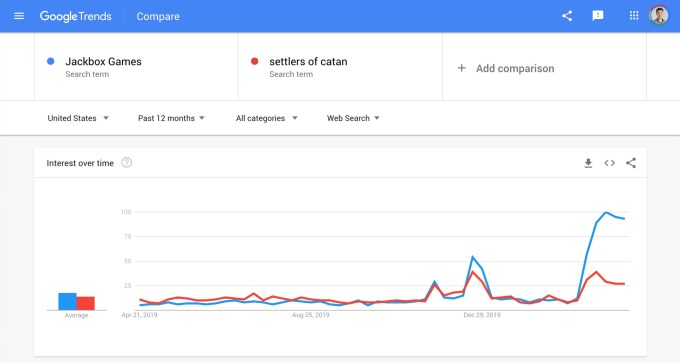
The games are tons of fun and perfect for playing with friends over video conference, and their popularity has skyrocketed, as indicated by Google Trends. I polled my own Twitter following and found that nearly half of folks had played in the last month, though a full third hadn’t heard of Jackbox at all.

How do these games work?

There are more than 20 unique games across Jackbox Party Packs 1-6, too many to explain — but here are three of the most popular:

  • Fibbage: A twist on the traditional trivia game, players are asked to invent an answer to a question of obscure knowledge (e.g. “a Swedish man who works as a dishwasher receives disability benefits due to his unusual addiction to ____.”) Then all the invented answers are mixed in with the truth and players must select the real answer while avoiding fakes. You earn points for guessing correctly and for tricking other players (the answer is “heavy metal”).
04 May 2020

“Here Kitty!” is an adorable way to pass the time while staying at home

If you’ve got kids with you through this stay-at-home stretch, there’s a good chance you’re running low on new ways to keep them entertained. All the coloring pages have been colored in; the freeze dances frozen; the stickers stuck.

Good news! Your iPhone is now a cat (congratulations!)

You need to help your new cat friend find somewhere to hide. Then everyone else in your house – like the toddler who somehow has an incredible amount of energy going into this 17th week of March – can try to find it, calling out “Here kitty!” and listening for a meow in response.

That’s the idea behind the aptly named “Here Kitty!”, the latest title from the team at Impending. You’ve probably seen some of Impending’s other stuff, like the super popular party/waiting-in-line-at-Disneyland guessing game Heads Up!, or the minimalist todo app Clear. Their stuff is always deeply polished, and this one is no exception.

Once you’ve found a good spot, you “hide” the kitty by placing your phone face down. It’ll meow (or, occasionally, hiss – it is a cat, after all) when it hears you call out. Found kitty? Flip the phone back over to reveal how long it took, and you’ve won! It’s like a gadget-enabled mashup between hide-and-seek, hot/cold, and Marco Polo minus the need for a pool.

Want kitty’s meows to be a bit softer to make it a bit more challenging, or louder for a younger audience? Adjust the difficulty slider accordingly.

Impending says they’ll introduce a “new friend” to seek alongside the original kitty every Saturday.

I’ve been playing with an early build of Here Kitty! for a few weeks, and… well, it’s just adorable. Impending rates the game at ages 4 and up, but give it a spin even with younger ones; my kid is a few months shy of two years old but he totally (read: mostly) gets it. He doesn’t quite get how to call for the kitty on his own, but quickly figured out how to follow the sound and cackles like a mad man every time he finds the cat. (Pro tip, as learned the hard way: if you’re playing with a toddler, put a case on your phone.)

Impending CEO Phill Ryu says they initially prototyped the idea a few years ago as something that would require an Apple Watch; for the sake of everyone stuck at home right now, they returned to the concept, simplified it a bit, and got it shipped within just a few weeks.

Here Kitty! is out right meow now for iOS (Sorry, Android users), and is free to play.

04 May 2020

Moxie is a technically impressive childhood robot from iRobot’s former CTO

To this day, the Roomba remains the one successful mainstream home robotic. It was a feat iRobot achieved after a decade or so of throwing concepts against the wall, ultimately achieving success through a combination of outward-facing simplicity and under-the-hood sophistication.

That other robots haven’t achieved those heights isn’t for lack of trying. The field has been littered with promising, high-profile failures. Notable recent additions to the dust bin of social home robotics history include Anki and Jibo. Both projects had interest and funding, but were ultimately unable to sustain.

Founded in Los Angeles in early 2016 by USC robotics professor Maja Matarić and former iRobot CTO Paolo Pirjanian, Embodied is the latest company to swing for the fences here. The startup has backing from Intel Capital, Toyota AI Ventures, Amazon Alexa Fund, Sony Innovation Fund, JAZZ Venture Partners, Calibrate Ventures, Osage University Partners and Grishin Robotics.

Taking a page from Anki’s Cozmo playbook, the company has enlisted the help of employees from Pixar and Jim Henson to flesh out the real-world robotic character. At first glance, the results are plenty impressive.

The company has posted a series of videos featuring Moxie, highlighting an extremely expressive facial display coupled with animatronic body movements. Given its focus on childhood education/development, Embodied has also employed the help of neuroscientists and child development specialists to flesh out the product, which is set to launch in beta to start.

“We’re at a tipping point in the way we will interact with technology,” Pirjanian, the company’s CEO, said in statement. “At Embodied, we have been rethinking and reinventing how human-machine interaction is done beyond simple verbal commands, to enable the next generation of computing, and to power a new class of machines capable of fluid social interaction. Moxie is a new type of robot that has the ability to understand and express emotions with emotive speech, believable facial expressions and body language, tapping into human psychology and neurology to create deeper bonds.”

The robot focuses on a different theme each week, including kindness, friendship, empathy and respect, personalizing content to a child over time. Moxie looks to be an impressive take on the category, though things are still very early stages here. Along with all of the built-in difficulties that come with launching a home robot, the device is price-prohibitive at $1,499. If you’re up for the risk, reservations are open now and Moxie will start shipping in the fall.

04 May 2020

‘This is certainly different’: Astronauts on controlling the Dragon spacecraft via touchscreen

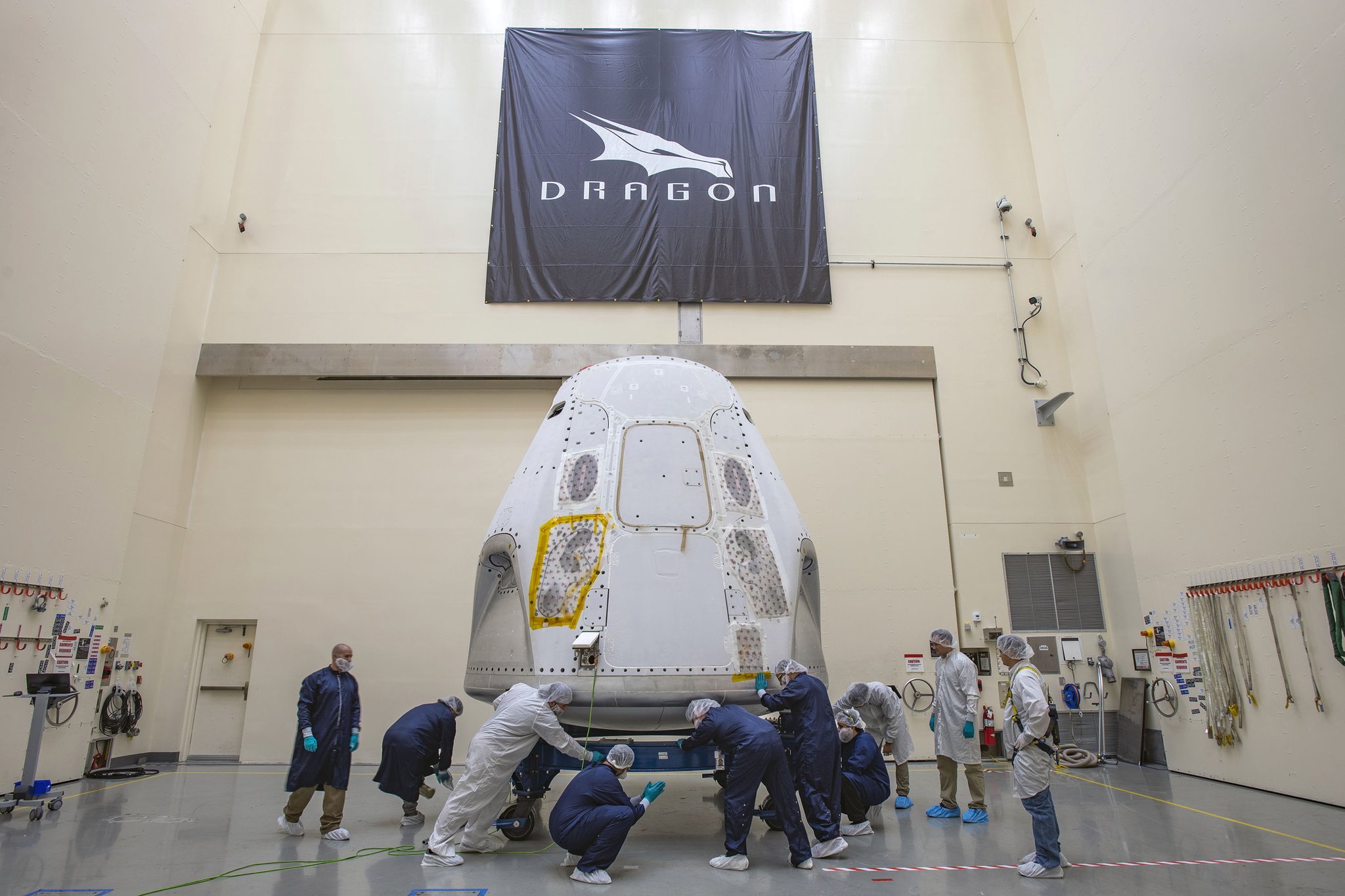
Building a brand new spacecraft means knowing when to innovate and when to stick to flight-proven methods, and for Crew Dragon, SpaceX decided to ditch the buttons and dials and go full touchscreen. The astronauts who will fly it later this month have had likewise to ditch years of training and muscle memory — but it’s not all bad, they say.

Bob Behnken and Doug Hurley, the two astronauts soon to launch to the International Space Station aboard a Dragon capsule, will be the first to actually fly the craft in space.

“It’s probably a dream of every test pilot school student to have the opportunity to fly on a brand-new spaceship, and I’m lucky enough to get that opportunity with my good friend here,” said Behnken in a press interview broadcast by NASA .

Of course they’re more than adequately prepared — not only have they spent countless hours in simulators, but they collaborated with SpaceX from early days.

“It was on the order of at least 5 or 6 years ago that we went out to SpaceX and evaluated a bunch of different control mechanisms,” said Hurley. “They were looking at every which way of flying the vehicle, and ultimately they decided on a touchscreen interface.”

“Of course, you know, growing up as a pilot my whole career, having a certain way to control the vehicle, this is certainly different,” he continued. “But we went into it with a very open mind, I think, and worked with them to define the way you interface with it — the way your touches actually registered on the display, in order to be able to fly it cleanly and not make mistakes touching it, not potentially putting in a wrong input.”

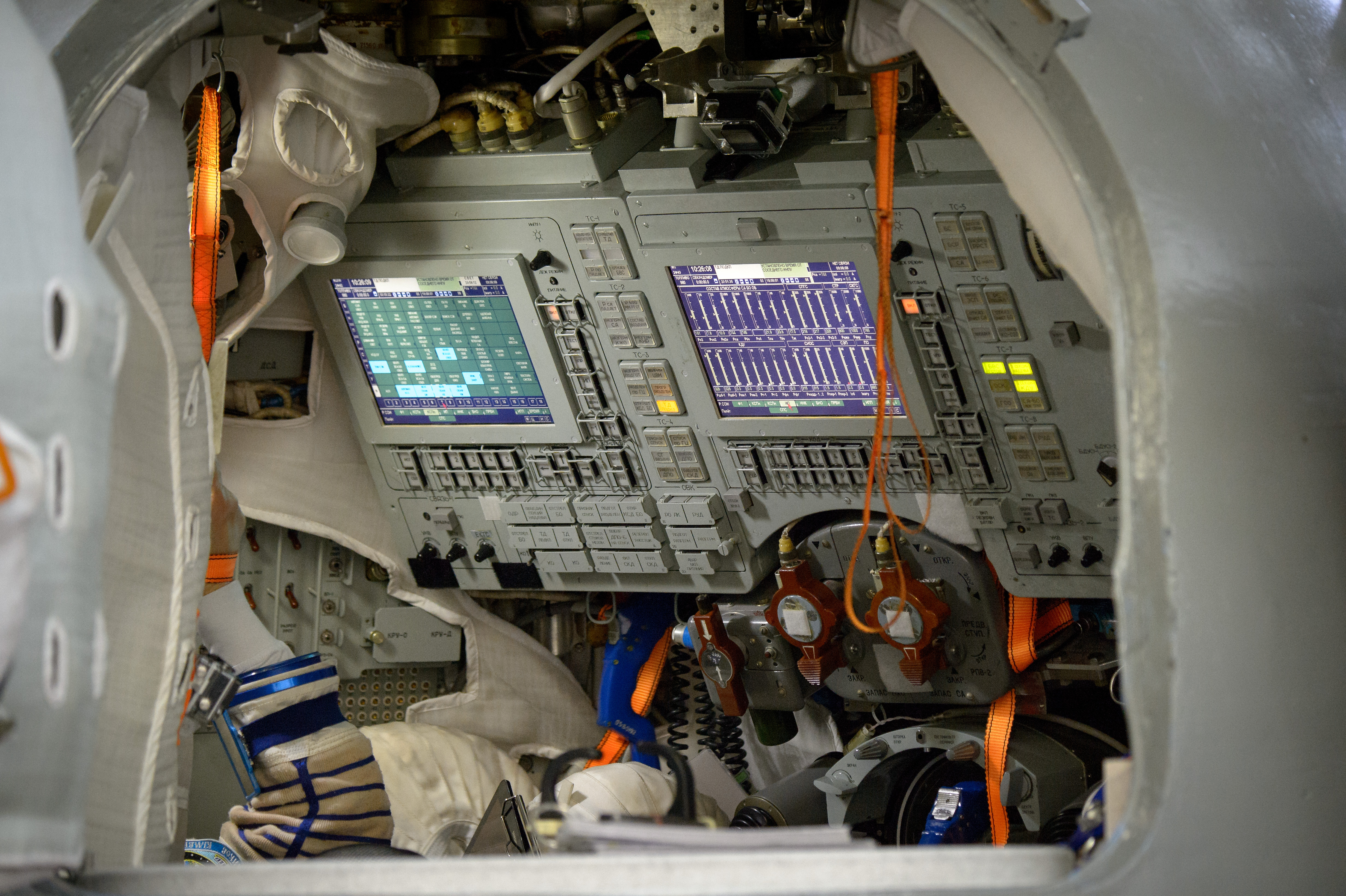
Compare the photo at the top of the story with the following shot of the physical simulator where astronauts learn to pilot the Russian Soyuz capsule:

Not a lot of leg room in either one, to be honest.

And of course even modern aircraft are still a mess of physical controls, no doubt familiar to the pilot but inarguably dated in design.

Behnke pointed out that these spacecraft are made with a very specific purpose in mind: Going to and docking with the ISS. No one is going to Mars in one of these things, and that impacts how they’re designed and piloted.

“The flying task is very unique: To come close to the space station and fly in proximity, then slowly come into contact, is maybe a little bit different from what you would see for flying a space shuttle or an aircraft,” said Behnke with characteristic understatement (the difference is night and day). “When we evaluated the touchscreen interface we really did focus on the task at hand and trying to get good performance for that specific task.”

A prototype Crew Dragon has already launched to the ISS and returned, having been piloted both autonomously and remotely.

“It was challenging for us and for them at first to work through those different design issues, but we got to a point where the vehicle, from the manual flying standpoint with the touchscreen, flies very well,” said Hurley.

“The difference is you’ve got to be very deliberate when you’re putting in input, relative to what you would do with a stick,” he continued. “Because you know, when you’re flying an airplane for example, if I push the stick forward it’s going to go down. I actually have to make a concerted effort to do that with the touchscreen, if that makes sense.”

“I don’t think I’m going too far out on a limb to say that the right answer for all flying is not to switch to a touchscreen, necessarily,” said Behnke. “But for the task that we have and to keep ourselves safe flying close to the ISS, the touchscreen is gonna provide us that capability just fine.”

Hurley pointed out that one major advantage is that the controls and readouts are all in the same place: “You’re seeing the docking target, for example, right in the same place you’re looking to fly the vehicle. So it is a little bit different way of doing it, but the design in general has worked out very well.”

There’s only so much one can learn in a simulator, though, and this first crewed flight is still very much a test, the feedback from which will inform the next iteration of the capsule. It’s easier, after all, to push a software update than to rewire the pots of 20 different knobs in a system that goes back decades.

“We specifically, as part of this test flight, designed in some time in the preflight phase, as well as closer to space station, so we can test out actual manual flying capability of the vehicle,” Hurley explained. “Just to see and verify that it handles the way we expect it to, and the way the simulator shows it to fly. It’s a prudent part of our flight test just like anything else, in case the eventuality happened that a future crew needed to take over manually and fly the spacecraft. So we’re just doing our part, to kinda test out all the different capabilities of the Crew Dragon.”

We are sure to hear more about the version of Crew Dragon that will be flying later this month if everything goes according to plan. In the meantime I have asked both SpaceX and NASA for more information on the control scheme and its development.

04 May 2020

Daily.co raises $4.6M video chat API service

API-powered startups are having a good year, with Plaid’s mega-exit to Visa still fresh in mind. And digital video-powered startups are also having a good year, as the world stays home more than before and work shifts to a more remote-friendly landscape. What about a company that does both?

Well, they’d probably raise money and see their usage spike, right? That’s precisely the case with Daily.co, a startup that has both raised new capital this year and has seen usage of its product rapidly rise.

New capital

In simple terms, Daily.co is a startup that provides an API that lets users and customers quickly integrate video chat into their product or website.

Today’s news is that Daily.co put together a $4.6 million round that was led by Jenny Lefcourt from Freestyle. The round was closed in January, but announced this week. (It’s common for venture rounds to close and then ripen in a dark cellar before they are uncorked and shared with the world, though increased Form D vigilance is changing the game.)

Freestyle was not alone in the new round. The investment was funded by a bevy of investors, including three new institutional investors (Moxxie, Slack Fund, SV Angel), and a host of angels (April Underwood, Sarah Imbach, Ellen Levy and Elizabeth Weil, among others). Three prior investors also took part: Haystack, TenOneTen and Root.

If the round didn’t have a lead investor the deal would feel like a unicorn-era party round. Daily.co previously raised $2.5 million in 2016, co-founder Kwindla Hultman Kramer told TechCrunch in an interview. TechCrunch’s first question was how the startup lasted so long on just a few million dollars. The answer was a surprise.

Hardware is … easy?

Daily.co’s path to an API-powered service was not as simple as you’d imagine. In fact, it’s the first startup I’ve ever spoken to that used a hardware product as a temporary method of funding itself.

According to Kramer, his company built and sold a video-conferencing hardware box that it sold for a few hundred dollars and a regular stream of SaaS payments (you can read more about it here, and here, if you want to go spelunking). The income its boxes generated helped the startup keep at its longer-term plan of building a WebRTC-powered API.

According to the firm, handling a “non-trivial” number of minutes via that first product was also an important learning mechanism.

Daily.co’s thesis that the live video tooling that large companies built into expensive conference rooms would come to everyone’s pocket now feels somewhat obvious. But back in 2015 when the company got started (it went through Y Combinator in 2016) the future wasn’t as clear.

A few market trends came together to make the company’s original vision bear out, including growing device power (your new iPhone has more oomph than your old iPhone), better, faster internet penetration, and the uptake of the WebRTC protocol. As each trend matured, Daily.co’s product wager has gone from possible to likely to existing in the market.

After moving away from the hardware world, Daily.co launched its video chat API in 2019, a year in which the company did not grow its staffing. However, 2020 has seen the startup’s headcount quickly expand (recall that this round was closed in January) and its usage skyrocket — according to Kramer, Daily.co has seen 12x usage growth in the last six weeks.

Daily.co charges a hybrid price for its service, including a small SaaS fee and usage costs. Given that it is a SaaS company, effectively, TechCrunch was curious about its margins. According to Kramer, the firm’s margins are attractive, and there are ways for the startup to actively manage its bandwidth costs (thus lowering revenue costs, and bolstering its gross margin profile). So, the startup should be valued at a SaaS multiple during its life.

Looking ahead, Daily.co is seeing increased attention from larger companies, it told TechCrunch, something that could power future growth. But those clients will require hand-holding, we presume, which means an ever-larger staff. It will be interesting to see how much Daily.co can grow in people and revenue terms in 2020 while the rest of the global economy slips into negative territory. More when we have it.

04 May 2020

The Station: Audi punts on Level 3, Lyft layoffs and Nio’s $1 billion deal

The Station is a weekly newsletter dedicated to all things transportation. Sign up here — just click The Station — to receive it every Saturday in your inbox.

Hi readers. Welcome back to The Station, a weekly newsletter dedicated to the future (and present) of transportation. I’m your host Kirsten Korosec, senior transportation reporter at TechCrunch .

While COVID-related stay-at-home orders have been extended in places like the San Francisco Bay area, officials in other counties and states in the U.S. have decided to open up for business. The rest of us are watching and waiting to see how these two experiments play out.

These opposing approaches have managed to create even more tension in the United States. If politics didn’t divide us before, how and when to open amid a health pandemic is proving to be an effective wedge.

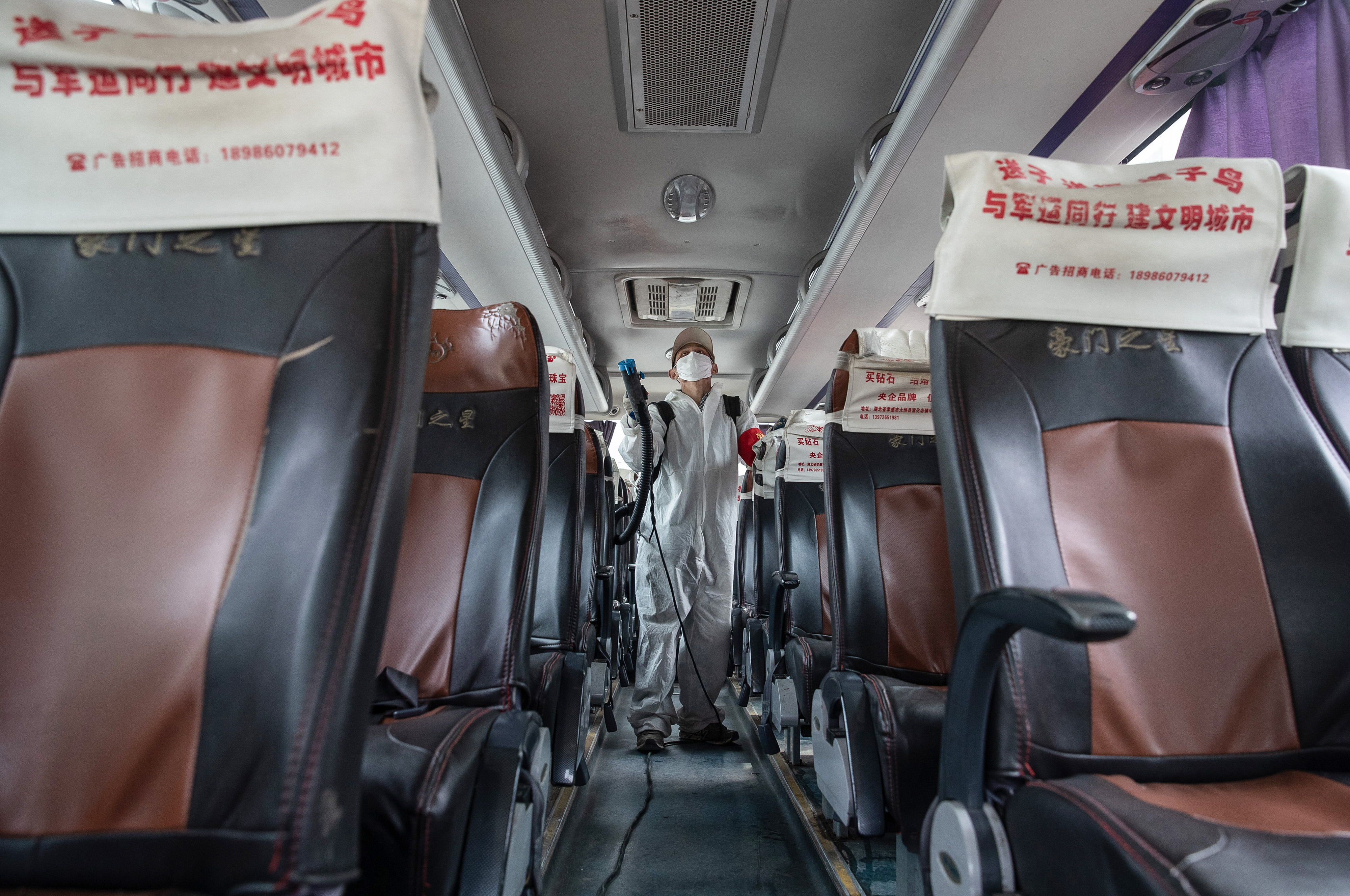
The “how” is as important, or even more so, than the “when.” What will life and business look like? Wuhan, China, a transportation and manufacturing metropolis of 11 million people and where COVID-19 started, offers a view into one approach. (The photo below shows a worker disinfecting a bus in Wuhan on April 30.)
China-wuhan-bus-covid

A staff member sprays disinfectant on a bus at a long-distance bus station in Wuhan in China’s central Hubei province on April 30, 2020, ahead of the Labor Day holiday which started May 1.

When those stay-at-home orders are finally lifted, returning to work won’t be quick or easy. Wuhan was placed on lockdown January 23. Wuhan officials eased outgoing travel restrictions April 8. While the strictest component of that lockdown has been lifted, many businesses remain closed. Didi didn’t reopened its ride-hailing services in the city until April 30.

In short, it’s going to be complex. Ford’s back-to-work playbook is a case in point. The plan includes a number of daily measures such as online health self-certifications completed before work every day, face masks and no-touch temperature scans upon arrival. But that’s just a sliver of what it will take. Check it out their complete playbook.

Here’s a friendly reminder to reach out and email me at kirsten.korosec@techcrunch.com to share thoughts, opinions or tips or send a direct message to @kirstenkorosec.

I’ll alrighty folks, shall we dig in? Vamos. 

Micromobbin’

the station scooter1a

It was a rough week for micromobility. Over at Lyft, the company laid off 982 employees and furloughed 288 amid the COVID-19 pandemic. Lyft also permanently ceased scooter operations in Oakland, San Jose and Austin.

“We’re focusing our resources where we can have the biggest impact and best serve cities and riders,” a Lyft spokesperson said in a statement to TechCrunch. “We’re continuing to invest in our bike and scooter business, but have made the tough decision to shift resources away from three scooter markets and toward opportunities where we are set up for longer-term success.”

At Lime, the startup let go 13% of its staff while the very next day relaunching its electric scooters in Baltimore and Ogden, Utah.

“Almost overnight, our company went from being on the eve of accomplishing an unprecedented milestone — the first next-generation micromobility company to reach profitability — to one where we had to pause operations in 99% of our markets worldwide to support cities’ efforts at social distancing,” Lime CEO Brad Bao wrote in a note to employees.

Just one day after those layoffs, the company relaunched scooters in Baltimore to help support essential medical workers as well as in Ogden.

Uber is weighing its own layoffs. The Information reported that the company could cut up to 20% of its staff. That translates to more than 5,000 jobs. Those cuts could be announced in stages over the next several weeks. Meanwhile, Thuan Pham, who was hired as Uber’s chief technology officer by former CEO Travis Kalanick back in 2013, is leaving the company in three weeks, the ride-share giant revealed in an SEC filing.

— Megan Rose Dickey

Deal of the week

money the station

Chinese electric vehicle startup Nio secured a $1 billion investment from several state-owned companies in Hefei in return for agreeing to establish headquarters in the city’s economic development hotspot and giving up a stake in one of its business units.

The injection of capital comes from several investors, including Hefei City Construction and Investment Holding Group, CMG-SDIC Capital and Anhui Provincial Emerging Industry Investment Co.

Why deal of the week? The deal alleviates some concerns about Nio’s liquidity. It also marks the latest Chinese EV startup to turn to the state as private capital has shrunk.

There is no free lunch, however. The deal itself is complex and involves some asset shuffling. Nio is transferring its core businesses in China into a new company called Nio China. The investors will get a 24.1% stake in Nio China. The shareholding structure of the parent company is unchanged.

Other deals announced this week are below. Keep in mind that just because a deal is announced that doesn’t mean it closed amid the COVID-19 pandemic. Fundraising rounds often close weeks and even months before they’re announced.

Otonomo, an automotive data services startup based in Israel, raised $46 million in a Series C funding round that included investments from SK Holdings, Avis Budget Group and Alliance Ventures. Existing investors Bessemer Venture Partners also participated. Otonomo has raised $82 million, to date.

The company has a software platform that captures and anonymizes vehicle data so it can then be used to create apps to provide services such as electric vehicle management, subscription-based fueling, parking, mapping, usage-based insurance and emergency service.

KlearNow, a startup that has built a software platform to automate the customs clearance process, raised $16 million in a Series A funding round led by GreatPoint Ventures, with additional participation from Autotech Ventures, Argean Capital and Monta Vista Capital. Ashok Krishnamurthi, managing partner at GreatPoint Ventures, will join KlearNow’s board. Daniel Hoffer from Autotech Ventures is joining as a board observer.

Skycell, a Switzerland-based startup that builds hardware and operates a logistics network designed to transport pharmaceuticals has raised $62 million.

A merger between UK’s JustEat and the Netherlands’ Takeaway.com has been approved by regulators. The merged company announced that it had raised €700 million ($756 million) in new outside funding in the form of new shares and convertible bonds.

Cheetah, a San Francisco-based startup that provided a wholesale delivery service and has pivoted to selling to consumers during COVID-19, raised $36 million in Series B funding.

Innovation of the week

Computer vision company Eyesight Technologies has tweaked its driver monitoring system so it can detect driver distraction and drowsiness even while wearing a medical face mask.

This “innovation of the week” gets back to my opening remarks about “how” we get back to work. Face masks will likely be a part of our world for some time.

Driver monitoring systems, which are increasingly being used by commercial fleets, are trained to detect and monitor facial features of the driver. The system will take in data points like head pose, mouth, eyes and eyelids and use the gathered visual data to detect signs of drowsiness and distraction. If the sensor can’t read one or more of these features the system could fail to detect a drowsy truck driver or inattentive transit worker.
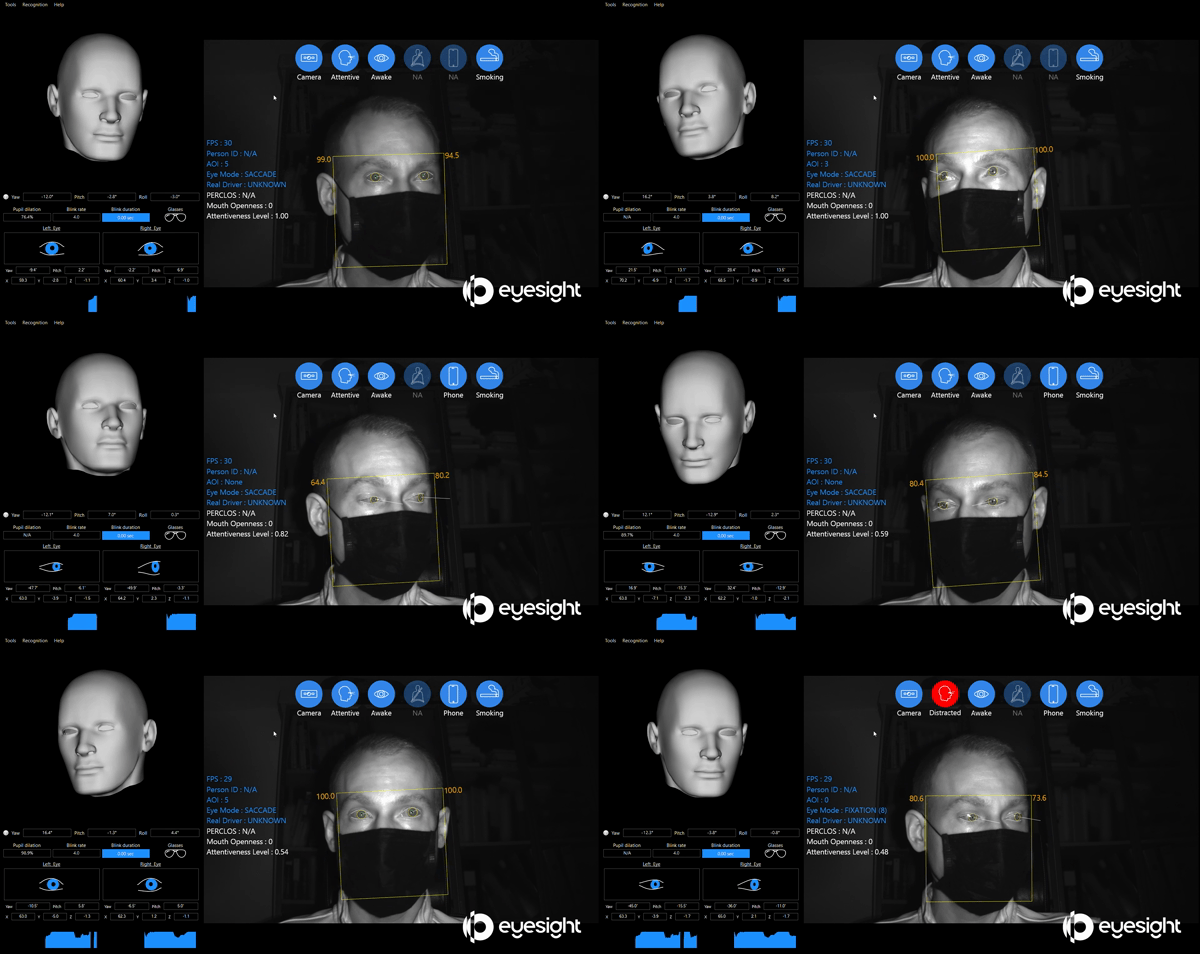
Driver Monitoring with mask

Eyesight Technologies

Eyesight Technologies says that its computer vision and AI algorithms have been trained to detect distraction and drowsiness even if a driver is wearing a mask and glasses.

“We are living in unprecedented times,” Eyesight Technologies CEO David Tolub said. “Without a concrete end date to the current situation, wearing medical masks may be a reality for the foreseeable future. Eyesight Technologies is forging ahead and adapting to provide a reliable solution to help guarantee safety even under less than ideal circumstances.”

Audi punts on Level 3

Audi has scrapped plans to roll out a Level 3 automated driving system in its A8 flagship sedan. Automotive News Europe broke the story.

The feature, which is branded Traffic Jam Pilot, theoretically allows the vehicle to operate on its own without the human driver keeping their eyes on the road. But it’s never been commercially deployed.

Traffic Jam Pilot was supposed to be in the latest-generation A8 that debuted in 2017. It’s now 2020. What happened? Regulations, or lack of them, have been the primary scapegoat. But it’s not quite the whole story.

TechCrunch reached out to Audi to dig into why? In short, the company told us, that it’s complicated. The lack of a legal framework has raised concerns about liability. To further complicate the problem, the A8 is now progressing through its generational life cycle. And Audi was faced with continuing to pour money into the feature to adapt it without promise of framework progressing.

Here’s a few tidbits from the folks at Audi.

On the legal framework:

As of now, there is no legal framework for Level 3 automated driving. Consistently it is not possible to homologate such function anywhere in the world in a series production car. It is still very challenging to plan the exact introduction scenarios for level 3 systems, as we continuously moving in an intensive interplay between the findings from ongoing testing and the requirements that legislators and approval authorities are now defining for conditional automated driving.

On development costs:

As these clarifications and safeguards continue to take time, we also monitor economic aspects in addition. This includes development costs, which are summing up continuously. Secondly, the remaining life of the determined target model A8 combined with the forecasted installation rate and the expected market greediness in the individual countries are playing an important role.

This has brought us to the following decision: We will not see the traffic jam pilot on the road with its originally planned level 3 series function in the current model generation of the Audi A8 because our luxury sedan has already gone through a substantial part of its model life cycle.

Audi’s belief in automated driving:

We still believe in the technology of automated driving and today we know better than almost anyone when it comes to the decisive technological key factors. During the development phase we continuously learned more and more technical “unknown unknowns” and developed approaches how to handle the fact, that there will appear more.

Together with the above mentioned dependencies concerning legislation and type approval, we believe that actually it is not the right moment to deliver the function to the customer. This is our attitude of responsibility.

How Audi is moving forward:

An important part of the truth, which the industry is now facing: development of automated driving is extremely complex and cost-intensive. Our aim more than ever before is to generate the greatest possible synergies.

Within the VW group we therefore have the best preconditions. We have consolidated our efforts to further develop level 3 automated driving in the Car.Software organization. This is a new organization within the Volkswagen Group .

Former Audi managers will be head of two out of the five domains within this new organization: Thomas Müller will manage the automated driving area, and Dr. Klaus Büttner will manage the Intelligent Body&Cockpit area. Together with the specialists coming from Audi, Volkswagen and Porsche, this ensures that the current expertise in this cross-brand organization is available for the greatest possible benefit to everyone in the Volkswagen Group.


04 May 2020

Uber drivers and riders will be required to wear face coverings

Uber is planning to require drivers and riders to wear face masks as it prepares to ramp its ride-hailing business back up after being hobbled by the COVID-19 pandemic.

CNN was first to report that executives approved a new policy that would require drivers and riders to wear face masks or coverings in some markets, including the U.S.. TechCrunch confirmed Monday that Uber has developed a policy for certain markets.

Uber still faces one considerable challenge: securing enough face masks and other supplies to protect drivers. The company said multiple orders have either been delayed or canceled as from major manufacturers prioritize healthcare workers and other first responders.

It’s also not clear how Uber will enforce its policy.

“As countries reopen, Uber is focused on safety and proceeding with caution,” an Uber spokesperson said in a emailed statement. “Today, we continue to ask riders to stay home if they can, while shipping safety supplies to drivers who are providing essential trips. At the same time, our teams are preparing for the next phase of recovery, where we will all have a role to play. We’ll communicate updates directly to users when ready, but in the meantime, we continue to urge all riders and drivers to wear masks or face coverings when using Uber.”

Uber has been encouraging riders to stay home through an in-app message and through marketing such as TV spots. The app is still available and people have used it to take trips to grocery stores, to essential jobs and pharmacies. Uber has urged, but not yet required, riders and drivers to wear masks or face coverings.

Protecting drivers

As the COVID-19 pandemic swept through Europe and North America, Uber drivers have found themselves on the front lines, often times transporting healthcare and other essential workers who were potentially exposed to the disease.

Uber announced last month that it would buy and ship face masks to active drivers and delivery workers globally. However, COVID-19 has squeezed global supplies for face masks and disinfectant. Uber and other ride-share drivers have reported problems accessing the supplies.

In the first week of April, Uber said it began receiving and then shipping about 500,000 ear-loop face masks to drivers. The company initially targeted the most active drivers in COVID-19 hotspots such as New York City and Los Angeles. (In LA, Mayor Eric Garcetti signed a Worker Protection Order that requires companies to provide essential workers with personal protective equipment.) Uber said it also is prioritizing cities and states such as San Francisco, Washington D.C. and New Jersey that have asked drivers to wear face covers.

Uber said it will make these supplies available to all active drivers as more become available. Uber’s goal is to be able to offer masks nationwide regardless of local regulations.

As of this week, Uber has either shipped or preparing to ship 1.4 million ear-loop face masks in the United States. The company also started in early April to ship disinfectant to drivers in Chicago, Los Angeles, NYC, Seattle and Washington D.C.