Blog

03 Jun 2019

With iOS 13, Apple delivers new features to court users in India

Apple has finally listened to its small, but slowly growing user base in India. The iPhone-maker today announced a range of features in iOS 13 that are designed to appease users in the world’s second largest smartphone market.

First up, the company says Siri now offers an all new and “more natural” Indian English male and female voices. It has also introduced a bilingual keyboard, featuring support for Hindi and English languages. The keyboard offers typing predictions in Devanagari Hindi that can suggest the next word as a user types and it learns from their typing over time.

Additionally, the keyboard in iOS 13 supports 15 additional Indian languages, up from seven earlier. The new languages are Assamese, Bodo, Dogri, Kashmiri (Devanagari, Arabic), Konkani (Devanagari), Manipuri (Bangla, Meetei Mayek), Maithili, Nepali, Sanskrit, Santali (Devanagari, Ol Chiki), and Sindhi (Devanagari, Arabic).

The addition of these features comes as Apple grows more serious about India, a market where it has about 1% of the smartphone market share, according to research firm Counterpoint. Users in India have long complained about Apple services not being fully optimized for Indian local conditions. Siri, for instance, has so far offered limited functionalities in India. And many Apple services such as Apple Pay and Apple News are not available in the nation.

The upcoming version of iOS, which will ship to a range of iPhone handsets later this year, also includes four new system fonts in Indian languages — Gurmukhi, Kannada, Odia, and Gujarati. These will “help deliver greater clarity and ease when reading in apps like Safari, typing in Messages and Mail, or swiping through Contacts,” the company said.

Additionally, there are 30 new document fonts for Indian languages Hindi, Marathi, Nepali, Sanskrit, Bengali, Assamese, Tamil, Telugu, Gujarati, Kannada, Gurmukhi, Malayalam, Odia, and Urdu.

Apple says iOS 13 will also enable improved video downloading option for patchy networks. It says users can now set an optimized time of the day in apps such as Hotstar and Netflix to download videos. Consumption of video apps is increasingly skyrocketing in India. Just last week, Alibaba said it was investing $100 million in its short video app called Vmate in the nation.

In recent months, Apple has also improved Apple Maps in India. Earlier this year, Apple Maps added support for turn-by-turn navigation, and began to allow users to book a cab — from Ola or Uber — directly from within the app. The company has also been aggressively hiring people to expand its Maps and other software teams in  the country, according to job postings on the company’s site.

03 Jun 2019

Flash Sale! Buy a mobility startup package, get one for free at Disrupt SF

Check your calendars, mobility startup fans. It’s only five short weeks until TC Sessions: Mobility 2019 goes down in San Jose. Get ready to dive into the current state of mobility, challenge assumptions, put hyperbole in its place and help shape the future of these rapidly evolving technologies.

And if you want to expose your early-stage mobility startups to mobility’s brightest, most influential founders, technologists and investors, take advantage of this limited-time flash sale. When you buy a demo table at TC Sessions: Mobility you’ll get a free Startup Alley Exhibitor Package at Disrupt San Francisco 2019*. And guess what — in addition to a demo space, both events’ startup packages come with three attendee tickets!

This double-demo opportunity comes to a grinding halt on Friday, June 7 at 11:59 pm (PT) and is exclusively for early-stage mobility startups. Don’t miss your chance to showcase your company to thousands of attendees at Disrupt SF — at substantial savings. Seriously, this deal puts the “expo” in exposure.

As a demo table holder, you’ll also get to enjoy all the programming that it offers — we’re talking speakers, panels, workshops and demos that tackle mobility’s inherent challenges and promises. Our jam-packed agenda covers everything from autonomous vehicles and redefining urban mobility to powering electric cars and whether venture capital can drive it all — and then some. Here’s a quick peek at some of the presentations:

  • Autonomous Robotaxis vs. Shuttles — Karl Iagnemma, Alisyn Malek and Lia Theodosiou-Pisanelli represent some of the top minds trying to bring autonomous vehicle technology to the masses. They’ll debate which approaches makes the most sense and have the best chances for economic viability and which safety and security vulnerabilities and other challenges could throw them off track.
  • Rebuilding the Motor City — Ken Washington, Ford’s CTO and vice president of research and advanced engineering, will discuss how the historic automaker is rapidly changing its culture and processes while it prepares for an electric future.
  • Will Venture Capital Drive the Future of Mobility?  — Three leading early-stage investors, Michael Granoff, Ted Serbinski and Sarah Smith, will debate the uncertain future of mobility tech and whether VC dollars are enough to push the industry forward.

TC Sessions: Mobility 2019 takes place on July 10 in San Jose. Buy a demo table before Friday, June 7 at 11:59 pm (PT) to receive a 100% discount on a Startup Alley Exhibitor Package at Disrupt San Francisco 2019. Don’t miss this opportunity to double your exposure to influential movers and shakers. They might just rock your world.

*This is a limited-time offer and expires on June 7, 2019, at 11:59 pm (PT). Offer open only to early-stage, mobility startups with less than $3 million in funding. Offer cannot be combined with other discounts or promotions.

03 Jun 2019

Distru, a maker of supply chain software for the cannabis industry, has raised $3 million led by Felicis

Distru, a nearly three-year-old, Oakland-based startup whose platform aims to help track cannabis through its seed-to-sale process, has raised $3 million in seed funding led by Felicis Ventures, with participation from Village Global, Global Founders Capital, and numerous notable angel investors, including Elad Gil, Katie Stanton, and Avichal Garg.

The deal is an interesting one for numerous reasons, including that it marks Felicis’s first investment in the cannabis space after many months spent looking at a wide array of related startups, says Niki Pezeshki, a principal with the firm. Indeed, though interest in cannabis-related products and services is growing among traditional venture firms as a growing number of states move to legalize and regulate marijuana, there’s lingering concern about what will happen and when at the federal level.

Distru is also entering into a space that tech investors can grok: it’s a software as a service company, one that just happens to give cannabis operators insight into their inventory and order management, their customer relationship management, and their logistics. Most important, Distru’s software helps them automate compliance with complicated and growing state regulations by integrating with Metrc, which is itself inventory tracing software that’s being used by a growing number of states to record the inventory and movement of cannabis and cannabis products through the commercial supply chain. (We wrote about six-year-old Metrc last year when it raised $50 million in funding, including from Casa Verde Capital and Tiger Global Management.)

Not last, Distru’s team, headed by founder and CEO Blaine Hatab, comes from the tech world, even while most are in the formative stages of their careers. Hatab has spent much of his post-collegiate career as a software developer, as has his cofounder, Blake Gentry, who joined forced with Hatab after leaving a developer role with the startup Opendoor to create his own company, Actualyze, which merged with Distru last fall. A third cofounder, Johnny Li, who further serves as Distru’s chief technical officer, was most recently a JavaScript instructor. Altogether, says Hatab, the team is made up of just nine employees who work remotely, though with its new funding, Distru plans to fill five more roles imminently.

In the meantime, it seems to pick picking up momentum despite its scale. Among its customers are major cannabis producers and distributors Humboldt Farms and CannaCraft. More, though it has competitors, including nine-year-old, Denver-based, venture-backed MJ Freeway, Hatab says it’s growing steadily based solely on word of mouth. Perhaps most compelling to Felicis and its other backers, the company has been operating in the black for some time. Says Hatab, “I think [our investors] were surprised by profitable we were.”

And it has a lot of room to grow, no pun intended. Distru operates in California alone today, but Hatab says it plans to follow Metrc into the other markets where it operates today, including Colorado, Oregon, Alaska, Maryland, Michigan, Ohio, Massachusetts, Montana, Nevada and Louisiana.

03 Jun 2019

Here’s everything Apple just announced at the 2019 WWDC Keynote

Apple kicked off its annual Worldwide Developer Conference in San Jose this morning with a two-and-a-half hour keynote, showing off everything the company has been working on for the past many months.

Want to know everything they announced, but don’t have time to watch the whole thing yourself? We’ve wrapped it all up for you in an easily skimmable package for you.

Console controllers for AppleTV:

AppleTV will soon be compatible with Xbox One and Playstation Dualshock controllers, allowing them to be used alongside Apple’s upcoming subscription gaming service.

Multi-user support for AppleTV:

Tired of seeing recommendations based on what everyone else in your house is watching? You can now have different profiles for each member of the family on AppleTV. Switch between profiles, and viewing recommendations will change accordingly.

Apple Watch Updates:

WatchOS is getting a bevy of enhancements, many of which are meant to make the Apple Watch more useful without having to pull out your iPhone.

  • “Independent” apps that can run directly on the watch without the need for a companion iPhone app
  • A built-in App Store interface for purchasing/installing Watch apps directly through the Watch itself.
  • Dedicated voice memo, audiobook, and calculator apps
  • Audio streaming APIs to allow for on-the-go streaming of sports games and other content.
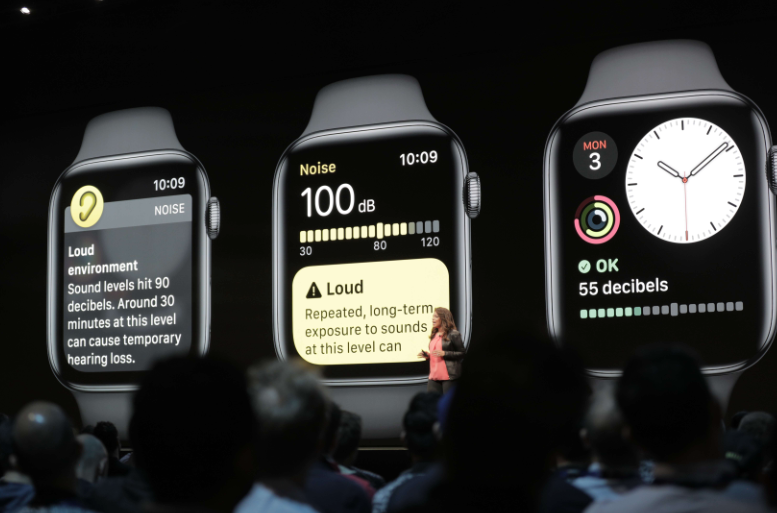
  • A “Noise” app that detects the decibel level of your surrounding area, warning you when the noise levels might be dangerous for your hearing. Apple was quick to note that the noise app doesn’t record or save any audio.
  • A cycle tracking app for helping women to keep track of their menstrual cycle (this will also be built into Apple’s Health app on iOS)
  • Built-in Shazam support

iOS 13:

As it does around this time each year, iOS is getting a big upgrade. The developer beta build goes live today; the public beta build will ship in July, and it’ll ship to everyone in “Fall”.

  • App installs are now 50% smaller, while updates should be around 60% smaller
  • Apps will launch 2x as fast

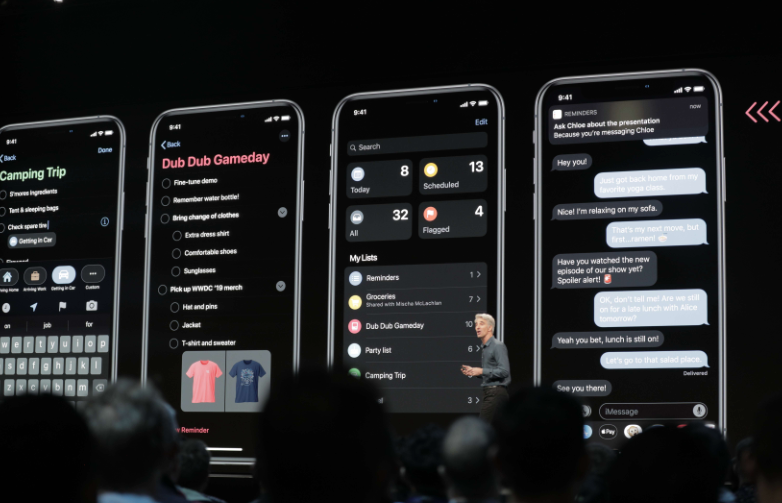
  • Dark Mode: A new, darker interface for when the standard interface is a bit too bright.
  • Swipe keyboard: Swipe-to-type keyboards have been a thing for about a decade now — but until this point, getting one on iOS meant using a third party offering. With iOS 13, swipe support is finally built in.
  • Time-synced lyrics in the built-in Music app.
  • The Reminders app is getting an overhaul, allowing it to do things like remind you to tag people onto a reminder to have it pop up next time you’re iMessaging with them.

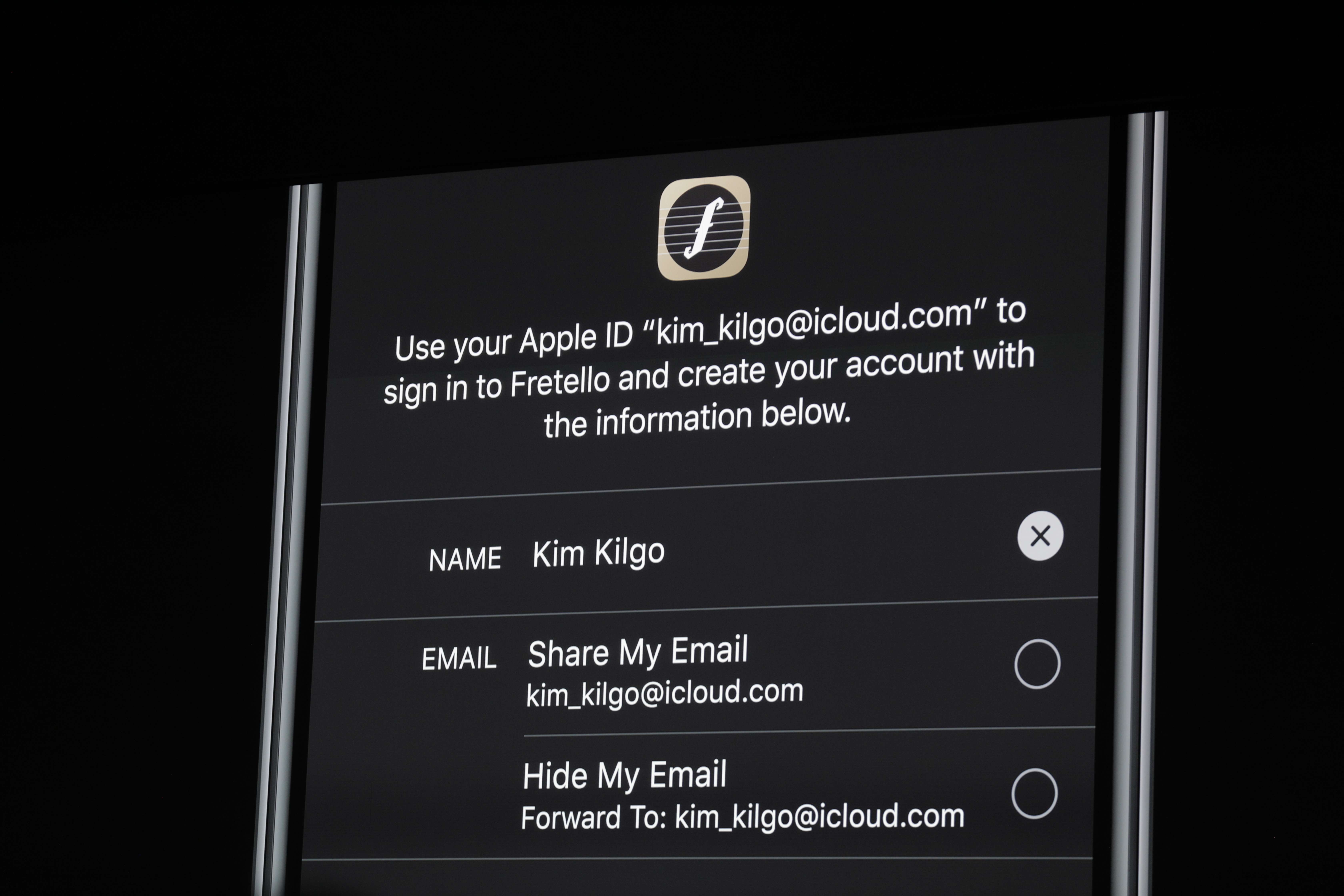
  • Sign in with Apple: Don’t want to share your email with every new app you install? Apple has built a sign-in solution that lets you log in to a service using your Apple account, authenticating with things like FaceID rather than a password. Its best trick: if you don’t want to share your actual e-mail address with a service, Apple will generate a random and unique forwarding email just for that app. Don’t want to get emails from that company any more? Just disable that unique address.
  • To do things like determine if a moving object is a person or just some dust dancing in front of the lens, most networked security cameras send your video off to the cloud for computer vision-based analyzation. HomeKit Secure Video uses your local devices (rather than the cloud) to analyze footage, then encrypts it before sending it to iCloud for storage in a way that Apple says it can’t view. Logitech, Netatmo, and Eufy were mentioned as working on compatible cameras.
  • Memojis are getting a bunch of new customization options, including makeup, piercings, different teeth, new hats, and, yes, AirPods. Apple is also going to automatically make stickers from your Memoji and offer them up in chats.
  • Accidentally shoot a video in portrait rather than landscape? You’ll now be able to rotate videos (and do fancy things like color grading) right in the built-in Photos app.
  • You can now have the Phone app automatically send unknown callers to voicemail
  • You’ll now have the option to allow an app to detect your location just once, rather than allowing it indefinitely.
  • Armed with its own fleet of road-scanning cars, Apple has been completely rebuilding its Maps database. Its new maps are considerably more detailed, and come complete with Apple’s own alternative to Google’s StreetView.


AirPod/HomePod/CarPlay Updates:

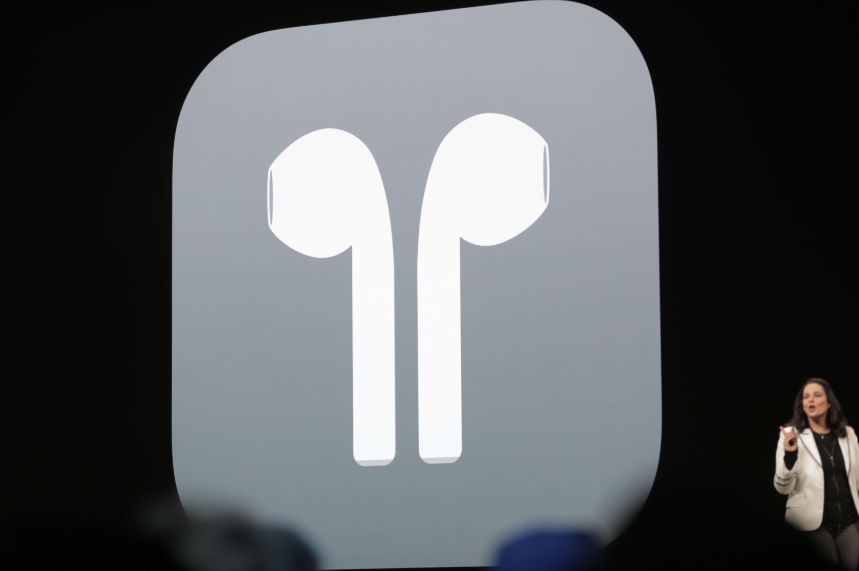
  • AirPods can now read incoming messages to you
  • Audio Sharing allows you to take the audio from whatever you’re listening to and send it to multiple sets of AirPods
  • You can now hold an iPhone next to a HomePod to quickly start streaming the audio from your phone to the speaker.
  • CarPlay is getting a new interface, and Siri will now work with third-party apps including Pandora and Waze

iPadOS:


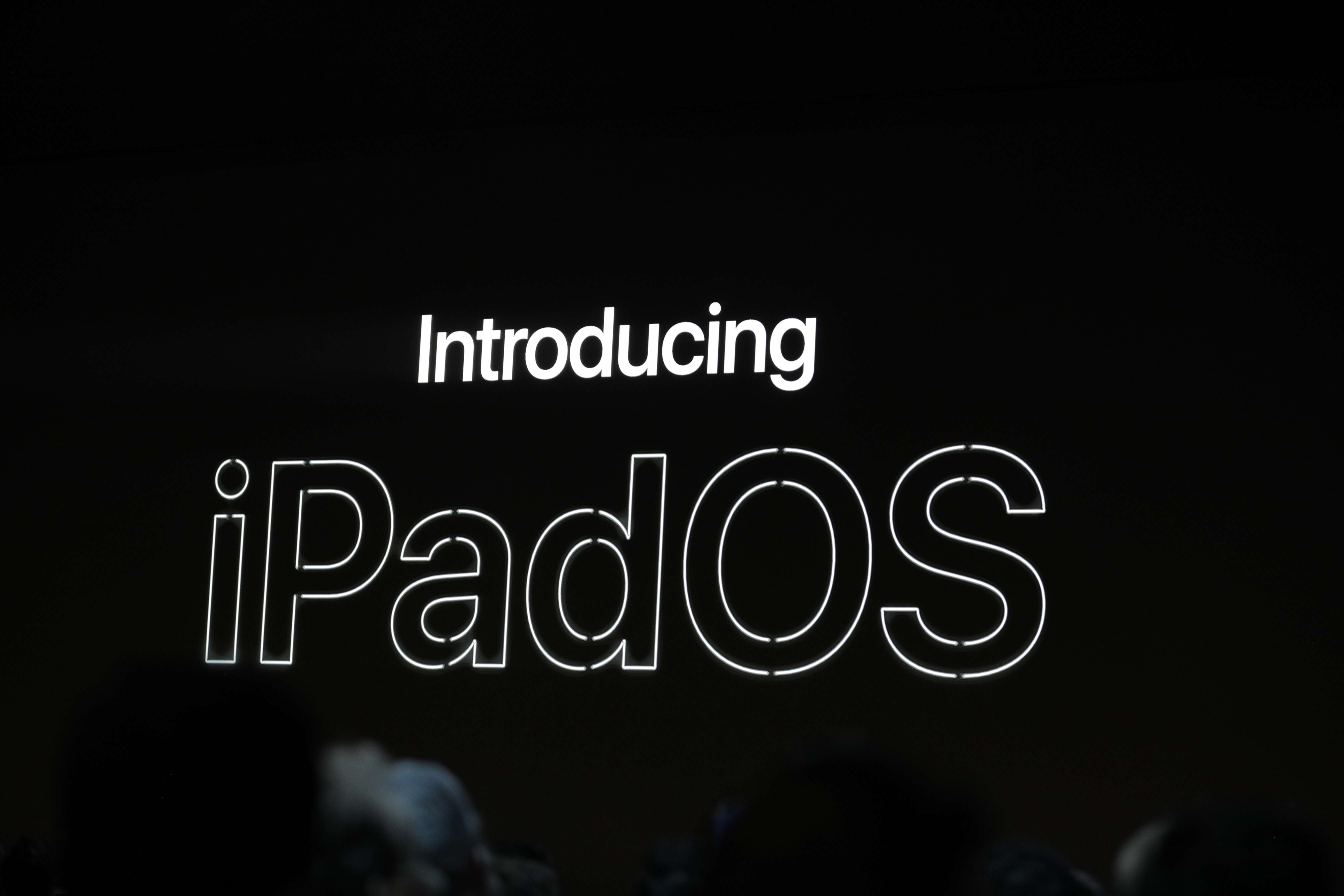
The operating system that powers the iPad is now known as “iPadOS”, a standalone fork off of iOS.

  • Widgets can now be pinned to the homescreen
  • Faster switching between apps running on the iPad’s slideover mode
  • The Files app has been overhauled with better browsing modes, iCloud folder sharing, and it now supports external drives and SD Cards
  • “Desktop-class browsing” in Safari. It’ll try to always default to a site’s desktop view rather than the mobile view, and now has a proper file download manager. It’ll also get 30 new keyboard shortcuts for things like saving pages, emailing pages, and opening links in a background tab.
  • Apple Pencil latency has been shaved from 20ms to 9ms
  • There’s a new compact keyboard mode which allows you to drag a tiny keyboard to the side of the screen for easier one-thumb typing.
  • New gestures, like using a three-finger “pull in” gesture to cut and a three-finger “drop in” gesture to paste.

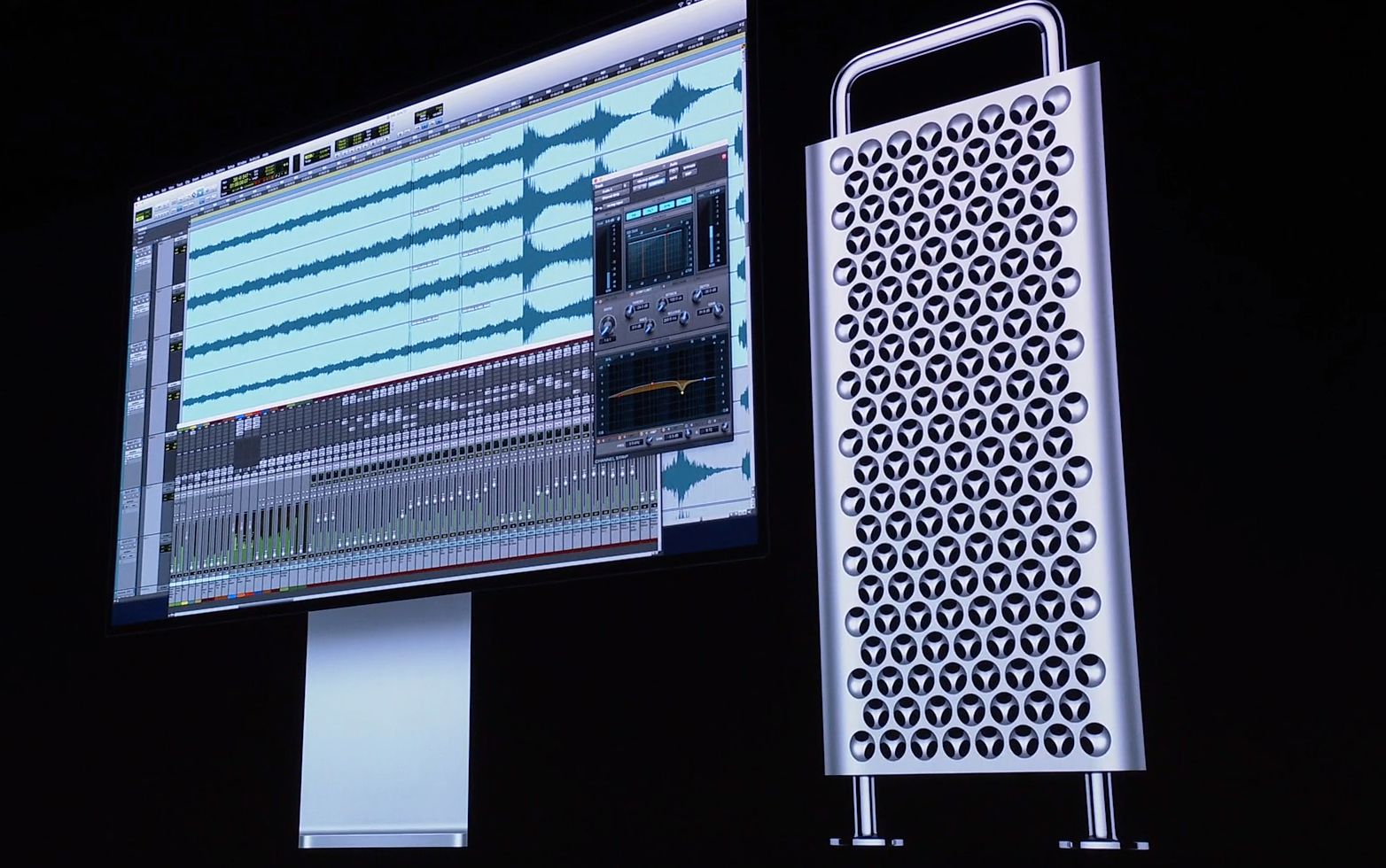
New Mac Pro:

Looks like Apple is done with the cylinder-style Mac Pro, with the company returning to the classic tower look. It’ll ship sometime “this Fall.”

Here’s some of what they mentioned:

  • Support for up to 28-core Intel Xeon processor
  • Up to 1.5 terabytes of system memory
  • 8 internal PCI slots (four double-wide, 3 single-wide, one half-length slot for an IO board that has two USB-3 ports and two Thunderbolt 3 ports)
  • 1.4 kW power supply
  • “As quiet as an iMac Pro”
  • Wheels! For those who move their towers around a lot, there are optional wheels you can add to the bottom
  • The base model will be an 8-core XEON with 32GB of memory and a 512MB SSD, and will start at $5999.

Pro Display XDR:

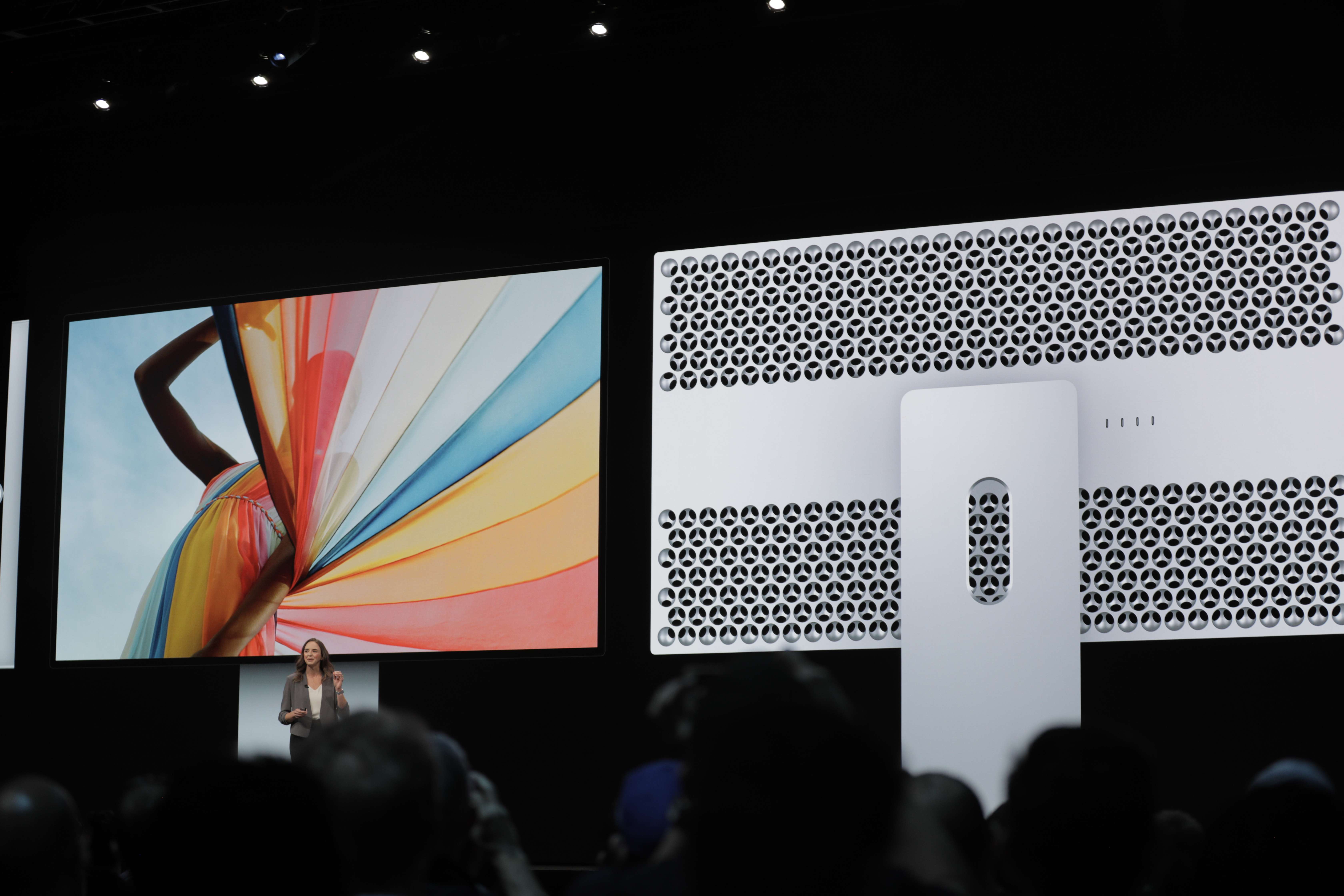
The oh-so-pricy Mac Pro is getting an equally pricy new Pro Display.

  • 32-inch display, with a resolution of 6016×3384 (6k)
  • It can handle up to 1000nits of brightness indefinitely — the entire back of the device acts as a heatsink, drawing the heat away from the panel.
  • Anti-reflective glass, with a “nano-texture” matte option wherein the glass itself has been etched to reduce glare.
  • Pro Display XDR will cost $4,999, while the “nano-texture” etched version will cost $5,999.
  • The stand isn’t included — that’ll set you back another $999.

MacOS Catalina:

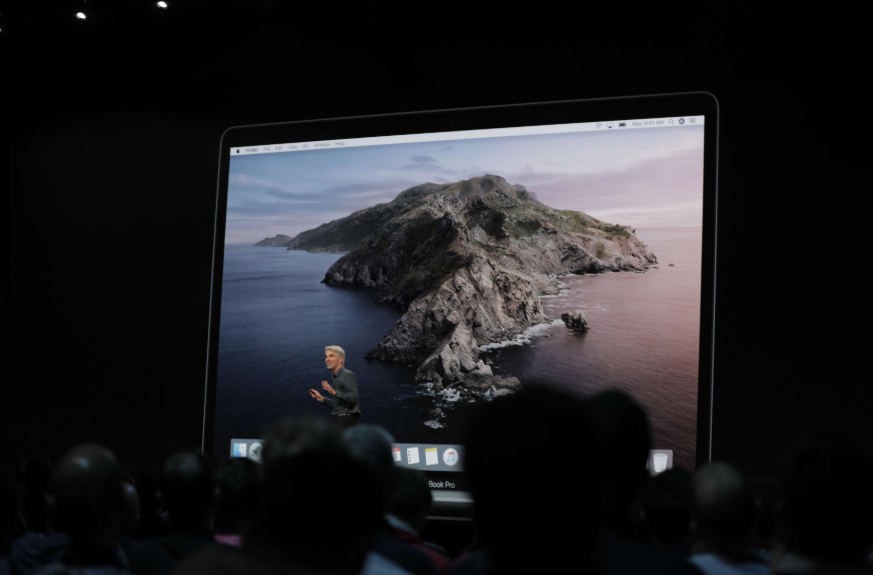
After macOS Sierra, High Sierra, and Mojave comes… macOS Catalina.

  • As rumored, iTunes is dead. Or, rather, iTunes is being split up. The functionality is being split into three apps: Apple Music, Apple Podcasts, and Apple TV.
  • No more iTunes pop-ups every time you plug in your iPhone! Fixing an annoyance that has plagued iPhone users for decades, plugging your iPhone into MacOs will now automatically do… nothing. If you want to sync your iPhone, you’ll now find the option in Finder.
  • Sidecar turns your iPad into a secondary display for your Mac, complete with Apple pencil support.
  • “Find My Phone” and “Find My Friends” is being combined into one “Find My” app, and will now work with macOS. Even if a phone is offline, you can search for it using a Bluetooth mesh network made up of all other iOS/Mac devices.
  • Macs are getting activation lock, which lets you send a signal to effectively brick the device after it’s stolen or lost.
  • Deeper and dramatically more capable voice controls
  • Project Catalyst (formerly codenamed “Marzipan”) lets app developers more quickly retune their iPad apps for macOS, using the iOS app’s existing codebase as the foundation.

New stuff just for developers:

As you might expect from a Worldwide Developer Conference, Apple also announced some new stuff for the developers in the audience. Things like:

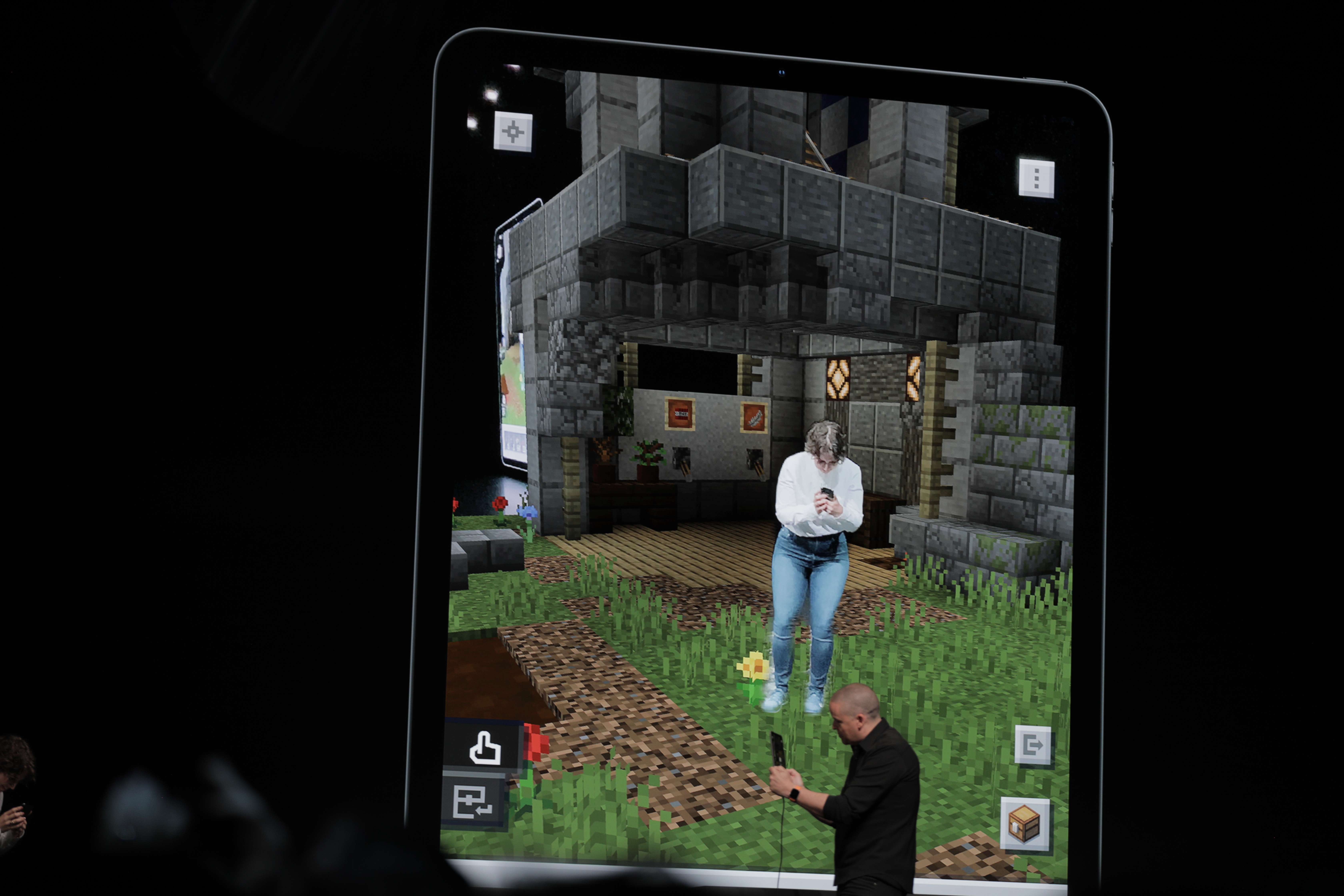
  • ARKit 3, a new version of Apple’s augmented reality framework with support for motion capture and people occlusion (allowing AR objects to render in front of/behind people in view, as demonstrated in a build of Minecraft pictured above)
  • SwiftUI, a new framework for building interfaces for Swift apps. It’ll automatically support features like screen rotation, the newly introduced dark mode.


03 Jun 2019

Alphabet, Apple, Amazon and Facebook are in the crosshairs of the FTC and DOJ

A new deal between the Department of Justice and the Federal Trade Commission will see U.S. regulators divide and conquer as they expand their oversight of Apple, Alphabet, Amazon and Facebook, according to multiple reports.

New details have emerged of an agreement between the two U.S. regulators that would see the Federal Trade Commission take the reins in antitrust investigations of Amazon and Facebook, while the Department of Justice will oversee investigations of Alphabet’s Google business and Apple.

Shares of Apple’s stock tumbled on news of the Justice Department’s role in overseeing the company, which was first reported by Reuters even as the company was in the middle of its developer conference celebrating all things Apple.

Google has been here before. Eight years ago, the Federal Trade Commission began an investigation into Google for antitrust violations, ultimately determining that the company had not violated any antitrust or anti-competitive statutes in its display of search results.

On Friday, The Washington Post reported that the Justice Department was initiating a federal antitrust investigation into Google’s business practices, according to multiple sources.

That report was followed by additional reporting from The Wall Street Journal indicating that Facebook would be investigated by the Federal Trade Commission.

The last time that technology companies faced this kind of scrutiny was Google’s antitrust investigation, or the now twenty-one year old lawsuit brought by the Justice Department and multiple states against Microsoft.

But times have changed since Google had its hearing before a much friendlier audience of regulators under President Barack Obama .

These days, Republican and Democratic lawmakers are both making the case that big technology companies hold too much power in American political and economic life.

Issues around personal privacy, economic consolidation, misinformation and free speech are on the minds of both Republican and Democratic lawmakers. Candidates vying for the Democratic nomination in next years Presidential election have made investigations into the breakup of big technology companies central components of their policy platforms.

Meanwhile, Republican lawmakers and agencies began stepping up their rhetoric and planning for how to oversee these companies beginning last September, when the Justice Department brought a group of the nation’s top prosecutors together to discuss technology companies’ growing power.

News of the increasing government activity sent technology stocks plummeting. Amazon shares were down $96 per-share to $1,680.05 — an over 5% drop on the day. Shares of Alphabet tumbled to $1031.53, a $74.76 decline or 6.76%. Declines at Facebook and Apple were more muted, with Apple falling $2.97, or 1.7%, to $172.32 and Facebook sliding $14.11 (or 7.95%) to $163.36.

In Senate confirmation hearings in January, the new Attorney General William Barr noted that technology companies would face more time under the regulatory microscope during his tenure, according to The Wall Street Journal .

“I don’t think big is necessarily bad, but I think a lot of people wonder how such huge behemoths that now exist in Silicon Valley have taken shape under the nose of the antitrust enforcers,” Barr said. “You can win that place in the marketplace without violating the antitrust laws, but I want to find out more about that dynamic.”

03 Jun 2019

Apple restricts ads and third-party trackers in iPhone apps for kids

Apple has told developers to stop including third-party trackers in apps designed for kids — or they face having their apps pulled from the app store.

The tech giant quietly updated its guidelines for apps that are submitted to the app store’s kids category following the keynote address at its annual developer conference on Monday.

“Apps in the kids category may not include third-party advertising or analytics,” the new guidelines say. Previously, the guidelines only restricted behavioral advertising tracking.

Apple also currently prohibits apps in the kids category from including links that point outside the app or contain in-app purchasing.

Apple has come under fire for its recent marketing campaign claiming “what happens on your iPhone stays on your iPhone,”  which critics say is misleading. All too often apps include ads or tracking code that allows app makers to collect information about the device, including its location and other data, and send it back to base so companies can better target its users with ads, learn more about how you use the app, and more.

Just last week, the Washington Post found over 5,400 app trackers were uploading data from an iPhone over a single week — even at night when the phone owner was asleep.

As a TechCrunch investigation earlier this year found, some apps use so-called session replay technology, a kind of analytics software that records the screen when an app is open. Apps built by Expedia, Hollister and Hotels.com were found in violation of Apple’s rules and developers were told to remove the code.

Apple follows in the footsteps of Google, which last week set out new policies around kids’ apps available for Android through Google Play. The move came following a complaint by the Federal Trade Commission filed by close to two-dozen consumer advocacy groups, which accused the mobile giant of not ensuring app compliance with federal children’s privacy laws.

Now with Apple’s new restrictions, at least kids have a fighting chance of keeping their iPhone data private.

03 Jun 2019

Apple’s new Sidecar feature is great for users, but third-parties take a hit

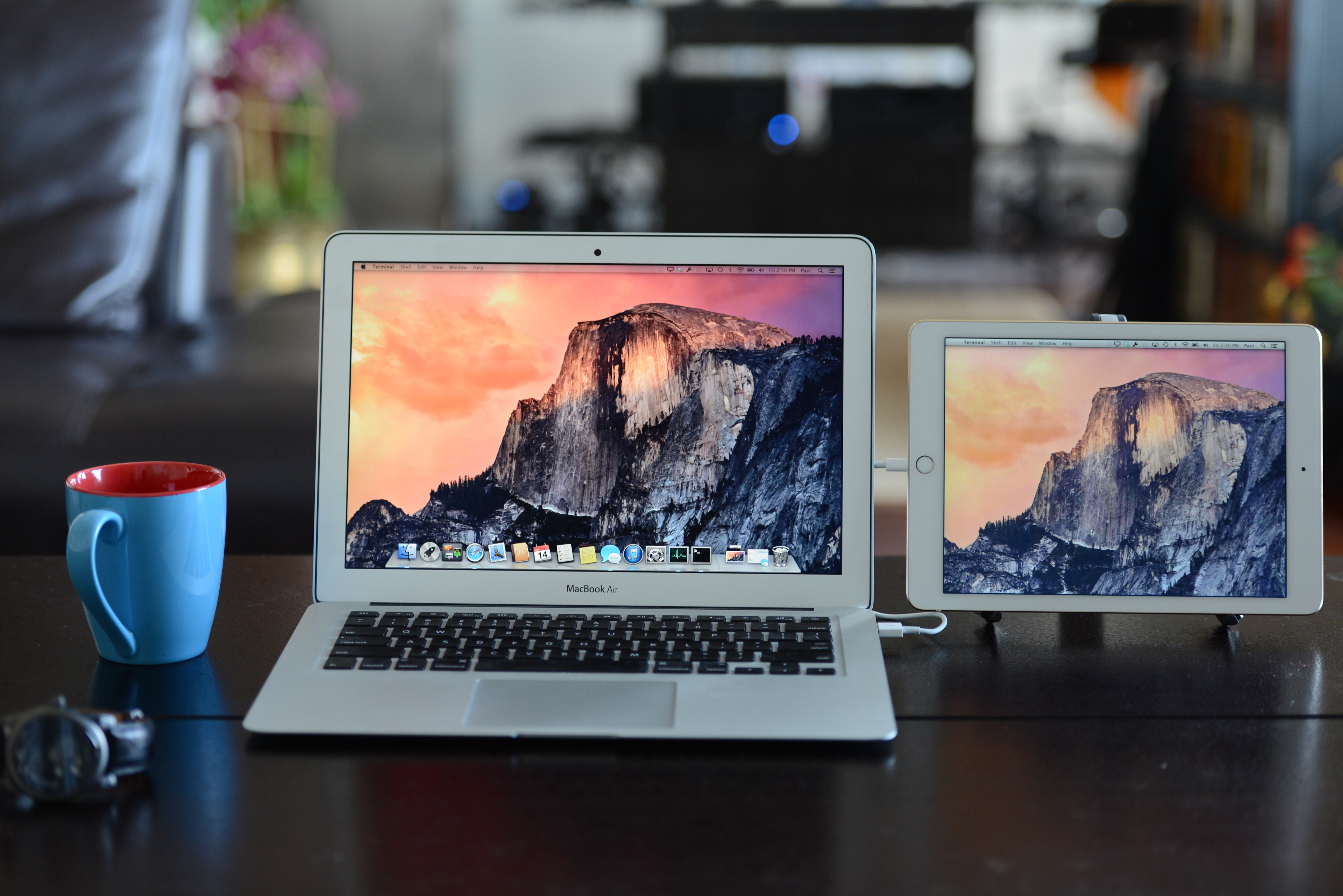
Apple has a new feature it’s introducing for the Mac in macOS 10.15 Catalina that is admittedly amazing for anyone like me who happens to have both an iPad and a Mac. It’s called ‘Sidecar,’ and it lets you use your iPad as a second display – wired or wirelessly, and with Apple Pencil support for iPads that work with that stylus.

Based on what we saw at Apple’s WWDC 2019 on stage today, this should work pretty seamlessly out of the box, without anything else to install or configure. It’ll also provide support for Mac apps that already work with drawing tablets, including crucial industry stand-by Adobe Creative Suite.

This is basically something that people have been asking for since day one with the iPad, and as with most obvious omissions in Apple software and features, third-parties sprung up to fill the gap. One of the earliest was Rahul Dewan, an ex-Apple engineer who used his expertise to create Duet Display, a wired/wireless display mirroring and extension app for iPad that continues to be incredibly useful. Likewise, Astropad provides a suite of offerings that can extend your Mac display to your iPad, with specialized offerings targeting digital artists.

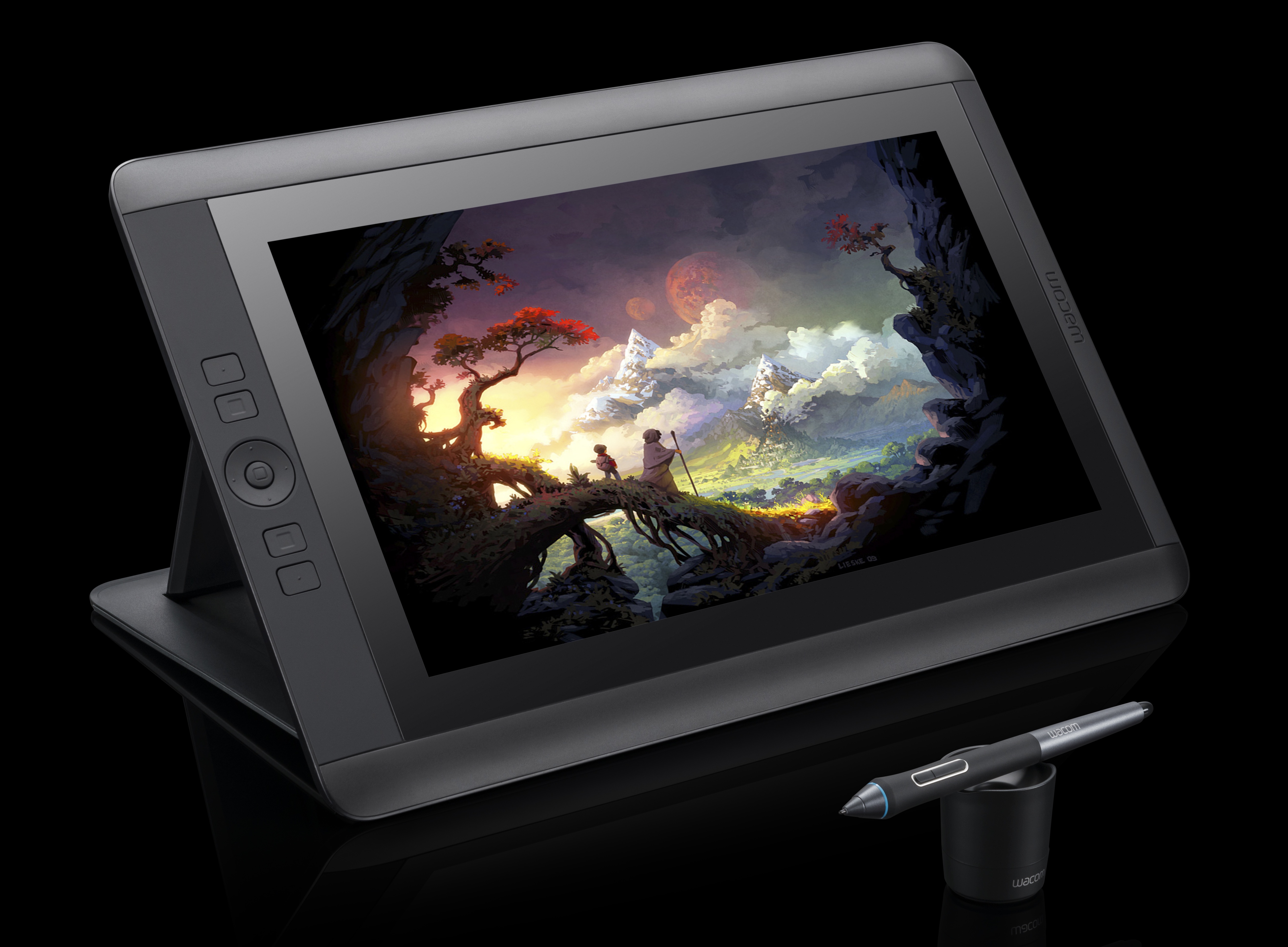
And then there’s Wacom, which has long been the default choice for professional artists and animators who need to do the bulk of their work digitally. This company’s Cintiq line was, for a long time, the only real option available for anyone who wanted a high quality drawing tablet that supported stylus input directly on the display. They were also so pricey that you could really only justify picking one up if digital art was what you did for a living.

Wacom has continued to innovate with its Cintiq Pro line, and recently introduced a 16-inch Cintiq that’s far more affordable, likely in part as a response to the iPad line’s widening Apple Pencil support. Other, more affordable alternatives are also plentiful on Amazon .

But Sidecar poses a threat to both Wacom, and especially to those third-party iPad apps mentioned above. Which is, unfortunately, one of the risks you inevitably incur when you build on anyone’s ecosystem.

Apple isn’t shy about incorporating features that it once considered too fringe to do itself into its core platform, even if that steps on the toes of some of its ecosystem partners. The thing is, when it offers clear consumer value, and ups the overall feeling that you’re getting your money’s worth when you invest in their hardware, it’s hard to fault them for doing so.

03 Jun 2019

Farewell iTunes: Apple brings standalone Music, Podcasts and TV apps to Mac

Apple is dismantling its aging iTunes software with today’s announcement that it’s launching standalone versions of its Music, Podcasts and TV apps for Mac users on the next version of macOS, Catalina. These same apps are currently available on iOS where they’re separate from Apple’s two marketplace apps, the iTunes Store and the App Store.

The company announced the end of iTunes today at its Worldwide Developer Conference, where Apple VP of Engineering Craig Federighi poked fun at iTunes’ bloat.

“Customers love iTunes and everything it can do. But if there’s one thing we hear over and over, is can iTunes do even more?,” he teased before jokily presenting a version of iTunes that bundles in other Apple apps like Calendar and Mail, which got a laugh.

In reality, iTunes’ individual components are getting their own Mac apps.

The new Music app will be based on iTunes, and will support several standard iTunes features including smart and personalized playlists, library management, and Apple Music streaming as previously reported in a leak ahead of WWDC.

Syncing your iOS device, however, has been left to the Finder. That is, when you plug in your iPhone to your Mac, nothing happens on your screen. Instead, you can open Finder where you’ll find your device and all the syncing options there.

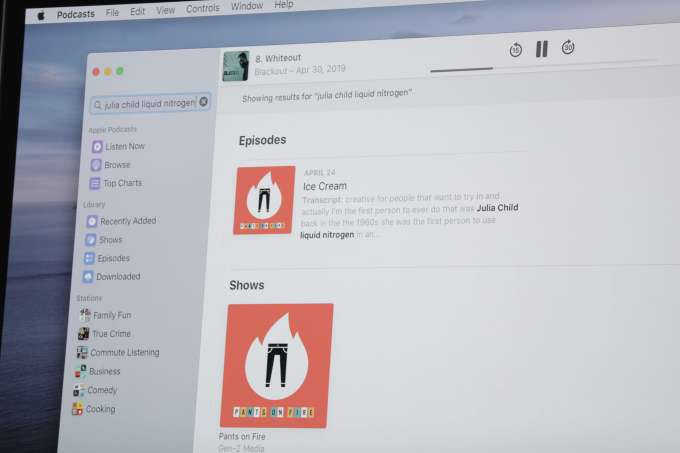
Meanwhile, the Podcasts app for Mac offers a way to search, discover, subscribe and listen to your favorite audio programs, much as it does on iOS. Your listening data will be synced across devices, and you can listen directly in the new app, as well.

But it’s also got a new trick: it will now use machine learning technology to index the spoken words in podcasts. That will allow you to find more podcasts — or even individual episodes — that reflect your interests.

As on Apple TV and iOS, the TV app will allow Mac users to access third-party streaming services and premium channels, buy or rent movies and TV shows from Apple, authenticate with their cable provider to access content in “TV Everywhere”-powered apps, and stream the new original content from Apple TV+, launching this fall.

Apple had previously announced its intention to bring a TV app to the Mac, as part of its larger plans for its streaming TV service, Apple TV+

The new streaming service will include a variety of original content Apple has either funded or acquired, including TV series and movies. To make this content more accessible, Apple is also bringing its TV app to third-party platforms for the first time, including smart TVs, streaming boxes, and streaming sticks.

Apple first began porting some of its iOS apps to the Mac starting last year as part of a larger effort focused on making it easier for iOS apps to work on Mac.

At WWDC 2018, Apple announced its plans to port its own Stocks, News, Home and Voice Memos to macOS.

It clarified at the time that it was not “merging its operating systems,” as had been rumored. Instead, its Mac apps had been built using new technologies (reportedly codenamed Marzipan) that make it easier for developers to bring iOS apps to the Mac. Apple didn’t clarify on stage which technologies it used in breaking up iTunes.

There were hints ahead of today’s event that Apple was planning to shift some aspects of iTunes to their own, standalone apps. It shut down the social media accounts for iTunes on both Facebook and Instagram, and began to shift iTunes links to a new Music domain. 

Rumors pointed to some minor updates for Apple’s Books app on Mac as well, but these were not mentioned on stage.


03 Jun 2019

Photos on iPhone is about to look completely different

When you need to find a photo on your iPhone, what do you do? There are tons of ways, but let’s be honest. You probably just go to the camera roll and scroll through at lightning speed, trusting your eyes to pick out the target shot. That may change with Apple’s new layout for Photos, which organizes shots into easy-to-browse days, months, and years.

Right now the Photos app is kind of a mess. There are so many ways your photos are organized that it feels like none is the “main” one. The “For You” tab has a best of the last (insert random duration here) and randomly selected photos from random periods; Search shows me “one year ago,” “spring,” “trips,” and “dining” — great, thanks! And even the chronologically listed “Photos” tab has such tiny images that it’s hard to pick out the ones you want. So we all just go to camera roll and scroll and scroll.

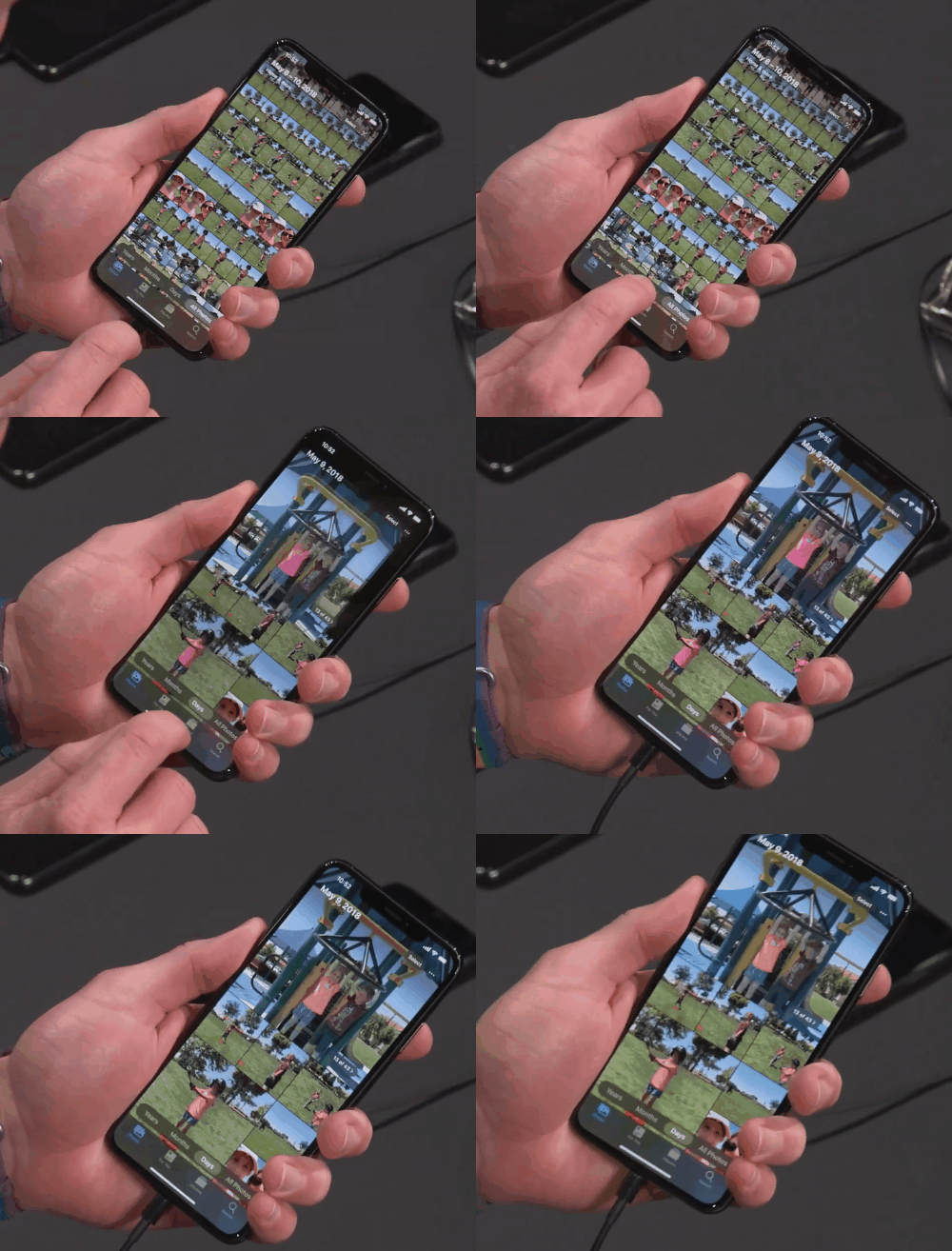
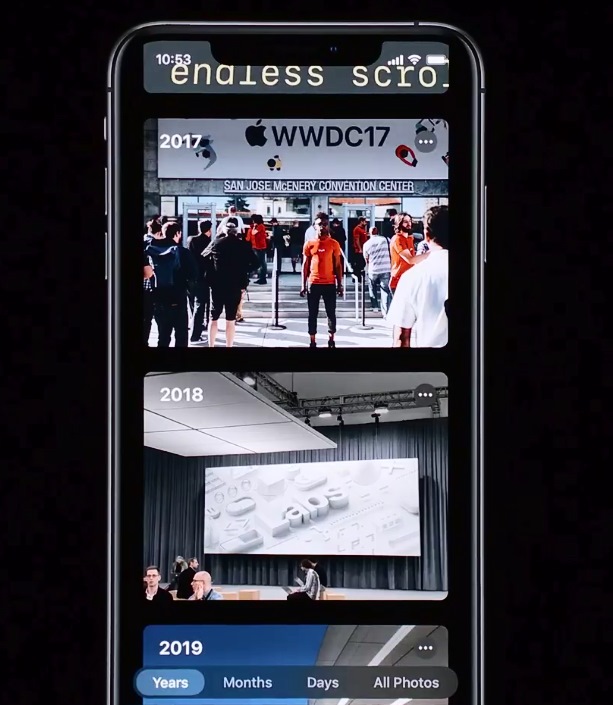
That may change with the Days, Months, Years theme Apple just announced at WWDC. Under the default photos tab in the Photos app, you’ll now see a new set of tabs — yeah, probably too many tabs — with the different durations on it.

The default mode looks a lot like camera roll. But when you hit “Days,” each day shows as a selection of highlighted images, large and mosaiced, and with live photos active. Each day is marked by a full-width shot, so you can easily slide down to the next day — more recent shots are towards the bottom.

Flip over to Months, and it compresses each calendar month of shots into a handful of events, such as events or locations the system has detected. Years does the same thing, except as the “cover” for each year’s album it shows an image from the same day or period — for example, if it’s someone’s birthday party, you’ll see shots from when you (hopefully) attended their party in years past.

Of course Photos already had a “on this day” type feature, but this makes much more sense to me. You can dive into a year and it breaks into months, and of course months break into days. It’s just a more efficient way of scrubbing through your camera roll — though I have no doubt we’ll still do that from time to time.

In a way this is a minor change to iOS, but because users interact with Photos so much, it could significantly change how you think about getting to the images you want.

03 Jun 2019

iOS apps will run on macOS with Project Catalyst

Apple announced during its WWDC keynote that iOS apps will run on macOS, starting with the next major release of macOS this fall — macOS Catalina. Third-party developers will be able to release their iOS apps on the Mac starting this fall.

This might seem like a small change, but it requires a ton of radical changes behind the scene. Last year, Apple teased this move by porting Voice Memos, Apple News, Stocks and Home to macOS.

Screen Time is coming to the Mac, as well as the new iOS 13 features, such as the new photo gallery, folders in Notes, a redesigned Reminders app.

And yes, Apple is using Project Catalyst for those apps. That project is what you may already know under Apple’s internal codename Marzipan.

Catalyst is available to developers today with the first beta version of macOS Catalina. Chances are many developers will play with the feature this summer.

Gameloft, Twitter and Atlassian have already ported apps to macOS. Yes, there will be a native Twitter app available to download for the next version of macOS. And developers will be able to ship iOS apps as soon as this fall when users update to macOS Catalina.

This version of macOS is also the first one that doesn’t include iTunes — RIP, iTunes. Apple is breaking out iTunes into multiple apps — Apple Music, Apple TV and Apple Podcasts.

Apple Music is focused exclusively on music, which means that it should be much faster than iTunes. The Apple Podcasts app syncs your progress across your devices. Apple now indexes the spoken content of podcasts so that you can search and find podcast episodes.

The Apple TV app works pretty much like the Apple TV app on the Apple TV device (I know, it’s confusing) and iOS devices. You can now stream videos at better quality — 4K HDR with Dolby Atmos and Dolby Vision.

If you want to sync an iOS device with your Mac, you can access that feature from the Finder — it looks exactly the same as the iTunes syncing page.

You can use your iPad as a secondary display. It works like Duet Display or Luna Display. You can also use an Apple Pencil to draw stuff and edit photos. It works with a cable or wirelessly.

When it comes to accessibility, voice control is coming to macOS and iOS. For instance, you can open apps, scroll by saying “scroll down”, click on buttons and dictate text as well as emojis. Many buttons and areas are labeled with a number so that you can tap or click on an element by dictating it.

There’s a new macOS (and iOS app) called Find My. It combines Find My iPhone and Find My Friends. And you can now locate devices when they’re offline. Offline devices send an encrypted and anonymous signal to other Apple devices in the same area. If you forget your iPhone in an underground bar, a neighbor might catch the signal and send the location to the Find My app for instance.

But the big news is clearly Catalyst. Details are still thin, and Apple will most likely share more information this afternoon during its State of the Union WWDC keynote.