Blog

28 Aug 2018

Another food delivery startup, Foodsby, rakes in venture capital funding

Venture capitalists are still hungry for food delivery startups.

Foodsby, the provider of a lunch delivery service based out of Minneapolis, has raised a $13.5 million Series B led by Piper Jaffray Merchant Banking. Greycroft Partners, Corazon Capital and Rally Ventures also participated. With the new capital, Foodsby plans to expand to 15 to 25 new markets. The round brings Foodsby’s total raised to $21 million.

“We have established a successful model for new market entry with a tried and true combination of talent and technology,” Foodsby founder and CEO Ben Cattoor said in a statement. “We look forward to building on our early successes and learnings to deliver continued growth for our investors and our team.”

Founded in 2012, the company connects employees in office buildings in 15 cities with local restaurants. How it works: A hungry worker uses Foodsby to pre-order a meal from a restaurant in its network, Foodsby aggregates all the orders it receives, sends the orders to the restaurants and the restaurants then make all the deliveries at once, streamlining what can be a logistically complicated process. 

That strategy, the company says, sets Foodsby apart from competitors. Because Foodsby only works with businesses and has restaurants make the deliveries rather than its own fleet of delivery agents, the overall costs of the operation are lower. It’s free to join the Foodsby network as both a company that wants to provide the service to its employees and as a restaurant. Deliveries cost $1.99 per person. 

While continued VC support may give the company a vote of confidence, the food delivery space is crowded and competitive. Foodsby is not unlike Peach, a Seattle-based office lunch delivery service that shed one-third of its staff in March. Peach had also landed VC support, raising about $11 million from Madrona and others. Munchery, another similar meal delivery service, also looks to be in hot water, laying off 30 percent of its workforce in May and ceasing operations in Los Angeles, Seattle and New York.

Food delivery startups are hit or miss, but VCs continue to flock to investment rounds in hopes of betting on the next Uber of food delivery — though Uber itself is really the Uber of food delivery, its food delivery service is reportedly the most profitable arm of the ride-hailing giant. And Uber, much like Amazon, is not a company you want to be going head-to-head with. 

28 Aug 2018

Robinhood gives investors international targets to aim for with launch of ADR products

Robinhood, the app-based investment platform for all your speculative investing needs, has launched a tool for investors to throw money at publicly traded international companies through the rollout of American Depositary Receipts.

ADRs are the investment mechanism that U.S. investors use to invest in foreign companies whose shares aren’t traded on U.S. stock exchanges like the New York Stock Exchange or the Nasdaq, and as of today, the company said it would roll out opportunities to invest in 250 stocks from global companies.

The list of potential investment targets include Tencent, Nintendo, and Adidas the company said. And opportunities will exist to invest in public companies from China, Japan, Germany, Canada and the United Kingdom whose shares trade in the U.S.

A full list can be found by searching “New on Robinhood” in the company’s app or on desktop.

For the francophiles in the room, French companies like LVMH, Michelin, and Ubisoft Entertainment will be made available soon, Robinhood said in a statement.

28 Aug 2018

Will big brands disrupt higher education?

In the years to come, who will hospitality hiring managers trust to credential students: Cornell University or the Four Seasons? Will it be Google or Penn State that sets the standards that determine who qualifies as a good computer programmer? Could GE define competency in aeronautic engineering rather than Vaughn College? Should employers place more value in a fashion credential backed by the editors of Vogue or the Pratt Institute?

Institutions of higher education are, of course, not unfamiliar with branding. The brands of top-tier institutions shape not just consumer sentiment, but the market and regulatory landscapes that have governed their existence for decades. The single greatest determinant of U.S. News & World Report rankings is reliance on “reputation.” Eight of the top 20 U.S. News universities are Ivy League schools which are, on average, more than 250 years old.

Brands evolve slowly in any industry. Just ask Arizona State University’s Michael Crow or other leaders of a cadre of innovative colleges and universities that tout dramatic accomplishments, but fail to crack the spaces dominated for centuries by big brands like Harvard, Yale and Princeton.

But the role of brands in higher education may be changing. Mega brands from outside education are beginning to transform the way students and employers think about learning.

Owners of global consumer brands sense two broad shifts in higher education that make it ripe for “brand extensions.” First, traditional education is under assault. Employers are increasingly skeptical of the correlation between a college performance and workplace outcomes. Depending on how you count, coding schools may be graduating as many computer scientists as traditional universities.

Peter Thiel offers $100,000 to brilliant minds willing to drop out of college. Major companies like Google and IBM are looking beyond the degree to find employees with the skills and competencies they demand — regardless of whether they went to college. The New York Times partnered with Cambridge Information Group, which operates Sotheby’s Master’s degree-granting Institute of Art, on art business, contemporary art and fine and decorative arts and design. And startup MasterClass has made a splash by teaming up with celebrities like Wolfgang Puck, Serena Williams and Malcolm Gladwell to teach classes in their respective fields.

Will it be Google or Penn State that sets the standards that determine who qualifies as a good computer programmer?

The definition of education credential, too, is changing. As the shelf life of skills shrinks, the degree is fast losing relevance as the primary unit of measurement for post-secondary education. Our nation’s colleges and universities are, increasingly, using digital credentials to help their graduates show-what-they-know and enable employers to make sense of skills or accomplishments. Even the U.S. Department of Education is supporting “experimental sites” that decouple financial aid from the credit hour in favor of a focus on the underlying competencies that employers value most.

The economics of higher education also makes sense to big brands. Consider the potential for old-line media companies faced with falling revenues as digital distribution models take market share and compete for advertising dollars. Media brands desperately seeking product extensions understand that education is a big market, with over $500 billion of higher education spend in the U.S. alone. No-name private colleges charge $50,000 in tuition and fees. Name-brand colleges create massive profits, and emerging brands like General Assembly command premium fees to train students for the hybrid jobs of the future. Contrast the lifetime value of credential seekers with average revenues per customer selling ads and magazine subscriptions.

But the opportunity for brands is not just economic. Media companies bring other assets to the table, including more curated, and often times high-quality, content than virtually any university. Imagine working with Thomas Friedman, New York Times columnist and author of The World Is Flat, to create a course on the Middle East — or a product manager of Samsung on mobile computing.

This is not an either-or for universities. Parsons partnered with Teen Vogue Magazine to launch Certificate in Fashion Industry Essentials. Bellevue University teamed up with Chipotle to build a restaurant-oriented business degree program that maps to the Chipotle career path. And Queen Latifah — perhaps one of the best lessons in branding — is building with Strayer University an online course for aspiring entrepreneurs covering confidence and perseverance. Smart global brands and universities with stellar reputations will partner with each other to build up their respective competencies. Great universities will bring tradition and academic excellence — while the global brand has connections to employers and incredible content.

The formula is simple: Well-structured, branded programs will be superior to an unbranded degree. They will give elite institutions a run for their money. It’s only a matter of time before the U.S. News & World Report rankings are riddled with global brands.

28 Aug 2018

New Knowledge just raised $11 million more to flag and fight social media disinformation meant to bring down companies

Back in January, we told you about a young, Austin, Tex.-based startup that fights online disinformation for corporate customers. Turns out we weren’t alone in finding it interesting. The now four-year-old, 40-person outfit, New Knowledge, just sealed up $11 million in new funding led by the cross-border venture firm GGV Capital, with participation from Lux Capital. GGV had also participated in the company’s $1.9 million seed round.

We talked yesterday with co-founder and CEO Jonathon Morgan and the company’s director of research, Renee DiResta, to learn more about its work, which appears to be going well. (They say revenue has grown 1,000 percent over last year.) Our conversation, edited for length, follows.

TC: A lot of people associate coordinated manipulation by bad actors online with trying to disrupt elections here in the U.S. or with pro-government agendas elsewhere, but you’re working with companies that are also battling online propaganda. Who are some of them?

JM: Election interference is just the tip of the iceberg in terms of social media manipulation. Our customers are a little sensitive about being identified, but they are Fortune 100 companies in the entertainment industry, as well as consumer brands. We also have national security customers, though most of our business comes from the private sector.

TC: Renee, just a few weeks ago, you testified before the Senate Intelligence Committee about how social media platforms have enabled foreign-influence operations against the United States. What was that like?

RD: It was a great opportunity to educate the public on what happens and to speak directly to the senators about the need for government to be more proactive and to establish a deterrent strategy because [these disinformation campaigns] aren’t impacting just our elections but our society and American industry.

TC: How do companies typically get caught up in these similar practices?

RD: It’s pretty typical for consumer-facing brands, because they are so high-profile, to get involved in quasi-political conversations, whether or not they like it. Communities that know how to game the system will come after them over a pro-immigration stance for example. They mobilize and use the same black market social media content providers, the same tools and tactics that are used by Russia and Iran and other bad actors.

TC: In other words, this is about ideology, not financial gain.

JM: Where we see this more for financial gain is when it involves state intelligence agencies trying to undermine companies where they have nationalized an industry that competes with U.S. institutions like oil and gas and agriculture companies. You can see this is the promotion of anti-GMO narratives, for example. Agricultural tech in the U.S. is a big business, and on the fringes, there’s some debate about whether GMOs are safe to eat, even though the scientific community is clear that they’re completely safe.

Meanwhile, there are documented examples of groups aligned with Russian intelligence using purchased social media to circulate conspiracy theories and manipulate the public conversation about GMOs. They find a grain of truth in a scientific article, then misrepresent the findings through quasi-legitimate outlets, Facebook pages and Twitter accounts that are in turn amplified by social media automation.

TC: So you’re selling software-as-a-service that does what exactly?

JM: We have a SaaS product and a team of analysts who come out of the intelligence community and who help customers understand threats to their brand. It’s an AI-driven system that detects subtle social signs of manipulation across accounts. We then help the companies understand who is targeting them, why, and what they can do about it.

TC: Which is what?

JM: First, they can’t be blindsided. Many can’t tell the difference between real and manufactured public outcry, so they don’t even know about it when it’s happening. But there’s a pretty predictable set of tactics that are used to create false public perception. They plant a seed with accounts they control directly that can look quasi-legitimate. Then they amplify it via paid automation, and they target specific individuals who may have an interest in what they have to say. The thinking is that if they can manipulate these microinfluencers, they’ll amplify the message by sharing it with their followers. By then, you can’t put the cat back in the bag.  You need to identify [these campaigns] when they’ve lit the match, but haven’t yet started a fire.

At the early stage, we can provide information to social media platforms to determine if what’s going on is acceptable within their policies. Longer term, we’re trying to find consensus between governments and also social media platforms themselves over what is and what isn’t acceptable — what’s aggressive conversation on these platforms and what’s out of bounds.

TC: How can you work with them when they can’t even decide on their own policies?

JM: First, different platforms are used for different reasons. You see peer-to-peer disinformation, where a small group of accounts drives a malicious narrative on Facebook, which can be problematic at the very local level. Twitter is the platform where media gets its pulse on what’s happening, so attacks launched on Twitter are much more likely to be made into mainstream opinion. There are also a lot of disinformation campaigns on Reddit, but those conversations are less likely to be elevated into a topic on CNN, even while they can shape the opinions of large numbers of avid users. Then there are the off-brand platforms like 4chan, where a lot of these campaigns are born. They are all susceptible in different ways.

The platforms have been very receptive. They take these campaigns much more seriously than when they first began looking at election integrity. But platforms are increasingly evolving from more open to more closed spaces, whether it’s WhatsApp groups or private Discord channels or private Facebook channels, and that’s making it harder for the platforms to observe. It’s also making it harder for outsiders who are interested in how these campaigns evolve.


28 Aug 2018

Yahoo still scans your emails for ads — even if its rivals won’t

You’re not the only one reading your emails.

A deep dive in The Wall Street Journal on Tuesday dug out new details on a massive email scanning operation by Oath, the Verizon-owned subsidiary that’s the combined business of AOL and Yahoo. The email scanning program analyzes over 200 million AOL and Yahoo inboxes for data that can be sold to advertisers. (Disclosure: TechCrunch is owned by Verizon by way of Oath.)

The logic goes that by learning about its users, the internet giant can hone its ad targeting effort to display the most relevant ads.

But where other major email providers have bailed from email scanning amid privacy scandals and security issues, Oath remains the outlier.

Google ended its ad-targeting email scanning operation across its consumer Gmail service last year — a decision lauded after facing criticism for years over the practice — though the company still uses machine learning to help you reply to emails. Meanwhile, Microsoft told TechCrunch in a statement that it does “not use email content for ad targeting in any way, anywhere in Microsoft.” And Apple has never scanned its customers’ inboxes for advertising, though its privacy policy says it can access your data for law enforcement purposes or for more vague reasons like “issues of public importance.”

So it’s basically just Oath, then.

Scanning the inboxes of its hundreds of millions of email users is a gutsy move for the year-old internet giant, which prior to its rebranding was responsible for two data breaches at Yahoo exposing over thee billion users’ data and a separate breach at AOL in 2014. Yahoo reportedly built a secret customer email scanning tool at the behest of the US intelligence community, which led to the departure of former Yahoo infosec chief Alex Stamos, who until recently was Facebook’s chief security officer.

Although the email scanning program isn’t new — announced earlier this year — it does go deeper than Gmail’s scanning ever did.

“Yahoo mined users’ emails in part to discover products they bought through receipts from e-commerce companies such as Amazon.com,” said the WSJ. “In 2015, Amazon stopped including full itemized receipts in the emails it sends customers, partly because the company didn’t want Yahoo and others gathering that data for their own use.”

Although some content is excluded from the scanning — such as health and medical information — it remains to be seen how (or even if) Oath can exclude other kinds of sensitive data from its customers’ inboxes, like bank transfers and stock receipts.

Yahoo Mail’s privacy policy says email accounts are subject to “manual review,” which allows certain Oath employees access to inboxes.

TechCrunch asked Oath and its parent Verizon about what assurances they could provide that confidential emails and information won’t be collected or used in any way. We also asked how consent was obtained from users in Europe, where data protection rules under the newly-implemented GDPR regulations are stricter.

Neither Verizon or Oath responded by our deadline.

It should go without saying, email isn’t the most sensitive or secure communications medium, and inboxes should never be assumed to be private — not least from law enforcement and the companies themselves.

Deleting your account might be overkill, especially if you don’t want anyone to hijack your email address once it’s recycled. But if there’s ever been a time to find a better inbox, now might be it.

28 Aug 2018

Distributor of plans for 3D-printed guns puts his product back in circulation

Cody Wilson, the self-described crypto-anarchist who on Monday was blocked from distributing schematics for 3D-printed guns online, is making good on his promise for “one hell of a week.”

Exploiting what Wilson says is a loophole in the judge’s injunction against the distribution of the plans for how to print a firearm using 3D printers, Wilson has replaced the “download” option for the schematics on his website with an option to purchase.

At a news conference in Texas, Wilson said he had begun selling the plans on Tuesday morning and had already received nearly 400 orders, according to a report by The Associated Press

“Anyone who wants to get these files is going to get them,” the AP quoted Wilson. “They can name their own price.”

By selling the schematics and distributing them via email or secure digital download, it looks like Wilson may just skirt the judges injunction on the distribution of the plans.

As Vice noted in its report on Wilson’s plans, the judge who issued the ruling wrote that, “Regulation under [The Arms Export Control Act] means that the files cannot be uploaded to the internet… But they can be emailed, mailed, securely transmitted, or otherwise published within the United States.”

The Arms Export Control Act is the original statute that the State Department cited when it first demanded that Wilson pull his blueprints. Then, in 2015, Wilson counter-sued the State Department claiming that his First Amendment free speech rights had been violated by the State Department order.

After several years of litigation, the government blinked and, earlier this year, settled with Wilson — acceding to the argument that he had a First Amendment right to distribute the plans.

However, in a Monday ruling, Judge Robert S. Lasnik of the Federal District Court in Seattle ruled in favor of attorneys general from Washington, D.C., and 19 states who argued that the distribution of 3D-printed guns posed a threat to national safety.

The judge wrote that any First Amendment arguments and issues “are dwarfed by the irreparable harms the states are likely to suffer if the existing restrictions are withdrawn and that, over all, the public interest strongly supports maintaining the status quo through the pendency of this litigation.”

That ruling extends a July 31 temporary restraining order on distribution of the files until the case brought by the attorneys general is settled.

By distributing the plans for the 3D-printed weapons, Wilson runs the risk of being held in contempt of court — something that the anarchist appears to relish.

Importantly, the plans have already made their way onto other platforms. Earlier this week, a book that compiled all of the schematics in one bound edition was being sold on Amazon. The online retailer took it down.

28 Aug 2018

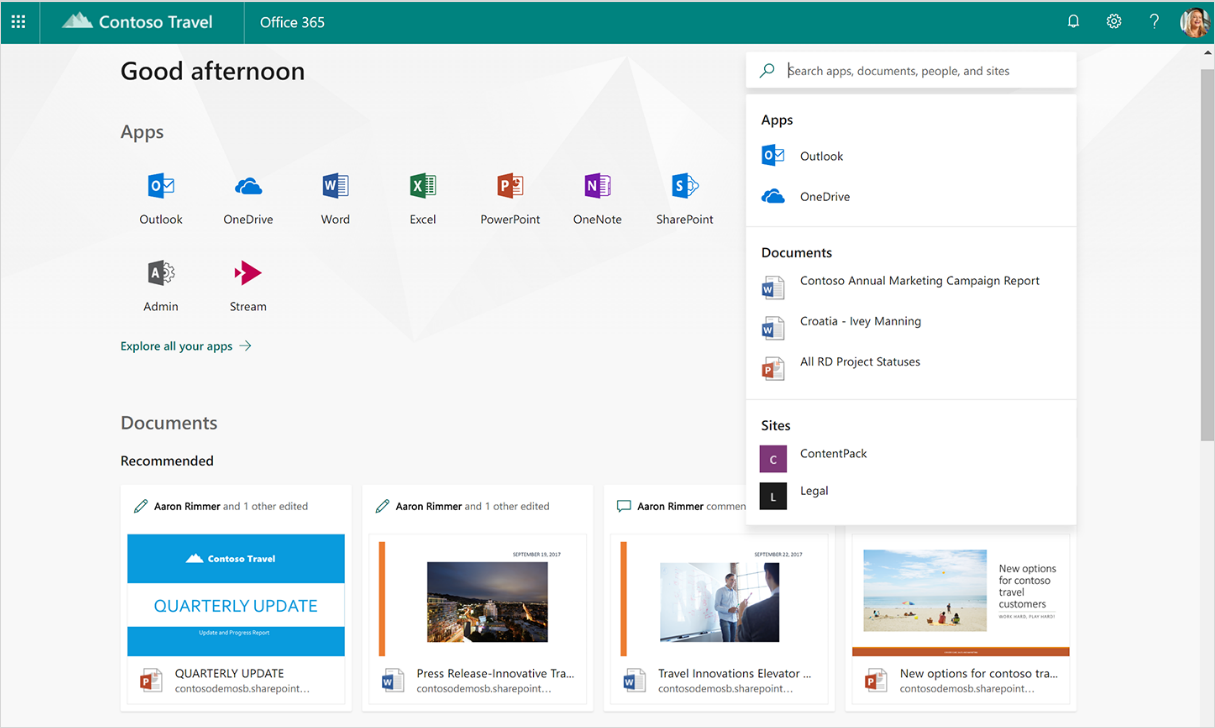
Microsoft will soon automatically transcribe video files in OneDrive for Office 365 subscribers

Microsoft today announced a couple of AI-centric updates for OneDrive and SharePoint users with an Office 365 subscription that bring more of the company’s machine learning smarts to its file storage services.

All of these features will launch at some point later this year. With the company’s Ignite conference in Orlando coming up next month, it’s probably a fair guess that we’ll see some of these updates make a reappearance there.

The highlight of these announcements is that starting later this year, both services will get automated transcription services for video and audio files. While video is great, it’s virtually impossible to find any information in these files without spending a lot of time. And once you’ve found it, you still have to transcribe it. Microsoft says this new service will handle the transcription automatically and then display the transcript as you’re watching the video. The service can handle over 320 file types, so chances are it’ll work with your files, too.

Other updates the company today announced include a new file view for OneDrive and Office.com that will recommend files to you by looking at what you’ve been working on lately across the Microsoft 365 and making an educated guess as to what you’ll likely want to work on now. Microsoft will also soon use a similar set of algorithms to prompt you to share files with your colleagues after you’ve just presented them in a meeting with PowerPoint, for example.

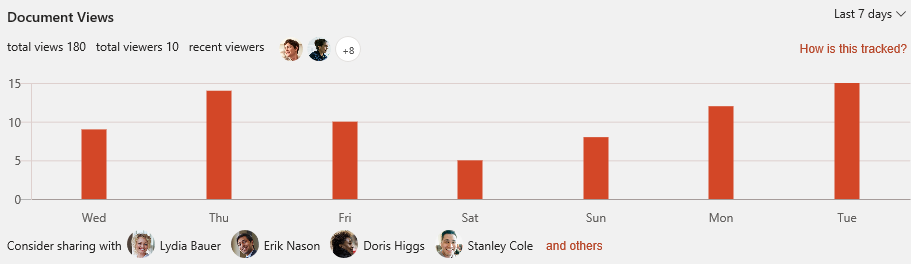
Power users will also soon see access statistics for any file in OneDrive and SharePoint.

28 Aug 2018

Facebook has committed to using 100% renewable power for global operations by 2020

Earlier today, Facebook said that it has committed to reducing its greenhouse gas emissions by 75 percent and using 100 percent renewable energy to power global operations at the social networking giant by the end of 2020.

So, while the company may have problems keeping foreign nationals from using the platform for influence operations (or garbage influencers from engaging in influence operations), at least they’ll be doing it with less of an effect on climate change.

Facebook gave itself a well-deserved pat on the back for its pace of acquiring renewable energy. The company bought over 3 gigawatts of new solar and wind energy since its first renewable energy purchase in 2013 (that includes 2.5 gigawatts in the past 12 months alone — a rate of acquisition that makes the intervening years look… well… kind of paltry).

What’s especially good about the Facebook renewable purchases is that they’re not just offset agreements — deals where a company buys renewable energy in some far-flung geography to offset the power they’re buying in local markets that relies on traditional carbon-based fuel sources.

“All of these wind and solar projects are new and on the same grid as our data centers,” the company said. “That means that each of these projects brings jobs, investment and a healthier environment to the communities that host us — from Prineville, Oregon, and Los Lunas, New Mexico, to Henrico, Virginia, and Luleå, Sweden.”

The targets that Facebook is making public today are part of the company’s commitment to the Paris Agreement through the “We Are Still In” initiative, the company said.

For Facebook, the announcement is something of a victory lap. Back in 2015, the company set a goal of having 50 percent of its power supplied to facilities from renewable energy sources by 2018. It actually hit that target in 2017.

28 Aug 2018

Yes, Slack is having connectivity issues again

No, it’s not just you. Yes, Slack is having connectivity issues yet again. Though this time, they seem a bit less pronounced. I know we’re having some problems off and on, with different channels appearing offline. For the most part, however, communication is still up, so you probably won’t be able to convince your boss to take the rest of the day off. Sorry.

Slack acknowledged the problems on its status page, noting, “Folks are having troubles connecting to their workspaces. We’re looking into the cause and will have updates shortly.” The site experience similar issues earlier this month and back in June.

We’ll update shortly after those updates arrive shortly. Shortly.

28 Aug 2018

Instagram announces verification requests, transparency tools and stronger 2FA

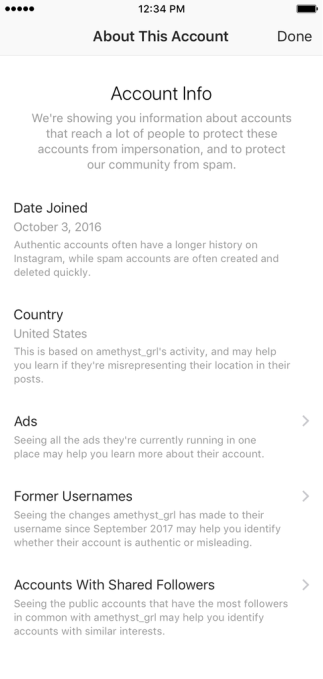
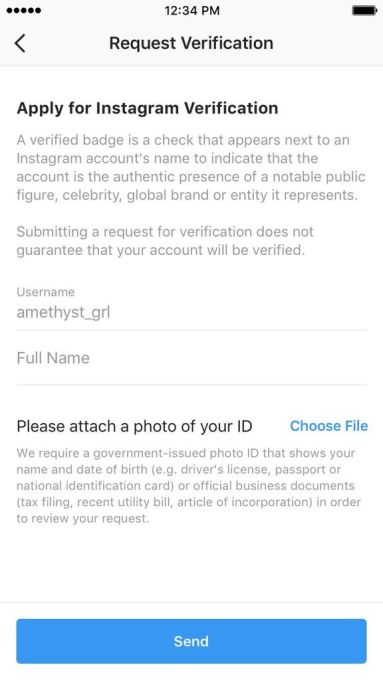
Instagram has introduced a wide-ranging set of new tools today with security and transparency in mind. In a blog post titled “New Tools to Keep Instagram Safe,” the company is announcing three significant updates: an “about this account” section to provide users more context about accounts with large followings, a form through which accounts can request a coveted blue verified badge and support for third-party authenticator apps.

Instagram’s new “About this Account” section is designed to give users more information that they can use when evaluating the legitimacy of an account. The feature will be available by tapping the menu button from an account with substantial reach and will provide information like when an account was created, the country in which it is based, accounts that share followers, a lineage of that account’s username changes over the last year.

The feature will also link accounts with large audiences to the Instagram ads they are running, a nod to recent conversations around ad transparency in light of Russian government-sponsored political ads and disinformation seeping into social platforms.

According to Instagram, “In September, people who have accounts that reach large audiences can review the information about their accounts that will soon be publicly available.” When that period is over, the About This Account tool will launch to users around the globe.

The second major Instagram change will offer accounts a path toward verification on the platform, standardizing a process that’s generally been opaque. A blue verified badge can be requested through a user’s own profile by tapping the menu icon, choosing Settings, and “Request Verification.” Instagram will then review the request, asking users to “provide your account username, your full name and a copy of your legal or business identification,” information that will not be made available to the public.

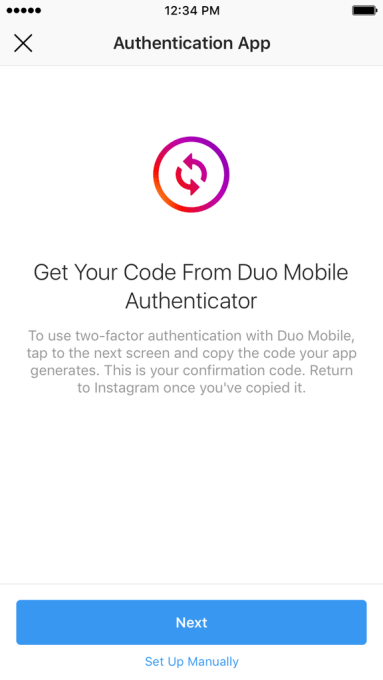
Last but certainly not least, Instagram is adding support for third-party authenticator apps like Google Authenticator and DUO Mobile that provide more robust methods of two-factor authentication (2FA). The move is a long anticipated effort to make Instagram more robust against threats to user accounts that target text-based 2FA, which is notoriously vulnerable to sim hijacking attacks.

“We’ve been focused on the safety of our platform since the very beginning, and today’s updates build upon our existing tools, such as our spam and abusive content filters and the ability to report or block accounts,” Instagram Co-Founder & CTO Mike Krieger said in a statement about the updates.

“We know we have more work to do to keep bad actors off Instagram, and we are committed to continuing to build more tools to do just that.”