12 Apr 2018

Marketing platform Punchh raises $20M Series B to give brick-and-mortar retailers better data analytics

Founded in 2010 as an online loyalty card service, Punchh has since grown into a marketing platform serving more than 115 restaurant chains, including Pizza Hut and Quiznos. Now it’s raised a $20 million Series B to expand into more retail verticals and increase the use of artificial intelligence and machine learning in its cloud software. The funding was led by Sapphire Ventures, with participation from returning investor Cervin Ventures.

Along with its angel and Series A financing, this brings Punchh’s total funding so far to about $31 million. The startup says its goal is to give brick-and-mortar stores the same level of data analytics as e-commerce giants like Amazon.

Punchh’s platform enables restaurants to digitize their customer loyalty programs and complements that with tools like Punchh Acquire, which is designed to help businesses turn casual customers into regulars by promoting offers through multiple channels, including email, SMS, social media, Apple Pay and eClub.

The company currently has 145 employees and is based in San Mateo, California, with offices in Austin, Texas and Delhi. This is Punchh’s first funding announcement in three years and the startup’s largest round of financing by far (it raised $9.5 million Series A in 2015).

Co-founder and chief executive officer Shyam Rao says the time was right for Punchh to raise again because it already serves many of the biggest restaurant chains, with 34,000 locations between them, and wanted to tap into demand from retailers in other verticals.

Punchh is now focusing on convenience stores, gas stations and health and beauty brands (clients already include Fantastic Sams hair salons and TruFusion, a chain of fitness studios). The company competes with other digital loyalty and marketing platforms like Stamp Me, LoyalZoo and Stocard. Rao says Punchh’s ability to create campaigns that target a very specific audience sets it apart from rivals. Punchh’s algorithms pulls together data from several sources, including event calendars, weather, local demographics and the purchasing history of individual customers, for what it describes as “micro-moment marketing.”

For example, if cold weather is expected over a holiday weekend, it might send offers for a discounted hot soup and tea set to mothers between the ages of 30 to 55. Punchh claims it increases spending at its customers’ restaurants by 10% to 20%.

“Imagine trying to manage that process of using mountains of data to build customer relationships and tailor every experience, at scale across hundreds of locations. That’s what Punchh does,” says Rao.

In a statement, Jai Das, Sapphire Ventures managing director said “Punchh is already a global leader in digital marketing solutions for restaurants, which alone would be a fantastic reason to invest in the company, but the scope of their technology goes far beyond just restaurants and encompasses all brick-and-mortar stores with a POS.”
12 Apr 2018

HelpSelf uses simple AI to help those in legal trouble

HelpSelf is a AI-assisted legal app that helps you deal with simple issues. Need protection against debt collectors? Need an expungement? Want to deal with domestic violence? This robot can help.

The project is an “automated legal technology company” that automates simple legal procedures. They currently work in the above areas but are moving into housing, family law, certain immigration tasks, and employment law, said Dorna Moini, co-founder of the project.

“We self-funded from the start and are completely bootstrapped. We are making a profit through licensing fees for our document automation platform,” she said. “We use this document automation platform to create all of our new products and license it to lawyers to fund the tools we create. We just brought on another engineer and may be looking for funding in the next few months so we can expand more quickly.”

Moini has a background in trial litigation and worked for BigLaw and Sheppard Mullin. She also worked on civil rights issues in Africa including drafting legislation. Co-founder Michael Joseph has a background in engineering and information security.

The company sells its services to consumers and other lawyers.

“We built this all on our Document Automation Bot, which is available to any lawyer who wants to create similar ‘Turbo-Tax-like’ workflows, either just to streamline their internal work or to contribute to the library of legal tools available to the public,” she said.

“Honestly, there aren’t enough people in this field, especially those creating doc automation tools for access to justice. Apps like DoNotPay have gotten a lot of press in this area for their parking ticket app. Our services are more extensive and we provide lawyers with the tools to create their own version of DoNotPay for any area of law.”

The pair see their niche is vitally important. Because they focus on issues that other services ignore, they can solve real problems and get real justice for people. Competitors, said Moini, “serve small businesses and higher net worth individuals with needs like wills, trusts, and employment agreements.”

“I started HelpSelf because I saw the disparity between the technology available to my legal clients at my law firm and that available to my pro bono clients,” she said. “At the same time, the Trump administration had proposed cutting funding to legal aid to zero from about $400 million. I worked with domestic violence victims and asylum applicants, and set out to build tools that would streamline the process, allowing one lawyer to serve more clients pro bono and allowing individuals to take control of their own legal needs through tech.”

Photo by Ian Roseboro on Unsplash

12 Apr 2018

Firefox updates its iOS web browser to turn Tracking Protection on by default

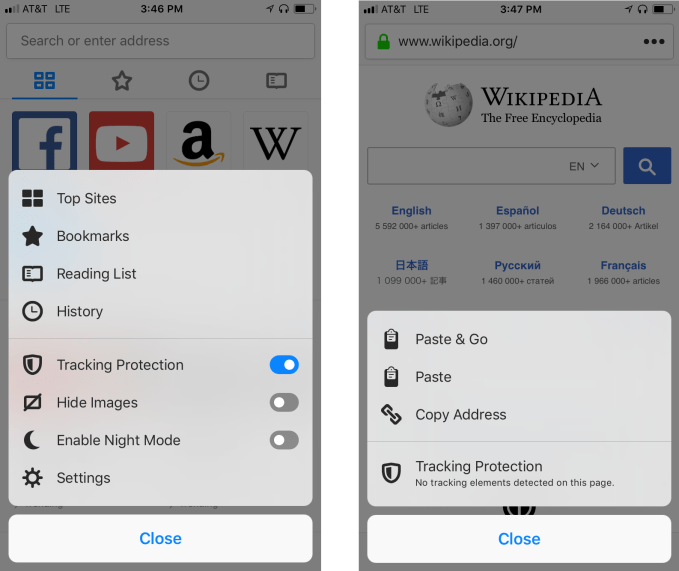
At a time when web users are becoming more concerned about their online privacy and personal data, Mozilla today is launching a new version of its Firefox for iOS web browser that includes Tracking Protection turned on by default. That means when you use the browser, websites won’t be able to track your activity and capture your personal information, unless you explicitly allow a given site to have that ability.

The feature was previously available in Firefox for iOS, but users would have to turn it on for themselves. Now, it’s on by default, Mozilla says, whether the browser is used in Regular mode or set to Private Browsing mode. The latter is the even more private mode which includes both automatic ad and content blocking, and doesn’t keep a history of visited sites.

Firefox’s Tracking Protection is based on the same technology that blocks ads, analytics and social media tracking that’s also used by th Firefox Focus content blocker on Android and iOS, as well as in Firefox for Desktop and Firefox for Android. And its rules about trackers are based on the Disconnect blocklist, which has a specific definition of tracking that’s aimed at protecting individual users’ data from being collection across multiple websites and then retained.

Mozilla says it made the decision to make Tracking Protection the default in response to users’ increased concerns over data privacy.

“At Mozilla we’ve always believed it’s important to respect people’s’ privacy and give them the control to decide which information they want to share, and what information they don’t. Now more than ever consumers are demanding this from the companies with whom they share their data,” says Mozilla, in its announcement about the launch.

Of course, turning on Tracking Protection has another benefit, too. When websites aren’t bogged down with tracking scripts, they tend to load faster. And with better-performing, faster-loading websites, users will also save on mobile data and not drain their battery as quickly.

The change to Tracking Protection is the most notable feature arriving in the latest version of Firefox for iOS, but it’s not the only one. The browser will now also allow iPad users to re-order their tabs, introduces more keyboard shortcuts, and supports drag-and-drop of links between Firefox and other apps.

While Mozilla says the updated version of the Firefox for iOS app is rolling out today, we downloaded the app to a new device and found that Tracking Protection wasn’t yet enabled by default. That’s likely because the updated app is still propagating its way across the App Store, given Mozilla only announced the news about the launch an hour ago.

To see if you’ve got the option switched on, just visit the app’s Settings.

You can download the updated Firefox for iOS here.

12 Apr 2018

Here’s what the new Gmail looks like

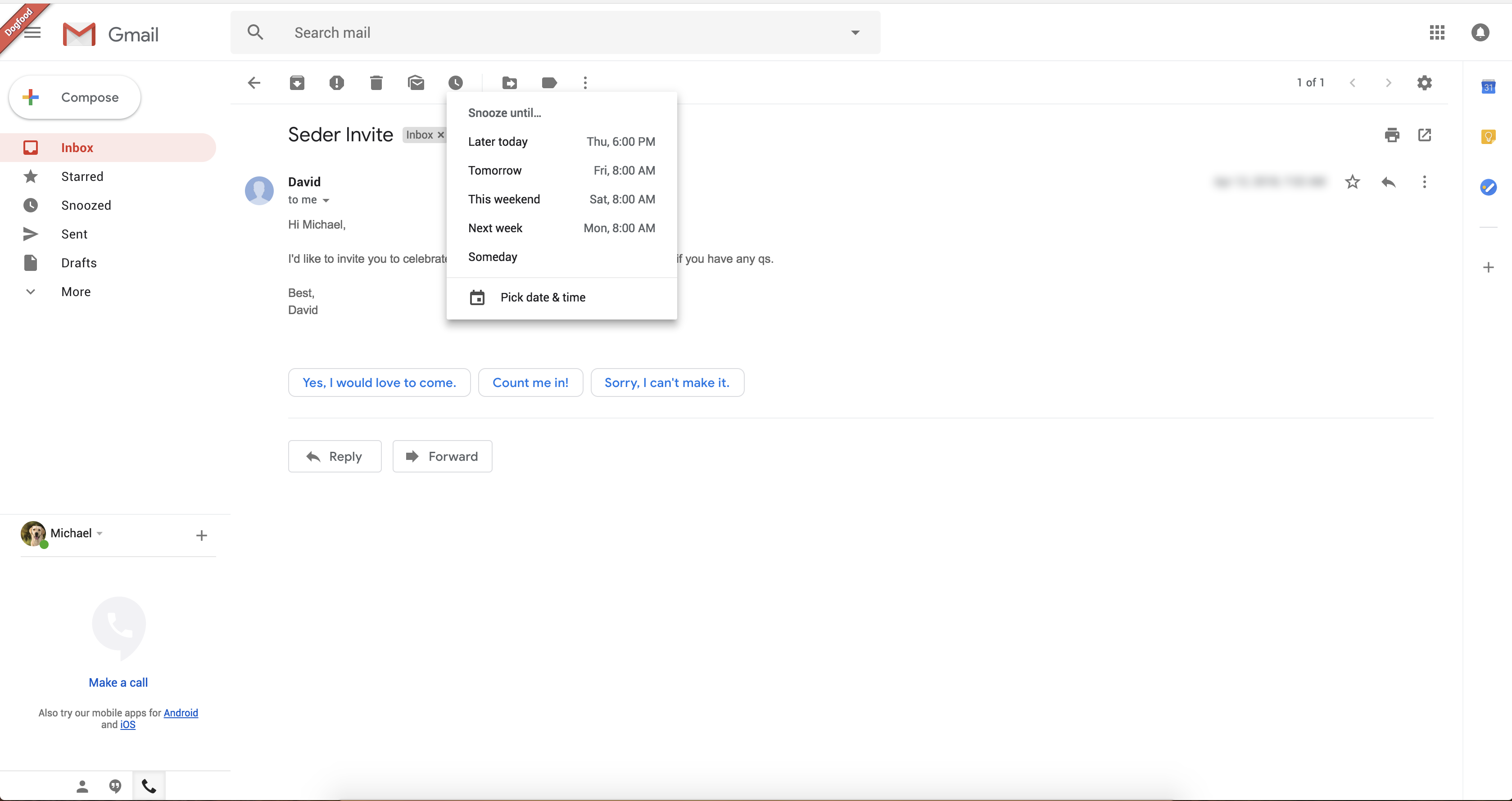
Yesterday, Google pressed the Send button too quickly and informed G Suite customers that a new Gmail was coming soon. TechCrunch obtained a few screenshots of the new interface from a tipster called Chaim. I confirmed the authenticity of those screenshots with another person who saw the new design. So here’s what you can expect.

As you can see, the new Gmail looks like a hybrid between the current Gmail interface and inbox.google.com. It isn’t a huge departure from the current interface metaphor. So existing Gmail users will still feel right at home.

The new Gmail also looks more like modern Google products with Material design. Android users know these buttons, colors and popups quite well already. All the text buttons have been replaced by icons and it looks much cleaner than before.

On those screenshots, you can see some of the new features that Google mentioned yesterday. You can snooze emails so that they reappear in your inbox hours or days later. On the screenshot, you can see “later today”, “tomorrow”, “this weekend”, “next week” and “someday”. There could be settings to configure those shortcuts.

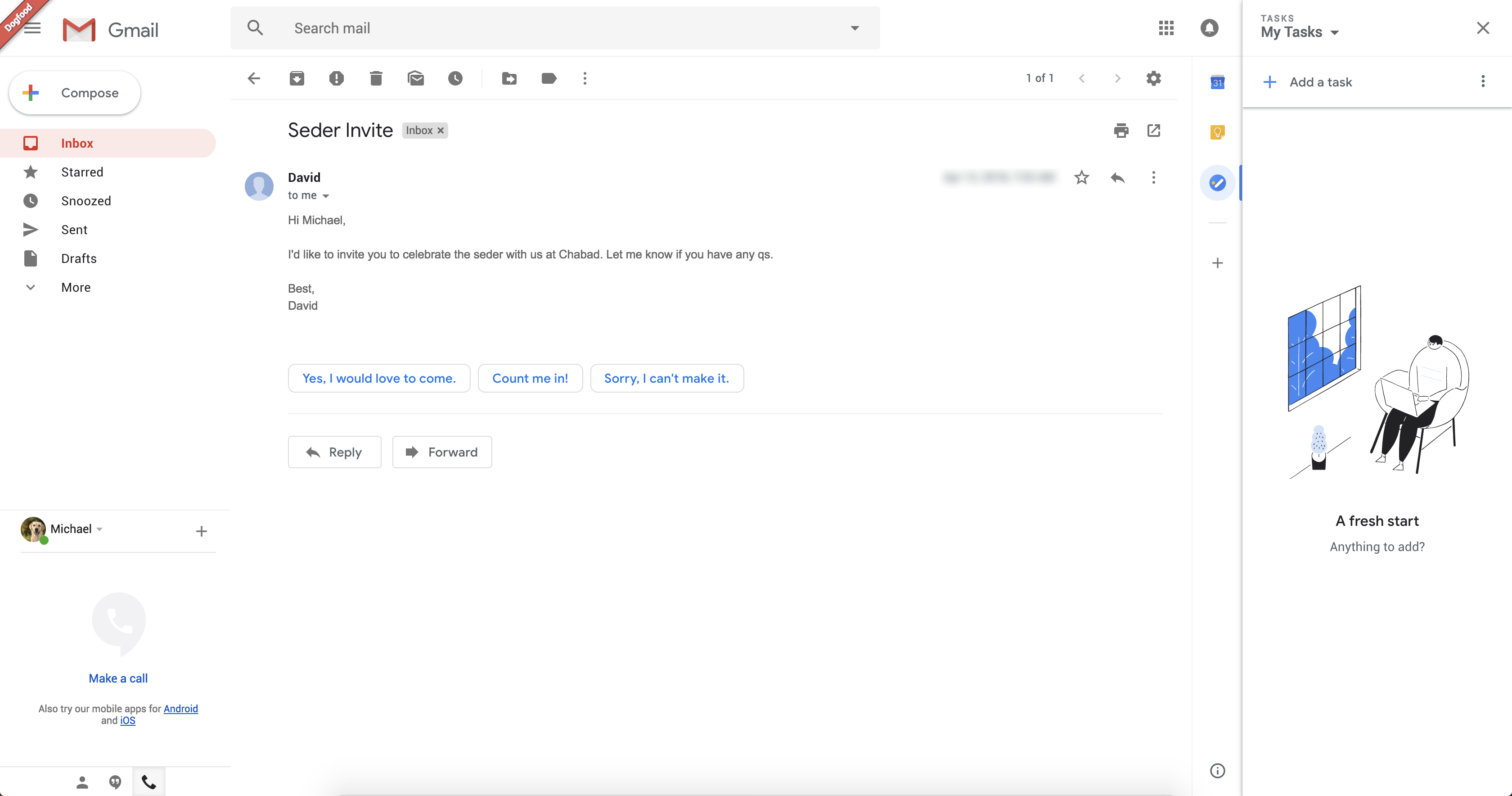
As you can see, Gmail will suggest smart replies in each email thread. It seems to be working like in the mobile app with a handful of suggestions below the last email.

But the most interesting part is the column on the right-side of the screen. This expandable area lets you load widgets of other apps. By default, Gmail lets you open Google Calendar, Keep and Tasks so that you can add an event while replying to a thread.

Streak co-founder Aleem Mawani also told me that Gmail extensions, such as Clearbit, Streak and Dropbox, will be compatible with the new design. Many of those apps rely on the InboxSDK library, and it looks like you’ll be able to integrate apps in Gmail using the same SDK. According to Google, The new Gmail design is going to come out in a few weeks.

12 Apr 2018

Tastemade executive team is getting a Goop makeover with new COO pick

Tastemade is getting a Goop makeover with the announcement that the former president of Gwyneth Paltrow’s lifestyle empire, Geraldine Martin-Coppola, is coming on board as Tastemade’s new chief operating officer.

Martin brings a wealth of experience in lifestyle branding to Tastemade’s online video and pictorial food, travel, and home design channel.

At Tastemade, Martin-Coppola will oversee brand marketing, product, commerce, and technology.

Martin-Coppola previously served as the president of Goop and had worked throughout the Los Angeles fashion and lifestyle tech ecosystem at other big name companies like Fabletics (Kate Hudson’s athleisure brand) as the general manager and at ShoeDazzle.com as chief operating officer.

Martin-Coppola got her executive start at Yahoo! (now part of my corporate overlord, Oath, which is owned by Verizon).

Tastemade, which raised over $80 million in financing from investors including Goldman Sachs, Raine Ventures, Scripps Networks, Liberty Media and Redpoint Ventures during the most recent irrationally exuberant venture bubble earlier this decade operates six studios across four continents and counts hundreds of millions of viewers, according to Martin-Coppola.

The company is also continuing to expand into e-commerce with an online marketplace. Martin-Coppola joins an executive team that includes Nick Bellomo in the chief financial officer role (and the former CFO of platforms at Aol — the other half of my corporate overlord, Oath, which is owned by Verizon) and chief executive Larry Fitzgibbon, a former executive at the design and lifestyle online network — Leaf Group.


12 Apr 2018

ESPN launches its streaming service ESPN+

ESPN’s subscription streaming service ESPN+ arrives today.

In addition to being the sports media giant’s first big push into digital subscriptions, ESPN+ is also parent company Disney’s first streaming launch since it took a majority stake in technology company BAMtech last year, with the explicit goal of helping Disney move into streaming.

“I consider these offerings the beginning of a new era of innovation at ESPN,” said ESPN President Jimmy Pitaro.

The service will cost $4.99 a month or $49.99 a year. This week, you can also sign up for a free 30-day trial, sponsored by American Express.

While Disney and ESPN have been previewing ESPN+ for a while now, and released many of the content details last week, they also brought reporters to ESPN’s Bristol, Connecticut headquarters to lay out their vision and show off the app.

Jimmy Pitaro

Jimmy Pitaro

For starters, it’s worth emphasizing what won’t be included in ESPN+: The big games that you’d get through the linear ESPN channels. In fact, ESPN is treating its ESPN+ content as something almost entirely distinct from its traditional TV offering. So unlike, say, an HBO Now subscription, ESPN+ really wouldn’t serve as a replacement for what you’d get as a cable subscriber.

Pitaro said that ESPN’s relationship with cable providers remains “a critical part of our business and will continue to be so.”

“We’ve been very clear that the service is meant to be complementary and additive to what you’re getting on linear television,” he said.

So what will ESPN+ include? Among the live games will be a daily Major League Baseball game (adding up to 180 games throughout the season), plus more than 180 National Hockey League games, more than 250 Major League Soccer games, college sports, golf, cricket, rugby and matches from three of the tennis Grand Slams.

The Last Days of Knight, the latest installment in the 30 for 30 documentary series, is also premiering exclusively on ESPN+. The service will include other original content and shows like Detail, a basketball analysis show hosted by Kobe Bryant. And subscribers will have access to a larger archive of ESPN content, including the full 30 for 30 series.

ESPN+

BAMTech CEO Michael Paull resisted characterizing this as an ESPN offering for cord-cutters. Instead, he suggested that it’s designed to appeal to a variety of sports fans, including “core ESPN fans” who are “hungry for even more sports,” as well as those who follow sports like cricket, rugby and soccer, which have been “historically underserved.”

“I don’t know how to program to cord cutters,” Paull said. “I do know how to program to sports enthusiasts.”

As for advertising, Paull said there will be no display ads in the app, and no pre- or post-roll ads in the games, but video ads will play during the normal breaks during live games.

The ESPN+ launch is part of a broader redesign of the ESPN app that’s also launching today. As before, the app will include news, scores and highlights that are accessible to all users, as well as the ability to watch linear ESPN by authenticating your cable account.

But the app has a whole new look (“Let’s get out of the way of the content and let the content really show,” Pitaro said). And it now supports streaming at 60 frames per second, with a new section specifically for watching ESPN+ content (the service will also be promoted in relevant content throughout the app).

Michael Paull

Michael Paull

ESPN CTO Aaron LaBerge highlighted the app’s personalization capabilities, like a homescreen that’s tailored to the sports and teams you follow. Pitaro brought this up again when asked about why it’s important for ESPN to have a direct relationship with consumers.

“We spent a good deal of time on personalization — getting the right content to the right consumer at the right time,” he said.

I also wondered whether having an app that requires multiple subscriptions to see all the content (you can also use it to subscribe to MLB.TV, and eventually NHL.TV) might result in a frustrating experience for users, but Pitaro pointed instead to the advantages of treating the app as “the starting point or front door to all things ESPN.” And when I tried it out myself, a color coded system signaling the different types of content (ESPN+ content has a gold badge, for example) seemed pretty straightforward.

ESPN+ is launching in the United States on devices including Fire TV, iPhone, iPad, Apple TV, Android phones, Android TV and Chromecast, with more devices planned. Pitaro said that while there are no current plans for outside the U.S., he’s open to launching in the other territories where ESPN operates.

12 Apr 2018

Revue, the newsletter publishing tool, now lets you charge subscribers

Dutch startup Revue, which is now positioning itself as an “editorial newsletter platform,” is adding the option to charge subscribers. This means that newsletters can be monetized directly, rather than relying on sponsorship or ads.

The new feature requires signing up for a Stripe account, which you connect to Revue . You then write a description of why people should become a paying member and set a monthly fee.

Initially, Revue is encouraging its newsletter publishers to run both a free and paid version simultaneously so that subscribers can choose to become a paying member or stay at just the free version of the newsletter.

“Over the last three years we’ve been building Revue to help people create their editorial newsletters and reach their audience in a meaningful way,” explains co-founder and CEO Martijn de Kuijper.

“In those three years we’ve seen writers and publishers moving away from purely ad-based business models, so we wanted to help them monetize their newsletters. Since there’s no all-in-one solution out there, we believed it was the right time to introduce this”.

Kuijper gave me a heads-up on the paid subscriptions feature a few months before it was released, since I run my own newsletter called ‘Steve’s ITK’ on the Revue platform, but for the time being I’ve declined to begin charging for access. That’s partly because my subscriber count is still quite modest but also my publishing schedule is a little erratic to warrant monetization, even if writing a decent newsletter takes quite a lot of time.

However, the ability to charge subscribers is definitely an option that will appeal to other journalists and editorial publishers more generally who are increasingly being targeted by the startup.

“We see more and more journalists on our platform, and their publishers are increasingly interested in getting on our new Publisher plan,” adds de Kuijper. “[It] allows publishers to manage multiple newsletters, team members, and roles. It also has a built-in approval workflow that lets editorial teams work together on those newsletters”.

12 Apr 2018

Revue, the newsletter publishing tool, now lets you charge subscribers

Dutch startup Revue, which is now positioning itself as an “editorial newsletter platform,” is adding the option to charge subscribers. This means that newsletters can be monetized directly, rather than relying on sponsorship or ads.

The new feature requires signing up for a Stripe account, which you connect to Revue . You then write a description of why people should become a paying member and set a monthly fee.

Initially, Revue is encouraging its newsletter publishers to run both a free and paid version simultaneously so that subscribers can choose to become a paying member or stay at just the free version of the newsletter.

“Over the last three years we’ve been building Revue to help people create their editorial newsletters and reach their audience in a meaningful way,” explains co-founder and CEO Martijn de Kuijper.

“In those three years we’ve seen writers and publishers moving away from purely ad-based business models, so we wanted to help them monetize their newsletters. Since there’s no all-in-one solution out there, we believed it was the right time to introduce this”.

Kuijper gave me a heads-up on the paid subscriptions feature a few months before it was released, since I run my own newsletter called ‘Steve’s ITK’ on the Revue platform, but for the time being I’ve declined to begin charging for access. That’s partly because my subscriber count is still quite modest but also my publishing schedule is a little erratic to warrant monetization, even if writing a decent newsletter takes quite a lot of time.

However, the ability to charge subscribers is definitely an option that will appeal to other journalists and editorial publishers more generally who are increasingly being targeted by the startup.

“We see more and more journalists on our platform, and their publishers are increasingly interested in getting on our new Publisher plan,” adds de Kuijper. “[It] allows publishers to manage multiple newsletters, team members, and roles. It also has a built-in approval workflow that lets editorial teams work together on those newsletters”.

12 Apr 2018

Background checks pay for Checkr, which just rang up $100 million in new funding

Criminal records, driving records, employment verifications. Companies that use on-demand employees need to know that all the boxes have been checked before they send workers into the world on their behalf, and they often need those boxes checked quickly.

A growing number of them use Checkr, a San Francisco-based company that says it currently runs one million background checks per month for more than 10,000 customers, including, most newly, the car-share company Lyft, the insurance company AllState, and the staffing giant Adecco.

Investors are betting many more customers will come aboard, too. This morning, Checkr is announcing $100 million in Series C funding led by T. Rowe Price, which was joined by earlier backers Accel and Y Combinator.

The round brings the company’s total funding to roughly $150 million altogether, which is a lot of capital in not a lot of time. But Checkr is very well-positioned, considering the changing nature of work. The company was born when software engineers Daniel Yanisse and Jonathan Perichon worked together at same-day delivery service startup Deliv and together eyed the chance to build a faster, more efficient background check. And the number of flexible workers has only exploded in the four years since.

So-called alternative employment arrangements, in the parlance of the Bureau of Labor Statistics, including gig economy jobs, have grown from representing 10.1 percent of U.S. employees in 2005 to 15.8 percent of employees in 2015. And that percentage looks to rise further still as more digital platforms provide direct connections between people needing a service and workers willing to provide it.

Meanwhile, Checkr, which has been capitalizing on this race for talent, has its sights on much more than the on-demand workforce, says Yanisse, who is Checkr’s CEO. While the 180-person company now counts Uber, Instacart, Thumbtack, Grubhub and many others you might imagine as customers, Checkr is actively expanding outside of the tech and gig economy right now, he tell us. Not only did it recently begin working with Adecco, but companies like Visa that use flexible workers and contractors are also signing up for the service, which right now charges on an individual basis but looks to be evolving into a software-as-a-service business over time.

“Right now,” says Yanisse, “our pricing model for customers is pay-per-applicant. But we have a whole suite SaaS products and tools,” including a new tool designed to help hiring managers eradicate their own unwitting hiring biases, “so we’re becoming more like a SaaS” business.

We ask Yanisse about those high-profile cases where background checks appear to miss things. We don’t say it explicitly, but one case that comes to mind is the individual who began driving for Uber last year, six months before plowing into a busy bike path in New York in November.

Checkr claims that it can tear through a lot of information — including education verification, reference checks, drug screening — within 24 hours, up from one to two weeks that a background check used to take. It’s fast. But does it miss things, we wonder?

Yanisse doesn’t think so. “Overall background checks aren’t a silver bullet,” he says. “Our job is to make the process faster, more efficient, more accurate, and more fair. But past information doesn’t guarantee future performance. This isn’t “Minority Report.” We provide information to employers, who then have to make hiring decisions that include a lot of other different factors. It’s up the company, based on what’s relevant to them.”

We also ask Yanisse about Checkr’s revenue. Often, a financing round of the size that Checkr is announcing today suggests a revenue run rate of $100 million or so. Yanisse declines to say, telling us Checkr doesn’t share revenue or valuation publicly. “It’s still a bit early. There’s this obsession with metrics in Silicon Valley and we just want t make sure we’re focused on the right things.”

But “you’re in the ballpark,” he adds.

12 Apr 2018

Background checks pay for Checkr, which just rang up $100 million in new funding

Criminal records, driving records, employment verifications. Companies that use on-demand employees need to know that all the boxes have been checked before they send workers into the world on their behalf, and they often need those boxes checked quickly.

A growing number of them use Checkr, a San Francisco-based company that says it currently runs one million background checks per month for more than 10,000 customers, including, most newly, the car-share company Lyft, the insurance company AllState, and the staffing giant Adecco.

Investors are betting many more customers will come aboard, too. This morning, Checkr is announcing $100 million in Series C funding led by T. Rowe Price, which was joined by earlier backers Accel and Y Combinator.

The round brings the company’s total funding to roughly $150 million altogether, which is a lot of capital in not a lot of time. But Checkr is very well-positioned, considering the changing nature of work. The company was born when software engineers Daniel Yanisse and Jonathan Perichon worked together at same-day delivery service startup Deliv and together eyed the chance to build a faster, more efficient background check. And the number of flexible workers has only exploded in the four years since.

So-called alternative employment arrangements, in the parlance of the Bureau of Labor Statistics, including gig economy jobs, have grown from representing 10.1 percent of U.S. employees in 2005 to 15.8 percent of employees in 2015. And that percentage looks to rise further still as more digital platforms provide direct connections between people needing a service and workers willing to provide it.

Meanwhile, Checkr, which has been capitalizing on this race for talent, has its sights on much more than the on-demand workforce, says Yanisse, who is Checkr’s CEO. While the 180-person company now counts Uber, Instacart, Thumbtack, Grubhub and many others you might imagine as customers, Checkr is actively expanding outside of the tech and gig economy right now, he tell us. Not only did it recently begin working with Adecco, but companies like Visa that use flexible workers and contractors are also signing up for the service, which right now charges on an individual basis but looks to be evolving into a software-as-a-service business over time.

“Right now,” says Yanisse, “our pricing model for customers is pay-per-applicant. But we have a whole suite SaaS products and tools,” including a new tool designed to help hiring managers eradicate their own unwitting hiring biases, “so we’re becoming more like a SaaS” business.

We ask Yanisse about those high-profile cases where background checks appear to miss things. We don’t say it explicitly, but one case that comes to mind is the individual who began driving for Uber last year, six months before plowing into a busy bike path in New York in November.

Checkr claims that it can tear through a lot of information — including education verification, reference checks, drug screening — within 24 hours, up from one to two weeks that a background check used to take. It’s fast. But does it miss things, we wonder?

Yanisse doesn’t think so. “Overall background checks aren’t a silver bullet,” he says. “Our job is to make the process faster, more efficient, more accurate, and more fair. But past information doesn’t guarantee future performance. This isn’t “Minority Report.” We provide information to employers, who then have to make hiring decisions that include a lot of other different factors. It’s up the company, based on what’s relevant to them.”

We also ask Yanisse about Checkr’s revenue. Often, a financing round of the size that Checkr is announcing today suggests a revenue run rate of $100 million or so. Yanisse declines to say, telling us Checkr doesn’t share revenue or valuation publicly. “It’s still a bit early. There’s this obsession with metrics in Silicon Valley and we just want t make sure we’re focused on the right things.”

But “you’re in the ballpark,” he adds.