12 Apr 2018

Covering “Virtual Insanity” in virtual reality

A musician from Raleigh, North Carolina named Chase Holfelder, recorded a cover of Jamiroquai’s “Virtual Insanity,” a stonerific acid jazz anthem that should be familiar to ’90s kids. This version, however, is recorded entirely inside a virtual reality rig with the help of the HTC Vive and VRScout.

Holfelder used the SoundScape VR project to play and sequence the music, allowing him to snap drums with virtual drumsticks and play the piano using the Vive paddles. In all it’s a pretty exciting of Vive’s interactive elements.

There is very little real commercial utility in VR… yet. However, when artists like Holfelder fire up their rigs and make artistic stuff like this they show us the possibilities of the medium and how we might be interacting with complex systems in the future. Sadly, he did not slide across a virtual floor or wear a furry hat in this video, an oversight that sets VR research back by at least a few years.

12 Apr 2018

Covering “Virtual Insanity” in virtual reality

A musician from Raleigh, North Carolina named Chase Holfelder, recorded a cover of Jamiroquai’s “Virtual Insanity,” a stonerific acid jazz anthem that should be familiar to ’90s kids. This version, however, is recorded entirely inside a virtual reality rig with the help of the HTC Vive and VRScout.

Holfelder used the SoundScape VR project to play and sequence the music, allowing him to snap drums with virtual drumsticks and play the piano using the Vive paddles. In all it’s a pretty exciting of Vive’s interactive elements.

There is very little real commercial utility in VR… yet. However, when artists like Holfelder fire up their rigs and make artistic stuff like this they show us the possibilities of the medium and how we might be interacting with complex systems in the future. Sadly, he did not slide across a virtual floor or wear a furry hat in this video, an oversight that sets VR research back by at least a few years.

12 Apr 2018

Cambridge University hits back at Zuckerberg’s shade

Facebook’s CEO Mark Zuckerberg’s testimony to the House yesterday was a mostly bland performance, punctuated by frequent claims not to know or remember certain fundamental aspects of his own business. But he gave a curiously specific and aggressive response to a question from congressman Eliot Engel.

Starting from the premise that Facebook had been “deceived” by other players in the data misuse scandal it’s embroiled in, the congressman wondered whether Facebook intends to sue Cambridge Analytica, professor Aleksandr Kogan and Cambridge University — perhaps for unauthorized access to computer networks or breach of contract?

“It’s something that we’re looking into,” replied Zuckerberg. “We already took action by banning [Kogan] from the platform and we’re going to be doing a full audit to make sure he gets rid of all the data that he has as well.”

But the Facebook founder also seized on the opportunity to indulge in a little suggestive shade throwing which looked very much like an attempt to blame-shift responsibility for the massive data scandal embroiling his company onto, of all things, one of the UK’s most prestigious universities. (Which, full disclosure, is my own alma mater.)

“To your point about Cambridge University what we’ve found now is that there’s a whole program associated with Cambridge University where a number of researchers — not just Aleksandr Kogan, although to our current knowledge he’s the only one who sold the data to Cambridge Analytica — there are a number of the researchers who are building similar apps,” said Zuckerberg.

“So we do need to understand whether there is something bad going on at Cambridge University overall that will require a stronger action from us.”

What’s curious about this response is that Zuckerberg elides to mention how Facebook’s own staff have worked with the program he’s suggesting his company “found now” — as if it had only discovered the existence of the Cambridge University Psychometrics Centre, whose researchers have in fact been working with Facebook data since at least 2007, since the Cambridge Analytica story snowballed into a major public scandal last month.

A Facebook data-related project that the center is involved with, called the myPersonality Project — which started as a student side project of the now deputy director of the Psychometrics Centre, David Stillwell — was essentially the accidental inspiration for Kogan’s thisismydigitallife quiz app, according to testimony given to the UK parliament by former Cambridge Analytica employee Chris Wylie last month.

Here’s how the project is described on the Centre’s website:

myPersonality was a popular Facebook application that allowed users to take real psychometric tests, and allowed us to record (with consent!) their psychological and Facebook profiles. Currently, our database contains more than 6,000,000 test results, together with more than 4,000,000 individual Facebook profiles. Our respondents come from various age groups, backgrounds, and cultures. They are highly motivated to answer honestly and carefully, as the only gratification that they receive for their participation is feedback on their results.

The center itself has been active within Cambridge University since 2005, conducting research, teaching and product development in pure and applied psychological assessment — and claiming to have seen “significant growth in the past twelve years as a consequence of the explosion of activity in online communication and social networks”. 

And while it’s of course possible that Zuckerberg and his staff might not have been aware of the myPersonality Facebook app project — after all 4M Facebook profiles harvested is rather less than the up to 87M Kogan was able to extract, also apparently without Facebook noticing — what’s rather harder for Zuckerberg to deny knowledge of is the fact his company’s own staff have worked with Cambridge University researchers on projects analyzing Facebook data for psychological profiling purposes for years. Since at least 2015.

In a statement provided to TechCrunch yesterday, the University expressed surprise at Zuckerberg’s remarks to the house.

“We would be surprised if Mr Zuckerberg was only now aware of research at the University of Cambridge looking at what an individual’s Facebook data says about them,” a spokesperson told us. “Our researchers have been publishing such research since 2013 in major peer-reviewed scientific journals, and these studies have been reported widely in international media. These have included one study in 2015 led by Dr Aleksandr Spectre (Kogan) and co-authored by two Facebook employees.”

The two Facebook employees who worked alongside Kogan (who was using the surname Spectre at the time) on that 2015 study — which looked at international friendships as a class marker by examining Facebook users’ friend networks — are named in the paper as Charles Gronin and Pete Fleming.

It’s not clear whether Gronin still works for Facebook. But a LinkedIn search suggests Fleming is now head of research for Facebook-owned Instagram.

We’ve asked Facebook to confirm whether the two researchers are still on its payroll and will update this story with any response.

In its statement, Cambridge University also said it’s still waiting for Facebook to provide it with evidence regarding Kogan’s activities. “We wrote to Facebook on 21 March to ask it to provide evidence to support its allegations about Dr Kogan. We have yet to receive a response,” it told us.

For his part Kogan has maintained he did nothing illegal — telling the Guardian last month that he’s being used as a scapegoat by Facebook.

We’ve asked Facebook to confirm what steps it’s taken so far to investigate Kogan’s actions regarding the Cambridge Analytica misuse of Facebook data — and will update this story with any response.

During his testimony to the House yesterday Zuckerberg was asked by congressman Mike Doyle when exactly Facebook had first learned about Cambridge Analytica using Facebook data — and whether specifically it had learned about it as a result of the December 2015 Guardian article.

In his testimony to the UK parliament last month, Wylie suggested Facebook might have known about the app as early as July 2014 because he said Kogan had told him he’d been in touch with some Facebook engineers to try to resolve problems with the rate that data could be pulled off the platform by his app.

But giving a “yes” response to Doyle, Zuckerberg reiterated Facebook’s claim that the company first learned about the issue at the end of 2015, when the Guardian broke the story.

At another point during this week’s testimony Zuckerberg was also asked whether any Facebook staff had worked alongside Cambridge Analytica when they were embedded with the Trump campaign in 2016. On that he responded that he didn’t know.

Yet another curious aspect to this story is that Facebook hired the co-director of GSR, the company Kogan set up to license data to Cambridge Analytica — as the Guardian reported last month.

According to its report Joseph Chancellor was hired by Facebook, around November 2015, about two months after he had left GSR — citing his LinkedIn profile (which has since been deleted).

Chancellor remains listed as an employee at Facebook research, working on human computer interaction & UX, where his biography confirms he also used to be a researcher at the University of Cambridge…

I am a quantitative social psychologist on the User Experience Research team at Facebook. Before joining Facebook, I was a postdoctoral researcher at the University of Cambridge, and I received my Ph.D. in social and personality psychology from the University of California, Riverside. My research examines happiness, emotions, social influences, and positive character traits.

We’ve asked Facebook when exactly it hired Chancellor; for what purposes; and whether it had any concerns about employing someone who had worked for a company that had misused its own users’ data.

At the time of writing the company had not responded to these questions either.

12 Apr 2018

Cambridge University hits back at Zuckerberg’s shade

Facebook’s CEO Mark Zuckerberg’s testimony to the House yesterday was a mostly bland performance, punctuated by frequent claims not to know or remember certain fundamental aspects of his own business. But he gave a curiously specific and aggressive response to a question from congressman Eliot Engel.

Starting from the premise that Facebook had been “deceived” by other players in the data misuse scandal it’s embroiled in, the congressman wondered whether Facebook intends to sue Cambridge Analytica, professor Aleksandr Kogan and Cambridge University — perhaps for unauthorized access to computer networks or breach of contract?

“It’s something that we’re looking into,” replied Zuckerberg. “We already took action by banning [Kogan] from the platform and we’re going to be doing a full audit to make sure he gets rid of all the data that he has as well.”

But the Facebook founder also seized on the opportunity to indulge in a little suggestive shade throwing which looked very much like an attempt to blame-shift responsibility for the massive data scandal embroiling his company onto, of all things, one of the UK’s most prestigious universities. (Which, full disclosure, is my own alma mater.)

“To your point about Cambridge University what we’ve found now is that there’s a whole program associated with Cambridge University where a number of researchers — not just Aleksandr Kogan, although to our current knowledge he’s the only one who sold the data to Cambridge Analytica — there are a number of the researchers who are building similar apps,” said Zuckerberg.

“So we do need to understand whether there is something bad going on at Cambridge University overall that will require a stronger action from us.”

What’s curious about this response is that Zuckerberg elides to mention how Facebook’s own staff have worked with the program he’s suggesting his company “found now” — as if it had only discovered the existence of the Cambridge University Psychometrics Centre, whose researchers have in fact been working with Facebook data since at least 2007, since the Cambridge Analytica story snowballed into a major public scandal last month.

A Facebook data-related project that the center is involved with, called the myPersonality Project — which started as a student side project of the now deputy director of the Psychometrics Centre, David Stillwell — was essentially the accidental inspiration for Kogan’s thisismydigitallife quiz app, according to testimony given to the UK parliament by former Cambridge Analytica employee Chris Wylie last month.

Here’s how the project is described on the Centre’s website:

myPersonality was a popular Facebook application that allowed users to take real psychometric tests, and allowed us to record (with consent!) their psychological and Facebook profiles. Currently, our database contains more than 6,000,000 test results, together with more than 4,000,000 individual Facebook profiles. Our respondents come from various age groups, backgrounds, and cultures. They are highly motivated to answer honestly and carefully, as the only gratification that they receive for their participation is feedback on their results.

The center itself has been active within Cambridge University since 2005, conducting research, teaching and product development in pure and applied psychological assessment — and claiming to have seen “significant growth in the past twelve years as a consequence of the explosion of activity in online communication and social networks”. 

And while it’s of course possible that Zuckerberg and his staff might not have been aware of the myPersonality Facebook app project — after all 4M Facebook profiles harvested is rather less than the up to 87M Kogan was able to extract, also apparently without Facebook noticing — what’s rather harder for Zuckerberg to deny knowledge of is the fact his company’s own staff have worked with Cambridge University researchers on projects analyzing Facebook data for psychological profiling purposes for years. Since at least 2015.

In a statement provided to TechCrunch yesterday, the University expressed surprise at Zuckerberg’s remarks to the house.

“We would be surprised if Mr Zuckerberg was only now aware of research at the University of Cambridge looking at what an individual’s Facebook data says about them,” a spokesperson told us. “Our researchers have been publishing such research since 2013 in major peer-reviewed scientific journals, and these studies have been reported widely in international media. These have included one study in 2015 led by Dr Aleksandr Spectre (Kogan) and co-authored by two Facebook employees.”

The two Facebook employees who worked alongside Kogan (who was using the surname Spectre at the time) on that 2015 study — which looked at international friendships as a class marker by examining Facebook users’ friend networks — are named in the paper as Charles Gronin and Pete Fleming.

It’s not clear whether Gronin still works for Facebook. But a LinkedIn search suggests Fleming is now head of research for Facebook-owned Instagram.

We’ve asked Facebook to confirm whether the two researchers are still on its payroll and will update this story with any response.

In its statement, Cambridge University also said it’s still waiting for Facebook to provide it with evidence regarding Kogan’s activities. “We wrote to Facebook on 21 March to ask it to provide evidence to support its allegations about Dr Kogan. We have yet to receive a response,” it told us.

For his part Kogan has maintained he did nothing illegal — telling the Guardian last month that he’s being used as a scapegoat by Facebook.

We’ve asked Facebook to confirm what steps it’s taken so far to investigate Kogan’s actions regarding the Cambridge Analytica misuse of Facebook data — and will update this story with any response.

During his testimony to the House yesterday Zuckerberg was asked by congressman Mike Doyle when exactly Facebook had first learned about Cambridge Analytica using Facebook data — and whether specifically it had learned about it as a result of the December 2015 Guardian article.

In his testimony to the UK parliament last month, Wylie suggested Facebook might have known about the app as early as July 2014 because he said Kogan had told him he’d been in touch with some Facebook engineers to try to resolve problems with the rate that data could be pulled off the platform by his app.

But giving a “yes” response to Doyle, Zuckerberg reiterated Facebook’s claim that the company first learned about the issue at the end of 2015, when the Guardian broke the story.

At another point during this week’s testimony Zuckerberg was also asked whether any Facebook staff had worked alongside Cambridge Analytica when they were embedded with the Trump campaign in 2016. On that he responded that he didn’t know.

Yet another curious aspect to this story is that Facebook hired the co-director of GSR, the company Kogan set up to license data to Cambridge Analytica — as the Guardian reported last month.

According to its report Joseph Chancellor was hired by Facebook, around November 2015, about two months after he had left GSR — citing his LinkedIn profile (which has since been deleted).

Chancellor remains listed as an employee at Facebook research, working on human computer interaction & UX, where his biography confirms he also used to be a researcher at the University of Cambridge…

I am a quantitative social psychologist on the User Experience Research team at Facebook. Before joining Facebook, I was a postdoctoral researcher at the University of Cambridge, and I received my Ph.D. in social and personality psychology from the University of California, Riverside. My research examines happiness, emotions, social influences, and positive character traits.

We’ve asked Facebook when exactly it hired Chancellor; for what purposes; and whether it had any concerns about employing someone who had worked for a company that had misused its own users’ data.

At the time of writing the company had not responded to these questions either.

12 Apr 2018

Zaius raises $30M to help marketers unify their customer data

Zaius, a customer data company working with consumer brands like Tea Forte and Burt’s Bees Baby, has raised $30 million in Series B funding.

CEO Mark Gally said that while business-to-business marketing revolves around the CRM, there’s a “hodgepodge” on the consumer marketing side. More specifically, he said consumer marketers have a “swivel chair problem” where they have might have a customer data platform that doesn’t actually allow marketers to do the necessary personalization across channels, or a marketing automation product that isn’t as “robust” when it comes to customer data.

“We’ve literally smashed these two systems together,” Gally said. (I might quibble with his use of “literally” if it wasn’t such a fun image.)

So for example, with Zaius (which is named after the Planet of the Apes character, who was the keeper of truth for the apes), a clothing brand would have access to key data about a customer, like the fact that they’re more interested in early access than discounts, across devices and communications channels. They could then tailor their messages accordingly.

Gally said that for some customers, Zaius can deliver a 33 percent improvement in revenue per message and, by allowing them to coordinate campaigns across channels, grow their reach by up to 50 percent.

Jurgen Nebelung, vice president of e-commerce and digital at Tea Forte, made a similar point in the funding announcement, saying that using other marketing software resulted in “siloed data and a disconnected customer experience”: “Zaius brought our data into one place, delivering a complete view of how shoppers are engaging with our brand whether it’s on web, mobile or email.”

Zaius has now raised $50.8 million in total funding. The new round was led by Insight Venture Partners, with participation from previous investors Matrix Partners, Underscore VC and Leaders Fun. Insight Managing Director Nikitas Koutoupes is joining the company’s board of directors.

“It’s no secret that B2C marketers are under increased pressure as their role in business continues to evolve, and they need tools of their own to help drive results,” said Insight principal Teddie Wardi in an emailed statement. “Through a single platform, Zaius provides B2C marketers a complete view of their customers as they move through the purchase process, paired with campaign execution tools to engage those customers with personalized communications across channels.”

Among other things, Gally said the new funding will allow the company expand its developer ecosystem and integrate with other marketing tools.

“What’s key is not forcing a rip-and-replace,” he said. “We’re upgrading their overall systems … Not only unifying the ecosystem, but now powering the ecosystem, is a huge opportunity where we will continue to put a focus.”

12 Apr 2018

Dating service East Meet East raises $4M to develop AI matching and expand into Asia

East Meet East, a New York-based matchmaking service focused on connecting Asian people in the U.S., is expanding its focus to go after dating opportunities in Asia after it raised a $4 million Series A funding round.

The money comes from existing backer 500 Startups and new investors Asahi Medialab Ventures, DG Lab Fund (a joint effort from Japan’s Digital Garage and Daiwa Securities), Mobile Internet Capital, internet ad firm Septeni. The startup previously raised $1 million in November 2016.

East Meet Eat CEO Mariko Tokioka told TechCrunch in an interview that the company is testing a service in the Philippines with a view to expanding across other Southeast Asian markets, which could potentially include Malaysia, Thailand, Singapore and Indonesia. The immediate next step would be a fuller launch in the Philippines — which was selected due to its close following of U.S. culture — with the potential for local offices to open in the region further down the line.

Unlike its core product in the U.S. — which matches Asian men and women; men pay but women use the service for free — East Meet East’s Southeast Asia -based offshoot is aimed at matching people of all races, hence it is called West East Dating.

“Matching Asian people in North America is still our main product, but 60 percent of the world’s population is in Asia so in order for us to become a much bigger company and help more people find their life partner, it makes sense to enter Asia,” Tokioka explained to TechCrunch.

Beyond the expansion, the company is also working to enable smarter matching. That’s where DG Lab Fund — which is backed by well-known Japanese firm Digital Garage, which has worked with the likes of Twitter and Square — comes into play.

DG Lab is developing an artificial intelligence engine in partnership with companies — a number of which it has invested in — and East Meet East is among those that signed up to provide data that enables the AI engine to learn and develop. (Tokioka pointed out that data is anonymized when we raised the question.)

So, essentially, DG Lab gets more data to crunch to build its smarts, and East Meet East gets an enhanced AI system that will help its product work better for users, in theory at least.

“Matching and AI are undoubtedly a natural fit. Users are constantly acting and interacting on the matching platform, which provides an abundance of data for Love.AI to refine its learning,” DG Lab Fund partner Masahito Okuma said in a statement.

12 Apr 2018

Luminar puts its lidar tech into production through acquisitions and smart engineering

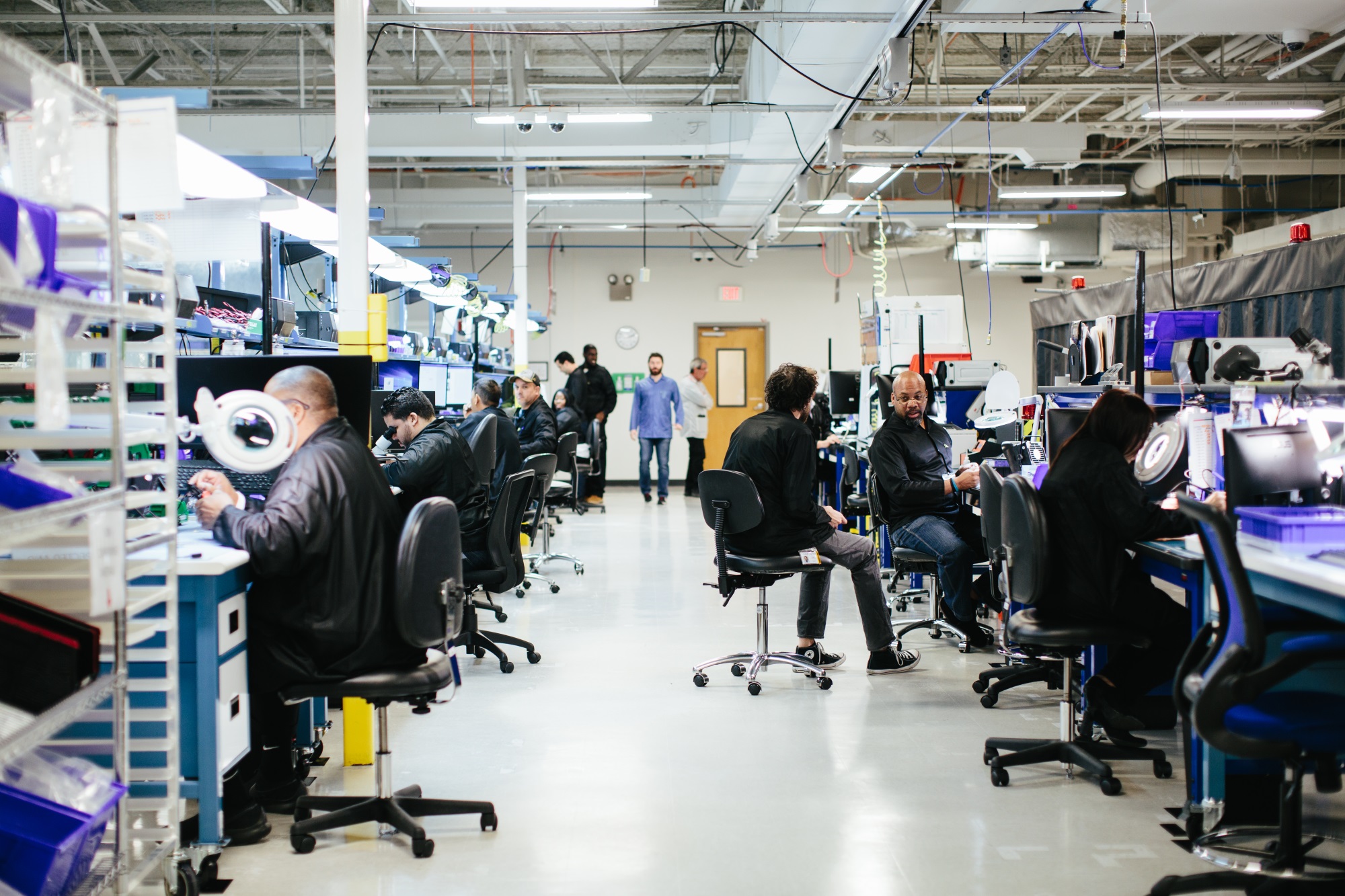
When Luminar came out of stealth last year with its built-from-scratch lidar system, it seemed to beat established players like Velodyne at their own game — but at great expense and with no capability to build at scale. After the tech proved itself on the road, however, Luminar got to work making its device better, cheaper, and able to be assembled in minutes rather than hours.

“This year for us is all about scale. Last year it took a whole day to build each unit — they were being hand assembled by optics PhDs,” said Luminar’s wunderkind founder Austin Russell. “Now we’ve got a 136,000 square foot manufacturing center and we’re down to 8 minutes a unit.”

Lest you think the company has sacrificed quality for quantity, be it known that the production unit is about 30 percent lighter and more power efficient, can see a bit further (250 meters vs 200), and detect objects with lower reflectivity (think people wearing black clothes in the dark).

The secret — to just about the whole operation, really — is the sensor. Luminar’s lidar systems, like all others, fire out a beam of light and essentially time its return. That means you need a photosensitive surface that can discern just a handful of photons.

Most photosensors, like those found in digital cameras and in other lidar systems, use a silicon-based photodetector. Silicon is well-understood, cheap, and the fabrication processes are mature.

Luminar, however, decided to start from the ground up with its system, using an alloy called indium gallium arsenide, or InGaAs. An InGaAs-based photodetector works at a different frequency of light (1,550nm rather than ~900) and is far more efficient at capturing it. (Some physics here.)
The more light you’ve got, the better your sensor — that’s usually the rule. And so it is here; Luminar’s InGaAs sensor and a single laser emitter produced images tangibly superior to devices of a similar size and power draw, but with fewer moving parts.

The problem is that indium gallium arsenide is like the Dom Perignon of sensor substrates. It’s expensive as hell and designing for it is a highly specialized field. Luminar only got away with it by making a sensor a fraction of the size of a silicon one.

Last year Luminar was working with a company called Black Forest Engingeering to design these chips, and finding their paths inextricably linked (unless someone in the office wanted to volunteer to build InGaAs ASICs), Luminar bought them. The 30 employees at Black Forest, combined with the 200 hired since coming out of stealth, brings the company to 350 total.

By bringing the designers in house and building their own custom versions of not just the photodetector but also the various chips needed to parse and pass on the signals, they brought the cost of the receiver down from tens of thousands of dollars to… three dollars.
“We’ve been able to get rid of these expensive processing chips for timing and stuff,” said Russell. “We build our own ASIC. We only take like a speck of InGaAs and put it onto the chip. And we custom fab the chips.”

“This is something people have assumed there was no way you could ever scale it for production fleets,” he continued. “Well, it turns out it doesn’t actually have to be expensive!”

Sure — all it took was a bunch of geniuses, five years, and a seven-figure budget (and I’d be surprised if the $36M in seed funding was all they had to work with). But let’s not quibble.

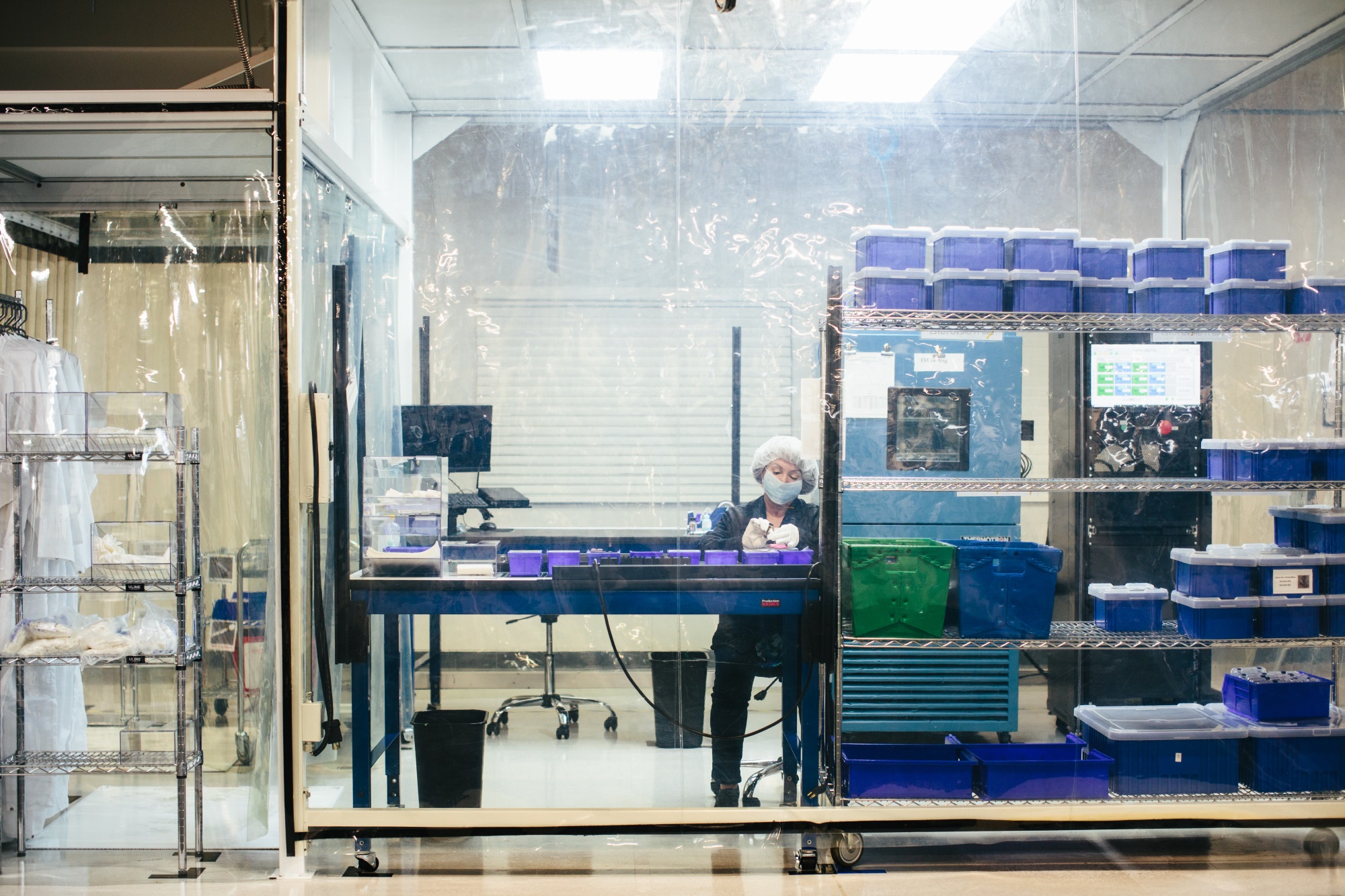
Quality inspection time in the clean room.

It’s all being done with a view to the long road ahead, though. Last year the company demonstrated that its systems not only worked, but worked well, even if there were only a few dozen of them at first. And they could get away with it, since as Russell put it, “What everyone has been building out so far has been essentially an autonomous test fleet. But now everyone is looking into building an actual, solidified hardware platform that can scale to real world deployment.”

Some companies took a leap of faith, like Toyota and a couple other unnamed companies, even though it might have meant temporary setbacks.

“It’s a very high barrier to entry, but also a very high barrier to exit,” Russell pointed out. “Some of our partners, they’ve had to throw out tens of thousands of miles of data and redo a huge portion of their software stack to move over to our sensor. But they knew they had to do it eventually. It’s like ripping off the band-aid.”

We’ll soon see how the industry progresses — with steady improvement but also intense anxiety and scrutiny following the fatal crash of an Uber autonomous car, it’s difficult to speculate on the near future. But Luminar seems to be looking further down the road.

12 Apr 2018

All Raise taps Stitch Fix’s Katrina Lake and others to mentor female founders

As part of All Raise’s mission to increase the number of female founders who receive venture funding in the next five years, All Raise has tapped more than 120 successful female founders to provide one-on-one mentorship to other women building companies.

Currently, female founders receive just 15 percent of all venture funding, according to All Raise. Within the next five years, All Raise wants to increase that to 25 percent, while also doubling the percentage of women in VC partner roles in the next 10 years.

All Raise held its first Female Founders Office Hours in November. Since then, more than 30 female VCs have conducted 200 mentoring sessions. With an additional 120 people on board, All Raise hopes to be able to better serve the 1,500 or so female founders who have applied for office hours.

In addition to bringing on board Stitch Fix CEO Katrina Lake, All Raise has tapped Getaround’s Jessica Scorpio, Julia Hartz of Eventbrite and others, who have collectively raised $4 billion in venture funding.

“For women in tech, these network connections are often forged randomly,” All Raise co-founder and Sequoia Capital Partner Jess Lee wrote in a blog post. “But they don’t have to be left to chance. With Female Founder Office Hours, we aim to build an intentional community and a pay-it-forward chain of mentorship between every generation of female founders.”

12 Apr 2018

Tradeshift’s Gert Sylvest and Bancor’s Galia Benartzi sign on for TC Sessions: Blockchain in July

We are excited to announce two more top-quality speakers for our forthcoming TC Sessions: Blockchain event which takes place on July 6.

Gert Sylvest, co-founder of Tradeshift and GM of Tradeshift Frontiers, and Galia Benartzi, co-founder and head of business development for Bancor, join our growing list of confirmed speakers. In case you missed those, they include Brian Behlendorf, the executive director of the Hyperledger projectJun Hasegawa, CEO and founder of OmiseGO, and Leanne Kemp, CEO and founder of Everledger.

The event — which will be the first TechCrunch show dedicated to the blockchain — takes place in Zug, Switzerland, the city known as “Crypto Valley” because of the numerous companies that have moved there to capitalize on Zug’s openness to blockchain experiments and forward-thinking approach to regulation.

At the event, we’ll cover how decentralization will impact the internet and web services today; how big businesses and enterprises are moving forward to tap the potential of the blockchain; what the future of financing through crypto and ICOs might look like; and the important technological breakthroughs and challenges facing blockchain.

Sylvest and Benartzi and their companies represent two important sides of the emergence of blockchain. That is companies born in a decentralized world with innovative ideas about how to use technology, and already-established tech firms exploring the potential for solutions that can roll out at scale.

The Zug event comes off the back of a TechCrunch meetup held there in January and the hugely successful Disrupt San Francisco 2017 event, which included discussions on blockchain startups, cryptocurrency and ICOs with guests such as Ethereum creator Vitalik Buterin.

You can find ticket information for TC Sessions: Blockchain here.

Now, more about our two newest confirmed guests.

Galia Benartzi, co-founder and head of product of Bancor

Bancor is developing a system that uses the blockchain to disintermediate bitcoin exchanges, making it easier for individuals to trade crypto coins and, among other things, smoothening the path to holding ICOs.

The company has pioneered ‘smart tokens,’ which it describes as cryptocurrencies with built-in convertibility directly through their smart contracts.

Bancor released a wallet service in April that is designed to be a one-stop shop for trading between cryptocurrencies. The wallet builds on Bancor’s original open-source protocol for automated token conversions by allowing users to exchange any of 75 cryptocurrencies without needing to visit an exchange. There’s also an option to buy supported cryptocurrencies using credit or debit card.

Bancor held of 2017’s stand out ICOs, raising what was then $150 million in Ether in July 2017 to develop the project.

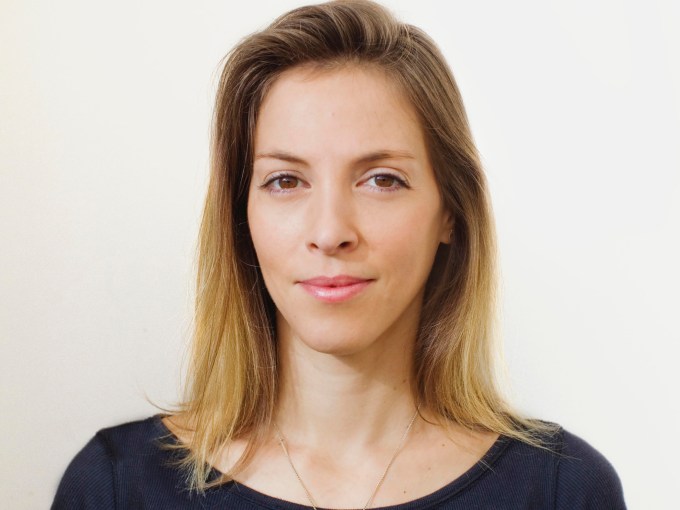
Galia Benartzi

Aside from Bancor, Galia Benartzi has two successful exits under her belt having co-founded social gaming startup Mytopia, which was acquired by online gambling firm 888 in 2010, and cross-platform development platform Particle Code, which was bought by Appcelerator in 2011.

Raised in Silicon Valley to Israeli parents, Benartzi relocated to Tel Aviv in 2013 to support and invest in Israeli technology as a Venture Partner at Founders Fund, where she also launched numerous local currency pilots to model, build and test software for community currencies.

Benartzi holds a BA in Comparative Literature from Dartmouth College and an MA in International Economics from SAIS Johns Hopkins.

Gert Sylvest, co-founder of Tradeshift and GM of Tradeshift Frontiers

Tradeshift is a global platform that that helps companies simplify and improve their expensing systems by connecting with external contract partners online. Some of the benefits include an end to paper trails for billing, virtual cards for faster payments, online marketplaces for reaching new customers and more.

The company was founded in Denmark in 2005 but is now headquartered in San Francisco with 250 staff across nine countries. To date, it has raised more than $180 million from investors like PayPal, Intuit Singapore’s Scentan Ventures, who last valued the startup at a reported $500 million, and it is on track to process $500 billion in transaction value for its customers this year.

Tradeshift has made a big move to embrace the blockchain and new technologies through Tradeshift Frontiers, a new entity launched earlier this year to explore how the company can adopt emerging technologies for its platform, which connects 1.5 million companies across 190 countries who transact some 28 million SKUs.

The blockchain is a big part of that new focus and, last October, Tradeshift joined Hyperledger as a governing member, the Linux foundation’s open-source blockchain development initiative aimed to drive the development and adoption of blockchains across the industry.

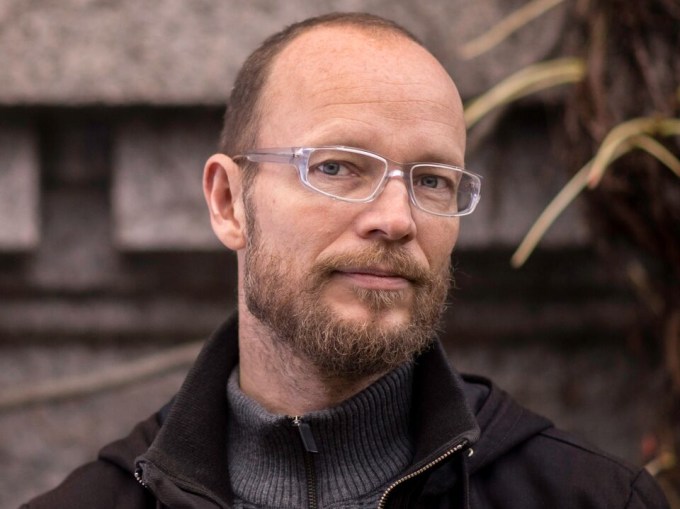
Gert Sylvest

Gert Sylvest is co-founder of Tradeshift and general manager of Tradeshift Frontiers, the company’s R&D and investment arm that focuses on blockchain, artificial intelligence, machine learning, the internet of things and other emerging technologies that impact supply chain and commerce.

Before leading Tradeshift Frontiers, Sylvest led the global cross-regional network strategy focusing on platform deployment and growth in China, and as CTO of Tradeshift. Prior to co-founding Tradeshift, he was responsible for the technical design and implementation of the Danish (Nemhandel) and European (PEPPOL) peer-to-peer-based source-to-pay digital infrastructures, with Accenture and Avanade.

Sylvest holds an MS in Computer Science and Music, specializing in real-time distributed collaboration systems.


We’ll be announcing more speakers soon, but you can already buy a ticket for TC Sessions: Blockchain here.

If you’re interested in sponsoring the event, please contact us here.

12 Apr 2018

Billie, which wants to eliminate the “pink tax,” closes a $6M seed round for its razor subscription service

Billie, a New York-based startup that wants to fight the “pink tax” on goods marketed to women, announced today that it has closed a $6 million seed round. The funding was led by Silverton Partners, with participation from returning investors including Female Founders Fund and Lakehouse Ventures, and will be used to grow Billie’s team and increase inventory.

Launched in November by co-founders Georgina Gooley and Jason Bravman, Billie currently offers subscriptions for razors and other body products like shaving cream, body wash and lotion. The two told TechCrunch in an email that Billie was created because “shaving companies have traditionally been created for men and women have largely been an afterthought in this category.”

While many services and products aimed at women, including clothing, haircuts and essential toiletries, are often more expensive than similar (or even near-identical) goods marketed to men, razors and dry cleaning are “the two worst offenders,” said Gooley and Bravman. The price difference between razors is especially egregious because most use blades made by the same types of machines.

But many women already save money by buying “men’s” razors or using the Dollar Shave Club, the popular low-priced razor subscription service acquired by Unilever in 2016 for a reported $1 billion, so what does Billie offer them?

The startup’s founders say its razors, which were designed specifically for the company, shave larger areas more comfortably then razors designed just for facial hair, but still cost about the same as men’s razor subscriptions. Billie’s blade cartridges have rounded edges to fit in areas like armpits and are encased in shaving soap since shaving cream rinses off too quickly in the shower. There is also more space between each cartridge’s five blades to keep hair and lather from gunking it up. In addition to the Dollar Shave Club, Billie is up against Oui Shave, another women’s shaving product startup. Billie’s founders say one of its main differentiators will be offering much lower prices than its rivals.

In a prepared statement, Silverton Partners general partner Mike Dodd, who is joining Billie’s board, said the startup is “standing in front of a huge untapped market driven by two outstanding founders who have created a brand that speaks perfectly to this opportunity.”