11 Apr 2018

Reddit has banned 944 accounts linked to the IRA Russian troll farm

While much of the tech media has had their eyeballs glued to Facebook CEO Mark Zuckerberg’s testimonies to Congress over the past couple days, another social media giant has been discussing Russian election interference.

Yesterday, Reddit CEO Steve Huffman published the team’s annual transparency report. Generally, the focus of this report has been to keep Redditors apprised of the current state of requests and approvals by governments and law enforcement for the preservation or production of user data. This year, the announcement was framed a bit differently as Huffman also took the opportunity to deliver some updates on Russian attempts to infiltrate the platform.

Huffman stated that the company had identified 944 “suspicious” accounts believed to be linked to the Internet Research Agency. These accounts made over 14,000 posts on the site according to Huffman. He said that “few” of these accounts appeared to have a “visible impact on the site.”

Perhaps more importantly, he revealed that none of the accounts had placed advertisements on Reddit, nor had the company’s investigations found any election-related ads, unlike activity from the IRA on other platforms like Facebook. It’s worth noting that compared to other platforms infiltrated by the Russian troll farm, Reddit’s ad product is very much in its infancy. It only recently began rolling out native ads in its mobile app for instance.

Huffman noted the specific karma rating scores of the accounts, indicating that the vast majority of the suspicious accounts had received little to no engagement from users.

  • 70% (662) had zero karma
  • 1% (8) had negative karma
  • 22% (203) had 1-999 karma
  • 6% (58) had 1,000-9,999 karma
  • 1% (13) had a karma score of 10,000+

Interestingly, the site has preserved all of the activity from these accounts for users to pour through. After quick examinations of some of the more successful accounts, it seems as though the IRA had a difficult time cracking into Reddit’s communities. Most of the more successful posts seemed unrelated to political subversion and were more focused on building up karma to increase the visibility and reputation of the accounts. Still, some of the most popular posts focused on the relationship between African Americans and law enforcement while others focused on negative news stories surrounding Hillary Clinton. The most-posted to subreddit from these accounts was not r/The_Donald, but was, in fact, r/funny, one of the site’s most popular subreddits focused on humor.

Huffman says that most of the active accounts were caught and banned previous to the 2016 election. A big part of this is that as opposed to a site like Twitter, where users have to be reported to the company itself, Reddit users can be banned by moderators which are unpaid community managers of individual subreddits.

11 Apr 2018

Tentrr is turning private land into glampgrounds, with the help of VCs

If you’ve ever gone camping and found yourself thinking it kind of sucks, likely because you’re too close to other campers, you might be interested in learn about Tentrr, a three-year-old, 47-person company that’s promising to make it “dirt simple” to enjoy the great outdoors. How: by striking deals with private landowners who are willing to host semi-permanent campsites on their property.

What do these look like? Picture elevated decks with Adirondack chairs, canvas expedition tents, wood picnic tables and sun showers, not to mention a fire pit, lanterns, dry food storage, cookware, a camping toilet and air mattresses that, courtesy of most hosts, will come with fresh linens.

Venture capitalists certainly appreciate the startup’s pitch. Tentrr — founded by one-time investment banker turned former NYSE managing director Michael D’Agostino —  has raised $13 million to date, including a newly closed $8 million Series A round led by West, a San Francisco-based venture studio that both funds startups and helps them market their goods and services.

No doubt the investors are looking at the overall market, whose numbers are compelling. According to one trade association, for example, the outdoor recreation industry represents a $887 billion opportunity, with Americans shelling out $24 billion annually on campsites alone.

Still, it’s easy to wonder how scalable the company will be. Tentrr had 100 campsites up and running in the Northeastern U.S. as of the end of last year. D’Agostino expects it will have 1,000 sites by year end, including on the West Coast, where it will begin installing camps this summer, but this assumes that Tentrr can convince enough families with sufficiently large properties that partnering with the company is worthwhile.

D’Agostino says its landowner partners need to have 15 acres at least and that the average property on the platform currently is much larger than that. He also says they keep 80 percent of whatever they decide to charge campers to stay on their grounds.

For what it’s worth, Tentrr doesn’t seem to have much in the way of direct competition if you exclude state campgrounds. Venture-backed Hipcamp, for example, which raised a small amount of seed funding back in 2014, partners with private landowners to help arrange camping experiences, but it mostly acts as search engine. Meanwhile, industry giant Airbnb offers unique experiences that include camping, but Tentrr is largely about offering a standardized experience. The idea is to leave fewer questions about what to expect. In fact, D’Agostino says that roughly 40 percent of Tentrr customers are first-time campers.

We know that if the service makes it way to California, we’re likely to try it, having suffered through some fairly crummy camping experiences. If you’re also interested in learning more, you might check out our conversation with D’Agostino, edited for length. We chatted yesterday.

TC: You were a banker, then you traveling around the country and world, trying to convince companies that they should list on the NYSE instead of Nasdaq. How did this company come to pass?

MD: When I was a little kid, we’d sometimes stay at a family friend’s farm in Litchfield, Connecticut. I assumed that every kid had a Litchfield farm where they could camp, which isn’t the case obviously. Meanwhile, working 100 hours a week as an investment banker, it just became harder and harder to get out of the city and have great experiences.

After a couple of disastrous camping trips at noisy, dirty campgrounds with my girlfriend and now wife, Eloise, we just realized the idea [of camping as it’s known today] is stupid. It’s taking a bunch of people who are living on top of each other in a city and moving them to a campground where they’re living on trop of each other in flimsy tents.

The legacy campground industry hasn’t changed since the Civil War. It’s run by the government — which I’m happy to compete with all day long. And these are just terrible businesspeople. We want to wipe away this infrastructure by distributing it among rural landowners.

TC: So you’re building these semi-permanent camping sites. How standardized is the pricing?

MD: Pricing is variable and set by the landowner who keeps 80 percent of that fee. We keep 20 percent; we also charge a 15 percent fee on top of that nightly rate. Right now, the average price per night is $140, but we’re introducing more features for [hosts], including minimum-night stays, and [surge] pricing if they have demand for a bunch of bookings at the same time.

They can also offer extra amenities and experiences that will allow you to have a personalized experience. For example, landowners or “campkeepers” as we call them can offer extra bundles of wood or luxury bedding or horseback riding or skeet shooting. It’s really only limited by the imagination. We’ll also soon allow third parties to provide curated activities so that when you log on to our app, you can book a white water rafting trip, for example, or reservations at the best farm-to-table restaurant nearby.

TC: What happens is something goes wrong? Who insures what?

MD: Every campsite is covered by a $2 million commercial insurance policy. It’s a benefit not just in terms of liability but in making people feel more comfortable during these stays — both the hosts and guests.

TC: Where are you building these sites, exactly, and how long do you estimate that they will last?

MD: We build them ourselves, right now in places from southern Maine to eastern Pennsylvania.

We get our tents from a family company in Colorado that’s been around for 90 years and that still receives requests to repair tents they’d built 30 years ago [meaning they’re durable]. We also use pressure-treated lumber and marine-grade plywood, so we expect they’ll last for 10 to 20 years.

TC: You’re having to convince people to let strangers onto their properties, sprawling as they may be. What’s that sales process like?

MD: It used to look like me putting 45,000 miles on my Jeep Cherokee and explaining to families why they should have a Tentrr campsite in their hayfields. Today, direct mail campaigns work beautifully. [Hosts] are also hearing about us from other [hosts] and we make it easier for them to [apply] to join the platform. You click on a link that says “List my property” and you’re walked through a 20-point checklist, including about accessibility and how secluded a property is, and using that feedback, we know with 90 percent accuracy whether or not a property is appropriate. If we think it is, we’ll send out a scout.

TC: Are there sometimes more than one campsite on a property?

MD: No, and we ensure the sites are secluded from neighbors, as well as the landowners, as well as other possible distractions.we run installation trucks.

TC: What does the clean-up process look like?

MD: It’s relatively maintenance free. There’s no maid service. No keys. No worries about someone stealing silverware. Homeowners have to make sure there are no beer cans left behind, but we place a high priority on land stewardship and emphasize a leave-no-trace approach when it comes to our guests.


11 Apr 2018

Apply to TechCrunch’s startup programs for Disrupt and Startup Battlefield with a single application

At TechCrunch’s flagship Disrupt events, there are three ways for startups to get in the limelight. One is to win a spot in the prestigious Startup Battlefield competition. Another is to be selected as one of the editor-selected TC Top Picks to exhibit in one of the featured tracks in Startup Alley. Both of those opportunities are 100 percent free. The last is to apply for a highly affordable single-day exhibitor pass for Startup Alley itself. Easy, right? You might think so, but the truth is until now, the application process was fragmented and founders had to make parallel applications for different programs. But no more!

Today, we launched our single, reusable application for all of TechCrunch’s startup programs. Founders can now fill out a single application here and apply to all of our startup programs at any given Disrupt, as well as re-purpose an application for new events as they are announced.  

We know founders are busy juggling product development, recruiting, fundraising, and so much more. The new application saves and makes it far easier to track opportunities for participating at Disrupt or at any of our other Startup Battlefield events, which is always a great stage for investor and media exposure. Now, as we announce new Disrupts and standalone Startup Battlefields, founders can simply log back into their application and re-submit an existing application on file. If the startup had a pivot or a raise, it’s easy to update the application and re-submit for future events.

The heart of TechCrunch’s mission is to help startups, which is why we offer founders three ways to benefit from the immense in-person and media exposure at TechCrunch events. The application can be used for Startup Battlefield, our renowned startup pitch competition; TC Top Picks, editorially highlighted free exhibition space at our Disrupt conferences; and Startup Alley, exhibition space for a fee at our Disrupt conferences. You can learn more about each program’s requirements and benefits here.

Visit our Startup programs application page to fill out TechCrunch’s new, reusable application, and to apply for any or all of those three opportunities. As of today, you can use this application to apply to Startup Battlefield, TC Top Picks and Startup Alley at our flagship Disrupt conference in San Francisco on September 5-7th 2018. Stay tuned — we will be announcing more opportunities soon.

11 Apr 2018

New wearable hardware interface, Tap Systems, opens SDK to developers

Tap Systems, the developer of the Tap wearable keyboard and mouse, is releasing a developer SDK for interested programmers.

The software kit will let developers design applications that can integrate with the Tap wearable which answers the once unanswerable question: what’s the result of one hand tapping?

Resting on the finges of one hand, the Tap wearable provides a new way for users to interact with hardware. Finger taps are the input that the device uses to determine movement and keystrokes. Using Tap, the company says anyone can send messages, play games, point, click and scroll on almost any surface.

“Since Tap’s inception we’ve been contacted by everyone from mobile game and language input developers, to folks developing for accessibility use and even enterprise,” said Dovid Schick, the chief executive and founder of Tap Systems, in a statement.

The company sees applications for its technology in anything from mobile gaming, to virtual and augmented reality and language input developers who have struggled to translate character-based languages to existing user interfaces.

The toolkit includes SDKs for iOS and Android, and a plug-in for Unity — along with sample applications and documentation. There’s also an API for BLE enabled platforms.

Tap System’s released toolset includes SDKs for both iOS and Android, a plug-in for Unity, as well as example applications and documentation. The company has also released an API to enable any BLE enabled platform to interface directly with the Tap wearable.

The wearable costs $179, but the software development kit is royalty-free, open-source and available under the company’s terms of use.

[gallery ids="1620672,1620670,1620676,1620675,1620674"]

It’s a big step for the Pasadena, Calif.-based company that first brought its product to market late last year. Founded by longtime technology developers Dovid Schick and Sabrina Kemeny, the company’s hardware is a response to a problem that Schick says bedeviled him for years. 

“What would be the problem of the future of inputs?,” Schick asked me. “As things get virtualized and more wearable….  I went through a lot of different scenarios and came up with the idea of tapping your fingers. Tapping your fingers is an incredibly natural and fast and intuitive movement.”

There’s a bit of training required as users get acclimated to a new way of typing, but the tapping mechanism is more efficient, Schick argues, and is certainly a boon for accessibility.

“A,e,i,o,u maps to a single finger tapping,” says Schick. “The hardest taps are done … mapped to the least frequent letters in the alphabet.”

While Schick admits that his company might not be the company that completes the ongoing quest for a new user interface, he is firmly convinced that tapping is the next big thing in hardware interfaces. “Taps will be a modality… whether my company will be the one that will survive and make it great.. Once you’ve tried it and seen it in action it just makes too much sense that this will not be something that is huge.”

The company began taking pre-orders earlier in the year and started shipping product about two months ago — and is now planning to go out to raise its first round of outside capital.

11 Apr 2018

No, Zuckerberg can’t lie to Congress just because he’s not under oath

While the press and public may have been denied a dramatic raise-your-right-hand moment in Congress this week, Facebook’s chief executive is still under legal obligation to tell the truth.

If it feels like Zuckerberg is bending the truth, know that making a false statement to Congress might be difficult to prove given the slippery nature of Congressional testimony, but it’s still illegal.

Since some corners of the internet appear to be floating a conspiracy theory that Zuckerberg can get away with lying because he did not take the oath, we clarified that point with the offices of some of the committee members questioning him.

“Lying to Congress is always a crime,” a representative for Senator Dianne Feinstein clarified to TechCrunch. “You don’t need to be sworn in.”

A witness who is not under oath cannot face perjury charges but they could face charges pertaining to making “false statements,” a broader statute that is not specific to lying under oath.

As Lawfare clarifies:

“By far the broadest federal statute criminalizing lying is 18 U.S.C. § 1001, which makes it a crime to “knowingly and willfully . . . make[] any materially false, fictitious, or fraudulent statement or representation” in the course of “any matter within the jurisdiction of the executive, legislative, or judicial branch” of the federal government. There’s no requirement that the statement be under oath.”

Committees handle the matter of swearing in a witness a number of different ways, and there are three committees involved in Zuckerberg’s testimony this week: the Senate Committee on the Judiciary, the Senate Committee on Commerce, Science, and Transportation and the House Energy and Commerce Committee. The Senate committees banded together to form a joint hearing on Tuesday.

As a Republican Commerce committee aide told CNN, “By tradition, the Commerce Committee does not swear-in witnesses.”

As Slate reported in a piece exploring the tradition of the oath, “the judiciary committee requires an oath only sometimes, according to the procedural guidelines of the Senate select committee on ethics.” Where it is not required, the decision to require the oath can be made at the discretion of the committee chairman and that decision takes place during the hearing’s planning stage.

“Witnesses aren’t always sworn in before voluntarily providing testimony,” Chuck Grassley’s Senate Judiciary Committee press secretary told TechCrunch.

Still, it isn’t exactly random. It’s possible that Facebook stipulated that Zuckerberg not be made to take the oath as a condition of his appearance before Congress. The optics of Facebook’s founder with his right hand raised would likely be anathema to the feverishly PR-conscious company.

An aide to a prominent Senator not questioning Zuckerberg this week confirmed to TechCrunch that such a negotiation would be unusual but not impossible. Facebook did not respond to our questions on the topic.

While no one can legally outright lie in responding to Congress — under oath or not — witnesses go to great lengths to temper their speech so they don’t get into hot water. During his first Congressional testimony, Zuckerberg spoke in an extremely disciplined, well-practiced way that adhered closely to safe talking points established in advance.

A number of Zuckerberg’s statements could certainly be interpreted as lying by omission in an informal sense, but legally his testimony remains strategically vague enough to stay well within legal bounds.

11 Apr 2018

How artificial intelligence will take over the supermarket produce aisles

Artificial intelligence is about more than asking Alexa or Siri to turn on the lights at home and add a reminder to the calendar about getting some milk at the store later in the afternoon.

The true power of AI and machine learning is how it can democratize expertise, lowering the barriers to entry for tasks that once could only be performed by a small group of specialists. The result, one day, will be that your self-driving car drops you off at the supermarket, where you will find higher-quality foods available at prices lower than they’ve ever been.

It will happen through the use of machine learning algorithms that absorb a large volume of data, recognize patterns and apply statistical probabilities to choose the course of action most likely to result in a successful outcome.

For example, Google’s famous self-driving car used machine learning to catalog a number of interesting behaviors on the road. Whenever the car’s sensors recognized a garbage truck ahead, vehicles following behind tended to pull suddenly into the next lane to get around it — usually without signaling. So the Google car stored this pattern of behavior and adapted its position and speed to minimize the possibility that these “unexpected” lane changes would cause a collision.

For humans, this is a common defensive driving skill, but replicating this level of awareness in a machine would have been unthinkable just a few years ago. Now, powerful algorithms can conquer the chaos of streets filled with drivers of all skill levels, including those paying more attention to their phones than the road ahead.

Artificial intelligence and agriculture

As amazing as that may be, the application of machine learning to the living fields of agriculture is an order of magnitude more complex. A road network is fixed, with a map that rarely changes and provides a solid foundation for the algorithm to make its decisions.

No matter how calm and peaceful a wind-swept field of wheat might appear to the casual observer, agricultural fields are truly chaotic places. There’s unpredictable weather, changes in soil quality and the ever-present possibility that pests and disease may pay a visit. Conditions in one part of a field may be totally different from another part. As a result, growers never really know until the last day whether they are going to have a successful harvest or not.

The potential for growth in agricultural AI systems is significant.

Take a seed and plant it in a field in Iowa. Then take the exact same seed and plant it in Brazil. The results will almost certainly not be the same, or, if they are, repeat the experiment again and the odds are that the yield of each will be different. That’s because thousands of interrelated variables are at play, from the amount of nutrients in the soil, to whether it’s sunny or cloudy, to rain levels, temperature, the presence of insects and so on.

That’s where machine learning can reap clarity from the chaos. Remote sensors placed in fields perceive the environment as statistical data. Algorithms process this data, adapting and learning to predict a range of outcomes.

Farmers can use these AI algorithms to make better field decisions that increase the chances of a successful harvest. Breeders also can use AI algorithms to make the plants themselves better. The combination of these uses will ultimately drive lower prices at the supermarket.

The democratization of farming expertise

This is a massive a shift in the way things have always been done in agriculture. Farmers have a proud tradition going back centuries of relying on instinct in growing crops. They have an intuition of what’s best based on long experience. It’s not that farmers didn’t want to use computers, it’s that they haven’t been particularly effective. Early machines, with their binary logic, were not well-suited to highly complex and variable field environments.

So a farm’s productivity often depended on having the most experienced growers on hand. But what if we could change that, and make the best decisions and growing techniques available even to novice farmers? This is particularly important for developing nations that might not have access to highly experienced growers.

The rise of precision agriculture has opened the possibility of spreading the benefit of machine expertise far and wide. Remote sensors, satellites and UAVs can gather information 24 hours a day over an entire field. These can monitor plant health, soil condition, temperature, humidity and so on. The amount of data these sensors can generate is overwhelming, but the algorithms of precision agriculture can process and interpret the data in a useful way.

The next big leap will come from deploying true artificial intelligence algorithms that learn from the data and interpret never-before-seen situations, allowing each harvest to become more and more certain. This will reduce wasted effort and lower the cost of growing, with much of the savings passed on to consumers.

AI builds better plants

Machine learning algorithms can also be applied to the centuries-old process of breeding plant varieties better able to resist drought or insect pressures. Breeders have long used conventional methods of selecting the “best” parent plants to create varieties with a more pleasing appearance, longer shelf life and a superior taste. Because of AI’s application in breeding, stronger plants are more likely to make their way to harvest, and yields will continue to increase.

As with farming techniques, machine learning helps with all aspects of the decision-making process of selecting plants and testing new varieties. Algorithms speed the process so that improvements in plant varieties make their way to the fields and the supermarkets faster than ever. This, again, helps lower costs while improving quality.

The potential for growth in agricultural AI systems is significant, and as the algorithms grow smarter, the benefits will continue to be seen every time you check out at the supermarket.

11 Apr 2018

FTC warns companies that void warranties over using third-party services

The days of reading the small print to see whether a repair or new part for your ailing laptop will void its warranty may be coming to an end. The FTC has officially warned several companies that their policies of ceasing support when a user attempts “non-approved” repairs or servicing are likely illegal.

It’s the sort of thing where if you buy a device or car from a company, they inform you that unless you use approved, often internally branded parts, you’re voiding the warranty and your item will no longer be supported by the company.

The idea is that a company doesn’t want to be on the hook when a user replaces an old, perfectly good stick of RAM with a new, crappy one and then comes crying to them when the computer won’t boot. Or, in a more dire situation, replaces the brakes with some off-brand ones, which then fail and cause an accident. So there’s a reason these restrictions exist.

Unfortunately, they’ve come to encompass far more than these dangerous cases; perhaps you replace the RAM and then the power supply burns out — that’s not your fault, but because you didn’t use approved RAM the company takes no responsibility for the failure. The result is consumers end up having to buy components or servicing at inflated prices from “licensed” or “approved” dealers.

“Provisions that tie warranty coverage to the use of particular products or services harm both consumers who pay more for them as well as the small businesses who offer competing products and services,” explained Thomas Pahl, from the FTC’s Bureau of Consumer Protection, in the announcement.

The agency gave several examples of offending language in customer agreements, blanking out the names of the companies. Ars Technica was quick to connect these with the major companies they correspond to: Hyundai, Nintendo and Sony. Here are the statements the FTC didn’t like, with the company names in bold where they were blank before.

  • The use of Hyundai parts is required to keep your . . . manufacturer’s warranties and any extended warranties intact.
  • This warranty shall not apply if this product . . . is used with products not sold or licensed by Nintendo.
  • This warranty does not apply if this product . . . has had the warranty seal on the PS4 altered, defaced, or removed.

It’s one thing to say, don’t overclock your PS4 or we won’t cover it. It’s quite another to say if the warranty seal has been “defaced” then we won’t cover it.

“Such statements generally are prohibited by the Magnuson-Moss Warranty Act,” the FTC announcement reads, and in addition “may be deceptive under the FTC Act.” The companies have 30 days to modify their policies.

This could be a major win for consumers: more repairs and service locations would be allowed under warranty, and modders of game consoles may be able to indulge their hobby without trying to hide it from the manufacturer. That will depend on the new phrasing of the companies’ policies, but this attention from the FTC will at the very least nudge things in the right direction.

11 Apr 2018

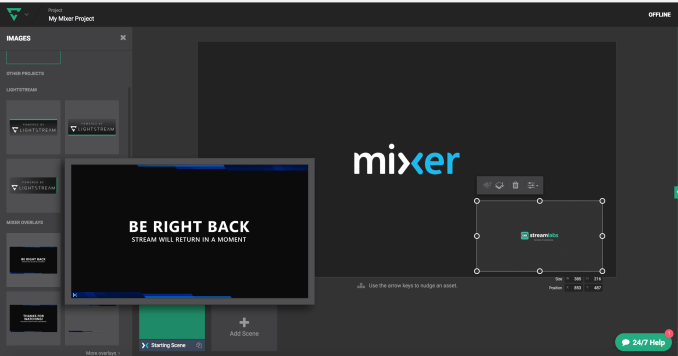
Microsoft partners with Lightstream Studio to bring customization tools to Mixer streamers

Microsoft’s Twitch competitor, Mixer, is giving streamers a new way to customize their channels. The company has entered into a partnership with Lightstream Studio to allow Mixer streamers to add images, overlays, transitions, and text to their streams, or to switch between scenes. The goal is to make it easier for creators to give their streams a more professional look-and-feel, without requiring they have a lot of technical expertise.

Instead, the partnership will allow streamers to route their feed into the web-based Lightstream Studio, which can be accessed via a supported browser on a PC, Mac or tablet. On smartphones, the URL mixer.golightstream.com will allow streamers to use their phone as a remote control for changing their scenes.

For instance, gamers can use the Studio to create status screens like “Starting Soon,” or “Be Right Back,” then quickly rotate through them, as needed.

Streamers can direct their streams to Lightstream Studio from their mobile devices, PC, or their Xbox native broadcast.

The support for native Xbox streams is what’s got streamers most excited, however.

Microsoft says the integration will not impact the other third-party services Mixer streamers today use for alerts, like StreamLabs, StreamJar or Tipeeestream, as they can link those accounts within their Lightstream settings.

Microsoft has been rolling out a number of new features for Mixer in recent months, in an effort to bring its service more on par with Amazon-owned Twitch, the leader in game streaming in terms of both concurrent streamers and viewers, as well as rival YouTube Gaming.

This year, for example, Mixer introduced game sales as another means of helping streamers generate revenue from their channels, and it announced support for direct tipping. Many of these features are about Mixer playing catch-up, though, rather than coming out with something new.

Adding overlaid content to a stream to make it look more polished and professional is something that Twitch today supports through its extensions platform. It currently has over 150 different extensions, including things like stream schedules, countdowns, reminders, polls, and more. And some portion of those extensions became available on mobile just last month.

Lightstream Studio is not quite the same, as it a partnership with a third-party rather than a built-in offering, but it will give streamers some similar options thanks to its support of third-party tools for adding stream alerts. 

Lightstream Studio is first being offered in beta to Partners and Pro users to test, before rolling out more broadly.

11 Apr 2018

Former Google CFO Patrick Pichette just joined the world of venture capital

Almost exactly three years ago, Patrick Pichette surprised industry observers when he left his powerful job as the CFO of Google to, well, enjoy his life. As he described the decision at the time, he wanted to “enjoy a perfectly fine midlife crisis full of bliss and beauty.”

Now, Pichette is back in a role that should afford him both mental stimulation, as well as plenty of time to relax. He’s become a VC. Specifically, Pichette, a native of Montreal, has joined the Canadian venture firm iNovia Capital as a general partner, alongside another former CFO of a notable company: Dennis Kavelman, who left RIM in 2010 after a three-year stint.

For iNovia, the hires would seem to be a no-brainer, particularly as it looks to expand internationally. Pichette, for example, will split his time between its Canadian offices in Montreal and Toronto and London, where iNovia is newly opening an office.

Why Pichette would choose iNovia, a 10-year-old, still relatively small firm that manages $500 million across three funds, is probably a question that Sand Hill Road firms are wondering today.

The answer, in part, Pichette tells Recode, is that he believes in Canada’s startup scene. He says he’s also happier to maintain some distance from the region.

“Despite being right next door, it’s far from Silicon Valley . . . I’m telling you very publicly that I’m quietly working in a place where there’s less pressure and there’s actually more fun opportunities.”

11 Apr 2018

Instagram will let you download your content after criticism about portability

Yesterday we reported that Instagram lacked data portability, knocking the app for the absence of an equivalent to Facebook’s Download Your Information too. Now an Instagram spokesperson tells me “We are building a new data portability tool. You’ll soon be able to download a copy of what you’ve shared on Instagram, including your photos, videos and messages.”

This tool could make it much easier for users to leave Instagram and go to a competing image social network. And as long as it launches before May 25th, it will help Instagram to comply with upcoming European GDPR privacy law that requires data portability.