11 Apr 2018

Zuckerberg owns or clones most of the “8 social apps” he cites as competition

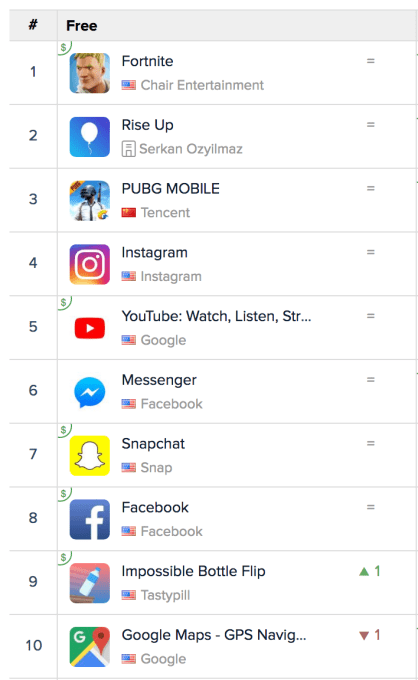
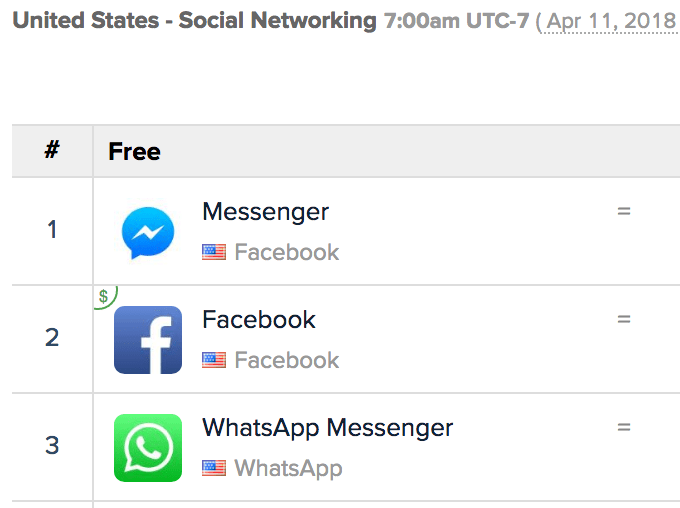
Mark Zuckerberg’s flimsy defense when congress asked about a lack of competition to Facebook has been to cite that the average American uses eight social apps. But that conveniently glosses over the fact that Facebook owns three of the top 10 U.S. iOS apps: #4 Instagram, #6 Messenger, and #8 Facebook according to App Annie. The top 3 apps are games. Facebook is building its Watch video hub to challenge #5 YouTube, and has relentlessly cloned Stories to beat #7 Snapchat. And Facebook also owns #19 WhatsApp. Zoom in to just “social networking apps”, and Facebook owns the entire top 3.

“The average American I think uses eight different communication and social apps. So there’s a lot of different choice and a lot of innovation and activity going on in this space” Zuckerberg said when asked about whether Facebook is a monopoly by Senator Graham during yesterday’s Senate hearing, and he’s trotted out that same talking point that was on his note sheet during today’s House testimony.
But Facebook has relentlessly sought to acquire or co-opt the features of its competitors. That’s why any valuable regulation will require congress to prioritize competition. That means either breaking up Facebook, Instagram, and WhatsApp; avoiding rules that are easy for Facebook to comply with but prohibitively expensive for potential rivals to manage; or ensuring data portability that allows users to choose where to take their content and personal information.

Breaking up Facebook, or at least preventing it from acquiring established social networks in the future, would be the most powerful way to promote competition in the space. Facebook’s multi-app structure creates economies of scale in data that allow it to share ad targeting and sales teams, backend engineering, and relevancy-sorting algorithms. That makes it tough for smaller competitors without as much money or data to provide the public with more choice.

Regulation done wrong could create a moat for Facebook, locking in its lead. Complex transparency laws might be just a paperwork speed bump for Facebook and its army of lawyers, but could be too onerous for upstart companies to follow. Meanwhile, data collection regulation could prevent competitors from ever building as large of a data war chest as Facebook has already generated.

Data portability gives users the option to choose the best social network for them, rather than being stuck where they already are. Facebook provides a Download Your Information tool for exporting your content. But photos come back compressed, and you don’t get the contact info of friends unless they opt in. The list of friends’ names you receive doesn’t allow you to find them on other apps the way contact info would. Facebook should at least offer a method for your exporting hashed version of that contact info that other apps could use to help you find your friends there without violating the privacy of those friends. Meanwhile, Instagram entirely lacks a Download Your Information tool.
Congress should push Zuckerberg to explain what apps compete with Facebook as a core identity provider, an omni-purpose social graph, or cross-platform messaging app. Without choice, users are at the mercy of Facebook’s policy and product examples. All of the congressional questions about data privacy and security don’t mean much to the public if they have no viable alternative to Facebook. The fact that Facebook owns or clones the majority of the 8 social apps used by the average American is nothing for Zuckerberg to boast about.


 

11 Apr 2018

Snapchat’s second-gen Spectacles hit the FCC

After a huge early buzz, Snapchat’s wearables ultimately bellyflopped. The company says it lost $40 million on the device. But that failure wasn’t enough to dissuade the company from giving things another go — and from the sound of it, the second version of Spectacles find the company taking hardware a bit more seriously this time around.

The head-mounted devices took a step closer to reality this week, hitting the FCC in a filing first noted by Variety. The paperwork outlines a “wearable video camera” called “Spectacles…Model 002.”

Last June, we noted that a small Snap team has been working covertly on a new version of the device that could potentially embrace the company’s love of augmented reality, a fact seemingly bolstered by a whole slew of patent applications (insofar as a patent application can be taken as confirmation of intent).

More reports trickled through early last month, pointing at a second and third version of the glasses set to arrive in 2018 and 2019, respectively. Version 2.0 is said to mostly be a fix of many of the issues that helped doom the first generation of the device, while 2019’s model will reportedly sport two cameras, adding depth effects to the devices, likely embracing the aforementioned AR capabilities.

The new FCC filing doesn’t reveal a lot of additional information about the hardware, though improved WiFi for faster file transfers does appear to be present. That’s certainly in line with reports that the company is working to make an all-around better product here.

The existence of the filing doesn’t confirm that the new Spectacles will be hitting the market soon, or ever, really, but it does point to the company exploring a return to the category in spite of a massive loss. Hardware is, as they say, difficult. 

11 Apr 2018

Mark Zuckerberg’s data was collected by third parties

In questioning before the House of Representatives Committee on Energy and Commerce today, Mark Zuckerberg said that his personal Facebook data was harvested as part of the sweep of personal data that was used by third parties like Cambridge Analytica.

As part of a fiery 4 minute round of questioning, Congresswoman Anna Eshoo (who represents Silicon Valley) asked Zuckerberg “Was your data included in the data sold to the malicious third parties? Your personal data?”

Zuckerberg replied “Yes.”

It’s the first instance (that I know of) where Zuckerberg has said that he was impacted directly by Facebook’s own privacy violations.

11 Apr 2018

Google is about to launch a Gmail web redesign

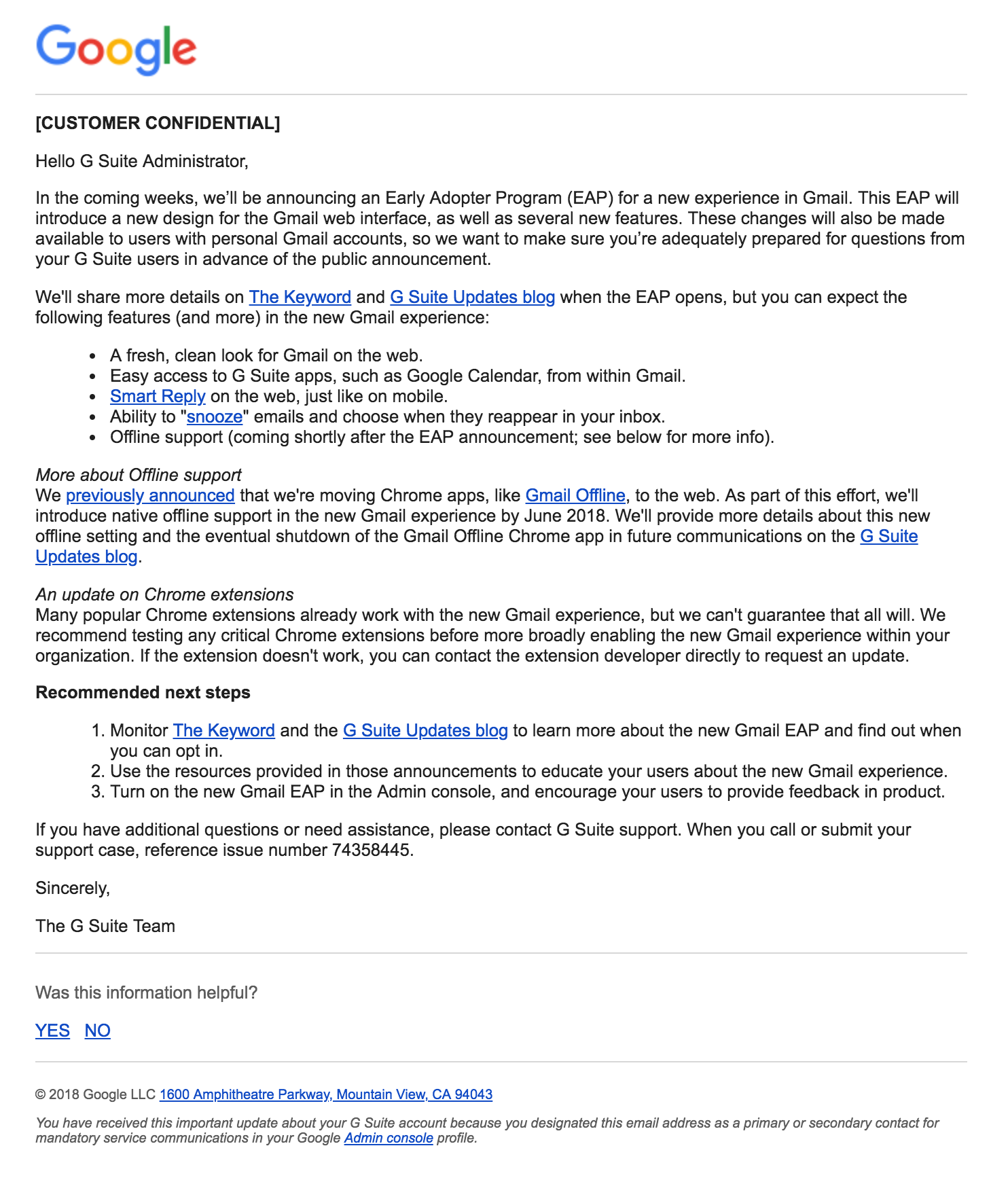
Google sent an email to G Suite customers to tell them that the company has been working on a brand new version of Gmail for the web. In addition to a fresh design, the company also listed some of the new features.

You can expect to be able to access Google Calendar from the Gmail interface directly. Outlook customers are probably going to love this.

You’ll be able to snooze emails so that they reappear in your inbox hours or days later. This is a good way to clean your inbox if you can’t reply to a specific email just yet.

If you use Gmail on your iPhone or Android phone, you may already be using smart replies. These algorithmically-generated replies will also be available on Gmail.com.

Finally, Google is working on a new way to store your emails on your computer for offline access. As the company is slowly phasing out Chrome Apps, Google will now be using standard web technologies to let your browser store your data.

Google has yet to share screenshots of the new design. Gmail’s web interface hasn’t changed in years — you can probably expect a new interface that follows Google’s Material design language.

Update: Sahil Bhutani contacted me after reading this article because he saw a Google employee playing with the new design on public transport. “It was a hybrid of Gmail and Inbox,” he told me. “The left-side column was more like inbox.google.com and the right side was an enlarged version of Gmail. The color in the background had a blue-ish gradient. Every folder on the left had an icon just like Inbox and dividers to split the categories.” Here’s a sketch of what he saw:

Google also notes that the update might break some popular browser add-ons for Gmail, such as Clearbit, Streak, etc.

According to the G Suite email, G Suite customers and regular Gmail users will have to opt in into a new Early Adopter Program to access the new Gmail. It’ll be available in the coming weeks.

11 Apr 2018

Uber gets into car rentals and public transit

Uber is officially a multi-modal transportation platform. On the heels of its acquisition of bike-share startup JUMP, Uber CEO Dara Khosrowshahi today announced Uber Bike‘s expansion into Washington D.C., along with two key partnerships in car rentals and public transit.

The first is with instant car-booking service Getaround, which launched at TechCrunch Disrupt NY in 2011 to enable car owners to rent their vehicles to neighbors, tourists and other people within their city.

Dubbed Uber Rent, the platform taps into Getaround’s existing marketplace of cars that are available for instant rentals. Uber Rent, which will launch in San Francisco later this month, lets people book Getaround cars directly from the Uber app.

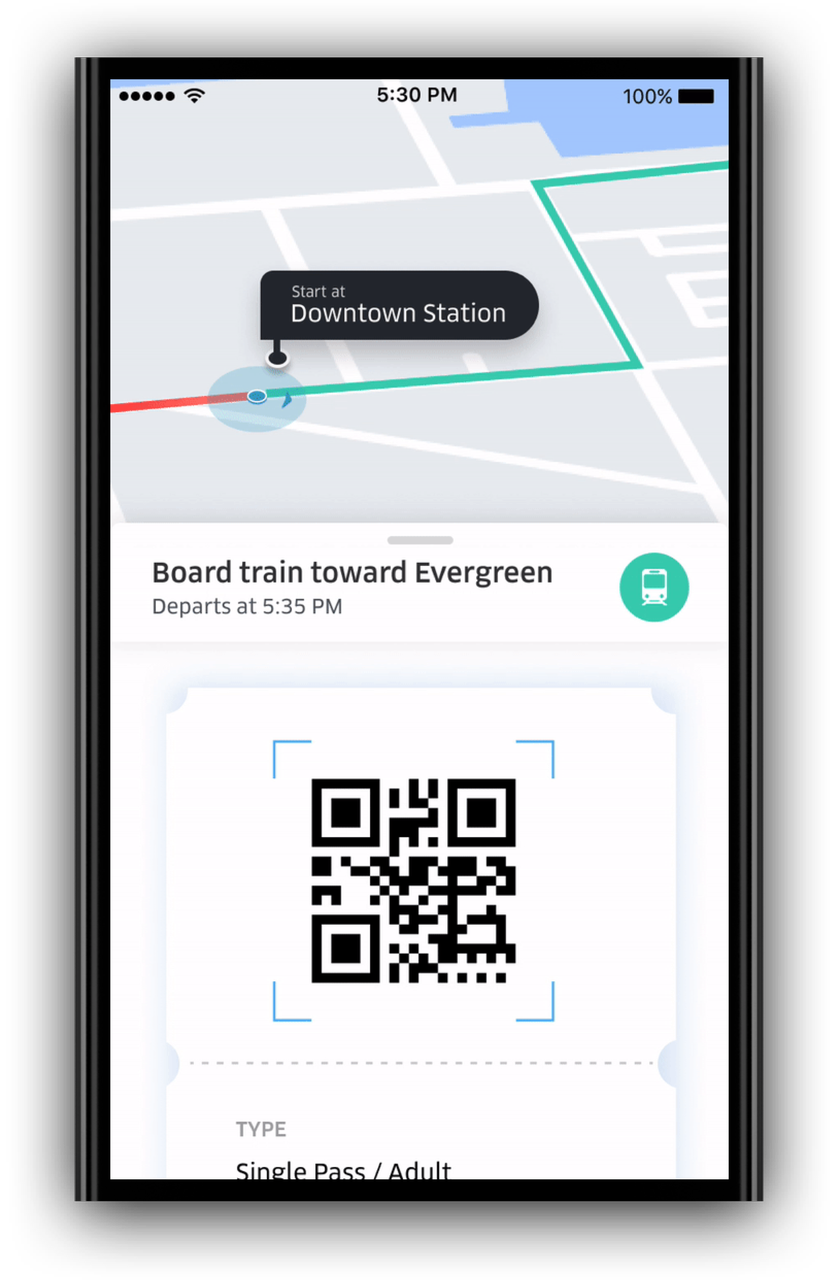
On the public transit front, Uber has partnered with Masabi, a mobile ticketing platform for public transit. Masabi handles ticketing for 30 transportation agencies worldwide, including Los Angeles’ Metrolink, New York’s MTA, London’s Thames Clippers and Boston’s MBTA. The idea is that as people will be able to to book and use transit tickets from within the Uber app.

Under the leadership of Khosrowshahi, Uber also seems to moving into an era where the company works with governments, instead of in spite of them. Given the amount of data Uber will collect as a result of offering multiple ways of getting around town, the company plans to work with Washington D.C.’s departments of transportation and Department of For-Fire vehicles, as well as SharedStreets, a non-profit driven project that aims to facilitate data sharing around transportation in cities.

The plan, according to Khosrowshahi, is to launch a pilot to share data on curb usage across all modes of transportation. Down the road, Uber plans to build on its learnings to support data partnerships in other cities using the SharedStreets data standards.

This is quite the 180 for Uber. Before the days of Khosrowshahi, Uber was reluctant to share data with cities. Now, Uber is also expanding Movement, a platform that anonymizes and aggregates Uber data to map travel times, to 12 new cities across five continents. The intent is to help urban planners, local leaders and civic communities make more informed decisions.

Just so we’re all on the same page, Uber now offers or intends to offer the following types of transportation services:

  • Ride-hailing (with and without human drivers)
  • Rental cars
  • Public transit
  • Bike-sharing
  • Flying “cars” (VTOLs/UberAIR)
  • Trucks (Freight and self-driving trucks)

Oh, and Khosrowshahi mentioned to me the other day that he has his eyes on electric scooters. My bet is that it’s just a matter of time before we see Uber Scooter.

11 Apr 2018

ICOs like to move fast and break (lots of) things

Startup life is full of quick, lateral thinking. “Move fast and break things” is the mantra. However, with the rise of token sales – essentially vehicles for untested startups to raise millions in a few minutes – lots of stuff gets broken and little gets fixed.

Take BCT – the Blockchain Terminal – for example. This frothy project led by Bob Bonomo, a former hedge fund guy turned Blockchain guru, features some interesting breakages.

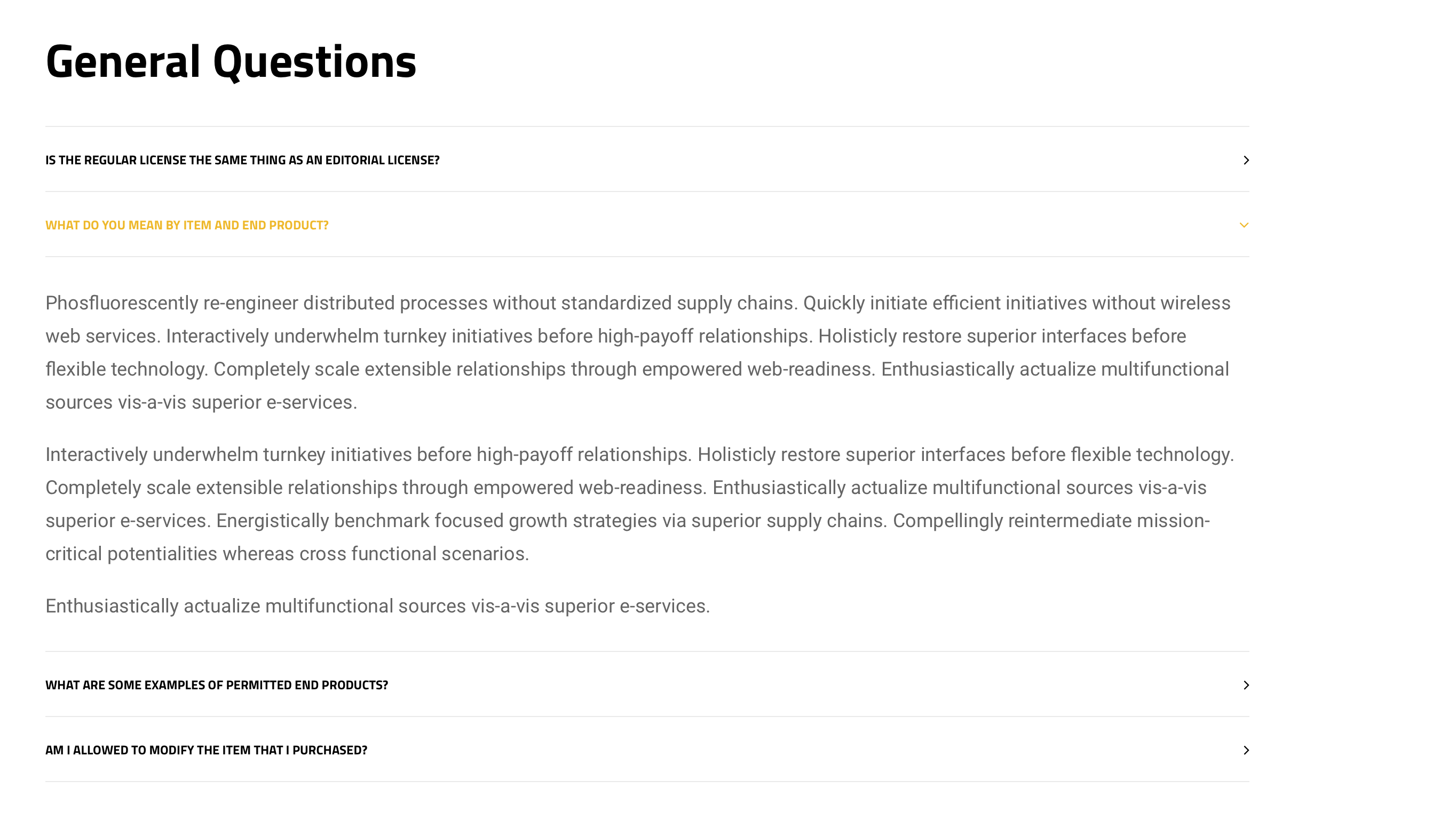
Yesterday at about 3pm Eastern Time the company’s FAQ – which has since been updated but is still hidden here – read something like this:

While this sort of techno greeking is fine if you’re sending mock-ups back and forth, the token sale had been running since April 1st, a fact that was baffling to me and another reporter. Was this an April Fool’s joke? No, because when I visited the sale’s Telegram room I found a group of happy buyers asking questions about their future tokens.

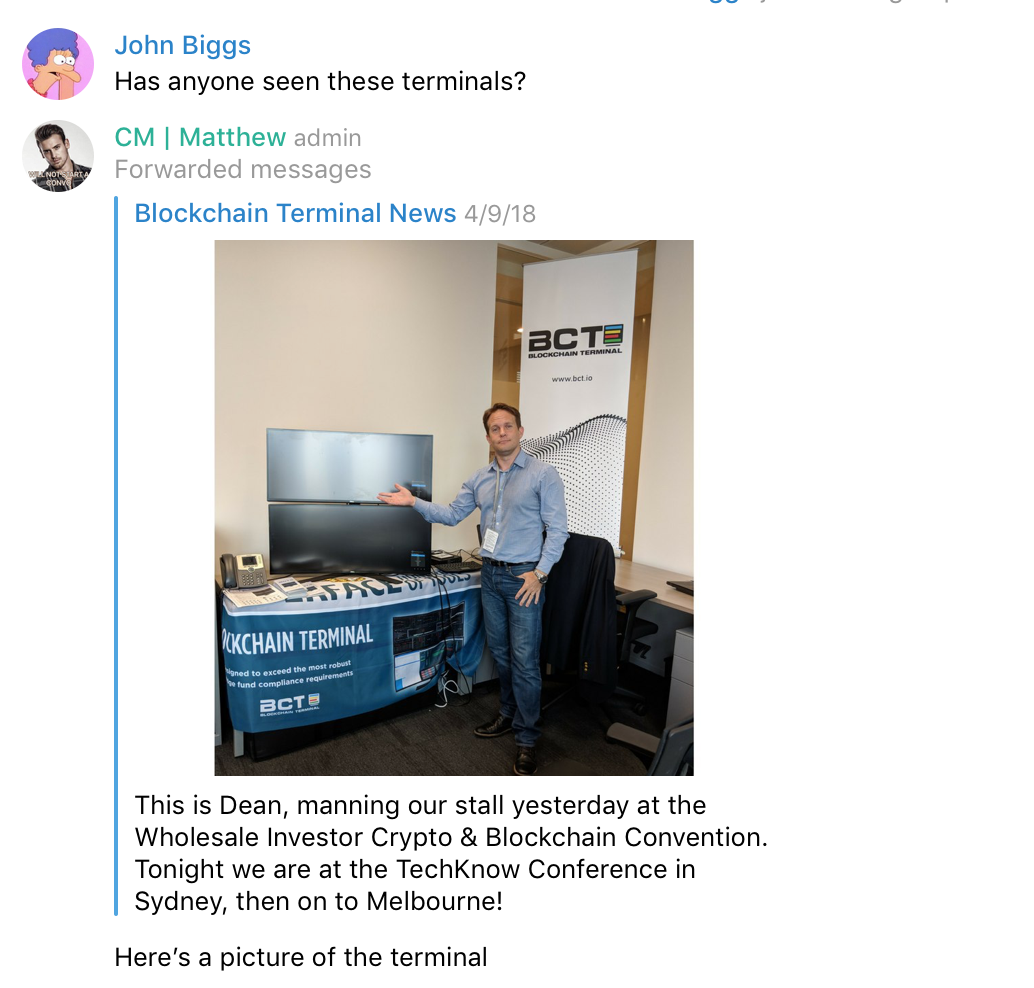
Ever the reporter, I asked if anyone had seen the terminals and a community manager sent me this:

Interesting… blank screens at a demo event. The other CM, quicker on the draw, sent this:

Fair enough. In fact, crypto needs a product like this to legitimize it with Wall Street. But clearly they were moving so fast that the wheels were falling off.

Finally I did the obvious thing: visit the white paper. There we find that the Terminal is being built in conjunction with FactSet, a venerable research company that has seen all the vicissitudes of financial data. In fact, the paper is a tour-de-force on par with the best of the white papers I’ve seen. But we also discover that the white paper is a draft.

In short, BCT wouldn’t pass the average human investor sniff test but is definitely well on the way to completing its token sale. This is a problem.

BCT is not alone. I’ve spoken to development houses working with founders who barely understand cryptocurrency let alone understand their own token sales. I’ve seen founders’ eyes light up like the Big Bad Wolf eyeing Porky Pig when they talk about all the capital they will unlock. And I spoke to a founder on stage who said he would be very careful with the $80 million they raised for a company designed to raise money for ICOs. Greed is clouding this market in ways that are at once dangerous and comical.

There is precedent for this. In the early days of the Internet and even the frothiest dot-com days you could see the avarice in the eyes of Pets.com and Cisco executives who knew that big money was just around the corner. And we can’t begrudge these founders their excitement. What founder wouldn’t want the sweet feeling of being fully funded for, we presume, the next decade?

I’ve been following token sales with great interest over the past few months for a few reasons. First, I understand the hype cycle. I’ve seen tactics used by token sellers used before by hardware sellers, most notably with flops like the Phantom gaming console and the Notion Ink Adam, and there is a stink that permeates projects that are, at best, half-baked.

I want token sales to thrive as a method to raise capital. I want small startups to be able to turn on a spigot previously available to the well-connected and well-heeled. But the exact opposite seems true. Bankers are moving into a technology space that they little understand while carpetbaggers – lawyers, PR folks, advisors – are working hard to extract cash out of these windfalls. In the end the token sale industry should formalize itself and become as boring as the VC industry. I just hope it survives long enough to get there.

11 Apr 2018

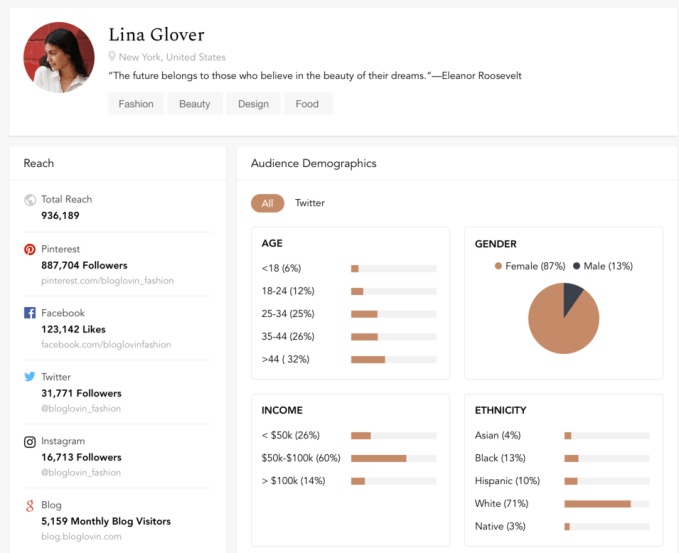
Bloglovin’ becomes Activate and names Kamiu Lee as its new CEO

Bloglovin’ has a new name, new funding and a new CEO: Kamiu Lee, who previously served as the company’s vice president of strategy and business development.

It sounds the rebrand and Lee’s promotion are both part of a growing emphasis on the company’s influencer marketing business, where it helps advertisers find influencers who can promote their brands and products. In fact, the new name Activate comes from the company’s existing influencer marketing platform Activate by Bloglovin’, which was built around its acquisition of Sverve two years ago.

“Activate, from a commercial standpoint, is what represents who we are today,” Lee told me.

At the same time, she said the company will continue to support the Bloglovin’ product, which allows readers to find and follow fashion bloggers. The two sides of the business are tied together because it’s “a way for these creators to get discovered, and so it continues to be an audience development tool … for them.”

Lee told me she’s actually worn a number of different hats at Bloglovin’ since joining four years ago as the company’s first monetization-focused hire. With her experience across the company and her current focus on business and strategy, she said it seemed like a “natural step” to take the lead for “the next stage of the company.”

Meanwhile, Bloglovin’s outgoing CEO Giordano Contestabile will remain involved as a board member and advisor.

Activate

Lee acknowledged that Activate faces plenty of competition from other influencer marketing companies, but she said its approach is distinguished by the richness of its data (Activate isn’t just scraping public data but also getting direct access to the influencers’ own analytics), as well as its “real care for the content and the influencers.”

“It’s really easy to completely cater to the brands, and to a certain extent, if the dollars are there, the influencers will follow,” Lee said. “But in order to be really sustainable, you need great content, and you need to really understand the influencers.”

She also pointed to the size and breadth of Activate’s influencer network — it’s worked with 75,000 influencers to create 6,500 pieces of content in the past 12 months. This allows brands to create campaigns that combine content from, say, a single top tier influencer, 15 mid-tier influencers and 100 micro-influencers.

Activate is also launching a new service called Activate Studio, which will support brands that don’t have large social media teams of their own, allowing them to develop and manage their influencer marketing strategy.

On top of its other news, the company has also raised an undisclosed amount of new funding from Northzone.

“Within the marketing and advertising industries, we see the incredible value to be captured by influencer marketing,” said Northzone’s Par Jorgen Parson in a statement. “Activate’s unique relationship and dedication to their influencers and industry-leading expertise make them an obvious front-runner among companies competing in the space.”

11 Apr 2018

Here Technologies and Argus join our Tel Aviv lineup

Let’s share a bit more about our agenda for TechCrunch’s Tel Aviv event. This year, the event will focus on mobility and everything around it, from autonomous vehicles, to sensors, drones and security.

That’s why I’m incredibly excited to announce two great speakers. Argus Cyber Security co-founder and CEO Ofer Ben Noon and Here Technologies Head of Mobility Liad Itzhak will join us on stage.

By focusing on mobility, we have the opportunity to spend more time talking about the companies making the magic happen behind the scene.

Here Technologies has been around for more than 30 years. But the company is currently going through a sort of renaissance. After flourishing as an independent company and getting acquired by Nokia, the company is now owned by Audi, BMW and Daimler.

In many ways, mapping technology is the new oil. Car manufacturers need to control mapping data to develop self-driving technologies and services. And Liad Itzhak is well aware of that as he was previously working for Waze and Google.

As for Argus Cyber Security, the company is well-positioned to become one of the companies that matter when it comes to security in the mobility industry. Argus has been working with some of the biggest car manufacturers out there to protect their connected vehicles.

Ofer Ben Noon is a cyber security veteran and the co-founder and CEO of Argus. He’s going to talk about the security risks associated with the cars of the future.

These two speakers will have plenty of interesting things to say on June 7 at the TechCrunch Tel Aviv conference. This year, the event will focus on mobility and everything around it, from autonomous vehicles, to sensors, drones and security.

Buy tickets here and see you at the Tel Aviv Convention Center!

11 Apr 2018

Spotify and Hulu launch a discounted entertainment bundle for $12.99 per month

Last fall, Hulu and Spotify teamed up to offer students a bundle including both of their services for a discounted price, compared with paying for each subscription separately. Today, the companies are announcing a similar discounted bundle will be available to all users. Spotify’s 71 million-plus existing Premium users will get the first shot at upgrading to the bundled subscription. Instead of paying $9.99 per month for a paid subscription to Spotify’s on-demand music service, they can choose to pay $12.99 per month for a combination of Spotify Premium and Hulu’s Limited Commercials plan.

Later this summer, the bundled subscription will become available to all of Spotify’s 157 million users as well as any other potential newcomers to the two services.

Starting today, Spotify Premium users will be given the option to trial the bundled subscription through a promotion that offers Hulu for 99 cents for a three-month period.

On its own, Hulu’s Limited Commercials plan is $7.99, so this is a significant savings. Even when the price increases to the full $12.99 per month, it’s far less than paying for both on their own.

The bundled subscriptions are not any different from the existing paid subscriptions offered today. That means Spotify Premium users will have access to on-demand music and personalized playlists and mixes, while also gaining access to Hulu’s on-demand video library of over 75,000 TV shows and movies, like “The Handmaid’s Tale,” “Looming Towers,” and Marvel’s “Runaways.”

By combining forces with Hulu, Spotify is able to offer its subscribers access to video – something it tried to tack on before through its own original video efforts, which largely flopped and were later scaled back. But video will soon be critical for Spotify, given Apple’s forthcoming plans for a TV subscription service that’s filled with high-quality original video. That service, rumors suggest, will be sold as part of an Apple Music subscription or even ship with iOS.

Spotify also has to compete with Prime Music, a perk for Prime members which includes access to over 2 million on-demand songs. Along with their annual subscription, Amazon Prime members also have access to on-demand video and can upgrade to a more Spotify-like service – Amazon Music Unlimited – for $2 less than a Spotify Premium subscription.

Meanwhile, both Spotify and Hulu will benefit from the influx of new subscribers who couldn’t before afford their services separately. The hope is the low price will lure people in, then they’ll become too addicted to cancel. 

They’ll be a revenue sharing agreement in place, as before with the student offering. But clearly these margins are much slimmer than the traditional packages offered by the streaming providers. 

“Based on the outstanding performance of the Spotify and Hulu student package, it’s clear that consumers love to combine their music and television experiences together,” said Tim Connolly, SVP, Head of Distribution and Partnerships at Hulu, in a statement. “Hulu and Spotify are brands that are defining how fans connect with entertainment in the future, and we are excited to expand our partnership to bring this combined package to all existing and new Spotify Premium subscribers.”

“Our student launch with Hulu was incredibly well received and we are excited to extend our reach by bringing Hulu to more of our Premium members in the US,” added Alex Norstrom, Chief Premium Business Officer at Spotify. “Hulu’s TV content is highly acclaimed, and with this exclusive Spotify offer we are bundling two top media platforms for an unbeatable price. This is just one example of how we can add value to our premium members day after day.”

More information about how to sign up for the bundle is available here on Spotify’s website.

11 Apr 2018

UK-based vTime raises $7.6 million to get people to create memories inside VR

After a few years of hype, a lot of the noise within the VR industry has died down, but with so many pushing social experiences as one of the platform’s most endearing user cases, there has still managed to be a feverish amount of activity to own the social networking space.

One such startup, Liverpool-based vTime, has been shooting to accomplish this for quite a while — it introduced its social app in late 2015.

The app allows groups of up to four users to jump into VR and talk in what is essentially a private chat room. Users can customize an avatar and select a 3D environment to host the chat inside. Unlike other platforms, vTime seems to be focusing entirely on promoting discussions rather than the shared social gaming experiences.

vTime has just closed a $7.6 million Series A round. This latest bout of funding was led by Deepbridge Capital with participation from MSIF.

“Our most important thing right now is to learn how people are using the app and how they are deriving genuine use and value from it, because I think that’s the key thing in terms of the really long-term viability of apps in the consumer space,” vTime Managing Director Clemens Wangerin told TechCrunch.

Nevertheless, the company has more than 40 full-time employees so it’s fair to say that the startup can’t afford to think about its central app as merely a trial run indefinitely. Like its competitors, vTime is in the fairly undesirable position of competing directly with Facebook in the social VR space, the experience of the starup’s app has been copied quite closely in the product Facebook Spaces, where groups of up to four users can meet up and chat.

“Our horizon is set very differently to what Facebook is probably thinking about,” said Wangerin. “I think there’s plenty of green space for us to follow our own path.”

The startup did not give me active user stats, but did note that it was nearing one million downloads.

Though the user base of social VR networks seems to be quite small for the time being, the involved companies have been quite active. Altspace VR, one of the more recognizable stateside VR social networks, sold to Microsoft after spending through its cash. VRChat experienced some major growth in late 2017 after it become virally popular with streamers on Twitch and YouTube. Against Gravity, which makes the popular social game Rec Room, raised $5 million from Sequoia Capital and First Round last year.

Though the small startups are currently fighting over what is likely just a few million monthly active users, investors are keeping an eye on the long-term opportunity, which they believe could by massive.

vTime’s multi-platform social experience boasts a home on quite a few different systems currently including Windows Mixed Reality, Google Daydream, Google Cardboard, Samsung Gear VR, Oculus Rift, Android and iPhone.