Zipjet, the on-demand laundry and dry cleaning service co-founded by Rocket Internet, has picked up further funding. Described as a “Series B extension,” the new round sees the likes of Henkel Ventures, Amsterdam Venture Partners, and BSH Home Appliances Group — the combined venture of Bosch and Siemens — make a “seven-figure” investment in the company, capital it plans to use for business and product development, including beefing up data-science and marketing.
Founded in 2014 by Florian Färber and Lorenzo Franzi on behalf of Germany’s most famous startup factory, Zipjet was an early mover in the European on-demand laundry and dry cleaning space. Operating in London, Paris and Berlin, the company offers an app and website that makes it super convenient to order a range of laundry and dry cleaning services, including pickup and return delivery. Garments can be cleaned, ironed, folded and delivered to customers “in as little as 24 hours”.
In many ways Zipjet can be viewed as a direct clone of Washio in the U.S., which shuttered in 2016 before being acquired for assets by rival Rinse. In the U.K., which has also seen consolidation, competitors include Laundrapp and the lesser-known and modestly funded Laundryheap. Late last year, Zipjet itself acquired French rival Cleanio.
Despite being an extension of a previous Series B and the exact amount remaining undisclosed, Zipjet’s latest funding is noteworthy because it is being spun as a “strategic” investment in relation to Henkel Ventures (investment arm of chemical and FMCG company Henkel), and Bosch and Siemens’ BSH Home Appliances Group. “This investment is about much more than money, it’s a strategic play with some of the world’s largest producers of washing machines and detergents. We will be able to collaborate on several projects, enabling us to service more customers and develop our product offering,” says Zipjet co-founder and CEO Florian Färber.
What those “projects” will look like, Zipjet isn’t saying, although I understand one being explored in the medium to long-term is giving existing Henkel and BSH Home Appliances Group customers the option to use Zipjet for a selection of clothing that requires extra service or convenience. Other potential ideas include turning partner locations into Zipjet “drop-off and pick-up” points or licensing Zipjet’s logistics software to partners.
Adds Uwe Blanarsch-Simon, Vice President Technical Product Management at BSH Home Appliances, in a statement: “The purpose of our business is to improve the quality of life of our consumers across the globe. Our goal is to serve our consumers with innovative appliances and solutions that make their everyday life easier and more enjoyable. The cooperation with Zipjet is a perfect complement for our core business in the laundry care section”.
Zipjet, the on-demand laundry and dry cleaning service co-founded by Rocket Internet, has picked up further funding. Described as a “Series B extension,” the new round sees the likes of Henkel Ventures, Amsterdam Venture Partners, and BSH Home Appliances Group — the combined venture of Bosch and Siemens — make a “seven-figure” investment in the company, capital it plans to use for business and product development, including beefing up data-science and marketing.
Founded in 2014 by Florian Färber and Lorenzo Franzi on behalf of Germany’s most famous startup factory, Zipjet was an early mover in the European on-demand laundry and dry cleaning space. Operating in London, Paris and Berlin, the company offers an app and website that makes it super convenient to order a range of laundry and dry cleaning services, including pickup and return delivery. Garments can be cleaned, ironed, folded and delivered to customers “in as little as 24 hours”.
In many ways Zipjet can be viewed as a direct clone of Washio in the U.S., which shuttered in 2016 before being acquired for assets by rival Rinse. In the U.K., which has also seen consolidation, competitors include Laundrapp and the lesser-known and modestly funded Laundryheap. Late last year, Zipjet itself acquired French rival Cleanio.
Despite being an extension of a previous Series B and the exact amount remaining undisclosed, Zipjet’s latest funding is noteworthy because it is being spun as a “strategic” investment in relation to Henkel Ventures (investment arm of chemical and FMCG company Henkel), and Bosch and Siemens’ BSH Home Appliances Group. “This investment is about much more than money, it’s a strategic play with some of the world’s largest producers of washing machines and detergents. We will be able to collaborate on several projects, enabling us to service more customers and develop our product offering,” says Zipjet co-founder and CEO Florian Färber.
What those “projects” will look like, Zipjet isn’t saying, although I understand one being explored in the medium to long-term is giving existing Henkel and BSH Home Appliances Group customers the option to use Zipjet for a selection of clothing that requires extra service or convenience. Other potential ideas include turning partner locations into Zipjet “drop-off and pick-up” points or licensing Zipjet’s logistics software to partners.
Adds Uwe Blanarsch-Simon, Vice President Technical Product Management at BSH Home Appliances, in a statement: “The purpose of our business is to improve the quality of life of our consumers across the globe. Our goal is to serve our consumers with innovative appliances and solutions that make their everyday life easier and more enjoyable. The cooperation with Zipjet is a perfect complement for our core business in the laundry care section”.
Sweden’s Instabridge, the Wi-Fi sharing community and mobile app that has proved particularly popular in Brazil and Mexico, has scored $3 million in further funding — money it’s pegged for Asia expansion, starting with India.
The new round is led by Luminar Ventures (headed up by Magnus Bergman and Jacob Key), with participation from previous backers Balderton Capital, Draper Associates, Moor, and Creandum. The company had previously raised around $5 million.
Originally founded in late 2012 as a way to enable you to share your home Wi-Fi with friends on Facebook, the Stockholm-based company has since pivoted to become a broader Wi-Fi sharing community, and has found traction in developing markets where cellular data remains prohibitively expensive.
The Instabridge app lets you share the details of any Wi-Fi hotspot with other Instabridge users, and provides access to Wi-Fi hotspots shared by everyone else in the community. This has enabled it to build a crowdsourced database of Wi-Fi hotspots, in addition to a list of known public venues that have free Wi-Fi, such as McDonald’s or Starbucks.
Instabridge says it plans to build on the traction it has seen in South America by targeting India’s population of over 1 billion people, of which it says only 400 million currently have internet access. This, Instabridge co-founder Niklas Agevik tells me, will include building out a team in India, and plays into the company’s new-found mission of expanding internet access in developing countries where internet services remain relatively expensive and yet access to the internet is a proven means of “reducing income inequality”.
Meanwhile, I’m told that Instabridge is now seeing 2.3 million Monthly Active Users, and is growing at a rate of 50,000 new users per day. The Instabridge database now houses the details of 2 million Wi-Fi spots.
Liberis, the London-based fintech that provides finance for small businesses, has raised £57.5 million in new funding to help support the company’s growth. The alternative finance provider makes loans against a company’s future credit and debit card sales.
The majority of the new capital being raised by Liberis is debt, which in turn will enable it to issue more loans. The facility is being provided by British Business Investments (the commercial arm of the tax payer-funded British Business Bank), Paragon Bank, and BCI Ltd.
In addition, Blenheim Chalcot has made an equity investment into Liberis. The so-called “digital venture builder” also previously backed Clearscore, the credit scoring startup recently acquired by Experian.
Providing a new financing option as a replacement for a traditional bank loan or extended overdraft — which is increasingly hard for small businesses to come by — Liberis provides funding from £1,000 to £500,000 based on a company’s projected credit and debit card sales. However, the clever part is that the loan is paid back via a pre-agreed percentage of the business’ digital transactions, making it especially attractive to seasonal businesses that have very uneven sales throughout different times of the year. There isn’t a time limit placed on when a loan has to be repaid, either. Instead, the repayment schedule is directly tied to the size and pace of a small business’ card transactions.
In a call with Rob Straathof, CEO of Liberis, he conceded that this means the fintech startup is taking on more of the risk, but says the company is seeing the vast majority of loans paid back within the projected timeframe. To help manage risk and make the required sales projections, Liberis uses various data points, including transactions pulled in from a number payment platform partners such as Worldpay, and Sagepay. Similarly, it also integrates with take-out marketplace Just Eat, which gives the startup the ability to offer financing to small restaurants. The advent of Open Banking, which lets bank account holders share their transaction data via an API, will also enable Liberis to extend its reach.
Examples of small business customers given by Straathof include a local bakery that needs to invest in a new oven, a neighbourhood pub that wants to expand with a beer garden, or an online retailer that needs to incrementally restock to meet rising demand. “Our innovative product has proven particularly popular with retail and hospitality businesses where income fluctuates on a seasonal basis. New lending to small businesses by banks has been decreasing since Q4 16 and Liberis jumps into the void with our ‘pay as you earn’ funding solution,” he says in a statement.
To date, Liberis has helped over 7,000 small businesses, advancing £210 million in funding. However, it isn’t the only ‘pay as you earn’-styled finance provider. Amazon, of course, offers its own business financing based on Amazon Market transaction data. PayPal and Square also offer credit for retailers. Meanwhile, SME peer-to-peer lending platforms, such as Funding Circle, might also be viewed as a competitor.
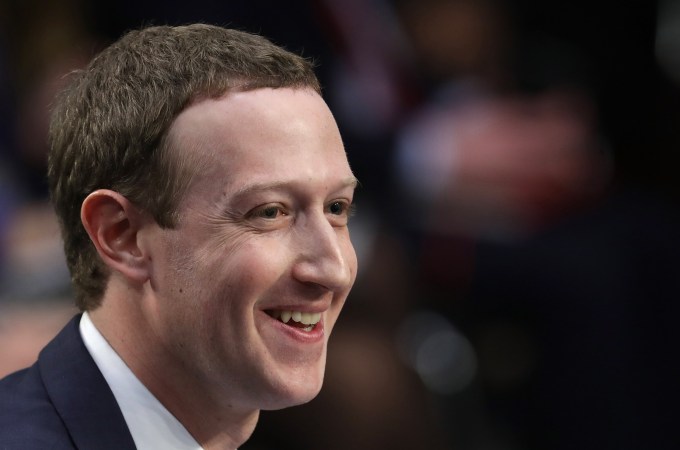
Facebook’s Mark Zuckerberg pulled off a smooth appearance in a joint Senate hearing today, dodging most questions while maintaining an adequately patient vibe through five hours of varied but mostly tame questioning.
The chief executive avoided admitting that Facebook is a publisher or a monopoly, refused to commit to any meaningful legislation and respectfully addressed lawmakers over a nearly five hour marathon testimony.
Still, he did make one rookie mistake.
Zuckerberg left his hearing notes open in front of his seat for long enough for AP Photographer Andrew Harnik to snap a high resolution shot with talking points in plain view. Twitter users and journalists scanning photos from the courtroom as they hit the wire were quick to notice, the irony of the minor privacy invasion not lost on them.
Most of the notes cover points that we heard Zuckerberg repeat during the course of the hearing, but there are a few more candid statements that didn’t come up. The notes also provide a glimpse into what lines of questioning Facebook expected. For one, they expected Congress might demand his resignation.
Below we’ve listed the subheadings on his notes in bold with any interesting bullet points pulled out. Our partial transcript retains the original emphasis from the document. Though we’ve italicized what was underlined, bold lettering is retained.
Cambridge Analytica
Compensation
Reverse lookup (scraping)
Accountability
Do you ever fire anyone? Yes; hold people accountable all the time; not going into specifics.
Resign? Founded Facebook. My decisions. I made mistakes. Big challenge, but we’ve solved problems before, going to solve this one. Already taking action.
No accountability for MZ? Accountable to you, to employees, to people who use FB.
Data Safety
I use FB every day, so does my family, invest a lot in security.
Business Model (ads)
Want FB to be a service that everyone can use, has to be free, can only do that with ads.
Let’s be clear. Facebook doesn’t sell data. You own your information. We give you controls.
???/ wellbeing
Time spent fell 5% Q4, pivot to MSI.
Defend Facebook
[If attacked: Respectfully, I reject that. Not who we are.]
Tim Cook on biz model
At FB, we try hard to charge you less. In fact, we’re free.
On data, we’re similar. When you install an app on your iPhone, you give it access to some information, just like when you login with FB.
Lots of stories about apps misusing Apple data, never seen Apple notifying people.
Important you hold everyone to the same standard.
Disturbing content
Election integrity (Russia)
Diversity
Silicon Valley has a problem, and Facebook is part of that problem.
Personally care about making progress; long way to go [3% African American, 5% Hispanics]
Competition
Consumer choice: consumers have lots of choices over how they spend their time.
Small part of ad market: advertisers have choices too – $650 billion market, we have 6%
Break up FB? US tech companies key asset for America; break up strengthens Chinese companies.
Senator Kamala Harris (D-CA) spent her portion of today’s epic-length questioning of Mark Zuckerberg getting the CEO to squeeze himself deeper and deeper between a rock and a hard place. He didn’t reveal anything particularly damning, but he also — with her help — made himself look ineffective and clueless.
Her questioning had Zuckerberg contradicting himself on a serious topic: how the decision was made in 2015 to not inform the 87 million users that their data had been improperly sold off. If he didn’t know about how that decision was made, what kind of leadership was that? But if he did know, then how could no conversation have taken place about the decision before it was made? It was one of the few times in the hearing where Zuckerberg’s prepared remarks proved wholly insufficient.
Harris, who sounded bored — as well she might be after some of the softballs that had been lobbed in Zuckerberg’s direction — began by saying that she was “concerned” by what she’d heard.
“During the course of this hearing these last four hours you’ve been asked several critical questions for which you don’t have answers,” she began.
We were also tracking the many, many times Zuckerberg declined to answer clearly or deferred with the standard “we’ll follow up.” For the record, Harris listed that Zuckerberg did not address:
Whether Facebook tracks users after they log out (his answer to this, “I know that people use cookies on the internet, and that people can probably correlate activity between sessions,” was a monumental eye-roller considering we know this is a crucial capability Facebook deploys.)
Whether Facebook can track activity across devices
Who is Facebook’s biggest competitor (Senator Graham pursued this with vigor)
Whether Facebook “may store up to 96 categories of user information” (I would be surprised if it is that few)
Whether he knew about Aleksandr Kogan’s terms of service or whether Kogan could sell or transfer data under them
But her main issue, aside from informing Zuckerberg that these points had not been forgotten, was to bring up the specific occurrence that in 2015, Facebook learned that the data of millions of users had been abused, and yet did not inform those users.
“A concern of mine is that you, meaning Facebook, and I’m going to assume you personally as CEO, became aware in December of 2015 that Dr Kogan and Cambridge Analytica misappropriated data from 87 million Facebook users. That’s 27 months ago,” she said. “However, a decision was made not to notify the users. So my question is did anyone at Facebook have a conversation, at the time that you became aware of this breach, have a conversation wherein the decision was made not to contact the users?”
Here Zuckerberg attempted the defense of not being able to know every conversation at Facebook “because I wasn’t in a lot of them… I mean, I’m not sure what other people discussed.”
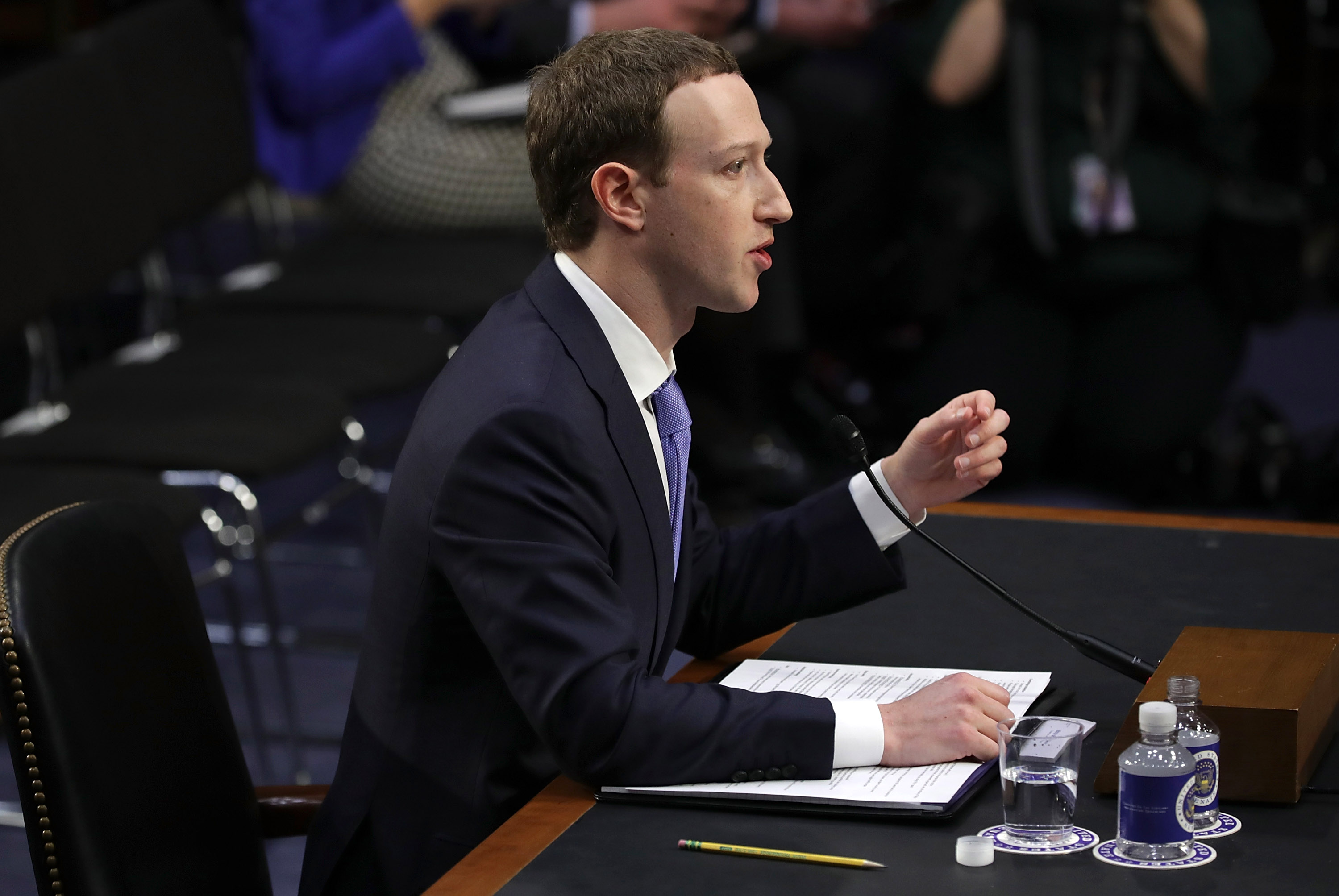
WASHINGTON, DC – APRIL 10: Facebook co-founder, Chairman and CEO Mark Zuckerberg testifies before a combined Senate Judiciary and Commerce committee hearing in the Hart Senate Office Building on Capitol Hill April 10, 2018 in Washington, DC. Zuckerberg, 33, was called to testify after it was reported that 87 million Facebook users had their personal information harvested by Cambridge Analytica, a British political consulting firm linked to the Trump campaign. (Photo by Chip Somodevilla/Getty Images)
Harris did not take the bait and when Zuckerberg attempted to steer the conversation towards the known facts of how Facebook responded in 2015, she pressed on:
“Were you part of a discussion that resulted in the decision not to inform your users?”
“I don’t remember a conversation like that,” Zuckerberg responded, and attempted to expand with “for the reason why—” only to be cut off by Harris again.
“Are you aware of anyone in leadership at Facebook who was in a conversation where a decision was made not to inform your users,” she asked, “or do you believe no such conversation ever took place?”
This was an excellent move. She’d limited Zuckerberg’s options to either admitting he was unaware of conversations among leadership choosing to withhold news of this data abuse from users (unrealistic), or admitting that leadership did not have those conversations (deeply troubling). Both reflect poorly on him, his executives, and the company. Zuckerberg prudently chose to plead ignorance.
“I’m not sure whether there was a conversation about that,” he said, yet immediately hit on a prepared line. “But I can tell you about the thought process at the time, of the company, which was that in 2015 when we hard about this, we banned the developer and we demanded that they delete all the data and stop using it, and the same with Cambridge Analytica. They told us they had—”
But Harris had no intention of allowing him to run out the clock with recycled, irrelevant statements, as he had many times in the previous hours.
“I’ve heard your testimony in that regard,” she cut in before finally taking her chance to bear down on him.
“But I’m talking about notification of the users. This relates to the issue of transparency and the relationship of trust — informing the user about what you know in terms of how their personal information has been misused. When you personally became aware of this, did you or senior leadership do an inquiry to find out who at Facebook had this information, and did they not have a discussion about whether or not the users should be informed, back in December of 2015?”
Zuckerberg was faced again with a poor choice, and instead opted for a show of humbleness.
“Senator, in retrospect I think we clearly view it as a mistake that we didn’t inform people, and we did that based on false information that we thought that the case was closed and that the data had been deleted.”
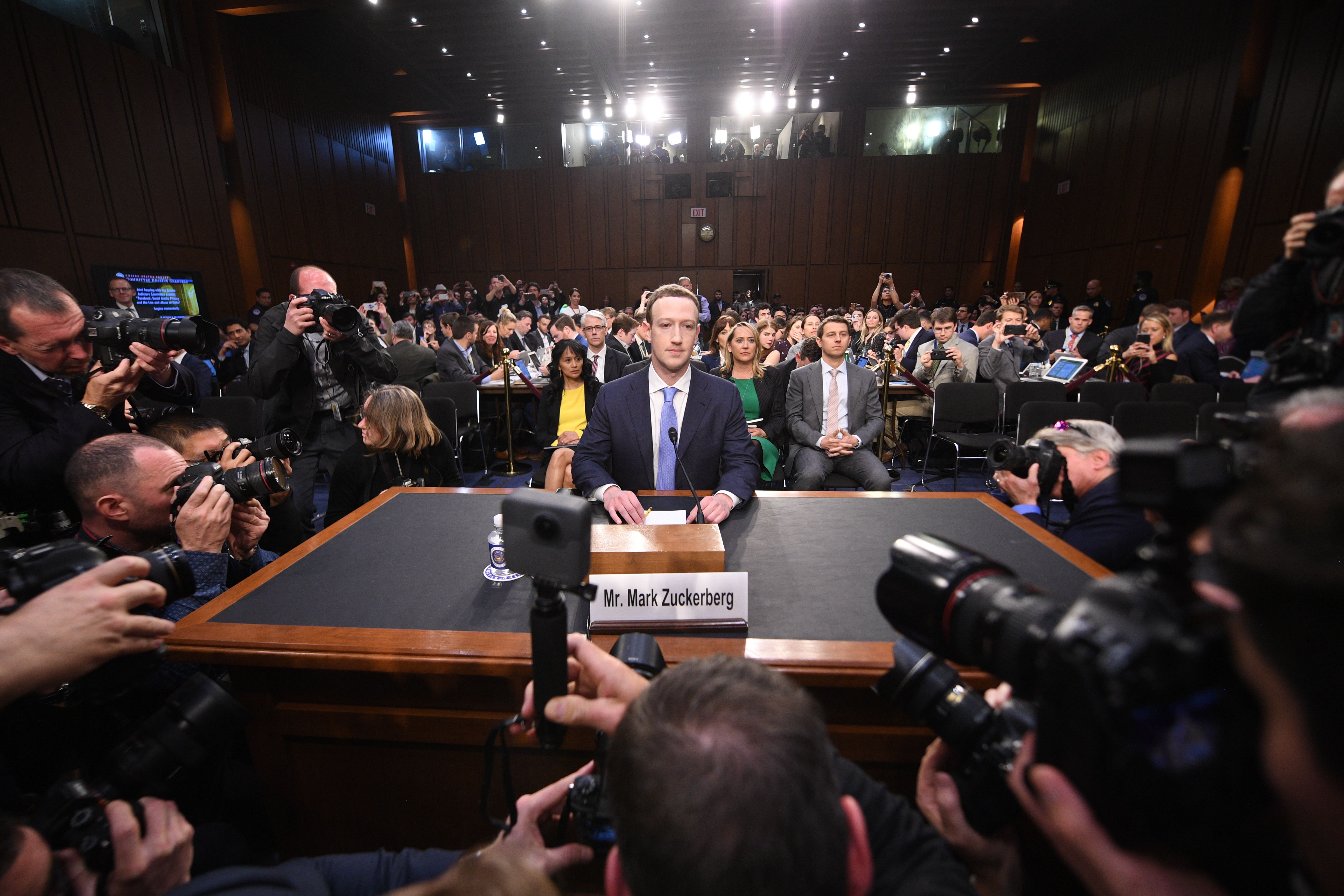
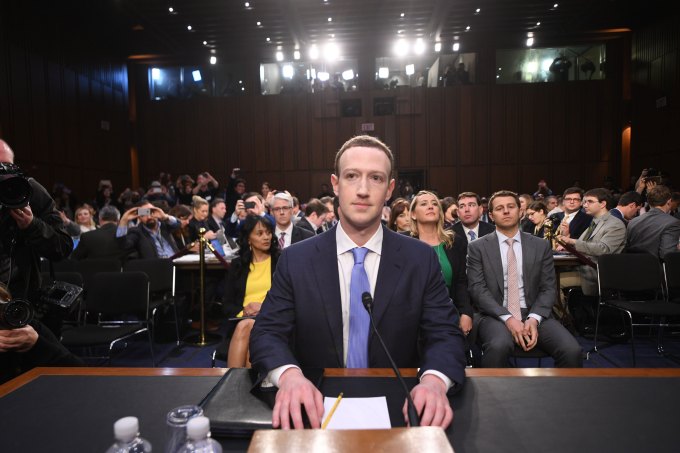
Facebook CEO Mark Zuckerberg arrives to testify before a joint hearing of the US Senate Commerce, Science and Transportation Committee and Senate Judiciary Committee on Capitol Hill, April 10, 2018 in Washington, DC. (Photo: JIM WATSON/AFP/Getty Images)
Harris jumped on this admission that “we did that”: “So there was a decision made on that basis not to inform the users, is that correct?”
“That’s my understanding, yes. But in retrospect I think that was a mistake and knowing what we know now we should have handled a lot of things here differently,” he continued, abjectly.
Harris politely dismissed this sad act (“And I appreciate that point”) and returned to business for one last question on this: “Do you know when that decision was made not to inform the users?”
“I don’t,” Zuckerberg said simply.
So to sum up: in 2015, it became clear to Facebook and certainly to senior leadership that the data of 87 million people had been sold against the company’s terms. Whether or not to inform those users seems like a fundamental question, yet Zuckerberg claimed to have no recollection of any discussion thereof. That hardly seems possible — especially since he later said that they had in fact had that discussion, and that the decision was made on bad information. But he doesn’t remember when this discussion, which he does or doesn’t remember, did or didn’t take place!
While this poor showing likely doesn’t rise to the level of falsity, this blatant dissimulation by Zuckerberg results in him coming off looking like a liar and a sap. For a hearing where the Senators themselves were often the ones making fools of themselves, it was nice to see the shoe on the other foot. I look forward to Senator Harris’s continuing attentions — her parting shot was telling Zuckerberg and everyone else how subpar their answers to her 50 (!) written questions from a previous hearing were. Here’s hoping she gets answers.
You can watch the full video below (courtesy of ABC):
Senator Kamala Harris (D-CA) spent her portion of today’s epic-length questioning of Mark Zuckerberg getting the CEO to squeeze himself deeper and deeper between a rock and a hard place. He didn’t reveal anything particularly damning, but he also — with her help — made himself look ineffective and clueless.
Her questioning had Zuckerberg contradicting himself on a serious topic: how the decision was made in 2015 to not inform the 87 million users that their data had been improperly sold off. If he didn’t know about how that decision was made, what kind of leadership was that? But if he did know, then how could no conversation have taken place about the decision before it was made? It was one of the few times in the hearing where Zuckerberg’s prepared remarks proved wholly insufficient.
Harris, who sounded bored — as well she might be after some of the softballs that had been lobbed in Zuckerberg’s direction — began by saying that she was “concerned” by what she’d heard.
“During the course of this hearing these last four hours you’ve been asked several critical questions for which you don’t have answers,” she began.
We were also tracking the many, many times Zuckerberg declined to answer clearly or deferred with the standard “we’ll follow up.” For the record, Harris listed that Zuckerberg did not address:
Whether Facebook tracks users after they log out (his answer to this, “I know that people use cookies on the internet, and that people can probably correlate activity between sessions,” was a monumental eye-roller considering we know this is a crucial capability Facebook deploys.)
Whether Facebook can track activity across devices
Who is Facebook’s biggest competitor (Senator Graham pursued this with vigor)
Whether Facebook “may store up to 96 categories of user information” (I would be surprised if it is that few)
Whether he knew about Aleksandr Kogan’s terms of service or whether Kogan could sell or transfer data under them
But her main issue, aside from informing Zuckerberg that these points had not been forgotten, was to bring up the specific occurrence that in 2015, Facebook learned that the data of millions of users had been abused, and yet did not inform those users.
“A concern of mine is that you, meaning Facebook, and I’m going to assume you personally as CEO, became aware in December of 2015 that Dr Kogan and Cambridge Analytica misappropriated data from 87 million Facebook users. That’s 27 months ago,” she said. “However, a decision was made not to notify the users. So my question is did anyone at Facebook have a conversation, at the time that you became aware of this breach, have a conversation wherein the decision was made not to contact the users?”
Here Zuckerberg attempted the defense of not being able to know every conversation at Facebook “because I wasn’t in a lot of them… I mean, I’m not sure what other people discussed.”
WASHINGTON, DC – APRIL 10: Facebook co-founder, Chairman and CEO Mark Zuckerberg testifies before a combined Senate Judiciary and Commerce committee hearing in the Hart Senate Office Building on Capitol Hill April 10, 2018 in Washington, DC. Zuckerberg, 33, was called to testify after it was reported that 87 million Facebook users had their personal information harvested by Cambridge Analytica, a British political consulting firm linked to the Trump campaign. (Photo by Chip Somodevilla/Getty Images)
Harris did not take the bait and when Zuckerberg attempted to steer the conversation towards the known facts of how Facebook responded in 2015, she pressed on:
“Were you part of a discussion that resulted in the decision not to inform your users?”
“I don’t remember a conversation like that,” Zuckerberg responded, and attempted to expand with “for the reason why—” only to be cut off by Harris again.
“Are you aware of anyone in leadership at Facebook who was in a conversation where a decision was made not to inform your users,” she asked, “or do you believe no such conversation ever took place?”
This was an excellent move. She’d limited Zuckerberg’s options to either admitting he was unaware of conversations among leadership choosing to withhold news of this data abuse from users (unrealistic), or admitting that leadership did not have those conversations (deeply troubling). Both reflect poorly on him, his executives, and the company. Zuckerberg prudently chose to plead ignorance.
“I’m not sure whether there was a conversation about that,” he said, yet immediately hit on a prepared line. “But I can tell you about the thought process at the time, of the company, which was that in 2015 when we hard about this, we banned the developer and we demanded that they delete all the data and stop using it, and the same with Cambridge Analytica. They told us they had—”
But Harris had no intention of allowing him to run out the clock with recycled, irrelevant statements, as he had many times in the previous hours.
“I’ve heard your testimony in that regard,” she cut in before finally taking her chance to bear down on him.
“But I’m talking about notification of the users. This relates to the issue of transparency and the relationship of trust — informing the user about what you know in terms of how their personal information has been misused. When you personally became aware of this, did you or senior leadership do an inquiry to find out who at Facebook had this information, and did they not have a discussion about whether or not the users should be informed, back in December of 2015?”
Zuckerberg was faced again with a poor choice, and instead opted for a show of humbleness.
“Senator, in retrospect I think we clearly view it as a mistake that we didn’t inform people, and we did that based on false information that we thought that the case was closed and that the data had been deleted.”
Facebook CEO Mark Zuckerberg arrives to testify before a joint hearing of the US Senate Commerce, Science and Transportation Committee and Senate Judiciary Committee on Capitol Hill, April 10, 2018 in Washington, DC. (Photo: JIM WATSON/AFP/Getty Images)
Harris jumped on this admission that “we did that”: “So there was a decision made on that basis not to inform the users, is that correct?”
“That’s my understanding, yes. But in retrospect I think that was a mistake and knowing what we know now we should have handled a lot of things here differently,” he continued, abjectly.
Harris politely dismissed this sad act (“And I appreciate that point”) and returned to business for one last question on this: “Do you know when that decision was made not to inform the users?”
“I don’t,” Zuckerberg said simply.
So to sum up: in 2015, it became clear to Facebook and certainly to senior leadership that the data of 87 million people had been sold against the company’s terms. Whether or not to inform those users seems like a fundamental question, yet Zuckerberg claimed to have no recollection of any discussion thereof. That hardly seems possible — especially since he later said that they had in fact had that discussion, and that the decision was made on bad information. But he doesn’t remember when this discussion, which he does or doesn’t remember, did or didn’t take place!
While this poor showing likely doesn’t rise to the level of falsity, this blatant dissimulation by Zuckerberg results in him coming off looking like a liar and a sap. For a hearing where the Senators themselves were often the ones making fools of themselves, it was nice to see the shoe on the other foot. I look forward to Senator Harris’s continuing attentions — her parting shot was telling Zuckerberg and everyone else how subpar their answers to her 50 (!) written questions from a previous hearing were. Here’s hoping she gets answers.
You can watch the full video below (courtesy of ABC):
No one would have predicted that the three of us would ever find ourselves on the same side of the corporate patent wars, let alone speak with one voice about how to end them.
That’s because one of us is the patent chief at a global smartphone maker (and an influential critic of patent licensing abuses); another is the former licensing chief at Apple and current chief executive of a non-practicing entity (NPE) patent licensing company that has been a target of criticism from product manufacturers; while the third is president of a patent pool operator, who has criticized companies on both sides of the patent wars for their gamesmanship, lack of transparency, and litigiousness.
We have come together because we see that patent owners and product makers have become trapped in an endless cycle of demands, counter-demands, and unproductive litigation. Unless we find a way out of this conflict, we will almost certainly see a repeat of yesterday’s costly and wasteful smartphone wars in tomorrow’s wireless connected car sector.
Product makers accuse patent owners of threatening lawsuits and using the expense of the legal process in order to demand extortionate royalties for their patent rights. For their part, patent owners say product makers refuse to pay fair compensation for the patented wireless, audio, and video features that give their products value as communication and entertainment devices.
The truth is, both sides have a point. That’s because patent owners and product makers are caught in a classic “prisoner’s dilemma,” in which the lack of transparency and fair ground rules in patent licensing lead companies on each side of a patent dispute to try to game the other. This only ensures that both sides suffer a negative outcome in outrageously-expensive litigation.
Unlike in the real property business, in intellectual property (IP) licensing there is little or no independent appraisal of the assets (i.e., patents) or transparency as to how prices are determined. And because most patent license agreements are confidential, there is little or no information or “comps” on what others have paid for similar patent rights. Nor are there any widely-accepted ground rules for what constitutes fair negotiating practices between buyers and sellers.
This is especially true in regards to standards-essential wireless patents, which are supposed to be licensed on fair, reasonable, and non-discriminatory (FRAND) terms. But what’s fair or reasonable about the fact that an impossibly-large number of LTE (4G) cellular patents — more than 60,000, in fact — have been declared “standards essential” without any independent evaluation of those patents whatsoever?
That’s right, those 60,000-plus patents have all been self-declared “standards-essential” by companies each seeking their own commercial advantage. What you’ve got is a wireless gold rush — with plenty of fool’s gold posing as real gold.
So the three of us, working with industry leaders on both sides of the patent owner vs. product maker divide, have developed a three-pronged plan for ending the wireless patent wars and creating a more productive and less litigious patent licensing sector.
First, whittle down this ridiculous mountain of self-interested wireless patent claims to the fewer than 2,000 patent families that most experts believe are truly essential to smartphone handset makers. We can do this by excluding duplicative patents, expired patents, patents not in force in major economic markets, and patents for base station, infrastructure, and other innovations not relevant to handset makers. Independent, neutral evaluators will then confirm each patent’s relevance to the LTE standard for handsets.
Second, base royalty prices not on the subjectively-argued value of each individual patent examined in a vacuum, but on the objective value of the entire stack of LTE patents in a phone. A recent court judgment valued that LTE stack at roughly $20 for a smartphone with an average selling price of $324, but with greater price transparency from both sides, the market itself will likely set a rational price for the LTE stack. Royalties can then be paid to patent owners roughly proportionate to each patent owner’s percentage share of the total LTE patent stack.
And third, ensure greater transparency by promoting collective licensing solutions such as patent pools that openly publish their pricing frameworks and offer consistent terms to all licensees. Given the “prisoner’s dilemma” dynamics in patent licensing today, it is unrealistic to expect any one patent owner to unilaterally forego potential business advantage by revealing its pricing strategies. But collective licensing approaches such as patent pools reduce the risks of transparency for everyone.
As the IP journal Intellectual Asset Management recently noted, “There’s a growing sense that a collective approach to licensing could help solve some of the problems of the industry which, in sectors like mobile, has been scarred by long-running and costly disputes between patent owners and potential licensees.”
Our “peace plan” would eliminate many of the incentives and opportunities for gamesmanship in wireless patent licensing. And most importantly, it would help patent owners and product makers avoid a repeat of yesterday’s costly smartphone wars in tomorrow’s connected car, autonomous vehicle, and Internet of Things (IoT) industries.
It’s time for a new realignment in the industry — one in which the conflict is no longer between product maker and patent owner, but between those who license patents on a fair and transparent basis, and those who do not.
No one would have predicted that the three of us would ever find ourselves on the same side of the corporate patent wars, let alone speak with one voice about how to end them.
That’s because one of us is the patent chief at a global smartphone maker (and an influential critic of patent licensing abuses); another is the former licensing chief at Apple and current chief executive of a non-practicing entity (NPE) patent licensing company that has been a target of criticism from product manufacturers; while the third is president of a patent pool operator, who has criticized companies on both sides of the patent wars for their gamesmanship, lack of transparency, and litigiousness.
We have come together because we see that patent owners and product makers have become trapped in an endless cycle of demands, counter-demands, and unproductive litigation. Unless we find a way out of this conflict, we will almost certainly see a repeat of yesterday’s costly and wasteful smartphone wars in tomorrow’s wireless connected car sector.
Product makers accuse patent owners of threatening lawsuits and using the expense of the legal process in order to demand extortionate royalties for their patent rights. For their part, patent owners say product makers refuse to pay fair compensation for the patented wireless, audio, and video features that give their products value as communication and entertainment devices.
The truth is, both sides have a point. That’s because patent owners and product makers are caught in a classic “prisoner’s dilemma,” in which the lack of transparency and fair ground rules in patent licensing lead companies on each side of a patent dispute to try to game the other. This only ensures that both sides suffer a negative outcome in outrageously-expensive litigation.
Unlike in the real property business, in intellectual property (IP) licensing there is little or no independent appraisal of the assets (i.e., patents) or transparency as to how prices are determined. And because most patent license agreements are confidential, there is little or no information or “comps” on what others have paid for similar patent rights. Nor are there any widely-accepted ground rules for what constitutes fair negotiating practices between buyers and sellers.
This is especially true in regards to standards-essential wireless patents, which are supposed to be licensed on fair, reasonable, and non-discriminatory (FRAND) terms. But what’s fair or reasonable about the fact that an impossibly-large number of LTE (4G) cellular patents — more than 60,000, in fact — have been declared “standards essential” without any independent evaluation of those patents whatsoever?
That’s right, those 60,000-plus patents have all been self-declared “standards-essential” by companies each seeking their own commercial advantage. What you’ve got is a wireless gold rush — with plenty of fool’s gold posing as real gold.
So the three of us, working with industry leaders on both sides of the patent owner vs. product maker divide, have developed a three-pronged plan for ending the wireless patent wars and creating a more productive and less litigious patent licensing sector.
First, whittle down this ridiculous mountain of self-interested wireless patent claims to the fewer than 2,000 patent families that most experts believe are truly essential to smartphone handset makers. We can do this by excluding duplicative patents, expired patents, patents not in force in major economic markets, and patents for base station, infrastructure, and other innovations not relevant to handset makers. Independent, neutral evaluators will then confirm each patent’s relevance to the LTE standard for handsets.
Second, base royalty prices not on the subjectively-argued value of each individual patent examined in a vacuum, but on the objective value of the entire stack of LTE patents in a phone. A recent court judgment valued that LTE stack at roughly $20 for a smartphone with an average selling price of $324, but with greater price transparency from both sides, the market itself will likely set a rational price for the LTE stack. Royalties can then be paid to patent owners roughly proportionate to each patent owner’s percentage share of the total LTE patent stack.
And third, ensure greater transparency by promoting collective licensing solutions such as patent pools that openly publish their pricing frameworks and offer consistent terms to all licensees. Given the “prisoner’s dilemma” dynamics in patent licensing today, it is unrealistic to expect any one patent owner to unilaterally forego potential business advantage by revealing its pricing strategies. But collective licensing approaches such as patent pools reduce the risks of transparency for everyone.
As the IP journal Intellectual Asset Management recently noted, “There’s a growing sense that a collective approach to licensing could help solve some of the problems of the industry which, in sectors like mobile, has been scarred by long-running and costly disputes between patent owners and potential licensees.”
Our “peace plan” would eliminate many of the incentives and opportunities for gamesmanship in wireless patent licensing. And most importantly, it would help patent owners and product makers avoid a repeat of yesterday’s costly smartphone wars in tomorrow’s connected car, autonomous vehicle, and Internet of Things (IoT) industries.
It’s time for a new realignment in the industry — one in which the conflict is no longer between product maker and patent owner, but between those who license patents on a fair and transparent basis, and those who do not.
Mark Zuckerberg ran his apology scripts, trotted out his lists of policy fixes and generally dulled the Senate into submission. And that constitutes success for Facebook.
Zuckerberg testified before the joint Senate judiciary and commerce committee today, capitalizing on the lack of knowledge of the politicians and their surface-level questions. Half the time, Zuckerberg got to simply paraphrase blog posts and statements he’d already released. Much of the other half, he merely explained how basic Facebook functionality works.
The senators hadn’t done their homework, but he had. All that training with D.C. image consultants paid off.
Facebook CEO Mark Zuckerberg arrives to testify before a joint hearing of the US Senate Commerce, Science and Transportation Committee and Senate Judiciary Committee on Capitol Hill, April 10, 2018 in Washington, DC. (Photo: JIM WATSON/AFP/Getty Images)
Sidestepping any gotcha questions or meme-worthy sound bites, Zuckerberg’s repetitive answers gave the impression that there’s little left to uncover, whether or not that’s true. He made a convincing argument that Facebook is atoning for its sins, is cognizant of its responsibility and has a concrete plan in place to improve data privacy.
With just five minutes per senator, and them each with a queue of questions to get through, few focused on the tougher queries, and even fewer had time for follow-ups to dig for real answers.
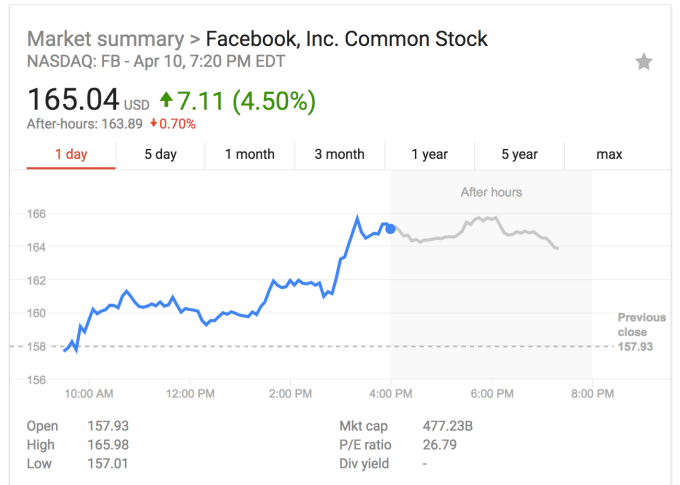
The public didn’t get answers to any of those questions today. Just Mark’s steady voice regurgitating Facebook’s talking points. Investors rewarded Facebook for its monotony with a 4.5 percent share price boost.
That’s not to say today’s hearing wasn’t effective. It’s just that the impact was felt before Zuckerberg waded through a hundred photographers to take his seat in the Senate office.
Facebook knew this day was coming, and worked to build Zuckerberg a fortress of facts he could point to no matter what he got asked:
Was Facebook asleep at the wheel during the 2016 election? Yesterday it revealed it had deleted the accounts of Russian GRU intelligence operatives in June 2016.
Is Facebook taking this seriously? Zuckerberg wrote in his prepared testimony for today that Facebook is doubling its security and content moderation team from 10,000 to 20,000, and that “protecting our community is more important than maximizing our profits.”
Is Facebook sorry? “We didn’t take a broad enough view of what our responsibility is and that was a huge mistake. That was my mistake,” Zuckerberg has said, over and over.
Facebook may never have made such sweeping changes and apologies had it not had today and tomorrow’s testimony on the horizon. But this defensive strategy also led to few meaningful disclosures, to the detriment of the understanding of the public and the Senate — and to the benefit of Facebook.
WASHINGTON, DC – APRIL 10: Facebook co-founder, Chairman and CEO Mark Zuckerberg testifies before a combined Senate Judiciary and Commerce committee hearing in the Hart Senate Office Building on Capitol Hill April 10, 2018 in Washington, DC. Zuckerberg, 33, was called to testify after it was reported that 87 million Facebook users had their personal information harvested by Cambridge Analytica, a British political consulting firm linked to the Trump campaign. (Photo by Chip Somodevilla/Getty Images)
Perhaps the only fireworks during the testimony came when Senator Ted Cruz laid into Zuckerberg over the Gizmodo report citing that Facebook’s trending topics curators suppressed conservative news trends. Cruz badgered Zuckerberg about whether he believes Facebook is politically neutral, whether Facebook has ever taken down Pages from liberal groups like Planned Parenthood or MoveOn.org, if he knows the political leanings of Facebook’s content moderators and whether Facebook fired Oculus co-founder Palmer Luckey over his [radical conservative] political views.
Zuckerberg maintained that he and Facebook are neutral, but that last question was the only one of the day that seemed to visibly perturb him. “That is a specific personnel matter than seems like it would be inappropriate…” Zuckerberg said before Cruz interrupted, pushing the CEO to exasperatedly respond, “Well then I can confirm that it was not because of a political view.” It should be noted that Cruz has received numerous campaign donations from Luckey.
Full exchange between Senator @tedcruz and Mark Zuckerberg where Senator Ted Cruz questions the Facebook CEO about the censorship of Conservatives on his platform. pic.twitter.com/c6d7jwDbnJ
This was the only time Zuckerberg seemed flapped, because he knows the stakes of the public perception of Facebook’s political leanings. Zuckerberg, many Facebook employees and Facebook’s home state of California are all known to lean left. But if the company itself is seen that way, conservative users could flee, shattering Facebook’s network effect. Yet again, Zuckerberg nimbly avoided getting cornered here, and was aided by the bell signaling the end of Cruz’s time. He never noticeably raised his voice, lashed back at the senators or got off message.
By the conclusion of the five hours of questioning, the senators themselves were admitting they hadn’t watched the day’s full testimony. Viewers at home had likely returned to their lives. Even the press corps’ eyes were glazing over. But Zuckerberg was prepared for the marathon. He maintained pace through the finish line. And he made it clear why marathons aren’t TV spectator sports.
The question is no longer what revelations would come from Mr. Zuckerberg going to Washington. Tomorrow’s testimony is likely to go similarly. It’s whether Facebook can coherently execute on the data privacy promises it made leading up to today. This will be a “never-ending battle” as Zuckerberg said, dragging out over many years. And again, that’s in Facebook’s interest. Because in the meantime, everyone’s going back to scrolling their feeds.

 (@ColumbiaBugle)