06 Apr 2018

The high-stakes battle for the Pentagon’s winner-take-all cloud contract

There is a battle afoot, one you might not have heard about yet, but it involves a high-stakes winner-take-all contract for the Department of Defense’s cloud contract. It could involve billions of dollars and when a humongous sum of money meets a set of powerful tech companies, intrigue can’t be far behind.

The story even has a Star Wars reference with the Pentagon dubbing the project the Joint Enterprise Defense Infrastructure (or JEDI for short). Who says the Pentagon is staid?

The tech names involved include the likes of Amazon, Google, Microsoft, Oracle and Rean Cloud, LLC. Wait, what’s that last one doing there you may ask? Good questions, but Rean Cloud, a little known Maryland Amazon Web Services partner was awarded a five year contract worth up to $950 million in February to help the DoD with cloud procurement and pricing, likely a first ahead of the cloud contract itself.

It didn’t take long for the big guys to start howling and Oracle (you will hear that name more than once in this story), filed a formal complaint over the deal with Government Accountability Office. Not long after, the DoD announced that the deal was being scaled back from $950 million to $65 million, still a substantial contract for a systems integrator you probably never heard of, but a fraction of the original deal.

A couple of days later, the Pentagon announced it was starting a bidding process for the cloud contract itself. That would be a winner-take-all affair for a contract that could stretch for a decade and involve many billions of dollars. The exact number isn’t clear, but suffice to say it’s a humongous sum and every enterprise cloud company wants this deal.

Photo” Bill Clark/CQ Roll Call

As you might expect with a huge deal in Washington, DC, it didn’t take long for politics to enter into the fray. For starters, the Congress began to question the single winner component. They included language in the $1.3 trillion omnibus spending bill directing the DoD to explain within 60 days how it plans to acquire cloud services in light of the parameters of its cloud bidding process. In particular, Congress was concerned about the Pentagon being locked into a single vendor for a decade with no real way to back out and no competition after the initial bidding process.

Next, the president began a series of Tweets against Amazon, not necessarily related to the cloud or the Pentagon contract, but Amazon is the biggest cloud company bidding for a major contract. It’s worth noting that White House spokesperson Sarah Huckabee Sanders denied the president’s anti-Amazon stance would play a role in the contract award.

Photo Illustration: Thomas Trutschel/Photothek via Getty Images

Perhaps not, but Bloomberg reported that Oracle co-CEO Safra Catz met with the president this week and reportedly criticized the bidding process (again), which could favor Amazon. If you’re wondering why rivals like Oracle and others are concerned, they probably have reason to be. Oracle came very late to the cloud game and is playing catch-up. Certainly a contract of this size could go a long way towards giving the company a huge market share and credibility lift.

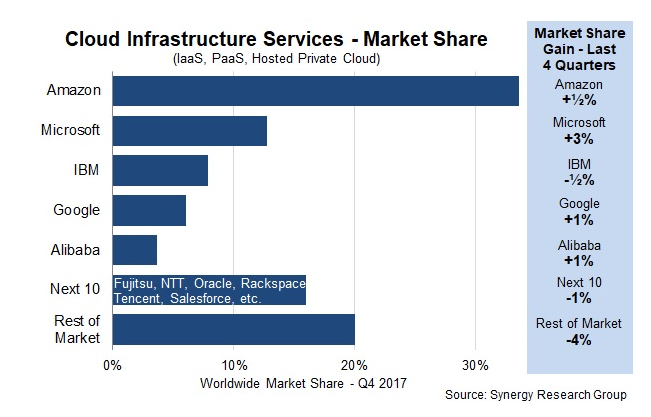
Amazon is the market leader by far with estimates running between 30 and 40 percent of cloud infrastructure as a service marketshare. In a report on fourth quarter cloud revenue, Synergy Research wrote, “AWS maintained its dominant position with revenues that exceeded the next four closest competitors combined, despite huge strides being made by Microsoft .”

Amazon has more than a marketshare advantage, it also has experience implementing large cloud projects for the intelligence community including a $600 million private cloud it built for the CIA in 2013. Of course, Microsoft already has a $927 million contract with the DoD, so this isn’t necessarily a slam dunk for AWS.

With so much drama involved in the size and scope of the project, the president’s anti-Amazon tweets, Congress’s concerns; chances are nobody will be happy with the results except the bid winner. Stay tuned because this isn’t over by a long shot.

We reached out to Amazon, Microsoft and Oracle for comments on this story, but did not hear back by publication. If we hear from them, we will update the story with comments.

06 Apr 2018

Albertsons will offer Plated’s meal kits across hundreds of stores this year

Following its $200 million acquisition of meal kit startup Plated last fall, grocery chain Albertsons announced this week it would roll out Plated’s meal kits to hundreds of stores by the end of 2018. The meal kits will also be made available for 2-hour delivery through Instacart, same-day and scheduled home delivery, and for in-store pickup through Albertsons Companies Drive Up and Go service.

This is the first public integration between Plated and the grocer following the acquisition, which was meant to give the chain an edge in competing with rivals in the online grocery market. With the rise of meal kit services, like Blue Apron, consumers have less need to visit grocery stores to purchase their recipe ingredients. In addition, many grocers are reacting to the threat posed by Amazon’s purchase of Whole Foods, which allows it to offer pickup and delivery, as well as traditional grocery shopping.

Plated is not the first meal kit to find its way to stores. Kroger also entered the meal kit business last year, and Blue Apron in March announced plans to start selling its kits in stores, too, as did Weight Watchers. Amazon has been selling meal kits on its site, and Walmart just launched its own meal kits and other quick dinner options, too. Walmart says these kits will reach 2,000 stores by year-end.

Albertsons says the meal kits will continue to roll out across the U.S. in the months ahead. By the end of 2018, Plated kits will be available a select Albertsons, Safeway, Vons, Jewel-Osco, Shaw’s, Acme, Tom Thumb, Randalls, United Supermarkets, Pavilions, Star Market and Haggen locations nationwide.

They’ll also become available for in-store pickup and delivery, including through Instacart, in the months ahead.

At launch, a limited selection of meal kits will be offered at the participating stores. A half-dozen of Plated’s most popular kits will be available for sale, including:

  • Crunchy Chicken Milanese with Honey Mustard and Arugula
  • Roasted Chicken au Jus with Orzo and Peas
  • Beef Noodle Bowls with Dinosaur Kale and Mushrooms
  • Steak Frites with Creamy Shallot Sauce and Sautéed Spinach
  • Skillet Grandma Pie with Parmesan-Kale Salad
  • Pine Nut–Crusted Salmon with Creamy Tomato Farro and Roasted Green Beans

This is a small selection, given Plated to date has created 2,200 recipes. However, Albertsons says the meal choices will rotate seasonally to offer variety, and the in-store kits will always include recipes with beef, chicken, seafood and vegetarian options.

With so many meal kits available today for home delivery and, increasingly, in stores, Albertsons hopes to differentiate itself on taste and quality. Plated’s meals are created by a culinary team led by a Le Cordon Bleu-trained chef, Elana Karp, it notes. And with the option to take delivery when you choose, or grab a kit at a store, Albertsons’ meal kits could appeal to a broader market than meal kit subscriptions do which are often pricy and require an ongoing commitment.

“This is the next big step in our journey to enable everyone to enjoy fresh, delicious meals. We’ve
delivered millions of meals to Americans through our acclaimed subscription service, and now we’ll be
able to meet and serve millions of new customers with an entirely new level of convenience,” said Josh
Hix, Co-founder and CEO of Plated, in a statement. “Since partnering with Albertsons Companies last year, we’ve
accelerated our growth and are thrilled to bring an elevated culinary experience to more people in more
ways. Today we’re announcing that in addition to our subscription offering, customers near hundreds of
Albertsons Companies stores will be able to pick up last-minute or order online for on demand delivery.”

While Albertsons’ acquisition of a meal kit startup was a first for a national grocery chain, it’s becoming clear that meal kit options are becoming a baseline for grocery competitors across the board as they prepare to battle with the likes of Amazon and Walmart, Blue Apron and more.

Image credits: Albertsons

06 Apr 2018

Albertsons will offer Plated’s meal kits across hundreds of stores this year

Following its $200 million acquisition of meal kit startup Plated last fall, grocery chain Albertsons announced this week it would roll out Plated’s meal kits to hundreds of stores by the end of 2018. The meal kits will also be made available for 2-hour delivery through Instacart, same-day and scheduled home delivery, and for in-store pickup through Albertsons Companies Drive Up and Go service.

This is the first public integration between Plated and the grocer following the acquisition, which was meant to give the chain an edge in competing with rivals in the online grocery market. With the rise of meal kit services, like Blue Apron, consumers have less need to visit grocery stores to purchase their recipe ingredients. In addition, many grocers are reacting to the threat posed by Amazon’s purchase of Whole Foods, which allows it to offer pickup and delivery, as well as traditional grocery shopping.

Plated is not the first meal kit to find its way to stores. Kroger also entered the meal kit business last year, and Blue Apron in March announced plans to start selling its kits in stores, too, as did Weight Watchers. Amazon has been selling meal kits on its site, and Walmart just launched its own meal kits and other quick dinner options, too. Walmart says these kits will reach 2,000 stores by year-end.

Albertsons says the meal kits will continue to roll out across the U.S. in the months ahead. By the end of 2018, Plated kits will be available a select Albertsons, Safeway, Vons, Jewel-Osco, Shaw’s, Acme, Tom Thumb, Randalls, United Supermarkets, Pavilions, Star Market and Haggen locations nationwide.

They’ll also become available for in-store pickup and delivery, including through Instacart, in the months ahead.

At launch, a limited selection of meal kits will be offered at the participating stores. A half-dozen of Plated’s most popular kits will be available for sale, including:

  • Crunchy Chicken Milanese with Honey Mustard and Arugula
  • Roasted Chicken au Jus with Orzo and Peas
  • Beef Noodle Bowls with Dinosaur Kale and Mushrooms
  • Steak Frites with Creamy Shallot Sauce and Sautéed Spinach
  • Skillet Grandma Pie with Parmesan-Kale Salad
  • Pine Nut–Crusted Salmon with Creamy Tomato Farro and Roasted Green Beans

This is a small selection, given Plated to date has created 2,200 recipes. However, Albertsons says the meal choices will rotate seasonally to offer variety, and the in-store kits will always include recipes with beef, chicken, seafood and vegetarian options.

With so many meal kits available today for home delivery and, increasingly, in stores, Albertsons hopes to differentiate itself on taste and quality. Plated’s meals are created by a culinary team led by a Le Cordon Bleu-trained chef, Elana Karp, it notes. And with the option to take delivery when you choose, or grab a kit at a store, Albertsons’ meal kits could appeal to a broader market than meal kit subscriptions do which are often pricy and require an ongoing commitment.

“This is the next big step in our journey to enable everyone to enjoy fresh, delicious meals. We’ve
delivered millions of meals to Americans through our acclaimed subscription service, and now we’ll be
able to meet and serve millions of new customers with an entirely new level of convenience,” said Josh
Hix, Co-founder and CEO of Plated, in a statement. “Since partnering with Albertsons Companies last year, we’ve
accelerated our growth and are thrilled to bring an elevated culinary experience to more people in more
ways. Today we’re announcing that in addition to our subscription offering, customers near hundreds of
Albertsons Companies stores will be able to pick up last-minute or order online for on demand delivery.”

While Albertsons’ acquisition of a meal kit startup was a first for a national grocery chain, it’s becoming clear that meal kit options are becoming a baseline for grocery competitors across the board as they prepare to battle with the likes of Amazon and Walmart, Blue Apron and more.

Image credits: Albertsons

06 Apr 2018

Facebook plans to let everyone unsend messages, won’t let Zuckerberg until then

TechCrunch reported last night that Facebook retracted Facebook messages sent by Mark Zuckerberg and other executives from their recipients’ inboxes. That’s an ability normal Facebook users don’t have. But now Facebook tells me it plans to make an “unsend” feature available to all users in several months, and has already been considering how to build this product. Until the unsend feature is released for everyone, Facebook says it won’t unsend or retract any more of Zuckerberg’s messages.

The retractions of Zuckerberg’s messages and those from other users were never previously disclosed until Facebook confirmed the news to TechCrunch last night after we reported having email receipt evidence of messages that have since disappeared. Many users are seeing that as a breach of trust.

To recap, three sources confirmed that Facebook messages they had received from Mark Zuckerberg had disappeared from their inboxes. When we told Facebook we had an email receipt proving the retractions,  Facebook gave TechCrunch this statement: “After Sony Pictures’ emails were hacked in 2014 we made a number of changes to protect our executives’ communications. These included limiting the retention period for Mark’s messages in Messenger. We did so in full compliance with our legal obligations to preserve messages.”

But tampering with users’ inboxes without disclosure has struck many users a violation of Facebook’s power. Many asked why Zuckerberg and other executives had access to functionality not offered to regular users.

Facebook tells TechCrunch is hasn’t finalized exactly how the unsend feature will work. A Facebook Messenger spokesperson tells me only possible option is an expiration timer users can set on messages. When the timer runs out, the message would disappear from both their and the recipients’ inboxes. They tell me this is similar to how retractions of Zuckerberg’s messages work.

06 Apr 2018

Selina raises $95M to create a boutique travel lodging experience built around communities

If you’re looking to travel abroad — and especially if you’re looking to work while doing so — it might be tough to convince yourself you can find a cool boutique hotel that caters to a lot of different price points, as well as surround yourself with people that will help you feel like you should still get your work done.

That’s the goal of Selina, an emerging co-working and traveling hospitality service that opens up campuses geared toward fitting those niches across Central America. What started as originally just a real estate company has now turned into a venture-funded startup called Selina, which goes around the world creating a different kind of hotel product out of renovated older properties. Instead of just renting out a room in an Airbnb or paying for a hotel room in a boutique hotel, or some co-working space, Selina aims to be a more streamlined way to get that mixture of a community experience, a boutique hotel feel, and the ease of getting a consistent experience across multiple different properties. The company said today it’s raised $95 million from Abraaj Group and WeWork founder Adam Neumann.

“There are lifestyle hotels, surf camps, co-working places, hostels, and all those kinds of properties, Yoav Gery, Selina’s president, said. “A lot of companies talk the same talk. What was different about us and what we were telling the world is we were doing something different in the hospitality world. We’re creating a much more holistic program for the traveler. It’s not just a hotel, or for co-working. It’s everything that the traveler would want. And we hope the speed at which we’re doing it is also unique. Most hotels couldn’t get a product and convert it in 3 or 4 months into a new brand.”

You can think of Selina almost as a kind of ramped-up hostel — where you’re getting people of all different backgrounds into one spot to meet each other and get a feel for the area. But Selina still does serve different price points, from the bunk room set-up at a common hostel for under $30 a night to a more traditional private room that you’d find in an Airbnb or hotel for a higher price. The whole point, Gery said, is that customers shouldn’t be spending most of their time in their rooms.

The company currently has 22 locations that range a variety of locales, whether that’s beach areas or metropolitan ones. It plans to open a new location in Miami this year as it starts to expand beyond Central America, looking to structure it around frequent travelers looking to meet other like-minded individuals that might be looking to either explore a new area or find a co-working spot while traveling.

Selina started in Central America and has since begun expanding throughout those countries, and the company hopes to begin expanding into the United States and Europe this year as it continues to make inroads into Latin America. Selina looks to hire people that have the specific experience working with those regions when it comes to taxes and regulations, and one of the benefits it has is that it is usually repurposing old real estate. That means, in theory, most things should already be up to code for a hospitality project, Gery said.

“We are the first co to capitalize on this lifestyle shift for travelers and the way people are working,” Selina VP of strategy Brynne McNulty Rojas said. “People are eager to see the way we’re offering all these different business lines to make people feel at home, whether or not they’re on vacation or working. We do the market research, and exactly the target beds we want, that’s what gave people comfort — that we were going to be able to achieve the scale we were projecting. We wanted to focus on having that Selina DNA and that simplicity of experience and transactions and making it a nice, tech-first way of traveling and living and working.”

Part of the process is finding those old areas to renovate, but Selina hopes to also build out a strategy where it knows the exact needs for each of those properties — and how to properly staff them. The company hopes to be able to operate efficiently with a hospitality staff of between 30 or 40, though that could vary from property to property depending on the location. After all, an experience in Brooklyn is probably going to look radically different from one on the coast of Belize.

Then there’s the data aspect of it, where Selina is able — like any emerging hospitality service such as Airbnb, for example — to collect the right information from potential customers. But while Airbnb might be centered around that individual experience, Rojas said it wants to use data from potential visitors to improve the more community-oriented experience at Selina. In the end, it’s about having that campus-oriented feel to it rather than just renting someone’s home on the beach, she said.

The challenge, of course, is going to be going up against emerging hospitality services — like Airbnb, of course, which could work with a host to create a similar experience through a platform-oriented approach. But the company hopes it’ll have that vibe of a unified hotel chain experience in addition to being able to scale it up at the rate of a startup and be able to show investors that its ability to rapidly create new properties is what will make it be successful.

06 Apr 2018

Amazon rolls out remote access to its FreeTime parental controls

Amazon is making it easier for parents to manage their child’s device usage from their own phone, tablet, or PC with an update to the Parent Dashboard in Amazon FreeTime. Since its launch in 2012, Amazon’s FreeTime Unlimited has been one of the better implementations of combining kid-friendly content with customizable profiles and parental controls. Today, parents can monitor and manage kids’ screen time, time limits, daily educational goals, device activity, and more while allowing children to access family-friendly content like books, videos, apps and games.

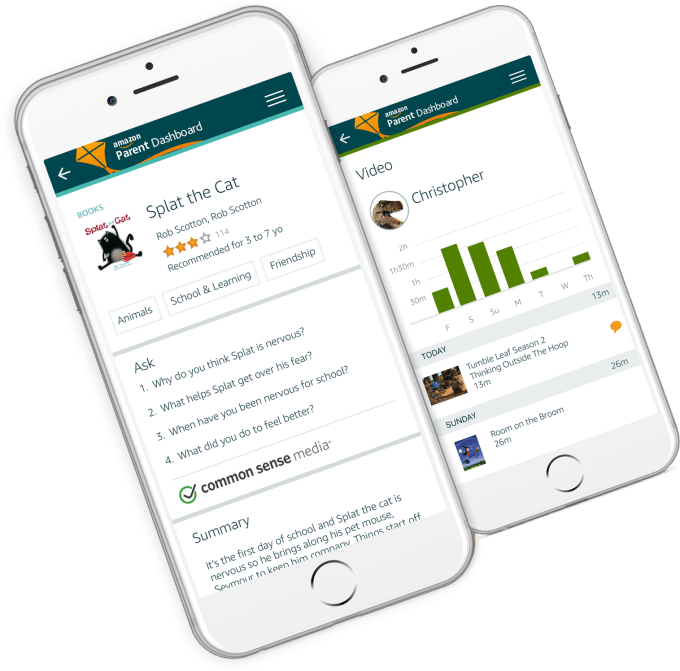
Last year, Amazon introduced a Parent Dashboard as another means of helping parents monitor screen time as well as have conversations with kids about what they’re doing on their devices. For example, if the child was reading a particular book, the dashboard might prompt parents with questions they could ask about the books’ content. The dashboard also provided a summary of the child’s daily device use, including things like what books were read, videos watched, apps or games played, and websites visited, and for how long.

According to a research study Amazon commissioned with Kelton Global Research, the company found that 97 percent of parents monitor or manage their kids’ use of tablets and smartphones, but 75 percent don’t want to hover over kids when they’re using their devices.

On Thursday, Amazon addressed this problem by allowing parents to remotely configure the parental control settings from the online Parent Dashboard in order to manage the child’s device from afar from a phone, tablet or computer.

The controls are the same as those available through the child’s device itself. Parents can set a device bedtime, daily goals and time limits, adjust their smart filter, and enable the web browser remotely. They can also remotely add new books, videos, apps and games to their child’s FreeTime profile, and lock or unlock the device for a set period of time.

The addition comes following last year’s launch of FreeTime on Android, and Google’s own entry into the parental control software space with the public launch of Family Link last fall. Apple also this year made vague promises about improving its existing parental controls in the future, in response to pressure from two Apple shareholder groups, Jana Partners LLC and the California State Teachers’ Retirement System.

With the increased activity in the parental control market, Amazon’s FreeTime may lose some of its competitive advantages. Amazon also needed to catch up to the remote control capabilities provided with Google’s Family Link.

There are those who argue that parental controls that do things like limit kids’ activity on apps and games or turn off access to the internet are enablers of lazy parenting, where devices instead of people are setting the rules. But few parents use parental controls in that fashion. Rather, they establish house rules then use software to remind children the rules exist and to enforce them.

The updated FreeTime Parent Dashboard is available via a mobile-optimized website at parents.amazon.com.


06 Apr 2018

Facebook data scandal also affects 2.7M EU citizens

Another data-point to flesh out the Facebook data misuse scandal: The company has informed the European Commission that a total of 2.7 million EU citizens had their information improperly shared with the controversial political consultancy, Cambridge Analytica (via Reuters).

Facebook had already revealed a breakdown of the top ten markets of affected users. But in the list of countries it published the only EU nation was the UK — which it said could have up to almost 1.08M affected users. So up to a further million EU citizens could also have had their data swiped as a result of the scandal, without their knowledge or consent.

Privacy is a fundamental right under the bloc’s legal regime so the improper sharing of millions of EU citizens’ data could have legal consequences for the company.

“Facebook confirmed to us that the data of overall up to 2.7 million Europeans or people in the EU to be more precise may have been improperly shared with Cambridge Analytica . The letter also explains the steps Facebook has taken in response since,” an EC spokesman told Reuters.

At the time of writing Facebook could not immediately be reached for comment.

The company is a signatory to the EU-US Privacy Shield framework; a mechanism which came into force in mid 2016 — replacing the invalidated Safe Harbor arrangement which had stood for 15 years — intended to simplify the process of authorizing transfers of EU citizens’ personal data across the Atlantic.

Companies on the Privacy Shield list self-certify to adhere to a set of privacy principles. However they can be removed if they are determined to have violated their obligations — with the US’ FTC acting as the enforcement authority.

The same federal watchdog is now investigating Facebook as a result of the Cambridge Analytica data misuse scandal.  Nor is this the first time the FTC has probed Facebook’s actions in relation to user privacy. In 2011 it charged the company over deceptive privacy claims.

In the subsequent FTC settlement Facebook committed to giving users “clear and prominent notice” and to obtaining their consent before sharing their information beyond their privacy settings.

Facebook will now need to explain to the FTC how its actions in 2013-2015 mesh with that earlier consent agreement.

In mid 2015 the company finally tightened app permissions’ settings for all developers on its platform. But prior to that these had been lax enough for vast amounts of personal data to be sucked out without most users being aware — because the data sharing was being ‘authorized’ by their Facebook friends (who also likely weren’t aware what they were agreeing to).

So, for example, just 558 Filipino Facebook users installed the personality quiz app that passed data to Cambridge Analytica — yet the company was able to grab personal data on up to 1,175,312 more users in that country as a result of how Facebook allowed people’s data to be shared with developers on its platform.

Yesterday Facebook admitted as many as 87 million users in total could have had their personal info shared with Cambridge Analytica after 270k people downloaded the quiz app on its platform. (Though CA has disputed the 87M figure, claiming it only licensed data from the quiz app developer for 30M Facebook users.)

Writing about the data misuse scandal in the Harvard Law Review, David Vladeck, the FTC’s former director, argues there are now only two interpretations of Facebook’s actions vis-a-vis data protection and user privacy: Cluelessness or venality.

“Facebook now has three strikes against it: Beacon, the privacy modifications it made in 2009 to force private user information public, and now the Kogan/Cambridge Analytica revelation,” he writes. “Facebook can’t claim to be clueless about how this happened. The FTC consent decree put Facebook on notice. All of Facebook’s actions were calculated and deliberate, integral to the company’s business model, and at odds with the company’s claims about privacy and its corporate values. So many of the signs of venality are present.”

“[V]ague and unenforceable promises are not enough,” he adds. “The better approach would be for Facebook to acknowledge that it violated the consent decree and to come to the FTC with specific proposals for serious and enduring reform.”

In terms of specific proposals to reform privacy rules, Vladeck suggests Facebook needs to create systems that ensure third parties do not have access to user data “without safeguards that are effective, easy to use, and verifiable”.

“When third party access is sought, users must be given clear notice and an opportunity to say yes or no – that is, the gateway must be notice and the affirmative express consent required by the 2011 decree,” he adds. “Facebook also must develop accountability systems that prove that consumers have in fact consented to each use of their data by Facebook or by third parties. And Facebook must agree to refrain from using blanket consents; after all, blanket consents are the enemy of informed consent.”

In his view the company also needs to create systems to audit third party data collection and sharing “on an ongoing basis” — and thereby “hold third parties to their promises by engineering controls and contractual lockups” — including “effective remedies when third parties break the rules – including enforceable rights to audit, retrieve, delete and destroy data improperly acquired or used, and liquidated and actual damages for violations”. Rather than taking it on trust that developers given access to masses of user data will do the right thing.

“Facebook must also be accountable to the public,” he adds. “There must be far more robust reporting to the FTC, but those reports are non-public. To re-establish trust with its uses, Facebook should consider appointing a data ombudsperson and establishing a group outside the company that have unfettered access to Facebook data and employees to ensure that Facebook is now, finally, honoring its commitments to users, and this group should periodically report its findings on Facebook’s compliance.”

06 Apr 2018

Walmart to roll out over 500 more Pickup Towers to U.S. stores this year

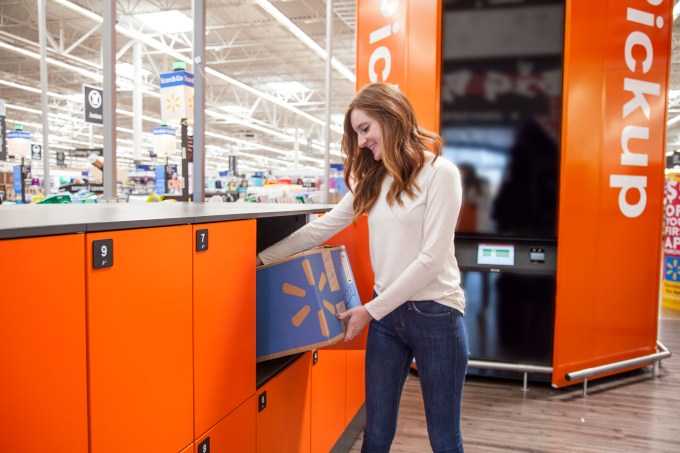
Walmart announced this week it’s going to roll out more than 500 additional Pickup Towers to its U.S. stores over the course of the year. The towers, which are like high-tech vending machines distributing customers’ online purchases, were first introduced into nearly 200 stores in 2017.

The towers are one of the ways Walmart is taking on Amazon by leveraging its large brick-and-mortar footprint to encourage more sales. The company had also announced last April a “pickup discount” on a million online-only items, if customers opted for store pickup over shipping.

The idea is that customers could save more on their orders, then pickup in the store where they might buy more things, while also saving Walmart on shipping expenses. (It costs Walmart less to ship items to its stores using its fleet of over 6,700 trucks and its 4,700 some fulfillment centers, than it does to ship items directly to customers’ homes.)

Pickup Towers ties into that discount program, as they’re one of the ways shoppers can retrieve their online purchases faster, and without paying for shipping which could be required for purchases not covered by Walmart’s free 2-day shipping program.

To use a Pickup Tower, customers shop online as usual, then wait for the email that says their item is available in the tower at their local store. When they arrive, they scan the barcode they received at the tower’s kiosk computer, and the item is sent down through the tower right to the customer.

Walmart says that more than half a million orders have been retrieved through the towers since their introduction last year. Because the program was successful, Walmart will roll out more towers across the U.S., to reach over 700 stores by year-end – or 40 percent of the U.S. population.

In addition, the towers will be gaining a new feature to allow shoppers to pick up larger items, like TVs, which wouldn’t have fit before. Every new Pickup Tower that’s installed will also come with Pickup Lockers, where bigger purchases can be retrieved.

Walmart rival Amazon has also had a locker program in place for some time. And with its acquisition of Whole Foods, it began to use the grocer’s stores as a new location for its Amazon Lockers, boosting store visits.

Walmart’s Pickup Towers aren’t the only way the retailer is using its stores as a means of serving shoppers with investments in new technology. It also offers online grocery ordering with same-day curbside pickup and – in some markets – grocery delivery; along with Mobile Express Scan & Go, for skipping the checkout line in stores; and a partnership with Google for voice ordering and Google Express integration.

06 Apr 2018

Myanmar group blasts Zuckerberg’s claim on Facebook hate speech prevention

It’s becoming common to say that Mark Zuckerberg is coming under fire, but the Facebook CEO is again being questioned, this time over a recent claim that Facebook’s internal monitoring system is able to thwart attempts to use its services to incite hatred.

Speaking to Vox, Zuckerberg used the example of Myanmar, where he claimed Facebook had successfully rooted out and prevented hate speech through a system that scans chats inside Messenger. In this case, Messenger had been used to send messages to Buddhists and Muslims with the aim of creating conflict on September 11 last year.

Zuckerberg told Vox:

The Myanmar issues have, I think, gotten a lot of focus inside the company. I remember, one Saturday morning, I got a phone call and we detected that people were trying to spread sensational messages through — it was Facebook Messenger in this case — to each side of the conflict, basically telling the Muslims, “Hey, there’s about to be an uprising of the Buddhists, so make sure that you are armed and go to this place.” And then the same thing on the other side.

So that’s the kind of thing where I think it is clear that people were trying to use our tools in order to incite real harm. Now, in that case, our systems detect that that’s going on. We stop those messages from going through. But this is certainly something that we’re paying a lot of attention to.

That claim has been rejected in a letter signed by six organizations in Myanmar, including tech accelerator firm Phandeeyar. Far from a success, the group said the incident shows why Facebook is not equipped to respond to hate speech in international markets since it relied entirely on information from the ground, where Facebook does not have an office, in order to learn of the issue.

The messages referenced by Zuckerberg, and translated to English by the Myanmar-based group

The group — which includes hate speech monitor Myanmar ICT for Development Organization and the Center for Social Integrity — explained that some four days elapsed between the sending of the first message and Facebook responding with a view to taking action.

In your interview, you refer to your detection ‘systems’. We believe your system, in this case, was us – and we were far from systematic. We identified the messages and escalated them to your team via email on Saturday the 9th September, Myanmar time. By then, the messages had already been circulating widely for three days.

The Messenger platform (at least in Myanmar) does not provide a reporting function, which would have enabled concerned individuals to flag the messages to you. Though these dangerous messages were deliberately pushed to large numbers of people – many people who received them say they did not personally know the sender – your team did not seem to have picked up on the pattern. For all of your data, it would seem that it was our personal connection with senior members of your team which led to the issue being dealt with.

The group added that it has not had feedback from the Messenger incident, and it is still to hear feedback on ideas raised at its last meeting with Facebook in November.

Myanmar has only recently embraced the internet in recent times, thanks to the slashing of the cost of a SIM card — which was once as much as $300 — but already most people in the country are online. Since its internet revolution has taken place over the last five years, the level of Facebook adoption per person is one of the highest in the world.

“Out of a 50 million population, there are nearly 30 million active users on Facebook every month,” Phandeeyar CEO Jes Petersen told TechCrunch. “There’s this notion to many people that Facebook is the internet.”

Young men browse their Facebook wall on their smartphones as they sit in a street in Yangon on August 20, 2015. Facebook remains the dominant social network for US Internet users, while Twitter has failed to keep apace with rivals like Instagram and Pinterest, a study showed. AFP PHOTO / Nicolas ASFOURI (Photo credit should read NICOLAS ASFOURI/AFP/Getty Images)

Facebook optimistically set out to connect the world, and particularly facilitate communication between governments and people, so that statistic may appear at face value to fit with its goal of connecting the world, but the platform has been abused in Myanmar.

Chiefly that has centered around stoking tension between the Muslim and Buddhist populations in the country.

The situation in the country is so severe that an estimated 700,000 Rohingya refugees are thought to have fled to neighboring Bangladesh following a Myanmar government crackdown that began in August. U.S. Secretary of State Rex Tillerson has labeled the actions as ethnic cleansing, as has the UN.

Tensions inflamed, Facebook has been a primary outlet for racial hatred from high-profile individuals inside Myanmar. One of them, monk Ashin Wirathu who is barred from public speaking due to past history, moved online to Facebook where he quickly found an audience. Though he had his Facebook account shuttered, he has vowed to open new ones in order to continue to amplifly his voice via the social network.

Beyond visible figures, the platform has been ripe for anti-Muslim and anti-Rohinga memes and false new stories to go viral. UN investigators last month said Facebook has “turned into a beast” and played a key role in spreading hate.

Petersen said that Phandeeyar — which helped Facebook draft its local language community standards page — and others have held regular information meetings with the social network on the occasions that it has visited Myanmar. But the fact that it does not have an office in the country nor local speakers on its permanent staff has meant that little to nothing has been done.

Likewise, there is no organizational structure to handle the challenging situation in Myanmar, with many of its policy team based in Australia, and Facebook itself is not customized to solicit feedback from users in the country.

“If you are serious about making Facebook better, we urge you to invest more into moderation — particularly in countries, such as Myanmar, where Facebook has rapidly come to play a dominant role in how information is accessed and communicated,” the group wrote.

“We urge you to be more intent and proactive in engaging local groups, such as ours, who are invested in finding solutions, and — perhaps most importantly — we urge you to be more transparent about your processes, progress and the performance of your interventions, so as to enable us to work more effectively together,” they added in the letter.

Facebook has offices covering five of Southeast Asia’s largest countries — Singapore, Thailand, Indonesia, Malaysia and the Philippines — and its approach to expansion has seemed to focus on advertising sales opportunities, with most staff in the region being sales or account management personnel. Using that framing, Myanmar — with a nascent online advertising space — isn’t likely to qualify for an office, but Phandeyaar’s Petersen believes there’s a strong alternative case.

“Myanmar could be a really good test market for how you fix these problems,” he said in an interview. “The issues are not exclusive to Myanmar, but Facebook is so dominant and there are serious issues in the country — here is an opportunity to test ways to mitigate hate speech and fake news.”

Indeed, Zuckerberg has been praised for pushing to make Facebook less addictive, even at the expense of reduced advertising revenue. By the same token, Facebook could sacrifice profit and invest in opening more offices worldwide to help live up to the responsibility of being the de facto internet in many countries. Hiring local people to work hand-in-hand with communities would be a huge step forward to addressing these issues.

With over $4 billion in profit per quarter, it’s hard to argue that Facebook can’t justify the cost of a couple of dozen people in countries where it has acknowledged that there are local issues. Like the newsfeed changes, there is probably a financially-motivated argument that a safer Facebook is better for business, but the humanitarian responsibility alone should be enough to justify the costs.

In a statement, Facebook apologized that Zuckerberg had not acknowledged the role of the local groups in reporting the messages.

“We took their reports very seriously and immediately investigated ways to help prevent the spread of this content. We should have been faster and are working hard to improve our technology and tools to detect and prevent abusive, hateful or false content,” a spokesperson said.

The company said it is rolling a feature to allow Messenger users to report abusive content inside the app. It said also that it has added more Burmese language reviewers to handle content across its services.

“There is more we need to do and we will continue to work with civil society groups in Myanmar and around the world to do better,” the spokesperson added.

The company didn’t respond when we asked if there are plans to open an office in Myanmar.
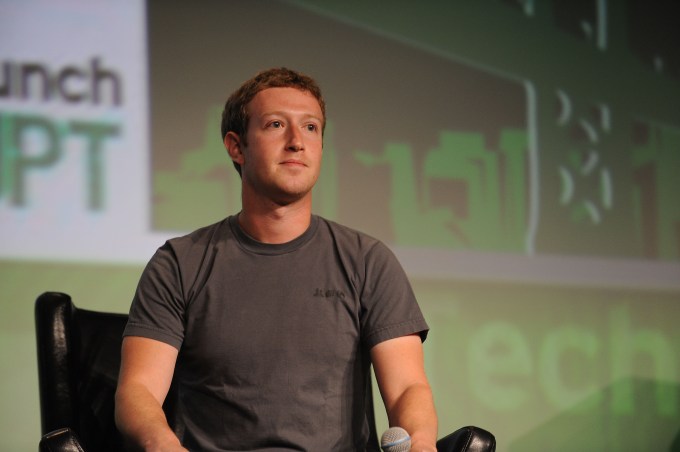
SAN FRANCISCO, CA – SEPTEMBER 11: Facebook Founder and CEO Mark Zuckerberg speaks during the TechCrunch Conference at SF Design Center on September 11, 2012 in San Francisco, California. (Photo by C Flanigan/WireImage)

Zuckerberg’s interview with Vox itself was one of the first steps of a media campaign that the Facebook supremo has embarked on in response to a wave of criticism and controversy that the company has weathered over the way it handles user data.

Facebook was heavily criticised last year for allowing Russian parties to disrupt the 2016 U.S. election using its platform, but the drama has intensified in recent weeks.

The company’s data privacy policy came under fire after it emerged that a developer named Dr. Aleksandr Kogan used the platform to administer a personality test app that collected data about participants and their friends. That data was then passed to Cambridge Analytica where it may have been leveraged to optimize political campaigns including that of 2016 presidential candidate Donald Trump and the Brexit vote, allegations which the company itself vehemently denies. Regardless of how the data was employed to political ends, that lax data sharing was enough to ignite a firestorm around Facebook’s privacy practices.

Zuckerberg himself fronted a rare call with reporters this week in which he answered questions on a range of topics, including whether he should resign as Facebook CEO. (He said he won’t.)

Most recently, Facebook admitted that as many as 87 million people on the service may have been impacted by Cambridge Analytica’s activities. That’s some way above its initial estimate of 50 million. Zuckerberg is scheduled to appear in front of Congress to discuss the affair, and likely a whole lot more, on April 11. The following day, he has a date with the Senate to discuss, we presume, more of the same.

Following the Cambridge Analytica revelations, the company’s stock dropped precipitously, wiping more than $60 billion off its market capitalization from its prior period of stable growth.

Added to this data controversy, Facebook has been found to have deleted messages that Zuckerberg and other senior executives sent to some users, as TechCrunch’s Josh Constine reported this week. That’s despite the fact that Facebook and its Messenger product do not allow ordinary users to delete sent messages from a recipient’s inbox.


06 Apr 2018

Zuckerberg will also testify before the Senate

Earlier this week, the House Energy and Commerce Committee announced that Facebook CEO Mark Zuckerberg is slated to testify on the use and protection of user data in Washington D.C. on April 11. Turns out, Zuckerberg will have a busier week in D.C. than expected, with the Senate Judiciary and Senate Commerce Committees announcing a joint hearing with the Facebook boss.

The Senate hearing will go down on April 10, a day before Zuckerberg appears before the House Committee.

The hearing, convened by Senate Committee on the Judiciary Chairman Chuck Grassley (R-Iowa) and Senate Commerce, Science and Transportation Committee Chairman John Thune (R-S.D.), is titled “Facebook, Social Media Privacy, and the Use and Abuse of Data.”

The hearing will take place in the U.S. Capitol Visitors Center at 2:15pm ET.

Here’s what Senator Thune had to say in a prepared statement:

Facebook now plays a critical role in many social relationships, informing Americans about current events, and pitching everything from products to political candidates. Our joint hearing will be a public conversation with the CEO of this powerful and influential company about his vision for addressing problems that have generated significant concern about Facebook’s role in our democracy, bad actors using the platform, and user privacy.

Zuckerberg brought up the possibility of speaking to congress in late March, saying: “If it is ever the case that I am the most informed person at Facebook in the best position to testify, I will happily do that.”