02 Apr 2018

SpaceX launch will bring science and supplies to ISS and return with a glitchy Robonaut

Update: Launch and deployment successful!

SpaceX is set to launch its 14th resupply mission to the International Space Station, sending up a lightly used Dragon capsule filled with goodies at 1:30 PST. In addition to the delivery, this Dragon will also take back some cargo: the malfunctioning Robonaut 2, which apparently bricked itself sometime during the last few months.

This will be the second flight for this Dragon capsule, which last visited the station two years ago on CRS-8; the Falcon 9 rocket it’s launching atop of is also being reused today for CRS-14. This will be the latter’s final flight, though: it’s not being recovered.

You can watch the launch live right here:

Inside are the usual food and other necessities, along with some interesting experiments. The Atmosphere-Space Interactions Monitor will watch thunderstorms for interesting electric phenomena like sprites and elves, gigantic jets and blue glimpses. Yes, those are real electric phenomena.

“Elve”

In-space fabrication will be getting an update with a brand new HP 3D printer made for microgravity, but also an experiment in sintering-based additive manufacturing.

The challenge of microgravity also extends to biology, and a metabolic tracking project will look into how it affects various medicines. Another experiment looks at ways of delivering nutrients to plants that are used to having gravity help out.

The Dragon capsule will stay attached to the ISS for about a month while things are loaded and unloaded, including the ailing Robonaut 2. This experimental robot platform has been up there for years, but recently developed some kind of fault — perhaps an electrical short, speculated a NASA scientist at a press conference Sunday.

The team in space doesn’t seem to have the tools or time to figure it out, so Robonaut 2 is heading home to be fixed by its terrestrial maintenance workers. It should fly back up in a year or so; in the meantime, the denizens of the station will enjoy a little extra space.

02 Apr 2018

Markets drop sharply as China implements new tariffs against US

Who would have thought a potential trade war would cause investors to sell?

U.S. markets plunged today as China announced that it was implementing tariffs on $3 billion worth of American goods, mostly in agriculture and steel production. The Dow was down nearly 600 points today an hour before markets closed, and the NASDAQ was down about 210 points, or roughly 2.92 percent.

Investors are skittish that a festering trade skirmish will grow into a full-on trade war. Even though these Chinese tariffs weren’t directed at high-tech goods, investors expect that any trade fight will ultimately hit the sector the hardest, as American exports to China are predominantly in areas like aircraft, machinery and electronics. Tech stocks were almost universally down today except for a handful of smaller players.

China’s proposed tariffs are 15 percent on 120 categories of goods, including dried apples, frozen strawberries, unshelled chestnuts, sparkling wine and various types of stainless steel piping and casings. The Chinese are going to levy a higher 25 percent tariff on pork products and aluminum scrap coming from the United States. The tariffs were implemented today, and are retaliation to the Trump administration’s announcement that it would place tariffs on steel and aluminum imports. China has not yet responded with a retaliatory tariff for Trump’s tariff on $60 billion of electronic goods, which has not yet been brought into force.

Increasing tariffs is an unusual event in a world that has made free trade agreements a major force for diplomacy over the past three decades. China joined the World Trade Organization in 2001, but market liberalization has lagged, and there are increasing constituencies in the United States and in other Western nations to reverse these trade agreements and cut a new deal.

Much as the United States is preparing a fusillade of techniques to slow down Chinese trade, the Chinese government is also attempting to use various powers to fight back. Qualcomm is still waiting for approval from China’s government for its acquisition of NXP Semiconductors, a massive deal at the heart of one of America’s most prominent technology leaders. China is also considering creating Chinese Depositary Receipts to mobilize local dollars and “buy back” local tech behemoths like Alibaba and Tencent, potentially creating a new trillion-dollar local asset market.

On the American side, U.S. Trade Representative Robert Lighthizer was quoted last week saying that a computer algorithm would try to select goods that maximize the harm to China’s trade, while minimizing the damage to American consumers. That’s gradient descent into trade oblivion.

It’s a multidimensional game, with both sides using tactics that would have been completely dismissed by policymakers just a year or two ago. Expect more gyrations in the markets in the coming weeks as we learn more about Trump’s proposed electronics tariffs, and the Chinese response to them.

02 Apr 2018

Grindr sends HIV status to third parties, and some personal data unencrypted

Hot on the heels of last week’s security issues, dating app Grindr is under fire again for inappropriate sharing of HIV status with advertisers and inadequate security on other personal data transmission. It’s not a good look for a company that says privacy is paramount.

Norwegian research outfit SINTEF analyzed the app’s traffic and found that HIV status, which users can choose to include in their profile, is included in packets sent to Apptimize and Localytics. Users are not informed that this data is being sent.

These aren’t advertising companies but rather services for testing and improving mobile apps — Grindr isn’t selling them this data or anything. The company’s CTO told BuzzFeed News that “the limited information shared with these platforms is done under strict contractual terms that provide for the highest level of confidentiality, data security, and user privacy.” And to the best of my knowledge regulations like HIPAA don’t prevent the company from transmitting medical data provided voluntarily by users to third parties as specified in the privacy policy.

That said, it’s a rather serious breach of trust that something as private as HIV status is being shared in this way, even if it isn’t being done with any kind of ill intentions. The laxity with which this extremely important and private information is handled undermines the message of care and consent that Grindr is careful to cultivate.

Perhaps more serious from a systematic standpoint, however, is the unencrypted transmission of a great deal of sensitive data.

The SINTEF researchers found that precise GPS position, gender, age, “tribe” (e.g. bear, daddy), intention (e.g. friends, relationship), ethnicity, relationship status, language and device characteristics are sent over HTTP to a variety of advertising companies.

Not only is this extremely poor security practice, but Grindr appears to have been caught in a lie. The company told me last week when news of another security issue arose that “all information transmitted between a user’s device and our servers is encrypted and communicated in a way that does not reveal your specific location to unknown third parties.”

At the time I asked them about accusations that the app sent some data unencrypted; I never heard back. Fortunately for users, though unfortunately for Grindr, my question was answered by an independent body, and the above statement is evidently false.

It would be one thing to merely share this data with advertisers and other third parties — although it isn’t something many users would choose, presumably they at least consent to it as part of signing up.

But to send this information in the clear presents a material danger to the many gay people around the world who cannot openly identify as such. The details sent unencrypted are potentially enough to identify someone in, say, a coffee shop — and anyone in that coffee shop with a bit of technical knowledge could be monitoring for exactly those details. Identifying incriminating traffic in logs also could be done at the behest of one of the many governments that have outlawed homosexuality.

I’ve reached out to Grindr for comment and expect a statement soon; I’ll update this post as soon as I receive it.

02 Apr 2018

Apple, in a very Apple move, is reportedly working on its own Mac chips

Apple is planning to use its own chips for its Mac devices, which could replace the Intel chips currently running on its desktop and laptop hardware, according to a report from Bloomberg.

Apple already designs a lot of custom silicon, including its chipsets like the W-series for its Bluetooth headphones, the S-series in its watches, its A-series iPhone chips, as well as customized GPU for the new iPhones. In that sense, Apple has in a lot of ways built its own internal fabless chip firm, which makes sense as it looks for its devices to tackle more and more specific use cases and remove some of its reliance on third parties for their equipment. Apple is already in the middle of in a very public spat with Qualcomm over royalties, and while the Mac is sort of a tertiary product in its lineup, it still contributes a significant portion of revenue to the company.

Creating an entire suite of custom silicon could do a lot of things for Apple, the least of which bringing in the Mac into a system where the devices can talk to each other more efficiently. Apple already has a lot of tools to shift user activities between all its devices, but making that more seamless means it’s easier to lock users into the Apple ecosystem. If you’ve ever compared connecting headphones with a W1 chip to the iPhone and just typical Bluetooth headphones, you’ve probably seen the difference, and that could be even more robust with its own chipset. Bloomberg reports that Apple may implement the chips as soon as 2020.

Intel may be the clear loser here, and the market is reflecting that. Intel’s stock is down nearly 8% after the report came out, as it would be a clear shift away from the company’s typical architecture where it has long held its ground as Apple moves on from traditional silicon to its own custom designs. Apple, too, is not the only company looking to design its own silicon, with Amazon looking into building its own AI chips for Alexa in another move to create a lock-in for the Amazon ecosystem. And while the biggest players are looking at their own architecture, there’s an entire suite of startups getting a lot of funding building custom silicon geared toward AI.

Apple declined to comment.

02 Apr 2018

Quintacorn Robinhood’s free crypto trading rolls out in Cali, 3 more states

Robinhood is rolling out its Coinbase-killer that’s already helped the fintech startup’s valuation grow 4X in a year. Zero-fee trading of Bitcoin and Ethereum is now available to all investors in California, Massachusetts, Missouri, and Montana. Everyone else is still on the waitlist. Robinhood users everywhere can already track 16 crypto coins including BTC, ETH, Litecoin, and Ripple, as well as trade traditional stocks with no transaction commission.

Announced in January, Robinhood Crypto vastly undercuts Coinbase’s U.S. fees that range from 1.5 to 4 percent. Four million users waitlisted for Robinhood Crypto in the first 5 days after it was announced. It’s lack of fees is proving to be a way to lure both veteran and rookie crypto investors to Robinhood, though it lacks support for trading as wide of a range of coins as Coinbase. Rather than charging per trade, Robinhood earns money from interest on money in users’ accounts and its Robinhood Gold subscription service. For for $6 to $200 a month in subscription fees, users can borrow between $1,000 and $50,000 to trade with.

Robinhood Gold’s success, adding options and web trading, and the new Robinhood Crypto helped the startup attract a $350 million Series D round led by Russian fund DST Global, which a source confirms will value it at $5.6 billion and bring it to $526 million in total funding. That’s up from the $110 million Series C at a $1.3 billion valuation it raised last year.

That massive valuation will put a ton of pressure on Robinhood’s co-CEOs Vlad Tenev and Baiju Bhatt to keep it growing, build out its subscription and interest revenue, and invade the space of competitors. [Disclosure: I know the founders from college] Those include traditional brokers like Scottrade and E*Trade that can charge $7 or more per trade, crypto-specific exchanges like Coinbase, and news sources like CoinDesk.

Robinhood risks a down round if the heightened societal and regulatory skepticism about cryptocurrencies curtail investments from the public. Robinhood’s historical focus on younger, less wealthy investors who aren’t “accredited” could make it especially vulnerable to crypto backlash if users see the space as too volatile or scammy for amateur investors to join. There are also heightened cybersecurity concerns, as users might bail on the app if they fear their cryptocurrency could be stolen.

Robinhood might do well to get more serious about how it offers crypto education. It’s promised to provide a feed of crypto news to keep people informed about why markets are moving, but the crypto journalism space is rife with integrity violations and reporters with questionable expertise. If Robinhood bought or built a truly neutral crypto news source, it could use that to attract investors to its crypto trading platform.

[Disclosre: The author of this article owns small positions in Bitcoin and Ethereum but does not day trade. Detailed disclosures can be found here.]

02 Apr 2018

The International Space Station is getting a new printer

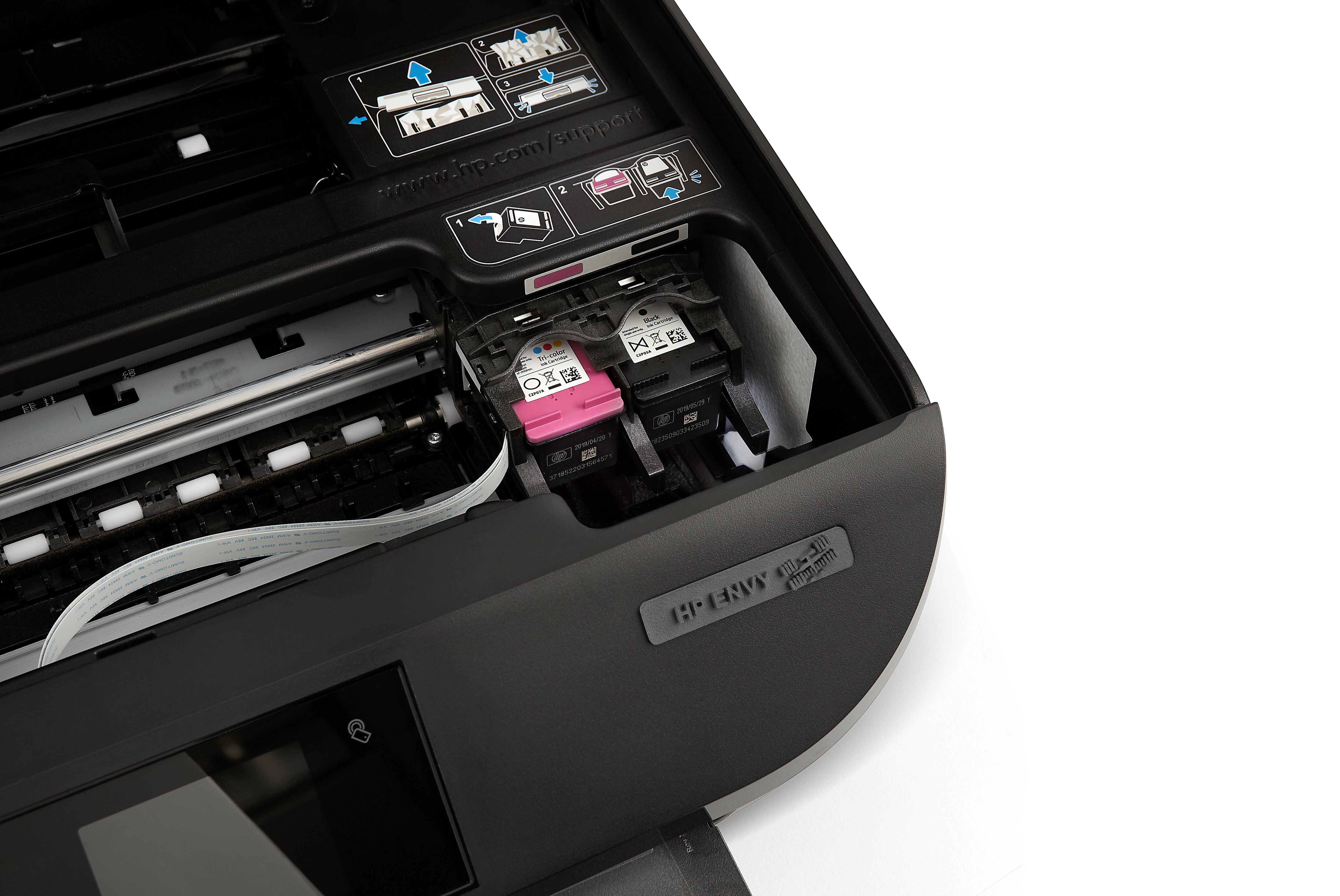
This story has it all: space, printers. HP’s Envy ISS, a printer designed for the extremely narrow use case of zero gravity, is hitching a ride on today’s Space-X CSR 14 rocket launch. The printer, which is based on the company’s regular-gravity OfficeJet 5740 is (as its name implies) destined for the International Space Station, which for all of its high technology, apparently has yet to go full paper-free.

According to HP, the ISS team goes through around two reams of paper in a given month. Those documents are used for such mission critical texts as timelines and inventory, along with personal items like letters and photos from home. Until now, the team has been reliant on nearly two-decade-old devices. Not exactly the sort of cutting-edge tech one would expect — or hope for — in space station equipment.

There are, naturally, a number of different issues one must plan for when building a printer for space. Those include, but are not limited to, managing paper and waste ink in zero-G, making fully flat retardant plastics and printing in a whole bunch of different orientations.

These largely aren’t the sort of things that will make HP printers that much better for the rest of us earthlings in the short-term, but the project is probably worth it for the publicity alone. After all, the company has already started deploying its ZBook laptop to mission operations. That number should total 120 by the time it’s done.

The cargo mission that will carry the printer to the ISS is planned for 4:30 today. You can watch that here.

02 Apr 2018

Utah education technology unicorn Pluralsight files for IPO

In an unusual move, Pluralsight has announced that it filed confidentially for IPO. Companies typically stay quiet until they make the filings public, unless reporters break the news first.

But it’s no surprise to those who have been following Utah’s tech scene that Pluralsight is planning to list on the stock market this year. The venture-backed “unicorn” has been a late stage company for several years now.

Co-founder and CEO Aaron Skonnard built the foundations of the education technology business back in 2004. Like many startups outside of Silicon Valley, it bootstrapped its business and didn’t raise significant outside funding until 2013.

Then it raised at least three rounds, nearing $200 million in financing. Insight Venture Partners, Felicis Ventures and ICONIQ Capital are amongst its backers.

It’s a competitive market, but Pluralsight has built a big business around online software development courses, helping people hone their skills in categories like IT, data and security.

Small businesses and large enterprises pay Pluralsight to help train their employees. Individuals can also subscribe to its services.

It is unclear when Pluralsight will complete the IPO . The release said that “the initial public offering is expected to commence after the SEC completes its review process, subject to market and other conditions.”

Companies often remain on file confidentially for several months, reviewing and perfecting their prospectus. Once the filing is unveiled, companies must wait 15 days before the investor roadshow and then typically go public the week after that.

There has been a flurry of IPO activity in recent weeks, particularly in the enterprise technology category. Dropbox recently went public and Spotify is listing Tuesday. Other companies that have submitted filings include DocuSign, Zuora, Smartsheet and Pivotal.

After a slow first quarter, it is expected to be a busy spring for tech IPOs.

02 Apr 2018

NTSB is ‘unhappy’ about Tesla publicly disclosing details of fatal crash

Tesla provided some more details on Friday about the fatal crash involving one of its Model X vehicles, but the National Transportation Safety Board isn’t particularly happy about that, The Washington Post first reported.

“In each of our investigations involving a Tesla vehicle, Tesla has been extremely cooperative on assisting with the vehicle data,” NTSB spokesperson Chris O’Neil told TechCrunch “However, the NTSB is unhappy with the release of investigative information by Tesla.”

That’s because those involved in an NTSB investigation are required to inform the Board of information releases before doing so.

“The uncoordinated release of investigative information can affect how other parties work with us in the future so we take each unauthorized release seriously,” O’Neil told TechCrunch. “However, this release will not hinder our investigation.”

Last week, Tesla said Autopilot, the company’s semi-autonomous mode that can change lanes and maintain proper vehicle positions and safe speeds, was engaged in the moments leading up to the crash.

“The driver had received several visual and one audible hands-on warning earlier in the drive and the driver’s hands were not detected on the wheel for six seconds prior to the collision,” Tesla wrote in a blog post. “The driver had about five seconds and 150 meters of unobstructed view of the concrete divider with the crushed crash attenuator, but the vehicle logs show that no action was taken.”

While Tesla and the NTSB have made some early observations, there’s still more work to be done as part of the investigation. The NTSB, for example, still needs Tesla’s help to decode the data the vehicle recorded and ultimately determine the “probable cause” of the crash, NTSB spokesperson O’Neil told the Post.

The investigation has also expanded to look into the concerns the driver had previously expressed about Autopilot. Walter Huang, the owner of the car who died as a result of the crash, had previously taken his car into the Tesla dealership, saying his car had a way of veering toward the exact barrier his car hit, ABC7 reported last week. Tesla, however, says it has no record of Huang complaining about Autopilot.

“We’ve been doing a thorough search of our service records and we cannot find anything suggesting that the customer ever complained to Tesla about the performance of Autopilot,” a Tesla spokesperson told TechCrunch. “There was a concern raised once about navigation not working correctly, but Autopilot’s performance is unrelated to navigation.”

Tesla declined to comment on the NTSB’s concerns.

02 Apr 2018

Facebook shows off a new avatar system, but it’s still just for VR

Facebook is continuing to drive updates to their little-used virtual reality Spaces app where users can explore 360 content and chat with other users in VR. Today, FB showcased some big new changes to the avatar system in Spaces that switches up the visual style quite a bit.

The avatar system is a lot more three-dimensional in that the faces no longer seem to be blank canvases with 2D features slapped onto them. The evolution isn’t necessarily skewing more towards realism as much as it is towards more emotion that can come off in a less cartoon-like way.

Facebook Spaces probably doesn’t have any crazy usage numbers, so it’s interesting to see the company refine things to this degree. On an anecdotal basis, I’ve only seen this feature pop up in my feed a couple times and quite a few of my FB friends work in virtual reality so that should be a bit telling.

That does make one question whether Facebook would ever look to integrate the avatar system into features outside of VR. Facebook says they are continuing to make these changes compatible with their machine learning-powered avatar creation tool which takes recent photos of you and suggests appropriate avatars that you can use at starting points. This seems like something Facebook could easily integrate into a Bitmoji competitor if they ever chose to.

The new system integrates more customization options so that users can dial in their look to make things more similar to how they themselves look in real life, which seems to be how Facebook would prefer you use this system. There seems to be a particularly large amount of progress in how users can dial in face shape and hairstyles. Notably, users are also able to change their body size for the first time, rather than all being the same thin size.

Avatars being creepy is kind of a given, though I’m not sure Facebook is lessening the creepiness any in this update..

The new avatar looks will be rolling out in Facebook Spaces over the next week the company says.

02 Apr 2018

WTF are CDRs? (other than a potential trillion dollar market)

Over the past few days, the Chinese government announced the potential creation of a new trillion dollar investment market, and it isn’t an April Fools joke.

China’s tech giants like Alibaba and Tencent are some of the most valuable in the world, and upcoming potential IPOs by the next generation of startups like Xiaomi are causes for celebration. Most Chinese citizens would be thrilled, however, there is a deep irony behind their success. These Chinese tech companies can actually not be purchased on a Chinese stock exchange, nor can Chinese retail investors buy a share in them.

Chinese workers build these companies up, and the value accretes to American capitalists (“Socialism with Chinese Characteristics,” I guess?)

Now, the central government is proposing new rules that would allow these companies to come back to the mainland through the use of Chinese Depositary Receipts, or CDRs. That’s big news, and could completely transform not only the market caps of some of the largest tech companies in the world, but also increase competition between trading houses like the New York Stock Exchange and Chinese stock exchanges in Hong Kong, Shanghai, and Shenzhen.

WTF is a CDR then? Before we get to that, we first need to understand why they are needed in the first place.

Domestic buyers buying domestic stocks is really, really hard in China

In economics theory, stock exchanges are epitomized as a shining exemplar of the notions of free trade and efficient markets. Each company is selling a standard unit (a share), prices are transparently disclosed, and buyers and sellers can connect in a central market (an exchange) to buy and sell their securities at voluntary prices.

In reality of course, governments strongly regulate financial securities to ensure that those exchanges are well-ordered. The Securities and Exchange Commission in the United States is just one of several public and private bodies that regulate the conduct and operation of the nation’s exchanges.

Now up that regulation by 100x when you enter China. Listing on a stock exchange must be approved by the central government, and regulators have been aggressive in blocking listings over the past few years. Due to robust capital controls, Chinese citizens may only buy local securities, and can’t invest in companies outside of China through foreign stock exchanges. Likewise, foreign investors face daunting challenges in investing in local companies, even with liberalization programs over the last two decades. The government regularly intervenes in the operation of the Shanghai and Shenzhen stock exchanges through trade freezes and other machinations. Local securities regulations can be highly burdensome, and force companies to engage in “party building” activities.

For Chinese companies looking to raise capital from private investors, there are two paths forward. One is to offer multiple types of shares traded in different places. Classically, this has meant an “A-share” that was traded in say Shanghai and only available for purchase by locals, and a “B-share” that was only available to foreigners. Some companies chose to have an “H-share,” which was listed in Hong Kong, which has none of the securities regulations of domestic Chinese exchanges. These different classes of shares are priced independently, and there can be wide discrepancies between them (A-shares have traditionally had massive premiums compared to other share types, and researchers still don’t know exactly why).

This path is convoluted, so large Chinese companies — including Alibaba and Tencent — are often incorporated in places like the Cayman Islands to avoid domestic securities requirements while also giving them access to foreign capital markets. According to an analysis by offshore incorporation specialist law firm Walkers, nearly half of all Hong Kong-listed stocks are based in the Cayman Islands, with another quarter based in Bermuda. That is financially prudent for executives, but deeply unpopular with Chinese authorities, which both loses corporate control and also loses the future growth that these stocks attain when they list on a foreign exchange.

WTF is a CDR?

That’s where Chinese Depositary Receipts (CDRs) come in. Modeled after American Depositary Receipts, which were invented almost a century ago, CDRs are a way for local buyers to own foreign shares in a way that both fits within local securities regulations and reduces friction in the trading process.

A bank acts as a middleman broker between a foreign issuer and local buyers. This institution, known as the depositary, holds foreign shares of companies in trust, and then offers a new security to the local market linked to those deposited shares by a ratio (say one receipt per six shares). We now have two securities: the receipt, held by a shareholder which is connected to a depositary bank, and then the original foreign share, which is held by the bank on behalf of a foreign issuer.

This is where the “magic” happens: securities regulations apply to the new security targeting local buyers, and not to the shares of the original company (massive asterisk here since the reality is thousands of pages of policies and laws, but this is the general idea). By intermediating the transaction, everyone can win: local buyers get access to foreign investments, while also still coming under the purview of domestic regulations.

It’s important to note that there are a bunch of peculiarities that I don’t want to dive too much into. There are more fees than standard shares in order to pay for custody of the shares and the trading logistics to maintain them. There are tax implications and other accounting issues that can be quite complex depending on the investor.

Despite such complications though, depositary receipts are quite popular in the United States. The market in 2016 was worth an estimated $2.9 trillion, with roughly 3,500 such securities available to be traded, and dozens more launched that year according to BNY Mellon, which is among the largest depositary bank institutions in the country. Given that the Chinese economy is already larger than America’s today by some economic measures, the scale of a CDR market could well pass a trillion dollars.

Share the wealth at home

The concept behind depositary receipts may not be new, but their use in China has not previously been formalized, and that is liable to change now. This past Friday, the central government circulated a draft policy of new securities regulations that would allow for Chinese Depositary Receipts to be issued on local stock exchanges.

According to China Banking News, tech companies look like the major focus here. “The Opinions will allow some tech companies or enterprises in strategic emerging industries to perform listing via the issuance of either shares or depository receipts, with a focus on sectors including big data, cloud computing, artificial intelligence, software, integrated circuits, high-end manufacturing and bio-tech.” That focus on technology would match other initiatives of the Chinese Communist Party, namely the country’s roadmap for technological dominance, known as Made in China 2025.

Once the CDR mechanism is in place, Chinese companies listed overseas are expected to face significant pressure to utilize it and open up their ownership to local buyers. Already, companies like Baidu, Sogou, Alibaba, Tencent, and Xiaomi have said publicly that they are interested in finding a channel to return to the mainland (or in the case of Xiaomi, to potentially launch its initial offering at least partially there). As Bloomberg wrote a month ago, “Enticing mega-corporations to list locally will help burnish the reputation of China’s twin bourses in Shanghai and Shenzhen, notorious for spotty regulation, volatility and periodic government intervention.”

Furthermore, having more domestic Chinese shareholders ensures that corporate control of these local companies stays in Chinese hands. The Chinese Communist Party has been particularly aggressive on this front, proposing taking a point of equity in top firms and potentially installing party cadres on corporate boards. Changing the shareholder structure of these firms then should be seen as an extension of control by the party into the private sector.

While the changes are still being promulgated, we should be prepared for large changes in the ways that companies — particularly those in the technology sector — are capitalized. Alibaba and Tencent’s combined market cap is nearly a trillion dollars. There are dozens of other Chinese stocks listed exclusively in U.S. and Western exchanges, so if CDRs become popular, it could be a massive market. Expect CDRs to be a major news story for the remainder of the year as final regulations are published.