02 Apr 2018

Publishing blockchain startup, Po.et hires VP of engineering

Po.et a startup that wants to put publishing permissions on the blockchain and build a marketplace on top of it, announced today that it was bringing on Eric Elliott as the VP of engineering.

Today’s announcement comes on the heels that the company had hired Jarrod Dicker as CEO in February. Dicker was previously vice president of innovation and commercial strategy at The Washington Post.

Elliott, who has written a book on Javascript, has a range of experience working for the likes of Adobe, Wall Street Journal and BBC. He also helped code BandPage, a startup that was sold to YouTube in 2016. He sees this company as a way to move publishing away from a traditional gatekeeper-driven system to one based on purely on value on the blockchain.

Po.et represents the chance to liberate creatives from traditional gatekeepers: to more directly connect with revenue sources to enable them to earn money doing what they love to do. It also represents a chance to make it easier for companies to find the resources they’re looking for, and obtain legal license to use the content with the click of a button,” Elliott wrote in a blog post announcing his new position.

Dicker says Elliott’s credentials speak for themselves. “Eric has scaled multiple engineering teams to tens of millions of users and helped build Adobe Creative Cloud, enabling the successful transition from boxed software to the SaaS model,” he told TechCrunch.

“The big thing [about this announcement] is that we’re growing our engineering core. A lot of blockchain companies are not shipping and delivering in the space yet and not only are we doing so, we’re bringing in a seasoned engineer who has a history of releasing products to help scale the team,” he added.

Po.et has a broad vision to transform publishing to a place where publications, authors and creatives can set permissions for their content and monetize it as they see fit in a kind of electronic marketplace of ideas. All of this is to be built on top of the blockchain. the electronic ledger best known as the record keeping system for bitcoin.

The ledger technology, which allows you to track bitcoin transactions in an immutable, irrefutable record that can also be applied to a number of scenarios for tracking virtually anything of value including content.

Today’s announcement is a sign that the startup is starting to mature, and building an executive team to carry the company’s vision to the next phase. To date, Po.et has raised a mix of traditional venture capital and token sales.They started with a million dollar seed round last June, then raised another $10 M through an ICO in August, according to the roadmap on the company’s website.

02 Apr 2018

SiFive gets $50.6M to help companies get their custom chip designs out the door

With the race to next-generation silicon in full swing, the waterfall of venture money flowing into custom silicon startups is already showing an enormous amount of potential for some more flexible hardware for an increasingly changing technology landscape — and Naveed Sherwani hopes to tap that for everyone else.

That’s the premise of SiFive, a startup that’s designed to help entrepreneurs — or any company — come up with a custom designed chip for their needs. But rather than having to raise tens of millions of dollars from a venture firm or have a massive production system in place, SiFive’s goal is to help get that piece of silicon in the hands of the developer quickly so they can see if it actually works based off a set of basic hardware and IP offered, and then figure out when and how to move it into full-scale production. The company starts by offering templates and then allows them to make some modifications for what eventually ends up as a piece of RISC-V silicon that’s in their hands. SiFive today said it has raised $50.6 million in venture financing in a round led by Sutter Hill Ventures, Spark Capital, and Osage University Partners.

“The way we view it, is that we think we should not depend on people learning special languages and things of that nature to be able to modify the architecture and enhance the architecture,” Sherwani said. “What we believe is there could be a high-level interface, which is what we’re building, which will allow people to take existing cores, bring them into their design space, and then apply a configuration. Moving those configurations, you can modify the core, and then you can get the new modified core. That’s the approach we take, we don’t have to learn a special language or be an expert, it’s the way we present the core. We’d like to start with cores that are verified, and each of these modifications does not cause to become non-verifiable.”

SiFive is based on a design framework for silicon called RISC-V. You could consider it a kind of open source analog to designs by major chip fab firms, but the goal for RISC-V chips is to lean on the decades of experience since the original piece of silicon came out of Intel to develop something that is less messy while still getting the right tasks done. Sherwani says that RISC-V chips have more than 50 instruction sets while common chips will have more than 1,000. By nature, they aren’t at the kind of scale of an Intel, so the kinds of efficiencies those firms might have don’t exist. But SiFive hopes to serve a wide array of varying needs rather than mass-producing a single style of silicon.

There are two flows for developers looking to build out silicon using SiFive. First is the prototype flow, where developers will get a chance to spec out their silicon and figure out their specific needs. The goal there is to get something into the hands of the developer they can use to showcase their ideas or technology, and SiFive works with IP vendors and other supply chain partners — during this time, developers aren’t paying for IP. Once the case is proved out (and the startup has, perhaps, raised money based on that idea) they can switch to a production flow with SiFive where they will start paying for IP and services. There’s also a potential marketplace element as more and more people come up with novel ideas for operational cores.

“For any segment in the market there will be a few templates available,” Sherwani said. “We’ll have some tools and methodologies there, and among all the various templates are available show what would be the best for [that customer]. We also have an app store — we are expecting people who have designed cores who are willing two share it, because they don’t need it to be proprietary. If anyone uses that template, then whatever price they can put on it, they can make some money doing that. This whole idea of marketplaces will get more people excited.”

As there is an intense rush to develop new customized silicon, it may be that services like the ones offered by SiFive become more and more necessary. But there’s another element to the bet behind SiFive: making the chip itself less ambiguous and trying to remove black boxes. That doesn’t necessarily make it wildly more secure than the one next to it, but at the very least, it means when there is a major security flaw like Intel’s Spectre problems, there may be a bit more tolerance from the developer community because there are fewer black boxes.

“All these complications are there and unless you have all this expertise, you can’t do a chip,” Sherwani said. “Our vision is that we deliver the entire chip experience to that platform and people can be able to log in. They don’t need a team, any tools, they don’t need FPGAs because all those will be available on the web. As a result the cost goes down because it’s a shared economy, they’re sharing tools, and that is how we think dramatically you can do chips at much lower cost.”

While there is a lot of venture money flowing into the AI chip space — with many different interpretations of what that hardware looks like — Sherwani said the benefit of working with SiFive is to be able to rapidly adapt an idea to a changing algorithm. Developers have already proven out a lot of different tools and frameworks, but once a piece of silicon is in production it’s not easy to change on the fly. Should those best practices or algorithms change, developers will have an opportunity to reassess and redesign the chip as quickly as possible.

The idea of that custom silicon is going to be a big theme going forward as more and more use cases emerge that could be easier with a customized piece of hardware. Already there are startups like Mythic and SambaNova Systems, which have raised tens of millions of dollars and specialize in the rapid-fire calculations for typical AI processes. But this kind of technology is now showing up in devices ranging from an autonomous vehicle to a fridge, and each use case may carry different needs. Intel and other chip design firms probably can’t hit every niche, and the one-size-fits-all (or even something more modular like an FPGA from Intel) might not hit each sweet spot. That, in theory, is the hole that a company like SiFive could fill.

02 Apr 2018

Atlassian’s two-year cloud journey

A couple of years ago, Dropbox shocked a lot of people when it decided to mostly drop the public cloud, and built its own datacenters. More recently, Atlassian did the opposite, closing most of its datacenters and moving to the cloud. Companies make these choices for a variety of reasons. When Atlassian CTO Sri Viswanath came on board in 2016, he made the decision to move the company’s biggest applications to AWS.

In part, this is a story of technical debt — that’s the concept that over time your applications become encumbered by layers of crusty code, making it harder to update and ever harder to maintain. For Atlassian, which was founded in 2002, that bill came due in 2016 when Viswanath came to work for the company.

Atlassian already knew they needed to update the code to move into the future. One of the reasons they brought Viswanath on board was to lead that charge, but the thinking was already in place even before he got there. A small team was formed back in 2015 to work out the vision and the architecture for the new cloud-based approach, but they wanted to have their first CTO in place to carry it through to fruition.

Shifting to microservices

He put the plan into motion, giving it the internal code name Vertigo — maybe because the thought of moving most of their software stack to the public cloud made the engineering team dizzy to even consider. The goal of the project was to rearchitect the software, starting with their biggest products Jira and Confluence, in a such a way that it would lay the foundation for the company for the next decade — no pressure or anything.

Photo: WILLIAM WEST/AFP/Getty Images

They spent a good part of 2016 rewriting the software and getting it set up on AWS. They concentrated on turning their 15-year old code into microservices, which in the end resulted in a smaller code base. He said the technical debt issues were very real, but they had to be careful not to reinvent the wheel, just change what needed to be changed whenever possible.

“The code base was pretty large and we had to go in and do two things. We wanted to build it for multi-tenant architecture and we wanted to create microservices,” he said. “If there was a service that could be pulled out and made self-contained we did that, but we also created new services as part of the process.”

Migrating customers on the fly

Last year was the migration year, and it was indeed a full year-long project to migrate every last customer over to the new system. It started in January and ended in December and involved moving tens of thousands of customers.

Photo: KTSDesign/Science Photo Library

First of all, they automated whatever they could and they also were very deliberate in terms of the migration order, being conscious of migrations that might be more difficult. “We were thoughtful in what order to migrate. We didn’t want to do easiest first and hardest at the end. We didn’t want to do just the harder ones and not make progress. We had to blend [our approaches] to fix bugs and issues throughout the project,” he said.

Viswanath stated that the overarching goal was to move the customers without a major incident. “If you talk to anyone who does migration, that’s a big thing. Everyone has scars doing migrations. We were conscious to do this pretty carefully.” Surprisingly, although it wasn’t perfect, they did manage to complete the entire exercise without a major outage, a point of which the team is justifiably proud. That doesn’t mean that it was always smooth or easy.

“It sounds super easy: ‘we were thoughtful and we migrated,’ but there was warfare every day. When you migrate, you hit a wall and react. It was a daily thing for us throughout the year,” he explained. It took a total team effort involving engineering, product and support. That included having a customer support person involved in the daily scrum meetings so they could get a feel for any issues customers were having and fix them as quickly as possible.

What they gained

As in any cloud project, there are some general benefits to moving an application to the cloud around flexibility, agility and resource elasticity, but there was more than that when it came to this specific project.

Photo: Ade Akinrujomu/Getty Images

First of all it has allowed faster deployment with multiple deployments at the same time, due in large part to the copious use of microservices. That means they can add new features much faster. During the migration year, they held off on new features for the most part because they wanted to keep things as static as possible for the shift over, but with the new system in place they can move much more quickly to add new features.

They get much better performance and if they hit a performance bottleneck, they can just add more resources because it’s the cloud. What’s more, they were able to have a local presence in the EU and that improves performance by having the applications closer to the end users located there.

Finally, they actually found the cloud to be a more economical option, something that not every company that moves to the cloud finds. By closing the datacenters and reducing the capital costs associated with buying hardware and hiring IT personnel to maintain it, they were able to reduce costs.

Managing the people parts

It was a long drawn out project, and as such, they really needed to think about the human aspect of it too. They would swap people in and out to make sure the engineers stayed fresh and didn’t burn out helping with the transition.

One thing that helped was the company culture in general, which Viswanath candidly describes as one with open communication and a general “no bullshit” policy. “We maintained open communication, even when things weren’t going well. People would raise their hand if they couldn’t keep up and we would get them help,” he said.

He admitted that there was some anxiety within the company and for him personally implementing a project of this scale, but they knew they needed to do it for the future of the organization. “There was definitely nervousness on what if this project doesn’t go well. It seemed the obvious right direction and we had to do it. The risk was what if we screwed up in execution and we didn’t realize benefits we set out to do.”

In the end, it was a lot of work, but it worked out just fine and they have the system in place for the future. “Now we are set up for the next 10 years,” he said.


02 Apr 2018

COSMIQ maker Deepblu launches a booking platform it calls the “Airbnb of diving”

After it took James Tsuei a month of research and emails to plan a dive in Indonesia, he decided it was time for his startup, Deepblu, to launch a booking platform for divers. Planet Deepblu bills itself as “the Airbnb for diving” and is the latest piece of the diving ecosystem the Taipei-based startup is building.

Based in Taipei and backed by Silverlink Capital, Deepblu was founded in 2015 to bring resources for divers into the mobile, cloud-based era. Its products included a Bluetooth-enabled dive computer called COSMIQ and a social network where users share dive logs. Dive computers are small devices, often worn like wristwatches, that let divers track and calculate important information, such as when they need to take a decompression stop. COSMIQ automates a lot of the process and enables divers to wirelessly sync dive logs to Deepblu’s social network, which the startup claims now has more than 40,000 members, 500 dive shops and 300,000 dive logs.

Deepblu drew on its community for Planet Deepblu, integrating their dive logs, reviews, videos and photos to help users plan diving trips. There are already several dive booking sites out there, but Tsuei, Deepblu’s co-founder and chief executive officer, says they operate more like Agoda or Booking.com, while Planet Deepblu’s Airbnb-like approach means divers can use it to communicate directly with dive operators instead of relying on agencies.

Tsuei claims this can save them up to 25% on the total cost of a trip. By serving as a centralized database for dive planning, Planet Deepblu also wants to save its users time.

Part of Deepblu’s mission is to give scuba diving the same visibility and cultural prominence as golfing by making it more accessible to beginners as well as advanced divers. Though it’s a niche market, diving has a lot of financial potential. Tsuei says there are currently about 6 to 8 million active divers, or people who make three or more diving sessions each year, and dive trips are big investments. Divers spend an average of $1,000 on equipment and certification, and then even more money on dive shops (businesses run by expert divers who provide training and tours), flights and accommodation. For passionate divers, it’s more than just a hobby.

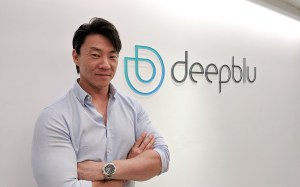
Deepblu CEO James Tsuei

“It’s like golfing,” says Tsuei. “There’s a higher barrier to entry because it takes time and money, but it also becomes part of your lifestyle.” Out of the 40,000 members of Deepblu’s social network, the company says about 40% have uploaded their own dive logs, which is a very high level of engagement for any online community (Deepblu also syncs with Bluetooth-enabled dive computers from major diving gear brands like Scubapro and Tusa or lets members enter data manually).

For service providers, one of Planet Deepblu’s value propositions is reaching younger divers. Although scuba divers are passionate about what they do, Tsuei says that in many key markets, including the Caribbean, divers are aging into their sixties, but their kids aren’t following them into the sport. Instead, younger people are turning to surfing and extreme sports. Emerging markets like China and Southeast Asia, however, are seeing an increase in young divers.

Planet Deepblu can help dive shops around the world reach them (about 60% of its users come from in the United States or Taiwan, but 20% are based in China and the rest are mainly in Korea, Southeast Asia and Europe). Part of Deepblu’s future plans include creating a “LinkedIn for Divers,” with features like verified profiles for people who upload a copy of their license, which can help freelance professional divers find more clients.

02 Apr 2018

Alibaba to buy all remaining outstanding shares of local delivery service Ele.me

As expected since February, Alibaba will buy all outstanding shares of Ele.me that it doesn’t already own. Best-known for food deliveries, Ele.me claims to be China’s biggest online delivery and local services platform. In an announcement, Alibaba said the deal values Ele.me at $9.5 billion. Alibaba, which first invested in Ele.me two years ago, and its affiliate Ant Small and Micro Financial Services Group currently hold about 43% of the company’s outstanding voting shares.

This is the latest in a string of investments and acquisitions by Alibaba to expand its physical retail presence as part of its so-called “new retail” strategy to combine e-commerce and offline retail. The company’s goal is to make it easier for users to move (and spend money) between brick-and-mortar stores and Alibaba businesses like Tmall and Taobao. For example, they may view products at pop-up stores and then order them on their smartphones for almost-immediate home delivery.

Ele.me, which will continue to operate under its own brand, is at its heart a logistics technology company. Founded in 2008, it utilizes its logistics system to provide services like Fengniao, an express courier for local deliveries. After the deal is finalized, Alibaba said that founder and chief executive officer Zhang Zhuhao (also known as Mark Zhang) will become chairman of Ele.me and special advisor to Alibaba Group CEO Daniel Zhang on its new retail strategy. Wang Lei, currently vice president of Alibaba Group, will take over as Ele.me’s CEO.

In a press release, Zhang said “Under the leadership of its founder and management team, Ele.me has achieved leading market share in China’s online food delivery and local services sector. Our shared belief that New Retail will create more value for customers and merchants has brought us together. Looking forward, Ele.me can leverage Alibaba’s infrastructure in commerce and
find new synergies with Alibaba’s diverse businesses to add further momentum to the New Retail initiative.”

Bloomberg reported at the end of February that Alibaba planned to buy the rest of Ele.me’s shares from its other investors, including Baidu.

The deal deepens Alibaba’s competition with Tencent, in particular its own local services and delivery platform, Meituan Dianping, which was formed by a merger in 2015. Alibaba previously owned shares in Meituan Dianping, thanks to its investment in Meituan, but began offloading them soon after the merger with Dianping.

In a statement, Alibaba said Ele.me complements its affiliate Koubei, a platform that gives restaurants and stores a way to go online and reach more local customers.

“By combining Ele.me’s online home delivery services with Koubei’s consumer acquisition and engagement capability for a range of restaurants and service establishments, Alibaba will be able to offer an integrated experiences to customers both online and offline,” said the company.

01 Apr 2018

Cloudflare’s new ‘privacy-focused’ DNS service speeds up your web browsing

Cloudflare decided to use April Fool’s Day (4/1) to share some news about four 1’s that could help speed your internet browsing. The company announced today that it’s launching a DNS service for consumers called 1.1.1.1

The company’s tool — which is not some super nerdy April Fool’s joke — will allow users to shorten load times of web pages and keep some data away from network providers. Cloudfare boasts it will be “the Internet’s fastest, privacy-first consumer DNS service.”

In layman’s terms, by punching the number 1 four times into their DNS network info, consumers can hand over the reigns over to Cloudflare to connect a URL that they type into the tool bar — say, techcrunch.com — with that site’s IP address, a process that’s done by making requests to the Domain Name System (DNS). If you go to 1.1.1.1, you’ll get some info on how to enable this on the device that you’re on.

It’s completely separate from the startup’s authoritative DNS service for its customers but it does take advantage of Cloudflare’s existing network to provide the fastest speeds possible to users, shaving off milliseconds from other service like Google’s Public DNS Service.

It’s important to note that this DNS service isn’t some magical catch-all, you’re still much better off operating a VPN if you don’t want any of your web activity being exposed. One of the main use cases that the company seems to be tackling here is how governments have used DNS to get network providers to censor citizens access to the web.

“[I]t’s been depressing to us to watch all too frequently how DNS can be used as a tool of censorship against many of the groups we protect. While we’re good at stopping cyber attacks, if a consumer’s DNS gets blocked there’s been nothing we could do to help,” Prince said in blog post.

The company says that the new service will help keep some data out of ISPs’ hands and that they won’t keep data in their hands for long either. Cloudflare has pledged to both never write users’ IP addresses to disk and that they’ll purge all logs from their system after 24 hours. CEO Matthew Prince doesn’t want you taking their word for it though, he detailed in a blog that the company has paid for an independent audit firm to take a look at their code annually and ensure that they’ve been doing this.

Cloudflare has always seemed to prioritize securing a healthy future for the internet, that’s led it into some tough predicaments with like Nazis and stuff, with this latest launch it seems that the company is trying to enact some positive changes for promoting privacy and speed on the consumer side.

01 Apr 2018

What Apple’s education announcements mean for accessibility

From an accessibility news standpoint, this week’s Apple event in Chicago was antithetical to the October 2016 event. At the latter event, Apple began the presentation with a bang — showing the actual video being edited using Switch Control in Final Cut. Tim Cook came out afterwards to talk some about Apple’s commitment to serving the disabled community before unveiling the then-new accessibility page on the company’s website.

By contrast, the education-themed event in Chicago this week went by with barely a mention of accessibility. The only specific call-out came during Greg Joswiak’s time on stage talking about iPad, when he said “accessibility features make iPad a learning tool for everyone.”

That doesn’t mean, however, accessibility has no relevance to what was announced.

I was in the audience at Lane Tech College Prep on Tuesday covering the event. As a former special educator –and special education student — I watched with keen interest as Apple told their story around education. While Apple is targeting the mainstream, I came away with strong impressions on how Apple can make serious inroads in furthering special education as well.

It’s Called ‘Special’ for a Reason

Apple is obviously—rightfully—building their educational strategy towards mainstream students in mainstream classes. It’s a classic top-down approach: Teachers assign students work via handouts, for such activities as writing essays or completing science projects. This is the entire reason for Apple’s Classroom and Schoolwork apps. However well-designed, they lack an element.

Where they lack is there is nothing afforded, at least in specific terms, to teachers and students in special education settings. Apple’s strategy here is defined, again, by the classic teacher-student relationship, without any regard for other models. I’m not levying a criticism on the company; this is the reality.

At many levels, special education classrooms do not function in a way that’s conducive to Apple’s vision for learning at this time. In the moderate-to-severe early childhood (Pre-K) classrooms I worked in for close to a decade, the structure was such that most, if not all, activities were augmented by a heavy dose of adult support. Furthermore, most of our students were pulled out of class at certain times for additional services such as speech services and physical/occupational therapy sessions.

In short, there were no lectures or essay prompts anywhere.

This is where accessibility comes in. There is enormous potential for Apple to dig deeper and expand the toolset they offer to educators and students. To accommodate for special education is, in my view, akin to accommodating disabled users by offering accessibility features on each of Apple’s software platforms.

Special education is special for a reason. It involves ways of teaching and learning that are unique, and the people who work and learn in these environments deserve the same consideration.

Accessibility is Apple’s Secret Weapon

Leading up to the event, there was much talk in the Apple community of writers and podcasters that Google is eating Apple’s lunch in the schools market because Chromebooks are dirt cheap for districts and most everyone relies on Google Docs.

I’m not interested in the particulars of this argument. What I am interested in, however, is simply pointing out that despite the perception Apple products are too expensive and less capable, they are better in one meaningful sense: accessibility.

Consider Chromebook versus iPad. In many levels of special education, an iPad is far superior to a Chromebook. The tablet’s multi-touch user interface is far more intuitive, and more importantly, iOS is built with accessibility in mind. From VoiceOver to Dynamic Type to Switch Control and more, an iPad (or an iPod Touch, for that matter) can provide a far more accessible and enriching learning experience for many students with disabilities than a Chromebook. And lest we forget the App Store effect; there are many outstanding apps geared for special ed.

This is a crucial point that many technology pundits who lament Apple’s position in the education market always seem to miss.

Making Special Educators More Special

One area where Apple can greatly improve the lives of teachers is by broadening the Schoolwork app such that it makes IEP prep easier and, playing to Apple’s core strength, more modern. Historically, even today, IEPs are planned and written using stacks of paperwork. Goals, assessments, and consent forms are handwritten (sometimes typed) and stapled together. And being a binding legal document, teachers must ensure there are the proper signatures on every page, or else be dinged for being out of compliance with protocols. In sum: the IEP is the bane of every special educator’s existence because they take so much time.

To this end, Apple could do special education teachers a grand service by adding a module of sorts to its Schoolwork app that would allow them to more easily create and track a student’s IEP. There could be charts for tracking goal progress, as well as ways to collate and distribute documents amongst the IEP team (SLPs, OT/PT, etc) and of course parents. Teachers could even send an email to parents with any consent forms attached and encourage them to sign with Apple Pencil on their iPad, if they have one.

At the very least, it would make IEP prep infinitely more efficient, and perhaps alleviate some of the stress at the actual meetings. Digitizing the process would be game-changing, I think.

Bottom Line

The ideas I’ve outlined here are well within Apple’s wheelhouse. They would likely need to collaborate with special educators and districts on things like IEP forms and policies, but it is certainly within them to do so. They can do this if they want.

To reiterate an earlier point, special education deserves just as much thoughtful consideration and innovation as the education industry at large. Given Apple’s unwavering support of accessibility, this is an area in which they can surely improve.

01 Apr 2018

China’s 9-ton Tiangong-1 space station will burn up tonight, but no one knows quite where

What goes up must come down. That’s generally the rule, anyway, certainly for spacecraft that have fulfilled their purpose and have no way to stay in orbit. Such is the case of Tiangong-1, China’s first space station, which after nearly 7 years in space is making an uncontrolled descent and should provide a nice fiery light show in the skies over… somewhere.

Because there are so many unknowns about Tiangong-1’s trajectory, observers can only give an educated guess. The only thing they’re pretty sure about is that it’s going to drop some time in the next 24 hours — probably sometime tonight, and somewhere between 43 degrees north and 43 degrees south.

But owing to the speeds involved and the inherently unpredictable nature of how a large body will tumble through the atmosphere, the exact time and location won’t be known basically until the event occurs. “At no time will a precise time/location prediction from ESA be possible,” explained reentry experts at the European Space Agency.

That sounds quite dire, but it isn’t.

Sure, Tiangong-1 is about the size of a schoolbus and weighs 9.4 tons, but unlike a meteorite of that size the station is hollow and fragile, and should break apart completely during its descent. There’s no danger, experts insist. No one is on board the station and it isn’t on a collision course with any crewed craft.

It may seem a little crazy, but burning up in the atmosphere is just a part of the natural life cycle of large spacecraft. This one isn’t even that big.

Tiangong-1 (the name roughly translates to “Heavenly Palace”) was launched in late 2011 in two parts, which connected in space — the first such feat accomplished by China’s space program. Over the next two years, three spacecraft docked with the newly formed station: one robotic craft, Shenzhou-8, and two crewed missions, Shenzhou-9 and 10, each with three on board.

These missions proved the viability of China’s space station tech (another test platform, Tiangong-2, was launched in 2016), and in 2013 Tiangong-1, having accomplished what its creators set out to do, was deactivated. Its creators planned to have it execute a controlled descent at some point, using its thrusters to put it on a path to break up over the ocean.

As little risk as there may be of debris hitting someone, it’s good practice not to take that risk if you don’t have to, and good manners not to dispose of your space junk over someone else’s country.

A helpful visualization of the expected debris footprint of Tiangong-1 from The Aerospace Corporation.

Unfortunately, the spacecraft stopped responding to its handlers in China about two years ago, meaning that a controlled descent was no longer possible. As a result, Tiangong-1’s orbit has decayed naturally and it’s only in the last few months that it’s become clear when it would come down.

Because we have no telemetry from the station, we only know what we can observe from outside the station (like Fraunhofer’s radar imagery, shown above), and a host of variables make it difficult to say anything with certainty. It wasn’t until this week that its deorbit path has become clear enough that space authorities are confident giving even a 24-hour window when it will come down.

Those on the ground there may possibly be treated to a “splendid” light show, as China’s space agency put it, as if a large meteor is breaking up in the upper atmosphere. It should be visible for a minute or so as the station tumbles and breaks up and its constituent pieces burn.

Predictions may get slightly better depending on observations, so I’ll update this post if the window is significantly altered.

01 Apr 2018

STEAMRole is like Tinder for mentorship

Providing ongoing mentorship can be impractical for busy professionals. With STEAMRole, the idea is to empower professionals to easily share their stories with students and young professionals.

It’s like Tinder for finding your role model and dream career in science, technology, engineering, art or math, STEAMRole founder and CEO Clarence Wooten told me.

“As the saying goes, you can’t be what you can’t see,” Wooten said.

Similar to Snapchat’s story functionality, students and aspiring professionals can consume inspirational content from role models. For role models, they can post about how their backgrounds, the work they do and how they landed their dream job.

[gallery ids="1614865,1614864,1614863,1614862,1614861,1614860"]

“We want to make it easy for role models to give back and who want to mentor,” Wooten said. “We do it in a way that’s like creating a Snapchat story, and then followers can subscribe to content.”

STEAMRole is also incorporating blockchain technology to incentivize learners to achieve certain skills through its digital currency, RoleCoin. STEAMRole currently has several hundred role models signed up to be notified when it launches.

01 Apr 2018

DARPA wants new ideas for autonomous drone swarms

The Defense Department’s research wing is serious about putting drones into action, not just one by one but in coordinated swarms. The Offensive Swarm-Enabled Tactics program is kicking off its second “sprint,” a period of solicitation and rapid prototyping of systems based around a central theme. This spring sprint is all about “autonomy.”

The idea is to collect lots of ideas on how new technology, be it sensors, software, or better propeller blades, can enhance the ability of drones to coordinate and operate as a collective.

Specifically, swarms of 50 will need to “isolate an urban objective” within half an hour or so by working together with each other and ground-based robot. That at least is the “operational backdrop” that should guide prospective entrants in their decision whether their tech is applicable.

So a swarm of drones that seed a field faster than a tractor, while practical for farmers, isn’t really something the Pentagon is interested in here. On the other hand, if you can sell that idea as a swarm of drones dropping autonomous sensors on an urban battlefield, they might take a shine to it.

But you could also simply demonstrate how using a compact ground-based lidar system could improve swarm coordination at low cost and without using visible light. Or maybe you’ve designed a midair charging system that lets a swarm perk up flagging units without human intervention.

Those are pretty good ideas, actually — maybe I’ll run them by the program manager, Timothy Chung, when he’s on stage at our Robotics event in Berkeley this May. Chung also oversees the Subterranean Challenge and plenty more at DARPA . He looks like he’s having a good time in the video explaining the ground rules of this new sprint:

You don’t have to actually have 50 drones to take part — there are simulators and other ways of demonstrating value. More information on the program and how to submit your work for consideration can be found at the FBO page.