30 Mar 2018

Alexa gets a DVR recording skill

Slowly but surely, Alexa’s becoming a more competent catchall video assistant. Back in January, Amazon launched its Video Skill API designed to offer more control over apps from cable and satellite companies. An update this week brings the ever-important ability to use the smart assistant to start recording.

The skill joins a number of functions already available from top providers, including Dish, TiVo, and DIRECTV and Verizon — each of whom will likely be updating their Alexa skill set to reflect the new feature. The whole thing works pretty much as you’d expect.

Say, “Alexa, record the A’s game,” and the associated service will do just that. Or, you know, any baseball team, really. 

Also new in this update is the ability to jump directly into frequently used navigation options, like DVR interfaces or video services like Netflix or Prime, the example that Amazon gives in its post on the topic. Once in a specific program, users can ask Alexa to do things like pause the show, and the assistant will comply.

The new skills are available now to developers and should be hitting some of the aforementioned services soon.

30 Mar 2018

Another chapter on Facebook’s privacy woes is being written in Latin America

The abuse of Facebook’s platform for political purposes is a problem that doesn’t stop at the U.S border. Governments around the world are continuing to wrestle with the implications of Cambridge Analytica’s acquisition of Facebook user data from the heart of Europe to the capitals of Latin America’s most populous nations. 

In South America, several chapters are still being written into the public record of Facebook’s privacy privations. Some Latin American democracies are also beginning to investigate whether the data harvesting techniques associated with Cambridge Analytica (CA) were used in their electoral processes.

Facebook, Cambridge Analytica and South America: a recap

Brazil

The Brazilian Public Prosecutor’s Office started an investigation to clarify if Cambridge Analytica (CA) had illegal access to Facebook’s private information from millions of Brazillians through their subsidiary, a Sao Paulo-based consulting group named A Ponte Estratégia Planejamento e Pesquisa LTDA.

The investigation came as a result of Cambridge Analytica Chief Data Officer Dr Alex Tayler and Managing Director Mark Turnbull saying to an undercover journalist that the company was now targeting Brazil, among other countries. The Brazilian case is a big deal for Facebook because it is its third-largest market and has an election coming in seven months.

Argentina

Cambridge Analytica’s parent company, SCL Group, has an office in Buenos Aires which address matches with the office of an Argentinian agricultural enterprise called Blacksoil, according to the news outlet, Clarin. The article pointed out that Alexander Nix, former CA’s CEO, was friend of the owner of the company, Lucas Talamoni Grether with whom he had conducted business before.

The Argentinian National Electoral Chamber (CNE), which is in charge of overseeing the elections and auditing campaign contributions and expenses, initiated an “internal investigation” following the scandal revealed by British TV Channel 4. Political parties are accusing one another of using CA services in the 2017 midterm election but there is no hard evidence either supporting or refuting the allegations.

Mexico and Colombia

Mexico, the fifth largest market for Facebook, is also involved in the Cambridge Analytica debacle. In the same video that CA executives mention targeting Brazil, they admit having operated in Mexico using an app called Pig.Gi. Mexico’s general election are due on July 1st. The same app was used to access data from Colombian users, according to the tech site Hipertextual.

Nevertheless, Pig.Gi’s founder and CEO, Joel Phillips, admitted signing a deal with the data company but says the information never got to their hands and there is no evidence that the company had any access to personal data from Mexicans or Colombians, according to the same article.

Apart from being named by Alexander Nix in the video leak which blew up the scandal, there isn’t much empirical evidence of Cambridge Analytica actually tampering with South American electoral processes. However ineffectual Cambridge Analytica’s efforts have been, Facebook is still on the hook when it comes to “fake news” and misinformation in the region.

Misinformed emerging democracies

During the Argentinian electoral process in 2017 hundreds of fake articles were distributed through Facebook. A fact-checking site called Chequeado compiled some of the misinformation that was distributed on the platform.

Among them there were reports accusing the leader of a Teacher’s Union of not being a teacher; of the Buenos Aires Province Governor raising her own salary by 100% and even a claim that the US Government recorded Macri’s Administration as being the most corrupt in the world.

There were some sites created for the sole purpose of spreading Fake News on Facebook and these pieces went viral over and over again.

On the other hand, Brazil has steadily become a fake news heaven. The political instability that reigns in the country has made it easier for fake news to spread within fanatic circles. The Monitor Do Debate Politico No Meio Digital, an organization that follows the trail of political news in Social Networks, told El Pais that there are lots of sites which are not officially developing a systematic campaign of fake news prior to the October elections but have begun spreading fake reports in the social ecosystem.

This scheme is repeating itself throughout Latin American countries — and with the same characteristics. It’s not necessarily systemic, but it is growing. The difference remains in the plausibility of the pieces which were spread in the region.

Although there were no conspiracy theories that compared candidates to a reptile, in South America stories did aim to enhance what people already thought of political figures.

According to Luciano Galup, a social media strategist for political campaigns in the region, fake news are most effective in polarized societies. A study made by Oxford University in the US, showed that extremists tend to distribute more fake information than moderates within parties. And polarization is a major characteristic of the Latin American region’s political scenario. This makes Latin America the perfect victim for people trying to tamper with elections by presenting propaganda as actual news.

If we add that up with the lack of control from governments and Facebook attempts to solve the issue, we have a ticking time bomb. The only positive, Galup says, is that services like the ones on offer from Cambridge Analytica are prohibitively expensive for most political parties in Latin America.

In this case, the only thing saving elections in the region from outside corrupting influences may be the greed of those same corrupting influences.

30 Mar 2018

The real threat to Facebook is the kool-aid turning sour

These kinds of leaks didn’t happen when I started reporting on Facebook eight years ago. It was a tight-knit cult convinced of its mission to connect everyone, but with the discipline of a military unit where everyone knew loose lips sink ships. Motivational posters with bold corporate slogans dotted its offices, rallying the troops. Employees were happy to be evangelists.

But then came the fake news, News Feed addiction, violence on Facebook Live, cyberbullying, abusive ad targeting, election interference, and most recently the Cambridge Analytica app data privacy scandals. All the while, Facebook either willfully believed the worst case scenarios could never come true, was naive to their existence, or calculated the benefits and growth outweighed the risks. And when finally confronted, Facebook often dragged its feet before admitting the extent of the problems.

Inside the social network’s offices, the bonds began to fray. Slogans took on sinister second meanings. The kool-aid tasted different.
Some hoped they could right the ship but couldn’t. Some craved the influence and intellectual thrill of running one of humanity’s most popular inventions, but now question if that influence and their work is positive. Others surely just wanted to collect salaries, stock, and resume highlights but lost the stomach for it.

Now the convergence of scandals has come to a head in the form of constant leaks.

The Trouble Tipping Point

The more benign leaks merely cost Facebook a bit of competitive advantage. We’ve learned it’s building a smart speaker, a standalone VR headset, and a Houseparty split-screen video chat clone.

Yet policy-focused leaks have exacerbated the backlash against Facebook, putting more pressure on the conscience of employees. As blame fell to Facebook for Trump’s election, word of Facebook prototyping a censorship tool for operating in China escaped, triggering questions about its respect for human rights and free speech. Facebook’s content rulebook got out alongside disturbing tales of the filth the company’s contracted moderators have to sift through. Its ad targeting was revealed to be able to pinpoint emotionally vulnerable teens.

In recent weeks, the leaks have accelerated to a maddening pace in the wake of Facebook’s soggy apologies regarding the Cambridge Analytica debacle. Its weak policy enforcement left the door open to exploitation of data users gave third-party apps, deepening the perception that Facebook doesn’t care about privacy.
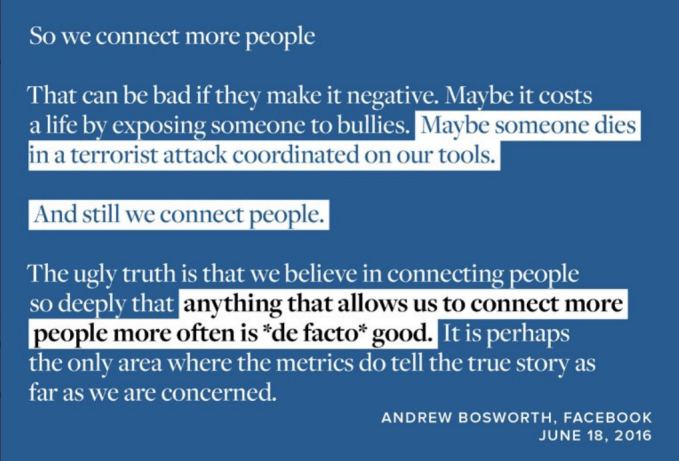
And it all culminated with BuzzFeed publishing a leaked “growth at all costs” internal post from Facebook VP Andrew “Boz” Bosworth that substantiated people’s worst fears about the company’s disregard for user safety in pursuit of world domination. Even the ensuing internal discussion about the damage caused by leaks and how to prevent them…leaked.

But the leaks are not the disease, just the symptom. Sunken morale is the cause, and it’s dragging down the company. Former Facebook employee and Wired writer Antonio Garcia Martinez sums it up, saying this kind of vindictive, intentionally destructive leak fills Facebook’s leadership with “horror”:

And that sentiment was confirmed by Facebook’s VP of News Feed Adam Mosseri, who tweeted that leaks “create strong incentives to be less transparent internally and they certainly slow us down”, and will make it tougher to deal with the big problems.

Those thoughts weigh heavy on Facebook’s team. A source close to several Facebook executives tells us they feel “embarrassed to work there” and are increasingly open to other job opportunities. One current employee told us to assume anything certain execs tell the media is “100% false”.

If Facebook can’t internally discuss the problems it faces without being exposed, how can it solve them?

Implosion

The consequences of Facebook’s failures are typically pegged as external hazards.

You might assume the government will finally step in and regulate Facebook. But the Honest Ads Act and other rules about ads transparency and data privacy could end up protecting Facebook by being simply a paperwork speed bump for it while making it tough for competitors to build a rival database of personal info. In our corporation-loving society, it seems unlikely that the administration would go so far as to split up Facebook, Instagram, and WhatsApp — one of the few feasible ways to limit the company’s power.
Users have watched Facebook go make misstep after misstep over the years, but can’t help but stay glued to its feed. Even those who don’t scroll rely on it as fundamental utility for messaging and login on other sites. Privacy and transparency are too abstract for most people to care about. Hence, first-time Facebook downloads held steady and its App Store rank actually rose in the week after the Cambridge Analytica fiasco broke. In regards to the #DeleteFacebook movement, Mark Zuckerberg himself said “I don’t think we’ve seen a meaningful number of people act on that.” And as long as they’re browsing, advertisers will keep paying Facebook to reach them.

That’s why the greatest threat of the scandal convergence comes from inside. The leaks are the canary in the noxious blue coal mine.

Can Facebook Survive Slowing Down?

If employees wake up each day unsure whether Facebook’s mission is actually harming the world, they won’t stay. Facebook doesn’t have the same internal work culture problems as some giants like Uber. But there are plenty of other tech companies with less questionable impacts. Some are still private and offer the chance to win big on an IPO or acquisition. At the very least, those in the Bay could find somewhere to work without a spending hours a day on the traffic-snarled 101 freeway.

If they do stay, they won’t work as hard. It’s tough to build if you think you’re building a weapon. Especially if you thought you were going to be making helpful tools. The melancholy and malaise set in. People go into rest-and-vest mode, living out their days at Facebook as a sentence not an opportunity. The next killer product Facebook needs a year or two from now might never coalesce.

And if they do work hard, a culture of anxiety and paralysis will work against them. No one wants to code with their hands tied, and some would prefer a less scrutinized environment. Every decision will require endless philosophizing and risk-reduction. Product changes will be reduced to the lowest common denominator, designed not to offend or appear too tyrannical.
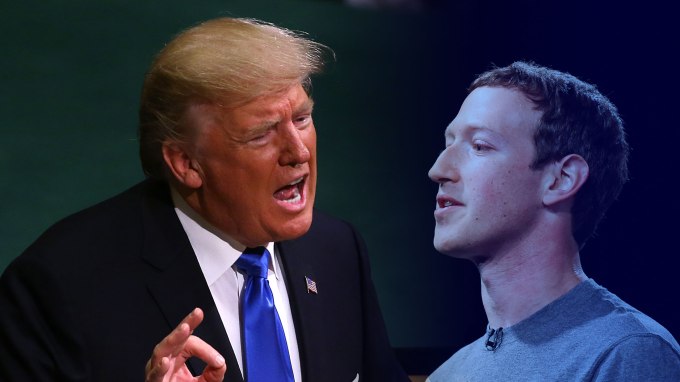
Source: Volkan Furuncu/Anadolu Agency + David Ramos/Getty Images

In fact, that’s partly how Facebook got into this whole mess. A leak by an anonymous former contractor led Gizmodo to report Facebook was suppressing conservative news in its Trending section. Terrified of appearing liberally biased, Facebook reportedly hesitated to take decisive action against fake news. That hands-off approach led to the post-election criticism that degraded morale and pushed the growing snowball of leaks down the mountain.

It’s still rolling.

How to stop morale’s downward momentum will be one of Facebook’s greatest tests of leadership. This isn’t a bug to be squashed. It can’t just roll back a feature update. And an apology won’t suffice. It will have to expel or reeducate the leakers and disloyal without instilling a witchunt’s sense of dread. Compensation may have to jump upwards to keep talent aboard like Twitter did when it was floundering. Its top brass will need to show candor and accountability without fueling more indiscretion. And it may need to make a shocking, landmark act of humility to convince employees its capable of change.

This isn’t about whether Facebook will disappear tomorrow, but whether it will remain unconquerable for the forseeable future.

Growth has been the driving mantra for Facebook since its inception. No matter how employees are evaluated, it’s still the underlying ethos. Facebook has poised itself as a mission-driven company. The implication was always that connecting people is good so connecting more people is better. The only question was how to grow faster.

Now Zuckerberg will have to figure out how to get Facebook to cautiously foresee the consequences of what it says and does while remaining an appealing place to work. “Move slow and think things through” just doesn’t have the same ring to it.


30 Mar 2018

Clipisode launches a ‘talk show in a box’

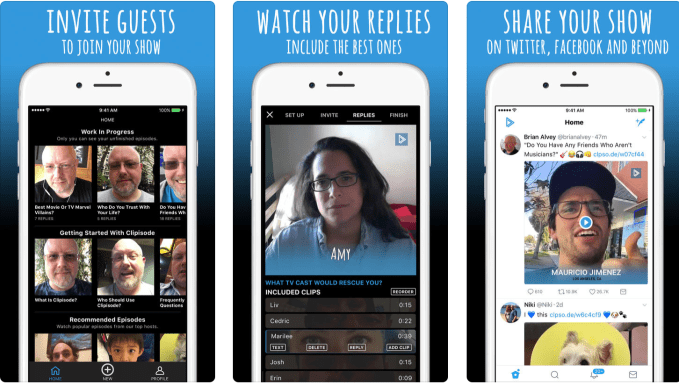
A company called Clipisode is today launching a new service that’s essentially a “talk show in a box,” as founder Brian Alvey describes it. Similar to how Anchor now allows anyone to build a professional podcast using simple mobile and web tools, Clipisode does this for video content. With Clipisode, you can record a video that can be shared across any platform – social media, the web, text messages – and collect video responses that can then be integrated into the “show” and overlaid with professional graphics.

The video responses feature is something more akin to a video voicemail-based call-in feature.

Here’s how it works. The content creator will first use Clipisode to record their video, and receive the link to share the video across social media, the web, or privately through email, text messaging, etc. When the viewer or guest clicks the link, they can respond to the question the show’s “host” posed.

For example, a reporter could ask for viewers’ thoughts on an issue or a creator could ask their fans what they want to see next.

How the video creator wants to use this functionality is really up to them, and specific to the type of video show they’re making.

To give you an idea, during a pre-launch period, the app has been tested by AXS TV to promote their upcoming Top Ten Revealed series by asking music industry experts “Who Is Your All-time Favorite Guitarist?

BBC Scotland asked their Twitter followers who they want to see hired as the new manager for the Scotland national football team.

A full-time Twitch gamer, Chris Melberger asked his subscribers what device they watch Twitch on.

The content creator can then receive all the video responses to these questions privately, choose which ones they want to include in their finished show, and drag those responses into the order they want. The creator can respond back to the clips, too, or just add another clip at the end of of their video. Uploading pre-recorded clips from services like Dropbox or even your phone is supported as well.

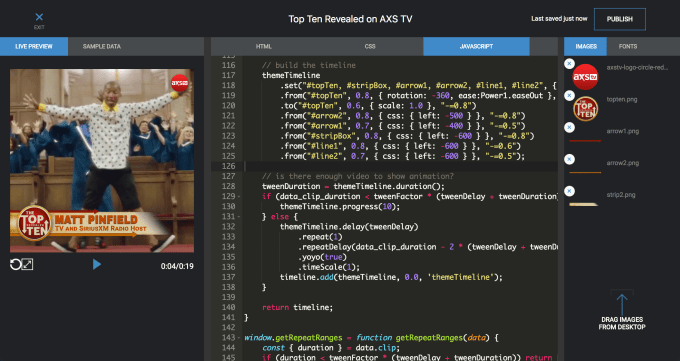
Plus, content creators can use Clipisode to overlay professional-looking animations and graphics on top of the final video with the responses and replies. This makes it seem more like something made with help from a video editing team, not an app on your phone.

Because Clipisode invitations are web links, they don’t require the recipients to download an app.

“[People] don’t want to download an app for a one-time video reply,” explains Alvey. “But with this, people can reply.” And, he adds, what makes Clipisode interesting from a technical perspective, is that the web links users click to reply can work in any app in a way that feels seamless to the end user.

“That’s our biggest trick – making this work in other people’s apps, so there’s no new social network to join and nothing to download,” he says.

The app is free currently, but the plan is to generate revenue by later selling subscription access to the authoring suite where users can create the animated overlays and branding components that give the video the professional look-and-feel.

In an online CMS, creators can author, test and deploy animated themes that run on top of their videos.

The final video product can be shared back to social media, or downloaded as a video file to be published on video-sharing sites, social media, or as a video podcast.

Clipisode has been in development for some time, Alvey says. The company originally raised less than a million from investors including Mike Jones and Mark Cuban for a different product the founder describes as a Patreon competitor, before pivoting to Clipisode. Investors funded the new product with less than half a million.

The app itself took a couple of years to complete, something that Alvey says has to do with the animation studio it includes and the small team. (It’s just him and technical co-founder Max Schmeling.)

Clipisode is a free download on iOS and Android.

30 Mar 2018

Veriff wants to make it simple to present identification online

Whenever you are doing something online that requires you to present an official ID like a passport or driver’s license to complete the transaction, it presents risk to both parties. Consumers want to know they are secure and brands want to know the person is using valid credentials. That’s where Veriff comes in.

Kaarel Kotkas, CEO and founder of the company, says the goal is to be “the Stripe of identity .” What he means is he wants to provide developers with the ability to embed identity verification into any application or website, as easily as you can use Stripe to add payments.

The company, which was originally launched in Estonia in 2015, is a recent graduate of the Y Combinator winter class. When you undertake any activity on the web or a mobile app that requires a valid ID, if Veriff is running under the hood, you can submit an ID such as a driver’s license. It uses a secret sauce to determine that the ID being presented is an officially issued one and that it belongs to the person in question.

When you consider that there were over 15 million identity thefts in the US in 2016 alone, you know it’s not a simple matter to identify a forgery. Fake IDs can be quite good and it’s often difficult to identify fraudulent ones with the naked eye.

It’s hard to tell the difference between the real and fake IDs in this shot. Photo: Veriff

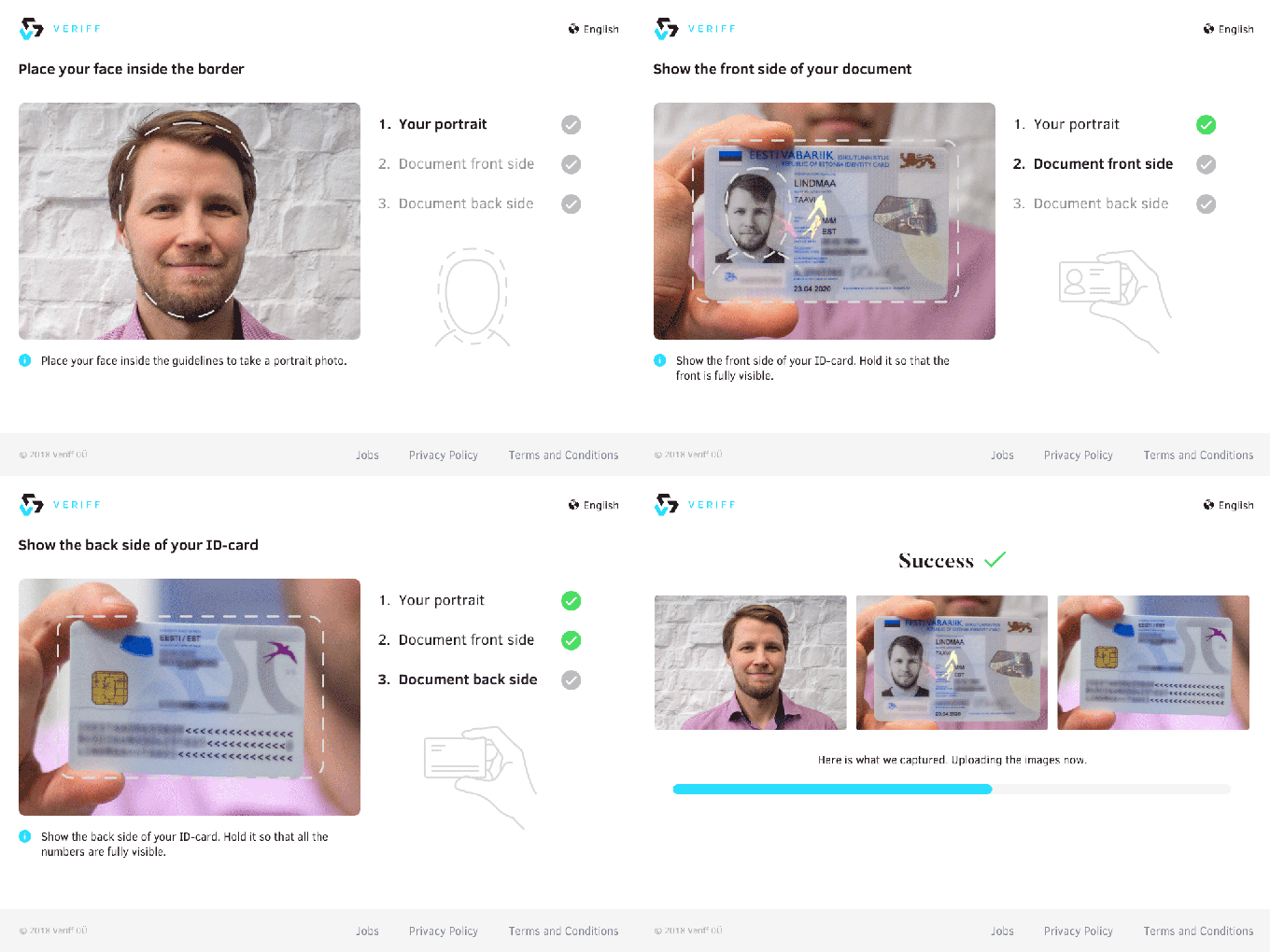
If you want to open a bank account online for instance, you have to provide proof of identity for the bank. With Veriff, you take a picture of yourself, then submit a picture of your official ID and Veriff analyzes it to make sure it’s valid.

The idea is to make the ID process easy and quick for the consumer, while providing an accurate way for the brand to check IDs online. Consumers also benefit because someone can’t use their identity online to get credit or other services.

If there is an issue with the ID, the person can be directed to a human for a video chat where they can discuss it if need be.

The company currently has 20 customers and is on track to do $100,000 in revenue this month, according to data they provided at their Y Combinator Demo Day presentation. They plan to make money by charging $1 per verification.

30 Mar 2018

Facebook’s mission changed, but its motives didn’t

In January, Facebook announced that it would be changing its feed algorithm to promote users’ well-being over time spent browsing content. That’s a relatively new approach for a company whose ethos once centered around “move fast, break things.”

It wasn’t all that long ago (approximately a year and a half before the algorithm change) that Facebook VP Andrew “Boz” Bosworth, published an internal memo called “The Ugly,” which was circulated throughout the company. In it, Boz made it clear to employees that connecting people (i.e. growth) is the main focus at Facebook, at all costs.

Buzzfeed first published the memo, which said:

Maybe it costs a life by exposing someone to bullies. Maybe someone dies in a terrorist attack coordinated on our tools.

And still we connect people.

The ugly truth is that we believe in connecting people so deeply that anything that allows us to connect more people more often is *de facto* good. It is perhaps the only area where the metrics do tell the true story as far as we are concerned.

He goes on:

That isn’t something we are doing for ourselves. Or for our stock price (ha!). It is literally just what we do. We connect people. Period.

That’s why all the work we do in growth is justified. All the questionable contact importing practices. All the subtle language that helps people stay searchable by friends. All of the work we do to bring more communication in. The work we will likely have to do in China some day. All of it.

Facebook launched in 2004 and ushered in a honeymoon period for users. We reveled in uploading photos from our digital cameras and sharing them with friends. We cared about each and every notification. We shared our status. We played Farmville. We diligently curated our Likes.

But the honeymoon is over. Facebook grew to 1 billion active users in 2012. The social network now has over 2 billion active users. A growing number of people get their news from social media. The size and scope of Facebook is simply overwhelming.

And we’ve been well aware, as users and outsiders looking in on the network, that just like any other tool, Facebook can be used for evil.

But there was still some question whether or not Facebook leadership understood that principle, and if they did, whether or not they actually cared.

For a long time, perhaps too long, Facebook adhered to the “Move fast, break things” mentality. And things have certainly been broken, from fake news circulated during the 2016 Presidential election to the improper use of user data by third-party developers and Cambridge Analytica . And that’s likely the tip of the iceberg.

The memo was written long before the shit hit the fan for Facebook. It was published following the broadcast of Antonio Perkins’ murder on Facebook. This was back when Facebook was still insisting that it isn’t a media company, that it is simply a set of pipes through which people can ship off their content.

What is so shocking about the memo is that it confirms some of our deepest fears. A social network, with a population greater than any single country, is solely focused on growth over the well-being of the society it’s built. That the ends, to be a product everyone uses, might justify the means.

Facebook has tried to move away from this persona, however gently. In late 2016, Zuckerberg finally budged on the idea that Facebook is a media company, clarifying that it’s not a traditional media company. Last year, the company launched the Journalism Project in response to the scary growth of fake news on the platform. Zuckerberg even posted full-page print ads seeking patience and forgiveness in the wake of this most recent Cambridge Analytica scandal.

While that all seems like more of a public relations response than actionable change, it’s better than the stoic, inflexible silence of before.

After Buzzfeed published the memo, Boz and Zuckerberg both responded.

Boz said it was all about spurring internal debate to help shape future tools.

Zuck had this to say:

Boz is a talented leader who says many provocative things. This was one that most people at Facebook including myself disagreed with strongly. We’ve never believed the ends justify the means.

We recognize that connecting people isn’t enough by itself. We also need to work to bring people closer together. We changed our whole mission and company focus to reflect this last year.

If Boz wrote this memo to spark debate, it’s hard to discern whether that debate led to real change.

The memo has since been deleted, but you can read the full text below:

The Ugly

We talk about the good and the bad of our work often. I want to talk about the ugly.

We connect people.

That can be good if they make it positive. Maybe someone finds love. Maybe it even saves the life of someone on the brink of suicide.

So we connect more people

That can be bad if they make it negative. Maybe it costs a life by exposing someone to bullies. Maybe someone dies in a terrorist attack coordinated on our tools.

And still we connect people.

The ugly truth is that we believe in connecting people so deeply that anything that allows us to connect more people more often is *de facto* good. It is perhaps the only area where the metrics do tell the true story as far as we are concerned.

That isn’t something we are doing for ourselves. Or for our stock price (ha!). It is literally just what we do. We connect people. Period.

That’s why all the work we do in growth is justified. All the questionable contact importing practices. All the subtle language that helps people stay searchable by friends. All of the work we do to bring more communication in. The work we will likely have to do in China some day. All of it.

The natural state of the world is not connected. It is not unified. It is fragmented by borders, languages, and increasingly by different products. The best products don’t win. The ones everyone use win.

I know a lot of people don’t want to hear this. Most of us have the luxury of working in the warm glow of building products consumers love. But make no mistake, growth tactics are how we got here. If you joined the company because it is doing great work, that’s why we get to do that great work. We do have great products but we still wouldn’t be half our size without pushing the envelope on growth. Nothing makes Facebook as valuable as having your friends on it, and no product decisions have gotten as many friends on as the ones made in growth. Not photo tagging. Not news feed. Not messenger. Nothing.

In almost all of our work, we have to answer hard questions about what we believe. We have to justify the metrics and make sure they aren’t losing out on a bigger picture. But connecting people. That’s our imperative. Because that’s what we do. We connect people.

30 Mar 2018

Google’s on-by-default ‘Articles for You’ leverage browser dominance for 2,100 percent growth

When you’ve got leverage, don’t be afraid to use it. That’s been Google’s modus operandi in the news and publishing world over the last year or so as it has pushed its AMP platform, funding various news-related ventures that may put it ahead, and nourished its personalized Chrome tabs on mobile. The latter, as Nieman Labs notes, grew 2,100 percent in 2017.

You may have noticed, since Chrome is a popular mobile browser and this setting is on by default, but the “Articles for You” appear automatically in every new tab, showing you a bunch of articles the company things you’d like. And it’s gone from driving 15 million article views to a staggering 341 million over the last year.

In late 2016, when Google announced the product, I described it as “polluting” the otherwise useful new tab page. I also don’t like the idea of being served news when I’m not actively looking for it — I understand that when I visit Google News (and I do) that my browser history (among other things) is being scoured to determine what categories and stories I’ll see. I also understand that everything I do on the site, as on every Google site, is being entered into its great data engine in order to improve its profile of me.

Like I said, when I visit a Google site, I expect that. But a browser is supposed to be a tool, not a private platform, and the idea that every tab I open is another data point and another opportunity for Google to foist its algorithms on me is rankling.
It has unsavory forebears. Remember Internet Explorer 6, which came with MSN.com as the default homepage? That incredible positioning drove so much traffic that for years after (and indeed, today) it drove disgusting amounts of traffic to anything it featured. But that traffic was tainted: you knew that firehose was in great part clicks from senior citizens who thought MSN was the entire internet.

Of course the generated pages for individual users aren’t the concentrated fire of a link on a major portal, but they are subject to Google approval and, of course, the requisite ranking bonus for AMP content. Can’t forget that!

But wherever you see the news first, that’s your news provider. And you can’t get much earlier than “as soon as you open a new tab.” That’s pretty much the ultimate positioning advantage.

Just how this amazing growth occurred is unclear. If there’s been any word of mouth, I missed it. “Have you tried scrolling down? The news is just right there!” It seems unlikely. My guess would be that the feature has been steadily rolling out in new regions, opting in new users who occasionally scroll down and see these stories.

And unlike many other news distribution platforms, there isn’t much for publishers or sites like this one to learn about it. How are stories qualified for inclusion? Is there overlap with Google News stuff? What’s shown if people aren’t signed in? I’ve asked Google for further info.

Do you, like me, dislike the idea that every time you open a tab — not just when you use its services — Google uses it as an opportunity to monetize you, however indirectly? Fortunately, and I may say consistent with Google’s user-friendliness in this type of thing, you can turn it off quite easily — on iOS, anyway.

Open the menu at the top right of any tab and hit settings. There should be a “Suggested articles” toggle — disable that and you’re done. While you’re at it, you might just head into Privacy and disable search and site suggestions and usage data.

On Android? You’ll have to dig into the app’s flags and toggle the hidden setting there. Not as user-friendly.

30 Mar 2018

Moment lenses — the DSLR killer?

I travel with a Canon DSLR and two primes, a 35mm f1.4 and an 85mm f1.2 (endearingly nicknamed, “the fat kid”). Switching lenses is cumbersome and not ideal in certain environments, like a Saigon street market, densely crowded with vendors, tourists and thieves.

After lugging this camera kit through six countries last year, I upgraded my iPhone to the X in hopes of replacing the DSLR as a travel camera. Despite our Editor in Chief’s praises for the iPhone X’s camera, it wasn’t enough for me. I needed more creative control and didn’t want to rely on mobile software.

The first few Google search results for “best iPhone lens” led me to Moment, a company that started off with a 2014 Kickstarter fund and since has grown into a well-respected smartphone lens manufacturer.

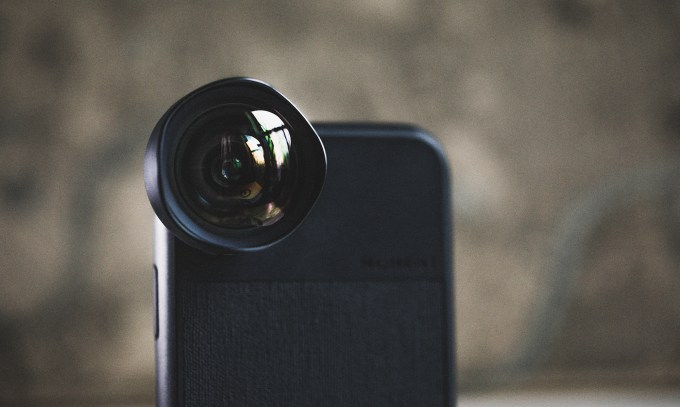
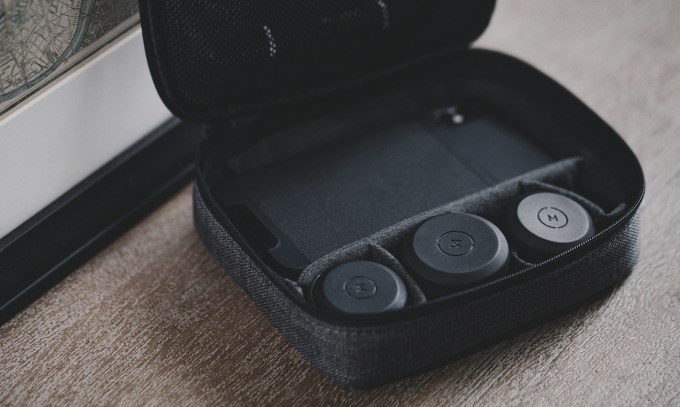
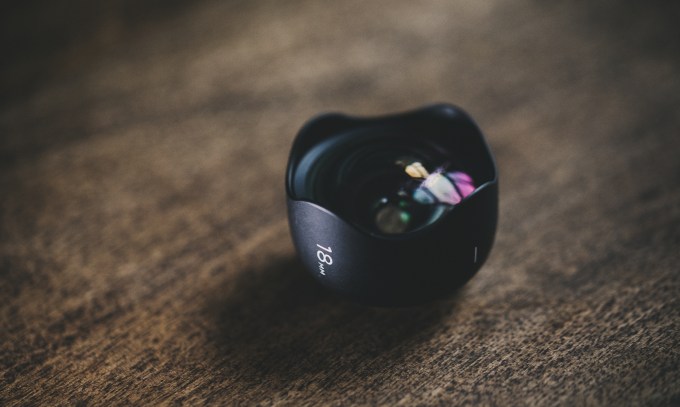
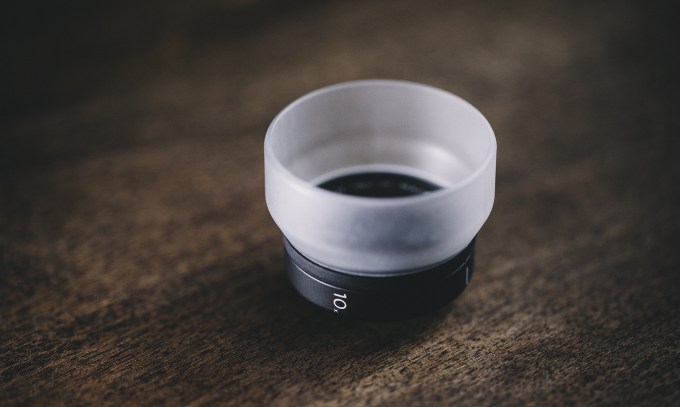
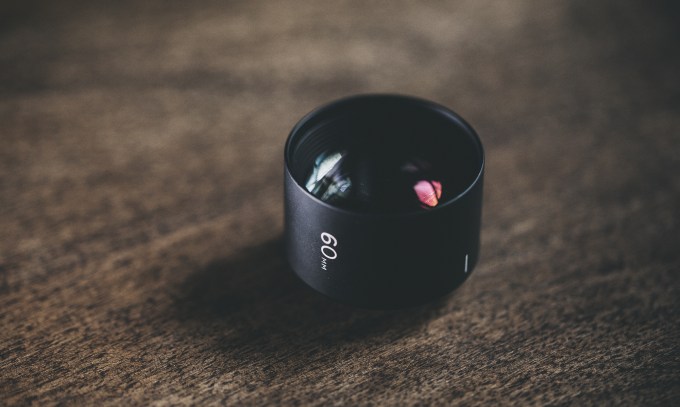
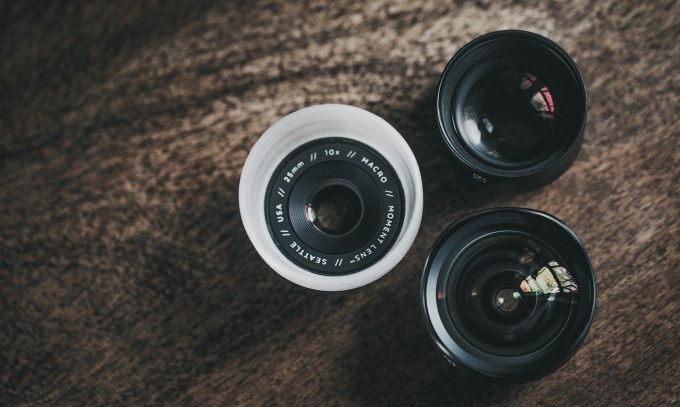
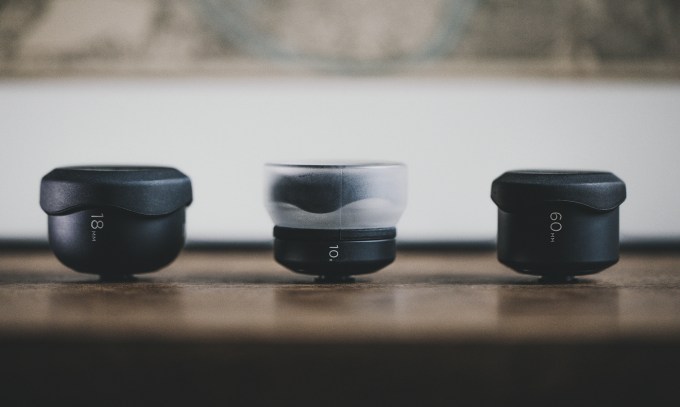
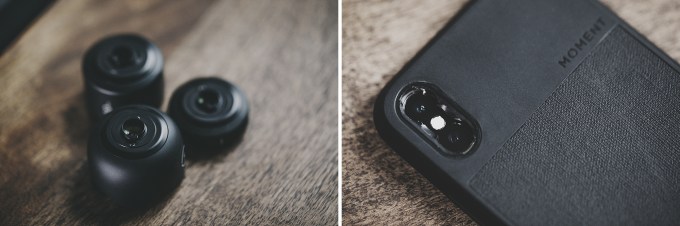
Moment recently released a new version of their four lenses: Superfish (fisheye), Wide, Tele Portrait and Macro. The update includes a new attachment interface where the lenses are slightly larger in diameter to provide a more secure attachment to the Moment smartphone cases. Their Wide lens also received a glass upgrade to a multi-element aspherical design for edge to edge clarity.

Prices range from $89.99 to $99.99, with an additional cost of $29.99 for the Moment smartphone case — you’ll need it to attach your lens.

Hardware

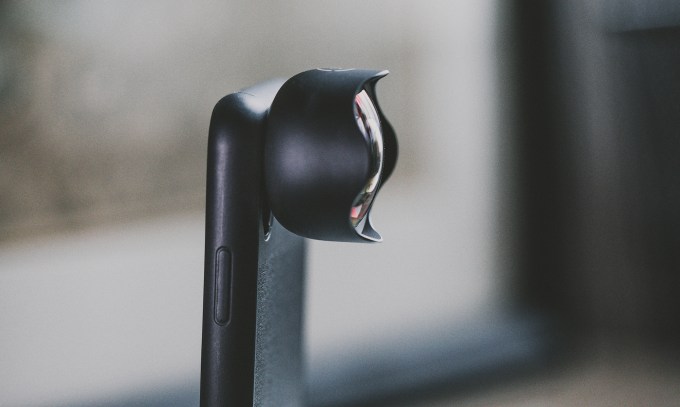
These lenses are not cheaply made of plastic, mass-produced in some dingy factory. They’re heavy little nubs handcrafted with aerospace-grade metal and the same high-end glass used in 4K film lenses.

They mount to the Moment case using a twist and lock system. Snapping it in was quite simple and I roughly shook the phone to make sure the lens was secured — it was.

I opted out of the Superfish lens (it’s not really my aesthetic) and packed the other three with me on a recent trip to Little Corn, a remote island several miles off the Nicaraguan coast.

Although I had planned to extensively use the lenses, the week was spent mostly napping in hammocks and eating lobster tacos, as one does when on a tropical island far away. I did, however, spend a couple of afternoons testing them out.

New Wide Lens

By far, this was my favorite of the three. The images produced were clear, dramatic and without much edge distortion.

L: iPhone X lens, R: Moment Wide Lens

L: iPhone X lens, R: Moment Wide Lens

It’s ideal for landscapes and cityscapes, but I would probably use it as an everyday lens; it adds character and a certain quirk to portraits.

New Macro Lens

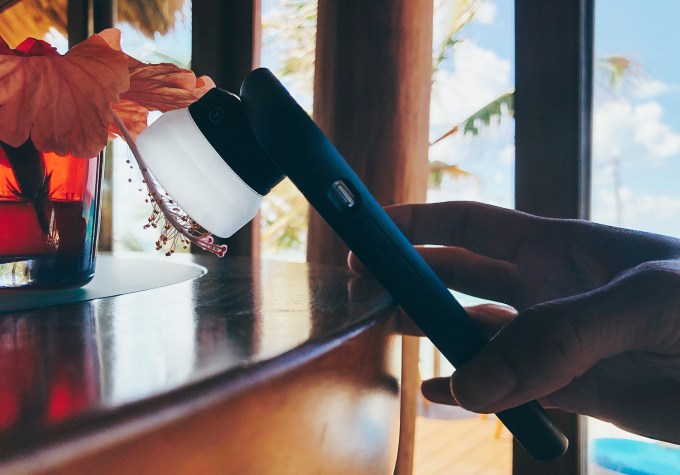
With the macro lens, I was able to capture the tiniest details, from the filaments of a hibiscus flower to its petal veins. The removable diffuser hood softened the light so whites weren’t blown out.

L: iPhone X lens, R: Moment Macro Lens

L: iPhone X lens, R: Moment Macro Lens

Image quality is almost on par with my Canon macro lens, which also happens to be about 9x its cost. On the London map below, the letters in the street names are approximately 1mm tall.

L: Canon EF 100mm f2.8 Macro, R: Moment Macro lens (blur on the top left corner due to a slight tilt when I took the photo)

There’s one drawback to the Macro Lens: you have to get close to the subject, real close (less than an inch away).

I would not recommend using this lens on a black widow or rattlesnake.

New Tele Portrait Lens

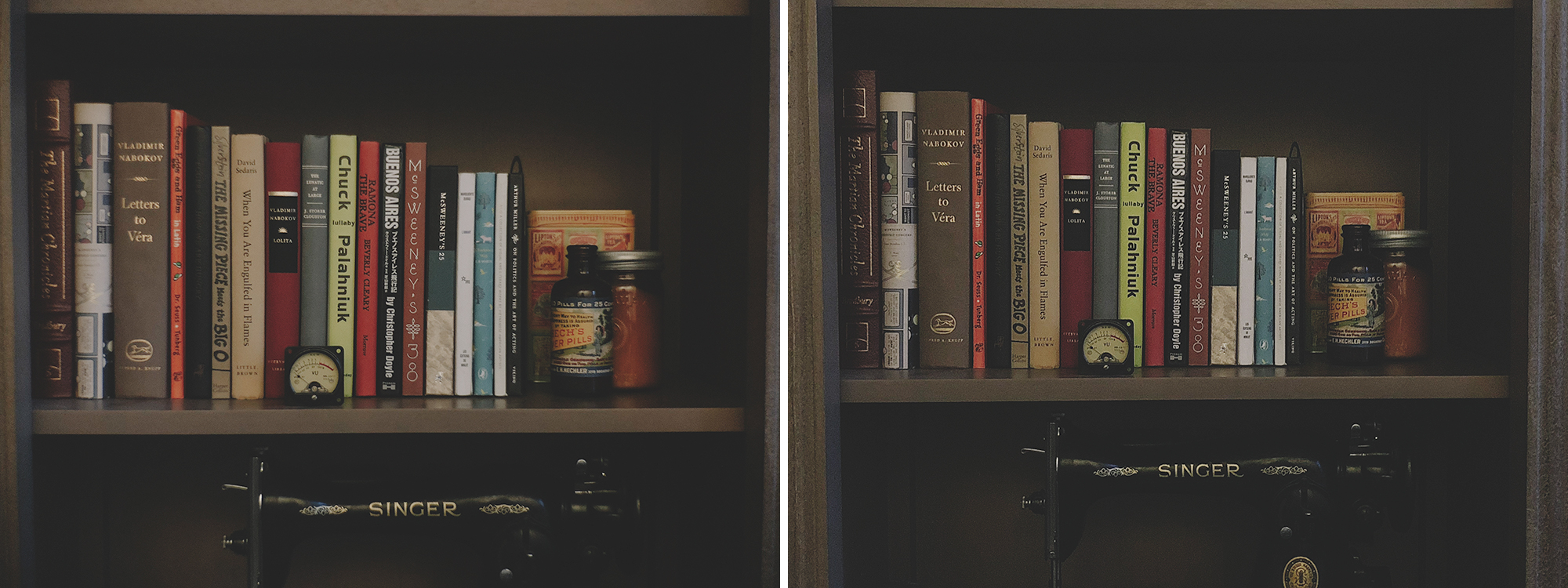
As a portrait lens, I was disappointed. I took pictures of Sam in several locations around the beachfront and wasn’t thrilled with any of them. Bokeh was barely noticeable and I’m pretty sure I could’ve just taken a few steps closer to achieve similar results.

L: iPhone X lens, R: Moment Tele Portrait Lens

After finishing the first draft of this review, I decided to try the lens again before I made a hasty assessment. I was wrong; moving a few steps closer doesn’t achieve similar results. I had forgotten about distortion when up close on iPhone X’s semi-wide lens; however, the difference is subtle.

L: iPhone X lens (apprx. one foot away), R: Moment Tele Portrait Lens (apprx. two feet away)

I’ve actually grown fond of this lens after testing it out one rainy morning in Brooklyn. While the 60mm focal length gets you closer to subjects without having to resort to digital zoom, the blurred edges add a nostalgic element similar to film cameras.

The iPhone X has a built-in telephoto lens, so I did a quick comparison.

L: iPhone X telephoto lens, R: Moment Tele Portrait Lens

There’s a faint, faint difference. If you’re on an iPhone X and are fussed about soft edges, skip this lens. On smartphones that don’t have built-in telephoto lenses, this would be my second choice to break away from sterile smartphone picture-taking.

Moment lenses add a bit of charm and perspective to mobile photography, to the point where you can trick the average person into believing the pictures were taken on a real camera.

I can’t completely switch over to a Moment lens mounted iPhone X as a travel camera just yet. It has nothing to do with Moment. Their lenses are impressive, but they’re not going to magically transform smartphone photos into DSLR-quality images. (I had naively hoped for this.) The iPhone X’s camera is great for daily snapshots, but the image files lack enough detail and information for my anal retentive Lightroom and Photoshop workflow. For now, I’ll stick with my clunky 5D.

For everyone else, step up your Instagram game. Moment’s reputation for producing the best smartphone camera lenses is well deserved.

30 Mar 2018

ClearVoice helps freelance writers show off their portfolios

ClearVoice recently launched a new feature to give freelancers a better way to show off their work and get new jobs.

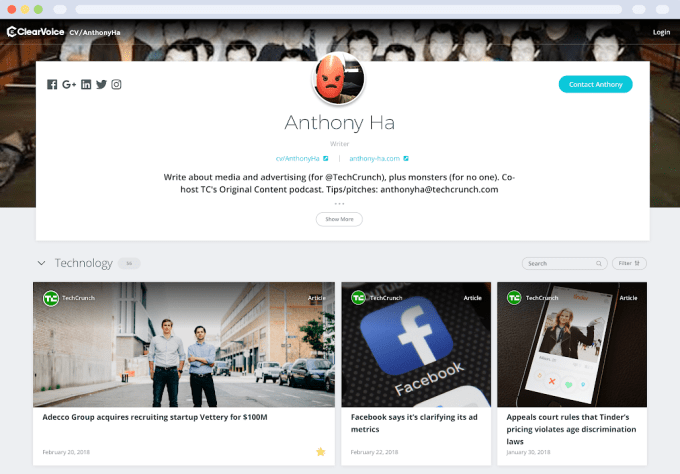
CV Portfolios offer an easier alternative to personal websites that are often sparsely populated, out-of-date or otherwise neglected.

Thanks a technology that the company is calling VoiceGraph, writers no longer have to keep the pages updated themselves. Instead, co-founder and CEO Joe Griffin said VoiceGraph indexes stories from the top publishers online (about 250,000 currently) and matches them to their authors. It also aggregates metrics around social sharing and connecting to the authors’ own social media accounts.

“At the end of the day, what we want to do here is give freelancers very robust tools that make it as simple as possible to address one of the biggest hurdles freelancers were having: creating a portfolio and maintaining it,” Griffin said.

cv portfolio

So for example, you can visit my CV Portfolio to see many of my latest TechCrunch articles. Granted, that’s not that so exciting, since you can do the same thing on my TechCrunch author page, but this could be pretty useful if I was a freelancer with a variety of publishers, or if I wanted to highlight articles I wrote for past employers.

There were around 400,000 automatically generated CV Portfolios at launch. Authors can claim their profiles, then edit them by creating new sections, moving articles around, deleting work that they’re not proud of, adding links or uploading files. And again, it’s a lot easier because they’re starting with a portfolio that’s already populated and automatically updated with new stories.

(And yes, if you’re a freelancer with an automatically generated portfolio that you don’t want on ClearVoice, Griffin said you can just delete it.)

The product is free. Sure, you can can use your CV Portfolio to promote yourself on ClearVoice’s talent marketplace, where freelancers get hired by companies to help with content marketing. But Griffin said he’s perfectly fine if people just want to create CV Portfolios and don’t participate in the market at all.

30 Mar 2018

Twitch lays off some employees as part of ‘team adjustments’

Twitch, the Amazon-owned live-streaming platform for gaming, laid off “several” people yesterday, Polygon first reported.

It’s not clear how many people were let go, but according to Polygon, probably no more than 30 people were let go. Twitch has since confirmed the layoffs to TechCrunch.

“Coming off the record-setting numbers shared in our 2017 Retrospective, Twitch is continuing to grow and advance with success stories from Overwatch League to Fortnite’s milestone-setting streams,” a Twitch spokesperson told TC. “In order to maintain this momentum, we have an aggressive growth strategy for 2018 with plans to increase our headcount by approximately 30%. While we’ve conducted team adjustments in some departments, our focus is on prioritizing areas most important for the community.”