30 Mar 2018

As marketing data proliferates, consumers should have more control

At the Adobe Summit in Las Vegas this week, privacy was on the minds of many people. It was no wonder with social media data abuse dominating the headlines, GDPR just around the corner, and Adobe announcing the concept of a centralized customer experience record.

With so many high profile breaches in recent years, putting your customer data in a central record-keeping system would seem to be a dangerous proposition, yet Adobe sees so many positives for marketers, it likely believes this to be a worthy trade-off.

Which is not to say that the company doesn’t see the risks. Executives speaking at the conference continually insisted that privacy is always part of the conversation at Adobe as they build tools — and they have built in security and privacy safeguards into the customer experience record.

Offering better experiences

The point of the exercise isn’t simply to collect data for data’s sake, it’s to offer consumers a more customized and streamlined experience. How does that work? There was a demo in the keynote illustrating a woman’s experience with a hotel brand.
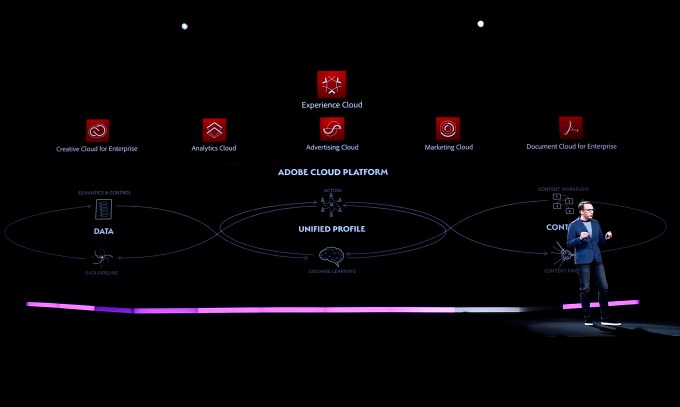
Brad Rencher, EVP and GM at Adobe Experience Cloud explains Adobe’s Cloud offerings. Photo: Jeff Bottari/Invision for Adobe/AP Images

The mythical woman started a reservation for a trip to New York City, got distracted in the middle and was later “reminded” to return to it via Facebook ad. She completed the reservation and was later issued a digital key to her room, allowing her to bypass the front desk check-in process. Further, there was a personal greeting on the television in her room with a custom message and suggestions for entertainment based on her known preferences.

As one journalist pointed out in the press event, this level of detail from the hotel is not something that would thrill him (beyond the electronic check-in). Yet there doesn’t seem to be a way to opt out of that data (unless you live in the EU and will be subject to GDPR rules).

Consumers may want more control

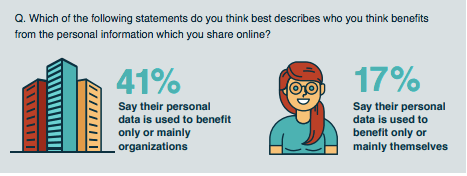
As it turns out, that reporter wasn’t alone. According to a survey conducted last year by The Economist Intelligence Unit in conjunction with ForgeRock, an identity management company, consumers are not just willing sheep that tech companies may think we are.

The survey was conducted last October with 1,629 consumers participating from eight countries including Australia, China, France, Germany, Japan, South Korea, the UK and the US. It’s worth noting that survey questions were asked in the context of Internet of Things data, but it seems that the results could be more broadly applied to any types of data collection activities by brands.

There are a couple of interesting data points that perhaps brands should heed as they collect customer data in the fashion outlined by Adobe. In particular as it relates to what Adobe and other marketing software companies are trying to do to build a central customer profile, when asked to rate the statement, “I am uncomfortable with companies building a “profile” of me to predict my consumer behaviour,” 39 percent strongly agreed with that statement. Another 35 percent somewhat agreed. That would suggest that consumers aren’t necessarily thrilled with this idea.

When presented with the statement, Providing my personal information may have more drawbacks than benefits, 32 percent strongly agreed and 41 percent somewhat agreed.
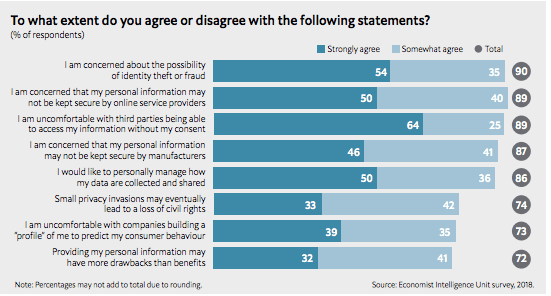
That would suggest that it is on the brand to make it clearer to consumers that they are collecting that data to provide a better overall experience, because it appears that consumers who answered this survey are not necessarily making that connection.
Perhaps it wasn’t a coincidence that at a press conference after the Day One keynote announcing the unified customer experience record, many questions from analysts and journalists focused on notions of privacy. If Adobe is helping companies gather and organize customer data, what role do they have in how their customers’ use that data, what role does the brand have and how much control should consumers have over their own data?

These are questions we seem to be answering on the fly. The technology is here now or very soon will be, and wherever the data comes from, whether the web, mobile devices or the Internet of Things, we need to get a grip on the privacy implications — and we need to do it quickly. If consumers want more control as this survey suggests, maybe it’s time for companies to give it to them.
30 Mar 2018

Huawei says it’s still committed to the U.S., in spite of, well, everything

A funny thing happened the last couple of times I was briefed on a Huawei flagship product: news was breaking about some major roadblock for the company’s U.S. distribution plans. First it was AT&T backing out in the midst of CES and then it was Best Buy’s decision to drop the company just ahead of the big P20 launch (though a rep for the company told me the States were never part of its plans for that handset). 

It’s been one thing after another as the Chinese hardware maker has worked to establish a meaningful presence here in the States. In spite of all of this fallout from government pushback, however, the company insists that it’s not going anywhere.

In an email to CNET, the company’s consumer CEO reaffirmed that commitment. “We are committed to the U.S. market and to earning the trust of U.S. consumers by staying focused on delivering world-class products and innovation,” Yu writes. “We would never compromise that trust.”

The sentiment echoes statements Yu made on-stage at CES in the wake of the AT&T deal implosion — albeit much more measured this time around. Most of Yu’s followup reinforced his earlier assertions that, in spite of multiple warning from various US security departments, this whole thing is blow entirely out of proportion.

“The security risk concerns are based on groundless suspicions and are quite frankly unfair,” Yu adds. ”We welcome an open and transparent discussion if it is based on facts.”

Even if the company’s intentions are as stated, Huawei’s got an epic uphill climb if it’s going to make any sort of dent in the world’s third-largest mobile market. The company’s carrier play is non-existent in a country where most phones are purchased through telecoms. And abandonment by the biggest big box store in the States was insult to injury.

And if the company does manage to reverse those trends, it will still be a hard sell for U.S. consumers after several warnings from the country’s defense departments. 

30 Mar 2018

Uber and Taxify are going head-to-head to digitize Africa’s two-wheeled taxis

Global ride-hailing rivals Taxify and Uber have launched motorcycle passenger service in East Africa. Customers of both companies in Uganda and Taxify riders in Kenya can now order up two-wheel transit by app.

uberBoda, as its branded, is Uber’s first motorcycle service offering in Africa, and second globally after Asia. For Taxify, it’s the first two-wheel launch in any of the company’s 20 plus international markets. 

The moves come as Africa’s moto-taxis — commonly known as boda boda­s in the East and okadas in the West –upshift to digital.

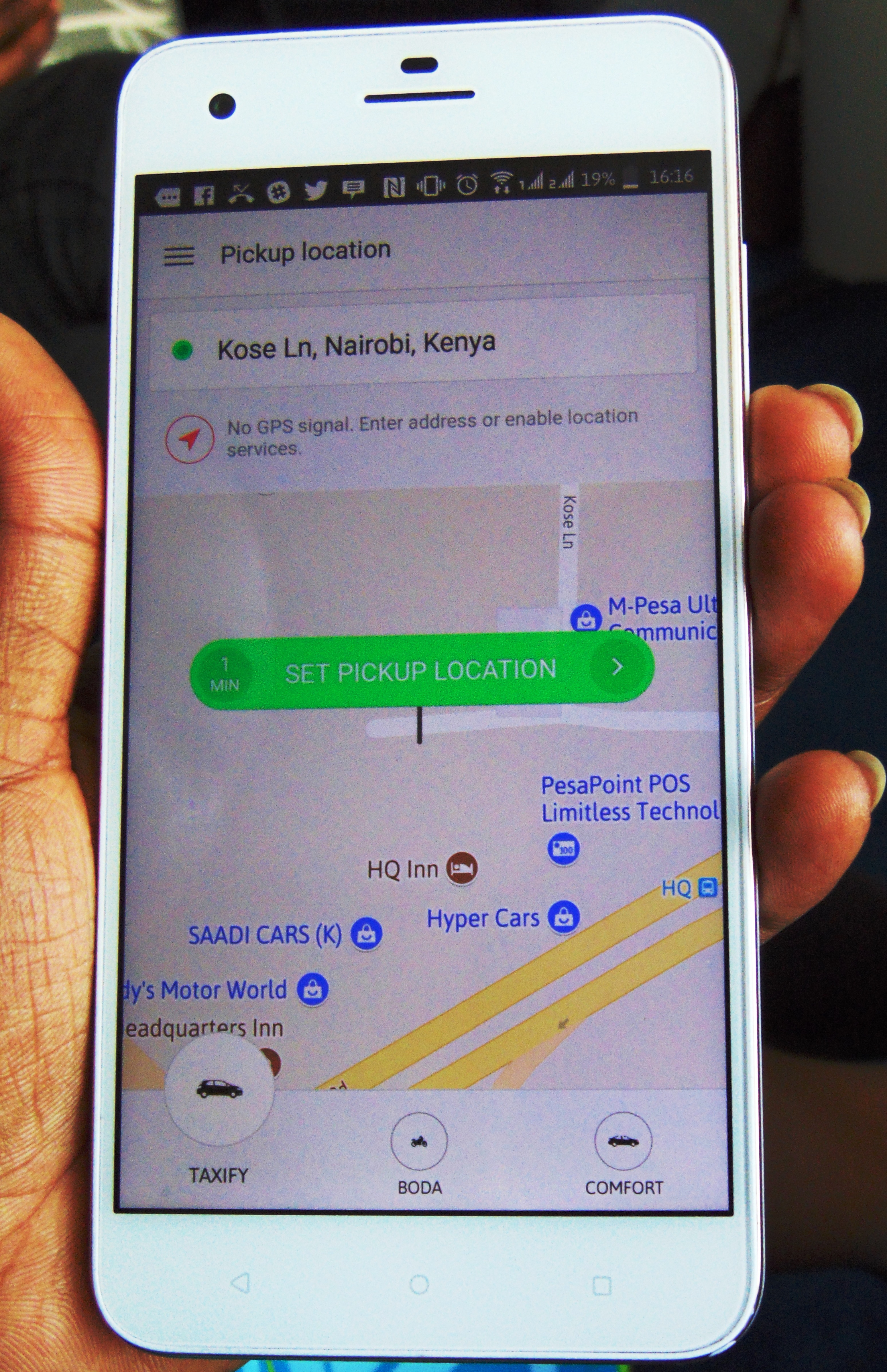
Taxify’s “Boda” button

For Taxify, the reasons for entering the market were twofold, according to Kenya Operations Head Chisom Anoke. “We noticed there was a need for this service because boda boda’s haven’t been very well organized or regulated,” he told TechCrunch from Taxify’s Nairobi office.

“The other thing was people had to go search for boda bodas. We want to bring the convenience we brought to regular taxis to the boda bodas,” said Anoke.

The company has upgraded its Kenya and Uganda apps with a “Boda” button to order a two-wheel taxi.

Taxify also aims to bring the average boda boda ETAs in Nairobi to under four minutes, the current norm for its car services.

Boda boda rates for Kenya will be 30 Shillings base then 15 Shillings per kilometer (≈ $.30 and $.15) compared to 85 and 30 for normal car service. Taxify takes a 15 percent cut, according to Anoke.

On safety, the Taxify will only hire boda boda taxi riders licensed by Kenya’s National Transport and Safety Authority (NTSA) and who have at least three years of experience.

Taxify will require their boda boda drivers have 2015 or later motorcycles that pass a company inspection “to ensure the quality is on point and our clients are safe,” said Anoke.

Riders using Taxify will navigate via direction voice prompts and headphones (from Google maps and other services). All riders will carry two yellow helmets and reflective jackets. Taxify is also working on a rider training program pilot with Kenya’s NTSA.

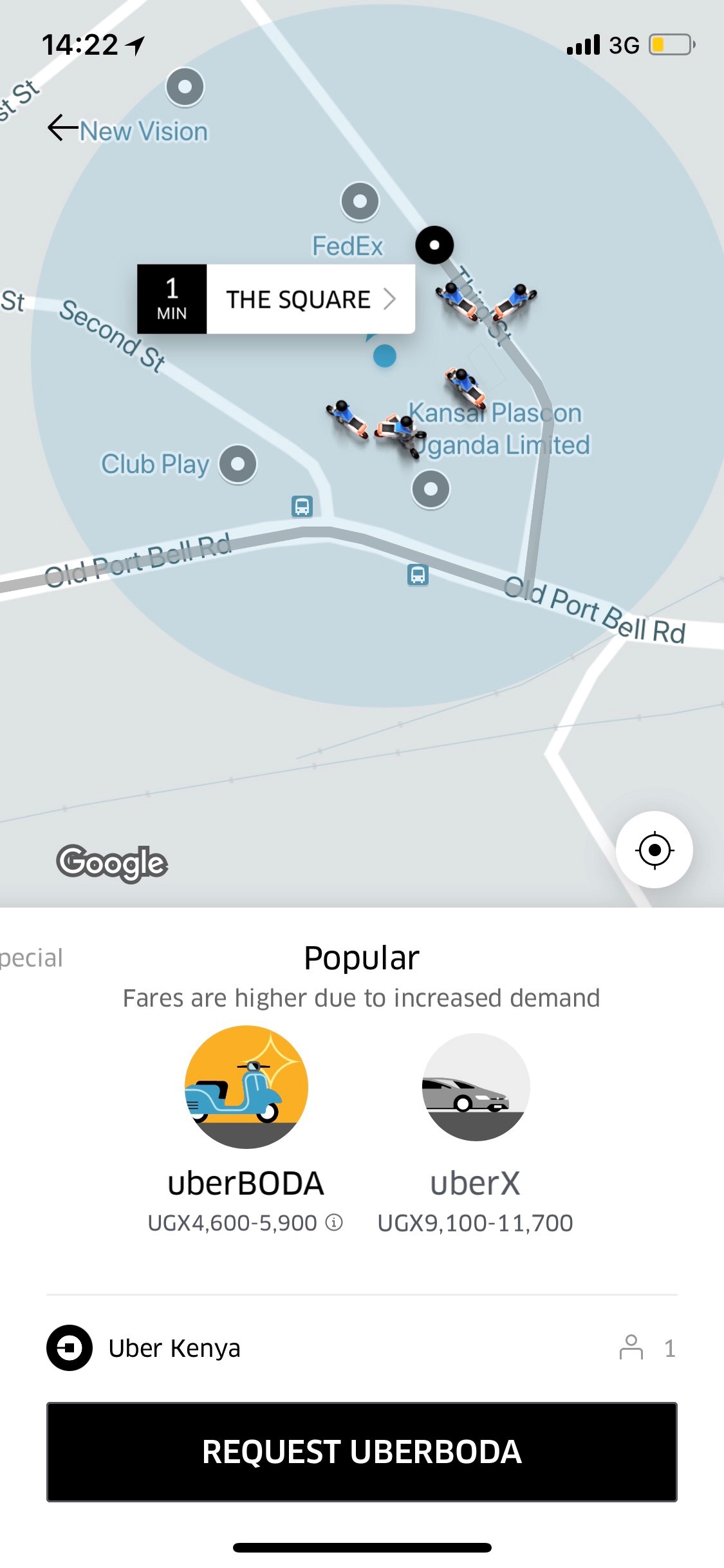
uberBoda

The prominence of motorcycle taxis in Uganda prompted Uber to launch uberBoda there, according to Africa GM Alon Lits. “We’re all about localization and boda moves Kampala,” he told TechCrunch on a call from Cape Town. “If we’re going to be a part of the mobility solution in Kampala, we can’t do that without having a boda product.”

Uber’s Uganda app will include an uberBoda request icon. uberBoda drivers must have proper motorcycle vehicle and taxi licenses to work with Uber, according to Lits. “In addition, we’re ensuring all drivers have two helmets and reflective jackets for their riders,” he said.

Uber expects uberBoda passenger costs to average roughly a dollar per fare. Lits estimates “there are nearly 2 million weekly boda trips happening in Kampala.” The uberBoda motorcycle service is starting with around 100 drivers.

As they gather research from early activity, both Taxify and Uber in Africa said they plan to look more deeply into motorcycle financing plans for drivers, expanded rider training, and ways to build more safety into the two-wheel taxi markets.

“By forcing Taxify boda boda riders to follow existing rules, like not riding more than two passengers at a time, it will rub off and have the kind of positive market disruption we want to see on the boda boda industry,” said Taxify’s Anoke.

“As we get more data as to drivers’ track records, that becomes a proxy for credit, which we’ll look to roll out to the boda industry,” said Uber’s Lits. As TechCrunch reported, Uber Africa experiments with many things the company doesn’t always do globally, such as cash payments and recently launching moto-rickshaw service in Tanzania.

Other players

Uber and Taxify aren’t the only companies to enter Africa’s motorcycle ride-hail market. Nigeria has startup Max.ng, which is actually more focused on last-mile delivery service.

And in Rwanda, where taxi-motos are highly used and tightly regulated, startup SafeMotos has been active since 2015. The company offers its app to drivers and passengers to pinpoint pickup spots, meter fares, and facilitate payments. SafeMotos also plans to expand all woman boda boda services and into Kinhasa DRC, co-founder Barrett Nash told TechCrunch recently in Kigali.

Rwanda also has Yego Moto, a Singapore based motorcycle ride-hail company. Yego Moto has 680 drivers and has logged 426,382 trips and 2.1 million kilometers on its Rwanda platform, according to a company spokesperson.

Market expansion

On Taxify’s plans to expand its boda boda service to other Taxify African cities and markets, “definitely, we plan to scale it out,” said company spokesperson Loreen Ajaimbo, though she wouldn’t name any specific countries at the moment.

Uber Africa’s Alon Lits said the company would look to expand uberBoda first in Uganda to Entebbe. He also mentioned Rwanda as a potential new market.

As for earning potential of East Africa’s boda bodas, Taxify’s Chisom Anoke referred to a recent study by the Motorcycle Assemblers Association of Kenya. It pegged that country’s 2017 two-wheel taxi revenues at $2.1 billion, surpassing the income of the Kenya’s largest telco, Safaricom.

Of course, disrupting that market may not be welcomed by everyone. Both Uber and Taxify’s moves into Africa’s four-wheel taxi spaces have brought protests by traditional drivers over the last several years. Time will tell how Kenya and Uganda’s non-digital boda boda pilots respond to their new ride-hail competition.

30 Mar 2018

Google will make real-time Final Four predictions this weekend, air them as halftime TV ads

Google wants to put its data science chops to the test – in real-time. This weekend, the company is going use data analytics techniques and machine learning during the Final Four in San Antonio to figure out what it thinks will happen next in the live games. And after doing so, it will hand off its predictions about the game’s second half to be aired as a halftime TV ad.

The company detailed its plans in a blog post this morning, explaining how the idea grew out of the existing relationship it had with the NCAA regarding statistical game and competition data analysis using Google’s cloud technology. Google then decided it wanted to challenge itself further to see what else it could do with NCAA data.

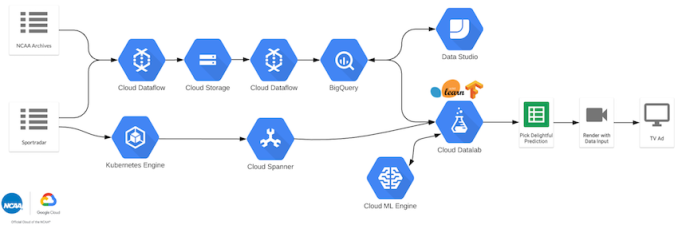
A team including data scientists, technicians, and basketball enthusiasts was assembled, and Google built a data processing workflow using Google Cloud Platform and technologies like BigQuery and Cloud Datalab. It was able to uncover all sorts of insights, like who blocked the most shots per minute or whether teams with animal mascots caused more upsets. And then Google decided it wanted to try to predict what happens during a live game.

This weekend, it will analyze the data from the first half of the Final Four games in real-time, and turn that prediction into a television ad in a matter of minutes.

The way this works is that Google Cloud team will be on site during the games, and will feed in the data from the first half into its workflow where it’s analyzed against NCAA historical data. When halftime begins, the team will crunch the data and come up with its predictions. The technical teams regarding its workflow have been shared here, on the Google Cloud Big Data and Machine Learning blog.

Before halftime ends, Google will hand off a newly created TV ad to CBS and Turner that will air right before the second half starts.

“This is likely the first time a company has used its own real-time predictive analytics to create ads during a live televised sporting event,” notes Google.

The experiment is a clever way to advertise Google Cloud and other technology, but it’s not the only tech company doing Final Four predictions.

All the virtual assistants are making their own predictions too, including Google’s own Google Assistant, Alexa, Cortana, and Siri. But their answers are sometimes more like editorialized opinions and not true data science.

You can keep track of Google’s NCAA experiment on the dedicated site, cloud.withgoogle.com/ncaa.

30 Mar 2018

Singapore says Uber-Grab deal may violate competition laws

Uber’s exit from Southeast Asia is under scrutiny from regulators in Singapore who believe that Grab’s purchase of the U.S. firm’s business in the region may violates competition laws.

Singapore-based Grab, Uber’s chief rival in the region, announced the acquisition of Uber’s Southeast Asian business on Monday. In return, Uber is taking 27.5 percent of the Grab business, which is valued at over $6 billion, in a move that appears to be a win for both parties.

Grab plans to shutter the Uber app in less than two weeks and migrate passengers and drivers to its services. It will also integrate Uber Eats into its nascent food delivery service.

The coming together has already concerned consumers, who believe that prices may rise without two companies competeting head-to-head, and now the Competition Commission of Singapore (CCS) has announced that it is looking into the deal.

The organization said it has “reasonable grounds” to suspect that the deal may fall foul of section 54 of Singapore’s Competition Act.

It added:

CCS is generally of the view that competition concerns are unlikely to arise in a merger situation unless:

The merged entity has/will have a market share of 40 percent or more; or
The merged entity has/will have a market share of between 20 percent to 40 percent and the post-merger combined market share of the three largest firms is 70 percent or more.

That might make the deal a little tricky to explain for Grab, which claims over 90 million downloads and more than five million drivers and agents for its transportation and fintech services.

In a first for Singapore, the CCS said it has proposed an Interim Measures Directions (IMD) that requires Grab to “maintain [its] pre-transaction independent pricing, pricing policies and product options.” The commission also directed Grab to not take confidential information from Uber nor lock Uber drivers into driving for Grab.

The commision defines the space not as ride-hailing — where Grab would appear to hold a significantly dominant position by acquiring Uber’s business — but instead as “chauffeured personal point-to-point transport passenger and booking services.”

In that respect, taxi companies in Singapore — which allow booking by SMS and phone call, and also offer ride-hailing apps in some cases — may be considered competition which might water down Grab’s marketshare. Likewise, Grab’s case may be helped by Singapore carpooling service Ryde’s plan to add private car services in an effort to fill some of the gap post-Uber.

Lim Kell Jay, head of Grab Singapore, argued in a statement that the deal with Uber allows consumers a choice against “the dominant taxi industry” and that Grab has already committed to freezing its prices. He added that Grab would work with the CCS and other authorities over the deal as required.

Five years ago, consumers were not able to flag or book taxis easily as supply was a problem. Grab innovated to improve the point-to-point transport within the overall transportation industry, particularly the availability and quality of both taxi and car services. Improving services for commuters and drivers will always be our priority, and we urge the government to allow us to freely compete and complement the dominant taxi business. To address consumer concerns, we have voluntarily committed to maintaining our fare structure and will not increase base fares. This is a commitment we are prepared to give the CCS, and to the public. We have and will continue to work with the CCS, LTA and other relevant authorities, and will propose measures to reassure the CCS, our driver-partners and consumers.

Grab has conducted its comprehensive due diligence and legal analysis with its advisers before entering into and concluding the transaction. We had engaged with the CCS prior to signing and continue to do so. Even though not required by the law, we have informed the CCS that we are making a voluntary notification no later than 16 April 2018 to continue to cooperate and engage with the CCS.

The CCS said it has the power to unwound or modify a deal if it sees that its completion will substantially weaken competition, but it is unclear what that might mean for a regional business like Grab.

Grab and Uber operate in eight markets in Southeast Asia, but Singapore — which is where Grab is headquartered and registered as a business — is the first country where a competitive agency is pouring over the deal.

30 Mar 2018

SpaceX successfully launches Iridium-5 Falcon 9 mission

SpaceX has successfully launched its Iridium -5 mission, which carries 10 satellites to add to Iridium’s NEXT global communications constellation. This is the fifth set of 10, out of a total of 75 that SpaceX is launching for client Iridium, and today’s launch used a first stage Falcon 9 booster originally employed last October for the third Iridium NEXT satellite launch.

The launch included reuse of a flight proven rocket, but it did not include a recovery attempt for the first stage booster this time around. SpaceX is attempting to recover one half of the fairing used during the launch, which is the protective metal shielding that covers the cargo as the rocket blasts through the atmosphere en route to space. The fairing alone is worth around $6 million, and SpaceX CEO Elon Musk has indicated that it would be relatively easy to refurbish this part for repeat flight, provided their recovery plan works.

We’ll update this post regarding that part of the mission’s progress as info becomes available.

Meanwhile, the 10 satellites were deployed as planned to their target low-Earth orbit, and will join the NEXT constellation, providing commercial communications capabilities to Iridium clients on the ground.

This is Spacex’s fifth Falcon 9 launch of 2018, and its sixth launch of the year overall when you include the Falcon Heavy launch which took place in February. That was a significant milestone for the company, and additional Falcon Heavy launches are planned for later this year, as well as another Falcon 9 launch on April 2: The twelfth commercial resupply mission SpaceX will fly for the International Space Station.

30 Mar 2018

MailChimp clarifies its anti-ICO policy

Nobody wants to deal with ICOs. MailChimp, the popular mass mailing platform, has officially banned users who want to send emails about ICOs/token sales in its terms of use. They write in their legal policies page:

Also, we cannot allow businesses involved in any aspect of the sale, transaction, exchange, storage, marketing or production of cryptocurrencies, virtual currencies, and any digital assets related to an Initial Coin Offering, to use MailChimp to facilitate or support any of those activities.

However, in a Tweet, the company wrote that all cryptocurrency discussion was verboten. I’ve asked them to clarify their position and I will update it when I hear back.

Ultimately the big communications companies – Facebook, Twitter, and the like – are making these decisions in the dark. There is little SEC guidance on token sale marketing in specific but, given the scammy nature of most ICO marketing, they figure they’ll play it safe and ban it outright. This should a boon for services like Substack and apps like Sendy that strip away some of the MailChimp frills but are fairly agnostic when it comes to what you can post.

Ultimately this means two things will happen: first, legitimate, Wall Street-based token entities will begin using more expensive and vetted services and the ICO scammers will keep spamming us with ladies in bikinis.

30 Mar 2018

The SteelSeries Arctis Pro lineup is a new high-water mark in comfort and quality

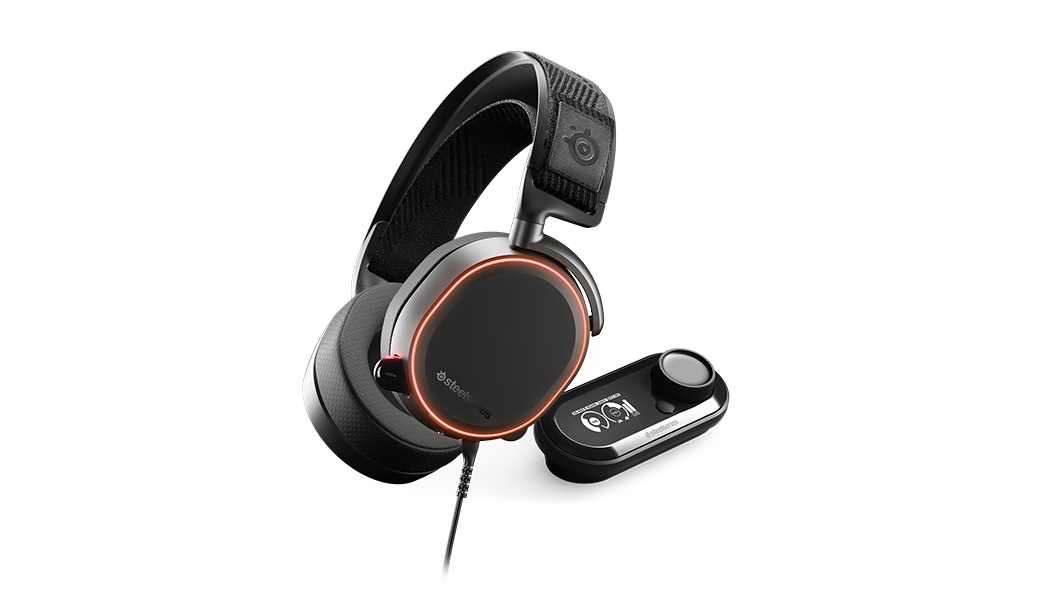
SteelSeries has two new Arctis Pro gaming headsets out, and they pack a lot of tech and versatility into a comfortable, visually attractive package. The SteelSeries Arctis Pro Wireless and Arctis Pro + GameDAC are both incredibly capable headsets that deliver terrific sound, and depending on your system needs, should probably be your first choice when looking for new gaming audio gear.

The Arctis Pro Wireless is, true to its name, wire-free, but also promises lossless 2.4GHz transmission to ensure lag-free audio, too – a must for competitive gaming. The combination of the wireless functionality, the long-wearing comfort of the suspension system headband and the included transmitter base that can hold and charge a swappable battery as well as display all key information on an OLED readout makes this a standout choice.

There are some limitations, however – compatibility is limited to either PS4 or PC for this one, for instance. The wired Arctis Pro (without GameDAC) is compatible with the Xbox One, but both the wireless version and the version that connected to the wired DAC will only work with either Sony’s latest consoles or with a Windows or Mac-based gaming PC.

I’m a bit saddened by that since I’m a big fan of PUBG on Xbox, and also lately of Sea of Thieves, but I also do regularly play PS4 and PC games, and the Arctis Pro Wireless is my weapon of choice now when using either, either for multiplayer or single player games. The wearability and sound quality (which includes DTS X 7.1 surround on PC) is so good that I’ll often opt to use them in place of my actual 5.1 physical surround system, even when I don’t need to chat with anyone.

Other options, like the Turtle Beach Elite Pro Tournament Headset, offer different advantages including more easily accessible fine-tune control over soundscape, balance of chat and game audio and other features, but the SteelSeries offers a less complicated out-of-box experience, and better all-day wearability thanks to taking cues from athletic wear for its materials and design.

The GameDAC option additionally has Hi-Res Audio certificate, which is good if you’re looking to stream FLAC files or high-res audio from services like Tidal. The DAC itself also makes all audio sound better overall, and gives you more equalization options from the physical controller .

The main thing to consider with the Arctis Pro + DAC ($249.99) and the Arctis Pro Wireless ($329.99) is the cost. They’re both quite expensive relative to the overall SteelSeries lineup and those of competitors, too. But in this case, cost really is reflective of quality – channel separation and surround virtualization is excellent on these headsets, and the mic sounds great to other players I talked to as well. Plus, the Pro Wireless can connect to both Bluetooth and the 2.4GHz transmitter simultaneously, so you can use it with your phone as well as your console, and the retractable mic keeps things looking fairly stylish, too.

30 Mar 2018

Nift raises $16.5M for a new kind of gift card

Nift, which is giving local businesses a new way to promote themselves, has raised $16.5 million in Series A funding.

The businesses that work with Nift (the name is short for “neighborhood gift”) can give special gift cards to their best customers. Those customers enter their codes on the Nift website, answer a few questions and can then choose from two free gifts from other local businesses.

Founder and CEO Elery Pfeffer suggested that this can help smaller businesses stay competitive against Amazon, while avoiding some of the pitfalls of promoting themselves through discount sites like Groupon. For one thing, Pfeffer argued that the person receiving the Nift is “somebody else’s best customer — this is not a bargain hunter motivated by a deal.”

“They’re getting a gift they weren’t expecting,” he said. “We make the selection for them, so there’s no self-selecting bargain hunting going on. That’s what makes the whole thing work.”

The idea is that businesses get new customers in exchange for promoting other merchants. It’s up to each merchant to determine what makes someone their best customer and how many Nift cards they want to give out, but Pfeffer (a data scientist who previously founded influencer marketing company Pursway) said his team has built sophisticated tools to find “the perfect match” between customers and gifts.

This approach has already been pretty successful in Boston, where 250,000 customers have supposedly activated more than 500,000 Nift cards. Pfeffer said 86 percent of those customers end up receiving a gift from a business that they’ve either never visited or haven’t visited in the past year. Afterwards, 88 percent of customers said they’re interested in visiting the business again, and a month later, 37 percent have actually done so.

The new funding comes from Spark Capital, Foundry Group and Accomplice and will fuel the startup’s plans to expand to five new markets (in addition to Boston, it’s currently available in Providence and Washington, D.C.).

“Retail has changed dramatically with the widespread adoption of e-commerce, but something has been missing for small businesses at the local level,” said Foundry Group’s Seth Levine in the funding announcement. “Nift is providing a way for merchants to deliver the experiences customers want, while fostering a healthy ecosystem. The success of the platform illustrates the impact it’s already having in strengthening these businesses and revitalizing communities.”

30 Mar 2018

Walmart may be acquiring Humana, says report

Walmart is in early stage talks to acquire health insurer Humana, according to a report from The Wall Street Journal. Terms of the deal are unknown, but Humana is valued at $37 billion and reported net income of $2.4 billion on $53.8 billion in revenues during 2017. The deal would allow the retailer to strengthen its relationship with a key demographic, seniors, the report explained, and would complement its existing pharmacy and clinic businesses.

It’s not clear that there will be an acquisition, or even if regulators would allow it, at this point.

But if the deal were to happen, it would be one of many mergers and acquisitions taking place in the industry in recent months, the report noted. For example, CVS Health agreed to acquire Humana rival Aetna for $69 billion in December; Cigna agreed to buy Express Scripts for $54 billion in March.

Related to this, Walmart’s nemesis Amazon has been said to be considering an entry into the pharmacy market itself, which could cut into Walmart’s sizable pharmacy business. The retailer has pharmacies in its 4,700 some stores and in many of its Sam’s Club stores. It also said in January it would partner with JPMorgan and Berkshire to tackle rising healthcare costs by forming a company to provide healthcare for their thousands of U.S. workers.

Humana is the second-largest provider of Medicare Advantage plans, the private insurance plans offered through Medicare. That would allow Walmart to stay connected to its senior customers, in light of the increased competition. The deal would also accompany other moves Walmart is making in healthcare, including its plans to offer lab-testing in some stores where it already has primary-care clinics – all part of its larger plan to be a one-stop shop for customers’ healthcare needs.

The deal would be Walmart’s largest by a wide margin if it went through. To date the retailer’s other biggest deals were the 1999 acquisition of Asda Group for $10.8 billion and the $3.3 billion acquisition of Jet.com in 2016.