29 Mar 2018

Wild Type raises $3.5M to reinvent meat for the 21st century

Food security is one of the grand problems facing the planet this century. The UN has estimated that food supplies need to increase by 50 percent to cover the population growth expected over the coming decades, while climate change is expected to cut crop yields by a quarter. Nearly a billion people today lack sufficient food.

Those are raw statistics, but Justin Kolbeck saw them viscerally personified every day as a U.S. diplomat in Afghanistan, where food security is a perennial concern. “…Things were so bad that people were smuggling meat over the Pakistan border,” he said, despite the incredible danger along that heavily guarded dividing line. Kolbeck eventually returned to the U.S., where he met Arye Elfenbein, who was studying for an MD/PhD in cardiology.

Elfenbein’s research looked at how the heart could regrow functional muscle tissue lost in a heart attack. As he worked on his residency though, he realized that some of the fields he was working on, including tissue engineering, stem cell biology, and cell development could intersect and “not just solve heart problems but could feed the world.”

Together, the two co-founded Wild Type, which netted a $3.5 million seed round led by Spark Capital, with participation from Root Ventures, Mission Bay Capital, and a group of angels. The name comes from the wild type term in biology, which means that something exists naturally, but also has the connotation of animals roaming outside.

Kolbeck and Elfenbein’s mission is to develop a platform and set of technologies that would allow any meat to be cultured in the lab using well-defined procedures. The two are stealthy around their technology, which is still in development. But the essential concept is to multiply basic animal cells in the lab and effectively culture meat. This means that the meat is fundamentally “meat,” and not a meat substitute using plant cells like Impossible Foods’ Impossible Burger.

Rather than starting from scratch for every type of protein, the technology could apply across all kinds of different animal species using the evolutionary heritage common to all of them. “We didn’t want to build a tool that could just be used for beef, or a specific type of chicken, or a specific fish,” Kolbeck explained.

The synergy of different scientific disciplines has been enticing to scientists according to Elfenbein. “Scientists in general and who we spoke to about this idea were really fascinated that emerging technologies could be applied to something so different from the biomedical sciences,” he said.

Although the food is being developed in the lab, it is being tested regularly by chefs. “We wanted to make sure we were building something that people would love, so from day one we reached out to friends in the food business,” Kolbeck said. Wild Type isn’t just focused on the taste and texture of the meat, but is also investigating whether it could grow meat in a certain way that would make it easier to use in a kitchen.

Wild Type’s first meat is salmon. Phase one is to develop a minced salmon meat that could be used in say a spicy salmon sushi roll, where the meat is mixed with sauce and smaller quantities are needed. From there, the company is targeting lox for bagels, and eventually, salmon filets.

Spark Capital investor John Melas-Kyriazi led the round and will be joining the company’s board. “This is an area we have been interested in for a long time at Spark: What is the protein source that is going to feed the world over the next 50 to 100 years,” he asked. He loved Wild Type’s product focus, of “actually creating a product that people want that stands for delicious food and not for something else.” He invested after trying a helping of Wild Type’s food during due diligence.

Wild Type hopes to use the seed round to invest in scaling up its cellular growth infrastructure, lowering the cost of its meat while also increasing its manufacturing capability. The company has a team of five today.

29 Mar 2018

Amazon may launch a bank account aimed at teens, says report

Amazon has been in discussions with banks to create a product aimed at teens and other younger users who don’t have their own credit cards, or an interest in applying for one, according to a new report from Bloomberg. The company reportedly has held early stage talks with banks including JP Morgan Chase and Capital One, with the goal of creating some sort of checking account-type service that would make it easier for Gen Z customers to shop Amazon’s site.

This is not the first time Amazon has been said to be talking to banks about establishing some sort of banking product of its own.

Earlier this month, The WSJ reported Amazon was talking to big banks, including JPMorgan Chase, about building a checking account product. Bloomberg essentially confirms this earlier reporting, with the additional emphasis on the product’s youth appeal, and why it matters.

Most notably, it has to do with the younger generation’s approach to credit – or rather, how they’re not all that interested in obtaining a credit card. In fact, those ages 18 to 24 prefer using debit to credit, noted Bloomberg.

In addition, many young users don’t qualify for credit, and younger teenagers couldn’t even apply. Teens under 18 also can’t set up their own bank accounts, without parents’ consent.

Amazon had previously addressed the teen market with its Amazon Cash cards that let anyone add cash to an Amazon account by purchasing a card at a local retailer and giving the cashier the amount they want loaded into their Amazon account.

The company also last year launched a way for teens to shop the site independently of their parents – creating their own lists, and making purchases via parents’ accounts, while abiding by pre-set spending limits parents set or by getting purchases approved after parents’ review the requests.

But more recently, a number of alternative banking products have arrived for teenaged users, like Current, which ties into a chore-and-allowance system parents set up in an app, and Greenlight, whose “kids” debit card works both inside and outside the U.S. There’s also a host of millennial-flavored investing products on the market that help younger users learn to save, tuck away their digital loose change by rounding up purchases, or teach users how to invest.

Amazon may see the potential then, in going a similar route. Meanwhile, the banks may be interested in working with the retailer, given their need to find new ways to appeal to millennial shoppers wary of signing up for credit cards.

Bloomberg noted Amazon’s banking product could also entice users by reducing or eliminating traditional fees, or by taking advantage of Alexa in some fashion.

We’ve asked Amazon if it’s commenting on the report, and will update if the company has more to share.

29 Mar 2018

TuneIn launches a discounted audio subscription for Alexa owners and Prime members

TuneIn, the free radio service that allows you to stream news, sports, music and podcasts, is today rolling out a new subscription offering for Alexa customers in the U.S. TuneIn Live, as the premium live audio subscription is called, will offer play-by-play calls from thousands of live sporting events, plus access to premium news stations, talk shows and other content. This is the first time that TuneIn premium content has been made available over a voice platform, like Alexa, the company notes. It’s also available at a discount for Alexa owners and Prime members.

The subscription content comes from TuneIn partners like MLB, NBA, NHL, and the NFL, as well as news stations like CNBC, MSNBC, Al Jazeera, Newsy, and others.

The broader TuneIn service also pulls in content from over 120,000 owned and operated as well as partner radio stations, and 5.7 million on-demand programs. TuneIn is the audio streaming partner for daily fantasy sports providers like FanDuel and DraftKings, too.

The company’s free product, which has been accessible on Alexa, has greatly benefited from consumer adoption of smart speakers, like Amazon Echo .

“TuneIn has been an integration partner for Alexa since 2014, and with the continued growth in smart speaker adoption, we’ve certainly seen strong growth in both users, and overall listening hours,” Tony Archibong, VP of Distribution and Business Development at TuneIn, tells TechCrunch. “Across our entire portfolio of speaker integrations – including Alexa, Sonos, Bose, etc. – we have seen over 1 billion listening hours streamed in the past 12 months alone.”

The company now claims 75 million monthly active users – up from 60 million in 2015 – and is supported across over 200 connected devices including via platforms like Sonos, Cortana, Tesla, Bose, Roku and Xbox One, as well as Echo speakers.

Before today, TuneIn sold Premium subscriptions that cost $9.99 per month or $99.99 per year. But the company has teamed up with Amazon on its Alexa Premium subscription offering.

Instead of $9.99 per month, Amazon Prime members can buy a subscription for $2.99 per month. Non-Amazon Prime members with Alexa can instead subscribe for $3.99 per month.

The lower pricing is due to the fact that the TuneIn Live subscription for Alexa only works on Alexa-enabled devices, like Echo, Echo Spot, Echo Dot, and others.

It’s unclear if there’s a revenue share here or if Amazon is helping to subsidize the cost of the discounted subscriptions, and the companies won’t discuss deal terms.

But a discounted Alexa subscription is something Amazon is familiar with, having already launched a low-cost music subscription for Echo owners itself. The Amazon Music Unlimited Echo Plan lets Amazon Echo owners access all the benefits from Amazon’s on-demand music service on a single Echo device for $3.99 per month, instead of $7.99 per month for Prime members, or $9.99 per month for non-Prime members.

For TuneIn, a discounted Alexa subscription could allow the company to further take advantage of the demand for audio programming in the Echo device owner market. And for Amazon, it makes sense to work with TuneIn because it gives Echo owners more content options, while also providing Prime members with another perk.

“TuneIn Live brings a delightful experience to Alexa customers with the ability to stream live audio of virtually any sporting event or news broadcast throughout your home,” said Rob Pulciani, Director, Amazon Alexa, in a statement. “Just ask Alexa to open the TuneIn Live skill and play your favorite team’s game – even synchronize playback across multiple Echo devices around the home so the whole family can hear as they move around the house.”

The skill can be enabled on Alexa device with the command, “Alexa, open TuneIn Live.”

TuneIn Live is available as of today, Major League Baseball’s 2018 Opening Day.


29 Mar 2018

Terry Myerson, EVP of Windows and Devices, is leaving Microsoft, prompting a big AI, Azure and devices reorganization

Big changes are afoot at Microsoft . The company has announced that Terry Myerson, the longtime Microsoftie who headed up the company’s Windows and Devices businesses, is leaving the company, and along with that the company changing up its executive management. The full memos from Satya Nadella and Myerson are below, but here are the basics:

Terry Myerson is out but is staying on for some months in a transition phase. It’s been in the works for months, the company said.

Rajesh Jha will lead Experiences & Devices. (Note that Windows is being dropped from the title.) It will include Windows, Office, third-party applications and devices focused on a more integrated Microsoft 365.

Scott Guthrie will lead Cloud + AI Platform. This is separate from R&D and will be about applying AI in the business. It will include distributed computing (cloud and edge) and AI covering infrastructure, runtimes, frameworks, tools and higher-level services around perception, knowledge and cognition.

Jason Zander is now EVP of Azure.

Harry Shum stays on in his role leading AI + Research.

The moves underscore how Microsoft is pushing itself hard to refresh its strategy to align with the next phase of how the tech world is evolving. Myerson has been with the company for more than 20 years, and has been running the Windows business since 2013, so this is a significant shift for the company and a signal of how that shift is not just happening in its products, but among its people, too.

To be clear, Microsoft remains one of the world’s tech leviathans, with Windows still the world’s most ubiquitous desktop operating system. But resting on your laurels cannot happen in the tech world (just ask Microsoft’s disastrous former partner, Nokia).

Microsoft missed the boat in mobile — an area now dominated by Google and Apple both in terms of devices and controlling the platforms that monetise mobile beyond devices. It’s been doubling down on its enterprises business and has — from what I’ve heard — been surprisingly good at delivering a new and cohesive set of services by way of Office 365.

Now the big frontiers are areas like AI and cloud services. In both it’s it’s fighting cheek by jowl with the likes of Amazon, Google and many more. In cloud, its big challenge now is to continue to make sure that its software development — specifically by way of its unified, cloud-based Office 365 services — aligns with its cloud ambitions and makes the whole package more compelling for end users. In AI, the game very much remains open: by all accounts AI-based services will be at the core of how all computing develops going forward, and considering that every problem today is a tech problem, that’s a big playing field to cover.

Here is Satya Nadella’s email to the company:

From: Satya Nadella
Sent: Thursday, March 29, 2018 7:29 AM
To: Microsoft – All Employees; All MS Store Employees FTE <davidpor_org_fte@microsoft.com>
Subject: Embracing our future: Intelligent Cloud and Intelligent Edge

Team,

Today, I’m announcing the formation of two new engineering teams to accelerate our innovation and better serve the needs of our customers and partners long into the future.

Over the past year, we have shared our vision for how the intelligent cloud and intelligent edge will shape the next phase of innovation. First, computing is more powerful and ubiquitous from the cloud to the edge. Second, AI capabilities are rapidly advancing across perception and cognition fueled by data and knowledge of the world. Third, physical and virtual worlds are coming together to create richer experiences that understand the context surrounding people, the things they use, the places they go, and their activities and relationships.

These technological changes represent a tremendous opportunity for our customers, our partners — everyone. With all this new technology and opportunity comes a responsibility to ensure technology’s benefits reach people more broadly across society. It also requires that the technologies we create are trusted by the individuals and organizations that use them.

Today’s announcement enables us to step up to this opportunity and responsibility across all our Solution Areas.

With change comes transition, and one transition we have been planning for is for Terry Myerson to pursue his next chapter outside Microsoft. Terry has been instrumental in helping me arrive at this new organizational structure, and I deeply appreciate his leadership and insight as we’ve worked through the opportunity that lies ahead. Over the past several years, Terry and the WDG team transformed Windows to create a secure, always up-to-date, modern OS. His strong contributions to Microsoft over 21 years from leading Exchange to leading Windows 10 leave a real legacy. I want to thank Terry for his leadership on my team and across Microsoft. He will work with me on the transition over the coming months.

Moving forward, Rajesh Jha will expand his existing responsibilities to lead a new team focused on Experiences & Devices. The purpose of this team is to instill a unifying product ethos across our end-user experiences and devices. Computing experiences are evolving to include multiple senses and are no longer bound to one device at a time but increasingly spanning many as we move from home to work and on the go. These modern needs, habits and expectations of our customers are motivating us to bring Windows, Office, and third-party applications and devices into a more cohesive Microsoft 365 experience. To further this vision, we are making the following leadership changes:

  • Devices: Panos Panay will now serve as our Chief Product Officer and will lead our devices vision and further our product ethos across hardware and software boundaries for our first-party devices, while creating new categories and opportunities for the entire ecosystem. He will be the key leader ensuring end-to-end devices business execution excellence.
  • Windows: Joe Belfiore will continue leading our Windows experiences and will drive Windows innovation in partnership with the PC and device ecosystem. The future of Windows is bright as we continue to innovate across new scenarios and device form factors, and more deeply connect to our Microsoft 365 offerings. Joe will share more about the Windows roadmap at Build.
  • New Experiences and Technology: Kudo Tsunoda will continue to lead this team to define how we engage users with high-value experiences to help them achieve more.
  • Enterprise Mobility and Management: Brad Anderson will continue to lead our Windows Enterprise deployment and management efforts with even tighter alignment across Microsoft 365 and will partner closely with the EMS teams within Cloud + AI Platform.

Second, Scott Guthrie will expand his existing responsibilities to lead a new team focused on Cloud + AI Platform. The purpose of this team is to drive platform coherence and compelling value across all layers of the tech stack starting with the distributed computing fabric (cloud and edge) to AI (infrastructure, runtimes, frameworks, tools and higher-level services around perception, knowledge and cognition). To facilitate these new capabilities, we are making the following leadership changes:

  • Azure: Jason Zander is being promoted to executive vice president, Azure, and will lead this team. The Windows platform team led by Harv Bhela, Henry Sanders and Michael Fortin will join Jason’s team. Windows platform is already a core part of Azure across both the cloud and edge, and this shift will enable us to accelerate our efforts to build a unified distributed computing infrastructure and application model. Roanne Sones will continue to lead our technical engagement with OEMs, ODMs and silicon vendors, and her team will also join Jason’s team.
  • Business AI: The Customer Service, Marketing and Sales Insights teams, previously led by Gurdeep Singh Pall, will join James Phillips’ Business Applications Group. I am thankful for Gurdeep’s leadership in building these new AI solutions that are going to help differentiate Microsoft in this area. This is a notable example of taking research breakthroughs to start new product efforts grounded in customer needs and then mainstreaming them.
  • Universal Store and Commerce Platform: Eric Lockard and his team will also join the Cloud + AI Platform team to both help with our own digital transformation and add new capabilities to our business application efforts.
  • AI Perception & Mixed Reality (MR): Alex Kipman will lead this new team, which brings together all our speech, vision, MR and additional perception capabilities into one team. This team will continue to build first-party products and the core building block cloud services for third parties on Azure. XD Huang, Yu-Ting Kuo and their teams will join this group, as well as Gurdeep’s Ambient Intelligence team. Alex and team will take guidance on all AI-related areas from Harry Shum and work very closely with AI + Research (AI+R).
  • AI Cognitive Services & Platform: Eric Boyd will lead this new team and drive our AI Platform, AI Fundamentals, Azure ML, AI Tools and Cognitive Services. Joseph Sirosh and team will join this new group. Eric and team will take guidance on all AI-related areas from Harry Shum and work very closely with AI+R.

Harry Shum will continue to lead our third engineering team, AI + Research, which is instrumental in the key technology advances required across all our product teams. When we established AI+R nearly two years ago, our primary goal was to accelerate the adoption of AI innovations from research into product, and the changes we are making today reflect our strong progress. In fact, just yesterday I spent time at TechFest and came away inspired by all the innovations and most importantly how quickly they were making their way into our products. We will continue to drive investments in AI+R across research and AI breakthroughs that are key to our long-term success.

As we make technological progress we need to ensure that we are doing so responsibly. To this end, Harry and Brad Smith have established Microsoft’s AI and Ethics in Engineering and Research (AETHER) Committee, bringing together senior leaders from across the company to focus on proactive formulation of internal policies and how to respond to specific issues in a responsible way. AETHER will ensure our AI platform and experience efforts are deeply grounded within Microsoft’s core values and principles and benefit the broader society. Among other steps, we are investing in strategies and tools for detecting and addressing bias in AI systems and implementing new requirements established by the GDPR. While there is great opportunity, ensuring we always act responsibly for our customers and partners will continue to be a hallmark of our work.

To truly get the best impact from our efforts, we will have to push ourselves to transcend Conway’s law. Having a deep sense of customers’ unmet and unarticulated needs must drive our innovation. We can’t let any organizational boundaries get in the way of innovation for our customers. This is why a growth mindset culture matters. Each one of us needs to push on what technology can do for people and for our world. It will take courage to keep learning and growing together — encouraging one another’s individual strengths, building more diversity and inclusion across our teams, and collaborating as One Microsoft. It’s amazing what we have been able to accomplish together, and yet I still believe we are in the very early days of what is possible.

We’ll talk more about these changes at the Q&A next week and the important work ahead.

Satya

And here is Terry Myerson’s email:

Team,

It is an emotional day for me as I look toward starting my next chapter outside of Microsoft in a few months. We’ve been discussing this for some time, but today it becomes real.

Satya’s leadership and insight in defining a Microsoft 365 experience, built on top of an intelligent edge/intelligent cloud platform is inspiring. I believe in it, and that these changes are great for Microsoft. Change can be invigorating for us all and I’m grateful I had the opportunity to work with Satya on helping define this new structure. I will be around as we work through this transition, and then I will continue to root on Satya and this team every day.

Microsoft has been my work, my team, and my purpose for 21 years. Over the years I have worked with so many of you to take on big challenges and serve our customers. I’ve learned so much. We’ve accomplished so much together. And I have had so much fun. Your passion, commitment, and sheer brilliance has kept me inspired. You have taught me new ways of looking at the world. You made me a better leader. And together, we have delivered products that positively changed the way people work and live. I am grateful for each of you.

Most recently, with Windows 10 we set out to restore the trust of our consumer and business users and set Windows up to be a key part of the new Microsoft. With us now approaching 700M active Windows 10 users, commercial usage growing 84% YOY, Xbox One running a Windows 10 core, Surface innovation highlighting the Microsoft 365 experience, HoloLens bringing breakthroughs in computer vision, a universal store enabling GamePass, Azure reserved instances, and Office distribution, and a revitalized partner ecosystem – we’ve made incredible progress, and set the foundation for a new chapter to begin.

But it’s time for me to take a break, and then look forward to my own next chapter. I’m excited to see what’s next professionally. In the meantime, I can’t wait to spend quality time with my family and pursue a few big life goals.

While today I have many emotions, I’m mostly filled with gratitude and optimism – gratitude for the experiences I have had and optimism for the future ahead.

Sincerely, thank you for all the incredible experiences we’ve had together.

29 Mar 2018

Pinterest is adding a new tab focused on your followers

As Pinterest tries to double down on becoming as sticky as possible for users, it’s going to be making a pretty significant design change by adding a tab focused on who a user is following that will exist in addition to the basic discovery feed.

The tab will fall on the bottom of the app’s display, which means that as far as changes go, it’s going to be a sweeping one for users as it will be persistent across the experience. The typical Pinterest experience is geared around simplicity, showing users recommendations from the get-go based on a variety of tools built to divine what your interests are based on the content you peruse and the people you follow. Pinterest has billed itself as a visual discovery engine, but the addition of a button — and a new feed — throughout the app centered around following is a bit of a divergence away from solely focusing on algorithmic discovery.

It also comes at a time when there’s an increasing focus on algorithmic feeds on platforms like Instagram and Twitter. The new feed enables users to focus specifically on who they are following, which gives them a more narrow view of the content that’s available on Pinterest. But by doing that, Pinterest may indeed be able to capitalize on another mode of user behavior — the kind of intent-driven periodic check-in activity you might find on Instagram — that it could add to the list of behaviors it hopes to tap in order to get people to come to Pinterest.

That slice might fall between the more general clicking around behavior and actually searching for products, but filling each of those gaps is what is going to keep Pinterest engaging and its users interested in coming back. It’s also something that will help the app become more differentiated beyond apps like Instagram or Snap, all of which are pitching marketers that they’re able to find different parts of a user’s buying cycle to advertise against. Pinterest’s pitch, in particular, is that it can catch them at all parts of the cycle. Curating a feed is a very Instagram-y and Twitter-y behavior which is already thoroughly proved out, so it makes sense for Pinterest to see if it works in the context of showing products and ideas.

In addition to narrowing that feed, Pinterest’s rollout across its platforms comes at an interesting time as Facebook is finding itself under fire for a myriad of privacy issues. Pinterest — for the most part — seems to be relatively benign in its attempts to figure out the best content to show you. That’s partly because of the way Pinterest is built: it’s centered around products already (most of the content is from businesses) and designed to help you make a more informed decision on some life event, whether that’s what to wear tomorrow or what to do when planning a party.

It’s a change that might seem small, but it is indeed a sweeping one, and these design decisions are often not taken lightly. There are, for sure, elements of Pinterest that are pretty confusing. Looking at a pin someone sent you is around 3 or 4 screens deep in your notifications, and there’s always going to be room to collapse the number of taps it takes in order to smooth out the user experience. Pinterest said that push-and-pull in part came from people wanting both options of looking at just who they’re following, in addition to the general discovery feed.

29 Mar 2018

France wants to become an artificial intelligence hub

Emmanuel Macron and his government are launching a big initiative around artificial intelligence today. They want to turn France into one of the leading countries when it comes to artificial intelligence.

“[Artificial intelligence] is a technological, economical, social and obviously ethical revolution,” Macron said in a speech. “This revolution won’t happen in 50 or 60 years, it’s happening right now. There are new opportunities and we can choose to follow some innovations or not.”

Some of the best mathematics and engineering schools are in France, and some of the best data scientists and AI researchers come from France. Many of them now work in California or London for Facebook, Deepmind, etc. And the French government wants to capitalize on that soft power to make an AI push.

And yet, how do you attract engineers and scientists? France’s answer is quite complicated because the government doesn’t want to inject a ton of public money and call it a day. It’s all about creating an AI ecosystem with strong pillars.

France’s AI strategy

First, many private companies have opened or plan to open AI research centers in France. Facebook and Google already work with hundreds of researchers in Paris. Today, Samsung, Fujitsu, DeepMind, IBM and Microsoft all announced plans to open offices in France to focus on AI research.

This represents tens of millions of dollars in investments and hundreds of employees. “Everybody is saying that Silicon Valley is overflowing right now,” a source close to the French President told me. That’s why big tech companies need to find talent outside of the U.S.

Foreign companies creating hundreds of jobs isn’t going to foster public research and European tech giants though — these companies are just tapping the smartest brains they can find. That’s why the French government wants to make it easier to work on fundamental research papers when you work for a private company.

The INRIA is going to create a national AI research program with four or five partners. The goal is quite simple — Macron said that there should be twice as many people studying and researching AI projects in France. Researchers will also be able to access and use some cloud computing capacities for their work.

It’s also going to get easier if you want to create a startup based on your research work or if you want to work for a private company during your PhD.

Second, France is going to set some new boundaries when it comes to data. French administrations are going to share new data sets so that anyone can build AI services using those data sets.

When it comes to health data, it looks like France wants to avoid another NHS/DeepMind scandal. While multiple French governments have worked on some kind of health data hub, Macron announced that this time it’s going to happen for real. The INDS is going to make sure that services and public institutions respect your privacy and grant authorizations on a case-by-case basis.

Third, when it comes to regulation, companies will be able to experiment in multiple industries. And it starts with autonomous vehicles. Companies will be able to test level 4 self-driving cars in 2019.

Overall, France is going to invest $1.85 billion (€1.5 billion) in AI projects, from public research to startup investments. Last year, Macron announced that there would be a new $11.2 billion (€10 billion) public fund managed by Bpifrance. Macron said today that AI startups should be the first priority of this new fund.

Making AI as neutral as possible

Arguably, the most interesting part of Macron’s speech was about the moral impact of artificial intelligence. As algorithms become more prominent, there’s a risk that they become black boxes that decide for you.

The French administration already has to share all its algorithms and data that they use following Axelle Lemaire’s law. But that’s still not the case for some touchy subjects. Macron said it’s still a work in progress.

Research projects or companies financed with public money will also have to share everything — this could impact public infrastructure companies for instance.

But it’s more complicated when you’re talking about private companies. Macron said GDPR was a step in the right direction. And now, he wants to go further.

He doesn’t have any practical suggestion for now, but he said that there should be an international certification authority. For instance, this authority could make sure that there’s no bias in training data sets. I don’t think Facebook or Google would enjoy this new regulation.

Finally, you introduce a bias if your staff is not diverse enough. That’s why schools and universities should make sure that they train a diverse group of people.

Not the first AI push

As Next INpact pointed out, there have been multiple reports on artificial intelligence over the past few years — FranceIA, the CNIL, the OPECST and the European Economic and Social Committee all wrote their own recommendations when it comes to AI policies.

Today, Fields medal winner and parliament member Cédric Villani shared a new report on artificial intelligence. It’s always an interesting read, and it was the inspiration for Macron’s speech today.

According to a source close to the French President, multiple ministers now have to focus on artificial intelligence for their own industries.

Today’s report feels more like a starting point than a conclusion. The French President thinks that AI is something important but not urgent. Now, it’s all about convincing the rest of the government to put aside all the urgent tasks for a minute and look at what’s important.

29 Mar 2018

Snap goes through second round of layoffs this month

Snap Inc is laying off around 100 employees within the advertising and sales department, according to CNBC. This is the second reported round of layoffs this month, with the company laying off around 100 people from the engineering department in early March.

Chief Strategy Officer Imran Khan told CNBC the following:

Over the past two years our company has grown a tremendous amount. Late last year we asked senior leaders across Snap to look closely at their teams to ensure they had the right resources and organizations to support their missions. As a result, new structures have been put in place for Content, Engineering, Sales and many other parts of Snap. These changes reflect our view that tighter integration and closer collaboration between our teams is a critical component of sustainably growing our business. While this process has required us to make some really tough decisions, we believe that rigorously ensuring our team structure always aligns with our goals will make us stronger.

This comes at an interesting time for Snap. While the company could potentially benefit from the #deletefacebook movement (not that it’s a shining beacon of consumer privacy), it is also facing its own backlash over an unwanted design update to the popular camera/communications app.

As my colleague Matthew Lynley noted earlier this month, Snap wants to be a camera company. This is a bit of a leap from the company’s strategy as of 2015, with the launch of Discover, which was more of a media play.

Since Spectacles, with its spike of popularity and quick drop off to forgotten consumer gadget, Snap seems much more focused on how we use the camera to communicate with one another. Now that the company is public, and has a duty to shareholders, that vision may require some retooling in the corporate structure.

We reached out to Snap for comment and will update when we hear back.

29 Mar 2018

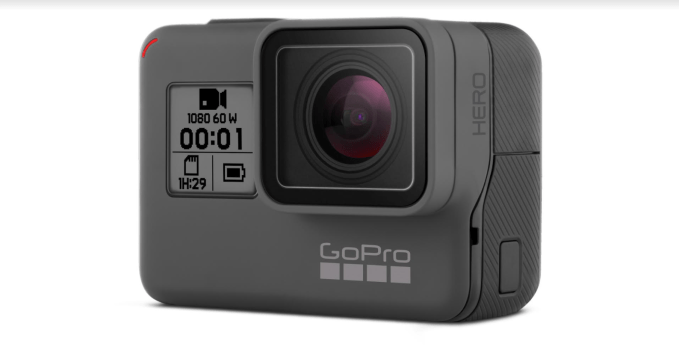
GoPro’s new entry-level Hero camera is $199 and lacks 4K

GoPro is launching a new entry-level camera into its lineup and it looks very, very familiar.

The new camera, simply called Hero, ditches the Session form factor and takes the look of the Hero5 and Hero6 with a big touch screen display. The $199 camera doesn’t shoot 4K, making it the company’s first release since 2015 to lack that resolution.

The Hero shoots 1440p and 1080p video at 60 frames, but it appears to ditch everything else. The company is saying this camera is being marketed towards “kids, adventurous social sharers and travelers.”

Again, the body is the same, so you get the ruggedized look of the Hero5 and Hero6, the 2-inch touch display, a casing waterproof up to 10 meters in depth, voice controls, and video stabilization.

Essentially, the biggest difference here is the reduction on option for video and photo capture. You can grab 10MP stills, or take 60fps video at 1440p or 1080p. There’s no option to go lower or higher on resolution or grab super slow-mo footage or time lapses. This establishes a nice delineation between the entry-level and the high-end, but with an identical body type, this line is certainly blurring.

Keeping the body consistent across entry-level and top-of-the-line products certainly presents a number of advantages in manufacturing and product alignment for GoPro. It also could make things easier for consumers who won’t have to worry about accessory compatibility with big-ticket buys like the Karma Grip handheld stabilizer.

With the new release, GoPro appears to be entirely dumping the Session camera form factor from its product line which it introduced in 2015. The company’s product line now includes the $199 Hero, $299 Hero5 Black, $399 Hero6 Black and $699 Fusion 360 camera.

After a rebound on the public market this past fall driven by a restructuring of the business, the company has taken a beating since on poor sales and poor guidance. Earlier this year, the company announced it was ending Karma drone production and sticking to action cams. GoPro’s share price went from just under $12 per share at the end of September to under $5 per share currently.

One of the bigger underlying issues seemed to be with the pricing structure of its cameras, which led GoPro to slash the cost of its newly released Hero6 Black and promise that it would soon be releasing a new entry-level camera. Well, this is it. At $199, it isn’t any cheaper than the entry-level options before it but it does certainly gain a more polished user experience. We’ll just have to see if that’s enough.

The new Hero is available to buy on the GoPro site today.

29 Mar 2018

Chemi Peres of Pitango VC joins us at TechCrunch Tel Aviv, June 7

TechCrunch is returning to Tel Aviv on 7 June 2018 for a day-long conference, where we will be digging into one of Irael’s biggest tech strengths: mobility and everything that implies, from computer vision to autonomous driving.

Israeli tech is at the forefront of this new industry and we plan to bring industry leaders together to discuss the key issues. You should definitely Reserve your seat on right now.

Among the speakers coming will be Chemi Peres, managing general partner and co-founder of Pitango Venture Capital, Israel’s largest VC Group.

Among his many investment is Via, which provides shared rides for an affordable flat rate. Operating in NYC, D.C. and Chicago, Via is disrupting the way people move around cities. Using Via, a ride booked on your phone costs around the same or less than a bus, but is obviously on-demand transit on a mass scale.

Peres is also chairman of Al-Bawader, Israel’s first VC fund focused on the Israeli Minorities’ Sectors, and serves as chairman of TakwinLabs, an Incubator focused on these sectors. Chemi gained extensive experience as an investor and a board member of several publicly traded companies on NASDAQ and NYSE such as Aladdin Knowledge Systems, AudioCodes, BackWeb, Koor Industries, Vocaltec and Voltaire to mention a few. He serves on the boards of numerous privately held companies such as Radwin and Idomoo among others.

As well qas amazing speakers, our inaugural conference in Tel Aviv will feature a robust exhibition area where the cream of the startup crop will demo their products. If you’re an early stage startup and you want to get in front of the best of Tel Aviv’s startup community, you should grab an exhibitor table for just 1700 ILS directly on our website.

We look forward to seeing you there.

Event info:

Date: 7 June 2018

Venue: Tel Aviv Convention Center, Pavilion 10

Time: 10am-5pm

Tickets: 265 ILS

Our sponsors make these events possible. If you’d like to sponsor, please fill out this form.

29 Mar 2018

As UK fires-up private space industry, Space Camp Accelerator launches

The UK government recently passed the Space Industry Bill, covering the basics like spaceflight licensing, insurance requirements and safety commitments. It didn’t make much of a splash when it was announced, but it’s a huge move for the UK as it laid the regulatory groundwork that will be needed to create an operational spaceport, potentially by 2020. Some £10 million has been earmarked to build the spaceports and complementary projects, and the UK is also set to create the world’s first fully commercial astronaut training ground, with construction expected to start later this year.

A new UK spaceport would actually make it the first such port in Europe, since the European Space Agency’s (ESA) is located in the not-very-European-location of French Guiana in South America.

The UK is already in a good position. Government figures suggest that a quarter of all telecoms satellites are “substantially built” in the UK. It hopes now to expand that to make the UK a “one-stop shop” for the private space industry. A big component of this will be, as the bill said, the opportunities afforded by “using satellite data and machine learning technology to support the rollout of charging points for electric vehicles,” for example.

This is creating a rich new environment for startups, entrepreneurs and, crucially, investors. The cost of building and launching a satellite has fallen from more than $100 million to less than $1 million in recent years. This makes it a new reality for startups and makes the spacetech sector increasingly attractive to venture capital investors.

Thus, today, Seraphim Capital today is launching “Space Camp Accelerator”. This is the UK’s first dedicated accelerator programme for startups in the spacetech industry. Space Camp’s aim will be to “help the best spacetech startups secure funding, achieve scale, and foster close working relationships with industry leaders.” It’s being backed by both the UK and European space agencies, as well as by corporate partners including Rolls Royce, alongside Seraphim Space Fund partners including Airbus, Surrey Satellite Technology, SES, and Telespazio.

Six startups will be selected to join the programme, with a focus on identifying the best data- and satellite-led businesses that are either addressing the biggest challenges facing corporates in the space industry or creating value for industries on earth, from transportation to agriculture to urban planning. The nine-week programme will run twice annually, with the first cohort beginning on 8 May 2018 and the second following in September.

Seraphim Capital manages the £70 million Seraphim Space Fund, which invests exclusively in spacetech.

In a statement, Mark Boggett, CEO at Seraphim Capital, said: “Space is a $350 billion industry that underpins many elements of our everyday lives. $2.5 billion was invested in spacetech startups by VCs globally in 2017, but those startups still need greater access to industry-specific advice and support. We’re turning the accelerator concept on its head: investability is a prerequisite for the startups we invite to be part of Space Camp Accelerator, not the endgame of their involvement as it might be for other programmes.”

Dentons, the global law firm, will host the programme at its offices in London, and will provide the cohort with facilities around the world as appropriate.

James Bruegger, co-founder of Space Camp and partner in the Seraphim Space Fund said: “Space is a multi-billion dollar industry and one of the fastest growing areas of tech investment. The sector’s profile has never been higher, thanks in no small part to Elon Musk reaching for Mars. However, what really impacts those of us here on the ground is the largely hidden way in which data from satellites is really driving the lifeblood of the digital economy. Apps like Uber, Deliveroo, and City Mapper – that many of us rely on in our everyday lives – are all ultimately powered by such data.”

The potentially is pretty cool. The next Elon Musk might well build the next billion dollar space-tech startup right in London. The UK is already widely recognised for having one of the most vibrant space-tech ecosystems. The future looks bright for UK spacetech.