29 Mar 2018

1Password nets partnership with ‘Have I Been Pwned’

A little over a month since 1Password incorporated a pwned password check feature developed by Have I Been Pwned‘s Troy Hunt, the password manager service has now netted what’s being described as “a partnership” with the popular breach monitoring service.

Essentially this boils down to a commercial arrangement between 1Password and the free-to-use breach check service, with HIBP now recommending users sign up to 1Password’s service at the point when they learn their information may have been involved in a data breach.

In a blog post explaining why he feels it’s the right time to accept a sponsor for the service, Hunt writes that one of the reasons he feels comfortable taking money in this way is that users want “actionable steps once they’ve found themselves pwned” — so being able to point them to a specific, named and, in his view, trusted password manager makes sense for him.

“I also could have listed just a few of the industry leaders but people being as they are and the whole paradox of choice problem… they need more,” he adds.

It’s a major win for 1Password of course, whose brand will now be in front of people at the point when they are likely to be most motivated to pay to tighten the security screw.

And for Hunt it’s understandable that he wants to gain a bit more financial reward for his efforts running the now popular and high profile service (he has accepted donations before), although it’s a move that will undoubtedly face some criticism — given the core issue (which he himself flags): “There’s no way to sugar-coat this: HIBP only exists due to a whole bunch of highly illegal activity that has harmed many individuals and organisations alike.”

You can say the same for security products in general, of course. But moving from the goodwill of offering a free breach check — with the stated aim of helping raise the general standard of security among web users — to accepting money from a company to encourage people to subscribe to its (security) service is a new, more clearly commercial direction.

Hunt says he’s had lots of such offers before and rejected them — and says he picked 1Password specifically because of having a “long-standing history with them”.

“This is a product I was already endorsed in by my own free volition and from the perspective of my own authenticity, that was very important,” he writes, noting that he recommended the service in another post, last October, and signed up as a subscriber himself just last month.

He also says 1Password’s decision to integrate his pwned password check into their product last month impressed him, and that he’s found them good people to work with.

Beyond the fact the company’s product will now appear in step 1 (and step 2) of the “3 security steps” HIBP recommends to people whose emails are confirmed been involved in a breach, Hunt hasn’t provided many details about the terms of the partnership.

Nor is he saying how much money he’s getting — aside from quipping that “it’s not quite $120M”.

But he does claim it’s a “partnership” — “rather than just a one-way relationship where their name appears on HIBP”, flagging up continued product integrations (of pwned passwords) by 1Password as an example. So there looks to be more coming on that front too.

We’ve reached out to 1Password about the partnership and will update this story with any response.

29 Mar 2018

LinkedIn is introducing auto-playing video ads

In a move that was probably inevitable, LinkedIn is introducing video advertising as one its Sponsored Content formats.

Although my LinkedIn newsfeed already includes plenty of video, Abhishek Shrivastava, director of product for LinkedIn Marketing Solutions, explained for advertisers, the only way to incorporate videos was to link to other websites. Now, the Microsoft -owned professional network is rolling out a native ad format, where video ads will appear as standalone posts in the feed.

The video ads will play automatically, though with the sound turned off initially.

Other social networks introduced video advertising years ago, but LinkedIn is a different environment — Shrivastava touted this as a way to bring “sight, sound and motion” to business marketers, while the company announcement declares that the company is going “all in on B2B video.”

Shrivastava added that while most videos are seen as ideal for “top of the funnel” marketing (i.e., building awareness, rather than sealing the deal), LinkedIn’s Video for Sponsored Content is designed to work “across the funnel.”

LinkedIn video ads

So yes, the videos can be designed to build brand awareness, but they can also point directly to the advertisers’ desktop or mobile website, or even be used to collect leads. And they can incorporate LinkedIn’s ad targeting and conversion tracking capabilities.

LinkedIn says it’s been testing the format with more than 700 advertisers since October, resulting in engagement times that are nearly three times longer than those for regular Sponsored Content.

In addition to the video ads, LinkedIn is also introducing the ability for businesses to include native video on their Company Pages — so a company that’s hiring might highlight a video about their culture and work environment.

LinkedIn says it will be rolling out these capabilities to all businesses over the next few weeks.

29 Mar 2018

SoftBank Group and Saudi Arabia plan to spend $200 billion building the world’s biggest solar power plant

SoftBank Group Corp., known for splashy deals involving billions of dollars (see: its Vision Fund and investments in Uber and Didi), has signed a memorandum of understanding with Saudi Arabia to build a $200 billion solar power plant. Expected to reach its full capacity of 200 gigawatts by 2030, the development will be the largest of its kind in the world by far.

According to data compiled by Bloomberg New Energy Finance, the Saudi Arabian project is about 100 times larger than the next biggest proposed development, the 2 gigawatt Solar Choice Bulli Creek PV in Australia, which is expected to be completed by 2023.

During an event with Saudi Crown Prince Mohammed Bin Salman in New York City on Tuesday (pictured above), Son said the project will create 100,000 jobs, triple Saudi Arabia’s electricity generation capacity and save $40 billion in power costs. Saudi Arabia is the largest crude exporter in the world, but the kingdom is currently trying to diversify its economy beyond oil. Last month, the government awarded ACWA Power a $302 million deal to build Saudi Arabia’s first utility-scale renewable energy plant.

After the 2011 Fukushima nuclear meltdowns, clean energy projects became one of Son’s passions, with SoftBank also investing in wind and solar energy projects in Mongolia and the Asia Super Grid, an extremely ambitious renewable transmission energy project spanning several Asian countries.

SoftBank’s other deals in Saudi Arabia include a $93 billion tech investment fund that was announced in May 2017, with backing by the Vision Fund and Saudi Arabia’s Public Investment Fund.

29 Mar 2018

Bumble is suing Match Group for $400M for fraudulently obtaining trade secrets

Two weeks ago Match Group (Tinder’s parent company) sued Bumble for patent infringement and misuse of intellectual property.

Bumble has now returned the favor by filing a separate lawsuit accusing Match of multiple improprieties in regards to interactions between the two companies over the past few months.

To be clear, this lawsuit isn’t a response to Match’s initial lawsuit, and instead is a separate action raising new allegations against Tinder’s parent company. Bumble had previously published a letter in response to Match’s initial lawsuit, but will presumably also file a a file a separate response to that initial lawsuit, unless a judge decides to consolidate the two cases.

First, the lawsuit acknowledges that Bumble and Match Group were in acquisition talks over the last 6 months, something TechCrunch has previously reported. Bumble alleges that once Match Group found out there were other companies also interested in either investing in or acquiring Bumble, Match Group filed their aforementioned lawsuit to make Bumble less attractive to those other companies.

Secondly, Bumble alleges that during the acquisition process Match Group fraudulently requested that Bumble provide “confidential and trade secret information” which Match Group said they “needed to provide a higher offer for Bumble”. Bumble alleges that no subsequent offer came, and Match Group instead requested and obtained this information solely for “the financial benefit of its dating app businesses”.

Lastly, Bumble is claiming that Match Group disparaged Bumble, which has potentially affected Bumble’s other investment and acquisition opportunities. Specifically, Bumble alleges that Match Group “published false or disparaging information about Bumble, including statements in the press falsely claiming that Bumble infringed Match’s intellectual property, as well as false statements in the Lawsuit”.

The lawsuit requests relief in the form of monetary damages, which Bumble estimates at $400M. Additionally, they are requesting a permanent injunction preventing Match or any affiliates from using any of the obtained confidential information.

While the lawsuit does briefly touch on why Bumble thinks Match Group’s patent infringement claims are frivolous, the main focus is on these new allegations against Match Group.

The whole situation seems messy, as is often the case with lawsuits between two major competitors. It’s all complicated by the fact that Bumble CEO Whitney Wolfe Herd was a co-founder of Tinder, and was involved in previous litigation related to harassment and discrimination.

Bumble declined to comment on the lawsuit. We’ve reached out to Match Group and will update this post if we hear back.

29 Mar 2018

SF Motors reveals first two EVs, aims to ship its first SUV by next year

SF Motors has revealed its first two models, electric vehicles aiming for 2018 production and 2019 street dates. The electric vehicle technology company with a headquarters in Silicon Valley, as well as a globe-spanning R&D footprint and manufacturing facilities in both China and the U.S., and it’s aiming to distinguish itself rom the established market with unique powertrains, autonomous features and shared technology development.

Their first two cars are the SF5 and SF7, a smaller and a mid-sized all-electric SUV. The SF5 is aiming to have a pre-order date of 2018, and will also aim to ship in 2019 to customers if all goes to plan. They’ll feature “proprietary” powertrain technology that will achieve 1000 horsepower and a 0-to-60 mph acceleration time of under 3 seconds.

Range is rated at over 300 miles by EPA standards, SF Motors says, thanks to a “patented” battery system that emphasizes safety through design. The automaker is also working on a future battery system that would incorporate battery units directly into the vehicle’s chassis, for a more streamlined design.

[gallery ids="1613830,1613831,1613832,1613833,1613834,1613835,1613836,1613837,1613838,1613839,1613840"]

A lot of SF Motors’ secret sauce comes down to in-house development of key systems, the automaker says, including its own in-house electronic controller design. It’s also testing “protective autonomy,” systems that use deep learning and LiDAR sensor perception to create a “safer ride,” with road tests in California, Michigan and China currently in progress as of earlier this month. The full extent of this system and how it works hasn’t been detailed, but it will automated driving tasks with “minimal human input” required, per SF Motors.

The company is debuting its first target production vehicles today, but it’s also hoping to potentially provide its proprietary powertrain and battery tech design to other automakers via license, which could help it get over the early hurdles of production ramp that most young EV companies hoping to take on Tesla and other legacy automakers face.

29 Mar 2018

Facebook will cut off access to third party data for ad targeting

In a surprise change, Facebook will give up one major data source that the company uses to help advertisers target relevant users on the platform. The company just announced that it will end a feature called Partner Categories, launched back in 2013 out of a partnership between Facebook and major data brokers.

Third party data helps Facebook further atomize its user base into meaningful segments for advertisers. As TechCrunch explained when the data partnership first launched:

“Through new partnerships with top online and offline purchase data providers Datalogix, Epsilon, Acxiom, and BlueKai, Facebook is now allowing advertisers to target hashed lists of existing and potential customers, and categories like role-playing gamers or soda drinkers.”

Facebook confirmed to TechCrunch that the change is permanent, not a temporary precaution. In order to leverage the deep pool of data Facebook collects on users, the company mixes information that it obtains from users themselves (Pages a user liked, for instance) with information from advertisers (membership status in a loyalty program, for example) and with data obtained from third party providers.

While Facebook feels comfortable with the integrity of its data sourcing within the first two categories, it feels less settled about dipping into these aggregate pools of third party data. The decision was issued in light of the company’s recent privacy concerns over third-party data mishandling.

Facebook Product Marketing Director Graham Mudd elaborated on the decision in a statement:

“We want to let advertisers know that we will be shutting down Partner Categories. This product enables third party data providers to offer their targeting directly on Facebook. While this is common industry practice, we believe this step, winding down over the next six months, will help improve people’s privacy on Facebook.”

Facebook clarified that it will still work with companies like Experian and Acxiom in order to measure ad performance and provide metrics, although it will also be conducting a review of those ongoing relationships. Facebook may also move toward sharing data in a shared server environment in order to offer further assurances of user privacy. As Mudd noted, the program will be discontinued in the coming months.

29 Mar 2018

San Francisco will regulate electric scooter sharing

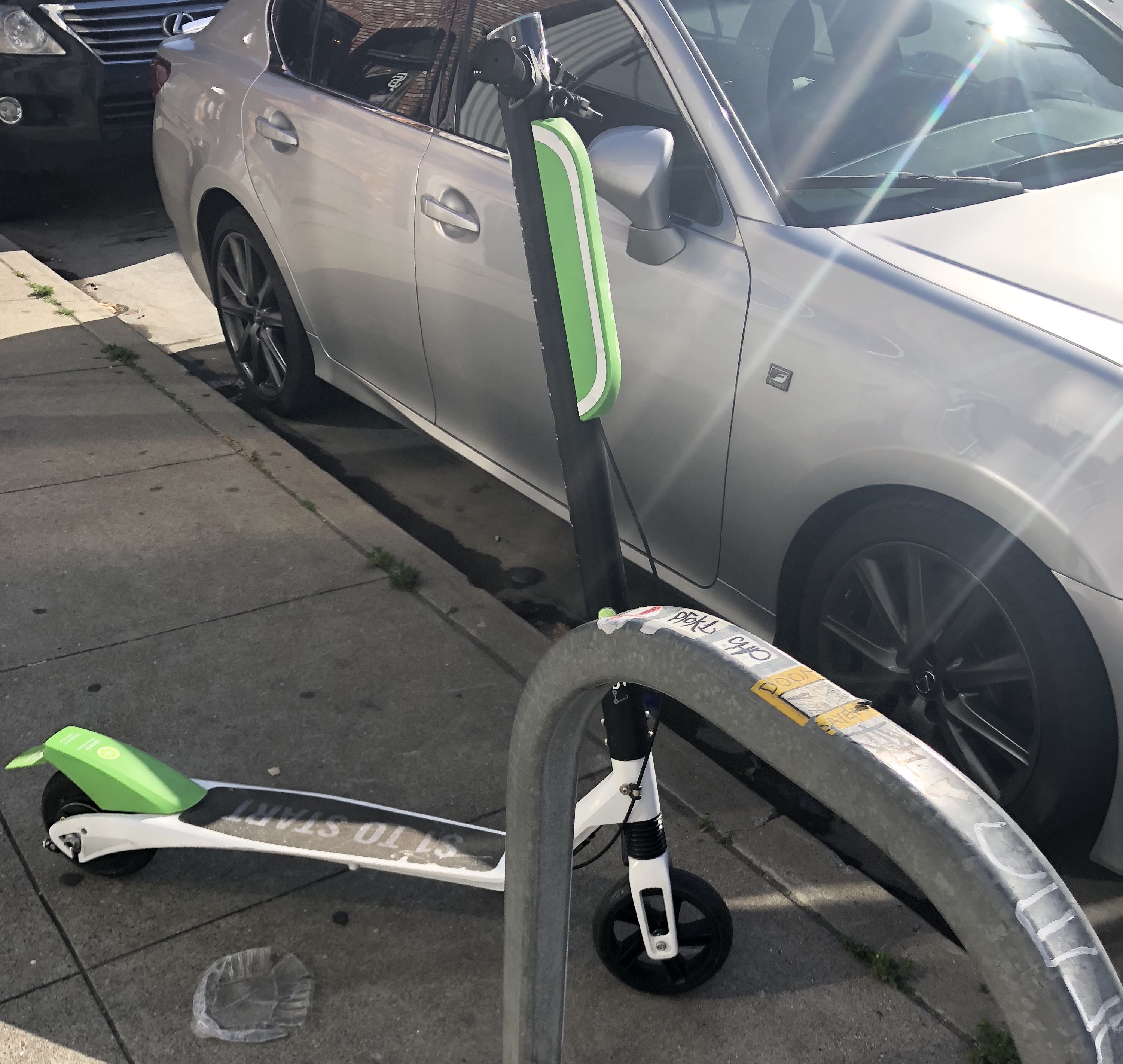
Electric push scooters have recently hit the streets of San Francisco. Over the last couple of weeks, LimeBike deployed some scooters in conjunction with local festivities in the city. And just yesterday, Bird launched its scooters in San Francisco. Spin has also deployed some scooters in the city. As it stands today, these scooters from companies like LimeBike, Spin and Bird are currently operating in a bit of a legal gray area.

That’s why the San Francisco Municipal Transportation Agency is currently looking to create legislation, in collaboration with SF Supervisor Aaron Peskin, to “create appropriate permits and requirements to regulate motorized scooter sharing in the public right-of-way,” an SFMTA spokesperson told TechCrunch. “In the meantime, shared scooters are not explicitly covered in the Transportation Code.”

In separate letters to Spin, LimeBike and Bird today, the SFMTA let each company know it is aware they have respectively placed shared electric scooters on the sidewalks.

“As you may know, the San Francisco Municipal Transportation Agency (SFMTA) is developing a permitting program for motorized scooter sharing systems,” SFMTA Director of Transportation Edward Reiskin wrote in the letter. “We request your cooperation as we finalize the legislation and permit application.”

The SFMTA is asking each company for their respective business plans, detailing how they will comply with the city’s requirements around the use of sidewalks, plazas and other public spaces. The SFMTA also wants the plans to describe if and how the scooters will use any bike racks or other existing infrastructure, if there will be any new types of infrastructure built, how it will ensure there’s not over-concentration of scooters in one area, how many scooters the companies plan to deploy and how the companies will ensure the scooters are maintained.

“We will not tolerate any business model that results in obstruction of the public right of way or poses a safety hazard,” Reiskin wrote.

Since these companies have already deployed their scooters, the SFMTA is asking to receive a response by the end of next week. While scooter sharing isn’t explicitly outlined in the city’s transportation code, it is illegal to place a scooter in a way that obstructs the sidewalk, the SFMTA spokesperson said. It’s also illegal to ride these scooters on sidewalks, and ride them without a helmet.

“The SFMTA would urge any potential operators of new transportation services to work closely with the SFMTA prior to launching a new program,” the spokesperson said. “While we welcome improved mobility options, we want to carefully consider the potential benefits and impacts of any new private transportation service to ensure that it serves the public interest.”

LimeBike, which unveiled its scooters last month, has been in communication with elected officials and the SFMTA, noting that there are no city ordinances that prohibit a shared scooter system in the city, a LimeBike spokesperson told TechCrunch. While the city works to regulate scooter sharing, LimeBike says it is a limited pop-up program.

“As a Bay Area headquartered company, LimeBike is fully committed to ensuring we are positive contributors to San Francisco,” the spokesperson said. “We are excited to continue working with the SFMTA, Board of Supervisors and community as the formal permit process is developed, to identify mobility solutions that meet the City’s equity goals and help connect all parts of the city.”

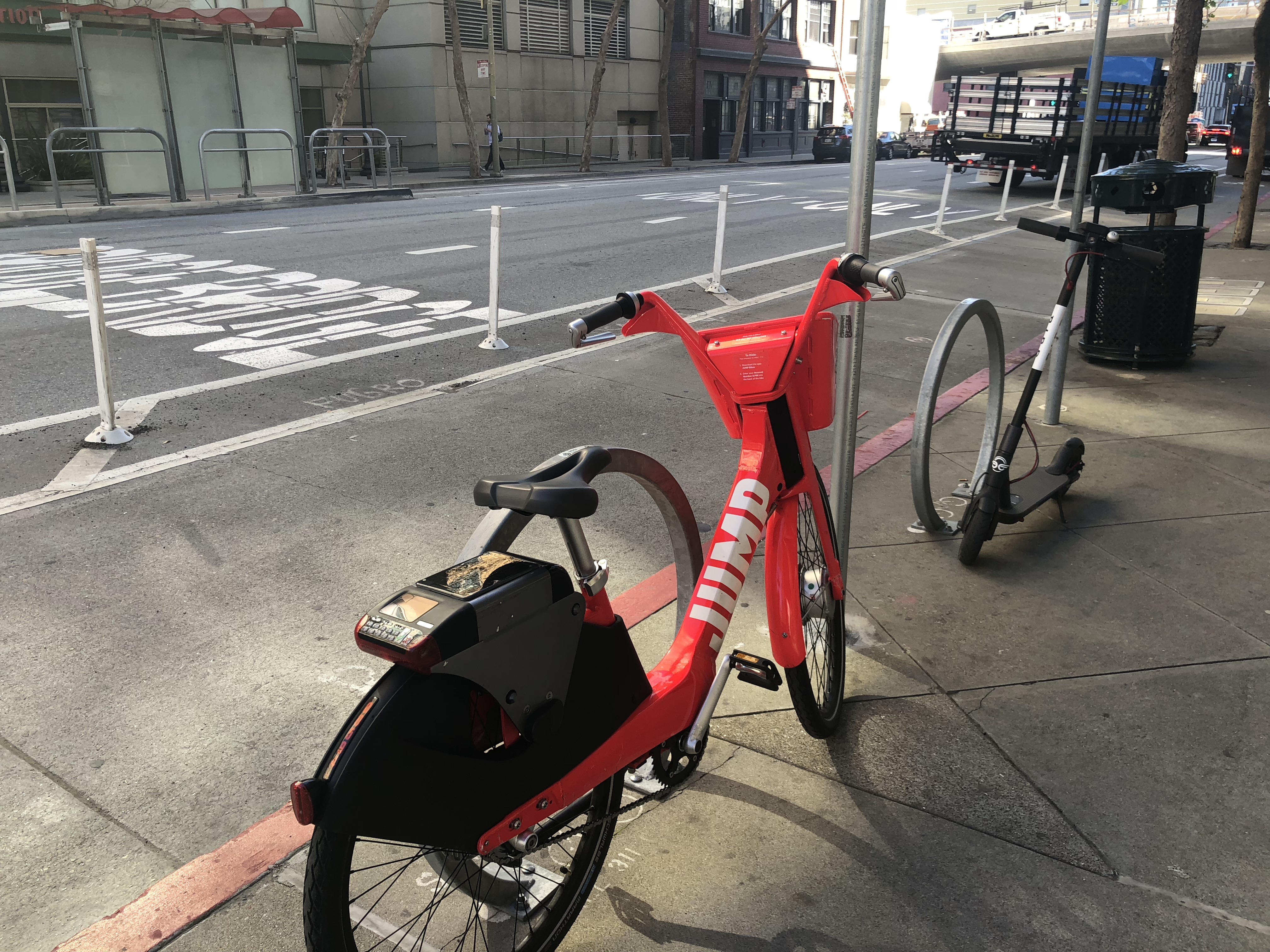
A JUMP bike alongside a Bird scooter in San Francisco

Earlier this year, the SFMTA granted an exclusive, 18-month permit to electric bike-sharing startup JUMP. The program is designed to enable the SFMTA to collect data and assess if a program like this will work in the long-term. Similar to what the SFMTA did around car sharing, the aim is to better understand the needs and impacts of this type of mobility service.

I’ve reached out to Spin and Bird and will update this story if I hear back.

29 Mar 2018

Festo’s latest bio-inspired creations are a robo-bat and rolling robo-spider

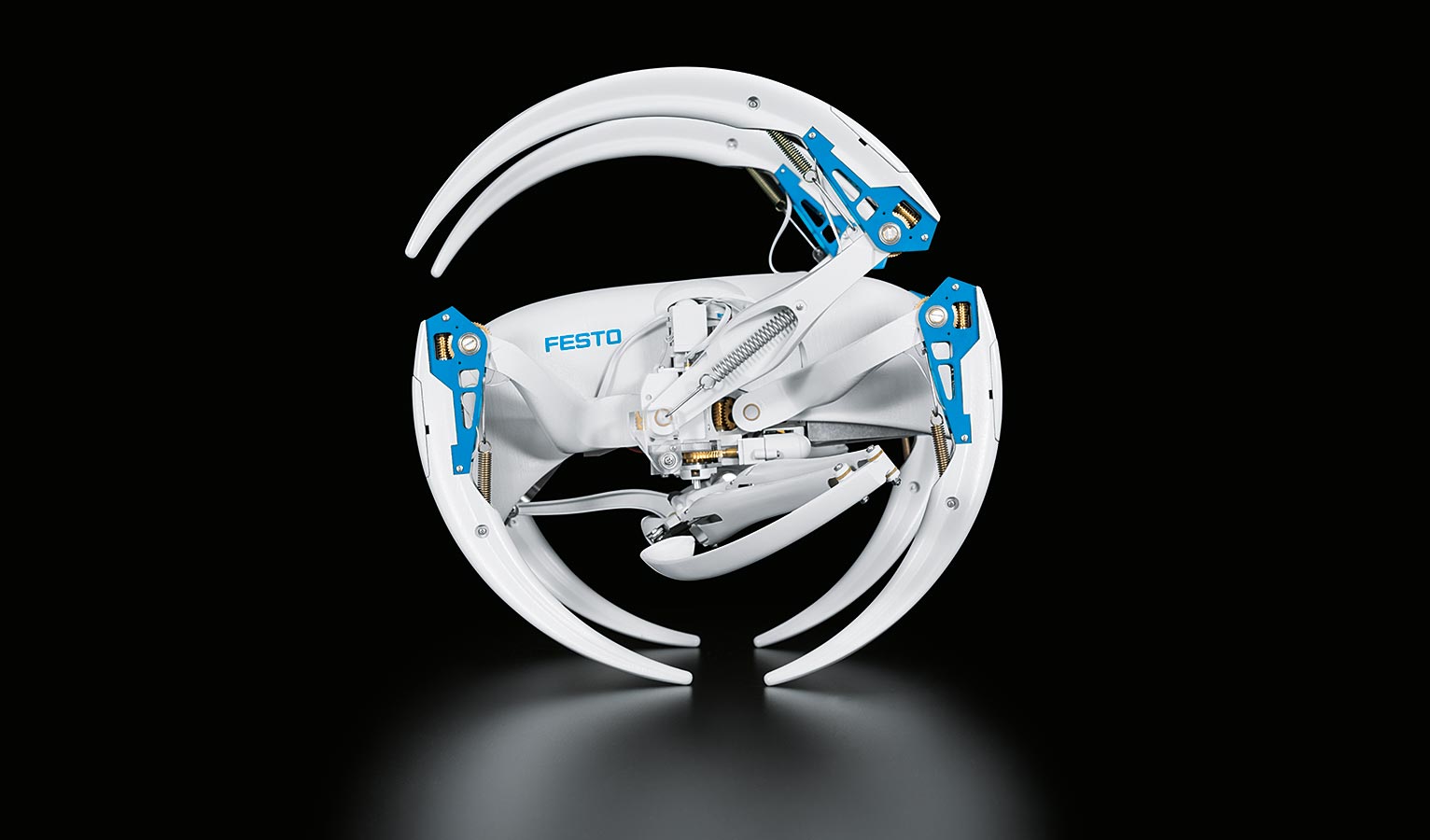
Festo’s flashy biomimetic robots are more or less glorified tech demos, but that doesn’t mean they aren’t cool. The engineering is still something to behold, although these robot critters likely won’t be doing any serious work. Its latest units move in imitation of two unusual animals: a tumbling spider and a flying fox (think big bat).

The BionicWheelBot, when walking, isn’t anything we haven’t seen before: hexapodal locomotion has been achieved by countless roboticists — one recent project even attempted to capture the spontaneity of an insect’s gait.

But its next trick is new, at least if you haven’t watched the Star Wars prequels. It uses the legs on each side to form a wheel and propels itself with the last pair. Useful for getting downhill or blowing in the wind, as some spiders and insects in fact do.

It looks as if it can get going quite fast, and although it seems to me it would be in a fix if knocked over, it had no problem dropping off the end of the table and rolling on in the Festo video.
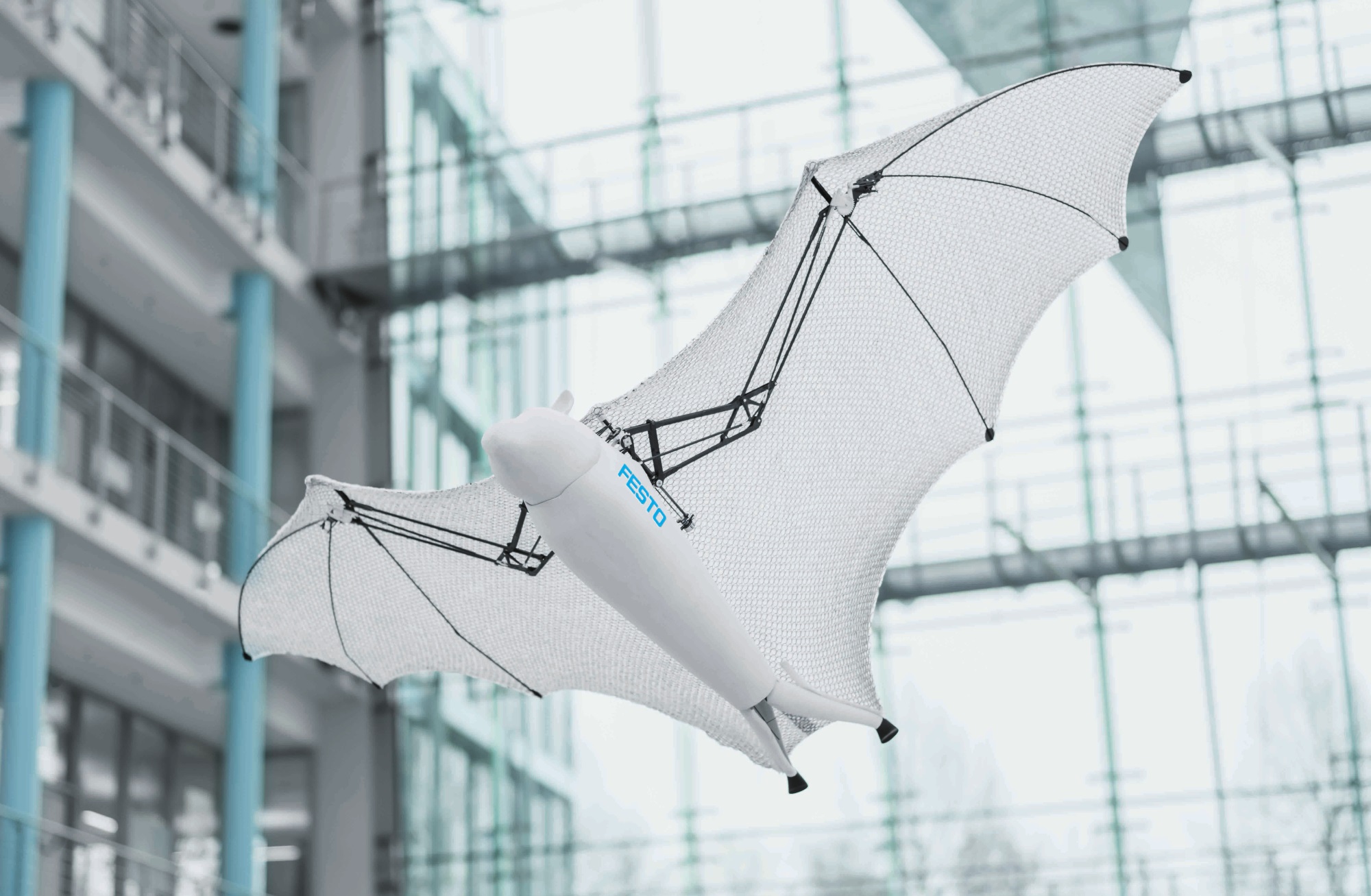
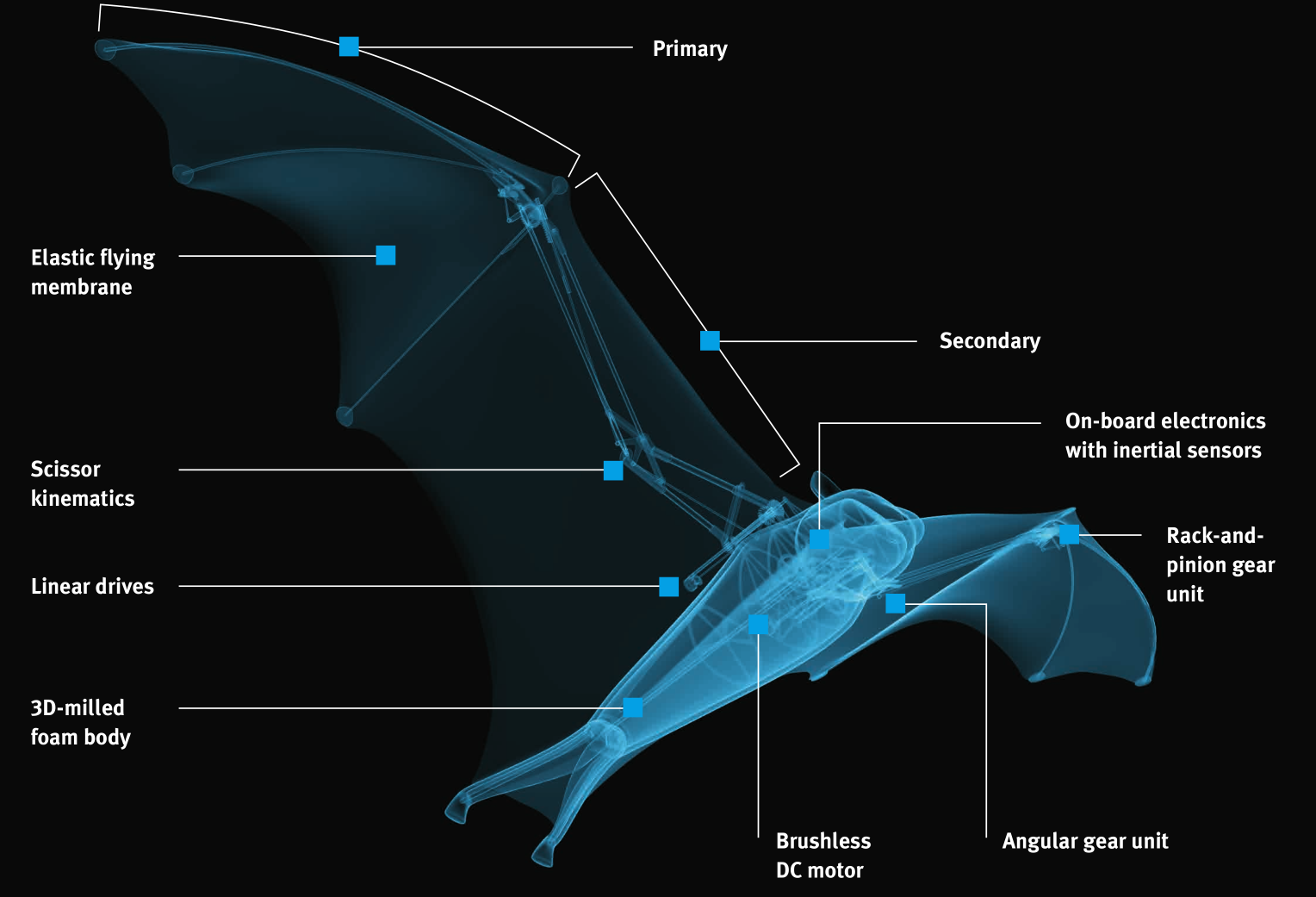
The other robo-critter is the BionicFlyingFox, modeled on the enormous fruit bats bearing that name. Like all flying creatures there is a great emphasis on lightness and simplicity, allowing this robot (like its distant forebear, Festo’s bird) to flap around realistically and stay aloft for a time.

In imitation of the strong but light and flexible membrane that forms flying mammals’ wings, the Festo bot uses a modified elastane material (sort of a super-Spandex) that’s airtight and won’t crease or rip.

If you’re lucky, you might see one of these majestic robeasts demonstrated at a robotics conference one day.

28 Mar 2018

Nvidia CEO Jensen Huang clarifies Uber is not using its Drive platform

While Uber makes use of Nvidia hardware in its own self-driving automotive technology, it does not employ Nvidia’s Drive autonomous computing platform, which includes the GPU-makers own real-time sensor fusion, HD mapping and path planning. Nvidia CEO Jensen Huang shared this information today during a Q&A session attended by reporters at the company’s GPU Technology Conference in San Jose.

“Uber does not use Nvidia’s Drive technology,” Huang said. “Uber develops their own sensing and drive technology.”

Huang also reiterated comments made during an earlier Q&A that Nvidia ceased its own testing on public roads (its fleet comprises only about 5 or 6 vehicles in total at any given time, the company points out) out of an abundance of caution, and simply because it’s good engineering practice to pause and reflect when a new variable is discovered in any engineering problem.

The Nvidia CEO also clarified that Nvidia stopped its testing only “almost a day or two” after the accident occurred, as soon as “the news became clear to us,” and not only when news broke publicly earlier this week that its testing program had been suspended.

“If there’s an incident that happened that is a new piece of information that you can learn from, you should pause and learn from it,” Huang added. “I think everybody in the industry should – there’s no question in my mind, that everyone in the industry should pause to look at the situation, learn from it. Pause, just take a pause.”

Others running self-driving test programs on public roads, including Toyota Research Institute, have also paused, but some, including Waymo and Intel, have instead publicly declared that their own systems wouldn’t have failed where Uber’s did in this instance, and have continued their own testing programs on public roads.

28 Mar 2018

The Las Vegas strip’s first legit esports arena just opened for business

On the south end of the Vegas strip, a different kind of gaming is taking root. At the Luxor casino, the Esports Arena Las Vegas just opened its doors, occupying the former home of the LAX nightclub. Following a special event on March 22, the arena, owned by Allied Esports, opened for regular operations on Monday, March 26.

Allied Esports is a joint venture of Chinese gaming companies Ourgame International, KongZhong and iRena that aims to build a global network of at least 10 esports arenas over three to five years. The effort is just the latest sign that yes, esports is mainstream now and its momentum — and its accompanying business ventures — will only ramp up from here.

The 30,000-square-foot space is custom-built to accommodate the flashy, massive events that have come to define the esports world, including an in-house “network TV quality” production studio replete with 24 cameras and a two-story LED TV wall. In addition to console and PC gaming stations, the arena also boasts competitive VR gaming via two immersive Virtuix Omni machines and free retro gaming. The modern forward or backward-gazing gamer should have plenty to do, even beyond events like a kick-off weekend Super Smash Bros. tournament with $25,000 on the table.

In true Vegas fashion, the space is accompanied by a gamer-themed menu from chef José Andrés, an avid gamer himself. The space will host big events while also being open to normal non-pro gamers, who can buy a $25 all-you-can-play gaming pass. The fresh space in the Luxor joins other major dedicated gaming venues like Blizzard’s new LA area Overwatch arena and Allied Esports sibling spaces in Orange County, Beijing and Shenzen, with another location set to open next month in downtown Oakland.

Dedicated competitive gaming spaces, oddities just a few years ago, are now springing up all over, moving esports away from traditional sporting venues and into increasingly high-profile purpose-built spaces.