28 Mar 2018

Hewlett Packard Enterprise to move HQ to San Jose

Hewlett Packard Enterprise is moving north from Palo Alto to San Jose. The company will relocate 1,000 employees to a 220,000-square-foot space in late 2018. HPE was spun-off from Hewlett-Packard in 2015 and is focused on servers and storage.

This news comes months after HPE announced a different plan in which the company was moving to Santa Clara, where Aruba Networks, a company it previously acquired, is headquartered.

HPE is going to occupy six floors in San Jose’s America Center, which is located near a forthcoming Berryessa BART station.

This move is the latest win for San Jose. Google recently announced it would move in the coming years. According to a report in The Mercury News, the city of San Jose did not offer HPE any financial incentives.

28 Mar 2018

Boeing reportedly hit by Wannacry ransomware

Boeing has reportedly been struck in a major way by Wannacry, the ransomware that spread like wildfire last year. The Seattle Times obtained a memo from Mike VanderWel, of the company’s commercial airliner division, describing the malware as “metastasizing rapidly.”

Wannacry, you may remember, spread using a Windows exploit leaked from NSA files, demanded a modest sum in bitcoin to decrypt the victim’s files, and was stopped in dramatic fashion by a single person. Investigators confidently but, as with most attacks like this, circumstantially attributed the attacks to North Korea.

VanderWel’s memo says that the infection appears to have started in North Charleston, and for all we know is still spreading: “I just heard 777 (automated spar assembly tools) may have gone down,” he writes, and “airplane software,” whatever that term really means inside a company that makes airplanes, could be next.

Although the attacks may have originated in North Korea and Boeing is of course a major defense contractor, it would be premature to connect those dots at this moment. Wannacry was far from a targeted strike; it was “indiscriminately reckless,” as one U.S. official rather redundantly put it, spreading geometrically and affecting soft targets like hospitals as well as individuals.

Wannacry’s initial flare-up may have been tamped down with the “kill switch” and subsequent patches addressing the exploit, but clearly it was not eliminated altogether — though this may very well be a mutation or modified version of the original software.

This story is developing. We’ve contacted Boeing for more information and have been told to expect it momentarily, so check back soon.

Update: Boeing issued a statement on Twitter downplaying the situation:

A number of articles on a malware disruption are overstated and inaccurate. Our cybersecurity operations center detected a limited intrusion of malware that affected a small number of systems. Remediations were applied and this is not a production or delivery issue.

I’ve asked for clarification on how to reconcile this with VanderWel’s description.

28 Mar 2018

Tesla is overusing automation in Model 3 final assembly, analysts say

Bernstein analysts Max Warburton and Toni Sacconaghi argue Elon Musk is overusing automation, Business Insider reports, and that’s why Tesla is unable to scale as fast as it would like.

“Tesla has tried to hyper-automate final assembly,” the report states. “We believe Tesla has been too ambitious with automation on the Model 3 line. Few have seen it (the plant is off-limits at present), but we know this: Tesla has spent c.2x what a traditional OEM spends per unit on capacity.”

In addition to automating stamping, paint and welding, the report states, Tesla is also trying to automate the final assembly process, which entails the actual placement of parts into the cars.

“It talks of two-level final lines with robots automating parts sequencing,” the report states. “This is where Tesla seems to be facing problems (as well as in welding & battery pack assembly).”

The report describes how automation is expensive and “statistically inversely correlated to quality.” It goes on to note how if Tesla tries to automate 50 percent of the tasks in final assembly, it would only cut out about five hours of human labor. Warburton and Sacconaghi later write,

But while all that exotic capital might allow Tesla to remove 5 workers, it will then need to hire a skilled engineer to manage, programme and maintain robots for $100 an hour (our estimate of a robotic engineers’ hourly rate).

So the net labour saving may be only $50 per unit. Yet putting the automation into the plant seems to involve an apparent capital cost that’s $4,000 higher per unit of capacity than for a normal plant. If the product is built for 7 years, that’s over US$550 of additional depreciation per unit built. It’s hard to see an economic case even if somehow the Fremont Model 3 line can be made to work. So why exactly has Tesla taken this route? It’s unclear.

TechCrunch has reached out to the folks over at Bernstein, as well as at Tesla. I’ll update this story if I hear back from either parties.

28 Mar 2018

Review: 2018 Lincoln Navigator

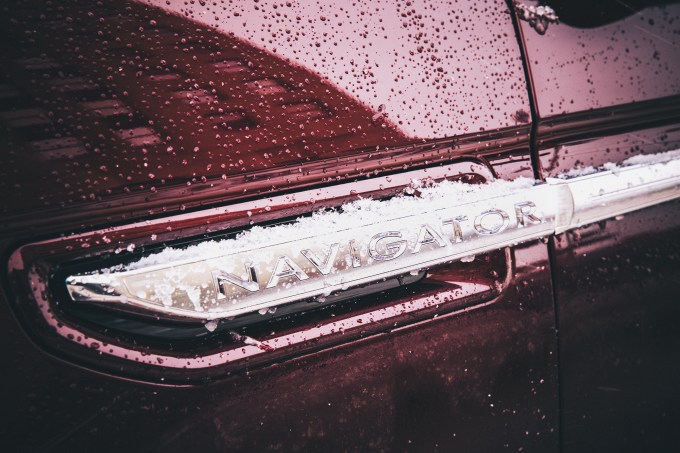
Michigan saw a historic amount of snowfall in 2018. And it’s not done. It’s snowing as I write this and it snowed nearly every day since I took delivery of this burgundy 2018 Lincoln Navigator. Excuse the dirty car shown in the photos. That’s life in the Midwest: half the year it’s impossible to keep cars clean of salt and grime and, to me, that’s the best time to review a vehicle. I’m happy to report the new Navigator is a comfortable refuge from the snowy winter.

I spent a week in the 2018 Navigator running from Flint, Michigan to Ann Arbor to Detroit. I filled up the 23-gallon tank enough to know to take it easy on the lively 3.5L EcoBoost V6. The 2018 Lincoln Navigator is luxurious and confident — but thirsty.

This is a luxury SUV. It’s not a sport truck and it’s not high-tech paradise, though it can play the part of both. The new Navigator was clearly built to be as comfortable as possible, and along the way Lincoln constructed one of the best luxury SUVs on the market.
Review

Winter hit Michigan hard this year and I found the ditch in my 2012 Dodge Durango R/T several times. It started snowing in December and didn’t stop until halfway through March. I grew up in Michigan and still live in the state. Driving in snow doesn’t bother me, though jumping into an unfamiliar vehicle and navigating snow-covered roads can be challenging. But not in this Navigator. I found it handles snow and slush and ice without an issue.

The 2018 Lincoln Navigator is a full-size SUV. It sits as high as a Ford F-150 and tends to lumber about as such. The ride is confident and stable. There’s little sway on tight expressway ramps and the automatic four-wheel drive quickly activates when a tire starts to spin.

This Navigator isn’t a sport truck, but it gets up and goes thanks to Ford’s fantastic 3.5L EcoBoost V6. This six-cylinder twin-turbo kit has found its way into nearly every full-size platform Ford offers. The Navigator is gifted with an updated version of the engine and it offers ample power across its range. The 3.5L surprises in this massive luxury SUV. It’s lively and powerful and more than enough to make the ride comfortable. During my time with the truck, I never felt at a loss of power, though I tried.

The engine is key to the Navigator’s appeal on several levels. First, 3.5L V6 offers decent fuel economy if driven conservatively while offering a decent bit of excitement if driven with that intent. Second, it allows Lincoln to say the Navigator is able to tow 600 lbs more than the Cadillac Escalade, which features a massive 6.2L V8. While both vehicles can ably pull a pontoon, the Lincoln does so with 510 lb.-ft of torque over Cadillac’s 460 — though without a boat of my own, I’m unable to confirm if the difference is felt in the real world.

The steering is light and responsive, though it’s impossible to forget this is a massive vehicle. It drives like a truck — though not your grandfather’s work truck. The driver sits in a commanding position that makes for good visibility. The vehicle’s suspension lets it cruise over rough roads and most bumps are absorbed. It’s a big SUV and there’s a fair amount of body roll on on-ramps. Parking isn’t an issue. There are plenty of cameras positioned around the vehicle to help maneuver this land yacht.

The interior of the new Navigator stuns. Wood, leather and chrome adorn the surfaces and walks close to the line of bling. It begs the confirmation that it ultimately comes from an American automaker. Take the badging off the interior and it could easily be mistaken as a luxury European SUV — though this Navigator is bigger than anything offered across the pond.

It’s roomy inside. Storage is abundant but cleverly hidden so as not to look like a minivan. There’s plenty of leg room for second-row passengers while the third row is surprisingly roomy.

The seats are something special. Sure, they’re comfortable and supportive like any found in high-end SUVs. It’s their design that sets them apart. The cushions jet out from a large back support making them look more like an Eames lounger than an overstuffed leather recliner. The design is a stark departure from most automotive seats, and I’m a fan.

The back seats are not nearly as comfortable. They’re supportive and offer several seating positions. In this tester, the rear seat is equipped with a center console that sports a small LCD screen that displays the media currently playing. The kids love it and I’m sure Uber passengers would too. As a parent to two kids, I found it annoying to cede control of the radio to the backseat. Thankfully there’s a button above the climate controls that disables the backseat controls, because I can only listen to Radio Disney for so long.

[gallery ids="1613702,1613701,1613703,1613705,1613698,1613699,1613704"]

Tech

There’s an LCD screen mounted in the center of the dash. It’s large enough to be usable though not distracting. The best part? The screen doesn’t show fingerprints. There’s clearly a coating over the screen that somehow, magically, makes fingerprints invisible. Glare doesn’t seem to be an issue, though, as previously mentioned, it’s been snowing for a week and I haven’t seen the sun at all during my testing.

The 2018 Lincoln Navigator is equipped with a Lincoln-badged version of the Ford Sync 3 infotainment system. The automaker rolled out this system with 2016 models and it’s a massive improvement over previous Sync versions. It’s not the best infotainment system available, but it’s good enough. Vehicle functions and controls are in logical places and Ford’s AppLink system offers support for some third-party apps now, including Waze .

Android Auto and CarPlay are also available when used with compatible devices. I’ve grown to avoid these systems and prefer to stick with most systems developed by automakers. I was initially a fan of CarPlay, but Apple has yet to advance the platform, and now several years after its launch, it feels dated and unusable.

The Navigator’s smartphone app is clever. Need to put in navigation info? With the Lincoln Way app, drivers can input a destination on their smartphone app before they get into the vehicle and send those directions to the Navigator. It’s much easier than entering the destination through the in-vehicle system. The app also lets drivers start the car, order roadside assistance or service and locate the car.

[gallery ids="1610487,1610489,1610488,1610490,1610486"]

Competition

This new Navigator is in a class of its own. The Cadillac Escalade’s interior is vastly inferior, the Mercedes-Benz GLS is dated and much less roomy. The Lexus LX and Toyota Land Cruiser have better off-road chops, but the platform is over 10 years old and it shows. Land Rover’s SUVs are more expensive and its three-row models are much smaller and less powerful than the Navigator, though new models are coming out soon.

There simply isn’t a more luxurious, roomy six- or seven-passenger vehicle available than the new Navigator.

I’m in the market for a new vehicle and recently test drove several used 2017 Lincoln Navigators. It’s a nice truck, but lacks the wow factor of the 2018 Navigator. Where past models were clearly a rebadged Ford, complete with similar plastic trim and equipment, the new Navigator is a fresh departure from its Ford counterpart, the Expedition. Similarities between the two models still exist, though they’re less pronounced, with the Lincoln clearly getting the nod toward luxury.

The Navigator of today is much better than the Navigator of yesterday. Lincoln improved the Navigator in nearly every way. The ride, the comfort, the technology. Everything is better, and that’s impressive and must be noted.

The Navigator is 25 years old this year. It was one of the first American-made luxury SUVs, but it has nearly always been overshadowed by the Escalade — and for good reason. The Escalade has always offered more everything than the Navigator. But not anymore.

The new Navigator sets the bar. It’s luxurious. It’s powerful. The Navigator is wonderful.

28 Mar 2018

Uber Freight lead, Lior Ron, has left the company

Lior Ron, Uber’s head of freight operations, has left the company, a source familiar with the situation told TechCrunch.

“We remain fully invested in and excited about the future of Uber Freight,” an Uber spokesperson said in a statement to TechCrunch. “Since launching in Texas, we have introduced Freight to all states in the continental U.S. We believe it will continue to grow as we use our network and technology to transform the trucking industry.”

Ron is the co-founder of self-driving truck startup Otto, which sold to Uber in 2016. Otto was at the center of Uber’s recently-settled lawsuit with Alphabet’s Waymo over self-driving car technology. Waymo alleged Anthony Levandowski, an Otto co-founder, stole thousands of documents from Waymo before leaving to start Otto. That case has since been settled, with Uber agreeing to pay Waymo roughly $245 million in Uber stock.

Ron, however, was not involved with any of Uber’s self-driving efforts, the source said. Uber confirmed to TechCrunch Uber Freight is a separate product from its self-driving trucks, with entirely separate teams. Down the road, those teams may indeed work together more regularly.

28 Mar 2018

Uber Freight lead, Lior Ron, has left the company

Lior Ron, Uber’s head of freight operations, has left the company, a source familiar with the situation told TechCrunch.

“We remain fully invested in and excited about the future of Uber Freight,” an Uber spokesperson said in a statement to TechCrunch. “Since launching in Texas, we have introduced Freight to all states in the continental U.S. We believe it will continue to grow as we use our network and technology to transform the trucking industry.”

Ron is the co-founder of self-driving truck startup Otto, which sold to Uber in 2016. Otto was at the center of Uber’s recently-settled lawsuit with Alphabet’s Waymo over self-driving car technology. Waymo alleged Anthony Levandowski, an Otto co-founder, stole thousands of documents from Waymo before leaving to start Otto. That case has since been settled, with Uber agreeing to pay Waymo roughly $245 million in Uber stock.

Ron, however, was not involved with any of Uber’s self-driving efforts, the source said. Uber confirmed to TechCrunch Uber Freight is a separate product from its self-driving trucks, with entirely separate teams. Down the road, those teams may indeed work together more regularly.

28 Mar 2018

DocuSign unveils IPO filing

DocuSign has unveiled its IPO filing, confirming our scoop from last week. 

The company had previously filed confidentially and the timing of the filing revelation implies that DocuSign is hoping to go public in late April.

Founded in 2003, the San Francisco-based e-signature company has been an anticipated IPO for a while. It’s raised over $500 million over the past 15 years and has been valued as high as $3 billion. 

The filing gives us a first glimpse at the company’s financials.

Last year saw $381.5 million in revenue, up from $250.5 million the year before. Losses for last year were $115.4 million in revenue, down from $122.6 million for 2016.

“We have a history of operating losses and may not achieve or sustain profitability in the future,” the company warned in the requisite “risk factors” section of the prospectus.

The filing reveals that Sigma Partners is the largest shareholder, owning 12.9% of the company. Ignition Partners owns 11.7% and Frazier Technology Ventures owns 7.2%.

Kleiner Perkins also invested and partner Mary Meeker serves on DocuSign’s board, but the firm’s ownership was not high enough to meet the 5% threshold for the filing. The same is also true of Scale Venture Partners, with managing partner Rory O’Driscoll serving on the DocuSign board.

DocuSign, which competes with HelloSign and Adobe Sign, among others, has worked to get the world’s businesses to sign documents online. The group has large clients like T-Mobile, Salesforce, Morgan Stanley and Bank of America.

Real estate, financial services, insurance and healthcare are listed on its site as targeted industries. The company says legal, sales and human resource departments frequently use DocuSign to send and sign documents. It has a tiered business model, with corporations paying more for added services.

DocuSign also offers services for small businesses and individuals.

Early last year, Dan Springer took over as CEO, after running Responsys, which went public and then was bought by Oracle for $1.5 billion.

Chairman Keith Krach had been running the company since 2011. Krach was previously CEO of Ariba, which was acquired by SAP for $4.3 billion.


28 Mar 2018

DocuSign unveils IPO filing

DocuSign has unveiled its IPO filing, confirming our scoop from last week. 

The company had previously filed confidentially and the timing of the filing revelation implies that DocuSign is hoping to go public in late April.

Founded in 2003, the San Francisco-based e-signature company has been an anticipated IPO for a while. It’s raised over $500 million over the past 15 years and has been valued as high as $3 billion. 

The filing gives us a first glimpse at the company’s financials.

Last year saw $381.5 million in revenue, up from $250.5 million the year before. Losses for last year were $115.4 million in revenue, down from $122.6 million for 2016.

“We have a history of operating losses and may not achieve or sustain profitability in the future,” the company warned in the requisite “risk factors” section of the prospectus.

The filing reveals that Sigma Partners is the largest shareholder, owning 12.9% of the company. Ignition Partners owns 11.7% and Frazier Technology Ventures owns 7.2%.

Kleiner Perkins also invested and partner Mary Meeker serves on DocuSign’s board, but the firm’s ownership was not high enough to meet the 5% threshold for the filing. The same is also true of Scale Venture Partners, with managing partner Rory O’Driscoll serving on the DocuSign board.

DocuSign, which competes with HelloSign and Adobe Sign, among others, has worked to get the world’s businesses to sign documents online. The group has large clients like T-Mobile, Salesforce, Morgan Stanley and Bank of America.

Real estate, financial services, insurance and healthcare are listed on its site as targeted industries. The company says legal, sales and human resource departments frequently use DocuSign to send and sign documents. It has a tiered business model, with corporations paying more for added services.

DocuSign also offers services for small businesses and individuals.

Early last year, Dan Springer took over as CEO, after running Responsys, which went public and then was bought by Oracle for $1.5 billion.

Chairman Keith Krach had been running the company since 2011. Krach was previously CEO of Ariba, which was acquired by SAP for $4.3 billion.


28 Mar 2018

Netflix adds former White House security advisor Susan Rice to its board

Netflix has added a board member with some big political connections: Susan Rice, who worked in the Obama administration as national security advisor and ambassador to the UN.

“For decades, she has tackled difficult, complex global issues with intelligence, integrity and insight and we look forward to benefiting from her experience and wisdom,” said founder and CEO Reed Hastings in a statement.

Rice directed the National Security Council staff between 2013 and 2017 and also provided the daily national security briefing to President Obama.

Other members of Netflix’s board include tech execs like Microsoft president Brad Smith and Zillow co-founder Richard Barton, and investors from TCV and Redpoint.

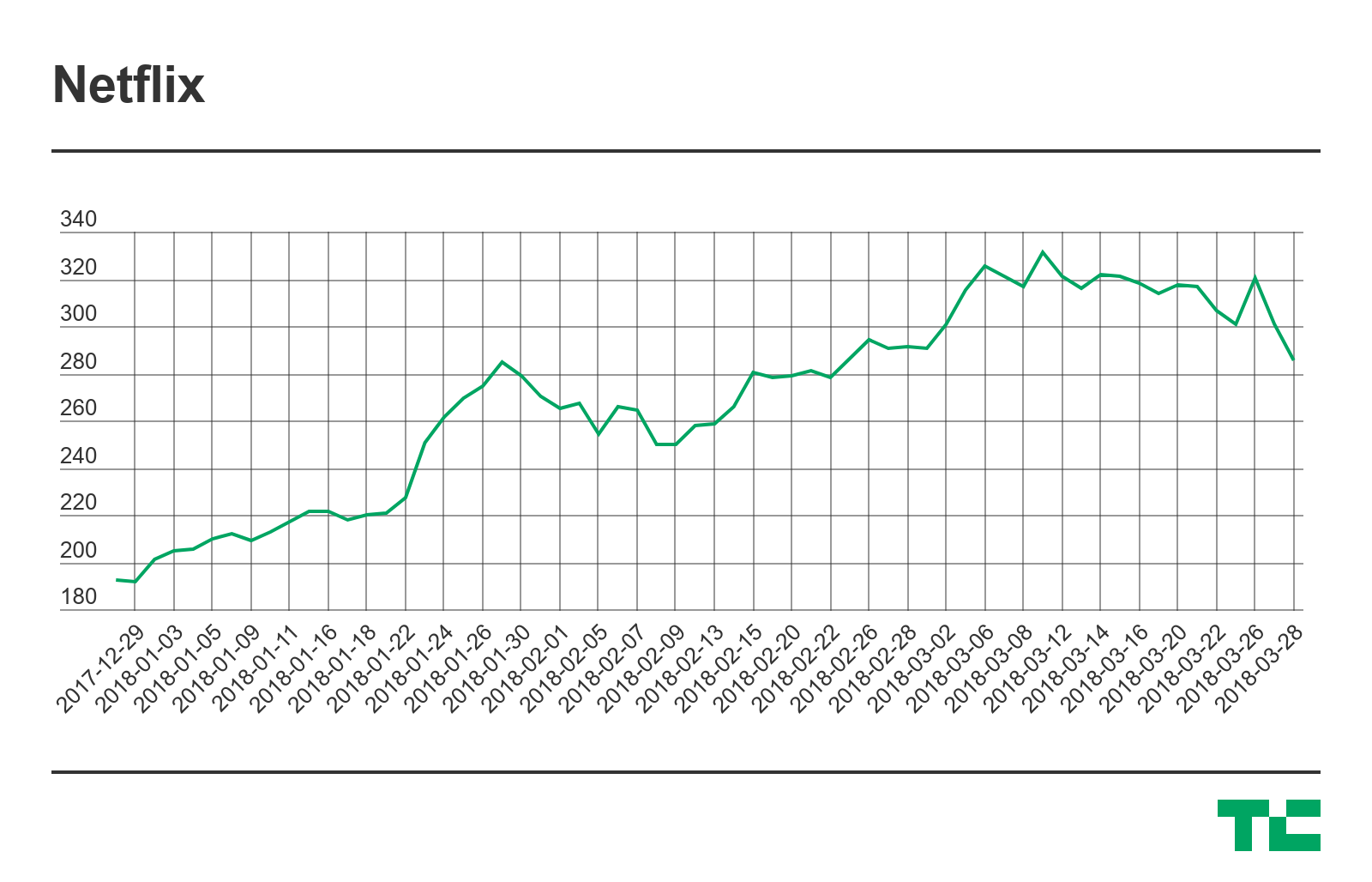
Netflix shares have nearly doubled in the past year. 

The company has a market cap of $124 billion.

28 Mar 2018

Netflix adds former White House security advisor Susan Rice to its board

Netflix has added a board member with some big political connections: Susan Rice, who worked in the Obama administration as national security advisor and ambassador to the UN.

“For decades, she has tackled difficult, complex global issues with intelligence, integrity and insight and we look forward to benefiting from her experience and wisdom,” said founder and CEO Reed Hastings in a statement.

Rice directed the National Security Council staff between 2013 and 2017 and also provided the daily national security briefing to President Obama.

Other members of Netflix’s board include tech execs like Microsoft president Brad Smith and Zillow co-founder Richard Barton, and investors from TCV and Redpoint.

Netflix shares have nearly doubled in the past year. 

The company has a market cap of $124 billion.