
27 Mar 2018

Comparing Apple, Google and Microsoft’s education plays

Today’s Apple event in Chicago was about more than just showing off new hardware and software in the classroom — the company was reasserting itself as a major player in education. The category has long been a lynchpin in Apple’s strategy — something that Steve Jobs held near and dear.

Any ’80s kid will tell you that Apple was a force to be reckoned with — Apple computers were mainstays in computer labs across the country. It’s always been a good fit for a company focused on serving creators, bringing that extra bit of pizzazz to the classroom. In recent years, however, there’s been a major shift. The Chromebook has become the king of the classroom, thanks in no small part to the inexpensive hardware and limited spec requirements.

Based on Google’s early positioning of the category, it appears that the Chromebook’s classroom success even managed to catch its creators off-guard. The company has since happily embraced that success — while Microsoft appears to have shifted its own approach in response to Chrome OS’s success.

Apple’s own responses have been less direct, and today’s event was a reconfirmation of the company’s commitment to the iPad as the centerpiece of its educational play. If Apple can be seen as reacting, it’s in the price of the product. Gone are the days that schools’ entire digital strategy revolved around a bunch of stationary desktops in a dusty old computer lab.

But while education has been a piece of the iPad strategy since the product launched eight years ago next month, the tablet was long price-prohibitive. The company has addressed that through school discounts and lowering the overall cost of the line, as the tablet market has started to stagnate, but the last couple of upgrades have dropped pricing down to a far more approachable $299.

A one-iPad-per-child approach is still out of the realm of plenty of public schools, but it’s easy to see how the product could be appealing for school IT managers looking to roll out the iPad cart to classrooms. And additions like Managed Apple IDs have made it easier for multiple kids to share the same device, as a cost-cutting measure.

Along with devoted educational software, the company demonstrated how existing apps like Clips and Garage Band can be repurposed within the educational context to help bring a level of multimedia interactivity to the learning process. The company even sat us down in classrooms today to walk us through some of those projects.

Of course, right now, the market is Google’s to lose. The company reportedly controls around 60 percent of the market. Much like Android, the heart of Chrome OS’s approach is an embrace of third-party manufacturers, which have helped keep the cost down.

Schools with tight budgets can pick up a dirt-cheap Chromebook for $100-$150 less than an iPad. It’s easy to see how that’s an appealing proposition, especially when broken units are just par for the course in the hands of students.

In spite of its success, Google’s certainly not an island. Yesterday’s announcement of the first Chromebook tablet was both a response to Apple’s involvement in the space and a preemptive strike against today’s event, though the new Acer device is actually $30 more expensive than Apple’s educational discount. The company sort of shot itself in the foot on that one, but expect to see more competitively priced slates from other hardware partners.

Microsoft held its own education event in May of last year, showing off its solution to Chrome OS. Thus far, however, Windows 10 S has been kind of a mess, thanks in no small part to some pretty convoluted messaging on the company’s part. The company plans to streamline things a bit by making 10 S a mode inside of Windows 10.

The idea is basically the same, either way, offering a stripped-down version of the operating system that can be locked down from outside apps, so teachers can make sure nothing unseemly makes its way onto the device. It takes less of a toll on the hardware, with the company introducing a new line of PCs starting at $189 — a clear swipe at the Google’s dominance.

In fact, the company came out and said as much in the accompanying press material, saying the products were “the same price as Chromebooks, with none of the compromises.” And while Google’s online office applications have grown in popularity, Microsoft software is still nearly ubiquitous in offices, so there’s something to be said for prepping kids for the real world through use of such applications.
27 Mar 2018

This electric 1959 Mini Cooper is everything that’s right in the world

Take a break from the dumpster fire that is 2018. This electric Mini will make you smile.

Built as a show piece, the car features an electric powertrain in a restored 1959 Mini Cooper. Of course it’s red with a white stripe, and, of course, there are rally lights across the grill. This is how a Mini should look, and an electric powertrain should make it feel the part, too.

Minis are supposed to be oversized go-karts that go like mad with near-instant acceleration. And that’s the best part of electric vehicles: instant torque that produces insane acceleration.

Mini hasn’t revealed the range or capabilities of this show car. Its purpose is mostly to draw attention to Mini’s other electric vehicles and concepts. Mini has been producing electric vehicles since 2008 when it created a limited run of Mini E, which was used to make the BMW i3. More recently Mini announced the Mini Electric Concept and intends to put it on the market by 2019.

But forget about that new car that’s sure to be overloaded with screens, LEDs and silly things like airbags. None of that stuff will make people smile as much as a classic Mini Cooper.

[gallery ids="1613122,1613121,1613120,1613119,1613118,1613117,1613116"]
27 Mar 2018

Inquiry finds FBI sued Apple to unlock phone without considering all options

The Office of the Inspector General has issued its report on the circumstances surrounding the FBI’s 2016 lawsuit attempting to force Apple to unlock an iPhone as part of a criminal investigation. While it stops short of saying the FBI was untruthful in its justification of going to court, the report is unsparing of the bureaucracy and clashing political motives that ultimately undermined that justification.

The official narrative, briefly summarized, is that the FBI wanted to get into a locked iPhone allegedly used in the San Bernardino attack in late 2015. Then-director Comey explained on February 9 that the Bureau did not have the capability to unlock the phone, and that as Apple was refusing to help voluntarily, a lawsuit would be filed compelling it to assist.

But then, a month later, a miracle occurred: a third-party had come forward with a working method to unlock the phone and the lawsuit would not be necessary after all.

Though this mooted the court proceedings, which were dropped, it only delayed the inevitable and escalating battle between tech and law enforcement — specifically the “going dark” problem of pervasive encryption. Privacy advocates saw the suit as a transparent (but abortive) attempt to set a precedent greatly expanding the extent to which tech companies would be required to help law enforcement. Apple of course fought tooth and nail.

In 2016 the OIG was contacted by Amy Hess, a former FBI Executive Assistant Director, who basically said that the process wasn’t nearly so clean as the Bureau made it out to be. In the course of its inquiries the Inspector General did find that to be the case, though although the FBI’s claims were not technically inaccurate or misleading, they also proved simply to be incorrect — and it is implied that they may have been allowed to be incorrect in order to further the “going dark” narrative.

The full report is quite readable (if you can mentally juggle the numerous acronyms), but the findings are essentially as follows.

Although Comey stated on February 9 that the FBI did not have the capability to unlock the phone and would seek legal remedy, the inquiry found that the Bureau had not exhausted all the avenues available to it, including some rather obvious ones.

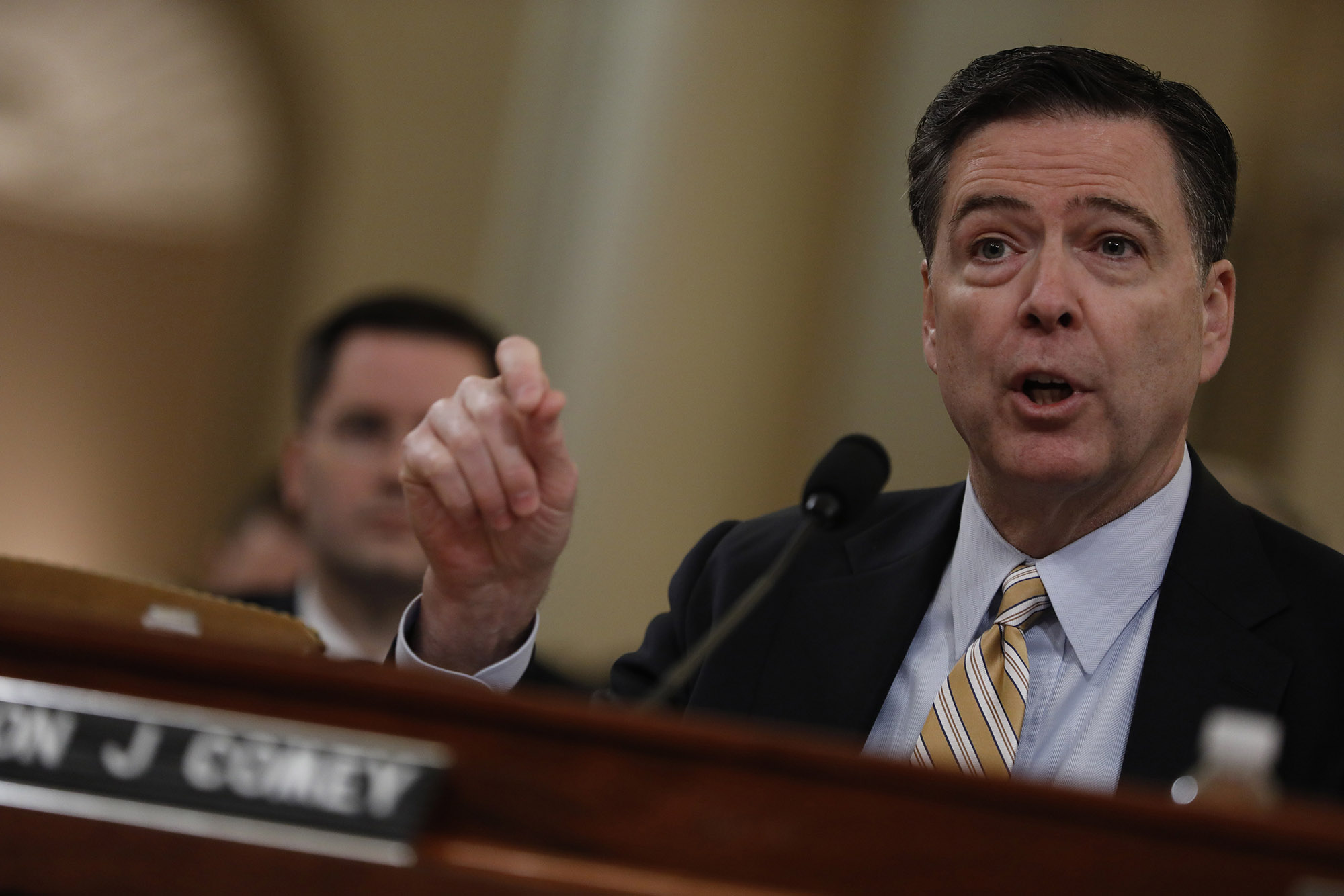
Comey at a hearing in 2017

For instance, one senior engineer was tasked with asking trusted vendors if they had anything that could help — two days after Comey already said the FBI had no options left. Not only that, but there was official friction over whether classified tools generally reserved for national security purposes should be considered for this lesser, though obviously serious, criminal case.

In the first case, it turned out that yes, a vendor did have a solution “90 percent” done, and was happy to finish it up over the next month. How could the director have said that the FBI didn’t have the resources to do this, when it had not even asked its usual outside sources for help?

In the second, it’s still unclear whether there in fact exist classified tools that could have been brought to bear on the device in question. Testimony is conflicting on this point, with some officials saying that there was a “line in the sand” drawn between classified and unclassified tools, and another saying it was just a matter of preference. Regardless, those involved were less than forthcoming even within the Bureau, and even internal leadership was left wondering if there were solutions they hadn’t considered.

Hess, who brought the initial complaint to the OIG, was primarily concerned not that there was confusion in the ranks — it’s a huge organization and communication can be difficult — but that the search for a solution was deliberately allowed to fail in order that the case could act as a precedent advantageous to the FBI and other law enforcement agencies. Comey was known to be very concerned with the “going dark” issue and would likely have pursued such a case with vigor.

So the court case, Hess implied, was the real goal, and the meetings early in 2016 were formalities, nothing more than a paper trail to back up Comey’s statements. When a solution was actually found, because an engineer had taken initiative to ask around, officials hoping for a win in court were dismayed:

She became concerned that the CEAU Chief did not seem to want to find a technical solution, and that perhaps he knew of a solution but remained silent in order to pursue his own agenda of obtaining a favorable court ruling against Apple. According to EAD Hess, the problem with the Farook iPhone encryption was the “poster child” case for the Going Dark challenge.

The CEAU Chief told the OIG that, after the outside vendor came forward, he became frustrated that the case against Apple could no longer go forward, and he vented his frustration to the ROU Chief. He acknowledged that during this conversation between the two, he expressed disappointment that the ROU Chief had engaged an outside vendor to assist with the Farook iPhone, asking the ROU Chief, “Why did you do that for?”

While this doesn’t really imply a pattern of deception, it does suggest a willingness and ability on the part of FBI leadership to manipulate the situation to its advantage. A judge saying the likes of Apple must do everything possible to unlock an iPhone, and all forward ramifications of that, would be a tremendous coup for the Bureau and a major blow to user privacy.

The OIG ultimately recommends that the FBI “improve communication and coordination” so that this type of thing doesn’t happen (and it is reportedly doing so). Ironically, if the FBI had communicated to itself a bit better, the court case likely would have continued under pretenses that only its own leadership would know were false.

27 Mar 2018

‘Late Show’ will have fewer commercials tonight, thanks to Google sponsorship

Stephen Colbert will get an extra segment on his show tonight, funded by a sponsorship from Google.

Variety reports that CBS and Google have struck a deal that will reduce commercial time on Colbert’s Late Show. He’ll fill that extra time with a new segment (it’s not clear where it will fall during the show, or what the content will be), which he’ll introduce with a plug for Google’s new smart doorbell: “More Show Presented by: Google’s Nest Hello video doorbell.”

In some ways, this might just feel like the latest twist on the old-school TV sponsorship, but it also helps advertisers reach audiences who might otherwise skip through the commercials, or who watch the show through digital platforms like Google-owned YouTube (where the Late Show has been surging).

And again, it should mean more Colbert and less advertising for viewers.

Jo Ann Ross, president and chief advertising officer at CBS, told Variety that this is “just the beginning: We will continue to work with the show, and across all of our dayparts, to innovate and expand on what we offer our advertisers.”

27 Mar 2018

Uber will not reapply for self-driving car permit in California

Uber, after suspending its self-driving car operations in all markets following a fatal crash, has decided not to reapply for its self-driving car permit in California. Uber’s current permit in California expires March 31.

“We proactively suspended our self-driving operations, including in California, immediately following the Tempe incident,” an Uber spokesperson told TechCrunch. “Given this, we decided to not reapply for a California permit with the understanding that our self-driving vehicles would not operate in the state in the immediate future.”

Uber’s decision not to reapply comes in tandem with a letter the DMV sent to Uber’s head of public affairs, Austin Heyworth, today. The letter pertains to the fatal self-driving car crash that happened in Tempe, Arizona last week.

“In addition to this decision to suspend testing throughout the country, Uber has indicated that it will not renew its current permit to test autonomous vehicles in California,” DMV Deputy Director/Chief Counsel Brian Soublet wrote in the letter. “By the terms of its current permit, Uber’s authority to test autonomous vehicles on California public roads will end on March 31, 2018.”

This comes following Arizona’s decision to block Uber’s self-driving cars in its city. In Arizona Governor Doug Ducey’s letter to Uber CEO Dara Khosrowshahi, Ducey said the video from the accident was “disturbing and alarming.”

California requires a number of things from autonomous car makers, like special vehicle registrations for the cars and the car operators, accident report submissions as well as reports pertaining to when and how often a safety driver needs to take over.

If Uber wants to at some point continue its self-driving car tests in California, the company will need to apply for a new permit, as well as “address any follow-up analysis or investigations from the recent crash in Arizona,” Soublet wrote. Uber may also need to set up a meeting with the DMV.

27 Mar 2018

Pure Storage teams with Nvidia on GPU-fueled Flash storage solution for AI

As companies gather increasing amounts of data, they face a choice over bottlenecks. They can have it in the storage component or the backend compute system. Some companies have attacked the problem by using GPUs to streamline the back end problem or Flash storage to speed up the storage problem. Pure Storage wants to give customers the best of both worlds.

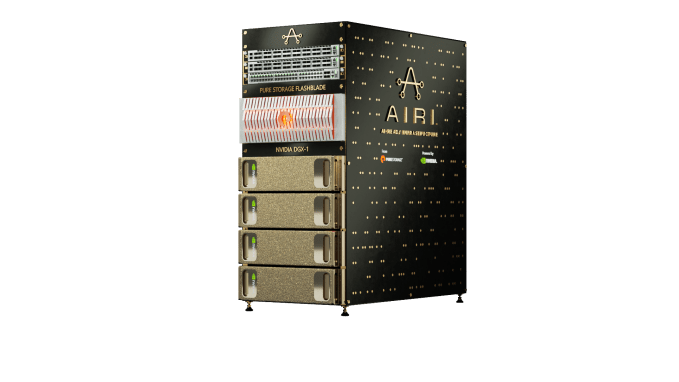
Today it announced, Airi, a complete data storage solution for AI workloads in a box.

Under the hood Airi starts with a Pure Storage FlashBlade, a storage solution that Pure created specifically with AI and machine learning kind of processing in mind. NVidia contributes the pure power with four NVIDIA DGX-1 supercomputers, delivering four petaFLOPS of performance with NVIDIA ® Tesla ® V100 GPUs. Arista provides the networking hardware to make it all work together with Arista 100GbE switches. The software glue layer comes from the NVIDIA GPU Cloud deep learning stack and Pure Storage AIRI Scaling Toolkit.

Photo: Pure Storage

One interesting aspect of this deal is that the FlashBlade product operates as a separate product inside of the Pure Storage organization. They have put together a team of engineers with AI and data pipeline understanding with the focus inside the company on finding ways to move beyond the traditional storage market and find out where the market is going.

This approach certainly does that, but the question is do companies want to chase the on-prem hardware approach or take this kind of data to the cloud. Pure would argue that the data gravity of AI workloads would make this difficult to achieve with a cloud solution, but we are seeing increasingly large amounts of data moving to the cloud with the cloud vendors providing tools for data scientists to process that data.

If companies choose to go the hardware route over the cloud, each vendor in this equation — whether Nvidia, Pure Storage or Arista — should benefit from a multi-vendor sale. The idea ultimately is to provide customers with a one-stop solution they can install quickly inside a data center if that’s the approach they want to take.

27 Mar 2018

VW Atlas Cross Sport concept shows hybrids have an exciting future

If this is the future of hybrids, I’m all in. Volkswagen just took the cover off its Atlas Cross Sport SUV, which features a plug-in hybrid drive powertrain that features two electric motors and a V6 engine. Together, they produce 355 horsepower. And it looks great, too.

The inside and out of this concept is loaded with future-leaning technology including a massive screen, digital cockpit and a seemingly endless amount of LEDs. The center infotainment system can be controlled by touch or gesture though since this example is just a concept, it’s unclear if gesture controls will make it into production.

[gallery ids="1612263,1612264,1612265,1612266,1612267,1612268"]

The powertrain is the most exciting part. The Atlas Cross Sport is equipped with the same 3.6L V6 engine found in the standard Atlas. But the Cross Sport features dual electric motors with a 54 hp motor in the front and a rear motor that outputs 114 hp. An 18.0 kWh lithium-ion battery housed in the vehicle’s central tunnel powers the battery. Volkswagen says its configuration allows the output to be 355 HP, up from 310 hp if a conventional hybrid system was used.

The company expects the SUV to hit 60 mph in 6.5 seconds, thus proving it’s worthy of the Sport badging as the regular Atlas runs 60 mph at 7.9 seconds.

The concept features several drive modes though it’s not clear at this time if the production vehicle will have similar abilities. In E-Mode, the vehicle drives on just the rear motor and has a range of around 26 miles. Like the Chevy Volt

Volkswagen says this is headed to production, too, with a 2019 release. The company’s Chattanooga, Tennessee facility will build the vehicle.

This concept is built off the MQB platform that’s responsible for the seven-seat Atlas. In this variation, the vehicle is 7.5 inches shorter than the Atlas though the wheelbase is the same. It shows the flexibility of the platform, which can result in a traditional 7-seat people hauler or a 5-passenger sports SUV with different powertrains and dimensions.

Volkswagen is not alone in adding hybrid powertrains to SUVs. Ford announced two weeks ago it intends to offer five hybrid SUV models in the coming years.

Hybrid systems could see a resurgence in popularity as models such as the Cross Sport show they can be used for more than just increasing fuel economy.

27 Mar 2018

Watch Apple’s iPad education event here

Apple didn’t livestream this morning’s education event at Lane Tech High School in Chicago, so reading along live was the next best thing. Thankfully, for those who weren’t crammed into the auditorium seating with the rest of us, the whole shebang is now online and viewable through Apple’s site.

The event was, as expected, focused entirely on Apple’s education play, as the company looks to reassert itself in school in the wake of the massive success of Chromebooks. Tim Cook and company took a deep dive into the software solutions aimed helping teachers streamline the in-class iPad usage, along with the various ways in which mainstream Apple apps like Clips and Garage Band are being used in the class.

And then, of course, there are those new, cheap, iPads.

27 Mar 2018

Nvidia’s Jensen Huang cautions patience in judging Uber AV engineers

Nvidia CEO Jensen Huang faced a number of questions regarding Uber’s recent self-driving test vehicle accident, in which an SUV equipped with Uber’s autonomous technology struck and killed 49-year old Elaine Herzberg in Tempe, Arizona.

Earlier on Tuesday, Reuters broke the news that Nvidia was suspending its own autonomous testing programs around the world. Huang didn’t address the suspension on stage, but he did express sympathy for the victim during the keynote, which he reiterated during the Q&A.

“First of all, what happened is tragic and sad,” Huang said in response to a question about whether he believes the accident might impact appetite among other companies for developing autonomous technologies. “It also is a reminder of exactly why we’re doing this.”

Huang explained that in fact, as a result of the accident, he actually believes that investment will rise in self-driving system design, specifically because previously companies might have thought they could get away with meager or minimal investment in those areas, and instead will be realizing it’s the one area where they can’t compromise in favor of attempting to lower costs.

“I think that the world is going to, as a result, be much more serious about investing in development systems, which is good,” he said.

Meanwhile, Huang also urged caution regarding anyone being too quick to judge Uber’s engineers or their intentions and diligence.

Huang said that Uber has engineers who are “intensely serious about what they do,” and said that he “wouldn’t judge them” until we have more information about what occurred with the accident. “We don’t know exactly what happened,” he said. “And we gotta give them the chance to go and understand for themselves.”

On the subject of Nvidia’s suspension of its own program, and the motivation behind doing so, Huang said it was all about engaging an abundance of caution in an area where safety must always come first.

“We use extreme caution, and the best practices that we know in testing our cars,” he said. “First of all, it’s of course a safety concern, because our engineers are actually in the car. So it’s something we take incredibly seriously.”

He added that the reason for the suspension was “simple,” since the accident means that there’s now “a new data point” that has to be taken into consideration, and as “good engineers,” Nvidia must “wait to see what we can learn from the incident” before continuing testing activities.

27 Mar 2018

Nvidia’s Jensen Huang cautions patience in judging Uber AV engineers

Nvidia CEO Jensen Huang faced a number of questions regarding Uber’s recent self-driving test vehicle accident, in which an SUV equipped with Uber’s autonomous technology struck and killed 49-year old Elaine Herzberg in Tempe, Arizona.

Earlier on Tuesday, Reuters broke the news that Nvidia was suspending its own autonomous testing programs around the world. Huang didn’t address the suspension on stage, but he did express sympathy for the victim during the keynote, which he reiterated during the Q&A.

“First of all, what happened is tragic and sad,” Huang said in response to a question about whether he believes the accident might impact appetite among other companies for developing autonomous technologies. “It also is a reminder of exactly why we’re doing this.”

Huang explained that in fact, as a result of the accident, he actually believes that investment will rise in self-driving system design, specifically because previously companies might have thought they could get away with meager or minimal investment in those areas, and instead will be realizing it’s the one area where they can’t compromise in favor of attempting to lower costs.

“I think that the world is going to, as a result, be much more serious about investing in development systems, which is good,” he said.

Meanwhile, Huang also urged caution regarding anyone being too quick to judge Uber’s engineers or their intentions and diligence.

Huang said that Uber has engineers who are “intensely serious about what they do,” and said that he “wouldn’t judge them” until we have more information about what occurred with the accident. “We don’t know exactly what happened,” he said. “And we gotta give them the chance to go and understand for themselves.”

On the subject of Nvidia’s suspension of its own program, and the motivation behind doing so, Huang said it was all about engaging an abundance of caution in an area where safety must always come first.

“We use extreme caution, and the best practices that we know in testing our cars,” he said. “First of all, it’s of course a safety concern, because our engineers are actually in the car. So it’s something we take incredibly seriously.”

He added that the reason for the suspension was “simple,” since the accident means that there’s now “a new data point” that has to be taken into consideration, and as “good engineers,” Nvidia must “wait to see what we can learn from the incident” before continuing testing activities.