
27 Mar 2018

Data is not the new oil


It’s easier than ever to build software, which makes it harder than ever to build a defensible software business. So it’s no wonder investors and entrepreneurs are optimistic about the potential of data to form a new competitive advantage. Some have even hailed data as “the new oil.” We invest exclusively in startups leveraging data and AI to solve business problems, so we certainly see the appeal — but the oil analogy is flawed.

In all the enthusiasm for big data, it’s easy to lose sight of the fact that all data is not created equal. Startups and large corporations alike boast about the volume of data they’ve amassed, ranging from terabytes of data to quantities surpassing all of the information contained in the Library of Congress. Quantity alone does not make a “data moat.”

Firstly, raw data is not nearly as valuable as data employed to solve a problem. We see this in the public markets: companies that serve as aggregators and merchants of data, such as Nielsen and Acxiom, sustain much lower valuation multiples than companies that build products powered by data in combination with algorithms and ML, such as Netflix or Facebook. The current generation of AI startups recognize this difference and apply machine learning models to extract value from the data they collect.
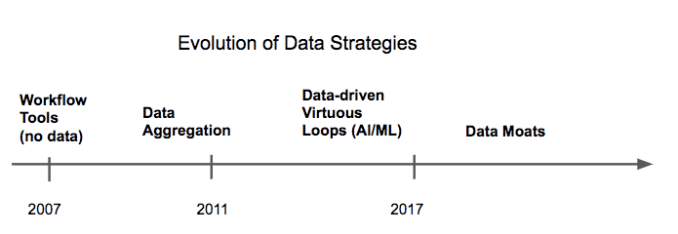
Even when data is put to work powering ML-based solutions, the size of the data set is only one part of the story. The value of a data set, the strength of a data moat, comes from context. Some applications require models to be trained to a high degree of accuracy before they can provide any value to a customer, while others need little or no data at all. Some data sets are truly proprietary, others are readily duplicated. Some data decays in value over time, while other data sets are evergreen. The application determines the value of the data.

Defining the “data appetite”

Machine learning applications can require widely different amounts of data to provide valuable features to the end user.

MAP threshold

In the cloud era, the idea of the minimum viable product (or MVP) has taken hold — that collection of software features which has just enough value to seek initial customers. In the intelligence era, we see the analog emerging for data and models: the minimum level of accurate intelligence required to justify adoption. We call this the minimum algorithmic performance (MAP).

Most applications don’t require 100 percent accuracy to create value. For example, a productivity tool for doctors might initially streamline data entry into electronic health record systems, but over time could automate data entry by learning from what doctors enter in the system. In this case, the MAP is zero, because the application has value from day one based on software features alone. Intelligence can be added later. However, solutions where AI is central to the product (for example, a tool to identify strokes from CT scans), would likely need to equal the accuracy of status quo (human-based) solutions. In this case the MAP is to match the performance of human radiologists, and an immense volume of data might be needed before a commercial launch is viable.

Performance threshold

Not every problem can be solved with near 100 percent accuracy. Some problems are too complex to fully model given the current state of the art; in that case, volume of data won’t be a silver bullet. Adding data might incrementally improve the model’s performance, but quickly hit diminishing marginal returns.

At the other extreme, some problems can be solved with near 100 percent accuracy with a very small training set, because the problem being modeled is relatively simple, with few dimensions to track and few variations in outcome.

In short, the amount of data you need to effectively solve a problem varies widely. We call the amount of training data needed to reach viable levels of accuracy the performance threshold.
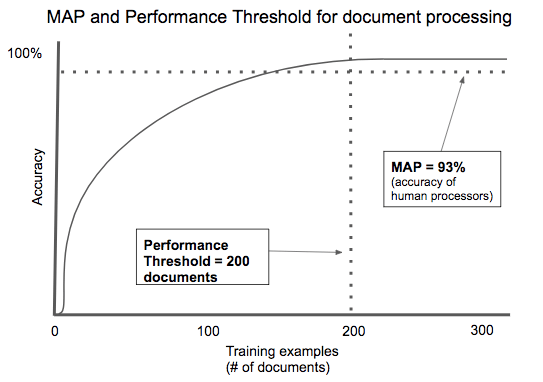
AI-powered contract processing is a good example of an application with a low performance threshold. There are thousands of contract types, but most of them share key fields: the parties involved, the items of value being exchanged, time frame, etc. Specific document types like mortgage applications or rental agreements are highly standardized in order to comply with regulation. Across multiple startups, we’ve seen algorithms that automatically process documents needing only a few hundred examples to train to an acceptable degree of accuracy.

Entrepreneurs need to thread a needle. If the performance threshold is high, you’ll have a bootstrap problem acquiring enough data to create a product to drive customer usage and more data collection. Too low, and you haven’t built much of a data moat!

Stability threshold

Machine learning models train on examples taken from the real-world environment they represent. If conditions change over time, gradually or suddenly, and the model doesn’t change with it, the model will decay. In other words, the model’s predictions will no longer be reliable.

For example, Constructor.io is a startup that uses machine learning to rank search results for e-commerce websites. The system observes customer clicks on search results and uses that data to predict the best order for future search results. But e-commerce product catalogs are constantly changing. A model that weighs all clicks equally, or trained only on a data set from one period of time, risks overvaluing older products at the expense of newly introduced and currently popular products.

Keeping the model stable requires ingesting fresh training data at the same rate that the environment changes. We call this rate of data acquisition the stability threshold.

Perishable data doesn’t make for a very good data moat. On the other hand, ongoing access to abundant fresh data can be a formidable barrier to entry when the stability threshold is low.

Identifying opportunities with long-term defensibility

The MAP, performance threshold and stability threshold are all central elements to identifying strong data moats.

First-movers may have a low MAP to enter a new category, but once they have created a category and lead it, the minimum bar for future entrants is to equal or exceed the first mover.

Domains requiring less data to reach the performance threshold and less data to maintain that performance (the stability threshold) are not very defensible. New entrants can readily amass enough data and match or leapfrog your solution. On the other hand, companies attacking problems with low performance threshold (don’t require too much data) and a low stability threshold (data decays rapidly) could still build a moat by acquiring new data faster than the competition.

More elements of a strong data moat

AI investors talk enthusiastically about “public data” versus “proprietary data” to classify data sets, but the strength of a data moat has more dimensions, including:

  • Accessibility
  • Time — how quickly can the data be amassed and used in the model? Can the data be accessed instantly, or does it take a significant amount of time to obtain and process?
  • Cost — how much money is needed to acquire this data? Does the user of the data need to pay for licensing rights or pay humans to label the data?
  • Uniqueness — is similar data widely available to others who could then build a model and achieve the same result? Such so-called proprietary data might better be termed “commodity data” — for example: job listings, widely available document types (like NDAs or loan applications), images of human faces.
  • Dimensionality — how many different attributes are described in a data set? Are many of them relevant to solving the problem?
  • Breadth — how widely do the values of attributes vary? Does the data set account for edge cases and rare exceptions? Can data or learnings be pooled across customers to provide greater breadth of coverage than data from just one customer?
  • Perishability — how broadly applicable over time is this data? Is a model trained from this data durable over a long time period, or does it need regular updates?
  • Virtuous loop — can outcomes such as performance feedback or predictive accuracy be used as inputs to improve the algorithm? Can performance compound over time?

Software is now a commodity, making data moats more important than ever for companies to build a long-term competitive advantage. With tech titans democratizing access to AI toolkits to attract cloud computing customers, data sets are one of the most important ways to differentiate. A truly defensible data moat doesn’t come from just amassing the largest volume of data. The best data moats are tied to a particular problem domain, in which unique, fresh, data compounds in value as it solves problems for customers.
27 Mar 2018

Data is not the new oil


It’s easier than ever to build software, which makes it harder than ever to build a defensible software business. So it’s no wonder investors and entrepreneurs are optimistic about the potential of data to form a new competitive advantage. Some have even hailed data as “the new oil.” We invest exclusively in startups leveraging data and AI to solve business problems, so we certainly see the appeal — but the oil analogy is flawed.

In all the enthusiasm for big data, it’s easy to lose sight of the fact that all data is not created equal. Startups and large corporations alike boast about the volume of data they’ve amassed, ranging from terabytes of data to quantities surpassing all of the information contained in the Library of Congress. Quantity alone does not make a “data moat.”

Firstly, raw data is not nearly as valuable as data employed to solve a problem. We see this in the public markets: companies that serve as aggregators and merchants of data, such as Nielsen and Acxiom, sustain much lower valuation multiples than companies that build products powered by data in combination with algorithms and ML, such as Netflix or Facebook. The current generation of AI startups recognize this difference and apply machine learning models to extract value from the data they collect.

Even when data is put to work powering ML-based solutions, the size of the data set is only one part of the story. The value of a data set, the strength of a data moat, comes from context. Some applications require models to be trained to a high degree of accuracy before they can provide any value to a customer, while others need little or no data at all. Some data sets are truly proprietary, others are readily duplicated. Some data decays in value over time, while other data sets are evergreen. The application determines the value of the data.

Defining the “data appetite”

Machine learning applications can require widely different amounts of data to provide valuable features to the end user.

MAP threshold

In the cloud era, the idea of the minimum viable product (or MVP) has taken hold — that collection of software features which has just enough value to seek initial customers. In the intelligence era, we see the analog emerging for data and models: the minimum level of accurate intelligence required to justify adoption. We call this the minimum algorithmic performance (MAP).

Most applications don’t require 100 percent accuracy to create value. For example, a productivity tool for doctors might initially streamline data entry into electronic health record systems, but over time could automate data entry by learning from what doctors enter in the system. In this case, the MAP is zero, because the application has value from day one based on software features alone. Intelligence can be added later. However, solutions where AI is central to the product (for example, a tool to identify strokes from CT scans), would likely need to equal the accuracy of status quo (human-based) solutions. In this case the MAP is to match the performance of human radiologists, and an immense volume of data might be needed before a commercial launch is viable.

Performance threshold

Not every problem can be solved with near 100 percent accuracy. Some problems are too complex to fully model given the current state of the art; in that case, volume of data won’t be a silver bullet. Adding data might incrementally improve the model’s performance, but quickly hit diminishing marginal returns.

At the other extreme, some problems can be solved with near 100 percent accuracy with a very small training set, because the problem being modeled is relatively simple, with few dimensions to track and few variations in outcome.

In short, the amount of data you need to effectively solve a problem varies widely. We call the amount of training data needed to reach viable levels of accuracy the performance threshold.

AI-powered contract processing is a good example of an application with a low performance threshold. There are thousands of contract types, but most of them share key fields: the parties involved, the items of value being exchanged, time frame, etc. Specific document types like mortgage applications or rental agreements are highly standardized in order to comply with regulation. Across multiple startups, we’ve seen algorithms that automatically process documents needing only a few hundred examples to train to an acceptable degree of accuracy.

Entrepreneurs need to thread a needle. If the performance threshold is high, you’ll have a bootstrap problem acquiring enough data to create a product to drive customer usage and more data collection. Too low, and you haven’t built much of a data moat!

Stability threshold

Machine learning models train on examples taken from the real-world environment they represent. If conditions change over time, gradually or suddenly, and the model doesn’t change with it, the model will decay. In other words, the model’s predictions will no longer be reliable.

For example, Constructor.io is a startup that uses machine learning to rank search results for e-commerce websites. The system observes customer clicks on search results and uses that data to predict the best order for future search results. But e-commerce product catalogs are constantly changing. A model that weighs all clicks equally, or trained only on a data set from one period of time, risks overvaluing older products at the expense of newly introduced and currently popular products.

Keeping the model stable requires ingesting fresh training data at the same rate that the environment changes. We call this rate of data acquisition the stability threshold.

Perishable data doesn’t make for a very good data moat. On the other hand, ongoing access to abundant fresh data can be a formidable barrier to entry when the stability threshold is low.

Identifying opportunities with long-term defensibility

The MAP, performance threshold and stability threshold are all central elements to identifying strong data moats.

First-movers may have a low MAP to enter a new category, but once they have created a category and lead it, the minimum bar for future entrants is to equal or exceed the first mover.

Domains requiring less data to reach the performance threshold and less data to maintain that performance (the stability threshold) are not very defensible. New entrants can readily amass enough data and match or leapfrog your solution. On the other hand, companies attacking problems with low performance threshold (don’t require too much data) and a low stability threshold (data decays rapidly) could still build a moat by acquiring new data faster than the competition.

More elements of a strong data moat

AI investors talk enthusiastically about “public data” versus “proprietary data” to classify data sets, but the strength of a data moat has more dimensions, including:

  • Accessibility
  • Time — how quickly can the data be amassed and used in the model? Can the data be accessed instantly, or does it take a significant amount of time to obtain and process?
  • Cost — how much money is needed to acquire this data? Does the user of the data need to pay for licensing rights or pay humans to label the data?
  • Uniqueness — is similar data widely available to others who could then build a model and achieve the same result? Such so-called proprietary data might better be termed “commodity data” — for example: job listings, widely available document types (like NDAs or loan applications), images of human faces.
  • Dimensionality — how many different attributes are described in a data set? Are many of them relevant to solving the problem?
  • Breadth — how widely do the values of attributes vary? Does the data set account for edge cases and rare exceptions? Can data or learnings be pooled across customers to provide greater breadth of coverage than data from just one customer?
  • Perishability — how broadly applicable over time is this data? Is a model trained from this data durable over a long time period, or does it need regular updates?
  • Virtuous loop — can outcomes such as performance feedback or predictive accuracy be used as inputs to improve the algorithm? Can performance compound over time?

Software is now a commodity, making data moats more important than ever for companies to build a long-term competitive advantage. With tech titans democratizing access to AI toolkits to attract cloud computing customers, data sets are one of the most important ways to differentiate. A truly defensible data moat doesn’t come from just amassing the largest volume of data. The best data moats are tied to a particular problem domain, in which unique, fresh, data compounds in value as it solves problems for customers.

27 Mar 2018

Nvidia CEO comments on GPU shortage caused by Ethereum

There’s currently a shortage of Nvidia GPUs and Nvidia’s CEO pointed to Ethereum distributed ledgers as the cause. Today at Nvidia’s GTC conference he spoke to a group of journalists following his keynote address and addressed the shortage.

Huang simply stated that Nvidia is not in the business of cryptocurrency or distributed ledgers. As such, he stated he preferred if his company’s GPUs were used the areas Nvidia is targeting though explained why Nvidia’s products are used for crypto mining.

“[Cryptocurrency] is not our business,” he said. “Gaming is growing and workstation is growing because of ray tracing.” He noted that Nvidia’s high performance business is also growing and these are the areas he wished Nvidia could allocate units for.

Huang explained why crypto miners are using Nvidia’s products echoing what he told me in an interview last week.

“We’re sold out of many of our high-end SKUs, and so it’s a real challenge keeping [graphic cards] in the marketplace for games,” he said, adding “At the highest level the way to think about that is because of the philosophy of cryptocurrency — which is really about taking advantage of distributed high-performance computing — there are supercomputers in the hands of almost everybody in the world so that no singular force or entity that can control the currency.”

So what is he going to do about it? “We have to build a whole lot more,” he told TechCrunch last week. “The video supply chain is working really hard, and you know all of our partners are working around the clock. We’ve got to come closer to the demand of the market. And right now, we’re not anywhere near close to that and so we’re just going to have to keep running.”

27 Mar 2018

Nvidia CEO comments on GPU shortage caused by Ethereum

There’s currently a shortage of Nvidia GPUs and Nvidia’s CEO pointed to Ethereum distributed ledgers as the cause. Today at Nvidia’s GTC conference he spoke to a group of journalists following his keynote address and addressed the shortage.

Huang simply stated that Nvidia is not in the business of cryptocurrency or distributed ledgers. As such, he stated he preferred if his company’s GPUs were used the areas Nvidia is targeting though explained why Nvidia’s products are used for crypto mining.

“[Cryptocurrency] is not our business,” he said. “Gaming is growing and workstation is growing because of ray tracing.” He noted that Nvidia’s high performance business is also growing and these are the areas he wished Nvidia could allocate units for.

Huang explained why crypto miners are using Nvidia’s products echoing what he told me in an interview last week.

“We’re sold out of many of our high-end SKUs, and so it’s a real challenge keeping [graphic cards] in the marketplace for games,” he said, adding “At the highest level the way to think about that is because of the philosophy of cryptocurrency — which is really about taking advantage of distributed high-performance computing — there are supercomputers in the hands of almost everybody in the world so that no singular force or entity that can control the currency.”

So what is he going to do about it? “We have to build a whole lot more,” he told TechCrunch last week. “The video supply chain is working really hard, and you know all of our partners are working around the clock. We’ve got to come closer to the demand of the market. And right now, we’re not anywhere near close to that and so we’re just going to have to keep running.”

27 Mar 2018

Lightspeed just filed for $1.8 billion in new funding, as the race continues

Just a day after General Catalyst, the 18-year-old venture firm, revealed plans in an SEC filing to raise a record $1.375 billion in capital, another firm that we’d said was likely to file any second has done just that.

According to a fresh SEC filing, Lightspeed Venture Partners, also 18 years old, is raising a record $1.8 billion in new capital commitments from its investors, just two years after raising what was then a record for the firm: $1.2 billion in funding across two funds (one early stage and the other for “select” companies in its portfolio that had garnered traction).

Still on our watch list: news of bigger-and-better-than-ever funds from other firms that announced their latest funds roughly two years ago, including Founders Fund, Andreessen Horowitz, and Accel Partners.

The supersizing of venture firms isn’t a shock, as we wrote yesterday — though it’s also not necessarily good for returns, as we also noted. Right now, venture firms are reacting in part to the $100 billion SoftBank Vision Fund, which SoftBank has hinted is merely the first of more gigantic funds it plans to raise, including from investors in the Middle East who’d like to plug more money into Silicon Valley than they’ve been able to do historically.

The game, as ever, has also changed, these firms could argue. For one thing, the size of rounds has soared in recent years, making it easy for venture firms to convince themselves that to “stay in the game,” they need to have more cash at their disposal.

Further, so-called limited partners from universities, pension funds and elsewhere, want to plug more money into venture capital, given the lackluster performance some other asset classes have produced.

When they want to write bigger checks to the funds in which they are already investors, the funds often try accommodating them out of loyalty. (We’re guessing the greater management fees they receive, which are tied to the amount of assets they manage, are also persuasive.)

What’s neglected in this race is the fact that the biggest outcomes can usually be traced to the earlier rounds in which VCs participate. Look at Sequoia’s early investment in Dropbox, for example, or Lightspeed’s early check to Snapchat. No matter the outcome of these companies, short of total failure, both venture firms will have made a mint, unlike later investors that might not be able to say the same.

There is also ample evidence that it’s far harder to produce meaningful returns to investors when managing a giant fund. (This Kaufmann study from 2012 is among the mostly highly cited, if you’re curious.)

Whether raising so much will prove wise for Lightspeed is an open question. What is not in doubt: Lightspeed is right now among the best-performing venture firms in Silicon Valley.

In addition to being the first institutional investor in now publicly traded Snap, the company wrote early checks to MuleSoft, which staged a successful IPO in 2018; in StitchFix, which staged a successful IPO in 2018; in AppDynamics, which sold to Cisco for $3.7 billion last year. It was an early investor in Nimble Storage, which sold to Hewlett Packard Enterprise for just north of $1 billion in cash last March. And just two weeks ago, another of its portfolio companies, Zscaler, also staged a successful IPO.

At a StrictlyVC event hosted last year by this editor, firm cofounders Ravi Mhatre and Barry Eggers talked about their very long “overnight” success story, and about the importance of funding companies early to help them set up durable businesses.

It will be interesting to see whether this new capital is invested in more early-stage deals, or the firm sees growing opportunity to compete at the growth stage. Probably both? Stay tuned.

Pictured, left to right: investors Semil Shah, Ravi Mhatre, and Barry Eggers.

27 Mar 2018

Lightspeed just filed for $1.8 billion in new funding, as the race continues

Just a day after General Catalyst, the 18-year-old venture firm, revealed plans in an SEC filing to raise a record $1.375 billion in capital, another firm that we’d said was likely to file any second has done just that.

According to a fresh SEC filing, Lightspeed Venture Partners, also 18 years old, is raising a record $1.8 billion in new capital commitments from its investors, just two years after raising what was then a record for the firm: $1.2 billion in funding across two funds (one early stage and the other for “select” companies in its portfolio that had garnered traction).

Still on our watch list: news of bigger-and-better-than-ever funds from other firms that announced their latest funds roughly two years ago, including Founders Fund, Andreessen Horowitz, and Accel Partners.

The supersizing of venture firms isn’t a shock, as we wrote yesterday — though it’s also not necessarily good for returns, as we also noted. Right now, venture firms are reacting in part to the $100 billion SoftBank Vision Fund, which SoftBank has hinted is merely the first of more gigantic funds it plans to raise, including from investors in the Middle East who’d like to plug more money into Silicon Valley than they’ve been able to do historically.

The game, as ever, has also changed, these firms could argue. For one thing, the size of rounds has soared in recent years, making it easy for venture firms to convince themselves that to “stay in the game,” they need to have more cash at their disposal.

Further, so-called limited partners from universities, pension funds and elsewhere, want to plug more money into venture capital, given the lackluster performance some other asset classes have produced.

When they want to write bigger checks to the funds in which they are already investors, the funds often try accommodating them out of loyalty. (We’re guessing the greater management fees they receive, which are tied to the amount of assets they manage, are also persuasive.)

What’s neglected in this race is the fact that the biggest outcomes can usually be traced to the earlier rounds in which VCs participate. Look at Sequoia’s early investment in Dropbox, for example, or Lightspeed’s early check to Snapchat. No matter the outcome of these companies, short of total failure, both venture firms will have made a mint, unlike later investors that might not be able to say the same.

There is also ample evidence that it’s far harder to produce meaningful returns to investors when managing a giant fund. (This Kaufmann study from 2012 is among the mostly highly cited, if you’re curious.)

Whether raising so much will prove wise for Lightspeed is an open question. What is not in doubt: Lightspeed is right now among the best-performing venture firms in Silicon Valley.

In addition to being the first institutional investor in now publicly traded Snap, the company wrote early checks to MuleSoft, which staged a successful IPO in 2018; in StitchFix, which staged a successful IPO in 2018; in AppDynamics, which sold to Cisco for $3.7 billion last year. It was an early investor in Nimble Storage, which sold to Hewlett Packard Enterprise for just north of $1 billion in cash last March. And just two weeks ago, another of its portfolio companies, Zscaler, also staged a successful IPO.

At a StrictlyVC event hosted last year by this editor, firm cofounders Ravi Mhatre and Barry Eggers talked about their very long “overnight” success story, and about the importance of funding companies early to help them set up durable businesses.

It will be interesting to see whether this new capital is invested in more early-stage deals, or the firm sees growing opportunity to compete at the growth stage. Probably both? Stay tuned.

Pictured, left to right: investors Semil Shah, Ravi Mhatre, and Barry Eggers.

27 Mar 2018

Bird expands to San Francisco, San Jose and Washington

The smash dockless scooter rental startup, Bird, is expanding beyond its Southern California nest with a new rollout in San Francisco, San Jose, Calif. and Washington, DC, the company said today.

And as his company makes its migration across the country, Bird chief executive Travis VanderZanden is determined not to make the same mistakes that bedeviled his former bosses at Uber .

As part of the rollout, Bird is offering to remit $1 daily for each of its scooters deployed in every city it’s operating in. That’s all part of an outreach effort that Bird is framing as a commitment to “Save Our Sidewalks.”

The initiative, which Bird is encouraging other scooter sharing services like LimeBike, Mobike, Ofo, and Spin to join, includes a commitment to collect vehicles every night; reposition them to meet demand in the mornings; provide regular maintenance; and only add capacity when every vehicle in a fleet is used three times per day.

The dollar per day commitment is a nice attempt by Bird to get in front of tariffs or fees that may be imposed by local jurisdictions which could be far higher. For instance, cities would make far more money charging bird a smaller fee per ride rather than per day.

Bird prices its rides at $1 to rent the scooter and then 15 cents per minute traveled.

The company’s services are already available in Los Angeles, San Diego, and Santa Monica, Calif.

27 Mar 2018

Bird expands to San Francisco, San Jose and Washington

The smash dockless scooter rental startup, Bird, is expanding beyond its Southern California nest with a new rollout in San Francisco, San Jose, Calif. and Washington, DC, the company said today.

And as his company makes its migration across the country, Bird chief executive Travis VanderZanden is determined not to make the same mistakes that bedeviled his former bosses at Uber .

As part of the rollout, Bird is offering to remit $1 daily for each of its scooters deployed in every city it’s operating in. That’s all part of an outreach effort that Bird is framing as a commitment to “Save Our Sidewalks.”

The initiative, which Bird is encouraging other scooter sharing services like LimeBike, Mobike, Ofo, and Spin to join, includes a commitment to collect vehicles every night; reposition them to meet demand in the mornings; provide regular maintenance; and only add capacity when every vehicle in a fleet is used three times per day.

The dollar per day commitment is a nice attempt by Bird to get in front of tariffs or fees that may be imposed by local jurisdictions which could be far higher. For instance, cities would make far more money charging bird a smaller fee per ride rather than per day.

Bird prices its rides at $1 to rent the scooter and then 15 cents per minute traveled.

The company’s services are already available in Los Angeles, San Diego, and Santa Monica, Calif.

27 Mar 2018

Lyft commits to closing wage gaps across race and gender

Ahead of Equal Pay Day on April 10, Lyft is committing to conducting yearly equal pay audits to ensure there are no pay discrepancies across race and gender. Last year, Lyft said it found pay discrepancies for less than 1 percent of its employees, and spent about $100,000 to adjust their salaries accordingly. Lyft has yet to conduct its second annual pay audit.

Other companies that have previously committed to equal pay include Facebook, Google and Salesforce. In March, Google disclosed it had spent about $270,000 to close any pay gaps at the company. Salesforce, on the other hand, had more significant gaps, having to spend about $3 million over the span of one year to adjust compensation and bonuses for 11 percent of its employees. Since 2015, Salesforce has spent about $6 million to close the wage gap.

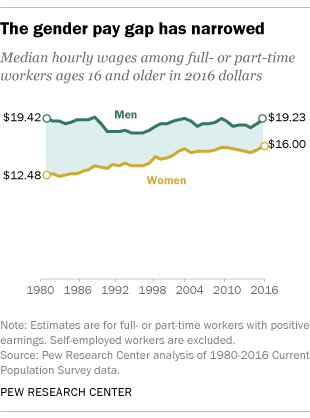
While the gender pay gap has narrowed over recent years, it still exists. In 1980, the median hourly earnings for women was $12.48 compared to $19.42 for men. Fast forward to 2016, and the median hourly earnings for women went up to $16 compared to $19.63 for men, according to the Pew Research Center. That means the median working woman earned 83 cents for every dollar earned by men.

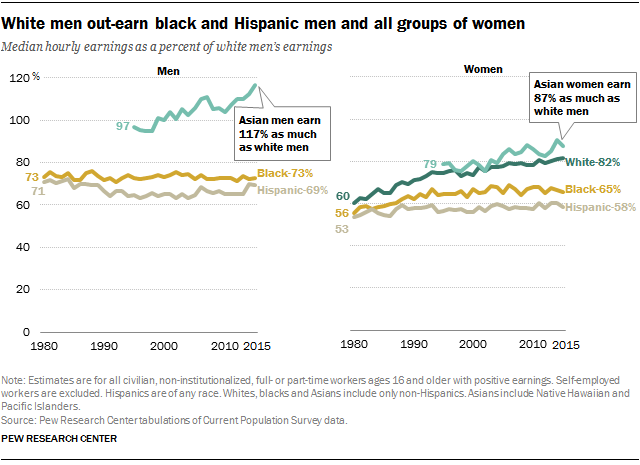
The racial pay gap also continues to exist. Similar to the gender pay gap, the racial pay gap has narrowed in recent years, but white men continue to out-earn black and Hispanic men, and all groups of women.


27 Mar 2018

Ethereum falls after rumors of a powerful mining chip surface

Rumors of a new ASIC mining rig from Bitmain have driven Ethereum prices well below their one-week high of $585. An ASIC – or Application-specific integrated circuit – in the cryptocurrency world is a chip that designers create for the specific purpose of mining a single currency. Early Bitcoin ASICs, for example, drove adoption up and then, in some eyes, centralized Bitcoin mining in a few hands, thereby thwarting the decentralized ethos of die-hard cryptocurrency fans.

According to a CNBC report, analyst Christopher Rolland visited China where he unearthed rumors of a new ASIC chip dedicated to Ethereum mining.

“During our travels through Asia last week, we confirmed that Bitmain has already developed an ASIC [application-specific integrated circuit] for mining Ethereum, and is readying the supply chain for shipments in 2Q18,” analyst Christopher Rolland wrote in a note to clients Monday. “While Bitmain is likely to be the largest ASIC vendor (currently 70-80% of Bitcoin mining ASICs) and the first to market with this product, we have learned of at least three other companies working on Ethereum ASICs, all at various stages of development.”

Historically users have mined Ethereum using GPUs which, in turn, led to the unavailability of GPUs for gaming and graphics. However, an ASIC would change the mining equation entirely, resulting in a certain amount of centralization as big players – including Bitmain – created higher barrier to entry for casual miners.

“Ethereum is of the most profitable coins available for GPU mining,” said Mikhail Avady, founder of TryMining.com. “It’s going to affect a lot of the market. Without understanding the hash power of these Bitmain machines we can’t tell if it will make GPUs obsolete or not.”

“It can be seen as an attack on the network. It’s a centralization problem,” he said.

Avady points out that there is a constant debate among cryptocurrency aficionados regarding ASICs and their effect on the market. Some are expecting a move to more mineable coins including Monero and ZCash.

“What would be bad is if there was only one Ethereum ASIC manufacturer,” he said. “But with Samsung and a couple other players getting into the game it won’t be bad for long.”

There is also concern over ICO launches and actual utility of Ethereum-based smart contract tokens. “The price of ETH is becoming consolidated as people become more realistic about blockchain technology,” said Sky Guo, CEO of Cypherium. “People are looking for higher quality blockchain projects. I believe a rebound in ETH’s price will come soon as panic surrounding regulations begins to fade.”