27 Mar 2018

Apple’s “Pencil” now works with its iWork toolkit

Apple is bringing its pencil to the masses.

The pencil tool will now work across Apple’s suite of iWork tools — including the popular Pages (document creation) Numbers (its spreadsheet app), and Keynote (for presentations) apps — on the low-cost iPad that Apple first brought to market last year.

At an event today in Chicago, Apple announced its latest iPad, in a bid to challenge the dominant player in the education technology — Google (a subsidiary of Alphabet).

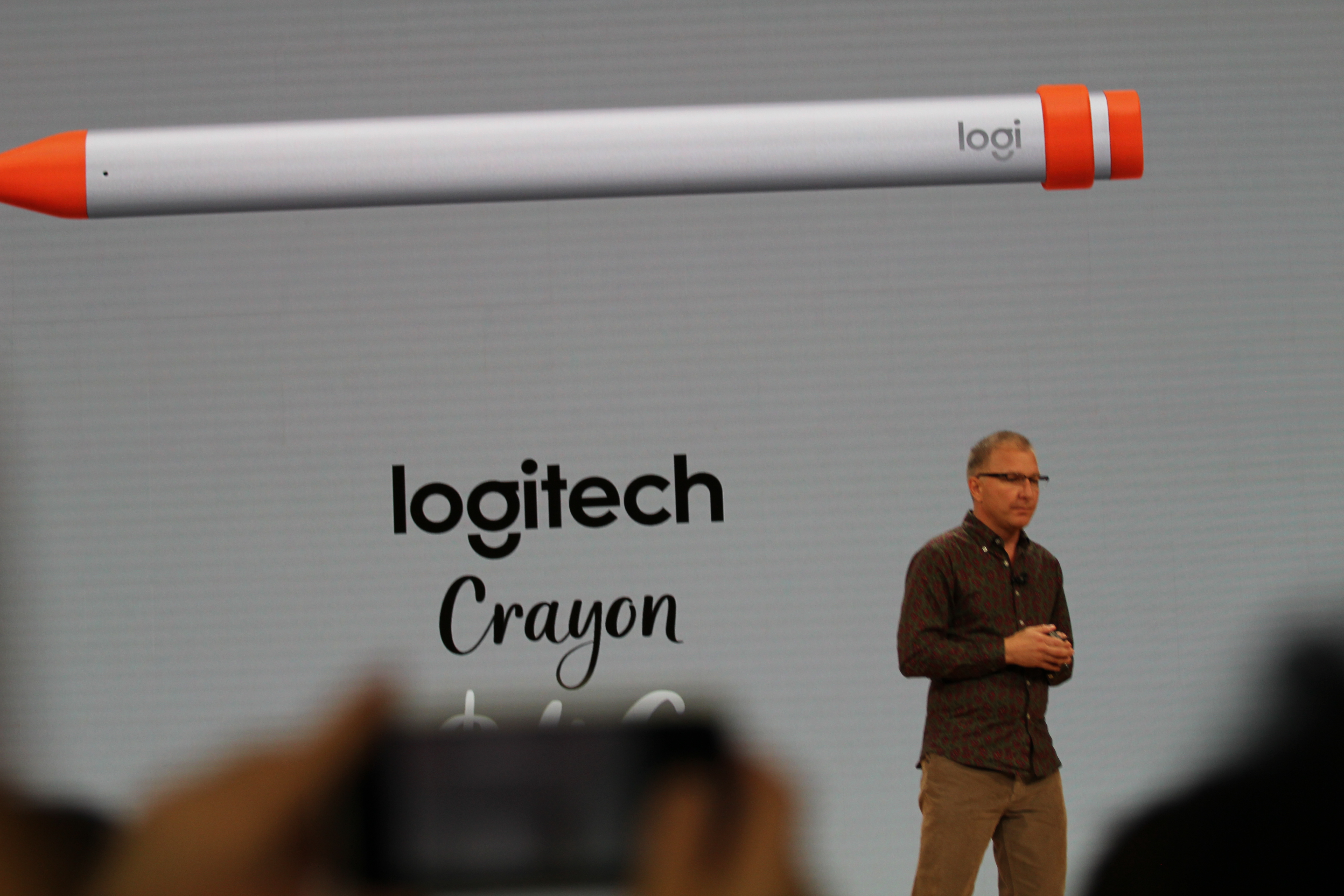
In addition, the company said that Logitech is introducing a $49 pencil stylus called the “crayon” which slashes the cost of the pencil hardware from its previous, $99 price point.


27 Mar 2018

Rackspace may reportedly go public again after a $4.3B deal took it private in 2016

Rackspace, which was taken private in a $4.3 billion deal in August 2016 by private equity firm Apollo Global Management, is reportedly in consideration for an IPO by the firm, according to a report by Bloomberg.

The company could have an enterprise value of up to $10 billion, according to the report. Rackspace opted to go private in an increasingly challenging climate that faced competition on all sides from much more well capitalized companies like Amazon, Microsoft, and Google. Despite getting an early start in the cloud hosting space, Rackspace found itself quickly focusing on services in order to continue to gain traction. But under scrutiny from Wall Street as a public company, it’s harder to make that kind of a pivot.

Bloomberg reports that the firm has held early talks with advisers and may seek to begin the process by the end of the year, and these processes can always change over time. Rackspace offers managed services, including data migration, architecture to support on-boarding, and ongoing operational support for companies looking to work with cloud providers like AWS, Google Cloud and Azure. Since going private, Rackspace acquired Datapipe, and in July said it would begin working with Pivotal to continue to expand its managed services business.

Rackspace isn’t alone in companies that have found themselves opting to go private, such as Dell going private in 2013 in a $24.4 billion deal, in order to resolve issues with its business model without the quarter-to-quarter fiduciary obligations to public investors. Former Qualcomm executive chairman Paul Jacobs, too, expressed some interest in buying out Qualcomm in a process that would take the company private. There are different motivations for all these operations, but each has the same underlying principle: make some agile moves under the purview of a public owner rather than release financial statements every three months or so and watch the stock continue to tumble.

Should Rackspace actually end up going public, it would both catch a wave of successful IPOs like Zscalar and Dropbox — though things could definitely change by the end of the year — as well as an increased need by companies to manage their services in cloud environments. So, it makes sense that the private equity firm would consider taking it public to capitalize on Wall Street’s interest at this time in the latter half.

A spokesperson for Rackspace said the company does not comment on rumors or speculation. We also reached out to Apollo Global Management and will update the post when we hear back.

27 Mar 2018

Rackspace may reportedly go public again after a $4.3B deal took it private in 2016

Rackspace, which was taken private in a $4.3 billion deal in August 2016 by private equity firm Apollo Global Management, is reportedly in consideration for an IPO by the firm, according to a report by Bloomberg.

The company could have an enterprise value of up to $10 billion, according to the report. Rackspace opted to go private in an increasingly challenging climate that faced competition on all sides from much more well capitalized companies like Amazon, Microsoft, and Google. Despite getting an early start in the cloud hosting space, Rackspace found itself quickly focusing on services in order to continue to gain traction. But under scrutiny from Wall Street as a public company, it’s harder to make that kind of a pivot.

Bloomberg reports that the firm has held early talks with advisers and may seek to begin the process by the end of the year, and these processes can always change over time. Rackspace offers managed services, including data migration, architecture to support on-boarding, and ongoing operational support for companies looking to work with cloud providers like AWS, Google Cloud and Azure. Since going private, Rackspace acquired Datapipe, and in July said it would begin working with Pivotal to continue to expand its managed services business.

Rackspace isn’t alone in companies that have found themselves opting to go private, such as Dell going private in 2013 in a $24.4 billion deal, in order to resolve issues with its business model without the quarter-to-quarter fiduciary obligations to public investors. Former Qualcomm executive chairman Paul Jacobs, too, expressed some interest in buying out Qualcomm in a process that would take the company private. There are different motivations for all these operations, but each has the same underlying principle: make some agile moves under the purview of a public owner rather than release financial statements every three months or so and watch the stock continue to tumble.

Should Rackspace actually end up going public, it would both catch a wave of successful IPOs like Zscalar and Dropbox — though things could definitely change by the end of the year — as well as an increased need by companies to manage their services in cloud environments. So, it makes sense that the private equity firm would consider taking it public to capitalize on Wall Street’s interest at this time in the latter half.

A spokesperson for Rackspace said the company does not comment on rumors or speculation. We also reached out to Apollo Global Management and will update the post when we hear back.

27 Mar 2018

Apple introduces a cheap 9.7-inch iPad with Apple Pencil support

Apple is holding a press conference right now in Chicago. And the company unveiled a brand new device — well, sort of. Apple is going to sell a brand new 9.7-inch iPad that works with the Apple Pencil.

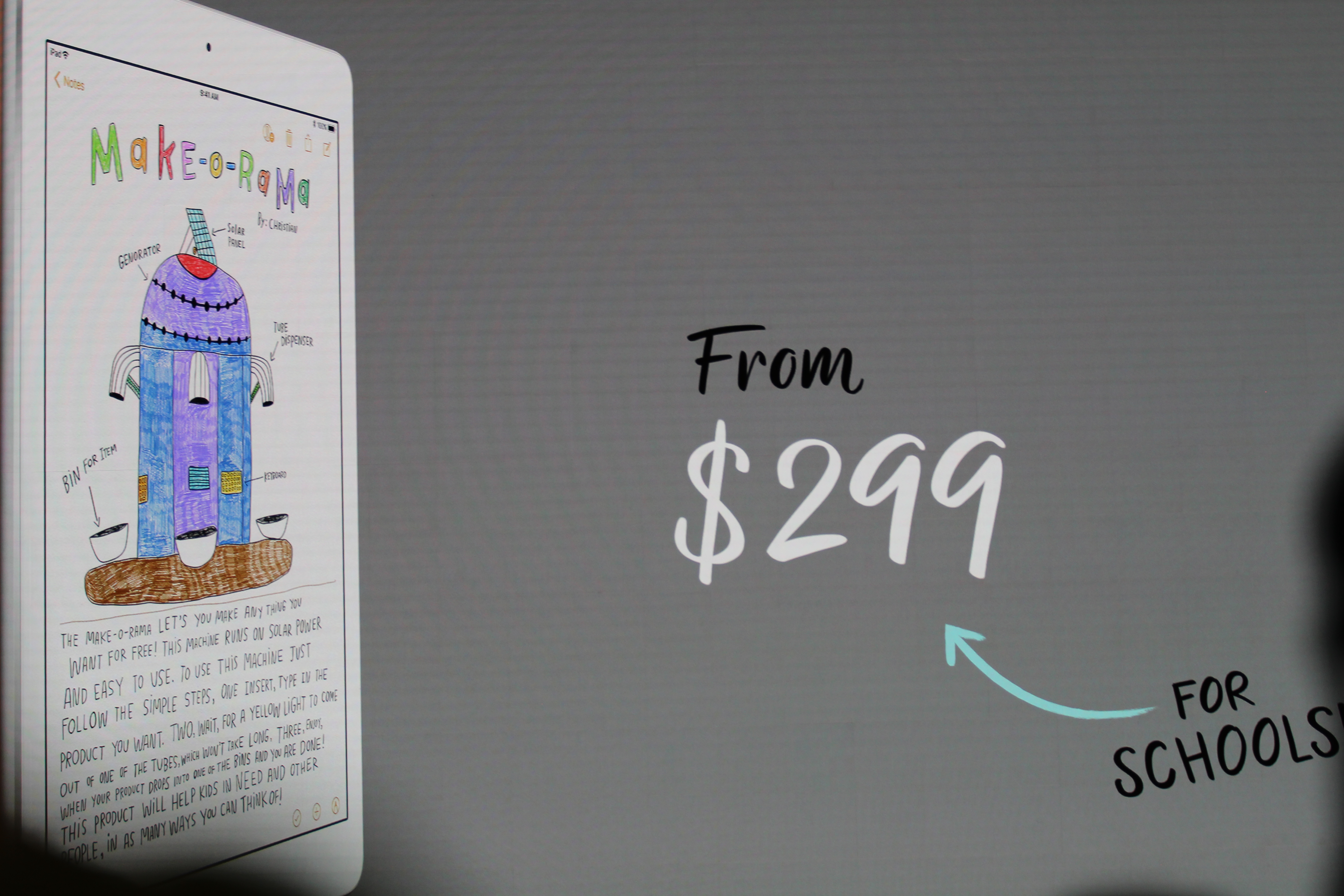
Before today, only (more expensive) iPad Pro models could take advantage of the Pencil. Today’s new iPad will cost $329 for regular consumers. Schools can buy it for $299, just like the previous 9.7-inch iPad.

Based on the introduction video, it looks and works just like the existing 9.7-inch iPad. The bezels are identical and there’s a Touch ID sensor. Apple Pencil support is the only thing that seems new so far on the hardware front.

Existing iPad users will also get new features as Pages, Numbers and Keynote for iOS are all going to be updated to support the Apple Pencil. It’s surprising that those Apple apps haven’t supported the stylus yet, but now it’s possible.

This feature is going to be called Smart Annotation and is going to be available as a beta. Teachers could use it to grade papers for instance.

Apple showed some tech specs. This new iPad should have an LTE version, an 8MP camera, all the sensors you’d expect in an iPad and an A10 Fusion chip. This chip first appeared in the iPhone 7.

Apple also said that there are 200,000 education apps in the App Store right now. The company is trying to position the iPad as a more capable device against Google Chromebooks. And in order to attract schools, Apple is offering 200GB per iCloud account instead of 5GB of free storage.

[gallery ids="1612665,1612668,1612671,1612676,1612678"]
27 Mar 2018

Follow along live from the Apple education iPad event in Chicago

Apple held an education focused event in Chicago today at Lane Technical High School. CEO Tim Cook took the stage and began his announcements with a nod to the student marches that occurred this week in support of gun control.

Cook praised Lane Tech High for having more PHDs coming out of it than any school in the country and highlighted its programming and robotics efforts.

Cook says that Apple has had an education focus for 40 years, from the early days of the company. “We believe that technology could help deliver a truly unique and personalized experience to students and teachers.”

Cook highlighted Apple’s efforts to increase coding efforts and opportunities to vocational schools and high schools including the City Colleges of Chicago with Swift and Swift playgrounds.

Cathleen Richardson ConnectED Program Development Executive at Apple works with classes and teachers to put Apple devices into classrooms. She took the stage to give some examples.

The program is clearly focused on Apple positioning itself as a global supplier of educational instruments and processes to classrooms. Programs in China and London were highlighted.

This event should be viewed in the context that according to FutureSource, new machines running Google software accounted for about 60 percent of what U.S. classrooms received. Apple’s iOS held 12.3 percent and its MacOS had 4.7 percent.

Apple’s Greg Joswiak took the stage to talk about iPad. Joz hasn’t been out on the platform for a hardware launch in a while. He continues the thread of talking about iPad in classrooms allowing students to use them for robotics, music and other kinds of projects. Joz quotes 200,000 ‘apps for education’ on the App Store.

Cassie Williams from Woodberry Down Primary School in London comes on the stage to talk about iPad being implemented in the classrooms that she teaches in.

Up to this point we’ve gotten a lot of Apple talking points about iPad and Apple in schools, basically.

Now, we get a new 9.7″ iPad focused on the education market that can use Apple Pencil just like iPad Pro. Apple also introduced a new version of Pages, Numbers and Keynote that support Apple Pencil drawings and editing. Apple also previewed a feature called Smart Annotation that can mark up a student’s paper right in the Pages app. This feature is still in beta.

Digital book creation also comes to iPad with this new version of iWork.

Apple’s new iPad 9.7″ uses the A10 fusion chip appears in the new iPad. Joz also specifically mentioned that this was more powerful than many Chromebooks. The fact that he chose to mention Chromebooks specifically is surprising, but not shocking given the above context. This is the war that Apple is waging in the classroom.

The iPad is AR capable, and he highlighted some apps that allow students to view museum pieces and artwork. Another app lets students modify interactive landscapes and view them in augmented reality.

The new iPad is the same $329 for consumers and $299 for schools. For sale this week and new iWork apps available this week.

Starting today, student Apple IDs come with 200GB of iCloud storage, up from 5GB. Some new accessories come for the iPad too like Logitech Crayon, a $49 Pencil alternative for schools.

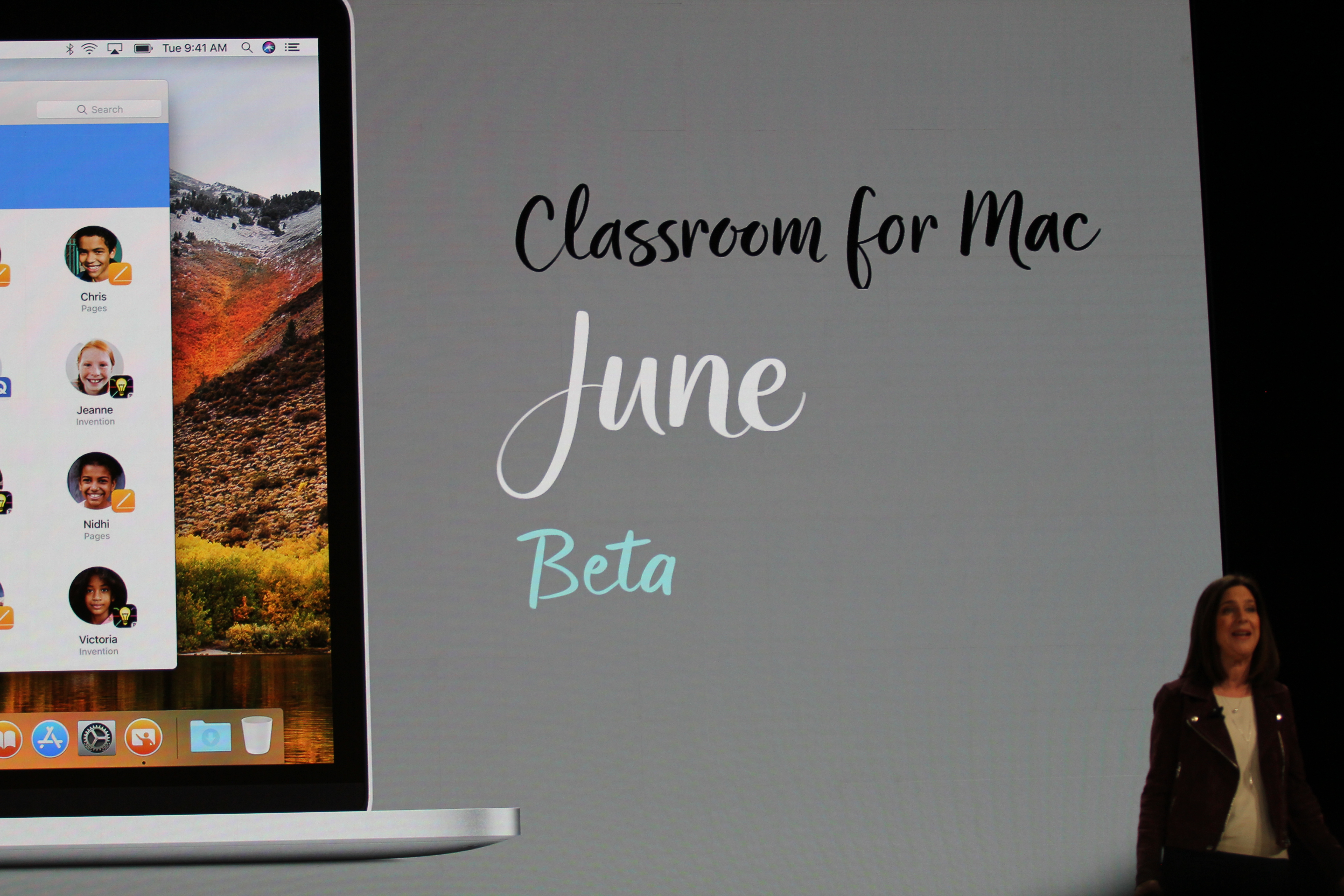
Now we’re on to teacher-focused tool announcements. Classroom, the iPad app that lets teachers manage their students and classrooms is coming to the Mac. It’s available as beta in June.

There’s a new app for teachers too, called Schoolwork.

Schoolwork is a cloud based app that lets you assign handouts, apps and assignments to students. It lets you track handouts for the class and send them. Schoolwork lets teachers assign a specific activity inside of an app, instead of just a whole app. This way they can dive into how a student is completing activities within an app as well, along with detailed views of how the whole classroom is doing in these activities.

Follow along and refresh this post for more.

27 Mar 2018

3D printed rocket maker Relativity raises $35M to simplify satellite launches

LA-based space startup Relativity has raised $35 million in Series B funding, in a new round led by Playground Global, and including existing investors Social Capital, Y Combinator Continuity and Mark Cuban. The funding will help the startup expand its automated, 3D-printing process for manufacturing rockets quickly and with greatly reduced complexity, with the ultimate aim of making it easier and cheaper to send satellites into space.

Relativity’s goal is to introduce a highly automated rocket construction process that relies on nearly 100 percent 3D printed rocket parts, to create custom, mission-specific rockets that can launch payloads the size of small cars, or much larger than those of some of its cubesat-targeting competitors. It boasts a process that has reduced rocket part count from around 100,000 to just 1,000, while also dropping labor and build time, using machine learning and even proprietary base materials to achieve these drastic reductions.

Basically, Relativity wants to play in the same ballpark as SpaceX for some prospective missions, and it’s getting closer to be able to do that. It has a 20-year test site partnerships with NASA Stennis, for use of its E4 Test Complex, and this will allow the would-be launcher to develop and quality as many as 36 complete rockets per year on the 25 acre space, with an option to grow its footprint to as many as 250 acres for launches.

Rocket’s 3D metal printer, aptly named ‘Stargate,’ is the largest of its kind in the world, and aims to be ale to go from raw materials to a flight-ready vehicle in just 60 days. The process overall should save between two and four years of time per launch overall, which would mean a drastic improvement in time allotment for mission conception to execution for commercial clients.

27 Mar 2018

Waymo teams up with Jaguar to intro a new, premium self-driving car

This morning at Chelsea Piers in NYC, Waymo CEO John Krafcik announced a new model of car powered by Waymo’s self-driving technology. Dubbed the world’s first premium fully self-driving car, Waymo has partnered with Jaguar Landrover to bring the Waymo-outfitted Jaguar iPace to market.

These self-driving cars can serve a million trips in a single day.

This is the sixth model in Waymo’s lineup, including a small car, an SUV, a firefly prototype, a minivan (the Pacifica we’re all familiar with) and a semi-truck for operations.

“We want to build a self-driving car for every passenger and every trip,” said John Krafcik at the reveal.

He also said that the Jaguar Landrover model also has a bigger battery, allowing the car to drive all day. Moreover, this partnership signals a move across the Atlantic for Waymo, expressing interest in bringing self-driving cars over to Europe.

Waymo has already announced that Waymo would bring self-driving service to the public in 2018.

Developing…

A little background

Earlier this year, Waymo placed an order for even more Chrysler Pacifica minivans from FCA to outfit its self-driving fleet. This is on top of the original 500 vehicles already supplied to Waymo, as the company begins to ramp up to its 2018 public launch.

This comes at a time when self-driving tech is having a bit of a publicity crisis. One of Uber’s self-driving cars was recently involved in a fatal collision with a pedestrian, which may slow public adoption of the technology.

In turn, Uber’s self-driving testing has been suspended in the state of Arizona, where many AV companies test their fleet.

Moreover, these companies seem to be racing to launch public fleets first. GM’s Cruise fleet is supposed to launch in 2019, with Uber working to get their fleet out by mid-2019.

This also comes on the heels of a long and gritty legal battle between Uber and Waymo over self-driving IP, which was settled in February.

27 Mar 2018

Mozilla’s new Firefox extension keeps your Facebook data isolated to the social network itself

Mozilla this morning launched a Firefox browser add-on for those users not willing to delete their Facebook account, but also wanting some control over how much of their data Facebook can access. The “Facebook Container,” as the new extension is called, isolates your Facebook identity from the rest of the web. That means Facebook will not be able to use your other web activity to send your targeted advertising.

To be clear, this extension wouldn’t have saved users’ data from being compromised as it was in the Cambridge Analytica scandal; and it does nothing to prevent Facebook advertisers from diving into your profile and your activity while on the social network in order to target you with advertisements while browsing Facebook.

However, it is meant to plug at least one of the holes in Facebook’s leaky dam by offering a way for users to prevent Facebook from gaining even more data collected outside its service.

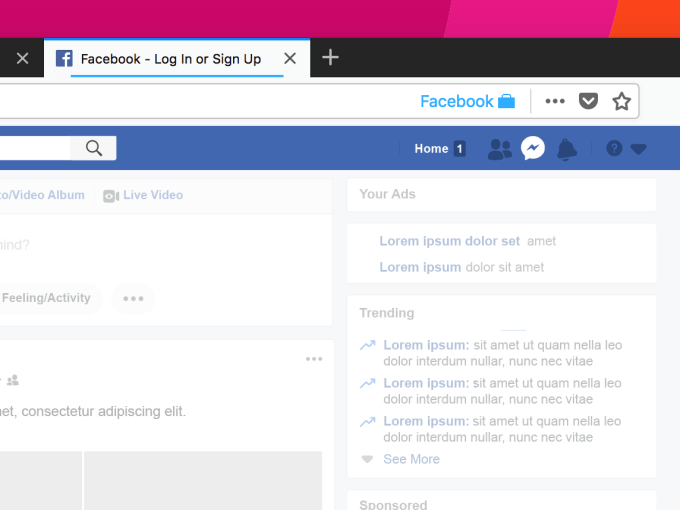
When you install the extension, it deletes your Facebook cookies and logs you out of the social network. The next time you open Facebook, you’ll notice it’s been opened in a blue-colored “container” tab.

From within that tab, you can continue to use Facebook normally. However, if you click a link that would take you to a page off of Facebook, it will load the URL outside the container. Similarly, if you click any Facebook Share buttons outside of Facebook, it will load those in the Facebook container. (But this will send information to Facebook about the website you shared them from, it should be noted.)

In addition, you may not be able to login to third-party apps with your Facebook credentials, and the embedded Facebook comments and Like buttons you see around the web won’t work either.

“This prevents Facebook from associating information about your activity on websites outside of Facebook to your Facebook identity,” explains The Firefox Frontier blog. “So it may look different than what you are used to seeing.”

Actually, it may surprise you to find out how widespread your use of Facebook was when outside the social network.

Facebook’s platform and its off-site advertising network allow other sites and apps to access users’ Facebook data even when users aren’t on Facebook itself. Facebook is hardly alone in terms of companies doing this. But it is making headlines over data mishandling, which means it’s a good time for Mozilla to capitalize on consumers’ concerns to share their messages – and tools – focused on data privacy.

Mozilla said it sped up its work on the Facebook Container add-on, which is based on technology it’s been developing over the past couple of years, as it’s seen increasing consumer demand for tools for managing privacy and security.

There are other tools available to help consumers with these issues today, as well, including the Ghostery anti-tracking extension now owned by Cliqz, ad blockers (including those bundled with browsers like Safari), and more.

However, single-purpose tools like this are useful because they allow people to limit some data-sharing activity, without having to take the drastic step of deleting Facebook.

The Facebook Container Extension is available here.

27 Mar 2018

A happier, fitter, more comfortable life in virtual reality

Virtual reality is a technology that evokes very cold, technical images. I’m talking wires and straps and plugs, nothing that sounds very relaxing, although as I read that sentence again is does sound overtly sexual… Regardless, I’m saying that VR just doesn’t often conjure up this idea of lounging and relaxing on a daily basis.

At the Game Developers Conference this past week there was still a fair amount of movement from VR developers and the gimmick seems to be wearing off a bit so for the most part I tried less bad stuff than usual.

I also tried some very good stuff! One of the games I was most intrigued to try was Vacation Simulator, the follow-on to Job Simulator, one of the most popular VR titles to have been released in the past couple years. The title is interesting for a few reasons that fall outside of its gameplay which I’ll get to in a second.

The title is made by Owlchemy Labs and it’s going to be the studio’s first big game release since the company was bought by Google about a year ago. I chitchatted with some of the team (who were easy to spot because they had some pretty sweet Hawaiian shirts) and they said that not much had changed since the acquisition and that Google hadn’t made them come out Mountain View or anything, the team is still posted down in Austin, Texas making things happen.

The demo I tried was a bit more of a sandbox-style game and by definition focused a lot more on environment exploration than its predecessor. Basic premise is that you’re on a beach chilling with little floating computers and you can go around messing with them or just hang out and do dumb, relaxing stuff like build a sand castle or catch butterflies or chill on the beach and collect shells. The game is delightful and feels very much like a continuation of what came before it with a touch more Animal Crossing injected into it now.

For such a long time there was the big content problem for VR, it’s not so much that it’s gone away now, but a lot of tech companies have seemed to realize that throwing a new set of goggles at consumers wasn’t really going to be enough to get the job done. Facebook has been pumping a ton of cash into new content, though at GDC, Oculus indicated that it was going to start directing more of those funds to courting AAA developers to start building titles that people are more likely to play on a daily basis. Google hasn’t been as vocal but they did buy Owlchemy so that’s something.

The point is that a lot of these experiences are starting to get so polished that the hardware feels like the limitation again, which is undoubtedly a good thing for VR but it’s a growing pain. Vacation Simulator was a joy in the brief demo I tried, but I couldn’t help feeling like it kind of went against the ethos of PC-tethered VR while I was playing through it. It feels like something I’d want it short bursts and for a lot of Rift owners like myself who don’t have a ton of free space to keep the headset setup in perpetuity, playing VR and getting the sensors set up is a whole thing.

It’s very possible that this game will be available on whatever Oculus Santa Cruz grows to become and I really hope it does, because I hope that simpler headsets mean that simpler experiences, that don’t have to be Skyrim or another shooter game, get even more popular, because in order to be successful the VR industry is going to have to grow a bit warmer and seem a bit more like a vacation from the real world.

27 Mar 2018

Huawei’s P20 is a shiny, extravagant phone

Huawei just unveiled its brand new flagship phone — the P20. It’s a solid, well-designed Android phone with a shiny design, an iPhone X-like notch and some extravagant features, such as not one, not two but three cameras on the back of the P20 Pro.

I’ve played with the phone for a few minutes yesterday, and I would consider it one of the most polished Android phones out there. It’s a good successor to the P10, a good alternative to the Samsung Galaxy S9 and a good incarnation of Android.

The P20 and P20 Pro

Huawei is launching two different phones. The P20 is the most affordable version of the devices. It features a 5.8-inch LCD display with an 18.7:9 aspect ratio. In other words, the screen is more or less just like the one on the iPhone X.

The P20 Pro is slightly larger with a 6.1-inch display. And, for the first time in a Huawei phone, it has an OLED display. This feature alone makes the P20 Pro much nicer than the P20.

Phone manufacturers shouldn’t even try selling a phone with a notch combined with an LCD display. It just looks bad.

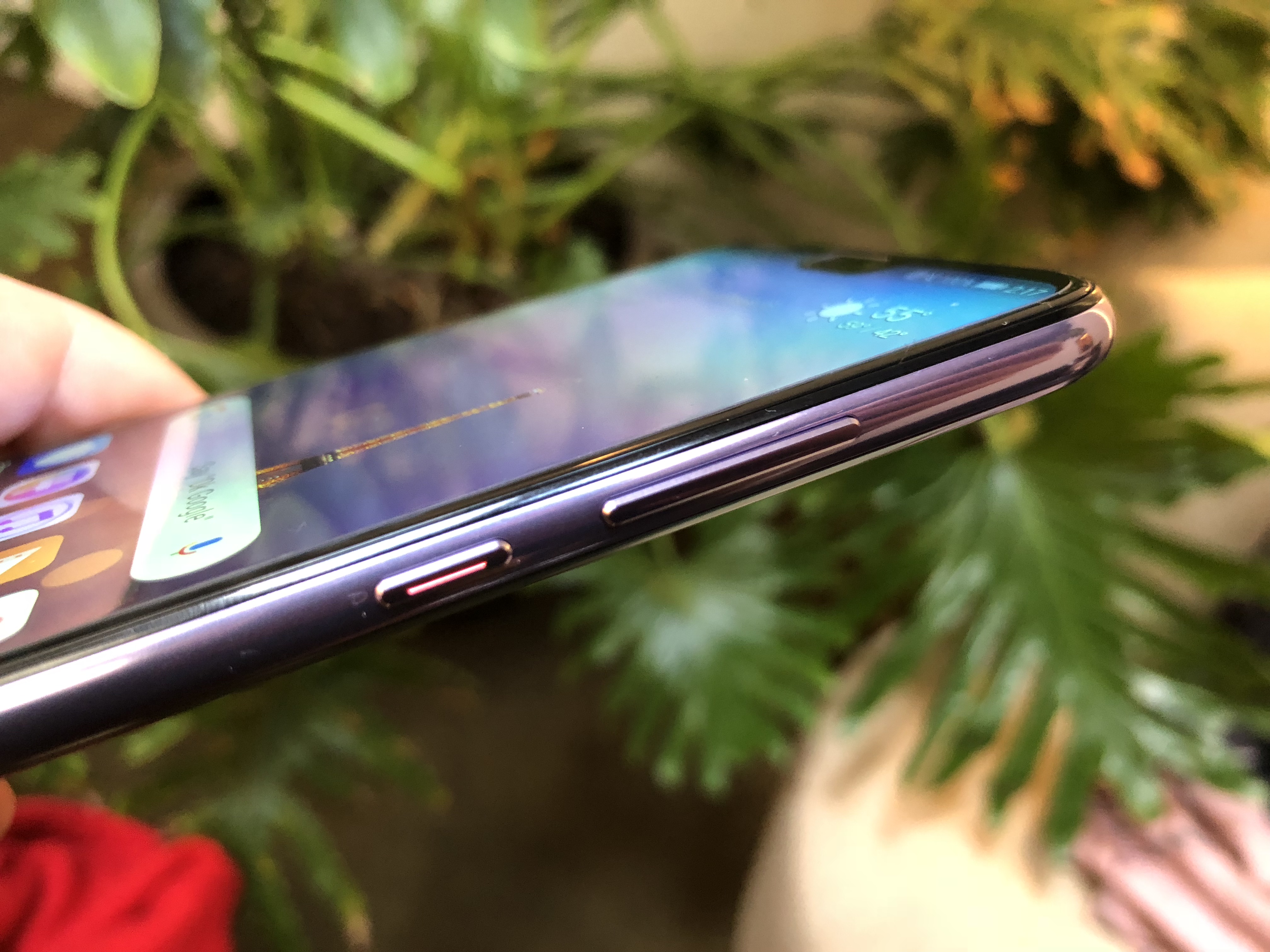
Both phones have a glass back and an aluminum frame, just like the Samsung Galaxy S9. It doesn’t feel as heavy as the iPhone X with its stainless steel frame, but it feels nice in your hand.

It’s a bit surprising that Huawei opted for a glass back even though the P20 and P20 Pro don’t feature wireless charging. Many manufacturers switched to glass cases to facilitate wireless charging. With those new devices, you get the fingerprints on the back of the device without any additional feature.

There are five colors for the P20 and four colors for the P20 Pro. In addition to standard colors (black, midnight blue for both devices, champagne gold for the P20), Huawei has created two gradient colors that look great — twilight and pink gold.

Another thing that differentiates the Huawei P20 from other Android phones, Huawei has kept the fingerprint sensor on the front, below the display. Many manufacturers have put the fingerprint sensor on the back, which works fine if you have the phone in your hand. But if the phone is on the table, you have to pick it up to unlock it — you don’t have this issue with the P20.

Throwing more cameras at the problem

But the real craziness is on the back of the device. The P20 Pro has three camera sensors because two cameras weren’t enough.

There’s a 40 megapixels lens combined with a 20 megapixels monochrome lens and an 8 megapixels telephoto lens. All of this should help you zoom further, take portait photos and take super slow-motion videos at 960 frames per second.

While that sounds like an overkill, Huawei thinks this is the best physical representation of its work when it comes to photography.

The company automatically detects objects and scenes to adjust the camera settings. The selfie camera automatically enhances your skin so that you feel comfortable sharing selfies with your friends. Long exposures are automatically stabilized for those long dark winter nights.

I could go on and on with Huawei’s special camera features, but it’s hard to judge if it’s actually useful without using the phone for a few days.

The P20 is a bit more reasonable as it only has two rear cameras.

Let’s go through some fine prints. Both devices are powered by an ARM-based Kirin 970 system-on-a-chip designed by Huawei. It runs Android 8.1 with Huawei’s EMUI custom skin.

It comes with 128GB of internal storage, no microSD slot, no headphone jack and a USB Type-C port. There will be dual SIM versions of both devices.

The company says that you can unlock the device with your face, but it’s nowhere near as good as Face ID. It takes a 2D photo of your face so you can easily bypass it with a photo.
Trying to be different

When you see the shiny P20, it has a distinctive look. That hasn’t always been the case with Huawei phones. The company has chosen to embrace the notch. It makes the P20 look much different from the notch-less Samsung Galaxy S9.

In many ways, the P20 isn’t groundbreaking. It’s a faster, more capable smartphone. But it’s hard to keep innovating after more than a decade of smartphones. So the P20 feels like a solid Android phone.

The only issue is that you won’t be able to buy the P20 in the U.S. That’s why Huawei introduced its smartphone in Paris with videos featuring Orange, Vodafone, Telefonica and Deutsche Telekom.