26 Mar 2018

Morning Brew is a daily business briefing built for millennials

What’s the best way to stay up to date on things happening within your industry? Seasoned finance professionals read the Wall Street Journal. Anyone who wants to work in politics reads The Washington Post. In Silicon Valley we have industry-specific news sites like TechCrunch supplemented by Hacker News and others.

But what about young business professionals who either don’t plan on staying in one industry their whole life or just want to stay up to date on the broader business/tech/startups/politics world?

Morning Brew is a daily newsletter designed for young business professionals. Each morning email has a stock market recap, a few short briefs on the most important business news of the day and a small section with lifestyle content. The result is the perfect mix of Wall Street essentials (like market analysis) and tech news (like a deep dive on Y Combinator).

The newsletter, which now has just under 200,000 total subscribers, was founded by Alex Lieberman and Austin Rief in 2015 when they were students at the University of Michigan.

“We worked with more than 75 students to help them prepare for interviews and internships and we’d always ask the question, “How do you keep up with the business world?” It was like every student had rehearsed their answers together beforehand, saying something to the effect of “I read the WSJ…and I read it because it’s a prerequisite to say you’re well-read in business and it’s what my parents do, but it’s dense, dry, and too long to read cover-to-cover,” explained the duo.

So Morning Brew was born. While initially college-focused in the beginning, that segment has shrunk to 30% of their total audience with the average reader now 28-years old working in finance, tech, or consulting. Of course there’s nothing stopping an older reader from signing up, and if anything sites like Axios have shown that even non-millennials may now prefer short bullet-point briefings over traditional long-form reporting.

But business-minded millennials are definitely the long-term focus of Morning Brew – and for good reason. The segment is extremely sought after in the advertising world, which has helped the startup monetize early. So far they’ve hosted sponsored native content from brands like Discover Card, Casper and Duke University. The diversity of sponsors shows just how many different industries are trying to reach the demographic.

Similar to other newsletter businesses like theSkimm, Morning Brew has mainly relied on word of mouth referrals and an ambassador program of 700+ students to drive new signups. Total subscribers are nearing 200,000 with a daily open rate hovering around 50%, which for reference is at least double most other popular industry newsletters.

The long term goal is to grow the newsletter into a brand that can touch all aspects of a young professional’s life, including networking. The site is launching a monthly event series this summer to bring together millennials to network and watch panel discussions, which should provide the off-line community building that has proved successful for other media brands.

The startup has raised $750,000 in seed funding from notable media execs including Brian Kelly, founder and CEO of The Points Guy, and is targeting a Series A in 2019.
26 Mar 2018

London proposes stricter vetting for ride-hailing drivers

London’s transport regulator is asking for public views on a series of new proposals aimed at boosting the safety of private hire vehicles (PHVs), such as cars served via ride-hailing platforms like Uber .

Among the measures Transport for London (TfL) is considering are:

  • Enhanced background checks for private hire drivers — with a proposal to introduce a minimum three-year enhanced Disclosure and Barring Service check for drivers to “guarantee that a full and comprehensive period of criminal history is available for consideration as part of the licensing process”
  • Advanced driving tests for private hire drivers
  • Additional signage on PHVs — including showing details of TfL’s customer complaints procedure
  • Additional insurance requirements for PHVs and a requirement for drivers to display their IDs inside the vehicle

“Our overriding concern in developing these proposals is to improve passenger safety. We are also committed to maintaining a clear distinction between the taxi and private hire trades and further improving the quality, safety, accessibility and overall standard of private hire vehicle provision in London,” TfL writes.

“We believe that the proposed measures will contribute to this aim and invite comments and views before making any changes.”

Last month TfL published a policy statement setting out its intentions for adopting transport regulations to fit the fast-changing sector — with the safety and welfare of passengers and drivers being chief among its stated objectives.

It also cited concerns about safety as one of the reasons for withdrawing Uber’s license to operate in the city last September — sending a major shock through the Silicon Valley giant.

Uber is appealing that decision and can continue to operate during the appeals process.

The regulator currently requires PHV drivers to undertake an ‘enhanced’ criminal records check from DBS through its service provider, GBGroup — although DBS checks can’t access criminal records held overseas, and that’s one aspect of the current vetting process that TfL says it wants to improve. 

“TfL needs to have confidence that an applicant’s past criminal behaviour is known if individuals have lived for an extended period outside the UK or come to the UK from another country,” it writes.

“A number of steps could be considered to address this issue including self-declaration of criminal convictions by applicants, references from professionals or those of standing in the country of origin; or a minimum residency in the UK requirement for example.”

Commenting on its consultation in a statement, Helen Chapman, TfL’s interim director of licensing, regulation and charging, added: “The experiences of passengers and their safety is at the heart of everything we do. We’ve worked hard to drive up the standards of the industry, from significantly increasing the number of compliance officers to ensuring passengers know who their driver is and what the vehicle details are.

“With the dramatic recent changes in the private hire industry transforming passengers’ experiences we need to go further. This consultation demonstrates our clear commitment to keeping passengers safe and our proposals would be pivotal in protecting the public and giving them the reassurances they need while out and about in our city.”

The public consultation on TfL’s safety proposals runs until June.

There’s currently no firm timeline for the regulator’s full reworking of its PHV framework.

26 Mar 2018

FCC wants to stop spending on gear from companies that ‘pose a national security threat’

The U.S. maneuvers against China’s tech giants continue today with an official announcement from FCC Chairman Ajit Pai that the agency may soon ban purchasing anything from companies that “pose a national security threat.” Huawei, ZTE and other major tech manufacturers aren’t named specifically, but it’s clear what is meant.

Pai lists the risk of backdoored routers, switches and other telecoms equipment as the primary threat; Huawei and ZTE have been accused of doing this for years, though hard evidence has been scarce.

The proposal would prohibit any money from the FCC’s $8.5 billion Universal Service Fund, used for all kinds of projects and grants, to be spent on companies beholden to “hostile governments.” Pai mentioned the two Chinese giants in a previous letter describing the proposed plan.

Both companies in question have strenuously denied the charges; perhaps most publicly by Richard Yu, CEO of the company’s consumer business group, at CES this year.

But warnings from U.S. intelligence services have been ongoing since 2012, and Congress is considering banning Huawei equipment from use by government entities, saying the company “is effectively an arm of the Chinese government.”

Strong ties between these major companies and the Chinese government are hard to deny, of course, given China’s particularly hands-on methods in this sort of thing. Ironically, however, it seems that our spy agencies are so sure about this in great part because they themselves have pushed for and occasionally accomplished the same compromises of network infrastructure. If they’ve done it, they can be sure their Chinese rivals have.

The specifics of the rule are unknown, but even a relatively lax ban would likely be a big hit to Huawei and ZTE, which so far have failed to make a dent in the U.S. phone market but still manufacture all kinds of other telecommunications gear making up our infrastructure.

The draft of the new rule will be published tomorrow; the other commissioners have it now and are no doubt reading and forming their own opinions on how to improve it. The vote is set for April 17.

26 Mar 2018

Check out self-driving cars, DARPA and more at TC Sessions: Robotics May 11 at UC Berkeley

As we’re gearing up for May’s big show, the announcements are starting to come fast and furious. In the past two weeks, we’ve revealed that Andy Rubin, Marc Raibert, Melonee Wise, Robert Full and more will be joining us May 11 at UC Berkeley’s Zellerbach Hall.

We’ll be unveiling the full schedule for the event in the coming days, but for now, we’ve got a couple of new names to share with you, showing the best and brightest from across a wide range of robotics categories, from self-driving cars, to DARPA, to human-robotic interaction.

Diving Deep with Driverless Cars

Chris Urmson has been deeply involved with autonomous vehicles for more than a decade. In 2007, his team at Carnegie Mellon won the 2007 DARPA Urban Grand Challenge for self-driving cars. Two years later, he joined Google/Alphabet’s self-driving car team, eventually taking over as project lead.

These days, Ursom is the CEO of Aurora Innovation, an autonomous car company he cofounded with Tesla alum Sterling Anderson. The Bay Area-based company has been building systems for Volkswagen and Hyundai, and announced a partnership with NVIDIA earlier this year. Ursom will be joining us to discuss the promises — and pitfalls — of autonomous vehicles.

DARPA’s Latest Challenge

Launching a robotics company is challenging — and expensive. Thankfully, DARPA has helped play a key role in helping a number of important robotics startups get off the ground. Much of that funding has come courtesy of various DARPA Challenges, like the Subterranean Challenge launched late last year.

DARPA Tactical Technology Office program manager Timothy Chung will be on-hand at the event to lead a session exploring the department’s latest challenge, which seeks to “rapidly map, navigate, and search underground environments.”

Human and Robots: Can’t We Just Get Along?

As robots and humans increasingly share spaces and overlap in capability, ensuring safe and efficient interactions grows more important. What new technologies and methods will enable them, and what challenges lie ahead for human-robot relations?

We’ll be joined by some top researchers in the field, including Ayanna Howard of Georgia Tech and Leila Takayama of UC Santa Cruz to explore these challenges and more.

We Want to Hear From Your Robotics Company

It wouldn’t be a real TechCrunch event without a good, old-fashioned startup pitch. As we mentioned last time, we’re searching for four early-stage robotics startups to show off their goods for our panel of VCs and a crowd of students and roboticists. If your company has what it takes, you can apply here.

We’re also looking for companies to participate in demos and serve as subjects for some upcoming TechCrunch videos. If that sounds like a good fit, fill out this form here.

Early-bird tickets are on sale now. (Special 90 percent discount for students when you book here!)

If you’re interested in a sponsorship, contact us.

26 Mar 2018

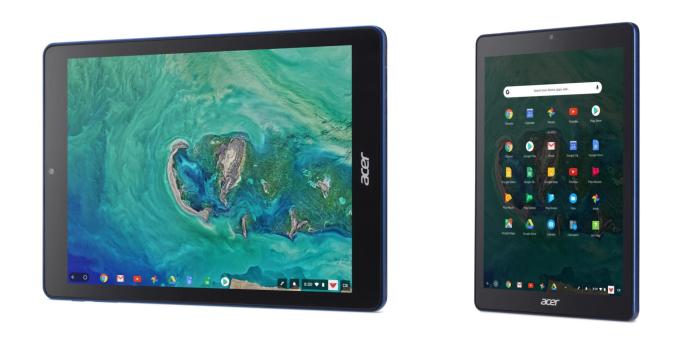
Google launches a Chrome OS tablet for schools

Chrome OS has been a pretty ideal place for Google to stake its various plays for the education. The cheap, bare bone Chromebook laptops have been light on complexity and heavy on connectivity. The company hasn’t had much in the way of options when it comes to touch screen devices however.

Today, Google announced its first education tablet designed with chrome OS. The Acer Chromebook Tab 10 will be the first Chrome OS tablet for school to arrive. The device itself is a 9.7 inch 2048×1536 tablet that will retail for $329, the same as Apple’s entry-level iPad.

Being a Chrome OS device, these will integrate into schools with a Chrome education license and will give students a device they can easily pass around and jot notes on with stylus and touch controls. This fills a hole where Apple’s iPad was much better positioned.

The announcement is especially notable given Apple’s education event set for tomorrow. Some are expecting the announcement to highlight the iPad’s strength as a student computing platform while the company may announce new changes to its education-focused featureset.

The tablets will also enable students to jump into educational AR experiences given their handheld form factor and Google’s upcoming rollout of the Expeditions AR platform on the devices, which the company promises will allow students to visit the Great Barrier Reef, Colosseum of International Space Station.

The Acer Chromebook Tab 10 will go on sale to educators this spring.

26 Mar 2018

Google begins to roll out its mobile-first index

Google announced this morning its “mobile -first” index of the web is now starting to roll out, after a year and a half of testing and experimentation. Back in 2016, Google first detailed its plan to change the way its search index operates, explaining how its algorithms would eventually be shifted to use the mobile version of a website’s content to index its pages, as well as to understand its structured data and to show snippets from the site in the Google search results.

In December 2017, Google said it had begun to transition a small handful of sites to the mobile-first index, but declined to say which properties had been made the move.

Mobile-first indexing means Google will use the mobile version of a web page “for indexing and ranking, to better help our – primarily mobile – users find what they’re looking for,” the company writes in a blog post.

By “primarily mobile,” Google is referring to the fact that the majority of people who use Google search today now do so from mobile devices, and have done so since 2015.

Google also explains that it will have one index for search results, not a mobile-first index that’s separate from its main index. In other words, it will start to look to the mobile web pages to index the web, not the desktop version.

Mobile-friendliness has long been one of the many factors in determining how a site is ranked, but it’s not the only factor. For example, there are times when a non-mobile friendly page still has the best information and will appear higher, Google says.

However, Google has begun to prioritize mobile sites in several ways. For example, it began to boost the rank of mobile-friendly webpages on mobile search results back in 2015, and more recently said it was adding a signal that uses page speed to help determine a page’s mobile search ranking. Starting in July 2018, slow-loading content will be downranked.

While Google today claims the mobile-friendly index won’t directly impact how content is ranked, it does note that having a site’s mobile-friendly content indexed in this new fashion will likely help the site “perform better” in mobile search results.

Google isn’t shifting all sites over to the new mobile-first index today – just the first wave.

Specifically, Google selected those sites that are already following the best practices for mobile-first indexing, it says. And it will favor the mobile version of the webpage over its own fast-loading AMP pages.

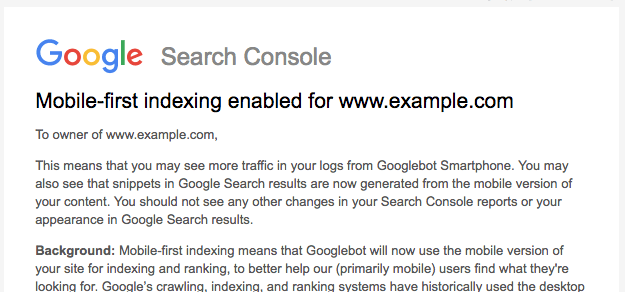
Those sites who have been shifted will be notified via Search Console, says Google, and will begin see increased visits from the Smartphone Googlebot. After the shift, Google will show the mobile version of the site’s pages in its Search results and in the Google cached pages.

Google tells the webmasters of sites that are not yet mobile-optimized to not panic yet. “If you only have desktop content, you will continue to be represented in our index,” assures the Google announcement.

The company did not specify when the rollout of the mobile-first index would complete.

26 Mar 2018

Lynk & Co reveals the 02 crossover SUV and details European rollout plans

Geely’s Lynk & Co is one of the more interesting young automotive brands, with an approach to sales and marketing that more closely resembles modern gadget and lifestyle brand go-to-market strategy than traditional automaker sales. The Lynk & Co 01 SUV, designed to sit somewhere between Geely’s line on one end and Volvo’s vehicles on the other, debuted last year; now the company is revealing its 02, a more compact crossover SUV, again designed with mobility, connectivity, and the potential for shared use in mind.

The 02 was designed and engineered in Sweden, Lynk & Co says, by a team of international talent. It has a sportier look and feel when compared to the 01, but also clearly shares design traits with the original Lynk & CO. vehicle. The car is intended to capitalize on the rapidly growing crossover SUV model, which is particularly strong in Europe, where Lynk & Co is also finally revealing its market rollout plans after initially kicking off sales in China in 2017.

[gallery ids="1611957,1611958,1611959,1611961,1611962,1611963,1611964,1611965,1611960"]

Lynk & Co will aim to start European sales of its vehicles in 2020, and will skip the traditional dealer model to launch what it’s calling “Offline Stores,” which sound in practice a lot like Tesla’s global showrooms: “Small, sociable brand boutiques in urban districts.” The automaker will also sell online via its Lynkco.com site, which is a trademark of its conception (again something seemingly derived from the Tesla playbook) and it’ll also have a rolling pop-up shop that can make visits to spots that won’t have a permanent Offline Store boutique.

Another bit of news from Lynk & Co this morning: They’re creating a design collaboration with online commerce platform Tictail . This will be a line of both clothing and home good that will be designed by Tictail’s designer community and sold via its platform, and it’s going to be called “The City Dweller Series.” It’s a bit heavyhanded, but it fits overall with Lynk & Co’s strategy of positioning itself as the brand of connected young professionals.


26 Mar 2018

Twitter moves to ban crypto ads

Twitter is the latest social service to boot out cryptocurrency advertisers. The company told Reuters it will be launching a new policy this week to prohibit the advertising of token sales/initial coin offerings (ICOs), and crypto wallet services.

Ads for cryptocurrency exchanges will also be banned — with some limited exceptions.

Facebook announced a ban in January, while Google said earlier this month that it will ban them from June.

Twitter confirmed the policy change to us, providing the following statement: “We are committed to ensuring the safety of the Twitter community. As such, we have added a new policy for Twitter Ads relating to cryptocurrency. Under this new policy, the advertisement of Initial Coin Offerings (ICOs) and token sales will be prohibited globally.”

“We will continue to iterate and improve upon this policy as the industry evolves,” it added — flagging its current restricted content policies around financial services.

A company spokesperson told us it expects to update its ads policies page within the next hour. At the time of writing the page was last updated on August 30th 2017.

Since then Twitter has faced criticism for hosting crypto ads on its platform at a time when concern over cryptocurrency-related scams and risks have been voiced by regulators around the world. As we wrote earlier this month, banning these sorts of adverts really is a no brainer at this stage — so it’s good to see it listening and rethinking its approach.

Twitter has been taking some action to tackle crypto scams. Earlier this month we reported it had been suspending some users for soliciting crypto — in an apparent effort to crack down on scammers’ ability to use the platform.

But, at the time, it was not keen to comment on its crypto ads policy — even though its existing ads policy prohibits unsafe and deceptive ads and/or ads that make misleading claims.

As we said then a platform level ban on crypto advertising is just common sense — at least until the market is properly regulated.

We understand Twitter’s new crypto ads policy will continue to be reviewed as the industry evolves.

And while ICOs/token sale ads will be banned globally there’s some wiggle room for exchanges and wallet services — with only those provided by a public company listed on certain major stock markets allowed to buy Twitter ads.

In certain market further restrictions may also apply — such as that exchanges must be regulated by an FSA to be allowed to purchase ads.

26 Mar 2018

YouTube TV becomes first-ever presenting partner for the NBA Finals, following similar deal with MLB

YouTube TV announced this morning it will become the first-ever presenting sponsor of the 2018 NBA Finals as the result of a multi-year partnership focused on raising consumer awareness of YouTube’s streaming TV service. In addition to becoming the presenting sponsor of the NBA Finals, the deal will also see YouTube TV becoming the presenting sponsor of the Women’s National Basketball Association (WNBA) Finals and the NBA’s minor league, the NBA G League.

The deal is now one of many YouTube TV has forged in recent weeks. It has also partnered with the Los Angeles Football Club, Seattle Sounders FC, and most notably, the MLB, on similar promotional efforts.

With the Major League Baseball partnership, YouTube TV again becomes the presenting sponsor of the World Series for the next two years. That means the game will be referred to as the 2018 “World Series presented by YouTube TV.” The arrangement includes on-air callouts, national TV spots featuring players, and in-stadium ads, as well.

Similarly, the NBA deal will see the game referred to as “The Finals presented by YouTube TV.” The YouTube TV logo will also be featured on the court and in the area. Plus, YouTube TV will get on-air callouts, and be featured in ABC commercial spots, as well as across the NBA’s social media channels and digital assets.

ABC has aired the Finals since 2003, but today, more people are cutting the cord with traditional broadcast and cable television, and losing access to some sports programming as a result – unless they install an antenna. One firm, eMarketer, estimated there are 22.2 million cord cutters in the U.S., but combined with the “cord nevers” who never sign up to begin with, there are 56.6 million U.S. consumers going without pay TV.

In particular, the younger demographic is giving up TV in greater numbers, as other entertainment options – like the internet itself, mobile apps, and YouTube – have gained their attention. This has led to sports leagues trying to find new ways to attract this audience. Other efforts over the years have included streaming games through social media sites like Facebook and Twitter, and doing deals with Snapchat to produce original shows, among other things.

The NBA previously worked with Twitter on original programming, for example.

Amid all the cord cutting, a new crop of streaming TV services have been trying to bring back TV – including major channels like ABC, Fox, NBC and CBS. YouTube TV is one of several services in this space, where it competes with Dish’s Sling TV, AT&T’s DirecTV Now, Hulu with Live TV, PlayStation Vue, and fubo TV.

The oldest, Sling TV, is the largest of the bunch, with 2.21 million subscribers, followed by the AT&T’s 1 million. YouTube TV is battling with Hulu for third place, which Hulu currently holds.

Going directly after sports fans will all these partnership deals is one way YouTube TV getting the word out to those who don’t yet know the service even exists.

The Finals will air on ABC starting on Thursday, May 31, and will also be streamed on YouTube TV through ABC. The streaming service is currently available in nearly 100 U.S. markets, or over 85 percent of U.S. households.

The deal also follows an expansion of the YouTube TV service, which saw additions of Turner-owned networks, NBA TV and MLB Network, and a price increase of $5, bringing YouTube TV to $40 per month.

In addition, YouTube itself has worked with the NBA for over a decade. The NBA was the first league to launch its own YouTube channel in 2005, and joined YouTube’s “Claim Your Content” program in 2007. Its channel now has over 4.6 billion views.

“The NBA and ESPN have a history of creating innovative sponsorships, and this certainly qualifies,” said Wendell Scott, Senior Vice President, Multimedia Sales, ESPN, in a statement. “YouTube TV is a next generation partner for an ascendant league and we look forward to working with them to maximize the impact of their investment across ABC and the ESPN platform.”

26 Mar 2018

FTC confirms probe into Facebook data misuse scandal

The Federal Trade Commission (FTC) has confirmed it’s investigating Facebook’s privacy practices in light of the data misuse scandal currently engulfing the company.

In a statement regarding reported concerns about Facebook’s privacy practices today, Tom Pahl, acting director of the Federal Trade Commission’s Bureau of Consumer Protection, said:

The FTC is firmly and fully committed to using all of its tools to protect the privacy of consumers. Foremost among these tools is enforcement action against companies that fail to honor their privacy promises, including to comply with Privacy Shield, or that engage in unfair acts that cause substantial injury to consumers in violation of the FTC Act. Companies who have settled previous FTC actions must also comply with FTC order provisions imposing privacy and data security requirements. Accordingly, the FTC takes very seriously recent press reports raising substantial concerns about the privacy practices of Facebook. Today, the FTC is confirming that it has an open non-public investigation into these practices.

On March 17, reports in the New York Times and the Observer of London suggested Trump-campaign linked UK-based political consultancy, Cambridge Analytica, had been able to buy data on 50 million Facebook users in 2015 to use for microtarging political advertising.

The data had been gathered via a third party survey app running on Facebook’s platform and using its API to pull data on the friends of the 270,000 respondents who answered the survey.

At the weekend Facebook took out full page newspaper ads in the US and UK apologizing for failing to protect users’ information.

Billions have been wiped off the company’s share price since the scandal broke.

The company’s share price also fell more than 5% today, on the news of the FTC announcement.

The consumer watchdog previously investigated Facebook over deceptive privacy claims, back in 2011.

And in 2012, as part of an FTC settlement, Facebook promised it would give users “clear and prominent notice” and get their consent before sharing their information beyond their privacy settings.

It also agree to two decades of biennial audits.

Facebook avoided a financial penalty at the time, though if the FTC goes on to decide the company violated that earlier initial agreement it could certainly be on the hook for fines — fines which the Washington Post has suggested could scale to trillions of dollars if the FTC’s $40,000 per privacy violation is multiplied by the 50M Facebook users whose data was passed to Cambridge Analytica.

Whatever any eventual financial penalty might be, the reputational damage Facebook is suffering as a result of this snowballing data handling scandal is bad enough, adding to calls for policymakers to regulate social media platforms.

We’ve reached out to Facebook for comment on the FTC’s announcement — at the time of writing the company had not responded.

See more of our coverage on the Facebook-Cambridge Analytica scandal here: