Year: 2018

26 Apr 2018

Square is acquiring website builder Weebly for $365M

Square just announced that it’s reached an agreement to acquire Weebly for $365 million in cash and stock.

While Square is best known for its payment software and hardware, it’s also been expanding into other areas, for example with the acquisition of food delivery service Caviar and corporate catering startup Zesty.

Weebly, meanwhile, offers easy-to-use website building tools. While those tools can be used by individuals (my personal website is built on Weebly), the company has increasingly focused on serving small businesses and e-commerce companies.

Meanwhile, competitor Squarespace raised $200 million at a $1.7 billion valuation at the end of last year.

Square says that by acquiring Weebly, it can create “one cohesive solution” for entrepreneurs looking to build an online and offline business. And since 40 percent of Weebly’s 625,000 paid subscribers are outside the U.S., the deal will help Square expand globally.

“Square and Weebly share a passion for empowering and celebrating entrepreneurs,” said Square CEO Jack Dorsey in the acquisition release. “Square began its journey with in-person solutions while Weebly began its journey online. Since then, we’ve both been building services to bridge these channels, and we can go even further and faster together.”

Weebly was founded in 2007 by David Rusenko, Chris Fanini and Dan Veltr. (Rusenko, who’s still the company’s CEO, is pictured above.) According to Crunchbase, the company raised $35.7 million in funding from Sequoia Capital, Tencent Holdings, Baseline Ventures, Floodgate, Felicis, Ron Conway and Y Combinator.

Square says the acquisition price includes stock for Weebly founders and employees that will vest over a four-year period.

26 Apr 2018

Amazon up 7% following earnings beat

Amazon reported first-quarter earnings after the bell on Thursday, sending shares up 7% in after-hours trading after its significantly better-than-expected report.

The company reported earnings per share of $3.27, well above the $1.26 that analysts had been expecting. This worked out to $1.6 billion in net income, up from $724 million last year.

Revenue was $51.04 billion, above the $49.78 billion that Wall Street forecast and a 43% increase from the same time last year. $31.6 billion came from products and $19.4 billion came from services.

The growth was driven by its Amazon Web Services (AWS) cloud computing business, which was up 49% year-over-year, accounting for $5.4 billion in revenue, or 11% of Amazon’s total revenue.

“AWS lets developers do more and be nimbler, and it continues to get even better every day,” said CEO Jeff Bezos, in a statement. “That’s why you’re seeing this remarkable acceleration in AWS growth, now for two quarters in a row.” Microsoft and Google are amongst its competitors.

Amazon also saw strong growth at home, up 46% in North America, accounting for 60% of Amazon’s overall business. International revenue saw 34% growth and makes up 29% of Amazon’s business.

Shares closed at $1,517.96 on Thursday. Shares are up 65% in the past year. The company has a market cap of $735 billion.

26 Apr 2018

MoviePass CEO says he doesn’t know if the one-movie-per-day subscription will ever return

MoviePass is known for a pricing model that sounds too good to be true — in exchange for paying $9.95 per month, subscribers get up to one movie ticket per day.

At least, they used to: If you try to sign up now, that isn’t quite what you’re offered. Instead, there’s a bundle that combines a three-month trial for iHeartRadio All Access with four tickets per month on MoviePass — still a pretty good deal (especially since MoviePass says 88 percent of users see fewer than two movies per month), but not quite as irresistible as the old plan.

Does this represent a permanent change in the MoviePass business model? Well, the company has experimented with bundling before, but when The Hollywood Reporter asked CEO Mitch Lowe whether the movie-per-day-plan might return, he replied, “I don’t know.”

“We just always try different things,” Lowe said. “Every time we try a new promotion, we never put a deadline on it.”

We reached out to a MoviePass spokesperson who confirmed that The Hollywood Reporter story is accurate. They also said that this doesn’t affect any of the subscribers who signed up under the old plan.

MoviePass’ parent company Helios and Matheson Analytics sold additional stock last week in what seemed like a move to raise money for the service. (TechCrunch’s own parent company Verizon/Oath recently acquired a stake in Helios and Matheson.) At the same time, filings revealed that an independent auditor had raised “substantial doubt” about whether MoviePass would be able to continue operating as “a going concern.”

26 Apr 2018

What we learned from Facebook’s latest data misuse grilling

Facebook’s CTO Mike Schroepfer has just undergone almost five hours of often forensic and frequently awkward questions from members of a UK parliament committee that’s investigating online disinformation, and whose members have been further fired up by misinformation they claim Facebook gave it.

The veteran senior exec, who’s clocked up a decade at the company, also as its VP of engineering, is the latest stand-in for CEO Mark Zuckerberg who keeps eschewing repeat requests to appear.

The DCMS committee’s enquiry began last year as a probe into ‘fake news’ but has snowballed in scope as the scale of concern around political disinformation has also mounted — including, most recently, fresh information being exposed by journalists about the scale of the misuse of Facebook data for political targeting purposes.

During today’s session committee chair Damian Collins again made a direct appeal for Zuckerberg to testify, pausing the flow of questions momentarily to cite news reports suggesting the Facebook founder has agreed to fly to Brussels to testify before European Union lawmakers in relation to the Cambridge Analytica Facebook data misuse scandal.

“We’ll certainly be renewing our request for him to give evidence,” said Collins. “We still do need the opportunity to put some of these questions to him.”

Committee members displayed visible outrage during the session, accusing Facebook of concealing the truth or at very least concealing evidence from it at a prior hearing that took place in Washington in February — when the company sent its UK head of policy, Simon Milner, and its head of global policy management, Monika Bickert, to field questions.

During questioning Milner and Bickert failed to inform the committee about a legal agreement Facebook had made with Cambridge Analytica in December 2015 — after the company had learned (via an earlier Guardian article) that Facebook user data had been passed to the company by the developer of an app running on its platform.

Milner also told the committee that Cambridge Analytica could not have any Facebook data — yet last month the company admitted data on up to 87 million of its users had indeed been passed to the firm.

Schroepfer said he wasn’t sure whether Milner had been “specifically informed” about the agreement Facebook already had with Cambridge Analytica — adding: “I’m guessing he didn’t know”. He also claimed he had only himself become aware of it “within the last month”.

Who knows? Who knows about what the position was with Cambridge Analytica in February of this year? Who was in charge of this?” pressed one committee member.

“I don’t know all of the names of the people who knew that specific information at the time,” responded Schroepfer.

“We are a parliamentary committee. We went to Washington for evidence and we raised the issue of Cambridge Analytica. And Facebook concealed evidence to us as an organization on that day. Isn’t that the truth?” rejoined the committee member, pushing past Schroepfer’s claim to be “doing my best” to provide it with information.

A pattern of evasive behavior

“You are doing your best but the buck doesn’t stop with you does it? Where does the buck stop?”

“It stops with Mark,” replied Schroepfer — leading to a quick fire exchange where he was pressed about (and avoided answering) what Zuckerberg knew and why the Facebook founder wouldn’t come and answer the committee’s questions himself.

“What we want is the truth. We didn’t get the truth in February… Mr Schroepfer I remain to be convinced that your company has integrity,” was the pointed conclusion after a lengthy exchange on this.

“What’s been frustrating for us in this enquiry is a pattern of behavior from the company — an unwillingness to engage, and a desire to hold onto information and not disclose it,” said Collins, returning to the theme at another stage of the hearing — and also accusing Facebook of not providing it with “straight answers” in Washington.

“We wouldn’t be having this discussion now if this information hadn’t been brought into the light by investigative journalists,” he continued. “And Facebook even tried to stop that happening as well [referring to a threat by the company to sue the Guardian ahead of publication of its Cambridge Analytica exposé]… It’s a pattern of behavior, of seeking to pretend this isn’t happening.”

The committee expressed further dissatisfaction with Facebook immediately following the session, emphasizing that Schroepfer had “failed to answer fully on nearly 40 separate points”.

“Mr Schroepfer, Mark Zuckerberg’s right hand man whom we were assured could represent his views, today failed to answer many specific and detailed questions about Facebook’s business practices,” said Collins in a statement after the hearing.

“We will be asking him to respond in writing to the committee on these points; however, we are mindful that it took a global reputational crisis and three months for the company to follow up on questions we put to them in Washington D.C. on February 8

“We believe that, given the large number of outstanding questions for Facebook to answer, Mark Zuckerberg should still appear in front of the Committee… and will request that he appears in front of the DCMS Committee before the May 24.”

We reached out to Facebook for comment — but at the time of writing the company had not responded.

Palantir’s data use under review

Schroepfer was questioned on a wide range of topics during today’s session. And while he was fuzzy on many details, giving lots of partial answers and promises to “follow up”, one thing he did confirm was that Facebook board member Peter Thiel’s secretive big data analytics firm, Palantir, is one of the companies Facebook is investigating as part of a historical audit of app developers’ use of its platform.

Have there ever been concerns raised about Palantir’s activity, and about whether it has gained improper access to Facebook user data, asked Collins.

“I think we are looking at lots of different things now. Many people have raised that concern — and since it’s in the public discourse it’s obviously something we’re looking into,” said Schroepfer.

“But it’s part of the review work that Facebook’s doing?” pressed Collins.

“Correct,” he responded.

The historical app audit was announced in the wake of last month’s revelations about how much Facebook data Cambridge Analytica was given by app developer (and Cambridge University academic), Dr Aleksandr Kogan — in what the company couched as a “breach of trust”.

However Kogan, who testified to the committee earlier this week, argues he was just using Facebook’s platform as it was architected and intended to be used — going so far as to claim its developer terms are “not legally valid”. (“For you to break a policy it has to exist. And really be their policy, The reality is Facebook’s policy is unlikely to be their policy,” was Kogan’s construction, earning him a quip from a committee member that he “should be a professor of semantics”.)

Schroepfer said he disagreed with Kogan’s assessment that Facebook didn’t have a policy, saying the goal of the platform has been to foster social experiences — and that “those same tools, because they’re easy and great for the consumer, can go wrong”. So he did at least indirectly confirm Kogan’s general point that Facebook’s developer and user terms are at loggerheads.

“This is why we have gone through several iterations of the platform — where we have effectively locked down parts of the platform,” continued Schroepfer. “Which increases friction and makes it less easy for the consumer to use these things but does safeguard that data more. And been a lot more proactive in the review and enforcement of these things. So this wasn’t a lack of care… but I’ll tell you that our primary product is designed to help people share safety with a limited audience.

“If you want to say it to the world you can publish it on a blog or on Twitter. If you want to share it with your friends only, that’s the primary thing Facebook does. We violate that trust — and that data goes somewhere else — we’re sort of violating the core principles of our product. And that’s a big problem. And this is why I wanted to come to you personally today to talk about this because this is a serious issue.”

“You’re not just a neutral platform — you are players”

The same committee member, Paul Farrelly, who earlier pressed Kogan about why he hadn’t bothered to find out which political candidates stood to be the beneficiary of his data harvesting and processing activities for Cambridge Analytica, put it to Schroepfer that Facebook’s own actions in how it manages its business activities — and specifically because it embeds its own staff with political campaigns to help them use its tools — amounts to the company being “Dr Kogan writ large”.

“You’re not just a neutral platform — you are players,” said Farrelly.

“The clear thing is we don’t have an opinion on the outcome of these elections. That is not what we are trying to do. We are trying to offer services to any customer of ours who would like to know how to use our products better,” Schroepfer responded. “We have never turned away a political party because we didn’t want to help them win an election.

“We believe in strong open political discourse and what we’re trying to do is make sure that people can get their messages across.”

However in another exchange the Facebook exec appeared not to be aware of a basic tenet of UK election law — which prohibits campaign spending by foreign entities.

“How many UK Facebook users and Instagram users were contacted in the UK referendum by foreign, non-UK entities?” asked committee member Julie Elliott.

“We would have to understand and do the analysis of who — of all the ads run in that campaign — where is the location, the source of all of the different advertisers,” said Schroepfer, tailing off with a “so…” and without providing a figure. 

“But do you have that information?” pressed Elliott.

“I don’t have it on the top of my head. I can see if we can get you some more of it,” he responded.

“Our elections are very heavily regulated, and income or monies from other countries can’t be spent in our elections in any way shape or form,” she continued. “So I would have thought that you would have that information. Because your company will be aware of what our electoral law is.”

“Again I don’t have that information on me,” Schroepfer said — repeating the line that Facebook would “follow up with the relevant information”.

The Facebook CTO was also asked if the company could provide it with an archive of adverts that were run on its platform around the time of the Brexit referendum by Aggregate IQ — a Canadian data company that’s been linked to Cambridge Analytica/SCL, and which received £3.5M from leave campaign groups in the run up to the 2016 referendum (and has also been described by leave campaigners as instrumental to securing their win). It’s also under joint investigation by Canadian data watchdogs, along with Facebook.

In written evidence provided to the committee today Facebook says it has been helping ongoing investigations into “the Cambridge Analytica issue” that are being undertaken by the UK’s Electoral Commission and its data protection watchdog, the ICO. Here it writes that its records show AIQ spent “approximately $2M USD on ads from pages that appear to be associated with the 2016 Referendum”.

Schroepfer’s responses on several requests by the committee for historical samples of the referendum ads AIQ had run amounted to ‘we’ll see what we can do’ — with the exec cautioning that he wasn’t entirely sure how much data might have been retained.

“I think specifically in Aggregate IQ and Cambridge Analytica related to the UK referendum I believe we are producing more extensive information for both the Electoral Commission and the Information Commissioner,” he said at one point, adding it would also provide the committee with the same information if it’s legally able to. “I think we are trying to do — give them all the data we have on the ads and what they spent and what they’re like.”

Collins asked what would happen if an organization or an individual had used a Facebook ad account to target dark ads during the referendum and then taken down the page as soon as the campaign was over. “How would you be able to identify that activity had ever taken place?” he asked.

“I do believe, uh, we have — I would have to confirm, but there is a possibility that we have a separate system — a log of the ads that were run,” said Schroepfer, displaying some of the fuzziness that irritated the committee. “I know we would have the page itself if the page was still active. If they’d run prior campaigns and deleted the page we may retain some information about those ads — I don’t know the specifics, for example how detailed that information is, and how long retention is for that particular set of data.”

Dark ads a “major threat to democracy”

Collins pointed out that a big part of UK (and indeed US) election law relates to “declaration of spent”, before making the conjoined point that if someone is “hiding that spend” — i.e. by placing dark ads that only the recipient sees, and which can be taken offline immediately after the campaign — it smells like a major risk to the democratic process.

“If no one’s got the ability to audit that, that is a major threat to democracy,” warned Collins. “And would be a license for a major breach of election law.”

“Okay,” responded Schroepfer as if the risk had never crossed his mind before. “We can come back on the details on that.”

On the wider app audit that Facebook has committed to carrying out in the wake of the scandal, Schroepfer was also asked how it can audit apps or entities that are no longer on the platform — and he admitted this is “a challenge” and said Facebook won’t have “perfect information or detail”.

“This is going to be a challenge again because we’re dealing with historic events so we’re not going to have perfect information or detail on any of these things,” he said. “I think where we start is — it very well may be that this company is defunct but we can look at how they used the platform. Maybe there’s two people who used the app and they asked for relatively innocuous data — so the chance that that is a big issue is a lot lower than an app that was widely in circulation. So I think we can at least look at that sort of information. And try to chase down the trail.

“If we have concerns about it even if the company is defunct it’s possible we can find former employees of the company who might have more information about it. This starts with trying to identify where the issues might be and then run the trail down as much as we can. As you highlight, though, there are going to be limits to what we can find. But our goal is to understand this as best as we can.”

The committee also wanted to know if Facebook had set a deadline for completing the audit — but Schroepfer would only say it’s going “as fast as we can”.

He claimed Facebook is sharing “a tremendous amount of information” with the UK’s data protection watchdog — as it continues its (now) year-long investigation into the use of digital data for political purposes.

“I would guess we’re sharing information on this too,” he said in reference to app audit data. “I know that I personally shared a bunch of details on a variety of things we’re doing. And same with the Electoral Commission [which is investigating whether use of digital data and social media platforms broke campaign spending rules].”

In Schroepfer’s written evidence to the committee Facebook says it has unearthed some suggestive links between Cambridge Analytica/SCL and Aggegrate IQ: “In the course of our ongoing review, we also found certain billing and administration connections between SCL/Cambridge Analytica and AIQ”, it notes.

Both entities continue to deny any link exists between them, claiming they are entirely separate entities — though the former Cambridge Analytica employee turned whistleblower, Chris Wylie, has described AIQ as essentially the Canadian arm of SCL.

“The collaboration we saw was some billing and administrative contacts between the two of them, so you’d see similar people show up in each of the accounts,” said Schroepfer, when asked for more detail about what it had found, before declining to say anything else in a public setting on account of ongoing investigations — despite the committee pointing out other witnesses it has heard from have not held back on that front.

Another piece of information Facebook has included in the written evidence is the claim that it does not believe AIQ used Facebook data obtained via Kogan’s apps for targeting referendum ads — saying it used email address uploads for “many” of its ad campaigns during the referendum.

The data gathered through the TIYDL [Kogan’s thisisyourdigitallife] app did not include the email addresses of app installers or their friends. This means that AIQ could not have obtained these email addresses from the data TIYDL gathered from Facebook,” Facebook asserts. 

Schroepfer was questioned on this during the session and said that while there was some overlap in terms of individuals who had downloaded Kogan’s app and who had been in the audiences targeted by AIQ this was only 3-4% — which he claimed was statistically insignificant, based on comparing with other Facebook apps of similar popularity to Kogan’s.

“AIQ must have obtained these email addresses for British voters targeted in these campaigns from a different source,” is the company’s conclusion.

“We are investigating Mr Chancellor’s role right now”

The committee also asked several questions about Joseph Chancellor, the co-director of Kogan’s app company, GSR, who became an employee of Facebook in 2015 after he had left GSR. Its questions included what Chancellor’s exact role at Facebook is and why Kogan has been heavily criticized by the company yet his GSR co-director apparently remains gainfully employed by it.

Schroepfer initially claimed Facebook hadn’t known Chancellor was a director of GSR prior to employing him, in November 2015 — saying it had only become aware of that specific piece of his employment history in 2017.

But after a break in the hearing he ‘clarified’ this answer — adding: “In the recruiting process, people hiring him probably saw a CV and may have known he was part of GSR. Had someone known that — had we connected all the dots to when this thing happened with Mr Kogan, later on had he been mentioned in the documents that we signed with the Kogan party — no. Is it possible that someone knew about this and the right other people in the organization didn’t know about it, that is possible.”

A committee member then pressed him further. “We have evidence that shows that Facebook knew in November 2016 that Joseph Chancellor had formed the company, GSR, with Aleksandr Kogan which obviously then went on to provide the information to Cambridge Analytica. I’m very unclear as to why Facebook have taken such a very direct and critical line… with Kogan but have completely ignored Joseph Chancellor.”

At that point Schroepfer revealed Facebook is currently investigating Chancellor as a result of the data scandal.

“I understand your concern. We are investigating Mr Chancellor’s role right now,” he said. “There’s an employment investigation going on right now.

In terms of the work Chancellor is doing for Facebook, Schroepfer said he thought he had worked on VR for the company — but emphasized he has not been involved with “the platform”.

The issue of the NDA Kogan claimed Facebook had made him sign also came up. But Schroepfer counter claimed that this was not an NDA but just a “standard confidentiality clause” in the agreement to certify Kogan had deleted the Facebook data and its derivatives.

“We want him to be able to be open. We’re waiving any confidentiality there if that’s not clear from a legal standpoint,” he said later, clarifying it does not consider Kogan legally gagged.

Schroepfer also confirmed this agreement was signed with Kogan in June 2016, and said the “core commitments” were to confirm the deletion of data from himself and three others Kogan had passed it to: Former Cambridge Analytica CEO Alexander Nix; Wylie, for a company he had set up after leaving Cambridge Analytica; and Dr Michael Inzlicht from the Toronto Laboratory for Social Neuroscience (Kogan mentioned to the committee earlier this week he had also passed some of the Facebook data to a fellow academic in Canada).

Asked whether any payments had been made between Facebook and Kogan as part of the contract, Schroepfer said: “I believe there was no payment involved in this at all.”

‘Radical’ transparency is its fix for regulation

Other issues raised by the committee included why Facebook does not provide an overall control or opt-out for political advertising; why it does not offer a separate feed for ads but chooses to embed them into the Newsfeed; how and why it gathers data on non-users; the addictiveness engineered into its product; what it does about fake accounts; why it hasn’t recruited more humans to help with the “challenges” of managing content on a platform that’s scaled so large; and aspects of its approach to GDPR compliance.

On the latter, Schroepfer was queried specifically on why Facebook had decided to shift the data controller of ~1.5BN non-EU international users from Ireland to the US. On this he claimed the GDPR’s stipulation that there be a “lead regulator” conflicts with Facebook’s desire to be more responsive to local concerns in its non-EU international markets.

“US law does not have a notion of a lead regulator so the US does not become the lead regulator — it opens up the opportunity for us to have local markets have them, regions, be the lead and final regulator for the users in that area,” he claimed.

Asked whether he thinks the time has come for “robust regulation and empowerment of consumers over their information”, Schroepfer demurred that new regulation is needed to control data flowing over consumer platforms. “Whether, through regulation or not, making sure consumers have visibility, control and can access and take their information with you, I agree 100%,” he said, agreeing only to further self-regulation not to the need for new laws.

“In terms of regulation there are multiple laws and regulatory bodies that we are under the guise of right now. Obviously the GDPR is coming into effect just next month. We have been regulated in Europe by the Irish DPC whose done extensive audits of our systems over multiple years. In the US we’re regulated by the FTC, Privacy Commissioner in Canada and others. So I think the question isn’t ‘if’, the question is honestly how do we ensure the regulations and the practices achieve the goals you want. Which is consumers have safety, they have transparency, they understand how this stuff works, and they have control.

“And the details of implementing that is where all the really hard work is.”

His stock response to the committee’s concerns about divisive political ads was that Facebook believes “radical transparency” is the fix — also dropping one tidbit of extra news on that front in his written testimony by saying Facebook will roll out an authentication process for political advertisers in the UK in time for the local elections in May 2019.

Ads will also be required to be labeled as “political” and disclose who paid for the ad. And there will be a searchable archive — available for seven years — which will include the ads themselves plus some associated data (such as how many times an ad may have been seen, how much money was spent, and the kinds of people who saw it).

Collins asked Schroepfer whether Facebook’s ad transparency measures will also include “targeting data” — i.e. “will I understand not just who the advertiser was and what other adverts they’d run but why they’d chose to advertise to me”?

“I believe among the things you’ll see is spend (how much was spent on this ad); you will see who they were trying to advertise to (what is the audience they were trying to reach); and I believe you will also be able to see some basic information on how much it was viewed,” Schroepfer replied — avoiding yet another straight answer.


26 Apr 2018

Ceridian up 42% following payroll software IPO

Stock market investors greeted payroll software company Ceridian with enthusiasm on its debut Thursday. After pricing above its expected range at $22 per share, the stock shot up 42 percent, closing above $31 by day’s end.

Ceridian helps clients ranging from BlackRock to Trader Joe’s keep tabs on personnel, including payroll, benefits and onboarding. Its clients pay it a fee per employee per month.

“The platform is designed to ease administrative work for both employees and managers, creating opportunities for companies to increase employee engagement,” reads the prospectus.  ADP and Workday are amongst its competitors.

It was a large tech offering, raising $462 million in its IPO. But the Minneapolis-based business is lower-profile in Silicon Valley, partly because it didn’t raise venture capital.

Instead, Ceridian had financial backing from Fidelity and private equity firm, Thomas H. Lee, which owns 62 percent of the business. Formed in 1992, the company has gone through a few iterations. It was acquired by financial sponsors in 2007, but the acquisition of Dayforce Corporation in 2012 became the backbone of its software business.

David Ossip became CEO after that acquisition. He told TechCrunch that he was optimistic about its “single code-based platform” and that the money raised in the IPO will be used toward “paying off a bunch of debt.”

The company brought in $750.7 million in revenue for 2017, up from $704.2 million in 2016 and $693.9 million in 2015. Losses shrunk from $104.7 million to $10.5 million in that same time frame.

“We have a history of losses and negative cash flows from operating activities, and we may not be able to attain or to maintain profitability or positive cash flows from operating activities in the future.”

Goldman Sachs and J.P. Morgan served as lead bankers on the offering. Weil Gotshal and Latham & Watkins served as counsel.

The company listed on the New York Stock Exchange under the ticker “CDAY.”

26 Apr 2018

The alternative to the four-hour workweek mindset

Often when I attend a conference or a networking event I am surprised by how many people operate at the periphery of the tech industry. Social media gurus, SEO “ninjas,” bloggers, etc. It’s a coterie of tech “club promoters.” The hype men of the industry.

“Hack your way to success.” “Meet the right people.” “Become a business superstar.” They’ve found their silver bullet. They boast of building a passive income from a web business, all while traveling the world as the rest of us mortals are slaving away at our 9-5 jobs.

In a world where we are searching for silver bullets, these people seem to have amassed an arsenal of them. Moreover, they’ve found audiences to sell their silver bullets to, en masse.

The most blatant example of this are some of the disciples of the 4-Hour Workweek, by Tim Ferriss. The book itself is not really the issue. Ferriss indeed outlines some interesting tips on managing resources to get the highest ROI on your work. What is objectionable, however, is the hack-your-way-to-success mentality it has spawned in entrepreneurial circles.

It’s a mindset that is antithetical to everything I know about entrepreneurship; a mindset that I see when I hear people talk about having an amazing idea that they want to farm out to a young college student who can code, or outsourcing development of a product to a cheap dev house. It’s a mindset that assumes entrepreneurship is a series of networking events and fundraising meetings, or even some silver-bullet business connection they have, in lieu of a real distribution strategy. It’s taking a passive approach to a very difficult undertaking.

What is missed in all of this is the mindset of craftsmanship; that one’s expertise and deliberate focus on one’s craft is actually the primary driver for success — and not some crapshoot of a series of hacks.

What happens on the periphery  —  whether it be the towel slapping we see on Twitter from tech celebrities or headline gossip out of TechCrunch  —  is not actually meaningful as a foundation of a business or a profession. Neither are the number of coffee meetings you have scheduled or the amount of networking meetings you attend. These things are tertiary at best, and, at worst, just plain-old distractions.

Startup graveyards are full of visionaries without expertise or the proper skills to execute.

To be successful over the course of a career requires the application and accumulation of expertise. This assumes that for any given undertaking you either provide expertise or you are just a bystander. It’s the experts that are the drivers — an expertise that is gained from a curiosity, and a mindset of treating one’s craft very seriously.

A startup is by nature a crash-course in developing expertise. What makes startups unique is the sheer dearth of resources. This dearth of resources forces founders to rapidly adapt their skills to meet the demands of the project.

“I didn’t know how to do x, so I just had to figure it out.” This is what I regularly hear from successful founders, whereas “I couldn’t find someone to do x, so I had to reconsider whether to pursue it at all” is a common refrain from unsuccessful founders.

If you step up to the challenge, you’ll realize that the startup is nothing more than a teacher. It, in fact, is a great teacher for no other reason than it demands the accumulation of knowledge quickly for the startup to survive.

A technical founder, whose experience may relegate her or him to a specialist role in a large company, for example, has to adapt and take on more expertise in adjacent technical areas. There simply aren’t the human resources to delegate these tasks to another specialist.

This is true for taking on tasks in other domains, whether that be sales, finance, marketing, management or design. You have to take an interest in these domains because there is no one else to fill these roles in your early-stage company.

It’s in exploring these unknown territories and facing the headwind of startup challenges that it becomes clear that the startup is merely a force of catalytic professional and character growth. With actual success of any given venture subject to the whim of outside forces, this growth is the non-monetary dividend that makes the experience priceless.

That is why the passive, 4-Hour Mindset is so self-defeating. To lounge on a beach or travel the world and not actively engage in building your arsenal of expertise is professional malpractice.

It’s also not practical. No serious company has been created passively — the passive mindset that leads people to say “I’ve got a great idea, I’ll hire a team to build it out” or “I have this great connection who will drive sales” while I play armchair visionary simply doesn’t work. Startup graveyards are full of visionaries without expertise or the proper skills to execute, for no other reason than ideas are not self-executing, but are rather made into being by intense engagement by skilled operators.

Most importantly, to think of a business as a series of hacks and transactional relationships, you’ll never amass the expertise that your future self and future businesses need to succeed. Startups fail withstanding founder expertise, of course. It is certainly not sufficient to be an expert. However, expertise does make it possible to traverse the struggles of creating businesses over the course of a career. You’re not simply working on the idea in front of you, you’re building the knowledge to succeed at your next projects, as well.

It is the expertise and the mindset of craftsmanship that allows someone like Elon Musk to jump from project to project and sector to sector with the knowledge of how to execute on the highest-level problems. It’s not simply his ability to find interesting ideas — it’s his command of the domains of the business that allow him to execute the way he does. He is the epitome of an interdisciplinary student of his businesses.

If you are to optimize for anything, optimize for the long-term. Use the challenges of your business today to build mastery in your craft. There is no guarantee that any one venture will succeed, but that mastery will bend luck in your favor over the long course of your career.

26 Apr 2018

DeepCode cleans your code with the power of AI

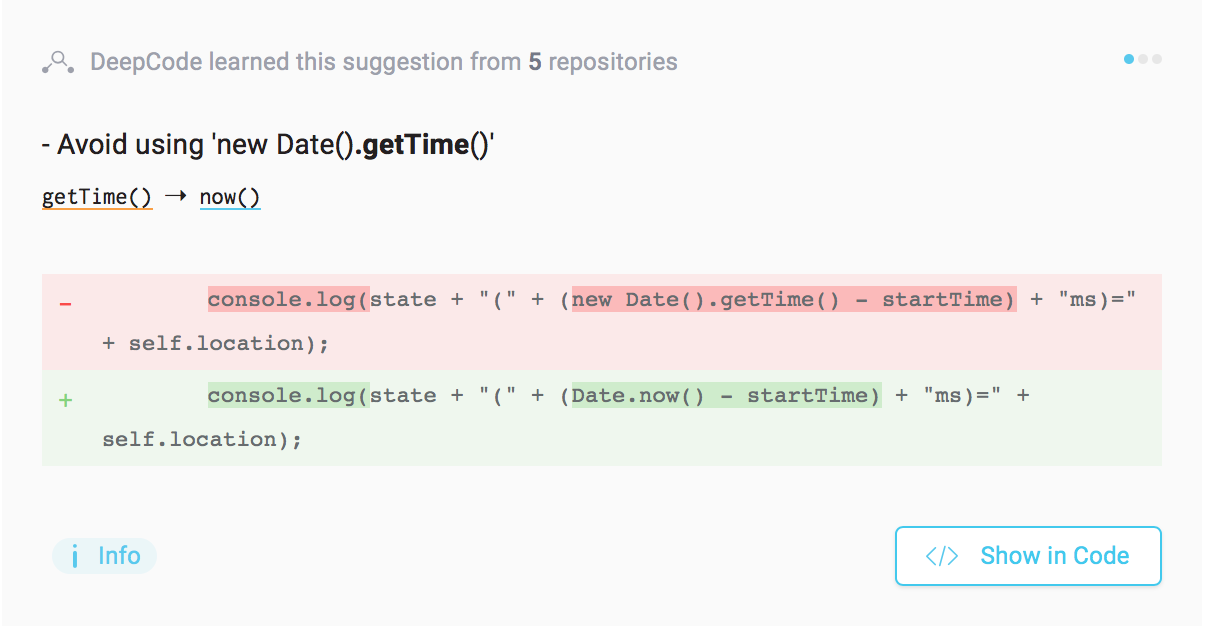
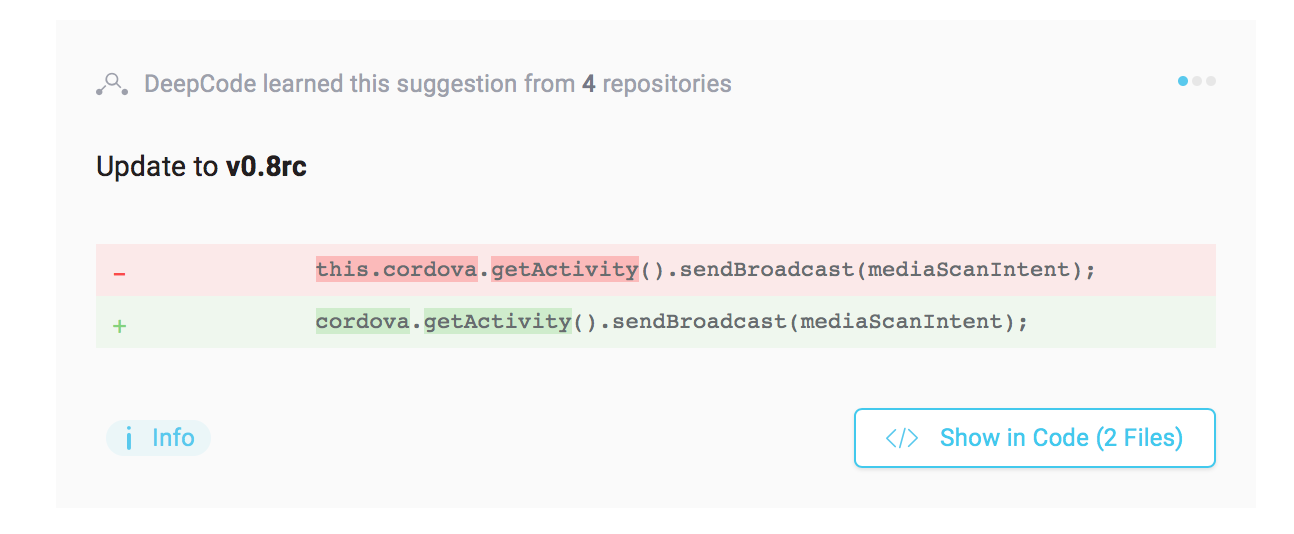
Zurich-based DeepCode claims that their system — essentially a tool for analyzing and improving code — is like Grammarly for programmers. The system, which uses a corpus of 250,000 rules, reads your public and private GitHub repositories and tells you how to fix problems, remain compatible and generally improve your programs.

Founded by Veselin Raychev, advisor Martin Vechev and Boris Paskalev, the team has extensive experience in machine learning and AI research. This project is a spin-off from ETH in Switzerland and is a standalone research project turned programming utility.

How does it work? Pretty well. I ran one of my public repositories through the system and received 49 suggestions in 449 files. The fixes range from literal code changes — changing name: String, to name: {type: String}, — to suggestions for code that might be actually missing in function calls. It’s an interesting tool, especially if you need help finding hidden bugs in your code. The advice this tool gives is also surprisingly precise. Because it can build its own recommendations based on large amounts of code it finds things humans might miss.

“We built a platform that understands the intent of the code,” said Paskalev. “We autonomously understand millions of repositories and note the changes developers are making. Then we train our AI engine with those changes and can provide unique suggestions to every single line of code analyzed by our platform.”

“Today we have more than 250K rules and growing daily,” said Paskalev. “Our competition has to manually create rules and the biggest competitor has 3-4,000 rules and they’ve been working for years.

The company is self-funded and recently raised $1.1 million from btov. The founders are serial entrepreneurs. Paskalev worked at VistaPrint and PPAG and Raychev worked for Google and is a researcher in the field of machine learning in programming language semantics.

More than a simple debugger, DeepCode “reads” and tries to compare code to other implementations, giving you best-of-class performance from every line. Now the team just has to get programmers to use it.

“We have a unique platform that understands software code the same way Grammarly understands written language,” Paskalev said. “This unique proposition is positioned us save billions of dollars within the software development community with our first service and then to be on the front end of transforming the industry towards fully autonomous code synthesis.”

26 Apr 2018

Google endorses Clean Power Plan ahead of expected repeal

Google has joined Apple in a growing chorus of tech giants coming out in support of the Clean Power Plan. The company filed a statement with the Environmental Protection Agency, which it has since shared with TechCrunch, supporting the Obama-era legislation.

The legislation, which sought to curb power plant emissions by more than 30 percent by 2030, is expected to be repealed by the Trump administration. As with Apple’s earlier filing, Google cites both environmental and economic fallout, should the policy be repealed.

“Wind and solar deployment—as well as the associated supply chains—have been among the fastest-growing sectors of the U.S. economy in recent years,” the company writes in the letter dated April 25, “with job growth rates significantly exceeding the growth rate of the overall labor force.”

The company also notes its own personal interest in supporting the policy, citing its work to shift toward renewable energy, along with the CPP’s potential to drive job growth. “The Clean Power Plan can continue to drive innovation and job growth,” Google adds, “while spurring the modernization of the American electricity system and reducing carbon dioxide emissions and helping to mitigate the threat of global climate change.

Under embattled head Scott Pruitt, the EPA has suggested that the CPP was an illegal extension of the agency’s authority. Late last month, Trump signed an executive order mandating a review of the policy, a move most observers have interpreted as the first steps toward its eventual repeal.

26 Apr 2018

The 5G wireless revolution will come, if your city council doesn’t block it first

The excitement around 5G is palpable at the Brooklyn 5G Summit this week, and for good reason. Once the province of academic engineers, there is increasingly a consensus emerging among technology leaders that millimeter-wave technology is ready for prime time.

Yet, there remain large barriers to a successful rollout, particularly at the local government level. Those challenges could prevent the U.S. from aggressively competing with other nations like China, who are investing massive resources to lead this next generation of wireless technology.

The Summit, now in its fifth year and organized by New York University’s Wireless Center, Nokia, and IEEE, is designed to showcase New York’s technology leadership in the space. New York has been at the forefront of wireless for many years, with the first mobile phone call taking place in Midtown Manhattan.

That was 45 years ago though. This month, New York learned that it had been selected as one of two initial sites for a 5G testbed by the Platforms for Advanced Wireless Research program, which is managed by the National Science Foundation in concert with a consortium of wireless companies.

Through a program called COSMOS, researchers will deploy a total of 249 large, medium, and mostly small cell nodes to West Harlem (including Columbia University’s Morningside Heights main campus) in order to investigate the performance of 5G in an urban setting. New York was awarded an initial grant of $3.6 million to execute the initiative.

This sort of testbed model is quite progressive in the wireless industry. While the notion of a minimum viable product and constant test feedback is a hallmark of software startups, that mentality has not been translated well into the wireless world. The hope for this testbed is that as new equipment is invented in the coming years, the West Harlem network can be continuously upgraded, serving as a model for potential deployments onto operators’ networks across the country.

It’s also critical because the network architecture of wireless is expected to change drastically in the years ahead. More computing will be done at the “edge” in order to reduce network latency and power the internet of things. In order to handle that traffic, new machine learning algorithms are going to have to be deployed that can actively manage traffic and ensure that applications have reliable performance. A realistic testbed provides key training data and analytics that can improve those algorithms and ultimately deliver better services to customers.

The good news is that the U.S. has conceived and launched this test program. The bad news is that we may still be too slow to win the competition for this generation of wireless tech.

The wireless industry’s trade association, the CTIA, has declared the rollout of 5G a “race” between the United States and the Asian nations of China, Korea, and Japan. The U.S. widely won the competition for 4G technologies, but the rise of Huawei as a dominant force in the wireless equipment space means that competition for technological leadership has never been more keen.

The White House and the federal government have made a 5G rollout a national security priority, but getting 5G wireless into the hands of consumers is likely to be stymied by opposition from local city councils and mayors around the issue of site access.

In order to provide reliable cell service, operators need to deploy cell sites near consumers. While they don’t need direct line of sight for the spectrum used in 4G, buildings and other objects can interfere with signals, making it critical to have a dense mesh of sites in urban environments.

Concerns about cancer, historical preservation, and fees for renting space have slowed the expansion of wireless services to communities across the country. Permits for erecting a new cell site can easily take a year or more.

In the 4G world, that was somewhat manageable, since the network architecture was built with large cell sites as the core of the network. With 5G though, technologists are pushing for greater decentralization through deployment of microcells that would be closer to street-level, improving quality of service while lowering power requirements. The fear is that if permits continue to take so long for every new site, the burden of that process could kill 5G in the United States.

The FCC is investigating how to reduce the burden of siting requirements, and one option is to exempt from review the kinds of small cells that are at the heart of 5G. That plan though has faced significant pushback from environmental and historical preservation activists, who don’t want the federal government overruling local government decisions on wireless rollouts.

One attendee of the Summit this morning joked that “It takes eighteen months to review a permit, and one hour to install” a small cell. Others noted that it takes just a few short weeks to deploy cell sites in South Korea and China, one reason those countries are in many ways leading the race for 5G.

As with any summit, there were buzzwords galore, but the reality is that the U.S. has an incredible opportunity to win this critical space. But we will need to fight in jurisdictions across the country if we ever want to see this technology actually arrive in our hands.

26 Apr 2018

The 5G wireless revolution will come, if your city council doesn’t block it first

The excitement around 5G is palpable at the Brooklyn 5G Summit this week, and for good reason. Once the province of academic engineers, there is increasingly a consensus emerging among technology leaders that millimeter-wave technology is ready for prime time.

Yet, there remain large barriers to a successful rollout, particularly at the local government level. Those challenges could prevent the U.S. from aggressively competing with other nations like China, who are investing massive resources to lead this next generation of wireless technology.

The Summit, now in its fifth year and organized by New York University’s Wireless Center, Nokia, and IEEE, is designed to showcase New York’s technology leadership in the space. New York has been at the forefront of wireless for many years, with the first mobile phone call taking place in Midtown Manhattan.

That was 45 years ago though. This month, New York learned that it had been selected as one of two initial sites for a 5G testbed by the Platforms for Advanced Wireless Research program, which is managed by the National Science Foundation in concert with a consortium of wireless companies.

Through a program called COSMOS, researchers will deploy a total of 249 large, medium, and mostly small cell nodes to West Harlem (including Columbia University’s Morningside Heights main campus) in order to investigate the performance of 5G in an urban setting. New York was awarded an initial grant of $3.6 million to execute the initiative.

This sort of testbed model is quite progressive in the wireless industry. While the notion of a minimum viable product and constant test feedback is a hallmark of software startups, that mentality has not been translated well into the wireless world. The hope for this testbed is that as new equipment is invented in the coming years, the West Harlem network can be continuously upgraded, serving as a model for potential deployments onto operators’ networks across the country.

It’s also critical because the network architecture of wireless is expected to change drastically in the years ahead. More computing will be done at the “edge” in order to reduce network latency and power the internet of things. In order to handle that traffic, new machine learning algorithms are going to have to be deployed that can actively manage traffic and ensure that applications have reliable performance. A realistic testbed provides key training data and analytics that can improve those algorithms and ultimately deliver better services to customers.

The good news is that the U.S. has conceived and launched this test program. The bad news is that we may still be too slow to win the competition for this generation of wireless tech.

The wireless industry’s trade association, the CTIA, has declared the rollout of 5G a “race” between the United States and the Asian nations of China, Korea, and Japan. The U.S. widely won the competition for 4G technologies, but the rise of Huawei as a dominant force in the wireless equipment space means that competition for technological leadership has never been more keen.

The White House and the federal government have made a 5G rollout a national security priority, but getting 5G wireless into the hands of consumers is likely to be stymied by opposition from local city councils and mayors around the issue of site access.

In order to provide reliable cell service, operators need to deploy cell sites near consumers. While they don’t need direct line of sight for the spectrum used in 4G, buildings and other objects can interfere with signals, making it critical to have a dense mesh of sites in urban environments.

Concerns about cancer, historical preservation, and fees for renting space have slowed the expansion of wireless services to communities across the country. Permits for erecting a new cell site can easily take a year or more.

In the 4G world, that was somewhat manageable, since the network architecture was built with large cell sites as the core of the network. With 5G though, technologists are pushing for greater decentralization through deployment of microcells that would be closer to street-level, improving quality of service while lowering power requirements. The fear is that if permits continue to take so long for every new site, the burden of that process could kill 5G in the United States.

The FCC is investigating how to reduce the burden of siting requirements, and one option is to exempt from review the kinds of small cells that are at the heart of 5G. That plan though has faced significant pushback from environmental and historical preservation activists, who don’t want the federal government overruling local government decisions on wireless rollouts.

One attendee of the Summit this morning joked that “It takes eighteen months to review a permit, and one hour to install” a small cell. Others noted that it takes just a few short weeks to deploy cell sites in South Korea and China, one reason those countries are in many ways leading the race for 5G.

As with any summit, there were buzzwords galore, but the reality is that the U.S. has an incredible opportunity to win this critical space. But we will need to fight in jurisdictions across the country if we ever want to see this technology actually arrive in our hands.