Year: 2018

25 Apr 2018

New Harry Potter game, launching today, lets players enroll in Hogwarts

In the first step of what could be an endless exploration of the wizarding world of Harry Potter, the Los Angeles mobile games studio Jam City  is releasing its Harry Potter: Hogwarts Mystery game on the App Store and Google Play.

Developed in partnership with Warner Bros., the game will launch under Warner Bros. Interactive Entertainment’s Portkey Games — a label dedicated to creating first-person gaming experiences for mobile devices and consoles based on J.K. Rowling’s Harry Potter series.

No one could accuse me of being a gamer, but as a fan of both the books and the movies, I was intrigued by the prospect that the Hogwarts Mystery game presents. The animation (from the demo I’d seen) is well done and the plot was compelling.

Set in the 1980s, the game follows the player as they develop a character, enroll in Hogwarts, select one of the school’s four houses and begin to navigate the world of Hogwarts. Players can create personalized characters and customize their avatars by learning magical skills and developing relationships with other students.

Certain choices in the game will change the trajectory of the story, and over time, the game developers envision expanding the world well-beyond Hogwarts to track characters as they navigate life in the Harry Potter universe.

But it all starts with Hogwarts School of Witchcraft and Wizardry and the mystery at the heart of game’s plot. The player’s avatar had an older sibling who attended Hogwarts but vanished mysteriously. Part of the narrative that propels the game will be investigating what happened, and why.

Within the game, players can expect to see some familiar faces (and hear some familiar voices). Dame Maggie Smith is reprising her role as Professor McGonagall and Michael Gambon is back voicing Professor Dumbledore. Other actors from the movies include Warwick Davis as Professor Flitwick, Gemma Jones as Madam Pomrey and Zoe Wanamaker as Madam Hooch .

“Our goal with Harry Potter: Hogwarts Mystery is to make players really feel for the first time like they’re attending Hogwarts,” said Chris DeWolfe, co-founder and CEO of Jam City, in a statement. “By including these iconic and incredibly talented actors in the game, we come one step closer to truly giving fans their own Hogwarts experience.”

Players will also meet original game characters like Penny, a popular Hufflepuff potions expert, Tulip, a rebellious Ravenclaw prankster, and Merula, a Slytherin with a dark past.

As for the gameplay itself, users can duel with characters, learn spells, and interact with students to gain different points that correspond to certain skills and attributes.

Mechanisms for interaction are similar to those developers have been using since Kim Kardashian: Hollywood, and some reviewers have wondered (rightly) whether the dream of a wizarding world that’s mostly open for exploration will be perverted by a cash grab.

The developers of the game seem to be just as excited as the players they want to attract, and will ideally acknowledge the not-so-fine line between commercial viability and opportunistically extortionate in-game economics.

25 Apr 2018

Former Google China head targets AI opportunities with new $900M Sinovation fund

Sinovation Ventures, one of China’s prominent funds which is helmed by former Google China head Kaifu Lee, has announced a new investment fund that’s targeted at a total raise of $900 million.

This newest fund is the firm’s fourth, and it promises to be its largest to date. Sinovation is a little different from other firms in that it raises its fund using one U.S. dollar vehicle and another in Chinese RMB to give founders currency options, one of its competitive advantages.

The firm confirmed today that it has closed the $500 million USD fund, and it has kicked off the process to raise an additional 2.5 billion yuan, or around $400 million, in Chinese currency to round out this new vehicle.

The addition of that U.S. capital means it now has $1.7 billion under management across six funds, four of which are in U.S. dollars and two are Chinese RMB.

The firm has invested in over 300 companies, some of which include Meitu (Hong Kong IPO), bike sharing startup Mobike (which sold to Meituan this month), AI firm Face++, English language learning service VIPKid and crypto mining giant Bitmain.

Lee has made his mark in many ways, but in recent years he’s become recognized as an authority on artificial intelligence, both on tracking promising companies in the space and looking into the future at where the tech is headed. So it isn’t a huge surprise that this new fund is heavily focused on what the firm sees as the huge opportunity for AI, as well education and robotics.

The focus on deals is at seed and Series A stage, and, while Sinovation operates in the U.S., it is strongest in the Chinese market.

“The investment ratio is probably 90 percent China,” Lee — Sinovation’s chairman and a managing partner — told TechCrunch in an interview. “We think we have a unique offering in the U.S. because we can help our companies into China to combine the best of the U.S. and China, but to be frank we are a long way from being considered a tier-one investor in the U.S. We have a ways to go.”

Lee previously spoke of his firm’s then-new fund at TechCrunch’s Beijing event in 2016

Investing in AI

One major factor that does separate Sinovation from other VCs is that Lee and co aren’t just putting money into AI, they are walking the walk, too. The firm created its own AI ‘institute’ last year, and today Lee said it counts around 60 employees of which half are engineers and a quarter are Ph.D. graduates.

It is becoming increasingly common for VC firms to have technical teams in-house, but I’ve not heard of a firm with such a large team. Lee explained that the institute is deployed directly to help portfolio companies and perform due diligence as you’d expect, but it also offers consulting work that brings in revenue for the firm and, by developing IP and experience, it could be used to spin-out future companies.

“We have worked on 15 implementation deals so far, with portfolio companies, potential investments, strategic relationships and purely commercial partners,” Lee explained.

“Nobody knows what the AI product of the future quite looks like, so our approach is to learn more about the needs, partner closely to build domain expertise and develop solution packages that can become products,” he added. “We want to be both a student and a teacher.”

The Sinovation head revealed that a first spin-out company is likely to be announced within the next month, but he declined to give further details at this point.

Lee is more forthcoming on where he sees AI headed, and where the fund is looking to make its mark.

While some major AI startups have blossomed in China — including SenseTime, which recently landed investment led by Alibaba at a valuation of over $4.5 billion, and Sinovation’s own investment Face++ — Lee said that “the AI monoliths haven’t come out yet” even though the early leaders have shown promise in areas like facial recognition.

Enabling education and e-commerce

In particular, he sees a future in which AI solutions are customized and tailored to a longer tail of real-life uses. In China, Lee believes that education and offline retail are two very key areas where AI is poised to have a transformation impact, all of which means there’s vast potential for new companies.

“Autonomous stores and schools aren’t the core strengths [of existing AI companies.] You look at other cases where you need AI and there will be customized solutions, it’s not all about facial recognition, there’s intent, estimation and more. Then you have sensor networks being upgraded and cameras will capture things involving 3D construction,” he said.

“AI will have another decade of application opportunities as the technology matures, while more data is collected and more application areas become feasible over time. We see, for example, autonomous vehicles going from L2 to L4, the use of camera-based tech developing from face recognition to very intelligent autonomous stores, speech recognition developing from speech-to-text to speech-to-meaning, and more.”

Kaifu Lee on stage at TechCrunch Beijing 2016

Lee suggested that, with this new fund, Sinovation could invest in unconventional areas such as retail stores, or educational centers and then “inject” AI into the businesses, as well as capital, to scale their reach.

China’s offline retail push is very real, and a key focus for e-commerce giants like Alibaba and JD.com, which have set up staff-less kiosk projects and made moves to integrate their online services with offline shopping. Alibaba itself has paid out billions to buy pieces of established offline retailers with AI a key component, but Lee sees a gap for enabling smaller players to take advantage of the trend, too.

Education is another area he is bullish on in China, simply because “Chinese parents will pay whatever is needed to advance their child and most only have one child.”

That’s also down to the growth of mobile payment services like Tencent’s WeChat Pay and Alibaba’s Alipay has made buying services easier than ever before but, beyond enabling parents to spend on shopping or educational services, Lee sees wider implications when looking at the rush of “largely middle-aged women (and also men) coming online in smaller cities with the family purse strings.”

“The fact that 700 million people in China can pay each other with no commission, will enable so many business opportunities, essentially it’s a new kind of entrepreneur,” he said.

“Businesses used to require getting a lot of users, making them active and then figuring how to make money later, but now payment is just two buttons away. We’ll see companies profitable in their first year with substantial revenue in their first six months.”

Listening to Lee talk about the future demonstrates why his opinion is so highly respected and it also goes some way to explaining how the firm was able to close the US dollar segment of its largest fund to date at rapid speed.

The firm said that it reached its target commitment from investors within just one month of fundraising. Aside from returning backers, which include a sovereign fund, family offices and a global manufacturer, Sinovation snagged capital from Spanish bank BBVA and an unnamed “leading global automobile corporation” both of which are making their first investments in China through the deal.

25 Apr 2018

Former Google China head targets AI opportunities with new $900M Sinovation fund

Sinovation Ventures, one of China’s prominent funds which is helmed by former Google China head Kaifu Lee, has announced a new investment fund that’s targeted at a total raise of $900 million.

This newest fund is the firm’s fourth, and it promises to be its largest to date. Sinovation is a little different from other firms in that it raises its fund using one U.S. dollar vehicle and another in Chinese RMB to give founders currency options, one of its competitive advantages.

The firm confirmed today that it has closed the $500 million USD fund, and it has kicked off the process to raise an additional 2.5 billion yuan, or around $400 million, in Chinese currency to round out this new vehicle.

The addition of that U.S. capital means it now has $1.7 billion under management across six funds, four of which are in U.S. dollars and two are Chinese RMB.

The firm has invested in over 300 companies, some of which include Meitu (Hong Kong IPO), bike sharing startup Mobike (which sold to Meituan this month), AI firm Face++, English language learning service VIPKid and crypto mining giant Bitmain.

Lee has made his mark in many ways, but in recent years he’s become recognized as an authority on artificial intelligence, both on tracking promising companies in the space and looking into the future at where the tech is headed. So it isn’t a huge surprise that this new fund is heavily focused on what the firm sees as the huge opportunity for AI, as well education and robotics.

The focus on deals is at seed and Series A stage, and, while Sinovation operates in the U.S., it is strongest in the Chinese market.

“The investment ratio is probably 90 percent China,” Lee — Sinovation’s chairman and a managing partner — told TechCrunch in an interview. “We think we have a unique offering in the U.S. because we can help our companies into China to combine the best of the U.S. and China, but to be frank we are a long way from being considered a tier-one investor in the U.S. We have a ways to go.”

Lee previously spoke of his firm’s then-new fund at TechCrunch’s Beijing event in 2016

Investing in AI

One major factor that does separate Sinovation from other VCs is that Lee and co aren’t just putting money into AI, they are walking the walk, too. The firm created its own AI ‘institute’ last year, and today Lee said it counts around 60 employees of which half are engineers and a quarter are Ph.D. graduates.

It is becoming increasingly common for VC firms to have technical teams in-house, but I’ve not heard of a firm with such a large team. Lee explained that the institute is deployed directly to help portfolio companies and perform due diligence as you’d expect, but it also offers consulting work that brings in revenue for the firm and, by developing IP and experience, it could be used to spin-out future companies.

“We have worked on 15 implementation deals so far, with portfolio companies, potential investments, strategic relationships and purely commercial partners,” Lee explained.

“Nobody knows what the AI product of the future quite looks like, so our approach is to learn more about the needs, partner closely to build domain expertise and develop solution packages that can become products,” he added. “We want to be both a student and a teacher.”

The Sinovation head revealed that a first spin-out company is likely to be announced within the next month, but he declined to give further details at this point.

Lee is more forthcoming on where he sees AI headed, and where the fund is looking to make its mark.

While some major AI startups have blossomed in China — including SenseTime, which recently landed investment led by Alibaba at a valuation of over $4.5 billion, and Sinovation’s own investment Face++ — Lee said that “the AI monoliths haven’t come out yet” even though the early leaders have shown promise in areas like facial recognition.

Enabling education and e-commerce

In particular, he sees a future in which AI solutions are customized and tailored to a longer tail of real-life uses. In China, Lee believes that education and offline retail are two very key areas where AI is poised to have a transformation impact, all of which means there’s vast potential for new companies.

“Autonomous stores and schools aren’t the core strengths [of existing AI companies.] You look at other cases where you need AI and there will be customized solutions, it’s not all about facial recognition, there’s intent, estimation and more. Then you have sensor networks being upgraded and cameras will capture things involving 3D construction,” he said.

“AI will have another decade of application opportunities as the technology matures, while more data is collected and more application areas become feasible over time. We see, for example, autonomous vehicles going from L2 to L4, the use of camera-based tech developing from face recognition to very intelligent autonomous stores, speech recognition developing from speech-to-text to speech-to-meaning, and more.”

Kaifu Lee on stage at TechCrunch Beijing 2016

Lee suggested that, with this new fund, Sinovation could invest in unconventional areas such as retail stores, or educational centers and then “inject” AI into the businesses, as well as capital, to scale their reach.

China’s offline retail push is very real, and a key focus for e-commerce giants like Alibaba and JD.com, which have set up staff-less kiosk projects and made moves to integrate their online services with offline shopping. Alibaba itself has paid out billions to buy pieces of established offline retailers with AI a key component, but Lee sees a gap for enabling smaller players to take advantage of the trend, too.

Education is another area he is bullish on in China, simply because “Chinese parents will pay whatever is needed to advance their child and most only have one child.”

That’s also down to the growth of mobile payment services like Tencent’s WeChat Pay and Alibaba’s Alipay has made buying services easier than ever before but, beyond enabling parents to spend on shopping or educational services, Lee sees wider implications when looking at the rush of “largely middle-aged women (and also men) coming online in smaller cities with the family purse strings.”

“The fact that 700 million people in China can pay each other with no commission, will enable so many business opportunities, essentially it’s a new kind of entrepreneur,” he said.

“Businesses used to require getting a lot of users, making them active and then figuring how to make money later, but now payment is just two buttons away. We’ll see companies profitable in their first year with substantial revenue in their first six months.”

Listening to Lee talk about the future demonstrates why his opinion is so highly respected and it also goes some way to explaining how the firm was able to close the US dollar segment of its largest fund to date at rapid speed.

The firm said that it reached its target commitment from investors within just one month of fundraising. Aside from returning backers, which include a sovereign fund, family offices and a global manufacturer, Sinovation snagged capital from Spanish bank BBVA and an unnamed “leading global automobile corporation” both of which are making their first investments in China through the deal.

25 Apr 2018

Former Google China head targets AI opportunities with new $900M Sinovation fund

Sinovation Ventures, one of China’s prominent funds which is helmed by former Google China head Kaifu Lee, has announced a new investment fund that’s targeted at a total raise of $900 million.

This newest fund is the firm’s fourth, and it promises to be its largest to date. Sinovation is a little different from other firms in that it raises its fund using one U.S. dollar vehicle and another in Chinese RMB to give founders currency options, one of its competitive advantages.

The firm confirmed today that it has closed the $500 million USD fund, and it has kicked off the process to raise an additional 2.5 billion yuan, or around $400 million, in Chinese currency to round out this new vehicle.

The addition of that U.S. capital means it now has $1.7 billion under management across six funds, four of which are in U.S. dollars and two are Chinese RMB.

The firm has invested in over 300 companies, some of which include Meitu (Hong Kong IPO), bike sharing startup Mobike (which sold to Meituan this month), AI firm Face++, English language learning service VIPKid and crypto mining giant Bitmain.

Lee has made his mark in many ways, but in recent years he’s become recognized as an authority on artificial intelligence, both on tracking promising companies in the space and looking into the future at where the tech is headed. So it isn’t a huge surprise that this new fund is heavily focused on what the firm sees as the huge opportunity for AI, as well education and robotics.

The focus on deals is at seed and Series A stage, and, while Sinovation operates in the U.S., it is strongest in the Chinese market.

“The investment ratio is probably 90 percent China,” Lee — Sinovation’s chairman and a managing partner — told TechCrunch in an interview. “We think we have a unique offering in the U.S. because we can help our companies into China to combine the best of the U.S. and China, but to be frank we are a long way from being considered a tier-one investor in the U.S. We have a ways to go.”

Lee previously spoke of his firm’s then-new fund at TechCrunch’s Beijing event in 2016

Investing in AI

One major factor that does separate Sinovation from other VCs is that Lee and co aren’t just putting money into AI, they are walking the walk, too. The firm created its own AI ‘institute’ last year, and today Lee said it counts around 60 employees of which half are engineers and a quarter are Ph.D. graduates.

It is becoming increasingly common for VC firms to have technical teams in-house, but I’ve not heard of a firm with such a large team. Lee explained that the institute is deployed directly to help portfolio companies and perform due diligence as you’d expect, but it also offers consulting work that brings in revenue for the firm and, by developing IP and experience, it could be used to spin-out future companies.

“We have worked on 15 implementation deals so far, with portfolio companies, potential investments, strategic relationships and purely commercial partners,” Lee explained.

“Nobody knows what the AI product of the future quite looks like, so our approach is to learn more about the needs, partner closely to build domain expertise and develop solution packages that can become products,” he added. “We want to be both a student and a teacher.”

The Sinovation head revealed that a first spin-out company is likely to be announced within the next month, but he declined to give further details at this point.

Lee is more forthcoming on where he sees AI headed, and where the fund is looking to make its mark.

While some major AI startups have blossomed in China — including SenseTime, which recently landed investment led by Alibaba at a valuation of over $4.5 billion, and Sinovation’s own investment Face++ — Lee said that “the AI monoliths haven’t come out yet” even though the early leaders have shown promise in areas like facial recognition.

Enabling education and e-commerce

In particular, he sees a future in which AI solutions are customized and tailored to a longer tail of real-life uses. In China, Lee believes that education and offline retail are two very key areas where AI is poised to have a transformation impact, all of which means there’s vast potential for new companies.

“Autonomous stores and schools aren’t the core strengths [of existing AI companies.] You look at other cases where you need AI and there will be customized solutions, it’s not all about facial recognition, there’s intent, estimation and more. Then you have sensor networks being upgraded and cameras will capture things involving 3D construction,” he said.

“AI will have another decade of application opportunities as the technology matures, while more data is collected and more application areas become feasible over time. We see, for example, autonomous vehicles going from L2 to L4, the use of camera-based tech developing from face recognition to very intelligent autonomous stores, speech recognition developing from speech-to-text to speech-to-meaning, and more.”

Kaifu Lee on stage at TechCrunch Beijing 2016

Lee suggested that, with this new fund, Sinovation could invest in unconventional areas such as retail stores, or educational centers and then “inject” AI into the businesses, as well as capital, to scale their reach.

China’s offline retail push is very real, and a key focus for e-commerce giants like Alibaba and JD.com, which have set up staff-less kiosk projects and made moves to integrate their online services with offline shopping. Alibaba itself has paid out billions to buy pieces of established offline retailers with AI a key component, but Lee sees a gap for enabling smaller players to take advantage of the trend, too.

Education is another area he is bullish on in China, simply because “Chinese parents will pay whatever is needed to advance their child and most only have one child.”

That’s also down to the growth of mobile payment services like Tencent’s WeChat Pay and Alibaba’s Alipay has made buying services easier than ever before but, beyond enabling parents to spend on shopping or educational services, Lee sees wider implications when looking at the rush of “largely middle-aged women (and also men) coming online in smaller cities with the family purse strings.”

“The fact that 700 million people in China can pay each other with no commission, will enable so many business opportunities, essentially it’s a new kind of entrepreneur,” he said.

“Businesses used to require getting a lot of users, making them active and then figuring how to make money later, but now payment is just two buttons away. We’ll see companies profitable in their first year with substantial revenue in their first six months.”

Listening to Lee talk about the future demonstrates why his opinion is so highly respected and it also goes some way to explaining how the firm was able to close the US dollar segment of its largest fund to date at rapid speed.

The firm said that it reached its target commitment from investors within just one month of fundraising. Aside from returning backers, which include a sovereign fund, family offices and a global manufacturer, Sinovation snagged capital from Spanish bank BBVA and an unnamed “leading global automobile corporation” both of which are making their first investments in China through the deal.

25 Apr 2018

Sign up for Startup Alley in Tel Aviv

Hey startups! TechCrunch Tel Aviv 2018 is just about 6 weeks away, and we’re coming back to the Mediterranean for our inaugural day-long conference at the Tel Aviv Convention Center on 7 June. The agenda is now released and this year’s event will be bigger and better than ever. The conference is focused on mobility, and we’ll also have an expanded expo area called Startup Alley, where hundreds of rock-star startups from ALL verticals demo their products to attendees.

Why should you join Startup Alley? TechCrunch events are the ideal place to show off your company to prospective customers, gain media attention, meet investors and take your startup to the next level. If you’re a pre-Series A early-stage startup, we want to see you on our showcase floor.

For 1,700 ILS, you’ll get one full day to exhibit, two tickets to TechCrunch Tel Aviv 2018, a demo table, Wi-Fi, power, linens and a branded table-top sign. Ready to join us? You can secure your exhibit spot here.

Buy yours before we run out — space is limited; feel free to email startupalley@techcrunch.com if you have any questions. The TechCrunch Team can’t wait to make our way to Israel and meet you in June!

25 Apr 2018

Sign up for Startup Alley in Tel Aviv

Hey startups! TechCrunch Tel Aviv 2018 is just about 6 weeks away, and we’re coming back to the Mediterranean for our inaugural day-long conference at the Tel Aviv Convention Center on 7 June. The agenda is now released and this year’s event will be bigger and better than ever. The conference is focused on mobility, and we’ll also have an expanded expo area called Startup Alley, where hundreds of rock-star startups from ALL verticals demo their products to attendees.

Why should you join Startup Alley? TechCrunch events are the ideal place to show off your company to prospective customers, gain media attention, meet investors and take your startup to the next level. If you’re a pre-Series A early-stage startup, we want to see you on our showcase floor.

For 1,700 ILS, you’ll get one full day to exhibit, two tickets to TechCrunch Tel Aviv 2018, a demo table, Wi-Fi, power, linens and a branded table-top sign. Ready to join us? You can secure your exhibit spot here.

Buy yours before we run out — space is limited; feel free to email startupalley@techcrunch.com if you have any questions. The TechCrunch Team can’t wait to make our way to Israel and meet you in June!

25 Apr 2018

Techtonic Group raises $2 million to transform tech hiring through apprenticeships

Where the two companies are using price arbitrage between the costs of developers in emerging markets and coders in the U.S., Techtonic Group is simply offering access to talent.

The company’s program pitches itself not just as a development shop, but as a recruitment and training company connecting its clients with skilled entry-level talent. The firm’s clients actually can hire Techtonic Group apprentices at no additional cost after 1,000 hours of work together.

The company has fairly typical standards for the skills that its looking for, but it doesn’t require its apprentices to have a degree. Since its inception, more than 30 percent of the participants in the program have been women, half come from underrepresented minority backgrounds, and one quarter are veterans, according to a statement from the company.

Given the demands for new programmers across the economy, to most businesses it doesn’t matter where the qualified new employees come from. The company cited estimates that suggest as many as 1 million coding positions will go unfilled by 2020. And the industry’s struggle to develop and hire a more diverse workforce has been well documented. 

“Tech companies are beginning to recognize the importance of expanding the talent pool to more diverse candidates as both as socially responsible decision and a good business practice,” said Heather Terenzio, Founder and CEO of Techtonic Group, in a statement. “But hiring norms, including degree requirements, can box-out the very talent that employers want and need. Our model offers a new paradigm by enabling our clients to build software with a leading firm while they are building a team based on skills and potential, rather than pedigree.”

The Denver-based Techtonic Group was founded in 2006 as a software development shop, but it’s the company’s Department of Labor registered apprenticeship provider for software development that really attracted investors — including University Ventures, an education and training focused investment firm, and Zoma Capital, a venture capital fund affiliated with the multi-billion dollar family office of the Walton family (heirs to the Walmart fortune).

The company’s customers include Zayo Group, Well Wallet, Pivotal Software, and Misty Robotics .

“In an industry that grapples with both pervasive skills gaps, and a troubling diversity challenge, Techtonic Group is pioneering a uniquely American solution: outsourced apprenticeships,” said Ryan Craig, managing partner of University Ventures, in a statement. “Techtonic Group’s outsourced apprenticeship model radically reduces hiring friction for employers and provides a pathway to great first digital jobs for Americans of all backgrounds.”

Techtonic isn’t the only company to attempt to bring the apprentice model to Middle America, Kenzie Academy, launched by the Malaysian-born entrepreneur Chok Ooi and based off of a business he’d co-founded called Agility.io.

As we wrote back in November:

The principal idea behind Kenzie  — which is named after Ooi’s youngest daughter — is to address the gap between higher education and the world of employment. That’s in the form of a work-focused school that transitions students into the world of work with the skills they need, while helping talent-hungry tech firms fill vacant roles in a more efficient way.

As for Zoma Capital, much of its focus is on trying to alleviate some of the pressures wrought by the mass industrialization, globalization and evisceration of local economies which helped to create the billions of dollars its investors are spending.

“We’re passionate about identifying and supporting promising solutions that tackle pressing social challenges,” said Ben Walton, Co-Founder of Zoma Capital. “Techtonic Group’s approach recognizes the power of on-the-job training and relationship-building to not only  equip individuals with in-demand skills, but also help them identify fulfilling career pathways for the long term.”

25 Apr 2018

Fat Lama, the online marketplace for renting out things you own, raises $10M

Fat Lama, the startup that offers a fully insured peer-to-peer rental marketplace for almost anything, is getting a little fatter. The London-based company has raised $10 million in Series A funding in a round led by Ophelia Brown’s recently outed Blossom Capital, with participation from Niklas Zennström’s Atomico and existing backer Y Combinator.

Aiming to do for rentals what eBay did for buying and selling used items, Fat Lama was conceived in early 2016 after the experience its founders had renovating an office space in London. They found themselves spending almost a third of their budget on what co-founder and CEO Chaz Englander describes as “single-use” items that were difficult to rent, such as power tools, tile-cutters, and industrial vacuums.

“The probability was that the majority of those items were lying around unused in the same block we were working in,” he says, “but our only option to hire was to go to a rental shop on the other side of town, during working hours, to pay a premium for commercial hire. That was when we had the first conversations about creating a rental marketplace”.

To enable Fat Lama to have chance of succeeding where older rental startups had failed, the team figured out that a number of problems beyond simply matching supply with demand would need to be solved. Traditional rental companies typically require the borrower to leave quite a large cash deposit in case an item is broken, lost or stolen. Like-wise, equipment-sharing websites that don’t require a deposit can be perceived as too risky for the lender.

Fat Lama’s solution is to fully insure each item rented for an amount up to $30,000, something Englander tells me took nine months to secure and is a major differentiator from competitors. Borrowers are still liable for the full value of an item if they break or lose it, but the insurance will reimburse the lender if there’s a dispute between the borrower and Fat Lama, or if the borrower simply refuses (or can’t) pay. To further manage this risk, Fat Lama requires users to pass identity checks, in addition to employing risk-profiling technology.

“Put simply, we don’t think it makes sense for people to have to buy the things they only use occasionally. And what we’re seeing, whether it’s environmentally or financially driven, is that globally, people are less and less interested in owning things,” says the Fat Lama CEO. “Fat Lama is connecting people with spare stuff to those that need it. By using a combination of risk-profiling technology and insurance, we’re making it not just possible, but safe and seamless, for anyone to have access to almost any item, potentially within minutes”.

There is a community aspect to Fat Lama, too, which is something Englander is keen to protect even as the company scales. Currently lenders and borrowers hand over and collect items in person, where they often share expertise on how to get the most out of an item.

“The breadth of rental categories obviously means that we have an incredibly broad user base in terms of demographics,” he adds.

One obvious demographic is creative professionals, such as DJs, music producers, filmmakers, photographers and art directors, all of whom have “project-driven, often last-minute demands” for niche equipment. “Many are also sitting on big inventories of gear which they rarely use, from which they’re now generating an income in the thousands,” notes Englander.

Meanwhile, after a successful launch in New York earlier this year, including seeing over 6,000 items listed on the site (supply in New York is said to be growing more than three times as fast as it originally did in London), Fat Lama is planning to use the new Series A funding to further grow across the pond. As part of this effort, the U.K. startup is hiring U.S. city managers, as well as investing in its product, engineering and operations teams back in London.

25 Apr 2018

Grab’s acquisition of Uber Southeast Asia drives into problems

The long-rumored Grab acquisition of Uber’s Southeast Asia business may be official now, but it’s far from complete.

In fact, what should be a celebratory coming-of-age moment for the Southeast Asian local champion is threatening to become nightmarish thanks to persistent regulators, panicky Uber staff and reluctant drivers who are supposed to switch to Grab as part of the arrangement.

The agreed-upon deal sees Uber taking a 27.5 percent stake in Grab and exiting Southeast Asia’s unprofitable market.

Those moves free up Uber resources for use in other geographies where they can be used more effectively. In exchange, Singapore-based Grab gets the operational front of Uber in the region including its ride-hailing business and Uber Eats food delivery service. Meanwhile, most of the 500 employees Uber enlisted across its eight markets in the region and the drivers on its platform now have the option to migrate to Grab.

Grab’s desired outcome was simple: remove the threat of its immediate rival and beef up its business with new hires and drivers. In short, it moves loss-making Grab farther along the path to profitability far more quickly, as CEO Anthony Tan has said.

The two parties proposed a quick Uber exit — with the app scheduled to close on April 9, two weeks after the deal. UberEats would roll into the GrabFood service by the end of May.

For Grab, with hundreds of open vacancies, a key component was the Uber staff acquisition and the migration of Uber passengers and drivers.

Now, one month after the deal, things aren’t going to plan. The whole transaction will take longer than initially imagined — potentially as long as a few months to be settled in full — leaving numbers of confused customers stranded on the curb.

One of Grab’s offices in Singapore (Jon Russell/Flickr)

Regulatory concerns

Most obviously, Grab has had a tougher challenge with regulators than it initially anticipated.

Roughly one month after the deal was announced the Uber app remains operational in Singapore, and had been extended for one week in the Philippines, both changes made at the request of anti-trust regulators who sought more time to assess the implications of the deal. A number of other governments in Southeast Asia, including Indonesia and Malaysia, are lining up to weigh in on the merger, too.

Singapore, where Grab is registered, has been the most active.

The Competition and Consumer Commission of Singapore (CCCS) pushed the deadline for the removal of Uber’s app back to May 7 — one month later than originally scheduled — so it could examine the deal. The commission also ordered Grab and Uber to “maintain pre-transaction independent pricing, pricing policies and product options” while it pored over the details.

The CCCS thinks it has “reasonable grounds” to suspect that the deal may run afoul of section 54 of Singapore’s Competition Act regulating against overly dominant monopolies.

These extensions in both Singapore and the Philippines mean additional expenses for Grab, which is paying for costs and helping manage the continuation of Uber’s app in Southeast Asia. Uber has shrugged off any responsibility.

“Uber exited eight markets, including the Philippines, as of Monday. Now, I look after 10 markets, instead of 18. Our funding is gone. Our people are gone. We don’t intend to come back to these markets,” Brooks Entwistle, head of Uber’s Asia Pacific business, told the anti-competition commission in the Philippines earlier this month, according to Rappler.

Keeping Uber open while the deal is scrutinized is undoubtedly a good thing to do, but in this scenario, the service is barely Uber.

For a start it only covers Singapore, and drivers and passengers in the tiny city-state rightly are confused after initially being told Uber’s service would fold. That’s before acknowledging that the Uber app is being financed by Grab — a situation so absurd that Monty Python may want to license the rights.

Both Uber and Grab are guilty of contributing to this current state of uncertainty. In setting out a two-week timeframe for sunsetting the app without consulting with regulators first, the two companies were aggressive and naive at best, or, at worst, recklessly determined to push their deal through without concern for the regulatory bodies whose approval they needed.

A Grab representative told TechCrunch that it contacted CCCS “informally” ahead of the deal, but the CCCS called the deal an “unnotified merger transition.” Neither Grab nor Uber were required by law to contact authorities in Singapore ahead of time, but doing so — or providing a longer timeframe because the planned closure — would clearly have avoided this situation.

Despite the inconvenience and cost, Grab did ultimately get what it wanted since Uber has left the region regardless of regulator demands, as Reuters noted, but other issues remain that should concern the Singapore-based company.

Regulators in Singapore and the Philippines demanded Grab maintain the Uber app for an additional week (Photo by studioEAST/Getty Images)

Uber employees ‘let down’

One critical part of the proposed merger is Grab’s potential ability to pick up an estimated 500 Uber employees in the region. It may be easy to overlook given the wider story of Uber’s global retrenchment, but TechCrunch understands from sources that it was a major focus for Grab.

Not only is Grab keen to fill at least some of the nearly 500 vacancies within the companybut it was particularly eager to avoid a migration of Uber staff moving en masse to direct rivals like Go-Jek in the ride-hailing space or food delivery services Deliveroo and FoodPanda.

Early signs indicate that Grab’s best laid plans are falling apart.

From conversations with over a dozen Uber staff, across various countries and management levels, TechCrunch has heard that many in the workforce are uneasy at the prospect of joining Grab. A number told TechCrunch that they feel that Uber has abandoned them.

The chief concern is that the departing Uber Southeast Asia staff are not in control of their own destiny.

Aside from a small number of employees (estimated at around 50 people), Uber’s Southeast Asian workforce is not permitted to move internally to a different Uber region. Some said they were told that they are forbidden from even applying for other jobs within the company.

The restrictions all but force Uber’s employees to move over to Grab — whether they want to or not. The strong-arming doesn’t end there. Terms for exiting staff also push would-be former Uber staffers into Grab’s orbit, according to details supplied to TechCrunch.

If Grab decides to make an offer that includes a “substantially similar” salary to what they earned at Uber — and it isn’t entirely clear what “substantially similar” means — but the staffer doesn’t want to move over, then they will only receive the minimum statutory severance based on the local laws where they live.

The only way they get a package is if Grab doesn’t want them, and in that case it is the minimum.

Here’s the information bulletin Uber gave its staff on the day the merger was announced:

No one is losing their job today. Everyone who is transitioning to Grab will continue to be an Uber employee until they formally accept an offer, sign a Letter of Employment with Grab and resign from Uber.

  • If you get a role with Grab, you will not be eligible for any severance.
  • If you accept a role with Grab and later resign, you will not be eligible for a severance payment.
  • If Grab makes a substantially similar offer to you and you reject it, you will no longer have a role at Uber so your employment will end and you will be eligible for a severance payment. You will receive the minimum statutory severance based on the local law in your country.
  • If Grab makes you an offer that is not substantially similar and you reject it, you will be eligible for a severance payment. You will receive a minimum of four months’ base salary plus one minimum month per year of service (e.g. if you have two years of service, you will receive a total of six months severance (four months minimum plus two months based on your service.)
  • If you resign before receiving an offer from Grab, you will only receive your notice and other statutory entitlements.
  • If Grab is unable to find a suitable role for you, you will be notified and offered a severance package based on your years of service with Uber. You will receive a minimum of four months’ base salary plus one month per year of service.

As you can see, there is also no exit bonus for Uber’s Southeast Asia people.

That’s a surprise considering that the company offered ‘performance bonuses’ in China and Russia. There, it told people that their hard work and dedication to the cause had been appreciated and critical in striking potentially lucrative exit deals with Didi Chuxing and Yandex, respectively.

Since Uber’s exit from Southeast Asia is a more of a victory than a defeat — its large stake in Grab is set to increase in value over time — it’s no surprise that loyal staff would be disappointed at being shoved out of the door without so much as a tip or acknowledgement of their labor. But, in keeping with Uber’s previous management style, the company seems more adept at making messes, then compensating the folks who have to clean them up.
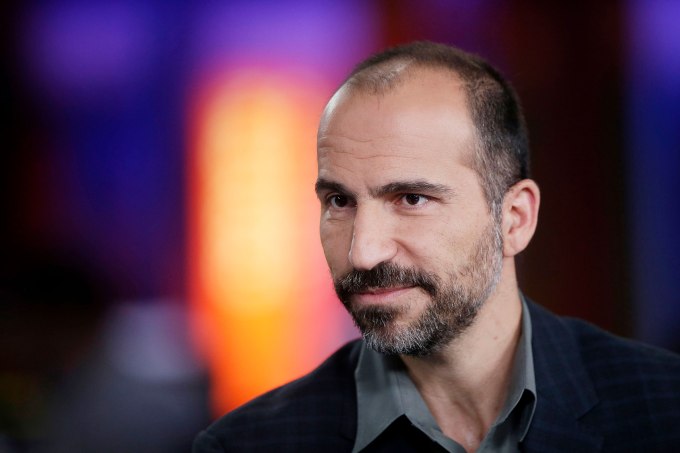
Dara Khosrowshahi has been criticized for not making direct contact with Uber employees in Southeast Asia. (Photographer: Matthew Lloyd/Bloomberg via Getty Images)

On top of all that, Uber CEO Dara Khosrowshahi has yet to make direct contact with the Southeast Asian staff. Several who spoke to TechCrunch were disappointed that they were not part of an internal all-hands video call with Khosrowshahi — which only included Uber’s ‘surviving’ staff in Southeast Asia.

“His arrival was billed as a positive change in culture for Uber, yet he hasn’t bothered to visit the office or even get in touch. Travis Kalanick did both when Uber China was sold to Didi,” one departing Southeast Asia-based Uber employee told TechCrunch.

Much of the discontent seems to center around communication issues.

TechCrunch understands from sources inside Uber that the company is making significant efforts to educate its staff over their options, including potentially allowing those who wish to stay within the company to do so. Uber has dispatched senior management and its head of HR for Asia Pacific and LATAM, Anika Grant, on an ’employee roadshow’ aimed at visiting each Uber Southeast Asia office in person to help staff assess their options in person.

Still, one of the biggest hurdles for both Uber and Grab is also one of the most basic. Simply getting in touch with departing Uber staff is challenging since they were removed from Uber’s system, including the email directory, as soon as the Grab deal was communicated. That’s common security protocol, but setting up and communicating new email address and phones numbers has made maintaining dialogue a challenge.

Those efforts are apparently underway, but most of the Uber employees who spoke to TechCrunch had not yet been contacted by Grab, and, in addition, most were unsure whether and when communication would happen in spite of Grab and Uber’s efforts. One source inside Uber suggested that it could be “months” before all Uber departures have been contacted by Uber or Grab and assessed for a future role at Grab.

Those employees will remain fully paid by Uber during that period, but it’s a long time to wait without updates. Already, though, a nightmare scenario is brewing for Grab.

Recruiters swarm

TechCrunch understands that Go-Jek, which is in the process of launching services in Vietnam, Singapore and the Philippines, is pouring its energies into recruiting Uber’s former staff members and the platform’s drivers in a bid to hit the ground running with its long-awaited regional expansion.

Go-Jek is trying to hire key personnel from Uber’s now-defunct Southeast Asia business

Go-Jek won’t, of course, take all the Uber alums, but these conditions certainly put it in a good position to cherry pick critical new hires to fill out its business outside of Indonesia. Other Grab rivals, including well-funded logistics startup NinjaVan, food delivery companies Deliveroo and FoodPanda, bike-sharing startups, and even the likes of Facebook, WeWork, Google and Netflix are understood to have hastily arranged interviews with Uber’s departing Southeast Asia staff in a bid to suck up new talent.

That’s precisely the scenario that Grab is trying to avoid.

There are also challenges on the driver side transition, too, with many who drove for Uber reluctant or unsure of whether to move over to Grab’s platform.

TechCrunch spoke to nearly a dozen drivers in Singapore, where Uber remains operational, and Thailand and Indonesia, where the service has shuttered.

In Thailand and Singapore, the drivers had already crossed over to Grab, but they complained about the experience. Chiefly that the app is inferior, that they are making less money and that they felt like they had no choice.

Grab has said earlier this month that it has signed up over 75 percent of all Uber drivers in Indonesia, but it doesn’t have data for other markets. No independent figures exist to offer a wider picture on the success of the driver transition so far.

“Drivers tend to feel like pawns when these rideshare giants merge. A lot of drivers have bought into driving for Uber and are comfortable with their experience so the idea of migrating to a new platform can be daunting,” Harry Campbell, who writes about ride-hailing experiences for drivers at The Ride Sharing Guy blog, told TechCrunch.

“One of the nice things about competition, is that it keeps these companies in check when it comes to fighting for drivers and treating them well. There’s a reason why many drivers opted for Uber in the first place,” added Campbell, who recently moderated a Q&A between U.S. drivers and Uber CEO Khosrowshahi.

That’s the opinion of one Uber driver in Singapore, who wrote on his blog that many drivers concerned with earning less with Grab still hope for a “miracle” that sees Uber remain. Added to that concern, TechCrunch reported this week that Go-Jek has held talks with Singapore’s largest taxi operator, ComfortDelGro, with the aim of becoming the firm’s ride-hailing partner. Comfort had previously inked an agreement with Uber.

Finally, customers themselves are having to get used to Grab instead of Uber. Many have been vocal with issues which range subjective claims, such as a perceived inferior experience on Grab, and also more quantifiable concerns that include higher pricing and longer waits for a ride.

On that note, Grab explained that operates a different pricing model. Rather than Uber’s approach of a lower distance-based fare with more emphasis on surge pricing, Grab said it “always maintained a competitive per KM fare with 2.0 surge max.” Uber’s surge could reach 4X, Grab said.

Go-Jek’s opportunity

All of these factors give Go-Jek a huge opportunity to step into Uber’s shadow and becoming the Pepsi to Grab’s Coke in Southeast Asia. There’s already a track record of doing so, as recent analysis from the Financial Times suggested.

The paper’s research division surveyed 5,000 consumers across Singapore, Vietnam, Indonesia, Thailand, Malaysia and the Philippines and found that the gap between Grab and Uber’s services is minimal across most countries. The main exception is Indonesia, where GoJek — and its GoCar service — is the dominant player.

That suggests that things could be tighter than first assumed for Grab if it isn’t able to fully capitalize on the Uber acquisition.

With additional reporting and assistance from Jonathan Shieber

25 Apr 2018

Real-time developer tool startup Pusher pulls in $8M in Series A funding

Pusher, the London startup that provides tools and cloud infrastructure for developers to add real-time functionality to their apps, such as push notifications and messages, has pulled in $8 million in Series A funding. The round was led by London VC firm Balderton Capital, with participation from Heavybit, the San Francisco-based investor that specialises in helping developer product companies scale.

Founded in 2011 — off the back of a modest $1 million in seed funding — Pusher aims to significantly lower the barriers for developers who want to build real-time features into their websites and apps. This was originally delivered via a general purpose realtime API and supporting cloud infrastructure, enabling app developers to more easily build things like rich push notifications, live content updates, and various real-time collaboration and communication features.

However, more recently the company has began rolling out additional offerings dedicated to specific real-time functionality. The first of those is Chatkit, an API and SDK intended to do a lot of the heavy lifting required to add chat functionality to an app or service.

In a call, Pusher co-founder Max Williams told me the startup’s Series A will be used to continue building new developer products and to establish a bigger presence in the U.S. so that it can be closer to customers.

Pusher already has a small team working out of Heavybit’s San Francisco office, but in line with growth it plans to eventually set up a bigger office on the West Coast and aims to have up to 30 people working in the U.S. by the end of the year. These will be in sales, marketing and customer support.

In addition, a significant amount will be invested in R&D, too, with Pusher’s own London-based engineering team being bolstered accordingly. Pusher currently employs 60 people.

To that end, Williams says that the new capital will enable Pusher to move a lot faster, in recognition that the real-time developer tool space has not only grown exponentially in the last few years but is also becoming more competitive. He feels that for Pusher to fully take advantage of the opportunity ahead, organic growth — and in turn the company growing at the same pace as revenue — wasn’t going to cut it. Prior to this round of funding the startup had only raised $2.5 million in debt in addition to its original $1 million seed round.

Meanwhile, Pusher says that more than 200,000 developers worldwide are using Pusher’s products and more than 40 billion messages per day are now sent using APIs provided by the company, “connecting more than eight billion devices per month”. Customers include The New York Times, which uses Pusher for updating its realtime news feeds; Mailchimp, which uses it for internal collaboration tools; and DraftKings, which uses Pusher for updating its realtime leaderboards.