Year: 2019

06 Nov 2019

FirstVet, the video veterinarian service, raises €18.5M for international expansion

FirstVet, the Swedish startup which provides pet owners with on-demand video consultations with local, qualified veterinarians, has closed €18.5 million in Series B funding.

The round is led by London-based Omers Ventures, the venture capital arm of Canadian pension fund Omers that recently launched a dedicated €300 million fund to invest in European tech startups. FirstVet’s Series A backer Creandum also followed on, whilst it brings total funding to-date to €24.5 million.

FirstVet says the funding will enable it to expand the service globally, with the company looking to launch in other markets, name-checking the U.S., Germany, and France. In addition, the startup will continue to develop its product and introduce new features to improve the experience for pet owners and vets alike. This will include new “automation tools” and integration with clinics’ existing systems.

Founded in 2016 in Stockholm, FirstVet wants to expand access to pet care through facilitating on-demand video consultations with registered veterinarians. The company currently operates in five markets — the U.K., Norway, Denmark, Finland, and, of course, Sweden) and says it has more than 200,000 registered users. There are currently 150 veterinarians on the platform, with this number growing continually.

“We are a supplement to physical clinics rather than a substitute to them,” FirstVet CEO and co-founder David Prien told TechCrunch in June 2018. “The most common problems we help pet owners with are gastrointestinal questions, wounds, skin/fur/ears. Our main objective is to be the natural first point of contact for pet owners.”

As a route to market, FirstVet has partnerships with over 20 major insurance companies across all of the markets it operates in, including Bought By Many in the U.K. This sees the FirstVet service offered as part of a pet owner’s insurance premium.

“At Omers Ventures, we invest in and partner with the best and brightest entrepreneurs and teams in tech to build a prosperous future, so FirstVet is the perfect fit for us,” says Henry Gladwyn, Principal at Omers Ventures and new FirstVet board member, in a statement. “It’s rare for a startup to provide genuine value to the entire ecosystem in which it operates, with FirstVet quickly becoming an irreplaceable service for pet owners, and a trusted partner for vets, clinics, and insurance companies. FirstVet has ambitions to become the global leader in on-demand video veterinary appointments, and we are delighted to be on board to help them achieve this goal”.

06 Nov 2019

San Francisco smokes Juul’s hopes by voting to keep e-cigarette ban

Voters in San Francisco have resoundingly rejected an attempt to overturn a citywide ban on e-cigarettes by a margin of around 80:20.

Reporting on the count in the Bay Area, CBS SF says at least 78 per cent of voters rejected the ballot measure, known as Proposition C.

The measure had been heavily back by e-cigarette maker Juuluntil just over a month ago. It is reported to have spent at least $10M promoting the attempt to flip the ban, before withdrawing its support at the end of September as part of a company-wider review under new CEO, K.C. Crosthwaite, that’s also seen between 10-15% of its workforce lay off.

The 2017-founded company, which has raised some $14.4BN in funding to date per Crunchbase, has faced trenchant criticism over the level of youth usage of its products.

In a statement responding to the Prop C vote, San Francisco city attorney Dennis Herrera attacks Juul — dubbing the company “Big Tobacco” — and writing: “San Francisco voters are too smart to be fooled by Juul. Juul is Big Tobacco, and it’s using a classic ploy from the Big Tobacco playbook to try and hook another generation of kids on nicotine. Voters saw right through Juul’s deception. San Francisco already has the toughest e-cigarette regulations in the nation. By law, e-cigarettes must undergo FDA review to ensure they are safe for public health. Complete FDA review and you can sell your product here. If you don’t, you can’t. It’s that simple.”

We’ve reached out to Juul for comment.

In October Juul announced it would stop selling mango, creme, fruit and cucumber flavored nicotine products in the US, while continuing to sell the flavors elsewhere. But it did not commit to permanently giving up on selling flavored nicotine products — in the US or anywhere.

Vaping generally has also been under a growing cloud of suspicion after a number of e-cigarette users died from an acute lung condition which appears related to the process of chemicals being vaporized and inhaled — and potentially to devices being used to vape THC.

Third party sellers hawk unofficial cartridges for e-cigarette devices such as Juul’s which can contain the psychoactive compound found in marijuana, along with other unknown substances. But studies have also shown that even popular e-cigarette brands don’t know exactly what chemicals are produced when the substances contained in their cartridges are vaporized.

“If the FDA can’t verify that these products are safe, then they don’t belong on store shelves,” added Herrera in the statement. “The U.S. Surgeon General has warned that we are in the midst of a youth vaping epidemic. Juul spent millions trying to mislead San Franciscans and rewrite the rules to benefit itself before realizing that was a fool’s errand. It could have put that time and effort into completing the required FDA review. If Juul had done that the day Supervisor Shamann Walton and I introduced our e-cigarette legislation back in March, Juul would have had its answer from the FDA by now. Perhaps FDA review is a test that Juul is afraid it can’t pass.”

Last month a lawsuit filed by a former Juul executive alleged the company knew that a batch of contaminated e-liquid had been used in about one million pods shipped to retailers earlier this year but did not inform customers.

06 Nov 2019

Neo4j introduces new cloud service to simplify building a graph database

Neo4j, a popular graph database, is available as an open source product for anyone to download and use. Its enterprise product aimed at larger organizations is growing fast, but the company recognized there was a big market in between those two extremes, and today it introduced a new managed cloud service called Aura.

They wanted something in the product family for smaller companies, says Emil Eifrem, CEO and co-founder at Neo4j . Aura really gives these smaller players a much more manageable offering with flexible pricing options. “To get started with an enterprise project can run hundreds of thousands of dollars per year. Whereas with Aura, you can get started for about 50 bucks a month, and that means that it opens it up to new segments of the market,” Eifrem told TechCrunch. As he points out, even a startup on a shoe-string budget can afford $50 a month.

Aura operates on a flexible pricing model, and offers the kind of value proposition you would expect from a cloud version of the product. The company deals with all of the management, security and updates for you. It will also scale as needed to meet your data requirements as you grow. The idea is to allow developers to concentrate on simply building applications and let Neo4j deal the database for you.

He says over time, he could see larger businesses, who don’t want to deal with the management side of developing a graph database application also using the cloud product. “Why would you want to operate your own database? You should probably focus on your core business and building applications to support that core business,” he said. But he recognizes change happens slowly in larger organizations, and not every business will be comfortable with a managed service. That’s why they are offering different options to meet different requirements.

Graph databases allow you to see connections between data. It is the underlying technology, for example, in a social networking app, that lets you the connection between people you know and people your friends know. It is also the technology on an e-commerce site that can offer recommendations based on what you bought before because people who buy a certain product are more likely to purchase other related products.

06 Nov 2019

China’s Didi to relaunch Hitch carpooling service this month

Chinese ride-hailing firm Didi Chuxing said today it will conduct a trial relaunch of its Hitch carpooling service in seven major Chinese cities with additional safety features by end of the month, more than a year after suspending the service following the murder of a female passenger by her Didi driver.

The relaunch of popular service Hitch, which was started in 2015 and has clocked more than a billion rides, follows a “comprehensive safety review and product revamp,” Didi said Wednesday. The company claimed its system can now identify high-risk scenarios and trip anomalies as well as support effective intervention. There’s also a new in-app Safety Assistant that shows detailed information on drivers and passenger and offers real-time support from safety specialists.

Additionally, during the trial, Hitch service will only allow trips under 50 kilometres (31 miles) in metro areas between 5am and 8pm for female users. Male users can enjoy the service till 11pm. The cities where Hitch will conduct the trial are Beijing, Harbin, Taiyuan, Shijiazhuang, Changzhou, Shenyang, and Nantong.

Didi suspended the carpooling service after the murder of a female passenger in August 2018, a second such incident after another passenger was murdered only a few months prior. At the time, Didi also issued an apology for its “disappointing mistakes.” (Didi’s other carpooling and general offerings were not suspended.)

Chinese transport ministry lambasted Didi for the incidents, saying the firm had “lost control” of its drivers and vehicles. It said there had been multiple lapses in offline management of people and cars, that had resulted in criminal and security cases. Didi said today it had alerted the authority about the trial re-run.

Hitch is a modern take on hitchhiking that lets a passenger ride for free with a driver headed in their direction. Passengers are encouraged to leave a tip to cover petrol, but the idea is to make each car ride more efficient. Didi doesn’t monetize the service, but it is a strategic way to attract passengers and drivers who may use other services that the firm does draw revenue from.

The Chinese firm did not mention last year’s unfortunate incidents today, but noted that Hitch has become a “popular day-to-day commuter ride-sharing among China’s rising middle class.”

“Since then it has also become an important inter-city mobility solution as the country’s sustained urbanization process continues to drive regional integration and mass migration. During China’s 2018 Lunar New Year, 30.7 million Chinese took Hitch for their annual family reunion over the seven-day break,” it said.

Didi, which was valued at $56 billion earlier this year and claims to have amassed over 550 million users globally, hasn’t been able to turn a profit. The relaunch of carpooling service could put the company, which has been backed by SoftBank and Uber, on the right track.

06 Nov 2019

GoCardless partners with TransferWise to bring low cost currency conversion to recurring payments

GoCardless, the London fintech that makes it easy for businesses to offer recurring bank payments, has partnered with TransferWise for its currency exchange.

The move sees GoCardless utilise the TransferWise API and the money transfer company’s “TransferWise for Business” product and in turn provide TransferWise’s FX rates to its own customers.

More broadly, the partnership furthers GoCardless’ mission to become a one-stop-shop globally for businesses that want to let customers pay via recurring bank payments, known as Direct Debits in the U.K.

It also chalks up another win for TransferWise, which has always wanted to power currency exchange for other financial service providers and not just its own app, but has sometimes struggled with this aspect of its platform play. Along with GoCardless, TransferWise has partnered with the U.K.’s Monzo, Germany’s N26, Estonia’s LHV and BPCE Groupe, France’s second largest bank.

To date, GoCardless is used by more than 50,000 businesses worldwide, spanning multinational corporations to SMBs. GoCardless says it processes $13 billion of payments across more than 30 countries each. Along with its U.K. HQ, the company has offices in France, Australia, Germany and (most recently) the U.S.

“By integrating directly to the TransferWise API, businesses can benefit from low cost, convenient and completely transparent pricing no matter what the currency, without leaving their account,” says TransferWise. “This cuts out the pain of having to open a new bank account in every country where the business collects payments, as well as eradicating hefty receiving fees for foreign currency transactions”.

Support for TransferWise-powered currency exchange will be available to GoCardless customers via a phased roll-out starting later this month. Receiving currencies initially being supported are GBP, USD, EUR, SEK, DKK, CAD, AUD and NZD.

In a brief message exchange with GoCardless co-founder and CEO Hiroki Takeuchi — who was otherwise occupied doing his CEO thing at Web Summit — he told me that the new TransferWise integration should help the company attract new customers as well as better serve existing ones. With more and more companies operating globally, especially digital companies, Takeuchi has long-argued that a recurring payments network has to be truly global.

“[The] main reason customers aren’t able to leverage our coverage to date is because they can’t receive multiple currencies. They want to be paid out in their home currency into their local bank account,” he explained.

06 Nov 2019

72 hours left for early bird passes to Disrupt Berlin 2019

Did you know that the cuckoo clock originated in Germany? It’s a fact. And while the origins of early-bird pricing remain shrouded in mystery, one thing remains clear. Early bird passes to Disrupt Berlin 2019 disappear in just 72 hours.

Depending on which pass you buy, the early bird can save you up to €500. You’d be cuckoo to miss out on that deal. Here’s another fact. You’ll score the best price only if you buy your early bird pass before the 8 November at 11:59 p.m. (CEST) deadline.

Disrupt Berlin offers something for startuppers across the ecosystem. What do you want to experience? If you want to learn how to raise money for your first startup, send a cold pitch or connect with investors, look no further than the Extra Crunch stage. that’s where you’ll find startup funding experts Nic Brisbourne (Forward Partners), Malin Holmberg (Target Global) and Russ Heddleston (DocSend) addressing these issues and offering their advice.

Can’t get enough of blockchain? Don’t miss our interview with Ethereum Foundation researcher, Justin Drake. He’ll provide an update on Ethereum 2.0 and, as if that weren’t exciting enough, he’ll join other blockchain experts to discuss what it takes to build a blockchain startup.

Maybe you’re hot for fintech and ready to change the future of finance. Be there when we sit down with Yoni Assia of eToro and Charlie Delingpole of ComplyAdvantage . They’ll talk about their experience building successful fintech startups, the changing landscape and ways that founders can approach and affect the sector’s future.

If you’re looking to connect with people to help move your business forward, you’ll find Disrupt Berlin awash with world-class networking opportunities. With hundreds of startups and thousands of people in attendance, you’ll need a tool to help you separate the wheat from the chaff, so to speak. That’s where CrunchMatch, our free business networking platform comes in.

CrunchMatch lets you create a profile listing your specific business criteria, goals and interests. If you want to meet founders, you will. If you’re looking to set up meetings with investors, you can. No more time wasted talking to the wrong people. The platform’s algorithm finds and suggests appropriate matches. And, subject to your approval, CrunchMatch proposes meeting times and sends out meeting requests.

And there’s so much more to the Disrupt experience. Startup Battlefield, the Hackathon, Q&A Sessions and the hundreds of early-stage startups displaying innovative tech in Startup Alley.

Disrupt Berlin 2019 takes place on 11-12 December, but the deadline to buy an early bird pass hits in just 72 hours on 8 November at 11:59 p.m. (CEST). Be an early bird, not a cuckoo bird.

Is your company interested in sponsoring or exhibiting at Disrupt Berlin 2019? Contact our sponsorship sales team by filling out this form.

06 Nov 2019

Coveo raises $227M at $1B+ valuation for AI-based enterprise search and personalization

Search and personalization services continue to be a major area of investment among enterprises, both to make their products and services more discoverable (and used) by customers, and to help their own workers get their jobs done, with the market estimated to be worth some $100 billion annually. Today, one of the big startups building services in this area raised a large round of growth funding to continue tapping that opportunity. Coveo, a Canadian company that builds search and personalisation services powered by artificial intelligence — used by its enterprise customers by way of clould-based, software-as-a-service — has closed a $227 million round, which CEO Louis Tetu tells me values the company at “well above” $1 billion, “Canadian or US dollars.”

The round is being led by Omers Capital Private Growth Equity Group, the investing arm of the Canadian pensions giant that makes large, later-stage bets (the company has been stepping up the pace of investments lately), with participation also from Evergreen Coast Capital, FSTQ, and IQ Ventures. Evergreen led the company’s last round of $100 million in April 2018, and in total the company has now raised just over $402 million with this round.

The $1 billion+ valuation appears to be a huge leap in the context of Coveo’s funding history: in that last round, it had a post-money valuation of about $370 million, according to PitchBook data.

Part of the reason for that is because of Coveo’s business trajectory, and part is due to the heat of the overall market.

Coveo’s round is coming about two weeks after another company that builds enterprise search solutions, Algolia, raised $110 million. The two aim at slightly different ends of the market, Tetu tells me, not directly competing in terms of target customers, and even services. “Algolia is in a different zip code,” he said. Good thing, too, if that’s the case: Salesforce — which is one of Coveo’s biggest partners and customers — was also a strategic investor in the Algolia round. Even if these two do not compete, there are plenty of others vying for the same end of the enterprise search and personalization continuum — they include Google, Microsoft, Elastic, IBM, Lucidworks, and many more. That, again, underscores the size of the market opportunity.

In terms of Coveo’s own business, the company works with some 500 customers today and says SaaS subscription revenues grew more than 55 percent year-over-year this year. Five hundred may sound like a small number, but it covers a lot of very large enterprises spanning web-facing businesses, commerce-based organizations, service-facing companies, and enterprise solutions.

In addition to Salesforce, it includes Visa, Tableau (also Salesforce now!), Honeywell, a Fortune 50 healthcare company (whose name is not getting disclosed), and what Tetu described to me as an Amazon competitor that does $21 billion in sales annually but doesn’t want to be named.

Coveo’s basic selling point is that the better discoverability and personalization that it provides helps its customers avoid as many call-center interactions (reducing operating expenditures), improving sales (boosting conversions and reducing cart abandonment), and help companies themselves just work faster.

“We believe that Coveo is the market leader in leveraging data and AI to personalize at scale,” said Mark Shulgan, Managing Director and Head of Growth Equity at Omers, in a statement. “Coveo fits our investment thesis precisely: an A-plus leadership team with deep expertise in enterprise SaaS, a Fortune 1000 customer base who deeply love the product, and a track record of high growth in a market worth over $100 billion. This makes Coveo a highly-coveted asset. We are glad to be partnering to scale this business.”

Alongside business development on its own steam, the company is going to be using this funding for acquisitions. Tetu notes that Coveo still has a lot of money in the bank from previous rounds.

“We are a real company with real positive economics,” he said. “This round is mostly to have dry powder to invest in a way that is commensurate in the AI space, and within commerce in particular.” To get the ball rolling on that, this past July, Coveo acquired Tooso, a specialist in AI-based digital commerce technology.

06 Nov 2019

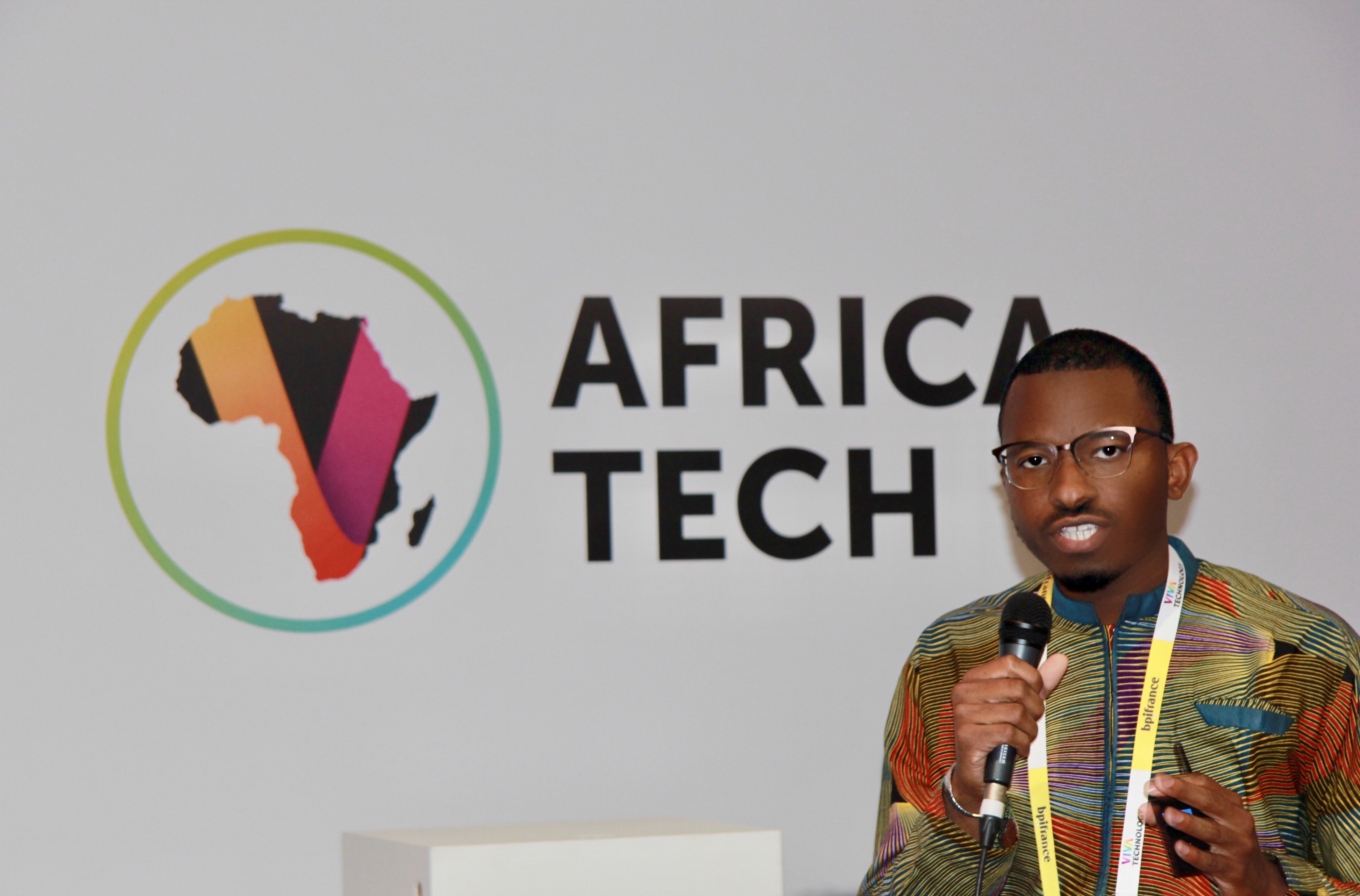
Senegal’s NIMA Codes to launch address app in 15 African countries

Senegalese startup NIMA Codes — a digital mapping service for locations without formal addresses  —  has upgraded its app and plans to go live in 15 African countries in 2020.

The pre-seed stage startup launched in 2018 around an API that uses mobile-phone numbers to catalog coordinates for unregistered homes and businesses in Senegal.

NIMA Codes is adding a chat tool to its platform, to help users locate and comment on service providers, and is integrating a photo-based location identifier, NIMA Snap, in the application.

“What we offer right now is a reliable street-addressing product. Because it’s very difficult for people…to communicate location in Africa and a lot of services are using location. So we need a service that can communicate reliable locations,” NIMA Codes co-founder and CEO Mouhamadou Sall told TechCrunch.

By several rankings, NIMA Codes has become a top-three downloaded navigation app in Senegal (for Android and iOS). The platform has 16,000 subscribed users and recorded over 100,000 searches, according to Sall.

He and co-founder Steven Sakayroun (a software engineer and IBM alum) came up with idea for assigning location coordinates to mobile numbers in previous software development roles.

“If you look at street addresses in North America, in the end they are just a way to name longitude and latitude, because the computer doesn’t know what 6th Avenue really means,” Sall said.

Since mobile-phone penetration in Senegal and broader Africa is high, mobile numbers serve as a useful reference point to attach location information tagged for both homes and businesses, Sall explained. Mobile-phones can also serve as an entry point for people to input location coordinates to NIMA Codes’ data-base.

There are also advantages to assigning coordinates to digits, vs. letters, in Sub-Saharan Africa with its 1000s of language groupings, Sall explained. “Nima Codes is a cross-border and language agnostic solution,” he said.

Mouhamadou Sall

Sall believes that will work to the startup’s advantage when it expands services and data-base building to all 15 countries of the Economic Community of West African States by the end of 2020.

NIMA Codes is still plotting prospects for its best use-cases and revenue generation. It hasn’t secured partners yet and is still identifying how those downloading the app are using it. “Right now it’s mostly people who download the app…and register locations. Some delivery companies may be using it and not telling us,” said Sall.

Ecowas Countries

The startup plans to generate revenue through partnerships and API usage fees.

Sall believes NIMA Codes’ new image-based location and chat-based business search functions could come together — akin to Google Maps and find nearby places — to create commercial revenue opportunities across merchants in West Africa’s large, informal economies.

Another obvious plug-in for NIMA Codes’ service is Africa’s fast-growing ride-hail and delivery markets. Sall points 2019 data that Uber paid $58 million over three-years for map and search services.The U.S. ride-hail company has also tested an image-based directions app called OKHi in Kenya. And there are reports of Uber’s imminent expansion into Senegal.

Whatever the application, Sall believes NIMA Codes is cornering a central point of demand in Sub-Saharan Africa.

“The use-case is so big, you need to start with something and eventually expand,” he said.

“But everything wraps around having a reliable location service for people and small business.”

06 Nov 2019

Cloudflare beat a patent troll. What now?

In the summer of 2017, we wrote about a battle between Cloudflare, the San Francisco-based internet security and content delivery network, and Blackbird Technologies, a Boston- and Chicago-based firm founded by two attorneys who’d previously litigated intellectual property cases on behalf of some of the largest tech companies in the world and had amassed at least 37 patents that they were using to file dozens of patent infringement lawsuits.

The suit was typical in every way, except how Cloudflare responded to it. Rather than quietly settle, as have other targets of Blackbird and the many patent trolls, Cloudflare decided to fight back in a very public way, blogging extensively, talking with news outlets like ours, and, most crucially, turning to anyone and everyone who could help it locate prior art. The idea wasn’t merely to invalidate the patent that Blackbird was using to sue Cloudflare — but to invalidate all of Blackbird’s patents. Cloudlfare declared war.

Cloudflare won, too. At least, the case against Cloudflare itself was dismissed, and in a postmortem published yesterday, the company describing in detail its game plan and many more specifics around its efforts to crowdsourced prior art that would invalidate Blackbird’s patents.

It revealed, for example, that it had received 275 total unique submissions from 155 individuals on 49 separate patents, and multiple submissions on 26 patents. Roughly 40% of these related to the patent asserted against Cloudflare, but those individuals also turned up prior art submissions that could help protect Niantic (which also is trying to bat back Blackbird), as well as Lululemon and New Balance, both of which have been sued previously by Blackbird over a patent Blackbird owns relating to a “sports bra having an integral storage pouch.” (These individuals, part of what Cloudflare had dubbed the Project Jengo community, found a submission on a public discussion forum that pre-dates Blackbird’s patent and features the idea of modifying a bra by creating an incision in the inner lining and applying a velcro strip so as to form a resealable pocket within the bra.)

Cloudflare also went, hard, after the founders of Blackbird, filing ethics complaints against both founders before the bar associations in Massachusetts, Illinois, and the United States Patent and Trademark office based on Blackbird’s self-described “new model” of pursuing intellectual property claims. Cloudflare stressed in these complaints rules that prohibit lawyers from acquiring a cause of action to assert on their own behalf, or in the alternative, rules prohibiting attorneys to split contingency fees with a non-attorney. Where those complaints lead is a question mark for now, at least for the public (disciplinary proceedings are mostly confidential).  But it’s worth noting that Verlander alone is now featured on Blackbird’s website. Her cofounder, Chris Freeman, formerly of Kirkland & Ellis, has decamped to a company that funds litigation in Chicago called Burford.

The question now is: what’s next? Though some might hope for Cloudflare to continue its campaign against injustice, Cloudflare has said from the outset that once its legal tangle with Blackbird had ended, it was getting out of the patent-troll-fighting business, a decision that the company’s general counsel, Doug Kramer, reaffirmed to us in conversation late last week about the case.

“This was never meant” to translate into “life-long advocacy” given the company’s other, more pressing concerns — including going public in September. “But we relied so much on the community, we wanted to put a capstone on it,” he said.

Still, Kramer acknowledges that he has received “a lot of phone calls from other general counsels or IP lawyers and CEOs who’ve said, ‘Isn’t there something we can here other than roll over and write a check?'” They’re understandably trying to piggyback off Cloudflare’s learnings. “I don’t know that I’ve seen anything to the extent that we’ve done it.”

Which brings us to the point of yesterday’s post, which wasn’t simply to crow about its win over Blackbird, no pun intended. It was also to “make clear there are other ways forward here,” said Kramer, who hopes other companies will use part of its blueprint, as well as establish their own. As Kramer observes, once a patent case is filed against a company, “the options are all bad options, and a lot of companies take the least bad option,” which is to write a check to settle the thing. It’s why companies like Blackbird gain momentum. “They face very little resistance.”

Kramer doesn’t necessarily blame companies for folding easily. Even when things go a company’s way, as with Cloudflare, litigation can take years and can cost a company many hundreds of thousands, if not multiple millions, of dollars. “As a litigation matter, we knocked this out of the park on the first pitch,” he says, “but it cost us more than if we’d just written a check.”

Still, Kramer hopes to see more companies “introduce more resistance,” and he hopes that Cloudflare’s refusal to “roll over” will inspire them to fight, too.

One tool at their disposal, he notes, are “very active, smart, thoughtful people who’ve organized themselves across in-house positions and third parties dedicated specifically to pushing back again these practices.”

Another are sympathetic politicians like Eric Lesser, a state senator in Massachusetts who views patent trolls as a threat to his state’s economy and is doing what he can to banish them and their infringement claims.

Another, of course, are engineers and others who build things and don’t like the rise of firms profiting by means of licensing or litigation rather than by producing their own goods or services. Indeed, Kramer acknowledges that not every company has the financial muscle of a Cloudflare, which raised more than $300 million from investors before going public, as well as attracted an anonymous donation of $50,000 to support its efforts against Blackbird. But the support of communities outside a company shouldn’t be underestimated, he suggests.

“We really came to understand that there a lot of people out there — colleagues and friends and like-minded folks in the commercial sector and really just the man on the street at a lot of tech companies — that are really bothered” by the abuse of patents by companies that obtain them not to use them but to demand royalties and sue for damages.

Cloudflare “didn’t fix [this broader issue]. It still exists,” Kramer continues. But “we were able to leverage that sentiment. Hopefully, it’s evidence for others that there is support out there.”


06 Nov 2019

Cloudflare beat a patent troll. What now?

In the summer of 2017, we wrote about a battle between Cloudflare, the San Francisco-based internet security and content delivery network, and Blackbird Technologies, a Boston- and Chicago-based firm founded by two attorneys who’d previously litigated intellectual property cases on behalf of some of the largest tech companies in the world and had amassed at least 37 patents that they were using to file dozens of patent infringement lawsuits.

The suit was typical in every way, except how Cloudflare responded to it. Rather than quietly settle, as have other targets of Blackbird and the many patent trolls, Cloudflare decided to fight back in a very public way, blogging extensively, talking with news outlets like ours, and, most crucially, turning to anyone and everyone who could help it locate prior art. The idea wasn’t merely to invalidate the patent that Blackbird was using to sue Cloudflare — but to invalidate all of Blackbird’s patents. Cloudlfare declared war.

Cloudflare won, too. At least, the case against Cloudflare itself was dismissed, and in a postmortem published yesterday, the company describing in detail its game plan and many more specifics around its efforts to crowdsourced prior art that would invalidate Blackbird’s patents.

It revealed, for example, that it had received 275 total unique submissions from 155 individuals on 49 separate patents, and multiple submissions on 26 patents. Roughly 40% of these related to the patent asserted against Cloudflare, but those individuals also turned up prior art submissions that could help protect Niantic (which also is trying to bat back Blackbird), as well as Lululemon and New Balance, both of which have been sued previously by Blackbird over a patent Blackbird owns relating to a “sports bra having an integral storage pouch.” (These individuals, part of what Cloudflare had dubbed the Project Jengo community, found a submission on a public discussion forum that pre-dates Blackbird’s patent and features the idea of modifying a bra by creating an incision in the inner lining and applying a velcro strip so as to form a resealable pocket within the bra.)

Cloudflare also went, hard, after the founders of Blackbird, filing ethics complaints against both founders before the bar associations in Massachusetts, Illinois, and the United States Patent and Trademark office based on Blackbird’s self-described “new model” of pursuing intellectual property claims. Cloudflare stressed in these complaints rules that prohibit lawyers from acquiring a cause of action to assert on their own behalf, or in the alternative, rules prohibiting attorneys to split contingency fees with a non-attorney. Where those complaints lead is a question mark for now, at least for the public (disciplinary proceedings are mostly confidential).  But it’s worth noting that Verlander alone is now featured on Blackbird’s website. Her cofounder, Chris Freeman, formerly of Kirkland & Ellis, has decamped to a company that funds litigation in Chicago called Burford.

The question now is: what’s next? Though some might hope for Cloudflare to continue its campaign against injustice, Cloudflare has said from the outset that once its legal tangle with Blackbird had ended, it was getting out of the patent-troll-fighting business, a decision that the company’s general counsel, Doug Kramer, reaffirmed to us in conversation late last week about the case.

“This was never meant” to translate into “life-long advocacy” given the company’s other, more pressing concerns — including going public in September. “But we relied so much on the community, we wanted to put a capstone on it,” he said.

Still, Kramer acknowledges that he has received “a lot of phone calls from other general counsels or IP lawyers and CEOs who’ve said, ‘Isn’t there something we can here other than roll over and write a check?'” They’re understandably trying to piggyback off Cloudflare’s learnings. “I don’t know that I’ve seen anything to the extent that we’ve done it.”

Which brings us to the point of yesterday’s post, which wasn’t simply to crow about its win over Blackbird, no pun intended. It was also to “make clear there are other ways forward here,” said Kramer, who hopes other companies will use part of its blueprint, as well as establish their own. As Kramer observes, once a patent case is filed against a company, “the options are all bad options, and a lot of companies take the least bad option,” which is to write a check to settle the thing. It’s why companies like Blackbird gain momentum. “They face very little resistance.”

Kramer doesn’t necessarily blame companies for folding easily. Even when things go a company’s way, as with Cloudflare, litigation can take years and can cost a company many hundreds of thousands, if not multiple millions, of dollars. “As a litigation matter, we knocked this out of the park on the first pitch,” he says, “but it cost us more than if we’d just written a check.”

Still, Kramer hopes to see more companies “introduce more resistance,” and he hopes that Cloudflare’s refusal to “roll over” will inspire them to fight, too.

One tool at their disposal, he notes, are “very active, smart, thoughtful people who’ve organized themselves across in-house positions and third parties dedicated specifically to pushing back again these practices.”

Another are sympathetic politicians like Eric Lesser, a state senator in Massachusetts who views patent trolls as a threat to his state’s economy and is doing what he can to banish them and their infringement claims.

Another, of course, are engineers and others who build things and don’t like the rise of firms profiting by means of licensing or litigation rather than by producing their own goods or services. Indeed, Kramer acknowledges that not every company has the financial muscle of a Cloudflare, which raised more than $300 million from investors before going public, as well as attracted an anonymous donation of $50,000 to support its efforts against Blackbird. But the support of communities outside a company shouldn’t be underestimated, he suggests.

“We really came to understand that there a lot of people out there — colleagues and friends and like-minded folks in the commercial sector and really just the man on the street at a lot of tech companies — that are really bothered” by the abuse of patents by companies that obtain them not to use them but to demand royalties and sue for damages.

Cloudflare “didn’t fix [this broader issue]. It still exists,” Kramer continues. But “we were able to leverage that sentiment. Hopefully, it’s evidence for others that there is support out there.”