Year: 2019

04 Nov 2019

A startup just launched red wine to the International Space Station to age for 12 months

Space-based businesses don’t all have to be about communications or Earth observation – European startup Space Cargo Unlimited, for instance, is focused on what operating in a microgravity environment can unlock for research and manufacturing. Accordingly, the company just launched an unusual payload to the International Space Station (ISS) – twelve bottles of wine.

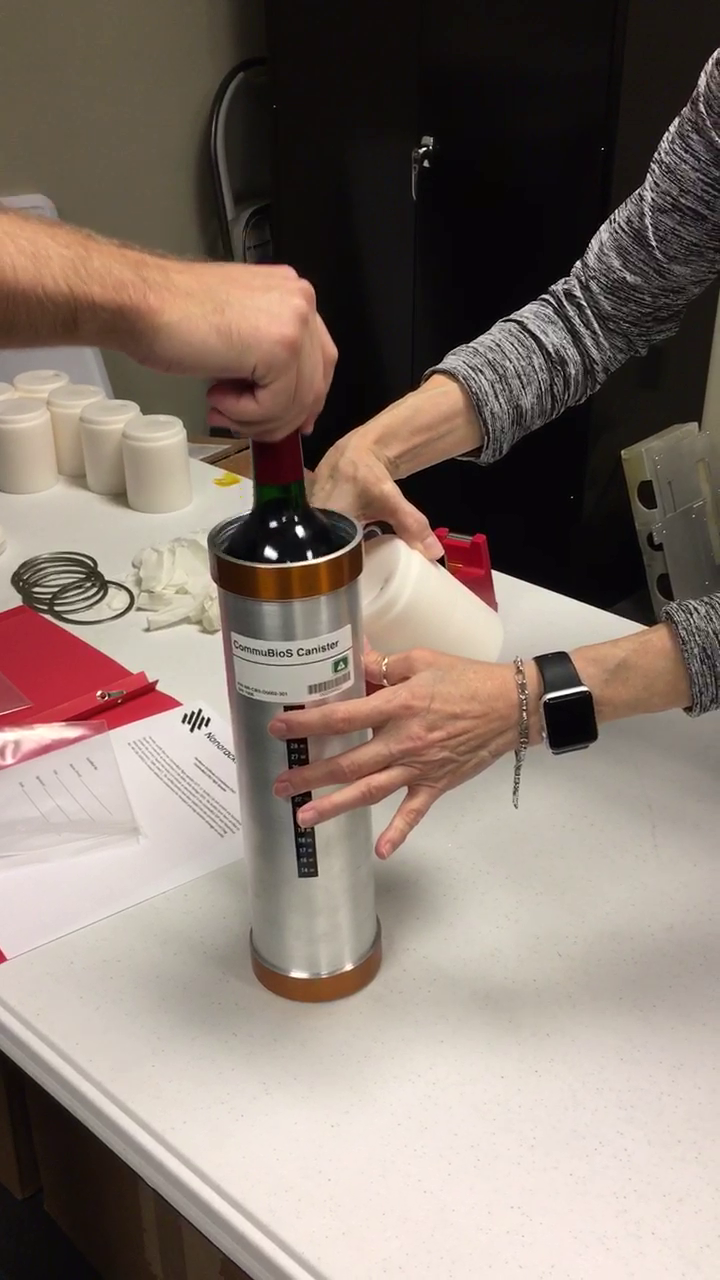
The wine is not leisure-time supplies for the astronauts on board the ISS; instead, it’s part of an experiment that will study how the aging process for wine is affected by a microgravity, space-based environment. Wine samples taken from the same batch will be aged simultaneously on Earth over the same 12-month period, and then the results will be compared when the ISS wine shipment returns on a future cargo craft trip back.

One of the wine samples in its protective container prior to launch.

Both the Earth and the ISS wine samples will remain sealed in their glass bottle environments, and they’ll be kept at a constant temperature of around 18 degrees celsius (or around 64 degrees Fahrenheit), undisturbed to let the interior complex biological environment of the bottles do their work. Researchers predict their will be taste differences that result from the effect that microgravity and spaceb-ased radiation will have on physics and chemical reactions, but the only way to find out for sure is to give it a shot.

It sure sounds like this could set up a new line of literally ‘Space-aged’ wines that command a pretty premium, but Space Cargo Unlimited says that their work is more “following in the footsteps of Louis Pasteur,” who essentially developed pasteurization though experiments with wine fermentation. To that end, it’s hoping this experiment will produce results that could have broader applications across food preservation and the rrelated technologies.

Space Cargo Unlimited’s wine samples launched aboard a Northrop Grumman Antares rocket, loaded onto a Cygnus cargo spacecraft, which successfully docked with the ISS on Monday morning.

04 Nov 2019

Los Angeles-based Boulevard has raised $11 million for its software to manage salons and spas

Barbershops and salons in the U.S. represent a $315 billion industry counting nearly 3 million small businesses and 4 million independent aestheticians among their ranks. It’s a business that has been slow to adopt modern technologies because it’s both specialized and fragmented, meaning that it’s a huge opportunity for the kind of niche software developers who have cropped up in the Los Angeles tech ecosystem in recent years.

True to form, two former technology executives from the LA ecosystem have launched Boulevard, to be a provider of back-office management software for the salon and spa industry.

Co-founders Matt Danna and Sean Stavropoulos first crossed paths at the Los Angeles startup Fullscreen before rejoining professionally in 2016 to begin working on Boulevard.

In the three years since they formed the company, Boulevard has grown in headcount to over 50 full-time employees and is processing over $100 million in customer payments.

Those figures attracted the interest of investors and allowed the company to rake in $11 million in its recent Series A round from investors including Index Ventures and Bonfire Ventures. As a result of their new stake in the company, Damir Becirovic from Index Ventures and Jim Andleman of Bonfire will both take seats on the company’s board of directors.

The company said it would use the money from its latest round to expand its headcount across all departments.

Through the company’s software toolkit salons and spas can handle booking and scheduling, payroll, commissions, inventory management and payments along with customer relationship management to improve the customer experience.

“Competitors in the space have been trying to shoehorn a product that was built for yoga and pilates studios into the beauty industry, but the two have completely different needs,” said Damir Becirovic of Index Ventures. “Boulevard was built specifically for personal care businesses and is a high tech solution for a high touch market where no one else comes close.”

Using the company’s software, customers like Chris McMillan the Salon, Ken Paves Salon, MèCHE Salon,  Sev Laser, Spoke & Weal, and  TONI&GUY have seen results like 16% increases in service booked, 18% increases in retail revenue, 24% increases in tips, and an 81% decrease in no-shows or late cancellations within the first six months, the company said.

04 Nov 2019

Adobe Photoshop arrives on the iPad

Adobe has released Photoshop for the iPad, after announcing that it would be bringing its popular professional photo-editing software to Apple’s tablets officially last October. Adobe said that it would be launching the app in 2019, and it has made good on that schedule with the release today. Photoshop for iPad is a free download, and includes a 30-day free trial – after that it’s $9.99 per month via in-app purchase for use of just the app, or included as part of an Adobe Creative Cloud subscription.

As Adobe said right from the start, this initial version of Photoshop for the iPad isn’t at feature parity with its desktop editing software. It does, however, support Apple Pencil for iPad Pro and more recent iPad models, and it allows editing of PSD files. Adobe says it has focused on features that will benefit from touch and Apple Pencil input on this first release, including “core compositing and retouching tools,” with other improvements, including added support of brushes and masks, as well as things like smart selection, to come later.

For what it’s worth (I haven’t spent any meaningful amount of time with the software), there are features like spot healing and clone stamp that can be highly useful for refining edits on the go available right now. A workflow that incorporates Lightroom on iPad can probably serve pros looking to maximize portability decently well, even if it can’t match the sheer range of things you can do on the desktop just yet. Plus, PSDs you store in Creative Cloud will be available to edit right where you left off everywhere.

Regardless of its current state, it’s good to see Adobe sticking to their schedule for developing and releasing Photoshop on the iPad, even if there’s still work to be done to ensure that it gets to a place where the iPad doesn’t feel like a backup option for when you’re unable to fire up a desktop or notebook computer.

Adobe is hosting its Adobe MAX 2019 conference this week, and there should be plenty of news coming out of that event, so stay tuned to TechCrunch for more from that show.

04 Nov 2019

Brazilian mobile phone insurance technology startup Pitzi is now worth over $100 million

With roughly one million customers across Brazil and a new round of financing, the mobile phone insurance provider Pitzi now finds itself with a $100 million valuation.

The size of its latest round, which was led by QED Investors and included commitments from existing investors like Thrive Capital and Valiant Partners, was undisclosed.

PItzi acts as a reseller for insurance companies to offer products around mobile phone insurance across Brazil. Founded in 2012, the company’s mobile handset insurance offerings were a service that was in the right place at the right time, as low cost handsets caused the market in Latin America’s most populous country to explode.

Pitzi previously raised $20 million from investors including Thrive, Kaszek Ventures, Flybridge and DCM. Even with the company’s success, cell phone insurance in Brazil stands at 4%, compared with global standards of more than 40%. This despite the fact that there are more than 200 million phones in Brazil alone.

“Today, only 4% of smartphones here are protected but we’re driving that towards 90% in the coming years and using those phones to unlock even more transformation in the space,” said Daniel Hatkoff, Founder & CEO of Pitzi, in a statement.

The investment by QED Investors puts Pitzi in some pretty good company when it comes to Latin American financial technology startups. Other Latin American investments in the firm’s portfolio include the multi-billion dollar credit card startup, Nubank; the personal finance lender, Creditas; the business lender, Konfio; and the rental financing company Quinto Andar.

As a result of the investment, Bill Cilluffo, a former president of Capital One International and a general partner with QED will take a seat on the company’s board of directors, according to a statement.

For Hatkoff, the cell phone is a window into other products and services in the insurance industry thanks to the ways that the device has transformed so many experiences for the emerging Brazilian middle class.

“The smartphone will be profoundly transformational in Brazil, allowing the emerging middle class to finally emerge and do things it never imagined possible,” said Hatkoff. “As market leaders, we at Pitzi are obsessed with unlocking the Brazilian consumer’s ability to use their phones in ever more powerful ways. Cell phone protection is just the beginning.”

04 Nov 2019

Watch live as NASA and Boeing test the Starliner crew spacecraft launch pad abort system

NASA’s commercial crew program Boeing will run a key test today of the Boeing CST-100 Starliner, a new spacecraft developed by the aerospace company to bring American astronauts to the International Space Station, beginning as early as next year. The Starliner will undergo a crucial and necessary launch pad abort test, wherein if all goes will it’ll show exactly how it can use its on board engines to quickly move the spacecraft away from the launch vehicle prior to lift-off in the unlikely chance of an emergency. The test is set to begin at 9 AM ET (6 AM PT), and there is a three-hour window from that time in which the test can take place.

If all goes to plan, the Starliner, which is mounted aboard a sub-scale test stand in New Mexico at the White Sands Missile range for this test, should reach a height of 4,500 feet and move about 7,000 miles away from the launch site. The spacecraft’s service module and base heat shield will separate from the crew-bearing spacecraft itself, and then the capsule will parachute back to earth, with airbags inflated to further mitigate any impact. The animation below shows how everything should proceed.

It’s key that this test demonstrate the spacecraft’s ability to propel itself away from the rocket even from a perfect stand-still, and also to do so while attaining enough orbit to get high enough to make use of its parachutes. Both Boeing and SpaceX are required by NASA to demonstrate successful pad abort processes ahead of launching any missions with actual astronauts on board.

Both commercial crew partners are now looking at early next year as the earliest possible flights for their spacecraft with people on board. NASA is working with Boeing and SpaceX to restore the ability to launch astronauts to the ISS aboard American launch craft launched from American soil, since it has relied on Russian Soyuz rockets to transport its personnel since the end of the Shuttle program in 2011.

04 Nov 2019

Ebury nabs £350M for foreign exchange and currency services for SMEs, Santander takes 50.1% stake

As the UK continues on its slow march to leave the European Union, a London-based startup that enables companies to work internationally has raised a huge round of funding from a strategic backer to expand its business. Ebury, which provides foreign exchange, money transfer and other currency services to small and medium businesses and their banking partners, has picked up £350 million (about €400 million, or $452 million) from a single investor, the Spanish banking giant Santander. With the deal, Madrid-based Santander will become a majority shareholder at 50.1% but Ebury will continue to operate as an independent entity.

Ebury and Santander said that the funding will be used to support Ebury’s growth, and specifically to scale its customer base in Latin America and Asia, while at the same time bolting on more modern services to Santander’s offerings as it seeks both to expand its revenues from existing customers and take on new ones.

Santander said that it has 4 million SME customers globally, and currently more than 200,000 of them do international business, while Ebury is already operating 19 countries and covers 140 currencies, with annual revenue growth of 40% in each of the last three years.

But putting to one side 4 million businesses, even providing services to 200,000 customers would be a big step up for Ebury: the company said that last year it processed £16.7 billion in payments for just 43,000 clients.

While Santander said that its investment gives it a 50.1% stake in the company, it is not disclosing total valuation. On a straight percentage it would work out to about £700 million, or $902 million, but it sounds like the deal includes both primary and secondary investment that could change the numbers: “£70 million will be new primary equity (approximately €80 million) to support Ebury’s plans to enter new markets in Latin America and Asia,” the companies note. Santander is optimistic and said it expects a return on its invested capital in Eubury of higher than 25% in 2024.

Ebury’s existing investors and co-founders and management will also invest in the transaction. Past backers include 83North (formerly Greylock Israel) and Vitruvian Partners, among others. Founded in 2009, it has to date raised $134 million.

Services that Ebury currently provides include currency transfer and exchange, but it looks like there will be  more down the line. Just last month, Ebury announced that it had acquired another fintech called Frontierpay, which specialises in international payroll solutions. The deal is still going through regulatory approavals.

If bringing Ebury’s technology to the Santander platform will give the legacy bank a better way of competing in a market that’s seeing a lot of challengers at the moment, it also gives Ebury a stronger underpinning for those skeptical of doing business with a newer startup.

“Combining a big bank with nimble fintech means we can offer our clients the best of both worlds: they can benefit from our technology and high- quality service safe in the knowledge that they are counterparty to one of the world most important financial institutions,” said Juan Lobato and Salvador García, co-founders of Ebury, in a joint statement. “It is an exciting time for Ebury, we have just completed our first acquisition, and the new capital from Santander and our existing shareholders will allow us to invest in new ways to serve SMEs trading internationally and continue the growth in our business while keeping our entrepreneurial culture.”

Many have lamented the fact that startups out of Europe find it hard to scale and grow and need to look to markets like the US for that kind of funding and support — often relocating in the process. Fintech is one of the big areas that bucks this trend.

Adyen built and still operates its successful online payments business out of the Netherlands; Revolut, Monzo and a wave of other so-called ‘challenger banks’ are revisiting what it means to provide banking services to consumers and businesses; and TransferWise — itself a major player in currency transfer services focusing both on individuals as well as businesses — are among the many that have scaled internationally out of Europe and have valuations in the billions.

Indeed, it’s competition from the likes of TransferWise that may have spurred Santander to invest in Ebury.

Santander is not a stranger to making strategic investments in financial technology startups to grow its business, specifically by integrating or co-marketing those services alongside its own. It made an early strategic investment in Sweden’s iZettle, a Square competitor, that brought the startup into Latin America, and specifically as a co-provider of services to Santander’s customers in the region. Although it looked like iZettle could eventually get gobbled up by Santander, in the end, it was acquired by PayPal for $2.2 billion.

As with the iZettle investment, the focus for Santander here is on providing more services for SMEs, a huge sector that is fragmented and often overlooked and underserved against the bookends of mass-market consumer services and high-touch, high-end large enterprise services. The gap in turn becomes an opportunity.

“Small and medium-sized businesses are a major engine of growth around the world, creating new jobs and contributing up to 60% of total employment and up to 40% of national GDP in emerging economies,” said Ana Botín, Group Executive Chairman of Banco Santander, in a statement. “SMEs are becoming increasingly global and Santander is the best positioned bank to play a leading role to help them access global trade finance. By partnering with Ebury, Santander will deliver faster and more efficient products and services for SMEs, previously only accessible to larger corporates.”


04 Nov 2019

Final week to score early bird passes to Disrupt Berlin 2019

Heads up, startuppers. We’ve entered the final week of early bird pricing on passes to Disrupt Berlin 2019. Place your procrastination on hold, because the deadline to save as much as €500 comes to an abrupt halt on 8 November at 11:59 p.m. (CEST). Do yourself a saver-favor and buy your early-bird pass to Disrupt Berlin today.

We have two days packed with startup goodness waiting for you, and that includes our slate of speakers from every part of the early-stage startup ecosystem. Whether you want to learn more about raising funds, telling your startup story or learning more about advanced tech trends we’ve got you covered.

Here’s just a quick sample of the great speakers and discussions we have on tap. Check out the Disrupt Berlin agenda to find even more awesome topics and events.

What does it take to raise a Series A: Venture capital funds have boomed this decade, but raising money is still hard for young companies. Join us as Suranga Chandratillake (Balderton Capital), Jessica Holzbach (Penta) and Louise Dahlborn Samet (Blossom Capital) discuss what today’s investors look for in teams, metrics and products.

How to Win Customers and Influence Markets: Every startup is a story and the best stories can change the world. Three of Europe’s finest alchemists of allusion — Colette Ballou (Ballou PR), Joanna Kirk, (Joanna Kirk PR) and Katy Turner (Multiple) — will share their tips on how to be a signal in a world of noise.

Are We There Yet? Inside the Tech that Will Help AVs be Better Chauffeurs: Clare Jones, chief commercial officer of What3Words, will talk about the role of mapping and geolocation in autonomous vehicles and how this tech is already rolling out in human driven cars.

You certainly don’t want to miss the Startup Battlefield. This life-changing pitch competition has launched 857 startups that have gone on to collectively raise nearly $9 billion. Companies like Vurb, TripIt, Dropbox, Mint and more. Come and cheer on this year’s cohort and see who takes home the Disrupt Cup and the $50,000 prize. Who knows, you may see a unicorn in the making.

That’s the tip of the proverbial startup iceberg, folks. Disrupt Berlin offers so many ways to move your business to the next level, and you may as well save as much money as you can doing it?

You have one last week to grab your wallet, beat the deadline and save. Buy your early-bird pass to Disrupt Berlin before 8 November at 11:59 p.m. (CEST). We’ll see you in Berlin, baby!

Is your company interested in sponsoring or exhibiting at Disrupt Berlin 2019? Contact our sponsorship sales team by filling out this form.

04 Nov 2019

Curve, the ‘over-the-top’ banking platform, adds support for Samsung Pay

Curve, the London-based “over-the-top banking platform,” has added support for Samsung Pay in the U.K., making it easy for Samsung smartphone owners to pay using their mobile phone, regardless of who they bank with.

The new feature is enabled by Curve’s ability to consolidate all of your bank cards into a single Curve card. This means that once you register your Curve card with the Samsung Pay app, you can link any of your other Mastercard and Visa debit or credit cards too.

That’s potentially quite significant for Samsung customers because of the lack of Samsung Pay support from many of the major banks who prefer instead to build NFC-enabled payments into their own banking apps.

Unlike Apple, which tightly controls the iPhone’s NFC technology and therefore arguably forces banks to work with them, the NFC tech in Samsung and other Android phones can be accessed by third-party developers. This means there is less incentive for banks to support competing NFC apps, including digital wallets such as Samsung Pay and Google Pay.

Related to this, I’m hearing from sources that Curve may be adding support for Google Pay in the coming weeks. Apple Pay is also known to be in the works. The company declined to comment.

Meanwhile, the roll out of Samsung Pay follows Curve’s $55 million Series B round announced in June, which valued the company at $250 million. At the time, Curve said it would use the new capital to continue adding more features to its platform and for further European expansion.

Like a plethora of fintech startups, Curve wants to turn your mobile phone into a financial control centre that re-bundles disparate financial products or functionality to offer a single app to help you manage “all things money.”

However, rather than building a new current account — as is the case with the challenger banks such as Monzo, Starling and Revolut — Curve’s “attack vector” is a card and app that lets you connect all of your other debit and credit cards so you only ever have to carry a single card.

Now with Samsung Pay support, for NFC-enabled purchases you only need to carry your Samsung phone.

04 Nov 2019

Africa Roundup: Goldman leads $30M Twiga raise, China grows tech influence, Jumia weathers lockup-expiry

Kenya’s Twiga Foods raised a total of $30 million in October from lenders and investors led by Goldman Sachs.

This adds to the list of African startups the U.S. financial firm has backed, including e-commerce venture Jumia and South African fintech startup Jumo.

Twiga, a B2B food distribution company, will use its funds to set up a distribution center in Nairobi and deepen its conversion to offering supply chain services for both agricultural and FMCG products.

The startup is also targeting Pan-African expansion to French speaking West Africa by third quarter 2020, CEO Peter Njonjo told TechCrunch.

The venture has moved quickly on diversifying its supply-chain product mix. “We’re not just doing fruits and vegetables…I’d say we’re at 50/50 now between FMCG  and fresh,” said Njonjo.

Twiga doesn’t plan to move toward entering or supplying B2C e-commerce, where it could become a competitor to other online retailers, such as Jumia.

But the company has factored for advantages in the B2C e-commerce space. “If you’re able to serve Nairobi’s 180,000 retailers, it means that the furthest customer would be less than two kilometers away from any shop. That’s the power of building a B2C business on top of a B2B platform. So definitely, the potential is there,” said Njonjo.

China is known for its relationship with Africa based on trade and infrastructure, but not so much for tech. That’s changing with a number of Chinese actors increasing the country’s digital influence across the continent’s tech markets.

This includes Africa focused mobile phone Transsion’s IPO and planned expansion in Africa and recent moves on the continent by Alibaba and Chinese owned Opera.

In an ExtraCrunch feature, TechCrunch detailed China’s growing tech ties with Africa and what they could mean for the continent’s innovation ecosystem and Africa’s relationship with China overall.

In two stories in Ocotober, TechCrunch followed Jumia’s IPO lockup expiry and volatile share-price ahead of the Jumia’s November third-quarter earnings call.

The Africa focused e-commerce company — with online verticals in 14 countries —  has had a bumpy ride since becoming the first tech venture operating in Africa to list on a major exchange. Jumia saw its opening share price of $14.50 jump 70% after its NYSE IPO in April.

Then in May, Jumia’s stock tumbled when it came under assault from a short-seller, Andrew Left, who accused the company of fraud in its SEC filings.

In August, Jumia’s 2nd quarter earnings showed upside and downside: revenue growth still with big losses. Much of it may have been overshadowed by Jumia’s own admission of a fraud perpetrated by some employees and agents of its JForce sales program.

Jumia’s core investors appeared to show continued confidence in the company in October, when there wasn’t a big sell-off after the IPO lockup period expired.

It appears that what Jumia disclosed does not validate the claims in Citron Research’s May report. But the markets still seem wary of the company’s stock, which now stands at roughly half its opening IPO price.

Jumia will have a chance to clear up any lingering confusion and showcase its latest numbers on its third-quarter earnings call November 12.

PhutiMahanyele Dabengwa 52TechCrunch reported additional details to two big African tech market events that happened over the last year. First, Naspers Foundry’s new leader, Phuthi Mahanyele-Dabengwa, confirmed the 1.4 billion rand (≈$100 million) VC arm of South Africa’s Naspers is accepting pitches.

Announced in late 2018, Naspers Foundry will make equity investments in various amounts, primarily from Series A up to Series B in South African ventures. Founders from other parts of Africa with startup operations in South Africa can be considered for funding, Mahanyele-Dabengwa clarified.

CcHub and iHub CEO Bosun Tijani revealed more detail about the recent merger of both names. CcHub – iHub will pursue more operating revenue from consulting and VC investing, vs. grants, according to Tijani. The new Nigeria and Kenya based innovation network will also look to bring an Africa startup tour to the U.S. and is considering opening an office in San Francisco, he said.

More Africa-related stories @TechCrunch

Africa can list more gazelles at home than unicorn IPOs abroadKenyan telco Safaricom’s Alpha incubator faces uncertain futureNigeria’s #StopRobbingUs campaign could spur tech advocacy group, CEOs saySahara Reporters founder Sowore remains detained in Nigeria

At the recent TechCrunch Disrupt SF, Senegalese VC investor Marieme Diop suggested that Silicon Valley’s unicorn IPO model might not be right for African startups. The is largely because the …

African tech around the ‘net

Kenya’s BitPesa secures $15M debt funding as it rebrands

SA’s SweepSouth banks $3.95M to expand, launch new services

TLCom hosts first summit for African female tech founders in Nigeria


04 Nov 2019

Africa Roundup: Goldman leads $30M Twiga raise, China grows tech influence, Jumia weathers lockup-expiry

Kenya’s Twiga Foods raised a total of $30 million in October from lenders and investors led by Goldman Sachs.

This adds to the list of African startups the U.S. financial firm has backed, including e-commerce venture Jumia and South African fintech startup Jumo.

Twiga, a B2B food distribution company, will use its funds to set up a distribution center in Nairobi and deepen its conversion to offering supply chain services for both agricultural and FMCG products.

The startup is also targeting Pan-African expansion to French speaking West Africa by third quarter 2020, CEO Peter Njonjo told TechCrunch.

The venture has moved quickly on diversifying its supply-chain product mix. “We’re not just doing fruits and vegetables…I’d say we’re at 50/50 now between FMCG  and fresh,” said Njonjo.

Twiga doesn’t plan to move toward entering or supplying B2C e-commerce, where it could become a competitor to other online retailers, such as Jumia.

But the company has factored for advantages in the B2C e-commerce space. “If you’re able to serve Nairobi’s 180,000 retailers, it means that the furthest customer would be less than two kilometers away from any shop. That’s the power of building a B2C business on top of a B2B platform. So definitely, the potential is there,” said Njonjo.

China is known for its relationship with Africa based on trade and infrastructure, but not so much for tech. That’s changing with a number of Chinese actors increasing the country’s digital influence across the continent’s tech markets.

This includes Africa focused mobile phone Transsion’s IPO and planned expansion in Africa and recent moves on the continent by Alibaba and Chinese owned Opera.

In an ExtraCrunch feature, TechCrunch detailed China’s growing tech ties with Africa and what they could mean for the continent’s innovation ecosystem and Africa’s relationship with China overall.

In two stories in Ocotober, TechCrunch followed Jumia’s IPO lockup expiry and volatile share-price ahead of the Jumia’s November third-quarter earnings call.

The Africa focused e-commerce company — with online verticals in 14 countries —  has had a bumpy ride since becoming the first tech venture operating in Africa to list on a major exchange. Jumia saw its opening share price of $14.50 jump 70% after its NYSE IPO in April.

Then in May, Jumia’s stock tumbled when it came under assault from a short-seller, Andrew Left, who accused the company of fraud in its SEC filings.

In August, Jumia’s 2nd quarter earnings showed upside and downside: revenue growth still with big losses. Much of it may have been overshadowed by Jumia’s own admission of a fraud perpetrated by some employees and agents of its JForce sales program.

Jumia’s core investors appeared to show continued confidence in the company in October, when there wasn’t a big sell-off after the IPO lockup period expired.

It appears that what Jumia disclosed does not validate the claims in Citron Research’s May report. But the markets still seem wary of the company’s stock, which now stands at roughly half its opening IPO price.

Jumia will have a chance to clear up any lingering confusion and showcase its latest numbers on its third-quarter earnings call November 12.

PhutiMahanyele Dabengwa 52TechCrunch reported additional details to two big African tech market events that happened over the last year. First, Naspers Foundry’s new leader, Phuthi Mahanyele-Dabengwa, confirmed the 1.4 billion rand (≈$100 million) VC arm of South Africa’s Naspers is accepting pitches.

Announced in late 2018, Naspers Foundry will make equity investments in various amounts, primarily from Series A up to Series B in South African ventures. Founders from other parts of Africa with startup operations in South Africa can be considered for funding, Mahanyele-Dabengwa clarified.

CcHub and iHub CEO Bosun Tijani revealed more detail about the recent merger of both names. CcHub – iHub will pursue more operating revenue from consulting and VC investing, vs. grants, according to Tijani. The new Nigeria and Kenya based innovation network will also look to bring an Africa startup tour to the U.S. and is considering opening an office in San Francisco, he said.

More Africa-related stories @TechCrunch

Africa can list more gazelles at home than unicorn IPOs abroadKenyan telco Safaricom’s Alpha incubator faces uncertain futureNigeria’s #StopRobbingUs campaign could spur tech advocacy group, CEOs saySahara Reporters founder Sowore remains detained in Nigeria

At the recent TechCrunch Disrupt SF, Senegalese VC investor Marieme Diop suggested that Silicon Valley’s unicorn IPO model might not be right for African startups. The is largely because the …

African tech around the ‘net

Kenya’s BitPesa secures $15M debt funding as it rebrands

SA’s SweepSouth banks $3.95M to expand, launch new services

TLCom hosts first summit for African female tech founders in Nigeria