Year: 2019

23 Oct 2019

India to spend $6 billion to revive telecom operators BSNL and MTNL

India said on Wednesday it plans to spend nearly $6 billion to revive loss-making state-funded telecom operators Bharat Sanchar Nigam Ltd (BSNL) and Mahanagar Telephone Nigam Ltd (MTNL).

In a press conference, telecom minister Ravi Shankar Prasad said today the Narendra Modi government has given its in-principle approval to the merger of BSNL and MTNL and infuse billions of dollars in capital, though he did not specify a time frame.

BSNL offers telecom services across the nation while MTNL serves people in New Delhi and Mumbai. Both the firms have been bleeding money for years as competition from private players intensified in recent years after the arrival of India’s richest man Mukesh Ambani’s aggressive firm Reliance Jio. BSNL and MTNL have debt of about $5.65 billion.

The arrival of Reliance Jio, which undercut the market with its 4G-only telecom network, free voice calls and incredibly low-cost data prices, saw incumbents Vodafone and Airtel lower their prices and expand their 4G networks across the country.

MTNL, which is a listed company, will become a subsidiary of BSNL until the merger is completed, Prasad told journalists. “Neither BSNL nor MTNL are being closed, nor are they being disinvested or being hived off to third party,” he said, refuting weeks-long speculation that the government wanted to shut the carriers that serve about 120 million subscribers.

The revival plan includes a capital infusion of $2.8 billion to enable BSNL to purchase 4G spectrum, and write off of $520 million worth of taxes these purchases would incur. The network operators will additionally raise about $2.1 billion of long-term bonds that the New Delhi government will back and monetize $5.3 billion worth of assets over the next four years, the minister said.

“We want to make BSNL and MTNL competitive, and bring in professionalism,” Shankar said. The government is hopeful that BSNL would become operationally profitable in next two years, he said.

The existence of BSNL, which alone serves more than 116 million subscribers, is in the strategic interest of the nation, Prasad said in a conference last week. “Whenever we have flood or cyclone, BSNL is the first one to offer services for free,” he said.

BSNL, which uses about 75% of its revenue to pay its roughly 176,000 employees, was unable to process their salaries last month. The government said today that it will soon address this and also offer various “attractive voluntary retirement packages” to employees aged 50 or more. In a press release, the government said it would spend about $2.4 billion on the employee retirement packages.

23 Oct 2019

Sick of your ISP? Wander is rolling out in LA with a $25-per-month, wireless high-speed service

Harnessing new networking technologies that can turn any real-estate developer into their own wireless internet service provider, Wander is launching a $25 per month high-speed networking service for the lucky citizens of Santa Monica, Calif.

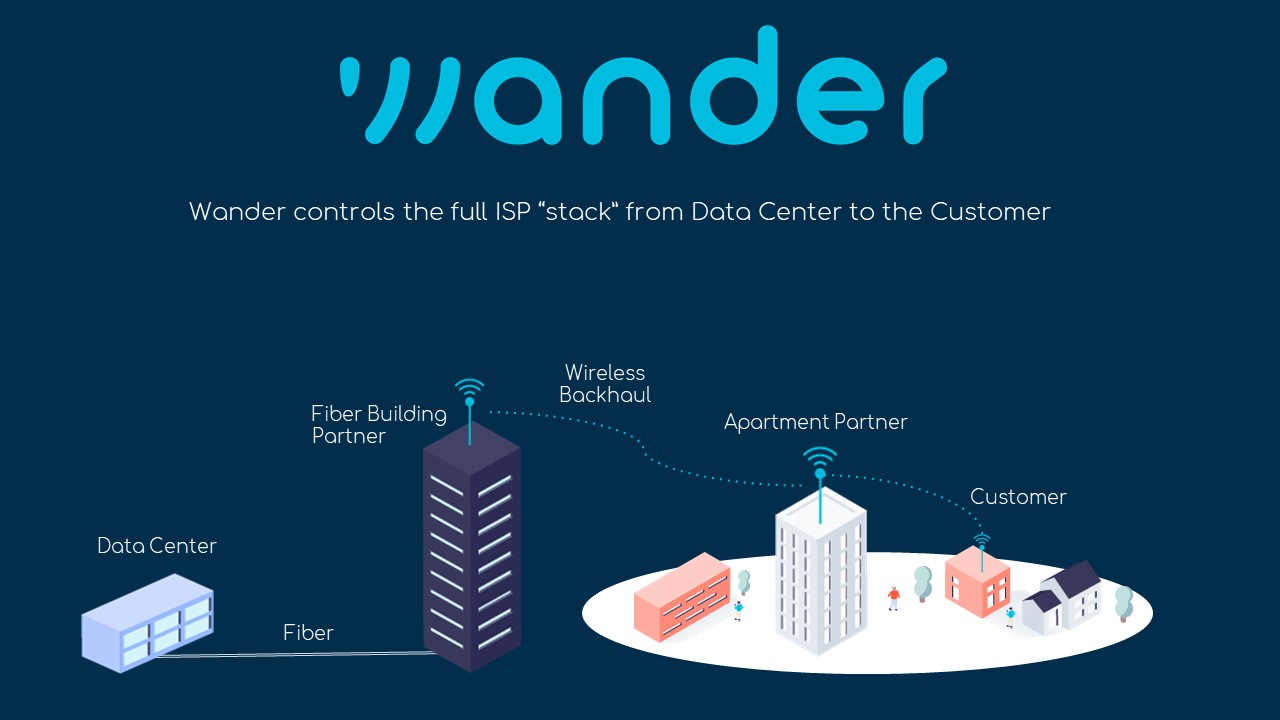
The brainchild of a former Disney analyst, David Fields, and a former Intuit engineer, Dan Rahmel, Wander uses low-cost wireless hardware and proprietary software to bring last-mile wireless Internet to a customer’s home.

“The idea behind Wander was created around some deep frustration with the net neutrality repeal,” says Fields. “We could look at utilizing some of the  existing wireless infrastructure and cover that last mile at a fraction of the cost… we have a strong perspective on the data demands of consumers.”

Wander Speeds

The problem, as Fields sees it, is that internet service providers are over-billing for capacity that most consumers don’t even use. As an August report from the Wall Street Journal revealed, high speed internet just isn’t worth it.

Traditional internet service providers are marketing high speed internet at 200 to 1K megabits per second, while average homes use less than 5 megabits per second during peak usage times, according to a report from the networking infrastructure technology provider, Cisco.

Even with streaming services, the average customer is going to use less than 15 megabits per second by 2022, according to some projections. Wander’s existing service will provide 50 megabits per second

We see an ability to come out in market and deliver to 99% of  consumers something that is a package that more than covers their streaming needs, their connected home needs,” says Fields. 

Using existing fiber infrastructure and low-cost wireless transmitters from companies like Ubiquiti, Wander is driving down costs and pitching real estate developers on a new way to make money.

The company already has signed deals with property managers and developers to gain access to 200 buildings across Santa Monica and Van Nuys, Calif. Those locations will be the first commercial testing grounds for Wander’s pitch.

GettyImages 117751409

Shutters and the Santa Monica Pier during 2006 TV Land Awards – Affiliate Dinner at Shutters on the Beach in Santa Monica, California, United States. (Photo by Jason Merritt/FilmMagic for Nickelodeon Television)

“Think of  the way we partner with them as a two-pronged approach.. For the value of bringing the rooftop real estate to the Wander network; they get a share of the subscribers that are tapping into that rooftop real estate.  They can have their property management teams acquire customers for us and that revenue share is incremental for them,” Fields says. 

Basically, Wander owns and operates the network and gives real estate owners a share of the revenue coming in.

At launch, Wander will be able to cover about 20,000 homes in the Santa Monica area using the company’s point to multi-point networking services which have a range of about half-a-mile.

Fields stresses that improving customer service is just as important as lowering prices at Wander. The company gives users access to a Wander dashboard that provides information about network performance and . uptimes, and the average megabits per second that a home uses and its peak consumption.

“That dashboard provides you with a look into the network as well,” says Fields.

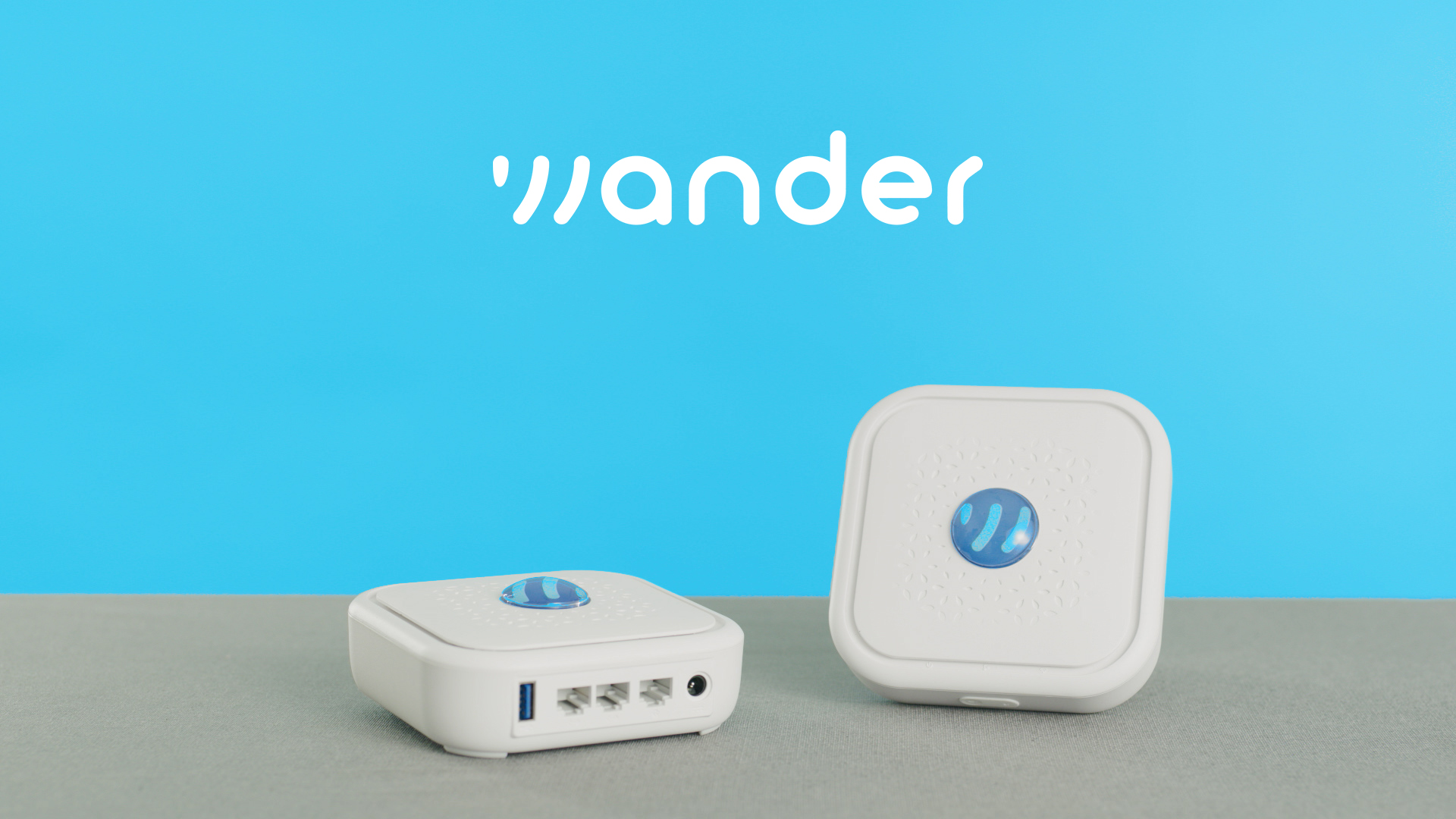
The service costs $25 per-month along with a $3 fee for the company’s proprietary, mesh-capable router (which is important because to ensure uptimes Wander built software that monitors and resolves performance issues on the fly, the company said).

Wander Network Diagram original

The company raised a small, strategic round of financing from venture investors and strategic angel investors including: Distributed Global, an infrastructure-focused investment firm, and individuals like Eric Bender, co-founder of Wilcon, fiber and data center business which sold to Crown Castle; Michael Barker, founder and CEO of Barker Pacific Group, a real estate holding company. Other angels include Louis Beryl, founder and CEO of Earnest and Jeff Morris Jr., former Director of Product, Tinder.

“With 97% profit margins, it’s no secret that traditional ISPs overcharge and underdeliver,” said Bender,  in a statement. “Wander’s unique and affordable model is bringing next generation internet to an industry that has relied on dated technology, outrageous and unexpected fees and poor customer service. I’m excited to be supporting Wander as a pioneering internet provider that is equally focused on building a happy customer base.”

While Santa Monica, and greater Los Angeles are the company’s first markets, Wander intends to.. well… wander to other parts of the country where its services can make the most sense.

“We want to use a  data driven approach to the next set of sub-markets that we’re going to go into,” says Fields. “Some of these places will be less interesting than the suburban to urban mix where 5G is not  going to propagate where they have one or at most two internet options today.”

To see if a home is among the lucky few that qualifies for Wander’s low-cost services now, check out wander.net/live. Subscribers who sign up within the next thirty days will get their first month free.

Wander 1

23 Oct 2019

A bike lover’s take on the Cowboy e-bike

Electric-bike maker Cowboy recently let me spend a couple of weeks with one of their e-bikes. It’s a well-designed e-bike that makes biking effortless, even if you’re going uphill.

Cowboy is a Brussels-based startup. The company raised a $3 million seed round a couple of years ago and an $11.1 million (€10 million) Series A round last year.

The company designs e-bikes from scratch. Components feel more integrated than in a normal e-bike. And it also opens up some possibilities when it comes to connectivity and smart features.

Cowboy sells its bikes directly to consumers on its online store. It is currently available in Belgium, France, Germany, the Netherlands and Austria for €2,000 ($2,220).

I rode 70 kilometers (43 miles) in the streets of Paris to try it out. For context, riding a bike in Paris is nothing new for me. I primarily use my non-electric bike to go from point A to point B — bikes are commuting devices for me. And given that Cowboy is primarily designed for densely populated cities, I thought I’d give it a try.
Cowboy 5

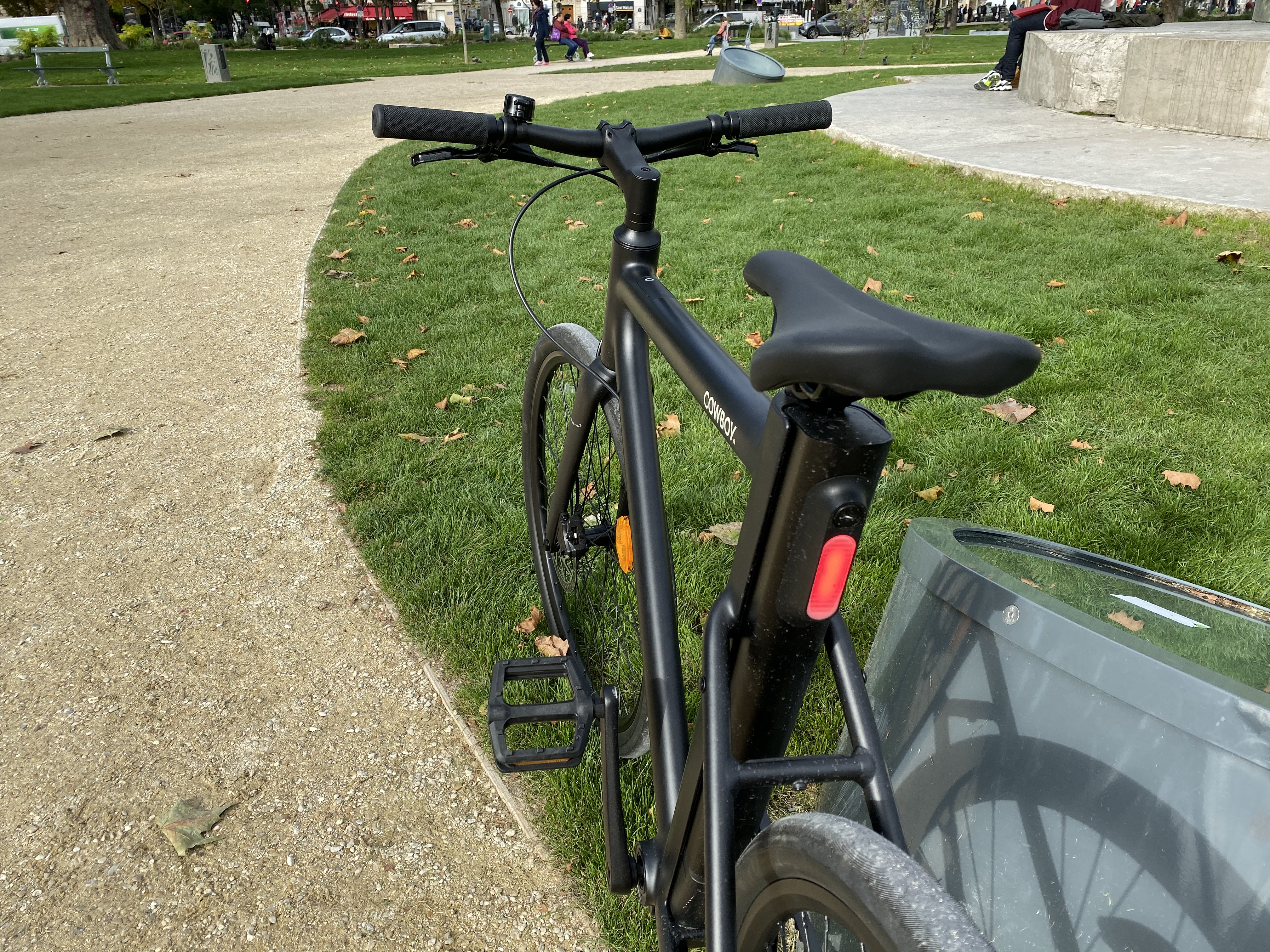
From the outside, the Cowboy e-bike is a sleek bike. It features a seamless triangle-shaped aluminum frame, integrated lights and a low-key Cowboy logo near the saddle. The handlebar is perfectly straight like on a mountain bike. The only sign that this is an e-bike is that the frame is much larger below the saddle.

The e-bike is relatively light at 16kg (35lbs). Most of the weight is at the back of the Cowboy e-bike because of the battery. But an investor in the startup told me that it wasn’t a problem and that he was even able to attach a baby seat at the back.

The two things you’re going to notice quite quickly is that there’s no gear and there’s a rubber and glass fiber belt. Cowboy has opted for an automatic transmission — motor assistance kicks in automatically when you need it the most, such as when you start pedaling, you accelerate or you go uphill.
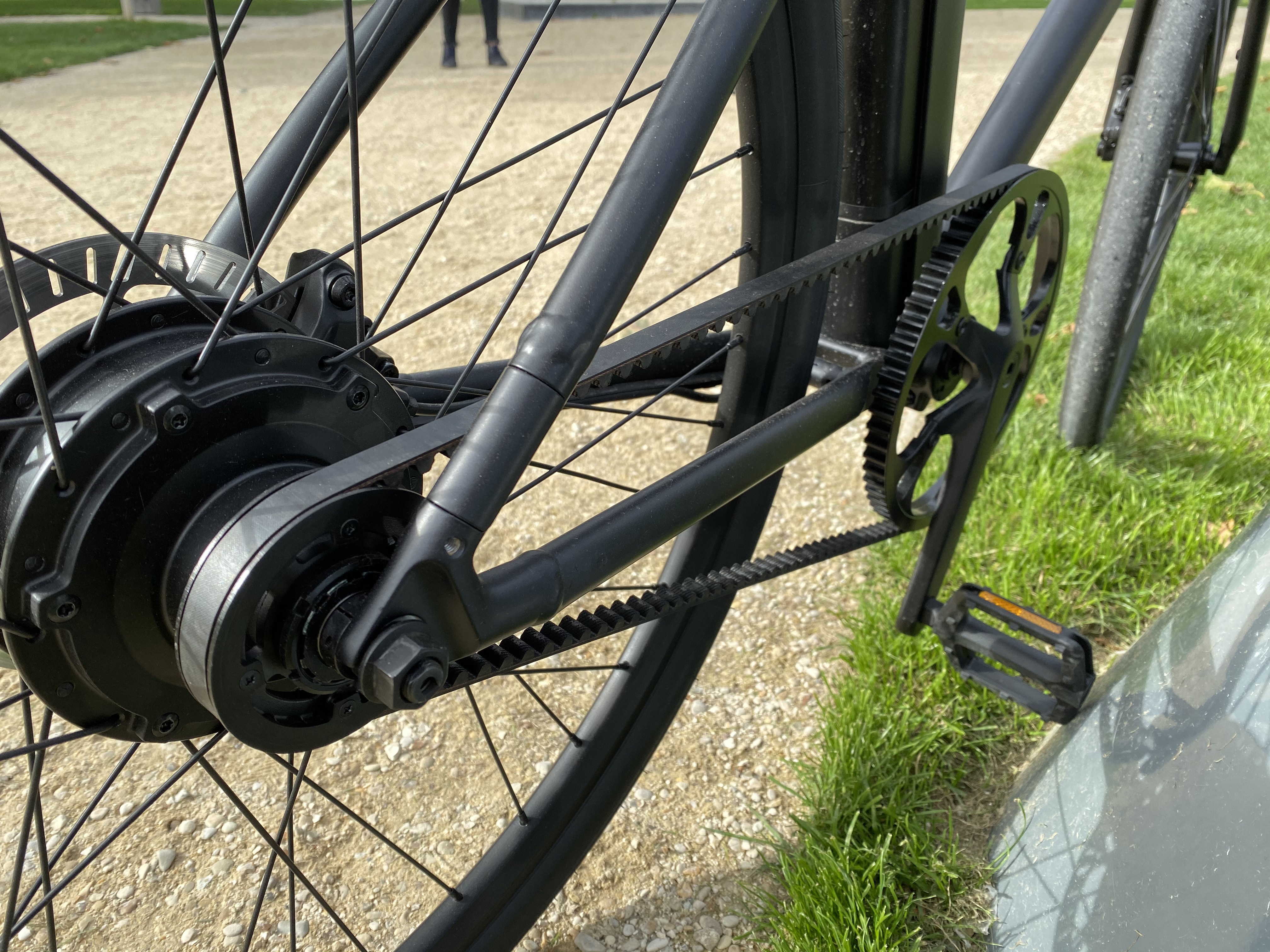
Cowboy 4

If you usually ride on a normal bike, this feels weird at first. I constantly shift from one gear to another. With the Cowboy e-bike, you have to trust the bike and forget about gears.

The electric motor kicks in a second after you start pedaling. It means that you are much faster than people using regular bikes. And you can reach a speed of 30 to 35 kmph in no time (18 to 22 mph). Yes, this bike is fast.

Fortunately, brakes work surprisingly well. You have to be careful with them. If you’re braking too hard, you’ll skid, especially if it’s raining.

I was able to ride from one end of Paris to another without breaking a sweat. Sure, the Cowboy e-bike is fast, but I only saved a few minutes compared to my non-electric bike. You still spend a lot of time waiting at big intersections.

In fact, riding the Cowboy e-bike felt more like riding a moped-style scooter. You start your engine at a green light, ride as quickly as possible, brake aggressively at a red light and spend more time waiting at intersections. I believe an e-bike makes more sense in larger cities with huge hills. Paris is much, much smaller than London or Berlin after all.
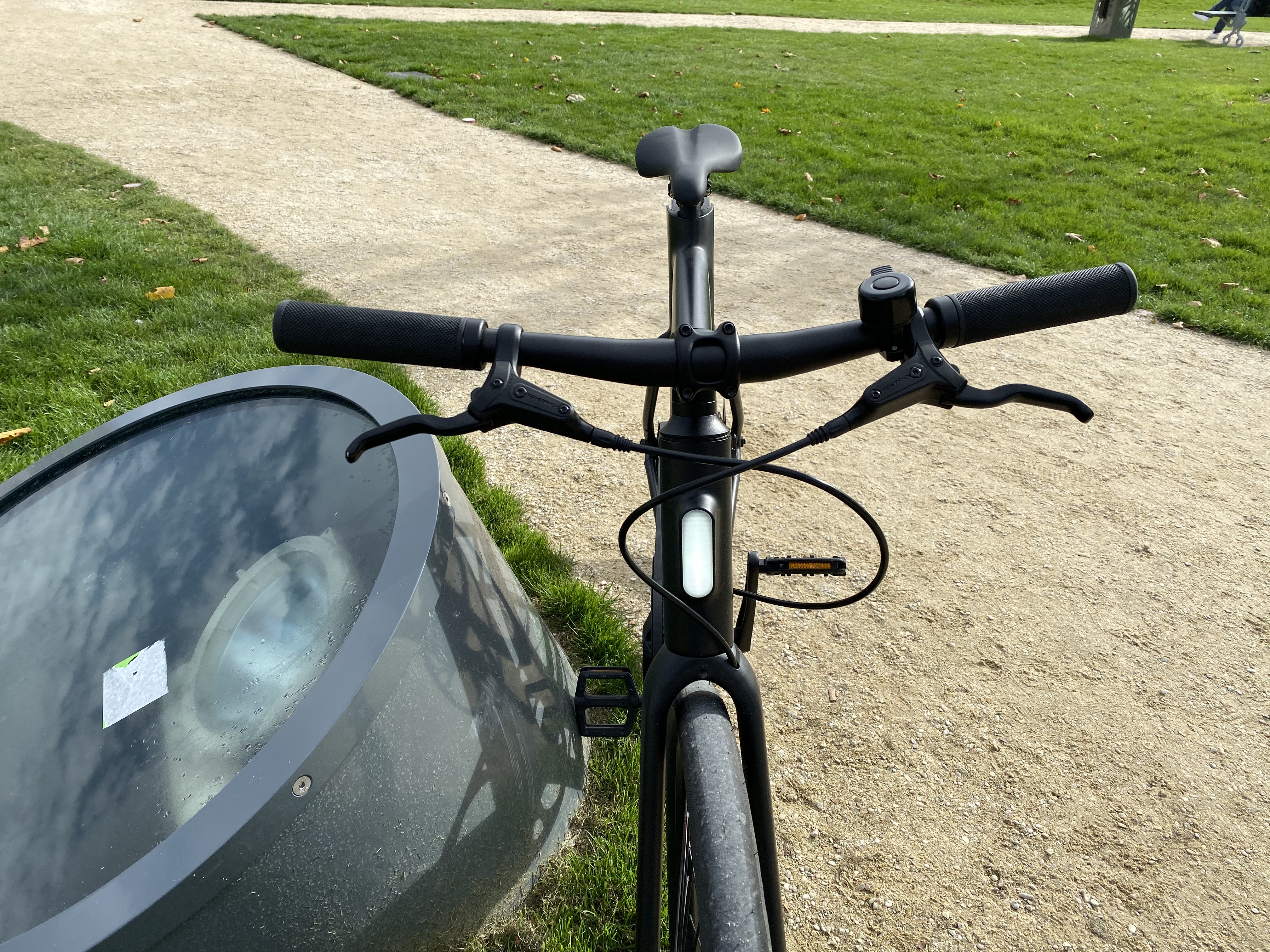
Cowboy 6

You may have noticed that the Cowboy e-bike doesn’t have fenders. Cowboy will start selling custom-designed fenders for €89 in a few weeks ($100).

Another thing worth noting is that you have to be relatively tall to use the Cowboy e-bike. I’m 1.75m tall (5’8”) and I lowered the saddle as much as possible. If you’re just a tiny bit smaller than me, chances are it’s going to be too high for you. Similarly, naming your brand “Cowboy” doesn’t make your bike particularly attractive for women.
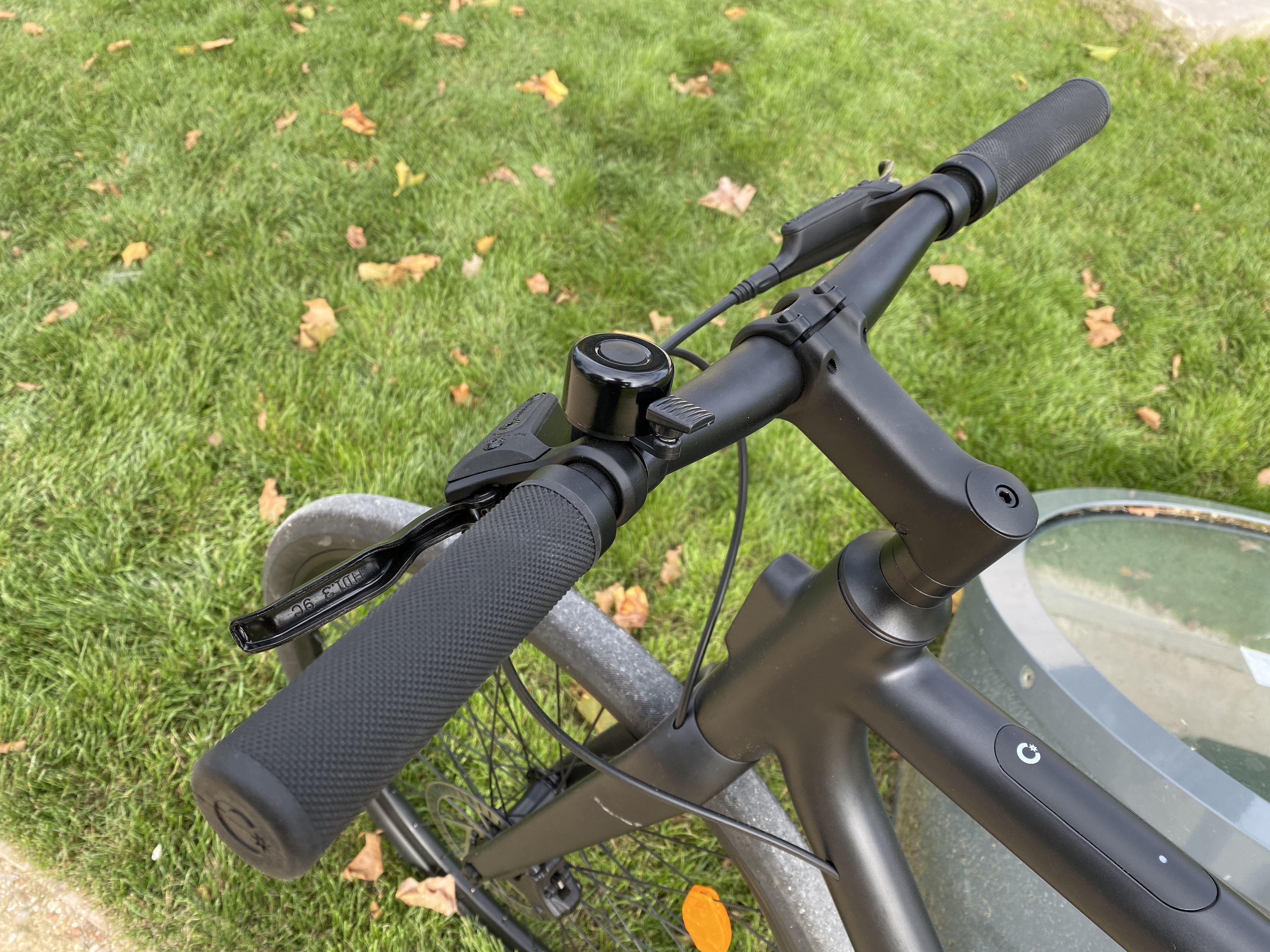
Cowboy 2

When it comes to connectivity, the Cowboy e-bike isn’t just an electric bike — it’s also a smart bike. It has built-in GPS tracking and an integrated SIM card.

After pairing the bike with your phone using Bluetooth, you can control it from a mobile app. In particular, you can lock and unlock the bike, turn on and off the lights and check the battery. It would have been nice to put a light sensor on the bike itself as you may forget to turn on the lights at night. You can also get a rough idea of the current battery level without the mobile app — there are five LEDs on the frame of the device.

Thanks to GPS capabilities and the integrated SIM card, you can locate your bike using a feature called “Find my Bike”. The company also sells insurance package for €8 to €10 per month with theft insurance and optionally damage insurance.
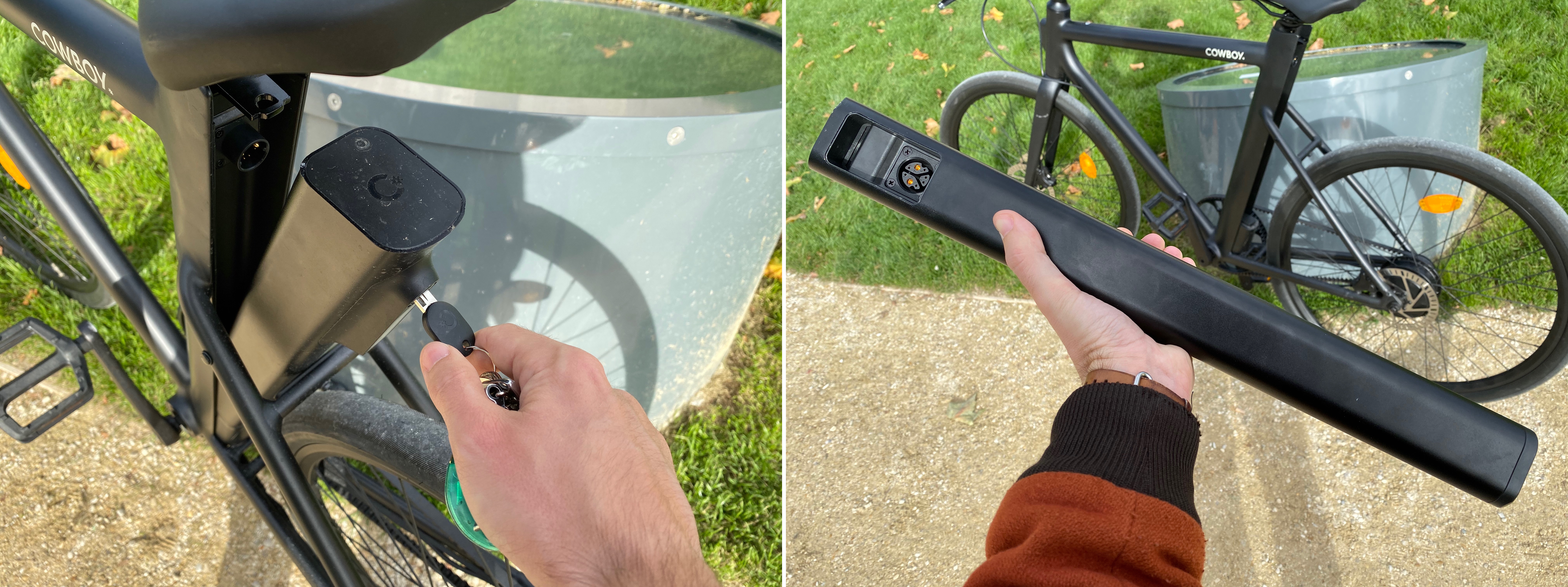
Cowboy 10 1

I recharged the battery once during my testing. According to the company, you can get up to 70km on a single charge (43 miles). I got less than that but I also tried the off-road mode, which consumes more battery. Unless you’re going on a long bike trip, range isn’t an issue for city rides.

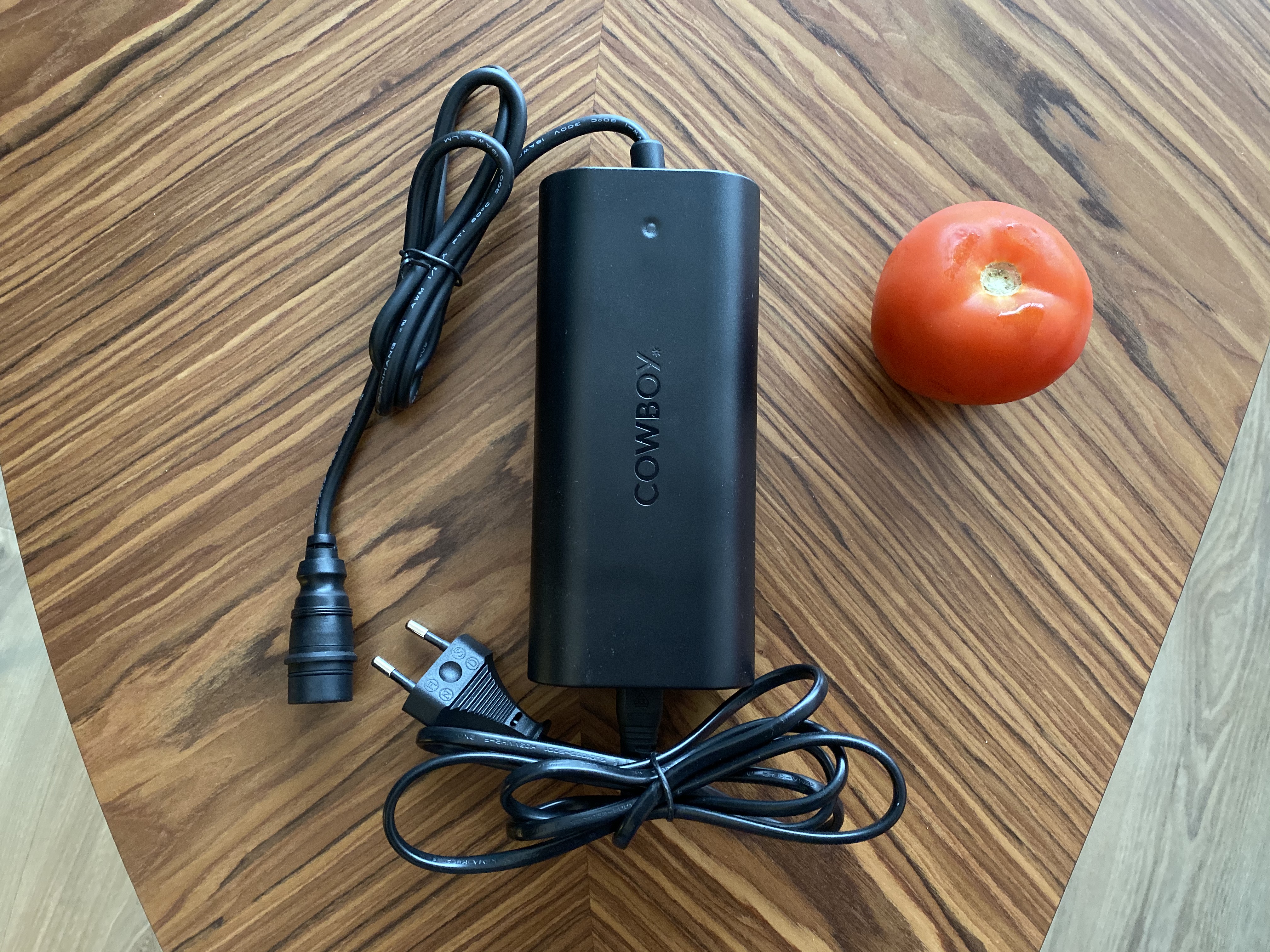
When it’s time to recharge the battery, you can detach the battery with a key and bring it back home. This is a great feature for people living in apartments as you can leave your bike at its normal parking spot and plug the battery at home. The battery was full after 3 to 4 hours.
Cowboy 11

Cowboy battery charger, tomato for scale

Overall, the Cowboy e-bike is the perfect commuting bike for people living in large cities. It’s a smooth and well-designed experience. If you’re looking for an e-bike, you should definitely consider the Cowboy e-bike as one of your options. I would book a test ride before buying one though.

If you’re happy with a normal bike like me, the Cowboy e-bike is 100% an e-bike. Don’t expect to get the same experience on a Cowboy e-bike. It’s a completely different thing. But I’m glad e-bikes exist because they are going to convince more people to ditch their cars and moped-style scooters.

Cowboy 1

23 Oct 2019

Streaming service Quibi sells out of its $150M in first-year ad inventory

Jeffrey Katzenberg’s mobile-only streaming service Quibi hasn’t even launched, but it’s already sold out of its $150 million first-year advertising inventory, the company announced this morning. The service, which officially debuts in April 2020, added new advertisers Discover, General Mills, T-Mobile, and Taco Bell, who join Quibi’s existing lineup of ad partners, Procter & Gamble, PepsiCo, ABInBev, Walmart, Progressive, and Google.

In addition to being an advertiser, T-Mobile only days ago announced a partnership with Quibi, as well.

The streaming service had cited T-Mobile’s “impressive 5G roadmap” as one of the reasons it went for the deal, but T-Mobile’s advertising contribution probably didn’t hurt either.

For an entirely unseen product, it’s notable that Quibi is already sold out for year one. That speaks to its ability to sell brands on its core concept — a sort of Netflix for the mobile era, where higher-quality content is chopped up into smaller bites (or “quick bites”), and viewable no matter how you hold your phone.

Advertisers are offered either a 6, 10 or 15-second pre-roll spot before the Quibi content streams. And unlike on YouTube, where some of the ads can be skipped after a few seconds — or removed entirely by way of subscription — Quibi’s ads won’t have a “skip” button. Quibi also hints at a unique offering for advertisers, saying that it will be “experimenting with a number of other innovative ad formats.”

In addition, Quibi is tackling one of the issues advertisers have with YouTube, where a brand’s message is often run against extremist content. YouTube has tried to fix the problem with better controls, and brands have at times left YouTube. Some brands even got together to form a global alliance for “responsible media,” which basically means they’re ready to more formally fight this problem.

It’s no surprise, then, that these companies are willing to help boost a potential YouTube competitor — one which promises they won’t find their ad played ahead of child exploitation or white supremacist content, among other things — as has been the case on YouTube, at various points.

However, what may be most responsible for the early ad sales is Quibi’s founder, Jeffrey Katzenberg. He’s not someone the industry is willing to bet against at this point.

“We are seeing a tremendous response from advertising partners who recognize the value of Quibi’s premium, brand-safe, mobile platform that is focused on the highly-coveted millennial audience,” said Meg Whitman, CEO, Quibi. “The world-class brands that are partnering with us in advance of our launch is remarkable, and it speaks to the opportunity in front of us,” she said.

Quibi had announced in June it had already booked $100 million in ad sales with $50 million to go. But even if it hadn’t sold out, Quibi still would have been a go for launch — Quibi is backed by $1 billion in funding, and was reportedly going to double that.


23 Oct 2019

Lowlights from Zuckerberg’s Libra testimony in Congress

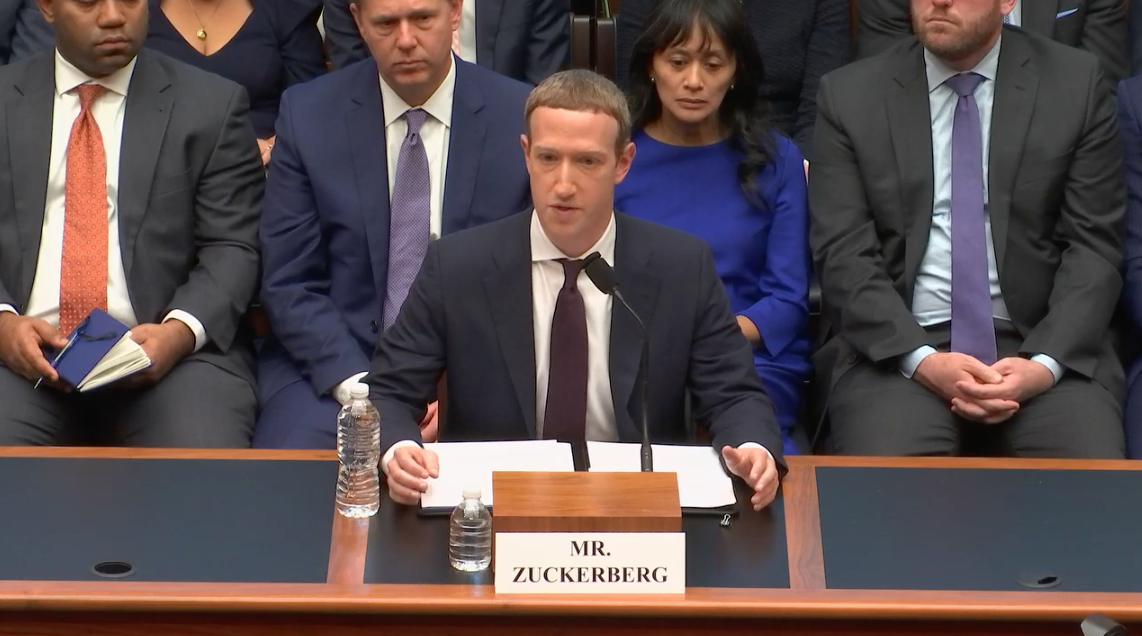
Congress grilled Facebook’s CEO today, unleashing critiques of his approach to cryptocurrency, privacy, encryption, and running a giant corporation. Mark Zuckerberg tried to assuage their fears while stoking concerns that if Facebook doesn’t build Libra, then the world will end up using China’s version.

During the hearing before the House Financial Services Committee that you can watch here, Zuckerberg recommitted to only releasing Libra with full US regulatory approval. But given the tone of the questioning and Zuckerberg’s lack of fresh answers since Facebook’s David Marcus testified about Libra in July, Libra now looks even less likely to launch in 2020. With few highlights or positive moments coming from the hearing, here are the lowlights that matter.

The hearing started tensely, with Rep. Maxine Waters (D-CA) declaring that “Perhaps you believe that you’re above the law, and it appears that you are aggressively increasing the size of your company, and are willing to step over anyone, including your competitors, women, people of color, you own users, and even our democracy to get what you want . . . In fact, you have opened up a serious discussion about whether Facebook should be broken up.

However, some members of congress used their time to advocate for American dominance instead of heavy regulation. Rep. Patrick McHenry (R-NC) said “the question is, are we going to spend our time trying to devise ways for government planners to centralize and control as to who, when and how innovators can innovate.”

Zuckerberg Libra testimony

Zuckerberg tried to leverage nationalist sentiment to deflect scrutiny. “As soon as we put forward the white paper around the Libra project, China immediately announced a public private partnership, working with companies . .  to extend the work that they’ve already done with AliPay into a digital Renminbi as part of the Belt and Road Initiative that they have, and they’re planning on launching that in the next few months.”

Yet Zuckerberg wouldn’t commit to blocking anonymous Libra wallets that could facilitate money laundering, only saying Facebook’s own Calibra wallet would have strong identity checks.

When pushed on why Libra Association members like Visa, Stripe, and eBay left the organization, Zuckerberg admitted “I think because it’s a risky project and there’s been a lot of scrutiny.”

There’ll be more major launches from Facebook that could raise questions about its impact on society, Zuckerberg revealed. “Later this week we actually have a big announcement coming up on on launching a big initiative around news and journalism, where we’re partnering with a lot of folks to to to build a new product that’s supporting high quality journalism.” Facebook plans to launch a News section featuring headlines from top outlets, though only some will be paid.

The hearing is ongoing and we’ll continue to update this article with major takeways.

23 Oct 2019

Sense Photonics brings its fancy new flash lidar to market

There’s no shortage of lidar solutions available for autonomous vehicles, drones, and robots — theoretically, anyway. But getting a lidar unit from theory to mass production might be harder than coming up with the theory in the first place. Sense Photonics appears to have made it past that part of the journey, and is now offering its advanced flash lidar for pre-order.

Lidar comes in a variety of form factors, but the spinning type we’ve seen so much of is on its way out and more compact, reliable planar types are on the way in; Luminar is making moves to get ahead, but Sense Photonics isn’t sitting still — and anyway, the two companies have different strengths.

While Luminar and some other companies aim to create a forward-facing lidar that can detect shapes hundreds of feet ahead in a relatively narrow field of view, Sense is going after the short-range, wide-angle side of things. And because they sync up with regular cameras, it’s easy as pie to map depth onto the RGB image:

Sense Photonics makes it easy to match traditional camera views with depth data.

These are lidars that you’d want mounted on the rear or sides of the vehicles, able to cover a wide slice of the surroundings and get accurate detection of things like animals, kids, and bikes quickly and accurately. But I went through all this when they came out of stealth.

The news today is that these units have gone from prototype to production design. The devices have been ruggedized so they can be attached outside of enclosures even in dusty or rainy environments. And performance has been improved, bumping the maximum range in some cases out to over 40 meters, well over what was promised before.

The base price of $2,900 covers a unit with an 80×30 degree field of view, but others cover wider areas, up to 95 by 75 degrees — a large amount by lidar standards, and in higher fidelity than other flash lidars out there. You do give up some other properties in return for the wide view, though. The proprietary tech created by the company lets the lidar’s detector be located elsewhere than the laser emitter, too, which makes designing around the things easier (if not exactly easy).

Obviously if people are meant to order these online from the company these are not going to be appearing in next year’s autonomous vehicles. No, it’s more for bulk purchases by companies doing serious testing, before their self-driving cars go into production.

Whether Sense Photonics kit or some other lucky lidar company’s ends up on the robo-fleets of tomorrow is up in the air, but it does help for your product to actually exist. You can find out more about the company’s lidar platform here.

23 Oct 2019

TikTok’s new set of safety videos teach users about features, the app’s focus on ‘positivity’

TikTok today released a new set of safety videos designed to playfully inform users about the app’s privacy controls and other features — like how to filter comments or report inappropriate behavior, among other things. One video also addresses TikTok’s goal of creating a “positive” social media environment, where creativity is celebrated and harassment is banned.

This particular value — that TikTok is for “fun” — is cited whenever the Beijing-based company is pressured about the app’s censorship activity. Today, TikTok hides under claims that it’s all about being a place for lighthearted, positive behavior. But in reality, it’s censoring topics China doesn’t want its citizens to know about — like the Hong Kong protests, for example. Meanwhile, it doesn’t appear to take action on political issues in the U.S., where hashtags like #dumptrump or #maga have millions of views.

To figure out its approach to moderation, TikTok recently hired corporate law firm, K&L Gates, to advise it on how to create policies that won’t have it coming under the eye of U.S. regulators.

In the meantime, TikTok is tackling the job of crafting the sort of community it wants through these instructive videos. But it’s not just issuing its commands from the top-down — TikTok partners with its own creators to participate in the videos and then promote them to fans. The first set of videos, released in February, featured a dozen TikTok creators, for example.

This time around, the company has pulled in a dozen more, including: @nathanpiland@d_damodel@juniortvine@Stevenmckell@supershaund@ourfire@thedawndishsoap@katjaglieson@mahoganylox@chanydakota@shreksdumpster, and @christinebarger.

This is a much different approach to community-setting, compared with Twitter, Facebook or Instagram. Those platforms took years before they addressed users’ basic needs for privacy, security and anti-harassment features, like filtering comments, blocking and muting, and more. In the meantime, social media became a haven for trolls and abuse.

TikTok is approaching the problem from a different standpoint — by consciously creating a community where users are knowledgable and feel empowered to kick out the bad elements from disrupting their fun.

The only problem is that TikTok’s definition of what’s “fun” and appropriate has a political bent.

Creativity and art aren’t only meant for expressing positive sentiments. And given that TikTok is already enforcing China’s censorship of topics like Tiananmen Square, Hong Kong, and Taiwan to its over 500M+ global monthly users, it wouldn’t be a leap to find the company one day censoring all sorts of political speech and other social issues  — effectively becoming a tool for China to spread its government’s views to the wider world. And that’s far less fun.


23 Oct 2019

Demodesk scores $2.3M seed for sales-focused online meetings

Demodesk, an early stage startup that wants to change how sales meetings are conducted online, announced a $2.3 million seed investment today.

Investors included GFC, FundersClub, Y Combinator, Kleiner Perkins and an unnamed group of angel investors. The company was a member of the Y Combinator Winter 2019 cohort.

CEO and co-founder Veronika Riederle says that the fact it’s so closely focused on sales separates it from other more general meeting tools like Zoom, WebEx or GoToMeeting. “We are building the first intelligent online meeting tool for customer facing conversations. So that is for inside sales and customer service professionals,” Riederle explained.

One of the key pieces of technology is what Riederle calls, “a unique approach to screen sharing.” Whereas most meeting software involves downloading software to use the tool, Demodesk doesn’t do this. You simply click a link and you’re in. The two parties online are seeing a live screen and each can interact with it. It’s not just a show and tell.

What’s more, in a sales scenario with a slide presentation, the customer sees the same live screen as the salesperson, but while the salesperson can see their presentation notes, the customer cannot.

She said while this could work for any number of scenarios from customer service to IT Help desks, at this stage in the company’s development she wants to concentrate on the sales scenario, then expand the vision over time. The service works on a subscription model with tiered-per user pricing starting at $19 per user per month.

When they got to Y Combinator, the company already had a working product and paying customers, but Riederle says that the experience has helped them grow the business to over 100 customers. “YC was extremely important for us because we immediately got access to an extremely valuable network of founders and potential customers, and also just a base for us to really [develop] the business.

Riderle founded the company with CTO Alex Popp in 2017 in Munich. Prior to this seed round, the founders mostly bootstrapped the company,. With the $2.3 million it should be able to hire more people and begin building out the product further, while investing in sales and marketing to expand its customer base.

23 Oct 2019

Plug and Play launches an accelerator to develop technologies addressing plastic waste

The Plug and Play network of accelerator programs is partnering with the non-profit organization The Alliance to End Plastic Waste to create an accelerator focused on developing technologies to reduce, remove or replace plastics in the industrial ecosystem.

Like Techstars, Plug and Play operates a number of industry-focused accelerator programs around the world and for this program, targeting solutions that will lower the impact of plastic waste on the environment, the accelerator . will operate two programs annually in three different regions — Silicon Valley, Paris, and Singapore.

For its part, the Alliance to End Plastic Waste will work with the companies that support the organization, which include some of the largest chemical companies and manufacturers of plastic waste, to select focus areas and source specific startups working on solutions.

Representative members of the organization include:  BASF, Berry Global, Braskem, Chevron Phillips Chemical Company LLC, Dow, ExxonMobil, Formosa Plastics Corporation USA, Gemini Corporation, Geocycle, Grupo Phoenix, Henkel, LyondellBasell, Mitsubishi Chemical Holdings, Mitsui Chemicals, PepsiCo, PolyOne, Pregis, Procter & GambleSealed Air Corporation, Shell, Sinopec, SKC co., ltd., Storopack, SUEZ, Sumitomo Chemical, TOMRA, and Total.

Industrial companies don’t have the best history when it comes to reinventing their entire business models with new technologies, but at least there’s some effort being put toward these initiatives.

Each program will run for 12 weeks and accept ten startups. In true accelerator fashion there will be a demo day where AEPW and Plug and Play would have the opportunity to invest in participating companies.

“I believe when we bring together all the stakeholders—large corporations, entrepreneurs, startups, and universities—you can create real change,” said said Saeed Amidi, the founder and chief executive of Plug and Play, in a statement. “By devoting resources and attention to this global issue of plastic waste, we can make a difference in the environment. Through this platform I commit to spend more of my time on sustainability-focused initiatives and will invest in 20 startups in this space per year,”

Applications are now open for the first program, which will run from February through May 2020.

23 Oct 2019

Huawei’s foldable Mate X is launching in China next month

Huawei was understandably cautious in the lead to the Mate X. Watching Samsung’s Galaxy problems unfolding in what seemed like slow motion caused the company to rethink its strategy. Shortly after the Fold went back to the drawing board, Huawei announced it would be doing the same in order to dot all of its Is and cross its Xs.

After a well-received debut way back in February at Mobile World Congress, the Mate X is finally ready to come to market. The device is set to arrive on November 15, several months after its planned summer release.

It will be hitting the company’s native China with the almost unthinkably loft starting price of 16,999 yuan (~$2,400). Of course, in addition to being Huawei’s first crack at foldables, the device also sports 5G, a fact that is apparently central to the roll out.

Huawei says it’s looking to bring it to other markets down the road, depending on 5G availability. Though for…reasons, the device will likely not be available in certain markets. Among other things I wouldn’t get my hopes up about its arrival here in the U.S. On a released note, the device will also be running a Google app-less version of Android, like the Mate 30.

That could certainly be a big deal breaker for international buyers. Though, having played with the device at MWC and again in China, I can say that the hardware is certainly the best foldable we’ve seen to date. The price tag, on the other hand.